The Sacramento Planning and Design Commission met on Thursday, September 14, 2023, at 5:30 PM. Chair Hernandez called the meeting to order with a quorum. The commission approved two development projects (a Raising Cane\'s drive-through restaurant and a monopine telecommunications facility) unanimously. Approval of prior meeting minutes failed due to insufficient votes and was continued to a later meeting. Director\'s Report - Staff announced that at the September 28 meeting, the commission will review the proposed 2024 planning and zoning work program and a new annual reporting requirement to the Personnel and Public Employees Committee. - Staff informed that beginning next week, Zoom functionality for remote public testimony will be discontinued. Consent Calendar - Item 1 – Approval of Planning and Design Commission Minutes (August 24, 2023): Motion to approve failed with 6 votes in favor (Commissioners Buckley, Kadin, Macias Reed, Wallace, Thompson, Chair Hernandez) and 2 abstentions (Commissioners Xiong and Yeung cited absence). Seven votes were required for approval. The item was continued to the September 28, 2023 meeting. Public Hearings Raising Cane\'s Restaurant – Arden Way (P22-050) - Staff presented a proposal to demolish an existing 8,935-square-foot former restaurant and construct a new 3,181-square-foot drive-through restaurant with outdoor seating and 37 parking spaces (6 EV-capable) at 1500 Arden Way. The project required a conditional use permit, site plan and design review, environmental exemption (CEQA Section 15332 – Infill Development), and a tree permit for removal of four private protected trees. Hours of operation proposed: 9 AM to 3:30 AM, seven days a week. No public comments were received. The commission unanimously approved the staff recommendation (8-0). 5005 Stockton Blvd. Monopine (P22-041) - Staff presented a proposal to construct a 72-foot-tall monopine telecommunications facility (disguised as a pine tree) and equipment enclosure at the rear of the Goodwill store at 5005 Stockton Boulevard. The project required a conditional use permit, site plan and design review with a deviation of 7 feet above the 65-foot height standard. Staff noted that several police conditions (C22–C28 and C30) were removed at the applicant\'s request with police concurrence. No public comments were received. The commission unanimously approved the staff recommendation (8-0). Commissioner Comments – Ideas and Questions - Chair Hernandez noted that future meetings will have heavier agendas and urged commissioners to review staff reports early and reach out to staff or senior commissioners with questions. Commissioner Macias Reed recommended that newer commissioners seek context on the upcoming work plan. Chair Hernandez offered herself, Vice Chair Wallace, and Commissioner Macias Reed as resources. Public Comments – Matters Not on the Agenda - No speakers. Key Outcomes - Consent Calendar: Approval of August 24, 2023 minutes failed; continued to September 28, 2023. - Raising Cane\'s Restaurant (P22-050): Approved unanimously (8-0). - 5005 Stockton Blvd Monopine (P22-041): Approved unanimously (8-0). - Meeting adjourned at 5:49 PM.
Public Meetings - Sacramento, California
Public Meetings - Sacramento, CaliforniaThe Sacramento Community Police Review Commission met on Monday, September 11, 2023, at 6:00 PM in the City Hall Complex. The meeting was chaired by Vice Chair Keyan Bliss (in the absence of Chair Graciela Castillo-Krings, who arrived at 6:39 PM). Commissioners discussed the Office of Public Safety Accountability's (OPSA) 2020-2023 complaint data, approved the previous meeting's minutes with an amendment, and received the Commission Follow-Up Log. A recurring theme was the absence of Sacramento Police Department (SPD) representatives and frustration with city council's inaction on commission recommendations. Consent Calendar - Approval of August 14, 2023, Meeting Minutes (File ID: 2022-02470): Passed a motion as amended. The amendment added a note that no representative from the Sacramento Police Department was present during the discussion of the previous meeting's item 2, and that commissioners expressed a desire for SPD attendance. The motion passed 8-0 (Commissioners Sample, J. Johnson, Z. Johnson, Bliss, Buenrostro, Carter, Guerrero, Marion; three absent: Carter Martinez, Salazar, and Chair Castillo-Krings). Public Comments & Testimony - On Item 02 (OPSA Reports): One speaker, BNB Unity, expressed frustration that SPD continues to not attend meetings, stating that the commission is being scapegoated and that SPD does not listen to Black and Brown voices. They urged commissioners to consider striking meetings or resigning en masse to force accountability. - On Matters Not on the Agenda: Anna Marie Smith commented on the Military Equipment Use (MEU) report, noting that SPD reported zero complaints despite 852 deployments and citing the need for better community outreach so that complaints are properly categorized. She also highlighted the commission's role as a bridge between police and the community, urging SPD to recognize the value of that relationship. Discussion Items - Item 02: Office of Public Safety Accountability, 2020-2023 Quarter and Annual Reports Overview (File ID: 2023-01219) – Dr. LaTesha Watson, Director of OPSA, presented data on police complaint classifications and allegations. Key trends: service-related complaints were the second highest category in 2022 (146 allegations); discourtesy and improper search and seizure were also consistently high. Dr. Watson explained that OPSA's recommendations have not been implemented, but an audit on search and seizure is pending city council action. Commissioners asked about the lack of an SPD representative, the use of the "unfounded" disposition, and the need for a discipline matrix. Commissioner Mario Guerrero noted that many other jurisdictions have discipline matrices, and the commission had previously proposed one. Vice Chair Bliss expressed frustration that SPD has not attended meetings, citing a culture of disrespect. Commissioner Guerrero and Chair Castillo-Krings criticized city council for not acting on the commission's recommendations, including the Military Equipment Use policy. The commission discussed the follow-up log and the possibility of restructuring it to align with the work plan. No vote was taken on the discussion; the item was received and filed. - Item 03: Sacramento Community Police Review Commission Follow-Up Log (File ID: 2023-01233) – Received and filed. Commissioners debated the log's effectiveness. Chair Castillo-Krings proposed using the log to inform the 2024 work plan. Commissioner Renee Carter expressed frustration that city council has not acted on recommendations, leading to a backlog of 146 items. Commissioner Guerrero suggested restructuring the log into categories (current work plan, future work plan, miscellaneous). Vice Chair Bliss emphasized the need for public understanding and transparency. The discussion concluded with a plan to develop a revised log for the next meeting. Key Outcomes - Consent Calendar: Approved the August 14, 2023, minutes as amended (8-0). - OPSA Reports: Received and filed; no formal vote taken. The commission will follow up on Dr. Watson's presentation and request SPD attendance at future meetings. - Follow-Up Log: Received and filed; the chair and vice chair will work with Commissioner Guerrero to propose a restructured log for the next meeting. - Commissioner Comments: Several commissioners expressed frustration with SPD's absence and city council's inaction. Commissioner Guerrero and Vice Chair Bliss indicated willingness to resign en masse if no progress is made. Chair Castillo-Krings urged continued engagement but acknowledged the commission's limited authority. - Meeting Adjourned: At 8:17 PM, in memory of the 9/11 first responders and all who lost their lives that day.
The Sacramento Arts, Culture, and Creative Economy Commission met on Monday, September 11, 2023, at 2:01 PM in City Hall. The meeting was called to order by Chair Priscilla Enriquez, with 10 commissioners present (Commissioner Anderson absent). The main agenda item was the approval of the Hanami Line Public Art contract, followed by a Director's Report, Commissioner Comments, and Public Comments on non-agenda matters. The meeting adjourned at 3:19 PM. Discussion Items - Hanami Line Public Art – Purchase of Artwork Agreement (File ID: 2023-01151) - Donald Gensler, Arts in Public Places Specialist, presented a public art project for Matsui Waterfront Park (District 4). The project has been in development for over a decade and will include over 2.6 acres of cherry trees, a pedestrian bridge, and a sculpture by Reed Madden Designs (Berkeley, CA) inspired by cherry blossoms and Hanami (flower-watching) tradition. The artwork features dichroic glass lenses and LED lighting to create a flickering effect reminiscent of falling petals. The total contract cost is $300,000, funded by the city’s Art in Public Places ordinance, a donation from the Sacramento Tree Foundation, and a state grant. The artist was selected from over 90 applicants via a panel process. Commissioners expressed support for the project, noting its cultural diversity, equity, and inclusion aspects, as well as its role in revitalizing Old Sacramento and the waterfront. Specific questions addressed lighting integration with the park, the blue tile base (details still in development), and the Hanami meaning. - Vote: Motion by Commissioner Winlock, seconded by Commissioner Lavulo. Passed unanimously (10 yes, 0 no, 1 absent). The motion recommends City Council approval of the contract. Public Comments & Testimony - On the Director’s Report: - Lambert Davis expressed support for the arts economy division, noted that the Grant Drumline went to Europe, and urged staff to connect with Al Wilson (provided phone number). He highlighted diversity, equity, and inclusion as early wins. - Matters Not on the Agenda: - Lambert Davis described his granddaughter’s TikTok-driven viral cheesecake success and again promoted the Grant Drumline and Al Wilson. - Alpha (from Sojourner Truth African Heritage Museum) thanked the commission for supporting the museum’s work in South Sacramento, including upcoming murals, a block party on Florin Road, and the Capital Regional Creative Core project with Lisa Burbank. Director’s Report - Megan Van Voorhis and Jason Jong provided updates: - Music Census: Mayor’s State of the City highlighted findings; regulatory review report forthcoming. - Creative Economy Report: Prepared by Creative Startups based on 100+ interviews; findings to be presented at October meeting. - ARPA Funding: Final round of nonprofit funding ($250,000) opening soon; amendment to creative business framework planned to support findings from census and creative economy report. - Arts Journalism: Exploring a collaborative strategy with potential funding partners. - Other Programs: Capital Creative Core (five artists, $75,000 each, one-year terms); emerging curators fellowship; film grants; Design Week Sacramento in October. - Staff noting upcoming planning to streamline program rollouts in January 2024. ARPA funds must be encumbered by Dec 31, 2024, and spent by 2026. Commissioner Comments – Ideas and Questions - Akshaj Mehta (outgoing commissioner, heading to UCLA for political science) expressed gratitude for the youth commissioner experience and praised the commission’s passion. - L. Steven Winlock highlighted Second Saturday galleries, Prop 28 (arts education funding), and efforts to place teaching artists in schools via credential programs. - Cruz Naranjo attended Mayor’s State of the City, noted cultural tourism and streamlined permits; expressed disappointment that the commission wasn’t acknowledged. He discussed community engagement in Chavez Park, lowrider exhibits at museums, and upcoming events (Florin Road Block Party, Indigenous People’s Day). - Wellington Smith praised Second Saturday and youth involvement; mentioned a cultivation session in District 1 for pole flags. - Luisa Lavulo noted the new trail pavement at the park and performed at the Holo Holofest (Asian Pacific Islander festival), urging efforts to bring the event to Sacramento. - Akshaj Mehta (additional) praised Jive (biking/walking nonprofit) as a partner. - Chair Priscilla Enriquez acknowledged the staff’s heavy workload and the commission’s role in building a creative economy ecosystem; suggested future planning to enhance the commission’s visibility. Key Outcomes - Motion passed unanimously to recommend City Council approval of Hanami Line Public Art contract with Reed Madden Designs for $300,000. - Staff to present creative economy report at October 2023 meeting. - ARPA final round nonprofit funding to be announced soon; amendment to creative business framework to go to City Council in early October. - Commissioners encouraged to engage in district-level outreach and share upcoming events.
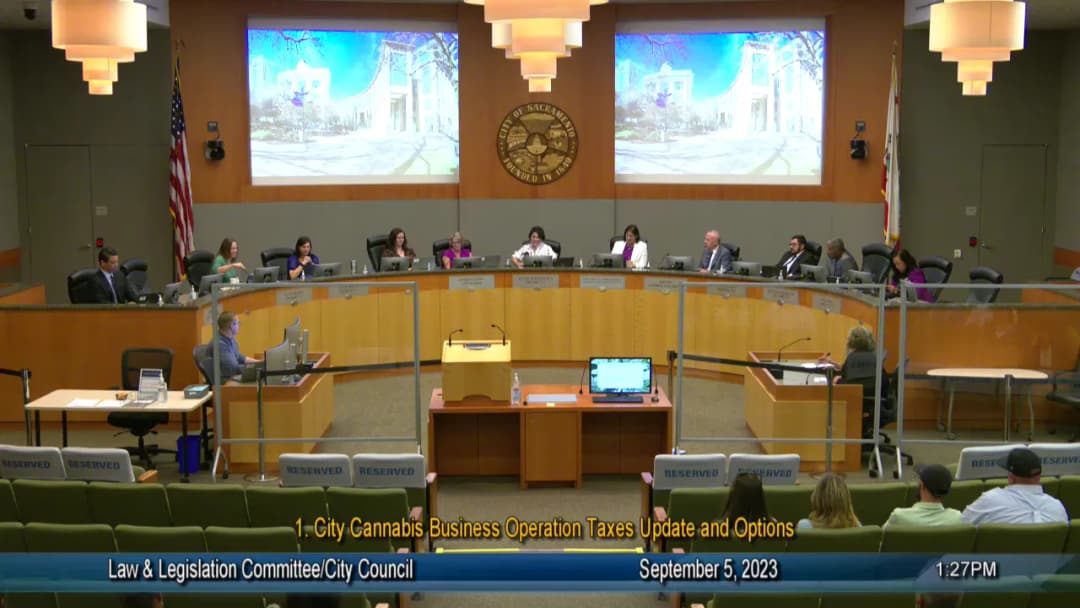
On September 5, 2023, the Sacramento City Council and Law and Legislation Committee held a joint special meeting to discuss updates and options for the city's Cannabis Business Operations Tax (CBOT). The meeting focused on four tax reduction models, with a staff recommendation to advance a phased tax model for CORE (equity) businesses. Public comment was heard, and council members deliberated on next steps, leading to a motion to forward the core proposal to the full council and to bring back a broader tax discussion in November. Public Comments & Testimony - Youth Forward Policy Advocate (Adjawa Acianu) expressed support for core relief but opposed industry-wide cannabis tax cuts, emphasizing the importance of Measure L funding for youth. - Adiola Adlepipe (Owner, Aiden's Relief) shared personal story as a parent and equity operator, urging tax relief for core businesses and noting that many cities have suspended or reduced cannabis taxes. - Laura Mendez (Medical Patient) advocated for the removal of taxes on medical cannabis, citing personal health benefits and the burden of high taxes on patients. - Mindy Galloway (CEO, Camilla Shared Manufacturing) urged across-the-board tax reduction, arguing that high taxes drive patients to the unregulated market and that many cities have suspended their cannabis taxes. - Angelica Sanchez (Perfect Union) supported any tax break for cannabis businesses, criticizing the staff report's comparison to cities with less mature programs. - Anthony Cortez (General Counsel, Natura Life and Science) challenged the accuracy of the staff report's comparisons, stating that San Francisco's cannabis tax does not take effect until 2026 and that other jurisdictions have lower effective rates. - Cyrus Javadi (Connected Cannabis) supported tax relief, noting the high costs of testing, security, and compliance for legal cannabis businesses. - JJ (Trees of Knowledge) supported phased tax relief for core and overall tax reduction, stating that the current tax system is unsustainable and that other cities have paused taxes. - Michael Snell (Owner, Off the Charts) supported equity tax relief and suggested expanding the tax base to include alcohol. - Richard Miller (Medical Patient) highlighted the dramatic increase in cannabis prices since 2016, urging a no-tax structure for medical patients as done in Davis. - Rhonda Ernett (CEO, Natural High) supported tax cuts for core businesses, emphasizing the difficulty of competing in the market. - Kimberly Cargyle (CEO, The Therapeutic Alternative) argued for medical tax exemption, noting that medical patients are disproportionately affected and that the city already collects data on medical sales. Discussion Items - Staff Presentation (Davina Smith, Cannabis Program Manager): Presented four tax reduction models: (1) across-the-board reduction (to 3%, 2%, or 1%), (2) phased-in tax for CORE businesses (0% first year, increasing 1% annually to 4%), (3) graduated tax by gross receipts (0.5% for under $100k to 4% for over $1M), and (4) different rates by business type (storefront 4%, delivery 3%, others 2%). Staff recommended advancing the phased model for CORE businesses, noting minimal impact on Measure L and general fund. - Mayor Darrell Steinberg: Framed the need for careful analysis to balance industry relief with general fund impacts. Suggested considering tax credits tied to business performance, similar to entertainment tax credits, and asked about vacant CUP holders and unissued permits. - Councilmember Lisa Kaplan: Supported moving forward with core relief but called for a more comprehensive report on tax reduction scenarios, including growth projections and comparisons with other jurisdictions. Requested analysis of medical tax relief and a graduated tax rate by volume. - Councilmember Mai Vang: Supported the phased tax model for core businesses and urged modernizing the broader Business Operations Tax (BOT) to raise the cap on large corporations like Walmart. - Vice Mayor Eric Guerra: Emphasized caution, noting the need to balance enforcement funding, recruitment of businesses to fill vacant CUP sites, and the impact of the illicit market. Supported the core proposal but wanted a progressive approach to avoid undermining enforcement. - Councilmember Katie Valenzuela (Chair): Expressed readiness to support 2% across the board and 0% for distribution, citing double taxation and the need for equity. Requested a fee study to align staffing costs with actual impacts, and noted that the city can always adjust taxes later. - Councilmember Caity Maple: Shared industry experience, noting that many cities made arbitrary tax rates and that Sacramento should lead with updated ordinances. Emphasized the importance of union jobs and the need to reduce barriers like excessive reporting requirements. Key Outcomes - Motion Passed Unanimously (Law and Legislation Committee): To forward the phased tax model for CORE businesses (0% first year, increasing 1% annually to 4%) to the full City Council for consideration. - Direction to Staff: To return in November 2023 with a comprehensive analysis of tax relief options for all cannabis businesses, including: - Potential across-the-board reductions (e.g., 2% or 3%) - Medical patient tax relief - 0% tax for distribution - Tax credit mechanisms (as suggested by the Mayor) - Updated comparisons with other jurisdictions, including permit numbers and actual open businesses - Fee study to align permit fees with actual regulatory costs - Analysis of building permit process bottlenecks and vacant CUP sites - Next Steps: The Law and Legislation Committee will schedule a special meeting in November for further discussion, with the goal of taking action on broader tax relief.
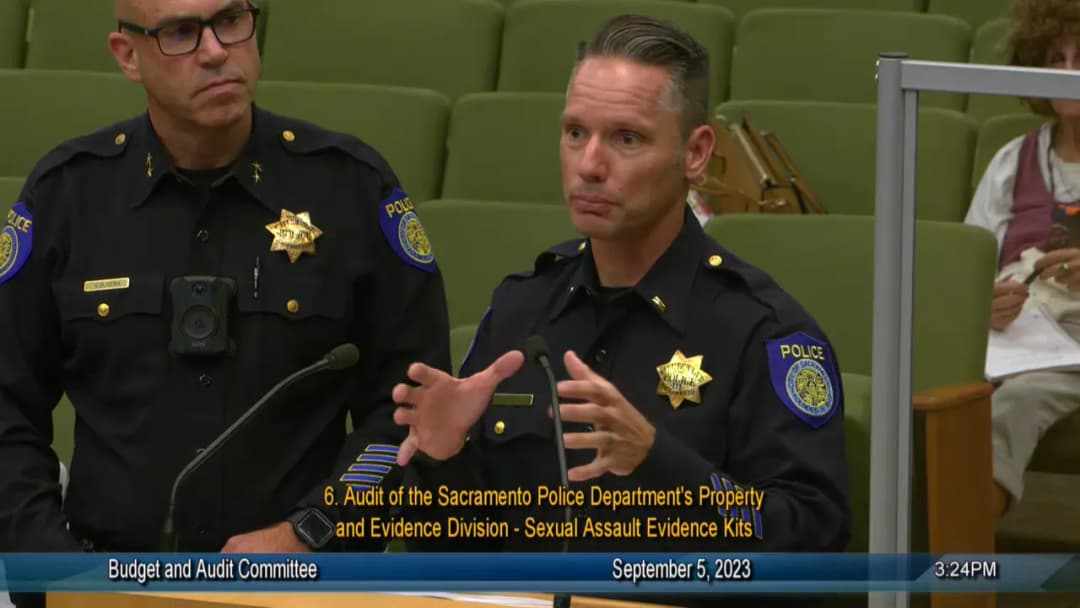
The Sacramento City Council's Budget and Audit Committee met on September 5, 2023, from 3:03 p.m. to 4:08 p.m. to discuss a city auditor's audit of the Sacramento Police Department's (SPD) Property and Evidence Division regarding sexual assault evidence kits (SAE kits). The audit found that SPD had not complied with a state law requiring an inventory and reporting of untested kits collected before 2016, but was in full compliance with a separate law for kits collected after 2016. The committee heard public testimony, deliberated, and voted unanimously to accept the audit and forward it to the full City Council with additional directives. Consent Calendar - Approved the Budget and Audit Committee meeting minutes of May 9 and May 30, 2023. - Accepted and forwarded the City Auditor's Activity Report for the 4th Quarter of FY2022/23. - Accepted and forwarded the City Auditor's Recommendation Follow-Up Report for the six-month period ending June 30, 2023. - Accepted and forwarded the Fiscal Year (FY) 2021/22 Sacramento City Employees’ Retirement System Annual Financial Report. - Accepted and forwarded the FY 2021/22 Single Audit Report. Public Comments & Testimony - Kate Carpolo (public policy advocate, organizer of a work group on SAE kits): Expressed strong support for the audit and SPD's response, calling it a "model of positive and constructive response." She urged the committee to maintain oversight and noted that budget funds are available for follow-up testing. She emphasized that changes in technology mean even cases with a known perpetrator can yield DNA that helps solve other cases. - Dylan Hoy Bianchi (public comment via phone): Strongly criticized SPD, stating the untested kits represent a failure of the police's core responsibility. He called the number of untested kits "sickening and unacceptable" and expressed disbelief at any suggestion of accountability, noting that the department had received budget increases. Discussion Items - Presentation by City Auditor Jorge Oseguera: The audit focused on two state laws – AB 3118 (requiring an audit of untested kits) and SB 22 (requiring testing of all kits collected after January 1, 2016). Key findings included: - SPD had not previously complied with AB 3118; no audit of pre-2016 kits had been conducted. - A statistical sample of pre-2016 kits found 21% untested, yielding an estimated 340 untested kits in the total pre-2016 population. - 100% compliance with SB 22: all 973 kits from 2016 onward were tested. - Recommendations included completing the required audit, reporting to the Attorney General, developing policies for regular audits and disposition, and seeking grant resources for testing. - SPD has already begun implementing many recommendations. - Response by Police Chief Kathy Lester and Deputy Chief Steve Oliveira: The department concurred with all audit recommendations. They reported that as of the week before the meeting, 291 untested kits were identified (pre-2016). Approximately 20 of those were never sent to the crime lab; the others had been sent but not tested for various reasons. SPD is now reviewing each case individually to determine why testing did not occur and will re-examine whether testing is now viable. The department has assigned a retired sex assault detective to this review. Moving forward, all kits go directly from medical providers to the county crime lab, eliminating discretion. - Committee Discussion and Concerns: - Vice Mayor Eric Guerra pressed for a clear timeline and an explanation of why the department failed to comply with AB 3118. He expressed concern that "unknown reasons" are insufficient and requested an annual report from the city manager on kit status. - Councilmember Karina Talamantes called the situation "completely unacceptable" and shared personal safety concerns. She asked why SPD did not apply for available grant funding and highlighted the potential for missed prosecutions. - Mayor Darrell Steinberg sought an accounting of the past, noting that hundreds of victims' kits sat untested between 2016 and 2020. He questioned the cost-benefit reasoning cited in the audit (testing is "expensive" with low success probability) and called it "implied bias." He stressed the need to determine if any serial offenders were missed. - Councilmember Mai Vang also demanded accountability, emphasizing that this is about people's lives and the need for the city to own and apologize for harm caused. - Auditor's Closing Remark: Jorge Oseguera acknowledged that SPD did not hesitate to engage in solutions once the issue was identified. Key Outcomes - Motion passed unanimously (Members Guerra, Talamantes, Vang, Mayor Steinberg): Accepted the city auditor's audit of SPD's Property and Evidence Division – Sexual Assault Evidence Kits and forwarded it to the City Council for final approval. - The motion included a directive for SPD to provide a timeline for completing the audit recommendations and reporting on the status of untested kits. This timeline is to be presented when the item goes to the full City Council. - The committee also requested the city manager provide an annual report on the status of sexual assault evidence kits to ensure ongoing compliance. - SPD has already initiated compliance steps: assigned staff to audit remaining kits, contacted the Attorney General’s office, designed a disposition policy, and is reviewing all untested cases for potential retesting.
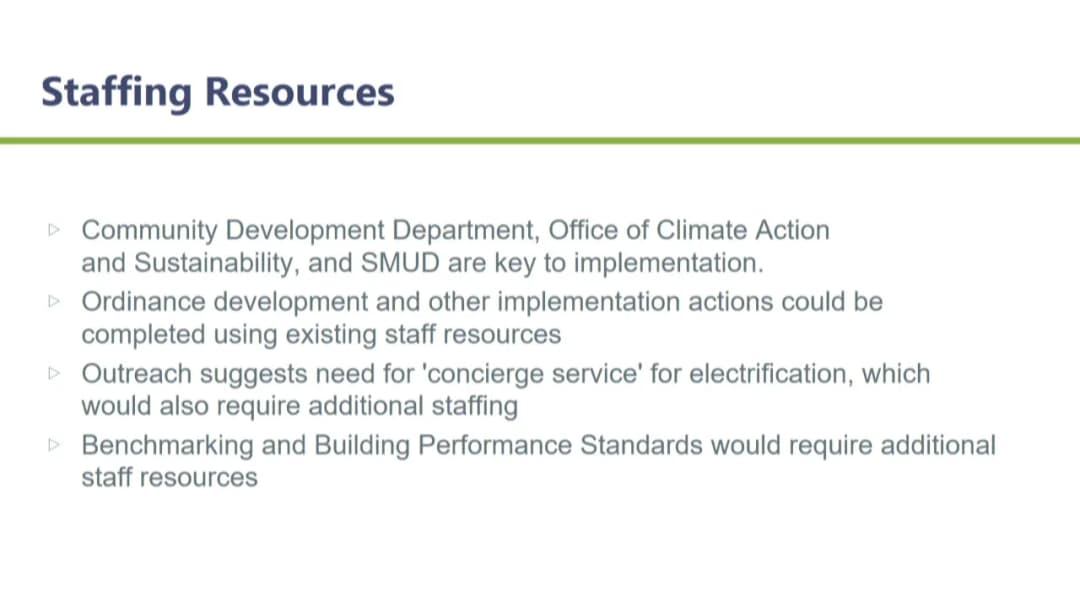
The Planning and Design Commission of Sacramento, California met on Thursday, August 24, 2023, from 5:33 p.m. to 8:49 p.m. at City Hall Complex, 915 I Street. The Commission approved the consent calendar and a conditional use permit, and held two discussion workshops on the Mixed Income Housing Ordinance and the Draft Existing Building Electrification Strategy. All members attended, with Commissioners Xiong, Yeung, and Andrade absent throughout; Commissioner Boyd and Buckley arrived later during the meeting. Consent Calendar - Approval of Planning and Design Commission Minutes of July 27, 2023 (File ID: 2022-02428): Passed unanimously by one motion. Motion by Commissioner Macias Reed, second by Commissioner Kadin. Yes: Chase, Lamas, Kadin, Macias Reed, Wallace, Thompson, Hernandez. Absent: Xiong, Buckley, Yeung, Boyd, Andrade. Public Comments & Testimony - Item 2 (Good Bottle): No public speakers appeared in person or online. The Chair noted 19 e-comments in support (an initial 18, plus one received at 5:21 p.m. that day), one letter of support, and one letter of opposition. - Item 3 (Mixed Income Housing Ordinance): Two public speakers. Chris Noram (North State Building Industry Association) expressed opposition to increasing affordable housing requirements, citing the industry's analysis projecting a 6% increase in home prices, 8% increase in rents, 5% reduction in housing production, and a loss of about 1,700 market-rate units over ten years. He supported fee-based approaches, flexibility, and broader funding sources. Annie Keyes (Downtown Sacramento Partnership) urged caution, noting a 91% reduction in multifamily housing construction starts in downtown Sacramento over the past six months and the importance of not constraining supply. - Item 4 (Existing Building Electrification Strategy): No public speakers during the hearing; two e-comments were received (one neutral, one supportive). During the later "Matters Not on the Agenda" period, Rosie Akubal with 350 Sacramento commented that electrification costs should be viewed as incremental costs above standard appliance replacement, noting rebates can offset the difference. Mixed Income Housing Ordinance Review Workshop Staff (Greta Soos, Associate Planner, and David Dozima of Kaiser Marston Associates) presented the draft report and feasibility analysis. Key findings included: - The 2000-2015 inclusionary ordinance produced 1,557 required affordable units (or 1,985 units including excess), averaging 104-132 units per year. - The current housing impact fee program generated $6.6 million through 2021; SHRA committed $4.7 million to three projects with 449 affordable units, 27 of which are attributed to the fee program. - Feasibility analysis of prototypical projects found that under current market conditions, almost all projects are infeasible, even without new ordinance requirements. Under prior more favorable market conditions, some fee levels could be supported, e.g., $10-$20 per square foot in certain areas, and removal of the $0 rate for high-density rental projects. - Draft policy objectives include increasing affordable housing production, meeting RHNA goals, ensuring long-term affordability, affirmatively furthering fair housing, anti-displacement, creating mixed-income communities, and not constraining housing production. - Potential ordinance options: citywide per-square-foot impact fee, citywide on-site percentage with lower or higher in-lieu fees, varying requirements by submarket, and requiring on-site units in higher opportunity areas. Commissioners asked questions and provided comments: - Commissioner Kadin confirmed that under current market conditions, medium- and higher-density multifamily projects are not feasible anywhere in the city, even without ordinance changes. He later expressed full support for the policy objectives and increased affordable housing funding, but viewed inclusionary zoning as a tax on new housing. He preferred options with in-lieu fees and flexibility, recommended a minimum threshold of 10 or more units (citing Portland's 20-unit threshold), and supported phasing in new fees. - Commissioner Lamas asked about enforcement of affordable unit obligations; Christine Wikert (Director of Development Finance, SHRA) explained that developers cannot pull more than 50-75% of market-rate permits before constructing required affordable units. - Commissioner Buckley asked about investor return assumptions. David Dozima explained: 10% of sales price for for-sale projects; 6.5% return on cost for rentals under current market conditions, and 6.05% under prior market conditions, based on cap rates plus a risk premium. - Commissioner Boyd questioned the absence of construction cost projections and the logic of in-lieu fees vs. on-site units. Staff clarified that a lower in-lieu fee would likely lead developers to pay fees rather than build on-site, while a higher fee would encourage on-site production. - Commissioner Macias Reed asked for comparison data on subsidy costs per affordable unit; Wikert offered to provide current gap financing figures and noted a homeless project costs about $500,000 per unit, but workforce housing would be less. - Commissioner Chase suggested seeking feedback from developers who built inclusionary projects in the past (e.g., Regis Homes, Soteries/SSK), and asked about whether high in-lieu fees might push development to other jurisdictions. - Commissioner Buckley cautioned against letting the feasibility study override the policy values, emphasizing anti-displacement and community benefits. - Commissioner Thompson asked about research on LA-based projects (Angie Brooks and Bricks/Scarpa) and non-cost incentives such as faster permitting; staff said they had not studied LA in depth and noted the city already provides shorter permitting timelines for affordable housing. No vote was taken. Public comments are due September 8, 2023; staff will return in October with preliminary recommendations. Draft Existing Building Electrification Strategy Staff (Laura Tuller, Associate Planner) presented the public review draft. Key points: - The city aims for carbon neutrality by 2045; 37% of citywide greenhouse gas emissions come from buildings. SMUD plans zero-carbon electricity by 2030. - Modeling shows 100% of single-family homes would see immediate on-bill savings with full electrification: median $680/year for homes without solar, $1,500/year with solar. - The strategy proposes a flexible approach for residential: electrification at time of appliance replacement, with several EPCA-compliant ordinance pathways. For commercial: energy benchmarking and performance standards for large buildings, plus a possible requirement to replace rooftop packaged HVAC units with heat pumps. - The Ninth Circuit's decision in California Restaurant Association v. Berkeley affects new building electrification ordinances and may limit certain existing-building mandates; staff is waiting on the possibility of an en banc rehearing. - Near-term pilots include electrification of low-income homes in the Stockton Boulevard area (two full home retrofits with solar and battery, plus 20+ heat pumps) and a $1 million ARPA-funded small business electrification grant program on Northgate Boulevard. Commissioners commented and asked questions: - Commissioner Macias Reed expressed strong support for electrification goals but raised concerns about costs to homeowners, permitting burdens, and staff capacity. She shared examples from her work with PBIDs and small businesses and urged the city not to create onerous processes. - Commissioner Kadin asked about the legal scope of the Berkeley case; City Attorney Jeff Heron explained that EPCA preemption applies to new buildings and the state is also preempted, limiting the city's options. - Commissioner Lamas asked about the benchmarking program; staff clarified it would apply to large commercial buildings (e.g., 50,000+ sq ft), not single-family homes, and would likely use ENERGY STAR Portfolio Manager. - Vice Chair Wallace asked SMUD about grid capacity for both building and transportation electrification. Steve Johns (SMUD) described 5- and 10-year transmission and distribution planning, managed charging, and integrated forecasts to accommodate load growth. - Commissioner Thompson asked how low-income families would get support if they wait until appliances fail late in the transition; staff acknowledged uncertainty but pointed to Inflation Reduction Act funding, evolving technology, and adaptive management of the strategy. - Chair Hernandez expressed personal concern about up-front costs (e.g., heat pumps), cultural preferences for gas stoves, and the total impact on household budgets. She requested a clearer cost chart. Commissioner Chase noted heat pump replacement costs may be comparable to standard AC-plus-furnace replacement. - Commissioner Boyd suggested the presentation include total full-home electrification costs. No vote was taken. The strategy will undergo a three-month public review, with public input accepted via the Conveyo platform or email, and is expected to go to City Council in 2024 after the General Plan and Climate Action Plan adoption. Key Outcomes - Consent Calendar: Approved the July 27, 2023 Planning and Design Commission minutes (unanimous on those present). - Good Bottle (P23-009): Approved the CEQA exemption (Class 15301, Existing Facilities) and Conditional Use Permit for off-premises alcoholic beverage sales at 2527 J Street (1,750 sq ft storefront). Motion by Vice Chair Wallace, second by Commissioner Macias Reed. Yes: Chase, Lamas, Kadin, Macias Reed, Wallace, Thompson, Hernandez. Abstain: Buckley and Boyd (arrived after hearing completed). Absent: Xiong, Yeung, Andrade. - Mixed Income Housing Ordinance Review Workshop: Received staff presentation and public comments; commissioners provided feedback. Next steps: public comments due September 8, 2023; preliminary recommendations to be presented in October 2023. - Draft Existing Building Electrification Strategy: Received staff presentation and public comments; commissioners provided feedback. The public review period continues; final strategy will be brought to City Council in 2024.
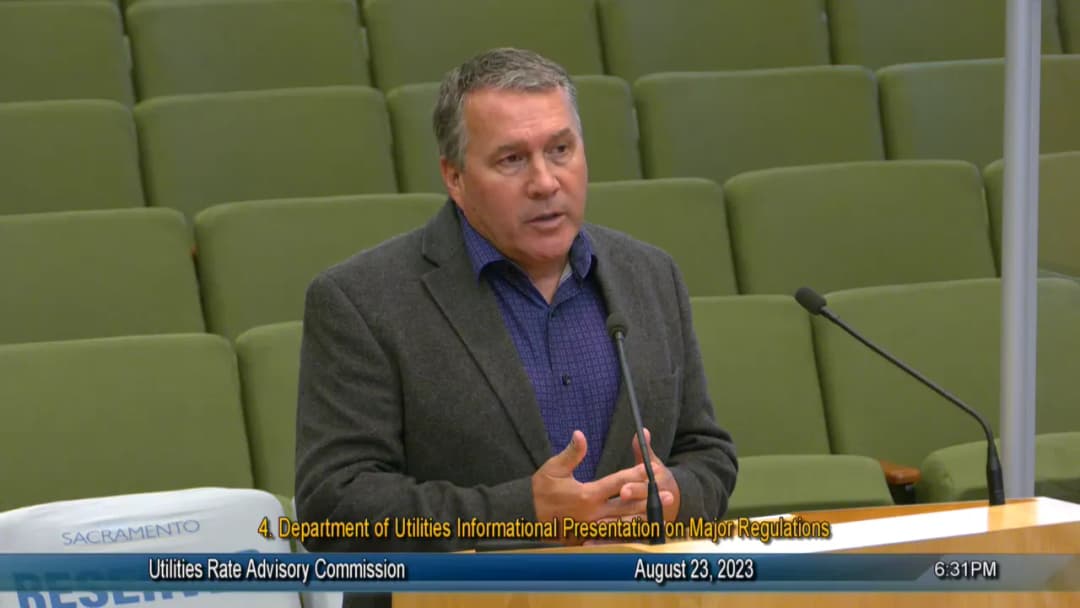
The Utilities Rate Advisory Commission met on Wednesday, August 23, 2023, from 5:42 PM to 6:51 PM. The commission received two informational presentations from the Department of Utilities: one on the Climate Action Plan progress and another on major regulations affecting the department. The consent calendar was approved unanimously. No public comments were made. Consent Calendar - Approval of Meeting Minutes (File ID: 2022-02502): Passed a motion approving the minutes of the June 28, 2023 meeting. - Department of Utilities Fiscal Year 2022/23 3rd Quarter Accountability Report (File ID: 2023-01058): Received and filed. Discussion Items - Department of Utilities Informational Presentation on Climate Action Plan Progress (File ID: 2023-01057): Sarah Morrissey, Sustainability Program Specialist, presented an update on the department's climate action initiatives. Key points included: - The city's Climate Action and Adaptation Plan (CAP) is being updated alongside the 2040 General Plan, with public review opened in April 2023 and adoption expected early 2024. - The CAP sets a goal of carbon neutrality by 2045 and includes a funding and financing strategy in Appendix D. - DOU's sustainability team (two staff) is developing a sustainability action plan, tracking performance dashboards, and working on on-site non-potable water reuse ordinances (Phase 2 feasibility study, with recommendations expected by June 2025). - Fleet electrification update: DOU has 377 vehicles; 18 of 149 light/medium-duty vehicles are zero-emission (ZEVs). Replacement cost for a traditional vehicle averages $58,000 vs. $100,000 for a ZEV. Charging infrastructure costs: $17,000 for a Level 2 charger, $185,000 for a DC fast charger. Questions from commissioners addressed replacement cycles, maintenance costs, and the need for charging during emergencies. - Department of Utilities Informational Presentation on Major Regulations (File ID: 2023-01056): Cheryl Hewn (Engineering Manager), Mark Sebarid (Water Quality Superintendent), and another staff member presented on regulations affecting wastewater, drainage, drinking water, and standby generators. Key points: - Combined system long-term control plan update due September 2024; estimated $413 million for flow reduction/storage/conveyance and $146 million for rehabilitation. - Sanitary sewer management plan update due 2025 after a 2024 audit. - Statewide trash discharge prohibition compliance by 2030; estimated $7 million for devices plus $1 million for equipment and 10 additional staff. - FEMA levee certification packages due 2024–2027; failure to certify could restrict development and require flood insurance. - Drinking water regulations: PFOS (two wells over current response levels, federal MCLs expected end of 2023/early 2024); hexavalent chromium (new MCL proposed at 10 ppb, about half of wells over half the MCL); lead and copper rule revisions (service line inventory in progress, no known lead service lines); microplastics monitoring (source water monitoring to begin late 2023, expensive lab analysis). - Standby generators: 120 permitted units; Tier 4 emission requirements cost up to $100,000 per unit; during January 2023 storms, 95 stations lost power, some for over three days, requiring continuous portable generator deployment. Commissioner questions focused on integration of costs into future rate planning, well contamination specifics, and potential for groundwater recharge. Key Outcomes - Both informational presentations were received and filed (no vote required). - The consent calendar was approved unanimously (4-0, with three commissioners absent). - Chair Fidell requested that a memo on options for providing water to unhoused individuals be added to the September or November meeting agenda. - The meeting adjourned at 6:51 PM.
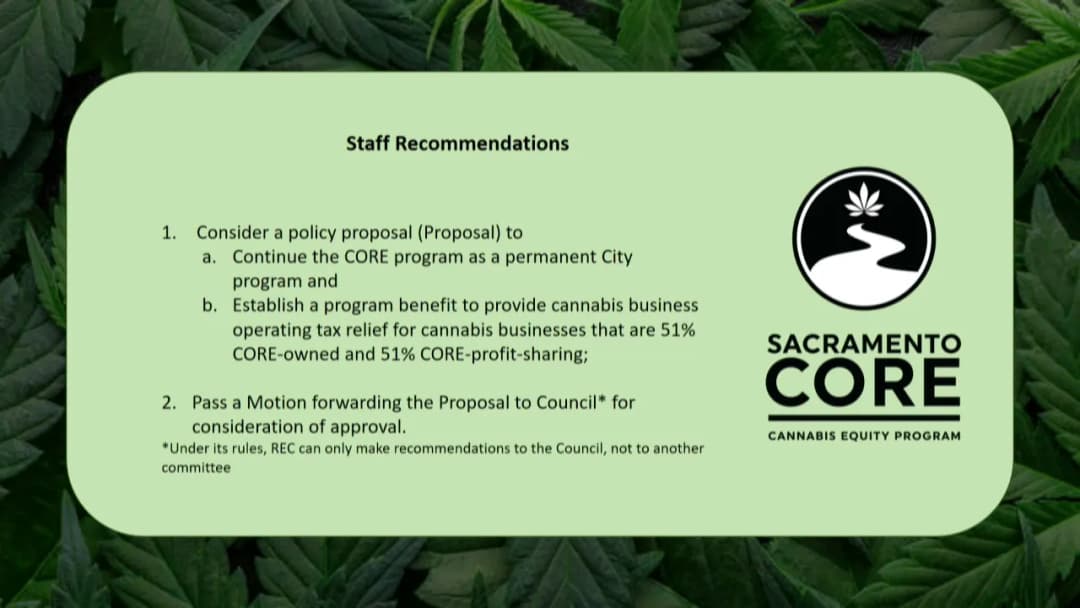
The Sacramento City Council's Racial Equity Committee met on Tuesday, August 22, 2023, from 10:02 a.m. to 11:58 a.m. in the City Hall Council Chamber. Members present: Councilmember Caity Maple (District 5), Councilmember Mai Vang (District 8, Co-Chair), and Mayor Darrell Steinberg (Chair). Councilmember Rick Jennings (District 7) was absent. The committee addressed five agenda items, including updates on the SCORE initiative, the African American Experience History Project, the Cannabis Opportunity Reinvestment and Equity (CORE) Program, and mandatory diversity, equity, inclusion, and belonging (DEIB)/racial equity training. Consent Calendar - Item 1 – Racial Equity Committee Meeting Minutes (File ID: 2023-00918): Approved unanimously (Maple, Vang, Steinberg; Jennings absent) the minutes from the April 11, 2023 meeting. Public Comments & Testimony - On Item 2 (SCORE Initiative): Lambert Davis expressed skepticism about the truth-telling and trust-building process, stating that accountability should include employment consequences for those who resist equity. He praised Mayor Steinberg and Councilmember Vang as sincere but criticized Councilmember Jennings for lack of participation. - On Item 4 (CORE Program & Cannabis Equity): Nineteen speakers – in chambers and via Zoom – overwhelmingly supported making the CORE Program permanent and providing tax relief. Key positions included: - Adiola Adipe (founder, Aiden's Relief) spoke of her son's survival using cannabis and endorsed the permanent program and tax benefit. - Zion Tedsa (founder, Shashamone Institute) requested that 60% of cannabis tax revenue be reinvested into equity businesses. - Multiple speakers (Racea, Malachi Almen, Rhonda Ernest, Valerie Byrd, Ryan, Michael Masiang, Brandon, Myesha Bahati, Jarrett Hill, Mindy Galloway, Javier Hernandez, Andre Hinley, and others) highlighted the challenges of high taxes, lack of access to capital, and the need for continued support. Many cited the program’s national model status. - Lambert Davis (also speaking on this item) argued that taxing equity businesses at high rates amounts to predatory lending and urged the city to reinvest cannabis tax revenue. - On Item 5 (DEIB/RE Training): Lambert Davis questioned whether the city manager would be included; Mayor Steinberg confirmed that the city manager and all charter officers are required to take the training. - Public Comments on Matters Not on the Agenda: Jay (CORE graduate, Trees and Knowledge Delivery) called for tax relief as the primary barrier to business growth and urged the council to monitor license renewal rates. Discussion Items - Item 2 – SCORE Initiative Update (File ID: 2023-01033): Presented by D'Angelo Mack, Nia Moorewethers, Alberto Marcado (Racial Equity Alliance and Council members), and Nora Liu (Race Forward). The update covered the truth-telling and trust-building workshops (three sessions completed, next in September), the establishment of regular meetings between the alliance, council, and city leadership, and the formation of a 12-member Racial Equity Council. The committee acknowledged the work and expressed support for the iterative process. Councilmember Vang emphasized the need to acknowledge past harms and to build trust for a forthcoming racial equity resolution. - Item 3 – African American Experience History Project (File ID: 2023-00936): Sean de Courcy, Historic Preservation Director, presented the final draft of the African American Experience (AAE) History Project, funded by a $50,000 grant from the National Trust for Historic Preservation. The project produced a historic context statement, 41 oral histories (housed at the Center for Sacramento History), identified 53 historic resources, of which 12 are eligible for the Sacramento Register and 11 listed on the Sacramento, California, or National Register. A $10,000 community stipend program was also created. Councilmember Maple noted that 23 of the 53 resources are in District 5. The committee recommended that the City Council accept the findings. Discussion included potential partnerships with the school district to incorporate local Black history into curricula. - Item 4 – Update on the City’s Cannabis Equity Study and Policy Proposal for CORE Program (File ID: 2023-00985): Davina Smith, Cannabis Manager, presented an update on the 2023 Cannabis Equity Study (conducted by Applied Memetics with academic partners) and a policy proposal to make the CORE Program permanent and provide a tax benefit for cannabis businesses that are at least 51% CORE-owned and 51% CORE-profit-sharing. Key statistics: Approximately 30 of 260 cannabis businesses are CORE-owned; CORE businesses contributed about $600,000 of the $23 million in total cannabis business tax revenue in FY 2021-22. The city received a $1.56 million state grant (third highest in the state) to support CORE members. The program has also partnered with Los Rios Community College District to create free online cannabis business education modules (26 students in first cohort). The committee discussed the need for a broader conversation about the overall cannabis tax rate (to be taken up by the Law and Legislation Committee on September 5, 2023). Assistant City Manager Leyne Milstein thanked stakeholders and supported a phased-in tax rate. - Item 5 – Recommendations to Begin Implementing Mandatory DEIB/Racial Equity Training (File ID: 2023-01076): Aimée Zenzele Barnes, Diversity and Equity Manager, presented three recommendations: (1) a baseline learning assessment (pre/post) for elected officials, council staff, and appointed officers; (2) two online trainings from Race Forward (6.5 hours each: "Building Racial Equity" and "Decision Making for Racial Equity") – total 13 hours; (3) reconsideration of the previously suggested 2–4 hour training requirement, as the 13-hour package provides a more robust foundation. Councilmember Vang proposed a timeline: complete the baseline assessment by December 2023 and finish both trainings by June 30, 2024. Councilmember Maple supported the plan and noted that each training costs $450 per person (total $900 per participant), with funding expected from council office discretionary funds. The committee gave direction to proceed. Key Outcomes - Consent Calendar: Approved unanimously. - Item 3 (AAE Project): Motion (Maple/Vang) to recommend the City Council accept the Historic Context Statement and Historic Building Survey Findings passed unanimously. - Item 4 (CORE Program): Motion (Vang/Maple) to forward the policy proposal (permanent program and tax benefit) to the City Council for consideration passed unanimously. The proposal will also be heard by the Law and Legislation Committee on September 5, 2023, with a potential joint session to align overall cannabis tax discussions. - Item 5 (DEIB/RE Training): Direction given to staff to implement the three recommendations with the following timeline: baseline assessment completed by January 1, 2024; two Race Forward trainings (13 hours total) completed by June 30, 2024. The training will be mandatory for all elected officials, council staff, and appointed officers, including the city manager and charter officers. A reporting mechanism at the next Racial Equity Committee meeting was requested to monitor completion rates.
The Measure U Community Advisory Committee met on Monday, August 21, 2023, at 6:00 PM in the Council Chamber at City Hall, 915 I Street, Sacramento. Vice Chair Duke Cooney presided in the absence of Chair Marjorie Dickinson. The committee approved the consent calendar, received updates on participatory budgeting, discussed the FY2021/22 annual report, and approved a process for the 2023 workplan. Public commenter Lambert Davis raised several concerns about outreach and implementation. Consent Calendar - Approval of Minutes (June 19, 2023): Passed unanimously (9-0-1, with Riviera absent and Dickinson absent). - Overview of FY2023/24 Measure U Approved Budget: Received and filed. - Measure U Community Advisory Committee Agenda Log: Approved unanimously. Public Comments & Testimony - Lambert Davis (member of the public): Expressed strong opposition to the Del Paso Boulevard Partnership receiving a grant, stating they “did not do any outreach” and characterizing it as a “conflict of interest” and a “scandal.” He also alleged that the process disadvantaged Asian participants and that staff members were paid to facilitate the process, which he considered unimpressive. He later criticized the city’s handling of the participatory budgeting process and accused the city of violating the Brown Act (regarding the City Manager’s Report item). Discussion Items - Item 4: Update on Participatory Budgeting Winning Project Implementation Grants: Ash Roughani (Special Projects Manager) presented an oral report. Of the $1 million allocated, 17 grantees are implementing 9 projects. Seven grantees are under contract; most are expected to be under contract by September 2023. The first project (Josh’s Heart homeless services event) was completed on August 12, 2023. Roughani emphasized that the participatory budgeting process itself was a key outcome. Commissioners discussed the need for a workshop with the City Council to present the process and results, and to seek additional funding in the mid-year budget review. No formal motion was made; the item was received and filed. - Item 5: Discussion and Approval of FY2021/22 Annual Report: The committee discussed the draft annual report, which uses a new standardized template. Commissioners noted the report is retrospective (for a fiscal year ending June 30, 2022) and that many current members were not on the committee at that time. After discussion, the committee voted unanimously (10-0, with Dickinson absent) to authorize Commissioner Abram Diaz to finalize and forward the report to the Budget and Audit Committee. - Item 6: Discussion and Approval of 2023 Annual Workplan and Calendar: The committee discussed the need for a workplan to guide future meetings and subcommittee scheduling. Vice Chair Cooney volunteered to draft the workplan, incorporating items such as the participatory budgeting workshop, focus groups, and a category-by-category review of Measure U spending. The committee voted unanimously (10-0, with Dickinson absent) to authorize Vice Chair Cooney to draft the workplan and return it to the committee for approval. Key Outcomes - Consent Calendar: Approved all three items unanimously. - Participatory Budgeting Update: Received and filed; no formal recommendations to City Council were made at this meeting, but the committee expressed interest in scheduling a workshop. - FY2021/22 Annual Report: Approved (10-0) with Commissioner Diaz authorized to finalize and transmit to the Budget and Audit Committee. - 2023 Annual Workplan: Motion passed (10-0) authorizing Vice Chair Cooney to draft the plan and present it at a future meeting. - Committee Comments: Commissioner Sala requested that the committee be added to the list of commissions receiving stipends; staff noted this could be agendized as a separate item or included in budget recommendations. Commissioner Macias noted that the lack of ad hoc committees has impeded the committee’s work, and asked that the City Clerk’s office avoid scheduling meetings on Juneteenth.
The City of Sacramento Civil Service Board met on August 21, 2023 at 1:00 PM. The Board approved the consent calendar (meeting minutes of June 19, 2023) with one abstention, noted the withdrawal of the scheduled appeal of Francisco Tarin's disqualification, then proceeded to closed session to consider three discipline/dismissal/release items. After closed session, the Board reported out unanimous decisions on three police officer discipline appeals, including one with a clarifying caveat. Commissioner comments included a discussion on notification procedures for appellants. Consent Calendar - Approval of Civil Service Board Meeting Minutes (June 19, 2023): Passed by a vote of 3‑0‑1 (Member Burden abstained as they were not present at the previous meeting). Motion by Member Emanford, seconded by Vice Chair Gonzalez Kabadek. Discussion Items - Appeal of the Disqualification of Francisco Tarin from the Personnel Analyst Recruitment (File ID 2023-00934): This item was withdrawn by staff prior to discussion. Closed Session Report Out The Board reported the following actions from closed session (Government Code Section 54957 – Public Employee Discipline/Dismissal/Release): - Item 1: Motion to adopt the arbitrator's proposed decision regarding a police officer's appeal of removal from assignment as a field training officer (including a 9.5% incentive pay) for violating Sacramento Police Department General Orders 210.04. Vote: 4–0 (unanimous). - Item 2: Motion to adopt the arbitrator's proposed decision regarding a police officer discipline matter, with the caveat that the Board stated the correct standard to be applied in discipline cases is the preponderance of the evidence standard. Vote: 3–0 (Vice Chair Gonzalez Kabadek recused herself). The member title was also a police officer. - Item 3: Motion to adopt the arbitrator's proposed decision regarding a police officer discipline case. Vote: 4–0 (unanimous). Commissioner Comments & Ideas - Member Byrd raised a previous discussion about amending Board rules to ensure that appellants who are duly notified but do not appear at a hearing are not granted continuances. Staff clarified that they already have a process for notifying and following up with appellants, and have recently begun including those notifications in the agenda packets to demonstrate due diligence. The Board took no formal action on this topic. Public Comments – Matters Not on the Agenda - No public comments were submitted. Key Outcomes - Approved consent calendar (minutes of June 19, 2023) with one abstention. - Noted withdrawal of the Francisco Tarin appeal. - In closed session, adopted three arbitrator's proposed decisions on police officer discipline appeals (votes: 4‑0, 3‑0 with recusal, 4‑0). For item 2, the Board clarified that the preponderance of the evidence standard applies. - Commissioner comments raised potential rule clarification on appellant non‑appearance; no action taken. - Meeting adjourned.