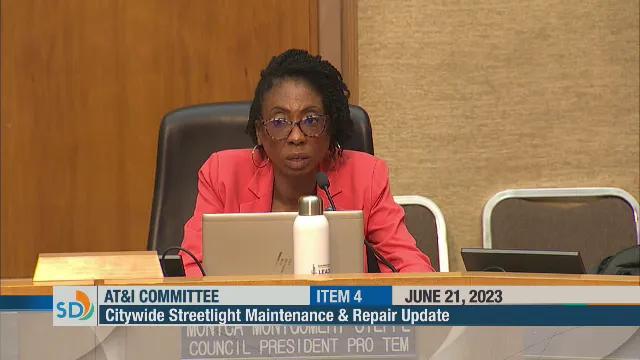
The Active Transportation and Infrastructure Committee met on June 21, 2023, to discuss development impact fees, streetlight maintenance, a complete streets policy, and an operational assessment of the Engineering and Capital Projects Department. The committee also heard public testimony on non-agenda items and approved a consent calendar. All votes were unanimous 4-0. Consent Calendar - Item 1: First Amendment to agreement with Kennedy Jenks Consultants for professional services for design and construction support of the Alvarado Second Extension Pipeline. Approved unanimously. - Item 2: Award amendment number one to Blue Lake Civil for design and construction support services of AC Water and Sewer Group Job 1033. Approved unanimously. Public Comments & Testimony Non-Agenda Public Comment - Blair Beekman (member of public) expressed concern about the city's approach to unhoused law enforcement, urging a longer timeline (at least one month) before ticketing or jail, and warning that a rushed 1-3 day process could create violence and resentment. - The original (anonymous speaker) argued that the city is ceding sovereignty to global entities (UN, WHO, World Economic Forum) through a pandemic preparedness treaty, and that local officials are not upholding their oaths. - Kathleen Lippett (member of public) raised concerns about pedestrian safety due to sidewalk camping, open drug use, and inappropriate content in public libraries; also urged the city to prioritize street lighting as a crime deterrent. - Becky Rapp (planning group attendee, public health educator) shared a personal experience of witnessing drug use downtown and emphasized that streetlight maintenance is crucial for public health and safety. She also highlighted a presentation by the Mid-City Youth Council requesting park improvements (hydration stations, trash cans, benches, lighting, playground updates). Consent Agenda Public Comment - Blair Beekman commented on items 1 and 2, questioning whether federal funding for sewer and water runoff might be used for law enforcement purposes, and urged transparency. - The original argued that water scarcity is manufactured and that the city should invest in geo-water drilling instead of recycling sewage water, calling the latter unsafe. Item 3: Development Impact Fees Annual Report - Sally Small (Emerald Hills resident, new chair of the Choice Valley Community Planning Group, speaking as an individual) stated that the Encanto area is not receiving its fair share of DIF funds because most new housing is affordable (which generates lower fees). She noted that Kennedy Park and Emerald Hills Park are listed but have not progressed, and that engagement links on the city website are broken. - Blair Beekman supported keeping in-lieu fees consistent to provide developer certainty, and opposed using jail or ticketing systems as solutions for homelessness. - The original criticized the city for having unspent DIF funds for five years or longer, calling it poor accounting and carelessness with public money. Item 4: Citywide Streetlight Maintenance - Sally Small (D4, Emerald Hills) expressed jealousy that downtown gets priority for streetlight repairs, and noted that lights in her area have been out for years. She supported additional funding for repairs. - Blair Beekman raised concerns about surveillance technology in smart streetlights, urging open conversations about data collection and the role of the Privacy Advisory Board. - The original accused the city of negligence for not providing enough staff to maintain existing lights while planning to add more, and suggested that smart streetlights with ALPR are a waste of money. - Francine Maxwell (Southeastern San Diego resident) praised the report's transparency and urged the city to bring in more electricians, deploy solar lights in communities, and balance tourism needs with resident needs. Item 5: Complete Streets Council Policy - Clarina Conturas (in-person speaker) recommended that performance measures include mode share and safety, that the exceptions policy be strengthened with clear criteria, and that the policy reference Council Policies 800-14 and 0000-32 to ensure equity in communities of concern. - Blair Beekman supported the policy and linked it to vision zero and community harmony, but urged open discussion of technology in streetlights. - Sally Small (D4, Emerald Hills) stated the policy is not ready for prime time, citing poor implementation of complete streets on Market Street and Streamview, and requested that transportation department engage with community planning groups before projects. - Saad Assad (Mission Hills resident) supported the policy, highlighting the need for multimodal design, strong exceptions, accountability measures, and equity in underserved districts. - The original argued that the complete streets policy is a front for “15-minute cities” and a UN agenda to restrict movement and impose vehicle miles traveled taxes, and said it would harm elderly and disabled people. Item 6: Operational Assessment of ECP - The original criticized the city for prioritizing projects like Pure Water (which she called “poop water”) over geo-water drilling, and argued that pushing electric vehicles and all-electric buildings will burden residents with high SDG&E costs. Discussion Items Item 3: Development Impact Fees Annual Report FY2022 - Samira (Assistant Deputy Director, Planning Department) presented the annual DIF report, highlighting that $79 million was collected and $50 million expended in FY2022. The report covers the transition to citywide DIFs and includes a cleanup amendment to the citywide park DIF resolution (5% administration fee taken off the top). The Active Transportation and Infrastructure Livability Fee (ATILF) has been imposed on about 10 projects but not yet collected. The citywide park DIF is fully adopted; fire, mobility, and library DIFs will be fully implemented July 1, 2023. - Vice Chair Locava asked about the findings pages (23-27) and noted they were missing from the attachment; staff confirmed they were present in the docket. He also requested a fall reminder to council offices about available DIF funds. - Committee Member von Wilpert questioned the high administrative costs in the Range of Penasquitos fund and the five-year-old unspent funds in District 5. She requested follow-up on project cost estimates and state funding match. - Committee Member Montgomery Step asked about SB 330 limitations; staff explained that SB 330 protects projects with applications submitted before new fees, but projects submitted after are subject to current fees. The phase-in period will be complete by July 1, 2023. - Chair Lee commented on the quality of the report and the shift to citywide fees to avoid long-standing cash balances. He asked for clarification on “community of concern” definition and how North University City’s high DIF balance can be used. Staff confirmed that funds must be used for the purpose collected, but the community plan update may identify new linkages. Item 4: Citywide Streetlight Maintenance and Repair Update - Juan Aguirre (Assistant Deputy Director, Transportation Department) presented the update. The city maintains over 60,000 lights. The department has 18 electricians, 8 utility workers, and one equipment operator, but carries a 40% vacancy rate (now down to two vacancies). The backlog is over 6,100 cases, and the department receives 5,000-6,000 cases annually but can only complete about 5,000. The backlog grows 30% month-over-month. Funding includes $2.6 million for new lights, $1 million for series circuit upgrades, and $3.5 million in federal earmarks. A $700,000 contract for downtown repairs has completed 30+ lights. The department aims to reduce backlog by 50% with FY24 funding of $2.3 million. - Committee Member Montgomery Step questioned the prioritization model, noting that District 4 appears to have low priority despite high need. She requested a deeper dive into the analytics. - Committee Member von Wilpert asked about the spike in backlog between FY21 and FY22; staff cited employee departures, COVID-19, and increased reporting. She also asked how to communicate crime hot spots for priority repairs. - Vice Chair Locava asked about using outside contractors to tackle the backlog; staff noted the $2.3 million funding is expected to cover about half the backlog, and they requested additional FTEs (not approved). He also inquired about the cost breakdown of repairs (personnel vs. materials). - Chair Lee noted that the charts in the staff report and presentation differed and asked for the latest data. He also asked about the life expectancy of new LED lights and the backlog for new streetlight installations. Staff reported over 20 projects in the pipeline for new lights. Item 5: Complete Streets Council Policy - Christine Mercado (Senior Engineer, Sustainability and Mobility Department) presented the draft policy. The policy aims to create a balanced multimodal transportation system, with guiding principles including serving all users, prioritizing accessibility, creating connected networks, integrating environmental considerations, and promoting equity. Staff recommended establishing an interdepartmental mobility governance group, integrating complete streets into plans and processes, actively seeking funding, developing performance measures, and requiring documented exceptions with approval from multiple departments. - Vice Chair Locava asked about exceptions (e.g., high-speed roads) and how the policy interacts with Council Policy 800-14 and funding. He also noted the challenge of developer-built streets that may not connect to future networks. - Committee Member von Wilpert emphasized the need for community communication, citing past instances where bike lanes were installed overnight without notice. She also requested inclusion of external voices (e.g., biking advocates, accessibility advisory board, mobility board) in the governance group. - Committee Member Montgomery Step suggested adding the Community Forestry Advisory Board to the list of stakeholders, and noted that the policy’s language on green streets needs more implementation detail. - Chair Lee echoed the need for a strong exception policy, performance measures, and alignment with Council Policy 800-14. He supported the interdepartmental governance group and quick-build pilot projects. The chair indicated the policy would return to committee for further review. Item 6: Operational Assessment of Engineering and Capital Projects Department - Ranya Amen (Director, Engineering and Capital Projects) and Erica Dinsdale (WSP) presented the assessment. The study identified four key areas: project management, AMD partnerships, supporting departments, and cost. Recommendations include implementing stage gates, enhancing project controls, expanding the PMO, separating project manager and technical lead roles, establishing client care liaisons, using a risk-based approach for small projects, streamlining procurement, reducing duplication with supporting departments, implementing SLAs and KPIs, reviewing overhead rates, developing a robust asset management system, and balancing in-house vs. outsourced engineering. - Karen McGrath (Assistant Director, ECP) outlined next steps: formalizing stage gates (starting with project initiation), expanding project controls and dashboards, piloting the separation of project manager and technical lead roles on complex projects, establishing a quick-build team for small projects, and working with the city personnel department to create new classifications. - Committee Member von Wilpert praised the transparency and noted the personnel system will need reform to create new classifications quickly. She suggested piloting the new project manager system on larger projects, but staff explained that larger projects benefit most from the separation. - Vice Chair Locava appreciated the hard look and asked about coordination with the city auditor’s work. He also raised concerns about the “burn rate” of project funds on community engagement, the overhead costs, and the need to keep council informed as processes change. He asked whether the assessment looked at outside contractor performance; WSP said it was outside the scope but noted ENCP’s receptiveness. - Chair Lee supported the recommendations, especially the focus on improving project management, robust asset management, and better staffing ratios. He noted the importance of delivering projects faster and on budget. Key Outcomes - Consent Calendar (Items 1 & 2): Approved unanimously 4-0. - Item 3 (DIF Report): Motion by Vice Chair Locava, second by von Wilpert, to adopt staff recommendations. Passed unanimously 4-0. Staff will follow up on specific project cost estimates and administrative fee questions. - Item 4 (Streetlight Update): Information item, no action taken. Committee members expressed support for the department’s efforts and requested continued updates. - Item 5 (Complete Streets Policy): Information item, no action taken. Committee provided feedback; the policy will be revised and return to committee before going to full council. - Item 6 (ECP Assessment): Information item, no action taken. The committee will receive semi-annual updates on progress. - Item 7: Trailed to a future meeting.
Public Meetings - San Diego, California
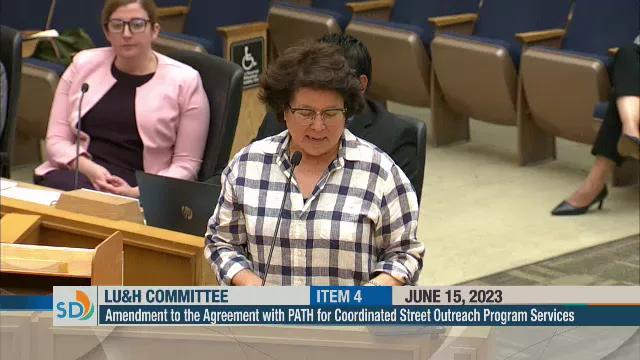
Public Meetings - San Diego, CaliforniaThe Land Use and Housing Committee met on Thursday, June 15, 2023, beginning at approximately 9:00 AM (though the transcript opens with "Good afternoon," indicating a possible discrepancy between the scheduled start time and the actual start of the recorded public session). The committee addressed a consent agenda, several discussion items related to homelessness services and housing, and received an informational update from the Development Services Department. All votes were unanimous. Consent Calendar - Item 1: Accepted a 43-acre land donation from Tri-Point Homes Inc. in the East Elliott area for open space preservation and addition to the Multiple Species Conservation Program. Passed unanimously. - Item 2: Declared 0.517 acres of city-owned property at Town Center Drive as exempt surplus land and authorized its sale to BRE BMR Town Center Science Park LLC, a Biomed subsidiary. Councilmember Lee noted Biomed's role as a job creator in the life sciences sector. Passed unanimously. Public Comments & Testimony On Past Committee Actions (April 13, 2023): - Lori Saldania (former state assemblymember) criticized the committee's failure to act on an ordinance, stating it was the "worst possible action" and that inaction was causing deaths and promoting "state-sponsored violence" through sweeps. She urged the committee to take tough votes. Non-Agenda Public Comment: - Caesar described a 40-year home occupation ceramics business in a residential zone, alleging toxic emissions and violations of state laws, and pleaded for enforcement. - Tracy D'Zenzo requested modifications to the Short-Term Vacation Rental (STVR) ordinance, citing a property owner who evicted families from 114 affordable units to convert them to STVRs, exploiting a host loophole. She urged limiting licenses per complex and capping permits per planning area. - Joy Sanyata (District 3) advocated for collaboration among agencies, citing Houston's success with a centralized database and shared goals, and urged the city to improve inter-agency cooperation. - Lori Saldania accused Mayor Todd Gloria of campaign law violations, unethical behavior, and consolidating power, comparing him to former Mayor Kevin Faulconer. - Diane Grace suggested prohibiting marijuana advertising to reduce drug use normalization among youth. - Katrina Priest, a middle school teacher, highlighted the link between youth marijuana use and mental health problems, inviting the committee to hear from local pediatricians. - Martha Sullivan (San Diego Housing Emergency Alliance) asked the committee to compare the new survival camping ban with the city's 2019 Community Action Plan on Homelessness, noting potential conflicts. - Kelly McCormick, a public health educator, opposed increasing marijuana retail stores, citing studies that youth are influenced by advertising and normalization, leading to addiction and homelessness. - Terry Ann Skelly expressed concern about doubling marijuana storefronts and reducing distances from sensitive uses, urging a focus on youth mentoring and safer neighborhoods. - Judy String reported on a webinar about marijuana and mental health, noting that 50% of mental health problems are established by age 14, and urged caution on expanding marijuana businesses. - Shelby, a public health researcher, supported the cannabis code amendments, citing equitable access for medical patients and noting that legalization does not increase youth use according to NIH and DEA. On Item 3 (MOU with Housing Commission): - Joy Sanyata expressed confusion about the master MOU, fearing it might reduce transparency. - Lori Saldania criticized the "homelessness industrial complex" and warned that federal funds (HUD) might be lost due to the encampment ordinance. - Michael McConnell supported streamlining but noted lack of coordination between city, housing commission, county, and organizations, and criticized the encampment ban. - Martha Sullivan reiterated that the MOU cannot support the Community Action Plan due to the conflicting encampment ordinance. On Item 4 (PATH Contract): - Joy Sanyata supported PATH but questioned the referral requirement. - Lori Saldania praised PATH but said the encampment ban makes their work harder. - Michael McConnell supported PATH but noted that the encampment ban will displace elderly women and others who cannot access shelter. - Roger Sullivan (San Diego Housing Emergency Alliance) asked about FTEs and whether the funding reflects the new ordinance's outreach-first implementation plan. On Item 5 (Golden Hall Emergency Contract): - Joy Sanyata approved but expressed concern about shelter instability. - Lori Saldania criticized hostile architecture (removal of benches near City Hall) and urged the city to provide humane public spaces. - Monica Ball requested an IBA scan of other California communities' practices for placing emergency sleeping cabins on church land using Appendix P. On Item 6 (Development Services Report): - Lori Saldania warned that rapid growth without adequate infrastructure leads to system collapse, and called for more restrooms and parks. - Danny Abacia asked about educational outreach for permitting and how many developers pay in-lieu fees instead of building affordable housing. - Katrina Priest urged the committee not to rush the cannabis social equity program, noting planning groups had only six days to comment. - Nancy Lubin expressed concern that increasing marijuana normalization will lead to more impaired driving. - Becky Rapp asked if the council intended the cannabis division to take such radical measures (36 new shops, eliminating sensitive use restrictions) and requested a health impact study. - Francine Maxwell asked the department to hold more Zoom sessions to educate communities, especially in underserved areas. - Judy Strang concurred that the cannabis proposal is rushed and needs more community input, and noted law enforcement is already stretched. Discussion Items Item 3: MOU between City and San Diego Housing Commission for Homelessness Services Director Sarah Jarman presented a master MOU to consolidate five existing agreements, effective July 1, 2023, with three one-year renewal options. The Housing Commission will administer programs, and the city will maintain oversight. Discussion focused on Section 2.2, which allows the mayor and Housing Commission CEO to amend the MOU without council approval for new programs already funded by the council. Chair Moreno expressed discomfort, citing past transparency issues. After debate, the committee adopted an amendment (by Vice Chair Lakava, seconded by Lee) to require written notification to the city council and housing authority for: (A) relocation of any shelter, (B) defunding of any existing program, service, or facility, and (C) removal of the requirement for council approval on contracts over $250,000 (which was already covered by existing processes). Notification timelines were left to be defined, with an emergency carve-out. The motion passed unanimously. Item 4: Second Amendment to Contract with PATH San Diego for Coordinated Street Outreach Deputy Director James Carter requested $3,125,000 for FY2024 (approx. $1.5M general fund, $1.625M state grants). Metrics showed 2,500 individuals served by case management, 200+ placed in permanent housing, and 200+ placed in shelter/nursing homes. Councilmember Lee discussed the relationship between Get It Done reports and outreach, noting that encampment reports go to neighborhood policing first. Vice Chair Lakava praised the 20% positive outcome rate. Chair Moreno requested quarterly updates on outreach numbers. The item passed unanimously. Item 5: Ratification of Emergency Contract for Temporary Shelter Relocation (Golden Hall) Assistant Deputy Director Sarah Ferry reported that after a November 2022 water leak, 127 individuals were temporarily moved to Motel 6. The contract with HIG Downtown Investments LLC for $151,000 was ratified. Councilmember Lee asked about remaining repairs; staff noted only wear-and-tear repairs will be made due to the planned move-out. The item passed unanimously. Item 6: Informational Report on Development Services Department Operations Director Elise Lowe presented an overview of the department's nine divisions, 746 budgeted positions, and progress on digital permitting. Key metrics: 56% of permits issued within 7 days; average first review cycle time reduced from 31 days (January) to 22 days (May); 3,780 virtual appointments with only 5% no-shows; 131 new hires in the fiscal year; 74 vacancies (5% vacancy rate). The department is using temporary contractors (NV5, Inner West) to address backlogs, particularly in structural engineering. The chief building official is launching no-plan permits for door/window replacements, kitchen/bath, and multifamily, and a professional certification program for office tenant improvements. The Urban Division reported 3,662 residential units under review downtown and 3,169 under construction, with six parks in development. The mayor's executive order on 100% affordable housing has expedited 10 projects (1,069 units) with an average 9-day turnaround. Code enforcement (renamed "BLUE") has 7,400 active cases, with a focus on substandard housing (1,355 cases). No action was taken on this informational item. Key Outcomes - Consent Agenda (Items 1 & 2): Approved unanimously. - Item 3 (MOU): Approved unanimously with an amendment requiring notification to the city council and housing authority for shelter relocation and defunding of programs. The city attorney and staff were directed to develop specific notification timelines and an emergency carve-out before the item goes to full council. - Item 4 (PATH Contract): Approved unanimously. Chair Moreno requested an update on outreach numbers in November 2023. - Item 5 (Golden Hall Emergency Contract): Ratified unanimously. - Item 6 (DSD Report): Received as informational; no vote taken. The committee requested continued updates on permit processing, affordable housing expediting, and code enforcement outreach.
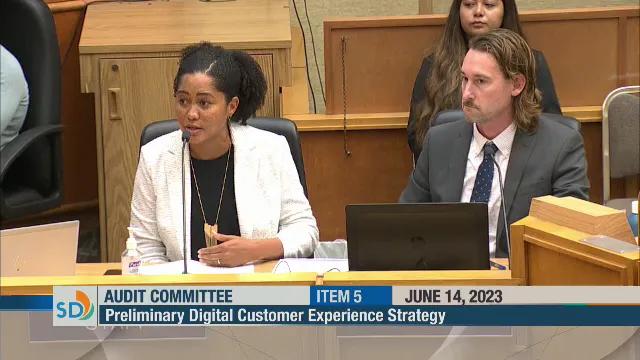
The San Diego City Council Audit Committee convened on June 14, 2023, to review audit reports, discuss risk management, and hear updates on the city's digital customer experience strategy. The committee voted on two items: designating a committee member to participate in developing a request for proposals (RFP) for outside audit services, and forwarding the capital improvement projects approval process audit to the City Council. All other agenda items were informational. Consent Calendar - Approval of Committee Actions (April 26, 2023): Committee member Tab Shuri moved approval, seconded by Committee Member Halpern. The motion passed unanimously by voice vote. Public Comments & Testimony - Non-Agenda Public Comment: Speakers raised concerns about encampment enforcement, the climate action plan, and appreciated the City Attorney's office. - Blair Beekman suggested adding a housing department visit before police enforcement at encampments. - John Stump urged an audit of compliance with the climate action plan, particularly employee parking subsidies. - A caller (phone ending 7968) thanked the City Attorney's team. - Item 1 (RFP for Audit Services): John Stump recommended including climate change mitigation and local location criteria in the RFP. - Item 2 (CIP Approval Process Audit): John Stump submitted a 10-page letter and urged review of fire station projects, saying public safety facilities are the worst offenders in cost and time overruns. - Item 3 (Risk Management): Blair Beekman connected accountability to litigation avoidance; John Stump suggested reviewing international vehicle safety painting practices. - Item 4 (Single Audit): Blair Beekman commented on streetlight repair, ALPRs, and surveillance technology. - Item 5 (Digital Customer Experience): Caller Joyce expressed support for the Panda team; Lori Saldania criticized Councilmember Whitburn's encampment policies and urged prioritizing homeless services; Blair Beekman cited San Jose's 311 system as a model. - Item 6 (Auditor's Monthly Report): Lori Saldania requested an audit of financial conflict disclosures at council meetings; Joyce supported the housing commission property acquisition audit. Discussion Items - Item 1: RFP for Outside Audit Services - City Auditor Andy Hanno and Deputy City Auditor Daniel Knighton presented the timeline to engage an audit firm by December 2023. The current contract expires in February 2024. - City Attorney Elliott warned that an extension would require an ordinance process and that recent RFPs have taken longer than expected. - Chair Whitburn moved to designate Committee Member Halpern to the RFP working group; the motion passed 4–0 (with one member absent). - Item 2: Performance Audit of CIP Approval Process - The audit found 44% of projects appeared insufficiently planned when first approved, costing an average 233% more than initial estimates and taking four years longer to complete. - The city faces an estimated $5.17 billion CIP funding gap over FY24–FY28 ($9.75 billion needs vs. $4.58 billion available). - Three recommendations were issued: require new projects to start as P projects unless project-ready, establish standardized delivery timelines, and review pre-P-project S projects for feasibility. Management agreed to all three. - Engineering & Capital Projects Director Rania Amen expressed support for the recommendations. - Vice Chair Moreno raised concerns that new requirements could hinder council-prioritized projects without mayoral funding support. - Motion to accept the report and forward to City Council passed 4–0. - Item 3: Overview of City's Approach to Risk Management - Presented by Chief Compliance Officer Christiana Gauger, Risk Management Director Angela Colton, and Compliance Program Manager Luis Bruzegno. - Covered types of risks, mitigation through transparency and communication, and risk management programs (liability claims, insurance, workers' compensation, employee benefits). - A new loss control team was fully staffed in January 2023 to focus on data analytics. - Committee Member Halpern and Tab Shuri noted the lack of a holistic, citywide risk framework; City Auditor Hanno explained the recommendation's origin. - Item 4: FY22 Single Audit - Presented by Jeff Peel (Department of Finance) and Linda Hurley (MGO partner). The city expended about $264 million in federal awards. - The city was considered a low-risk auditee; unmodified opinions were issued. One significant deficiency was found in the Coronavirus State and Local Fiscal Recovery Fund program related to the California water/wastewater arrearage payment program: 4 of 25 sampled customers lacked evidence of required communication. - No material weaknesses or noncompliance were identified. - Item 5: Preliminary Digital Customer Experience Strategy - Presented by CFO Matt Vesby, Performance Analytics Director Kirby Brady, and Deputy Director Alex Hinton. - The draft strategy outlines a vision for cohesive customer service, including digital tools and a future contact center. It proposes a 10-year timeline with costs estimated at $19–25 million and 19 FTEs. - Vice Chair Moreno and City Auditor Hanno questioned the cost and timeline, citing prior consultant estimates and benchmarking from other cities (e.g., LA at $6.5 million, Sacramento at $3.5 million). - Staff defended the estimates, citing the need to modernize back-end systems before launching a functional 311 center. - The item was informational; no action was taken. - Item 6: City Auditor's Monthly Activity Report - City Auditor Hanno reported one report issued (CIP audit), new report template/website launched, and ongoing audits in various stages. - FY23: 14 reports issued, 43 recommendations made. - The FY24 budget included competitive salaries and funding for two of three requested positions. Key Outcomes - Item 1 Vote: Motion to designate Committee Member Halpern to assist with RFP development passed 4–0. - Item 2 Vote: Motion to accept the CIP approval process audit and forward it to City Council passed 4–0. - Next Steps: Staff will develop the RFP for outside audit services with committee involvement, implement the three CIP audit recommendations, incorporate public feedback into the digital customer experience strategy draft, and continue ongoing audits.
Mayor Todd Gloria, joined by City Councilmember Stephen Whitburn, community leaders, and city staff, delivered a series of announcements and updates on major infrastructure, public space, and park projects. The meeting covered the completion of the Gas Lamp Promenade Phase 1, the opening of the West Mission Bay Drive Bridge, federal funding for street light repairs, and a comprehensive State of Balboa Park address. Gas Lamp Promenade - Mayor Gloria announced the completion of the Gas Lamp Promenade Phase 1, which includes the installation of steel bollards on Fifth Avenue from Broadway to K Street, allowing daily vehicle closure from noon to 2 a.m. The project builds on the success of the pandemic-era outdoor dining program and aims to create a safe, walkable, and vibrant public space. The city council designated Fifth Avenue as a “slow street” in April 2023, making the closure permanent. A feasibility study for long-term improvements is underway. Speakers included Councilmember Whitburn, Gas Lamp Quarter Association Executive Director Michael Trimble, and Downtown San Diego Partnership President Betsy Brennan, all expressing strong support for the promenade as an economic development and placemaking strategy. West Mission Bay Drive Bridge - Mayor Gloria celebrated the completion and opening of the West Mission Bay Drive Bridge, described as the largest city-managed transportation project in San Diego’s history. The project added two parallel structures (northbound and southbound) to relieve traffic congestion, and included 12 acres of wetland mitigation to restore critical habitat. The bridge enhances connectivity between beach communities and the city, supporting the local tourism economy. Street Light Funding - The mayor highlighted $3.5 million in federal funding secured by Congress members Peters and Vargas to replace outdated series-circuit street light wiring in Pacific Beach, Point Loma, and Logan Heights. The investment will bring approximately 200 street lights back online and improve long-term reliability. The city’s street light system currently suffers from series-circuit failures where one outage can cause a whole string to go dark. State of Balboa Park - Mayor Gloria delivered a dedicated “State of Balboa Park” speech at the San Diego Natural History Museum on May 24, 2023 (referenced in the June 14 meeting). He reported that the park was named one of the top ten public parks in the U.S. by USA Today. He outlined numerous completed and ongoing projects, including the Palisades plaza restoration, renovation of the Botanical Building (scheduled for completion in early 2024), repaving of Park Boulevard and President’s Way, and new parking spaces. Funding sources included state and federal grants, private philanthropy, and city funds. The mayor announced a new “Prioritization Framework” planning effort to determine future park investments. He also recognized the work of Forever Balboa Park, which has raised over $17 million in private philanthropy in five years. The mayor presented the first-ever “Key to Balboa Park” to longtime volunteer and advocate Betty Peabody. Councilmember Whitburn proposed an unsafe camping ordinance to address encampments in the park, with two temporary safe-sleeping sites to be opened on the park’s edge. Key Outcomes - Gas Lamp Promenade Phase 1 completed; permanent daily closure of Fifth Avenue from noon to 2 a.m. begins. - West Mission Bay Drive Bridge fully open to traffic, relieving congestion and adding wetland mitigation. - $3.5 million in federal funding allocated to repair approximately 200 street lights in three neighborhoods. - Botanical Building renovation on track for early 2024 completion. - New park planning framework (Prioritization Framework) to be launched in the next month. - Betty Peabody awarded the first Key to Balboa Park. - Temporary safe-sleeping sites for homeless individuals to be opened on the edge of Balboa Park this year, pending council action on the unsafe camping ordinance.
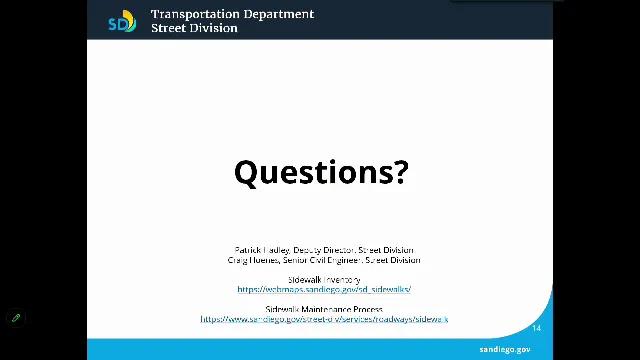
The Special Active Transportation Infrastructure Committee met on June 8, 2023, at 17:00 UTC (10:00 a.m. local) to review a consent item, receive updates on the Mobility Master Plan and sidewalk maintenance, and hear public testimony. Chair Lee presided, with Vice Chair Lakava and Councilmember Von Wilpert present; Councilmember Montgomery Steep was absent. The meeting was televised and livestreamed, with public comment via Zoom and in person. Items 3 and 5 were trailed to a future meeting. Consent Calendar - Item 1: Construction change order number two for the OTI WTP Basin Number One Concrete Restoration Project with AB and Savoba Construction Incorporated. Approved unanimously (3-0) with no discussion. Public Comments & Testimony - Blair Beekman (non-agenda and item 2): Commented on FY24 budgeting for ALPRs and street kiosks, criticizing the city's language and approach to surveillance technology. He advocated for fewer ALPRs (10-15 preferred, suggested 50 as a reasonable compromise) and emphasized openness and accountability in tech practices. He also commented on sidewalk payments, suggesting bond measures and disability considerations. - Karina Contreras (Transportation Policy Advocate for Climate Action Campaign, item 4): Expressed that all San Diego residents deserve equitable, reliable, frequent, sustainable, and safe mobility options. She stated that a good mobility plan must have an equity-focused approach, reduce social determinants of health, include mode share targets, total cost to meet targets, implementation timeline, short/mid/long-term funding strategies, annual benchmarks, and transparent annual progress reporting. - Anar (Executive Director of Bike San Diego, item 4): Expressed excitement for the Mobility Master Plan update, urging focus on active transportation, mass transit, climate equity, and transportation justice. He requested bike share, complete street ordinances, and greater bus frequency be included in the final plan. Discussion Items - Item 4: City of San Diego Mobility Master Plan Status Update – Presented by Alyssa Mudo (Director, Sustainability and Mobility Department) and Phil Trom. The plan consolidates past mobility planning into a comprehensive document, identifying prioritized projects, programs, and policies. Key elements include: outreach with over 500 survey responses, interdepartmental coordination, high-need area analysis using climate equity index, Vision Zero mapping, and Blueprint San Diego data, modal propensity maps, evaluation criteria aligned with Policy 814, and an implementation plan with funding sources and performance indicators. The draft plan is slated for release in July 2023, with public review in summer 2023, council approval in FY24, and a four-year update process. Councilmember Von Wilpert expressed concerns about District 5 being underrepresented in the heat maps and focus areas, citing high VMT, upcoming housing growth, and lack of transit until 2050. Vice Chair Lakava asked about commuter vs. neighborhood focus, received clarification that projects connect focus areas to job centers, and also asked about bike lane striping opportunities and the July deliverables. Chair Lee asked about community outreach strategies and the relationship between the Bike Master Plan and Mobility Master Plan. All members noted the importance of funding for implementation. - Item 2: Sidewalk Maintenance and Replacement Update – Presented by Chris Gascon (Assistant Director, Transportation Department) and Craig Honus (Senior Civil Engineer). The city maintains approximately 4,500 miles of sidewalks. A 2016 assessment identified over 86,000 repair locations; since FY2016, about 55,000 repairs have been completed, with an estimated 10,000 more by end of FY23. The annual need is $18.5 million over 10 years to address the current backlog of 37,000 concrete repair locations. Current funding includes $1.25 million for slicing and $4 million for concrete replacement in FY23, with a potential $2 million in FY24 from the May revise. The city follows state law and council policy 200-12 to determine liability. The 50-50 cost share program has $300,000 annually and completes about 20 locations per year. Proposed streamlining includes eliminating the $2,200 right-of-way permit fee, using selected contractors, and self-certification with spot checks. Councilmember Von Wilpert asked about ramping staff, in-house slicing, and budget implications. Vice Chair Lakava asked about thresholds for sending notices, the value of updating the sidewalk assessment, and the 50-50 cost share usage. Chair Lee asked about data collection from road assessments and accommodations for low-income residents. The presentation concluded with plans to implement the new process by late fall. Key Outcomes - Approved consent agenda (Item 1) unanimously (3-0). - Item 4 was an information item; no motion required. The committee provided input and feedback for the Mobility Master Plan, which will be released as a draft in July 2023. - Item 2 was an information item; no motion required. The committee discussed sidewalk funding and streamlining, with support for reducing permit fees and exploring program changes. - Items 3 and 5 were trailed to a future committee meeting due to time constraints. - The next regularly scheduled meeting is Wednesday, June 21, 2023, at 2:00 p.m.
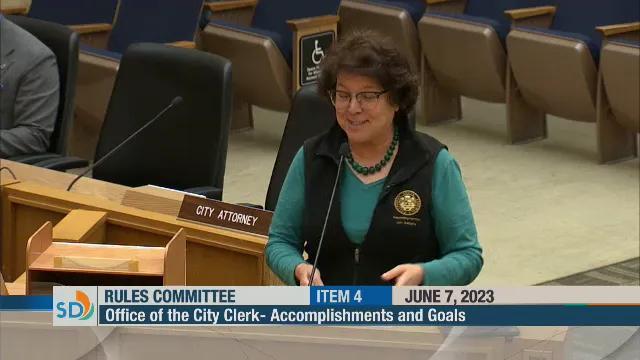
The Rules Committee met on June 7, 2023, to consider amendments to the San Diego Municipal Code regarding the Board of Library Commissioners, the Youth Commission, and the repeal of inactive boards, as well as to receive a presentation from the Office of the City Clerk on accomplishments and goals. All votes were taken with Councilmember Moreno absent. Consent Calendar - Approval of Committee Actions (April 14, 2023): Moved by Council President Pro Tem Montgomery Steppe, seconded by Councilmember Lakava, and passed 4-0. Public Comments & Testimony - Non‑Agenda Public Comment: Four speakers addressed the committee: - Lori Saldania urged the committee to consider harassment prevention training and reporting mechanisms for appointed board and commission members, noting a lack of conduct rules. - Blair Beekman expressed concerns about surveillance technology, data collection by street kiosks, and the need for more open public conversations about technology. - Terry Ann Skelly (youth mentoring volunteer) raised concerns about transparency and potential conflicts of interest in the city's cannabis social equity program, citing a last‑minute agenda change at the Planning Commission. - Peggy Walker called attention to SB 1439 (campaign contribution recusal) and the Levine Act, asking the committee to ensure compliance with these laws, especially regarding marijuana licensing. - Judy Strang praised the committee's goals but urged better public participation through workshops as municipal codes are considered, noting that goal had been neglected. - Public Comment on Items 1–3 (Municipal Code Amendments): Six speakers supported the proposals: - Lori Saldania voiced support for all three items, emphasizing the importance of equity on the library commission and the value of raising the youth commission age limit. - Kiala (Youth Will intern, District 1) supported raising the youth commission age limit to 25 to allow more young people to contribute and called for adequate support, education, and training. - Claire Snyder (Youth Will organizer, District 3) similarly supported the age limit increase and training requirements. - Isabella Campa (Youth Will, District 9) supported the age limit increase and training. - Chris Marapinga Llegos Munov (youth commissioner, District 8) supported the age limit increase and training. - One additional caller (phone ending in 8708) was unable to unmute. - Public Comment on Item 4 (City Clerk Report): Two speakers: - Lori Saldania praised the Office of the City Clerk for its essential behind‑the‑scenes work and emphasized the importance of diversity and inclusion in archives. - Blair Beekman commended the city clerk's role in public accessibility and urged better collaboration on technology accountability and the PAB process. Discussion Items - Item 1 – Amendments to Expand the Board of Library Commissioners (from 7 to 11 members): Director Chida Warren‑Darby presented the proposal, explaining that the expansion would ensure each council district is represented, promoting equity. Councilmember Lee moved approval, seconded by Councilmember Lakava. The motion passed 4‑0. - Item 2 – Amendments to Raise the Age Limit for the Youth Commission (from 22 to 25): Chida Warren‑Darby presented the request, noting that 21 commissioners had been appointed in 2021 and that the age increase would bring more diverse perspectives and mentors. Councilmember Lee moved approval. Councilmember Lakava seconded, but asked that the committee monitor the age balance to ensure the younger cohort is not lost. Council President Pro Tem Montgomery Steppe raised a concern about the commission being staffed by council staff rather than the Office of Child and Youth Success. An amendment was offered to change the staffing language to “the city council’s designee,” which was accepted. The amended motion passed 4‑0. - Item 3 – Amendments to Repeal Inactive Boards: Director Warren‑Darby listed 10 inactive boards to be removed (e.g., Select Board on National Issues, San Diego Quality of Life Board, Endowment Board, Agricultural Board, etc.). Council President Elo‑Rivera moved approval, seconded by Councilmember Lee. The motion passed 4‑0. - Item 4 – Office of the City Clerk Accomplishments and Goals: Interim City Clerk Diana Fuentes presented a detailed overview of the office’s achievements, including: a robust language access program (translations in 150+ languages), digital agenda posting, updated legislative calendar, election code updates, passport services (over 4,000 applications processed, $170,000 in revenue), records management improvements (90% research request completion within five days), and archives projects (e.g., “City Clerk Chronicles” highlighting diversity). Upcoming goals include: a municipal code software RFP, expanded voter outreach, hybrid meeting spaces, and further records management modernization. No action was required; the committee thanked Ms. Fuentes for her work. Key Outcomes - Item 1 (Library Commission): Ordinance amendment approved 4‑0 to expand the board from 7 to 11 members to ensure district representation. - Item 2 (Youth Commission): Ordinance amendment approved 4‑0 to raise the maximum age from 22 to 25, with an amendment to change the staffing designee from city council staff to the city council’s designee. - Item 3 (Inactive Boards): Ordinance amendment approved 4‑0 to repeal 10 inactive boards from the municipal code. - Item 4 (City Clerk Report): Received as information; no action taken. - Next Meeting: The Rules Committee will next meet on July 26, 2023, at 2:00 p.m.
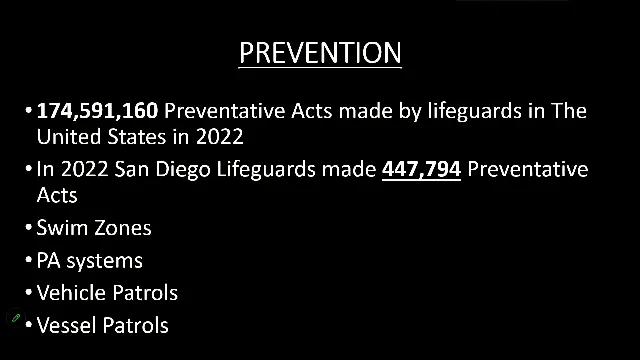
The Public Safety Committee of the San Diego City Council convened on June 7, 2023, to discuss two informational items: an update on the Commission on Police Practices (CPP) and a presentation on the Lifeguard Division. The meeting included public testimony, updates on the transition to independent police oversight, and a review of lifeguard operations and future needs. No votes were taken, as both items were informational. Consent Calendar - The committee approved the committee actions from the May 17, 2023 meeting unanimously. Public Comments & Testimony Non-Agenda Public Comment (Items within committee jurisdiction): - Terry Ann Skelly (schools/PTA worker, mother): Opposed adding more marijuana businesses, citing risks to youth mental health and addiction concerns related to high-THC vapes. - Larry Webb (Mission Beach Town Council president, Coastal Coalition member, speaking for himself): Criticized the lack of public transparency on the Protect Ordinance, for which the city spent over $200,000 on research and development over 21 months, and urged a committee vote. - Barbara Gordon: Referenced the California Department of Public Health's "Mind Over Marijuana" campaign, which is part of a $12 million youth cannabis prevention initiative. She urged reconsideration of the cannabis social equity program, which proposes 36 additional outlets, and advocated for investments in youth programs. - Francine Maxwell (Southeastern San Diego resident): Criticized the recent "Dragnet" drag racing enforcement operation, stating that community members were ticketed for minor violations, and called for better public education and communication. - Blair Beekman: Expressed concern about the language used in discussions of surveillance kiosks, urging more honest and transparent dialogue. He also highlighted the importance of public accountability. - Catherine Douglas: Requested an update on the Protect Act, noting $200,000 taxpayer dollars spent on an outside legal opinion with no public update, and urged accountability. - Diane Grace: Urged prohibition of marijuana advertising visible to youth (billboards, coupons at street fairs), as part of a comprehensive fentanyl prevention strategy. - Becky Rapp: Opposed the Cannabis Business Division's proposal to add 36 new pot shops, change zoning, and eliminate sensitive use restrictions. She criticized the lack of public outreach, noting planning groups were not informed until May 24, 2023, just two weeks before the Planning Commission hearing. - Peggy Walker: Highlighted the "100 deadliest days" for teen drivers (Memorial Day to Labor Day). She cited 2021 data showing 10.5 million people drove under the influence of marijuana, including 1.5 million aged 16-20, and noted that minors are 2.5 times more likely to drive under the influence of marijuana than alcohol. She urged education and potency caps. - Judy Strang: Expressed concern that marijuana businesses, facing lower profits, seek more consumers (including younger people) and more advertising to normalize use. She emphasized the need for good public policy and youth protection. Public Comment on CPP Update: - Blair Beekman: Suggested a hybrid approach to case review, keeping initial closed-session reviews but with public accessibility, and emphasized accountability and data transparency. - Francine Maxwell (Women Occupy): Expressed partial satisfaction with the presentation but raised concerns about trust, including the appointment of a worker for a high-ranking senator to a designated low-to-moderate seat, the underutilization of outside counsel, and delays. She urged full implementation without further delay. Discussion Items 1. Commission on Police Practices (CPP) Update - Presenters: Charmaine Mosley (Interim Executive Director), Doug Case (Interim Chair), and Dwayne Bennett (Outside Counsel). - Overview: Voters passed Measure B in November 2020, establishing an independent commission to replace the Community Review Board (CRB). The CPP is independent of the mayor and SDPD, with new functions including independent investigations, subpoena powers, and an appeals process. The implementation ordinance went into effect in November 2022. - Staffing: Currently 3 full-time employees; vacancies include admin aid, senior management analyst, deputy executive director, chief investigator, performance auditor, and policy analyst. Two searches (deputy executive director and chief investigator) are underway via executive search firm CPSHR. - Case Backlog: The commission is facing a significant backlog, with 107 active cases (including officer-involved shootings) and at least 70 cases beyond the one-year statute of limitations. The number of cases assigned from internal affairs has tripled since 2019, while the number of commissioners has more than halved. - Proposed Solutions by Outside Counsel Dwayne Bennett: The current model, where volunteer commissioners review cases individually, is unsustainable)Skip? He recommended using contract investigators to review the backlog as a whole for trends (not individual findings), especially for cases beyond one year. He proposed clearing the backlog in 60 days with 3 contractors. - Councilmember Campbell requested clarification on the one-year limit, learned about POBOR (Public Safety Officers Procedural Bill of Rights) and the importance of prioritizing cases within the one-year window. - Councilmember Montgomery Steppe (Vice Chair) supported the proposal, discussed potential contracting mechanisms (as-needed contract), and offered to request an outstationed personnel department liaison. She also noted a parallel track for hiring a permanent executive director. - The committee acknowledged the need for meet-and-confer processes with labor unions, which may delay implementation of procedures. 2. Lifeguard Division Informational Update - Presenters: Chief James Garten and Marine Safety Lieutenant Lonnie Stevens. - Overview: The Lifeguard Division provides safety services across 17 miles of coastline (Point Loma to Torrey Pines) and 27 miles of Mission Bay coastline, jurisdiction extending 3 miles out to sea. In 2022, they performed approximately 8,000 rescues, 50 cliff rescues, 55 boat rescues, over 2,600 medical aids, and almost 448,000 preventative acts. Estimated attendance was nearly 22 million. - Operations: The division uses a network of towers (8 main, 33 seasonal), patrol vehicles, and vessels (including jet skis and fireboats) to observe, prevent, and rescue. They also have a swift water rescue team and a dive search and recovery team. - Community Programs: Junior Lifeguard Program, scholarships (60 per year via Prevent Drowning Foundation), "Bridges to the Beach," and partnerships with the San Diego Life Saving Association (nonprofit). Chief Garten cited that formal swim lessons reduce childhood drowning risk by 88%. - Equipment Needs: Chief Garten highlighted the need for new lifeguard towers at North Pacific Beach and Ocean Beach, a new junior lifeguard headquarters, a vessel replacement fund, and increased costs for equipment (e.g., rescue boards now $2,300, jet skis now $25,000). - Enforcement & Grants: The division has been active in curbing illegal jet ski rentals on Mission Bay, working with the District Attorney. Recent successes included impounding 4-5 illegal rentals on weekends. Grants received include port security, state grants, and UASI for training. - Staffing: The division enters summer with a full team of 125 full-time and 215-225 seasonal lifeguards. A proposed budget includes a dedicated recruiting sergeant and an advanced lifeguard academy. Key Outcomes - The committee approved the May 17, 2023 actions unanimously. - No formal votes were taken on the two informational items. - The committee expressed support for the CPP's progress and encouraged the use of contract investigators to address the backlog, but noted that independent investigations must wait for meet-and-confer and council approval of procedures. - Councilmember Montgomery Steppe committed to request an outstationed personnel department liaison for the CPP and highlighted the need for a permanent executive director search. - The committee thanked the Lifeguard Division for their work and acknowledged the need for new facilities and equipment, urging continued support in budget deliberations. - A special June meeting of the Public Safety Committee was announced to cover additional agenda items.
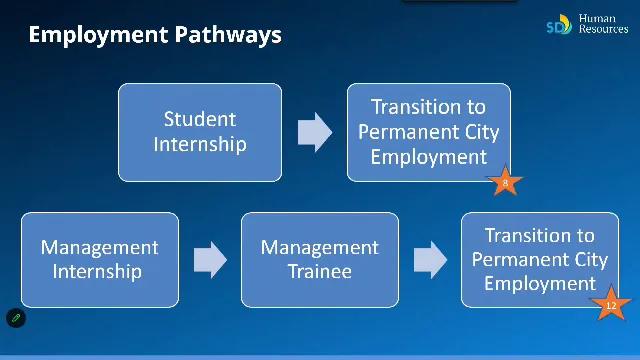
The Community and Neighborhood Services Committee met on May 25, 2023, at 1:00 PM (17:00 UTC) to consider routine approvals, annual reports, budgets, and an informational overview. The meeting was chaired by Councilmember Campbell, with Councilmembers Campillo and Ilo Rivera present; Councilmember Whitburn was absent. All votes were unanimous (3-0) where taken. Consent Calendar - Approval of Committee Actions (April 20, 2023): The minutes were approved unanimously (3-0, with Whitburn absent). Public Comments & Testimony - Non-Agenda Public Comment: Three speakers in chambers (Joseph Sims, Janet McDaniel, Gloria Madigan) from East Village raised concerns about noise from the Sequan Stage at Gallagher Square, citing persistent high-decibel concerts (95 dB at soundboard, 80+ dB inside nearby homes), lack of environmental review, and health/safety impacts. They requested enforcement of city codes and park regulations. Virtual speakers included Blair Beekman (surveillance tech and budget), Terry Best (cannabis social equity program), Becky Rapp (support for AB 1207, Cannabis Candy Child Safety Act), and Kathleen Lippitt (noise issues in Pacific Beach and East Village). - Items 1 & 2: Public comment included Blair Beekman (tech accountability), Brian Early (District Manager for La Jolla MAD, supporting approval), Brian Nichols (Hillcrest Business Association, supporting MADs), and Chris Gomez (Little Italy Association, supporting approval). - Item 3: Joyce Sunyada (District 3) praised the equity lens and urged approval; Blair Beekman commented on rec centers and surveillance tech. - Item 4: Joyce Sunyada, Blair Beekman, Kathleen Lippitt, and Judy Strang all expressed support for the internship program and suggested enhancements (e.g., health/safety education). Discussion Items - Item 1 & 2 (FY2024 Maintenance Assessment District Annual Reports): Parks and Recreation (Michael Jones) and Economic Development (Sean Caraffin) presented the annual reports. There are 65 MADs citywide—55 managed by Parks and Rec (2 self-managed) and 10 by EDD (including a new North Park Special Enhancement District). No major changes; assessment rates adjusted incrementally. Councilmembers appreciated the work and noted the public-private leverage (e.g., hanging baskets in La Jolla). Both items were approved separately, each unanimously (3-0). - Item 3 (FY2024 Recreation Center Fund Budgets, Opportunity Fund Budget, & Recreation Equity Report): Sarah Irazzo (Deputy Director, Parks and Rec) presented the proposed budgets. The Opportunity Fund has $400,000 available, allocated to six locations (Azalea, Caesar Solis, Stockton, Mountain View, Skyline, Penn Athletic Field). Council President Ilo Rivera expressed concern that Stockton—a high-need facility—received only $51,200, below the $84,000 target, due to staffing and joint-use limitations. She moved approval and committed to pursuing the full amount for Stockton. The item passed unanimously (3-0). - Item 4 (Volunteer Intern and Work Readiness Programs Overview): Kelly Peppo (Citywide Intern and Volunteer Program Manager) provided an informational overview. The Employee and Empower program (funded by $18M state grant) has placed 293 interns (69% low-income, 81% from communities of concern), with 33% converted to permanent employment (vs. 13% historical). The citywide job fair drew over 2,300 applications and 1,300 interviews, yielding 192 conditional offers. No formal action was required. Key Outcomes - Approved minutes of April 20, 2023 (3-0). - Approved FY2024 annual reports for Parks and Recreation MADs (Item 1) (3-0). - Approved FY2024 annual reports for Economic Development MADs (Item 2) (3-0). - Approved FY2024 recreation center fund budgets, opportunity fund allocations, and equity report (Item 3) (3-0). Council President Ilo Rivera committed to working toward $84,000 for Stockton Rec Center. - Noted the informational overview of volunteer/intern programs (Item 4). - The next committee meeting is scheduled for Thursday, June 29, 2023, at 1:00 PM.
The Environment Committee of the San Diego City Council met on May 25, 2023, at 1:00 p.m. (local time) under Chair Joel Ocava. The meeting had a light agenda, consisting only of two consent calendar items, but included extensive non‑agenda public comment and staff updates. The proposed REACH code for building electrification was postponed pending legal review. Consent Calendar - Item 1: First amendment to contract with Ferguson Waterworks for water and sewer couplings. - Item 2: Transfer of non‑exclusive solid waste management franchises for Waste Management Inc. - Approved unanimously (3‑0) with Vice Chair Von Wolpert absent. No committee member requested to pull the items. Public Comments & Testimony Non‑Agenda Public Comment (multiple speakers on topics not on the formal agenda): - Ruth Sandben (SD Sequel): Expressed support for an equitable ban on gas‑powered leaf blowers, urging the city to transition city landscaping to electric equipment and to ban gas leaf blowers once a trade‑in program is in place. - Dr. Ronald Asklin (Sierra Club): Cited CARB data that running a gas leaf blower for one hour produces the same smog‑forming pollution as driving a mid‑sized sedan from Los Angeles to Denver. Converting 20 gas leaf blowers to electric would reduce smog pollution equivalent to removing 1,900 cars. He urged the city to act to meet Climate Action Plan goals. - Alex Rivest (SD Sequel): Highlighted health concerns from toxic emissions and noise, noting that a two‑minute leaf blower run is equivalent to a car tailpipe running for 36 minutes. He called for a health‑focused policy shift. - Maria Cook (SD Sequel): Supported a phased ban on gas‑powered landscaping equipment beginning with leaf blowers, emphasizing equitable incentive programs for small operators. Referenced bans already in Coronado, Solana Beach, Encinitas, and Del Mar. - Kelly Linden (San Diego Building Electrification Coalition): Provided feedback on the draft REACH code when it resumes, recommending inclusion of significant additions/alterations and narrowing deviations (e.g., gas‑fired commercial cooking equipment, labs, hospitals). She argued that all‑electric designs are feasible. - Diane Grace (property owner, Barrio Logan): Asked the city to consider a smoke‑free, vape‑free public places ordinance, citing disproportionate health impacts on communities of color. - Blair Beekman (community advocate): Urged minimal new ALPR cameras for SDPD in the FY24 budget and emphasized the need for open transparency and oversight of surveillance technology. - Joy Sanyata (District 3): Expressed condolences and concern after a shooting at the Central Library. - Serena Pelka (Climate Action Campaign): Encouraged the committee to pursue the REACH code, limit deviations, and explore other ways to restrict fossil fuel gas in buildings. - Kathleen Lippett: Discussed environmental destruction from illegal marijuana grows, including water theft, chemical contamination, and harm to endangered species. Called for stronger enforcement. - Karen McBeth (UCSD student): Opposed exceptions for gas‑fired commercial cooking equipment in the REACH code, citing extreme heat and health risks for kitchen workers, many of whom are minorities. Urged protection of workers and the environment. Public Comment on Consent Agenda: - Blair Beekman: Commented on Item 1, asking that water/sewer funding be coupled transparently with law enforcement when applicable. - Lori Saldania: Raised concerns about Item 1’s lack of compliance with equal employment opportunity goals (underrepresentation of women and Asians in professional roles) and Item 2’s too‑few employees to evaluate. She urged improved diversity outcomes in city contracting. Discussion Items - Chair’s Remarks on REACH Code: Chair Ocava noted that a proposed REACH code for building electrification was not on the agenda due to ongoing legal review related to Ninth Circuit rulings. Staff continue to work on zero‑emission building actions. - Staff Updates (Randy Wilde, Mayor’s Office): - Parks and Recreation has been piloting electric leaf blowers and landscaping equipment since 2022. - The draft REACH code is available online; stakeholder engagement continues. - The city was accepted into the U.S. Green Building Council’s LEED for Cities cohort. - An RFQ for energy services companies to retrofit city facilities closes June 7. - An RFP for an electric vehicle vendor closes June 23. - Discussions with San Diego Gas & Electric continue on franchise audit terms and administrative MOU refinements. Key Outcomes - The consent agenda (Items 1 and 2) was approved unanimously (3‑0) with Vice Chair Von Wolpert absent. - No further business was taken up; the meeting adjourned at approximately 2:00 p.m. The next regularly scheduled Environment Committee meeting is June 22, 2023, at 1:00 p.m.
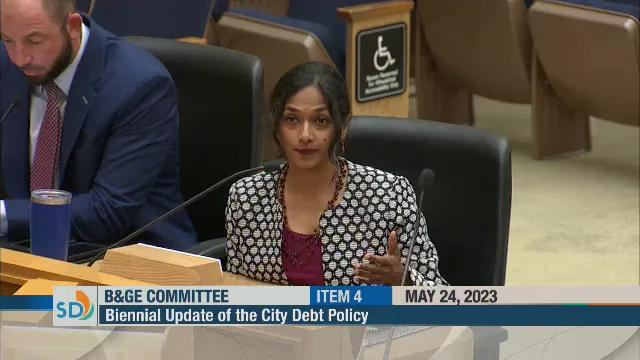
The Budget and Government Efficiency Committee met on May 24, 2023, to discuss water rate adjustments and a biannual update to the city's debt policy. The committee approved the consent agenda with one dissenting vote on a benefits consulting contract, forwarded water rate proposals to the full council, and approved the debt policy update after amending variable rate language. Consent Calendar - Item 1: Extension of securities clearance and safekeeping services contract with U.S. Bank – approved unanimously after public testimony. - Item 2: Third amendment to benefits consulting, brokerage, and actuarial services contract with Buck Global LLC – approved with Councilmember Lacava registering a no vote; motion passed unanimously otherwise. Public Comments & Testimony - Non-Agenda Public Comment: Blair Beekman spoke about reducing new surveillance technology (ALPRs) in the FY24 budget and called for smaller, clearer tech questions around street repairs and Vision Zero. He emphasized civil protections and reimagining public safety. - Item 3 – Water Rates: Michael Dwyer expressed frustration that the rate proposal increased 1% over five months from the December presentation. He calculated a two-dollar difference in monthly bills under the new structure. Blair Beekman asked about subsidies for low-income community members. - Item 4 – Debt Policy: Lori Soldania argued that $3.3 billion in debt is "outrageous" and urged the city to focus on good debt like public power rather than bad debt such as the Ash Street building. Blair Beekman mentioned San Jose’s balanced budget efforts. Discussion Items - Item 3 – Water Rate Adjustments, Cost of Service Study, and Proposition 218 Notice: - Public Utilities Department (Juan Guerrero, Lisa Salaya, Chris Ojeda) presented proposed water rate increases for FY 24-25 to fund infrastructure, operations, and the Pure Water program. The City’s water rates would remain below regional average ($93.67/month vs. $91.83). Tiers reduced from four to three for single-family residential to reflect conservation. - The Independent Budget Analyst (Jordan Moore) and Stantec presented their review, noting the cost of service study was consistent with industry standards. Recommendations included updating peaking factors and allocation methodologies, most of which were incorporated. - Committee discussion covered conservation efforts, impacts of the Pure Water program, low-income assistance (572 customers helped through LIWAP, plus over 20,000 through COVID relief), and tier structure. Councilmember Lee asked about household size assumptions and economic impacts on middle-income residents. - Staff requested forwarding to city council to set a public hearing date; no rate approval at this stage. - Item 4 – Biannual Update of the City Debt Policy: - Department of Finance (Richard Eyre, Marisol Velden Vinos) presented updates including merger of debt management into Finance, clarifications on interfund loans, and language allowing variable rate debt under special circumstances. - IBA (Charles Modica) supported additional disclosure but suggested clarifying that variable rate debt be short-term only and requesting a summary of interfund loans. - Debate centered on Section 5.4 (variable interest rate financing). Councilmember Moreno opposed the language, fearing it would encourage future reliance on variable rate debt. Councilmember Lacava moved to strike all amendments to Section 5.4, preserving existing policy. Councilmember Lee preferred clarifying language rather than striking. - Motion to remove Section 5.4 changes passed 3-1 (Moreno, Lacava, Montgomery Step in favor; Lee dissenting). The amended debt policy was then approved on that motion. Key Outcomes - Consent Agenda: Items 1 and 2 approved; Item 2 with Councilmember Lacava’s no vote. - Water Rate Adjustments: Committee voted unanimously to forward the item to full city council to set a Proposition 218 public hearing date (anticipated in September 2023) and to authorize the notice. Public outreach will precede the hearing. - Debt Policy Update: Committee approved forwarding the biannual debt policy update to full city council with all proposed changes except for the amendments to Section 5.4 (variable interest rate language). The motion passed 3-1. Staff will provide a summary of interfund loans from the past year for full council consideration.