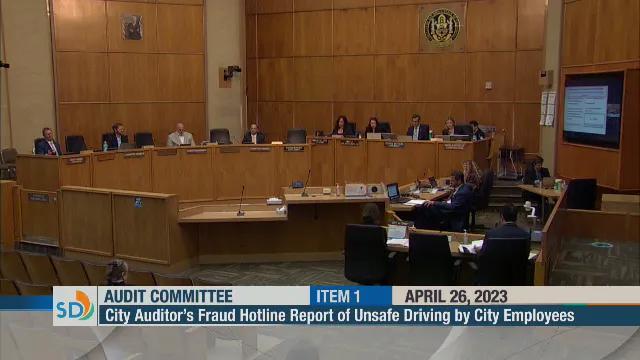
The Audit Committee of the San Diego City Council met on Wednesday, April 26, 2023, at 9:00 AM. The meeting was chaired by Councilmember Stephen Whitburn and included Vice Chair Vivian Moreno (appearing virtually), and committee members Joe Halpern, Mafia, and Tabshuri. The agenda covered approval of prior minutes, follow-up on audit recommendations, a fraud hotline report on unsafe driving by city employees, the quarterly fraud hotline summary, and the auditor's monthly activity report. Public comment included praise for the committee and suggestions for improvement. Consent Calendar - Approval of Committee Actions (March 8, 2023): Approved unanimously by roll call vote (4–0). Public Comments & Testimony - Blair Beekman (non-agenda public comment): Congratulated the council on passing a tenants ordinance, suggested the committee review San Jose's police overtime audit as a model, and noted this was his first audit committee meeting. - Blair Beekman (on item 1): Urged the committee to clearly define the centralized driving review system and expressed concern about smart meter issues at Public Utilities. - Judy Strang (on item 1): Commended the committee's work, specifically on recreation equity, and emphasized the importance of including impaired driving (especially marijuana) in employee training, citing National Safety Council notices. Discussion Items - Item 2: Office of the City Auditor's Recommendation Follow-Up Report (Part 2) – Informational. Deputy City Auditor Danielle Knighton presented an update on 77 open recommendations across 11 departments. Chief Compliance Officer Christiana Gauger provided updated target dates for past-due items. City Attorney Mara Elliott suggested the committee review whether recommendations from prior administrations (pre-December 2020) are still relevant, rather than carrying them indefinitely. Vice Chair Moreno disagreed, arguing that audits provide non-political analysis that should not be discarded with new administrations. Committee member Tabshuri led a detailed department-by-department review. Several departments reported progress (e.g., 95% completion on fee administrative regulation, new workforce report, implementation of telematics scanners). Discussion included the need to streamline the follow-up process, possibly via a subcommittee. - Item 1: Fraud Hotline Report – Unsafe Driving by City Employees – Senior Fraud Investigator Andy Herrera presented the findings. Key statistics: Over fiscal years 2017–2021, the city paid $30 million in liability claims for motor vehicle accidents, with an average of nearly one preventable accident per day. The report found rare use of telematics data as required by AR 90.74, 39 incomplete accident investigations (fiscal year 2021 alone), insufficient driver policy training, and potential for cost-effective technology upgrades (e.g., driver identification, targeted training). City management disagreed with two of four recommendations: they preferred a centralized compliance approach over decentralized supervisor reviews and deferred cost-benefit analysis until a program is built. Compliance Director Gauger confirmed a new position was proposed in the FY24 budget. City Attorney Elliott noted the report stemmed from hotline complaints and questioned whether the audit was properly added to the work plan; the City Auditor clarified that hotline reports are not part of the audited work plan. Committee member Halpern suggested harmonizing disagreement categorization to reflect substantive agreement with risk mitigation. - Item 3: Quarterly Fraud Hotline Report (FY2023 Q3) – Informational. 66 reports received; 7 assigned to the auditor, 26 to departments, 33 outside purview. 36 cases closed, leaving 44 open. Four substantiated cases (vote registration, customer service, misuse of city vehicle, time abuse). City Attorney Elliott encouraged the committee to publicize the hotline and protect whistleblowers. - Item 4: City Auditor's Monthly Activity Report – Informational. City Auditor Andy Hano highlighted two reports issued (quarterly hotline and unsafe driving), noted an award for the body camera audit, a $1.19 million settlement from a vendor overcharging for homeless services (from a 2021 CARES Act audit), and a budget request for $565,000 (including salary adjustments and three new positions). The mayor's proposed budget included salary adjustments but not the additional positions. Hano argued the positions would enable 1–2 more audits per year, citing potential savings (e.g., a Pure Water audit could yield 1% efficiencies worth $14 million). Key Outcomes - Consent Calendar: Approved unanimously. - Item 1 (Unsafe Driving): Motion by Vice Chair Moreno (seconded by Halpern) to accept the report, keep the four recommendations open, and require staff updates through the regular recommendation follow-up process. Passed unanimously (4–0). - Item 2 (Recommendation Follow-Up): No action required; the committee noted the report and discussed process improvements. Chair Whitburn committed to reviewing the recommendation follow-up process. - Item 3 (Quarterly Hotline): Accepted as information. - Item 4 (Monthly Activity): Accepted as information; the committee expressed support for the auditor's budget request. - Next Steps: The next regularly scheduled meeting is June 14, 2023, at 9:00 AM.
Public Meetings - San Diego, California
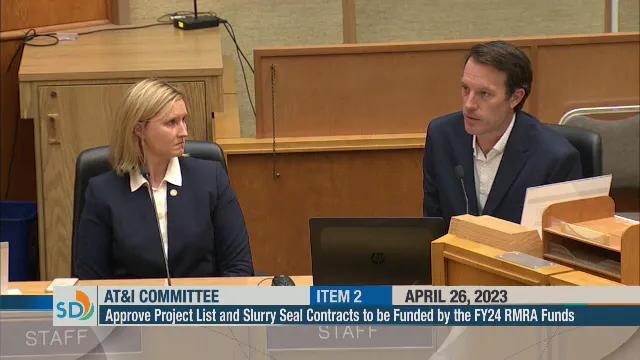
Public Meetings - San Diego, CaliforniaThe Active Transportation and Infrastructure Committee of the San Diego City Council met on April 26, 2023, with a quorum present. The meeting covered three main agenda items: an amendment to a fire station design contract, approval of road maintenance project lists funded by the Road Maintenance and Rehabilitation Account (RMRA), and an update on the citywide street condition assessment. The committee also heard non-agenda public comment and recognized Denim Day for sexual assault awareness. Public Comments & Testimony - Non-Agenda Public Comment – Randy Wilde, Senior Policy Advisor from Mayor Todd Gloria's office, provided three updates: (1) The mandatory pre-bid conference for the public EV charging RFP on April 14 had over 130 attendees from more than 50 companies. (2) The San Diego Association of Governments (SANDAG) naming competition for the Pacific Beach circulator resulted in the name "Beach Bug," with pilot service expected later in summer 2023. (3) SANDAG's Board of Directors approved a $1.24 million California State Active Transportation Program (ATP) grant to support development of an accessibility safety plan for individuals with disabilities and disadvantaged communities, evaluating curb ramps, audible pedestrian signals, sidewalks, street crossings, and obstacles. - Councilmember Von Wilpert noted that April 26, 2023, was Denim Day, an international day to raise awareness of sexual assault and victim-blaming, and thanked colleagues for wearing denim. Discussion Item 1: Second Amendment with RRM for Fairmont Avenue Fire Station Design - Staff Presentation – Jason Granny, Assistant Deputy Director of Engineering Capital Projects, presented the item. The second amendment adds 1,224,182 dollars (for a total contract not to exceed 2,462,132 dollars) and extends the term by 60 months (total 159 months). The amendment covers three new phases: Phase 3 (Environmental Impact Report – EIR, 400,477 dollars), Phase 4 (update of fire station design standards to comply with recent policies like ZEMBOP and sustainable building policy, 109,390 dollars), and Phase 5 (design and construction support for Fairmont Avenue Fire Station, 714,315 dollars, contingent on EIR certification). The fire station would serve Council Districts 4 and 9, addressing a response time gap identified in the 2010 and 2017 Citygate reports. The property has constraints including steep hillsides, habitat planning areas, and a 100-year floodplain. Community outreach led to the decision to prepare an EIR. - Councilmember Questions – Council President Pro Tem Montgomery Steppe asked why Phase 3 and Phase 4 were concurrent. Staff clarified Phase 4 updates the design standard unrelated to the EIR; Phase 5 will not begin until after EIR certification. Vice Chair Lakava noted that Phase 4 does not affect the EIR. Chair Lee highlighted the response time gap and the importance of the EIR for environmental impacts on Chollas Creek watershed, and praised the standardization effort for future efficiency. - Vote – Motion by Council President Pro Tem Montgomery Steppe, seconded by Vice Chair Lakava. Passed unanimously. Discussion Item 2: Approval of FY2024 RMRA Project List for Slurry Seal Contracts - Staff Presentation – Bethany Bizak, Transportation Director, and Patrick Hadley, Deputy Director of Streets Division, presented. The request seeks approval for sections of roadway funded by the Road Maintenance and Rehabilitation Account (RMRA) for FY2024. The city expects 34 million dollars in RMRA funding in FY2024. Since FY2018, the city has received over 170 million dollars. The proposed project list includes four slurry seal contracts covering 96.8 miles in total, each contract about 8 million dollars plus TransNet funds for bike infrastructure. The presentation also introduced a new treatment called Cape Seal for streets with an Overall Condition Index (OCI) between 60 and 70, allowing repairs on streets in slightly worse condition than typical slurry seal (OCI 70+). The city’s street network is about 3,000 centerline miles. The anticipated schedule aims to advertise contracts early in FY2024. - Councilmember Questions – Chair Lee asked about carryover miles from previous years. Staff explained that due to a wet FY2023, about 300 miles are carried forward, and they aim to complete most carryover in FY2024. Staff also discussed selection methodology including OCI, traffic loading, classification, and proximity to schools and emergency facilities. Council President Pro Tem Montgomery Steppe noted that District 4 appears to have lower mileage but acknowledged overlay investments in the district. She also asked about the schedule for using the new OCI data from the upcoming assessment – staff confirmed it will be used for the FY2025 RMRA cycle. Vice Chair Lakava asked about using the Get It Done app for pothole reporting vs. crack sealing; staff explained they are working on educational updates and noted that crack sealing is for smaller cracks (half-inch or less). Council President Pro Tem Montgomery Steppe asked about capacity issues and the possibility of in-house mill and pave teams; staff expressed interest. - Vote – Motion by Chair Lee, seconded by Councilmember Von Wilpert. Passed unanimously. Information Item 3: Citywide Street Condition Assessment Update - Staff Presentation – Bethany Bizak and Patrick Hadley provided an update on the citywide street condition assessment contract. The assessment, awarded to Fugro in January 2023, uses a van with laser and photo technology to measure road defects and rideability. As of the meeting, about 70% of the total test miles (approximately 2,100 of an anticipated 3,000 centerline miles) had been collected, with a production rate of 400 miles per week barring rain. Completion of data collection, analysis, and quality assurance is estimated for summer 2023, with a final report to the committee in fall 2023. The assessment will provide more accurate OCI data than the previous 2015–2016 windshield survey and will also capture lane mile data. Staff noted potential to use photos for other asset inventories (curb ramps, signage) at an additional cost. - Councilmember Comments – Chair Lee commended the effort and asked about the technology’s ability to capture bike lane and sidewalk condition. Staff stated the van can capture some bike lanes along street segments, but protected bike lanes and paths require separate assessment. They are exploring additional uses. Councilmember Von Wilpert asked about contractor warranty: staff confirmed a one-year warranty period, and contractors have been held accountable for failed slurry seal. Vice Chair Lakava expressed interest in focusing on bike lane pavement conditions. Council President Pro Tem Montgomery Steppe asked about public access to data – staff said final report and OCI data will be available on the Street SD website. - This item was informational; no vote required. Key Outcomes - Item 1 (Fairmont Avenue Fire Station contract amendment): Approved unanimously. The contract with RRM Design Group is amended to add 1,224,182 dollars (total contract not to exceed 2,462,132 dollars) and extend the term to June 2028. Phases 3 (EIR) and 4 (design standard update) will proceed, with Phase 5 contingent on EIR certification. The City may expend up to 509,867 dollars for phases 3 and 4. - Item 2 (FY2024 RMRA project list): Approved unanimously. The resolution authorizes the project list for four slurry seal contracts totaling 96.8 miles, funded by RMRA (34 million dollars anticipated) and TransNet funds. The list includes use of Cape Seal treatment for streets with OCI 60–70. Staff will advertise contracts early in FY2024. - Item 3 (Street condition assessment update): Received as information. Data collection is approximately 70% complete; final report expected fall 2023. The data will inform the FY2025 resurfacing program and be publicly available on the Street SD website.
The San Diego City Council Public Safety Committee held a special meeting on April 21, 2023, at 9:00 a.m. (PDT) to discuss two agenda items: an amendment to the city's emergency ambulance service contract with Falk Mobile Health, and a report from the Independent Budget Analyst (IBA) on options to combat the illicit fentanyl crisis using opioid settlement funds. The meeting was chaired by Councilmember von Wilpert, with Councilmembers Campbell, Campillo, and Vice Chair Montgomery Steppe present. The committee approved the consent calendar (minutes of March 15, 2023) unanimously. Consent Calendar - Approval of the committee actions from March 15, 2023, passed unanimously. Public Comments & Testimony Non-Agenda Public Comment: - Barbara Gordon, a public health educator, expressed concern about marijuana products appealing to children, citing a surge in marijuana poisoning at Rady Children's Hospital. She urged the committee to consider regulations prohibiting sales of products resembling conventional candy or foods. - Blair Beekman commented on unhoused issues, federal funding for sewer projects, and smart meters for water utilities, advocating for open communication and trust in government processes. - Judy Strang, a parent advocate and social worker, highlighted a National Safety Council study on marijuana-impaired driving and employer responsibilities regarding marijuana addiction treatment. Public Comment on Agenda Item 1 (Falk Amendment): - Tony Sorcy, president of the Association of Pre-Hospital Professionals (STAP), expressed support for the amendment, noting it enables a three-year successor contract with competitive wages and benefits for EMS workers. - Josue Castro, from Casa Familiar, supported Falk, citing their community engagement in San Ysidro, including CPR training and scholarships for EMTs. - Troy Hagen, Chief Commercial Officer for Falk USA, committed to improving service, acknowledged staffing shortages, and submitted letters of support from the American Red Cross, Casa Familiar, the American Lung Association, and San Diego Pride. - Bob Ilko, from the Scripps Ranch Civic Association, supported the amendment, noting the need for compromise and flexibility in the contract. - A virtual caller, Jason Yata, thanked the committee and praised the amendment for increasing city oversight. - Blair Beekman noted Falk's operations in San Jose as a potential model. Public Comment on Agenda Item 2 (Fentanyl Crisis): - Blair Beekman raised concerns about possible fentanyl distribution by police officers and urged review and better access to fentanyl test strips. - A public health educator (unnamed) argued that marijuana is a gateway to opioid use, citing experts and urging potency caps as a low-cost abatement measure. Discussion Items Item 1: Amendment to the Contract with Falk Mobile Health Fire Chief Colin Stowell and Deputy Chief Jody Pierce presented the first amendment to the city's emergency ambulance service contract. The amendment allows subcontracting with another accredited provider to increase ambulance staffing hours up to the contracted median of 900 advanced life support hours per day, requires Falk to maintain a minimum of 780 hours per day (5,460 per week) or face penalties, and provides temporary relief from response-time penalties to offset subcontracting costs. The city aims to move toward an alliance model with multiple providers. Discussion included: - Chair von Wilpert emphasized the need for rapid implementation and continued monthly monitoring. - Councilmember Campbell expressed frustration with the contract's shortfalls but supported the amendment due to benefits for STAP workers and the need for additional hours. - Councilmember Campillo questioned the penalty abatement structure: penalties are held in abeyance if Falk meets the 780-hour floor and subcontracts for as many additional hours as possible, even if the 900-hour target is not reached. He stressed the importance of realistic contracting and oversight. - Vice Chair Montgomery Steppe sought clarity on past penalties and their use, noting concerns about setting a precedent for penalty abatement and budget impacts. - The committee approved the motion to send the amendment to full city council (unanimous). Item 2: IBA Response to Options to Combat the Illicit Fentanyl Crisis IBA analysts Baku Patel and Amy Lee presented report 23-06, summarizing the fentanyl crisis: 383 overdose deaths in San Diego City in 2021 (27.1 per 100,000), with African Americans disproportionately affected (66.9 per 100,000) and homeless individuals comprising 30% of fatalities. The city expects up to $40 million over 18 years from opioid settlements, with $4.4 million already received. The IBA reviewed existing programs (PLEDS, RAP, low-barrier shelters, naloxone distribution) and stakeholder input, identifying five key findings: adequate naloxone access, improved data tracking, but also limited timely access to drug treatment (no residential detox beds within city), barriers from state law changes (Prop 47, AB 3234), and secondary impacts like staff burnout. Recommendations fell into three levers: prevention, treatment, and law enforcement, each with trade-offs. The IBA advised adhering to Johns Hopkins principles, spending funds as collected, complementing county efforts, and using data to inform decisions. Committee members discussed: - Chair von Wilpert announced a community listening session on May 10, 2023, and emphasized using funds for new programs rather than offsetting existing costs. - Councilmember Campillo agreed that settlement funds should be used for enhanced services, not just plugging budget holes. - Vice Chair Montgomery Steppe highlighted youth prevention and racial equity, noting the high rate of Black overdose deaths. - Councilmember Campbell emphasized treatment access and the success of the harm reduction shelter, also stressing law enforcement partnerships and broader societal uplift. Key Outcomes - Item 1 (Falk Amendment): The committee voted unanimously (4-0) to approve the staff recommendation and forward the amendment to the full city council for consideration. The implementation timeline targets mid-May 2023 for council approval, with subcontracting to begin immediately thereafter. A second amendment to transition to an alliance model is expected by July or August 2023. - Item 2 (Fentanyl Crisis): The item was informational only; no vote was taken. The committee will continue discussions during the budget process and the upcoming community listening session. The IBA will review the mayor's proposed opioid settlement fund expenditures in its FY24 budget review. - The next regular public safety committee meeting is scheduled for May 17, 2023, at 2:00 p.m.
The Community and Neighborhood Services Committee met on Thursday, April 20, 2023, chaired by Councilmember Campbell. The meeting included approval of prior committee actions, non-agenda public comment, a consent agenda item, discussion and votes on a 10-year animal services contract and lease with the San Diego Humane Society, and informational updates on short-term rental regulations and the age-friendly action plan. Key votes were unanimous. Consent Calendar - Approval of Committee Actions (March 16, 2023): Approved unanimously. - Item 1 – Joint Use Agreements with SDUSD: Approval of joint use agreements for Clark Middle, Edison Elementary, Emerson Elementary, Jefferson Elementary, Ocean Beach Elementary, and Pershing Middle Schools. Approved unanimously with a motion by Councilmember Campillo and second by Councilmember Whitburn. Public Comments & Testimony - Non-Agenda Public Comments: - Blair Beekman commented on fentanyl issues related to the San Jose police association and expressed disappointment about limited discussion on government-sponsored encampment ideas at Bobo Park during a previous committee meeting. - A speaker (phone ending 7968, Joyce from District 3) praised Councilmember Moreno’s remarks on the digital divide and urged action to address it, sharing a personal story about needing a tablet for a housing portal. - Judy Strang shared results from a countywide tobacco minor decoy operation, noting that 49% of retailers sold to minors in 2022-2023. She urged the city to conduct similar decoy operations for marijuana retailers and revisit tobacco retailer enforcement. - Public Comments on Items 2 & 3 (Animal Services Lease and Agreement): - Dr. Gary Weitzman, President and CEO of San Diego Humane Society, expressed support for the contract and lease, highlighting the organization’s commitment and new programs (community veterinary care, 24/7 dispatch). - Blair Beekman commented positively on the community cat program (spay/neuter and return) and suggested that neighborhood cats help control insects and rodents. - Public Comments on Item 4 (STR Program Update): - Jay Goldberg (niceinabors.org) reported that 56% of active entire-unit Airbnb listings appear unlicensed and urged strong platform compliance enforcement. He praised the city’s interactive license map and Get It Done complaint system. - Joyce Sanyata (District 3) emphasized the importance of compliance and enforcement, especially in Mission Beach, and noted that 5% of tier four licenses received regulatory action notices. - Public Comments on Item 5 (Age-Friendly Action Plan): - Joyce Sanyata commended the community engagement process and asked about policy clarity. She recommended reviewing global aging population data to inform local efforts. Discussion Items - Items 2 & 3 – 10-Year Public Service Lease and Agreement for Animal Services with San Diego Humane Society: - Staff (Tim Graham, Parks and Recreation; Matt Oslin, Real Estate) presented a 10-year contract (July 1, 2023 – June 30, 2033) with San Diego Humane Society to continue animal sheltering, adoption, lost pet reunification, humane law enforcement, and new programs (community cats, park patrol). Year one cost is $16.8 million (a $1.9 million increase over FY2023), but the city receives over $7 million in additional philanthropic services. The lease for the city-owned shelter at 5480 Gain Street (2.24 acres, 38,000 sq ft) is non-revenue. Councilmember Whitburn questioned the $600 fine for off-leash dog citations; staff explained fines are set by the court but expressed openness to exploring an administrative citation process. Councilmember Campillo noted the $100 one-time consideration fee for the lease and asked about city responsibility for HVAC replacement (carryover from original lease). - Vote on Item 2 (Lease): Motion by Councilmember Campillo, second by Council President Iler Rivera. Approved unanimously. - Vote on Item 3 (Agreement): Motion by Councilmember Campillo, second by Chair Campbell. Approved unanimously. - Item 4 – Short-Term Residential Occupancy (STR) Program Update (Informational): - Matt Wood (STR Program Manager) reported that as of March 31, 2023, over 6,000 STR licenses had been issued (69 tier 1, 1,463 tier 2, 3,408 tier 3, 1,082 tier 4). Total revenue from application and license fees was $5.25 million; TOT collected reached $42 million. STR program costs to date were $1.7 million. Upcoming work includes a compliance RFP, phase 2 software updates, and a Get It Done complaint system launching May 1, 2023. Chair Campbell noted the five-year effort to pass the ordinance and requested a one-year review. Council President Iler Rivera asked about tracking conversion of STRs to long-term rentals; staff said data is limited but the new license system will help. ADU use as STRs was also discussed; enforcement will address prohibited uses. - Item 5 – Age-Friendly San Diego Action Plan Update (Informational): - Deputy Director Gina Doulay and Christy Fenneck (Parks and Recreation) presented progress since the plan’s adoption in December 2021. Key steps included a policy scan, a survey with over 2,100 respondents in five languages, and 17 listening/action planning sessions (one in Spanish, one with individuals experiencing homelessness). Barriers include funding, workforce gaps, and mobilizing partners. Recommendations for 2023-2024 include focusing on mid- and long-term actions, incorporating age-friendly goals into departmental tactical plans, and identifying a citywide contact. Councilmember Campillo noted the importance of senior programming and asked about specific uses of the Opportunity Fund; staff mentioned the Age Well program (lunch, frozen breakfast) and will engage the community further. Chair Campbell highlighted that seniors make up over 25% of the population and advocated for more funding. Key Outcomes - Approved unanimously: Committee actions of March 16, 2023; Item 1 (Joint Use Agreements with SDUSD); Item 2 (10-year lease with San Diego Humane Society); Item 3 (10-year animal services agreement with San Diego Humane Society). - Directive: Staff to prepare an analysis of an administrative citation process for off-leash dog violations before the item goes to full council. - Request: Chair Campbell requested a one-year review of the STR program at the committee following implementation. - Informational items: No motions were taken on Item 4 (STR update) or Item 5 (Age-Friendly Action Plan). The next meeting was scheduled for May 25, 2023.
The Environment Committee of the San Diego City Council met on April 20, 2023, at 2:00 p.m. (evening session) under the chairmanship of Councilmember Joel Lacava (District 1). Committee members present included Vice Chair Marni von Wilpert, Councilmember Jennifer Campbell, and Councilmember Raul Campillo. The meeting covered a consent calendar of four items, three discussion items (transfer of a solid waste franchise, a water meter supply contract, and a resolution to pursue Bee City USA designation), and non-agenda public testimony. Consent Calendar - Items 1–4 (agreements for cultural resources consulting, laboratory information management system, and engineering services) were approved unanimously (4-0) without discussion or public comment. Public Comments & Testimony - Non‑agenda public comment: - Blair Beekman expressed disappointment that a recent committee meeting discussing the unhoused situation did not address the “government‑sponsored encampment process” at Balboa Park, calling for better communication and legal treatment. He also urged the committee to incorporate lessons from San Jose’s police department regarding fentanyl distribution. - Terry Ann Skelly (parent and property owner) cited an American Heart Association press release stating that marijuana smoke contains toxins similar to tobacco smoke and can cause heart and lung damage. She urged the city to ban public smoking and vaping of both marijuana and tobacco for air quality and health reasons. - Andrew Meyer (San Diego Audubon Society) provided an update on the rewild Mission Bay project, noting that the last day for public comment on the city’s De Anza Natural Plan draft EIR was April 20. He identified four deficiencies: missing water quality improvement objective, lack of sea‑level rise analysis, no comparison to the Climate Action Plan’s 700‑acre wetland restoration goal, and failure to analyze recreational/cultural benefits of tidal marsh access. - Judy Strang shared a National Safety Council survey of 1,500 employers, warning that marijuana (like alcohol and opioids) impairs judgment and reflexes, increasing workplace and driving risks. She emphasized that THC stored in body fat makes impairment duration unpredictable. - Brandon Weber (San Diego Audubon Society) echoed Meyer’s concerns, stating the draft EIR only allows 75% of necessary wetland restoration and fails to adequately address sea level rise and the Climate Action Plan’s 2035 targets. - Barry Homer (self‑identified “RV community” advocate) accused local environmental groups of polarizing the debate and seeking to eliminate all recreational use in Mission Bay, instead urging collaboration to solve the long‑standing environmental problems. - Item 5 (solid waste franchise transfer): One speaker, Blair Beekman, reminded the committee to ensure low‑income subsidies and open communication as promised in the November waste system changes. - Item 6 (water meter contract): One speaker, Blair Beekman, cautioned about smart‑meter (AMI) technology, urging slow, accountable rollout and questioning the effects of 5G and broadband on communities. - Item 7 (Bee City USA): - Mary Jarvis (San Diego Beekeeping Society) voiced strong support for the designation, noting that pollinators are essential for San Diego’s avocado industry and tourism. She invited the public to World Bee Day on May 20 at the Japanese Friendship Garden. - Blair Beekman linked the bee item to the previous smart‑meter discussion, questioning whether microwave radiation from wireless technology contributes to bee die‑offs and urging a cautious approach. - Dr. James Hung (pollinator biologist, UC San Diego) cited his dissertation research showing San Diego County hosts 650+ native bee species, many threatened by habitat loss and pesticides. He supported Bee City as a way to protect biodiversity and avoid federal endangered listings. - Brandon Weber (San Diego Audubon Society) supported the resolution, emphasizing San Diego’s obligation as the most biodiverse county in the contiguous U.S. to protect pollinators. - Andrew Meyer (San Diego Audubon Society) highlighted that the U.S. has lost 3 billion birds since the 1970s and that Bee City USA helps counter pesticide use and habitat loss, benefiting birds and other wildlife. Discussion Items - Item 5 – Transfer of Non‑Exclusive Solid Waste Collection Franchise (John Smith Earthworks to Universal Waste Systems Inc.) - Ken Prue (Deputy Director, Environmental Services) presented the transfer, noting that Universal Waste Systems (family‑owned, since 1986) operates in L.A. and San Diego County with a good track record. The city attorney’s due diligence found no issues. The franchise remains Class 1 (under 75,000 tons/year), with no impact on customers and potential for increased competition. - Committee members expressed confidence; Councilmember Campillo moved approval, seconded by Councilmember Campbell. Vote: 4‑0. - Item 6 – Award of Contract to Badger Meter Inc. for Purchase of Water Meters (not to exceed $30 million over five years) - Tim Morez (Public Utilities) explained that the contract supplies AMI‑compatible water meters (sizes for residential to commercial) to replace broken and failing meters. The city has an adequate supply until summer 2023; the contract includes one base year and four optional renewals at the city’s discretion. - Vice Chair von Wilpert raised concerns about the prior AMI rollout difficulties and high customer bills. She questioned why a $30 million contract should be approved before Jacobs Engineering completes an AMI implementation plan (expected fall 2023). Councilmember Campbell noted ongoing customer service complaints at PUD. - After discussion, Councilmember Campillo moved approval as recommended, but with no second. Vice Chair von Wilpert then moved an amendment to approve only the first year (FY23, $1.9 million) and require the four optional renewals to come back to council for approval. Councilmember Campillo seconded. The city attorney confirmed the options are at the city’s sole discretion and can be conditioned. Vote on the amended motion: 4‑0. - Item 7 – Resolution Supporting Creation of a Bee City USA Program Committee and Seeking B City USA Affiliate Designation - Brian Elliott (policy director, District 1 office) and Chrissy Chan introduced the item. Dr. James Nye (UCSD) and Laura Rost (Xerces Society, virtual) presented the Bee City USA program, emphasizing pollinator protection through habitat, pesticide reduction, and public education. San Diego is the most biodiverse county in the U.S. and a top agricultural producer (e.g., 1 avocado county, $153 million annual income). Becoming the largest Bee City in the nation would leverage existing city and partner efforts. - All committee members voiced strong support. Councilmember Lacava moved the proposed action; Councilmember Campbell seconded. Vote: 4‑0. Key Outcomes - Consent Calendar: Items 1–4 approved 4‑0. - Item 5: Approved 4‑0 to transfer the non‑exclusive solid waste franchise from John Smith Earthworks to Universal Waste Systems Inc. - Item 6: Approved 4‑0 with an amendment: the contract is awarded for the first year only (up to $1.9 million for FY23); any exercise of the four renewal options must return to the City Council for approval. - Item 7: Approved 4‑0 to direct the City Attorney to draft a resolution supporting creation of a Bee City USA program committee and seeking designation as a B City USA affiliate from the Xerces Society. - Adjournment: The meeting adjourned at approximately 4:39 p.m. The next regular committee meeting is scheduled for May 25, 2023, at 1:00 p.m.; a special meeting will occur on April 27, 2023, at 9:00 a.m.
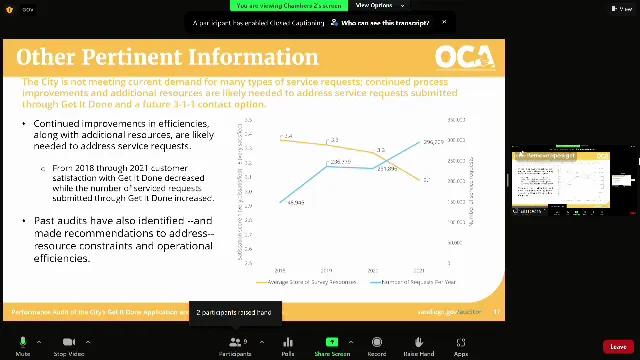
The special rules committee of the San Diego City Council met on April 14, 2023, to consider amendments to Council Policy 100-06 (CPPS) and receive an informational presentation on the performance audit of the Get It Done app and service request system. The meeting included public comment and unanimous approval of prior committee actions. Approval of Committee Actions (March 15, 2023) - The committee approved the actions of the March 15, 2023 rules committee meeting by a unanimous vote after hearing one public comment from Blair Beekman, who highlighted the importance of open discussion on homeless encampment programs. Public Comments & Testimony - Non-Agenda Public Comment: Blair Beekman emphasized the need for open conversations about homeless encampments and urged against criminalizing homelessness. Joy Sanyata (District 3) commented on the structural budget deficit and the role of council policies. John Brady criticized the previous day's vote on a homeless ordinance, stating shelters operated at 99% capacity and suggesting that thousands of complaints filed via Get It Done may be from repeat reporters influencing policy. - On Item 1 (CPPS): Two virtual speakers supported the amendments, with one expressing hope that the changes would improve funding for programs serving unhoused individuals. - On Item 2 (Get It Done Audit): Three virtual speakers commented. Joy Sanyata praised the Panda team but urged caution on 311 implementation. Blair Beekman expressed concerns about Get It Done's role in community complaints and suggested learning from other cities' 311 programs. Sally (District 4) highlighted equity issues, noting that seniors and those without internet access rely on in-person help, and urged the city to implement 311 as soon as possible. Discussion Items - Amendments to Council Policy 100-06 (CPPS): Brendan Nantino, policy director for Council President Yulor Rivera, presented proposed amendments to the policy governing community projects, programs, and services (CPPS). Key changes include making CPPS a standalone line item with equal funding per council office, allowing offices to supplement their CPPS allocation with non-personnel savings, and shifting from a reimbursement model to a grant system. The city attorney noted the draft was still under legal review. Councilmembers discussed the need to ensure equitable access and prevent gaming of the system. Councilmember Lee requested exploration of allowing personnel savings to also supplement CPPS, which was added to the motion. The committee voted unanimously to recommend the amendments to the full council. - Performance Audit of Get It Done App and Service Request Management: City Auditor Andy Hanous and his team presented findings from an audit of the Get It Done app and the city's phone-based service channels. The audit found that Get It Done does not consistently provide target or estimated completion times, lacks progress updates for most service requests, and that approximately one in five customers received inaccurate or misleading closure details (the app often marked requests as "closed" when they were merely referred). The audit recommended improving the app and establishing a centralized 311 phone option. Panda management (Kirby Brady) disagreed with the 311 recommendation, arguing that the city must first invest in digital infrastructure, fix existing call center issues (e.g., PUD's call center modernization costing $6 million and taking two years), and create a unified customer service strategy. Councilmembers expressed support for the long-term goal of 311 but acknowledged resource constraints. Councilmember Moreno voiced strong disappointment with management's refusal to pursue 311, citing equity concerns for residents without digital access. The item was informational only; no action was taken. Key Outcomes - Item 1 (CPPS amendments): Voted unanimously (5-0) to recommend the amended council policy to the full city council, with an added direction to the city attorney to explore a mechanism allowing personnel savings to also supplement CPPS funding. - Item 2 (Get It Done audit): No action required; the committee received the information and will continue discussions at the June 7, 2023 rules committee meeting, where Panda plans to present a customer service roadmap.
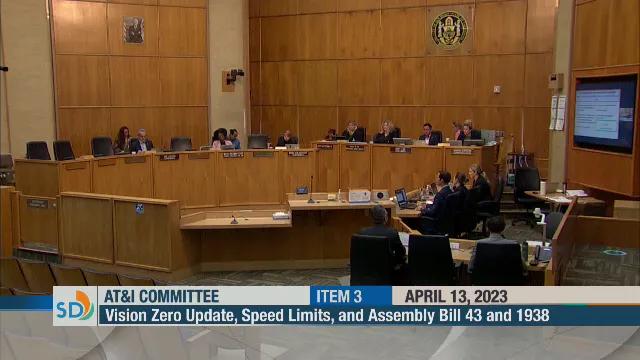
The Special Active Transportation and Infrastructure Committee of the San Diego City Council met on April 13, 2023, at 5:00 PM UTC. The meeting was chaired by Councilmember Lee, with Vice Chair Lakava, Councilmember Montgomery Steppe, and Councilmember Von Wilpert present. Also attending were IBA Representative Aaron Noel, City Attorney Representative Dana Fairchild, and Mayoral Representative Randy Wilde. The agenda included approval of prior committee actions, non-agenda public comment, a discussion item on awarding a construction contract for Mira Mesa Community Park Phase 2, and two information items: a review of citywide asset management practices and a Vision Zero update on speed limits and AB 43/1938. Consent Calendar - The committee voted unanimously to approve the committee actions from March 22, 2023. Public Comments & Testimony - Non-agenda public comment: Two speakers addressed the committee. Blair Beekman compared San Diego's use of federal funds for unhoused issues to San Jose's approach, questioning whether similar measures were being taken. Laurie Saldania urged the committee to incorporate climate change adaptation into infrastructure planning, citing the Pure Water Program's disruptions to streets like Genesee Avenue between University City and Claremont. - Item 1 – Mira Mesa Park: Blair Beekman praised the sundial public art concept and the project's representation of Mira Mesa's diverse cultures. Laurie Saldania recommended incorporating rainwater catchment features into the park design and noted that 96% of park survey respondents prioritized upgraded bathrooms, questioning whether the planned "comfort station" met that need. - Item 2 – Asset Management: Laurie Saldania called for including SDG&E's grid infrastructure in the city's asset inventory to support a potential transition to public power, citing high utility rates. Blair Beekman highlighted San Jose's balanced budget process and equity considerations, and commended the IBA's mention of recession preparedness. - Item 3 – Vision Zero: Will Radigan (San Diego County Bicycle Coalition) urged the city to follow San Francisco, Los Angeles, and Oakland in immediately lowering speed limits by 5 mph under AB 43, noting that San Diego has the authority to do so. Laura Keenan (Families for Safe Street San Diego) shared her husband's death from a wrong-way driver and asked the committee to lower speed limits on all eight Vision Zero corridors by June 30, 2024, and to install physical traffic calming measures. Laurie Saldania contrasted the data-driven approach to traffic safety with the city's approach to homelessness, urging a similar strategic plan. Sally Small (Emerald Hills resident) requested lower speed limits and traffic calming on routes to schools, especially at Euclid & Market and Euclid & Imperial. Nicole Burgess (Point Loma/OB) advocated for embedding Vision Zero in all departments, prioritizing quick-build projects like low-cost roundabouts. Harry Bubins (Bird Rock volunteer) called for an AB 43 action plan to reduce speeds on streets like La Jolla Boulevard near Torrey Pines Surf Park. Discussion Items Item 1 – Authorization to Award Construction Contract for Mira Mesa Community Park Improvements Phase 2 (Resolution) A presentation by Elif Chitin (Engineering & Capital Projects) and Andy Field (Parks & Recreation Director) outlined the project: 16.9 acres of improvements including a competition-grade 14-lane pool, an activity pool, splash pad, all-wheels plaza (skateboards, BMX, scooters), renovated playgrounds, a renovated Gil Johnson Recreation Center (HVAC, ADA restrooms, paint), and a sundial-themed public art piece. Total project cost estimated at $45.4 million; construction cost estimated at $35 million. Available budget is $40.6 million from Mira Mesa-specific funds (FBA, DIF, community capital aid). The committee was asked to authorize the mayor to execute a construction contract up to $40 million and to expand the CIP budget accordingly. Staff requested advanced council authority to award the contract within the 120-day bid guarantee period, given the council recess and market volatility. A similar approach was used for the Harbor Drive and Libia projects. Councilmember Lee expressed long community anticipation and noted the park's importance given recent growth (two major housing developments, thousands of new residents). He questioned the timing of funding availability; Andy Field explained that the Parks Master Plan's consolidation of development impact fees allowed flexibility. Regarding phase 3, Field noted that a second recreation center originally planned for the park was deferred; instead, a pad for a future center will be built at the Three Roots development, and later an expansion of the existing center may occur. Councilmember Lakava asked about the $40 million authorization vs. $35 million estimate; staff explained it provides a buffer for change orders and potential bid fluctuations. He also asked about all-electric buildings and staffing; staff confirmed efforts toward all-electric (though designed before the ZEB mandate) and noted that future staffing costs (e.g., lifeguards) would be addressed in future budgets. Councilmember von Wilpert expressed concerns about approving the contract without seeing the identity or EEO/ labor records of the low bidder, noting that the council's oversight role is limited to the vote. She stated that the legislative recess was the reason for the early approval and that she would vote no as a "flag" against ceding authority, though she supported the project. Councilmember Montgomery Steppe acknowledged the trade-off between speed and oversight but supported the motion, noting the community's long wait. Item 2 – Review of Citywide Asset Management Practices and Use of the Enterprise Asset Management (EAM) System (Information Item) Aaron Noel and Raishin Chen (IBA) presented IBA Report 23-05, issued March 17, 2023. The city faces a $5.2 billion deferred capital backlog. The EAM system, implemented at a cost of $55 million, is used by six departments, but only two (IT Wireless Communications and ENCP) fully use it. Obstacles include lack of technical staff, incomplete data, master data governance issues, backlogged IT support, and inadequate training. The 2018 Strategic Asset Management Plan (SAMP) had 27 recommendations; an EAM steering committee was established in November 2022. Key recommendations: develop citywide guidance for asset management practices, update Council Policy 816, have the steering committee address near-term SAMP items, and fully consider budget requests for asset management and EAM to reduce lifecycle costs. Councilmember Montgomery Steppe asked about the system's future viability; Chris McFadden (Deputy COO) and Jonathan Banke (CIO) noted that the SAP system will reach end of life in 2027, but a roadmap for modernization is being developed, and the new mobile field worker solution (BlueWorks) is rolling out positively. Councilmember von Wilpert requested that the IBA be included in the steering committee (already invited) and asked about updating Council Policy 816; McFadden confirmed it is on the agenda. Councilmember Lakava underscored the importance of asset management for budget decisions and expressed appreciation for the IBA's work. Item 3 – Vision Zero Update: Speed Limits and Assembly Bills 43 and 1938 (Information Item) Everett Houser (Transportation), Christy Reeser (Sustainability & Mobility), and Phil Rust (Senior Traffic Engineer) presented the update. Fatalities and severe injuries increased in 2021-2022, mirroring national trends. The city's Vision Zero Strategic Plan (2020-2025) uses a data-driven approach, systemic safety analysis (e.g., leading pedestrian intervals, roundabouts, separated bikeways, sidewalk gap closures). AB 43 (effective mid-2024) allows speed limits to be set 5 mph lower than the 85th percentile speed on safety corridors and near concentrations of vulnerable road users, and also stops "speed creep." The city is incorporating these changes into speed survey updates. Grant-funded initiatives include a quick-build program for disadvantaged communities, a speed management plan, a slow streets program, and a Safe Streets for All federal grant. The city is also updating the Street Design Manual and developing a Mobility Master Plan (draft by end of FY2023). Councilmember Lakava noted the challenge of collector streets in older neighborhoods, the need for vertical elements in roundabouts, and the importance of quick-build projects. Councilmember von Wilpert asked about implementing Laura Keenan's request to lower speeds on the eight Vision Zero corridors; staff noted that improvements have been made on some corridors and that speed surveys are ongoing. Mayoral Representative Randy Wilde confirmed that the speed management plan grant will help identify implementable actions under AB 43. Councilmember Lee highlighted the importance of safe infrastructure for mode shift and mentioned ongoing concerns at Governor & Genesee and Mira Mesa Boulevard. Key Outcomes - Item 1: The committee approved the motion to authorize the mayor to execute a construction contract for Mira Mesa Community Park Phase 2 in an amount not to exceed $40 million and to expand the CIP budget accordingly. The vote was 3-1 (Councilmember Von Wilpert dissenting). The contract will be awarded to the lowest responsible bidder following the 120-day bid guarantee period. - Item 2: No motion required. The committee received the IBA report and recommendations. The EAM steering committee will continue to develop citywide guidance, address SAMP recommendations, and consider budget requests for asset management. - Item 3: No motion required. The committee received the Vision Zero update. Staff will continue to implement AB 43 provisions, pursue grant-funded quick-build projects, and develop a speed management plan. The committee urged expedited action on speed limit reductions and quick-build safety improvements. - The next regularly scheduled meeting of the Active Transportation & Infrastructure Committee is April 26, 2023, at 2:00 PM.
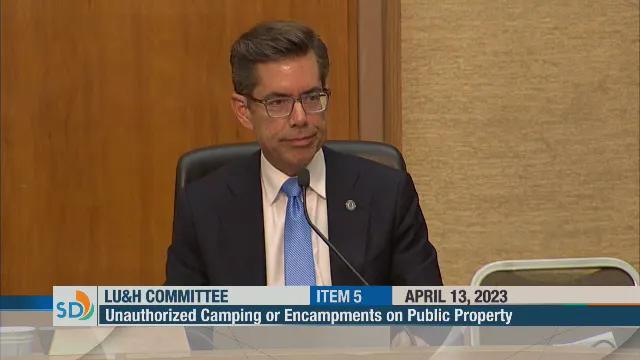
On April 13, 2023, the San Diego Land Use and Housing Committee held a meeting lasting over seven hours, dominated by a proposed ordinance to prohibit unauthorized camping on public property (Item 5). The committee also approved consent items and advanced two items related to the Civic Core redevelopment. Over 140 public speakers testified, with sentiments sharply divided. Consent Calendar - Item 1-3 (Consent): Declared a city-owned parcel at 7th & Market as surplus land; accepted a donation of real property from Mission Trails Regional Park Foundation; approved a first amendment to a disbursement agreement with the San Diego Police Officers Association for a childcare facility. All passed unanimously. Public Comments & Testimony - Non-Agenda & Consent: Speakers urged the city to consider a ban on smoking in public places (citing Encinitas), address cannabis business proximity to schools, and use city-owned land for emergency housing or recuperative care rather than police facilities. Concerns were raised about in-lieu fees and the need for more public restrooms downtown. - Item 5 (Camping Ordinance): Over 140 speakers provided testimony. Supporters (residents, business owners, hoteliers, school principals) described encampments as unsafe, unsanitary, and detrimental to children's safety (e.g., students forced to walk in streets). They cited daily incidents of drug use, violence, human waste, and blocked sidewalks. Business representatives from hotels, restaurants, and the Padres supported the ordinance as a necessary first step. Opponents (homeless advocates, service providers, formerly homeless individuals) argued the ordinance criminalizes homelessness without adequate shelter. They noted only 1,800 shelter beds for 4,800 unsheltered individuals, and that enforcement would merely displace people, not solve underlying causes. Many cited data that criminalization harms BIPOC communities and fails to improve health or housing outcomes. - Items 6 & 7 (Civic Core): Speakers urged including a strong theater presence in redevelopment, ensuring affordable housing requirements are not waived, and prioritizing housing for the homeless. Some questioned the surplus land designation for a new city hall. Discussion Items - Item 5 – Unauthorized Camping Ordinance: Councilmember Whitburn presented a measure to amend the municipal code, banning camping on all public property when shelter is available, and at all times within 2 blocks of schools/shelters, along trolley tracks, waterways, open space, and in Balboa Park, Mission Bay Park, Presidio Park, and shoreline parks. Staff cited 15,689 Get It Done reports (Aug 2022–Feb 2023), 431 homeless-related vegetation fires in 2022 (219% increase from 2018), and 230 encampments along the San Diego River producing 70% of trash. The IBA noted potential costs for signage, storage, and abatement. Councilmembers Lee and Moreno expressed concerns about enforcement feasibility, shelter availability (only 10% daily vacancy), equity in park selection, and the lack of a comprehensive plan. Vice Chair LaCava moved the item to full council with no recommendation, requiring a companion information item detailing shelter expansion, enforcement transition, and safe camping sites. This passed 3–1 (Moreno opposed). - Items 6 & 7 – Civic Core Surplus Land & Homelessness Response Center: Mayor's special advisor Jay Goldstone presented the plan to declare five blocks surplus for affordable housing (minimum 25% at ≤80% AMI) and to redevelop the Civic Core, including a new city administration building. The former Central Library site and a site for a homeless response center would be explored for affordable housing and/or shelter. Staff noted a timeline with NOA issuance in May 2023, potential building heights up to 450 feet, and a new city hall possibly ready by 2029–2030. Councilmember Moreno voted against Item 7, arguing the focus should be entirely on housing and shelter rather than a new city hall. Item 7 passed 3–1; Item 6 (exploring homelessness response center and former library for housing/shelter) passed unanimously. Key Outcomes - Item 5 (Camping Ordinance): Approved 3–1 to send to full council with no recommendation. A companion information item will be presented covering shelter expansion, safe camping sites, enforcement transition, and a legal analysis. Councilmember Whitburn agreed to include all city parks in the ordinance before final council hearing. - Item 7 (Civic Core Surplus Land): Approved 3–1 (Moreno dissenting). The NOA will be issued in May 2023, offering five blocks for redevelopment (≥25% affordable). $2 million appropriated for a new city administration building CIP. - Item 6 (Homelessness Response Center & Former Library): Approved unanimously. Staff will explore options for affordable housing and/or shelter uses, returning to council with options in summer 2023. - Consent Agenda: All three items approved unanimously. - Next Meeting: Thursday, June 15, 2023, at 1:00 p.m.
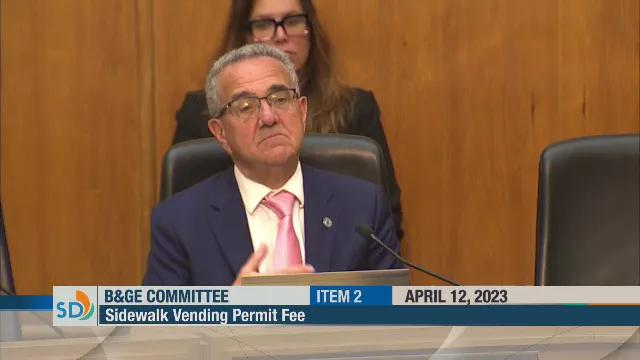
The Budget and Government Efficiency Committee met on April 12, 2023, to consider two items: a fleet management software contract extension and sidewalk vending permit fees. The meeting included public comments on non-agenda items and discussion of program costs and equity. Consent Calendar - Approval of committee actions from March 1, 2023, passed unanimously. Public Comments & Testimony - Non-agenda public comment: - Blair Beekman: Suggested quarterly workshops for city staff on sexual abuse complaints and called for better preparedness for the upcoming downtown encampment ban, including funding for storage of homeless property and limiting the definition of illegal. - Linda Satello (Exec. Dir., New Americans Museum): Urged the committee to consider access and equity issues in policies affecting communities of color, particularly regarding street vending. - Judy Strang (parent advocate): Noted a California Department of Public Health cease-and-desist letter on CBD products and asked that sidewalk vending fees cover oversight for such products. - Public comment on Item 1 (Fleet Management): None. - Public comment on Item 2 (Sidewalk Vending Fees): - Blair Beekman: Expressed support for sidewalk vendors and the $38 fee, encouraging payment plans. - Linda Satello: Criticized the program for restricting access to public space and asked for a full report on economic impact, vending zones, and inter-departmental efficiency. - Catherine Douglas: Argued the $38 fee is too low given the city's costs (millions in park damage, additional park rangers) and called for a higher fee. Discussion Items - Item 1: Authorization to extend agreement with Asset Works for fleet management information system (Fleet Focus). - Staff (Interim Dir. of General Services, Fleet Program Manager) presented: The current agreement expires June 30, 2023. An RFP was released Jan. 13, 2023, and closed Feb. 28, 2023, but award and transition may extend beyond June. They requested a six-month extension with a possible additional six-month option, increasing the not-to-exceed amount by $219,000 (total $449,000 through end of 2024). - Chair Montgomery Step noted workforce underrepresentation (female, Pacific Islander, Asian, Latino, African American) and raised concerns about the sole-source nature of the extension. She stated she would not support it. - Vice Chair Moreno moved staff's recommendation, seconded by Councilmember LaCava. LaCava asked about delays in the RFP; staff cited complexity and need to include IT components. LaCava expressed frustration with the timing but supported the motion. - Vote: 3-1 (Montgomery Step opposed). - Item 2: Approval of sidewalk vending permit fee ($38). - Staff (City Treasurer, Business Operations Deputy Director) presented: 673 permits issued since May 2022, 30 pending. Revenue collected $26,730; program costs (implementation, outreach, enforcement, maintenance) totaled approx. $1.3 million. Estimated ongoing annual costs $1.5 million but FY23 budget was $5 million (44 positions). The $38 fee is recommended to avoid barriers to entry, consistent with council's original intent. - Vice Chair Moreno opposed the fee, arguing the city overcommitted resources ($5M budget vs. actual need) and that funds could be better used for parks and police. She noted $3.5M in unused budget. - Councilmember LaCava supported the fee, noting the program is stabilizing and costs are lower than budgeted. He moved staff's recommendation with a request for an update in one year. - Councilmember Lee (new) supported the fee but expressed surprise at the revenue/cost gap and asked about vendor zones. He seconded the motion. - IBA (Lisa Byrne) recommended additional information for full council: comparison of program spending vs. budget for FY23, status of filled FTEs, and expected future costs. Staff committed to providing this. - Vote: 3-1 (Moreno opposed). Key Outcomes - Item 1 (Fleet management extension) passed 3-1. Contract extended with increased not-to-exceed amount of $449,000. - Item 2 (Sidewalk vending permit fee) passed 3-1. The $38 fee is retained. Staff will provide a full program cost report, FTE status, and budget comparison for the full council meeting (targeted mid-May 2023). - Item 3 was returned to staff. - The next regularly scheduled meeting is May 24, 2023, at 9 a.m.
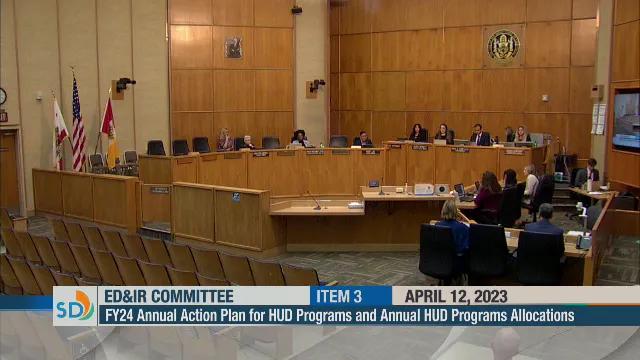
The Economic Development and Intergovernmental Relations (EDIR) Committee met on Wednesday, April 12, 2023, at 9:00 AM. The meeting included approval of prior actions, consent agenda items, a state affairs update, the Fiscal Year 2024 Annual Action Plan for HUD programs, and a new three-year economic development strategy. All votes passed unanimously with all members present (Chair Campio, Vice Chair Montgomery Steppe, Councilmember Campbell, Councilmember Lee). Public comment was heard on multiple items. Consent Calendar - Approval of March 8, 2023 Committee Actions: Approved unanimously. - Consent Agenda Items (1 & 2): - Item 1: Hacienda Townhomes – Assignment, assumption, and amendment to loan documents. - Item 2: Horton House – Approval of real property purchase and sale agreement, declaration of surplus land, and waiver of council policy requirements. Both items were approved unanimously without removal from consent. Public Comments & Testimony - Kelly McCormick (public health educator): Expressed support for Assembly Bill 1207 (Cannabis Candy Child Protection Act). Cited statistics: at Rady Children’s Hospital, THC-positive tests among young children quadrupled since 2016, average age 3, half hospitalized, 1 in 10 required intensive care; across California, marijuana-related ER visits increased 75% in five years. - Blair Beekman: Suggested quarterly city staff workshops on sexual abuse complaints; urged advance notice (7–10 days) before homeless encampment sweeps; called for storage of homeless property and limiting what is considered illegal in encampments. - Joyce Sanyata (District 3): Applauded the state affairs team and its work; noted the growing deficit should be prioritized in city budget; expressed concern that 20% administrative costs in CDBG seemed too high; requested clearer framework for how housing funding flows across departments. - Judy Strang (Parent Advocates): Requested city council consider a letter of support for AB 1619 (prescription drug warning labels for interactions with THC/CBD). - Melanie Kahn (Sr. Director, Biocom California): Supported the economic development strategy; noted life sciences is key to San Diego’s economy (112% business growth 2020–2022); 25% of life science workers have no college degree; offered partnership for workforce development and housing. - Lauren Casares (San Diego Regional Chamber of Commerce): Commended staff for inclusive outreach; supported the economic development strategy, especially the business incentive study and cross-border economic ties. - Blair Beekman (on economic development strategy): Urged a positive, inclusive process to avoid disaster capitalism and recession thinking. Discussion Items 1. 2023 State Affairs Update (Item 5 – informational) - Presenters: Adrian Grand (Director of Government Affairs) and Moira Top (State Legislative Consultant). - Key Points: Over 2,700 bills introduced; state budget deficit of $22.5 billion (relative to prior $90 billion surplus); proposed cuts mostly in transportation; HAP (Homelessness Assistance Program) proposed for fifth year, not yet permanent; youth job core program proposed as ongoing $78 million; focus on homelessness/housing accountability, mental health reform, fentanyl legislation (two bills stalled), surplus lands act reform, and coastal commission modernization. - Councilmember Campbell asked about removing Proposition 34 (public housing restriction); staff noted SCA-2 passed the Senate and will be on the 2024 ballot. - Vice Chair Montgomery Steppe raised concerns about equitable approaches to fentanyl and conservatorship, learning from past war on drugs. Staff responded that bills are narrowly tailored and comprehensive solutions combining health and safety are being pursued. - Councilmember Lee questioned about making HAP permanent and transportation infrastructure funding opportunities; staff confirmed SB1 dollars are untouched and GGRF funds flowing. 2. Fiscal Year 2024 Annual Action Plan for HUD Programs (Item 3 – action item) - Presenters: Nadine Hassoon and Michelle Morano (Economic Development Department). - Background: The annual action plan covers CDBG ($26M), HOME ($28.3M), and ESG ($1M) grants. CDBG allocations derived from competitive NOFA process: 54 organizations expressed interest, 45 qualified, 35 proposals submitted (31 eligible), 28 organizations recommended for 31 projects totalling over $7M (increase of $2M from prior year). - CDBG Breakdown: 30% affordable housing, 25% city projects/nonprofit facilities, 10% economic development, 15% public services (with $1.3M set aside for homelessness services), 20% administration. - Key Components: - Microenterprise technical assistance: $2M to 9 organizations. - Nonprofit facility improvements: $3.1M to 5 organizations (including Dreams for Change, Sisters Development Initiative, Rise Up Industries). - Public services: $2M to 17 organizations. - City CIP projects: $3.2M for University Avenue Complete Street Phase 1, John F. Kennedy Neighborhood Park improvements, and Coral Gate Neighborhood Playground. - HOME program: $24.7M for rental housing, $1M for first-time homebuyer assistance. - ESG: $1M for interim shelters (Father Joe’s Village, Connections Housing) and rapid rehousing. - New: Nonprofit accelerator capacity building program (up to $600,000 from admin funds). - Consolidated Plan Advisory Board unanimously recommended approval. - IBA Comment: Noted that the FY24 plan does not include $1M for the Homelessness Response Center (funding ended FY23); HSSD plans to continue operations through city budget. - Public Comment: Joyce Sanyata questioned 20% admin costs; staff explained it is the federal cap and labor-intensive. Blair Beekman urged mixed-income housing and cross-border cooperation. - Committee Vote: Motion by Vice Chair Montgomery Steppe, seconded by Councilmember Lee; passed unanimously. 3. Development of Focused Economic Development Strategy (Item 4 – action item) - Presenters: Elizabeth Studebaker (Assistant Deputy Director) and team. - Overview: Three-year strategy (through 2026) replacing 2017–2019 plan. Developed through 224 key insights from stakeholder engagement, data analysis, and alignment with city plans. - Framework: Four goal areas: 1. Supporting Families and Workers – expand middle/high-income jobs, training, wraparound services. 2. Supporting Small and Local Businesses – strengthen nonprofit network, technical assistance, increase capital access. 3. Bolstering Trade and Innovation – catalyze trade, invest in innovation economy, support binational economy. 4. Strengthening Neighborhoods – invest in under-resourced communities, commercial corridors, cultural spaces, and affordable housing. - Guiding Principles: Streamline processes, embrace sustainability, center equity, convene partners, use data. - Example Tactics: Apprenticeship programs with colleges, childcare subsidies, small business contracting assistance, foreign direct investment support, sports tourism, and coordination of major projects (Sports Arena, Civic Center). - Equity Standards: Each goal includes equality standard and acknowledges disparities (e.g., Hispanic residents 33% of population but only 15% of innovation economy jobs; housing cost burden disproportionately affects non-white households). - Next Steps: Final adjustments based on committee feedback; full City Council approval in May; future updates to Business Incentive Program (Council Policy 900-12) will align with strategy. - Public Comment: Support from Biocom California and Chamber of Commerce; Blair Beekman urged inclusive economic planning. - Committee Vote: Motion by Chair Campio, seconded by Vice Chair Montgomery Steppe; passed unanimously. Key Outcomes - Consent Calendar (Items 1 & 2): Approved unanimously. - Fiscal Year 2024 Annual Action Plan for HUD Programs (Action Items 1–22): Recommended to City Council for approval unanimously. - Focused Economic Development Strategy: Approved unanimously with direction to incorporate minor modifications before City Council. - Next Meeting: Wednesday, May 17, 2023 at 9:00 AM.