Browse by city
Date range
Search help

Search titles, summaries, topics and stored transcripts together. Keywords may match separately; put the whole query in double quotes for a phrase. Matching follows word analysis, so punctuation is not exact. Both dates are included. Documents are not searched.

SHOWING 501–510 ENTRIES
501
MAR 22, 2023 · SAN DIEGO, CALIFORNIA · ACTIVE TRANSPORTATION & INFRASTRUCTURE COMMITTEE
Active Transportation and Infrastructure Committee Special Meeting - March 22, 2023

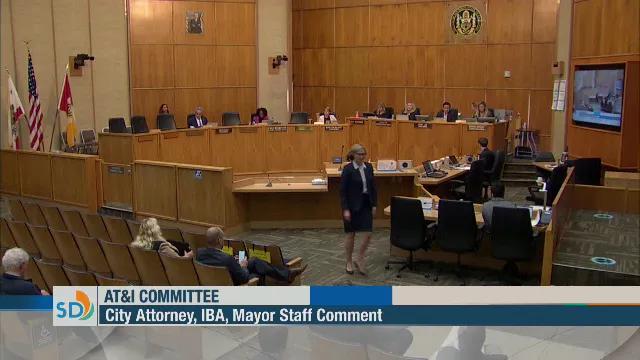
The Active Transportation and Infrastructure (ATI) Committee held a special meeting on Wednesday, March 22, 2023, at 2:00 p.m. The meeting included approval of prior committee actions, non‑agenda public comment, approval of consent items, discussion and votes on a slow street proposal and a software contract amendment, and an informational update on citywide EV charging. Two items were continued to a future meeting due to time constraints. Consent Calendar - The committee approved the committee actions of February 22, 2023 (motion by Councilmember von Wilpert, second by Council President Pro Tem Montgomery Steppe, passed 4‑0). - Consent items 1 and 2 (construction change order for OTI second pipeline and amendment with Vulcan Materials Company) were approved unanimously. Councilmember von Wilpert questioned the necessity of the Vulcan amendment due to supply‑chain cost increases; staff confirmed built‑in wiggle room for price escalation. Public Comments & Testimony Non‑Agenda Public Comment - Paul Kruger (Talmadge resident) urged the committee to conduct outreach to groups that cannot use transit, such as landscapers (immigrants, working poor), single mothers, Uber/Lyft/DoorDash drivers, and the disabled community. He cautioned against basing transit decisions on a survey of only 22 respondents. - Laurie Saldania requested that the committee investigate why the Housing Appeals and Relocation Board has not met in years, in violation of the city charter, and that displaced residents be given a right to appeal when shelters like Golden Hall are closed. - Michael Schmidt (constituent of a councilmember) complained about the poor condition of Black Mountain Road and requested a slurry seal as soon as possible. - Blair Beekman criticized the recent heavy police presence in downtown San Diego on weekends, suggesting foot patrols instead of a show of force, and also urged a slower pace for the street‑lab program. - Kathleen Lippett (from a planning group) emphasized that neighborhood input on infrastructure needs and priorities should be honored, and expressed concern that city policy often overrides community‑identified needs. - Judy Strang (AgriCo area) raised concerns about marijuana billboards along Freeway 94, saying they are inappropriate for families and children, contrary to the intent of Prop 64. Public Comment on Agenda Items - On Consent Items: No public speakers. - On Item 3 (Slow Street): - Michael Trimble (Executive Director, Gaslamp Quarter Association) supported the promenade, noting three years of successful trial operation and that 12‑hour closures are necessary because the Gaslamp has no alleys. - Skylar Johnson (Government Affairs Manager, Downtown San Diego Partnership) expressed strong support, citing benefits for walkability, economic development, climate goals, and pedestrian safety. - Ben Nichols (Executive Director, Hillcrest Business Association) supported slow streets as a multi‑use asset and hoped to see a similar project in Hillcrest. - Laurie Saldania spoke in support but raised concerns about tripping hazards from temporary barriers and confused perceptions of whether the street is fully closed. - Blair Beekman (virtual) focused on east‑west streets (F, G) where traffic speeds remain high, urging more traffic‑calming measures. - On Item 4 (Bentley Systems): No public speakers. - On Item 5 (EV Charging): - Paul Krueger (EV owner) stressed the rapidly changing charging environment and the need to keep up with trends (e.g., charging at work instead of at home). - Lori Saldania noted new state building codes requiring EV charging in new residential, hotel, and commercial developments, urging coordination. - Christina Marquez (IBEW Local 569) corrected the acronym (EVITP stands for Electric Vehicle Infrastructure Training Program) and supported prevailing‑wage, certified electrician requirements in the RFP. Discussion Items Item 3 – Authorization of a Slow Street on Fifth Avenue (Broadway to K Street) - Staff (Transportation Director Bethany Bizak and Deputy Director Duncan Hughes) presented the proposal under California Vehicle Code AB 773. The slow street would close Fifth Avenue intermittently to vehicular traffic, establishing a no‑parking/tow‑away zone, with cross streets remaining open. Hours would be managed by the Gaslamp Quarter Association. The action extends a successful COVID‑era closure and adds the block to Broadway. - Committee members expressed strong support. - Councilmember von Wilpert asked about emergency vehicle access; staff confirmed a 20‑foot emergency lane and removable bollards. - Council President Pro Tem Montgomery Steppe questioned rerouting of MTS bus routes 120 and 3; staff described one‑block detours and added bus stops. - Chair Lee asked about expansion to other neighborhoods; staff noted a citywide slow‑streets program is under development, funded by a federal Safe Streets for All grant. - The item passed unanimously (4‑0). Item 4 – Fourth Amendment to Bentley Systems Contract (CADD Services) - Staff explained that the amendment was needed to continue essential computer‑aided drafting services while a formal RFP is in process (bids due April 2023, anticipated award by October 2023). - Council President Pro Tem Montgomery Steppe questioned Bentley’s workforce diversity. Staff reported that the company’s updated workforce report did not show improvement for the San Diego office; an RFP with diversity requirements has been issued. - Councilmember von Wilpert noted the city lacks compliance officers to audit contractors’ diversity, and described delays in updating job descriptions to hire such officers (civil service changes not effective until July 2023). She expressed frustration that the council is forced to choose between stopping essential services and continuing with a non‑diverse contractor. - Vice Chair Lakava moved the item; Councilmember von Wilpert seconded. - The item passed 3‑1. Item 5 – Informational Update on Electric Vehicle Charging Solutions (No Vote) - Staff (Heather Werner, Deputy Director, and Alyssa Muto, Director, Sustainability and Mobility) presented a new RFP released on March 21 for a citywide EV charging concession. The concession would allow one vendor (or consortium) to finance, build, own, and operate chargers on city property (rec centers, libraries, beaches) for a 10‑year term, with the city purchasing the infrastructure at depreciated value at the end. Key requirements: 100% renewable energy, an equity program, EVITP‑certified installers, open‑protocol interoperability, and strong SLAs for maintenance. Risks such as pseudo‑monopoly and rate‑gouging are mitigated by city approval of significant rate changes. - Committee questions covered: charger mix (L2 vs. DC fast), integration with microgrids, equitable deployment (all neighborhoods within two years), cost recovery staffing, and grant leverage. Councilmembers supported the initiative, noting that public charging removes a major barrier for residents without home charging. Key Outcomes - Approved: Committee minutes of February 22, 2023 (4‑0). - Approved: Consent items 1 and 2 (unanimous). - Approved: Item 3 – Slow Street on Fifth Avenue (unanimous). - Approved: Item 4 – Bentley Systems contract amendment (3‑1). - Continued: Items 6 and 7 were trailed to the next regularly scheduled meeting on April 26, 2023, due to the 3:15 p.m. special city council meeting call. - Next Steps: Staff will bring a progress report on the citywide street condition assessment in April; the ZEV strategy draft is expected by summer 2023; the Bentley RFP bids are due in April 2023; the EV charging RFP is open, with a future council ordinance required.
ELECTRIC VEHICLE INFRASTRUCTURE 18% · ELECTRIC VEHICLE CHARGING 17% · PUBLIC COMMENT 12% · PROCUREMENT 12%
502
MAR 16, 2023 · SAN DIEGO, CALIFORNIA · COMMUNITY & NEIGHBORHOOD SERVICES COMMITTEE
Community and Neighborhood Services Committee Meeting - March 16, 2023

The Community and Neighborhood Services Committee of the San Diego City Council met on Thursday, March 16, 2023. The meeting included approval of prior committee actions, public testimony, discussion of the Opportunity Fund Council Policy, and consideration of the 2023 committee work plan. A quorum was present, and the meeting was televised and livestreamed. Consent Calendar - The committee unanimously approved the committee actions of February 16, 2023. No public comments were received. The motion was made by Councilmember Campillo and seconded by Council President Ilo Rivera (identified in one transcript instance as "Sean Elo"). Public Comments & Testimony - Non-agenda public comment: - Lakendra Adams, a new San Diego resident, said she and her family (including a Navy SEAL) feed homeless people. She stated that homelessness is a crisis with over 3,000 homeless people in San Diego, affecting neighborhood environments and property values. She urged the city to address the issue rather than move people from place to place. - Robert Moreno, executive board member of Teachers Local 542 representing nearly 9,000 members, spoke about District 4's lack of tree canopy, benches, and bus stop shelters. He recommended tree canopies and shaded walkways to reduce heat, improve air quality, and create safer pedestrian paths. - Blair Beekman (virtual) reported on the first Privacy Advisory Board (PAB) meeting, saying it went well and that the board prioritized developing bylaws before addressing smart streetlight technology. He expressed hope for a thorough study process over the summer. - Joyce Sanyata (District 3, virtual) quoted the City Attorney's statement that "most services are siloed" and read an email from library director Misty Jones calling for collaboration. She urged everyone to "come out of our silos." - Item 1 public comment: - Michelle Anderson, from the San Diego Parks Foundation, expressed strong support for the Opportunity Fund policy. She noted the foundation's accomplishments (planting 311 trees, installing Wi-Fi, creating programs) and acknowledged the policy's challenges, praising staff for their work. - Item 2 public comment: - Joyce Sanyata praised the work plan's language "strengthening and empowering all who live, work, and play" and supported items on parks, the child and youth master plan, and youth commission updates. - Blair Beekman emphasized including older adults in technology discussions and bridging the digital divide. - Ruby Meltor raised a concern about the slow process of securing wheelchairs on buses, causing her to miss buses. Discussion Items - Opportunity Fund Council Policy (Item 1) - Staff presentation: Sari Razo, deputy director of the citywide recreation services division, presented the policy. The fund was established under Council Resolution 313898 to support equitable programs in communities of concern as identified by the 2019 Climate Equity Index. The department held 11 workshops (one per council district) with 83 attendees; surveys showed demand for STEM activities, gymnastics, early education, sports, and other programming. The proposed policy uses a scoring system based on low recreation center fund balances, low budgets, and location in or service to communities of concern. An evaluation committee will review proposals. The fund was originally projected at $1 million but is now expected to reach about $500,000 due to fee adjustments and rain cancellations. Staff identified a $1.4 million funding gap for programs serving communities of concern. In the past two years, $1.8 million per year was allocated to programs such as Come Play Outside, Parks After Dark, and Learn to Swim. The FY24 outlook would bring recreation center fund balances up to $84,000 each, with some centers receiving over $100,000 when grants are included. Staff noted census data is 13 years old and a new parks need index is being developed. - Committee discussion: Councilmember Campillo praised the policy and asked about demand for education and child care. Staff cited day camps, early education programs (e.g., tiny tots), and staffing challenges as factors. Council President Ilo Rivera discussed equity, using the Stockton Recreation Center as an example of a center with a $200 budget without the fund, which would rise to $84,000 with it and over $100,000 with a grant. Councilmember Whitburn thanked staff and the Parks Foundation. - Motion by Councilmember Campillo, seconded by Council President Ilo Rivera. The motion passed unanimously. - Community and Neighborhood Services Committee Work Plan 2023 (Item 2) - Information item; no staff presentation. The work plan was posted online and displayed on screen. Chair Campbell highlighted upcoming topics: parks master plan, library master plan phase two, child and youth master plan, code enforcement, and veteran and senior services. - Committee comments: Councilmember Campillo reiterated commitment to child care and family-friendly policies; Council President Ilo Rivera focused on youth and seniors, noting senior homelessness and social isolation; Councilmember Whitburn stressed the age-friendly San Diego initiative, creating more senior centers, and supporting seniors on fixed incomes. No motion was required. Key Outcomes - The committee unanimously approved the consent calendar (committee actions of February 16, 2023). - The committee voted unanimously to support the Opportunity Fund Council Policy, sending it to the full council next month. - The 2023 work plan was received as an information item; no vote was taken. - The next committee meeting is scheduled for Thursday, April 20, 2023, at 1 p.m.

PARKS AND RECREATION 28% · MISCELLANEOUS 17% · PUBLIC COMMENT 16% · COMMUNITY ENGAGEMENT 14%
503
MAR 15, 2023 · SAN DIEGO, CALIFORNIA · RULES COMMITTEE
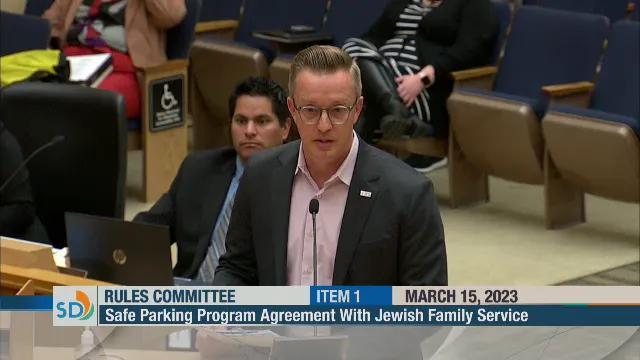
San Diego Rules Committee Meeting - March 15, 2023: Safe Parking Expansion & Election Code Amendments

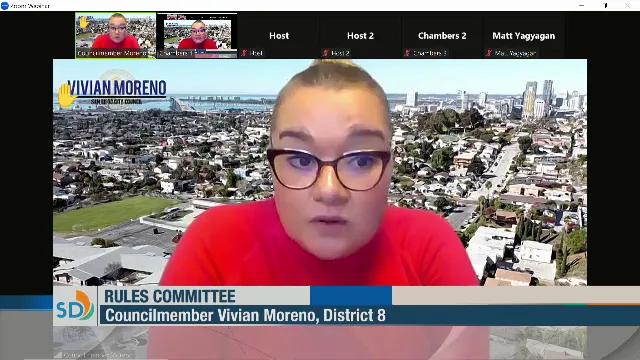
On March 15, 2023, the San Diego City Council's Rules Committee convened to discuss two major agenda items: a second amendment to the nonprofit agreement with Jewish Family Service for the Safe Parking Program and amendments to the city's election code. The meeting was chaired by Council President Ela Rivera, with Councilmembers Moreno (participating virtually due to childcare just cause), Montgomery Steppe, Lakaba, and Lee present. Also in attendance were City Attorney Kathy Steinman, Independent Budget Analyst Charles Modica, and Mayor's Representative Matt Yoyagan. Consent Calendar - Approval of February 22, 2023 Committee Actions: Unanimously approved via voice vote. No public testimony was offered. Public Comments & Testimony - Non-Agenda Public Comment: Becky Rapp, a public health educator focused on drug prevention, expressed concerns about the city's marijuana ordinance. She argued that lowering taxes for marijuana production facilities (from 8% to 2%) reduced crucial city funds and that spending $5 million from the general fund to expand the retail market takes away from basic community needs like safe streets, clean parks, and libraries. She urged the committee to prioritize rules that benefit residents over industry interests. - Item 1 – Safe Parking Program: Two public speakers commented. First, Chris Olson, Chief of Staff at Jewish Family Service, spoke in support of the expansion, highlighting that UCSD research recommended expanding service to 24 hours and increasing geographic diversity. He noted the new Rose Canyon site would address needs in District 2. Second, Joey Seniata (District 3) praised the program and thanked city staff and Jewish Family Service but questioned coordination among different entities and when program costs would impact the general fund. - Item 2 – Election Code Amendments: Two virtual speakers commented. Blair Beekman discussed the importance of the recall process but expressed concern about its overuse and urged attention to making democracy accessible for disadvantaged individuals. Lori Soldania raised an issue about city voter pamphlets arriving after county materials in the last primary election and asked whether the proposed timeline changes would ensure timely delivery of voting materials. Discussion Items Item 1: Second Amendment to the Nonprofit Agreement with Jewish Family Service for the Safe Parking Program - Presentation: Hafsa Keika, Director of Homelessness Strategies and Solutions, along with Deputy Director James Carter and Jewish Family Service's Chris Olson, presented the proposal. The amendment adds a fourth safe parking site at the city's Rose Canyon Operations Yard in District 2, featuring 15 vehicle spaces and 12 camper trailers (received from the state during COVID-19) that include beds, restrooms, and showers. The site will operate 24/7 and follow Housing First principles. The budget includes $474,403 in additional FY23 operating funds (bringing the total FY23 contract to $2.3 million) and three one-year options with annual amounts not to exceed approximately $2,828,070 for the full program. The county is anticipated to cover one-time startup costs through a competitive grant. The program aligns with the Regional Continuum of Care Action Plan on Addressing Homelessness among Black San Diegans. - Committee Questions & Deliberation: - Councilmember Moreno (remote) noted the item was heard in Rules due to timing constraints and expressed support. She asked about performance outcomes: James Carter reported that year-to-date 940 individuals had been served, with 291 (nearly a third) achieving positive exits. - Councilmember Lakaba inquired about funding sources (capital grant from county for site improvements; general funds for operations) and the operational model for the trailers, which will prioritize families. Chris Olson explained that families with multiple children will be assigned trailers, leveraging a family homelessness challenge grant. - Council President Pro Tem Montgomery Steppe asked for more detail on outcomes (unknown/negative exits) and praised the inclusion of equity action items. Staff committed to providing further data. - Councilmember Lee asked about utilization rates (near 100%, with over-enrollment and a waitlist) and raised fiscal sustainability concerns, noting that the requested $474,403 for five months annualizes to about $975,000, which may be tight given cost increases. Staff confirmed the annualized amount is $975,000, explaining the prorated figure includes one-time client-driven costs. - Council President Rivera highlighted the importance of data-driven questions and encouraged asking without fear of appearing unsupportive. He also asked about site assessment results: a January 2023 memo identified 10 potential sites, but only Rose Canyon was viable due to environmental, land use, safety, and operational constraints. Staff committed to further exploring removal of land use restrictions and obtaining data on the number of unsheltered individuals living in vehicles. - Vote: Motion by Councilmember Moreno, seconded by Councilmember Lakaba. Passed unanimously (5-0) to forward to full City Council. Item 2: Amendments to the Elections Code and Related Administrative Guidelines - Presentation: Interim City Clerk Deanna Fuentes, joined by Deputy Director Jen Barry and Elections Analyst Mark Moreno, presented recommended amendments to the San Diego Municipal Code. Key changes include: 1. Making the election code gender-neutral (per §11.0211). 2. Changing the candidate statement submission deadline from 98 days to 100 days before the election to ensure the 5-day review period completes before materials must be sent to the Registrar of Voters. 3. Clarifying that candidates may change their photograph between primary and general elections, with a 100-day submission deadline. 4. Correcting an incorrect municipal code reference regarding word counts for elected titles. 5. Requiring recall petitions to be submitted all at once and with blank copies, consistent with initiative and referendum rules. 6. Extending charter removal election provisions to school board members (per 2020 charter amendment). - Legal Review: City Attorney Kathy Steinman noted the office received the proposals recently and still needs to complete legal review, but the committee proceeded to consider the item. - Committee Questions & Deliberation: Council President Rivera asked about the administrative appeal process for signature determinations on initiatives. Fuentes explained that a challenge process was repealed in 2019 due to inefficiency, and the current remedy is a writ of mandate via the courts. She noted further amendments may be brought later this year. No other questions were raised. - Vote: Motion by Council President Rivera, seconded by Councilmember Lakaba. Passed unanimously (5-0) to direct the City Attorney to prepare an ordinance and resolution for City Council review. Key Outcomes - Item 1 – Safe Parking Program Expansion: Approved unanimously to forward the second amendment to the full City Council. The amendment adds a 27-space site at Rose Canyon (15 vehicle spots, 12 camper trailers), increases FY23 funding by $474,403, and adds three one-year options for ongoing operations. The program will prioritize families and incorporate equity action items. - Item 2 – Election Code Amendments: Approved unanimously to ask the City Attorney to draft the corresponding ordinance and resolution. The amendments address gender neutrality, submission deadlines, candidate photos, technical corrections, recall procedures, and school board removal provisions. Further legal review is pending. - Next Meeting: The Rules Committee will next convene on April 21, 2023 at 9:00 a.m.

HOMELESSNESS 49% · ELECTIONS AND BALLOT MEASURES 12% · PROCEDURAL 11% · PUBLIC COMMENT 10%
504
MAR 15, 2023 · SAN DIEGO, CALIFORNIA · PUBLIC SAFETY & LIVABLE NEIGHBORHOODS COMMITTEE
San Diego Public Safety Committee Meeting - March 15, 2023

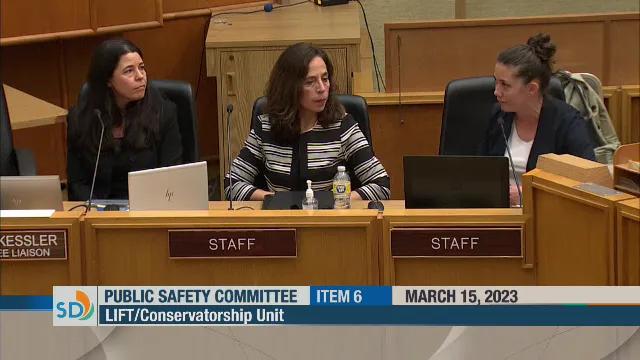
The Public Safety Committee met on Wednesday, March 15, 2023, at 2:00 p.m. to consider several items, including an update on the Falk Mobile Health ambulance contract, a presentation on the LIFT conservatorship program, an ordinance for a fire inspection software contract, and an informational update on human trafficking. The committee also heard non-agenda public testimony and approved consent items. Consent Calendar - Item 1: First amendment to the agreement with Stormal Inc. (d/b/a Lear) for ruggedized Panasonic tablets, accessories, and warranty services. Approved unanimously. - Item 2: First amendment to the consultant agreement with Enforcement Support Agency (ESA) LLC for police department computer-aided dispatch (CAD) system technical support. Approved unanimously. Public Comments & Testimony Non-Agenda Public Comment: Six speakers addressed the committee via Zoom: - Terry Ann Skelly – parent and public health worker. Expressed concern about cannabis marketing and its impact on youth, citing an AMA resolution on the dangers of high-THC products and predatory advertising. - Blair Beekman – Commented on the upcoming PAB meeting discussing smart city policies, emphasizing the need for community input and coordination between staff and the public. - Ann Elliott (North Park resident) – Asked why the PRIDE Ordinance was not on the committee’s work plan, noting it had been referred for legal review years ago. Listed supporting organizations and questioned who the council listens to. - Becky Raff – Parent and public health educator. Called for California to set legal limits for THC when driving, citing a fatal crash where the driver had 18 nanograms of THC in his blood. Urged regulations on potency and prevention education. - Peggy Walker – Referenced a UN report warning that cannabis legalization has failed to address health risks, leading to increased psychotic disorders. Urged the committee to consider a city watchdog committee on cannabis safety. - Joey Sanyata (District 3) – Expressed gratitude to security guards and police for keeping the city safe. - Kathleen Lippett – Raised concerns about residents feeling unsafe walking at night, especially downtown, and criticized the lack of a per se THC driving law in California, as well as unfounded medical claims by cannabis budtenders. - Judy Strang – Asked the city to delay expanding marijuana businesses until data on youth addiction is considered. Described a webinar from Rady Children's Hospital on the connection between vaping, cannabis, and mental health, noting that the hospital’s inpatient mental health unit was full. On Item 4 (Falk Ambulance Contract): - Jeff Beam (Managing Director, Falk San Diego) – Reported that Falk’s workforce unanimously ratified a new collective bargaining agreement. Falk has hired 38 paramedics since offering a $50,000 sign-on bonus, and has partnered with Southwestern College to train EMTs to become paramedics. Committed to the Alliance model and working with the fire department on the First Amendment. - Tony Sorcy (President, San Diego Association of Pre-Hospital Professionals) – Reported that SDAP ratified a three-year successor contract with Falk, to take effect with the First Amendment. Thanked the committee for support. On Item 6 (LIFT Conservatorship Program): - Laurie Saldania – Expressed concern that unsheltered individuals are being criminalized for medical/behavioral health issues. Questioned whether housing is associated with the program and urged coordination with homelessness outreach caseworkers. - Blair Beekman – Cautioned against overuse of conservatorships, emphasizing the need for transparency, regular review (e.g., six-month checks), and asking individuals about their experiences. On Item 5 (Human Trafficking): - Blair Beekman – Criticized the task force for not sufficiently focusing on civil rights and the perspective of victims/prostituted persons, urging more consideration of the individuals themselves. - Catherine Douglas – Thanked the police department for their work. Discussion Items Item 4 – Falk Mobile Health Corporation Contract Update Fire Chief Colin Stowell and Deputy Chief Jody Pierce presented an update on compliance and penalties. From October to December 2022, the system experienced 16 response time levels below 90% and 146 outliers. Total penalties exceeded $1.2 million, including repetitive failures. Monthly median paramedic unit hours remained below contract requirements, leading to frequent “Level Zero” periods (no ALS units available). Falk reported hiring 41 paramedics since October but losing 39; retention remains a challenge. The city has been negotiating a First Amendment focusing on financial terms and allocated hours. Chief Stowell stated that the amendment must not impact the general fund and that Falk needs to adjust its business model. He requested a special meeting in April to either bring an agreed amendment or seek direction on legal options. Committee members expressed frustration; Chair Von Wilpert warned that if no amendment is ready by April, she will ask the city attorney to docket an item exploring options to end the contract. Item 6 – LIFT (Life-saving Intervention for Treatment) Conservatorship Unit City Attorney Mara Elliott, Chief Deputy City Attorney Nicole Crosby, and Deputy City Attorney Ann Marie Counsel presented the program, which targets vulnerable individuals with serious mental health, substance use, or medical issues who cannot care for themselves and lack family support. To date, LIFT has assessed over 110 individuals, referred 20 to the county for conservatorships, and filed 11 probate conservatorship petitions. Case examples illustrated the complexity (e.g., a man with schizophrenia and 5150 detentions; a woman with 260 ER visits in two years). Challenges include county prioritization, underfunded programs, siloed services, and difficulty finding providers. The team emphasized they use conservatorship only as a last resort. Councilmembers praised the work but expressed concern about systemic gaps; Campbell called on the county to improve mental health care. The presentation was informational; no motion needed. Item 3 – Ordinance to Authorize Contract with 3DI Systems Assistant Fire Marshal Daniel Hypes presented a request for a five-year contract (with five one-year extensions) not to exceed $2.5 million for a fire inspection management system to replace the current system (Streamline Automation). The software will manage commercial fire inspections, permits, and defensible space inspections for wildfire prevention. The committee approved the ordinance unanimously. Item 5 – Informational Update on Human Trafficking Captain Matt Novak and Sergeant Mitch Jones (San Diego PD, Human Trafficking Task Force) provided an update. The task force includes 14 agencies, 17 law enforcement officers, four analysts, and two attorneys. They reported a significant increase in street-based prostitution following the passage of SB 357 (decriminalizing loitering with intent to commit prostitution). Operation Better Pathways, conducted over one month, resulted in 48 arrests (9 felonies, including 4 human trafficking), 39 misdemeanor arrests of sex buyers, and the recovery of 8 child victims (youngest age 13) and 8 adult victims. Two handguns were seized. A case study described a violent trafficker from Arizona who forced two 16-year-olds and a 19-year-old into prostitution; he is now in federal custody. The task force works with NGOs and Child Welfare Services to provide resources to victims. Key Outcomes - Consent Calendar: Items 1 and 2 approved unanimously. - Item 4 (Falk): No action taken (informational). Chair Von Wilpert committed to scheduling a special meeting in April 2023. If an agreed amendment is not presented, she will ask the city attorney to explore legal options to terminate the contract. Continued negotiations with Falk on the First Amendment. - Item 6 (LIFT): Informational; no vote. Council members directed staff to coordinate with county partners to improve referral processes and expand resources. - Item 3 (3DI Contract): Approved unanimously via motion by Councilmember Campbell, seconded by Councilmember Campillo. - Item 5 (Human Trafficking): Informational; no vote. The committee thanked the task force for its work. Next regularly scheduled meeting: May 17, 2023, at 2 p.m. A special meeting on the Falk amendment may be held in April.

PUBLIC SAFETY 26% · MENTAL HEALTH AWARENESS 17% · HUMAN TRAFFICKING 12% · PUBLIC COMMENT 10%
505
MAR 9, 2023 · SAN DIEGO, CALIFORNIA · ENVIRONMENT COMMITTEE
San Diego Environment Committee Meeting - March 9, 2023

The Environment Committee of the San Diego City Council met on Thursday, March 9, 2023, at approximately 9:00 AM in chambers and via Zoom. The meeting included approval of consent items, discussion and votes on stormwater consultant contracts, a presentation on the Climate Action Implementation Plan (Net Zero by 2035), and adoption of a new council policy for prioritizing climate actions. Public testimony addressed a range of concerns including cannabis regulation, airport fuel contamination, transit feasibility, and the urgency of climate action implementation. Consent Calendar - Item 1: Second Amendment to Agreement with ATOL Ventures Ocean Imaging – Approved 4-0 unanimously. - Approval of committee actions from February 9, 2023 – Passed 4-0. Public Comments & Testimony Non-Agenda Public Comment - Paul Kruger (Talmadge resident) expressed support for the committee’s vote against sustainable development areas, citing a disconnect between climate goals and inadequate transit. He urged better transit system design to induce mode shift. - Terry Ann Skelly (mentor/tutor) opposed increasing marijuana retail outlets, arguing that extension of big marijuana footprints harms communities of color and that smoking/vaping products remain leading causes of preventable disease. - Sandra Stahl (past executive director, Montgomery Gibbs Environmental Coalition) called for an investigation into the Department of Real Estate and Airport Management for wasting taxpayer dollars on a fuel tank project, estimating a turnkey system could cost under $100,000 versus the authorized $500,000 and escalating to $1 million. - Jay Powell stressed that energy independence should include local community-based renewable generation, not just 100% renewable imports, to create local jobs and equitable energy justice. - Kelly McCormick (public health educator) advocated for a smoke-free multi-unit housing ordinance covering both smoking and vaping, noting marijuana smoke contains more toxins than tobacco smoke. - Kathleen Lippett (longtime planning group attendee) defended planning group decisions against proposed city rules that would disenfranchise them, and opposed marijuana industry expansion, citing synergistic harms with tobacco. - Becky Rapp (parent and public health educator) raised concerns about the cannabis business division’s plan to remove zoning and sensitive use separation requirements, arguing these barriers protect health and environment. - Judy Strang described a pot shop named “Cookies” near a middle school in her neighborhood, opposing further marijuana outlets near youth. Public Comment on Item 5 (Climate Action Implementation Plan) Over 20 speakers testified, many from youth and environmental organizations. Key positions included: - Youth Will representatives (Safia Hidari, Maya De La Torre, Claire Snyder) urged meaningful inclusion of youth voices and a just transition to zero carbon. - Climate Action Campaign representatives (Madison Coleman, Serena Pelka, Brenda Garcia, Mikey Nabb, Ali Dressel) criticized the plan for lacking detailed benchmarks, timelines, and transparency on housing and building electrification actions. They called for an all-electric reach code for new construction without blanket exceptions. - Paul Kruger (again) emphasized that transit must be useful (buses must go where people need to go) and that affordable housing should be near transit. - Dennis Glennon supported the CAP but asked for specific completion timelines for each action. - Nicole Burgess (Mobility Board, District 5) stressed that transportation is the largest GHG source and called for bold leadership on mode shift and street safety. - Kelly Linden (San Diego 350) asked for interim milestones and quantitative progress tracking. - Nisha Jean Martin (San Diego Urban Sustainability Coalition) requested that communities of concern be included in accountability processes. - Ann Fage (Community Forest Advisory Board) supported tree canopy investments but stressed need for irrigation and enforcement of tree requirements in parking lots. - Christina Marquez (IBEW Local 569) advocated good green union jobs and workforce standards in CAP implementation. - Melanie Woods (California Apartment Association) warned against costly electrification mandates on existing multifamily buildings, urging incentives and stakeholder consultation. - Brandon Weber (San Diego Audubon Society) supported tidal wetland restoration and requested biodiversity scoring. - Matthew Adams (Building Industry Association) called for cost impact analysis on housing and urged engagement with regulated community. - Blair Beekman suggested using smart streetlight data for environmental sensors and ensuring open data processes. - Sonja Robinson asked if federal Inflation Reduction Act funds would be used and if advocates must fight for funding each year. - Molly Kirkland (Southern California Rental Housing Association) advocated incentive-based approaches rather than mandates. - Andrew Meyer (San Diego Audubon) asked for biodiversity category in scoring and faster wetland restoration. - Cherry Sadiago (Climate Reality Project) expressed frustration over slow implementation and need for line-item timelines. Public Comment on Item 4 (CAP Prioritization Policy) - Lauren Casaris (San Diego Regional Chamber of Commerce) opposed advancing the policy because feasibility scores had been drastically reduced (from 17 to 12 for foundational actions, 22 to 13 for other actions). She urged delay to better incorporate private sector feasibility. - Nicole Burgess argued that re-timing traffic signals to improve traffic flow (Strategy 3) makes driving easier at the expense of walking, biking, and transit. She supported parking pricing and incentive programs to shift mode. - Paul Kruger (again) reiterated that 94% of people drive, and without a workable transit system, disincentives like removing parking won’t change behavior. - Kelly Linden (San Diego Building Electrification Coalition) acknowledged the prioritization scores are one factor but worried they could be weaponized to delay action; she noted that the municipal building decarbonization (lowest score) is already underway and demonstrating leadership. - Craig Benedetto (NAOP and BOMA San Diego) echoed the chamber’s call to delay, stating feasibility must consider impacts on housing costs and investment. - Blair Beekman again emphasized mass transit and micromobility examples from Northern California. Discussion Items Items 2 and 3: Stormwater Professional Engineering Services Agreements - Presentation: Interim Stormwater Director Summer Hassanen and Assistant Deputy Director Brianna Menke presented two five-year, $25 million contracts (each) for as-needed engineering services with RIC Engineering and Michael Baker International. Contracts cover MS4 permit compliance, asset management, watershed studies, etc. Both firms committed to over 25% SLBE/ELBE subconsultant participation. Cost estimates from storm drain fund (approx. $5M/year) and general fund. - Committee Member Questions: Councilmember Campillo noted workforce diversity improvements in both firms but expressed concern about Rick Engineering’s underrepresentation growth in December 2022 report. EOC staff (Mr. Silva) clarified that progress is being made. Chair Lacava asked about previous contract values (historically $12.5M then $25M). He also noted that subconsultant total is larger than prime in some cases, but EOC only analyzes prime’s workforce; Silva confirmed Muni code limits analysis. - Outcome: Both contracts approved unanimously 4-0. Item 5: Climate Action Implementation Plan – Net Zero by 2035 (Information Item) - Presentation: Shelby Rust Rousseau, Mariah Saldania, and Alyssa Mudo (Sustainability & Mobility Department) presented the draft Implementation Plan, a living planning tool with annual departmental work plans, sequencing of actions (preliminary, foundational, related, other), and a cost analysis estimating $4.2 billion over five fiscal years (FY24-28). 96% of costs ($4B) are existing programs; incremental new/expanded costs are $200M? (not explicitly stated but total $4.2B). 112 FTE equivalent in new/expanded programs. The plan includes 50+ actions in progress and 22 complete. Staff highlighted upcoming reach code, municipal microgrids, and policy updates. - Mayoral Staff Comments: Randy Wilde emphasized the administration’s sense of urgency and noted that implementation has already started with reforms like Council Policy 800-14 and annual work plans. - Committee Member Discussion: Vice Chair Von Wilpert asked about reach code timeline (expected within months, planning commission first), EV charging plan (RFP next week), mobility master plan (draft by end of FY). She requested regular mid-year check-ins. Councilmember Campillo asked about bicycle master plan funding (grant-dependent, updated with $400K allocation) and roundabout costs ($2M average, but modular options at $200K). He appreciated integration with budget process. Councilmember Campbell noted importance of trees (carbon sequestration takes 5-10 years) and praised cross-department collaboration. Chair Lacava celebrated the plan as a milestone but acknowledged need for constant improvement. He asked about dashboard reporting – staff said they aim for a dashboard similar to performance analytics for strategic plan. - No formal vote – information item. Item 4: Adoption of Council Policy 900-22 – Climate Action Plan Implementation Prioritization (Action Item) - Presentation: Jordan Moore (IBA) presented the final policy after stakeholder outreach and a virtual public forum. The policy uses action timing categories and seven metrics (GHG reductions, equitable implementation, feasibility, core benefits, jobs/economy, resiliency, co-benefits). Based on public feedback (22 survey respondents), the scoring weights were adjusted to narrow the gap between metrics: GHG remains highest; feasibility dropped from 17 to 12 for foundational actions and 22 to 13 for other actions; jobs/economy and resiliency increased. Policy includes linking preliminary actions to foundational actions via modified scores. - Committee Discussion: Councilmember Campillo praised the complexity and moved approval. Councilmember Campbell criticized the small sample size of the survey (22/20 respondents) but supported the policy overall, noting GHG should be top priority. She liked the four timing categories. Vice Chair Von Wilpert asked about interaction with CIP prioritization policy 800-14 – Jordan Moore and Mr. Matica explained they are separate but complementary. Chair Lacava noted that feasibility scoring does not currently include private sector cost impacts, but that can be revisited in future CAP updates. He proposed amending the review timeline from two years to one year, which was accepted by the motion maker and seconder. - Outcome: Motion to adopt policy with amendment to review in one year passed 4-0. Key Outcomes - Consent calendar and stormwater contracts (Items 1-3): Approved unanimously. - Climate Action Implementation Plan: Received as information; staff directed to continue developing implementation with dashboard and regular reporting. No vote. - Council Policy 900-22: Adopted with amendment to evaluate after one budget cycle (review in 2024). The policy prioritizes actions based on seven metrics and action timing categories, with GHG reductions as the highest-weighted factor. - Public comments acknowledged: Committee members expressed appreciation for input and emphasized the need for concrete action, accountability, and engagement with both advocates and industry.

CLIMATE ACTION PLAN 26% · CLIMATE CHANGE 25% · PUBLIC COMMENT 18% · PUBLIC ENGAGEMENT 9%
506
MAR 8, 2023 · SAN DIEGO, CALIFORNIA · AUDIT COMMITTEE
Audit Committee Meeting - March 8, 2023: Recommendation Follow-ups and Homelessness Services Audit

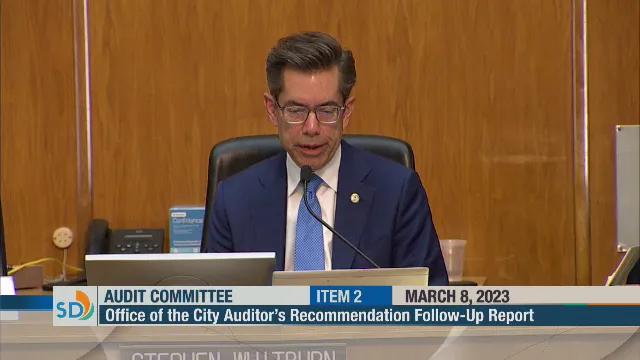
The Audit Committee of the San Diego City Council met on Wednesday, March 8, 2023, at 9:00 AM local time under the chairmanship of Councilmember Stephen Whitburn. Committee members present included Vice Chair Barreno, Helpern, Mafia, and Tab Shuri. Councilmember Moreno attended virtually due to childcare needs. The committee reviewed several items, including internal financial controls, audit recommendation follow-ups, a performance audit of homelessness services contracts, and the City Auditor's monthly activity report. Public Comments & Testimony - Non-Agenda Public Comment: Sandra Stahl (former executive director of MGEC, currently with Clean Earth for Kids) called for an investigation into the City Department of Real Estate and Airport Management for alleged wasteful spending on an unleaded fuel tank at Montgomery Gibbs Airport, stating a turnkey tank could cost $92,500 compared to the projected nearly $1 million. Joyce Sunyata (District 3) commended the City Auditor's office and highlighted a report on workplace safety costing up to $220 million per year. Francine Maxwell (Southeastern resident) requested an audit of police car shortages and questioned the use of SUVs for 7th floor staff. - Item 1 (Internal Financial Controls): Joyce Sunyata expressed excitement over the doubling of grant awards and urged focus on the structural budget deficit. - Item 2 (Recommendation Follow-up): Joyce Sunyata thanked the auditor for the report. Lori Saldania criticized the city’s failure to implement a data collection recommendation on homeless encampments, stating it has led to costly court proceedings. - Item 3 (Homelessness Services Audit): Blair Beekman advocated for unhoused storage and notification processes. Joyce Sunyata stressed transparency and conflict-of-interest disclosures. Lori Saldania highlighted serious health and safety concerns at shelters (mold, broken fixtures) leading residents to leave. Francine Maxwell raised concerns about "Do Not Return" lists and racial inequity. - Item 4 (Monthly Activity Report): Blair Beekman commented on police overtime and body cameras. Lori Saldania linked policing overtime to encampment sweeps and recommended exploring overlapping responsibilities. Discussion Items 1. 2022 Annual Report on Internal Financial Controls Jeff Peel and William Yu (Department of Finance) presented the report, which concluded that internal financial controls are effective. Highlights included clean audit opinions, implementation of telework policies (AR 95.95), and a significant increase in grant awards (from $84 million in FY19 to $229 million in FY22). The committee voted unanimously to accept the report and forward it to the city council as informational. 2. Office of the City Auditor's Recommendation Follow-up Report City Auditor Andy Hanau, Deputy Auditor Daniel Knighton, and Assistant Auditor Matt Helm presented the semi-annual follow-up covering the period ending December 31, 2022. Of 197 open recommendations from 47 reports, management implemented 37—the most in several cycles. Items in Attachment A required committee action: - Homelessness (12): Auditor recommended closing as "will not implement" due to changed approach; committee agreed. - Public Liability (6): Keep open pending management's risk management presentation; committee supported. - Major Building Acquisitions: Committee chose Option 2 (IBA to continue pursuing alternative methods to address remaining risks), recommendation to remain in process. - Get It Done/311 (6): Keep open until management presents a customer service strategy and roadmap with intent to create a 311 call center; committee supported. - Towing Audit: Referred to Chair Whitburn's office. Committee member Tab Shuri led discussion on Attachment C (past-due recommendations) for Compliance, DREAM (Real Estate), Economic Development, HSSD, and Risk Management. Key updates: DREAM is updating three real estate policies (target Dec 2023); HSSD awaiting Measure C outcome for funding strategy (Vice Chair Moreno recommended developing two scenarios). The committee voted unanimously to accept the report and adopt all five Attachment A recommendations. 3. Performance Audit of the San Diego Housing Commission's Homelessness Services Contract Management The audit found the Housing Commission generally follows best practices but identified two issues: (1) failing to collect conflict-of-interest disclosures for 42 of 93 sole-source contracts (over $70 million); (2) lack of documented city procedures for maintenance at city-owned/leased homeless facilities, leading to unsafe conditions (e.g., mold, broken outlets) persisting for months. Four recommendations were made. All agencies agreed, but HSSD’s response on recommendations 3.1 and 3.2 was deemed insufficient by the auditor. After discussion, the committee approved a motion (amended by Vice Chair Moreno) to accept the report and forward to the city council only after management revises its responses with clear steps and target dates and returns to the audit committee for review. The motion passed unanimously. 4. City Auditor's Monthly Activity Report Andy Hanau reported recent activities: three reports issued (including the two presented and a confidential IT audit), two reports in writing (body camera IT security, CIP funding), two in fieldwork (classified hiring, brush management), four in planning (street maintenance, SDPD overtime, pedestrian safety, Mission Bay). The office is fully staffed with new hire Stephanie Potts. No action required. Key Outcomes - Approved minutes of January 25, 2023 (unanimous). - Accepted 2022 Internal Financial Controls report (unanimous). - Accepted Recommendation Follow-up Report with all five Attachment A staff recommendations, including Option 2 for the major building acquisitions audit (unanimous). - Accepted Homelessness Services Contract Management audit with additional requirement: management to revise responses to recommendations 3.1 and 3.2 and return to committee before council referral (unanimous). - Noted the City Auditor's monthly activity report.

HOMELESSNESS 26% · AUDIT FOLLOW-UP 24% · PUBLIC COMMENT 9% · PUBLIC RECORDS MANAGEMENT 9%
507
MAR 8, 2023 · SAN DIEGO, CALIFORNIA · ECONOMIC DEVELOPMENT & INTERGOVERNMENTAL RELATIONS COMMITTEE
San Diego Economic Development Committee Meeting March 8, 2023

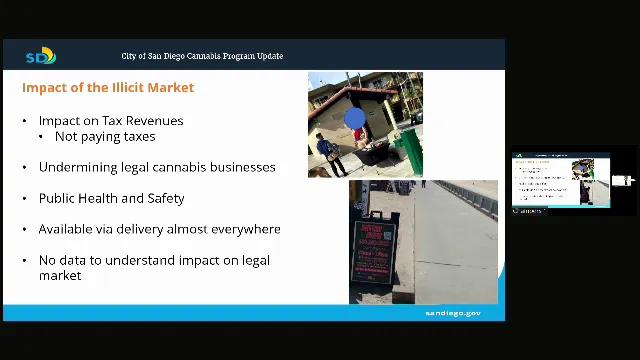
The Economic Development and Intergovernmental Relations Committee met on March 8, 2023, to discuss a port commissioner update, a digital wayfinding kiosk agreement, business improvement district budgets, and a cannabis equity program update. The committee approved the consent calendar and unanimously supported the wayfinding kiosk agreement and BID budgets, while the cannabis item was informational only. Consent Calendar - Approved the committee actions of February 8, 2023, unanimously. Public Comments & Testimony - Gary Smith (San Diego Downtown Residents Group) urged the committee to appoint a representative to the North County Transit Board, noting a proposed Coaster station that would require 22 additional daily train trips and over 90 minutes of additional crossing gate closures south of Broadway. - Cecil Carter (public comment) expressed support for cannabis consumption lounges, citing economic benefits and reduced public consumption. - Sonia (caller) requested the committee invite the former Imperial Beach mayor to speak about pollution in the Tijuana River estuary. - Austin Evans (Chair, Small Business Advisory Board) gave a heads up on budget priorities letter sent to offices. - Diane Grace (parent and grandparent) urged focus on children and youth, expressing concern about marijuana businesses taking precedence over young people. - Anthony Avalos (fourth-generation San Diegan, survivor of the war on drugs) commended the city's efforts to identify harm caused by the war on drugs. - Blair Beekman urged careful consideration of smart streetlight technology and surveillance, calling for community input through the Privacy Advisory Board. - Judy Strang emphasized the importance of equity for children and praised the committee's workforce development priorities. - Mark Wilcox (father, grandfather, businessman) supported youth employment training but urged keeping the 1,000-foot distance from marijuana businesses to protect children. Discussion Items Item 3: Report from Port Commissioners - Port Commissioners Rafael Castellanos, Danielle Moore, and Michael Zuquette presented an update on port initiatives. Key points included: - Blue Economy initiatives (aquaculture, underwater robotics, seaweed farming, oyster farming) with nine demonstration projects. - Upgrades to Cesar Chavez Park ($650,000 turf replacement, 20 shade trees). - Freedom Park on Navy Pier (over $60 million, expected completion by 2028, with $50 million contribution from the Midway Museum). - Cruise ship recovery: 100 visits in 2022, trending above pre-pandemic levels of 140+ calls, each worth about $2 million to the local economy. - Installation of a second shore power system for cruise ships. - Central Embarcadero redevelopment (Seaport San Diego) with environmental review underway. - Top Golf proposal on East Harbor Island undergoing environmental review. - Maritime Clean Air Strategy: goal of 100% zero-emission cargo truck trips by 2030 (exceeding state goals by 5 years), 40% by 2026; first two all-electric cargo cranes in North America at 10th Avenue Marine Terminal; first all-electric tugboat in North America. - Port partnership with U.S. Navy for low-carbon fuel standard credits. - Harbor Drive 2.0 project to separate truck traffic from regular traffic in Barrio Logan. - Port-side air quality relief program (PAIR) providing air monitors and purifiers to residents. - Diversity, equity, and inclusion efforts: DEI office with three pillars (culture, workforce, procurement). - Public comments: Nicole Burgess advocated for better bike infrastructure along the waterfront. A caller supported the port's electrification efforts and praised the presentation. - Committee discussion: Council President Pro Tem Montgomery Steppe asked about affordable accommodations. Commissioner Castellanos noted ongoing efforts, including a pod concept and RV resort in Chula Vista, and a requirement for 25% affordable accommodations in new hotel developments. Councilmember Lee asked about growth opportunities; Commissioner Castellanos highlighted hospitality, maritime modernization, and Blue Economy. Item 1: Digital Wayfinding Kiosk Agreement - Staff presentation (Sarah Brenner, Economic Development): Proposed 10-year marketing agreement with IKE Smart City and Downtown San Diego Partnership (DSDP) for up to 50 digital kiosks in downtown (excluding coastal zone). Key terms: - IKE pays all costs; city receives greater of minimum annual guarantee (starting at $16,000 per kiosk, escalating to $22,000) or 45% of net advertising revenue. - 51% of screen time for public messaging; 66% during active use. - Free Wi-Fi, emergency call button, translation in over 100 languages. - Revenue: minimum $14.7 million over 10 years, up to $24.9 million with renewal. - Exception from city sign regulations required. - No surveillance technology unless compliant with Trust Ordinance. - Public comments: Support from DSDP, Gaslamp Quarter Association, City Center BID, East Village Association, and La Jolla Village Merchants. Opposition from Scenic San Diego (Pamela Wilson) and Paul Krueger, who warned of unintended consequences to sign ordinance. - Committee discussion: Chair Campillo highlighted benefits and protections, including data privacy (IKE confirmed phone numbers are not stored). Councilmember Montgomery Steppe asked about surveillance ordinance exemptions; city attorney deferred to mayor's office, but staff agreed to provide information before full council. Councilmember Lee noted successful deployments in 14 cities (e.g., Miami, Atlanta, Berkeley). The committee voted unanimously to send to full council. Item 2: Fiscal Year 2024 Business Improvement District Budgets - Staff presentation (Michelle Munoz, Economic Development): 18 BIDs with estimated $1.8 million in assessments from 12,000 businesses. The council will take eight actions over two meetings, including approving budgets, setting a public hearing, and authorizing contracts. Accountability provisions from FY2022 were continued. - Public comments: Support from City Center BID, North Park Main Street, Hillcrest Business Association, Discover Pacific Beach, and the Small Business Advisory Board. - Committee action: Councilmember Montgomery Steppe moved staff recommendation; passed unanimously. Item 4: Cannabis Equity Program Update - Staff presentation (Laura Gates, Deputy Director, Cannabis Business Division): Provided update on accomplishments (adopting cannabis equity assessment in October 2022, receiving $885,000 state grant) and barriers (illicit market, intoxicating hemp, zoning restrictions, staff capacity). Proposed creating a Cannabis Outlet Social Equity and Economic Development Overlay Zone (COSEED) with 36 new equity permits, reduced sensitive use separation to 600 feet (state minimum), waiving fees, and removing property pre-selection requirement. Slow rollout of 9 permits per year over 4 years. Need for additional staff and funding highlighted. - Public comments: Mixed views. Supporters (e.g., Terry Best, Armand King, Anthony Avalos, Christopher Martinez) urged funding (minimum $1 million) and fast-tracking. Opponents (e.g., Barbara Gordon, Kathleen Lippitt, Judy Strang, Kelly McCormick, Peggy Walker) argued the market is oversaturated, raised public health concerns, and questioned equity program design. - Committee discussion: Councilmember Montgomery Steppe expressed strong support for repairing harm from the war on drugs, noting that current licensees do not include those personally impacted. She emphasized the need for funding and community input through the upcoming SEED Task Force. No action taken as item was informational. Key Outcomes - Consent Calendar: Approved unanimously. - Item 1 (Wayfinding Kiosks): Motion to approve staff recommendation made by Chair Campillo, seconded by Vice Chair Montgomery Steppe, passed unanimously. The item will go to full City Council. - Item 2 (BID Budgets): Motion to approve staff recommendation made by Vice Chair Montgomery Steppe, seconded by Chair Campillo, passed unanimously. - Item 3 (Port Report): Informational only; no vote needed. - Item 4 (Cannabis Equity): Informational only; no vote needed. Staff directed to continue developing the program and seek funding in upcoming budget.

CANNABIS REGULATION 24% · PUBLIC COMMENT 17% · TECHNOLOGY AND INNOVATION 11% · PORTS AND MARITIME 11%
508
MAR 2, 2023 · SAN DIEGO, CALIFORNIA · LAND USE & HOUSING COMMITTEE
Land Use and Housing Committee Meeting - March 2, 2023

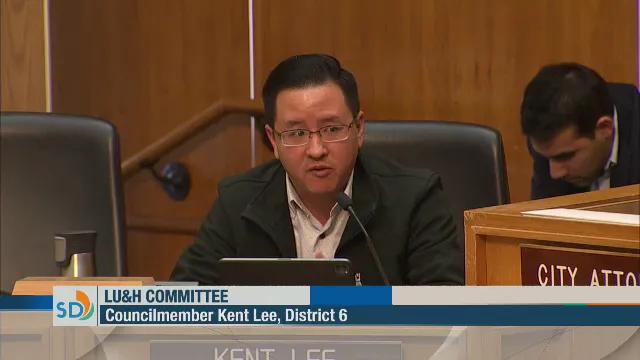
The Land Use and Housing Committee of the San Diego City Council met on Thursday, March 2, 2023, at 1 p.m. Chair Councilmember Moreno presided, with Vice Chair Lacava and Councilmembers Whitburn and Lee present. The committee approved consent items, discussed land donations and airport lease amendments, and received informational updates on affordable housing preservation and the Housing Instability Prevention Program (HIPP). Consent Calendar - Item 1: Dedication of a 3,155-square-foot portion of a parcel for public street purposes (Playa Dosal Parkway, Otay Mesa). - Item 2: Sixth amendment to a lease at 525 B Street with I&G B25 B Street, LLC. - Both items were approved unanimously without discussion. Public Comments & Testimony - Non-Agenda Comments: Speakers addressed public restroom availability (Jan Bourgeois opposed paid restrooms, noted lack of Portland loos), towing practices on Fifth Avenue (Blair Beekman thanked the city for reducing towing), and concerns about a cannabis dispensary approval in Rancho Bernardo (Becky Rapp argued it violated community plan and had inadequate setbacks). Lori Zaldania highlighted that lack of bathrooms contributed to hepatitis outbreaks. Peggy Walker noted a projected $6 million shortfall in marijuana tax revenue and questioned adding more dispensaries, especially in minority communities. Judy Strang opposed removing libraries from sensitive use designations for marijuana businesses. - Item 4 (Airport Lease): Blair Beekman urged consideration of unleaded fuel for aircraft; Lori Zaldania asked about solar panel installation at the airport. - Item 5 (Affordable Housing Preservation): Colin Rice (RAD Group) supported preservation but opposed action item 5, which he said would prioritize nonprofit developers over for-profit entities, arguing it could reduce investment. Stephen Russell (San Diego Housing Federation) urged continued support for preservation recommendations and budget allocation. Ricardo Flores (LIF San Diego) supported a preservation ordinance and budget funding. Saad Asad noted the shocking decline in affordable housing projected to 2040. - Item 6 (HIPP): Joy Sanyata noted difficulty with 211 referrals and expressed concern about the closure of Golden Hall shelter. Lori Zaldania criticized the Housing Commission’s removal of utility and medical allowances, calling it a conflict of interest given the board chair’s Sempra Energy holdings. Discussion Items - Item 3 – Land Donation: The committee accepted a donation of 14.9 acres of undeveloped land (valued at $275,000) and a $268,902 endowment for long-term management from Titia Parcel Holding Company LLC. Staff waived the presentation. Motion approved unanimously. - Item 4 – Brownfield Municipal Airport Lease Amendments: Staff presented two lease amendments affecting 20.29 acres (Brownfield Aviation Ventures, BFAV) and 3.62 acres (Ramp Five Holdings). The amendments release BFAV from a $1 million capital improvement obligation in exchange for conveying 2.29 acres and access to Curlew Street, allowing the city to assemble an 8.3-acre contiguous parcel for future development. The city would also forgo late fees and reduce rent by $1,500 per month. The amendments are conditioned on each other. The Airport Advisory Committee recommended approval. The IBA’s office noted the city’s decision to forego damages is reasonable. The committee approved the staff recommendation unanimously. Informational Items - Item 5 – Affordable Housing Preservation: The San Diego Housing Commission (SDHC) presented an update on preservation efforts. Key data: San Diego has 555,000 total housing units; 49% are renter-occupied. Of 164,000 rental units in buildings of 5+ units, 22,450 (14%) are deed-restricted, and 48,000 are naturally occurring affordable housing (NOAH). Trend analysis shows that without preservation, 30% of new production through 2040 will merely replace lost affordable units. An estimated 6,600+ deed-restricted units will expire by 2033. The preservation study estimated $400 million per year needed for gap financing, with $86 million in gap financing annually. SDHC has implemented an interagency working group and preservation collaborative. Funding requests: a $5.3 million allocation for FY24 could preserve 79 units. Committee members (Chair Moreno, Vice Chair Lacava, Councilmember Whitburn, Councilmember Lee) expressed support for a phased funding approach, a preservation ordinance, and stakeholder engagement. No action was taken, but the committee directed SDHC to bring back a draft ordinance and a funding plan later in 2023. - Item 6 – Housing Instability Prevention Program (HIPP) Update: SDHC reported on the HIPP pilot launched September 2022 with $3.57 million in FY23 funds. As of February 2023, 76 households were enrolled, with 67 referrals pending. Key statistics: 63% of enrolled households are seniors (55+) with a disabling condition; average household income is $2,049 per month; average rent is $1,486 per month (77% of income toward rent). 26% of households have past due rent averaging $5,000. The fixed $500/month subsidy is insufficient for many; SDHC proposed a tiered subsidy ($250/$500/$750) and expanding past due rent coverage to six months. Preliminary data show Hispanic/Latino households are under-enrolled (18% enrolled vs. 29% referred). Committee members emphasized the need for expanded outreach, especially in districts like District 8, and continuation of funding in FY24. No action taken; the committee requested a follow-up update in six months. Key Outcomes - Approved: Consent Agenda (Items 1-2) unanimously. - Approved: Item 3 (land donation) unanimously. - Approved: Item 4 (airport lease amendments) unanimously. - Direction: SDHC to develop a draft affordable housing preservation ordinance with stakeholder input and bring back a phased funding plan for preservation. - Direction: SDHC to continue HIPP with proposed adjustments (tiered subsidies, expanded outreach) and return with an update in six months. - Next Meeting: Thursday, April 13, 2023, at 1 p.m.

AFFORDABLE HOUSING 33% · PUBLIC COMMENT 18% · HOUSING 15% · REAL ESTATE 11%
509
MAR 1, 2023 · SAN DIEGO, CALIFORNIA · BUDGET & GOVERNMENT EFFICIENCY COMMITTEE
Budget and Government Efficiency Committee Meeting – March 1, 2023

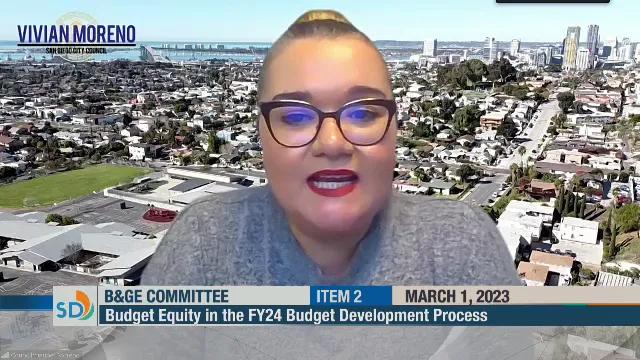
The Budget and Government Efficiency Committee met on March 1, 2023, to approve prior committee actions, hear non-agenda public comment, and discuss two agenda items: a user fee adjustment for high-rise inspections and the integration of budget equity into the FY2024 budget process. The meeting was chaired by Council President Pro Tem Montgomery Step, with Vice Chair Moreno attending virtually due to childcare needs. The committee approved the consent calendar and the fee adjustment item unanimously, and received the budget equity presentation as an information item. Consent Calendar - Approval of Committee Actions for February 8, 2023: The committee voted unanimously to approve the actions from the prior meeting. No public testimony was offered. Public Comments & Testimony Non-Agenda Public Comment: - Becky Rapp (parent and public health educator): Cited SANDAG data showing drug use at a 20-year high among adult arrestees (79% of males, 82% of females testing positive for marijuana, meth, opiates, or cocaine). She argued that marijuana use contributes to foster care overload and urged the city to align programs toward a drug-free community to achieve a balanced budget. - Peggy Walker: Noted a projected $5.9 million shortfall in marijuana tax revenue and a 75% tax rate reduction (from 8% to 2%). She suggested the city should rethink the tax rate, referencing Forbes on vice taxes, and argued that marijuana consumption carries negative externalities (addiction, ER visits, homelessness, etc.). - Joyce (District 3 resident): Expressed support for participatory budgeting, thanked committee members, and discussed the complexity of the structural budget deficit. - Judy Strang (parent and grandparent): Expressed excitement about budget equity and upstream thinking, and advocated for clean air and smoke-free environments, noting that Americans for Nonsmokers' Rights celebrated the Day of Breathing. Public Comment on Item 2 (Budget Equity): - Joyce (phone ending 7968): Praised the budget equity plan as a mindset change and thanked the committee for its work. - Blair Beekman: Congratulated the effort but asked for clearer metrics and formulas for equity assessment, urging transparency in the process. Discussion Items Item 1 – Fiscal Year 2023 User Fee Adjustment for High-Rise Inspections - Michelle Yamamoto (Deputy Director, Fire Rescue) and Chief Tony Tosca (Fire Marshal) presented a proposal to reduce the fee from $30 to $18 per 1,000 square feet. The reduction was due to a calculation error in the prior fee study and efficiency gains from stakeholder education, staff training, new cloud-based inspection software, and geographic-based inspections. The lower fee still maintains full cost recovery. Refunds will be issued to users who paid the higher fee since July 1, 2022. The projected revenue decrease is $464,000 annually. The committee unanimously approved the adjustment. Item 2 – Budget Equity in the FY 2024 Budget Development Process - Matt Yagiagan (Deputy Director of Policy and Council Affairs, Mayor’s Office), Chief Financial Officer Matt Vespe, and Chief Race and Equity Officer Kim Desmond presented the city’s first integration of an equity lens into the budget development process. Key components include: - A budget equity framework with three deliverables: a summary in Volume 2 of the budget book, a questionnaire for equity-centered coaching, and a highlight of trade-offs. - Software changes requiring every budget adjustment to include whether it addresses a disparity and answer equity lens questions. - Training and coaching for all department directors on equity principles. - The IBA (Charles Monica) expressed support, noting that the process will be a focus in their review of the proposed budget. Committee members discussed the need for accountability, performance metrics, and the connection to climate action and operational changes. The item was informational; no vote was taken. Key Outcomes - Item 1 (User Fee Adjustment): Approved unanimously. The city clerk will amend the rate book, and refunds will be issued. - Item 2 (Budget Equity): Received as information. The proposed budget will be released on April 14, 2023, with equity impact statements included in Volume 2. The committee will continue discussions in upcoming budget review hearings. - Upcoming Dates: Mid-year budget monitoring report (March 6), proposed budget release (April 14), third-quarter monitoring and May revise, and budget adoption in June.

BUDGET EQUITY ANALYSIS 21% · BUDGET 20% · RACIAL EQUITY 19% · PUBLIC COMMENT 15%
510
FEB 22, 2023 · SAN DIEGO, CALIFORNIA · RULES COMMITTEE
Rules Committee Meeting on CPPS Funding Amendments – February 22, 2023

The Rules Committee of the San Diego City Council met on February 22, 2023, to discuss and vote on proposed amendments to Council Policy 100-06, which governs the Community Projects, Programs, and Services (CPPS) funding program. The meeting began with approval of previous minutes, followed by non-agenda public comments on marijuana and airport fuel issues, and concluded with a discussion and action on CPPS reforms. Consent Calendar - The committee unanimously approved the committee actions from January 18, 2023, after no public comment. Public Comments & Testimony - Terry Ann Skelly expressed opposition to any expansion of marijuana businesses in San Diego, arguing it would break trust with citizens and disproportionately harm communities of color, citing health disparities and the history of tobacco and alcohol. - Becky Rapp (Rancho Bernardo Planning Group attendee, parent, resident) expressed concern that vague language in the municipal marijuana code allows industry attorneys to exploit loopholes, particularly regarding distance measurements from sensitive uses. She urged the committee to strengthen the code to create a clear, black-and-white policy. - Sandra Stahl criticized delays in installing an unleaded fuel tank at Montgomery-Gibbs Airport, alleging it benefits special interests and harms children’s health due to leaded avgas. She demanded faster action and transparency regarding FAA concerns. - Kathleen Lippitt argued against saving the cannabis industry, citing increased teen use, impaired driving deaths, environmental damage, and that for every dollar in tax revenue, the state spends $4.50 on consequences. - Judy Strang (parent advocate) opposed expanding the cannabis footprint, calling it “soft racism of low expectations” and comparing it to tobacco industry tactics. Discussion Items - Item 1: Priorities for Amending Council Policy 100-06 (CPPS) - Presentation by Council Administration (Abigail Edwards, Mal Kai Belecki): Recommendations included: - Moving from a reimbursement model to upfront grant funding for organizations. - Creating a separate budget line item for CPPS to ensure equitable allocations across districts (instead of relying on office budget savings). - Removing the requirement that funds be used only for one-time expenses, allowing recurring costs, rent, payroll, food, beverages, and travel. - Clarifying that capital improvement projects (CIPs) on private property are eligible, but not on public property (due to public works regulations). - Clarifying policy on ticketed events (currently prohibited unless free). - Requiring each council office to post CPPS information, priorities, and application links on its webpage. - Giving council administration discretion to grant extensions and amendments during the fiscal year. - Independent Budget Analyst (Jillian Andalina): Supported upfront funding but emphasized maintaining safeguards (receipt verification). Agreed with moving to a line-item allocation to avoid discouraging offices from spending budgets. Suggested policy clarify that funds should still be prioritized for one-time uses. - Public Comments: - Andy Henshaw (nonprofit representative) strongly supported upfront funding and equitable distribution, noting that reimbursement delays strain small organizations. - Susie Murphy (Executive Director, San Diego Mountain Biking Association) supported upfront funding and clarified that trail projects on public land were deemed public works by the city attorney, making them ineligible for CPPS; she urged exploring a mechanism to allow such projects. - Committee Deliberation: Chair Elo-Rivera opened discussion, seeking consensus on upfront funding and a budget line item. Council President Pro Tem Montgomery Steppe supported the changes but raised concerns about safeguards becoming barriers, particularly for small grants ($2,500-$5,000). She suggested a threshold for reporting requirements and proposed outreach seminars to guide organizations. Councilmember Lee supported upfront funding and flexibility for ticketed events, but questioned additional performance measures as potentially onerous for small grants. Councilmember Moreno supported all changes but flagged the proposed 50% operational budget cap as potentially harmful to very small nonprofits (e.g., San Isidro Women’s Club). Councilmember LaCava suggested expanding eligible applicants to include community planning groups and recreation advisory groups, and asked the city attorney to explore a mechanism for small-scale public-works projects on public land. He also raised caution about operational funding dependencies and ticketed events where net proceeds are small. The committee discussed additional potential safeguards inspired by county policies (e.g., campaign contribution disclosures, delinquency lists, gift restrictions), but agreed to obtain more information from grand jury reports before deciding. Council President Pro Tem emphasized consistent information across websites and council policy. Key Outcomes - Motion passed unanimously: The committee directed the City Attorney’s Office to prepare amendments to Council Policy 100-06 as prioritized by the committee, and instructed the Department of Finance, Council Administration, and other impacted departments to determine the fiscal and operational impact of the proposed changes. - Next steps: The City Attorney will draft language incorporating committee feedback (e.g., upfront grants, line-item allocation, eligibility expansions, threshold discussions, ticketed event policy, public works mechanisms). The matter will return to the Rules Committee on March 15, 2023, at 9 a.m. for further consideration. - Additional considerations noted: The committee requested copies of relevant grand jury reports on county grant safeguards, and asked staff to explore a scaled approach to reporting requirements based on grant size.

COMMUNITY ENGAGEMENT 40% · PUBLIC COMMENT 14% · BUDGET EQUITY ANALYSIS 13% · PROCEDURAL 12%
OPENPUBLICA · PUBLIC MEETING INDEXUPDATED DAILY · openpublica.com