61
JUL 28, 2026 · ST PAUL, MINNESOTA · TRANSPORTATION COMMITTEE
St. Paul City Meeting Summary - July 28, 2026
No agenda, minutes, or transcript were provided for this meeting. A summary cannot be generated.

Note: The agenda listed the meeting date as July 31, 2026, and the chair called the meeting to order as “Friday, August 31st.” This summary uses the date provided by the user (July 24, 2026) per instructions. The transcript and agenda do not agree on the date. The meeting focused on the future of the Rondo neighborhood. Commissioners heard a detailed presentation on the Rondo Small Area Plan, discussed procedural aspects of a nonprofit-led small area plan, and voted to release the draft plan for public review with a public hearing set for September 11, 2026. The meeting also honored Commissioner Hackney on his final meeting with a resolution of appreciation. Consent Calendar - Approval of Minutes: The Planning Commission unanimously approved the minutes from the June 26, 2026 meeting (Commissioner Presley abstained due to absence). Public Comments & Testimony - No public comments were made during this meeting. Discussion Items - Resolution of Appreciation for Commissioner Hackney: Chair Grill introduced a resolution honoring Commissioner Hackney for his service since moving from California to St. Paul. The resolution praised his work on eliminating consent petitions (2022), the 1–4 unit housing study, traditional neighborhood amendments, and the Hamms rezoning and heritage preservation. Commissioner Hackney gave remarks thanking staff and fellow commissioners, calling his service “the great honor of my time in St. Paul.” The resolution passed unanimously (Commissioner Presley abstained). - Rondo Small Area Plan Presentation: Keith Baker (Executive Director, Reconnect Rondo) and Lance Bernard (TC2 consultant) presented the plan, emphasizing its community-led process (2022–2026) and restorative development principles. Key points: - The plan envisions a land bridge over I-94 to reconnect the Rondo community, creating 21 acres of new land, 576 housing units, 1,000 new residents, and 110,000 square feet of development. - The plan addresses past harms: 700 homes and 300 businesses lost; estimated 48% home ownership loss and 61% population loss. A past prosperity study estimated $35 million in lost tax revenue (snapshot 1980) could have funded 4,800 four-year degrees at the University of Minnesota. - Current annual costs in Rondo: $30 million in unrealized taxes, $57 million in Medicaid spending, $22 million in preventable disease costs. - Financing: A “4P” model (public, private, philanthropic, people) is proposed, with the land bridge as a transportation element that can leverage federal transportation dollars. - Next steps: NEPA process underway; a Restorative Development Authority bill to be introduced; three innovation demonstration projects planned (including the XL Energy site). - Commissioner Questions & Process Discussion: - Commissioner Riley asked about tension between the Rondo plan and the competing “boulevard” approach from Our Streets. Baker responded that Our Streets is a policy advocacy organization, not representing the most harmed, and that MnDOT considered the boulevard and did not move it forward. - Commissioner Tagioff asked how the land bridge is essential to achieving goals. Baker explained that the land bridge creates new land in a landlocked city and is a tool to leverage transportation funding; even without it, restorative development principles remain key. - Commissioner Starling raised process concerns about a nonprofit bringing a small area plan directly to the commission rather than through district councils. Staff (Tony Johnson) clarified that the plan spans two planning districts (District 8 and others), making a standalone document appropriate. Director Robinson affirmed that staff reviewed the plan for consistency with the comprehensive plan and would not bring an unaligned plan forward. Commissioner Presley (who recused herself due to her consulting role with Reconnect Rondo) noted that this follows precedent of other neighborhood plans and that engagement with district councils has occurred. - Commissioner Martinson asked about engagement with district councils; Baker reported 7–8 presentations to various councils, including Union Park, Summit University, and Lex-Ham. - Commissioner Riley and Director Robinson discussed how the plan’s restorative development principles could inform the city’s 2050 comprehensive plan, particularly around resilience (economic, social, climate). Key Outcomes - Motion to Release Rondo Small Area Plan for Public Review: Commissioner Thomas moved to release the draft plan for public review and set a public hearing for September 11, 2026. The motion was seconded by Commissioner Riley and passed unanimously (Commissioner Presley recused). - Resolution of Appreciation for Commissioner Hackney: Passed unanimously (Commissioner Presley abstained). - Adjournment: The meeting adjourned after site plan review items were noted as none.
The St. Paul City Council held a public hearing on July 23, 2026, regarding the planned closure of encampments, including the Pig's Eye (Fish Hatchery) encampment. Over 25 community members, including unhoused residents, outreach workers, public health experts, and clergy, testified in opposition to the sweeps, citing public health evidence, community harm, and lack of viable alternatives. The meeting was recessed before all speakers could be heard, with a future date to be announced. Public Comments & Testimony - Nearly every speaker opposed the mayor's encampment closure plan, arguing it is cruel, ineffective, and will increase harm. - Several unhoused residents (Israel Dupree, Guadalupe Fongen, Melissa Kennedy, Jerson Lopez, Timothy Roderick, Julia Schaefer, Amanda, and others) shared personal stories of trauma, addiction recovery, community support, and fear of displacement. Many emphasized that the encampments provide safety and mutual aid that shelters do not. - Israel Dupree (resident) stated the encampment community has built "villages" and asked the city to provide construction skills and resources to improve the site rather than destroy it. - Jacqueline Levanier (educator, Ward 7) said the plan makes safety concerns "invisible" and cycles destruction, wasting resources that could go to outreach and housing. - Adam Beers (formerly homeless, BA in sociology/psychology) urged a public health lens, citing that the city's HEART program only houses 75 people while identifying 115 unsheltered weekly (numbers now likely tripled). He noted sweeps destroy trust and cited Seattle's tiny home villages (63% move to permanent housing) and Austin's Community First! Village (88% retention). - Kumi Smith (epidemiology professor, U of M) presented research showing overdose rates spike for two weeks after sweeps, and argued sweeps do not address fires, overdoses, or create shelter beds. - Jerson Lopez (encampment resident) described unsanitary and unsafe shelter conditions (feces, roaches, theft), saying he feels safer in the encampment. - Rebecca Homard (resident, Ward 7) demanded council represent all constituents, noted only 49 additional shelter beds are available for an estimated 200 residents, and criticized the proposed council pay raise. - Nick Stary (Frogtown resident, recovery advocate) asked for a six-month stabilization effort with wraparound services before displacement. - Wolf (encampment facilitator) said encampments provide safety and a path to housing; tearing them down says "we don't care if you get murdered, raped." - Scout and Aaron (mutual aid workers, We R Zine) presented survey results from Pig's Eye residents, who said the eviction will cause "total chaos," more arrests and overdoses, and that the city should use the $300,000 cleanup cost for heating, running water, and restrooms. - Lucid (housing justice program manager) called sweeps "active cruelty" and said the timeline is impossible for humane relocation. - Anine (Native foundation leader) warned against repeating Minneapolis' failed sweeps and urged radical collaboration. - Sam Lagner (Catholic Charities worker) argued housing is cheaper than emergency services and questioned why the city does not invest in safe consumption sites. - Natasha Bennett (State Senate candidate) implored the city to invest $40 million in rental assistance directly in encampment residents. - Casper Boyles (assistant professor of public health, resident) urged upstream solutions to prevent homelessness, noting that a $100 increase in median rent leads to a 9% increase in homelessness. - Valerie Jarvis (Ward 4) highlighted that the majority of attendees opposed the sweep and called for community protection. - Sam Robertson (domestic violence shelter, Ramsey CoC) said the city's plan leans on coordinated entry, which "is not quick" and should never be Plan A. - Tom Diamond (lifelong resident) stated multiple things can be true: encampments cause safety concerns and the city should enforce existing park rules rather than disband community. - Cal and Seneca Krueger (outreach workers, therapist) testified about losing clients after sweeps and that service providers were not consulted before the plan was announced. - Julian Shoffler (resident) shared a story of providing midwife care in the encampment, noting such care is possible because of trust built over time. - Lily Eggers (Ward 1) directly asked council members to raise hands if they would stop the sweeps; no hands were raised. She promised continued advocacy and electoral accountability. - Ben Ames (public defender) noted the plan criminalizes homelessness and called it cruel, noting the absence of prosecutors, judges, and compassionate police presence. - Several speakers referenced biblical passages (Isaiah 5:20) and called the plan against science and humanity. Key Outcomes - No votes or formal decisions were taken during this public hearing. - The meeting was recessed at 6:30 PM, with several speakers unable to testify. Council President announced another meeting will be scheduled for additional testimony. - The council did not issue a moratorium or publicly oppose the mayor's plan during the session.
The Housing and Redevelopment Authority Board of Commissioners met on Wednesday, July 22, 2026, at 2:00 PM (called to order at 2:05 PM) in the Council Chambers at City Hall. Chair Cheniqua Johnson presided. Six commissioners were present initially (Commissioner HwaJeong Kim arrived at 2:08 PM), and all seven voted on later items. The meeting covered five agenda items, including approvals of a CDBG loan amendment, business assistance fund guideline changes, a Union Pacific license agreement, an introduction to the 47 Douglas Street redevelopment project, and the second quarter budget to actual report. The meeting adjourned at 3:05 PM. Public Comments & Testimony - Carol Carey, representing Historic Saint Paul, spoke in support of the 47 Douglas Street project. She confirmed that after many stops and starts, the organization is ready to move forward with the rehabilitation, having met with the construction lender and general contractor to ensure everything is in place. - Neighbors from the Little Bohemian neighborhood attended in support of saving the property, having previously rallied to prevent its demolition. Discussion Items RES 26-1173 - Approving and Authorizing the CDBG Loan Amendment for TWV Limited Partnership Director McMahon noted the action approves an amendment to an existing CDBG loan agreement and authorizes execution of loan documents. No further discussion. The resolution passed unanimously (6-0, with Commissioner Kim absent at the time). RES 26-1174 - Resolution Amending the Business Assistance Fund (BAF) Guidelines, Citywide Assistant Mayor Nick Stumo-Langer explained the amendment adds the three words "skyway access improvements" to the eligible uses under the downtown vitality fund's public realm improvement category. Commissioner Rebecca Noecker, the sponsor, stated that restoring Skyway access is critical for downtown vitality, mobility (especially in heat/cold), and that the downtown vitality fund is the appropriate source. Commissioners Anika Bowie and others expressed strong support, clarifying that the change is not intended for expanding the Skyway system (which would involve additional regulatory barriers and the Skyway Governance Advisory Committee). The resolution passed unanimously (7-0). RES 26-1175 - Resolution Authorizing a Three-Year License Agreement with Union Pacific Railroad for HRA Property at 43 East Water Street This item authorizes a three-year exclusive use license of HRA-owned land. Chair Johnson noted it provides revenue and better use of the space. No questions. The resolution passed unanimously (7-0). SR 26-143 - Introduction to Redevelopment Project at 47 Douglas Street (Galvin Sheeran House) Principal Project Manager Joe Musolf presented details of the proposed rehabilitation of this HRA-owned vacant single-family house (built 1883, moved 1912) in the Little Bohemian neighborhood. Historic Saint Paul will rehabilitate the home into a 1,000 sq. ft., two-bedroom, one-bathroom unit consistent with historic standards. The total development cost is $594,000, with an HRA subsidy request of $254,961 (from CDBG funds as a forgivable loan). The future buyer must be owner-occupant with income at or below 80% AMI and eligible for up to $5,000 in down payment assistance (forgiven over five years to enforce owner occupancy). Commissioner Molly Coleman inquired about the non-use of project labor agreement (PLA): staff followed the required notification process, received no response, and thus recommended no PLA. The project will come back for a vote at the next HRA meeting on August 5, 2026. SR 26-144 - Second Quarter Budget to Actual Report Deputy Director and Chief Financial Officer Nicole Green presented the quarterly financial report, noting that PED is 4.6% of the city's overall budget but its general fund portion is under $500,000. She explained the amended budget column includes prior-year carryover. Key points: Full Stack program showed a projected overage (budget $350,000; projected $370,000) – staff explained it reflects program demand and will be managed. Emergency rental assistance shows a projected underspend due to delayed program opening and staffing challenges; the department is considering rightsizing future budgets. District council contracts are nearly all executed, enabling earlier spending. Revenue projections show a continued decline in special fund receipts (e.g., general fund support, ARPA, loan repayments), and planned expenditures significantly outpace receipts, depleting special funds. Commissioners noted the need for accurate reporting and discussed parking meter revenue increases from additional enforcement investments. The report was received and filed. Key Outcomes - RES 26-1173 adopted (6-0). - RES 26-1174 adopted (7-0). - RES 26-1175 adopted (7-0). - SR 26-143 received and filed; will return for board action on August 5, 2026. - SR 26-144 received and filed. Staff will continue improving quarterly reporting, including better indication of funds transferred to other departments and risk mitigation. - Next regular meeting scheduled for August 5, 2026, at 2:00 PM.
This meeting of the Saint Paul Public Safety Committee focused on the Mayor's Encampment Release Plan, which proposes the closure of three established encampments (Pig's Eye Park, Laurent, and Shepherd Randolph) starting with Pig's Eye Park on August 5, 2026. Assistant Mayor Cedric Baker and Ramsey County Manager Ling Becker presented the city and county’s coordinated response, including assessments, service expansions, and enforcement philosophy. Council members raised questions about capacity, tracking, community engagement, and the definition of 'encampment'. Public Comments & Testimony - No public comments were taken because this was not a public hearing. A public hearing was scheduled for 4:30 PM later that day. Discussion Items - Assessment and Decision: Assistant Mayor Baker explained that the Community Safety Alignment Team (CSAT) assessed the three encampments using code enforcement, police, and fire data. The assessment showed 124 individuals at Pig's Eye Park, 35 at Laurent, and 44 at Shepherd Randolph. There were 853 first responder calls across all three encampments, including incidents of assault, weapons, drugs, death investigations, and missing persons. Contaminated land at Shepherd Randolph (former junkyard) was also cited. These factors led to the decision to close all three encampments, with Pig's Eye Park first due to its size and instability. - County Response: County Manager Becker announced that Ramsey County executed an agreement with Catholic Charities to add 49 emergency shelter beds at Higher Ground. The county also released an RFP for housing case management services. County teams completed over 330 service engagements in the prior week, focusing on housing navigation, benefits, and resolving legal barriers. Becker noted that most nights there are some shelter beds available, but barriers (trust, documentation, warrants) prevent many from accessing shelter. - Enforcement Philosophy: Baker emphasized that enforcement is a last resort, preceded by multiple engagements from HART, CARES, and code enforcement. The city’s goal is not to criminalize homelessness but to ensure safety. He clarified that the plan does not represent a policy change, but enforcement of existing ordinances. Council members questioned the definition of 'established encampment' versus individual tents, and how the city will handle small groups forming after closure. - Reimagining Space: Baker mentioned the mayor’s interest in reimagining Pig's Eye Park as a dignified space, possibly with trailers or prefabricated shelters, but acknowledged this is a separate long-term conversation from the immediate safety closure. Some council members expressed skepticism about the sincerity of reimagining given the imminent closure. - Plan B and Tracking: Council members asked about alternative plans if individuals do not accept services or if shelter capacity is insufficient on August 5. Baker stated the commitment is that everyone who wants to go inside will have a place. He noted that past closures were anticlimactic, with few individuals remaining. The city is developing a specific safety plan for those who stay. Councilmember Johnson called for tracking where individuals go, especially to prevent displacement to other encampments. - Community and Provider Input: Councilmember Kim stressed including encampment residents and service providers in planning and measuring success, noting that the city’s ability to expand services is constrained by state moratoriums on new Medicaid providers. Councilmember Coleman raised concerns about public health risks (overdoses, infectious disease) following closures and requested information on mitigation strategies. Key Outcomes - Item SR 26-145 (Mayor's Encampment Release Plan) was received and filed (no formal vote). - The council and administration committed to continued dialogue, with follow-up on specific data: ordinance citations, weekly engagement history from the county, a dashboard for tracking services, and details on the public health contingency plan. - The city council later that day considered a resolution to transfer over $1 million to Ramsey County to support the additional shelter beds and housing case management. - The Assistant Mayor committed to attending the 4:30 PM public hearing to receive community feedback.
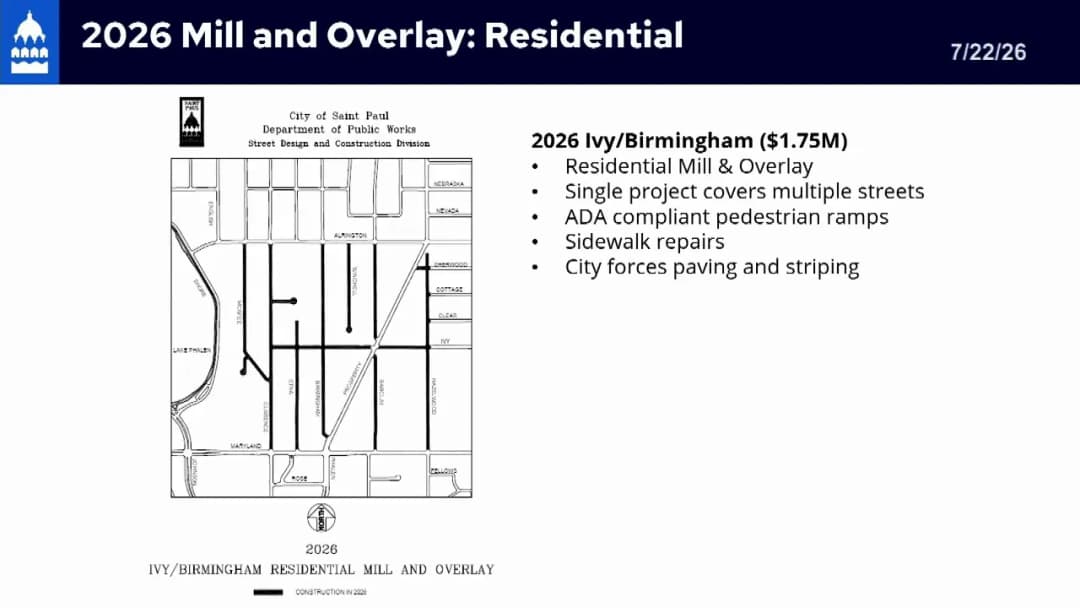
The Budget Committee, chaired by Councilmember Cheniqua Johnson, met on July 22, 2026, to receive updates on two major public works topics: the ongoing street light repair and wire theft crisis, and the city's mill and overlay pavement program. Both items were received and filed after extensive discussion. Presentations were led by Public Works Director Barber, City Engineer Nick Peterson, and other staff, with questions from council members. Discussion Items Street Light Repair and Wire Theft Update - Director Barber reported that over 10% of the city's nearly 40,000 street lights (approximately 3,500) are currently out due to copper wire theft, with the last time all lights were functional being 2022. Without changes, it could take at least 20 years to address the current backlog. - Randy Newton, Public Works manager, explained that wire theft is a nationwide problem driven by rising copper prices (currently $6.50/lb, projected to exceed $9/lb by 2028). The city is falling further behind despite increased spending and overtime. - Council President Noecker expressed frustration that the presentation lacked innovative strategies and rejected a proposed streetlight improvement district as a non-starter until theft is addressed. She emphasized the need for a citywide plan. - Councilmember Kim noted that the current state law on copper wire sales lacks an electronic database, making enforcement difficult. She urged strengthening the legislation in the next session. - Chief Halstrom (St. Paul Police) highlighted that only three recycling yards are in the city, and many sales go out of state. He suggested a statewide wire theft task force and better digital tracking. - Councilmember Bowie asked about partnerships with the city attorney and attorney general to enhance enforcement against both thieves and receiving vendors. - Councilmember Jost requested cost estimates for various deterrent strategies (e.g., solar lights, high-access poles) and a breakdown of short-term vs. long-term solutions. - Council Vice President Yang praised staff efforts and suggested coordinating with the Planning and Economic Development department to help businesses improve lighting temporarily. Mill and Overlay Update - Director Barber and City Engineer Peterson explained that mill and overlay is a cost-effective pavement preservation technique (about $4/sq ft) that extends road life by 10–15 years. The city has two programs: arterial streets (funded by $4M general fund + $1M assessments) and residential streets (funded by $3.5M in street reconstruction bonds). - Peterson noted that the equipment used by city forces is outdated and less efficient. A new roller could cost $200–300k and reduce passes from four to two, increasing productivity. - Council President Noecker asked about seal coating, crack sealing, and the city's asphalt plant. Staff confirmed crack sealing is done only during repairs, not citywide. The asphalt plant is not yet MnDOT certified; efforts are underway. - Councilmember Jost requested a cost-benefit analysis of better equipment and crack sealing as a preventive measure. - Councilmember Johnson (Chair) asked for detailed financial breakdowns to understand where money is spent and what is needed, emphasizing that the committee needs concrete numbers for budget decisions. - Staff noted that the same crews handle both mill and overlay and pothole filling, creating a trade-off. Using contractors was considered but found more expensive than in-house work. Key Outcomes - Both items (SR 26-148 and SR 26-149) were received and filed by the committee, meaning no formal action was taken but the information was accepted for record. - Council members directed staff to provide detailed cost estimates, breakdowns of past funding, and potential strategies for both street light theft prevention and mill and overlay improvements. - Staff committed to returning with more specific financial data and a clearer plan for the street light crisis, including possible legislative recommendations and partnership opportunities.
The Saint Paul City Council held a special public hearing on July 22, 2026, to receive testimony on the Mayor's Encampment Plan, which proposes clearing homeless encampments. The meeting began at 4:34 PM and recessed at 6:30 PM, with the public hearing continued to a future date to allow additional testimony. Nearly all speakers opposed the plan, citing public health evidence, personal experiences, and concerns about harm to vulnerable residents. Public Comments & Testimony - Israel Dupree (St. Paul resident): Opposed the plan, stating the encampment community has built a village and asked for skills training and construction assistance instead of displacement. - Jacqueline Levanier (Ward 7 resident, educator): Argued the plan does not address safety but makes unhoused neighbors invisible, and called for resource investment in outreach and housing rather than clearing encampments. - Adam Beers (former homeless, now behavioral health worker): Described how sweeps destroy trust built over months, cited data that Heart Houses served only 75 people in 2023 against 115 unsheltered per week (now tripled), and referenced Seattle's tiny home villages (63% move to permanent housing) and Austin's community first village (88% retention). Urged rejection of the plan. - Guadalupe Fongen (homeless since March due to fraud): Asked for restitution and compassion, stating she does not want to live in a tent and that the plan ignores systemic causes. - Isaiah 5:20 speaker (name not given): Challenged council to show evidence contradicting the American Public Health Association’s evidence that sweeps are ineffective and deadly. Noted that frontline workers were unaware of the plan as of July 8, and criticized lack of coordination. - Mariah Anderson (17-year-old, Ward 4 resident, youth on boards): Called the plan “fake” and suggested investing the $300,000 into renovating abandoned buildings for housing. Urged long-term solutions rooted in empathy. - Kumi Smith (epidemiology professor, U of M): Stated that sweeps do not prevent fires, overdoses, or create shelter beds. Cited her team’s research showing overdose rates spike up to two weeks after a sweep. Called for halting closures and investing in care systems. - Melissa Kennedy (encampment resident): Said she has received more help from those with nothing, and that separating the community would silence residents. Asked the city to help, not hurt. - Tuvia Bergson Michelson (Ward 1 resident, policy student): Criticized the plan as having no endgame, noting research showing most displaced remain unsheltered, overdose deaths rise 71% after sweeps, and violence increases. Urged working with encamped neighbors for long-term solutions. - Jerson Lopez (homeless five years): Described deplorable conditions in shelters (feces, roaches, theft) and stated he feels safer in the encampment. Opposed the plan. - Rebecca Homard (Ward 7 resident): Opposed the plan due to lack of shelter beds (only 49 additional beds for 200 residents), lack of advance notice, and inadequate planning. Called on councilmember Johnson to represent all residents. - Mike (first name only): Expressed that being told they failed and swept out is undignified. - Ixul (multi-ward resident): Connected encampment sweeps to colonialism and internal colonies, calling for systemic change. - Nick Stary (Frogtown resident, in recovery): Described building trust with encampment residents and helping connect them to services. Stated closure without housing will scatter people, break relationships, and lead to overdose deaths. Proposed a six-month stabilization effort with wraparound services. - Timothy Roderick (encampment resident): Warned that closure will push people to roadsides and jail, and that a friend recently died. Asked for housing and encouragement. - Wolf (facilitator at Big Saiyan Campbell encampment): Lived in the woods since 2012. Said encampments provide safety and opportunity to move to housing. Tearing them down signals the city does not care if residents are killed or raped. - Scout (mutual aid worker, We Are Zine): Presented survey results from Pig's Eye encampment residents. Residents reported shelters are unsanitary, restrictive (8:30 PM curfew), and have long waitlists. They believe the eviction will cause “total chaos” and death. Suggested using funds for heating, running water, and restrooms instead. - Aaron (Ward 5 resident, We Are Zine): Read residents’ quotes stating they look out for each other and that sweeps will increase deaths. Called the plan targeting for incarceration, ICE, or death. - Nen (Ward 4 resident, U of M instructor): Presented more survey results: residents asked for empty buildings to be used for shelter, more time (three weeks insufficient), hotel vouchers, and utilities. One resident suggested using city council pay raises for homeless. - Speaker for Styles and another resident at Fish Hatchery: Styles recounted tents bulldozed in winter with propane tanks; the other asked for a plan after August 5, noting insufficient housing. - Matt (Ward 1 resident, first responder): Acknowledged the encampment will likely be closed but asked for solutions, suggesting Totem Town or a city-run encampment as immediate options. - Lucid (Ward 2 resident, housing justice program manager): Called sweeps “active cruelty” and said the timeline is impossible for humane relocation. Stated that if housing could be provided in a month, organizers would have done it already. - Anine (Native foundation leader, not representing): Warned against repeating Minneapolis’s failures, where millions were spent on sweeps with no improvement. Urged radical thinking. - Sam Lagner (Catholic Charities worker): Argued housing is cheaper than emergency services. Proposed safe consumption sites for drug users. Noted changing demographics, including more elderly homeless. - Linda (Ward 1 resident): Reported hearing an SPPD officer joke about a frozen dead body, and described videos of wheelchairs being destroyed. Said actions show the city does not care, despite using words like “dignity.” - Natasha Bennett (Senate candidate): Stated addiction is an illness, called for using $40 million rental assistance for encampment residents. Urged three days to ensure housing, not 30. - Unnamed speaker (spiritual nature): Said love conquers all and suggested redirecting taxes if the plan proceeds. - Casper Boyles (Miriam Park, assistant professor of public health): Cited GAO data that a $100 rent increase leads to a 9% increase in homelessness. Urged addressing upstream causes like affordable housing. Noted 5% of St. Paul public school students reported homelessness in the last year. - Amanda (homeless since July 2025, shelter resident): Described being kicked out of shelter three times for bug infestations and inappropriate clothing. Said HUD program had fraud. - Valerie Jarvis (Ward 4 resident): Noted the majority in the room oppose the sweep. Challenged proponents to appear and speak. Criticized Mayor Her for being regressive. - Julia Schaefer (paramedic, formerly homeless): Said community saved her life; overdosed twice and was revived by others in the camp. Opposed the plan. - Steve Tuckner (Ward 5 resident): Suggested Mayor Her and Mayor Frey are influenced by landlords who benefit from visible homelessness to deter tenant organizing. - Corey Cole (Ward 7 resident, public health scientist): Cited consistent public health literature showing sweeps increase overdose and harm. Stated there is no humane way to forcibly remove people from their homes. - Sam Robertson (women’s advocate, Ramsey COC): Reported that Assistant Mayor Baker presented the plan as an “approach” (persistent helpfulness, coordinated entry, expanded shelter) but no concrete plan. Coordinated entry is not quick; it’s a tool, not a Plan A. - Tom Diamond (lifelong St. Paul resident): Acknowledged the city’s role in causing the problem but argued that enforcing existing park rules (no camping at night, no alcohol/drugs/weapons) would help, and that encampments have led to increased crime and harassment of park visitors. - Cal (outreach worker, Ramsey County assessor): Seconded that assessments take 3-4 months, so relying on them in less than a month is ridiculous. Described losing contact with youth after sweeps in Minneapolis. - Seneca Krueger (longtime resident, street outreach worker, therapist): Chairs youth advocacy work group on Ramsey County Steering Committee but was not informed of the plan until the July 8 provider call. Said Minneapolis providers have not been asked to help. Urged creative solutions before closures. - Julian Shoffler (Ward 3/4 resident): Told story of providing midwife care to a pregnant woman in the camp who stayed sober for the baby. The woman feared losing her belongings if she went to a hospital. Asked how the city will provide such care after destroying trust. - Lily Eggers (Ward 1 resident): Asked for a show of hands from council members willing to stop the sweeps; none raised. Described two worlds: one where council places a moratorium and pursues alternative solutions, another where people die. Vowed to remember council members’ actions at the ballot box. - Ben Ames (Ward 1 resident, public defender): Noted the absence of prosecutors, judges, and police (except for control). Argued the plan violates the Eighth Amendment (cruel and unusual punishment) and will criminalize homelessness. Key Outcomes - The City Council recessed the public hearing at 6:30 PM and will reconvene at a future date to hear additional testimony. - No vote was taken on the Mayor's Encampment Plan; the hearing was continued. - Council President Noecker acknowledged the courage of speakers and committed to scheduling another opportunity for those who could not speak.
The St. Paul City Council met on July 22, 2026, at 3:31 PM in Council Chambers. The meeting included consent agenda approvals, two appeals of Board of Zoning Appeals decisions that were both denied, suspension items for a library lease renewal and a joint powers agreement with Ramsey County for emergency shelter funding (totaling $1,080,000 in local affordable housing aid), final adoption of Xcel Energy franchise ordinances, first readings on a Deputy City Clerk classification and the elimination of the 90-day youth minimum wage rate, public hearings on golf course lighting and solid waste contract approval, budget transfers for the Wabasha Bridge and University Avenue projects, and several property-related legislative hearing items. The meeting adjourned at 4:30 PM. Consent Agenda - Approved as amended (7-0). Items included: demolition cost approval for June 2026 (RES 26-1021), traffic signal controller agreement for Metro Green Line (RES 26-1094), street sweeping grant with Ramsey-Washington Metro Watershed District (RES 26-1139), Discount Tire license at 1350 University Ave W (RES 26-1143), liquor license ownership change for The Victorian at 859 Thomas Ave (RES 26-1144), MnDOT grant amendment (RES 26-1146), appointments to the Neighborhood STAR Board (RES 26-1160), and Ward 3 Neighborhood STAR grant for Presbyterian Homes Foundation (RES 26-1179). RES 26-1080 (Accounting Director pay rate) and RES 26-1084 (Public Works Supervisor II pay rate) were laid over to August 5, 2026. Discussion Items - RES 26-1197 – Community Health Workers Day: Councilmember Johnson introduced the resolution recognizing July 28, 2026, as Community Health Workers Day in Saint Paul. Speakers Sunny Ailey (Executive Director) and Bart Phillips (Board Chair) of the Minnesota Community Health Worker Alliance testified in support, describing the role of community health workers in bridging healthcare access and noted the creation of a technology advisory committee. The resolution was adopted unanimously (7-0). For Discussion – Zoning Appeals - ABZA 25-3 – 418 Sherburne Avenue (Dominic Carchedi): Staff reported the property operated as a sober house with 24 residents, and the applicant sought a variance to convert it to a supportive housing facility. The Board of Zoning Appeals denied the variance on May 27, 2025 (5-0) based on findings 3, 4, and 6. Staff recommended denial of the appeal, citing the proposed use would create a cluster of supportive housing facilities within a quarter mile, conflicting with zoning distance requirements. The Council voted to deny the appeal (7-0), noting no error in fact finding. - ABZA 25-5 – 519 Farrington Street (Stronger Sober House): Staff reported the property sought a variance to expand from a sober house to an 11-resident supportive housing facility. The Board of Zoning Appeals denied the variance on June 9, 2025 (5-0) based on findings 1, 3, 4, and 6. Councilmember Bowie moved to deny the appeal for similar reasons—the request was financially driven, not unique to the property, and would alter neighborhood character. The Council voted to deny the appeal (7-0). Suspension Items - RES 26-1158 – Dayton's Bluff Library Lease Renewal: Authorized the city to renew its lease with Metropolitan State University. Adopted (7-0). - RES 26-1223 – Joint Powers Agreement with Ramsey County for Emergency Shelters: Authorized a joint powers agreement to support emergency shelter facilities, using $1,080,000 in local affordable housing aid (LAHA) funding. Councilmember Johnson noted $880,000 is reserved for shelter providers and an additional $200,000 will support a contract with Catholic Charities. Adopted (7-0). Ordinances – Final Adoption - Ord 26-32 – Xcel Energy Electric Franchise: Amended Appendix C of the Legislative Code. Adopted (7-0). - Ord 26-33 – Xcel Energy Gas Franchise: Amended Appendix B of the Legislative Code. Adopted (7-0). Ordinances – First Reading - Ord 26-27 – Deputy City Clerk Classification: Staff report by Director Jay Welms proposed placing the Deputy City Clerk in the unclassified service, consistent with a 1965 state law and city charter. Councilmember Coleman expressed concerns about the unclassified classification; staff noted it is an appointed, confidence-based role. Laid over to August 5, 2026 for second reading. - Ord 26-31 – Youth Minimum Wage Repeal: Staff report by Stephanie Baymer proposed eliminating the 90-day provisional minimum wage rate for workers aged 14-17. Currently, youth receive 85% of the small business minimum wage for the first 90 days. Councilmember Kim suggested outreach to youth advisory groups like SPICE and Youth on Boards. Laid over to August 5, 2026 for public hearing. Public Hearings - Ord 26-35 – Golf Course Lighting: Councilmember Jost moved Version 2, which clarified that lighting on golf courses equipped for night use must not operate after 10 PM. No public testimony. Closed and laid over for final adoption August 5, 2026. - Ord 26-36 – Solid Waste Contract Approval: John Purdy testified, questioning the council’s authority and urging input before RFP issuance. Council President Noecker committed to respond. Closed and laid over for final adoption August 5, 2026. - RES PH 26-150 – Wabasha Bridge Rehabilitation: Amended financing to transfer Municipal State Aid (MSA) funding. Closed and adopted (7-0). - RES PH 26-151 – University Avenue Reconstruction: Closed and adopted (7-0). - RES PH 26-155 – National Night Out Sound Variance (August 4, 2026, at MLK Recreation Center): Closed and adopted (7-0). - RES PH 26-156 – Backyard Blues Fest Sound Variance (August 7-8, 2026, at Dual Citizen Brewing): Closed and adopted (7-0). Legislative Hearing Items - RLH TA 26-125 – 720 Cottage Avenue East Special Tax Assessment: Ratified. Adopted (7-0). - RLH SAO 26-50 – Gary Grimes Vehicle Abatement at 314 Wyoming Street East: Owner requested additional time to remove one remaining vehicle. Council granted a three-week extension to August 12, 2026, and continued the public hearing to August 19, 2026 for a compliance finding. Adopted (7-0). - Legislative Hearing Consent Agenda: Adopted as amended (7-0). Items included: RLH VO 26-29 (342 Bates Ave, Unit 2), RLH SAO 26-55 (1547 Carroll Ave), RLH SAO 26-57 (2177 Fairmount Ave), RLH SAO 26-54 (1312 Scheffer Ave – continued to August 5, 2026), RLH SAO 26-56 (2203 Selby Ave), RLH VBR 26-12 (838 Third St E), and RLH VBR 26-13 (2051 Third St E). Key Outcomes - Appeals Denied: Both zoning appeals (ABZA 25-3 and ABZA 25-5) were denied unanimously (7-0), upholding the Board of Zoning Appeals decisions. - Emergency Shelter Agreement Approved: The city entered into a Joint Powers Agreement with Ramsey County, committing $1,080,000 in LAHA funding for emergency shelter operations. - Community Health Workers Day Recognized: July 28, 2026, was officially recognized in Saint Paul (unanimous). - Youth Minimum Wage Repeal Advanced: First reading held; public hearing set for August 5, 2026. - Deputy City Clerk Classification Advanced: First reading held; second reading and public hearing set for August 5, 2026. - Golf Course Lighting Ordinance Amended: Version 2 adopted, limiting lighting operations to before 10 PM; final adoption expected August 5, 2026. - Solid Waste Contract Approval Ordinance: Public hearing held; final adoption set for August 5, 2026. - Budget Transfers Approved: Wabasha Bridge ($MSA funding) and University Avenue Reconstruction projects received financing amendments. - Sound Variances Approved: National Night Out (August 4) and Backyard Blues Fest (August 7-8) granted. - Vehicle Abatement Extension: Gary Grimes granted a three-week extension; public hearing continued to August 19, 2026.
The Saint Paul City Council held a regular meeting on Wednesday, July 22, 2026, at 3:30 PM in Council Chambers. The agenda included consent agenda approvals, two appealed zoning variance decisions, first readings of ordinances on minimum wage and golf course amendments, public hearings on solid waste contracts and capital budget transfers, and multiple legislative hearing items. No transcript or minutes were available; the summary below is based solely on the published agenda. Consent Calendar - RES 26-1021: Approved the city’s cost for demolition of vacant, nuisance, and/or hazardous structures from June 2026, set a legislative hearing for August 25, 2026, and a City Council public hearing for September 23, 2026, to levy assessments. - RES 26-1080: Established the pay rate for Accounting Director (Grade 028, EG 09, SPSO); laid over one week for adoption. - RES 26-1084: Established pay for Public Works Supervisor II, Solid Waste (Group 10, Grade 038); laid over one week for adoption. - RES 26-1094: Authorized an agreement with the Metropolitan Council and Ramsey County to replace traffic signal controllers along the Metro Green Line on University Avenue. - RES 26-1139: Authorized Public Works to accept a grant from Ramsey-Washington Metro Watershed District for enhanced street sweeping. - RES 26-1143: Approved an auto repair garage license for Discount Tire Company at 1350 University Ave W. - RES 26-1144: Approved change of ownership for liquor, entertainment, and gambling licenses to Bear Down Holdings LLC d/b/a The Victorian at 859 Thomas Ave. - RES 26-1146: Amended Council File RES 26-890 to add the MnDOT agreement number and update the grant amount. - RES 26-1160: Approved Mayor’s appointments and reappointment to the Neighborhood STAR Board. - RES 26-1179: Approved use of Ward 3 Neighborhood STAR Year-Round Program grant funds for Presbyterian Homes Foundation. - RES 26-1197: Recognized Community Health Workers Day in Saint Paul. - Ordinances for final adoption (Ord 26-32, Ord 26-33): Amended appendices relating to Xcel Energy electric and gas franchises. Public Comments & Testimony - No public comments or testimony were recorded in the agenda; the meeting included written comment options for public hearing items. Discussion Items - ABZA 25-3 (Appeal of Dominic Carchedi): Consideration of an appeal of the Board of Zoning Appeals’ decision denying a variance to establish a 24-resident supportive housing facility at 418 Sherburne Avenue. The public hearing was closed and the item had been laid over from August 6, 2025. The agenda listed extensive attachments including a petition and staff reports. - ABZA 25-5 (Appeal of Stronger Sober House): Appeal of the BZA’s denial of a variance to establish an 11-resident supportive housing facility at 519 Farrington Street. Also laid over from August 6, 2025. - Suspension Items: - RES 26-1158: Authorized renewal of the Dayton’s Bluff Library lease with Metropolitan State University. - RES 26-1223: Authorized a Joint Powers Agreement with Ramsey County to support emergency shelter operations. - First Reading of Ordinances: - Ord 26-27: Placed the classification of Deputy City Clerk in the unclassified service (must be approved by Civil Service Commission after Council adoption but before Mayor signature). - Ord 26-31: Amended Section 224.05(c) to eliminate the city’s provisional 90-day minimum wage rate for workers ages 14–17 (sponsored by Coleman, Yang, and Kim). Public Hearings - Ord 26-35: Amended Chapter 65 (golf courses) – included a public hearing; attachments showed planning commission and HDC resolutions. - Ord 26-36: Added Chapter 86.13 to require City Council approval of Mixed Municipal Solid Waste contracts (received public comment from Fort Road Federation). - RES PH 26-150: Amended financing/spending plans to transfer Municipal State Aid funding into the Wabasha Bridge Rehabilitation Project. - RES PH 26-151: Amended capital budget for the University Avenue Street Reconstruction Project. - RES PH 26-155: Approved a sound level variance for a National Night Out event on August 4, 2026, at Martin Luther King Recreation Center. - RES PH 26-156: Approved a sound level variance for Dual Citizen Brewing Company’s Backyard Blues Fest on August 7–8, 2026. Key Outcomes - Consent agenda items were likely approved by a single motion (no discussion noted). - The two zoning appeals (ABZA 25-3 and ABZA 25-5) remained under consideration; no final action is indicated in the agenda. - Ordinances on first reading were introduced and laid over for future readings. - Public hearing items were opened for testimony; written comments were accepted. - Legislative hearing items (RLH TA 26-125, RLH VO 26-29, etc.) were either discussed or placed on consent; specific outcomes are not documented in the agenda.
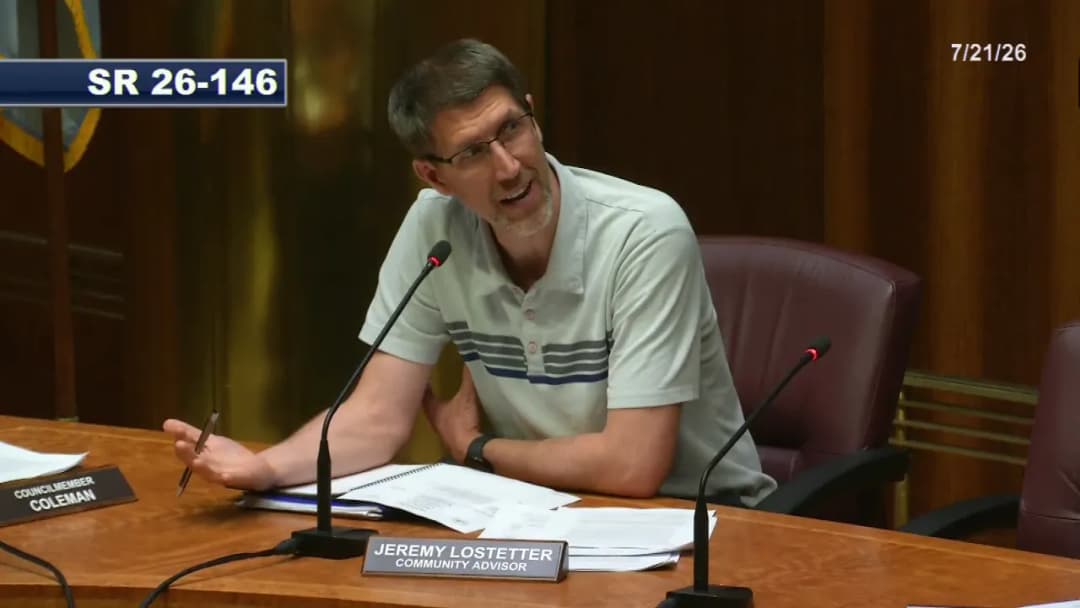
The Saint Paul Audit Committee met on Tuesday, July 21, 2026, to discuss audit topic recommendations and receive a community engagement update. After deliberation, the committee voted to eliminate CollegeBound and recommend three topics—District Council Reform, Business Licensing, and Street Maintenance & Pothole Repair—to the full council for selection of two. The committee also heard an update on community outreach efforts. Discussion of Audit Topic Recommendations - Chair Noecker corrected a prior misstatement: the CollegeBound program is automatic enrollment for children at birth, with optional parental contributions. - Community Advisor Noah McVay summarized interviews with four departments (Office of Financial Empowerment, Public Works, DSI, PED). All expressed hesitation about audits in 2026 due to leadership transitions, staff capacity, and data utility. Most preferred a latter half of 2027 timeframe, though some audits could proceed earlier with careful framing. - Councilmember Johnson reported that the CollegeBound department lacked strong feelings about an audit and was conducting its own evaluation; she did not recommend proceeding. - Councilmember Coleman noted Public Works is undergoing internal changes and was concerned about duplicative work, but she supported moving forward with all three non-CollegeBound topics. - Chair Noecker shared details from DSI and PED discussions: for DSI, potential audits could examine outlier negative cases (e.g., extreme permitting failures) or outdated business license ordinances misaligned with state law. For PED (district councils), questions focused on contract performance metrics, representativeness of engagement, and alignment with modern expectations given the system’s 1970s origins. Litigation regarding DSI fees was noted, requiring avoidance of fee-related questions. - Advisor Dilworth suggested framing audits as collaborative to help departments rather than duplicate their work. - McVay distributed Dr. Britt’s email recommending against prioritising CollegeBound; she identified District Council Reform and Business Licensing as optimal for the next round, with Street Maintenance suitable for future consideration. - After discussion, the committee unanimously agreed to drop CollegeBound and recommend three topics: District Council Reform, Business Licensing, and Street Maintenance & Pothole Repair. The full council will select two for the 2026–2027 audit cycle. Community Engagement Update - Noah McVay reported meeting with two more district councils (Payne-Phalen and Frogtown), bringing his total to all but two district councils reached (either in person or via correspondence). He thanked the councils for their cooperation. - McVay plans to meet with civic organizations in fall 2026, including League of Women Voters, Citizens League, Chamber of Commerce, Neighborhood House, Isaiah, Asian Economic Development Association, Brown Community Center, Downtown Alliance, Open Arms, and Star House. - Chair Noecker suggested expanding the list to include critical groups such as Inside St. Paul and St. Paul Strong, and neighborhood groups like Railroad Island. McVay welcomed additional suggestions from committee members. - The next committee meeting is tentatively scheduled for September 2026. Key Outcomes - Motion passed unanimously to eliminate CollegeBound as an audit topic and recommend District Council Reform, Business Licensing, and Street Maintenance & Pothole Repair to the full council for selection of two topics for the 2026–2027 audit cycle. - The committee will work with colleagues to gauge interest and will later bring a resolution to the council reflecting the chosen topics. - Community outreach will continue with expanded engagement to include more civic and neighborhood organizations.