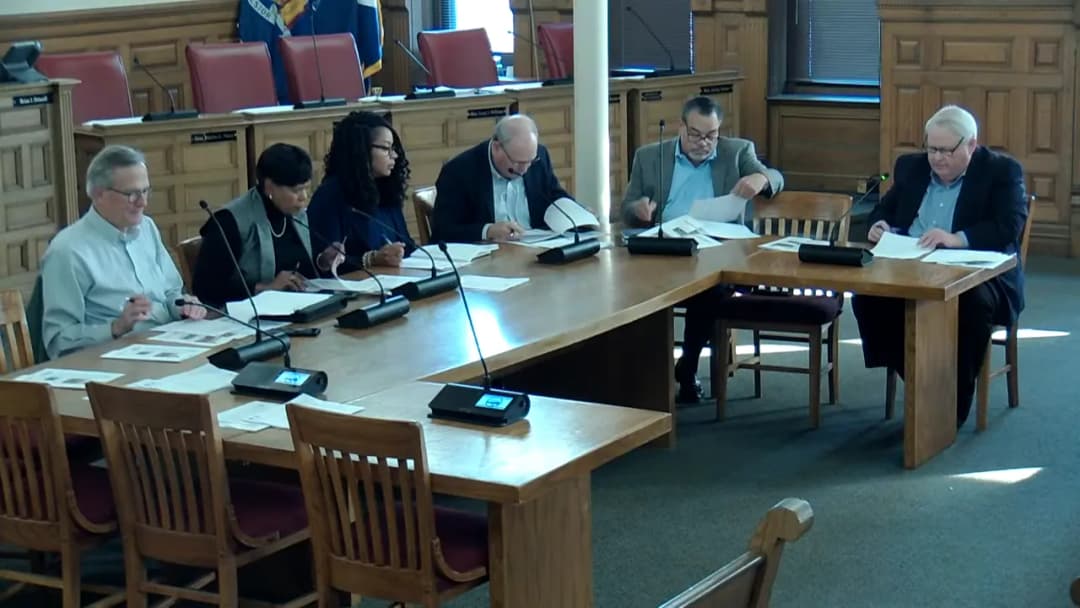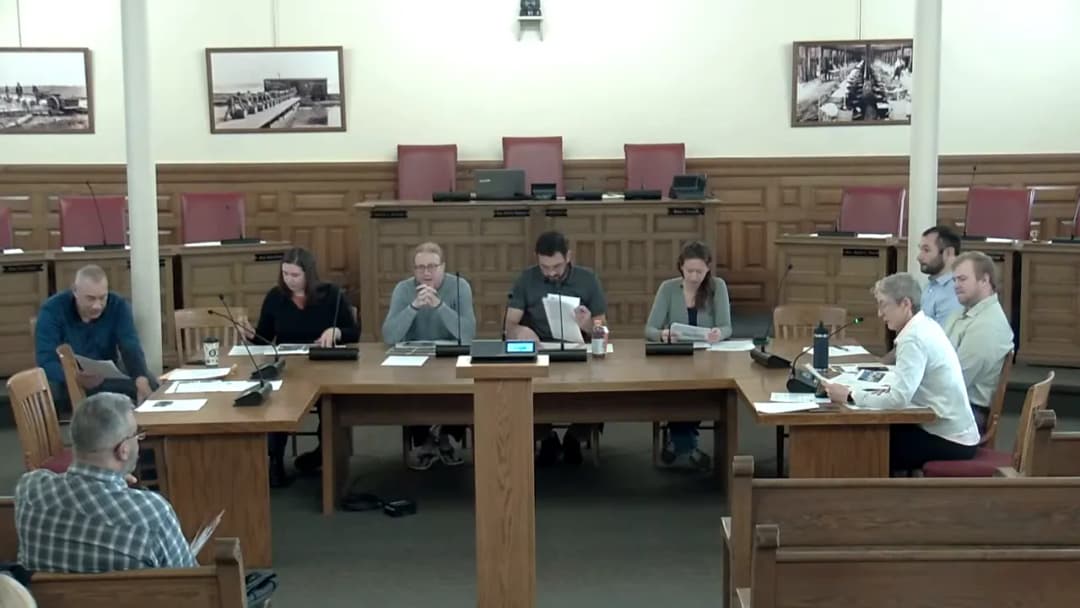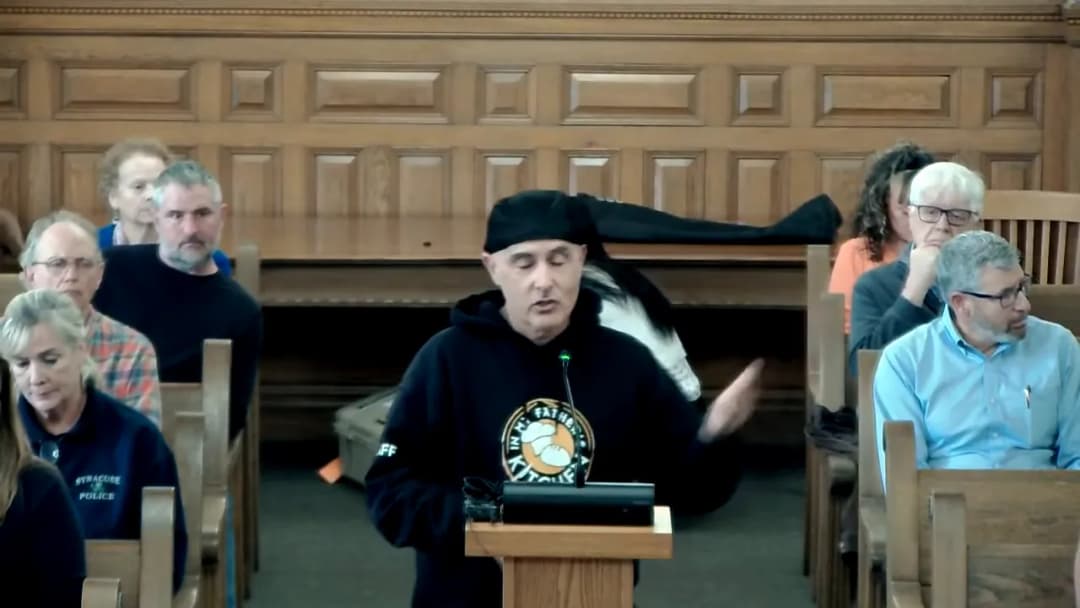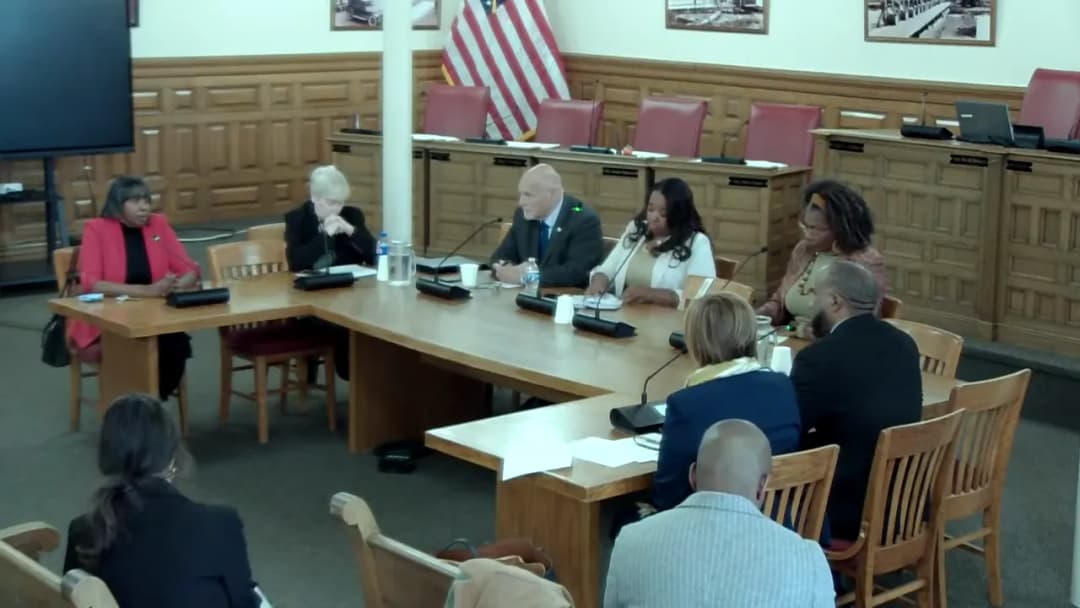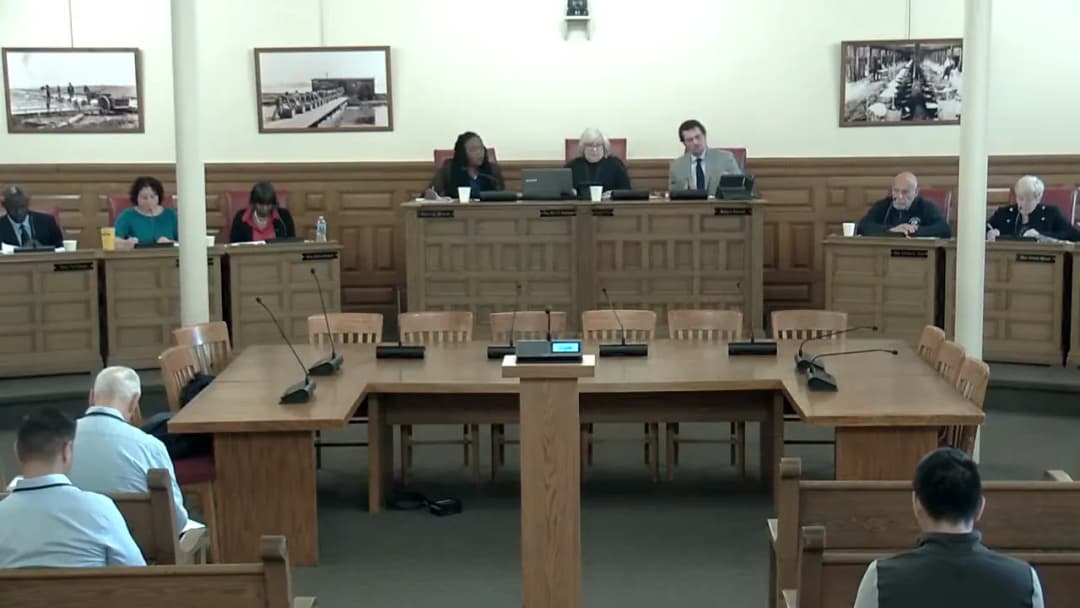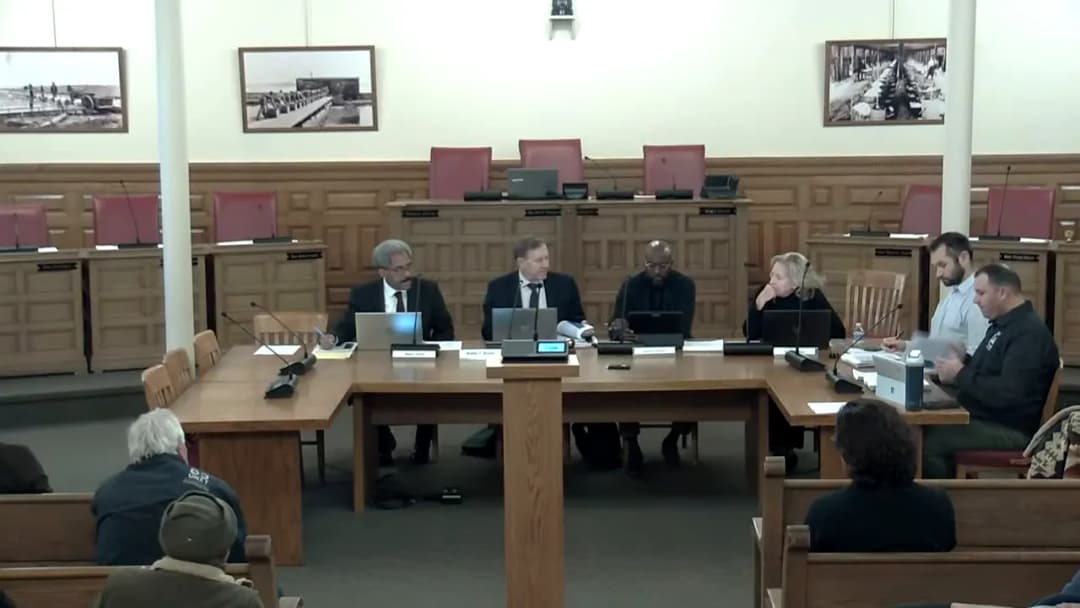
The Syracuse Planning Commission met on November 2, 2026, to hear a full agenda of land use applications. Actions included approvals of administrative resubdivisions and three-mile limit cases, recommendations for several special use permits for neighborhood markets, and the approval of a major site plan review. Consent Calendar - The minutes of the previous meeting held on October 13, 2026, were approved unanimously. Public Comments & Testimony - Support for Kirkpatrick Street Market (SP-2026-57): Multiple community members, including Abid Jarran, Vasim, and Shriv Zaran, spoke in favor of the 717 Kirkpatrick Street market. They cited the owner's long tenure in the community (15 years), the quality and cleanliness of the store, and its importance to the neighborhood. - Support for South Avenue Market (SP-2026-51): Abid Jarran spoke in favor of the 1500 South Avenue location, stating that the store serves the community well and deserves a permit. - No public speakers appeared in opposition to any applications on the agenda. Discussion Items Old Business / Administrative Cleanup - Resubdivision R-2026-31 (Newell Street / Edmund Avenue): The Commission approved a previously heard resubdivision application. Conditions included the successful filing of the resubdivision map within 62 days and applying for all applicable permits. - Special Use Permit SP-25-21 (500-04 Oakwood Avenue): The Common Council remanded this permit back to the Planning Commission to revisit specific conditions. The most substantive change was establishing an earlier closing time of 10:00 PM. Conditions were clarified around sidewalk installation, signage, and compliance. A motion recommending approval was passed. New Business – Resubdivisions and Zoning - Seymour Street (R-2026-85 / Z-2925): Caitlin Wright of the Greater Syracuse Land Bank presented a proposal to subdivide a lot at 509 and 513 Seymour Street. The project is part of a collaboration with Jubilee Homes to build 35 single-family homes and 10 two-family homes on the Near Westside. A portion of the lot is being sold to an adjacent homeowner who operates an in-home daycare to provide safe outdoor play space. The resubdivision and a companion zoning map amendment were approved and recommended for approval to the Common Council. - Hazelwood Avenue (R-2026-84): Ms. Wright presented a resubdivision at 225 and 229 Hazelwood Avenue in the R1 zone district. Two lots will be re-subdivided into four 25-foot wide lots for four single-family attached units (two duplexes). The applicant noted this project marks a milestone for unsubsidized housing development in the area. The resubdivision was approved. New Business – Major Site Plan Review - MASPR-2026-49 (530 State Fair Boulevard): Thaddeus Lovett of Lovett Mechanical Contractors, Inc. presented plans to convert the property into a commercial warehouse for a plumbing and HVAC business. Upgrades include a new roof, loading dock modifications, and repaving. A significant discussion arose regarding an ingress/egress easement that does not grant permission for excavation or installation within the easement itself. A condition was added requiring written permission from the easement owner allowing improvements before any site work can be permitted. The site plan was approved with this and other standard conditions. New Business – Special Use Permits - SP-2026-51 (1500 South Avenue): A representative requested a permit to legally establish a neighborhood market that has been in operation for over 12 years. Plans include removing plywood for transparency and adding a dumpster enclosure. The Commission recommended approval with conditions including a 30% transparency minimum, removal or approval of existing neon signage, operating hours of 8:00 AM to 10:00 PM, and a CPTED evaluation within one year. - SP-2026-1 (814 Butternut Street): A representative for Lanley Food Market, a family-owned business of over 10 years, requested formalization of their neighborhood market. The owner agreed to a 10:00 PM closing time. An outdated mixed-use fire safety certificate of compliance (C of C) was noted. Conditions included obtaining the C of C, planting a tree pit or restoring brick paver, and replacing an asphalt sidewalk with concrete. The permit was recommended for approval. - SP-2026-57 (717 Kirkpatrick Street): Owner Waslal Haru Harbi presented for a store that has operated for 15 years. Public testimony was strongly in support. The owner agreed to 7:00 AM to 10:00 PM operating hours. Conditions included obtaining a C of C for the residential units, reducing paved surfaces, complying with a CPTED survey, and obtaining an encroachment agreement for existing steps. The permit was recommended for approval. Three Mile Limit Cases - Two three-mile limit cases were approved: 3S-2026-17 (4184 Cleveland Road, Town of Onondaga) and 3S-2026-15 (900 State Fair Boulevard, Town of Geddes). Both had approval from the Syracuse City Engineer and their respective town boards. Key Outcomes - Votes & Approvals: - Minutes of October 13, 2026, approved unanimously. - Resubdivision R-2026-31 approved with conditions. - Special Use Permit SP-25-21 recommended to Common Council (conditions include 10 PM closing, sidewalk, signage restrictions). - Resubdivision R-2026-85 and Zoning Map Amendment Z-2925 approved / recommended for approval. - Resubdivision R-2026-84 approved. - Major Site Plan Review MASPR-2026-49 approved (condition requiring written easement permission prior to work). - Special Use Permits SP-2026-51, SP-2026-1, and SP-2026-57 recommended to the Common Council for final approval. - Three-Mile Limit Cases 3S-2026-17 and 3S-2026-15 approved. - Next Steps: All approved Special Use Permits will be forwarded to the Syracuse Common Council for final legislative action. The zoning map amendment (Z-2925) will also go to the Common Council.
Public Meetings - Syracuse, New York
Public Meetings - Syracuse, New YorkThe Syracuse Board of Zoning Appeals met on October 29, 2026, to hold public hearings on two area variance requests. The board voted to approve both requests. One board member recused herself from the second application because she works for the Greater Syracuse Land Bank, the applicant. No agenda or minutes were provided with the source material; this summary is based solely on the raw transcript. Near the end of the meeting, a board member noted that it was almost 2:00 p.m. Minutes Approval - The board approved the minutes from the October 8, 2026 meeting after a motion and second. No one opposed, but one member abstained. Public Comments & Testimony - For the Norman Avenue fence variance, no members of the public spoke for or against the request. - For the 229 Orlando Avenue variance, no one spoke in favor. Three nearby residents spoke in opposition: - Sarah Hill, 160 Monticello Drive North, opposed the 10-foot setback, saying it was too close to the street, would block sight lines at the three-way stop, and that speeding and stop-sign violations are already a problem. She also said the house was too large for the lot and that she received notice only two days before the meeting. - Kathy Stribly, 316 Monticello Drive North, raised drainage and flooding concerns, stating the area has no storm sewer infrastructure, the corner site receives runoff from the neighborhood, and a previously undergrounded spring had caused flooding. She also described cut-through traffic problems and said the applicant should go back to the drawing board. - Jeanette Davis, 200 North Monticello Drive, who said she has lived nearly 50 years directly across from the proposed site, opposed moving the house closer to the corner, citing traffic dangers, pets killed by traffic over the years, and major water problems. Discussion Items Area Variance 2026-20 – Six-Foot Fence on Norman Avenue - The applicant, addressed by the board as Griff, requested an area variance to install a six-foot white vinyl privacy fence on a corner lot. The applicant stated that a standard four-foot fence was inadequate because the household's 50-pound mixed-breed dog Baxter can clear it, and the household also fosters rescue dogs. - The applicant explained that moving the fence inward to comply with the setback was blocked by an existing deck and a mature tree and would cost about 500 square feet of usable yard. The fence would be placed about two feet outside the existing chain-link fence and about 30 to 34 feet from the road edge. A petition signed by nine neighbors was submitted. - The applicant said wireless or GPS fencing was not trusted, chain-link was rejected because dogs can climb it, and colored vinyl was not considered because of cost. Board members discussed alternatives such as a trellis, planting in front of the fence, or reducing the encroachment, but did not require landscaping. - The board found no undesirable change to neighborhood character and no substantial adverse effect. The motion to approve included the staff condition that proper permits be obtained before any work. The motion passed. Area Variance B-2026-24 – 229 Orlando Avenue / North Monticello Drive - Luke Avery Doherty of the Greater Syracuse Land Bank, 1941 South Salina Street, presented the request for a variance from the required 25.4-foot front setback to a 10-foot setback on the North Monticello Drive side of the vacant corner lot. The lot slopes down on its western edge, requiring a 14-foot side setback, and the proposal is a three-bedroom, two-bath manufactured home on a slab, priced at $215,000. - The applicant argued that the only alternative would be a large retaining wall and extensive fill, which would be disruptive and financially infeasible. The proposed design was chosen to fit the neighborhood's bungalows and Cape Cods, and the land bank planned to repair the existing retaining wall and install gutters to manage runoff. - Board discussion acknowledged that traffic and drainage issues are broader neighborhood concerns, but several members did not see the requested setback as the cause of those problems. One member noted the project's structural coverage of 31.7 percent exceeds the R-1 zone's 30 percent maximum, which is handled by a separate zoning administrator adjustment. Another member said the difficulty was partly self-created because the house model was selected before the site was studied in detail, but found three of the five variance factors passing. - The board approved the variance with two conditions: the building must maintain a minimum 10-foot front setback along North Monticello, and before a building permit is issued the applicant must obtain a zoning administrator adjustment for the 31.7 percent structural coverage or revise the site plan to comply with the 30 percent limit. Key Outcomes - Approved Area Variance 2026-20 for the six-foot fence on Norman Avenue, with the condition that proper permits be obtained before work begins. - Approved Area Variance B-2026-24 for the 10-foot front setback at 229 Orlando Avenue / North Monticello Drive, with conditions regarding the minimum setback and the structural coverage adjustment. - The second motion passed with all four voting members in favor; the recused board member did not participate, and no one voted against or abstained. A procedural question was raised that, with four voting members remaining, all four affirmative votes were needed for a majority of the full board. - Board members encouraged city planning and engineering staff to address the neighborhood-level traffic and stormwater concerns raised during the hearing.
The Joint School Construction Board (JSCB) met on October 29, 2026, to review project updates, approve routine actions, and authorize key resolutions. The board discussed progress on the capital program, including a reduction in state aid for two schools, a shift in the comprehensive plan to prioritize Blodgett School, and the issuance of a new RFP for Independent Cost Oversight (ICO) services. All resolutions were approved unanimously. Consent Calendar - Approval of Minutes: The board approved the minutes from the September 24, 2026 meeting without objection or abstention. Discussion Items - Secretary's Report (Joe): - Upcoming meetings scheduled: two in November and one in December. Proposed an executive session at the next board meeting with outside PLA counsel following a November 10 meeting with trade unions. - Annual Directors & Officers liability insurance premium decreased slightly this year; recommended renewal with the same insurer. - The ICO RFP is ready for consideration. The fee structure was refined based on challenges from a previous RFP, aiming for a better response. - Program Manager's Report: - State Aid Reduction: SED reduced building aid for two schools, Webster and Seymour, due to declining enrollment projections. Discussions with SED are ongoing to restore aid and avoid scope cuts. - Design Progress: Architects have completed design development (DD) documents and are moving to construction documents (CD). The construction manager is preparing estimates. Anticipated timeline: CD submission to state in April/May 2027, bid release in June 2027, construction start in September 2027. - Procurement: The ICO RFP, if approved, would be issued with proposals due by December 3, 2026. Board members were asked to review and provide feedback by the end of the week for potential addenda. - Comprehensive Plan Change: Blodgett School repairs are being prioritized over Delaware Primary School due to worse conditions (e.g., floors). Dr. Remember explained the plan is simply reordering phases; Delaware repairs would follow two years later. No objections were raised. - Board Discussion on ICO RFP: A board member inquired whether the ICO must submit a diversity plan. It was confirmed that the RFP includes an attachment (the JSCB diversity plan) that all vendors must comply with. The board noted the importance of consistent standards. Key Outcomes - Resolution 20 (Monthly Payment): Approved unanimously. - Resolution 21 (Comprehensive Plan Amendment): Approved unanimously, switching the order of work to prioritize Blodgett School over Delaware Primary School. - Resolution 22 (Directors & Officers Insurance): Approved unanimously. - Resolution 23 (ICO RFP Authorization): Approved unanimously, with the board allowed to submit feedback for potential addenda by the end of the week. - Executive Session: Scheduled for the November meeting (likely November 17 or 19) to discuss PLA matters with counsel. - 3B Buildings: Architect and CM services RFPs for three additional buildings planned for December authorization, with architect selection expected by Q2 2027.
The Syracuse Landmark Preservation Board met on October 29, 2026 (provided transcript timestamp: 12:33:05 UTC). No agenda or minutes were available, and no start/end times are recorded. The board held applications open, approved two certificates of appropriateness, and discussed a proposed bridge demolition and replacement. Public Comments & Testimony - For CA-26-25 (923-27 Comstock Avenue), the board received a letter from a group of neighbors raising concerns about the proposed project's impacts; the letter was placed in the record. - No public speakers came forward in favor of or against CA-26-27 (101 Hampshire Road) or CA-26-28 (113 Berkeley Drive). - Public comments on the 500 Plum Street bridge proposal, noted by the board, said the proposed design was inappropriate for the location and neighborhood. Discussion Items Unspecified first item: The transcript opens with the board agreeing to hold an application open until the next board meeting without taking a vote; the application number is not identified. CA-26-25 — 923-27 Comstock Avenue (mosque addition): The applicants asked to hold the application open pending design revisions and additional public interaction. The board agreed and moved the matter to the next meeting. CA-26-27 — 101 Hampshire Road (balcony railing and foundation work): Owner William Apolito, 101 Hampshire Road, presented plans in the Sedgwick-Highland-James Preservation District. The vestibule floor has a five-degree slope (almost nine percent) and has been sinking since 1927 because the original footing was not deep enough. The plan is to jack the floor, install a 48-inch footing, and reset the original brick so the exterior looks the same while preserving mosaic tile. He also proposed replacing a deteriorating plastic second-floor porch railing with a steel, powder-coated black railing matching an original 1927 railing from the house. Board members asked about the railing height and materials; the railing will be 36 inches high to meet current code and is being fabricated by Iron Hill Fabrication LLC. No public speakers appeared. The board approved the project as submitted. CA-26-28 — 113 Berkeley Drive (front step repair and partial replacement): The applicant described work in the Berkeley Park Preservation District. After demolition, the steps' substructure was found to be compromised, so the work became a structural repair: all treads and the landing were replaced with bluestone, the substructure was rebuilt, one cheek wall was rebuilt, and the original stone on the cheek walls was retained. Striated brick was used to match the existing historic brick. No public speakers appeared. The board approved the project as submitted with the condition that the applicant send the selected railing design to staff. Minor Site Plan Review: 500 Plum Street Bridge 2026-166 — 500 Plum Street (former New Process Gear factory number two): Applicant representative Dave Chavez of Plan Air Companies presented a proposal to demolish and replace the condemned bridge. The building is now fully occupied by office uses; the bridge was originally built to carry equipment and vehicles. Replacing the bridge as-is would cost almost $2 million, and the project is privately funded. The proposed replacement is a smaller steel-railed bridge intended to blend into the neighborhood, with smaller piers and slightly higher clearance to increase floodway capacity on Onondaga Creek; the tenants on the opposite side are within a tenth of an inch of the floodplain. The applicant noted New Process left in 1961 for DeWitt, and that the bridge is eligible for but not listed on the National Register. The applicant also said the state historic preservation office was clear that tax credits go to buildings, not appendages. Board members strongly opposed the design. One absent board member's written comment said the design does not respond to the massing, character, or industrial architectural language of the existing bridge or its sister structures. Board members called the bridge an iconic Franklin Square/New Process Gear structure, characterized the proposed design as "slim, sleek, and minuscule," and said it was totally inappropriate. One board member, Doug Sutherland, agreed the proposed design was an "abomination." The board suggested a smaller trellis design more consistent with adjacent bridges and recommended community outreach with residents. It cited Secretary of the Interior Standard Six: deteriorated historic features should be repaired rather than replaced, and replacements should match the old in design, color, texture, and where possible materials. Board members also noted the adjacent bridge to the southwest was extensively restored several years ago. The applicant said a demolition permit was already in hand and demolition could occur quickly. Board members questioned how that permit was issued and asked staff to follow up with the zoning department. They also requested extensive documentation of the bridge before any demolition. The board's comments were to be sent back to zoning; no site plan approval was granted. Administrative Items and Board Training The board discussed next year's meeting calendar beginning January 24, upcoming training, and a walking tour of Syracuse's architectural history. Members expressed interest in mid-century and later architecture and planned a Thursday morning walking tour within the next two weeks. Key Outcomes - The unspecified application at the start of the transcript was held open to the next board meeting. - CA-26-25 was held open to the next board meeting pending revisions and public interaction. - CA-26-27 was approved as submitted; motion carried with no recorded opposition. - CA-26-28 was approved as submitted, with the condition that the railing design be submitted to staff; motion carried with no recorded opposition. - The 500 Plum Street bridge replacement received no approval; comments were referred to zoning, the demolition permit process was to be investigated, and documentation was requested before demolition. - The meeting adjourned by voice vote.
This meeting was convened by Counselor Donna Moore, Chair of Public Safety and District 2 representative, to address community concerns about public safety, substance use, and visible homelessness in Syracuse. Representatives from leading service agencies, the school district, and individuals with lived experience provided testimony, largely shifting the framing of the issue from a behavioral crisis to a systemic housing market crisis driven by stagnant rental subsidies and a lack of deeply affordable units. Public Comments & Testimony - Megan Stewart (Housing and Homeless Coalition): Reported that 98% of the homeless population is in shelter nightly, representing one of the lowest unsheltered rates in New York State. Noted a 30% reduction in street homelessness in the past year. Asserted the core problem is that the DSS rental allowance of $386 per month cannot rent any apartment in the current market. The coordinated entry list has 1,000 people, but only 15% are placed annually due to supply constraints. - Michelle McElroy (ACR Health): Serves 10,000 individuals annually across nine counties. Stated the increased visibility of unhoused people is due to displacement from hidden encampments (e.g., Inner Harbor), not an increase in the homeless population itself. - John Tamino (In My Father's Kitchen): Manages street outreach for 70+ individuals, 95% with co-occurring mental health and substance use disorders. Housed 27 people since May 1, 2026, and 499 over 15 years. Reported a shifting demographic: younger people (20-somethings) and more women. Estimated out-of-county influx at only 2%. - Scott (Lived Experience, 65): Described being beaten and robbed in the system. Stated Syracuse Police arrest people for trespassing and park ordinance violations due to lack of housing. Criticized agency coordination, saying applications can be dropped when starting with another provider. Attributed the drug crisis to a chemical called "spike" which induces violent psychosis. Pleaded for basic human dignity and visibility. - Helio Health Representative (Mike): Served 20,000 people regionally in 2025. Operates a crisis intervention team in Syracuse. Confirmed the rise of "spike" causing psychosis-like symptoms, complicating diagnosis. Highlighted the severe staffing crisis and low wages as a barrier to expanding services. - Mike Malara (Catholic Charities): Runs an 80-bed men's shelter (often housing 100+) and a hospitality center serving 40-50 people nightly who refuse shelter. Provides case management for 70-80 families in motels. Advocated for a 24/7 hospitality center model to provide continuous, safe engagement. - Janel Milana (Syracuse City School District): Reported a 10% identification rate for students experiencing unstable housing, including an increase in unaccompanied youth. Outlined the profound academic and emotional trauma: long bus rides, inability to stabilize, increased anxiety, and substance use among youth. - Laquita Drummond (Lived Experience): Stated she does not fit the categorical requirements (no chronic illness, mental health diagnosis, or substance abuse) yet has been homeless for two years. Criticized warming center rules (sleeping in chairs, forced eviction at 6 AM with all bags). Alleged drug use and inconsistent enforcement at the Rescue Mission. Implored the council to "see us" and address the system's dehumanization. - Mohammed Cham (Community Advocate): Proposed learning from cities like Denver. Argued for job creation as a key component of dignity and stability. Called for a formal consensus-building process between the city, county, and all stakeholders. Discussion Items - Crisis Framing: Housing Market vs. Behavioral Health: A strong consensus emerged among providers and councilors that the primary driver is the lack of deeply affordable/low-income housing. Councilor Cloud argued for returning to the "low-income housing" model (30-50% AMI) over "affordable housing" (70-80% AMI), citing the demolition of Cherry Hill and loss of other complexes as direct causes of displacement. - Substance Use Trends ("Spike"): A councilor noted increased aggression. Scott and the Helio representative confirmed "spike" is a highly dangerous synthetic drug causing violent psychosis, making it difficult to distinguish from severe mental illness. - Barriers to New Shelter Models: Counselor Moore's proposal for a massive pod-style facility (modeled after Milwaukee) was met with cautious optimism. Providers warned that the staffing crisis (low wages, high turnover for licensed clinicians) is a massive obstacle. In My Father's Kitchen raised concerns about safety in large congregate settings. - Geographic Concentration of Services: A discussion on whether shelters could be sited in rural areas to aid recovery. Providers cited funding rules (cost per unit calculations, accessibility, proximity to bus lines and support services) as systemic barriers to deconcentrating services from the urban core. Key Outcomes - Continued Collaboration: Counselor Moore committed the City Council to an ongoing partnership with the County Legislature (meeting scheduled for November 16, 2026) and the service providers, explicitly including the perspectives of individuals with lived experience (Scott and Laquita). - Identification of Systemic Gaps: Major gaps identified include the need for a 24/7 low-barrier engagement center, an update to the DSS rental budget, better agency coordination to prevent clients losing their place on housing lists, and a strategy to address the synthetic drug crisis. - Shift in Public Narrative: The forum successfully broadened the conversation from personal failings and law enforcement to systemic housing market failure, stagnant subsidies, and the need for significant investment in permanent supportive housing and deeply affordable units.
The Syracuse Common Council met at 11:00 a.m. on 2026-10-28 with Exalt CEO Giselle Castro and Chief Program Officer Jason Aline to receive an update on Exalt's first pilot implementation in Syracuse, New York. City staff also explained that the program is funded through a state grant administered by the city. No formal votes were recorded. Program Overview and Syracuse Implementation - Exalt is a New York City-based nonprofit serving 15- to 19-year-olds involved in the criminal justice system, with three pillars: academic advancement, career exploration and employability, and avoiding further criminal justice involvement. - In 2024, Exalt began assessing replication and concluded Syracuse had the strongest alignment; it met with close to 80 Syracuse stakeholders, and implemented its first pilot class in 2026. It was starting two classes this month. - The referral-based model receives roughly 1,400 referrals a year in New York City; in Syracuse, referrals have come from the Department of Probation, Good Life, Hillside, and more recently directly from the Syracuse City School District for a third cycle. - Core programming includes an intake and assessment process, pre-internship curriculum, eight-week paid internships at $18/hour for 8-10 hours/week, a two-week post-seminar, and two years of alumni support. Select alumni can do three-month graduate internships at $20/hour for 15-20 hours/week, for total involvement of about two and a half years. - In Syracuse, 19 young people have participated across the first two classes; 12 are graduates, with five from the first class and seven from the second class graduating that afternoon. Two participating youth with open court cases received favorable outcomes, including one sentence vacated. - Exalt has hired two program coordinators, an internship liaison, and three staff from Syracuse, and is interviewing candidates for teaching and education positions. Discussion Items - Council members asked about family engagement. Exalt's CEO said Exalt is intentionally a youth-focused organization, not a traditional family-services provider; it supports families around court and school processes and refers families and youth to other partners for specialized services. - Council members asked about local sustainability. The CEO said Exalt raised $1 million in additional funding for the current fiscal year and has raised an additional $300,000; Exalt is 85% funded through philanthropy, and an anonymous donor pledged $500,000 specifically toward Syracuse. The CEO confirmed current funding is in place through 2027 and fundraising continues. - Council members asked about post-graduation follow-up and local workforce connections. Exalt described individualized alumni plans, weekly check-ins, and referrals to OCC, On Point, Carpenters Union, and Syracuse EOC. Councilor Moore and other councilors urged stronger collaboration with local unions and paid training programs, including welding and advanced manufacturing, so Syracuse youth do not miss local opportunities tied to Micron and Interstate 81 development. Exalt said those partnerships are developing and that it refers prepared youth to existing programs rather than duplicating them. - Council members asked what distinguishes Exalt. The CEO cited academic gains, court-involvement expertise, paid high-level internships, and service to youth often considered hardest to reach, while describing Exalt as additive to existing programs. - Council members raised mental health, learning disabilities, and trauma needs. Exalt described assessments, referrals to medical and mental health services, IEP coordination, and plans to hire education staff. - A council member raised concerns that providing daily Uber rides to all participants may hinder independence. Exalt said transportation is a safety and access issue in Syracuse and that alumni plans include phasing toward independence, time management, and license attainment. - City chief strategy officer Stephanie Pasqual explained that DCJS funds are administered by the city; no city general fund dollars are used. Year two funding is approved to begin January 1, 2027, and legislation is expected on the next Council agenda. - A council member proposed connecting Syracuse alumni with Exalt's New York City alumni for peer-to-peer learning. The CEO supported the idea and mentioned possible alumni visits, a Syracuse gala, and shared events. Key Outcomes - No resolutions or votes were recorded during the meeting. - Exalt agreed to share its list of stakeholders and partners with Council members and invite suggestions for additional partnerships. - The city administration will bring year-two DCJS grant approval legislation to the Council's next agenda. - Exalt will continue hiring local staff, including a teacher, and will explore alumni exchange activities and follow-up reporting on alumni independence. The meeting adjourned with Council members thanking Exalt for the presentation.
The Syracuse City Council convened on October 26, 2026, at 5:00 PM. The meeting began with a prayer led by Pastor Pavel, interpreted by Alex Bayes, and a roll call confirming all nine councilors present. The council approved the minutes from the October 13th meeting by a 9-0 vote and proceeded to approve a series of consent agenda items and resolutions without debate. Consent Calendar - Minutes of the October 13th meeting approved unanimously (9-0). - Resolution item 8: Approval of commissioner of deeds appointments. - Resolutions items 9 through 16: Approved unanimously without discussion. - Resolution items 18 through 22: Approved unanimously without discussion. - Resolution items 23, 25, 26, 28: Approved unanimously without discussion. - Resolution items 29 and 30: Approved unanimously without discussion. - Resolution items 31 and 32: Approved after a motion to waive rules, passed unanimously. Discussion Items - Item 17: CRB Appointment – Councilor Majok introduced the resolution to appoint George Lynch to fill a vacated seat on the Citizen Review Board (CRB). Councilor Cardwell and Councilor Analyright also sponsored the item. Councilor Cardwell spoke in support, stating they had known George Lynch for eight years and praised his commitment, contribution, and advocacy for the community. The resolution passed unanimously. - Item 24 and 27 – Councilor Williams introduced items 24 through 28 but chose to hold and table item 24, and hold item 27. No further discussion on these items occurred. Key Outcomes - All resolutions (items 8–32) except items 24 and 27 were adopted unanimously (9-0). - Item 24 was introduced and tabled; item 27 was held (no vote taken). - The meeting adjourned unanimously after completion of the agenda.
This summary is based solely on the meeting transcript; no agenda or minutes were available. The Syracuse Common Council moved through a series of consent items, discussed the extension of the city's hotel occupancy tax, and adjourned. Consent Calendar - Items 17 through 23 were presented as ready to go by council members, with no follow-up questions. - Councilor Williams had items 24 through 28; item 24 prompted a brief discussion about the hotel tax local law. - Councilor Monte had items 29 and 30, also ready, plus two waiver-agenda confirmations for Councilor Jones-Rouser and Councilor Caldwell to the Heritage Syracuse Housing Strategies Corporation Board. Discussion Items - Hotel Tax Local Law (Item 24): Councilor Williams asked about the sequence of the hotel tax action. The city budget director explained that the council previously passed a home rule ordinance during the legislative session, the state passed it, and the action now needed final local certification. - The two-percent hotel tax rate was confirmed as the rate the city had requested. The budget director said revenue projections could be prepared, though he could not immediately provide the number of hotels, room counts, or new hotel projects. - First Assistant Corporation Counsel Joe Barry explained that the state legislature originally enacted the hotel tax with a two-year sunset. Last spring the council sent a home rule message requesting extension; the state suggested a three-year extension, which passed and was signed by the governor. The city's action amends the local law to conform to the state legislation. - Discussion clarified that the two-percent rate is separate from property taxes and was set by the state legislature; the county's hotel tax rate is three or four percent and partly dedicated to tourism, whereas the city, town of DeWitt, and town of Skineapolis have the same version of the tax. - The tax is a flat two-percent tax with no automatic increases; increasing the percentage in the future would require another home rule action. Key Outcomes - The consent items (17–30) and the two board confirmations were described as ready for approval, though no separate roll-call vote was transcribed. - The hotel tax local law was brought forward for final local certification to conform to the state's three-year extension. - A motion to adjourn was made and seconded, and the meeting ended after a voice vote.
On October 21, 2026, the Syracuse Common Council's Parks and Public Safety Committees held a joint meeting to discuss the city's proposal to remove the community-built pump track near Light Bar Park to construct a 72-space parking lot for the new Public Safety Building. The city proposed building a new pump track elsewhere in the park. The meeting featured presentations from city staff, a robust question-and-answer session with councilors, and extensive public testimony. No formal vote was taken. Discussion Items - City Staff Presentation: Eric Ennis (Chief Strategy Officer), Parks Commissioner Saeesha Bird, and Deputy Chief Milano presented the city's plan. They detailed a need for 451 parking spaces to support the public safety building and fire operations. The proposed 72-space parking lot at the current pump track site was identified as the most cost-effective and proximate option. The city stated that $300,000 has been fully appropriated in the current year's capital plan for a new, city-maintained pump track, integrated with the planned West Side Trail (which has secured over $1 million in funding). They argued the new location would be an improvement over the current unmaintained, degraded track. - Councilor Questions and Pushback: Councilors questioned the lack of an engineer's estimate for the parking lot cost. Councilor Majuk raised preserving the existing track but was told finding alternative parking remains the core conflict. Councilor Nave expressed strong concerns about "broken promises," asking how the community could be assured the new pump track would be built. Commissioner Bird stated the money is secured and "it is not a matter of if, it is a matter of when." Councilor Arenreich (Chair) strongly critiqued the proposal, asserting community feedback overwhelmingly focused on keeping and improving the pump track, not on parking. She called the proposed new design "small," "crammed," and unlikely to be the "Grade A pump track" the city deserves. Council President Penagua sought common ground, asking the public if an alternative site could work, and defended the council's record on skate parks. Councilor Hudson questioned why alternative abandoned lots (e.g., Erie/Geddes) were not pursued. Deputy Chief Milano explained the critical need for proximate parking for officer safety, equipment security, and collective bargaining requirements. Public Comments & Testimony An overwhelming majority of speakers opposed the parking lot at the current pump track location. - On Trust and Process: Speakers (Randy Hadzor, Tommy Lincoln, Ryan Cohen, Marty) expressed deep frustration and distrust, stating the city failed to maintain the original pump track (a "broken promise" to pave it) and is now removing it for a police-only lot. The community engagement process was criticized as insufficient and adversarial. - Alternative Locations: Several speakers (Tommy Lincoln, Shea Patel, Jeff Buleski, Andrew Bowes) identified underutilized lots within walking distance, including the Gettys Plaza, 500 West Fayette, and the Erie & Geddes lot, arguing their use would avoid destroying a community asset. - Safety and Design Concerns: Speakers noted the current pump track is safely "tucked back" from dangerous West Fayette traffic. The proposed relocation eliminates existing park parking and places the track closer to the street, creating safety hazards for children. - Demands for Community Leadership: Speaker Ryan Cohen made three formal demands: 1) Stop the parking lot at the current pump track site; 2) Move forward with community-led design of a new paved pump track at its current location; 3) Request a formal economic impact study for a "West Side Arts and Cultural District." Speaker Shea Patel requested the committee require a public evaluation of existing lots before proceeding. - Correction on Funding: An audience member corrected the record, stating the $300,000 is specifically "earmarked and marked for Light Bar Park," clarifying it was not the vague "up to $300,000" figure used earlier. Key Outcomes - No vote was taken by the committee(s). - Written public comments will be formally circulated to the Common Council and the Mayor's office. - The primary demands directed at the Council from the public were to stop the parking lot at the current site, mandate a serious review of alternative parking locations, allow the community to lead the pump track design, and commission an economic impact study for an Arts District. - City staff committed to following up on preliminary cost estimates for the proposed parking lot. - The record remains open for written comments.
The Syracuse Common Council convened for a study session on October 21, 2026, to discuss a range of items scheduled for future action, including capital improvements, lead service line replacement, vacant land management, tree planting, a hotel occupancy tax, assessment corrections, public safety staffing, affordable housing tax agreements, and a comprehensive plan contract. City staff and commissioners presented on each topic. No formal votes were taken, but the council moved several items forward for a voting session on Monday and entered executive session for items 27 and 28. Lead Service Line Replacement (Items 13–14) The council discussed a resolution to support $25 million in funding for the lead service line replacement project, which was described as an unfunded mandate. Lobbying efforts are set to begin through the "Big Lead Table." A councilor confirmed outreach to state, federal, and county levels. The estimated total cost to replace all lines is $500–700 million, with 12,000 service lines of unknown material still to be inventoried. A resolution of support is expected at the next voting session. Capital Improvement Plan (Items 15–16) The council reviewed a $12 million capital plan that includes replacing the water main on North Beach Street from Burnett to Holly—a stretch with three to four breaks each year—and on Emerson Avenue, which also has multiple breaks. Approximately 70 broken valves throughout the system will be addressed, along with work on the conduit to Skaneateles. One councilor urged that water projects be paired with sidewalk and tree improvements to limit disruption from concurrent I-690 and I-81 projects and to strengthen infrastructure in the area. Appointment to Citizens Review Board (Item 17) The council discussed a resolution to appoint George Lynch to the Citizens Review Board to fill a vacancy. A vote is scheduled for Monday. Vacant Land Management Program (Items 18–19) The council authorized bonded funds for a program to improve city-owned vacant lots that are unsuitable for housing. The program will turn these lots into basic landscapes with flat grass and trees and place them on a mowing cycle to address dumping, crime, and aesthetic issues. Identified sites include the Westcott Gateway (Erie, Lombard, East Fayette) and the Birch Street Railroad Bridge. Councilors asked about partnerships with groups such as SOFSA for community gardens; the commissioner responded that water access is a challenge but community engagement is possible. Discussion also covered a Brownfield site at Crowley and Fayette. Tree Planting and Urban Forest Management (Items 20–22) The council considered $500,000 in bond authorization for tree planting over three years, complementing a $1.7 million federal grant for income-eligible areas that is now executing. Staff explained that 1.5-inch caliper trees are used for cost-effectiveness and catch up to larger specimens within 10 years. Councilors inquired about planting locations, species diversity, an opt-out policy for residents, and the challenge of hazardous trees on private property. Staff noted limited mechanisms to assist homeowners with tree removals, which can cost $5,000–$15,000, and described code enforcement for dead or diseased trees. The council urged exploring grants and partnerships for private tree removal. Parking Enforcement Technology (Item 23) The council approved a lease renewal for parking enforcement devices from EDC, a local Syracuse company. Historically split into two invoices, the contract will be consolidated into a single invoice next year. Hotel Motel Occupancy Tax (Item 24) The council discussed a local law to enact a hotel motel occupancy tax following state passage of home rule legislation. The FY27 budget projects $800,000 from the tax. Councilors raised concerns about unlicensed short-term rentals (Airbnb, Vrbo) causing neighborhood nuisances and suggested requiring licenses. Staff reported they are actively working to include short-term rentals in the tax structure. Assessment Corrections (Item 25) Two roll corrections were presented: city-owned 101 Washington Square and privately owned 301 South Kraus, both with incorrectly calculated water bills. Staff requested correction of the assessments. Police Dog Control Positions (Item 26) The council approved a transfer of funds to the Syracuse Police Department to hire two additional dog control officers for afternoon shifts and a supervisory position. The chief confirmed these positions will expand coverage and improve supervision. Councilors raised past complaints about dismissive responses to calls and asked about improved service. The chief committed to addressing any inappropriate responses and expressed willingness to collaborate with the Syracuse City School District on therapy dog programs. Affordable Housing Tax Agreement (Item 27) The council considered a 15-year shelter rent exemption (with a 15-year renewal option) for Phase 3 of the "Status" project at 927 South State Street. The agreement covers 118 income-restricted units, with an annual payment of $64,090 escalating at 2% per year, plus standard fees. Staff explained that 15-year terms balance developer needs for tax credit viability with council preference against longer agreements. Councilors asked about rent levels and annual accounting; staff confirmed that rents are determined by HUD limits and that the Department of Finance monitors compliance. Comprehensive Plan Contract Amendment (Item 30) The council reviewed a contract amendment with EDR for comprehensive planning, increasing the not-to-exceed amount from $150,000 to $485,000. The increase is funded by a $250,000 New York State Department of State grant and $85,000 from the planning budget. Councilors questioned whether further increases would be needed; staff responded that no additional requests are anticipated. Key Outcomes - Item 17 (appointment to CRB) and likely other items will be voted on at the next voting session on Monday. - The council entered executive session for items 27 and 28 (not discussed publicly). - No formal votes were taken during the study session; items discussed were moved forward for action. - Council expressed support for lead service line funding, capital improvements, vacant land management, tree planting, parking technology consolidation, the hotel tax, assessment corrections, additional dog control officers, the shelter rent exemption, and the comprehensive plan contract increase. - Councilors directed staff to explore licensing of short-term rentals and to pursue community partnerships for vacant lots and tree planting.