Browse by city
Date range
Search help

Search titles, summaries, topics and stored transcripts together. Keywords may match separately; put the whole query in double quotes for a phrase. Matching follows word analysis, so punctuation is not exact. Both dates are included. Documents are not searched.

SHOWING 81–90 ENTRIES
81
MAY 20, 2026 · WASHINGTON, DISTRICT OF COLUMBIA · COUNCIL OF THE DISTRICT OF COLUMBIA
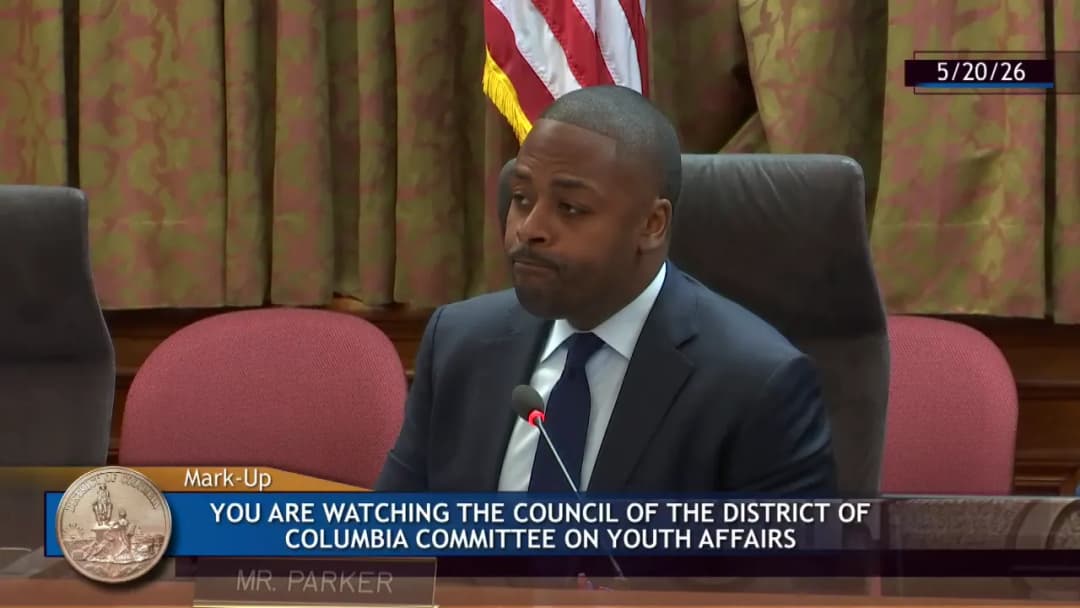
FY2027 Budget Markup of Committee on Youth Affairs – May 20, 2026

The Committee on Youth Affairs, chaired by Councilmember Zachary Parker (Ward 5), held a markup on May 20, 2026, to consider the committee's report and recommendations for the Fiscal Year 2027 budget for the Child and Family Services Agency (CFSA), the Department of Youth Rehabilitation Services (DYRS), and the Office of the Ombudsperson for Children. The meeting took place in Room 500 of the John A. Wilson Building and virtually via Zoom. Councilmembers Robert White, Crawford, and Pinto participated virtually. The committee focused on preserving effective programs amid a tight district budget and a dismantling of the social safety net. Opening Remarks - Chairman Parker emphasized the tightest district budget in recent memory and the systemic dismantling of the social safety net. He highlighted key committee investments: restoring three family success centers (in Wards 5, 7, and 8) that were eliminated in the mayor's proposal; providing $385,000 to implement the Sole Amendment Act for older foster youth; funding incentive recruitment bonuses for CFSA social workers; restoring $1.35 million for Safe Shores (the district's children's advocacy center); redirecting the mayor's proposed $29 million expansion of secure bed capacity at DYRS toward a psychiatric residential treatment facility at New Beginnings and modernization of Langdon Park Community Center and New York Avenue Recreation Center; restoring $500,000 for the credible messengers program; reducing DYRS overtime by more than $4 million; and designating $500,000 to create a new independent DYRS facilities oversight body under the Council. Councilmember Statements - Councilmember Robert White commended the committee's approach, stating that young people are being blamed for adult failures and that the budget recognizes prevention and rehabilitation over confinement. He supported the restoration of family success centers, Safe Shores, the SOL Act, CFSA hiring incentives, and the rejection of the $29 million secure bed expansion. He noted remaining gaps but thanked the chair for moving toward prevention, rehabilitation, oversight, and care. - Councilmember Crawford applauded the shift from secure bed expansion to rehabilitative approaches, particularly the psychiatric residential treatment facility and recreation center investments. He also appreciated the partial restoration of credible messengers and the reduction in DYRS overtime. He asked two questions: (1) about the $100,000 transfer for arts and music programming as an anti-truancy strategy, and (2) about the $150,000 transfer for truck traffic enforcement cameras. Chairman Parker explained the arts transfer would fund music/arts access via groups like Levine Music, and the truck camera transfer would improve street safety near schools by enforcing speed limits on truck routes. - Councilmember Pinto thanked the chair and highlighted her support for Safe Shores funding, the SOL Act, and CFSA hiring bonuses. She asked about the number of caseworkers to be hired and how bonuses would be distributed. Chairman Parker noted that last year's $200,000 in bonuses helped hire 28 social workers but the agency also lost 28, so the committee invested again to improve retention. Pinto also asked about funding for Sasha Bruce for unhoused youth; Parker said it was not included in this committee's report as it was expected to be addressed by the Committee on Human Services. Pinto expressed concerns about overcrowding at the Youth Services Center (YSC) and the plan for Title 16 youth. Parker noted that YSC is currently below its 98-bed capacity, the agency is working on faster placements, and that Title 16 youth could potentially be moved back to New Beginnings. He emphasized that faster placements are more effective than adding beds. Pinto cautioned against housing Title 16 youth outside DC or in adult jail, and said deference to the DYRS director regarding safety at New Beginnings is important. Parker agreed but reiterated the focus on expediting placements. Discussion Items - SOL Act Implementation: The committee committed $385,000 to implement the Sole Amendment Act, a permanency pathway for older foster youth championed by youth with lived experience. Councilmember Pinto praised this investment. - CFSA Social Worker Incentives: The committee allocated funds for hiring bonuses, with Parker noting that last year's $200,000 resulted in 28 new hires but also 28 departures. The goal is to improve retention. - DYRS Secure Bed Expansion Rejection: The committee redirected $29 million proposed for secure bed capacity expansion toward a psychiatric residential treatment facility (PRTF) at New Beginnings and recreation center upgrades. Parker argued there is no current need for more beds, citing lower YSC occupancy and faster placement initiatives. - Credible Messengers: $500,000 was restored, partially reversing the mayor's $3.5 million cut. Parker expressed hope the full council will restore additional funds. - Independent Oversight: $500,000 was designated for a new independent DYRS facilities oversight body under the Council, replacing the sunsetted Office of the Independent Juvenile Justice Facilities Oversight. Parker stressed the need for persistent on-the-ground monitoring. - Transfers: $100,000 to the Committee of the Whole for arts/music programming to combat truancy; $150,000 to the Transportation and Environment Committee for truck traffic enforcement cameras. Key Outcomes - The committee voted unanimously to approve the committee print and report for the FY2027 budget for agencies under its purview, with leave for staff to make technical, editorial, and conforming changes. All ayes were in favor. - The markup concluded with the chair thanking colleagues for their partnership and commitment to supporting young people.
YOUTH PROGRAMS 86% · PUBLIC SAFETY 6% · FISCAL SUSTAINABILITY 4% · TRANSPORTATION SAFETY 4%
82
MAY 19, 2026 · WASHINGTON, DISTRICT OF COLUMBIA · COUNCIL OF THE DISTRICT OF COLUMBIA
Public Hearing on Board of Zoning Adjustment Nominations – May 19, 2026

On Tuesday, May 19, 2026, at 2:58 PM in Room 500 of the Council Chambers, the Committee of the Whole of the Council of the District of Columbia, chaired by Phil Mendelson, held a public hearing to consider two nominations to the Board of Zoning Adjustment (BZA): Paul Goldstein (PR 26-636, replacing Fred Hill for a term ending September 30, 2029) and Michelle Purseau (PR 26-667, replacing Carl Blake for a term ending September 30, 2028). A third resolution (PR 26-666) was withdrawn. The hearing received testimony from one public witness and the nominees. The record will remain open until 5:00 PM on Monday, June 1, 2026. Public Comments & Testimony - Paul and Kathy Rosenbaum, residents of 6117 32nd Place, testified in support of the nominees and described their pending variance case. They have a stop work order on their renovation since December 29, 2025, causing a six-month delay. They are renovating a 1926 bungalow to allow aging in place and create an accessory dwelling unit (ADU) for affordable housing. The renovation footprint is identical to the original structure (five feet from the property line), but a zoning interpretation led to the stop work order. They estimated it would cost $300,000 to tear down and move the structure three feet. Chairman Mendelson noted that variances require a showing of hardship or practical difficulty, not just that a project appears harmless. Discussion Items - Chairman Mendelson questioned both nominees on three standard topics: time commitment, tax liabilities, and conflicts of interest. Both confirmed they can fully participate, are current on taxes, and will recuse themselves if a conflict arises. - Michelle Purseau testified: she is a longtime D.C. resident and former director of the D.C. Department of Transportation, with a master’s degree in urban planning from Howard University. She described serving on the BZA as a "dream job" and emphasized her experience with zoning applications, community coordination, and the D.C. Comprehensive Plan. She is prepared for the heavy workload the board currently faces. - Paul Goldstein testified: he is an attorney with a master’s in city planning from the University of Pennsylvania. He has worked at the D.C. Office of Planning, the Department of Buildings (currently as a program analyst), and the Office of the Attorney General, providing legal advice to the BZA. He will resign from his current position if confirmed. He committed to reviewing applications without bias and noted one potential conflict he will investigate further. - Chairman Mendelson expressed concern that the BZA sometimes grants variances too liberally, which increases the board’s caseload. He noted that the board currently lacks a quorum and will face a significant backlog once the two new members are confirmed. Key Outcomes - No votes were taken; the hearing was solely for testimony. The record will close at 5:00 PM on June 1, 2026, allowing written comments. - The nominations of Paul Goldstein and Michelle Purseau will proceed to full council consideration after the record closes. If confirmed, both will serve on the BZA, which will then have three members (including a rotating member) and be able to resume meetings.

PERSONNEL MATTERS 89% · PROCEDURAL 11%
83
MAY 19, 2026 · WASHINGTON, DISTRICT OF COLUMBIA · COUNCIL OF THE DISTRICT OF COLUMBIA
Committee of the Whole Meeting: Park Naming Bills and Corrections Council Confirmations - May 19, 2026

The Committee of the Whole of the Council of the District of Columbia, chaired by Phil Mendelssohn, held a regular meeting on Tuesday, May 19, 2026, from 11:45 AM to 12:09 PM in Room 500 of the John A. Wilson Building. The meeting was televised and streamed online. A quorum was present. The council marked up three park naming bills and handled two confirmation resolutions from the Committee on Judiciary and Public Safety, all of which were placed on the consent agenda for the June 2, 2026 legislative meeting. Discussion Items Green's Court Park Designation (Bill 26-???) - Councilmember Pinto introduced the bill on July 14, 2025. A public hearing was held on January 13, 2026, with no opposition. The bill officially names a park in the Foggy Bottom area as Green's Court Park to memorialize the historic Green's Court alley dwelling community that was displaced by urban renewal in the 1960s. The park includes a playground, dog park, and plaza. The Department of Parks and Recreation (DPR) reported a $6,000 cost for signage, which it cannot absorb, making the bill subject to appropriation. Councilmember Pinto noted a forthcoming $6,000 transfer. The print and report were moved with leave for staff to make technical corrections. Unanimously approved. Harmony Park Designation (Bill 26-331) - Councilmember Pinto introduced the bill on July 14, 2025. A public hearing was held on January 13, 2026, with testimony in support. The bill names a triangular park at New Jersey Avenue and Rhode Island Avenue, NW (Reservation 160) as Harmony Park, recognizing its location at the intersection of Wards 1, 2, and 5, and its historical connection to the Columbian Harmony Society and the Harmonian Cemetery (a historic African American burial ground). Councilmember Pinto highlighted the intersectional rationale. Councilmember Crawford spoke in support, emphasizing the importance of preserving African American burial grounds and aligning with the Paul E. Sluby Senior Historic African American Burial Grounds Preservation Fund. DPR reported a $6,000 signage cost, which cannot be absorbed, making the bill subject to appropriation. Unanimously approved. Rodney Wright Basketball Court Designation (Bill 26-431) - Former Councilmember Kenyon McDuffie introduced the bill on October 16, 2025. A public hearing was held on January 13, 2026, with no opposition. The bill names the basketball court at the Marvin Gay Recreation Center (61st Street, NE, Ward 7) as the Rodney Wright Basketball Court, honoring James Rodney Wright, a native Washingtonian who played at Howard University and coached at Eastern High School. DPR reported a $6,000 signage cost, which cannot be absorbed, making the bill subject to appropriation. Unanimously approved. Confirmation of Corrections Information Council Governing Board Members (PR 26-635 and PR 26-638) - Councilmember Pinto moved both resolutions in block. PR 26-635 confirms Dr. Prochelle Shannon, current CEO/co-founder of For Truth, with over 16 years of experience in corrections and trauma-informed consulting. PR 26-638 confirms Natasha Dasher, administrative officer at the U.S. Department of Energy and a returning citizen with experience on the Commission on Reentry and Returning Citizens. Both are current board members being renominated at the mayor's request. Councilmember Henderson asked about the lack of posted meeting minutes since 2024; Councilmember Pinto agreed to look into it. No other questions. Both resolutions were placed on the consent agenda without objection. Key Outcomes - All three park naming bills (Green's Court Park, Harmony Park, and Rodney Wright Basketball Court) were approved unanimously by the Committee of the Whole. Each has a $6,000 signage cost subject to appropriation and will appear on the consent agenda for the June 2, 2026 legislative meeting. - Both confirmation resolutions (PR 26-635 and PR 26-638) were moved to the consent agenda for the June 2, 2026 legislative meeting. - The meeting adjourned at 12:09 PM.

PARKS AND RECREATION 80% · PERSONNEL MATTERS 20%
84
MAY 18, 2026 · WASHINGTON, DISTRICT OF COLUMBIA · COUNCIL OF THE DISTRICT OF COLUMBIA
Subcommittee on Local Business Development Markup of FY 2027 Budget - May 18, 2026

Meeting date and time: Monday, May 18, 2026, at 11:14 a.m. (ET) — John A. Wilson Building, Room 500, and via Zoom. Chair Wendell Felder (Ward 7) presided with a quorum of Councilmembers Charles Allen, Anita Bonds, and Brooke Pinto. The subcommittee reviewed the Mayor’s proposed Fiscal Year 2027 budget for the Department of Small and Local Business Development (DSLBD) and considered budget transfers, Budget Support Act amendments, and subtitle changes. The meeting concluded with the unanimous adoption of the subcommittee’s report and recommendations. Consent Calendar - No separate consent calendar was identified. All actions were considered under a single vote on the report and recommendations. Public Comments & Testimony - No public testimony was received. Discussion Items - Opening Remarks & Budget Overview (Chair Felder): Felder summarized DSLBD’s role in small business growth, technical assistance, access to capital, procurement, and commercial corridor revitalization. The Mayor’s proposed FY 2027 operating budget is $2,277,774 (a 2.2% reduction from FY 2026) and capital funds of $750,000 (a $250,000 increase). 57 FTEs are retained, with added staff in legal, IT, and grant services. Felder expressed concern that the operating budget is insufficient, especially for CBE certification compliance. He called for a shift to a needs-based, equitable funding formula for Main Streets and Clean Teams and highlighted the need to connect local businesses to RFK Stadium redevelopment contracts. - Budget Transfers: Felder announced several transfers from other committees: - $50,000 (one-time) from Councilwoman Anita Bonds’ committee for a new Benning Road Main Street in Ward 7. - $25,000 (one-time) from Councilwoman Brooke Pinto’s committee for the Upper 14th Street Clean Team. - $50,000 (recurring) from Councilmember Matthew Fiuman’s committee for the Connecticut Avenue Clean Team. - $50,000 (one-time) from Councilwoman Janice Law Shores’ committee to support Tacoma Main Street. - $100,000 (recurring) from the Business Improvement District Transfer Agency for the Friendship Heights BID. - Budget Support Act (BSA) Amendments: Two BSA proposals were recommended for approval: 1. Golden Triangle Business Improvement District Act of 2026 – allows the BID to increase its tax rate by 3% annually, subject to member ratification. 2. Auto Knight Commercial Revitalization Support Amendment Act – permits DSLBD and other agencies to seek private‑sector partnerships to supplement funding for the Art All Night event. - Budget Subtitles: Two subtitle changes were proposed: 1. Renaming the Capital Riverfront BID to the Navy Yard BID. 2. Allowing the South West BID to receive revenue from the conversion of six federal buildings to private ownership. - Councilmember Allen’s Amendment: Allen proposed a one‑time transfer from the Committee on Transportation and the Environment to restore funding struck by the Mayor for the H Street Northeast Corridor. The grant would create and market at least three events (arts, live music, business collaboration) to increase foot traffic, with funds to be used before September 30, 2027. The amendment was accepted as friendly, seconded by Bonds, and adopted without objection. - Councilmember Pinto’s Question: Pinto asked whether Main Streets funding was cut across the board. Chair Felder clarified that base funding remained consistent; reductions only affected one‑time enhancements from the prior year. Pinto expressed hope for future collaboration on Main Streets funding, especially to support youth programming. Key Outcomes - Unanimous Approval: The subcommittee voted unanimously (by voice vote) to move the report and recommendations for the FY 2027 budget and Budget Support Act for agencies under its purview, with authority to make technical and editorial changes. - Accepted Amendment: The H Street Northeast Corridor event funding amendment was incorporated into the report. - Next Steps: The report will advance to the Committee of the Whole for further consideration. Chair Felder committed to continued work on equitable Main Streets funding, Clean Team formulas, and small business access to RFK-related contracts.

ECONOMIC DEVELOPMENT 100%
85
MAY 14, 2026 · WASHINGTON, DISTRICT OF COLUMBIA · COUNCIL OF THE DISTRICT OF COLUMBIA
Council Roundtable Hearing on Revenue Bond Project Approvals - May 14, 2026

On May 14, 2026, the Council of the District of Columbia held a roundtable hearing to consider eight revenue bond project approval resolutions for nonprofit organizations. The hearing covered applications from charter schools, a senior living facility, a food assistance nonprofit, and university-affiliated housing projects. The record will close at 5:00 PM on May 18, 2026. Discussion Items - Friendship Public Charter School (Pat Brantley): Requested up to $90 million in tax-exempt revenue bonds ($65 million refinancing of Series 2016A bonds, $25 million for capital improvements). No controversy. The resolution references acquisition of a Minnesota Avenue property, but that bid was rejected; a revised sources and uses table will be provided. Timing: closing scheduled for June 24, 2026; request approval by the first Tuesday in June legislative meeting. - DC Preparatory Academy (Nessa Gonzalez): Requested bonds for refinancing and renovation of a 42,000-square-foot facility. No controversy. Resolution is accurate with no changes needed. Timing: closing scheduled for June 17, 2026, with a target no later than June 30. - Food and Friends Inc. (Carrie Stoltzfus): Requested up to $15 million for capital improvements, equipment, and expansion of its facility. No controversy. Resolution is accurate. Timing: hope to be on the June 2 legislative agenda, with closing in mid-June and groundbreaking in mid-July. - Provident Group Bison Properties (Chris Hicks): Requested up to $575 million (increased from $432 million) to refund prior bonds, acquire additional dormitories, refinance Howard Manor bonds, and fund deferred maintenance. No controversy. Resolution requires amendment to reflect the increased amount and added properties; a redline draft was provided. Timing: documentation in progress, hope to close by end of summer. - St. Patrick's Episcopal Day School (Rebecca Kim): Requested up to $35.5 million (increased from $30.5 million) to refinance 2016 bonds and finance a new middle school. No controversy. Resolution needs change to the amount; a revised sources and uses table will be provided. Timing: close before the summer recess (July 15). - PRG Wonder Plaza Properties (Chris Hicks): Requested up to $375 million (increased from $350 million) for a mixed-use redevelopment for Howard University, including student housing, health and wellness center, and dining. No controversy. Resolution is correct as drafted. Timing: target end of July to start construction in August. A potential real property tax issue was discussed regarding the financing structure; the chairman suggested possible legislative language to clarify tax exemption. - Harmony DC Public Charter Schools (Dr. Muhammad Turkey): Requested up to $17 million for refinancing and capital improvements. No controversy. Resolution is accurate; no changes needed. Timing: to be determined, but chairman noted difficulty with June 2 agenda due to budget work. - Forest Hills of DC (representative not named in introduction): Requested up to $13.7 million to refinance existing debt and fund facility improvements (roof, windows, HVAC, etc.). No controversy. Resolution accurate; no changes needed. A sources and uses table will be provided. Timing: undetermined, but chairman noted June 2 agenda is difficult. - William Liggins, Director of the DC Revenue Bond Program: Testified in support of all applications, noting the program has facilitated over $5.1 billion in closed transactions since FY20. He confirmed no objection to the increased bond amounts for Bison Properties and St. Patrick's, and no objection to potential amendments addressing real property tax issues for Howard University projects. Key Outcomes - The record will close at 5:00 PM on May 18, 2026. All applicants were asked to submit any revised documents (sources and uses tables, corrected resolutions, redlines) by that deadline. - The chairman indicated that the council may move the legislation as freestanding bills, as a package, or as part of the budget support act (which requires two votes on June 9 and June 23). Applicants with urgent timing (Friendship, DC Prep, Food and Friends) expressed preference for freestanding action to meet closing deadlines. - No formal votes were taken; the hearing was for testimony and information gathering.

ECONOMIC DEVELOPMENT 86% · ENGINEERING AND INFRASTRUCTURE 8% · PROCEDURAL 3% · PUBLIC HEALTH 2%
86
MAY 13, 2026 · WASHINGTON, DISTRICT OF COLUMBIA · COUNCIL OF THE DISTRICT OF COLUMBIA
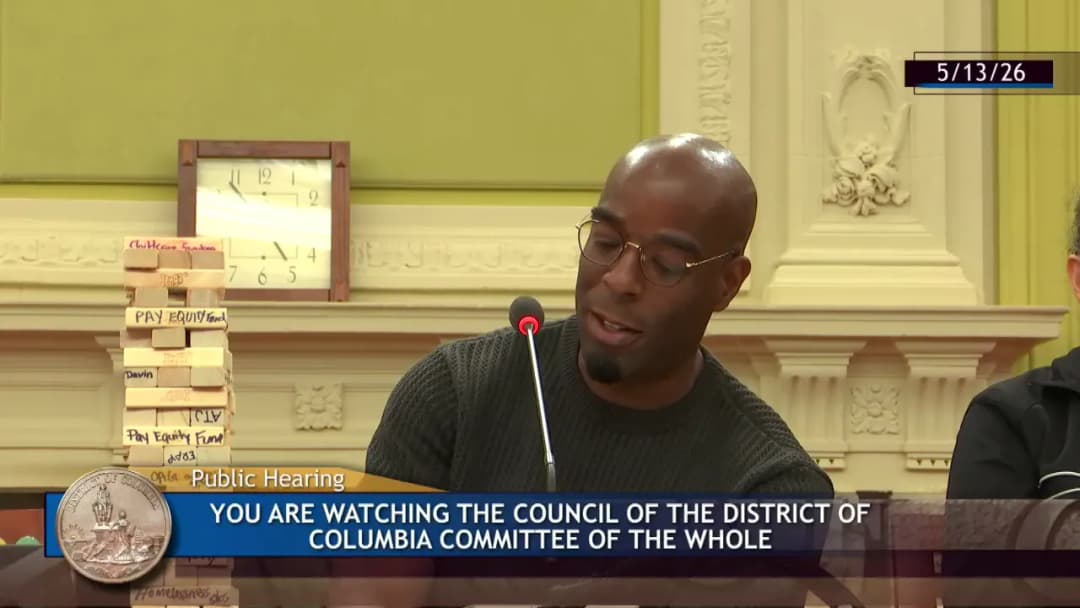
DC Council Committee of the Whole FY2027 Budget Hearing – May 13, 2026

On May 13, 2026, the Council of the District of Columbia Committee of the Whole held a public hearing on six budget-related legislative measures for Fiscal Year 2027. The hearing began at 9:52 AM and adjourned at 7:08 PM, with 171 witnesses registered. The measures include the FY2027 Federal Portion Budget Request Act, Local Budget Act, Local Budget Emergency Act, Budget Support Act, and revised FY2026 budgets. The hearing was chaired by Chairman Mendelson, with Councilmembers Fruman, Bonds, and Parker presiding at various times. Public Comments & Testimony - Kevin Donahue (City Administrator) testified on the mayor's budget priorities: protecting education and public safety, preserving core services, protecting healthcare, and growing the economy. He noted the budget grew 62% over 12 years, with 80% from organic economic growth. He highlighted a $1.1 billion budget cliff and $400 million in cash reserves not accessible due to CFO restrictions on liquidity, including $200 million from 6 extra days of cash on hand and $180 million from decoupling set aside for legal risk. Subtitle provisions address telework (to reduce unused office space) and paid family leave for DC government workers (to balance leave usage with staffing needs). - Community Wealth Builders (multiple speakers) advocated for a public bank, land bank, and tax incentives for cooperative conversions, arguing these would keep wealth local and support affordable housing and community-owned businesses. - CSX Transportation (Randy Marcus) opposed railroad carrier fees (60 cents per rail car), citing conflicts with federal law, constitutional concerns, and a pending lawsuit. - Nancy Drain (DC Access to Justice Commission) urged restoration of Access to Justice funding from the mayor's proposed $4.5 million to $31.7 million, warning that cuts would force 240 client-facing workers to be laid off and harm 38,000 residents. - DC Coalition Against Domestic Violence (Michaela Deming, Dawn Dalton) requested restoration of $5.6 million to OVSJG victim services and $685,000 to DHS domestic violence services, noting rising DV homicides and demand. - Scott Goldstein (EmpowerEd) called for restoring SNAP, school breakfast, school-based behavioral health, early childhood pay equity, and community schools funding, and redirecting MPD funds. - Margaret Dwyer (Ward 3 Housing Justice) opposed WMATA joint development tax abatement, calling it a gift that would allow tax-free development on upzoned land. - Liz de Barros (DC Building Industry Association) supported the budget, including downtown conversion incentives, tax abatements for WMATA and federal properties, and workforce housing abatement. - Mara Brofi (NOMA BID) supported $50 million for Third Street Metro entrance, urging council to maintain funding. - Robin Betterall (EYA) requested modifications to WMATA tax abatement subtitle, including allowing property sale, limiting first source/CBE requirements, and extending abatement term to 25 years. - Emily Alexander (Jair Lynch) urged inclusion of Reservoir District tax exemption amendment to align with HUD income limits. - Stefan Rodiger & Bericette Selassie (Rift Valley Capital) requested gap funding and workforce housing abatement for Chevy Chase community center/library redevelopment. - Lily Goldstein (LEO Impact Capital) sought tax abatement for the Gale Eckington property to preserve 350 affordable units. - Eric Mulata (Dalian Development) requested changes to federal property tax abatement dates to include the RLB building. - Leona Agouridis (Golden Triangle BID) supported technical clarification for BID tax increase, and urged funding for Safe Commercial Corridors and DuPont South overlook. - Kubai Nageg (DASH) asked to fund OVSJG at $59.6 million and restore DHS domestic violence services. - Tyrell Holcomb (Jubilee Housing) supported $120 million for Housing Production Trust Fund, resident services, out-of-school time, and OVSJG restoration. - Lynn Amano (Friendship Place) opposed cuts to homelessness services, urged increased PNA and non-congregate shelter. - Multiple early childhood advocates (Educare DC, UPO, DC Action, etc.) urged full funding of pay equity fund ($94.2 million) and child care subsidy program ($177.1 million), warning of educator loss and program closures. - DCFPI (Kate Coventry, Maria Monsalve, Erica Williams) recommended decoupling from federal tax cuts, tapping reserves, recouping funds from Events DC, shifting from MPD, and implementing wealth taxes (net investment income tax, business activity tax). - TANF advocates (Fair Budget Coalition) opposed elimination of COLA, increased sanctions, and time limits, citing harm to 16,000 families. - Access to Justice supporters (Aaron Larkin, Kenyatta Robinson, Julia Ward, Megan Browder, Joanne Lynn) urged restoration of $31.7 million, noting 44,000 residents served in 2025 and cost savings. - Environmental advocates (Sierra Club, CCAN, Earth Day.org, etc.) opposed cuts to DOEE (28% cut), sweeps of Sustainable Energy Trust Fund, and elimination of Food Policy Council. They urged funding for electrification, lead pipe replacement, and federal matching funds. - Housing and homelessness advocates (Amber Harding, Andy Wassenick, Chelsea Hinton, Geneva Smith, Lori Leibowitz) called for new housing vouchers, ERAP restoration, and permanent supportive housing, noting rising evictions and homelessness. - Labor union representatives (AFGE, ASME, etc.) opposed pay freeze, cuts to paid family leave, and telework restrictions, arguing workers deserve cost-of-living adjustments. - Cannabis industry representatives (James Kahn, Caroline Crandall, Grace Hyde) opposed proposed tax increase from 6% to 10.25%, citing competition from Maryland and Virginia, and risk to licensed businesses. - Other testimonies covered support for New Heights program, Bridge the Gap Fund, equitable charter school funding, Office of Tenant Advocate, and food policy council. Discussion Items - Chairman Mendelson questioned City Administrator Donahue about the errata letter (expected by end of week), cash reserves (CFO restricted $400 million, citing liquidity concerns), telework subtitle (to address unused office space), and paid family leave subtitle (to balance leave with staffing needs). Mendelson expressed concern about the direction of the paid leave program, noting it was designed to benefit both workers and businesses. - Councilmember Parker questioned witnesses on pay equity, TANF priorities, and access to justice funding levels. - Councilmember Bonds and Councilmember Fruman also presided over portions of the hearing, engaging with witnesses on various issues. Key Outcomes - No votes were taken; the hearing was for public testimony. The council will hold work sessions and markups, with first reading scheduled for June 9, 2026, and second reading on June 23, 2026. The record will close before the work session.

PUBLIC BENEFITS 18% · FISCAL SUSTAINABILITY 9% · ECONOMIC DEVELOPMENT 9% · PUBLIC SAFETY 8%
87
MAY 12, 2026 · WASHINGTON, DISTRICT OF COLUMBIA · COUNCIL OF THE DISTRICT OF COLUMBIA
Budget Oversight Hearing for CFSA and OFC – May 12, 2026

Councilmember Zachary Parker, Chair of the Committee on Youth Affairs, convened a budget oversight hearing to review the Fiscal Year 2027 proposed budgets for the Child and Family Services Agency (CFSA) and the Office of the Ombudsperson for Children (OFC). The hearing began at 12:14 PM and adjourned at 8:03 PM, featuring over 80 public witnesses and testimony from agency leaders. Key topics included proposed cuts to family success centers, the Seoul Act for older foster youth, funding for Safe Shores, staffing and retention at CFSA, and potential expansion of OFC oversight to the Department of Youth Rehabilitation Services (DYRS). Public Comments & Testimony - Ralph Belk (NCCF): Urged maintaining CFSA funding, highlighting NCCF's role in foster care and the burden of transportation costs due to CFSA's freeze. He noted NCCF has taken on nearly 20 children in the past three weeks, including two sibling groups of five. - Thomas Saloshev (The Family Place): Described the HIPPY home visiting program serving 125 families, funded through CBCAP/CFSA. He asked to maintain current funding levels, not an increase, warning that cuts would lose trusted relationships. - Tracy Velasquez (Council for Court Excellence): Supported flat funding for OFC at $733,094 and advocated for a study to expand OFC's jurisdiction to DYRS, citing the sunset of OIJJFO and the need for independent oversight of DYRS. - Joshua Miller (Open City Advocates): Asked to extend OFC's jurisdiction to all DYRS committed youth, not just those with CFSA cases. He provided a redline of the OFC statute and estimated $500,000 to $1 million above current budget for such expansion. - Fernanda Ruiz and Carlos Marchan (Mary's Center): Urged restoration of $200,000 in recurring CBCAP funding for the Father Child Attachment Program, warning that without it, funding would return to FY2009 levels, shrinking staff and families served. - Tammy Warasinga Kote (Children's Law Center): Focused on the Seoul Act, urging full funding in FY27 despite the tight budget. She noted Seoul passed its first full council vote unanimously. - Leah Castellas (Children's Law Center): Supported level OFC funding and asked to consider establishing a DYRS deputy ombudsperson within OFC. - Chris Gamble (Children's Law Center): Urged restoration of $1.35 million for Safe Shores, the child advocacy center, and called for a long-term reliable funding solution. - Princess Sims, Zanaya Torres, Sierra Bailey, Kanaya Parks, Olivia Thomas (Lex Leaders, youth with lived experience): Testified passionately in support of the Seoul Act, describing how it would allow youth to choose their own family structures, avoid aging out without support, and provide both legal permanency and continued services. They asked for full funding in FY27. - Susan Pennett (Family and Youth Initiative): Highlighted Seoul's design process led by youth, and noted a fiscal analysis showing cost savings from reduced aging out. - Kari Wood (Time for Change): Described financial literacy and match savings programs for foster youth, asking to retain CFSA's budget. - Christy Matthews Jones (DC Girls Coalition): Expressed concern about overreporting to CFSA from schools and urged focus on prevention funding, not cuts. - Natalia Otero (DC Safe): Reported calling CFSA 77 times in the past year; received initial response but lacked follow-up communication. Asked for better collaboration and training on domestic violence. - Mary Ellen Ryan and Dante Massey (DC Kincare Alliance): Urged full funding for grandparent and close relative caregiver subsidies, noting that foster children receive higher daily rates and additional supports not available to kinship caregivers. - Melody Webb, Angel Brand, Blair Green, Aqua Donqua, Sharon Harris (Mothers Outreach Network): Criticized CFSA's flex funds, stating only 4.8% spent in Q1 of FY26, no written eligibility criteria, and that families are denied or required to have an open case. Recommended transferring flex fund administration to a non-investigative agency. - Dr. Dawn Sherman (Community of Hope): Urged restoration of $2.925 million for family success centers, citing that Bellevue serves over 550 households and that prevention works. - Penny Griffith and Dion Reader (Collaborative Solutions for Communities and Far Southeast Family Strengthening Collaborative): Described the 30-year history of collaboratives, noting they serve 10% of households below the poverty line, with 90% of children remaining safely at home. They asked to restore $4.06 million reduction to the Office of Thriving Families. - Multiple family success center staff and residents (from Edgewood Brooklyn, Carver Langston, Bellevue, etc.): Provided data on services: 5,260 diapers, 7,950 meals, 133 residents connected to city resources, 32 enrolled in workforce development, etc. They asked to preserve funding. - Kimberly Williams Jenkins (foster parent with NCCF): Asked for an increase in foster parent stipend, not increased in nine years, and described out-of-pocket costs for enrichment, tutoring, and braces. - Shelton Donaldson (youth in foster care): Described how tutoring through NCCF improved his grades and GPA, urging continued support for such programs. - Heather Holt (former resource parent): Criticized CFSA for high social worker turnover, lack of respite, and failure to support biological families. She asked for dedicated respite homes and better transparency. - Esther Hardesty, Patrice Lancaster, Talia Chestnut, and others: Testified that family success centers are lifelines for food, housing, employment, and community connection, and asked the council to restore funding. Discussion Items - Chair Parker's opening remarks: Highlighted significant cuts in the mayor's proposed FY27 budget, including elimination of 10 family success centers ($3.5 million), elimination of $1.35 million for Safe Shores, and reductions to TANF and other social safety nets. He expressed concern about the impact on families and committed to prioritizing foster youth, prevention, and staffing. - OFC Testimony (Petrina Jones Jez): OFC is flat-funded at $733,094 for FY27. The office requested additional funds for a chief deputy ombudsperson, a data analyst, and a legal analyst, and to expand oversight to DYRS (estimated total $1.57 million). Chair Parker expressed skepticism about OFC's capacity to take on DYRS, fearing mission creep, but said he was open to discussion. - OFC reported 291 complaints received since February 2023, with 104 in FY25. Screen-out analysis of 430 cases found 83% appropriately screened out, 2% should have been screened in, and 9% could have been referred to the 211 warmline. OFC also reviewed four child fatalities and is working on systemic recommendations. - CFSA Testimony (Tanya Torres Trice): CFSA's FY27 proposed budget is $203.9 million, a 5.6% reduction from FY26. Reductions include $4.6 million from the Office of Thriving Families (including family success centers), $2.2 million in management contracts, and $5.56 million in rent abatement. The budget includes $648,000 for school transportation. - Director Trice explained the rationale for cutting family success centers: low utilization data (only 688 individuals served across all centers as of March, with Brightwood serving 11). She said the agency would explore federal funds to fill gaps and work with the human services cluster. - She noted 28 social workers were hired with a $5,000 hiring bonus, but 28 also left, maintaining a steady state. She highlighted rising placement costs, especially for children with autism ($282,833 per year per child). - Regarding the curfew bill amendment, she said CFSA is not equipped to hold youth overnight due to minimal evening staff and lack of secure facilities. - On Safe Shores, she said CFSA is not equipped to conduct forensic interviews without funding. - She committed to working on transparency for foster parent programs and to increasing the stipend if sustainable federal funding can be found. - She noted that 51 children are on contracted transportation at a cost of $2.7 million in FY26, with $71,000 spent on no-shows. Key Outcomes - Chair Parker committed to working to fully fund the Seoul Act and to restore funding for family success centers, Safe Shores, and the grandparent caregiver subsidy, though he cautioned that the budget is extremely tight. - No votes were taken; the hearing was for oversight and testimony. The committee will send written follow-up questions to OFC and CFSA. - Chair Parker expressed skepticism about expanding OFC to DYRS at this time, but said he would continue conversations about independent oversight of DYRS. - CFSA Director Trice agreed to provide data on flex fund usage, family success center metrics, and to improve transparency on the website for foster parents and kinship caregivers. - The committee will consider the recommendations and testimony as it finalizes the FY27 budget for the Committee on Youth Affairs.

CHILD WELFARE 23% · YOUTH PROGRAMS 22% · COMMUNITY ENGAGEMENT 19% · PUBLIC BENEFITS 9%
88
MAY 11, 2026 · WASHINGTON, DISTRICT OF COLUMBIA · COUNCIL OF THE DISTRICT OF COLUMBIA
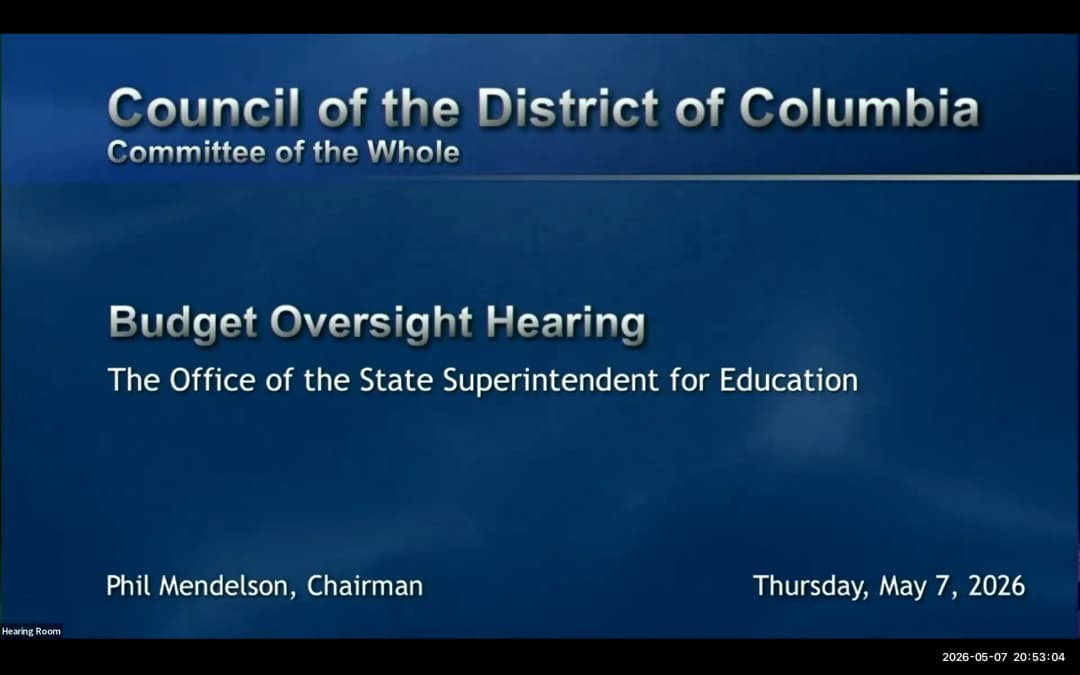
DC Council Committee of the Whole FY27 OSSE Budget Hearing - May 11, 2026

The Committee of the Whole, chaired by Chairman Phil Mendelson, held a budget hearing on Mayor Bowser's proposed Fiscal Year 2027 budget for the Office of the State Superintendent of Education (OSSE). The hearing began at 4:30 PM and extended past midnight, with over 250 witnesses testifying. The majority of testimony focused on proposed cuts to the child care subsidy program and the Early Childhood Educator Pay Equity Fund, as well as reductions to adult education, community schools, and other programs. OSSE Superintendent Dr. Antoinette Mitchell and agency leaders presented the budget and answered questions from the council. Public Comments & Testimony - Early Childhood Education: Numerous parents, educators, and providers urged the council to fully fund the child care subsidy program at $177.1 million and restore the salary component of the Pay Equity Fund at $94.2 million. Witnesses described the devastating impact of the proposed subsidy enrollment freeze, which would effectively create a waitlist starting May 12, 2026. They warned that the cuts would lead to higher staff turnover, reduced quality, and increased financial strain on families, particularly low-income and Black and Brown families. Specific testimony highlighted that the pay equity fund had improved teacher retention (e.g., 88% retention at one center) and that the subsidy freeze would disproportionately affect infants and toddlers and facilities in higher-poverty neighborhoods. - Adult Education: Representatives from Academy of Hope, Carlos Rosario International Public Charter School, and SOME Center for Employment Training testified in support of restoring $2.5 million in adult and family education funding cuts since FY25. They noted that 96% of adult learners are low-income, and that programs have high success rates (e.g., 85% GED pass rate, 100% job placement in healthcare). They urged the council to increase the adult learner transit subsidy from $70 to $100 per month and to adjust the UPSFF weight for adult learners from 1.0 to 1.3. - Community Schools: Multiple witnesses, including community school coordinators and advocates, called for the restoration of $4 million in OSSE community school grants and DCPS Connected Schools funding. They provided data showing that community schools have reduced chronic absenteeism (e.g., at NOIS Educational Campus, chronic absenteeism dropped from 48.14% to 39.94%) and improved attendance. They argued that the proposed cuts would reduce the number of community schools to less than 1% of DC schools, a retreat from equity. - Advanced Technical Centers (ATCs): Students, teachers, and workforce advocates urged the council to maintain funding for the ATCs, which provide dual-enrollment, industry credentials, and career pathways. They noted that ATCs have a 97% graduation rate and that 400 students earned nearly 4,700 college credits in three years. Witnesses opposed a proposed UPSFF weight to fund the ATCs, arguing it would divert resources from other programs. - High Impact Tutoring: Several witnesses, including City Schools Collaborative and Empower K12, supported the $3 million recurring investment in high-impact tutoring (HIT), noting that DC students who participated in math HIT gained the equivalent of 59 extra instructional days. - Special Education Transportation: Parents and advocates testified about the chronic failures of OSSE DOT, including late buses, lack of a parent tracking app, and the inadequacy of the self-transport stipend. They demanded that OSSE finally implement a GPS tracking app for families, which has been promised for years. The attorney for the plaintiff class in DL v. District of Columbia noted that OSSE and DCPS have not achieved compliance with the 2016 injunction for three- to five-year-olds with disabilities. - DCI Charter School Turmoil: Several teachers, a student, and a staff member from DC International School (DCI) testified about a leadership crisis, including a 94% vote of no confidence in the executive director, excessive turnover of special education staff, and lack of transparency. They urged the council to compel the Public Charter School Board to investigate. Discussion Items - OSSE Budget Presentation: Superintendent Mitchell presented the FY27 proposed budget: $598 million for OSSE main, $133 million for OSSE DOT, $57 million for non-public tuition, and $1.5 billion for UPSFF payments to charter schools. She noted a net reduction of $53 million in local funds, driven by the need to fill a $1.1 billion city deficit. Key reductions included elimination of the salary supplement component of the Pay Equity Fund, a child care subsidy budget of $114 million (down from a revised $140 million in FY26), and a waitlist expected to begin May 12, aiming to reduce enrollment from 7,921 to 6,000. She highlighted investments in ATCs ($2.4 million increase), high-impact tutoring ($3 million recurring), and a new parent-facing bus tracking app. - Child Care Subsidy and Pay Equity: Chairman Mendelson and Councilmember Fruman pressed OSSE on the impact of the cuts. OSSE acknowledged that taking $60 million out of the early childhood sector would cause disruptions, but stated that the fiscal reality of the $1.1 billion deficit left no choice. They estimated that the single-rate payment system (eliminating quality and high-quality tiers) would save $6 million. OSSE committed to monthly public reporting on waitlist numbers and priority groups. - Advanced Technical Centers: Chairman Mendelson questioned the rationale for creating a UPSFF weight for ATCs, noting that other worthy programs (e.g., Level 5 special education weight) have not received such treatment. OSSE argued that the weight ensures stable, sustainable funding for the popular program, which has a waitlist of nearly 1,000 students. The council expressed concern about the precedent of using a weight for a non-school program. - Special Education and DL Injunction: Chairman Mendelson pressed OSSE on the need for additional resources to comply with the 10-year-old DL injunction. OSSE stated that current resources are sufficient and that compliance requires more focused work, not necessarily more money, but acknowledged that the pandemic set back progress. The council plans a fall hearing on special education. - OSSE DOT and Bus Tracking: OSSE demonstrated a new GPS tracking app, Busware, which will be phased in starting in the first quarter of the 2026-27 school year (October-December 2026). Chairman Mendelson expressed frustration with the timeline and noted ongoing disagreements about student privacy. OSSE also discussed the shift to private bus routes, which now cost 20% less than OSSE-operated routes, and the reduction in total routes from 550 to 440. - Adult Education Cuts: OSSE confirmed that local funding for adult and family education dropped from $2.5 million in FY26 to $1.15 million in FY27, a cut of $1.35 million, not just the $436,000 cited by some witnesses. Key Outcomes - No votes were taken; the hearing was informational for the council's budget deliberation. The council will hold a markup on May 13, 2026, for legislative measures connected to the budget, with a final vote scheduled for June 9, 2026. - Chairman Mendelson committed to following up on several issues: (1) requesting additional data on ATC outcomes and the impact of the subsidy cuts; (2) scheduling a fall hearing on special education compliance with the DL injunction; (3) asking OSSE to provide more detail on the School Improvement Act funding needs; (4) urging the Public Charter School Board to investigate the turmoil at DCI. - OSSE agreed to provide monthly public updates on child care subsidy enrollment and waitlist numbers, and to continue working on the bus tracking app rollout. OSSE will also share information on the literacy and math task force recommendations and explore additional philanthropic funding for the ATCs.

WORKFORCE DEVELOPMENT 18% · YOUTH PROGRAMS 17% · PUBLIC BENEFITS 13% · PROCEDURAL 12%
89
MAY 11, 2026 · WASHINGTON, DISTRICT OF COLUMBIA · COUNCIL OF THE DISTRICT OF COLUMBIA
Budget Oversight Hearing for DMHHS and DHCF – May 11, 2026

Chairperson Christina Henderson convened a budget oversight hearing on May 11, 2026, to review the proposed FY27 budgets for the Office of the Deputy Mayor for Health and Human Services (DMHHS) and the Department of Healthcare Finance (DHCF). The hearing was rescheduled from April 29 and focused on a $1.1 billion citywide budget gap, reductions in the Interagency Council on Homelessness (ICH) staff, encampment clearing strategies, and significant Medicaid and Alliance program changes. Deputy Mayor/Director Wayne Turnage testified, joined by senior staff. Discussion Items DMHHS Budget and ICH Staffing - The proposed FY27 budget reduces ICH staff by seven FTEs (five currently filled), leaving only the director. The cuts were driven by funding pressures in the parent agency (DHS). Deputy Mayor Turnage acknowledged the challenge for the ICH director to continue work without support. - One FTE (senior advisor) was transferred to the Deputy Mayor for Education (DME) to correct a prior placement error. - Two new positions (public affairs specialist, data visualization specialist) were proposed but remain unfilled; the data role was originally intended for ICH support. Encampment Strategy and Bridge Housing - Jamal Wilson reported 60–65 encampment sites with about 85 residents, down from over 200 sites and 120 residents three years ago. The city's approach shifted to offering shelter beds to all encampment residents, aiming to close encampments, but summertime reluctance to go indoors remains a challenge. - The Aston bridge housing program remains capped at 100 beds; expansion is not planned due to management concerns. E Street bridge housing is not at capacity, and a third site is being sought but has not been found. The pilot that housed 115 individuals from four large encampments is still tracking those residents. St. Elizabeth's Hospital and Work Requirements - Meetings with St. Elizabeth's leadership have been productive, but the FY27 budget includes a $14 million reduction for the hospital. Deputy Mayor Turnage cited progress on hiring and infrastructure, though staff frustration over rescheduled meetings was noted. - SNAP work requirements begin June 2026; Medicaid work requirements start January 2027. Deputy Mayor Turnage expressed concern that many beneficiaries may not qualify due to work activity exemptions. The city is working on communication plans, with a new contract for outreach and a three-month grace period for recertification. DHCF Budget Overview - The DHCF proposed budget is $5.3 billion total funds, $169 million less than FY26, primarily due to lower projected spending and a shift of 15,000 former Medicaid beneficiaries to Healthy DC. Local funds increase by $64 million to cover aging population, dental/vision benefits, and backfill of federal DCAS cuts. - The mayor maintained eligibility for childless adults (up to 138% FPL) and avoided a $1 billion cut to the healthcare system, instead cutting $48 million in Direct Medical Education (DME) payments to hospitals. Medicaid and Alliance Changes - The Alliance program saw a steep decline in enrollment due to lowered eligibility (from 215% to 138% FPL) and a moratorium on new adult enrollments. Lower renewal rates also contribute to savings. The budget includes $5.7 million for dental/vision in Healthy DC and $3.9 million for Alliance, effective January 2027. - Recertifications for Alliance will remain annual and not require in-person visits, but Medicaid childless adults will face six-month recertifications starting January 2027 per federal law. Direct Medical Education Cuts - The elimination of $14.9 million in DME payments was a trade-off to preserve broader coverage. Hospitals expressed alarm, and Deputy Mayor Turnage noted concerns about Washington Hospital Center's financial health, especially given a $30 million overpayment issue with Howard University Hospital on DSH. Case Management and Managed Care - Deputy Mayor Turnage criticized managed care plans for inadequate case management, noting that $52 million annually is spent on care coordination but plans are not meeting contractual thresholds. He proposed moving case management to FQHCs, citing a study from the Primary Care Association showing lower emergency room use among Alliance beneficiaries treated at FQHCs. Other Items - The MMIS upgrade went live March 2, 2026, with CMS approval pending final certification. - Centralized credentialing for providers is under consideration, but cost estimates are needed. - The Cedar Hill reserve fund (up to $25 million) is funded; the required meeting with UHS is scheduled for June, and the public report will follow. - A streamlined preferred drug list for all Medicaid programs is expected to save $1.6 million. - The administration is considering extending the Alliance grace period beyond 90 days, but no cost estimate has been done. - The Office of Food Policy may be moved to DMHHS if restored by the Council. Key Outcomes - No formal votes were taken during the hearing. The committee will mark up its budget report on May 20, 2026. - Chair Henderson requested that the Cedar Hill report be released before the June meeting if the meeting is delayed. - DHCF committed to providing cost estimates for removing the Alliance age moratorium and restoring eligibility to 215% FPL by the end of the day. - The Deputy Mayor agreed to request that the St. Elizabeth's meeting schedule be resumed promptly. - The committee will follow up on vendor performance documentation and the potential for DHCF to absorb $199,000 for DCAS software upgrades for the Medicaid buy-in bill. - The public record for written testimony closes at 5 p.m. on May 11, 2026.

PUBLIC HEALTH 31% · PROCEDURAL 28% · FISCAL SUSTAINABILITY 15% · PUBLIC BENEFITS 13%
90
MAY 11, 2026 · WASHINGTON, DISTRICT OF COLUMBIA · COUNCIL OF THE DISTRICT OF COLUMBIA
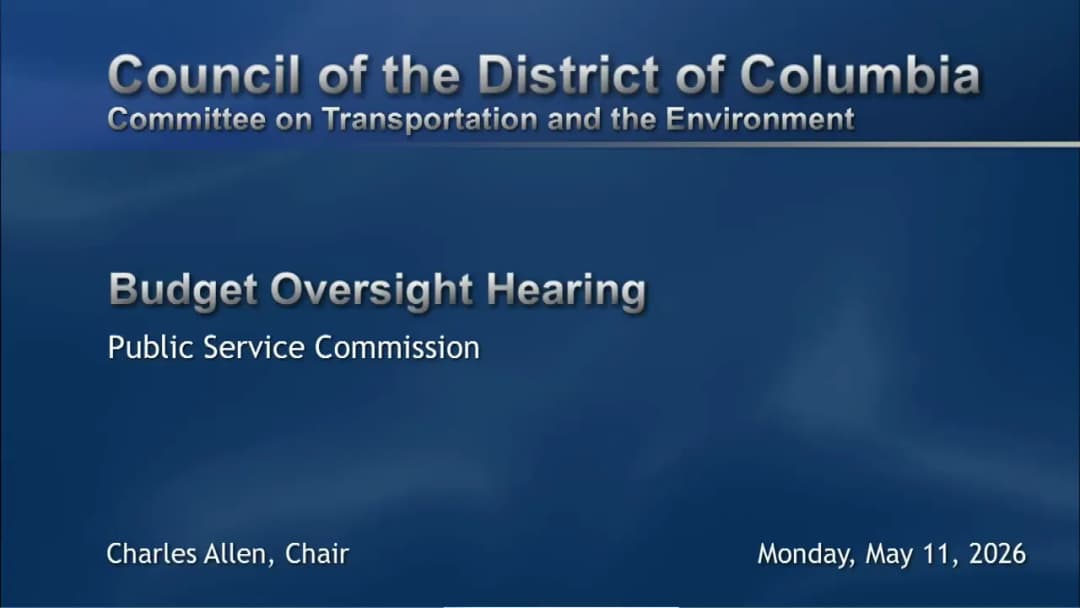
DC Council Committee on Transportation & Environment Budget Oversight Hearing for Public Service Commission - May 11, 2026

On Monday, May 11, 2026, at 9:40 a.m., the Council's Committee on Transportation and the Environment, chaired by Ward 6 Councilmember Charles Allen, held a public oversight budget hearing for the Public Service Commission (PSC) in room 412 of the John A. Wilson building and via Zoom. This was the committee's final budget oversight hearing for the FY27 budget. The hearing focused on the PSC's proposed FY27 operating budget of $20.8 million (a 0.2% increase from FY26), funded almost exclusively by special purpose revenue from utility assessments. The committee heard from two public witnesses and then from PSC Chairman Emil Thompson and staff. Public Comments & Testimony - Barbara Briggs (Friends Meeting of Washington / Beyond Gas Climate Faith Initiative) testified via Zoom. She expressed full support for the PSC keeping its 90 positions while DOEE loses 34, but argued the PSC must actively manage the transition off fossil fuels. She urged the PSC to immediately end the practice of forcing existing customers to pay for new gas line extensions (as Massachusetts, California, New York, Oregon, Washington State, and Maryland have done). She stated that the PSC's duty is to represent DC residents and that business as usual putting utilities' interests ahead of climate policy is unacceptable. - Fritz Mulhauser (Ward 6 resident, individual) testified in person. He argued DC is not aggressively engaged in the forums that set electric rates, noting that PSC Chairman Thompson wrote that the PSC controls only 27% of a typical PEPCO bill. He stated DC is not appearing in the FERC docket on data center cost allocation (while Maryland is) and that PJM's CEO recently called the market "structurally broken." He made four formal requests: (1) Direct OPC to intervene in the FERC docket; (2) Direct the PSC to commission a new study of alternative power procurement (a Fixed Resource Requirement analysis); (3) Ask whether OPC is resourced adequately to represent ratepayers; (4) Improve transparency—including automatic enrollment in assistance programs, requiring PSC commissioners with relevant experience, a QR code on bills linking to OPC/PSC rate-driver explanations, and an annual PSC report on rate drivers. Discussion Items - Chairman Allen questioned both public witnesses. He agreed on the need for clean energy transition but noted the tough budget climate. He asked about short-term strategies before the PSC and whether the PSC is resourced to take them. Ms. Briggs reiterated ending the line extension allowance and taking the future-of-gas docket seriously. Mr. Mulhauser elaborated on his transparency proposals, including automatic enrollment using SNAP/TANF eligibility as a proxy and the need for OPC to have FERC-experienced economists and attorneys. Chairman Allen noted his own legislation to add 30,000 low-income residents to assistance programs and acknowledged the PSC has recently improved public information on bill costs. - PSC Chairman Emil Thompson presented the budget. He noted the FY27 proposed budget of $20,865,694 with 93.2 FTEs, a 0.2% increase (mostly for federal pipeline safety grants), and zero local funds. He highlighted a Budget Support Act subtitle—the Enhanced Consumer Protections and Retail Energy Market Act of 2026—which would require the PSC to set price caps on third-party suppliers, eliminate early termination fees, and expand reporting. The PSC requests one additional FTE (an economist) for implementation, to be covered within existing budget. - Questioning by Chair Allen and Councilmember Robert White covered several topics: - Budget realignment: Large apparent shifts (e.g., $5.6 million reduction in utility regulation, 31.4 FTEs) were explained as a re-categorization of staff; a crosswalk will be provided. - Vacancies: Currently 6 vacancies (lowest in Chairman Thompson's tenure); hiring is in progress for most. - Rate cases: The PEPCO multi-year rate plan (FC 1176) is on remand; hearings now begin October 13, 2026, with post-hearing briefs due October 21; decision expected 60-90 days later. The PSC has ordered rates to remain unchanged for now, subject to adjustment. Chairman Thompson explained that if a refund/credit is ordered, the PSC will direct PEPCO explicitly. - Third-party supplier subtitle: Chairman Thompson expressed strong support, noting that third-party contracts often lack hedging, causing immediate price spikes. He confirmed the PSC likely lacks authority to set price caps without the BSA (to be researched). - Pilot projects (Energy Modernization Fund from 2015 Pepco-Exelon merger): Of the $21.5 million required, only about $5 million has been expended in a decade. The geothermal pilot at Barry Farm has steel in the ground; Meadow Greens is delayed by a property transfer. The governance board (volunteer, includes DOEE) develops scopes and evaluates solicitations, but the pace has been slow. - Consumer complaints: The PSC has 5 consumer services specialists; solar interconnection complaints are escalated to a supervisor. Chairman Allen requested data on complaint volume and solar interconnection issues. Key Outcomes - No votes were taken. The hearing record will remain open through May 14, 2026 for written testimony via the council's hearing management system. - The PSC committed to providing a detailed crosswalk of budget realignments, a side-by-side comparison of current vs. new PEPCO reporting requirements, and a list of governance board members. - Chairman Allen noted the PSC's request for an additional FTE (economist) for the BSA subtitle, which the PSC says can be absorbed within current budget. The committee will work with the PSC on this. - Chairman Allen expressed intent to accelerate the pilot projects and to follow up on consumer complaint data.

ENGINEERING AND INFRASTRUCTURE 33% · MISCELLANEOUS 24% · FISCAL SUSTAINABILITY 22% · TECHNOLOGY AND INNOVATION 17%
OPENPUBLICA · PUBLIC MEETING INDEXUPDATED DAILY · openpublica.com