Browse by city
Date range
Search help

Search titles, summaries, topics and stored transcripts together. Keywords may match separately; put the whole query in double quotes for a phrase. Matching follows word analysis, so punctuation is not exact. Both dates are included. Documents are not searched.

SHOWING 1471–1480 ENTRIES
1471
OCT 21, 2026 · BATON ROUGE, LOUISIANA · METROPOLITAN COUNCIL
Baton Rouge Metropolitan Council Zoning Meeting – October 21, 2026

The Metropolitan Council held a zoning meeting on Wednesday, October 21, 2026, with a quorum present. No agenda or minutes were supplied with the source material, so this summary is based on the transcript. The council followed its usual hearing rules: proponents spoke first, opponents second, each speaker was limited to three minutes, and proponents had a three-minute rebuttal. Public Comments & Testimony - Case 22-26, 979A Greenwell Springs Road: Six Park Forest-area residents opposed both the CAB1 rezoning and the requested deferral. Deborah Dow asked the council to vote no, citing past zoning behavior and concerns that alcohol sales would cause lingering. Lillian Grossley, a retired banker and Park Forest resident since 1997, said a $3 million restaurant seating about 30 people did not make financial sense and questioned an ulterior motive. Daltaneus Washington, a Park Forest small-business owner, said increasing the zoning would be hard to reverse and criticized short notice of the community meeting. Tebby Jackson described the area's decline and said the neighborhood wanted a supermarket and revitalization, not liquor stores on every corner. Jacqueline Royan Lee, president of the Park Forest Crime District, asked the council to deny the deferral because residents had already arranged to attend, and requested that residents' names be placed in the record. Ontario Carney, a 33-year resident, said the applicant has blighted properties and argued the proposed menu was similar to Popeyes except for alcohol and daiquiris. - MCUP-1-26740, 9400-9500 Petit Road: Applicant/proponent Donovan Dugas said the site was a long-standing dirt pit and that Dirt Co. had taken steps to address dust and mud. Heath Morris gave actual volume figures: in 2025, he said, the operation moved 56,000 cubic yards, or 2,800 total truckloads over 62 working days, averaging 45 trucks per day and 4.5 trucks per hour; in 2024, it moved 18,368 cubic yards, or 918 truckloads over 37 working days, averaging 25 trucks per day and 2.5 trucks per hour. Opponents Angela Creel and Will Campbell opposed the MCUP. Creel said the operator was cited in 2015 and 2021 for working without permits, had never held a parish permit, and submitted resident signatures against the project. - Items 9 and 10: John DeArman, on behalf of the Irene Road applicant, said the heavy industrial rezoning would be compatible with nearby uses. Brad Alexander, representing the Florida Boulevard applicant, said his company had served Baton Rouge for more than 20 years and wanted to continue investing in the facility for future technology and digital infrastructure needs. Discussion Items Item 1 – Case 22-26, 979A Greenwell Springs Road (C1 to CAB1) The applicant was not present; the case had been deferred on October 19, 2026, and another deferral was requested. Opponents urged denial of the deferral and of the rezoning. Councilman Hearst moved to defer to November 18, 2026, saying the applicant had invested millions and needed time to provide details and host building tours. Planning staff said the current C1 zoning would already allow uses including vape shops, tattoo parlors, retail, and package alcohol sales, while CAB1 is a restaurant zoning with a food-majority requirement. Hearst called CAB1 a downgrade, but another council member said CAB1 was an increase in use. The deferral motion carried on a roll-call vote. Item 2 – MCUP-1-26740, 9400-9500 Petit Road (Dirt Co.) Dirt Co. sought a major conditional use permit for an existing excavation operation. The applicant characterized it as a dirt pit rather than sand and gravel mining and said it had addressed complaints with a water truck, street sweeper, and a proposed 100-foot asphalt apron. Opponents disputed the applicant's record, noting prior citations and the absence of a parish permit. Planning staff said the operator had never held an MCUP and had received violation letters and stop-work orders in 2021 and 2025. Staff also described conditions that would apply if the MCUP were approved, including distance requirements, stormwater and drainage plans, a reclamation plan, a bond, and operating hours of 7 a.m. to 7 p.m. Monday through Saturday with no Sunday operations. Councilman Kenny said he would vote to deny out of respect for residents' concerns, while another council member made a substitute motion to approve, citing the operator's steps toward compliance and floodplain benefits. The substitute motion to approve failed with six votes; the original motion to deny failed with five votes. As a result, no MCUP was granted. Other Items Heard and Decided - Items 3 and 4, 17060 Florida Boulevard: Plan amendment and rezoning from rural to light commercial 2 approved on motion by Councilman Moak, second by Councilwoman Amoroso. - Items 5 and 6, 17510 and 17590 Florida Boulevard: Plan amendment and rezoning from rural to heavy commercial 1 approved; the applicant stated the property would not access Old Hammond Highway. Motion carried. - Items 7 and 8: The Burbank Drive major street plan right-of-way width was reduced from 125 feet to no less than 100 feet, and the ISPUD-126 Hayday Baton Rouge high-density multifamily rezoning was approved. Motion carried. - Item 9, 536 Irene Road: Rezoning from rural to heavy industrial approved; no site plan was yet proposed. Motion carried. - Item 10, 7117 and 7127 Florida Boulevard: Rezoning from commercial alcoholic beverage bar/lounge to heavy commercial 2 approved. Motion carried. - Item 11, 7565 Jefferson Highway: Rezoning from light commercial to CAB1 approved. Motion carried. - Item 12, 228 West Chimes Street: The C2-to-CAB1 rezoning request was deleted on motion by Councilwoman Coleman, second by Councilman Hudson. - Unlabeled transcript item: A property on the south side of Hooper Road, west of Mickins, was approved on motion by Councilman Hearst, second by Councilman Moak. Key Outcomes - Deferred: Case 22-26, 979A Greenwell Springs Road, was deferred to the November 18, 2026 Metropolitan Council zoning meeting. - Not approved: MCUP-1-26740 was not approved; both the substitute motion to approve and the motion to deny failed. Councilwoman Amoroso asked to reconsider the item and expressed concern about putting a business out of business, but no formal motion for reconsideration was made before the council took a recess. - Approved: Items 3, 4, 5, 6, 7, 8, 9, 10, 11, and the unlabeled Hooper Road item were approved. Item 12 was deleted. - The council then took a five-to-ten minute recess to reset recording tapes before the next meeting.
1472
OCT 21, 2026 · NEW YORK CITY, NEW YORK · CITY COUNCIL
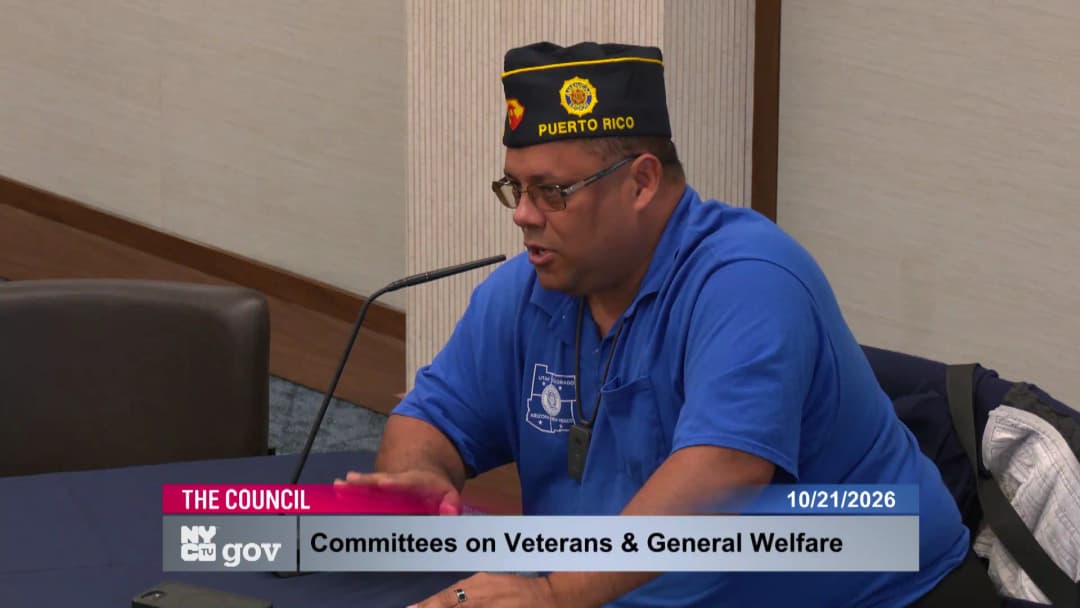
NYC Council Committees on Veterans and General Welfare Joint Hearing on Veteran Homelessness — October 21, 2026

The New York City Council’s Committee on Veterans, chaired by Frank Morano, met jointly with the Committee on General Welfare, chaired by Crystal Hudson, at 10:00 AM on Wednesday, October 21, 2026, in Hearing Room 3 at 250 Broadway. The hearing covered oversight of veteran homelessness in New York City, with particular focus on the Borden Avenue Veterans Residence (BAVR), the loss of federal Grant and Per Diem (GPD) funding, and four legislative items. Roll call showed Committee members Morano, De La Rosa, Paladino, and Wong present; Gennaro absent; Hudson, Avilés, Won, Gutiérrez, Nurse, and Wilson also attended. Opening Statements - Chair Morano reported 697 homeless veterans in NYC in 2025, down 44% from 1,558 in 2015, but up from 482 in 2022, and said he would work until the number reaches zero. - Chair Hudson said approximately 700 homeless veterans is unacceptable and that the goal is permanent housing. - Councilmember Paladino called Borden Avenue an absolute disgrace, noted the city budget provides only $6.5 million for veterans, and urged new financing approaches. Discussion Items Oversight: Veteran Homelessness and Borden Avenue - DVS Commissioner Yesenia Mata testified that DVS provides outreach, intake, housing navigation, subsidies coordination, inspections, and 22 months of aftercare; permanent housing placements rose from 55 in FY22 to 209 in FY26, and 702 veterans answered aftercare calls in FY26. - DSS Commissioner Aaron Dalton testified that DHS asks every intake if they served; the VA’s GPD award was reduced from 154 beds/up to $4 million to 44 beds/up to $1.3 million. DHS declined the award because the grant’s terms, tied to federal Executive Order 14168, would require compliance with conditions the city says violate state and city anti-discrimination laws. DHS is replacing the lost federal funds with city tax-levy dollars; 105 people were at BAVR when the grant ended September 30, 2026, 168 on October 19, and 198 on the hearing date, with capacity 231 and seven beds offline due to roof leaks. - Dalton said DVS estimates more than 200,000 veterans live in NYC, and the 2026 point-in-time count found 791 veterans in shelter and one unsheltered. As of October 18, 55 women in DHS shelter identified as veterans. - Dalton described BAVR improvements: $4.3 million roof/skylight replacement (procurement next, construction June 2027–December 2029), $2.9 million flood wall (design complete), and shower privacy partitions expected within six to eight weeks. He also cited declines of 44% in serious incidents, from 674 to 377, and 48% in 911 calls, from 813 to 419, comparing the same periods in 2025 and 2026. - In Q&A, Morano pressed Dalton on whether the city could have accepted the reduced grant for eligible beds while funding others; Dalton said the grant’s conditions prohibited acceptance. Morano asked for a legal analysis. - Chair Hudson asked about street homelessness, safe havens, and a long-term shelter capacity plan; Dalton said a homelessness plan is being developed and committed to a written status update within 30 days. - Several council members, including Wong, Won, and Paladino, sharply criticized BAVR conditions, the length of roof repairs, food quality, shower privacy, the culinary program, and the requirement that council members sign an access form before shelter visits. Dalton said the form protects resident privacy under state and local law and is not an NDA. - DVS Associate Commissioner Donnie Smalls said all 209 FY26 placements remained housed; the median time from first housing request to move-in was approximately seven to eight months. Public Comments & Testimony - ICL CEO Jody Rudin defended BAVR’s services: 75 staff, 147 permanent housing placements in FY25 and 111 so far in FY26, 55% employment, average length of stay about eight months, and 80% of residents reporting positive experiences. She said the culinary training program has 20 slots per cohort and veterans are prioritized; food is not confiscated; and bathroom privacy is not a reported issue. - Phoenix House CEO Anne Marie Foster testified in support of veterans-specific substance-use and trauma treatment and described the organization’s collaboration with BAVR. - Former and current residents gave mixed testimony: Rodney Silas praised the help he received; Charles Warner described systemic casework failure; Matt Weth called conditions detention-like and said he planned legal action; Anthony Byrd, a former resident, called for a new building and said culinary program access was denied when he was there; William Gibson, a current resident, said conditions are uneven, residents share responsibility, and library and internet access exist with limits. - Advocates and veterans organizations raised accountability concerns. Michael Matos of Five Borough Veterans said his group had filed FOIA requests and was talking to DOI and the Comptroller; he called for replacing ICL with a veteran-community provider. Mike Munoz demanded canceling ICL’s contract, resignations of Commissioners Dalton and Mata, a Comptroller audit, and open access for VSOs. Ryan Graham of the VFW and NYC Veterans Advisory Board also recommended severing the ICL contract after review. Kevin Meggett said budget choices show insufficient priority for veterans. - On legislation: NILAG and Homeless Services United supported Intro 897, with HSU warning against an unfunded mandate. VFW representatives and others supported Intro 1051 and Res 560. Dr. Cleopatra Brown supported Res 560 but questioned the proposed 3.25% co-op loan fee. Joe Bello supported Intro 1051 and Res 560 but opposed Res 634 in its current form, recommending the awareness week not overlap with November Veterans Month. - Zoom testimony included Dr. Mecca Nelson, a Gold Star spouse, who called for dignified, trauma-informed shelter conditions and recommended a New York City location for the Tunnel to Towers Foundation’s veterans village model; Christopher Leon Johnson supported the bills and criticized the mayor’s administration’s treatment of veterans. Key Outcomes - The oversight item T2026-2557 was heard and filed by the committee. - Intro 0897-2026, Intro 1051-2026, Res 0560-2026, and Res 0634-2026 were all heard and laid over by the committee without a vote. - DSS committed to provide the Council a written update within 30 days on the shelter capacity plan, the nonprofit ownership program, and policy/budget barriers to new safe haven and drop-in center projects. - DVS said it would provide housing retention rate data; DSS said it would provide a breakdown of BAVR 911 calls and details on capital and repair timelines. - Chair Morano indicated the Council would pursue legislative clarification of Council access to shelters, including the form currently required before visits. - Written testimony will be accepted for 72 hours after the hearing at testimony@council.nyc.gov.

VETERANS AFFAIRS 47% · VETERANS SERVICES 18% · HOMELESSNESS 14% · HOUSING 5%
1473
OCT 21, 2026 · SAN ANTONIO, TEXAS · CITY COUNCIL
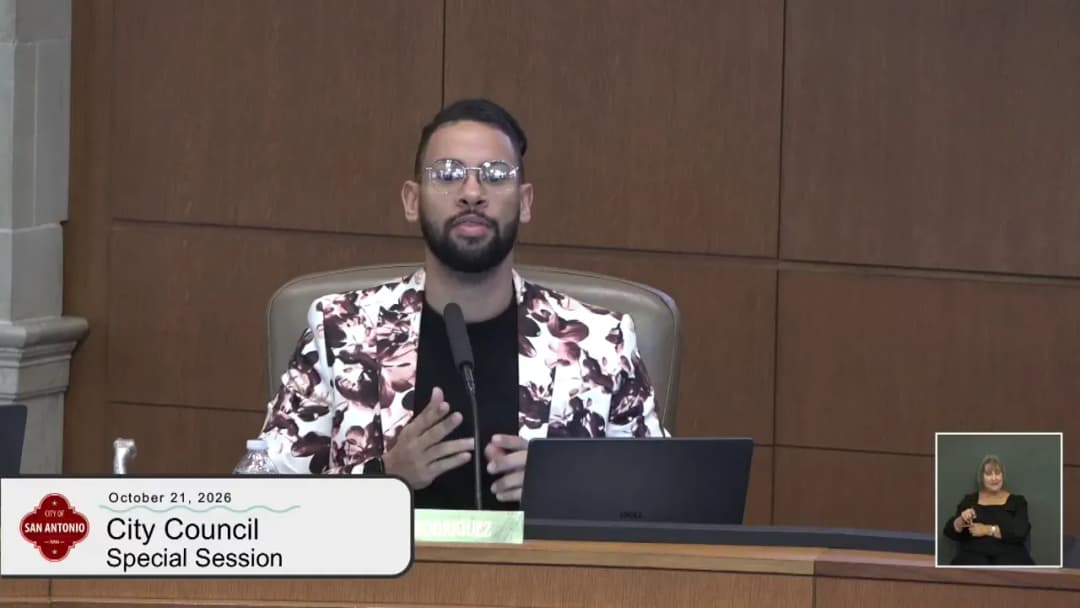
San Antonio City Council Approves 2027-32 Bond Process Ordinance on October 21, 2026

On Wednesday, October 21, 2026, the San Antonio City Council met at 9:03 a.m. with a quorum to consider an ordinance related to the 2027-32 bond process. No agenda or minutes were available; this summary is based on the raw transcription. Mayor Jones introduced proposed co-chair appointments, council members discussed their authority and possible conflicts, and the ordinance was passed before the meeting adjourned at 9:22 a.m. Discussion Items - Mayor Jones praised the three proposed co-chairs and read their qualifications, including one with 37 years of government leadership, experience as executive president of CPS, and involvement in more than $1 billion in capital improvement projects; Mario Bledo Junior, credited with serving 100,000 individuals across 21 South Texas counties and with public service and advocacy; and Jim Birchback, the third co-chair. The mayor also read a statement describing Port San Antonio as a destination for advanced aerospace, infrastructure, defense, manufacturing, and trade, with 19,000 employees and an estimated $20 billion economic impact across the region and state. - Councilmember Castillo expressed support for the ordinance as presented, saying the city has never needed this capacity more and stressing collaboration, a voice for every district, and accountability for public tax dollars. - Councilmember Maggie Rodríguez asked why the process was starting from scratch rather than confirming the mayor's three appointees. A staff response said the ordinance reflects the mayor's memorandum and that Councilmembers Kerr and Villagrán would start a new review process and make recommendations to the full council, not necessarily including the three named individuals. - The mayor explained that the co-chairs would be an extension of the council: they would not decide which projects are included in the bond, but would provide continuity, engage the community, and lead fundraising after a bond election was called. - A council member recalled that an earlier proposal involving PBC and 35% of bond capacity did not advance because the council declined to go in that direction, and asked whether the tri-chair leadership could supersede council decisions. The mayor said they would not be allowed to supersede the council. - A council member expressed skepticism, saying the city did not yet know final bond amounts and calling the focus a tontería (foolishness) that prolonged the process and created conflict. Another council member agreed with Jolie, saying the city should finish the meeting and focus on other matters, including hearing how people from PSE feel about saving the $35 million invested in their streets and sidewalks. - Jim Birchback, the third co-chair, acknowledged the conflict-related email sent at 5 p.m., said he did not believe his role presented a conflict, and committed to recuse himself from Port San Antonio-related bond matters when appropriate so he could help the city fairly. Key Outcomes - A motion was made and seconded to approve the ordinance. The motion passed; the transcript does not include a numerical vote tally. - The council will proceed with the new co-chair review process led by Councilmembers Kerr and Villagrán. - Jim Birchback pledged to recuse himself from relevant Port San Antonio bond projects as needed. - The meeting adjourned at 9:22 a.m.

ECONOMIC DEVELOPMENT 58% · PROCEDURAL 24% · GOVERNANCE 18%
1474
OCT 21, 2026 · NEW YORK CITY, NEW YORK · CITY COUNCIL
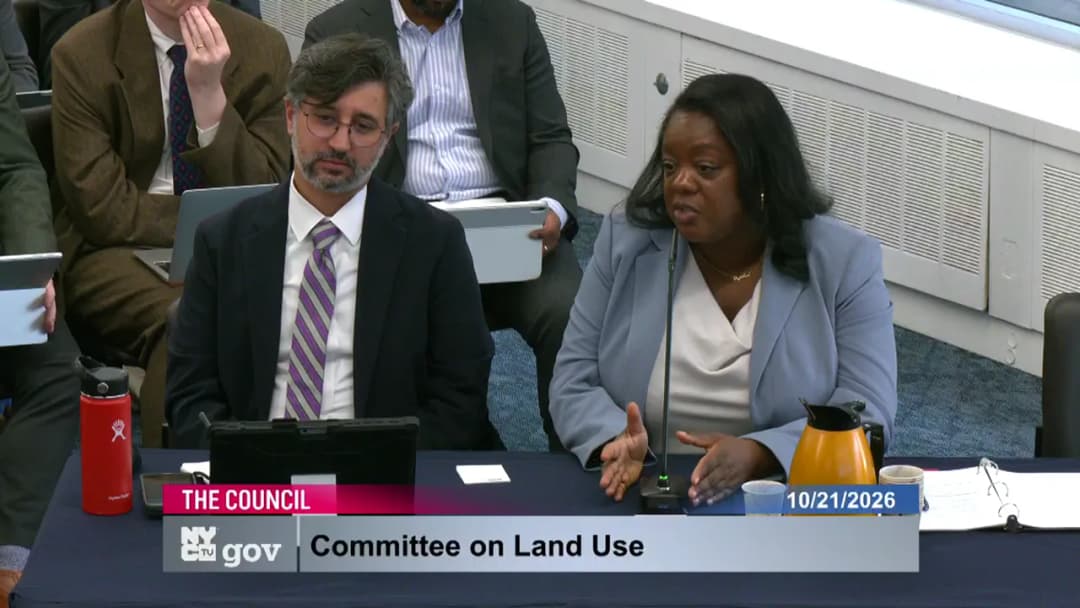
New York City Council Land Use Committee: Block-by-Block Housing Plan Oversight - October 21, 2026

The New York City Council Committee on Land Use, chaired by Councilmember Kevin C. Riley, convened on October 21, 2026, at 1:00 PM. The meeting began with votes on several land use applications, followed by an oversight hearing examining Mayor Mamdani's ambitious Block-by-Block Housing Plan, which targets 200,000 new affordable housing units and 200,000 preservation units over the next decade. Administration officials from the Department of City Planning (DCP) and the Department of Housing Preservation and Development (HPD) testified, and a wide range of public testimony was heard. Consent Calendar - LU 0129-2026 & LU 0130-2026 (48-50 Convent Avenue Cluster, Manhattan): Approved by roll call vote, 11-0. These applications facilitate the preservation of four buildings, including approximately 77 home ownership units, through a UDAAP approval and Article 11 tax exemption. - LU 0142-2026 & LU 0143-2026 (1455 Coney Island Avenue Rezoning, Brooklyn): Approved by roll call vote, 11-0. These applications amend the zoning map and text to facilitate the development of a long-term care facility for seniors. - LU 0144-2026 & LU 0145-2026 (135-27 Sapphire Street Rezoning, Queens): Approved by roll call vote, 11-0. These applications change the zoning to R6A and establish a Mandatory Inclusionary Housing Area to facilitate a residential project with up to 268 apartments, up to 80 permanently affordable. Oversight Hearing: Administration Testimony and Discussion Chair Riley opened the oversight hearing, emphasizing the need for comprehensive planning and community engagement to support the Block-by-Block Plan's goals. Key points from administration testimony and discussion included: - Affordable Housing Fast Track: DCP Chair Sherman stated that the 12 fast track districts were selected based on a methodology required by the charter. DCP is assessing opportunities but has not yet released public analysis. Engagement with council members and community boards will be a priority. - Neighborhood Planning: DCP is pursuing two neighborhood plans (White Plains Road and South of Prospect) and is open to working with council members on additional plans. The administration committed to pairing large-scale rezonings with infrastructure investments. - Transit-Oriented Development (TOD): DCP is developing a citywide TOD initiative, focusing on areas near subway stations. Early conversations with the MTA are underway. - Micro Plans: A new concept of smaller publicly-led planning actions was introduced, which would include community engagement and appropriate investments. - Infrastructure and Capital Planning: Multiple councilmembers raised concerns about sewer, water, electric, school seats, and open space capacity. DCP acknowledged the need for a stronger role in capital planning but noted that implementation is led by other agencies. DCP has a centralized team for capital coordination. - Fair Housing Growth Strategy: The strategy sets citywide targets but councilmembers noted gaps in deeply affordable housing needs and omission of factors like displacement risk. HPD explained the methodology used population data and the administration's commitments. - Homeownership: HPD outlined programs to expand homeownership, including doubling down payment assistance and creating new co-op opportunities, with a focus on areas with low homeownership rates like the Bronx. - Spotlight on the Bronx: HPD is launching a planning process to address quality-of-life issues around affordable housing in several Bronx community districts, focusing on healthy homes and public space. - Environmental Review Exemptions (CEQR): DCP clarified that exempt projects (under 250-500 units) still undergo land use review and that the exemptions are based on a 10-year analysis showing minimal environmental impacts. - Community Input and Accountability: Several councilmembers expressed concern that the fast track removes final approval from the City Council, reducing democratic accountability. DCP stated that community board review and public hearings remain, and that the City Planning Commission will consider testimony and potentially require modifications. Public Comments & Testimony The committee heard from multiple panels of public witnesses: - Chris Walters (ANHD): Supported the plan's goals but called for comprehensive planning, accurate needs assessment, and empowered community participation. He urged legislation for a community-based neighborhood planning process. - Lacey Tauber (Brooklyn Borough President's Office): Echoed the need for comprehensive planning, raised concerns that the Fair Housing Growth Strategy targets may not provide enough deeply affordable housing in Brooklyn, and urged preservation of manufacturing zones. - Brendan Cheney (NYHC): Supported the plan and advocated for further neighborhood rezonings and transit-oriented development. - Kevin Wolf (Center for NYC Neighborhoods): Recommended expanding ADU programs and providing technical assistance to homeowners. - Matt Thibodeau (MAS): Called for a clear plan linking housing goals with capital commitments, and deeper housing needs analysis. - Yvette Chen (Fair Housing Justice Center): Urged funding for CCHR to enforce source of income discrimination laws and fair chance for housing. - Jack Connors (Open New York): Supported MIH and transit-oriented development to cross-subsidize affordable housing. - Stephanie Simone Mahaney and Victoria Hoffmell (Bay Ridge residents): Opposed the fast track designation for Community Board 10, arguing the methodology is flawed and will lead to displacement, loss of rent-stabilized housing, and inadequate infrastructure. - Josephine Backman (CB10 District Manager): Highlighted school seat deficits, antiquated sewers, and risk of displacement. - Rochelle Thompson (Harlem resident): Shared personal experience with harassment and eviction attempts from landlords, calling for tenant protections. - Andrea Goldwyn (NY Landmarks Conservancy): Opposed the fast track and growth strategy, warning of demolition of existing affordable housing and historic districts. - Emma Bartley (Historic Districts Council): Supported affordable housing but cautioned against incentivizing demolition, and called for recognizing conversions as housing production. - Dan Fortini, Anthony Orloski, Matthew Gogliata, Dave Pardee, John Biggers (Plumbers Union, Building Inspectors Union, Cast Iron Soil Pipe Institute): Strongly opposed proposals in the Block-by-Block plan to expand plastic piping in buildings over five stories, citing fire safety, public health, and enforcement concerns. They urged the council to reject such code changes. - Fabian Derwisky (Local 78): Supported the plan but called for addressing delays in asbestos permitting through professional certification. - Kyle F. (tenant in HPD-financed building): Raised concerns about a large tax exemption awarded without tenant notification, questioning its cost and benefit. Key Outcomes - All six land use applications (LUs 0129-2026 through 0145-2026) were approved by the committee with a vote of 11-0. - The oversight hearing on T2026-2627 was held and filed by the committee. - Written testimony on the Block-by-Block Housing Plan may be submitted to landusetestimony@council.nyc.gov. - Several councilmembers indicated they would follow up on specific issues, including infrastructure planning, homeownership programs, and the plastic piping proposal.

AFFORDABLE HOUSING 24% · HOUSING AND INFRASTRUCTURE 16% · PUBLIC ENGAGEMENT 12% · ZONING AND LAND USE 9%
1475
OCT 21, 2026 · SAN ANTONIO, TEXAS · COUNCIL COMMITTEES
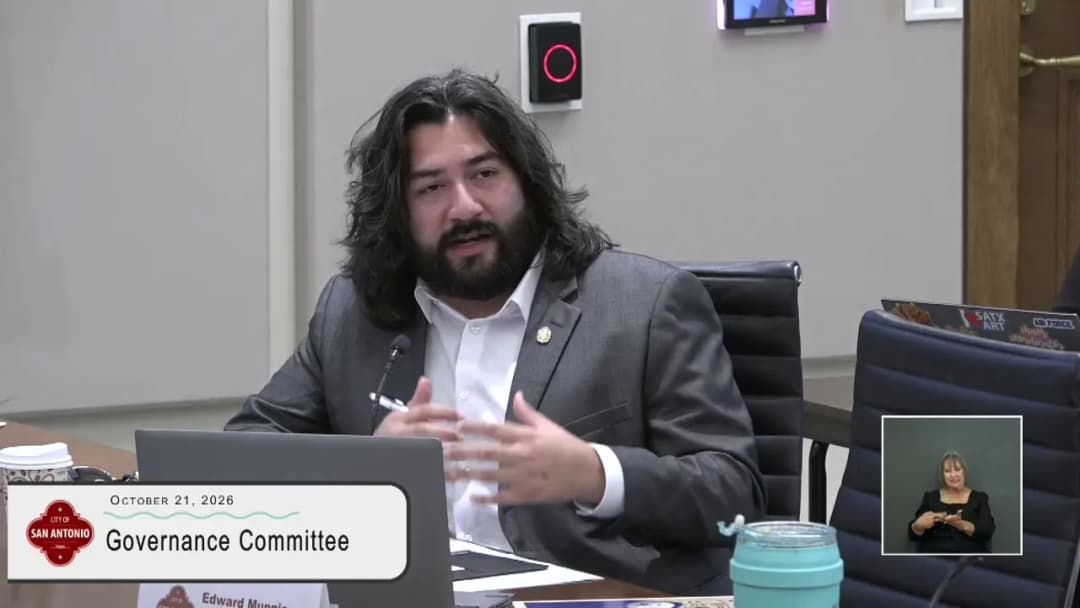
San Antonio Governance Committee Meeting Summary: October 21, 2026

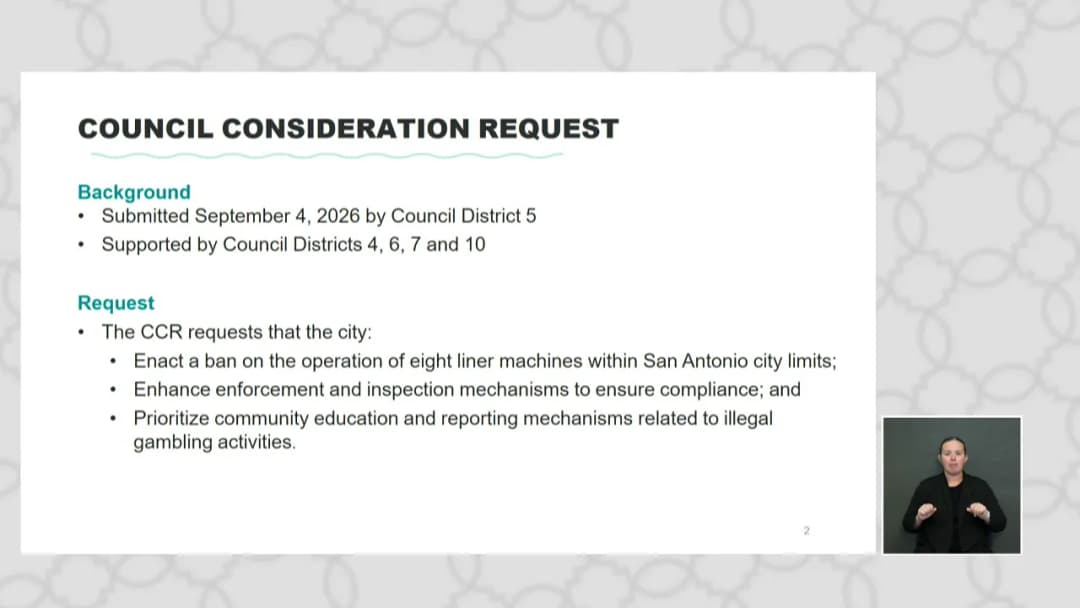
The Governance Committee met on Wednesday, October 21, 2026, from 11:04 a.m. to 12:11 p.m., with Mayor Jones presiding and a quorum present. The committee approved the prior meeting minutes, heard two public speakers on charitable bingo and illegal gaming, and acted on council consideration requests (CCRs) concerning a shovel-ready site pilot, a centralized public data dashboard, and a proposed eight-liner ban. Consent Calendar - Approval of minutes from the previous meeting: approved by voice vote after no corrections or edits were offered. Public Comments & Testimony - Ronnie Baker, sales manager for All Saints Bingo, said he has worked in charitable gaming for 40 years and represents the American Legion and Knights of Columbus. He stated Texas charitable bingo nonprofits fell from 1,800 to fewer than 900, and warned that after the Pennsylvania Supreme Court outlawed 80,000 sweepstakes and skill-based machines, those machines may be sent to Texas. He described a proliferation of illegal game rooms and said his team helped Nueces County/Corpus Christi close more than 100 game rooms after COVID. He said charitable bingo paid about $28 million in winners' fees, with 2.5% going to the state and 1.25% each to the city and county, and that San Antonio and Bexar County each receive more than $1 million a year from those fees, while illegal game rooms contribute nothing. He cited crimes associated with game rooms, including money laundering, human trafficking, murder, rape, arson, and burglary, and urged the city and county to help craft regulation to permit, regulate, or close illegal game rooms. Position: support for regulation and closures. - Eddie Heinemeier, a designated agent under the Bingo Enabling Act who works with more than 40 bingo halls, supported Baker's testimony. He said licensing in Nueces County reduced game rooms from more than 100 to fewer than 10, and that illegal game rooms provide no income to the state, county, or city. Position: support for action against illegal game rooms. Discussion Items Shovel Ready SA Site Readiness Pilot Program - Economic Development Director Brenda Hicksorenson presented a CCR submitted August 20, 2026, by Councilmember Mark White (District 10). The proposed pilot would identify two or three sites and examine legal and funding vehicles, including Chapter 380 agreements and type A or B development corporations; infrastructure needs such as CPS Energy and SAWS utilities; acquisition and carrying costs; and operational responsibilities for a shovel-ready program. - Staff said a site readiness assessment by Global Location Strategies completed in July 2026 evaluated 13 sites, eliminated 3 after desktop review, and advanced 10 for deeper review and site tours. Staff are working with partners on two or three sites, with a follow-up meeting in November. A 2023 EDC site effort was not pursued because acquisition and infrastructure costs would have required about $2 billion, so the city shifted toward private-sector partnerships. Greater SATX is also developing a site-readiness program based on Site Selectors Guild criteria. - Councilmember White expressed support, saying speed, certainty, and readiness are defining factors in corporate location decisions and are needed to create revenue and jobs. Position: support for the CCR. - Several committee members supported the concept but asked the EWDC to avoid duplication, consider commercial versus industrial uses, ensure public investment is not captured by private landowners, emphasize high-wage jobs, address utility and permitting delays, and evaluate return on investment and tax abatement implications. The EWDC chair said the review will incorporate direction such as the IEM example, where infrastructure improvements were made but no tax abatement was given. - The committee approved referral to the Economic and Workforce Development Committee with that direction. Centralized Public-Facing Data Dashboard - Staff, including Integrated Community Safety Office Director Maria Vargas Yates, presented a CCR submitted in August 2026 by Councilmember Mark White (District 10) and Councilmember Marina Aldarete Gavito (District 7). The request was to create a single web page as a central directory for all public dashboards and datasets, organized by policy and service area, with periodic reviews to archive or remove outdated, duplicative, or inactive content. - Staff recommended a 90-day review to inventory existing data sets, dashboards, annual reports, and data stories; conduct community and stakeholder engagement, including a draft survey; and develop a city data and insights concept for a centralized portal. Staff would return to the Governance Committee with findings and recommendations. - Councilmembers expressed support, with emphasis on mobile-friendly design, accessibility for residents who use phones, inclusion of partner-agency public documents and open records, improved usability of tools such as the Infrastructure Management Program and bond maps, and stakeholder input from senior residents, HOA leaders, and data users. One councilmember asked for a cost comparison with outside vendors and case studies from other cities. The mayor asked staff to incorporate lessons from recent emergency communication needs, using the West Side storm as a case study. - The committee approved the staff recommendation. Proposed Ban on Eight-Liner Operations - SAPD Assistant Director Rick Riley presented a CCR submitted September 4 by Council District 5 and supported by Council Districts 4, 6, 7, and 10. The CCR requested a ban on eight-liner machine operations within city limits, enhanced enforcement and inspection mechanisms, and community education and reporting related to illegal gaming. Staff recommended referral to the Public Safety Committee. - Police and legal staff said the legality of machines depends on design, payout method, and the mix of skill and chance; the latest Texas Attorney General opinion suggests any element of chance may make a device a gambling device. Litigation is heavily fact-specific, and a Texarkana appeals decision on predominantly skill games does not apply to San Antonio and is not being appealed. No state legislation has been filed yet, but staff can monitor it. - Councilmember McKee Rodriguez said she would not sign or support the ban, arguing the city should not become the morality police, should instead enforce existing laws, educate business owners and residents, and use zoning and land-use authority rather than new bans. She cited the prohibition era and warned of overpolicing vulnerable communities. Position: opposition to the CCR. - Other committee members voiced support for further study, wanting to distinguish legal permitted games from illegal cash or cryptocurrency payouts, review permitting and revenue options, improve education for businesses and residents, and monitor other Texas cities' legislative efforts. Position: support for continued review rather than an immediate referral. - A motion to continue the item for 60 days was made and seconded and passed by voice vote, so the CCR was not referred to the Public Safety Committee at this meeting. Key Outcomes - Approved the previous meeting minutes by voice vote. - Approved referral of the Shovel Ready SA CCR to the Economic and Workforce Development Committee with direction by voice vote. - Approved the 90-day staff review for the centralized public-facing data dashboard by voice vote. - Continued the eight-liner ban CCR for 60 days by voice vote instead of referring it to the Public Safety Committee. - Meeting adjourned at 12:11 p.m.

ECONOMIC DEVELOPMENT 31% · DATA ANALYSIS 28% · COMMUNITY ENGAGEMENT 11% · GAMING REGULATION 9%
1476
OCT 21, 2026 · SAN ANTONIO, TEXAS · COUNCIL COMMITTEES
San Antonio Junta de Gobierno, October 21, 2026: Minutes, Shovel-Ready Pilot, Data Portal, and 8-Liner Gaming

The Junta de Gobierno (Governance Committee) met on October 21, 2026, from 11:04 a.m. to 12:11 p.m. Mayor Jones and council members Mickey Rodríguez, Villagrán, Munguía, and Spears established a quorum. The written agenda and minutes were not available; this summary is based on the meeting transcript. The committee approved prior minutes, heard public comment about illegal gaming rooms, discussed a shovel-ready site pilot, a central data dashboard, and a request regarding eight-liner gaming machines. Consent Calendar - The committee approved the minutes of the previous meeting by unanimous voice vote. Public Comments & Testimony - Baron Bairr, a charity-bingo representative speaking with time yielded by Chris Kelly, urged the city and county to act against illegal game rooms. He said charity bingo contributes 2.5% to the state, 1.5% to the city, and 0.5% to the county, producing more than $1 million annually for Bexar County, while illegal game rooms pay nothing. He described about 80,000 illegal gaming devices being shipped to Texas, rooms with 25–100 machines in gas stations and convenience stores, and his role in drafting Corpus Christi regulations that closed more than 100 game rooms. He cited crimes including cartel activity, human trafficking, robberies, rapes, and murders, and mentioned a $250,000 charity donation for Kerrville flood recovery. - Eddie Heinmer, identified as an agent/accounting professional with 40 bingo halls, echoed Bairr. He said he helped the county judge, police, and fire department remove more than 100 game rooms in Corpus Christi and that licensed locations fell below ten before beginning to rebound. He said charities are losing revenue because illegal game rooms compete without paying the city or county, and he asked for prompt assistance. Discussion Items - Shovel-Ready Site Preparation Pilot (Councilman Mark White): Brenda Hicks Sorensen, Deputy Director of Development, presented the request to create a pilot program preparing two or three sites for corporate/industrial investment. The review would consider Chapter 380 agreements or Type A/B development corporations, infrastructure costs (including CPS Energy and SAWS), city and private funds, and operational and evaluation responsibilities. Staff said a site-readiness assessment completed in July 2026 eliminated 3 sites, reviewed 10 more, and identified 2–3 sites for deeper work, and recommended referral to the Economic Development and Workforce Committee. Councilman White supported the pilot, saying speed and certainty matter in competition with other cities for jobs and business investment. Council members discussed avoiding duplication with 2023 efforts and SATX work, forming partnerships with private landowners, utility lead times, commercial versus industrial uses, ensuring landowner/company buy-in, and aligning projects with good wages. A motion to approve and refer with direction was made. - Central Data Dashboard (Councilmen White and Anderete Gravito): Staff, including the City's Chief Data Officer, presented a request submitted August 26, 2026, to create a central data page or dashboard, maintain department dashboards, and archive or remove unneeded data. Staff recommended a 90-day evaluation, public input, and a concept for a central data portal, returning later to the committee. Council members supported transparency and easier navigation, including public data on 2017 bond completion, and stressed mobile-friendly and accessible design, links for council members, GIS integration, and cost comparison with vendors such as ClearGov or OpenGov. The recommendation was approved by unanimous voice vote. - Eight-liner Gaming Machines (Councilwoman Teri Castillo): Note: the transcript labels this item as 'eight-wheel tanker truck operations,' but the discussion concerns eight-liner gaming machines; this summary follows the substance discussed. The request, dated September 4, 2026, from District 5 and supported by Districts 4, 6, 7, and 10, was presented by Assistant Police Chief Rick Large. Castillo was not present; her statement was on file. Large said the request would prohibit noncompliant eight-liner machines and prioritize community education, and staff recommended referral to the Public Safety Committee to assess safety and enforcement consequences. One council member opposed creating a new prohibition, arguing existing laws should be enforced and residents, property owners, and operators educated, and drew an analogy to alcohol regulation. Another supported public-safety review and wanted permitting-gap analysis. A council member expressed concern about cash and cryptocurrency payments, fraud, state litigation, and the upcoming legislative cycle. Councilman Mickey Rodríguez asked for identification of permitting gaps, revenue opportunities, and a public-education campaign. The committee voted to pause and continue the item for 60 days, after the chair corrected 'six weeks' to '60 days.' Key Outcomes - Minutes of the previous meeting were approved unanimously. - A motion to approve and refer the shovel-ready pilot request to the Economic Development and Workforce Committee was made; the committee then continued to the next agenda item. - Staff will conduct a 90-day study and return with recommendations for a central data portal. - The eight-liner gaming item was continued for 60 days for further discussion. - The meeting adjourned at 12:11 p.m.

ECONOMIC DEVELOPMENT 23% · PUBLIC ENGAGEMENT 22% · GAMING REGULATION 13% · PUBLIC SAFETY 9%
1477
OCT 21, 2026 · DALLAS, TEXAS · CITY COUNCIL
Dallas City Council Briefing: October 21, 2026

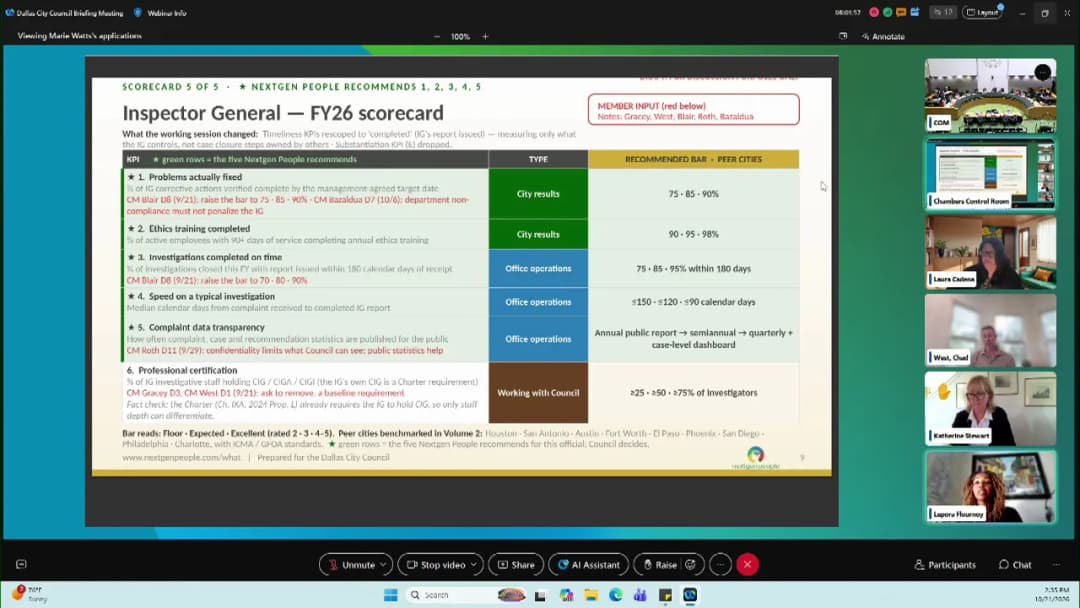
Dallas City Council Briefing: October 21, 2026\n\nThe Dallas City Council convened on October 21, 2026, at 9:00 AM for a briefing meeting. The session featured routine approvals, public comments, and briefings on proposed revisions to the city's convenience store ordinance and a framework for evaluating appointed positions.\n\n Consent Calendar\n- Approved the minutes of the September 16, 2026 Budget Workshop meeting (unanimous).\n- Approved board and commission appointments, including Matthew McDougall to the Judicial Nominating Commission and Diane R. Rockwell as Vice Chair of the Commission on Disabilities. McDougall was also appointed Chair of the Judicial Nominating Commission (Mayor Johnson abstained).\n\n Public Comments & Testimony\n- Catherine Arnt (District 2) expressed concerns about the sudden installation of Flock cameras near schools in her neighborhood.\n- Mary Jane Cox opposed the proposed 240-foot development at Preston and Royal, urging the council to deny the project and consider an alternative plan to protect the residential community.\n- Dan Hurson (retired architect) asked the council to deny the Preston Royal Planned Development (PD 1150) as written, citing a lack of enforceable traffic mitigations in the ordinance and potential drafting errors.\n- Gloria Carbajal, speaking for the 19th time, advocated for ending the horse carriage trade in downtown Dallas due to persistent public safety violations and industry changes in other cities.\n- Tammy Kukla (District 2) requested an accelerated meeting to address the lack of animal boarding resources for domestic violence victims, noting 10,537 incidents in 2026 but limited kennel capacity at shelters.\n- Dolores Phillips addressed board appointees, emphasizing the need for attention to detail in city governance.\n\n Discussion Items\n\n Briefing A: City Code Revisions 12B-2 (Convenience Stores)\nStaff from DPD and Code Compliance presented amendments to modernize the 2008 convenience store ordinance. The proposal creates a defined category (e.g., \"small box store\") to exempt certain retailers from window visibility rules and allows ATMs closer to doors if a camera is trained on them.\n\nCouncilmember positions varied significantly. Councilmembers Ridley, Roth, Mendelson, and Basildus raised strong concerns. Councilmember Ridley challenged the logical consistency of the new definitions. Councilmember Mendelson argued the data minimized the danger of violent crimes in these stores. Councilmember Basildus expressed deep skepticism towards corporate threats to leave and highlighted the uneven enforcement burdens placed on small businesses. Councilmember Roth supported the intent but requested removing the term \"discount\" and the gas sales restriction. Staff was directed to refine the ordinance.\n\n Briefing B: Performance Evaluations for Appointed Positions\nConsultant Dr. Lapora presented draft KPIs for the five council-appointed positions, recommending 3-5 key measures per role. Councilmembers provided extensive feedback. Councilmember Willis called for a strategic plan and 360 evaluations. Councilmember Ridley proposed an economic development metric. Councilmember Mendelson criticized delays in the process and demanded completion of overdue evaluations by Thanksgiving. Councilmember Basildus emphasized adhering to the 3-5 limit. Councilmember Stewart requested metrics on the City Attorney's quality of advice.\n\n Key Outcomes\n- Consent Passed: Routine minutes and appointments were approved.\n- Convenience Store Revisions: Staff will revise the amendment based on council feedback and return for a formal vote.\n- Evaluation Framework: Councilmembers will submit their preferred KPIs to the consultant within ten days to finalize. A resolution to adopt the framework will be scheduled for a vote to establish a formal, consistent evaluation process.\n- Closed Session: The council met in closed session to discuss pending litigation. The meeting was adjourned without further open session action.

PUBLIC SAFETY 27% · PERSONNEL MATTERS 22% · PROCEDURAL 14% · ZONING 14%
1478
OCT 21, 2026 · SAN ANTONIO, TEXAS · CITY COUNCIL
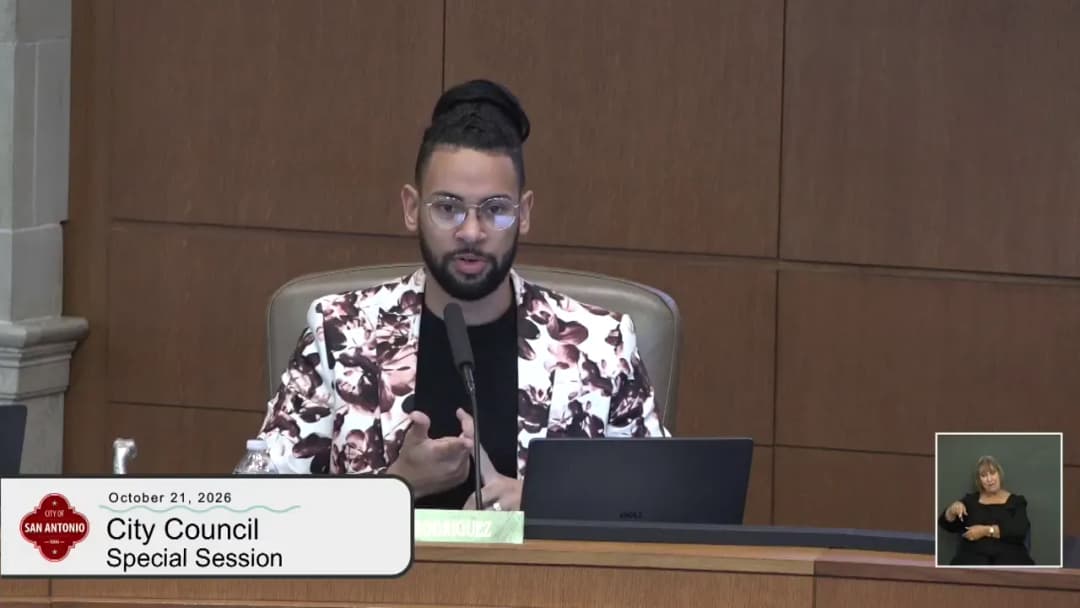
San Antonio City Council Special Session on Bond Tri-Chair Appointments - October 21, 2026

The San Antonio City Council held a special session on October 21, 2026, to debate and vote on an ordinance that would change the approval process for the 2027 municipal bond tri-chairs, moving the final selection of appointees from the Mayor to the full City Council with a review by a subcommittee. The meeting featured debate on the roles of the tri-chairs and the necessity of the session itself. Discussion Items - Mayor Jones presented her three nominees for bond tri-chairs: Jelynn LeBlanc-Jameson, Mario Ableto Jr., and Jim Pershbach. She detailed their extensive professional backgrounds and community service records, describing them as "the perfect leaders for this" process and expressing full support for their qualifications. - Councilmember Castillo, reading a joint statement with Councilmembers White and Alderete Gavito, argued that bringing the tri-chair appointments before the full council ensures every district has a voice and is core to good governance and responsible stewardship. He explicitly expressed support for the ordinance. - Councilmember McKee Rodriguez questioned the need for the special session and the ordinance, arguing it created a new process from scratch rather than reviewing the Mayor's existing appointees. He pressed for clarification on the tri-chairs' role, characterizing it as largely outward-facing and lacking tangible decision-making authority. He concluded the session represented a "manufactured conflict" and was "silly." - Councilmember Galvan expressed agreement with McKee Rodriguez, stating the council had more important topics to address, such as investments in streets and sidewalks funded through the PFC. Key Outcomes - The motion to approve the ordinance altering the 2027 bond tri-chair selection process was seconded and carried. - The meeting was adjourned at 9:22 a.m.

BUDGET 75% · GOVERNANCE 15% · ECONOMIC DEVELOPMENT 10%
1479
OCT 21, 2026 · NEW YORK CITY, NEW YORK · CITY COUNCIL
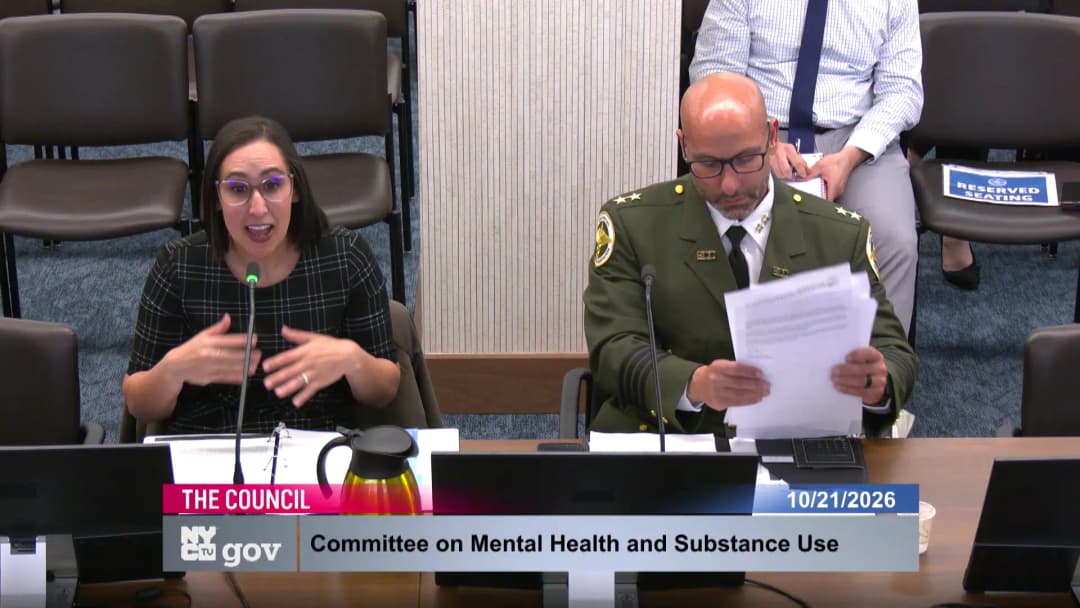
New York City Council Committee on Mental Health and Substance Use Oversight – October 21, 2026

The New York City Council Committee on Mental Health and Substance Use, chaired by Councilmember Tiffany Cabán, convened on October 21, 2026, for an oversight hearing on syringe litter management and related support services. The committee also heard three pieces of legislation: Introduction 0067-2026 (establishing a public education campaign on fentanyl test strips), and Resolutions 0262-2026 and 0263-2026 (calling on New York State and the federal government to mandate addiction treatment training in medical schools receiving public funding). Witnesses included Dr. Rebecca Lynn Walton (Assistant Commissioner, NYC Department of Health and Mental Hygiene) and Assistant Chief Frank Laterra (NYC Department of Sanitation). Public Comments & Testimony - Anne Marie Foster, President and CEO of Phoenix House of New York and Long Island, testified in support of all three bills. She highlighted that fentanyl test strips, naloxone, and recovery services must be brought into communities via mobile vans—similar to COVID-19 vaccine equity efforts. She emphasized that distributing test strips and naloxone is the "floor" and that the city must shift toward helping people achieve long-term recovery. Discussion Items - Chair Cabán’s Opening Remarks: Provided key statistics: in 2024, outreach teams collected nearly 200,000 syringes; six New Yorkers die from overdoses every day; Black and Latino New Yorkers die at twice the rate of white New Yorkers; the Bronx has the highest overdose death rate; and the Hunts Point/Mott Haven rate was more than triple the citywide average in 2023. She described the Community Syringe Redemption Program (CSRP), launched in 2025, which has safely collected over 2 million syringes and enrolled participants who receive training in safe disposal and overdose response. - Dr. Rebecca Lynn Walton (DOHMH): Reported that overdose deaths decreased 28% from 2023 to 2024, but inequities persist. Since its March 2025 launch, CSRP has collected over 3.5 million syringes and enrolled over 2,400 participants across eight sites. In 2026 (January–August), DOHMH outreach and syringe litter teams collected over 46,000 ground syringes, initiated 18,000 participant engagements, and made over 8,300 referrals. She expressed support for Intro 67 but noted desired clarifications in the bill language. - Assistant Chief Frank Laterra (DSNY): Reported that DSNY has collected nearly 40,000 needles so far in 2026. Needle stick injuries among sanitation workers have risen sharply: 69 incidents in 2026 (to mid-October), compared to 50 in all of 2025, 40 in 2024, and 23 in 2023. DSNY recently increased the penalty for improper needle disposal from $100 to $250. - Q&A Highlights: - CSRP data collection: The initial report showed only nine formal referrals across 1,700 enrollees, but DOHMH acknowledged that informal referrals (e.g., walking someone to a nearby service) are common and will be better tracked in year two. - Needle stick risks: DSNY described the extensive medical follow-up (28 days) for affected workers. - Enrollment disparities: Five Bronx sites accounted for 84% of syringes collected and 77% of enrollments; Queens and Brooklyn sites collected under 1% each. DOHMH noted cold weather reduced enrollment and is working to improve outreach in lower-performing boroughs. - No independent evaluation of CSRP exists; DOHMH relies on contractor and contract management reports. - Coordination between agencies: DSNY and DOHMH share data but lack a shared mapping platform for syringe collection schedules—a need identified during the hearing. - Policing near harm reduction sites: DOHMH works with NYPD precincts to build relationships and reduce stigma, but the chair expressed concern about enforcement deterring participation. Key Outcomes - Hearings Held: The committee held hearings on T2026-2658 (oversight), Int 0067-2026, Res 0262-2026, and Res 0263-2026. - All items were “Laid Over” by the committee, meaning no final vote was taken; further consideration is pending. - The committee will accept written testimony for 72 hours after the hearing. - DOHMH indicated it will work with council members to improve CSRP data collection, expand outreach to underperforming boroughs, and explore program expansions (subject to City Hall approval). - DSNY will consider placing sharps disposal receptacles near litter baskets in high-need areas.

PUBLIC HEALTH 57% · PUBLIC SAFETY 15% · PROCEDURAL 6% · WORKFORCE DEVELOPMENT 5%
1480
OCT 21, 2026 · NEW YORK CITY, NEW YORK · CITY COUNCIL
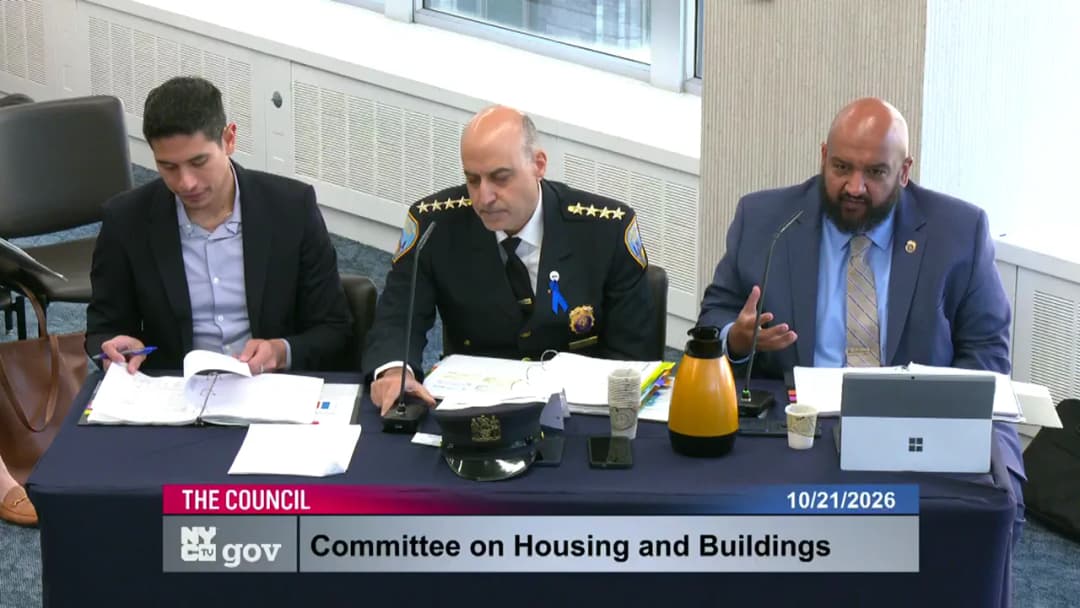
Oversight Hearing on Construction Safety – October 21, 2026

This oversight hearing by the Committee on Housing and Buildings examined the Department of Buildings' (DOB) approach to construction safety, including enforcement, proactive inspections, training, and technology. Chair Pierina Ana Sanchez highlighted a 45% decrease in serious or fatal construction injuries in FY2026 but noted persistent fatalities averaging eight per year. The hearing covered recent high-profile incidents, the implementation of Local Law 79 (proactive inspections), fraudulent site safety training cards, and staffing concerns. Public Comments & Testimony - Samuel Eluto (Building Trades Employment Association) urged the Council to amend Local Law 196 to allow employers to verify SST cards by ID ahead of time, citing scaling issues with daily tap checks, and called for expanding the pipeline of construction superintendents. - Alex Lay (community resident) testified about unsafe conditions at a Sandu Group development (2501 86th Street), including asbestos found after demolition began and flood zone plan inconsistencies, urging stronger DOB oversight. - Rochelle Thompson (senior tenant) raised concerns about landlord harassment, lack of legal representation, and lack of building repair reports, though her testimony was partially ruled off-topic as not directly related to construction safety. - Kyle Ems (remote) sought transparency on a $359 million tax exemption for affordable housing preservation, but this was noted as off-topic; Chair Sanchez promised follow-up. Discussion Items - Construction Safety Statistics & Trends: DOB reported 266 construction-related injuries (as of Sept 2026) and 4 fatalities year-to-date. Falls remain the leading cause. Chair Sanchez noted persistent fatality numbers (6-10 per year since FY2022) and called for a Vision Zero-style approach. - Pfizer Headquarters Partial Collapse (July 2026): DOB conducted an enforcement sweep of 180 sites, issuing 71 violations and 19 stop work orders. The investigation is ongoing with law enforcement; no structural concerns found in sweeps. - Local Law 79 (2024) Implementation: DOB’s proactive inspection program grew to 33% of all enforcement inspections (54,226 proactive in FY2026 as of Sept), resulting in 14,161 violations at 13,092 unique locations since Jan 2025. Predictive analytics are used to target high-risk buildings. - Fraudulent Site Safety Training Cards (Red Code Inc.): DOB revoked the company’s status after a Brooklyn DA indictment; 2,000 active SST cards invalidated. SBS launched a free remediation program with multilingual outreach (Bengali). - Staffing & Inspector Capacity: DOB has 609 active inspectors (430 dedicated to construction enforcement), with an 8% vacancy rate. Enforcement inspectors average 5-7 inspections per day. Chair Sanchez noted a reduction of 16 enforcement positions in FY2026. - Smaller Sites & Worker Falls: Of eight FY2026 fatalities, only two required a construction superintendent. Falls caused 163 of 320 injuries (2025). DOB’s fall prevention campaign included a December sweep with 50 stop work orders. - Sidewalk Sheds & Scaffolding: Shed count dropped from 8,000 to 6,861 since January (15% decrease). New 90-day permits and upcoming civil penalties for sheds over 180 days aim to reduce prolonged sidewalk obstructions. New designs displayed at 280 Broadway. - After-Hours Work Variances: DOB noted limited enforcement capacity for after-hours violations, relying on coordinated inspections and community reports. - Safety Logs: DOB reviewed safety logs at 32,004 sites in FY2026, issuing 260 summonses for missing or falsified logs. Digital logs are now permitted. - Mayor’s Committee on Construction Safety: Invitations sent for a November 2026 launch, focusing on root causes of injuries, enforcement gaps, and technology. Chair Sanchez invited to participate. - AECR Task Force: Parallel code reform task force to streamline development without compromising safety. Key Outcomes - No votes were taken; the hearing was informational. - DOB committed to follow up on several data requests: breakdown of inspection types, stop work order enforcement metrics, after-hour variance numbers, and site classification data. - DOB will provide a written response to Councilmember Zhuang’s concerns on flood zone approvals and developer compliance. - Chair Sanchez will participate in the Mayor’s Committee on Construction Safety. - The committee will continue oversight on proactive inspection implementation and SST card verification improvements.

ENGINEERING AND INFRASTRUCTURE 33% · PUBLIC SAFETY 32% · CONSTRUCTION SAFETY 15% · PROCEDURAL 8%
OPENPUBLICA · PUBLIC MEETING INDEXUPDATED DAILY · openpublica.com