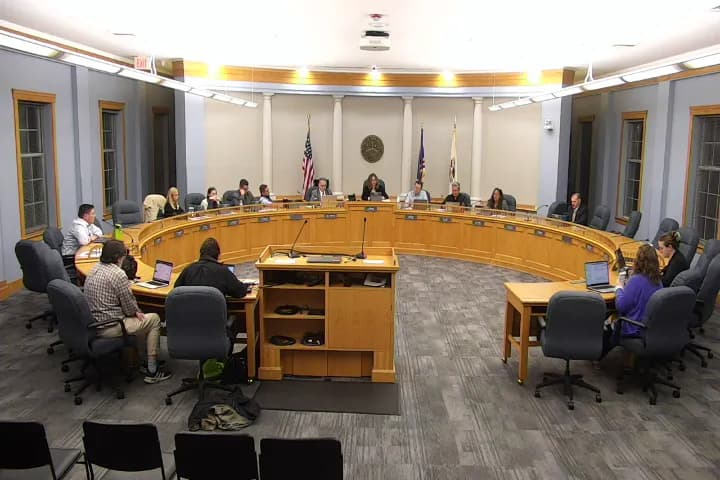
The Minneapolis Audit Committee met on October 19, 2026, at 14:31:16 UTC under Chair Elliot Payne. A quorum was established with six members initially present; Member Engelhardt joined later. The committee adopted the agenda, accepted the August 24, 2026 minutes, and then heard status updates on open corrective action plans, an advisory report on after-action reviews, the Behavioral Crisis Response audit, and an update from the Office of the City Auditor. All formal motions were approved by voice vote with no reported opposition. Discussion Items Corrective Action Plan Progress Updates - City Auditor Timmerman opened by explaining that corrective action plans are developed by auditees, while the Office of the City Auditor monitors and validates status updates. He noted that dashboard entries may not yet show items as closed even if departments describe them as complete, because the office is still validating submitted evidence. - Director Matt Kwaters stated that he had evaluated more than 1,800 pieces of information and 108 individual evidence submissions from public safety departments between August and the night before the meeting. Minneapolis Police Department - Commander Chris Brown reported that the 2023 property and evidence audit, which initially had 12 findings, has been fully satisfied and closed, as has the sexual assault examination kit special project follow-up audit with 4 findings. - On the 2024 fleet management audit, MPD has closed 3 findings and has 4 remaining open: prioritizing MPD investigations in employee-involved vehicle accidents, updating fleet policies and definitions with stakeholders, aligning information sharing with risk management on crashes, and developing a fleet management system with City IT. A meeting with the auditor's office on the fleet system finding is scheduled for October 28. - On the 2019 off-duty audit, one finding has been closed and two remain open. MPD described new internal controls that did not exist in 2019 and said a new timekeeping and scheduling system is planned for 2027, though its full off-duty management capabilities have not yet been assessed. - On the 2026 after-action review following the shooting of Davis Maturry and the death of Alison Lucher, MPD reported 37 findings in total, with 3 fully satisfied and 3 near completion. Work includes policy development, department-wide training, domestic violence protocol changes, additional domestic assault investigators, warm handoffs to navigators, and updated resource cards. - City Auditor Timmerman clarified that a finding can be closed when the auditee completes the corrective action commitment, such as submitting engineering reports, budget requests, and mitigation plans, even if future capital construction remains unfunded. - Committee members asked about evidence storage risks. MPD noted continuity-of-operations and disaster plans, alarms, humidity controls, and a backup generator plan. A $500,000 to $600,000 backup power and climate control project and roughly $250,000 in warehouse environmental controls, plus a $3 million roof replacement request, were identified in the 2026-2031 capital planning process. - On fleet audit deadlines, Commander Reisdorfer said the revised May 2027 target is achievable only if staffing, training, and FTE resources are available; policy development is expected to be substantially complete by December, and the new fleet software system is built and undergoing data migration. - Vice Chair Singleton asked about off-duty call signs and the domestic violence pilot. MPD explained the four-digit off-duty and three-digit 911 call sign distinction. Deputy Chief Adams said the domestic violence pilot had been restarted with a new one-page risk assessment; an internal working group with the City Attorney and Hennepin County Attorney is meeting, and all community navigators have been trained on domestic violence. - Chair Payne noted the City Council passed an ordinance to allow charging fees for off-duty work and asked why IT infrastructure described as a barrier still delays implementation. MPD said the new UKG timekeeping system may help but its off-duty capabilities are not yet fully confirmed. Neighborhood Safety Department - Director Amanda Harrington reported on the neighborhood safety contract management audit. NSD said none of its items are past due, with one sub-item needing its dashboard due date corrected to the latest applicable date. - NSD has held monthly meetings since June 4, 2026 with finance, procurement, controller, and City Attorney staff. A shared agenda and notes document is used, covering contract policy, deviations, invoice issues, and next steps. - Policies completed so far include contractor training and contractor food and beverage reimbursement, both reviewed by finance and the City Attorney. The invoicing policy and contract management policy are being updated. Contract staff training on invoice reviews was completed in July, ahead of the September due date. - NSD developed a standardized site visit form, a centralized contractor training tracker, and updated contract file and communication standards. The City Auditor has informed NSD that the contractor training tracking and contract documentation items are closed. - On the undue influence and pressure finding, Harrington said clearer contract manager designation letters and communication standards should help, but acknowledged that small community-based contractors may still contact elected officials if they are frustrated or stressed by the city's 35-day invoice payment timeline. Finance and Property Services Department - CFO Dushani Dye presented two findings. The first, from the 2023 revenue and collections audit, involved mailed payments left unsecured on a desk. The original due date was October 1, 2024, revised to October 1, 2026. Locked mailbox cabinets have been installed, and the item will close once keys and key holders are finalized. - The second finding involved the Health Department's contract with Helix Health and Housing Services. Finance has moved to a consistent, higher standard for invoice backup aligned with federal grant requirements. Procurement training occurred in October 2026. Dye also stated that emergency procurement procedures are no longer used unless there is an emergency declaration. Minneapolis Park and Recreation Board - An MPRB representative reported all seven cash-handling audit findings remain open, with a target deadline of December 31, 2026. Information security and PCI compliance policies have been updated, an information security and compliance analyst has been hired, and an annual information security awareness training is on the MPRB training portal. - Cash-handling training is being adapted from the city's version and is expected to be available by November. Collection-point-specific procedures and finance oversight procedures are nearing completion. MPRB is limiting cash held at facilities, recreation centers have no cash drawers, and larger cash deposits are directed to headquarters. - MPRB has a $250,000 annual security camera replacement program and is developing concession agreement inspection procedures. - In response to member questions, MPRB described contingency instructions for when internet or credit card systems are down, including phone payments at other locations, and said it would research automated cash-accepting machines. After-Action Review Advisory Report - The Director of Internal Audit presented an advisory engagement requested by the council through the audit committee. It assessed whether the city has an independent function to evaluate high-impact public safety cases. - The conclusion was that the city does not currently have a department or division dedicated to managing after-action reviews of high-impact violent events, and creating one would require new funding and could overlap or conflict with Minnesota Statutes chapter 611A, including sections 611A.72 through 611A.74 and the Crime Victim Justice Unit. - The report recommended creating a work group with the City Attorney's Office to develop training and procedures for routing complaints to the Office of Police Conduct Review and the Crime Victim Justice Unit, maintaining a resource list, and reporting progress to the City Auditor within six months. - Member Wathaq asked how systemic after-action reviews would occur if another high-impact incident happens. The presenter said the state already has the statutory mechanism and expertise, and the city should focus on education and referral rather than creating a new city office. - Member Peterson asked about the source of the 37 recommendations referenced in the report; the presenter confirmed they came from the city's recent after-action reviews involving the deaths of Alison Lucher and Davis Maturry. Behavioral Crisis Response Audit - Matt Kwaters presented the 2026 Behavioral Crisis Response Program audit, covering contract COM0003838 with Canopy Roots for 24/7 citywide behavioral crisis response. Oversight of the contract was transferred to the Minneapolis Fire Department in amendment two, and the reviewed period ran through August 15, 2026. - Finding 1 stated the contract measures service availability but does not define performance targets. The recommendation is to align operational metrics with MFD standards, implement a standard operating procedure, and establish response data sharing. - Finding 2 stated contractor billing and MFD invoice review processes do not match. Auditors observed repeated invoice period labels and summary-level support documentation, but did not find actual noncompliance. A tracking mechanism was recommended. - Finding 3 stated MFD reviews vendor invoices without written criteria, relying on the expertise of the individual contract manager. The report recommended memorializing the oversight process. - The report also included an informational advisory with future program suggestions and possible grant funding streams. MFD provided a management response with corrective actions coordinated with the Office of Community Safety. - Member Wathaq cited approximately $2.73 million in repeated billing amounts despite varying reported staffing and hours, and asked whether a retrospective financial reconciliation would be conducted. Kwaters said determining recoverable amounts was outside the audit scope, but the management response commits to strengthening invoice controls, and a further review could be discussed. - Member Chughtai criticized the MFD management response for suggesting it had not received information from departments within the same office, and criticized the informational advisory for making future-scope suggestions, including homelessness-related funding uses, that were not part of the requested audit. Kwaters apologized, clarified that the advisory was informational rather than a formal recommendation, and accepted accountability for it. - Chair Payne and Member Hosbein added context that the program had moved from Neighborhood Safety to MFD because of earlier contract management deficiencies, and that questions about vendor versus in-house delivery and expanded scope are ultimately policy decisions for the council and administration. Office of the City Auditor Update - City Auditor Timmerman reported completed work, including the reports presented earlier that day, and noted that the surveillance technology review management response had been entered into the dashboard. - Upcoming work includes the permitting process audit in December, a data governance audit, an Ethical Practices Board advisory engagement, a city fleet management audit with a kickoff meeting that day, and the 2027 enterprise-wide risk assessment with meetings expected in November. - The office has two active fraud, waste, and abuse referrals, hired a Macalester College intern, and posted an auditor 3 position and its backfill. - Timmerman said the mayor's proposed budget would reduce the Office of the City Auditor by two FTE and $100,000 in contractual services, which would effectively eliminate outside contracting capacity and create a threat to auditor independence. He suggested exploring a city charter change to set the office's budget with authority to increase, but not decrease, tied to inflation. - Chair Payne suggested using the annual audit work plan and risk assessment to document resource needs ahead of the mayor's budget proposal. Audit committee training was rescheduled to January or February, and fraud awareness week activities were announced. Key Outcomes - Agenda adopted and August 24, 2026 minutes accepted by voice vote. - The committee received and filed the corrective action plan progress updates from MPD, NSD, Finance and Property Services, and MPRB, and directed staff to publish the reports. - The committee received and filed the advisory report on managing after-action reviews and directed staff to publish it. - The committee received and filed the Behavioral Crisis Response audit report and directed staff to publish it. - The Office of the City Auditor update was presented for discussion; no formal action was taken on the budget proposal or future audit plan.
The Public Meeting Index
The Public Meeting IndexThe Transportation and Environment Committee of the Montgomery County Council, chaired by Councilmember Evan Glass, met on October 19, 2026, to consider two items: legislation on forest conservation for agricultural brush management (Bill 35-26) and the facility planning study for the New Hampshire Avenue Bus Rapid Transit (BRT) corridor. The committee took unanimous action on both items. Discussion Items Bill 35-26 - Forest Conservation - Trees - Applicability - Brush Management Councilmember Marilyn Balcombe, the bill sponsor, explained that the legislation streamlines the approval process for routine vegetation maintenance on agricultural land by removing the requirement for pre-approval from the planning department when a landowner has an approved soil conservation and water quality plan. The bill originally specified two categories of exempt activities, but the Planning Board proposed an amendment to simplify the language, exempting "agricultural activities" that are performed under an approved conservation plan. The committee heard from Christina Soranto and Kelsey Desmond from the Planning Department, who supported the amendment as a clearer version of the bill's intent, and Mike Scheffel from the Office of Agriculture, who noted the existing pre-approval process created timing challenges for farmers. Councilmember Balcombe expressed disagreement with the Racial Equity and Social Justice (RESJ) impact statement's conclusion that the bill could burden equity focus areas, arguing that the exemption already exists and streamlining would not affect tree removal or replanting. Chair Glass acknowledged the difficulty of applying RESJ analysis to this sector. The committee voted unanimously to adopt the Planning Board's amendment and then passed the bill as amended without objection. New Hampshire Avenue Bus Rapid Transit (BRT) Facility Planning Review The committee received a presentation from MCDOT's BRT team, led by BRT Implementation Manager Jamie Hinson and Project Manager Justin Willitz, along with consultant Adat Diain Amdhar from Kittleson & Associates. The study covers the 8.5-mile corridor from Eastern Avenue to Randolph Road, with 70 percent of the corridor within a half mile of an equity area. Current peak-hour bus speeds average under 10 miles per hour. The team presented five alternatives. After analyzing travel time, cost, and impacts, they developed a "hybrid alternative" (Alternative 5) that combines curbside bus lanes in southern segments, mixed-traffic operations with queue jumps in constrained segments, and additional curbside lanes in the north. This alternative provides the best balance of travel time improvements for BRT, local buses, and general traffic, at an estimated capital cost of $114 million (excluding $28 million in rolling stock). Key stakeholder support was noted: the Prince George's Council preferred the hybrid alternative; the City of Tacoma Park supported it and requested coordination with its New Avenue Bikeway project; the State Highway Administration supported both Alternative 2 and the hybrid; and the Montgomery County Planning Board recommended advancing the hybrid alternative. Councilmember Kate Stewart, whose district covers part of the corridor, emphasized the importance of a one-seat ride to Fort Totten and the need to integrate with the Tacoma Park bikeway and pedestrian safety improvements. Key Outcomes - Bill 35-26: The committee voted unanimously to pass the legislation with the Planning Board's amendment, effective immediately. - BRT Preferred Alternative: The committee unanimously endorsed the hybrid alternative (Alternative 5) as the corridor's preferred BRT design. - Staff Recommendations: The committee endorsed five specific recommendations from council staff: 1. Advance the hybrid alternative as preferred. 2. Continue evaluating a station at the Colesville Park and Ride lot. 3. Coordinate with Tacoma Park's New Avenue Bikeway project. 4. Explore interim bus improvements, including expanding Metro D6X service and implementing transit signal priority. 5. Ensure a comprehensive approach to pedestrian and cyclist safety, potentially through a standalone CIP project if necessary. The committee adjourned after completing both agenda items. The recommended alternative and staff recommendations will inform future capital improvement program funding and design stages.
The Park Ridge City Council Committee of the Whole met Monday, October 19, 2026, at 8:15 p.m. in City Hall Council Chambers. Seven alderpersons were present and Mayor Maloney was absent. No minutes were available, so this summary is based on the agenda and transcript. The meeting included one public comment, departmental reports from planning, public works, police, fire, administration, and finance, and approval of an FOIA policy, a train station lease, and the 2027 insurance renewal. Public Comments & Testimony - EJ Peparaki, 1217 Powder Road, expressed concern about the state's People vs. Parking Act and its effect on street parking near transit. He explained that the act means developers are not required to provide parking within half a mile of a transit station, and he urged the Council to enforce zoning ordinance square-footage standards to encourage developers to provide on-site parking and to anticipate future development cases before ZBA and City Council. - No other members of the public spoke. Procedures and Regulations - No formal action or discussion items were listed, but discussion covered vape shop regulation, historic surveys, and PUD parking incentives. - The department head said a Planning and Zoning memorandum was provided for the night, and historic survey outcomes and preservation planning could be added to a future Committee of the Whole agenda. - Ald. Lawrence asked whether the vape shop product review scheduled for December 7 could be moved up in light of national deaths linked to vape products. Staff noted a new state law addressing hemp-derived THC products; the city attorney said synthetic cannabis products may only be sold through licensed dispensaries starting November 12. The transcript also contains an earlier reference to the law taking effect November 1, a discrepancy not resolved on the record. Ald. Moran expressed concern that some shops violate state law and that enforcement and compliance will be a challenge. - Ald. Steinfels asked whether on-site parking could be added to the planned unit development (PUD) public benefit list to address the People vs. Parking Act. The planning director initially said it might already be on the list; at the close of the meeting, Ald. Steinfels said it was not listed and asked that the city manager investigate adding it as a standalone item. Public Works - No action or discussion items were listed. - Public Works Director Hosson announced the city's annual pumpkin compost drop-off will be Saturday, November 7, from 9 a.m. to noon at the Public Works Service Center. Residents should remove candles and decorations and use the dumpster instead of the community compost bins. - In response to Ald. Steinfels, public works said alley construction for the SSA between Harrison, Belle Plaine, and Columbia is delayed while awaiting ComEd tree trimming and line de-energization. Public Safety – Police - No action or discussion items were listed. - The Police Chief noted the recent death of Detective Frank Loria, who gave 22 years of service to the city, and thanked the community for support. - Department highlights included the ongoing Citizen Police Academy, homecoming coverage for Maine East and Maine South, and an ongoing feasibility study with Cortigan Clark. - In September 2026, there were 81 e-bike enforcements and five citations, all issued to underage riders. The Volunteer Corps contributed 79 hours in September and 726 hours year to date. - A complimentary letter praising Officer Leia was read into the record. - The drug take-back event will be Saturday, October 24, from 10 a.m. to 2 p.m.; only dry substances are accepted, and liquids and syringes are prohibited. Public Safety – Fire - No action or discussion items were listed. - Chief Sorensen reported highlights from the 2026 Q3 report: call volume was steady, with a plus-19 call variance from Q2 to Q3; the department received mutual aid 273 times and provided mutual aid 250 times. The tower ladder was out of service for periods, leading to additional coverage from Niles. - Responses to residential health care facilities remained consistently at approximately 13 percent. - Training highlights included about 45% of personnel hired since 2020, acquired-structure training on North Prospect, training at Lutheran General's build-out, and tactical walkthroughs at several facilities. - The dispatch transition involving Red Center was delayed beyond the expected October timeframe. Administrative Services - Action item: The Council approved, 7-0, a Resolution adopting the City of Park Ridge Freedom of Information Act Policy. - Staff explained the city had not previously had a formal written FOIA policy; the new policy outlines FOIA officer responsibilities, response procedures, and timelines. - FOIA statistics cited: city-side FOIA requests were 452 in 2025 and 473 so far in 2026, on track for about a 20% increase; police department requests were 900 in 2025 and 750 so far in 2026. - A discussion item on the HR monthly report was presented for review; no department head report followed. Finance and Budget - The Council agreed to take this section after Administrative Services, out of the published agenda order. No separate New Business discussion occurred. - The Council approved, by voice vote, a lease with Awesome B Inc. d/b/a Sip & Bite for space at the Uptown train station. The original vendor backed out, and the new vendor operates a similar operation in the Arlington Heights train station. - The Council approved, by voice vote, a purchase order in the amount of $1,226,822.11 for renewal of the city's Workers' Compensation and Liability Insurance for calendar year 2027 with the Illinois Municipal League Risk Management Association (RMA). The rate increase was a modest 2.7%. - There was a brief discussion about whether the premium had been budgeted; staff confirmed they adjusted the 2027 budget based on the invoice, and the city was under budget for 2026. - Budget workshops are planned for November 16 at 6 p.m. and December 1, possibly requiring action to move the regular council meeting start time from 7 p.m. to 6 p.m. Key Outcomes - Approved the FOIA policy resolution by a 7-0 roll call vote. - Approved the Uptown train station lease with Awesome B Inc. d/b/a Sip & Bite by voice vote. - Approved the $1,226,822.11 CY 2027 workers' compensation and liability insurance renewal with IML RMA by voice vote. - No action was taken on police, fire, public works, or procedures items. - Next steps: historic survey outcomes may be added to a future meeting; the vape shop regulatory review is expected to continue into 2027; Ald. Steinfels requested that the city manager investigate adding off-street parking as a standalone PUD public benefit for the next council meeting.
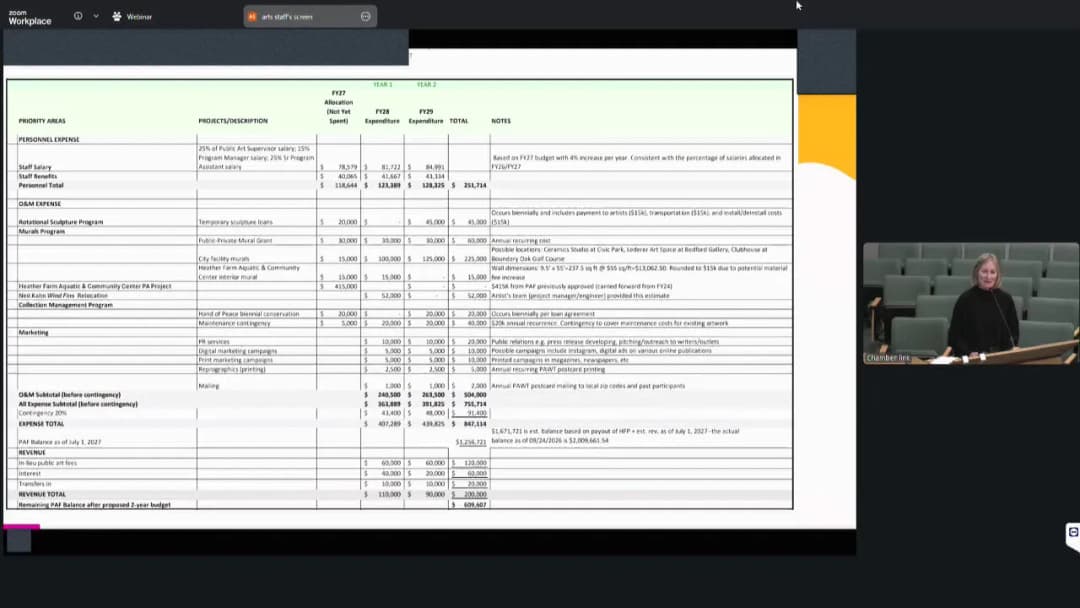
The Walnut Creek Arts Commission held a regular meeting on October 19, 2026, beginning at 6:00 PM in the Council Chamber at 1666 North Main Street. Chair Peter Magnani presided. Commissioners present included Jill Dresser, Netsanet Tesfay (Vice Chair), Iasmine Klauber, Sasha Perelman, and newly appointed student commissioner Alexandra Milne. Commissioner Sarah Baltazar was absent. The meeting covered consent items, a detailed presentation on the General Plan update, review of the Public Art Fund budget for fiscal years 28 and 29, and the Public Art Annual Report for FY2026. Consent Calendar - Approval of Minutes: The Commission unanimously approved the Arts Commission Regular Meeting Minutes of July 20, 2026. - 2027 Meeting Schedule: The Commission approved the regular meeting schedule for 2027. - Lesher Center Annual Report: The Commission received and filed the Lesher Center for the Arts, Center Rep, and Bedford Gallery Annual Report for FY26. All items passed without discussion. Public Comments & Testimony - No members of the public provided comments during the public communications portion. No comments were received on consent or discussion items. Discussion Items - General Plan Existing Conditions Report and Draft Vision Statement (Item 4a): City staff (Allison Rustic) and consultants (Tiffany Ng of Alta Planning and Design, David Plettner Saunders of Cultural Planning Group) presented the Walnut Creek 2050 General Plan update. The presentation covered demographic trends (population 70,736, 4% increase since 2015; household growth 7%; age 25-34 cohort up 31%; city increasingly diverse) and arts and culture conditions (Lesher Center sold 145,000 tickets; Bedford Gallery 22,000 visitors; public art fund balance $1.7 million; creative economy $54 million in earnings). Six key themes were identified: vibrant arts/culture, facilities, public art, cultural ecosystem, creative economy, and community well-being. Commissioners raised several points: - Commissioner Dresser asked about the "missing middle" of adult learners in arts education; David clarified this referred to working adults facing barriers to creative practice. - Commissioner Milne noted the absence of the Walnut Festival and youth parades, expressing a desire for their return. - Commissioner Kurland addressed the ceramics program at capacity, seeking avenues for expansion and improved resident access. Staff responded that longer-range plans would be addressed through the General Plan and budget process, while near-term fee and registration concerns could be taken up with the PROS Commission. - Vice Chair Tesfay argued that arts and culture should be considered a core need, not an amenity, noting that city priorities omitted arts. He also urged inclusion of the two public libraries (downtown branch is busiest in county) in the cultural ecosystem. - Commissioner Dresser highlighted access issues: school tours to Bedford Gallery have dropped due to transportation costs; insurance barriers limit outreach to East County schools. - Commissioner Milne raised the impact of AI on artists, questioning how the city is preparing for technological changes. No immediate solution was offered. - Public Art Fund Budget FY28-29 (Item 4b): Public Art Manager Mariah Nelson presented a proposed budget totaling $847,000 for the two-year period. Key allocations included: $30,000 per year for mural grants; $100,000 (FY27) and $125,000 (FY28) for city facility murals; $415,000 for Heather Farm Aquatic Center public art; maintenance, marketing, and contingency funds. The budget also includes $52,000 for relocating the "Wind Fins" sculpture. Commissioners asked clarifying questions: - Commissioner Kurland suggested keeping mural funding flexible given pending Civic Park master plan; staff agreed to roll forward unspent funds. - Commissioner Dresser questioned the contingency amount (20% of operating budget) and whether it was sufficient; staff acknowledged it was a hope that it would be enough. - Commissioner Perelman noted that the mural grant program appears to favor professional organizations like ABG Art Group; Mariah explained that solo artists face barriers in finding walls and navigating city process, but staff would provide hand-holding. Commissioner Klauber, a solo artist who completed a mural, confirmed the process was manageable with staff help. - Public Art Annual Report FY2026 (Item 4c): Mariah Nelson presented highlights: sculptures for Heather Farm being fabricated; four murals realized through the grant program; successful public art walking tours (often selling out); and launch of a free app, Bloomberg Connects, featuring the public art collection and Bedford Gallery. The app provides analytics on visitor engagement. No action was required. Key Outcomes - Consent Calendar: Approved unanimously. - Public Art Fund Budget: Motion to approve the budget as presented by Commissioner Kurland, seconded by Commissioner Dresser. Passed 5-0 (Commissioner Baltazar absent). - General Plan Update: No vote taken; staff and consultants incorporated commissioner feedback on issues and opportunities (e.g., libraries, youth access, AI) for further refinement. The next step is a presentation to City Council on December 15, 2026. - Public Art Walking Tours: Scheduled for November 21, 2026 (Tour 4) and February 2027 (library tour). - Next Meeting: Monday, January 25, 2027 at 6:00 PM.
The Alameda Public Utilities Board held a special meeting on October 19, 2026, from 6:00 p.m. to 6:52 p.m. Present were President Hunter, Commissioner Byrd, and Commissioner DeVries; Commissioner McKenna and City Manager Bowden were absent. The board approved the consent calendar with one item postponed, heard public comment, received an information-only presentation on outage management, and took up the General Manager’s September 2026 report. Consent Calendar - Item 4E was postponed to the November 16, 2026 regular meeting. It would authorize the General Manager to approve amendment number four to contractor agreement CS 102105 with Ground Penetrating Radar Systems LLC for underground service alert 811 mark and locate services, extend the term through October 26, 2028, and find the action exempt from CEQA. - The remaining consent calendar items were approved unanimously by roll call: President Hunter yes, Commissioner Byrd yes, Commissioner DeVries yes. Public Comments & Testimony - William Morrison, who said he had represented the Fernside Homeowners Association, spoke during oral communications. He noted that Fernside homes date from roughly 1929 to 1940 and are predominantly natural gas-heated, expressed concern about efforts to eliminate methane, and said a large block of eastern Alameda would have problems without methane. He also stated that natural gas beats heat pumps on cost, especially given the city’s per-kilowatt-hour electricity rates, and asked about accessing time-of-use data from electronic meters. - During the outage management discussion, Mr. Morrison described an unplanned outage in his area where customers “went dim” rather than dark, because one leg of 220-volt service was lost while the other continued working. He asked whether this type of partial outage was included in the scope of the new outage management system. Utility information system manager Chu said staff could look into it. Discussion Items - General Manager Haynes introduced the information-only outage response overview, noting that a contract request for an outage management system (OMS) was expected to come before the board in December. Utility Information System Manager Chu presented the current outage response process, including the roles of system control, communications, customer service, a contracted 24/7 answering service for large outages, and field operations. - Manager Chu reported that the 2025 customer satisfaction survey showed roughly 55% of respondents found AMP’s outage communications acceptable or somewhat acceptable, with about 26% unsure. The proposed OMS would consolidate data from eight systems into a single interface, allow customers to report outages by web, app, text, or phone, provide an outage map, support proactive notifications, and enable automated workflows. - Commissioner Byrd asked about staff engagement and post-deployment review. Manager Chu said the scope was developed with input from multiple divisions, and a post-deployment review was included to confirm the system delivers benefits. - Commissioner DeVries said he supported an OMS and believed the upcoming vote should be about whether the plan and vendor are right, not whether to get an OMS. He asked about system integrations, requested a vendor decision matrix, and asked about lessons learned from past integrations. Manager Chu said some platforms may reduce the number of interfaces, that integration experience would be a selection criterion, and that recent integration challenges had informed the scope. - President Hunter asked about customer expectations, estimated restoration times (ETR), integration of customer contact information, vendor references and financial stability, and whether the OMS could support a future Public Safety Power Shutoff (PSPS) program. Manager Chu clarified that messaging and ETR decisions would be controlled by AMP, that customer portal integration could update contact information, and that the system’s proactive maintenance module could support future PSPS-type notifications. - The item was for information only; no board action was taken. General Manager’s Report – September 2026 - General Manager Haynes reported that the City of Alameda had partially activated its emergency operations center in anticipation of winter storms and El Niño conditions. King Tide events are expected around Thanksgiving and Christmas. Staff are coordinating with city departments, developing electrical safety handouts, overlaying utility assets with flood maps, reviewing procedures, and planning staffing and standby pay. - In response to questions, staff said they are checking pumps and cleaning drains at Carrite and smaller substations, including facilities that have flooded previously. - General Manager Haynes announced that Allen Harbottle accepted the offer to become Assistant General Manager for Customer and Energy Resources, a position that oversees power supply, customer programs, rates, key accounts, and communications. Commissioners congratulated Mr. Harbottle. Key Outcomes - The consent calendar was approved unanimously with item 4E postponed to November 16, 2026. - The outage management system discussion was informational; no vote was taken. Staff plan to return in upcoming meetings, possibly December, with a contract request. Board members asked for a vendor decision matrix, careful vetting of vendors and references, attention to integration and customer contact data, and clear communication strategies. - Council communications were skipped because the city manager was absent; the General Manager’s EOC announcement was counted as that item. - The meeting adjourned at 6:52 p.m.
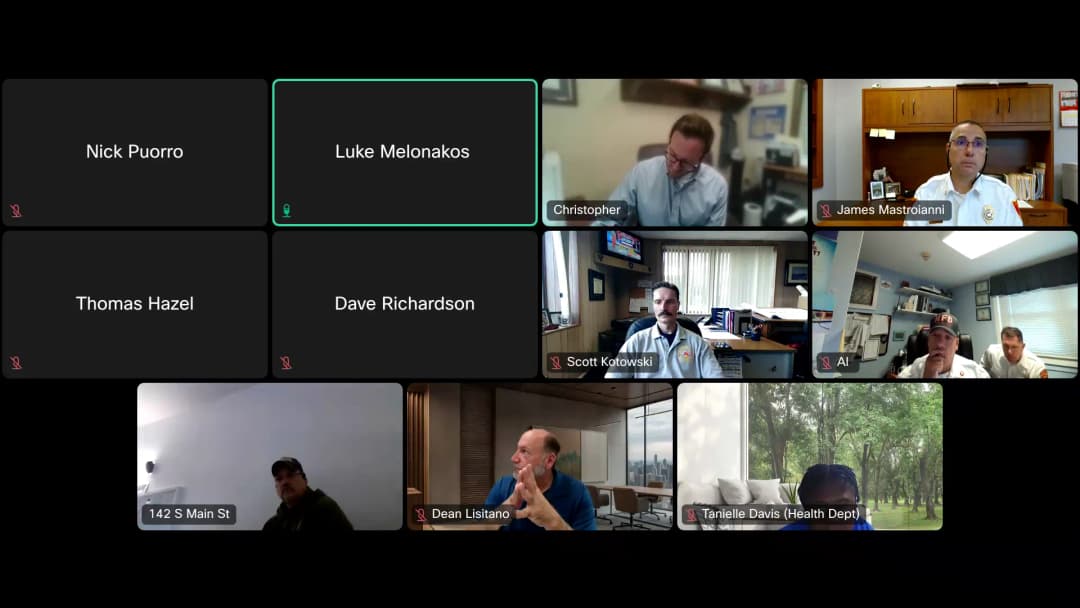
The Mayor's Code Enforcement Committee met on October 19, 2026, at 9:02 AM to discuss routine approvals, property code enforcement updates, and public concerns. The meeting adjourned at 9:21 AM. Consent Calendar - Approval of Minutes (September 10, 2026): The committee voted unanimously to approve the minutes of the prior meeting. Public Comments & Testimony - Troy Gaswin (Connecticut Tenants Union, 142 South Main Street): Advocated for raising code violation fines from the current $100 to $2,000, stating that existing fines are insignificant and not consistently enforced, putting tenant safety at risk (e.g., fires, falls). Urged the committee to work with the union. - Luke Bellanakos (Connecticut Tenants Union): Alerted the committee that several residents at 142 South Main Street received notices from the Middletown Housing Authority that, due to the elevator decommissioning, their apartments may no longer meet HUD regulations for subsidized units, potentially forcing nine households to relocate. Expressed concern for the displaced residents. Discussion Items - 830 Bow Lane: An update on a trailer on a property where people were living. The office is working with zoning (Tom) to gain access and identify the owner. The attorney’s office indicated the matter is almost finalized and ready for submission within a week. - 142 South Main Street: Multiple departments reported: - Health Department: Issued a legal order on September 2, 2026, after a water leak, requiring air quality testing prior to interior repair. Deadline for compliance is November 6, 2026, pending roof completion. - Fire Department: A monthly inspection noted a removed emergency light and open junction box, which were corrected. Emergency lighting was added. The property manager reported installation of a new boiler system and that the roof repair is expected to be 100% complete by mid-to-late October. - Fire Life Safety Annual Inspection: All violations from the annual inspection were corrected within the 30-day period; the property is up to par. - Building Official (Dean): Working with the state building inspector on the elevator issue. The elevator is not covered under current state codes (adopted for buildings 5+ stories). The state is being consulted on possible enforcement. The building is three stories; the first floor is above the entryway, making stairs difficult for some residents. - Roof: The property manager stated the roof will be complete by mid-to-late October, after which the water-damaged sheetrock in the hallway will be replaced. - 572 Saybrook Road (South Fire): An overcrowding issue in a two-family home. The committee is trying to gain access; they prefer an easy resolution before seeking an administrative warrant. - 1171 Randolph: A facility that changed from storage/mercantile to assembly use (10 events per year approved by zoning). The owner is bringing the facility up to code compliance during the off-season (winter) and will work with Austin Building. An inspection will follow in spring. - PD Metro Square: The Mayor’s office determined there is no code enforcement authority to force removal of tables/benches at Metro Square. The police will continue additional patrols to address street-level crime. Item removed from agenda. - Office of the General Council: - 455 & 465 Middlefield Street: Oral argument was heard in court two weeks prior; the judge has four months to issue a decision on whether code violations are upheld and fines awarded. - Second Municipal Action (Landlords renting to unlicensed cannabis sellers): The action failed before the Board of Health. It is now before the Public Safety Committee and will eventually go to the Common Council for a vote. The committee will monitor progress. Key Outcomes - Minutes approved unanimously. - 142 South Main Street: Health order deadline set for November 6, 2026; fire safety issues resolved; roof repair ongoing; elevator issue under state-level review; no immediate enforcement path identified. - 830 Bow Lane: Legal submission expected next week; access being resolved. - 572 Saybrook Road: Continued efforts to gain access; administrative warrant possible. - 1171 Randolph: Owner working on code compliance over winter; item remains on agenda for monitoring. - Metro Square: No code enforcement action available; police continue patrols; item removed from agenda. - 455/465 Middlefield Street: Awaiting court decision. - Cannabis licensing action: Moving through approval process; committee to be updated. - Meeting adjourned at 9:21 AM.
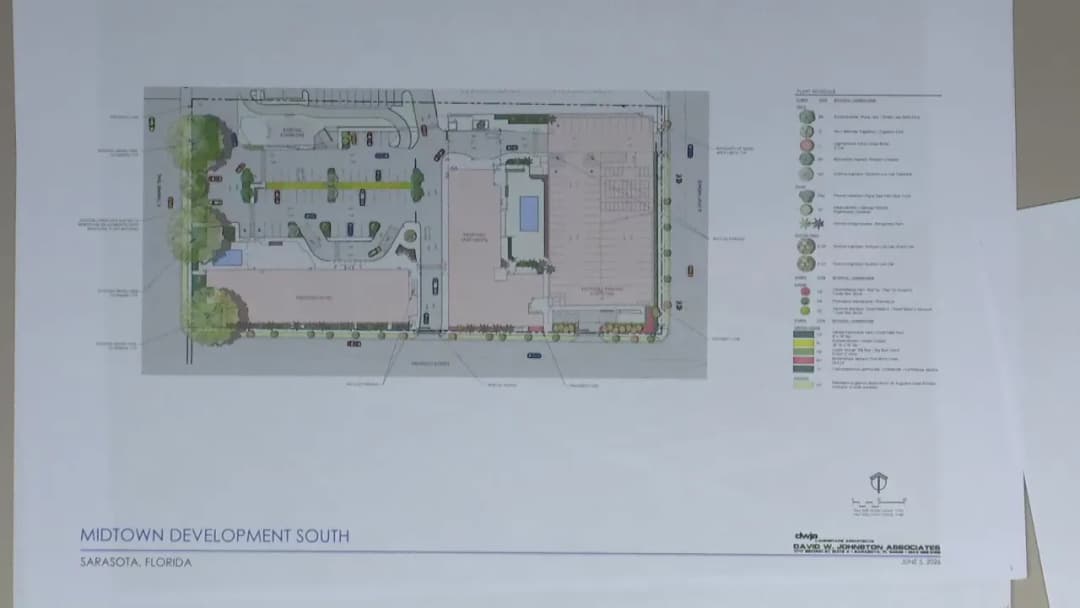
This regular meeting of the Sarasota City Commission on October 19, 2026, lasted from 9:00 AM to approximately 7:00 PM and addressed a wide range of items including proclamations, consent agenda items, unfinished business related to the Sarasota African American Cultural Coalition (SAACC), vacation rental ordinance expansions and program improvements, a rezoning petition, and an appeal of a site plan denial for the Midtown Plaza redevelopment. Numerous public comments were heard on various topics. Consent Calendar - Item 6.2 – Neighborhood Partnership Grant Program (Cycle A) Funding of $29,640.00: Approved unanimously after being pulled for public comment. Commissioner Ahearn-Koch moved approval, seconded by Vice Mayor Ohlrich. - Item 6.4 – Hurricane Milton Permanent Highway Lighting Repair Project (Ben Franklin Drive): Authorized Mayor and City Auditor and Clerk to execute the Local Agency Program Agreement with FDOT for $718,463 (city contribution $118,426). Approved unanimously after a brief presentation by City Surveyor Robert Hagan. - Item 7.3 – Second Reading of Ordinance 26-5598 (Certified Recovery Residences): Approved unanimously (motion by Commissioner Alpert, seconded by Vice Mayor Ohlrich). - Item 7.4 – Second Reading of Ordinance 26-5609 (Table of Organization FY 2026-2027): Approved unanimously (motion by Commissioner Ahearn-Koch, seconded by Commissioner Battie). Public Comments & Testimony - Martin Hyde (non-resident): Criticized the new city manager’s long-term planning, focusing on local issues like the closed Lido Beach pool and unsolved communication gaps. - Celine O'Connor (resident): Thanked city for dune installation on Lido Beach; urged faster restoration of streetlights on Benjamin Franklin Drive; supported a city takeover of Ted Sperling Park and stronger sound ordinance and parks district. - Pamela Bundy (resident): Requested a fresh coordinated review of her building permit issues at 535 South Osprey, asking to bypass a quiet title requirement. - Katherine Hermes (resident): Expressed concern over city manager’s proposal to require unanimous commission consent for agenda items, citing that it would hinder public input. Also noted decline in downtown foot patrols by police. - Ron Shapiro (resident): Provided an update on the 1260 North Palm project’s arbitration process; questioned magistrate’s recommendation to approve despite no changes from rejected plans. Urged commissioners to reject the project again. - Henry Kahwaty (St. Armands resident): Discussed zoning ordinance barriers to home elevation projects, emphasized resilience building, and criticized variance criteria that limit resiliency. - Kelly Brown (President of Coalition of City Neighborhood Associations): Supported the Neighborhood Partnership Grant Program and thanked the city for continuing it. - Jim Ludwig (CCNA): Supported the DTN vacation rental expansion (Ordinance 26-5602) and conceptually supported program improvements (Ordinance 26-5613). Highlighted that over 70% of vacation rentals were previously unlicensed, generating over $1.5 million annually in bed tax revenue. - Max Brandow (Realtor Association): Opposed the 70% fee increase without itemized cost analysis; suggested longer inspection periods, multi-year registrations, and third-party inspections to reduce costs. Asked for better stakeholder engagement. - Public comments on vacation rental ordinances: Kelly Brown (Gillespie Park) noted 14% of properties are short-term rentals, 70% not owner-occupied; urged inclusion in ordinance. Affected parties spoke on both ordinances. Discussion Items - Sarasota African American Cultural Coalition (SAACC) Lease and Option Agreements (Items 9.1, 9.2, 9.3): The city presented three related items: an amended lease for the Leonard Reid House, a first amendment authorizing a $458,000 state grant, and an addendum to the option to purchase three properties on MLK Jr. Way. Commissioners discussed special events language, the $50,000 improvement threshold, and tree protection. Amendments were adopted to clarify special event permitting (including city special event permitting). All three items passed unanimously with separate motions. - Vacation Rental Ordinances (Items 10.2 and 10.3): - Ordinance 26-5602 (DTN Expansion): Extends vacation rental registration to the Downtown Neighborhood Zone (DTN), affecting approximately 50 potential units. Includes a phased occupancy limit (12 persons, with temporary allowance for existing rentals up to 16 through 2028). Approved on first reading unanimously. - Ordinance 26-5613 (Program Improvements): Establishes registration and renewal procedures, increases annual fees from $350 to $600, adds inspection and change fees, and extends the repeat violation look-back from one to five years. Staff projected 97.4% cost recovery. Commissioners debated a proposed amendment to add a link to the city’s vacation rental registration map to the required informational posting; it failed 2-3. An amendment to set the sunset/removal provision date to October 1, 2027 passed unanimously. The ordinance was then approved on first reading unanimously. Commissioners also passed motions to direct staff to prepare a budget amendment for two new positions (a Code Compliance Administrative Specialist and a Vacation Rental Compliance Specialist) and to conduct a stakeholder workshop and establish program performance standards. - Rezoning – 1551 N Beneva Road (Item 11.1): Applicant Brian Lichterman sought to rezone a 2.8-acre vacant parcel from RMF-1 to RMF-3 to build 36 multifamily units. Affected neighbors expressed concerns about traffic, stormwater, height (35 feet), and compatibility. The applicant proffered stipulations including a 6.5-foot fence, one access point, and a community workshop. The Planning Board had recommended approval 4-1. Commissioners adopted amendments to require the sidewalk connection (changing 'consider' to 'shall provide') and to add a community workshop before site plan filing. The rezoning was approved 4-1 (Commissioner Ahearn-Koch dissenting). - Midtown Plaza Redevelopment Appeal (Item 11.2): This was an appeal of the Planning Board’s 3-2 denial of a site plan for a mixed-use development on 3.3 acres at 1325 S Tamiami Trail. The plan includes a 145-room hotel, 91 apartments (23 attainable), 1,861 sq ft retail, and a parking structure. Staff recommended approval. Affected parties cited traffic, parking, safety on East Avenue, trash compactor location, and pedestrian facilities. The applicant highlighted compliance with CGD zoning, de minimis traffic impact (129 PM peak trips vs. 226 for a grocery store), and over 200 parking spaces. During discussion, commissioners noted that the project meets code and represents an improvement over the existing vacant grocery store. A motion to approve the site plan subject to staff conditions and an added proffer of a 6-foot sidewalk on Prospect Avenue passed 3-2 (Commissioners Ahearn-Koch and Ohlrich dissenting). Key Outcomes - All consent agenda items (excluding pulled items) approved unanimously. - Neighborhood Partnership Grant Program: Approved ($29,640). - Hurricane Milton Lighting Repair Project: Approved (authorization to execute LAP agreement). - Ordinance 26-5598 (Certified Recovery Residences): Adopted unanimously. - Ordinance 26-5609 (Table of Organization): Adopted unanimously. - SAACC Lease and Option Agreements (Items 9.1, 9.2, 9.3): Approved with amendments to special events language. - Sale of Winton Avenue property: Approved for $2,100, proceeds to Affordable Housing Fund. - Vacation Rental DTN Expansion (Ordinance 26-5602): Approved on first reading unanimously. - Vacation Rental Program Improvements (Ordinance 26-5613): Approved on first reading with sunset date amendment (October 1, 2027). Staff directed to prepare budget amendment for two new positions and to conduct stakeholder workshop and develop performance metrics. - Rezoning at 1551 N Beneva Road: Approved 4-1 with amendments. - Midtown Plaza Site Plan Appeal: Approved 3-2, reversing the Planning Board denial, with conditions including a 6-foot sidewalk on Prospect.
The Measure U Community Advisory Commission met in regular session on Monday, October 19, 2026, from 5:36 p.m. to 7:18 p.m. at Sacramento City Hall, 915 I Street. Nine commissioners were present; Emily Gerofsky, Conner Johnston, and Timothy Smith were absent. Commissioner Paschal led the land acknowledgement and pledge of allegiance. The commission welcomed new Commissioner Sarah Soto-Taylor, approved the consent calendar, heard presentations on Measure U-funded work by the Department of Public Works and the Office of the City Attorney, approved a final report on participatory budgeting implementation grants, and began work on its 2026 Annual Report and 2027 Work Plan. Consent Calendar - Approved the June 15, 2026 meeting minutes and the updated Measure U Community Advisory Commission Agenda Log by a 9-0 vote, on a motion by Commissioner McGee and a second by Commissioner Novello; three members were absent. Welcome New Commissioner - Commissioner Sarah Soto-Taylor introduced herself as a nearly 30-year resident of Sacramento from South Side Park, a state public service employee for close to 28 years, with experience in health policy, Census 2020 outreach, and culturally appropriate service delivery. Public Comments & Testimony - Lambert, a District 2 resident and business owner, opposed Measure U funding for the City Attorney's Office, arguing the office would still be supported by the general fund and questioning its benefit to disadvantaged communities. He also alleged Brown Act violations and praised former City Attorney Susanna Wood. - On participatory budgeting, Lambert described his family's business experience in the pilot, said he had attended many Measure U meetings, alleged that his paperwork was lost, claimed some grant recipients who received funding did not do outreach, and called for investigation. He later called the program "wonderful" and asked why it should not continue. - On the Annual Report item, Lambert complained that no staff report was provided before public comment, called Measure U "dysfunctional" and "co-opted," alleged that an advantage had been given to the Asian community during the participatory budgeting process and that a commissioner had resigned abruptly, and suggested going directly to the city manager for funding. - In non-agenda public comment, Lambert presented cheesecake samples from his family's business to Commissioner Sala and repeated concerns about the participatory budgeting process. Discussion Items Although the agenda listed the City Attorney item before Public Works, the commission heard from Public Works first and then returned to the City Attorney item. Department of Public Works Overview - Jennifer Donlon Wyant, Mobility and Sustainability Division Manager, presented. Public Works has nine operating divisions, more than 780 full-time employees, an operating budget of approximately $238 million, and a capital improvement program of approximately $50 million. Measure U represents less than 2% of the department's operating budget — about $4.3 million — but supports facility improvements, climate work, ADA compliance, and illegal dumping response. - Illegal dumping: disadvantaged communities make up 30% of Sacramento, but 48% of illegal dumping calls come from those communities. Collected material grew from 2,300 tons to nearly 3,000 tons in the past fiscal year, a 28% increase. Measure U covers disposal costs, while the department absorbs operating, maintenance, and response costs. - Climate and sustainability: about $531,000 in Measure U funds four staff positions; this seed funding helped secure over $300,000 for trees on Franklin Boulevard, $6.7 million to transition light-duty city vehicles to zero-emission alternatives, and more than $1 million to expand the urban forest, planting 275 trees. - Facilities and ADA: about $2.5 million supported facility improvements, including fire station repairs and a fire alarm system at the Crocker Art Museum; about $500,000 supported ADA improvements, including a wheelchair lift at Coloma Community Center, parking upgrades at Bell Coolidge Community Center, restroom improvements at Hart Senior Center, and door upgrades at City Hall. - In response to commissioner questions, staff said illegal dumping is an escalating issue; grant matching is committed only when a grant is awarded; state law requires random bin spot checks for compost compliance; and the facility and ADA investments were one-time allocations rather than ongoing baseline funding. Office of the City Attorney Overview - Beau Parkhurst, Senior Deputy City Attorney and lead counsel to the Sacramento Police Department, presented. The Police Advisory and Transactions Team includes two senior deputy city attorneys and one paralegal; Measure U funds the lead attorney and paralegal positions. In fiscal year 2025-26, the team completed more than 1,500 assignments for the Police Department, including public records requests, search-and-seizure advice, use-of-force issues, policy review, and community engagement. - Funding for the positions originated in a December 7, 2021 city council item (Resolution 21-01351) following increased police transparency mandates. Parkhurst described a personal goal of completing requests within two weeks and said the office is using AI-assisted legal research. - Commissioner questions explored the role of the office, community engagement, and performance metrics. Commissioner Soto-Taylor encouraged continued community engagement to build trust and inform legal advice. Commissioner Ruiz-Benites asked about the dollar amount and the relationship between Measure U's purpose and defending police records; Parkhurst clarified his work is advisory and not defense of officer misconduct cases. Participatory Budgeting Pilot Program Final Report - Staff reported minor updates to the draft report and correction of project information that had not yet been verified. The report covers results of the $1 million participatory budgeting implementation grant pilot. The council member who requested the report is on leave, so there is no immediate deadline. - Commissioners discussed language changes, including clarifying that the city council, not the commission, chose not to fund another round. Commissioner McGee stressed that community choice and voice were the central impact of participatory budgeting, even if outputs were similar to other grant programs. Chair Georgeoff wanted to finalize the report quickly so it could support future funding advocacy. - The commission approved the report by a 9-0 vote, with final language edits to be completed by the ad hoc committee and delivered to staff in November; staff will then send the report to the requesting council member and publish it publicly. 2026 Annual Report and 2027 Work Plan - Staff reviewed the two components: the Annual Report looks back at 2026 accomplishments, while the Work Plan looks ahead to 2027. Staff recommended forming an ad hoc committee and suggested aiming for a January 2027 approval to allow time for council committee scheduling. - The chair appointed Commissioners Paschal, Miller, and Soto-Taylor to the ad hoc committee for the Annual Report and Work Plan; no formal vote was required. Key Outcomes - Consent calendar approved 9-0. - Public Works and City Attorney overviews received and commented on; no formal votes were taken on the presentations. - Participatory budgeting final report approved 9-0, subject to ad hoc language finalization and public release. - Ad hoc committee formed for the 2026 Annual Report and 2027 Work Plan. - No updates were reported from the 2026 Metrics Ad Hoc Committee, and no commissioner comments or ideas were offered.
The Open Space Advisory Committee (OSAC) met at 5:30 p.m. on Monday, October 19, 2026, in the Robert 'Bob' Crowell Board Room at the Carson City Community Center. Roll call was taken and a quorum was established. The committee approved its August 17, 2026, minutes, recognized award recipients, reviewed the Moffat Open Space flood storage and water main extension proposals, and heard the Prison Hill OHV Area monitoring report. No action was taken on the Moffat project, and the meeting adjourned after a later public comment period. Public Comments & Testimony - The first public comment period had no speakers. - In the later public comment period, a speaker praised Greg Berggren and OHV-area staff for quick response to vandalism and impacts, and asked staff to consider the hill's ephemeral stream features, including a pour-off with basins that hold water for months, as a resource for wildlife in the monitoring report. The speaker offered site visits. - Denny French of Carson City thanked volunteers and Parks, Recreation and Open Space staff, and expressed hope that Prison Hill, OHV, and water-related topics would become future agenda items. Awards Program - Lyndsey Boyer, Open Space Manager, said the annual awards program received nine nominations and honors substantial volunteer time, financial contributions, or dedicated service. She described the class as two organizations and two individuals; the transcribed award presentations covered the Carson Water Subconservancy District, the Seahill Foundation, and Juan Guzman. - The Carson Water Subconservancy District was recognized for staff time, technical assistance, and many document reviews supporting the Carson River Master Plan amendment. Reed Cousins and Brenda Hunt accepted and thanked Carson City for the partnership. - The Seahill Foundation was recognized for restoring the iconic flag on Seahill. Lucia Maloney accepted, thanking more than 250 volunteers and reporting over 2,500 volunteer hours. - Juan Guzman, Carson City's original Open Space Manager, was honored as 'the father of open space.' Guzman described starting in 2001, the citizen-approved open space tax, acquiring thousands of acres, and said 'we never have enough' open space. Discussion Items - Moffat Open Space flood storage and water main extension: Darren Anderson, City Engineer, explained that a developer building in the floodplain must offset floodplain fill. The proposal would create flood storage and restoration areas at Moffat Open Space, with decomposed granite paths, benches, and signage. The agenda listed this as a possible action item, but no motion was made. Flood mitigation work was expected to start mid-November to early December 2026 and last about two to three weeks; it is designed for 10- or 25-year storm events, while a 100-year event would inundate most of the Moffat property. The developer must complete the mitigation before placing fill on the apartment site. - The related water transmission main would extend service to east Carson City, tying a 24-inch line from Hells Bells Road to Empire Ranch Road through the Moffat property and generally following an existing easement near a 1980s reclaim line. Anderson said it is part of a development agreement, would also benefit public facilities including the landfill, and would likely be constructed in early 2027. The contractor agreed to expand irrigation and revegetation for disturbed areas. - In response to questions, Anderson said the existing steel reclaim pipe has concrete coating and cathodic protection, is monitored, and is not at a point where replacement is needed. A questioner noted the lake is about 22 feet down; Anderson said Carson City is not currently drawing from Marlette Lake while dam-related work is completed and the lake is being allowed to rise. The proposed Moffat paths will be compacted decomposed granite rather than paved. Weather timing was discussed, with the short excavation window allowing the contractor to adjust for storms. - Prison Hill OHV Area monitoring report: Marina Lovejoy presented the 2025-2026 monitoring report. Highlights included two new interpretive signs, one at the entrance and one at Golden Eagle Rock, plus a wayfinding sign; no new construction; routine staff maintenance; and volunteer projects by Friends of Prison Hill with 23 volunteers and Battleborn Off Roaders with two events of 11 and 26 volunteers. Restoration of closed unsanctioned trails is improving over time. - Greg Berggren reported the OHV area vehicle counter totaled 28,180 for the year, up year over year. Committee members praised the staff's responsiveness, monitoring, and community partnerships. One member asked about a photo on page 55 of the packet; Lovejoy said she would recheck that location. Staff said Carson City is the only municipality known to manage an OHV area and has one open space maintenance foreman and two full-time maintenance staff supporting the area. Staff Updates, Foundation Report, and Future Agenda Items - Jennifer Budge, Parks and Recreation Director, reported the first-ever golf tournament raised over $15,000 for youth recreation, with 100 players and more than $650 in mulligan sales. She noted seasonal vacancies and upcoming postings for a sports field coordinator and an aquatics recreation supervisor. - Budge said the federal lands bill remains active with Senator Rosen's and Congressman Amodei's offices and may go to markup the week of November 9, 2026. - Open Space Division updates from Lindsay Boyer and Marina Lovejoy included: Ash Canyon parcel appraisal in progress; Buzzies Ranch water rights due diligence completed; Oldwoods Ranch appraisal underway; Carson River Master Plan amendment draft out for review with committee discussion expected in early 2027, possibly at a special joint meeting; the 30th anniversary Quality of Life celebration at Silver Saddle Ranch on Saturday from 2 to 5 p.m.; and Travis Navarro hired as a part-time Natural Resource Technician. - Lovejoy described a Carson Water Subconservancy District-funded restoration experiment along Empire Ranch Trail: about 1,000 plants were planted without supplemental irrigation, many survived, and bunch grasses are doing well. Two interpretive signs about noxious weed control and ecological restoration were installed. - Lovejoy also reported the sheep program is in its 20th year, with about 1,200 ewes grazing for about two to three weeks into late October or early November. Fall restoration work includes the first use of a drill seeder at River View and additional seeding at Prison Hill East trail buffer and Kuntzling Trailhead. - Foundation for Carson City Parks and Recreation: no current OSAC liaison; the written report highlighted volunteers, the golf tournament, national recognition for Carson Ridge Disc Golf Complex, and the mayor's annual cleanup day. - New member Beth Haas introduced herself, noting her work as a psychiatrist and her interest in the mental-health benefits of time in nature. - Future agenda items: staff said a Title 13 update discussion is expected at the December joint meeting; no other future items were submitted. Key Outcomes - The committee unanimously approved the August 17, 2026, meeting minutes. - Awards were presented to the Carson Water Subconservancy District, the Seahill Foundation, and Juan Guzman. - No action was taken on the Moffat Open Space flood storage and water main extension item; it was discussed only. - Lovejoy said she would recheck the Prison Hill OHV monitoring photo flagged by a committee member. - Public comments were received with no action taken. - The committee adjourned after completing the agenda.
The Health, Human Services and Arts Committee of the Cleveland City Council met on October 19, 2026, to consider two major legislative items: a comprehensive update to the lead-safe certificate law (Ordinance 1444-2026) and the establishment of a Good Food Retailer Certification and job retention income tax credit program (Ordinance 1230-2026). The meeting featured public testimony, detailed presentations from city administration and the Lead Safe Cleveland Coalition, extensive discussion, and final votes on both ordinances. Public Comments & Testimony - Mike Burkans, a lead risk assessor, expressed general support for the proposed changes to lead standards, noting that extending the certification interval from two to five years is good for the program even against his self-interest. He raised a concern about the lack of inspector discretion in the current standard, arguing that no house is perfect and that minor imperfections that pose no real risk should not necessarily cause a property to fail. - Zach Ravinelli, a local landlord from Slavic Village, stated his full support for the changes. He highlighted that the every-two-year requirement was expensive and contributed to rent increases, and that landlords who make meaningful investments should be rewarded. He also noted that he replaces wood windows and porches to reduce lead hazards. Discussion Items Lead-Safe Certificate Law Amendments (Ordinance 1444-2026) - Presentation by Rebecca Moore (Senior Advisor for Lead Accountability) and Dr. David Margolius (Director of Public Health) outlined five strategic pillars, with the first three requiring legislative changes: 1) graduated certificate timelines, 2) local risk assessment standards and inspection licenses, and 3) administrative improvements and alignment with federal rules. - The key change moves the base lead-safe certificate from a two-year to a three-year cycle, with incentives for replacing lead-hazard components: - Properties that replace all movable and accessible windows receive a five-year certificate. - Properties that also replace exterior doors and porches receive a ten-year certificate. - Full abatement yields a twenty-year certificate (unchanged from current law). - Properties built after 1960 can receive ten years; consecutive passing certificates extend terms. - The administration has hired a Lead Safe Ombudsman to handle resident complaints and resolve disputes informally. - An XRF lending program will allow risk assessors to borrow XRF analyzers from the city to more precisely identify lead-based paint, reducing assumptions and improving assessment quality. - Enforcement is being strengthened through additional personnel in Building and Housing, with plans to double enforcement capacity via civil tickets and faster processing of appeals. - Councilmember Questions included concerns about funding, accountability, and the balance between carrots and sticks. Councilmembers Jones and Harsh pressed for clearer metrics on enforcement and a flowchart of responsibilities; Councilwoman Hudson inquired about the ombudsman and testing of children; Councilman Shaw emphasized the need for tenant feedback and affordability criteria. - The Lead Safe Cleveland Coalition (represented by Ayana Blue Donald) expressed qualified support for the changes after a membership vote, noting that the coalition will continue to advocate for a strong implementation framework. Good Food Retailer Certification and Tax Credit Program (Ordinance 1230-2026) - Deputy Director of Business Growth David Lucas and Dr. David Margolius presented the proposal to create a "Good Food Retailer" certification for grocery stores that demonstrate financial need and meet criteria such as selling at least 40% fresh food, accepting SNAP/WIC, hiring local residents, paying above minimum wage, using environmentally sustainable practices, donating excess food to pantries, and sourcing from local Ohio producers. - Certified retailers would be eligible for a job retention income tax credit of up to 100% of the city income tax paid by the grocer, for a term of two years. The credit can be renewed if the grocer continues to meet the criteria. - The estimated budget impact is $500,000 to $1 million annually, based on a rough calculation of current income tax collections from grocers (at least $2 million). - The program is designed as a retention tool (rather than attraction), and the administration plans to seek outside grants and philanthropic funding to create a Good Food Retail Fund to supplement the tax credit. - Councilmember Concerns: Councilman Shaw expressed deep reservations about opening a "Pandora's box" and noted the lack of affordability criteria; Councilman Jones supported the program but cautioned about general fund spending; Councilman Harsh noted the need to compare this with other city tax credits; Councilwoman House Jones questioned the long-term revenue generation and the equity of property-tax reliance. In response, the administration committed to incorporating affordability into the evaluation rubric when presenting future recommendations for certification. Key Outcomes - Ordinance 1444-2026 (lead-safe certificate program amendments) passed unanimously (voice vote, all ayes). - Ordinance 1230-2026 (Good Food Retailer certification and tax credit program) passed with a vote of 3-2 (on a roll call, "Yes. Yes. No. Yes. No."). - Both ordinances are emergency measures and will be forwarded to the full City Council for final approval.