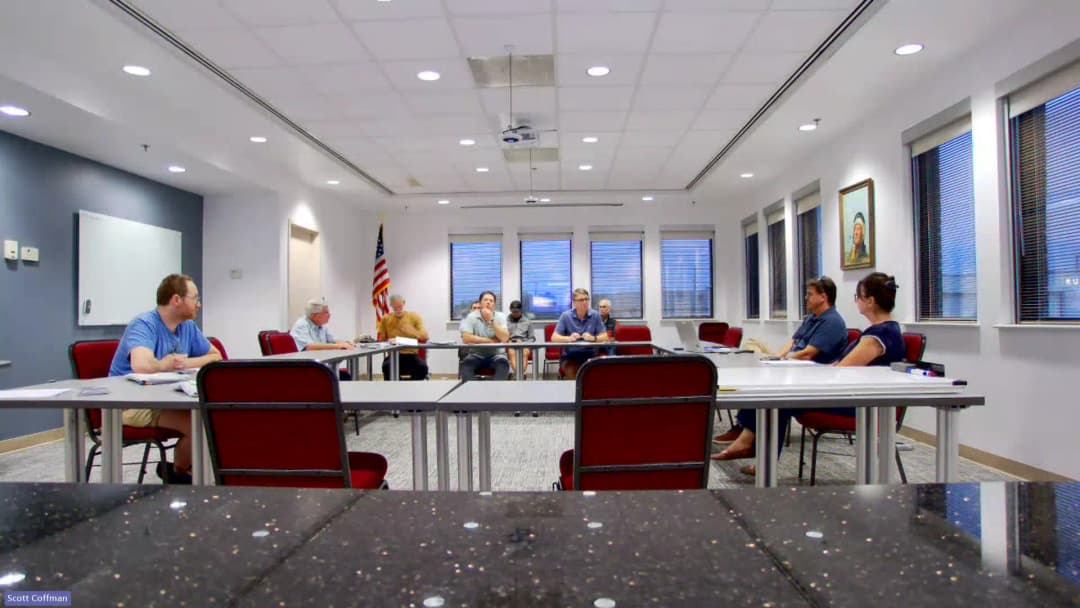
The Leesburg Airport Commission convened on October 16, 2026, in a regular session. Commissioners present included Timothy, Don, Tom Ryan, and Walter, establishing a quorum. The meeting focused on the proposed personal property tax on aircraft, the fiscal year 2028 operating budget and potential fee increases, redevelopment of the Condo Hangar parcel, and operational updates. Consent Calendar - The agenda was adopted by a motion and a second, with all in favor. - Meeting minutes from August 2026 were approved. Public Comments & Testimony - A representative from the FBO praised the recent air show, noting it was exceptionally smooth and well-attended (12,000 people). He recommended reaching out to a potential corporate sponsor, citing a history of $25,000–$50,000 in annual sponsorship commitments in similar markets. - The commission discussed a resident’s request for broader dissemination of noise complaint data. Commissioner Tom Saxon volunteered to serve as the point of contact for a resident from Evergreen Meadows with specific noise concerns. Discussion Items Personal Property Tax Briefing - The commission reviewed a briefing prepared by Mike May and Scott Kuhn regarding a request from the Town Council to weigh in on a potential increase to the personal property tax on aircraft. - Commission Position: Members argued strongly against the proposed tax, citing the airport is already a net positive cash flow generator, and tenants already pay significant fees (annual user fees of $98 to $1,800, Loudoun County property tax on hangars, and fuel flow fees). - Economic Risk: Commissioners identified the primary risk as driving away large corporate jet operators, who they stated contribute disproportionately to the airport's fuel revenue and local economic activity. They cited Winchester’s experience of raising and then lowering similar taxes after negative impacts on operations. - Decision: The commission directed staff to refine the presentation to emphasize the existing financial burden on tenants and the economic risk of losing corporate aviation. This data will be presented to the Town Council in November. Fiscal Year 2028 Budget & Fee Adjustments - Airport Director Scott presented the FY28 budget, highlighting an estimated $80,000–$100,000 increase driven by personnel and operating costs. - A significant debate occurred on whether to raise user fees. - Staff Proposal: Scott proposed raising tie-down rates ($120/month, unchanged since 2013) and T-hangar rates ($500–$700/month, unchanged for 3 years) to offset rising costs and prepare for capital projects. - Commissioner Positions: Commissioner Tom argued that 100% occupancy indicates rates are too low, supporting a small, equitable increase. Commissioner Ryan agreed an increase is justified but requested detailed data before a formal vote. Commissioner Walter cautioned that Leesburg is already the most expensive airport in the region, stating “Part of the game is keeping it low for everyone… people will vote with their feet.” - FBO Feedback: A representative suggested that modest, CPI-aligned annual increases are the bare minimum for maintaining the airport’s infrastructure and financial health. - Decision: The commission will analyze inflation-adjusted fee structures and bring a specific proposal back for a vote, with any changes likely effective in July 2027. Condo Hangar Parcel & South End Development - The commission explored maximizing the airfield footprint after the mandatory demolition of old octagon hangars for the taxiway relocation. - Visual Presentation: Staff presented a conceptual layout of 49 new T-hangars on the parcel, which an engineer must validate against FAA standards. - Discussion: Members debated building vs. private development. Building generates debt but retains long-term revenue. The group favored T-hangars on this parcel for general aviation piston aircraft, reserving the West Side for larger box hangars and FBO development. - Outcome: Staff will continue engineering and financial assessments for the parcel and the South End, which is awaiting state grant funding. Control Tower Progress - The control tower project design is 100% complete. Funding has reached $6.25 million of the $18 million target. An application for additional FAA discretionary funds is being submitted. - Beacon Placement: The commission discussed the rotating beacon. While the sighting study does not currently support moving it from the old tower, the new tower base will be prepared for potential future installation. Operations, Noise, and Community Outreach - YTD operations are up 5.8% over the previous year. Jet fuel sales have increased significantly. - Noise Complaints: The commission discussed sharing data more transparently. Staff proposed a quarterly report correlating complaint numbers with total operations to provide context. The commission was cautiously receptive, noting public meetings already offer a platform for these discussions. - Night Operations: The voluntary curfew on pattern work (10 PM to 7 AM) was reinforced. The AWAS recording now explicitly discourages “no pattern work” during these hours. Mural Project Update - The public art mural project has funding to cover approximately $2,000 of a $15,000 gap. The commission will formally request the remaining funds from the Town Council. A commissioner questioned the material costs, and one expressed a desire to remove the item from future agenda items. Key Outcomes - Personal Property Tax: Staff will provide a refined, data-driven briefing to the Town Council emphasizing the existing economic contributions and fee structures at the airport, positioning against the proposed tax increase. - User Fee Increase: The commission reached a clear consensus for a nominal, inflation-based increase to tie-down and hangar fees. Staff will present specific rates ($20–$40 range for tie-downs suggested by members) for a formal vote at the next meeting. - Next Meeting: The next regular meeting was officially rescheduled from November 11 to Wednesday, November 18, 2026, at 6:00 PM, due to the Veterans Day holiday.
The Public Meeting Index
The Public Meeting IndexThe DeKalb County Board of Ethics convened its monthly meeting on October 16, 2026, beginning shortly after 6:00 PM. The board adopted the agenda, approved minutes, considered a proposed amendment to the ethics code, received the Ethics Officer's report, deliberated two formal advisory opinion requests, dismissed a case, heard public comment, and addressed scheduling. Consent Calendar - Adoption of Agenda: Moved, seconded, and unanimously approved by voice vote. - Approval of Minutes: Moved, seconded, and unanimously approved by voice vote. Public Comments & Testimony - Benny (community member): Asked whether fines remain in the proposed amendment (board confirmed). Noted the county recently laid off a third to half of its law department lawyers and is replacing them with contracted specialists; suggested the board evaluate how contract/temporary employees are treated under the ethics code. Expressed support for police and fire officers’ right to make public comments but believed that individuals connected to commissioners should wait until regular citizens speak. Also referenced Commissioner Spears’ experience and suggested that parameters should be set for public comment. Praised the board's work on the contract employee opinion request. Discussion Items - Oversight Committee Report – Proposed Amendment to Section 22AK1C: The Oversight Committee presented draft language that would add referral of intentional ethics violations to the district attorney or solicitor for prosecution, with possible fines, restitution, and imprisonment (current penalties: up to $1,000 fine and six months imprisonment). Board members discussed phrasing and clarified the delineation of prosecutorial responsibility. The board voted unanimously to forward the amendment to the county commission and General Assembly. - Ethics Officer Monthly Report (Elisa Murphy): Reported providing in-person ethics training to 1,099 new and reassigned employees since September 17, 2026. Issued an ethics blast on prohibited sources. Coordinating with HR to ensure annual training for over 6,500 employees. Update on cases: one new intake and one pending. Hotline reports: code enforcement issue, sick time (referred to HR), alleged drinking on the job (referred to COO, HR, CEO), underage driving matter. One open records request awaiting payment. The budget, which was due September 25 (45 days earlier than the usual December deadline), was deferred to the next meeting. Welcomed new board member Ward Howe. - Formal Advisory Opinion 2026-2 (Commissioner Michelle Long Spears): Commissioner Spears asked whether the ethics code prohibits current, former, or prospective employees from participating in public comment at Board of Commissioners meetings. General Counsel Hakeem Hilliard advised that Section 22A does not create a blanket prohibition, but individual circumstances could trigger ethics violations. The board voted unanimously to issue a formal advisory opinion consistent with that advice. - Formal Advisory Opinion Request (Alan Mitchell, Director of Community Development): Mitchell requested guidance on whether eight employees in temporary non-benefited status (averaging 23 months in temporary roles) are subject to the two-year cooling-off contracting restriction when transitioning to independent contractor status. Hilliard concluded that temporary status does not exempt them from the ethics code and recommended the board not issue an opinion, as the request sought a legal interpretation rather than an ethics opinion. The board voted unanimously not to issue an advisory opinion. - Case – Donna Thieler (Preliminary Determination): Ethics Officer Murphy explained that the alleged violation occurred July 1, 2022, and the four-year statute of limitations began at discovery. Prior internal affairs investigations and court proceedings (Superior Court and Court of Appeals) had addressed the matter. The board found no jurisdiction and unanimously voted to dismiss the case. - Board Comments on Public Participation: A board member suggested that parameters should be set for former employees’ public comments to prevent disclosure of proprietary or confidential information. Key Outcomes - Amendment 22AK1C: Unanimously approved forwarding the proposed amendment to the county commission and General Assembly. - Formal Advisory Opinion 2026-2: Unanimously approved issuance. - Second Advisory Opinion Request: Unanimously approved not issuing. - Case Dismissal: Unanimously dismissed Donna Thieler’s case for lack of jurisdiction. - Executive Session: Unanimously approved entering executive session to discuss pending litigation and personnel; later approved exit and the required affidavit. - Next Meeting: The board decided to cancel the regular November meeting (due to scheduling conflicts and counsel unavailability) and scheduled the next meeting for December 17, 2026, when the budget will also be discussed.
The Board of Supervisors Elections for the City of Rockville convened on Thursday, October 16, 2026, at 6:49 PM. Chair Jim Molnax presided over the meeting with members Kathy Sindos, Juliette Goldman, Sarah Farrell, and Judy Penny present, establishing a quorum. The meeting covered approvals, committee business, review of the candidate handbook, electronic petition systems, public hearing logistics, the 2027 work plan, and board membership recruitment. Consent Calendar - Approval of Minutes (June 25, 2026): The board discussed the minutes from June 25, 2026. A member noted a missing page in the distributed copy. The board voted to table approval until a complete version is provided at the next meeting. Public Comments & Testimony - No public testimony was heard during the meeting. The board discussed an upcoming request from Michelle Whitaker (Ranked Choice Voting non-profit) to brief the board on ranked choice voting, but deferred scheduling to the first quarter of 2027. Discussion Items - Candidate Handbook Review: Board members reviewed a draft of the candidate handbook and proposed multiple revisions, including: replacing generic day-count references with specific election dates; clarifying language on electronic donation handling and treasurer responsibilities; adding a receipt requirement for donations; defining "slate" in the joint slate section; incorporating electronic petition procedures; adding an introductory paragraph with clickable links; adjusting language on campaign finance thresholds and late fee disclosures. Members divided sections for cross-reference and code verification: Kathy Sindos (A–D), Jim Molnax (E–G), Juliette Goldman (H–N). The revised handbook is due by the next meeting on November 19, 2026. - Electronic Petition Form Demo Follow-up: The board discussed the electronic petition system demonstrated by staff member Willie Cho. Members expressed support for promoting electronic petitions over paper to reduce administrative burden, and noted the data analysis capabilities. Kathy Sindos requested a separate demonstration. The board agreed to emphasize electronic petition use in candidate materials. - Upcoming Public Hearings (November 2 & 9, 2026): The board discussed its role at two public hearings on proposed charter and code amendments. Members agreed they should attend to listen to community input but not actively present, as their recommendations have already been incorporated. They discussed the likelihood of public comments on ranked choice voting (outside the scope) and supported communicating to the Mayor and Council to focus discussion on the relevant topics. - 2027 Work Plan & Calendar: Sarah Farrell presented a draft work plan for 2027. Key deadlines include: January–February – meeting with the State Board of Elections; May 1 – deadline for candidate information packets and all related materials. The board identified four major workstreams: candidate handbook, electronic petitions, candidate information packet, and campaign finance training materials. Members agreed to begin reviewing the updated ordinance and dividing tasks at their November 19 meeting. Community engagement efforts discussed include: registering 16- and 17-year-old voters, promoting drop box use (13.1 miles from city center), staffing booths at city events (e.g., Hometown Holidays Memorial Day weekend), and outreach to high schools, Montgomery College, retirement communities, and Twinbrook area. The board noted the need to identify a secure drop box location in Twinbrook. - Board Membership Recruitment: The board discussed the status of filling two vacancies. One candidate was interviewed and submitted to the Mayor and Council but no appointment has been made yet; two other candidates withdrew. Members urged ongoing recruitment efforts. - University of Maryland Research Collaboration: Chair Jim Molnax proposed reaching out to the University of Maryland’s Merrick program to assist with developing standard operating procedures. The board voted unanimously to authorize staff to initiate contact. Key Outcomes - Minutes of June 25, 2026 – Tabled; full copy requested for next meeting. - Michelle Whitaker Briefing – Deferred to late first quarter 2027 (March). - Candidate Handbook Revisions – Divided among members; due November 19, 2026. - Public Hearings (Nov 2 & 9) – Board members to attend as listeners. - May 1, 2027 Deadline – All candidate materials must be finalized. - Board Member Appointment – Waiting on Mayor and Council action; continued recruitment. - University of Maryland Contact – Authorized to explore collaboration. - Next Board Meeting – November 19, 2026.
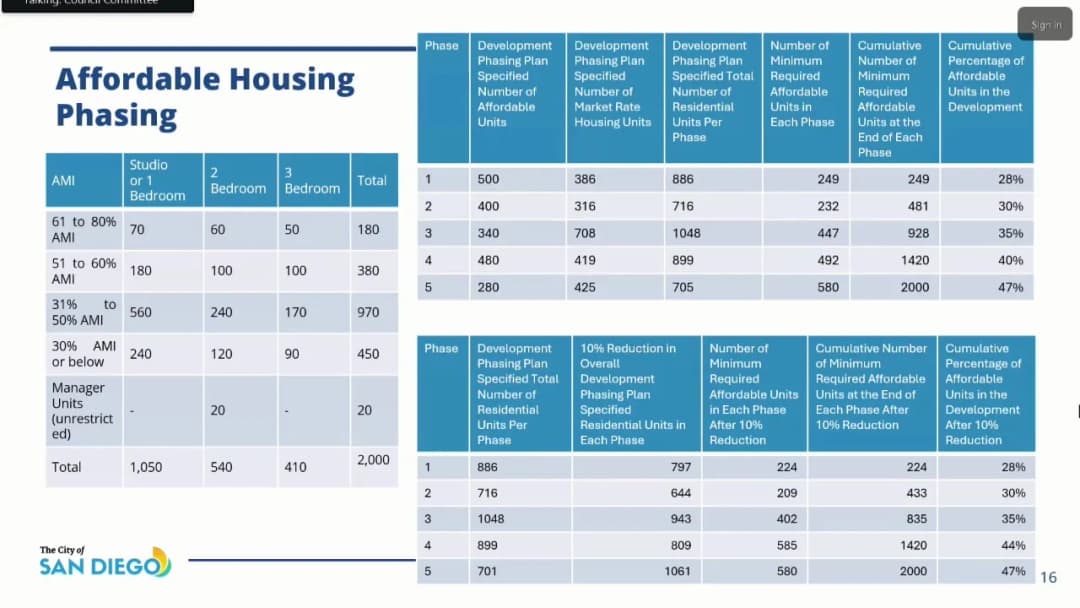
The Special Land Use and Housing Committee of the San Diego City Council met on October 16, 2026 (Chair Lee presiding) to consider the disposition and development agreement (DDA) for the Midway Rising project on the Sports Arena site and the related Enhanced Infrastructure Financing District (EIFD). The committee heard extensive public testimony and received presentations from city staff and the Independent Budget Analyst (IBA). Both items were unanimously approved for forwarding to the full City Council. Consent Calendar The committee unanimously approved the consent agenda (4-0), including approval of prior meeting minutes, acceptance of endowment funds for the Clayton Vernal Pool Preserve, acceptance of 8.56 acres of land in East Elliott from the Mission Trails Regional Park Foundation, the declaration of city-owned property at 4069 30th Street as surplus land (with Councilmember Whitburn noting it was requested to prioritize affordable housing development on the site), and a 25-year franchise agreement with Jet Infrastructure Holding IA LLC. Public Comments & Testimony Consent Agenda: Public commenters raised a range of issues. One speaker urged government shutdown. Others expressed support for the land donations and the surplus land declaration. Discussion Items (Items 6 & 7): The committee heard approximately 70 speakers spanning several hours of testimony. - Supporters: A large coalition of labor unions (IATSE Local 122, Carpenters Union, Laborers Local 89, Unite Here), affordable housing developers and residents (Chelsea Investment, Pacific Southwest CDC, Serving Seniors, San Diego Regional Center), pro-housing advocates (YIMBY Democrats, Build SD, Circulate SD), the San Diego Regional Chamber of Commerce, the Midway Pacific Highway Community Planning Group, and other community organizations argued the project would deliver urgently needed housing (especially the 2,000 affordable units), create thousands of good union construction and permanent jobs, revitalize a blighted area with parks and infrastructure, and was a fair deal for the city. - Opponents and Concerns: Several residents voiced strong opposition or serious concerns. They cited significant environmental risks, including the site's location on a floodplain, sea level rise, high groundwater, and soil contamination from toxic waste. Speakers argued the long-term financial return to the city was insufficient, the 85-year lease was too long, the risk of off-siting affordable housing was not adequately addressed, traffic gridlock was unmitigated, and the project would primarily benefit developers. Michael Aguary specifically called for a Project Labor Agreement before approval. Discussion Items - Midway Rising DDA (Item 6): Christina Bibler (Economic Development) presented the $4.2 billion project, including 2,000 affordable housing units (at 30-60% AMI), an expansion-ready 16,000-seat arena, 14.5 acres of parks, and 7,000 parking spaces. The developer assumes all construction and financing risk. The city retains land ownership under 85-year ground leases. Revenue to the city includes ticket fees on arena tickets (starting year 11) and participation rent from market rate housing, projected to be between $880 million and $1.2 billion in nominal value ($23-69 million in present value). - Enhanced Infrastructure Financing District (Item 7): Richard Eyre (Finance) explained the EIFD would capture $1.2 billion in future property tax increment (city and county shares) over 45 years to reimburse the developer for approximately $370 million in eligible upfront public infrastructure costs (roads, parks, utilities). The IBA noted this functions as a low-interest (3%) financing mechanism for the city. - Independent Budget Analyst (IBA) Presentation: The IBA concluded the agreement represented a "fair and reasonable balance of risks, financial returns, and public benefits." They noted the developer bears the primary risk but flagged potential vulnerabilities in the affordable housing tax credit market and the long-term reliance on EIFD revenue. Key Outcomes - Item 6 (DDA) – Approved 4-0: The committee approved the DDA with an amendment proposed by Chair Lee and seconded by Vice Chair Rivera. The amendment requires the DDA to be revised to prohibit Midway Rising's 2,000 affordable units from serving as receiver sites to satisfy other projects' affordable housing requirements unless all other available funding options for gap financing have been pursued and exhausted, as verified by the city. - Item 7 (EIFD) – Approved 4-0: The committee approved the resolution of intention to form the Midway Rising Enhanced Infrastructure Financing District. - Post-Meeting Referrals: - Councilmember Whitburn requested the IBA provide an analysis to the full City Council on the potential scope of affordable units that could be offsited to Midway Rising under current rules. - Councilmember Rivera requested city staff (Economic Development) work with the committee to bring forward a Land Development Code amendment restricting city-owned or city-leased sites from serving as receiver sites for another development's offsite affordable housing obligation.
The Nashua Planning Board met on October 16, 2026, acting on one conditional use permit, site plan approvals and an approval extension, plus related waivers and dimensional modifications. Note: the supplied timestamp is 2026-10-16 01:29:53+00:00; the transcript itself identifies the session as the October 15, 2026 meeting. No written agenda or minutes were provided, so this summary is based on the raw transcript. The board had a quorum and heard the cases in modified order. Consent Calendar - Approved the October 1, 2026 meeting minutes as written, motion by Benjamin Zoller, second by Alderman Patricia Clee, unanimous. Communications - Staff reported late packet changes for 10 North Southwood Drive (revised staff report incorporating engineering comments and the fire apparatus overlay) and 181 East Hollis Street (resolved engineering comment letter and an added condition regarding the engineering traffic contribution request). Public Comments & Testimony - No members of the public spoke in opposition or support at any of the public hearings, and no Zoom participants were reported. Conditional Use Permit A26-0187 – 10 North Southwood Drive - The board accepted jurisdiction, and applicant representative Paul Chisholm of Keach Nordstrom Associates presented for Wendon LLC/Tully Automotive Group. The project is an adaptive reuse of the former post office building for vehicle storage (permitted by right) and vehicle repair (conditional use) on a 10-acre parcel in the Park Industrial Zone and Water Supply Protection District. - The applicant estimated about 75 vehicles serviced per month, roughly three to four vehicles per day, with about 25 employees on site. Vehicle repair would occur inside the building, and the Tinker Road entrance would remain gated/emergency-only, with primary access from North Southwood Drive. - The applicant stated that all nine conditional use permit criteria are satisfied and that no waivers were requested. - Board discussion focused on the engineering traffic contribution. Dan Hudson questioned directing it to the Amherst Street Traffic Quarter and suggested the Daniel Webster Highway corridor was more appropriate. Alderman Clee supported the corridor shift but did not want to cut the contribution amount. Staff advised leaving the condition as to the satisfaction of the Division of Public Works so staff could determine amount and placement. - Motion by Adam Barley, second by Benjamin Zoller, to approve the conditional use permit with the two subsequent conditions in the staff report; passed unanimously. Conditional Use Permit A26-0204 / Site Plan A26-0188 – 4 Beard Street - The board accepted jurisdiction. Ethan Beals, project manager, represented Area Agency Properties, doing business as Gateways Community Services, a nonprofit serving the developmentally disabled community. The existing group home has reached the end of its useful life; the project would demolish it and construct a new nine-unit multifamily residential building. - This was a requested second extension of approvals originally granted in September 2024; the applicant stated the project plans have not changed. - The applicant reported fundraising progress: Invest New Hampshire funds pending a Governor's Council vote, HOME federal funds, approximately $1 million requested from Senator Shaheen's discretionary funding, and $500,000 in Community Project Funding via Representative Goodlander and NRPC. - The board discussed granting more than one year to avoid recurring application fees. Alderman Clee supported extending the approval but did not want to go beyond 2028. - Motion by Cameron Green, second by Alderman Clee, to extend the final conditional use permit and site plan approval to October 19, 2028, subject to subsequent conditions A-C; passed unanimously. Site Plan A26-0198 – Innovative Way / Daniel Webster Highway - The board accepted jurisdiction. Applicant representatives Dan Borowski of Fieldstone Land Consultants and Kevin Walker of the John Flatley Company presented a 48,000-square-foot flex building on about 21 acres. This was the same site plan previously approved in 2022; state approvals remained valid, but the local approval had elapsed, so a new application was required. - Board members asked about the relationship to the previously approved loop road to the north; staff and the applicant explained that this roadway segment can be built with either project and is not governed by a phasing plan. - Staff noted that a previous $2,750 traffic contribution referenced in the October 8, 2026 engineering memo had not yet been received and was incorporated by reference in the subsequent conditions. - The board granted waivers from the adjacent-parcel existing-conditions requirement and from plan drafting standards, based on the applicant's waiver request letters dated October 23, 2023, and January 12, 2024. - Motion by Cameron Green, second by Adam Barley, to approve the waivers; passed unanimously. Motion by Cameron Green, second by Alderman Clee, for final site plan approval subject to subsequent conditions A-O; passed unanimously. Site Plan A26-0155 – 181 East Hollis Street - The board accepted jurisdiction. Pete Madsen of Keach Nordstrom Associates presented for Bullduck Enterprises LLC a proposed 48-unit apartment building on an irregular lot zoned General Industrial but within the TOD Overlay District, where multifamily development is permitted by right. The existing auto-body shop and paved parking lot would be redeveloped. - The building would include studio, one-bedroom, and two-bedroom units. The project includes subsurface stormwater detention with downstream water quality units, full-cutoff lighting, landscaping, and coordination with Pennichuck water service. - The applicant stated that a variance had already been received in September related to the 15-foot maximum setback required in the TOD overlay district along East Hollis Street. Relief being requested from the board included a floor area ratio of 2.1 where 2.0 is required in the General Industrial zone, a cumulative driveway width of 70 feet across three curb cuts where 36 feet and two curb cuts is the standard maximum, and a waiver of the adjacent-parcel existing-conditions exhibit requirement. - Traffic discussion: Dan Hudson stated the applicant's study estimates 19 additional vehicles during the development peak hour. He noted that no East Hollis Street traffic quarter account exists, that Main Street is the nearest available account, and that a prior $4,750 Main Street traffic-quarter contribution from engineer Joe Mandola's memo was not referenced in the latest staff report. The applicant confirmed it was amenable to that contribution. - Flooding discussion: the site is not within the FEMA flood zone and is within the 250-foot shoreland protection buffer; the ground-floor parking garage was noted as a resiliency feature consistent with other nearby development. - On affordability, the applicant said affordable units had not been considered at this time. Staff planner Sam Durfee explained that inclusionary zoning is incentive-driven, noted that LIHTC-funded projects typically serve roughly 30% to 60% area median income while market-rate projects are often at 120% to 150% AMI, and identified the workforce-housing gap around 80% to 100% AMI as an area the city's new code aims to address. - Motion by Cameron Green, second by Adam Barley, to approve the waiver; passed unanimously. Motion by Cameron Green, second by Alderman Clee, to approve the dimensional modifications; passed unanimously. Motion by Cameron Green, second by Alderman Clee, for final site plan approval subject to subsequent conditions A-M; passed unanimously. Other Business and Board Discussion - The board reviewed the tentative agenda for the November 5, 2026 meeting. Benjamin Zoller moved that there were no agenda items of regional impact, second by Adam Barley; the motion passed. - A broader discussion followed about affordable housing data, inclusionary zoning, state legislative changes, and whether the Planning Board should advocate for particular housing types. Joseph McIntyre asked whether the city is meeting housing targets and whether there is data on what types of housing are actually being produced. Alderman Clee cautioned against making the Planning Board an advocacy body and supported the mixed-income approach the city is pursuing. Staff offered to prepare a tutorial or update for the board on housing process and legislative changes. - The chair mentioned volunteer liaison openings, including the Historic Commission liaison and a Nashua Regional Planning Commission commissioner seat, and asked staff to circulate the openings to board members and alternates. Key Outcomes - Approved the October 1, 2026 minutes unanimously. - Approved the conditional use permit at 10 North Southwood Drive (A26-0187) unanimously. - Extended the approvals at 4 Beard Street (A26-0204 / A26-0188) to October 19, 2028, unanimously. - Re-approved the Innovative Way / Daniel Webster Highway flex-building site plan (A26-0198) unanimously, including waivers. - Approved the 48-unit apartment site plan at 181 East Hollis Street (A26-0155) unanimously, including a waiver and dimensional modifications. - Found no regional-impact items on the November 5, 2026 tentative agenda. - Directed staff to circulate liaison volunteer openings and to prepare a housing-process update for board education. - Adjourned at 8:55 p.m. transcript time; the supplied UTC timestamp is 2026-10-16 01:29:53+00:00.
The Chandler City Council convened on October 16, 2026, for a regular meeting that included proclamations, a consent agenda, a public hearing on utility rate adjustments, and adoption of the 2027 meeting schedule. The meeting featured several public comments on rate increases and an unscheduled comment on airport runway expansion. Proclamations & Recognitions - Friends of the Library Week: Proclamation for October 18-24, 2026. Bob Lowry, board chair of Friends of the Chandler Public Library, accepted, noting the organization is in its 45th year and provides "several hundred thousand" in annual support. - Arizona's Cities and Towns Week: Proclamation recognized by Renee Guilland, executive director of the League of Arizona Cities and Towns. She praised Chandler's top rankings, including being ranked 8th safest for new home buyers and lowering property taxes for 11 consecutive years. - Congressman Greg Stanton: Announced a $1 million congressionally directed grant for the Chandler Flex program, which expands public transportation. Stanton noted 30% of rides are by students going to school. - Water Festival Sponsors: Recognition of 2025 sponsors (Aiken and Gardner, Brown and Caldwell, Hazen and Sawyer, Kimley Horn, and Kitchell). The Water Festival educates over 1,200 fourth graders annually on water resources and conservation. Consent Calendar - Approved consent agenda items 1-44 unanimously. Councilmember Poston recused on items 37 and 38, which involved his HOA. - Public comments on consent items: Ed Contreras (Chandler resident) expressed concerns about park planning in the Orange Tree neighborhood, stating residents were "shut out" by city planners. Rick Human (former council member and planning commissioner) commented on item 15, advocating for the city to "stand its ground" on redevelopment corners. Public Hearing: Proposed Changes to Utility Rates and Fees - Presentation: Matt Dunbar, city staff, presented proposed increases: 9% for water, 6.5% for wastewater, 9% for reclaimed water, and 4.5% for solid waste, effective January 4, 2027. He explained enterprise funds, infrastructure replacement needs, and that Chandler maintains the lowest combined utility rates in the Valley. The AOK donation program (voluntary contributions) collected about $25,000 last year, supplemented by $25,000 from council. - Council Questions: Councilmembers discussed enterprise vs. general funds, cost-of-service study updates, and AOK program funding. Councilmember Hawkins requested a webpage showing pipe replacement progress. Councilmember Ellis inquired about assistance for a resident caring for her 94-year-old father; staff confirmed income-based aid through CARES team and Ascend contract. - Public Comments (6 speakers): All spoke against the rate increases, advocating that large corporations (e.g., Intel, data centers) should pay higher rates instead of across-the-board hikes. Speakers included: - Mark Jiang (Chandler high school student): Argued residents already face high costs and called for no rate hikes on residents; corporations should pay "fair share." - Michael Iwe (Chandler educator): Said teachers' pay doesn't increase 9% annually; accused city of prioritizing businesses over residents. - Ashley Beck (Scottsdale resident, teacher): Shared story of a fixed-income resident whose bill jumped; demanded no increases for residents. - Amelia Wynn (Gilbert resident): Criticized outreach as inadequate (website/social media didn't reach many); urged council to differentiate Chandler from other cities. - Kathy Jiang (Chandler high school student): Emphasized principle of prevention over reaction; urged council to anticipate harm from rate hikes. - Joseph Rock (longtime Chandler resident): Opposed rate increase; cited city spending $368,000 to remove grass in retention basins while negotiating to supply 55,000 gallons/day more to a microchip company. - Ed Contreras (Chandler resident, also spoke during public hearing on this item): Repeated concerns about cumulative costs and questioned deferred maintenance. - Votes: - Ordinance 5181 (water, wastewater, reclaimed water rates): Passed with Councilmember Orlando voting no. - Resolution 6044 (solid waste fees): Passed unanimously. Discussion and Adoption: 2027 Regular Meeting Schedule - Resolution 6040 setting the 2027 city council regular meeting schedule was approved as revised (exhibit a as revised). Motion by Councilmember Harris, seconded by Councilmember Orlando. Passed unanimously. Councilmember Hawkins noted that with only one meeting scheduled in June, budget planning could still be accommodated. Unscheduled Public Comment - Ed Contreras: Urged council to preserve city ordinance 3888 (requiring voter approval for runway extension) and reject any attempt to bypass the ballot. He cited increased night flights and lower flight paths, creating noise and safety concerns. Council directed staff to arrange a meeting and tour of the airport. Current Events / Community Announcements - Mayor Hartke: Promoted Halloween Spectacular (Oct 30), Mariachi & Folklorico Festival (Nov 1), and wishes for Diwali. - Councilmember Poston: Announced Chandler Golf Challenge on Nov 16, raising funds for Mayor's Committee for People with Disabilities. - Councilmember Ellis: Invited to domestic violence awareness candle vigil on Oct 16 at 6 p.m. and Gratitude Gathering on Nov 1. - Councilmember Harris: Announced Ready Sego Foundation's 5th annual Mental Well-Being Walk on Saturday (Oct 17) at 8 a.m., featuring resources and Chick-fil-A. - Councilmember Hawkins: Celebrated Arbor Day celebration on Nov 7 at Foley Park, offering free native trees for Chandler residents. Also thanked staff for water festival. Key Outcomes - Consent agenda approved unanimously. - Public hearing held on utility rate increases; ordinance and resolution passed with one dissenting vote. - 2027 meeting schedule adopted as revised. - Council directed staff to meet with resident regarding airport concerns. - Multiple community events promoted.
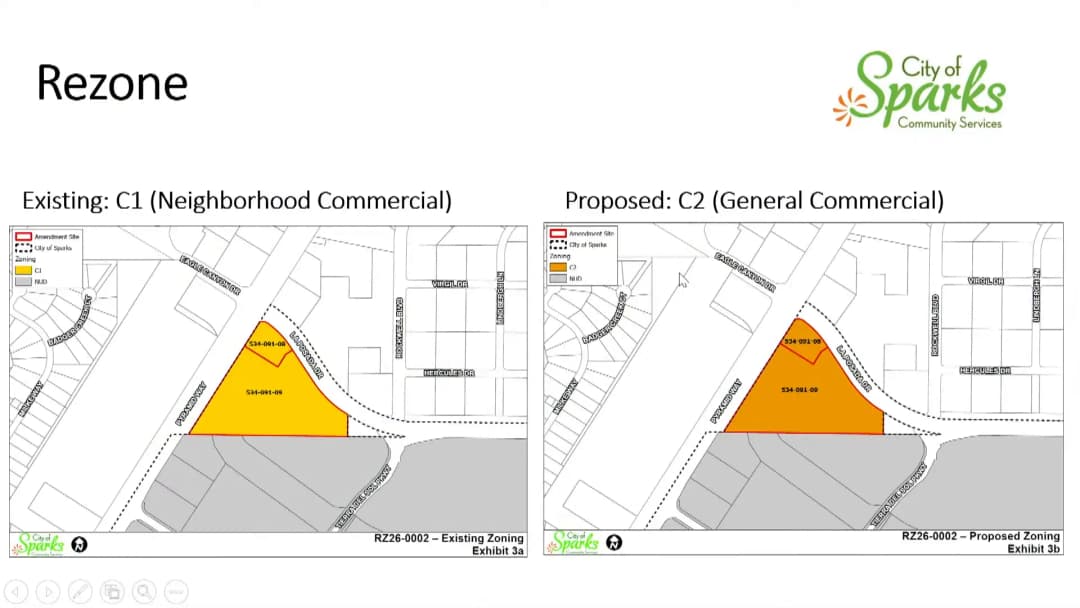
The Sparks Planning Commission met on October 16, 2026, to consider several items including the recognition of a retiring staff member, conditional use permits, an affordable housing development agreement, land use changes for a commercial property, and the endorsement of the FY26 Regional Annual Report. All votes and actions taken during the meeting were unanimous. Consent Calendar - The commission unanimously approved the agenda (motion by Commissioner Kramer, second by Commissioner Reed). - The commission unanimously approved the minutes of the August 18, 2026, study session and the August 20, 2026, regular meeting (motion by Commissioner Kramer, second by Commissioner Reed). Public Comments & Testimony - No members of the public spoke during the general public comment period. One written comment was received regarding the Foothills at Winfield application, which was not on the current agenda. - No public testimony was offered during the public hearings for items 8.1, 8.2, 8.3, 8.4, 8.5, or the final public comment period. Discussion Items - Recognition of James Rundle (Resolution 231): The commission honored James Rundle for his 25 years of service with the City of Sparks, where he served in various roles including Community Services Director. Commissioners and staff praised his encyclopedic knowledge of zoning codes, mentorship, and dedication. Mr. Rundle thanked his family and the staff, reflecting on the city's population growth from 70,000 to 120,000 during his tenure. The resolution passed unanimously. - Conditional Use Permit for Audi District Project (PCN 20-0016 / CU 26-0013): Development Services Manager Scott Carey presented a request for four uses at the site of a former Lowe's: a vocational school (National Technical Institute), a University of Nevada, Reno College of Engineering space, a craft coffee roastery, and a drive-through ATM. Staff found the proposal compatible with the comprehensive plan, noting a reduction in estimated average daily traffic trips from 6,363 to 4,930 compared to the previous retail use, and a surplus of 84 parking spaces. The applicant, Doug Wheely of Foothill Partners, expressed support for the staff analysis. The commission approved the permit unanimously with nine conditions. - Development Agreement for Silver Sage Manor (PCN 26-0012): Housing Specialist Amy Jones presented a proposed development agreement to transfer a city-owned vacant parcel on 4th Street to Silver Sage Manor for an affordable senior housing project. The project requires a minimum of 16 dwelling units for households earning 50% or below the Area Median Income (AMI) with a 50-year affordability period, as permitted under NRS 268058. Executive Director Chip Hobson expressed strong support for the project, noting it was a planned expansion of the adjacent Lincoln Way Senior Apartments. The commission recommended approval to the City Council unanimously. - Comprehensive Plan Amendment, Annexation, and Rezone (PCN 26-0011): Scott Carey presented three related requests for a 9.55-acre site at La Posada Drive and Pyramid Way, currently home to a car wash and storage facility. The requests included assigning a commercial land use designation (MPA 26-0004), annexing the property into the city (ANX 26-002), and rezoning it from C1 (Neighborhood Commercial) to C2 (General Commercial) (RZ 26-0002). A fiscal impact analysis projected a general fund surplus of $5,599,000 and a road fund surplus of $29,000 over a 20-year period. The commission unanimously recommended approval of all three items to the City Council. - FY26 Regional Annual Report: City Planner Siena Reed presented the state-mandated report detailing the City of Sparks' activities in support of the Truckee Meadows Regional Plan. Highlights included the city's certified population growth to 117,116, the use of $740,000 in CDBG funds and $3 million in Home Means Nevada Initiative funds for affordable housing and infrastructure, and participation in regional planning efforts. The commission unanimously voted to endorse the report and forward it to the Regional Planning Commission and Governing Board. Key Outcomes - Adopted Resolution 231: Commending James Rundle for 25 years of dedicated service to the City of Sparks. (Unanimous) - Approved CU 26-0013: Conditional use permit for the Audi District Project, allowing a vocational school, university space, coffee roastery, and drive-through ATM. (Unanimous) - Forwarded Recommendation to City Council for PCN 26-0012: Recommended approval of a development agreement with Silver Sage Manor for a 16-unit affordable senior housing project. (Unanimous) - Forwarded Recommendation to City Council for PCN 26-0011: Recommended approval of a comprehensive plan amendment, annexation, and rezone for the site at La Posada Drive and Pyramid Way. (Unanimous) - Endorsed the FY26 Regional Annual Report: Forwarded to the Regional Planning Commission and Governing Board. (Unanimous)
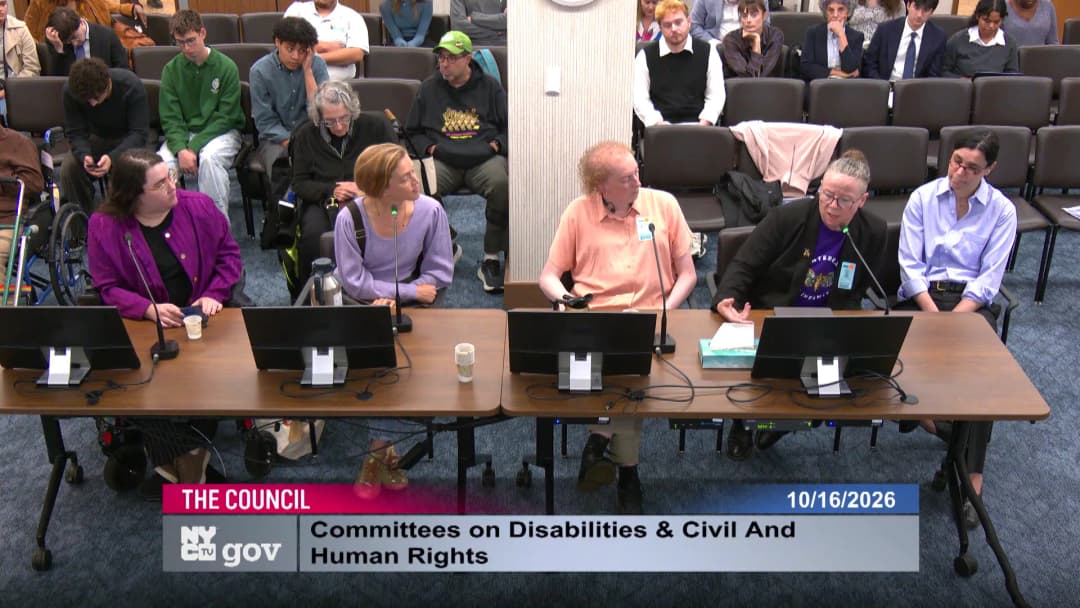
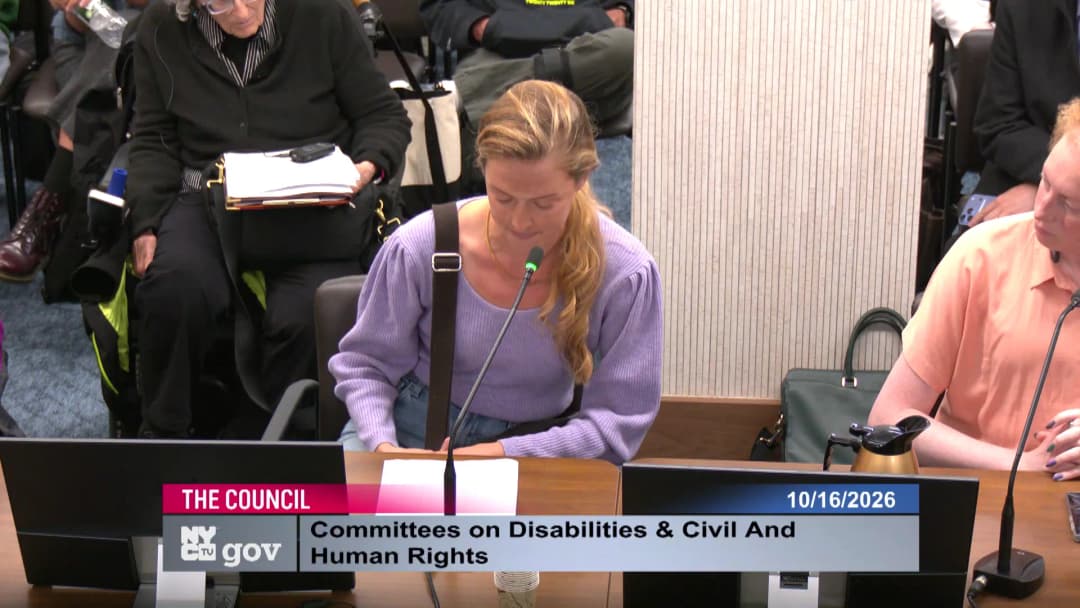
The joint oversight hearing, chaired by Councilmembers Sandy Nurse and Shahana Hanif, examined disability discrimination enforcement trends at the New York City Commission on Human Rights (CCHR) and considered several legislative items. The hearing featured testimony from CCHR and the Mayor's Office for People with Disabilities (MOPD), as well as extensive public testimony from disability rights advocates, intersex community members, and service animal handlers. No final votes were taken; all bills and resolutions were laid over by committee. Public Comments & Testimony - Clement So (Metropolitan Asian Deaf Association) urged CCHR to establish a direct video phone line for ASL users and improve data collection on disability violations. He expressed strong support for Intro 1107 (service animal guidance) and Res 0665 (UN CRPD ratification). - Jean Ryan (Disabled in Action) described a four-year unresolved complaint against a grocery store that locked its gate during business hours, blocking wheelchair users. She also criticized CCHR's handling of a group complaint against Uber, where the case was closed without explanation after years of inaction. - Gary Owie Steven (CUNY student) testified in support of Res 0510 (Autistic Pride Day), sharing personal experiences of being excluded as an autistic and intellectually disabled individual from multiple communities. - Madeline Reichman (Legal Aid Society) highlighted endemic disability discrimination in homeless shelters and urged increased funding for CCHR enforcement, noting that CCHR is often the only option for tenants with disabilities who cannot afford private attorneys. - Evan Yankee (Brooklyn Center for Independence of the Disabled) supported Intro 1107 but stressed that MOPD must receive adequate funding. He also called for stronger enforcement against ride-hail services that illegally deny service animal users. - Intersex community members (Erica Lorshbough, Alicia Roth Weigel, Liat Feller, Jennifer Levine, Alistair Ittelson, Alyssa Ball, Briani Price, others) uniformly expressed strong support for Intro 0131, sharing experiences of discrimination in employment, housing, healthcare, and public accommodations. They emphasized that explicit statutory protections are needed to ensure permanence and public awareness, especially given federal rollbacks. - Shauna Kniznik (ACLU, intersex woman) supported Intro 0131 and stressed the need for public education so intersex New Yorkers know their rights. - Kathleen Collins (congenital quadruple amputee) testified that CCHR's website lacks a clear way to file a formal complaint, risking missed legal deadlines. She called for fixed deadlines and better digital accessibility. - Jillian Miano (autistic woman) supported Intro 1107 but raised privacy concerns about the emotional support animal documentation process. She also supported Res 0665. - Sayer Russell (Autistic Adults NYC) supported Res 0510, emphasizing that autistic voices must be centered in decisions affecting the community. Discussion Items - Oversight of Disability Enforcement at CCHR: Chair Hanif opened by noting that disability is the most common basis of claims filed with CCHR. She highlighted a tragic case where a tenant died waiting years for a ramp. Chair Nurse stressed that CCHR is a small agency with a large mandate and that justice delayed is justice denied. - CCHR Deputy Commissioner Joanne Kamuf Ward testified that disability claims comprised the most common type in FY26 across employment, housing, and public accommodations. She described CCHR's enforcement tools, including pre-complaint interventions (PCIs), Project Equal Access (which has 3 staff), and testing. She noted that CCHR recently reorganized to move more staff into enforcement, creating non-attorney investigator roles and a monitoring clerk. - MOPD Deputy Commissioner Balkeese Marig stated MOPD does not enforce discrimination complaints but refers callers to CCHR. MOPD receives hundreds of calls per month, but only recently began tracking referral outcomes. Since July 2026, MOPD referred at least 22 alleged discrimination claims to CCHR, mostly housing-related. - Source of income discrimination: Assistant Commissioner Stephanie Rivera reported that in FY26, CCHR resolved 152 lawful source of income matters via pre-complaint intervention, with average closure under 30 days. Councilmembers questioned how cases involving both disability and source of income are tracked. CCHR acknowledged disability often overlaps with other protected categories and agreed to follow up with data. - Case backlog and reorganization: CCHR stated the reorganization took effect July 1, 2026. The InfoLine team doubled to 16 members, and a new case management system is being procured. The agency retained an internal guidance for housing case resolution within two years but aims to reduce that timeline. - Testing: CCHR conducted 197 disability-related tests in public accommodations in FY26, down from 390 in FY25, due to shifting resources to other protected classes like salary transparency. Chair Nurse noted the decline and questioned whether more resources are needed. - Intro 0131 (intersex protections): Councilmember Cabán sponsored the bill to explicitly include intersex traits in the definition of gender. CCHR supported the bill, noting it aligns with existing interpretation. Public testimony overwhelmingly supported it, with proposed technical amendments from Fordham Law clinic to define "intersex traits" and clarify the phrase "regardless of sex assigned at birth." - Intro 1107 (service animal guidance): CCHR supported the intent but noted the administration is still reviewing which agency should implement it. Public testimony highlighted widespread denials of service animal access, including in restaurants and grocery stores. - Res 0510 (Autistic Pride Day): Councilmember Julie Won's statement was read, noting the resolution was sparked by self-advocate Gary Owie Steven. Public testimony supported the resolution as a step toward celebrating neurodiversity. - Res 0665 (UN CRPD ratification): CCHR and public testimony supported the resolution, calling on the U.S. Senate to ratify the convention. Key Outcomes - Oversight T2026-2549: Hearing held and filed by committee. No further action. - Int 0131-2026: Hearing held, laid over. Councilmember Cabán indicated she will incorporate technical amendments proposed by the Fordham Law clinic. Committee chair expressed intent to pass the bill. - Int 1107-2026: Hearing held, laid over. CCHR and MOPD committed to continued review. No timeline set. - Res 0510-2026: Hearing held, laid over. Expected to pass with broad support. - Res 0665-2026: Hearing held, laid over. Committee chair expressed support. - CCHR agreed to provide follow-up data on case breakdowns by disability type, source of income intersections, and referral outcomes from MOPD. - No votes were taken on any item during the hearing.
The New York City Council's Committees on Disabilities and Civil and Human Rights held a joint oversight hearing on October 16, 2026, to examine disability discrimination enforcement trends at the New York City Commission on Human Rights (CCHR). Chaired by Councilmembers Shahana K. Hanif and Sandy Nurse, the hearing addressed four legislative items, including bills on intersex protections (Int 0131), service animal guidance (Int 1107), Autistic Pride Day (Res 0510), and UN CRPD ratification (Res 0665). The committee scrutinized CCHR's case backlog, enforcement capacity, and collaboration with the Mayor's Office for People with Disabilities (MOPD). Public Comments & Testimony - Clement So of the Metropolitan Asian Deaf Association urged CCHR to implement direct ASL video intake for complaints and supported the service animal guidance and CRPD resolutions. - Jean Ryan of Disabled In Action expressed severe frustration with CCHR, stating a 4-year-old case involving a locked grocery store gate had not been resolved and that the agency had become "irrelevant" to the disability community. - Michael Ring and Massum Mista supported the service animal public education bill, with Mista reporting routine denials of entry with her guide dog and emphasizing the need for mandatory handler input on materials. - Madeline Reichman of the Legal Aid Society called for increased CCHR funding, highlighting systemic disability discrimination in homeless shelters despite ongoing class action litigation. - Evan Yankee of the Brooklyn Center for Independence of the Disabled supported Int 0131 and Int 1107, criticizing CCHR for inaction and advocating for stronger enforcement and increased funding for MOPD. - A large coalition of intersex advocates and organizations (Interact, Interconnect, Fordham Law Clinic, ACLU, Outright International) unanimously supported Int 0131. They shared experiences of forced medical procedures, employment discrimination, and healthcare barriers. They argued explicit statutory language is essential to protect against potential future administrative rollbacks and recommended specific amendments to the bill's text. - Gary Owie Steven and Sayer Russell of Autistic Adults NYC passionately supported the Autistic Pride Day resolution, advocating for a shift from deficit-based narratives to community-led celebration and inclusion. - Several other speakers addressed inaccessible city services, high unemployment for people with disabilities, and privacy concerns regarding emotional support animal documentation. Discussion Items - CCHR Restructuring & Case Processing: CCHR detailed its July 2026 reorganization, which moved resources to the new Office of Civil Rights Enforcement, doubled the InfoLine to 16 staff, created non-attorney investigator roles, and hired a legal technology director. The internal case processing goal was acknowledged as two years due to case complexity, though the agency aims to improve this through expanded pre-complaint intervention. The Project Equal Access team grew to three staff. - MOPD Collaboration: MOPD has made at least 22 discrimination referrals to CCHR since July but does not systematically track case outcomes. Councilmembers urged closer loop-closing on referrals. MOPD described its role as a referral hub and is forming an interagency working group on elevator outages. - Source of Income & Disability: The committee highlighted the disproportionate impact of source of income discrimination on New Yorkers with disabilities. CCHR confirmed it evaluates these claims under both protected categories. Councilmembers requested specific data and a report on this intersection. - Service Animals (Int 1107): CCHR supports the bill's intent but noted the administration is still reviewing which agency should lead implementation. MOPD and CCHR already conduct trainings and have existing posters. Coordination with the Mayor's Office of Animal Welfare was noted. - Intersex Protections (Int 0131): CCHR explicitly supports the bill, confirming it aligns with its current enforcement guidance. The discussion focused on making protections explicit in statute to withstand political changes. - Testing & Enforcement: Disability-related testing decreased in FY26 due to resource shifts to salary history and fair chance housing topics. CCHR has a small testing team. Penalties for repeat offenders can reach $250,000, but CCHR is exploring increasing this cap to improve deterrence. A new monitoring clerk position was created to ensure compliance with settlements. - Accessibility Delays: Councilmembers probed the systemic delays causing multi-year waits for basic accommodations like ramps. Challenges include uncooperative landlords, DOB permit delays, and landmarking requirements. - Federal Context: CCHR stepped away from its EEOC dual-filing contract to protect New Yorkers' data from federal access. The agency will continue pursuing disparate impact cases under the city's broader protections. Key Outcomes - Hearings Held and Laid Over: Hearings were held for the oversight item and all four pieces of legislation. Int 0131, Int 1107, Res 0510, and Res 0665 were laid over by the committee for future action. The oversight resolution was filed. - Data Commitments: CCHR and MOPD committed to following up on numerous data requests, including breakdowns of referral outcomes, cases involving both disability and source of income, testing results, and average processing times. - Legislative Refinement: The committee received specific proposed amendments to Int 0131, including defining "intersex traits" and clarifying the scope of the "regardless of sex assigned at birth" phrase. Councilmember Cabán expressed intent to incorporate these. - Policy Directives: The committee urged CCHR to produce a report on the intersection of source of income and disability discrimination and to explore a system for emergency accessibility repairs. MOPD was directed to improve case tracking from its referrals. - Further Action: The bills will proceed to the full City Council. The agencies are expected to provide the requested data and continue collaborative efforts on systemic issues like elevator outages and service animal education.
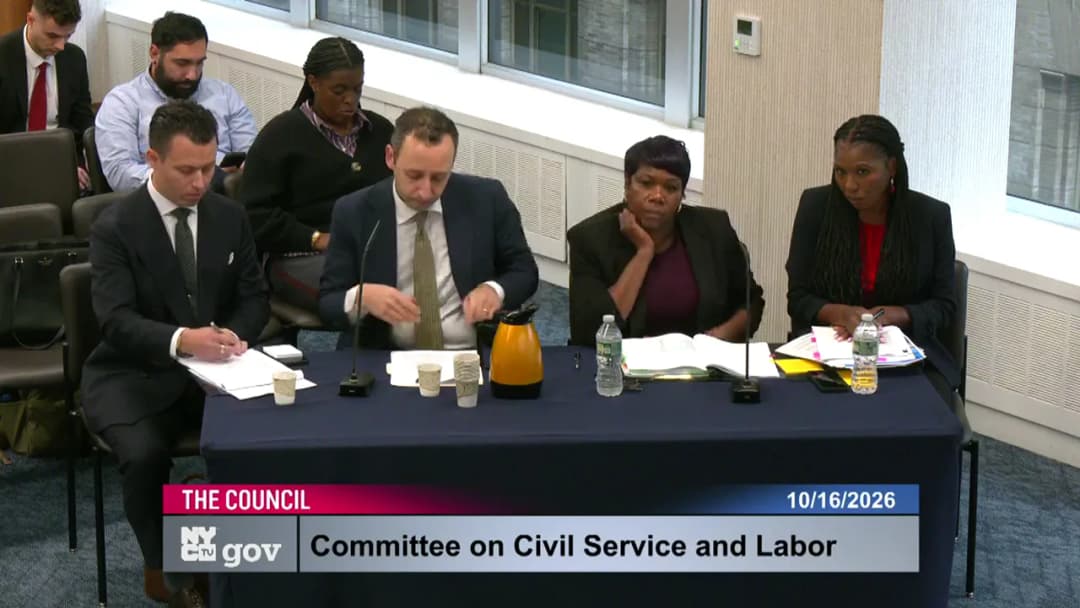
On Friday, October 16, 2026, the New York City Council Committee on Civil Service and Labor, chaired by Councilmember Shirley Aldebol, held an oversight hearing examining municipal retention strategies. The hearing featured testimony from the Department of Citywide Administrative Services (DCAS), the Office of Labor Relations (OLR), and public witnesses. Key topics included the city's 85% retention rate, a 3.8% vacancy rate, the departure of over 32,000 employees in FY2025, and initiatives to improve career development, benefits communication, and workplace culture. Public Comments & Testimony - Rose Lavaglio-Miller, Associate Executive Director of District Council 37 (DC 37), representing over 90,000 municipal workers, expressed that the city focuses heavily on recruitment but not enough on retention. She noted that many employees are unaware of available benefits, that wage increases (16.21% over five years) have been outpaced by inflation (21% in the metro area), and that affordable housing remains a critical issue. She called for a municipal housing program, opposed reclassifying competitive titles to non-competitive (which reduces leave rights), and urged a genuine partnership with labor. - Catherine Vaughan, Co-founder and Co-Executive Director of Abundance New York, highlighted that 60% of resigning employees in FY2024 had served less than five years, and turnover is acute in frontline roles (e.g., 295 child protective specialists resigned from ACS in FY2025). She proposed four priorities: (1) retain employees through the first five years; (2) recognize that paying to retain costs less than replacing (citing EMS: training a new EMT costs $42,000, and overtime grew 40% as attrition increased); (3) plan for predictable departures; and (4) improve data transparency by publishing vacancy/attrition data by title and agency, and by creating agency dashboards. - Matthew Lee, a legislative fellow for Councilmember Narcisse, noted that early turnover and lack of benefit awareness are key issues. He suggested simple, tangible benefits like free transit access for city employees could improve retention and morale. Discussion Items - DCAS Testimony (Katrina Porter, Deputy Commissioner): Reported an 85% retention rate (similar to NY State and federal government), median employee tenure of 9 years (three times the private sector), and a 3.8% vacancy rate (down from 8.4% in 2021). Highlighted initiatives: Little Apple free child care center (40 slots, 37-family waitlist, vendor-operated), Mayor's Scholarship expansion (91 applicants from 21 agencies for undergraduate programs), NYC Learn training platform (20,000+ participants, up from 13,000), citywide employee viewpoint survey (16,000 responses, 10% response rate among 169,000 non-DOE/H+H employees), and exit survey programs. Noted that career development is the top reason for departure among employees with 0-4 years of service. - OLR Testimony (Dan Pollock): Described collective bargaining achievements: 16% wage increases over five years, flexible work pilot (extended through June 2027), and equity funding to target high-attrition titles (e.g., lifeguards, 911 operators, caseworkers, school safety agents). Noted that benefits include health plans (new NICE PPO), WorkWell NYC wellness program (60,000+ participants), and Employee Assistance Program (EAP). Acknowledged the need to improve communication about benefits and noted the recent creation of an OLR communications division. - Councilmember Questions: Included inquiries about survey participation rates, breakdown of retention by agency, training cost transparency (courses up to $1,900, paid by agencies, not employees), effectiveness of outreach, promotional exam scheduling (data-driven, not influenced by OMB budget cycles), exit survey response rates (only 80% of departures were resignations in FY25, up from 71% in FY24), work-life balance (35% of employees felt emotionally drained), the pay equity analysis (vendor contracted, first report due May 7, 2027), and the Civil Service Modernization Advisory Committee (convened two meetings, recommendations due by end of 2026). - Municipal Housing: Both DC 37 and councilmembers raised the lack of affordable housing as a major retention barrier, particularly for employees with a two-year residency requirement. DCAS noted the child care pilot as a step but acknowledged housing is not within its direct purview. Key Outcomes - The hearing was held as an oversight session, with no votes taken. - The committee filed the oversight (T2026-2618) as recorded in the minutes. - Chair Aldebol committed to following up with DCAS on specific data requests (retention rates by agency, exit survey completion rates, employee training participation by title, and the number of employees who have “availed themselves” of wellness programs). - Councilmembers expressed interest in legislative solutions to improve data transparency (e.g., mandating agency dashboards) and to support civil service modernization efforts. A briefing from the Civil Service Modernization Advisory Committee was requested. - Public testimony was officially entered into the record, with the option for written submissions within 72 hours.