This work session served as a confirmation hearing for Mr. Lauren Crawford, appointed by the executive to the position of municipal treasurer. The meeting included introductions, a statement from the appointee, and questions from assembly members. No vote was taken; the confirmation is scheduled for the Assembly's consent agenda on October 20, 2026. Confirmation Hearing for Mr. Lauren Crawford - Introduction and Background: Ben Bowman introduced Mr. Crawford, noting his tenure as Deputy Municipal Treasurer since 2024 and prior experience with the municipality (AWO, 2015–2018), the state as a petroleum economist, and private sector roles. He has served as Acting Treasurer since July 2026. - Appointee's Statement: Crawford described the treasury's purpose as safeguarding the integrity of municipal revenues, with three core functions: accurately estimating revenue, collecting funds, and remitting them for proper accounting. He emphasized fair, equitable, timely, and efficient treatment of taxpayers. - Questions from Assembly Members: - The Chair asked about operational efficiency opportunities, citing the cash-only marijuana tax requiring armored truck transport. Crawford explained that a virtual vault option was not cost-effective and noted upcoming plans: an e-billing software for property tax (expected November 2026) and longer-term software upgrades to replace Excel and Access. - The Chair also asked about the proportion of property taxpayers paying through mortgages vs. directly; Crawford did not have the figure but offered to present it at the next Budget & Finance Committee meeting. - Assembly Member Bowen asked about proudest accomplishments. Crawford cited work on Summary of Economic Effects (SE) analyses, implementation of the rental vehicle tax, and e-billing completed on a shoestring budget. - Regarding future improvements, Crawford mentioned plans to modernize software for three additional taxes, create a continuing education course on real estate property tax processes, upgrade the payment portal website for easier navigation, and implement cross-training for the treasury team. Key Outcomes - No vote was taken during this work session. The confirmation of Mr. Lauren Crawford as municipal treasurer (AM 666 2026) will be placed on the Assembly's consent agenda for the October 20, 2026 meeting. The swearing-in may occur offline. - Meeting adjourned approximately 20 minutes before the next scheduled committee meeting.
The Public Meeting Index
The Public Meeting IndexThe meeting on October 15, 2026 opened with a brief Public Housing Authority Commission (PHAC) session, followed by a regular City Council meeting and concluding with a Study Session. The evening included personnel recognitions, proclamations, Exchange Club awards, unanimous approval of consent calendar items, presentations on several grant‑funded projects, and policy discussions on extending the Chandler Municipal Airport runway and exploring alternative employee work schedules. Public Housing Authority Commission - PHAC convened, established a quorum, and unanimously approved the minutes of its August 10, 2026 meeting along with two other consent items. Ceremonial Items - Invocation and Pledge of Allegiance: Pastor Tim Klumps of the Family Bible Church offered the invocation; Vice Mayor And Senus led the pledge. - Service Recognitions: Ten years – Sherry Trinidad (Accounting); 15 years – Ivan Enriquez (City Clerk’s Office); 20 years – Christopher Gutierrez (Traffic Management Center); 30 years – Deputy City Manager Leah Powell, recognized for building Chandler’s diversity office, the HELP collaborative, and leading the RAD conversion resulting in the 157‑unit Villas on McQueen affordable housing development. - Retirement Recognitions: Deborah Moreno (Library Administrator, 25+ years) and Scott Rogers (Environmental Management, 12 years) were honored. - Proclamations: October 2026 was proclaimed Rotary Month and Cybersecurity Awareness Month. - Exchange Club Awards: Battalion Chief Bo Jenkins received the Firefighter of the Year Award; Officer Aaron O’Brien (Behavioral Health Unit) received the Police Officer of the Year Award. Consent Calendar - The City Council voted unanimously to approve the Council consent agenda (Items 1–3). The PHAC consent agenda had been adopted earlier. Study Session – Presentations on Consent Items (Already Approved) The following items, previously placed on the consent agenda, were called up for informational discussion. - Chandler Flex Microtransit Grant (Resolution 6042): The city accepted a $1 million federal grant (secured by Congressman Greg Stanton) to support operations and expansion of Chandler Flex. The grant requires a 50% local match, which is already budgeted. Since its 2022 launch, the service has provided nearly 200,000 rides with a customer rating of 4.9 out of 5 stars. - Pima Park Playground (Resolution 6041): A $750,000 Land and Water Conservation Fund grant was approved for a fully accessible playground designed with input from the Camp Challenge special‑needs program. The city will provide a dollar‑for‑dollar match. Construction is expected to be complete by fall 2027. - Foley Park and Pool Renovation Master Plan (Agreement with Kimley Horn): Council authorized a $159,000 contract to develop a master plan for a major renovation of Foley Pool and Park, including a possible 50‑meter competitive pool, a play pool, and improved amenities. The project will incorporate community feedback. - Ordinance 5179 – Rezone for Group Home: A zoning change was approved for a residential group home serving up to nine clients with developmental disabilities (staffed by six employees). Compliance will be monitored by the Arizona Division of Developmental Disabilities through annual inspections. - Desert Palms Preliminary Development Plan: Council approved a four‑pad development on Warner Road comprising three quick‑serve drive‑throughs and one shop building. The project is intended to revitalize a long‑vacant corner and generate sales‑tax revenue. - Water Reclamation Facility Improvements – Phase 3 (Items 34 & 35): Council approved a $50.8 million construction contract (McCarthy) and a $5.0 million construction‑management‑at‑risk contract (Wilson Engineers) for rehabilitation of the Airport and Ocotillo water reclamation plants. The work includes replacement of diffusers, headworks improvements, odor scrubbers, and a new disk filter. The CMAR contract, staffed by up to 34 professionals, is necessary because the city’s internal CIP team (24 members) cannot manage the project alone. Officials noted that delaying the work would risk plant failure, environmental impacts, and inability to meet reclaimed‑water permits. - Young Family & Professional Attraction Campaign (Agreement with Eddie Alexander): Council authorized a $190,000 one‑year contract for a marketing campaign to attract young families and professionals. Funding sources include a $150,000 grant from the Chandler Industrial Development Authority and $10,000 contributions from each of the four school districts serving Chandler (Chandler Unified, Kyrene Elementary, Mesa Public Schools, and Tempe Union High School). The campaign will use a 10‑week discovery phase to develop measurable goals. The city expects to return to Council for ongoing funding after the first year. Discussion and Direction on Policy Matters - Chandler Municipal Airport – Runway Extension (Municipal Code Chapters 8–10): Council debated whether to retain the existing ordinance requiring a bond election before extending the south runway by up to 680 feet (to 5,550 feet) or to amend it. Staff presented two options: (1) keep the ordinance and proceed to a bond election (earliest November 2027, cost $500,000); (2) amend the ordinance to remove the bond requirement while keeping other protections (length cap, public input, weight limits). Councilmembers expressed varying views: some advocated a public vote (whether bond or general election), while others preferred to amend the ordinance and rely on the mandatory FAA environmental review and public‑input process. Council directed staff to return by the November 9, 2026 meeting with two draft ordinances: one that substitutes the bond election with a general election (which could occur as early as July 2027) and one that removes the election requirement entirely, along with pros and cons of each option. No final decision was made. - Full‑Time Hours for Benefit Eligibility: Councilmember Harris withdrew her discussion request after receiving clarification from staff. - Alternative 4/10 Employee Work Schedules: Councilmember Harris requested that staff explore the feasibility of offering four‑day, 10‑hour work schedules to more employees and expanding service hours for residents. The city manager noted that 25–30% of employees already work 4/10 schedules and that departments have discretion to implement such schedules. Council concurred that the city manager should survey departments, assess community needs, and report back on opportunities for improved hours and flexible scheduling without committing to a formal work session. Key Outcomes - Unanimous approvals of PHAC minutes, the Council consent calendar, and all study‑session resolutions and contracts. - Directive on Airport Ordinance: Staff to present two draft ordinances at the November 9, 2026 Council meeting (Option A: replace bond election with general election; Option B: eliminate election requirement). - Work‑Schedule Study: City manager will review current practices and department needs and bring back a report on possibilities for expanded hours and flexible scheduling. - No public comment was offered during any segment of the meeting; all public appearances were scheduled recognitions and ceremonial presentations.
The Mobile City Planning Commission met on October 15, 2026, with a quorum present, to hear and act on a lengthy agenda of subdivisions, rezonings, conditional use permits, planned unit development modifications, and sidewalk waiver requests. The chair reviewed the meeting's two-session format: a public hearing followed by commission deliberation, with up to four speakers for and four against each item, a five-minute speaking limit, a one-minute warning, and a two-minute applicant rebuttal if there is opposition. The commission makes final decisions on subdivisions; for rezonings, conditional use permits, and planned developments it makes recommendations to the City Council. The agenda was adopted after moving the Annunciation Greek Orthodox Church subdivision from item 1 to the fourth position to allow related items to be considered closer together. Two regular members were absent, two supernumeraries were allowed to vote, and Commissioner Kenny Nichols recused himself from the Dogwood Drive application. Public Comments & Testimony - Dogwood Drive application: Melissa Hadley, for the applicant, said the proposed B1 zoning is an appropriate buffer between residential and commercial uses and noted voluntary commitments on hours and trash collection. Jerry Spiegel, also for the applicant, asked the commission to again recommend rezoning, recounting the prior unanimous planning commission recommendation, the City Council denial, the missed appeal deadline, and the former city attorney's written statement that the city could not in good faith argue against summary judgment. - Dogwood Drive opposition: Wanda Cochrane, representing residents Steve Bailey and Candace Robbins, opposed the R1-to-B1 rezone, arguing there was no justification, the proposal was inconsistent with the comprehensive plan, B1 uses were not compatible with the R1 neighborhood, and there was no guarantee the development would be built. Steve Bailey cited crash risks at the Airport Boulevard/University Boulevard intersection, saying the updated traffic study omitted safety issues and used counts taken while the adjacent CVS was vacant. Evan Duffy, a third-generation homeowner on Summit Drive, said noise and traffic had worsened since the CVS development and that the neighborhood had no outlet other than Airport Boulevard. Candace Robbins, a second-generation Dogwood Drive resident, said 21 of 22 people at a July meeting opposed the project, asked the commission to deny the rezoning, and warned about the precedent of piecemeal commercial encroachment. The applicant's rebuttal said the traffic study included future traffic and was approved by the city, the site plan complied with the traffic engineer's recommendations, healthy growth created commercial demand, and the developer proposed to preserve mature trees and exceed required setbacks. - Burger Road subdivision: Nancy Stone, 106 South McGregor Avenue, opposed the three-lot subdivision, saying lot 1 was small, mature trees would be removed, and the neighborhood drains were already overloaded; she asked the commission to reject the subdivision until drainage problems were solved. - Church and South Jefferson rezone: Dandy Dalbear, 157 South Jefferson, opposed another business on the block, citing parking spillover from bars and businesses on Canal Street; she said residents would support residential use but not more commercial use. - Other items: Tammy McElroy asked a question about the plan and traffic for the Deval Street subdivision; the applicant said phase one would be a 250-unit apartment complex to replace housing lost during HUD redevelopment. No public comments were offered on most other agenda items. Discussion Items - Dogwood Drive dual application: The applicant's updated traffic study removed the previously required left-turn lane from Airport Boulevard and showed a slight decrease in level of service; access would be right-in/right-out from Airport and right-out north onto Dogwood Drive. Staff confirmed the only material change from the previous application was the removal of the left-turn lane. Legal counsel advised the commission was not bound by its prior vote. The subdivision portion was approved, but the R1-to-B1 rezoning motion failed for lack of a second, meaning no recommendation was sent to the City Council. - Burger Road subdivision: Commissioners noted discrepancies between two surveys, both dated July 7, 2026, regarding the location of the sidewalk relative to the right-of-way and property lines; there was also concern that if the lot line moved, lot 2 might fall below the 7,200-square-foot R1 minimum. The item was held over. - Cottage Hill Road rezone: The applicant proposed cottage homes with a separate office building, leading to a request to change from R1 to B1 rather than R3. A prior R3 application had been recommended by the commission but denied by the City Council on March 10, 2026. Staff confirmed B1 permits residential development at up to 25 dwelling units per acre. A commissioner expressed reservations about B1, neighborhood compatibility, and the separate office use; the applicant accepted a holdover to work out voluntary use restrictions and other concerns. - Highway 90 and Halls Mill Road sidewalk waiver: The applicant cited steep slopes, an ALDOT right-of-way that could not accommodate a sidewalk, a five-foot retaining wall on the adjacent property, lack of shoulders on Halls Mill Bridge, roadside ditches, utility guy wires, and the 500-foot distance to the proposed building. Commissioner Josh Woods conveyed the City Council representative's position to keep the Highway 90 sidewalk but allow the Halls Mill Road waiver; the city engineer recommended both waivers, saying the sidewalks would be better built as part of a future holistic city project. The waiver was approved. - Other sidewalk waiver discussion: On the Greelot Road waiver, Commissioner Woods opposed, citing the City Council's Complete Streets plan and connectivity concerns, but the waiver was approved. On the Halls Mill Road waiver for the Griffith Circle properties, staff engineering recommended approval because of roadside drainage ditches, fences, and other encumbrances. Key Outcomes - Adopted the agenda and moved item 1 to the fourth position. - 801 South University Boulevard: approved major modification of a previously approved PUD allowing shared access and parking, a 2,150-square-foot building, and 32 additional parking spaces, adopting findings of fact A through H. - Dogwood Drive: approved the subdivision; the R1-to-B1 rezone failed for lack of a second. - Moot Avenue/Griffith Circle/Halls Mill Road/McCray Avenue: held over the rezone and conditional use permit for expansion of an existing mobile home community to November 19, 2026; required revisions due November 3, 2026. - 59/61 Bradford Avenue and 1311 Azalea Street: approved the six-lot, 0.76-acre Annunciation Greek Orthodox Church subdivision. - 50/60 South Ann Street: approved the subdivision, the church expansion major modification, and the planned unit development modification, each subject to staff recommendations, with the modifications adopting findings of fact A through H. - 251/255 St. Louis Street and 106/160 North Jackson Street: approved the Ace Hardware and Spirits subdivision, waiving the corner-radius requirements in conditions 2 and 3. - 659 Macklemore Street: approved the two-lot Chapel Estate subdivision. - East side Deval Street: approved the two-lot Brooklyn North subdivision; applicant said it will be used for a 250-unit phase one apartment complex. - 7951 York Haven Road A: approved the two-lot Ranger Farms subdivision and waived condition 1 about the turnaround dedication; the county intends to use the site for West Mobile County Park expansion. - 2126 John's Lane: approved the three-lot subdivision. - 2 Burger Road: held over the three-lot subdivision to November 19, 2026, with corrections due November 3, 2026. - 7500 Airport Boulevard: approved the three-lot Westgate Pavilion resubdivision. - 5201/5213 Persons Drive: approved the five-lot Rosemary Hill subdivision. - Greelot Road sidewalk waiver: approved over Commissioner Woods's opposition. - 5263 U.S. Highway 90 West sidewalk waiver: approved for both Highway 90 and Halls Mill Road over opposition. - Halls Mill Road sidewalk waiver for 2651-57 Griffith Circle South and 2641 Griffith Circle West: approved over opposition. - 7211/7221 Cottage Hill Road: held over the R1-to-B1 rezone to November 19, 2026. - Church Street/South Jefferson: approved the downtown development district rezone from T3 to T4, with voluntary use restrictions prohibiting bars, restaurants, theaters, entertainment, and catering. - 200 Dunlap Drive: approved the one-lot Orca subdivision and sidewalk waiver for a temporary I-10 Mobile River Bridge construction site. - 957/959/961 Lion Street and 354 Cherry: approved the five-lot subdivision and church expansion modification; the modification approval applies only to lot 1, and the corner-radius waiver was granted. - 5685 I-10 Industrial Parkway: approved the two-lot PL Russell subdivision and the rezone to all I-1. - 8 Old Shell Road/109 North Ann Street: approved the revised plat reducing the approved subdivision from 10 lots to 8 lots. - 6950/6960 Moffat Road: approved the waiver of section 6B9 and removal of condition 2 requiring 50 feet of right-of-way from the center line of Moffat Road. - Approved the September 17, 2026 meeting minutes.
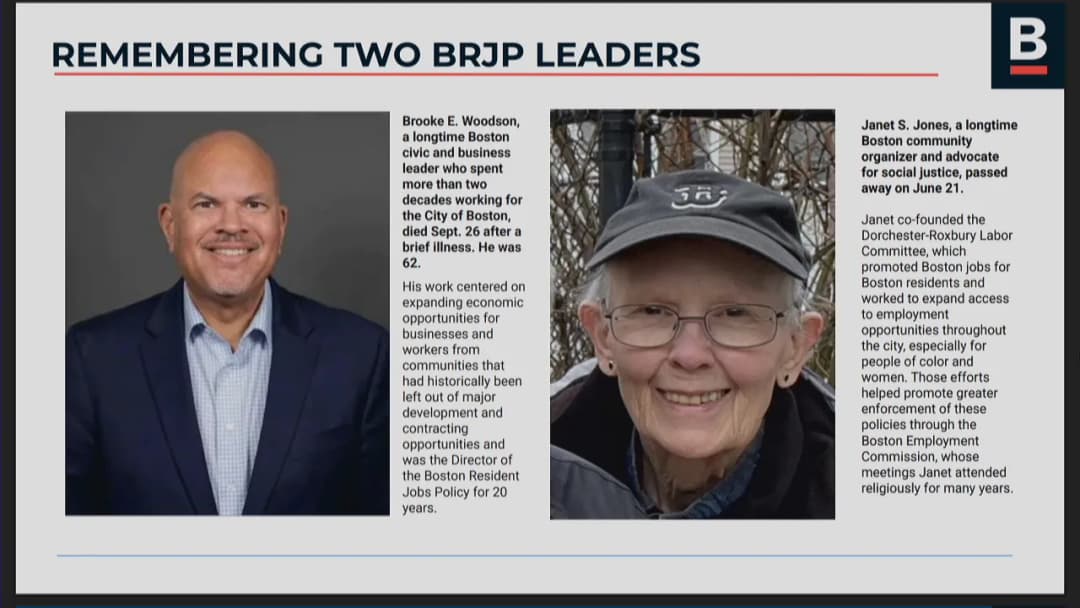
On October 15, 2026, beginning at 2:05 p.m., the Boston City Council Committee on Labor and Economic Development, chaired by District 4 Councilor Brian Warrell, held a hearing on Docket 0218 to review the effectiveness of the Boston Resident Jobs Policy and improving equity and employment standards on projects throughout Boston. Councilor Flynn joined the committee; Councilor Mejia and Council President Braden were absent. Administration officials Jody and senior manager Chris Will Brown presented an overview, compliance data, and workforce pipeline updates. The hearing was informational; no formal votes were taken, and no public testimony was offered. Opening Remarks and Tribute - Councilor Flynn expressed strong support for the Boston Resident Jobs Policy and its goal of giving Boston residents, women, and people of color equal access to construction jobs. He renewed his request for wage-dollar totals in addition to reported hours so the committee can understand financial impacts and compare outcomes across demographic groups. - The panel observed a moment of silence for Brooke Woodson and Janet Jones. Chris read tributes: Woodson, a former director of the Boston Resident Jobs Policy Office for 20 years, died September 26 at age 62; Jones, a longtime community organizer, died June 21 and regularly attended Boston Employment Commission meetings. Boston Resident Jobs Policy Overview - The policy was established in 1983 and amended in 2017. It covers city projects and private developments over 50,000 square feet. Current goals are 51% of total work hours of journey people and apprentices by Boston residents, 40% by people of color, and 12% by women. - Compliance is based on administrative requirements, such as attending pre-construction meetings, submitting documentation, and filing payroll records, rather than solely on whether contractors meet the hiring goals. - The Office of Labor Compliance and Worker Protections, under the Worker Empowerment Cabinet, enforces the Boston Resident Jobs Policy along with the Boston Jobs, Living Wage and Prevailing Wage Ordinance, the Wage Theft Executive Order, and the Heat Illness and Injury Prevention Ordinance. The office also provides free OSHA 10 and OSHA 30 training and, after the September 24 Jamaica Plain tragedy, free fall prevention training. Six-Month Compliance Data - For April 1 through September 30, 2026, the office monitored 150 construction projects: 44 private projects and 106 public projects, including 30 from the Public Facilities Department, 15 from Parks, 28 from Public Works, and 33 from the Mayor's Office of Housing. - Private projects: 3,100,000 work hours; 18% Boston residents, 41% people of color, 8% women. - Public projects: 660,000 work hours; 22% Boston residents, 58% people of color, 5% women. - The administration stated a combined total of 3,762,000 work hours; the stated subcategory figures sum to 3,760,000. - Neighborhood locations included 21 projects in Boston proper/downtown/seaport, 23 in Dorchester, 4 in Jamaica Plain, and some in various locations. - Public department breakdown: Mayor's Office of Housing had 454,000 hours with 21% Boston residents, 67% people of color, and 4% women; Public Works had 90,000 hours with 28%, 44%, and 4%; Parks had about 20,000 hours with 15%, 28%, and less than 1% women. - Overall, people of color reached 44% of hours against the 40% goal, women reached 7% against the 12% goal, and Boston residents remained below the 51% goal. Administration officials described Boston resident percentages as historically low over the last decade, even though people of color and women shares have increased. White Stadium Data - White Stadium is monitored as two projects. Percentages below are listed as Boston resident / people of color / women. - East Grandstand: about 60,000 hours; 39% / 49% / 14%. By trade: laborers 26,000 hours with 47% / 58% / 17%; carpenters 35% / 47% / 17%; iron workers 61% / 59% / 15%; operators 1% / 4% / 0%; electricians 38% / 60% / 16%. - West Grandstand: about 48,000 hours; 36% / 45% / 10%. By trade: iron workers nearly 9,000 hours with 36% / 63% / 9%; carpenters 40% / 44% / 6%; operators 1% / 5% / 0%; electricians 50% / 24% / 0%. - Jody said the comparatively strong White Stadium numbers, especially for women, were encouraging and warranted a deeper look so successful strategies could be replicated. Compliance, Payroll, and Enforcement - Seven construction monitors cover roughly 150 projects per year. Smaller projects receive scaled procedures, but compliance is required regardless of size. - Payrolls are submitted through a Salesforce database. Late submission triggers warnings, corrective action meetings, and possible recommendations for sanctions. Officials said there is not 100% timely submission, but most contractors correct the issue after warnings. One fine of $11,000 has been issued during Jody's tenure. - Wage data is currently collected only for public projects, beginning in November 2024, because it is tied to prevailing wage certified payroll records. Councilor Warrell asked whether a wage-reporting field could be added for private projects; Jody said the ordinance does not require that data and she would investigate whether the city can require it. - In response to Councilor Fischel's question, officials said the city's BRJP office is responsible for workforce outcomes, not business contracting decisions. The city sets hiring goals, but contractors choose how to meet them, and the office has no direct authority over minority- or women-owned business participation. Construction monitors advise contractors on strategies to improve outreach. - Councilor Flynn raised the 1985 executive order referencing Inspectional Services and building permits. Jody said she was not familiar with that permitting provision and noted state building code limits, but she agreed to provide a side-by-side comparison of the earlier and 2017 policy versions and to review how contractor compliance history is used in procurement and permitting. - On the Living Wage Advisory Committee, Jody said it is being merged into a new advisory committee covering all wage-and-hour laws, and the work is part of the current fiscal year work plan. Jobs Bank and Workforce Pipeline - Jobs bank usage is minimal: requests and follow-through are under 20, and contractors rarely draw from it. The database is described as mostly unskilled younger workers, while contractors often seek skilled workers, so matches are often poor. - The Boston Skilled Trades Initiative, supported by Bloomberg Philanthropies, is expanding pathways from Madison Park into registered apprenticeships. Under the project labor agreement signed by Mayor Wu with the building trades, the trades agreed to accept up to 50 young people per year, with the goal of expanding from 50 to 100 by the end of the grant period. The first cohort graduated in 2026; Vocation by Madison held its orientation the previous night; and two apprenticeship navigators are now embedded at Madison Park. - Officials said workforce development efforts are intended to expose young people to all 17 trades in the project labor agreement, including high-paying trades such as operators. Public Comments & Testimony - No public comments or testimony were offered at this hearing. Chair Warrell said advocates remain engaged, noting a three-hour community meeting the previous evening. Key Outcomes - No formal votes were taken; the hearing was informational and adjourned. - Jody agreed to provide Councilor Flynn with a side-by-side comparison of the 1985/1986 and 2017 versions of the Boston Resident Jobs Policy language and to investigate whether wage data can be added for private projects and reported from public projects since November 2024. - The administration said its next annual wage-loss report will be presented in April at a future hearing; the 2024 and 2025 reports are available on the city website. - The committee honored the memory of Brooke Woodson and Janet Jones and acknowledged the continued work of community advocates.
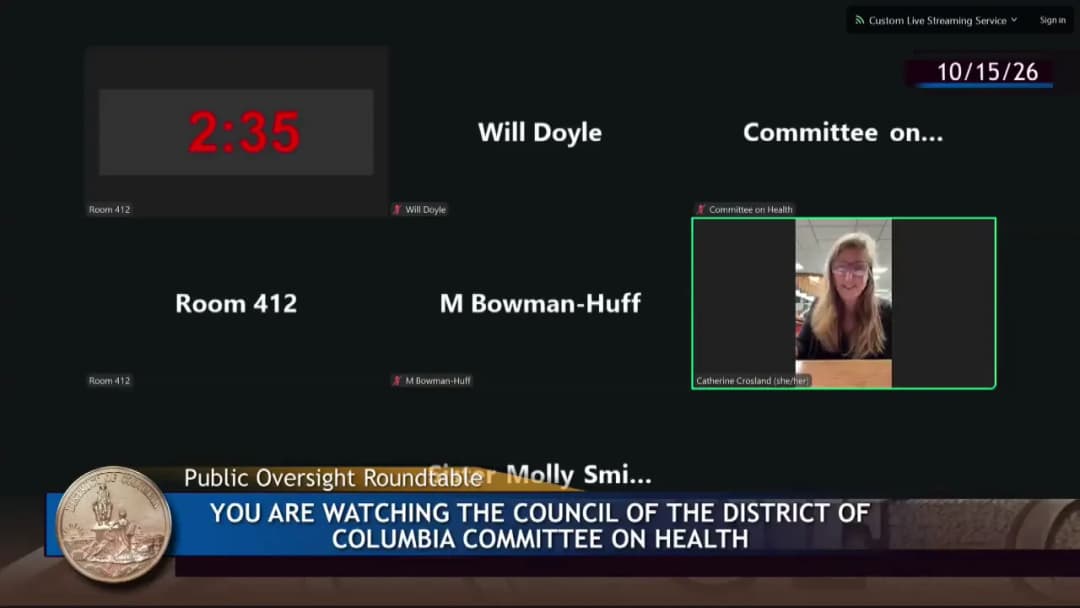
Chairperson Christina Henderson (At-Large, Committee on Health) convened a public oversight roundtable on October 15, 2026, to examine systemic gaps in the District's long-term care continuum for residents with overlapping health, behavioral health, and support needs. The roundtable focused on placement denials, fragmented agency responsibilities, and the declining capacity of Community Residential Facilities (CRFs). The sole government witness was Dr. Hannah Kaufman, the District's first Age-Friendly DC/Long-Term Care Strategic Coordinator. Public Comments & Testimony - Expert Panel (Virtual): Dr. Mark Salzer (Temple University) argued that community participation is a medical necessity for people with serious mental illness (SMI). Prof. Brian McGarry (University of Rochester) testified that nearly one in five nursing home residents have an SMI diagnosis but facilities lack specialized staff; he supported continued evaluation of DC's 2018 behavioral complex needs add-on. Mark Frederick (Elder Serve Health) described New York's health home and level two supportive housing models for SMI populations. - DC Long-Term Care Ombudsman Office: Nicole Belanis detailed accelerating CRF closures, noting 20 beds lost in 2025 and 55 beds lost through ten closures in 2026, with Supported Rehabilitative Residence (SRR) beds declining from 201 to 138 (2022-2026). Kimberly Walker testified that DBH failed to assess residents before closures, placing them at inappropriate levels of care, leading to mental health crises and homelessness. Holly Eaton criticized DBH for identifying homeless shelters as acceptable discharge destinations and recounted a resident who became homeless after a 7-day closure notice. State Ombudsman Mark Miller noted CRFs make up 12% of beds but generate 23% of complaints; DC has lost 30% of its CRF beds in ten years. The office recommended an independent comprehensive study of the DBH CRF system. - Advocacy & Associations Panel: Jacqueline Verner (Disability Rights DC at ULS) expressed concerns about physically inaccessible CRFs, inadequate housing voucher rental caps (set at 2011 rates), and slow progress on the McDonald v. DC nursing home transition injunction. Elizabeth Davis (DC Hospital Association) reported that in March 2026, 89 patients remained hospitalized beyond medical clearance, accounting for 4,862 excess days; 32 awaiting long-term care stayed an average of 103 additional days. Barriers included guardianship delays and staffing. Dr. Christy Kovax (Behavioral Health Solutions) argued the core issue is long-term care capacity, not just hospital discharge, and the behavioral add-on's 90-day authorization is too restrictive. Andrew Patterson (Legal Aid DC) stated approved PCA hours go unfilled due to staffing shortages and urged a 1915(j) state plan amendment for participant-direction. Kristen Ewing (DC Appleseed / DC Coalition on Long-Term Care) focused on workforce data gaps and the unimplemented Medication Aide Certified (MAC) credential; she offered six recommendations including a workforce gap analysis and funded training plans. - Provider & Resident Panel: Catherine Buell (Wellness Real Estate Innovations) shared personal dementia care costs exceeding $120,000 annually and advocated for memory care regulations and integrating health in the Comprehensive Plan. Dr. Benjamin Aderu (HCS) and Veronica Sharp (DCHCA) testified that the behavioral add-on ($82/day, 90-day authorization) creates a perverse incentive by rewarding documentation of disruptive behaviors over stabilization. Loreline Gregory (Service My Way representative) testified to severe communication delays and a six-month hiring process for PCAs. Sinique Lynn (Community Connections) reported operating CRFs at a 15% financial loss due to unfunded mandates and an absent reimbursement cap (30 days vs. 90-day required bed hold). Sister Melly Smith (Catholic Charities ACT) described a wheelchair-bound consumer with schizophrenia who was denied nursing home care within three hours, despite a waitlist. Judy Ashburn (Nuvaya/Samaritan Inns) highlighted a successful SUD therapeutic housing phase facing a sustainability funding cliff. Will Doyle (Pathways to Housing DC) stated the transition system is not working, noting "no wrong door often feels like no right door." Dr. Catherine Crossland (Unity Health Care) explained that a personal needs allowance of roughly $100/month causes people experiencing homelessness to decline assisted living placements. Discussion Items - Reimbursement & Regulation: Chair Henderson and witnesses consistently identified reimbursement rates as the foundational issue. Dr. McGarry noted rates must be coupled with oversight. Drs. Aderu and Sharp demonstrated how the behavioral add-on penalizes successful stabilization. Chair Henderson compared the lack of regular cost reviews in LTC to annual adequacy studies required in DC education. - CRF Oversight Fragmentation: Chair Henderson expressed deep frustration with DBH's CRF closure process, lack of transparency in level-of-care assessments, and the use of shelters as discharge destinations. She committed to following up on who at DBH makes level-of-care determinations and how the appeals process operates. - Workforce & Data Coordination: Dr. Kaufman identified workforce shortages and fragmentation as primary challenges. Chair Henderson pressed for concrete next steps regarding the Age-Friendly DC survey results, coordination with the Office of Planning on the Comprehensive Plan, and progress toward a multi-sector plan on aging. - High-Need Populations: The discussion covered patients dually eligible for Medicare/Medicaid, undocumented residents, and the systemic barrier of force impoverishment caused by low personal needs allowances. Chair Henderson noted this requires broader cross-committee and federal collaboration. Key Outcomes - Call for Independent Study: The Ombudsman Office, providers, and advocates strongly recommended a comprehensive, independent study of the DBH CRF system to assess bed need, reimbursement adequacy, and oversight. Chair Henderson acknowledged the urgency and explored options including an OIG report. - Behavioral Add-On Reform: Near-universal consensus emerged on the need to redesign the behavioral complex needs add-on. Recommendations included extending the authorization period beyond 90 days, simplifying eligibility criteria, and tying payments to care provided and outcomes rather than the documentation of crisis behaviors. - Discharge Standards: Witnesses and Chair Henderson agreed that DBH must immediately stop using homeless shelters as designated discharge destinations for CRF residents, as shelter operators lack capacity to manage these complex needs. - Regulatory & Policy Priorities: - Develop memory care regulations for assisted living facilities. - Explore a 1915(j) state plan amendment to allow state plan PCA beneficiaries to access participant-direction. - Establish a cost-based review and automatic annual inflation adjustments for LTC and CRF reimbursement rates. - Integrate aging, health, and LTC needs into the upcoming DC Comprehensive Plan update. - Next Steps: The Committee on Health record will remain open until October 29, 2026, for additional written testimony. Chair Henderson committed to continued oversight of DBH, DHCF, and DMHHS. The committee's next hearing is a joint oversight roundtable with the Committee on Human Services on the DC Access System (DCAS) and federal work requirements.
No agenda, minutes, or transcript were provided for this meeting. Therefore, no summary of discussions, decisions, or public comments can be generated.
The St. Petersburg City Council met on October 15, 2026, at 6:30 PM. The meeting covered litigation settlements, a memorial resolution for Bill Edwards, an annual report for Great Explorations, the adoption of the Port Master Plan, and the establishment of oversight committees for the General Obligation Bond and resilience planning. Several public hearings addressed land use changes, with the council closely debating a re-zoning for affordable housing and denying an appeal for a self-storage development. Consent Calendar - The agenda and consent agenda were approved unanimously. Councilmember Hanowitz highlighted a $95,000 donation to Sunken Gardens from the Sunken Gardens Forever Foundation. Public Comments & Testimony - 287G Agreement (Immigration Enforcement): Several speakers (Linda Stoller, Roger Covey, Zoe Tweedy of the ACLU, Mary Russell, Patricia Petagon, Courtney Prokopis) urged the council to end the city's voluntary 287G agreement with ICE. Speakers argued that the agreement erodes trust in local law enforcement, encourages racial profiling, and is not required by Florida law. - GO Bond & Oversight Committees: Multiple speakers (Robin Davidoff for the League of Women Voters, Michael Kingsford for the Sierra Club, Sarah Hipps of Show Up Relief Alliance, Franklin Alves of the Council of Neighborhood Associations, Kathy Harrelson, James Scott) expressed support for the GO Bond and the newly proposed citizen oversight committees for accountability and transparency. - Albert Whitted Airport: Walt Driggers urged the council to resolve a long-standing agreement to replace hangars destroyed two years prior and praised the city's marketing department for an upcoming historic event. - Environmental Concerns: Speakers like Kathy Harrelson and Michael Kingsford advocated for green and nature-based infrastructure solutions in resilience planning, emphasizing the value of the urban tree canopy. Reports and Presentations - Awards & Presentations: - Resolution of Memorial Tribute – Bill Edwards: Mayor Welch and Councilmembers celebrated the life of the late Bill Edwards, a prominent businessman and philanthropist, for his immense contributions to the city's arts, sports, and community. - Great Explorations Update: CEO Angeline Howell reported the museum provided over $176,000 in in-kind services, 37 free field trips, and 57 scholarships in the past year. The organization is exploring a new Discovery Center with Pinellas County Schools. - Home ARP Capacity Building Grant: April Lott, CEO of Directions for Living, reported on the success of a $151,832 grant. Achievements included same-day access to mental health care, serving 1,828 new St. Pete individuals in six months, and reducing clinical documentation time from 15 days to 45 seconds. - FY 2027 Arts Grants: The council unanimously approved $557,000 in grants to 42 arts organizations. The city's non-profit arts sector was reported to generate $132.5 million in economic impact. Discussion Items - Port of St. Petersburg Master Plan: David presented the updated Port Master Plan, focusing on a Marine Maintenance and Repair (MRO) area, an Innovation Hub 2 (presented by CEO Alison Barlow), and expansion of the small cruise terminal. Estimated costs range from $93 million to $163 million. The plan was adopted unanimously. - Councilmember Givens' Referral (City Vehicle Usage): A referral was approved (7-1) for a Public Services & Infrastructure Committee discussion on city vehicle usage policies and technology. Councilmember Harding voted no, arguing it was an HR issue. - HERS Committee Action Items: The council unanimously approved three resolutions: the creation of a Resilience Advisory Committee, a General Obligation (GO) Bond Advisory Committee, and the Resilient by Nature Program. - Ordinances: Various routine ordinances and first readings were approved, including a vessel exclusion zone at Cocina Key Park. - Quasi-Judicial Rezoning (J9 A/B - St. Vincent DePaul): The council considered a rezoning to allow for affordable housing development. Neighbors opposed the increase in density and commercial encroachment. The motion to approve the rezoning failed in a 4-4 tie vote, with Councilmembers Driscoll, Floyd, Gabbard, and Gurtis opposed. - Quasi-Judicial Appeal (J10 - Self-Storage on MLK/Booker Creek): The council heard an appeal of a CPPC decision to deny a zoning change for a self-storage facility. Staff and numerous neighborhood groups opposed the change, citing spot zoning, environmental impacts on Booker Creek, and inconsistency with the Comp Plan. The council voted unanimously to deny the appeal, upholding the CPPC's decision. Key Outcomes - Settlements Approved: $100,000 settlement for a civil rights lawsuit and $60,000 for an employment lawsuit. - Master Plan Adopted: The Port of St. Petersburg Master Plan was adopted. - Oversight Committees Created: The council voted to establish a Resilience Advisory Committee and a GO Bond Advisory Committee. - Failed Rezoning: The St. Vincent DePaul rezoning request for affordable housing failed on a 4-4 tie vote. - Upheld Denial: The appeal for the self-storage project near Booker Creek was denied unanimously. - Next Meeting: The next city council meeting is scheduled for November 5, 2026.
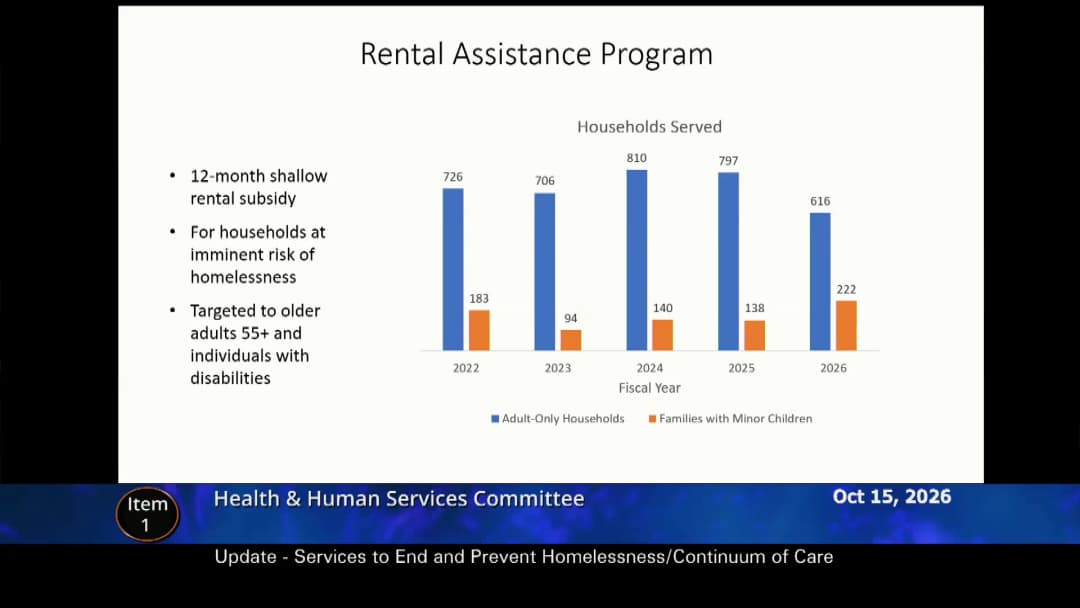
On October 15, 2026, from 1:30 to 4:30 p.m., the Montgomery County Council Health and Human Services (HHS) Committee met in the Council Hearing Room in Rockville, Maryland, to review services to end and prevent homelessness and the Continuum of Care. Chair Laurie-Anne Sayles presided, joined by Councilmembers Dawn Luedtke and Andrew Friedson, with Councilmember Kate Stewart and Councilmember Kristin Mink also participating. DHHS staff and community partners were acknowledged for the county's homelessness work. No formal votes were taken. Homelessness Data and Trends - The 2026 point-in-time count identified 1,120 people experiencing homelessness, a 26% decrease from the prior year, including a 47% decrease among people in families. Chronic homelessness increased 14%. The June mid-year unsheltered count found 174 unsheltered residents, and staff reported 30 active encampments. - Street outreach served 458 individuals in FY26, a 104% increase since 2022. The coordinated entry list contained 630 households (734 people, including 70 families) awaiting housing. - Inflow and outflow data showed families being housed nearly every month faster than they entered homelessness, while individual adults continued to enter faster than they were housed. - Officials identified housing affordability, inflation, stagnant wages, rent and utility arrearages, federal policy cuts, SNAP losses, household vulnerability, and domestic violence as drivers. Staff noted 30,000 Maryland residents are losing SNAP benefits, including 11,000 people experiencing homelessness. - Councilmember Friedson cautioned against overreacting to one-night point-in-time counts and asked for more standardized use of by-name and street-outreach data to assess trends. Shelter Operations and Hypothermia Season Readiness - Shelters are generally at or above capacity, and lengths of stay are rising because of limited permanent housing. Under the September 1 shelter transition, the main men's shelter's year-round capacity was reduced from 200 to 140, with overflow adding 80 beds; Crabs shelter now serves 60 men year-round; TAF Court shelter increased from 35 to 70 women; and Rainbow shelter increased from 28 to 33. Staff reported improved safety and more individualized services. - Two DHHS supplementals will be introduced October 20: one for shelter custodial services and one for expanding women's shelter beds. A public hearing is scheduled for November 10, followed by a committee work session. - Hypothermia season is expected to begin in November; outreach kickoff meetings were scheduled for October 21 and October 23. SHARP and Rental Assistance Program Updates - SHARP provides locally funded rental assistance at 100% of base rent for 12 months, with light-touch case management. In FY26, SHARP housed 227 families (713 people); with 127 families housed in FY25 through special appropriation funding, the total reached 354 families. Average household size was three and the largest household served had nine members. - SHARP will begin accepting referrals for individual adults on October 19, with funding anticipated to serve 100 to 120 individuals. The expansion will initially target individuals assessed as needing minimal supports and will include more intensive case management and employment services when needed. - RAP served 616 adult-only households and 222 families in FY26, focusing on households at imminent risk of homelessness, adults 55 and older, and people with disabilities. - Councilmember Luedtke and Councilmember Friedson requested a look-back analysis of SHARP participants to measure returns to homelessness and support future investment. Continuum of Care NOFO and Federal Funding Risk - Staff detailed the litigation-affected HUD Continuum of Care NOFO process: the FY26 NOFO was published June 1, Tier 1 was set at 60%, and $1.3 billion was set aside nationally for new projects; the NOFO was vacated August 7, later remanded, and the county submitted its application September 30 after a 12-day turnaround. A new motion was filed October 14, leaving awards uncertain. - Tier 1 consists of renewal permanent supportive housing projects. Tier 2 includes two permanent supportive housing renewals and four programs applying to convert to transitional housing. Tier-two risk was described as nearly $5 million. Chair Sayles's opening remarks cited almost $5 million in risk for six projects affecting over 500 households; Councilmember Mink later asked about $12 million in existing-program exposure, and staff confirmed the full existing-program annual renewal demand is about $12.6 million. - Staff said 822 clients are currently served by these Continuum of Care programs; 30 percent are children under 18 and 25 percent are adults 55 or older. One program, Home First, had to move clients because of delayed HUD funding. - A contingency of about $700,000 is set aside for grants expiring this fiscal year, using HUD GAAP funds and a loan through the Latino Economic Development Center. Councilmember Friedson urged the executive branch to develop an FY28 contingency strategy before December 31 and brief the incoming council early. HOC Voucher Prioritization and Regional Coordination - Chief Hong recommended that HOC adopt a 50 to 80 percent homeless preference for Housing Choice Vouchers, take referrals directly from the coordinated entry list, and reduce leasing barriers for people with no income, prior rental or criminal history, and substance-use histories. She said the county executive, councilmembers, and advocates support this approach. - Councilmember Mink said the Interagency Commission on Homelessness has sought this HOC local preference for 12 years and called it a must-do. She noted HOC left $11.5 million in Housing Choice Voucher funds unspent in calendar year 2025 and that $6 million was recaptured. Councilmember Stewart underlined the shelter concentration in her district and warned of growing older-adult foreclosures. - On regional coordination, COG's data-sharing warehouse with the District and Prince George's County identified 1,131 shared clients over three years: 97 percent shared between two jurisdictions, 3 percent across all three, 61 percent individuals, and 39 percent families with children. Staff flagged that two unsheltered/sheltered data points appeared switched and said they would correct the slide. Behavioral Health, Outreach Capacity, and Eviction Prevention - Shelter-based psychiatric services, peer specialists, and client-choice engagement continue to connect residents to treatment. Chief Hong said services are always offered but housing is not conditioned on accepting services; she also identified a need for behavioral health respite and assisted-living-style programs for older adults experiencing chronic homelessness. - Councilmember Luedtke raised the recurring emergency-petition and hospital-release cycle for high-needs individuals and called for better long-term placement options. - Outreach funding totals about $2 million, including Bethesda Cares at $800,000, EveryMind at $146,000, City of Gaithersburg at $45,000, children/youth/families at $387,000, Pathways to Housing at $280,000, and Shepherd's Table at $324,000. Staff said all partners carry open-ended caseloads and have roughly three outreach workers each; the upcounty geographic area remains a strain. - Eviction data showed Montgomery County averaged about 207 evictions per month in 2025, the fourth-highest rate in Maryland. After Expedited Bill 3125, evictions fell to about 73 per month, a 64% decrease. Staff credited Councilmember Mink's sponsorship and interbranch collaboration. Key Outcomes - No formal votes or approvals were made at the work session. - Staff will provide corrected Continuum of Care data slides, outreach funding and population details, and standardized by-name data for future committee briefings. - Staff will develop a SHARP recidivism and outcomes analysis. - The committee and staff will continue pressing HOC to adopt a homelessness preference and will follow up with HOC and the incoming county executive. - The administration was urged to plan FY28 Continuum of Care contingencies before the end of 2026. - DHHS will introduce the custodial services and women's shelter bed supplementals on October 20, with a November 10 public hearing and future work session.
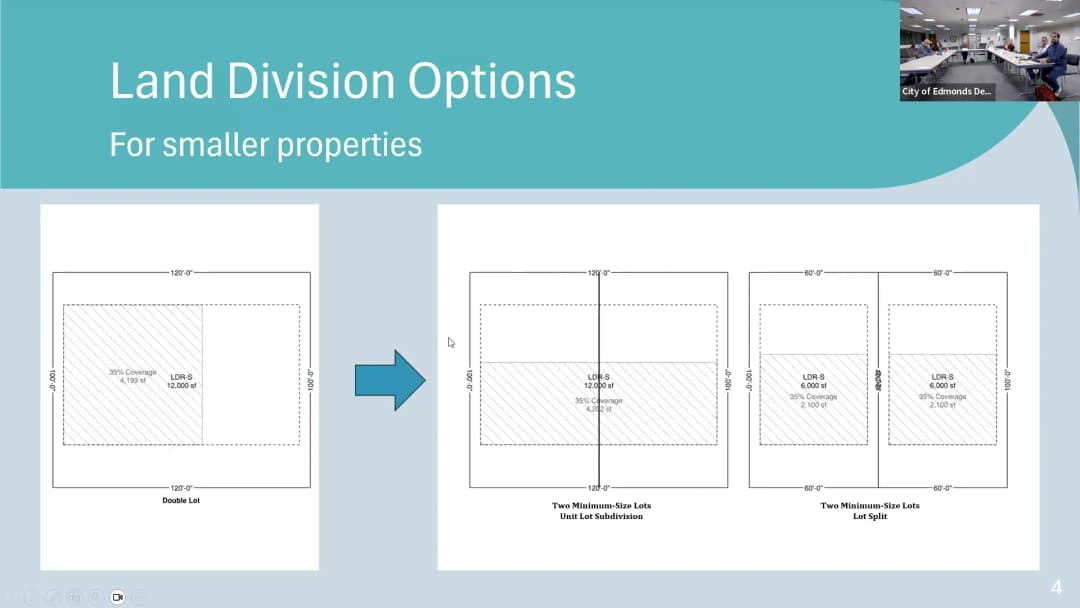
The Edmonds Planning Board met in hybrid format in the Brackett Room at Edmonds City Hall, 121 5th Ave N, and via Zoom. The meeting was called to order at 7:00 p.m. and adjourned at approximately 8:24 p.m. Members present were Lee Hankin, Stephen Lee, Judy Gladstone, Nick Maxwell, Lauren Golobuski, and student representative Danielle Dakota; Bristol and John Milky were excused. The meeting opened with a land acknowledgment honoring the Sdohobsh (Snohomish) people and the Tulalip Tribes. Note: The agenda and transcript label the meeting as October 14, 2026; per meeting-date metadata, this summary uses October 15, 2026. Consent Calendar / Approval of Minutes - The board approved the September 23, 2026 meeting minutes, as edited. The motion was made by Lee Hankin, seconded by Judy Gladstone, and passed unanimously with no nays or abstentions. Public Comments & Testimony - No audience comments were offered in person or online. Discussion Items Tree Code Update and Next Steps - City Administrator Stephanie Lucash and staff member Deb Powers presented an updated schedule after the City Council voted to extend the tree code timeline. They thanked the Planning Board for completing its tree code work in about eight months after the city compressed the overall process to roughly ten months, compared with a typical 18–24 month process in surveyed jurisdictions. - Planning Board members agreed to co-present with staff at the City Council study session on November 12, 2026, from 3:00 to 4:30 p.m. Board representatives will explain the Planning Board’s recommendations and reasoning. Staff said no further Planning Board engagement is currently scheduled after November 12 unless Council refers additional questions back to the board. - Board members cautioned that the tree code recommendations are interconnected and that picking apart individual provisions without context could create risks. They also discussed an unresolved proposal that could merge the tree board into a parks board; no change has been adopted. - Staff said the extension allows broader public engagement and more legal oversight. Key Council direction meetings are planned for December 1, 2026, January 12, 2027, and January 26, 2027, with the extension expiring in April 2027. 2027–2032 Capital Facilities Plan (CFP) and Capital Improvement Program (CIP) - The board reviewed the draft Findings, Conclusions, and Recommendations (FCR) for the 2027–2032 CFP/CIP. - Members discussed whether the FCR format captured the board’s voice. Several members expressed concern that the backlog of deferred replacement and upgrades has grown and creates future financial risk. Staff clarified that CIP focuses on capital replacements and upgrades rather than routine maintenance. - The board approved the FCR after adding a fifth conclusion: “After review of the CIP/CFP, the planning board continues to have concerns about deferred replacement and upgrades of important city infrastructure that increases the risk of rising financial obligations in the future.” Lot Splits and Subdivision Code Updates Introduction - Staff introduced HB 1096 residential lot splits as the first of a series of updates to Edmonds’ subdivision code. A lot split allows one parent lot to be divided into no more than two lots and cannot be repeated on the same property. Eligibility requires the parent lot to be at least twice the minimum parcel area (for example, 12,000 sq ft where the zone minimum is 6,000 sq ft), residential zoning, available utility/service connections, and no prior lot split. - Unlike short plats and unit lot subdivisions, a lot split with no associated building permit would be a type one administrative review, with no public hearing and no final review. The board was told planning review would take about 65 days. A lot split with a building permit would run concurrently with the building permit process. By comparison, the existing short plat/subdivision process has roughly 221+ days of maximum review time and often takes much longer in practice. - Staff recommended using modified minimum zone standards, modeled on conservation subdivision standards, to encourage housing production through lot splits. Several board members questioned this approach, with some preferring parent-lot standards to reduce impacts on neighbors and others questioning why lot splits should receive reduced setbacks without conservation protections. No decision was made. - Board members asked staff to research how flag lots would be treated under parent-lot standards. They also discussed that an ADU could become a single-family home on its own lot through a lot split, but the original property cannot be lot-split again. - Staff said future subdivision code updates will be introduced separately and then combined into one package for deliberation and public hearing. Planning Board Extended Agenda / Upcoming Meetings - The board canceled the October 28, 2026 meeting and moved the Planning Board handbook update to November 18, 2026. - The December 9, 2026 meeting is expected to include the 2027 annual docket, the Planning Board handbook, and election of officers. - A vacant Planning Board position remains unfilled; no update was available. Board members were encouraged to volunteer for or seek nominations for officer positions. Key Outcomes - Approved the September 23, 2026 meeting minutes as amended. - Approved the 2027–2032 CFP/CIP FCR with the added conclusion about deferred replacement and upgrades and future financial obligations. - Agreed to have Planning Board representatives co-present at the November 12, 2026 City Council study session on the tree code. - Canceled the October 28, 2026 Planning Board meeting and moved the handbook discussion to November 18, 2026. - Took no action on lot splits; the item was an introduction only, with further research requested on flag lots and ADU/lot split interactions.
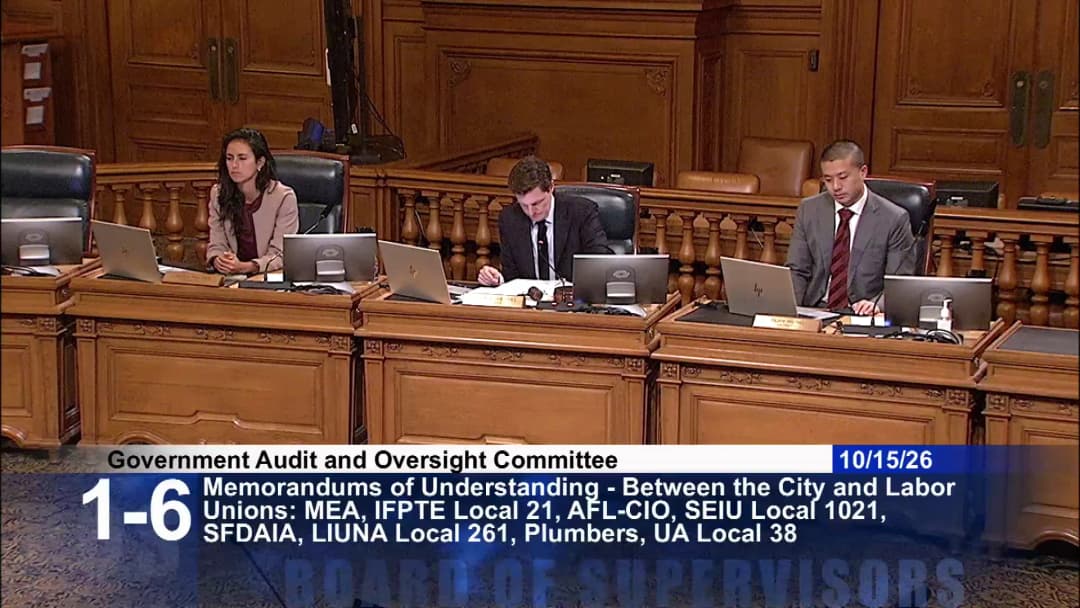
The Government Audit and Oversight Committee of the San Francisco Board of Supervisors met on October 15, 2026, at 6:30 PM under Chair Supervisor Stephen Sherrill. The committee considered six Memorandum of Understanding (MOU) amendments with city employee unions and 14 settlement agreements. Vice Chair Jackie Fielder and Supervisor Alan Wong were also present. Consent Calendar - Items 7 through 20 (14 settlement agreements) were approved unanimously without discussion or public comment. The settlements include: - Genasci Dairy, Inc. et al. – City to receive $400,000 - Primitivo Ramirez – $100,000 - N.T. – $1,500,000 - S.A. – $500,000 - iHeartMedia Entertainment, Inc. (unlitigated) – $141,686 - Owen Equipment Sales (unlitigated) – $121,257.81 - Tammy Lynn Moore – $126,000 - Barbara Kavanagh – $100,000 - Tami Stewart – $50,000 - George Murphy – $150,000 - Henry Faust – $52,500 - Kristina K. Hall – $50,000 - Mark Caro (unlitigated) – $72,447 - Joe Fong and Soon Kang – $350,000 Public Comments & Testimony - Mark Weyrick, regional director for IFPTE Local 21, requested edits to the Local 21 MOU amendment: updating calendar dates in Appendix H, removing Appendix J (citywide labor management committee) as an opt-in, adding a PSC pilot procedure agreement, and correcting signature page errors. He stated the changes were agreed with DHR and did not alter the tentative agreement. Discussion Items - MOU Amendments (Items 1–6): DHR Director Carol Ison and Employee Relations Director Artis Graham presented six four-year MOU extensions covering approximately 22,000 city employees (67% of the workforce, excluding SFMTA service-critical units). The extensions include: - 12% total wage increases over four years: 1% on January 1 and 2% on July 1 each year, except the final 2% on April 5, 2031 (moved earlier at union request). - A no-layoff guarantee through June 30, 2029. - A new labor-management committee structure with mediation and expedited arbitration; most unions can bring three issues per year to the mayor or HR director, SEIU can bring six (twice per year). - Contracts expire June 30, 2031. - Eight additional unions have ratified similar extensions to be brought later. - Questions: Vice Chair Fielder inquired about the unresolved issues process and whether the mayor would personally attend biannual meetings (language allows delegation in some cases). Chair Sherrill asked about budget impact; DHR deferred to the mayor’s budget office but noted year-one raises are less than anticipated in the financial plan. Supervisor Wong thanked staff and labor partners. - Amendment: Chair Sherrill moved to amend File No. 261080 (IFPTE Local 21) by deleting references to a citywide labor management committee, consistent with the union’s request. The amendment passed unanimously (3-0). Key Outcomes - Amendment approved: Motion to amend File 261080 (IFPTE Local 21) to remove citywide labor management committee language passed 3-0. - Items 1–6 forwarded: Motion to send the six MOU amendments to the full Board of Supervisors with a positive recommendation passed 3-0. - Items 7–20 forwarded: Motion to send the 14 settlement agreements to the full board with a positive recommendation passed 3-0. - All forwarded items are expected to appear on the Board of Supervisors agenda on October 27, 2026.