The Denver City Council's Health and Safety Committee met on Wednesday, October 14, 2026. The agenda included a briefing on a proclamation opposing a state ballot measure and an action item to align city code with state law on automated vehicle identification systems (AVIS). All consent agenda items were approved unanimously. Consent Calendar - 26-1469: Approved a $1,068,531.00 contract with Volunteers of America Colorado Branch to provide 76 Head Start and 20 Early Head Start slots citywide through June 2027. - 26-1488: Approved a $745,706.36 contract with SustainEd Farms through July 2029 for food-based education under the Healthy Food for Denver's Kids Initiative. - 26-1489: Approved a $718,086.62 contract with Slow Food Denver, Inc. through July 2029 for food-based education under the Healthy Food for Denver's Kids Initiative. - 26-1490: Approved a $7,500,000.00 five-year contract with Orion Environmental, LLC for asbestos removal, mold remediation, emergency response, and environmental litigation support. - 26-1495: Approved an amendment to a contract with HopSkipDrive, Inc. reducing the contract by $790,000.00 (new total: $710,000.00) and extending the term by two years through December 2028 for school transportation services. - 26-1498: Approved an amendment to a contract with Catholic Charities adding $957,199.00 (new total: $1,452,199.00) to provide 108 Head Start and 20 Early Head Start slots. Discussion Items - Proclamation 26-1501 (Opposing Colorado Amendment 81): Councilmember Serena Gonzales-Gutierrez and Councilmember Jamie Torres introduced a proclamation opposing Amendment 81, a ballot measure they argued would require law enforcement to check the immigration status of individuals charged with certain crimes, effectively mandating collaboration with Immigration and Customs Enforcement (ICE). Councilmember Gonzales-Gutierrez stated the measure violates Denver's 2017 policy against city employees asking about documentation status. Councilmember Paul Kashmann clarified that Denver cooperates with ICE on specific major crimes and honors signed warrants, but does not engage in general immigration enforcement. Chair Darrell Watson noted the complexity of the ballot and supported making the council's position clear. - Action Item 26-1435 (Automated Vehicle Identification System): The committee considered an ordinance aligning city code with a new permissive state law. Councilmember Gonzales-Gutierrez requested a clear side-by-side comparison distinguishing mandatory from discretionary provisions. Justin Sykes (Budget Director) recommended directing initial AVIS revenue to the General Fund to cover unknown administrative costs in a pilot year, noting that a similar program in Fort Collins generated roughly half its projected $5 million. Jamila Bryant (Office of Social Equity and Innovation) stated that an equity mapping process is informing camera deployment strategies. Ted Poras (Photo Enforcement Unit) explained that the creation of AVIS corridors bridges enforcement gaps on high-injury network roads. The three-year data retention process was discussed, with Wendy Shea (Special Counsel) noting it helps identify repeat violators. A 30-day public notification requirement for new camera locations was confirmed. Key Outcomes - Proclamation 26-1501: Received committee discussion and support. It will advance to the full city council for a vote. - Action Item 26-1435: A motion to approve the ordinance for filing was made by Vice Chair Amanda Sandoval and seconded by Councilmember Jamie Torres. The motion passed unanimously via voice vote, 7-0. - Consent Agenda: All six consent resolutions (26-1469, 26-1488, 26-1489, 26-1490, 26-1495, 26-1498) were approved by consent without objection.
The Public Meeting Index
The Public Meeting IndexThe DC Council Committee on Health met on October 14, 2026, to hear testimony on Bill 26-809, legislation to update conflict-of-interest, personnel, and governance provisions in the Health Benefit Exchange Authority (HBX) Establishment Act. HBX officials testified in support of the bill and answered committee questions. No vote was taken. HBX Leadership Testimony - HBX executive leadership testified that Bill 26-809 would remove conflicting standards between HBX's enabling legislation and the District's code of conduct. As an example, HBX's enabling legislation prohibits actions with a "foreseeable material financial effect" on an individual or immediate family, while the code of conduct prohibits actions with a "direct and predictable effect" on a closely affiliated person. The bill would strike older provisions in the Establishment Act and make the code of conduct apply to HBX staff and board members. - The testimony said the changes are consistent with recommendations from the HBX Standing Advisory Board, whose members include consumer advocates, insurers, brokers, clinicians, and DC Health Link customers. - The bill clarifies that prohibited affiliations are financial affiliations and that certain professional memberships disqualify only senior members, not ordinary members. HBX leadership pointed to the current plain language, under which no physician who is a member of the American Medical Association would be allowed to serve on the executive board or join the staff, and said that was not intended. - The bill would update HBX's purposes section to reflect responsibilities added since 2013, including the partnership with Massachusetts, Health Care for Childcare, and the Healthy DC plan, and to include authority under the ACA or District law. - The bill adds an information technology requirement for the executive board. HBX leadership supported the proposed requirement that one board member have IT expertise, including artificial intelligence, cybersecurity, and systems architecture, noting that HBX is fundamentally an IT entity. There is currently one vacancy, so the IT seat could be filled without removing a sitting member. - HBX leadership supported removing ambiguous "consistent with" language from HBX's independent personnel authority, similar to the 2019 independent procurement authority clarification. They argued plain language would reduce risk, help HBX recruit and retain talent, and allow it to respond quickly to changes in federal law. Committee Questions and Responses - A committee member asked how the 2019 procurement authority change has worked. The HBX director said the earlier ambiguity made staff uncomfortable exercising their full authority. After the Council clarified independent procurement authority, the board adopted policies based on best practices from the District, federal government, and other states. Contracts over $1 million require Council approval, and the director said the process has worked well, uses competition, exceeds minimum CBE requirements, and uses local CBEs even for Massachusetts partnership work. - On personnel, HBX has a long-standing MOU with DCHR, uses PeopleSoft, and pays DCHR for services. The director said HBX receives resumes directly, DCHR does not participate in screening, and DCHR administers benefits. The director estimated the annual payment as "about 115, maybe 150 a year" (the transcript does not state the unit, such as thousand). - A committee member said the MOU and payment arrangement underscored that HBX has been operating as an independent agency for some time. - The director described board oversight: the board chair and vice chair—two of the three finance committee members—meet monthly to review expenses, contracts, and investments. The board makes major policy decisions, adopts procurement policies, and posts materials on the HBX website. Board meetings are open to the public, and the standing advisory board and working groups provide stakeholder input. - Councilmember Zachary Parker joined the hearing; no questions from him were recorded. - Asked about post-employment restrictions, Deputy Executive Director Pervey Kempf explained that the code of conduct contains permanent, two-year, and one-year restrictions consistent with federal law, while the 2012 Establishment Act separately bars former HBX employees from working for any health carrier offering a qualified health plan through an exchange for one year. HBX officials argued that one-year carrier ban is overly broad, can reach carriers with no D.C. connection, and hinders recruitment. They also said conflicting standards make guidance difficult because BIGA can provide guidance only on the code of conduct and OAG only on the Establishment Act, and OAG is not set up to receive direct employee inquiries. - The director said the bill would not create local costs because HBX is funded through an assessment on health carriers and receives no locally funded operational support. Key Outcomes - No vote was taken on Bill 26-809. - The record remained open for written testimony until 5:00 p.m. on Wednesday, October 28, 2026, through the Council's hearing management system. - The chair said the committee needed more conversations on the Health Care Facilities Regulation Amendment Act, despite some pressing issues, but had what it needed to move forward on the HBX bill this fall, while noting the deadlines in the final months of the two-year Council period. - The Committee on Health will reconvene on October 15, 2026, at 1:30 p.m. in Room 412 of the Wilson Building for a public roundtable on long-term care for District residents with complex needs. Government witnesses were not invited; the roundtable will focus on best-practice frameworks for long-term care, the aging population, and aging in place. - The hearing adjourned at 12:53 p.m. per the transcript.
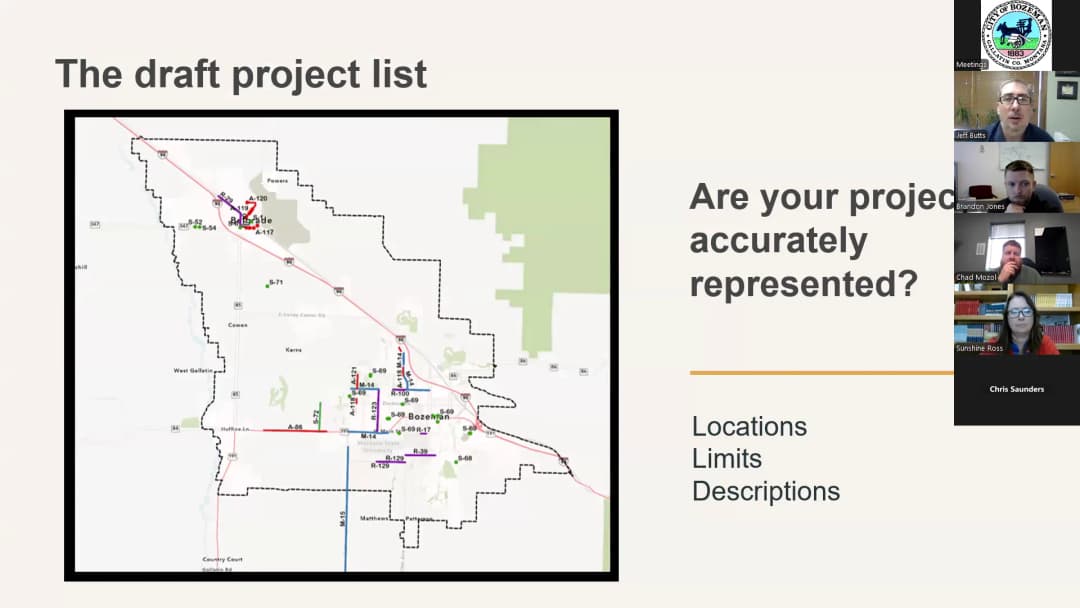
The Gallatin Valley Metropolitan Planning Organization (MPO) Transportation Technical Advisory Committee (TTAC) met by videoconference on Wednesday, October 14, 2026. According to the agenda, the meeting was scheduled to begin at 10:30 a.m. The committee took roll call, approved the August 12, 2026 meeting minutes, and received no public comments. The main business was the first review of two draft planning documents: the Federal Fiscal Years (FFY) 2027–2031 Transportation Improvement Program (TIP) and the draft Long Range Transportation Plan (LRTP). Both items were informational first reviews; no motions were made on either plan. Consent Calendar - The committee approved the August 12, 2026 TTAC meeting minutes by voice vote; Sunshine Ross seconded the motion. Public Comments & Testimony - No public comments were offered during the general public comment period or in connection with the TIP or LRTP agenda items. Discussion Items - First review – Draft FFY 2027–2031 TIP (presented by Jeff Butts): The TIP is the MPO's first locally developed TIP and carries forward existing projects from the statewide TIP. It includes 24 unique roadway and bridge projects plus programs and transit, with about $170.9 million in programmed revenue over the five-year period extending to 2031. Roadway projects total about $130.9 million, with the remainder covering transit and programmatic funding. Funding sources include STPU urban funds, federal discretionary grants, MPDG (described as a rural development grant), Transportation Alternatives, and Section 5307 transit funds. Examples cited included Belgrade Main Street reconstruction (about $1.2 million programmed total, with roughly $612,000 previously programmed and $511,000 newly programmed), Kagy Boulevard reconstruction in Bozeman (about $42.5 million total, including $14.2 million in STPU funds), three Bozeman-area Transportation Alternatives projects (about $1.6 million), and Section 5307 transit operations ($13.8 million over five years; annual federal allocations just under $1.5 million against about $2.7 million in annual operating costs). Jeff Butts said the TIP must be adopted by December 26, 2026. Written comments were requested by October 20, 2026; the item will go to TPCC on October 28, 2026 and return to TTAC on November 5, 2026 for a recommendation. A public review period of at least 14 days, with a possible 30-day window, is planned before TPCC adoption on December 16, 2026. - First review – Draft LRTP (presented by Jeff Butts): The LRTP has been under development for about two years with consultant Nelson Nygaard and with input from TTAC, TPCC, the Community Advisory Panel, and community outreach including pop-up events and surveys. The draft includes goals and objectives, scoring criteria, project lists, and policy and program chapters. Project lists were built from the Statewide TIP, the Trails Plan, Belgrade and Bozeman transportation master plans, a spring 2026 call for project concepts, and a public workshop, including a Four Corners trail request added to the illustrative project list. Draft policies discussed include Complete Streets, context-appropriate speeds on highways entering growing communities, self-enforcing design near schools, and an open-streets event concept. Remaining technical work includes alternatives analysis, environmental considerations, and existing-conditions requirements. In committee discussion, one member asked about post-adoption public outreach; staff described a planned 30-day public review period, website and event outreach, and Community Advisory Panel engagement. A member suggested contacting OLLI (Osher Lifelong Learning Institute) for a presentation, and Belgrade staff said the city's communications director could share MPO information through city social media. Sunshine Ross expressed appreciation for the strong inclusion of transit in the plan and for the collaborative process. Comments on the draft were requested by October 20, 2026, with TPCC review on October 28, 2026, a recommendation requested from TTAC on November 5, 2026, and adoption planned at TPCC on December 16, 2026. General Discussion - The chair reported on a Montana League of Cities session by MDT's John Swartz and Doug McBroom, stating that MDT this year lacked enough state match funds to use all available federal redistribution funds—about $40 million in redistribution funds were turned back, representing roughly $4.5 million in matching funds at a 13% match rate. The chair asked whether local governments could provide matching funds to capture such funds. Brandon Jones noted there is precedent for local match on projects such as Belgrade Main Street and Kagy Boulevard, though he was not sure it had been used in lieu of state match to salvage the HEZRA account. The chair said he would investigate further with MDT. - A committee member asked MDT about the newly adopted administrative rule implementing Senate Bill 533 on state-level residential system impact fees (rule 18.5.204, notice 2026-3-19.2). A staff member said they would research whether MDT would take an active or wait-for-application approach and report back. Key Outcomes - No formal action was taken on the TIP or LRTP; both remain in first-review status. - The August 12, 2026 meeting minutes were approved. - Next steps: TTAC and public comments are due by October 20, 2026; TPCC will consider both documents on October 28, 2026; TTAC must have a quorum at its November 5, 2026 special-schedule meeting to recommend adoption; the TIP must meet the December 26, 2026 federal deadline; TPCC adoption is planned for December 16, 2026.
Note: The transcript states this meeting occurred on October 13, 2026, but the provided timestamp indicates October 14, 2026 at 17:23:52 UTC. This summary uses the given date. The governing body convened at approximately 5:23 PM UTC (12:23 PM CDT) for a session lasting until 10:33 PM local time. The agenda included presentations on the FY2027-2030 strategic plan, a proposed data center at Forbes Field, an island annexation overview, and extensive discussion on future sales tax initiatives. Public comment included strong opposition to data centers, concerns about road projects, and support for a rental registry. Presentations - FY2027-2030 Strategic Plan (City Manager & KU Public Management Center): The city manager introduced a contract with the University of Kansas to develop a four-year strategic plan by March 2027. Phase one includes individual interviews with governing body members in November–December 2026, a full-day work session in January 2027, and a half-day discussion in February before adoption in March. Christy Northcutt (KU) presented the team and timeline, emphasizing inclusive, customized, research-backed facilitation. - Data Center at Forbes Field (MTAA President Curtis Sneedon): Mr. Sneedon discussed a potential “tech center” data center on 30-40 acres at the south end of Forbes Field, with an initial 70-80 megawatt load and two buildings (roughly 150,000 sq ft each), with possible future expansion to four buildings. He emphasized the project is in early stages, dependent on Evergy power availability, and that the developer has not applied for permits. He stated the developer will pay for utility extensions, landscaping, and will be required to make a payment in lieu of taxes (PILOT) equivalent to property taxes. No incentives have been requested. Mayor Duncan and multiple council members expressed frustration that the developer remains unnamed and has not engaged directly with the community. Councilmembers raised concerns about noise (50-65 decibels estimated), water consumption (1 million gallons/year closed-loop system), potential interference with airport operations, and the reliability of PILOT agreements. Councilmember Valdivia-Alcala noted the City of Topeka Planning Commission considers anything over 50 megawatts as “hyperscale.” No vote was taken. - Island Annexation Overview (Dan Warner, Planning Director): This presentation explained the difference between standard contiguous annexation and island annexation. Island annexation requires a property owner petition, a resolution from the Governing Body asking the county to determine no inhibition of growth, and a county commission resolution before the city can pass an ordinance. It was noted that no annexation request has been received for the proposed Compass data center site. Consent Calendar - Approved unanimously (10-0): three-year labor contract with Council 61 Local 1294 Water Division; 2027 special alcohol and drug funding recommendations of $865,924; minutes of October 6, 2026. Public Comments - Data Centers (multiple speakers): Residents opposed both the MTAA and Compass data centers, citing health concerns from noise and water pollution, lack of economic benefits, property tax shifts to residents, and flight safety issues. Speakers requested independent acoustical and industrial hygiene studies, a decommissioning escrow, and a ban on hyperscale data centers. One speaker noted AI analysis recommended a five-mile setback. Several speakers criticized the lack of transparency and urged the council to oppose any data center in Shawnee County. - Roads (Joseph Ledbetter, Sandra Lasseter): Ledbetter complained about numerous unfinished road projects (37th, Croix, 29th, 17th, Huntoon, Topeka Blvd) causing bus route disruptions. Lasseter requested a crosswalk with a light at 37th and Gage near Dollar General and urged reopening Topeka Boulevard. - Rental Registry (Danielle Twemlow, Councilmember Valdivia-Alcala in support): Twemlow advocated pairing the rental registry with a licensure program for multi-family units, noting it could improve code enforcement efficiency and safety. Councilmember Valdivia-Alcala urged colleagues to prepare for the upcoming discussion. - City Manager Position (Sandra Lasseter): Suggested freezing the deputy manager position (Braxton) and redistributing responsibilities to save money. - Police Accountability (Davin Banks): Alleged wrongful arrest on August 24, 2026, and called for internal accountability. Discussion Items - FY2026 Strategic Goals & FY2027 Goals (City Manager): The city manager reviewed progress on 14 FY2026 goals (e.g., 311 call center evaluation, affordable housing trust fund activation, digital kiosks, EV pilot, fire station relocation plan). For FY2027, he proposed five initial goals: continue digital ticketing, develop a climate action plan with the sustainability board, complete the fire station relocation plan with funding recommendations, develop a two-year sustainable budget with a five-year infrastructure program, and create a five-year infrastructure management plan. He will send a memorandum by October 27 and finalize goals on November 10. Monthly budget accountability reports will start February 2027. - Future Sales Tax Initiatives & City Auditor (City Manager & Dalton Badel): The city manager presented options to address projected deficits ($13.3M in FY2028, $17.4M in FY2029). Three scenarios were considered: (1) a March 2027 special election with a half-cent general purpose sales tax, one-tenth cent for affordable housing/homeless services, renewal of the existing half-cent infrastructure tax, and a charter amendment for a city auditor reporting to council; (2) an August 2027 primary election with a similar package, allowing a community sales tax committee; (3) splitting housing/homeless and auditor to March and deferring the rest to August. The half-cent would generate $20M/year and could cash-fund three fire stations; the one-tenth cent would generate $4M/year. Tax impact comparisons were provided: at 9.95% combined rate, an average household spending $23k/year would pay an extra $138/year. Councilmembers expressed strong preference for August to allow public input and refine language, especially for the affordable housing/homeless question. Concerns were raised about broad “operating costs” language in the general tax, and the need to specify outcomes and measurement. The city auditor charter amendment (Ballot Question 4) was generally supported. No vote was taken; discussion will continue on October 20. Key Outcomes - Consent agenda approved 10-0. - Sales tax decisions deferred: Discussions will resume October 20, 2026, with potential for a March or August 2027 election. The mayor signaled he will prepare revised language for the affordable housing/homeless question and the auditor amendment for next week’s consideration. - Data center issue remains in early stages: No council action taken; continued community opposition and council skepticism noted. - Executive sessions (2): One 15-minute session on cybersecurity (under KSA 75-4319(b)(12)) and one 15-minute session on potential litigation/attorney-client privilege. No action taken. - Meeting adjourned at 10:33 PM local time.
The Richmond City Council held an informal meeting on October 14, 2026, beginning at 17:00 UTC. The Mayor delivered the annual Office of Community Wealth Building (OCWB) impact report, followed by council questions and a docket review of upcoming agenda items. No formal votes were taken on substantive items; several matters were continued by consensus. Discussion Items - Mayor's annual OCWB impact report: The Mayor said the city's anti-poverty work is broader than OCWB alone and is organized under the mayoral action plan, with goals set by a resident-led commission in 2012: reduce the number of people in poverty by 40% by 2030, reduce child poverty by 50% by 2030, and lower the city's poverty rate below 15%. - Progress data: The Mayor reported that from 2015 data — a 25.5% city poverty rate and child poverty of nearly 40% — the number of residents in poverty fell from about 51,000 to below 40,000 (39,900), a 22.9% decrease, while child poverty fell by 27.3%. He said Richmond is outpacing the country, the state, surrounding jurisdictions, and comparable Southern cities, including Montgomery, Alabama, and Baton Rouge, Louisiana. - Demographic and income context: The Mayor noted population growth, increased employment, higher educational attainment (one in five city residents lacked a high-school diploma in 2012; now one in ten), and a 15,000-person increase since 2020. He also cited a decrease of about 10,000 African American residents in raw numbers over the decade, an 80% increase in the Latino population (about 11,000 people, now one in ten residents), and continuing racial disparities: overall poverty at 18%, below 10% for white residents, 25% for Black residents, and 24.1% for Latino residents. He acknowledged that some low-income residents can no longer afford to stay in the city and are moving to surrounding localities. - Income and cost trends: Median regional wages rose by $6.16, and the minimum wage rose by about two-thirds, but the wage needed to afford a two-bedroom apartment rose by more than $10 per hour, and grocery costs rose by $326 per month, equal to about $2 per hour for a full-time worker. The Mayor highlighted that the 50th-percentile income for middle-income Black residents was $41,757, slightly lower than the 20th-percentile income for white residents, and that highest-income Black residents (about $81,000) remained significantly below the white median. - Policy and program highlights: The Mayor described OCWB's community-driven policy research process that generated 101 ideas, including reinvesting delinquent tax sale revenue into generational real estate wealth, creating user-curated resource lists, expanding GRTC transit, increasing contractor pay toward $20 per hour (after a step to $18 for janitorial contractors), and subsidizing deeply affordable housing at or below 30% AMI. He cited over $120 million in affordable housing investment with 5,800 units completed or in the pipeline over five years, 589 youth paid $859,000 through summer work-based learning, 2,500 senior contacts, nearly 500 immigrants and refugees served, and more than 20,000 nights of shelter provided by NCS. - Public housing redevelopment: The Mayor cited Raj Chetty's national data showing adults moving from concentrated public housing to mixed-income housing saw little gain, while children had higher college attendance, reduced incarceration, higher earnings, and lifetime gains sometimes reaching $500,000, with stronger effects for younger children. He said this underlies the city's priority on public housing redevelopment and the Gilpin transformation. - Partnerships and next steps: The Mayor said a Gilpin transformation MOU with RRHA would come before council, with the city responsible for the people plan and neighborhood planning and RRHA responsible for housing redevelopment. He also mentioned a joint economic mobility squad, raising contractor pay, using city-owned land, a revised affordable housing strategy, a zoning code refresh, and a November ballot measure for a 1% sales tax to support school infrastructure. - Family story: The Mayor closed with the Richardson family, including Cheryl Owens Richardson, who became a doula through OCWB, her daughter Barbara, now also a doula, and her son Benton, a participant in Youth Works RVA. Council Questions and Positions - Councilwoman Robertson thanked the Mayor and staff, noted she was part of the original committee and chairs the Citizen Advisory Board, and asked for a more detailed meeting with the administration. She questioned whether the reported reductions reflected people leaving poverty or changes in the city's total population, said the racial disparities were devastating, and stated that people in poverty in Richmond are poorer today than when the initiative began. She said the advisory board wants clearer metrics for sustainable change. - Councilwoman Gibson said she was not convinced the gains were not largely driven by displacement. She noted Richmond Public Schools enrollment fell from about 24,000 students in 2015 to closer to 21,000, with financial implications, and asked the administration to publish studies showing where displacement has occurred, to examine RRHA vacancy rates, and to analyze potential teardowns resulting from the code refresh. - Councilwoman Lynch agreed with Councilwomen Robertson and Gibson, recalling that OCWB was originally intended to be both a policy-coordinating body and a direct-service program. She asked for program-level data, such as prior reports showing specific numbers like 101 people served through the workforce program, rather than aggregate American Community Survey data, so council can evaluate OCWB's actual impact. - A council member suggested the advisory board should start by reviewing whether the existing poverty goals are appropriately framed and provide direction. - Councilwoman Jones said certain slides were vague, including references to 'record investments in RPS' and 'support people in crisis,' and asked for program-level clarity so the city can explain where poverty reductions actually occurred. She requested information in partnership with the advisory board and other city departments. - Mayor's response: The Mayor said there are two different things — citywide poverty trends and OCWB as a program deliverer — and acknowledged council needs both. He left early to catch a plane, and OCWB Director Capricia Spellman remained to answer questions. She said the comprehensive report accompanying the presentation would be forthcoming and would include more details. Docket Review - Consent agenda: Ordinance 2026-155 was retained on the consent agenda after being continued from September 28, 2026. Ordinances 2026-181, 2026-197, and 2026-286 were continued to the November 9, 2026 council meeting by consensus; Ordinance 2026-197 was awaiting an amendment. Ordinances 2026-198, 199, 200, 201, 207, 254, 255, 257–267, and 269–274 received Planning Commission recommended approval. Ordinances 2026-275 and 2026-282 through 2026-290 received Education and Human Services recommended approval. Ordinance 2026-296 and Resolution 2026-R040 had Finance Committee referral waived and were retained on the consent agenda. - Regular agenda: Ordinance 2026-081 (two papers) was retained after being continued from September 28, 2026. Ordinance 2026-196 was continued to November 9, 2026 per the patron's request. Resolution 2026-R019 was retained. Resolution 2026-R029 was continued to November 9, 2026 per the patron's request. Ordinance 2026-256 received Planning Commission recommended approval with an amendment and was to be amended later that evening, then continued to November 9, 2026. Resolutions 2026-R038 and 2026-R039 were to be amended and considered later that evening. - Chief of Staff Warren noted that the amendment for Ordinance 2026-197 might be ready for introduction and consideration after the meeting, with more information to come. Key Outcomes - No substantive votes were taken; the meeting was informal. - Council consensus continued several items to the November 9, 2026 council meeting, including ordinances 2026-181, 2026-197, 2026-286, 2026-196, and 2026-256, and Resolution 2026-R029. - Council asked the administration for responses to questions about displacement, program-level data, poverty metrics, and OCWB outcomes. - OCWB Director Spellman committed to providing a fuller comprehensive report. - The Citizen Advisory Board and administration planned to hold a more detailed follow-up meeting. - The informal meeting adjourned after the docket review.
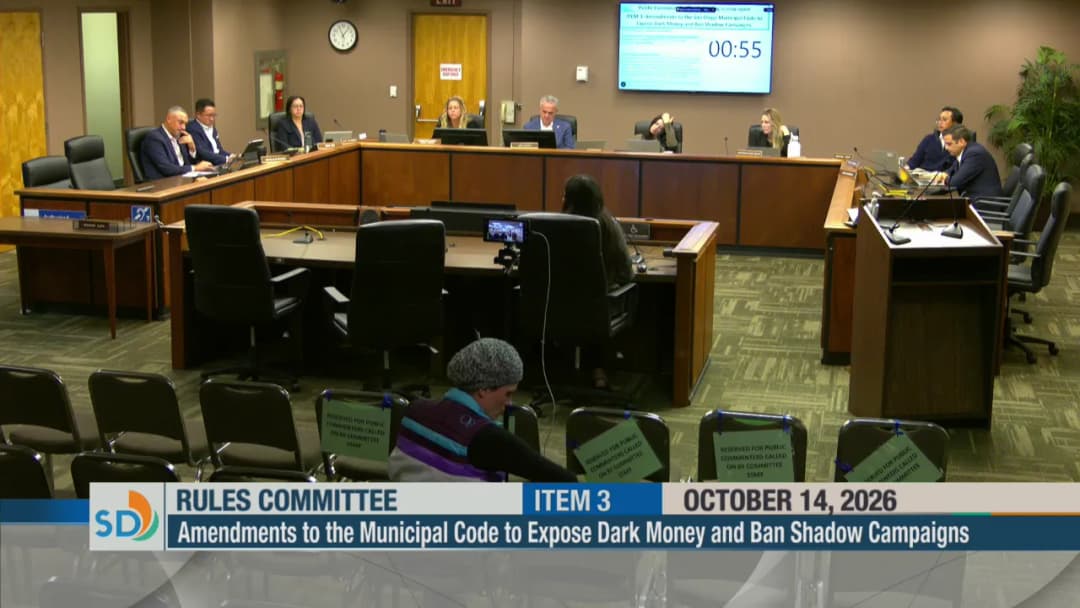
The Rules Committee met on October 14, 2026, with Chair Joe LaCava presiding. Council President Pro Tem Lee, Councilmember Elo Rivera, and Councilmember Campillo participated; Councilmember Moreno was absent. No agenda or minutes were included in the source material, so this summary is based on the raw transcript. The committee took the agenda out of order: after non-agenda public comment and the consent calendar, it heard the Funds Commission information item, then the two campaign-finance discussion items. Consent Calendar - Item 1 — Approval of the committee minutes of September 16, 2026. No member pulled the item. After public comment, Councilmember Elo Rivera moved approval, seconded by Council President Pro Tem Lee. The motion passed unanimously; Councilmember Moreno was absent. Public Comments & Testimony - Non-agenda, in person: Joyce Anyatta said rapid, large municipal-code changes and resource constraints made it hard for the public to trust the process. Max Schmidt opposed the city government and called for a government shutdown. Audra urged the city to revoke contracts with Dreams for Change and the Downtown San Diego Partnership over safe-sleeping-site conditions, alleging a federal lawsuit, deaths, and hidden sexual assaults. Anthony Rouse criticized a $3.1 million police-station fence and urged redirecting SDPD funds to faster response times and programs such as No Shots Fired. - Non-agenda, virtual: Catherine Rhodes urged the council not to approve Midway Rising on Friday, citing the lack of a final geotechnical investigation and deep foundation recommendations down to 60 feet. Madison encouraged city public-health messaging on high-potency cannabis risks. Becky Rapp asked for a municipal-code ban on marijuana billboards, citing AB 2249. Natalie Ratchke described a desperate housing plea and called for low-cost, outside-the-box supports. Crypto Bradley alleged lease mismanagement and proposed a public, weekly lease-review committee. Judy Strang said she was missed in virtual public comment because of the flow around a no-quorum decision. Blair Beekman discussed SeaWorld, Dreams for Change, Flock ALPR contract questions, and the need for positive community-government communication. - Item 1 (minutes): Max Schmidt opposed; Audra said the minutes omitted words that changed meaning; Blair Beekman asked a clarifying question about SB 707 and boards/commissions; Natalie Ratchke praised citizens who participate; Lori Saldania warned about sea-level-rise liability tied to the SeaWorld agreement; Crypto Bradley said he had trouble accessing the minutes. - Item 4 (Funds Commission): Audra cautioned against redirecting donor-restricted funds; Max Schmidt opposed; Joyce Anyatta said she generally trusted the funds management and thanked the donors; Catherine Rhodes said the city has $2.3 billion in funds, criticized the presentation for omitting pension funds and fund-balance information; Blair Beekman noted loud library elevators; Crypto Bradley suggested following Nancy Pelosi’s stock picks; Becky Rapp asked the commission to refer a cannabis-tax audit request to the Rules Committee. - Item 2 (Fundraising ordinance): Audra questioned enforcement; Max Schmidt opposed; Joyce Anyatta supported; Anthony Ralphs strongly supported. Virtual speakers included support from Blair Beekman and Natalie Ratchke, skepticism from Crypto Bradley, a suggestion from Renault to use a 14-month window, and opposition from Catherine Rhodes, who called the rule unconstitutional and requested a written city attorney opinion. - Item 3 (Dark money/shadow campaigns): Audra questioned whether fines would deter violations; Max Schmidt opposed; Joyce Anyatta said she remained on the fence; Anthony Ralphs supported. Virtual comment included support from Blair Beekman, Natalie Ratchke, and Renault; opposition and a request for written constitutional analysis from Catherine Rhodes; and skepticism from Crypto Bradley. Item 4 — Funds Commission Presentation (Information Item) - City Treasurer (the transcript alternates between 'Liz Carey' and 'Liz Gray') and Funds Commission Chair Skylar McCurin presented. The commission supervises seven trust funds under Charter Section 41A: Benjamin Memorial Library, Effie Earle Sargent Memorial, Los Peñasquitos Canyon Preserve, Gladys Edna Peters Memorial, Jane Cameron La Jolla Library, Philip L. Green Memorial, and Mount Hope Cemetery Perpetuity Fund. - The non-cemetery funds use a target allocation of 65% stocks and 35% bonds. Mount Hope has a separate charter-based policy designed for income, with 36% allocated to risk assets such as stocks and real estate. - Performance: Mount Hope gains were driven by equity exposure, with Northern Trust slightly overweight versus the policy index. The other funds’ net returns were approximately 9–10% over 7 and 10 years, double-digit over 1 and 3 years, and near 9% year-to-date through August 31, 2026. - Chair LaCava said this was the first year under the amended Council Policy 000-26 requiring departments to report how restricted fund dollars were spent, in addition to investments and revenue. This was an information item, so no motion was required. - Councilmember Elo Rivera asked about reports that Mount Hope Cemetery burials would end. Parks and Recreation Director Andy Field said the city is only beginning discussions and no decision is imminent. Chair LaCava also told public commenters seeking an audit to take the request to the Audit Committee. Item 2 — Ending Perpetual Fundraising Ordinance - Deputy Chief of Staff Rosa Lasquaga, on behalf of Councilmember Elo Rivera, presented a proposed amendment to San Diego Municipal Code Section 27.2938. Because the state moved the presidential primary to March, current rules allowed odd-numbered districts to fundraise for 14 months before the primary and even-numbered districts for 17 months. The proposal would create one consistent start date exactly one year before the election for every candidate. - Councilmember Elo Rivera said the City Clerk first identified the inconsistency. The city attorney’s office cautioned that the draft is not final. - Councilmember Campillo raised questions about the original ethics commission rationale, self-financing, incumbent-challenger equity, and which committees would be covered; Council President Pro Tem Lee noted a possible roll-over surplus loophole. - The committee moved the recommendation unanimously; Councilmember Moreno was absent. Item 3 — Amendments to Expose Dark Money and Ban Shadow Campaigns - Rosa Lasquaga presented a draft framework to: expand the definition of candidate and electioneering communications to capture pre-candidacy spending; require disclosure of the true original source and top five funders on communications; label AI-generated or AI-altered content; and require copies of public communications to be filed with the City Clerk. The proposal draws on Arizona Proposition 211, Rhode Island and Los Angeles disclosure rules, and California AB 2355. - The Independent Budget Analyst said the Ethics Commission may need additional enforcement resources; no significant fiscal impact to the Clerk’s office was identified. The city attorney again noted the draft is under legal review. - Councilmember Campillo expressed constitutional concerns about compelled speech, independent expenditures, nonprofits being retroactively treated as electioneering, short advertisements, and donor phone numbers; he requested a city attorney legal memo before final council action. - The Ethics Commission executive director asked to be included in the drafting process and cited enforcement-resource and law-overlap concerns. - Council President Pro Tem Lee raised definitional questions about 'clearly identified,' lookback periods, original-source tracing, disclosure text size, and feasibility. - Councilmember Elo Rivera moved approval of the staff recommendation, plus a request for the City Clerk to work with the city attorney on establishing a cost-recoverable campaign filing fee similar to the Secretary of State’s. Chair LaCava seconded. The motion passed unanimously; Councilmember Moreno was absent. Councilmember Elo Rivera said the item should return to committee if significant changes are made during legal review. Key Outcomes - Approved the September 16, 2026 committee minutes unanimously (Moreno absent). - Took no action on the Funds Commission information item. - Approved the ending-perpetual-fundraising ordinance recommendation unanimously (Moreno absent), advancing it to full council. - Approved the dark-money/shadow-campaign staff recommendation and the campaign-filing-fee request unanimously (Moreno absent); final legal review and drafting remain, with possible return to committee if the draft changes substantially. - The next regularly scheduled Rules Committee meeting is Wednesday, October 28, 2026, at 9:00 a.m.
The Jersey City Planning Board met on October 14, 2026, to consider a range of development applications, a master plan re-examination for Black heritage sites, and several subdivisions. The board took public testimony and voted on several major site plans, variances, and subdivision plats. Public Comments & Testimony - Amy Vickers (361 Fifth Street): Voiced concerns about stormwater drainage and flooding related to the subdivision at 364 Fifth Street, noting the neighborhood is in a flood zone (AE) and requesting adequate provisions for drainage. - Mary Webb Miller (177 Halliday St / 255 Pacific Ave): Strongly opposed the 96-unit development at 176 Halliday Street, arguing it would overshadow the historic residential neighborhood, exacerbate parking shortages, and diminish the quality of life. She criticized the volume of development in the city. Discussion Items - K SP2026-0147: Historic Preservation Re-examination (Black Heritage Sites): Maggie O'Neill (Principal Historic Preservation Specialist) presented the adoption of the Historic Inventory of Black Heritage Buildings and Sites into the Master Plan's Historic Preservation Element. The report, prepared by Hunter Research, identified 43 sites (extant and demolished). The report is intended as a starting point. The Historic Preservation Commission recommended it for adoption. - P2025-0270: 35 Wegman Parkway (Carried): The application to expand a two-family home into four units was carried to a date uncertain after staff identified an un-noticed parking variance requirement (4.8 spaces) for the four-bedroom units. - K SP2025-0169: 500 Summit Avenue (Carried): This preliminary major site plan was continued to a date certain of October 27, 2026, after the applicant waived the board's time to act. Key Outcomes - Historic Preservation Element (Black Heritage Sites): The board unanimously voted (6-0) to recommend City Council adoption of the revision to the Historic Preservation Element. - 34 Laidlaw Avenue (Minor Site Plan): Approved unanimously (6-0) for a 4-story, 4-unit building. The board required replacing vinyl siding with fiber cement. - 89 Ocean Avenue (Preliminary & Final Major Site Plan with Variances): Approved unanimously (6-0) for a 5-story, 40-unit mixed-use building with 1 affordable unit and 8 parking spaces. The board required a trash chute, fiber cement siding, fencing along the side path, and compliance with transportation conditions. - 107 Morgan Street (Site Plan Amendment): Approved unanimously (6-0) for a 35-story tower, reducing units from 633 to 613 and increasing height from 340 to 342 feet (still under the 350 ft limit). - 364 Fifth Street (Minor Subdivision): Approved unanimously (6-0) to subdivide a 25x50 ft lot into two 12.5x50 ft lots to facilitate previously approved single-family homes. The board attorney recused due to a conflict of interest, and the board proceeded with the applicant's consent. - 176 Halliday Street / 213 Pacific Avenue (Preliminary & Final Major Site Plan with Variance): Approved unanimously (6-0) for a 5-story, 96-unit mixed-use building (10 affordable units, 25 parking spaces) in the Morris Canal Redevelopment Plan. The board required the applicant to explore fencing along the light rail, a loading zone, and crosswalks.
This summary is based solely on the agenda for the Birmingham City Council regular meeting; no minutes or transcript were provided. The agenda is dated October 13, 2026 at 9:30 A.M., while the supplied meeting timestamp is October 14, 2026 at 4:45 P.M. UTC; the date discrepancy is noted. The agenda included a consent calendar, a zoning ordinance for final passage, appointments, and a scheduled public hearing on a right-of-way vacation. Consent Calendar - Nuisance abatement (Item 2): A resolution authorizing abatement of nuisances on numerous properties and assessing costs as liens, with a public hearing for interested parties. Property addresses were listed in the agenda. - Community agreements (Items 3–9): Included an agreement with East Village Arts for courtyard transformation in East Lake (not to exceed $22,900); an agreement with Friends of Huffman Ballpark for youth sports and outreach (not to exceed $100,000, District 1 funds); an amendment increasing the Huffman Recreation Board project to $1,080,839.97 (adding $30,599.53 for infield improvements); an agreement with The Modern Greenbook Foundation for the Avenue Street Market (not to exceed $15,000); an agreement with Red Mountain Theatre Company (not to exceed $15,000, District 6 funds); a first amendment with the YMCA increasing the total to $1,020,871.00; and authorization to apply for the FY27 Alabama Summer and Afterschool Program Grant (up to $225,000). - 2027 State Legislative Agenda (Item 10): Resolution approving the City’s priority legislative initiatives and policy positions for the 2027 Alabama Legislative Session. - Legal settlements and civil costs (Items 11–13): Acceptance of $2,500 in civil costs from Vestmore, LLC; settlement of the Harry Toney claim not to exceed $32,500; and settlement of the Latonja Toney claim not to exceed $37,500. - Demolition special assessments (Items 15–36): Twenty-two resolutions fixing special assessments for demolition costs of unsafe buildings, with amounts ranging from $5,425.40 to $24,706.00. - Condemnation repair permits (Items 37–39): Authorizations to issue repair permits to Joseph Holt (217 53rd Street North), Roderick Turner (217 Reverend Abraham Woods Jr. Boulevard), and Leah Bajulai (4501 9th Terrace North). - Contract awards and purchases (Items 40–45): Elevator repair at 712 19th Street North to Diversified Elevator Service and Equipment Company, Inc. for $46,475.00 (one proposal received); New Georgia Landfill Fire Hydrant and Wash Station Repair to JH Wright and Associates, Inc. for $34,717.00 (one proposal received); 2026 General Construction Work Order IDIQ Rebid to AMAC Construction and Development for up to $500,000.00 (one bid received); Wheeled Coach Rescue Unit OEM parts to Allsource Enterprises, LLC d/b/a Southern Emergency Consultants, LLC (three bids submitted, unit prices, one-year term); office furniture for the Police Department from Lesro Industries, Inc. for $9,981.00; and electrical parts and supplies from Mayer Electric Supply Company, Inc. for $3,450.00. - Expense accounts (Items 46–49): Approval of itemized and advanced expense accounts for an appointed official and city employees. - Weed nuisance resolution (Item 51): Declaration that 212 properties have noxious or dangerous weeds, constituting public nuisances, with notice by posting and certified mail and a public hearing set for November 17, 2026. Non-Consent Items - Zoning map amendment (Item 1): Final passage of an ordinance to rezone 1259 Huffman Road from D-3 Single-Family Residential District to C-1 Neighborhood Commercial District, filed by Tosh Design, LLC on behalf of the owner, Boys & Girls Club of Central Alabama, to allow a new club. The agenda states this was on second reading, recommended by the Planning and Zoning Committee and NOT recommended by the ZAC, with a public hearing. - Planning Commission appointments (Item 14): Resolution appointing three members to the Birmingham Planning Commission for terms expiring October 6, 2032. - Right-of-way vacation hearing (Item 50): Resolution setting a public hearing for November 17, 2026 on vacating 23,277 square feet of right-of-way parallel to and between 1st Avenue South and 2nd Avenue South and perpendicular to and between 28th Street South and 32nd Street South, at 3100 2nd Avenue South, on behalf of Marx Management, Sloss 2 Shaw, LLC, Sloss Overlook, LLC, and Seaboard Yard Townhomes Association, Inc. The agenda lists this as first reading, Case No. SUB2026-00070, with recommendations from the Subdivision Committee and Community Development Committee. Public Comments & Testimony No transcript or minutes were provided, so no public testimony is available. The agenda scheduled public hearings for the zoning amendment (Item 1), nuisance abatement (Item 2), the weed nuisance resolution (Item 51), and the right-of-way vacation (Item 50). Withdrawn Items The agenda indicated that properties previously declared noxious and dangerous by Resolution No. 1892-26 on September 8, 2026 were withdrawn because the weeds had been abated. A list of those properties was included in the agenda. Key Outcomes No votes or decisions are recorded because the minutes and transcript were not provided. The agenda reflects intended actions only: final passage of the zoning ordinance, appointments, consent calendar approvals, and scheduling of public hearings for November 17, 2026. The agenda also noted that minutes for August 4, 2026 through October 6, 2026 were not ready.
The Los Angeles City Council convened on Tuesday, October 14, 2026, for a Regular and Special Meeting. The session included pre-recorded community event highlights, formal council business, and a closed-session discussion on homelessness governance. The council approved consent items, legal settlements, and multiple amended motions. A central focus of the Special Meeting was the city's application for leadership of the Continuum of Care (COC) and related data systems, culminating in directions to the City Attorney and CAO. Presentations - Armenian Heritage Month & LA Opera: Councilmember Nazarian recognized October as Armenian Heritage Month and presented a certificate of recognition to Domingo Hindoyan, the new Music Director of the LA Opera. LA Opera President Christopher Kelch and Councilmember Jurado delivered remarks. - Historic Context Statement: Ken Bernstein from the Department of City Planning presented the Los Angeles Armenian American Historic Context Statement, a two-year project with USC and ESA to document and preserve Armenian American historic places. A community workshop was announced for October 25 in Hollywood. - Community Highlights: Pre-recorded segments showcased the kickoff of the Angelino Corps program (300 interns), the preservation of the Vision Theater in Leimert Park, the restoration of the Venice Beach Skate Park, sensory-friendly upgrades at the Wilshire Branch Library, and various cultural festivals (El Grito, Natsumatsuri, Caribbean Heritage). Public Comments & Testimony - Regular Meeting: A speaker explicitly argued for the city to ensure unrestricted gender-affirming medical care for all transgender individuals in city hospitals, citing discrimination. Another speaker criticized the allocation of American Rescue Plan Act funds to the LAPD and called for the firing of Police Chief Jim McDonnell. Multiple speakers addressed domestic violence awareness month, criticizing the LAPD's internal handling of such cases. Dave Nealy, a resident of the Metropolis complex in downtown Los Angeles, appealed to Councilmember Jurado for intervention in the building's ongoing financial and structural crisis, stating he had not received a response from her office. Several speakers detailed health and safety hazards from illegal dumping in the Antelope Valley. A speaker urged the city to deny street closure permits to the Church of Scientology, citing human trafficking allegations. Christina Brown discussed hazards from spontaneous combustion of mulch in UWS. - Special Meeting: Speakers criticized the city's strategy for the Homeless Management Information System (HMIS) and Coordinated Entry System (CES), arguing the city criminalizes homelessness. A caller discussed pending litigation related to the Brown Act. Discussion Items & Votes - Consent Calendar & Procedural Motions: Items 4 and 6 were adopted unanimously. Item 1 was continued to October 30. Item 2 was continued and Item 3 was referred back to the Planning and Land Use Management Committee. Item 5 passed 11-3. - Legal Settlements (Items 21-29): The council unanimously (13 ayes) approved a series of budget and finance committee recommendations for settlements, including a $3,666,726 judgment (Item 29), a $1.6 million settlement (Item 28), a $150,000 settlement (Item 26), and a $110,000 settlement (Item 25). - Amendments: Item 10 (ARPA Grant Closeout) passed with an amendment 12-1. Item 15 passed with an amendment 13-0. Item 16 was adopted as a substitute motion 13-0. Item 30 was discussed in closed session. - Special Meeting on Homelessness Governance (Item 1): Councilmember Jurado introduced the item. CAO Matt Sabo outlined options for the city regarding the COC and HMIS: negotiate co-leadership with the county, take control of specific portions, form a city-only COC, or pursue litigation. The Council President noted the near-certain impact on the ongoing Alliance lawsuit before Judge Carter. The council then entered closed session to deliberate. Key Outcomes - Homelessness Governance Directive: Out of closed session, the council formally directed the City Attorney to prepare litigation options concerning the COC and HMIS structure. The CAO was instructed to continue negotiations with the county. The CAO and CLA were asked to fast-track revisiting past motions for a city-only health department and COC. - Legislative Approvals: The council finalized voting on the consent calendar, settlement authorizations, and several amended motions, concluding the formal actions of the meeting. - Public Safety Announcement: Councilmember Raman announced a plea for public help in identifying a hit-and-run driver who struck and killed 36-year-old Philip Cone on September 22 at Ventura and Carpenter. The driver of a blue 2004 Honda Odyssey minivan failed to stop.
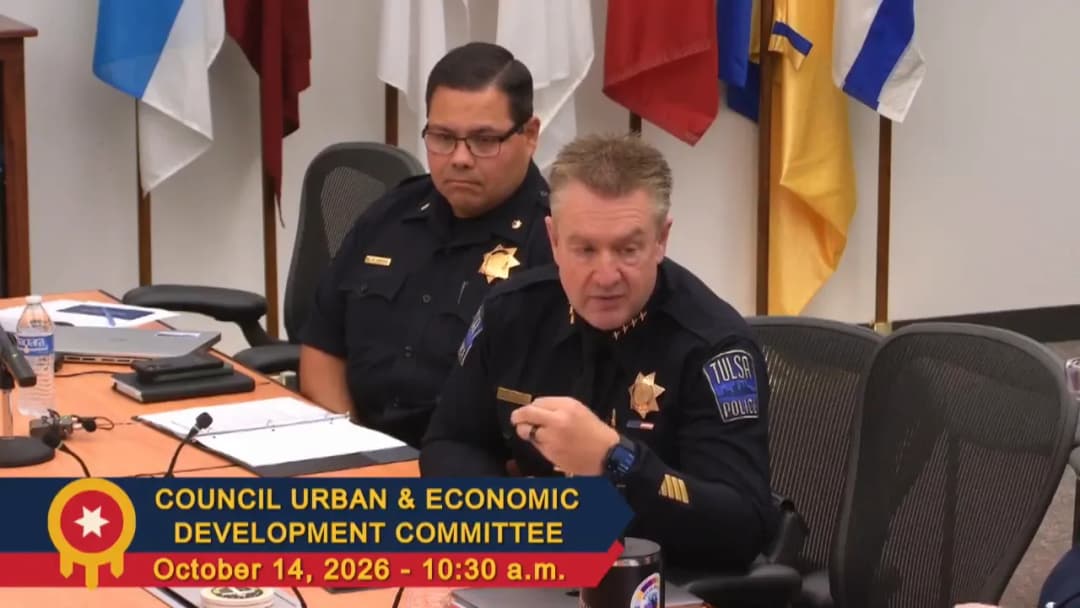
The Urban and Economic Development (UED) Committee held a comprehensive workshop on October 14, 2026, to debate a proposed ordinance creating an Office of Independent Review and Oversight of Public Safety (Title 16). The meeting featured detailed presentations from Emergency Management, Police, and City Security, alongside a presentation from the Terence Crutcher Foundation. The Public Safety Commissioner also briefed the council on inter-departmental coordination and data systems. Presentations from Public Safety Departments - Emergency Management (Adam Woodard): Woodard highlighted existing oversight from state and federal agencies and stressed the new department's focus on transparency. He worried the ordinance could duplicate efforts currently handled by existing layers of review. - Police Department (Chief Jim "Scott" Brooks): Chief Brooks provided a comprehensive overview of TPD oversight (e.g., 1,600 daily body-worn camera videos, 26-month retention, CALEA accreditation). He stated TPD had 64 investigations in 2025 (54 administrative, 10 citizen-initiated) from 272,000 calls. He expressed clear concerns that the ordinance could harm officer morale and recruitment but committed to holding a public transparency meeting on camera policies the following Monday. - City Security (Mark Hogan): Hogan reported only two citizen complaints in two years. He described the proposed office as "hurtful, redundant, and burdensome" because it implies distrust despite his department's strong record and lack of administrative staff for new compliance tasks. Discussion with Public Safety Commissioner Laura Roberts Commissioner Roberts detailed ongoing efforts to improve collaboration among her departments, including weekly meetings. She acknowledged significant data integration shortcomings, relying on siloed systems and spreadsheets. She is exploring the Peregrine data platform to improve analysis and transparency. She stated she did not pressure department heads to oppose the ordinance and expressed openness to collaborating with the council on a community oversight board, given that data and transparency improvements are a shared priority. Presentation from the Terence Crutcher Foundation Sam Robson, representing the Foundation, argued strongly for the ordinance's passage. He presented figures showing Tulsa has a fatal police encounter rate (9.5 per million) over double the national large-city average (4.4 per million). He highlighted the low 2% citizen complaint sustain rate and $47 million in settlements. He described the proposed office as a "review model" to ensure internal investigations are conducted properly, aiming to build community trust rather than discipline officers. Key Outcomes & Council Deliberations - No Committee Vote: The committee did not advance the ordinance, though it was scheduled for a full City Council vote later that day (October 14). - Council Division: The debate exposed a sharp divide. Supporters (Dr. Wright, Hall-Harper, Dutton) argued the ordinance is a necessary step to rebuild trust after years of inaction and poor community feedback. Critics (Lakin, Bangle) expressed fears of politicizing the police and duplicating effective oversight. - Transparency Path: Commissioner Roberts signaled a willingness to continue working on a collaborative oversight framework. Chief Brooks initiated his own transparency push outside the ordinance. The meeting highlighted a general consensus that the city's public safety data systems require significant investment and modernization to meet transparency goals, regardless of the specific oversight mechanism adopted.