The Anchorage Assembly held a work session on October 2, 2026, to discuss the Anchorage Childhood Care and Early Education (ACE) Fund. The meeting featured a presentation from Trevor Storrs, chair of the ACE Fund board, and testimony from Laura Rourke, executive director of Anchorage Montessori School. The main topics were an update on the fund's activities and the board's recommendations for the FY27 budget, which faces a reduced revenue projection of $5.2 million compared to the previous $10 million in FY25. Public Comments & Testimony - Laura Rourke, Executive Director, Anchorage Montessori School: Described how the school serves 142 young children (48 toddlers starting at 19 months, 94 ages three through kindergarten) and benefits from all three ACE funding streams (early educator subsidy, operational assistance, capital improvement). She shared that the school's operating budget is roughly $3 million, with 78 cents of every dollar going to salaries, payroll taxes, and benefits. She detailed unexpected September expenses totaling over $21,000 (break-in repairs, fire exit lights, roof leaks) against an annual repairs budget of $15,000. She expressed full support for ACE capital funding but stated she does not support directing ACE funds to the Anchorage School District pre-K programs or Best Beginnings while many licensed child care programs have unmet needs. She emphasized that without capital funding, smaller centers or home providers could be forced to close. Discussion Items - ACE Fund Overview and Budget Recommendations (Trevor Storrs): Storrs presented two budget scenarios based on a projected $5.2 million in marijuana tax revenue (down from $10 million in FY25 due to reduced rollover and lower usage). The board's recommended budget zeroes out funding for ASD pre-K ($2 million) and Best Beginnings ($125,000), redirecting those to child care work subsidies ($1.5 million), flexible operational grants ($2.4 million), capital grants ($572,000), and administration (9%). A contingency budget (reflecting the mayor's proposal) reduces child care work subsidies to $1.4 million, cuts operational grants by 43%, eliminates capital and pilot funding, funds ASD pre-K at 75% ($750,000), and zeroes out Best Beginnings. Storrs argued that early childhood investment is upstream prevention for homelessness and economic stability, and suggested that the alcohol tax could partially fund ASD pre-K to free up ACE dollars for capital projects. - Assembly Member Comments: - Ms. Baldwin Day: Noted that the mayor's administration previously indicated ASD pre-K funding would return to the alcohol tax after FY26. She raised concerns about the impact of free pre-K on home-based providers, as families may leave paid options, harming those providers' viability. She suggested evaluating capital proposals separately for in-home versus center-based care, as small investments ($10,000 or less) could be transformative for home providers. - Mr. Voland: Affirmed that the ACE board’s recommendations are advisory and that the assembly retains full authority to make budget amendments, including direct grants to organizations. He encouraged his colleagues to bring forward amendments if they wish to support specific organizations like Best Beginnings. - Storrs (in response): Clarified that the only binding commitment is to ASD pre-K for the current program year ($940,000 remaining). He also addressed the administrative burden of using Biz Express for grant applications, noting the Children’s Trust has offered free access to its own online system as a temporary solution. Key Outcomes - No formal votes were taken; the work session was informational and part of the ongoing budget process. - The ACE board’s recommendations will be considered by the assembly as the FY27 budget moves forward. The assembly will receive additional briefings from the mayor’s office. - The board reiterated its availability to provide further data and answer questions. The meeting concluded with thanks to the presenters and board members, and the chair adjourned the session.
The Public Meeting Index
The Public Meeting IndexThe Anchorage Assembly held a work session on October 2, 2026, from 1:00 to 2:00 PM, featuring the Anchorage Park Foundation (APF). The session provided an overview of the Foundation's accomplishments, 2027 goals, and requests to the Assembly, alongside preliminary discussion of the Parks and Recreation Capital Improvement Program (CIP). The mayor's budget had been introduced earlier that day; the CIP document under review was an excerpt from the 120-day memo, not the proposed budget. Discussion Items - APF Overview and Accomplishments: Executive Director Beth Nordland (retiring March 31, 2027) and incoming Executive Director Michelle Lebau presented. APF raised $53 million in funding and volunteer time over 22 years, mobilized $77.85 million in local park bonds, and unlocked more than $40 million in federal match. Key programs include Youth Employment in Parks, neighborhood challenge grants, the Trails Initiative, Indigenous Place Names, inclusive playgrounds (23 built), tree planting, and fiscal sponsorship. - 2027 Goals: Transition to new leadership; design the Indigenous Place Name Plaza at the mouth of Ship Creek; plant 1,000 trees with 100+ volunteers; pass the 16th consecutive park bond; work with the governor to recognize outdoor recreation as economic growth; support Chugach State Park connectivity and Eagle River Trail connectivity; continue Ship Creek Stream Bank Restoration. - Asks to the Assembly: Host an annual work session; partner in promoting parks as an economic development asset; maintain support for annual park bonds; provide letters of support for fundraising; consider funding for park activation programming; celebrate all project wins (big and small); challenge each assembly member to think about how their district could work with APF. - Cuddy Family Park: Assembly Member Park raised that Cuddy Family Midtown Park was not included in the proposed budget for 2027–2032. Anchorage Skates reported raising $1 million committed, $950,000 in bond money, and over $50,000 from private donors, and expressed surprise at the omission. Chair deferred detailed discussion to future budget work sessions, noting that a Cuddy Park master plan is needed first (Parks and Rec is developing an RFP). Assembly Member Vaughn reminded that the Assembly can amend projects onto the bond list, as done previously. - Trail Connectivity and Alaska Long Trail: APF supports multiple trail projects, including the downtown trail connection (gateway to the Alaska Long Trail), safe Lake Otis crossing on the Moose Loop (funded via AMATS but at risk due to state transportation plan issues), and the Fish Creek Trail to the ocean. The Alaska Long Trail will be a 500-mile route from Seward to Fairbanks; APF advocates for downtown Anchorage as an on-ramp and has raised funds for a gateway at Ship Creek. - Park Activation and Volunteerism: Assembly Member Bodindick inquired about empowering district-based volunteer groups for park activation. APF noted existing volunteer coordination through the Point system and cited examples like a singles tree-planting night. They expressed support for brainstorming neighborhood-level activation. - Challenge Grants: The next cycle opens in 2028. APF provides up to $40,000 in matching funds per project, leveraging volunteer time or donations. - Inclusive Playgrounds: 23 inclusive playgrounds built since 2011. The next major project is at East Chester Woodside (District 1), for which APF plans to help raise funds. Key Outcomes - No formal votes were taken; the session was informational. - The Assembly expressed interest in establishing an annual work session with APF. - Assembly members were encouraged to engage with APF for district-specific projects and state legislative advocacy. - APF will continue promoting park bonds and supporting capital projects as they move through the Assembly's budget process. - Further budget work sessions will occur in the coming weeks, where the Cuddy Park issue and other CIP items will be addressed.
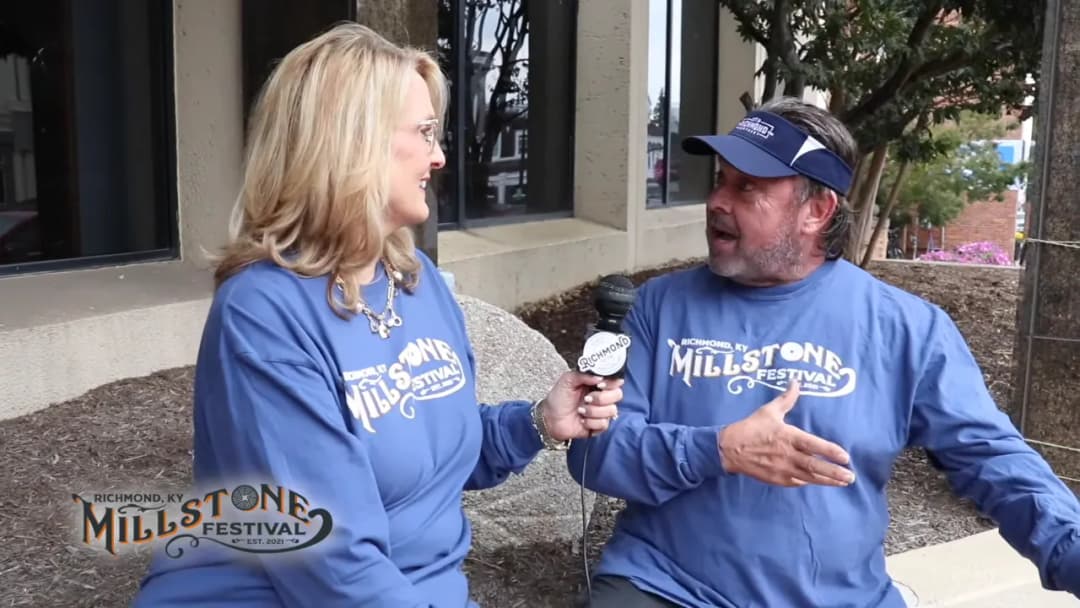
Interviews with City Officials - Kelly McBride (Host): Introduced the interviews and encouraged community participation in the Millstone Festival. - Mayor Robert Blythe: Expressed that his favorite part of the festival is talking with people and seeing new visitors each year. He noted the car show has been a pleasant surprise and that citizens have suggested additional festivals featuring car shows and food trucks, indicating that many good ideas come from the community rather than City Hall. - Commissioner Jim Newby: Stated that the festival showcases Richmond and its offerings, and he values the chance to reconnect with people he hasn't seen in years. He highlighted the festival's role in introducing visitors to Richmond and surrounding areas. - Commissioner Mike Brewer: Emphasized that the festival shows what Richmond is made of, with many people investing their time. He praised the history of the Millstone Park and Speedy Denny's donations. He invited people to come enjoy the festival and Richmond's history. - Commissioner Mindy Gobel: Expressed pride in the festival giving Richmond its own identity. She enjoys the food trucks and the opportunity to catch up with friends. She noted economic impacts such as visitors buying gas, shopping, and potentially staying overnight. - Commissioner Tammy Cole: Described the festival as an easy, fun day with good craft vendors, food options, and live music. She noted that visitors from surrounding areas can see improvements to downtown Richmond. She encouraged everyone to attend Millstone Festival 2026. Key Outcomes No decisions, votes, or formal outcomes occurred. The purpose was to promote the Millstone Festival and encourage attendance.
This was a test meeting of the La Crosse Common Council. Note: The agenda was dated October 1, 2026, but according to the meeting summary instructions, the meeting took place on October 2, 2026. All items on the agenda were designated as test items and no substantive business was conducted. Consent Calendar - The approval of minutes (Item 26-0925, "Test Meeting minutes") was listed but was a test placeholder. No vote was taken. Discussion Items - Item 26-0926: A test report with an extremely long caption was presented for informational purposes only. - Item 26-0927: A test ordinance was introduced. The agenda noted the possibility of a closed session under Wis. Stat. §19.85(1)(a) to deliberate a decision, but no closed session was held due to the test nature. - Item 26-0928: A test resolution proposing a doubling of pay for staff in the clerk's office was listed. The agenda noted possible closed session under Wis. Stat. §19.85(1)(g) to confer with legal counsel. - Item 26-0929: A test review of plans for expansion of the clerk's office was listed, also with a note about possible closed session for legal counsel consultation. Key Outcomes - No votes were taken and no decisions were made. The meeting was a test run of the Common Council's procedures. The meeting adjourned without taking any action.
The Evansville Fire Merit Commission held a special meeting on October 2, 2026, to conduct an evidentiary hearing on the appeal of EMS Supervisor Douglas Randall regarding a five-day suspension without pay and termination recommended by Fire Chief Tony Knight. The hearing included opening statements, testimony from multiple witnesses, closing arguments, and an executive session. The commission unanimously affirmed four policy violations and voted to uphold the termination. Discussion Items - Opening Statements: Fire Chief Tony Knight presented the case for termination, citing violations of city and department policies on harassment, sexual harassment, and conduct unbecoming. He emphasized that the conduct was unwelcome, pervasive, and occurred eight times. Defense attorney Mr. Toliver argued that the complaints were taken out of context and that Randall had no intent to harass, instead trying to build rapport. - City Witnesses: The city called ten witnesses: Chief Knight, Deputy Chief Michael Kane, and eight employees (Kylan McGovern, Kaylee Hab, Candice Middleton, Shelby Whitehouse, Gabrielle Wilson, JC McCarthy, Sabrina Bartholomew, and paramedic Corey Weiler). Witnesses testified about inappropriate text messages, phone calls, and a comment at a fire scene. Many expressed discomfort and fear of retaliation. Deputy Chief Kane confirmed that he counseled Randall after the first complaint in May 2026, but Randall continued similar behavior. - Defense Witness: Supervisor Randall testified, expressing remorse and stating he intended to build relationships and be humorous. He acknowledged that his actions were inappropriate but argued he did not intend harm. He admitted that after being counseled, he continued texting employees, but said he did so to support a nervous employee. Commissioners questioned him about his conduct, the photo of him in a robe sent to an employee, and why eight employees filed complaints. He stated he would change his behavior. - Closing Arguments: The city argued that the rapid timeline (incidents from April 18 to August 5, 2026) and power dynamic showed a pattern that counseling did not stop. The defense proposed a 30-day suspension, a zero-tolerance policy, and Randall’s resignation if another complaint occurred. Key Outcomes - The commission moved to executive session and then reconvened in open session. - Votes on Policy Violations: The commission unanimously (4-0) affirmed each of the four charges: - Two violations of Policy 103 (violation of rules, harassment/discrimination) - One violation of Policy 217 (sexual harassment) - One violation of Policy 218 (conduct and behavior unbecoming) - Termination Decision: The commission voted unanimously (4-0) to affirm Chief Knight’s recommendation of termination of Supervisor Douglas Randall. - The meeting was adjourned without public comment.
The Tulsa Women's Commission held its regular monthly meeting on October 2, 2026, at 6:00 PM. The meeting covered approval of minutes, commissioner recognitions, committee reports, and a discussion on issues impacting women. All actions were unanimous. Consent Calendar - Meeting Minutes Approval: The minutes from the September meeting were approved with a correction: under "Pinnacle Awards," the word "option" was changed to "open." Motion carried unanimously. Public Comments & Testimony - No public comments were made. Discussion Items - Commissioner Recognitions: Chairwoman Lada highlighted Commissioner Jacobs' live art painting feature on the news and her upcoming participation in the 30th annual Art in the Square event (over 89 artists). Commissioner Jackson was recognized for being honored by City Year with a red jacket ceremony. Commissioner Braddock was praised for leading the Lift Every Voice conference. - Chair and Vice Chair Report: Chairwoman Lada announced that the next meeting (November 6) will be her last, and a special election for chair will occur. Nominations for chair must be submitted to Lexi by October 23. The YWCA Pinnacle Awards nominations are open through October 15; one additional nomination committee member is needed. The Donate and Dash event for the Family Safety Center was discussed, scheduled for the following day (October 3) with shifts starting at 8:30 AM; Deputy Mayor Reyes will speak at 10 AM. A group photo will be taken at 10:10:15 AM. - Committee Reports: - Personal Safety (Commissioner Jackson): The committee will meet soon to plan for March as Women's Safety Month. - Housing and Economic Security (Commissioner Bent): The committee held its first meeting, with rich discussion including lived experiences of housing insecurity. Initial focus areas identified: education to reduce stigma around homelessness and violence against women. Possible partnership with TPD via another commission was noted. - Health and Emotional Safety (Commissioner Palacios): The Donate and Dash event is ready; logistical details finalized. Quick Print donated 20 signs. Cones for traffic control were secured. Coordination with other committees emphasized to avoid duplication. - Community Safety and Belonging (Commissioners DuPont and Throw): A survey has been finalized and translated; awaiting Qualtrics access to go live. - Systems Rights and Institutional Safety (Commissioner Edwards): Reported on a documentary screening of "No Country for Mothers" focused on affordable child care. Central Library was identified as a venue (capacity 200, free). Plans include a panel discussion with local experts. Also provided an update on sexual assault kit backlogs: over a year-long backlog; kits triaged into three tiers; meeting with Dr. Laurel Roberts and other officials to understand obstacles. Further research into best practices and state-level studies underway. - Issues Impacting Women: Chairwoman Lada opened a discussion on recent violence against women (e.g., Cornell, failed execution of Krista Pike, maternal mortality). Commissioners shared concerns about systemic issues, the need for infrastructure-level change, and the importance of including marginalized voices (e.g., trans women, women of color). Lexi announced City Council town halls on domestic violence (October 19, 20, 29) and encouraged commissioner attendance. - YWCA Representative Announcement: Jenny Trower (YWCA Tulsa) urged nominations for Pinnacle Awards, noting that the arts and corporate champion categories have no nominations yet. Key Outcomes - Minutes approved with correction. - Chair election process set: Nominations due Oct 23; election at Nov 6 meeting. - Donate and Dash event to proceed October 3 with volunteer shifts and group photo. - One additional nomination committee member needed for Pinnacle Awards; will be solicited via email. - Committees to coordinate to avoid duplication and synergize efforts. - Survey for community safety and belonging not yet live; awaiting Qualtrics. - Documentary screening planned; venue identified; panelists to be determined. - Sexual assault kit backlog research ongoing; further meetings with stakeholders. - Meeting adjourned by unanimous vote.
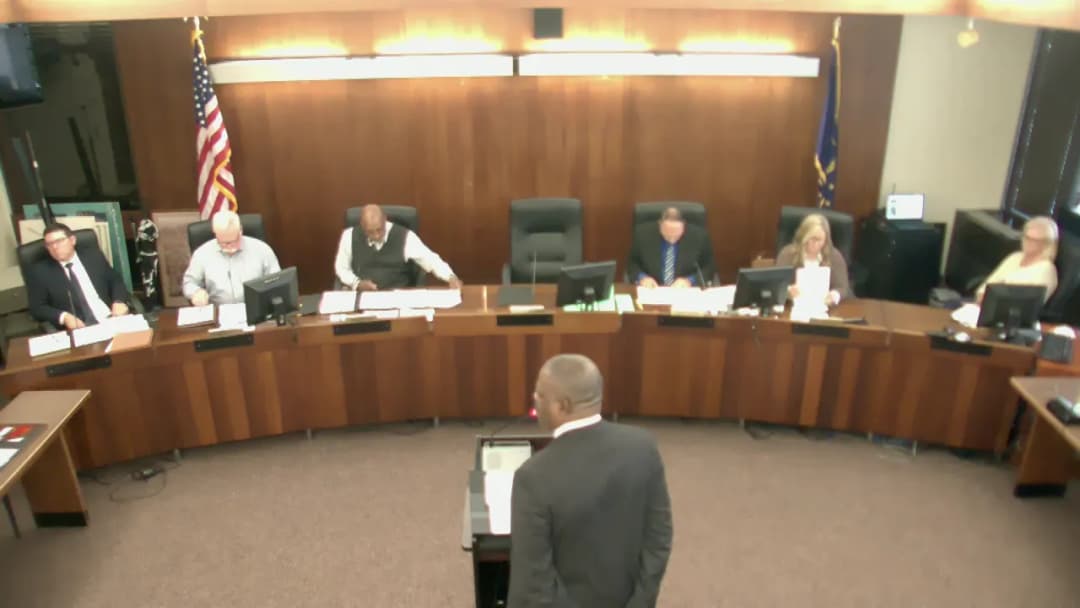
The Paducah City Commission met on October 2, 2026, to address routine approvals, hear public comments on annexation policy, and discuss several significant items including a parks camera project, adoption of the annual tax rate, creation of a new Department of Community Development, and the introduction of a consensual annexation. The meeting began with an invocation and Pledge of Allegiance, followed by public comments and a consent calendar. Consent Calendar - Approval of appointment of Nancy Gray to the Historical and Architectural Review Commission (term expiring October 2, 2030). - Personnel actions: municipal order directing the city manager to institute an administered policy for opioid settlement funds; renewal of employment agreement for Police Officer Travis Counts; execution of a grant application for a fiscal year 2026 Edward Byrne Memorial Justice Assistance Grant ($12,045) for the police department; authorization to release a request for proposals for Transient Boat Dock Repairs; declaring property at 1417 Burnett Street surplus and accepting a bid of $1 from Jeremy Sorina of Kentucky Modern Housing Development LLC; approval of renewal of employment agreement with City Manager Darren Jordan. - All items were approved unanimously on roll call votes (5-0). Public Comments & Testimony - Marshall Davis spoke against the city's annexation policy. He argued that annexation reallocates wealth rather than creating it, and that existing city taxpayers subsidize new developments through incentives such as a five-year property tax rebate, free sanitation up to $10,000, and $1,000 closing cost lump sums. He also stated that the 2002 policy routed all new property tax revenue back to developers for infrastructure for six years. Davis asserted that this erodes the county's independent tax base. Discussion Items - Lease Agreement with Siemens Church Institute: The city manager recommended referring the lease back to staff for continued negotiations, noting recent positive conversations with Reverend Nessel Hunt. The commission voted unanimously to refer the matter. - Parks Camera Project: The commission approved a bid of $95,320.22 from Inspired Technologies for the first phase of a parks camera project. Eric (parks director) explained that 21 cameras will be installed at Noble Park, Rotary Health Park, and Robert Coleman Park. The cameras have four lenses providing 360-degree views and are on a closed-circuit system stored at the city data center and 911 operations center. Future phases were outlined for next fiscal year. - Land and Water Conservation Fund Grant for Spray Ground: The commission approved applying for a $1 million grant for construction of a new spray ground at Coleman Park. The total project is estimated at $2.4 million, with a city match of $1 million. The design includes flexibility to reduce costs without impacting quality. The original splash pad was installed approximately 20 years ago for $375,000. - Tax Rate Ordinance: The commission adopted the compensating tax rate of $0.253 per $100 valuation for real property, a decrease from $0.271. Finance Director Audra noted that approximately 70% of city property owners will see a decrease. Discussion included the Paducah Independent Schools' tax rate subject to voter recall, which will require separate billing. The city will issue multiple bills and plans a press release and informational letter. - Ordinance Creating Department of Community Development: The ordinance was adopted. Carol (community development director) provided an update on the transition, including the move of planning staff to fire prevention area, promotions of Josh Fowler and Les View Gate to assistant directors, and the upcoming Southside Fall Festival at Coleman Park on October 3 from 11 AM to 3 PM. - Introduction of Annexation Ordinance: An ordinance was introduced for the consensual annexation of 1.62 acres at 6675 Plainville Road. Josh Fowler explained the property owner intends to build a garage and eventually a house; the total annexed area including right-of-way is 2.587 acres. The city will collect property tax; county taxes remain. - Household Bulk Item Collection Program: Chris (public works) presented the second bulk item collection event. The March event resulted in 375 man hours, 274 equipment hours, 900 stops, and 61.6 tons collected. The upcoming event runs from the last week of October through November 20, with pickup by zones based on trash day. Prohibited items include tires, construction material, hazardous waste, freon appliances (unless tagged), electronics, and flammable materials. Commissioners discussed using the My Paducah app for reminders. Key Outcomes - All consent calendar items were approved unanimously (5-0). - The Siemens Church Institute lease was referred back to staff for continued negotiations. - The Parks Camera project bid was approved unanimously. - The Land and Water Conservation Fund grant application was approved unanimously. - The tax rate ordinance was adopted unanimously. - The ordinance creating the Department of Community Development was adopted unanimously. - The annexation ordinance was introduced (first reading) and will be considered for adoption at a future meeting. - The household bulk item collection program was announced; no vote required. - The commission moved into executive session for discussion of proposed litigation, with no action expected afterward.
On October 2, 2026, the San José City Council held an informational study session to explore two primary infrastructure financing tools: Enhanced Infrastructure Financing Districts (EIFDs) and Community Facilities Districts (CFDs). The session was led by staff from the City Manager’s Office of Economic Development and Cultural Affairs, Public Works, and the city’s municipal advisory firm Fieldman & Rolapp. The goal was to provide councilmembers with a common understanding of how each tool functions, when each is most effective, and their limitations in financing public infrastructure that supports economic development and private investment. Presentation Overview - CFDs are special tax districts created by property owners or voters (two-thirds approval if more than 12 registered voters reside in the district) to pay for local public infrastructure and services. They can be formed relatively quickly (less than a year) and can issue bonds early. Bonded CFDs fund roads, public parking, parks, water/sewer, flood control, and other horizontal infrastructure. However, San José’s Council Policy 1-14 (last amended in 1993) requires a minimum of $10 million in bonds and 1,000 single-family homes, which may conflict with current Envision 2040 goals for higher density. Staff noted the policy is outdated and could use an update. - EIFDs use future property tax growth (tax increment) to fund public infrastructure without raising new taxes. The city’s share of property tax increment is approximately 13.5% of the 1% property tax levied on the assessed value. School district shares (44%) are statutorily excluded; other taxing entities (county, special districts) may voluntarily opt in. EIFDs require a lengthy formation process (feasibility study, public financing authority, two public hearings, protest period) and take years for assessed value to accrue before bonds can be issued. A hypothetical $10 billion mixed-use development could yield roughly $9 million per year in city increment, generating about $138 million in bond capacity over 30 years at a 5% interest rate. - When to use each tool: CFDs are better suited for early-stage infrastructure needs because they can be bonded quickly against special taxes. EIFDs are a longer-term tool, best layered with CFDs as development progresses. Examples from Sacramento (Aggie Square), West Sacramento, Placentia, Eastern Coachella Valley, and San Francisco (Treasure Island) illustrated varying scales and partnerships. Council Questions and Discussion - Councilmember Casey asked about who bears issuance and compliance costs. Staff clarified that bond issuance costs are paid from bond proceeds, and ongoing administration costs are covered by the special tax revenue; however, those administration costs reduce the capacity available for debt service. He also questioned whether the 13.5% share of increment makes EIFDs worthwhile, noting that a $10 billion project yielding only $138 million in bonded capacity over 30 years seemed modest. - Councilmember Kamei expressed skepticism, stating that these tools may not be appropriate at this time. She suggested going directly to voters for specific infrastructure measures (like Measure T) as a more practical path. She also noted the challenge of using EIFDs for affordable housing since affordable housing does not generate significant property tax return. - Councilmember Tordillos probed the flexibility of using tax increment for housing. He noted that moderate-income housing is listed as an eligible use under Government Code 5398.52 and asked whether mixed-income developments could qualify. Staff clarified that if tax increment is used and bonded for housing, it must be affordable (very low, low, or moderate income), but private developers building market-rate housing within an EIFD without using tax increment bonds are not restricted. Tordillos also raised the potential of using pay-as-you-go models to support projects that are stuck in the pipeline, similar to alternative financing models being explored locally. He emphasized the need to update local CFD regulations and align internal policies so the city can act quickly when large-scale developments (e.g., downtown West, Berryessa) are ready. - Councilmember Mulcahy asked whether staff had modeled specific areas of the city. Staff declined to discuss specific geographies to avoid influencing landowner behavior, but noted they are prepared to dive in when development projects reach sufficient sophistication. He also clarified the Aggie Square example: the city of Sacramento formed a city-only EIFD with partners (UC Davis, Wexford) and layered a CFD. In the Eastern Coachella example, the county committed 20% of its share, not 20% of the whole county increment. - Councilmember Doan asked for a concrete local example where an EIFD would be preferable to a CFD. Staff responded that a CFD could initiate momentum for a broader EIFD project in a complex mixed-use district. He also asked about operating both tools simultaneously and what metrics would measure success after 5–10 years. Staff indicated that at the 45-year sunset of an EIFD, the city would look for assessed value and other revenues exceeding the cost of investment. They noted that developers can benefit from tax-exempt borrowing and prospective reimbursement, which can accelerate project timelines. - Councilmember Cohen asked about county participation in examples and whether the city’s 13.5% share could be increased through state legislation. Staff confirmed that school districts cannot participate by law, and there has been no recent statewide effort to rebalance tax increment ratios. Some project-specific bills have been passed, but generally the ratios are fixed. Public Comment - One speaker (via Zoom) encouraged the council to consider using these financing tools for parks, trails, tree canopy, pedestrianization, and transit-oriented development along the BART corridor and East Santa Clara Street. They noted that 33 miles of trail network remain incomplete and that such investments demonstrably improve property values. Key Takeaways - No formal actions were taken; the session was informational and educational. No votes, resolutions, or directives were adopted. - Staff acknowledged that updating Council Policy 1-14 for bonded CFDs would be a necessary step to align with current density and housing goals. - Councilmembers expressed mixed views: some skeptical of the tools’ value given San José’s low increment share, others interested in using them in combination with other financing mechanisms for mixed-income housing and catalytic infrastructure projects. - Staff highlighted the importance of stress-testing any financing plan against slower growth, lower values, and higher interest rates, and warned that forming an EIFD without a strong partner with a larger share can lead to underperformance (citing cautionary examples from around the state). - The city will need to invest staff time and consultant resources to properly analyze any future proposals; no immediate next steps were identified beyond continuing to monitor market opportunities.
The New Rochelle Universal Complaint Review Board (also referred to in the transcript as the Civil Component Review Board, or CCRB) convened a regular public meeting in the City Council conference room, chaired by co-chairs David Moore and Dr. Renee Barron. Members present included Julie Mercer, Christian Walker, Donna O'Keefe, Michael Cameron, and Fabiola Brito, along with Deputy City Manager Todd Castell and Deputy Corporation Counsel Jeffrey Breen. The board approved the August minutes, completed its training requirement, and reviewed — but deferred a vote on — its proposed bylaws/rules of procedure. Note: the transcript's opening line states "October 1," while the meeting timestamp is October 2, 2026. Consent Calendar - Motion, second, and unanimous voice vote approving the minutes of the August 12, 2026 meeting. - No changes to the agenda; no communications from public officials were received. Board Member Announcements - Michael Cameron announced he intends to attend the NACOL conference in November (the national meeting of the organization that provided part of the board's training) and is exhibiting his drawings as part of Arts Fest. - Dr. Renee Barron promoted the Songcatchers brunch gala on October 18 at Davenport, which supports reduced-rate music lessons for young people; she noted she serves on the Songcatchers board. - A board member promoted the 24 Hour Plays Broadway gala on November 2, honoring Thomas Cale, who worked on Moana, Fossey Burden, and Hamilton; the arts education organization pairs writers, actors, and directors to write, rehearse, and produce one-act plays in 24 hours. Public Comments & Testimony - No members of the public attended or had requested to speak; no public testimony was offered. Discussion Items - Training completion and future meeting schedule: With today's meeting, the board has officially completed its training and will be ready to hear cases from Internal Affairs. The planned structure is monthly Internal Affairs case meetings with no city personnel present, plus quarterly public meetings with public comment. Lieutenant Wensler indicated Tuesday and Thursday evenings work best for his schedule. Co-chairs will coordinate a calendar with Deputy City Manager Todd Castell; board members were asked to share dates they are unavailable, including via the board's CCRB Gmail addresses. - Bylaws/rules of procedure: Jeffrey Breen confirmed no additional changes had been made since the last iteration and stated that while the board is entitled to vote on rules, the City Council will consider whether to adopt or change them. - Michael Cameron's proposed amendments were reviewed one by one: - Membership language (Article 4, Section 1): Cameron suggested using "chair or co-chairs" to allow for a single chair in the future. Breen noted the city code requires co-chairs and the board's rules cannot override the code, but agreed language could be added stating that if the code is changed, references to co-chairs would automatically adjust. Julie Mercer supported this approach. - Orientation (Article 3, Section 4): Cameron asked whether recorded training is acceptable and what happens if the Citizens Police Academy (CPA) is suspended. Breen confirmed recorded training is permitted since nothing prohibits it; members agreed to add language clarifying that recorded training is accepted, although in-person training is preferred. Todd Castell stated a new member would receive a spot at the next available CPA and that the CPA has operated for over a decade and is explicitly discussed in the code, which would have to change if the CPA ended. The code's holdover provision covers vacancies, with replacement required within 60 days of term end or resignation. - Meetings (Article 6): Cameron asked whether the Internal Affairs unit representative is always a lieutenant; Breen confirmed the code requires the lieutenant, though that could be considered for future code changes. - Voting section typo: Cameron noted "manner" should be "matter"; this was confirmed as a typo. Another incomplete sentence in Article 7, Section 1 (containing "under") will be deleted. - Working groups (Article 7): Cameron questioned whether sections defining three specific working groups should be struck so working groups can be created and terminated flexibly. Consensus favored keeping the bylaws flexible — allowing working groups to be created and disbanded as needed, by a majority vote or by the co-chairs — since the board is the first group operating under the new process. - Official statements (Article 5): Members discussed what constitutes an official statement on behalf of the board. Agreement was reached that only co-chairs or expressly designated persons may make official statements representing the board, and only with approval of a majority of the board; individual members speaking publicly must clarify they are speaking in their individual capacity. A caution was raised about open meeting law issues if all board members communicate on a single email chain. - Decision to defer adoption: The board agreed to hold off on adopting the bylaws rather than drafting amendments on the fly; Corporation Counsel will produce a final amended version for a vote at the next meeting. It was noted that the board does not need to adopt the bylaws in order to begin hearing cases. Key Outcomes - Minutes of the August 12, 2026 meeting approved unanimously. - Board completed its training and is ready to hear Internal Affairs cases. - Bylaws/rules of procedure adoption deferred to the next meeting after a final amended version is prepared. - Next meeting tentatively scheduled for November 5, 2026 at 7:00 p.m.; Todd Castell will confirm the date. A combined Internal Affairs session and public meeting on the same day was discussed as a possibility. - Motion to adjourn carried unanimously; the meeting adjourned.
The Fire and Police Commission (FPC) held a regular session on October 2, 2026, at 6:26 PM at the Milwaukee Fire and Police Safety Academy. The meeting featured extensive public comment criticizing Police Chief Jeffrey Norman's 2025 trip to Israel, MPD accountability, and the city's surveillance infrastructure. The Commission voted unanimously (8-0) on several personnel actions including lateral transfer announcements, probation extensions, and promotions across the police and fire departments. The meeting adjourned at 8:39 PM. Consent Calendar - FPC212717: September 17, 2026 meeting minutes approved by general consent. - FPC212718: Appointment to a Police Services Specialist - Investigator position approved by general consent. Public Comments & Testimony - Jody Summors: Described a negative encounter with MPD involving alleged profiling, stating their complaint was ruled "non-sustained" despite providing video evidence. - Ihsan Atta: Condemned Chief Norman's training trip to Israel as a partnership with an "apartheid regime" committing genocide and called for the Chief's removal. - Emah Isis: Argued the MPD internal accountability system is an "invisible barrier" to justice, noting multiple personal complaints ended in "not sustained" findings. - Waleed Nassar: Presented the itinerary of Chief Norman's Israel trip, highlighting visits to the Mabat 2000 surveillance center and the Gates Balon facility. They expressed fear and discomfort as a Palestinian Milwaukeean resident. - Diego Garcia (Co-chair, Milwaukee Alliance Against Racist Violence): Issued a failing grade for Chief Norman's performance, citing high-speed chase fatalities, costly legal settlements, and the Israel trip. Opposed the proposed MPD budget increase for 2027. - Brian Verdin: Expressed no confidence in Chief Norman, criticizing his handling of the death of Sam Shark Jr. during the RNC and his acceptance of a $60,000 raise. - Emilio Detorre (Semi-retired attorney): Called the Chief's Israel trip a disqualifying act of poor judgment, alleging it aligns with training from a regime using brutal tactics. - Tayyibah Sethi: Demanded the Chief be fired, a permanent ban placed on facial recognition, an ethics investigation into MPD gifts from Lockheed Martin, and for the FPC to stop acting as a "rubber stamp." - Amanda Merkwae (Moore Turnerist): Stated that while crime rates are down, the Chief's trip and lack of transparency regarding Flock and facial recognition technology have ruptured public trust. - Ron Jansson: Questioned the FPC's awareness of the full scope of MPD surveillance technology (Flock, Axon, drones, cell site simulators) and data sharing practices with federal fusion centers. Noted the MPS school board voted unanimously to remove Flock cameras from school property. - Julie Curcio (virtual) and Kaye Lafond (virtual): Criticized Commissioners for their silence and complicity in Chief Norman's actions and the expansion of the surveillance state. Discussion Items - MPD Standard Operating Procedure (SOP) Changes (FPC212719): MPD presented amendments aligning juvenile questioning procedures with a March 2026 court ruling requiring Miranda warnings for juveniles in custody. Commissioner Fung voiced strong support for the juvenile SOP update. The communication was placed on file. - Probation Extension for Emergency Communications Lead (FPC212720): The item was initially held to allow the affected employee to address the Commission. The board convened in closed session. Following the closed session, the resolution was adopted (8-0) with an explicit expectation from Commissioners that no further training extensions would be needed. Key Outcomes - FPC212729: Police Officer - Transfer (Lateral) job announcement bulletin adopted (8-0). - FPC212730: Firefighter - Transfer (Lateral) eligible list adopted (8-0). - FPC212721: Probation extensions for two Emergency Communications Officer II positions approved (8-0). - FPC212723: Probation extensions for five Fire Lieutenant positions approved (8-0). - FPC212724: Promotion of Michael Dirks to Captain of Police approved (8-0). - FPC212725: Promotions of Oriana Cabasos and Daniel Appel to Police Lieutenant approved (8-0). - FPC212726: Promotions of Michael Swart and Lando Gonzales to Police Sergeant approved (8-0). - FPC212727: Promotions of five individuals to Detective approved (8-0). - FPC212728: Rescinding appointments to two Office Assistant II positions approved (8-0).