Browse by city
Date range
Search help

Search titles, summaries, topics and stored transcripts together. Keywords may match separately; put the whole query in double quotes for a phrase. Matching follows word analysis, so punctuation is not exact. Both dates are included. Documents are not searched.

SHOWING 31–40 ENTRIES
31
NEWNOV 3, 2026 · KISSIMMEE, FLORIDA · CITY COMMISSION
Kissimmee City Commission Regular Meeting – November 3, 2026

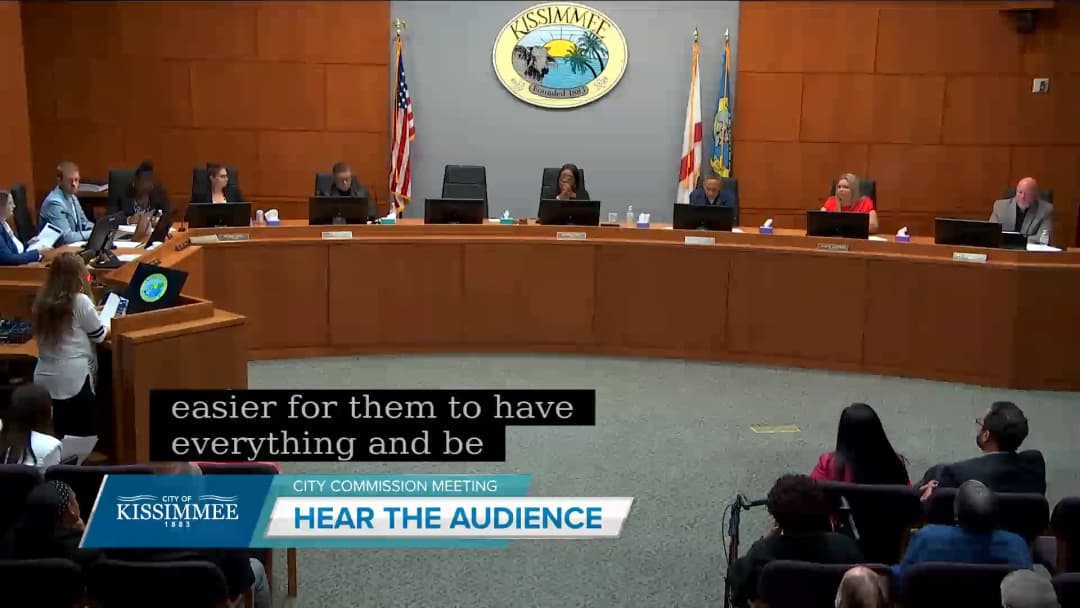
The City of Kissimmee Commission convened on Tuesday, November 3, 2026, at 6:00 PM. The agenda included the swearing-in of new firefighters and police promotions, a proclamation for National Alzheimer's Disease Awareness Month, the unanimous approval of a 21-item Consent Agenda, public comments, discussion on economic development contracts, and the process for filling a vacant Commission seat. Consent Calendar - The Commission unanimously approved (4-0) the Consent Agenda (Items 7.A through 7.U), which included: minutes from October 20; engineering services with Michael Baker International; a UASI grant application; the Columbia Avenue Complete Streets design contract ($1,658,938); annual vehicle purchases (41 units, $2.38M budgeted); the Berlinsky House demolition contract ($199,550); selection of NovoaGlobal for school speed zone cameras; two FDOT utility subordination agreements; an interlocal agreement with Toho Water Authority ($278,633) for the Columbia Avenue project; a CDBG contract for Haven on Vine electrical upgrades ($718,529.38); the Verkada annual service payment ($93,210.37); a housing referral MOU for Haven on Vine residents; project carryovers; acceptance of a $2.5M FDOT grant and a $1,350,863 task order for the Airport Traffic Control Tower; an airport software amendment; a $30,000 advertising grant from Experience Kissimmee; a Standing Emergency Governance Directive; an ARPA fund reallocation for Haven on Vine; and a $1,200,000 HUD grant for Columbia Avenue streetscape improvements. Public Comments & Testimony - Michael Lincoln McCrate, a disability advocate on the autism spectrum, described his experience regaining legal rights after guardianship. He called on the city to champion disability inclusion and supported decision-making legislation. - Stephanie Nelson requested the removal of Jeremy Fetzer from the Toho Water Authority board. A subsequent motion to place the item on the next agenda failed on a 2-2 tie vote. - Marini McCarg offered a prayer and congratulations to the newly appointed Mayor. - Chris Picardo, a lifelong resident, spoke in opposition to the city's Flock camera system. Citing Fourth Amendment violations and documented misuse by officers in other Florida jurisdictions, he called for the complete removal of all 25 cameras. - Lillian Evans echoed calls for the removal of Jeremy Fetzer and the Flock cameras. She inquired about the status of pending ethics complaints and was directed by the City Manager to schedule a separate meeting to discuss them. Discussion Items - Economic Development Partner Agreements and Contract Renewals (Item 8.A) The Commission heard presentations from four partner organizations. Questions focused on the number of businesses established within city limits and the expansion of international trade programs beyond Latin America. The Commission unanimously approved all four contract renewals for a total of $135,000. Prospera Initiatives – Renewed at $20,000. Reported 117 clients served and 252 seminar attendees in FY 2025-26. Florida Small Business Development Center (SBDC) at UCF – Renewed at $30,000. Reported 192 clients, 1,012 consulting hours, and 21 new businesses created. Recognized as the 2026 National SBDC of the Year. UCF Business Incubation Program – Renewed at $75,000. Ranked 1 in Florida by TIME magazine. Reported 80% of graduate companies remain in the local area. UCF Foundation / National Entrepreneur Center (NEC) – Renewed at $10,000. Reported 66 hours of international trade consultations and the expansion of the LATAM Trade Expo from 5 to 7 countries. - Advisory Board and Commission Vacancies (Item 8.B & City Manager Report) Fire Pension Board: An appointment was postponed to a future meeting to allow an additional firefighter applicant to apply. City Commission Vacancy: City Manager Steigerwald presented a proposed timeline for filling the vacant Seat 2. The Commission discussed selection methods, including interviews. Commissioner Alvarez stated his preference for a special election if a consensus cannot be reached. Mayor Edie requested the board wait until after the election results are confirmed before deciding on the process. The decision on the process was postponed to the November 17, 2026 meeting. Key Outcomes - Approvals: The Consent Agenda was passed 4-0. The four Economic Development Partner contract renewals were approved unanimously. - Postponements: The appointment to the Fire Pension Board and the specific process for filling the Commission vacancy were both postponed. - Failed Motion: A motion to discuss the removal of a Toho Water Authority board member at the next meeting failed on a tie vote (2-2). - Ceremonies & Proclamations: Two firefighters were sworn in, four police officers were promoted, and a proclamation was issued declaring November as National Alzheimer's Disease Awareness Month.
ECONOMIC DEVELOPMENT 43% · PROCEDURAL 23% · PUBLIC SAFETY 11% · PERSONNEL MATTERS 10%
32
NEWNOV 3, 2026 · TULSA, OKLAHOMA · CITY COUNCIL
Tulsa Asian Affairs Commission November 3, 2026 Meeting: Business Decline and Asia Fest Transition

The Asian Affairs Commission of Tulsa held its regular monthly meeting on 2026-11-03 (November 3, 2026) at 6:00 PM UTC, chaired by Patty Saphila. The meeting focused on the dramatic decline in Asian business ownership in Tulsa since 2018, featuring testimony from three local business owners. The commission also debated and ultimately voted to transfer the stewardship of the Tulsa Asia Fest to the Tulsa Asian Collective. Deputy Chief of Staff Brenton Todd addressed the commission, encouraging their recommending role and the building of leadership pipelines. Consent Calendar - Minutes Approval: The meeting minutes from the October 2026 meeting were approved unanimously. Public Comments & Testimony - Community Business Owner Panel: Three local Asian business owners shared their experiences and the systemic barriers they face in starting and operating businesses in Tulsa. - Nadal Nofo (Jerusalem Market, Palestinian-American, 20 years in operation): Expressed frustration with business property taxes and the difficulty small businesses face in accessing grants and incentives compared to large corporations. - Tarek Ali (Gyros by Ali, started as a food truck in 2011, recently expanded): Described a confusing regulatory landscape and strongly advocated for a centralized "one-stop shop" for business registration, permitting, and tax information. He specifically cited sales tax penalties in the first year as a critical financial hurdle for entrepreneurs who bootstrap using personal income and credit cards. - Ty (Hmong Food Court and Mini Mall, new business owner and plaza owner): Highlighted the overwhelming nature of the start-up process for older immigrants and refugees who lack digital literacy, and specifically cited a "fear amongst immigrants to start a business based on uncertainty" regarding work permits and immigration status. - All three speakers collectively proposed the creation of an Asian Chamber of Commerce or a similar centralized resource hub to provide walk-through guidance for new entrepreneurs. Discussion Items - Small Business Decline Focus: Chair Saphila framed the year's focus around data from the Tulsa Equality Indicators showing Asian business ownership is the only demographic experiencing a decline in Tulsa, dropping dramatically since 2018. The business panelists confirmed these challenges with their lived experiences. - Tulsa Asia Fest Transition: Chair Saphila proposed transferring the rights, staffing, planning, and fundraising for the Tulsa Asia Fest to the Tulsa Asian Collective (TAC). She detailed the event's history, the commission's May vote for a strategic pause, and its August/September votes to explore a handoff based on capacity concerns. - One commissioner argued the transition was premature and preferred to wait for a potential MOU or see if expanded membership could revive the event internally. The commissioner requested the word "funding" be changed to "fundraising" to clarify TAC would raise its own money. - Chair Saphila responded that the August proposal was specifically to explore a handoff, and the September vote approved that exploration. City staff clarified the commission votes on the proposal, while the Mayor signs the MOU with the receiving entity. - Luminary Awards: Commissioner Business announced the 3rd Annual Luminary Awards scheduled for Monday, November 9th, 2026, at 6:00 PM in City Hall. Six award categories were listed, including new categories for Rising Star and Community Advocate, with 39 nominations received. - Commission Openings and Bylaws: Chair Saphila confirmed ongoing work to update the commission's bylaws to allow residents of Tulsa County (not just Tulsa city limits) to serve. Commissioner Lexi stated there are currently four open seats: two at-large, one for a Hmong community representative, and one for a health expert. Key Outcomes - Asia Fest Handoff Vote Passed: The commission voted unanimously to adopt the proposal transferring the Tulsa Asia Fest to the Tulsa Asian Collective, with the amendments changing "funding" to "fundraising" and clarifying the support relationship mirrors the Women's Commission/YWCA Pinnacle Awards model. - Next Steps Identified: The commission scheduled a January meeting featuring city agencies that support small businesses to continue the dialogue on creating a centralized resource hub for entrepreneurs. - Action on Bylaws: Continued work to revise the commission's bylaws regarding geographic eligibility was confirmed as an active priority to attract more members from across Tulsa County. - Upcoming Events: - TU Diwali Celebration tabling event (Friday evening following the meeting, open to the public). - 3rd Annual Asian Affairs Luminary Awards on Monday, November 9th, 2026, at 6:00 PM in City Hall. Sponsorships are still available. - Future Recommendations: A final proposal for the Mayor and City Council based on the year's small business focus is planned for spring 2025.

HISTORIC PRESERVATION 19% · COMMUNITY ENGAGEMENT 16% · BUSINESS ENGAGEMENT 7% · PROCEDURAL 6%
33
NEWNOV 3, 2026 · SANDY SPRINGS, GEORGIA · CITY COUNCIL
Sandy Springs City Council Regular Meeting and Public Hearings, November 3, 2026

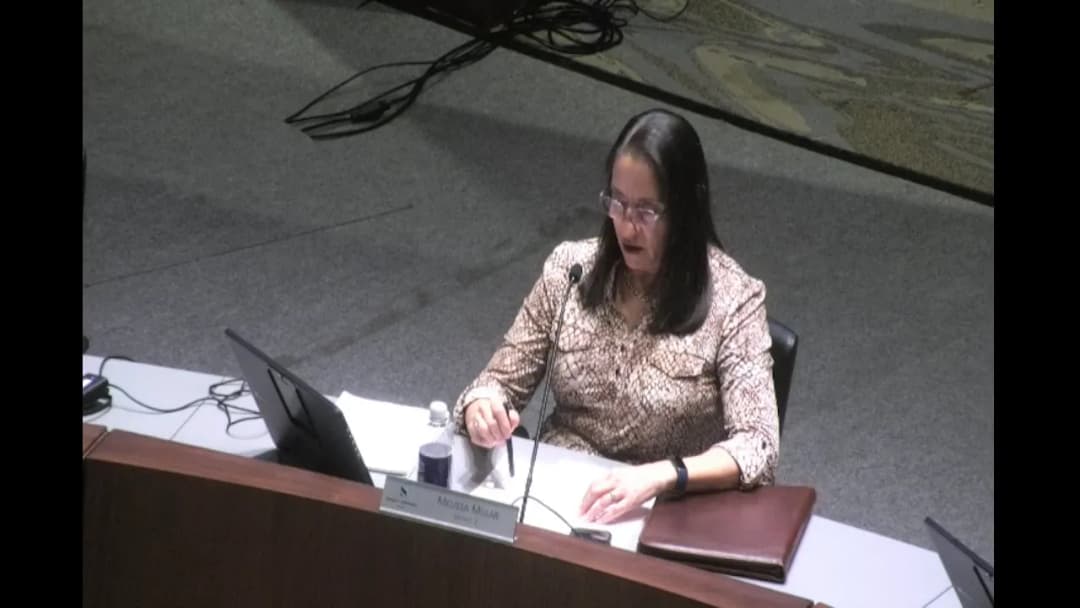
The Sandy Springs City Council met in regular session on Tuesday, November 3, 2026, at 6:00 PM in the Studio Theatre at Sandy Springs City Hall. Mayor Rusty Paul presided; Councilmembers John Paulson (District 1), Melody Kelley (District 2), Melissa Mular (District 3), Frank Roberts (District 4), Mary Ford (District 5), and Andrew Chinsky (District 6) were present. The council approved the consent calendar, completed public hearings on the millage rate and an alcoholic beverage license, approved a two-part citywide digital service delivery project, approved the temporary Fire Station No. 1 build-out contract and associated budget amendments, re-adopted ethics principles, heard reports, and entered executive session for real estate and litigation. All recorded votes were voice votes with no opposition. Consent Calendar - Approved the consent agenda, including the October 20, 2026 City Council meeting minutes, by unanimous voice vote. Motion by Councilmember Mular, seconded by Councilmember Ford. Public Comments & Testimony - Andy Bauman of 4705 Kitty Hoff Place, representing Prime Tower Development, said the Fire Station No. 1 redevelopment is removing a telecommunication tower serving AT&T and T-Mobile. He stated T-Mobile removed its equipment in June and AT&T's equipment remained operational but with potential coverage degradation, particularly indoors; he cited AT&T's role in FirstNet and possible effects on nearby residents and businesses, including Dunwoody Springs Elementary School and the Davis Academy. He asked council to have staff address: (1) engineering assessments of wireless and public safety impacts, (2) notification of affected residents, schools, and businesses, and (3) what role the city could play in facilitating a solution. He said he fully supports the fire station project and was not asking council to reconsider it. - No public comment cards were submitted during the millage rate or alcoholic beverage license public hearings. - During a later council question on the fire station item, City Manager Eden Freeman said AT&T had turned off its antennas about two weeks earlier and no degradation had been observed in city units; the city attorney had talked with T-Mobile, and staff with personal T-Mobile devices reported no change in service. Public Hearings - Millage Rate (2026-288): City Manager Eden Freeman presented the third and final required public hearing to set the FY 2027 millage rate. The proposed rate was the same as the city charter: 4.731 mills. Council approved the ordinance. Motion by Councilmember Paulson, seconded by Councilmember Roberts. - Alcoholic Beverage License (2026-289): Revenue Manager Cori Holiness presented ABL No. 28760 for Huo Kitchen LLC, 1100 Hammond Drive, Suite 400A, for consumption on premises of wine and malt beverages; applicant Yuhua Qian. Staff recommended approval. Council approved the license. Motion by Councilmember Mular, seconded by Councilmember Kelley. Discussion Items - Digital Service Delivery Project (2026-290 and 2026-291): Director of Data Strategy, Analytics, and AI Integration Keith McMellen presented both items together: a Salesforce licensing contract with Carahsoft Technology Corp. and an implementation services contract with StackNexus. He said the project replaces Lucity, which the city has used for about 20 years, has a mid-1980s architecture, more than 1 million service requests, more than 100,000 work orders, and limited integration and reporting. An initial broad RFP was cancelled after high cost estimates, the scope was reduced, and direct negotiations were authorized. A cross-department team of about 30 people evaluated Lucity, CityWorks/Trimble, OpenGov, and Salesforce and selected Salesforce, with the Indiana Department of Transportation's asset management integration and other references cited as confidence factors. Mr. McMellen said implementation costs are significantly higher but stated the licensing cost is about the same as Lucity maintenance; Councilmember Kelley asked whether the year-over-year licensing cost was about five times more than Lucity, and the transcript does not show a correction. Kelley asked how the increase would be funded; City Manager Freeman said it would be built into future annual budget assumptions, noting the city is cautious and typically ends years with surplus funds. Kelley recalled that about $1 million was budgeted for the project in FY 2027. - Council members expressed support for the digital service delivery project. Councilmember Mular praised the resident self-service portal, optional Slack, included Tableau analytics, AI visibility into recurring repairs, and alignment with council priorities. Councilmember Paulson asked about other municipal users; staff cited Cobb County, City of Atlanta, and DeKalb County. Councilmember Chinsky called the project important and noted the cost difference is mostly first-year implementation. Councilmember Ford appreciated the reduced scope and asked about the timeline; Mr. McMellen said implementation would likely start in January 2027 and run about nine months, phased with CRM first, resident portal in the middle, asset management near the end, and AI features later. - For the StackNexus implementation contract, Mr. McMellen said the rollout will be phased, will include a brief side-by-side period, three weeks of hyper care, optional managed services, at least three rounds of testing, and training. Some closed call-center tickets will not be migrated, and ticket types are being cleaned up before go-live. Council members asked for high-level milestone information, council participation in testing and training, and a resident communications plan; staff agreed. - Both resolutions were approved by unanimous voice vote. Motion on 2026-290 by Councilmember Mular, seconded by Councilmember Ford. Motion on 2026-291 by Councilmember Mular, seconded by Councilmember Ford. - Temporary Fire Station No. 1 Build-Out Contract (2026-292): Director of Facilities/Capital Construction Dave Wells said the city is preparing to demolish the existing Fire Station No. 1 to build a permanent station and needs a temporary station at 8615 Roswell Road. ITB 27009 was issued September 15, 2026. Three bids were received: F.H. Paschen, S.N. Nielsen & Associates, Inc. at $515,000; Diversified Construction of Georgia at $567,098; and Integrity CRR at $990,000. F.H. Paschen was the lowest bidder; the available project balance was $262,401.50, so a budget amendment was needed. Councilmember Paulson asked staff to ensure construction parking is managed so contractor vehicles do not overflow into nearby neighborhoods; staff agreed. Council approved the contract award and authorized the city manager to execute it. Motion by Councilmember Paulson, seconded by Councilmember Roberts. - CIP Budget Amendment (2026-293): Dave Wells presented the FY 2027 Capital Improvement Program budget amendment for the temporary Fire Station No. 1 build-out. Total project cost, including owner's contingency, was $561,350; current available budget was $262,401; additional funding required was $298,948.50. The amendment transferred $300,000 from Capital Contingency C999 to project F2602. Design services were contracted in April 2026, and a two-year lease with JAT Partners, LLC was signed in May 2026. Councilmember Kelley asked about permanent fire station sequencing; Mr. Wells said Reeves Young is developing a guaranteed maximum price expected December 1, with Fire Station No. 4 starting first and Fire Station No. 1 following. Council approved the amendment. Motion by Councilmember Paulson, seconded by Councilmember Roberts. - FY 2027 Budget Reallocation (2026-294): Interim Fire Chief Jesse Bernard requested reallocating $216,000 to cover the first-year lease of the temporary Fire Station No. 1 and placing $318,500 into the fire department's general contingency. The funds became available because the first lease payment for two new fire apparatus is not due until FY 2028, freeing $534,500 in the current budget. Councilmember Chinsky asked about paying off apparatus early; staff recommended carrying the funds forward because of the lease schedule. Councilmember Paulson asked whether the funds were designated for fire department vehicle replacement; Chief Bernard clarified they remain within the fire department general contingency. Council approved the reallocation. Motion by Councilmember Paulson, seconded by Councilmember Roberts. - Ethics Principles Recertification (2026-295): City Clerk Raquel Gonzalez presented a resolution to re-adopt the five ethics principles for recertification as a Georgia Certified City of Ethics. The five principles are: serve others and not ourselves; use resources with efficiency and economy; treat all people fairly; use the power of position for the well-being of constituents; and create an environment of honesty, openness, and integrity. The city has participated since 2006 and renewed two or three times. No fee is required, and successful recertification would be recognized at the January 2027 Cities United Summit. Councilmember Ford asked that the ethics values be posted on the city website; City Manager Freeman agreed to add them to the city council page. Council approved the resolution. Motion by Councilmember Kelley, seconded by Councilmember Chinsky. Reports & Announcements - Mayor Rusty Paul noted Election Day, the installation of the outdoor skating rink, and his meeting with the foreign minister of Denmark, the Danish ambassador, and the local consul general to discuss economic development and international ties. - Councilmember Paulson announced that the final Thursday-night north-end farmers market of the year would be held that Thursday and said he hoped the program continues. - Councilmember Mular reported attending a VIVE recognition event honoring community members who volunteer to respond to cardiac arrest situations and thanked the fire team. - Councilmember Ford noted the last first-Saturday farmers market would be held Saturday, November 6, with council members available at their tent. Executive Session - The council voted unanimously to suspend regular order and enter executive session for real estate and litigation. Motion by Councilmember Paulson, seconded by Councilmember Roberts. Mayor Paul announced no further business would be conducted that evening and that the council would return to regular order and adjourn. Key Outcomes - Set the FY 2027 millage rate at 4.731 mills. - Approved alcoholic beverage license ABL No. 28760 for Huo Kitchen LLC. - Approved Salesforce licensing with Carahsoft Technology Corp. and implementation services with StackNexus for the citywide digital service delivery project; implementation is planned to begin around January 2027 with an approximate nine-month phased rollout. - Awarded the temporary Fire Station No. 1 build-out contract to F.H. Paschen, S.N. Nielsen & Associates, Inc. for $515,000. - Approved a $300,000 CIP budget transfer and a $216,000 operating reallocation for the temporary fire station, with $318,500 placed in fire department general contingency. - Re-adopted the five ethics principles for Georgia Certified City of Ethics recertification. - Directed staff to manage construction parking for the fire station project, post ethics principles on the city website, and provide council with milestones, testing, training, and a resident rollout plan for the digital service delivery project. - Entered executive session for real estate and litigation.

TECHNOLOGY AND INNOVATION 46% · FACILITY MANAGEMENT 25% · PUBLIC SAFETY 8% · PUBLIC ENGAGEMENT 7%
34
NEWNOV 3, 2026 · ALBUQUERQUE, NEW MEXICO · CITY COUNCIL
Albuquerque City Council 21st Regular Meeting Summary — November 3, 2026

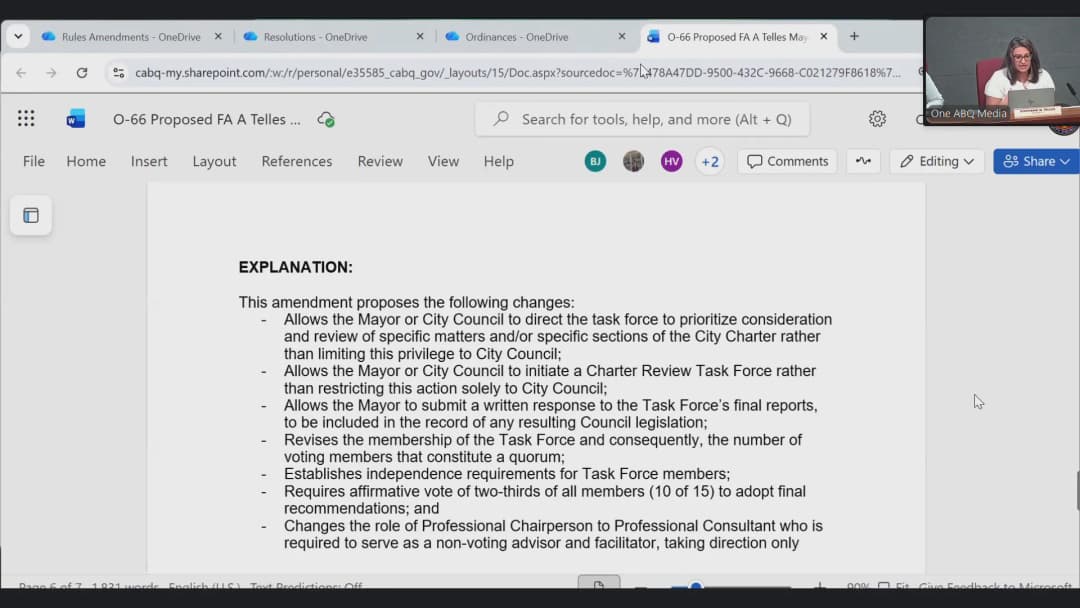
The Albuquerque City Council held its 21st regular meeting of the 27th Council. All nine councilors were present, with Councilors Bassan and Rogers joining via Zoom. The meeting opened with a moment of silence and the Pledge of Allegiance in memory of Albuquerque Fire Rescue Lieutenant Mike Sidio, followed by administration updates, a tax revenue presentation, a zoning appeal, and final votes on ordinances. Note: the supplied meeting timestamp is November 3, 2026, at 18:00 UTC, but the presiding officer opened by saying 'Today is November 2nd, 2026.' No agenda or minutes were provided with the transcript. Consent Calendar and Procedural Approvals - Approved the October 19 journal unanimously. - Approved a rules suspension (R-78) to place a capital implementation program appropriations item on the agenda, then approved the letter of introduction unanimously. - Accepted the Finance & Government Operations Committee report unanimously: EC-252 and EC-262 approved; EC-253 and EC-284 withdrawn; EC-062 do pass as amended; R-70, R-72, and R-75 do pass. - Deferred EC-281 (Near North Valley Community Planning Area Assessment) to November 16, 2026, unanimously. - Approved the consent agenda, including board and commission appointments, unanimously. Public Comments and Testimony - Britt Joseph urged the Council to treat residents as 'eyes and ears on the ground' and said ignoring community input wastes tax dollars. - Janet Sayers and Nicole Finch, both associated with the Library Advisory Board, asked the Council to support capital outlay for the Main Library HVAC replacement and other library projects; Sayers also requested a proactive management plan for the International District Park. - Miguel Alvarez described six years of advocacy for Blake Road sidewalks and stated Senator Padilla and Commissioner Baca had walked the area; he also raised concerns about APD enforcement and alleged profiling in Metro Court cases. - Peggy Norton asked for answers on park closures, ADA access, and reopening timelines for Robinson Park, Benny Hargrove Park, and the circle across Park Avenue. - Richard Sanchez and Joaquin Montoya raised privacy and civil-liberties concerns about ALPR cameras. Montoya said APD spends $639,000 per year on Peregrine Technologies and asked the Council to stop automatic renewal and disclose data access. - Dr. Sharon Hassen, a planner and Near North Valley resident, said the CPAA did not reflect community input and expressed concern its policies would be copied into the comprehensive plan. - Todd Reed presented a SPECT brain-imaging method, claiming it can help address criminal behavior, juvenile delinquency, and homelessness; a later anonymous speaker disputed those claims. - Jonah Beardon gave restaurant price comparisons and recommendations, mostly unrelated to city policy. - An anonymous speaker with lived experience of homelessness and schizophrenia called a prior SPECT brain-imaging presentation 'quack nonsense' and expressed support for the Heart Ordinance amendment banning glue traps. - Ted Namiski made several critical comments about Council actions and, during O-66 public comment, said charter changes should be put to the public vote. - Dr. Lisa Christofferson spoke in support of O-65's IDO amendment process and O-66's charter review task force, saying the public is 'not the enemy of the state.' Administration Updates and Presentations - Safe outdoor space: A little over $900,000 in capital dollars is identified, and an architect is doing design work; the project will likely need phasing. - Blake Road sidewalk: The most feasible option is a south-side sidewalk. A contractor estimate was $1.3 million, but only $50,000 in capital outlay is currently available; DMD is value-engineering the cost and will continue seeking capital outlay. - MLK bike lane pilot: DMD installed different physical bike-lane separators between Broadway and I-25 and is asking the public to drive, walk, or bike the corridor and vote online through the end of December. - State highway corridor cleanliness: NMDOT took over underpass and overpass cleanup about two weeks earlier. The city is sending 311 requests to NMDOT. Councilor Rogers said she was noticing a service dip and would continue to advocate publicly. - Senior meals: The administration is tracking daily participation and launched a breakfast waiver. Councilor Champagne said he had observed a stark drop in breakfast participation at senior centers and asked for a plan to reduce costs in the next budget. - Firefighter memorial: AFR Chief Haramillo and Miguel Tipman honored Lt. Mike Sidio, who died of occupational cancer. The Chief said firefighters have a 9% higher risk of cancer diagnosis and a 14% higher risk of dying from cancer; Sidio's death is treated as a line-of-duty death. - Parks and Recreation Advisory Board annual report: Chair Julie Radoslavich and Vice Chair Annie Montes presented the annual report. The board recommended more operations and maintenance funding, continuing the $80,000 park activation investment, and filling board vacancies for Districts 5, 8, and 9. - Cannabis and GRT report: City economist Christine Warner reported cannabis revenue grew 18% in the first two months of FY27; August GRT grew 1.3%; construction fell 12.5% and other services fell 5.8%; underlying business-sector growth was 1.5%; and year-to-date GRT growth was negative 1.8%. She also said the FY26 hold harmless was estimated at $4.2 million, with a TRD sign error making the FY27 drop more pronounced. Discussion Items and Final Actions - R-74 (South Campus TID bonds): Staff explained that the short-term bond issuance of up to $160,000 is needed to preserve state GRT participation before the December 20, 2026 deadline; the state committed 56% of its GRT, while the city and county each committed 75%. Councilor Teas asked for information on reimbursed infrastructure, labor standards, and diverted increment; Councilor Rogers added that the $160,000 relates to land grading and that the master development agreement includes local hiring rules. R-74 passed unanimously. - AC-08 (Sawmill Community Land Trust appeal): Legal staff presented the Land Use Hearing Officer's recommendation to deny the appeal. The appeal challenged the EPC's approval of a zoning map amendment from NRB to MXH for approximately 4.1 acres at 1050 18th Street NW. The LUHO found the EPC's decision supported by substantial evidence and not a spot zone. The Council voted 8-1 to accept the LUHO recommendation and uphold the EPC decision, with President Peña voting no. - O-65 (IDO amendment process): Councilor Bassan said the bill replaces the biennial IDO update with two codification dates per year, while allowing Council to introduce amendments any time. Councilor Lewis opposed it, arguing it could create delay and that expectations of specific update windows should be eliminated. O-65 passed 8-1, with Councilor Lewis voting no. - O-66 (Charter Review Task Force): The bill establishes a task force to review the city charter every 10 years. Councilor Teas's floor amendment changed the membership to nine council appointees, five mayoral appointees, a 15th chair chosen by the other members, a city clerk-selected professional consultant, independence restrictions, and a two-thirds vote for final recommendations. Debate centered on separation of powers. The amendment passed 5-4, and the bill as amended passed 5-4. Councilor Rogers declined to close, saying the bill was 'no longer mine' after being substantially changed. - R-41 (Rules of procedure, order of business): The Council approved an amendment to Article 3, Section 4 regarding proclamations. Councilor Peoplecorn expressed the view that four proclamations per councilor is enough and that the suspension process works. R-41 passed 8-1, with Councilor Peoplecorn voting no. Key Outcomes - Unanimous approvals: journal, rules suspension, letter of introduction, FGO committee report, EC-281 deferral, consent agenda, and R-74 South Campus TID bond resolution. - AC-08: 8-1 vote to accept LUHO recommendations and deny the Sawmill Community Land Trust appeal. - O-65: passed 8-1. - O-66: floor amendment passed 5-4; bill as amended passed 5-4. - R-41: passed 8-1. - The meeting adjourned after there was no other business.

PUBLIC COMMENT 17% · CHARTER REVIEW PROCESS 16% · PROCEDURAL 13% · PUBLIC ENGAGEMENT 9%
35
NEWNOV 3, 2026 · LOUISVILLE, KENTUCKY · METRO COUNCIL & COMMITTEES
Planning and Zoning Committee Meeting — November 3, 2026

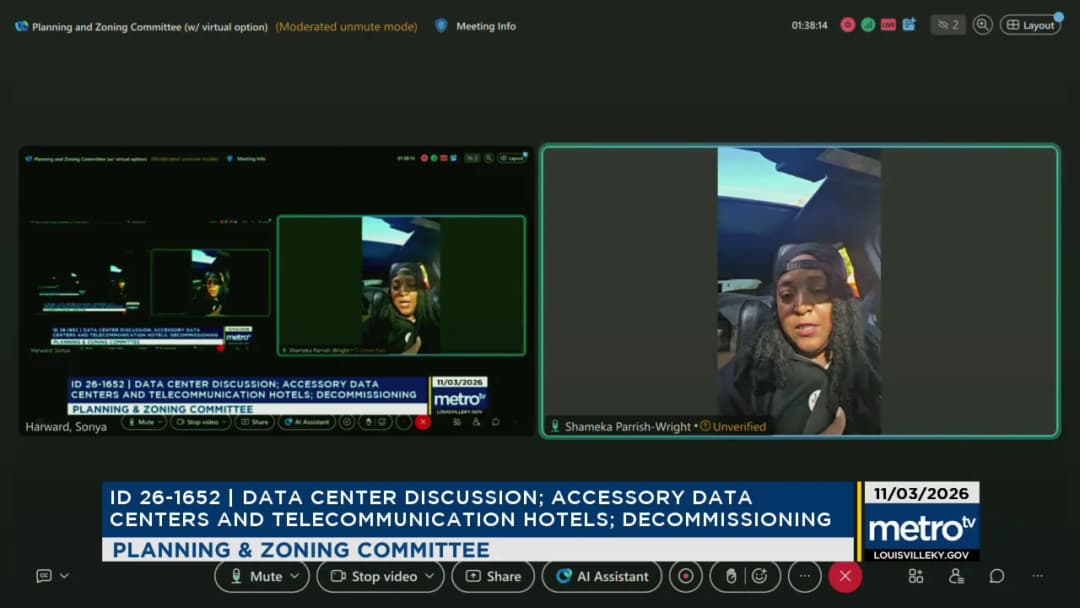
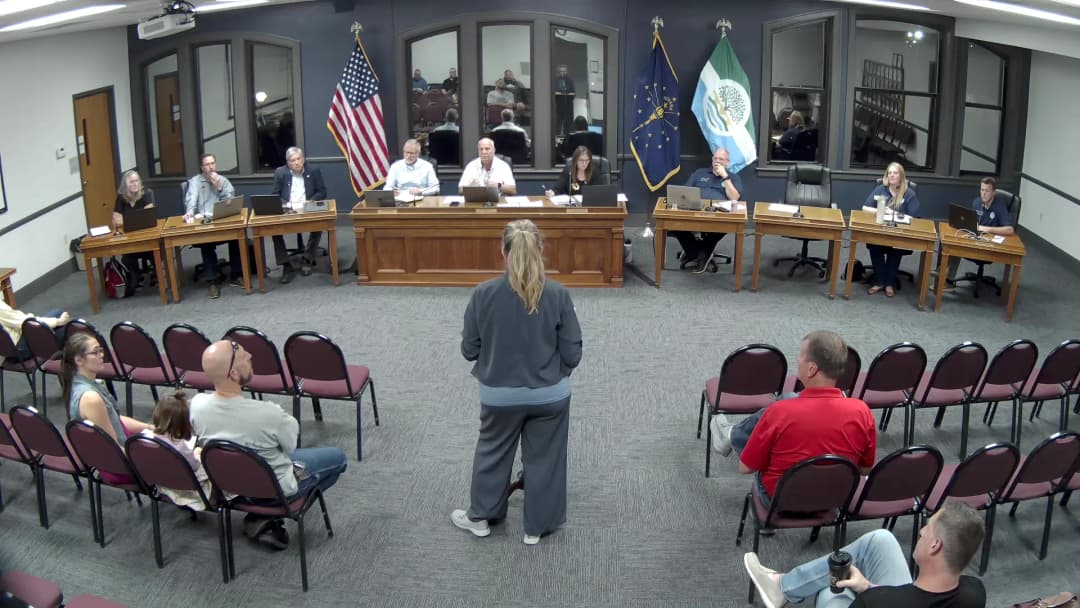
The Louisville Metro Planning and Zoning Committee met on November 3, 2026, at 1:00 PM in Council Chambers and virtually, chaired by Andrew Owen. The committee considered a Bolling Avenue rezoning, a neighborhood-housing Land Development Code amendment, and a special data-center discussion. O-251-26, the pending data-center ordinance, was listed on the agenda but no formal vote on it was recorded. No live public testimony appears in the transcript. Pending Legislation - O-311-26 — 1715 Bolling Avenue (Case 26ZONE0079): Julia Williams of the Office of Planning presented a request to rezone approximately 0.07 acres in Council District 6 from R6 to R8A in the traditional neighborhood form district, converting an existing one-story nonresidential structure into a four-unit multiplex: three first-floor units (two one-bedroom and one two-bedroom) and one second-floor four-bedroom unit. Councilwoman Ruhe asked about unit sizes; Councilman Benson raised parking concerns. Staff said parking would mainly be on the street and no rear parking was shown. Staff noted the two no votes were understood to reflect concerns that the site should remain R6/single-family because it is mid-block. Action required by December 30, 2026. - O-301-26 — Neighborhood Housing Amendment (Case 26-LDC-0001): Joel Dock of the Office of Planning presented a text amendment to increase housing choice, prioritize areas with infrastructure and transit, and streamline review. The proposal has three main parts: neighborhood housing building types (duplex through walking court, plus a traditional corner mixed-use type), housing and mixed-use corridor changes, and a new urban center neighborhood form district. Neighborhood housing would be permitted in all traditional form districts, within quarter-mile buffers of certain form districts, and in new major preliminary subdivisions of 3 acres or more, subject to special standards such as compatibility with adjacent single-family homes, limits on clustering, no blank walls, required sidewalks, restrictions on single-family demolition, no short-term rental or group housing use, and no automatic conformance for illegal dwellings. Corridor changes include measuring height in stories rather than feet, eliminating floor area ratio, reducing minimum lot sizes, eliminating infill except in traditional neighborhoods, and allowing administrative approval when a proposal is 100% compliant with no waivers or variances. The urban center neighborhood form district would create a transition between downtown and surrounding neighborhoods, with buildings at the street, 3-8 stories, no minimum lot size, required sidewalks, and no surface parking lots. Planning Commission recommended approval 8-1 after a September 3 public hearing and September 17 deliberation. Chair Owen thanked staff and called it a step in the right direction. Councilman Piagentini said the overall intent was good but raised concerns about new subdivisions outside corridors, compatibility with small existing homes, administrative approval and reduced public process, appeals, and infrastructure capacity; he encouraged tabling the item. Vice Chair Reed also praised the revised proposal but said more time was needed to review details. Action required by April 29, 2027. Special Discussion — Data Centers - Internet Exchange Points: Tom Ferree, chairman and CEO of Connected Nation and co-CEO of IXP.us, presented a narrow request to amend the data-center ordinance’s telecommunications data center category. He said Louisville is the largest city on IXP.us’s list of 135 targeted locations without a dedicated hardened carrier-neutral Internet Exchange Point. He described latency as the next digital divide, saying every 62 miles of fiber adds about a millisecond to a round trip and that “tromboning” traffic through Chicago or Atlanta can add 40 milliseconds or more. He described IXPs as neutral facilities where networks interconnect directly; the Wichita State University facility is about 2,000 square feet on 1.3 acres and is hardened to 175 mph wind ratings, not built for large-scale computing. He said the draft ordinance requires a telecommunications data center to exclusively serve FCC-regulated providers, which disqualifies an IXP because it also serves cloud, content, research, education, and business networks. - Proposed IXP amendments: Ferree proposed three changes: define Internet Exchange Point as a second path into the telecommunications data center category; replace the pre-application LG&E transmission study with a will-serve letter for IXPs capped at 5 MW, with an executed service agreement required before operation; and require disclosure of the facility operator rather than the user. He said safeguards would include a maximum of 25,000 square feet, a maximum of 5 MW, at least three independent networks with their own ASN, and open, non-discriminatory access. All other standards would still apply. Chair Owen said the public process had allowed this issue to surface and supported staff and county attorney review. Councilman Piagentini called the proposal low-risk and high-upside and wanted the county attorney to review it. Councilwoman Parrish-Wright asked about Spectrum and community benefits; Ferree said the facility is carrier-neutral, Spectrum is a tenant in Wichita, and Connected Nation provided 200 laptops and digital literacy sessions in Sedgwick County as part of its nonprofit mission. - Accessory data centers: Brian Davis of the Office of Planning said accessory data centers are internal data facilities used by existing businesses for websites, apps, and data storage. The proposed definition would limit them to the lesser of 25,000 square feet or 49% of the building; exceeding that would trigger regular data center regulations. Because they are within existing buildings, they would not have the same noise, environmental, and study requirements as standalone data centers. Chair Owen asked about expansion at Appliance Park; Davis said a larger white-space area would require a conversation about regular data-center rules. Councilwoman Parrish-Wright said the city should be able to inventory and classify existing accessory and larger data centers; staff said registration or licensing for accessory data centers was not in the Planning Commission recommendation but could be explored. - Telecommunication hotels: Davis said the draft carves out existing telecommunications hotels used by local internet and phone providers so they are not swept into the general data-center definition. They would be allowed in more zoning districts and permitted with special standards rather than requiring a conditional use permit if they comply. The definition relies on FCC-regulated telecommunications providers, and registration would let staff know where they are. Chair Owen cited the ATT building across from WHS-TV as likely the largest telecommunications hotel in Jefferson County and said existing facilities like the one on Bauer Avenue had not created issues and were not the target of the ordinance. - Decommissioning: Davis said decommissioning plans respond to the risk that a data center operator walks away and leaves equipment or hazardous materials for the community to handle. He cited the Kentucky Resources Council model ordinance, Lexington’s adoption, Mason County’s approach, and Bowling Green’s requirement to restore and reclaim the site to a pre-development state ready for farming. Some communities require bonds. Planning staff typically does not require decommissioning plans for other uses, though Chair Owen noted the Topgolf lights and poles are bonded. Chair Owen supported decommissioning plans and bonding, comparing the issue to abandoned mine lands. A county attorney representative said decommissioning requirements are most defensible for data centers, especially if the city creates data-center-specific zoning where reuse is difficult, while noting other industries may already be regulated by EPA or state agencies. Chair Owen said if the policy is good for data centers it may be good across the board. Councilwoman Parrish-Wright supported decommissioning and health impact review, citing environmental justice concerns and the Philip Morris site, and said the city should go the extra mile while it can. Key Outcomes - O-311-26: Properly moved and seconded; roll call reported six yes votes, and the ordinance was announced as unanimously approved and sent to old business on the next council agenda. - O-301-26: Vice Chair Reed moved to table for future discussion; the motion was seconded and passed by voice vote, with the chair stating the ayes had it. The item was tabled to the next committee meeting. - O-251-26: No formal vote or action on the pending data-center ordinance was recorded; the data-center presentation and discussion were informational. - Data-center amendments: Staff and county attorney review of Ferree’s proposed IXP amendments was discussed, but no formal motion, vote, or referral was recorded.

DATA CENTER REGULATION 27% · ZONING REGULATION 23% · TELECOMMUNICATIONS REGULATION 22% · AFFORDABLE HOUSING 10%
36
NEWNOV 3, 2026 · BROWARD COUNTY, FLORIDA · UPCOMING AND ARCHIVED MEETINGS
State of Housing Affordability in Broward County - November 3, 2026

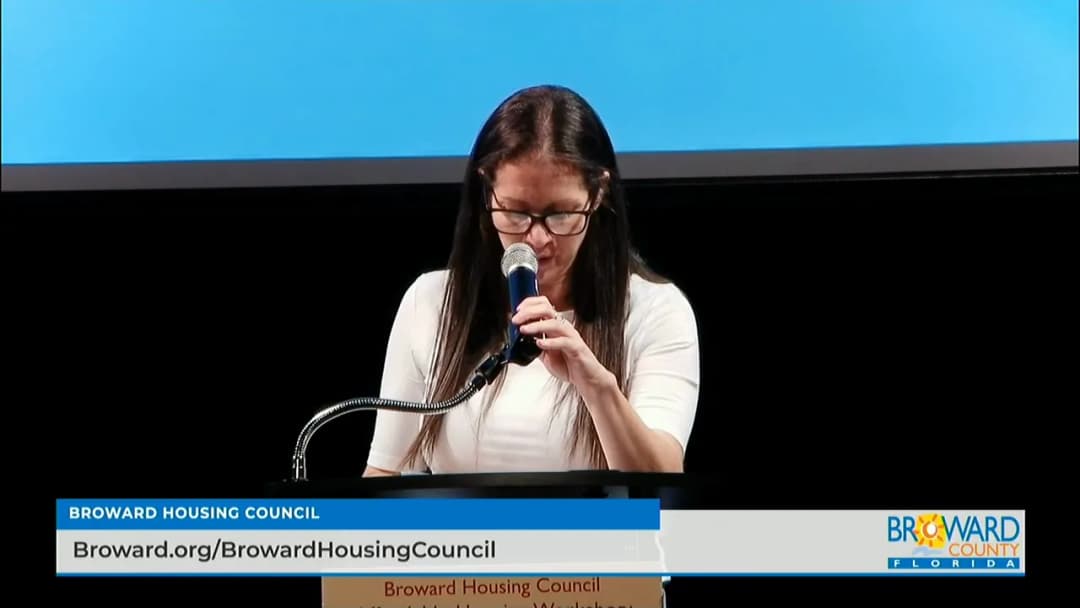
On November 3, 2026, the Broward Housing Council, in partnership with Broward County and Wells Fargo, hosted a workshop at the Broward Performing Arts Center to address the housing affordability crisis. The event featured presentations, panel discussions, and a call to action. Key statistics revealed that over 340,000 households are cost-burdened, the county ranks last in Florida for affordable rentals, and the region has lost 96,000 residents since 2020. Presentations - Broward County Affordable Housing Needs Assessment (Dr. Ned Murray, FIU Metropolitan Center): Dr. Murray presented updated data showing that 340,000+ households spend more than 30% of income on housing, with 175,000 severely cost-burdened (over 50%). The median home price is $620,000, unaffordable for over 95% of households. Average rent for a two-bedroom is $2,675/month. Since 2020, the county lost 96,000 residents to out-migration, and 15,000 jobs have been lost. Broward ranks 67th of 67 Florida counties in availability of affordable rentals at 60% AMI (fewer than 25 units per 100 households). 70% of housing was built before 1990 (median age 1981); only 7% since 2010. Current AMI is $102,450. - Municipal Scorecard (Ralph Stone, Broward County Housing Finance Authority): Stone introduced an analog scorecard to track affordable housing production. Since 2018, the GAAP program has awarded $180 million, constructing 5,000 units, with local governments contributing $67 million and the HFA providing $845 million in bond allocation. Average subsidy per unit is about $36,000 (lowest in state). Affordability periods now incentivize 99-year terms. Pipeline: 23 projects, 4,600+ homes. Panel 1: Public-Private Partnerships Moderated by Sandra Vassi Einhorn, panelists Mitch Rosenstein (Green Mills Group), Al Milo Jr. (Related Urban Development), Ralph Stone, Barbara Blake Boy (Planning Council), and Walter Duke III (former mayor) discussed the transformation since 2018. Key points: dedicated GAAP funding changed the landscape; municipal contributions have grown; predictability and speed are critical. Live Local Act was seen as a powerful but imperfect tool. Examples included redevelopment of a former motel into 400 units and partnerships with the Pantry of Broward. Panel 2: Looking Ahead Panelists Chris Cooper (Fort Lauderdale), Suzanne Cabrera (Palm Beach County Housing Leadership Council), Mayor Michelle Gomez (Tamarac), Tim Wheat (Pinnacle), and Chakira (Enterprise) focused on regional collaboration, Live Local adjustments, faith-based development (YIGBY), mixed-income communities, and workforce housing. Mayor Gomez expressed concerns about loss of local control; Cooper noted some projects causing friction. All agreed on the need for integrated housing and infrastructure coordination. Community Scholars Program Chelsea LaFrance (University of Miami) described the six-month program that trains emerging leaders in affordable housing. 117 alumni have completed capstones leading to policy changes, such as increased set-asides for very low-income households and extended eviction notice periods. Closing Remarks – Senator Nan Rich Senator Rich celebrated progress but warned that Amendment 3 could reduce county revenue by $195 million (first year) and $334 million (second year), threatening dedicated housing funds. She urged protecting the GAAP program, faster approvals, and changes to Live Local. She emphasized that every home built makes a difference for families and the economy. Key Outcomes No formal votes were taken. Strong consensus emerged on: - Protecting dedicated housing funding from Amendment 3. - Increasing municipal participation and streamlining approvals. - Adjusting Live Local Act to balance state and local needs. - Expanding public-private partnerships and faith-based development. - Strengthening regional collaboration across South Florida. - Continuing data-driven planning via needs assessment and scorecard.

AFFORDABLE HOUSING 56% · HOUSING AND URBAN PLANNING 11% · PROCEDURAL 9% · PUBLIC-PRIVATE PARTNERSHIPS 6%
37
NEWNOV 3, 2026 · CLARK COUNTY, NEVADA · MEETING PORTAL
Joint Meeting of Clark County Boards – November 3, 2026

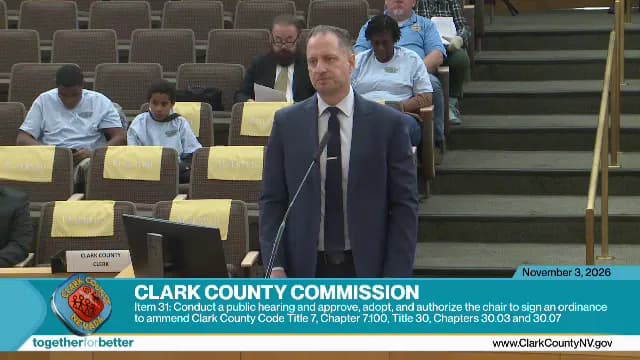
The meeting convened at 9:05 AM on November 3, 2026, at the Clark County Government Center. The agenda included recognition of the new Poet Laureate, public comments, a consent agenda, public hearings on short-term rental regulations and airport bond financing, introduction of an ordinance, business items, and a closed session. Key actions included approval of the short-term rental ordinance with amendments to address court-ordered process improvements, approval of up to $50 million in airport special facility revenue bonds, introduction of an ordinance to shorten the appeal period for business license decisions, and appointment of justices of the peace pro tempore. Consent Calendar - Approved items 5 through 30 en bloc, including contract increases, bid awards, franchise agreements, grant acceptances, property acquisitions, and routine administrative actions. Notable items included: - Award of residential street pavement reconstruction (Bid No. 607970-26) to Wells Cargo, Inc. and Las Vegas Paving Corporation. - Award of Durango Drive rehabilitation and intersection improvements (Bid No. 607997-26) to Unicon, LLC. - Acceptance of $431,863 in Justice Assistance Grant subgrant funds from the City of North Las Vegas (Item 13). - Approval of grant applications for Street Medicine ($561,338) and Transitional Housing ($1,029,135) from HUD (Items 15-16). - Approval of a resolution authorizing property tax refunds (Item 24). - Approval of grant proposal for AI-supported contraband mitigation at the Clark County Detention Center ($3.9 million from BJA) (Item 25). - Approval of the Clark County Water Reclamation District’s participation as a pilot host site for NSF research (Item 28). - Ratification of $1.97 million subgrant for therapeutic mental health services (Item 30). Public Comments & Testimony - Short-Term Rental Ordinance (Item 31): Numerous speakers addressed the board: - Riley Krebs, a property owner, expressed full support for short-term rentals, arguing they are not a cause of affordable housing shortages and urged a fair licensing process. - Jackie Flores, president of the Greater Las Vegas Short-Term Rental Association, criticized the county’s licensing process, citing a Ninth Circuit judge’s remark that the process was “a sham” and that the county had made “even less progress than I would have thought.” She argued that resort hotel greed is driving tourists away and that short-term rentals provide economic opportunities. - Crystal Abbott, a Navy veteran, opposed the 1,000-foot spacing rule, asking what problem is solved by forcing responsible hosts out of business. - Shawnee Bernard supported short-term rental hosts as community stewards who protect neighborhoods. - Dwight Cal White, a homeowner, supported allowing short-term rentals, stating his licensed home in Las Vegas paid nearly $200,000 in lodging taxes. - Brandy Gao argued the 1,000-foot rule would cause a housing crash, noting Las Vegas home inventory at four-year highs and sales down 16.4% year-over-year. - Mike Hoffman opposed the ordinance, stating the 1,000-foot distance separation should remain to prevent flooding near the Strip. - Ash Romero criticized the four-year delay and advocated for a 600-foot rule instead of 1,000 feet. - Cheryl Woods expressed cautious optimism about the process changes. - Campaign Contributions (Agenda Items 6, 7, 19): A speaker detailed campaign contributions from companies on the consent agenda, totaling $135,000, and urged transparency. - Other Public Comments: - Margaret Ann Coleman spoke on allocation disputes and her inability to return to her home due to short-term rental issues. - Eric King advocated for tree planting near bus stops and comprehensive planning for BLM land sales. - Tim Ross, Ethan Lawrence, Venetia Kelly, and others spoke in favor of extending land leases for hangars at North Las Vegas Airport, highlighting youth aviation programs (Civil Air Patrol, EAA). - A speaker urged removal of prayer from the agenda. Discussion Items - Recognition of Poet Laureate (Item 1): Elle Hope was recognized as the new Clark County Poet Laureate for a two-year term. She presented a poem titled “Evergreen Hymns” and outlined plans for community poetry projects. - Short-Term Rental Ordinance Amendments (Item 31): Deputy District Attorney Jeff Rogan presented amendments to address the federal court injunction (December 2025). Key changes include: - Reopening the application process with rolling intake appointments (starting January 5, 2027) instead of a one-time lottery. - Imposing a 45-business-day deadline for the county to decide on applications (with exceptions for cluster reviews, applicant delays, and inspections). - Requiring applicants to respond within 14 days to requests for information, or face denial. - Shifting fee payment to after approval to avoid delays. - Reducing the appeal period from 30 to 14 days (via separate introduced ordinance). - The 1,000-foot distance separation rule remains unchanged due to state law and policy. Board discussion focused on applicant notification methods and clustering impacts. Commissioner Kirkpatrick emphasized the need for multiple contact methods. Director Keanu noted 242 licensed short-term rentals as of the meeting, with 47 applications pending. The board approved the ordinance (vote not specified but motion passed). - Airport Special Facility Revenue Bonds (Item 32): Public hearing on a resolution approving issuance of up to $50 million in bonds for a 5.24-acre aircraft storage hangar site at Harry Reid International Airport (three hangars, 75,000 sq ft). The bonds are without recourse to Clark County. The board approved the resolution. - Introduction of Ordinance – Appeal Period Reduction (Item 33): Introduced an ordinance to reduce the appeal period for business license decisions from 30 to 14 calendar days. A public hearing was set for November 17, 2026, at 10 AM. - Appointment of Justices of the Peace Pro Tempore (Item 35): Approved appointment of 66 individuals to serve as substitute justices of the peace from December 2, 2025, through December 31, 2026. Commissioner Gibson disclosed his relationship to nominee David S. Gibson Sr. and abstained from voting on that appointment only; the overall motion passed. Key Outcomes - Approved consent agenda (items 5–30) unanimously. - Approved short-term rental ordinance amendments (Item 31) to implement a new application process, effective in two weeks, with applications available December 1, 2026, and appointments starting December 15, 2026, and first processing on January 5, 2027. Director Keanu will provide quarterly updates to the board. - Approved resolution for up to $50 million in airport special facility revenue bonds (Item 32). - Introduced ordinance to reduce appeal period from 30 to 14 days (Item 33); public hearing set for November 17, 2026. - Approved appointment of 66 justices of the peace pro tempore (Item 35). - Deleted Item 36 (Clark County Redevelopment Agency Relocation Assistance Policy) from the agenda; no action taken. - Closed session held pursuant to NRS 241.015 for potential litigation and labor negotiations (Item 37).

SHORT TERM LODGING 46% · PROCEDURAL 11% · ARTS AND CULTURE 7% · PENDING LITIGATION 7%
38
NEWNOV 3, 2026 · BLUFFTON, INDIANA · CITY COUNCIL
Bluffton City Meeting Summary – November 3, 2026 (Incomplete Transcript)

The meeting took place on November 3, 2026, at 5:30 PM. However, the available transcript is extremely limited, containing only one brief statement. No agenda or minutes were provided, so a comprehensive summary is not possible. Discussion Items - The only recorded utterance was: "So I think it's a five year old." Without additional context, the meaning, speaker, and relevance cannot be determined. Key Outcomes - No decisions, votes, or actions can be identified from the available information. Note: This summary is based solely on the provided transcript, which is incomplete. For a full account, please refer to official city records or a complete recording.

MISCELLANEOUS 100%
39
NEWNOV 3, 2026 · ALAMEDA COUNTY, CALIFORNIA · BOARD OF SUPERVISORS
Sunol Citizens Advisory Council Meeting - November 3, 2026

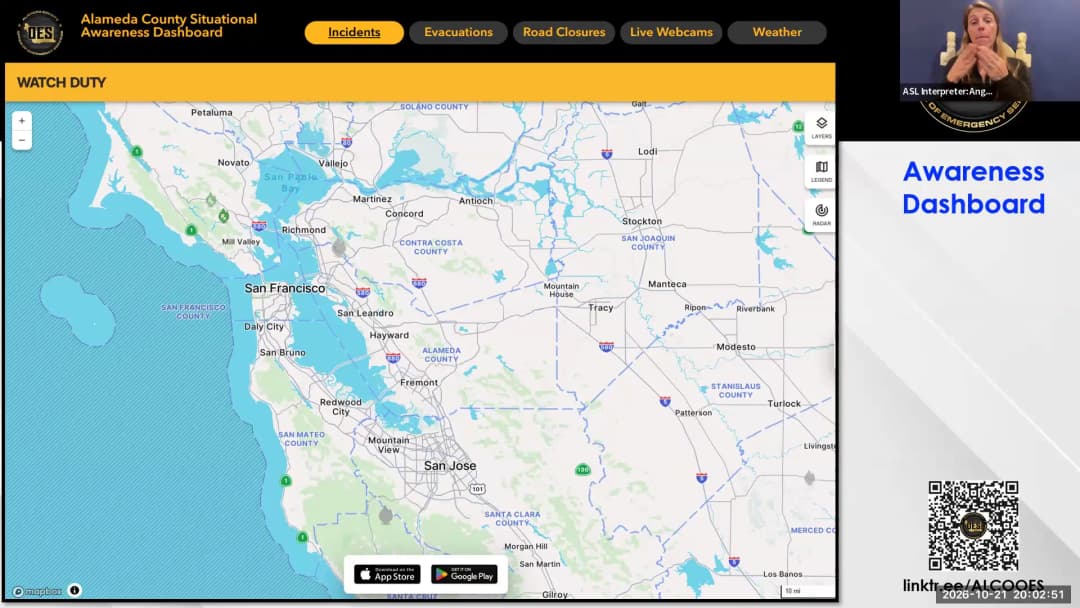
The Sunol Citizens Advisory Council (SCAC) met on November 3, 2026, at 6:30 p.m. in the Sunol Glen School Multi-Purpose Room/Hoxie Hall. The meeting included public comments, law enforcement and fire reports, workgroup updates, and several informational presentations on transportation planning, winter storm preparedness, a sheriff’s office technology contract, emergency alert improvements, and a proposed local radio network. The council also approved the minutes from the September 16, 2026 meeting. Public Comments & Testimony - Kelly Abrew shared a story about a county road maintenance dispute to illustrate the importance of clear jurisdictional responsibility. - Andrew Turnbull urged the council to continue fighting Caltrans over the removal of a heritage oak and suggested the county counsel could help the community interpret the voluminous materials provided by Caltrans. Law Enforcement & Fire Reports - Law Enforcement (Sergeant Richard Franco, Alameda County Sheriff’s Office): Since September 16, 2026, the sheriff’s office responded to 156 calls in Sunol and wrote 15 citations in the area. Wire thefts remain a problem, especially targeting AT&T lines. The sergeant also reminded residents about garbage can placement ordinances and encouraged neighbors to work together on safety. - Fire Protection (Chief Bonnie Terra, Alameda County Fire Department): In the last 30 days, the department logged 39 calls: 38% medical, 10% fire, and 52% other. Chief Jeff Nichols from CAL FIRE was unable to attend; his defensible space inspection update will be presented in November. Workgroup Progress Reports - Fire Safety Workgroup (Rosemary Chang): Chang announced the formation of a Firewise committee, which will begin with one or two pilot groups in Sunol. Volunteers are needed to conduct inspections with CAL FIRE support. - Downtown Revitalization Workgroup (Benjamin Harrison, Connie De Grange): Wayfinding signs have been approved by the Board of Supervisors and are now moving through county procurement. The restroom project’s final usability study report for the on-site wastewater treatment system is nearing completion, after which a petition for inclusion will be circulated. Discussion Items 4a: Pedestrian, Bicycle, and Trails Master Plan (PBTMP) - Presenters: Maritoni Maravilla (Senior Transportation Planner) and Lauren Peppy (Tool Design Group). - The plan updates the 2019 master plan for unincorporated Alameda County. Early findings show that existing bikeways are mostly class 2 and 3, sidewalks are concentrated in downtown Sunol, and there were no fatal crashes in the area from March 2021 to March 2026. Crash hot spots include Calaveras Road and Niles Canyon Road. - Community concerns: Residents highlighted dangerous intersections (e.g., Bond & Main), unsafe conditions on Kilkare Road and Foothill Road due to high-speed cyclists, and the loss of a bicycle shoulder on Pleasanton Sunol Road. Attendees also noted that walking to downtown from nearby homes is unsafe. - The next SCAC presentation on the PBTMP is scheduled for March or April 2027. 4b: El Niño Winter Preparations - Presenter: Daniel Woldenesbet (Director of Public Works). - Public Works maintains year-round emergency supplies and provides free sandbags to unincorporated residents. Sandbag locations in Sunol: Fire Station 14, the Little Brown Church on Kilkare, and at Kilkare and Singalong Way. Handouts with storm preparation tips and contact numbers were distributed. - Discussion clarified that for downed trees blocking roads, residents should call Public Works or use Mobile Citizen; for emergencies, call 911. The sheriff’s office also responds to such incidents. 4c: Axon Contract Renewal (Strengthening Public Safety Technology) - Presenter: Captain Dan Brodie, Alameda County Sheriff’s Office. - The Sheriff’s Office proposes renewing and expanding its contract with Axon (current contract $14M over 5 years) to include Taser 10, dash cameras (Axon Fleet 3), VR training, AI report writing (Draft One), live translation, policy chat, real-time information center (Fusus), and increased data storage. The renewal would begin January 2027 but payments do not start until August 2027, offering a 76% savings in the first year compared to waiting until the current contract expires in August 2027. - Public questions and support: Residents asked about data retention (3-year minimum), integration with CHP (separate systems), privacy safeguards (license plate reader technology on dash cams will be turned off pending a separate RFP), and the process for public records requests. Several speakers expressed strong support for the technology, citing improved transparency and community safety. 4d: New AC Alerts for Weather Conditions and Floods - Presenter: Brentt Blaser, Emergency Manager, Alameda County OES. - OES has integrated National Weather Service alerts into AC Alert. Residents can opt in to receive these alerts via text or email. A new website (ACAlert.org) provides a centralized portal for preparedness, emergency updates, and recovery information, including threat-specific maps and an awareness dashboard combining tools like Watch Duty and Genesis Protect. - Blaser noted that the system was improved after Sunol residents requested better weather alerting. The council thanked him for this responsiveness. 4e: Emergency Radio Communications for Kilkare Canyon - Presenter: Scott Sanders, Sunol Resident. - Scott presented a proposed GMRS (General Mobile Radio Service) network to address the lack of cell and Wi-Fi service in Kilkare Canyon during power outages. He built a solar-powered repeater and obtained permission to install it on private property near Pleasanton Ridge Park. Handheld radios cost about $70; an FCC license costs $35 and covers the entire family for 10 years without a test. - Public input: Multiple residents strongly supported the initiative and encouraged the council to consider funding the equipment and supporting the network. Scott noted that several neighbors have already purchased radios. The council praised the effort and discussed potential grant opportunities through the county’s communications team. Key Outcomes - Approved minutes of the September 16, 2026 meeting without changes. - No formal votes were taken on the informational items (4a–4e), but the council expressed general support for the Axon contract renewal and the emergency radio project. - The next SCAC meeting is scheduled for November 18, 2026, with presentations planned on Flock cameras and the Palecitos Nuclear Center.

PUBLIC SAFETY 25% · EMERGENCY MANAGEMENT 25% · TECHNOLOGY AND INNOVATION 17% · TRANSPORTATION SAFETY 8%
40
NEWNOV 3, 2026 · DENVER, COLORADO · COUNCIL COMMITTEES
Denver Parks, Art and Culture Committee – November 3, 2026

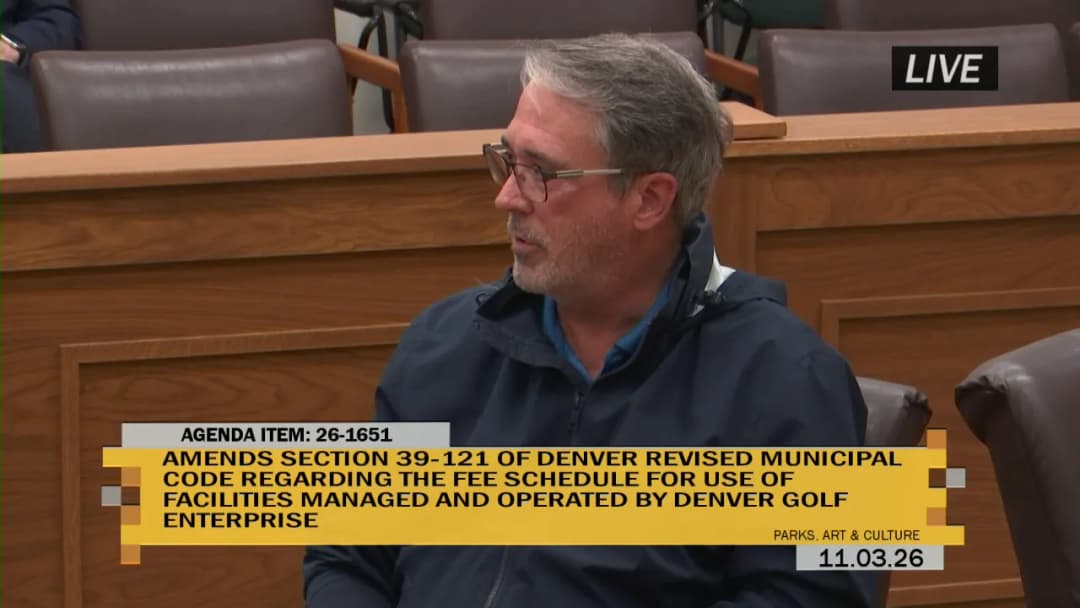
The Denver City Council Parks, Art and Culture Committee met on Tuesday, November 3, 2026, at 10:30 AM in the City and County Building, room 391. Chair Shontel Lewis presided; Vice Chair Paul Kashmann and members Flor Alvidrez, Serena Gonzales-Gutierrez, Chris Hinds, Diana Romero Campbell, Amanda Sawyer, and Council member Watson were recorded present in the minutes, for eight present. The committee considered three action items: a design contract for Boettcher Concert Hall, Denver Golf fee adjustments, and Buffalo Bill Museum fee adjustments. All three were approved for filing by 7-0 votes. Discussion Items - 26-1621 – Boettcher Concert Hall design contract. Kari Daly and Patrick Riley of the Department of Transportation and Infrastructure/Vibrant Denver Bond Office presented a proposed $16,490,000 contract with David Owen Tryba Architects, with LMN of Seattle, through January 30, 2030, for architectural and engineering design services for the Boettcher Concert Hall renovation. The total project budget was described as $120 million: $20 million from the Vibrant Denver GO Bond 2026B, with the remainder from Denver Arts & Venues and the Colorado Symphony. Staff said design is scheduled to begin in December; the pre-bid meeting drew over 100 attendees. Scope includes HVAC, fire protection, electrical, mechanical and plumbing, life safety, technology and data, security, stage lighting, AV, interior finishes, seat quantity and layout, acoustic treatments, and exterior roof and facade repairs, plus evaluation of a patron pavilion expansion. Staff cited accessibility, operational, safety and security, MEP, exterior weathering, and outdated lighting and AV concerns, and said early procurement could protect a 2028 construction start. Chair Lewis asked about protecting the hall’s acoustics; staff said acoustics consultant Paul Scarborough is on the team and the goal is an improved acoustic experience, including by reducing hall volume. Council member Kashmann praised Tryba’s preservation work and expressed support. Council member Sawyer asked about the funding stack; staff said the $16.49 million design contract is currently all from Vibrant proceeds, with Arts & Venues covering construction and the Symphony committed to raising $15 million, including a $2 million Boettcher Foundation donation. Council member Watson asked about the Symphony’s relocation; staff said the Symphony will move out for construction and perform in smaller community and regional venues, though a full public timeline was not announced. Council President Romero Campbell asked about LMN’s concert hall experience; staff cited Benaroya Hall and McCaw Hall in Seattle and the Tobin Center in San Antonio. - 26-1651 – Denver Golf fee schedule. Scott Rethlake, director of golf, presented the biennial adjustment to Denver Golf Enterprise fees. He described the enterprise fund’s cost-recovery pyramid and portfolio, including Kennedy’s 27 regulation holes and par-3 course, free junior courses, First Tee programming, and summer employment for about 100-125 youth. Cost drivers included labor and minimum wage tied to CPI, inflation in fertilizer and gas, irrigation costs that have roughly doubled from $3 million to $6 million in five years, and a cost-allocation payment to the city of about $2 million, up from about $1 million. He said annual expenses rose from about $9.1 million in 2018 to $19.5 million in 2025; the capital backlog is about $83 million, including $40 million for the Kennedy clubhouse in 2027, and capital equipment needs are $3-4 million in 2027. Staff proposed two years of fee adjustments using dynamic pricing, with maximum rates in the ordinance: a weekday average target around $55 from about $43, weekend average from about $64 to $67, senior average from $37 to $40, and junior average around $25. Staff said without the increase the enterprise would face an operating loss of about $673,000 including depreciation; with it, about a $2.5 million surplus. Council member Alvidrez raised concerns about the junior maximum rising from $35 to $54, saying it could burden single parents and make passes feel mandatory; Rethlake said Denver-resident juniors can buy an ACE pass for about $149, averaging $10-$14 per round, and noted free junior courses and First Tee scholarships. Alvidrez pushed back that the courses are public assets. Council member Sawyer questioned ordinance language saying fees “shall apply” while staff described dynamic pricing, and asked that the city attorney review it before filing; she also asked whether fees could be tied to CPI, and staff said about half of comparison courses use dynamic pricing and the comparison used published prices. Council member Watson said the presentation lacked cost-revenue ratios and outcome measures and recommended more sophisticated reporting. Council member Hinds noted tension between CPI-based increases and willingness-to-pay pricing and asked for an equity narrative. Council member Kashmann asked about the Welsh driving range, which staff said is under construction and expected mid-year, and requested a breakdown of adult versus youth rounds. Council President Romero Campbell noted 400,000 total rounds and staff said current use is about 98% of capacity; she also noted the Kennedy clubhouse dates to 1963. Chair Lewis asked how dynamic pricing works and what demographic data is collected; staff said pricing uses algorithms, historical tee sheets, and competitor pricing, and that the system collects age and zip code but not race or gender. Lewis stated she dislikes dynamic pricing in all forms. - 26-1652 – Buffalo Bill Museum fee schedule. Shannon Dennison, director of Denver Mountain Parks, presented fee changes for the Buffalo Bill Museum at Lookout Mountain Park. She said the museum, built in 1977, is the only fully city-owned and operated museum; Pahaska Provisions retail and the Buffalo Bill grave site are free, and a Takabe restaurant is expected to open around December. Visitation is about 80,000 per year and has been steady over 10 years after a COVID dip; the museum draws more visitors than about two-thirds of rec centers and about the same as Ashland. About 10,244 visitors, or 13%, are from Denver; 61% of paid admissions are adults, 16% seniors, and 12% children. Fees were first established in 1821 as stated, raised in 1988 and 1996, last significantly increased in 2009 by $1, and cleaned up in 2022. The proposal would raise adult admission from $5 to $6, keep seniors at $4, raise children and youth 6-17 from $1 to $2, keep under-5 free, and move active-duty military to the Blue Star Museums program with free admission for the service member and up to five family members. Staff estimated about $58,885 in additional revenue and noted the museum is general fund, not enterprise. The bill includes a CPI adjustment provision beginning March 1, 2027, and annually thereafter. Discounts include My Denver and My Denver Prime, Denver 5x5 Head Start, seven fee-free days for Denver residents, and Denver Public Library passes. Council member Sawyer asked about CPI timing; Dennison said the first adjustment would be March 2027 and the next reassessment in 2028, not an immediate second increase. Council member Alvidrez objected that seniors would see no increase while children and youth would double, citing median net worth of $409,000 for ages 65-74 versus $135,000 for ages 35-44 and calling for child-friendly third spaces. Dennison said the proposal aligned with Parks fee schedules and noted free-access programs. Council member Hinds clarified that My Denver cards provide free entry for Denver and DPS children, while the youth fee mainly affects out-of-town visitors. Council President Romero Campbell suggested surveying whether raising senior fees would deter visitation. Key Outcomes - Resolution 26-1621 was approved for filing: motion by Council member Sawyer, seconded by Council member Hinds, carried 7-0 (Aye: Lewis, Kashmann, Gonzales-Gutierrez, Alvidrez, Sawyer, Hinds, Romero Campbell; Nay: 0). - Council Bill 26-1651 was approved for filing: motion by Council member Sawyer, seconded by Vice Chair Kashmann, carried 7-0 (Aye: Lewis, Kashmann, Gonzales-Gutierrez, Alvidrez, Sawyer, Hinds, Romero Campbell; Nay: 0). Staff were asked to have the city attorney review the golf ordinance language on dynamic pricing before filing, and members requested clearer cost-revenue and equity reporting in future presentations. - Council Bill 26-1652 was approved for filing: motion by Vice Chair Kashmann, seconded by Council President Romero Campbell, carried 7-0 (Aye: Lewis, Kashmann, Gonzales-Gutierrez, Alvidrez, Sawyer, Hinds, Romero Campbell; Nay: 0).

PARKS AND RECREATION 58% · ARTS AND CULTURE 15% · PUBLIC ENGAGEMENT 10% · DATA MANAGEMENT 6%
OPENPUBLICA · PUBLIC MEETING INDEXUPDATED DAILY · openpublica.com