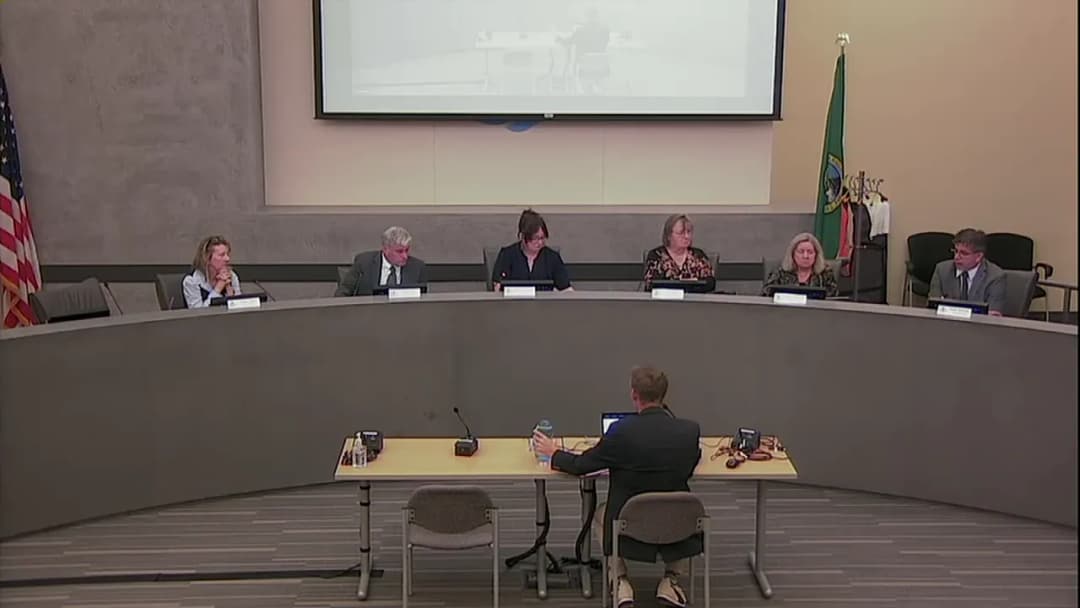
The Syracuse Common Council met on September 28, 2026, for a regular agenda of land-use and administrative items. No agenda or minutes were provided, so this summary is based solely on the raw transcript. President Paniagua opened by noting a 1 p.m. hearing on item 40; the transcript does not include the substance of that hearing. Council members reviewed items by block, with several items held or withdrawn, and discussed proposed changes to the city tree ordinance and two special-use permit applications before moving into executive session. Consent Calendar - Item A was held again pending an agreement or document. - Item 10 was withdrawn, and item 30 was withdrawn. - Items 12-23, 24-29, 31-33, 34-38, and 39-45 were reported ready by their sponsoring councilors. - Item 46 was described as ready with a question mark and was later held. - Items 47 and 48 (tree ordinance) and item 49 (wine bar special-use permit) were on the waiver agenda. Discussion Items - Items 47 & 48 - Proposed tree ordinance changes (Chapter 22): City Arborist Steve Harris presented proposed changes to the tree ordinance. A councilor asked whether there are corresponding standards manuals for sidewalks, curb cuts, curbs, and other infrastructure that conflict with the urban canopy. Harris responded that the ordinance regulates public right-of-way and internal city coordination, and that the city intends to address how its various standards work together. The councilor stated that New York State standards should be considered the minimum acceptable standard and that the city should go above them; Harris said the Department of Public Works is trying to go above and beyond, which is where some tree challenges arise. - Item 46 - Bar / special use permit: A councilor questioned why the council was being asked to approve a bar that had already been vetted by the state and city. The commissioner said the special use permit can only be granted by the council, but did not have an immediate answer and promised to confirm before the meeting. Another councilor said he had spoken with Mr. Johnson, who was renovating old buildings and had been advised to attend the vote; Mr. Johnson was not present. A councilor expressed concern about approving bars on the council agenda, and about another smoke shop on North Salina Street, urging profitable businesses to give back to community institutions such as the Assumption Food Pantry, the Blessing Box, or the Sumerian Center. The item was held for a committee meeting. - Item 49 - Special use permit for a wine bar at 711 South Beach Street / Dell Street: Deputy Commissioner Jake Dishwell said the proposal is a special use permit for a wine bar in a rear garage structure on Dell Street; the property also includes a two-family house on Beach Street and a residential unit above the garage. He reported that one person spoke in favor and one emailed in opposition at the city planning commission meeting, that the use meets parking minimums per the zoning code, and that it is typical for MX zone districts to require special use approval. Councilors raised concerns that the item was rushed onto the waiver agenda, that no tenant information was available, and that the council lacked details such as hours of operation. The councilor in whose district the property lies said he supports the project but hears daily complaints about congestion and double parking on Dell Street, and suggested enforcement and possible structural fixes such as one-side parking. The item was held for a committee meeting. Key Outcomes - Item A held; items 10 and 30 withdrawn. - Items 46 and 49 were held for further committee discussion rather than receiving a final vote. - The Council voted to move into executive session for legal advice on item 41; the voice vote was in favor. - The tree ordinance items (47 and 48) were discussed but no final vote is shown in the transcript.
The Public Meeting Index
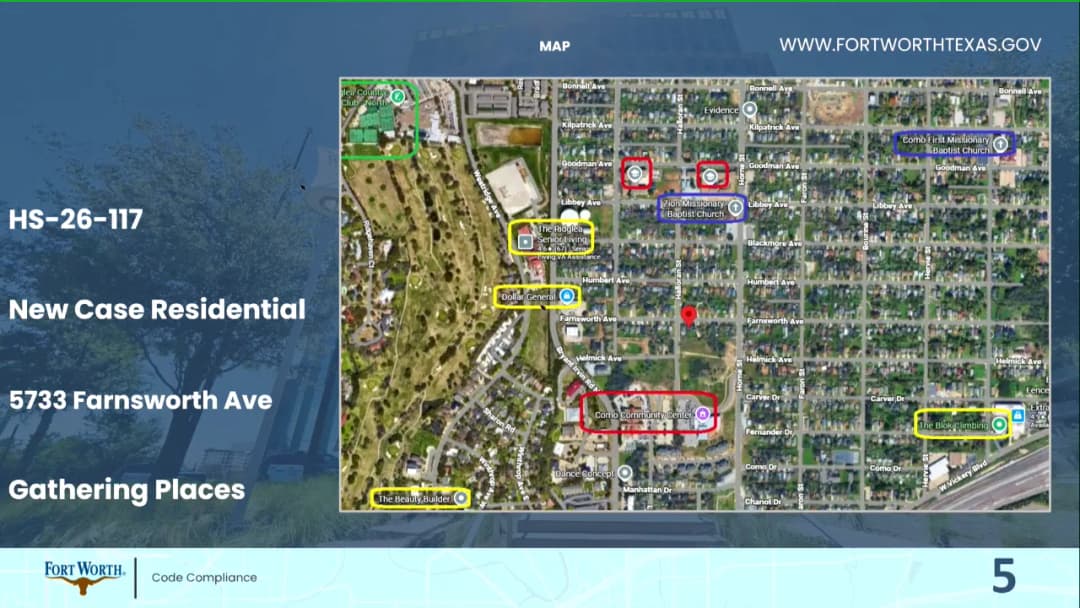
The Public Meeting IndexThe Fort Worth Building Standards Commission met on September 28, 2026, at 9:33 AM to hear cases involving substandard structures and nuisance abatement. The commission considered 14 cases, including new cases, continuances, and amendments. All votes were unanimous (6-0) unless noted. A total of 9 property owners or representatives appeared. The commission also held a work session after adjournment for lunch. Consent Calendar - Evidentiary Package: The commission voted 6-0 to accept the evidentiary packet. - Cases Withdrawn: Four cases were withdrawn without objection: HS 26108 (904 East Jefferson Ave), HS 26112 (1249 Colvin Ave), ACP 26107 (5037 Sandage Ave), and HS 2692 (3028 South Jones St). Public Comments & Testimony - Michael Phipps (West Meadowbrook Neighborhood Association): Testified on conditions at 2929 Mount Vernon Ave (HS 26119) and 2220 Hudson St (ACP 26108), reporting long-standing problems, vagrant activity, and lack of owner response. Requested action on both properties. - Cassandra Strange (ex-wife of owner John Baxter): Requested 60-90 days for repairs at 4220 Frasier Ave (HS 26109), citing the owner's age (72) and limited resources. - John Baxter (owner): Asked for 30 days to repair fire-damaged structures. - Vicky Moore (daughter of John Baxter): Supported a 60-day timeline. - Luis Rodriguez (co-owner): Requested a continuance to sell property (granted 5-1). - John Graff (owner): Explained repairs were nearly complete and asked for communication improvements with code officers. - Michael Gregory (attorney for heir): Represented estate of deceased owner for 3300 E Rosedale St (HS 26114 and ACP 26105), requested removal from future notices. - Chad Leatherwood (owner): Described mental health struggles and plans to repair boat dock at Lake Worth; requested 90 days (not enough, but commission agreed with amendment process). - Stephen Rivers (owner of Meadowbrook Place LLC): Presented work plan for commercial remodeling; requested 150 days (received 90 days with possibility of amendment). - Donald Reed (owner): Provided photos showing cleanup at 4517 Erath St; city recommended zero civil penalty. - Monsieur Fretwell (owner, retired teacher): Asked for 90-day extension and removal of $4,400 penalty due to low income and health issues; granted. - Priscilla Downs (owner): Requested 60-day extension and penalty removal for 5521 Fletcher Ave; unopposed by city. - Maria Hernandez (wife of owner): For 3202 Prospect Ave; city unopposed to 30-day extension and penalty removal. Discussion Items - HS 2696 (1005 NW 20th St): Owner requested continuance to close sale; commission granted continuance to October 26, 2026, by a 5-1 vote. - HS 26110 (5713 S Hampshire Blvd – accessory structure): City described collapse hazard; owner John Graff stated repairs imminent. Commission declared substandard and hazardous, ordered repair/demolish in 30 days. - HS 26109 (4220 Frasier Ave – primary and 2 accessory): Severe fire damage; owner John Baxter (age 72) claimed progress but no contractor. Commission declared substandard and hazardous, gave 45 days to repair/demolish. - HS 26113 (2607 NW 22nd St – primary only): Foundation and structural issues; owner Luis Dominguez requested 90 days for financial reasons. Commission gave 60 days to repair/demolish. - HS 26114 (3300 E Rosedale St – primary): Owner deceased; attorney Michael Gregory appeared. Commission declared substandard and hazardous, ordered 30 days to repair/demolish. - ACP 26105 (3300 E Rosedale St – abatement): Same property; city recommended zero civil penalty. Commission ordered abatement in 30 days, no penalty. - HS 26116 (8604 Heron Dr – accessory dock): Owner Chad Leatherwood shared mental health struggles and community ties. Commission declared substandard, gave 90 days to repair/demolish. - HS 26119 (2929 Mount Vernon Ave – primary + 2 accessory): Long-standing issues, owner unresponsive. Commission declared substandard, ordered 30 days to repair/demolish. - HS 26111 (3626 Meadowbrook Dr – commercial primary): Owner had active permit but structure in poor condition. Commission declared substandard, gave 90 days based on work plan. - ACP 26104 (4517 Erath St – abatement): Owner cleaned property; city recommended zero penalty. Commission ordered abatement in 30 days, no penalty. - ACP 26108 (2220 Hudson St – abatement): No owner present; property used by vagrants. Commission ordered abatement in 30 days and assessed $4,400 civil penalty ($100/day for 44 days). - ACP 2661 (1020 E Bowie St – amendment): Owner Monsieur Fretwell requested extension and penalty removal; initial continuance motion failed (4-2). Commission later granted 90-day extension and removed $4,400 penalty. - ACP 2665 (5521 Fletcher Ave – amendment): City unopposed. Commission removed civil penalty and granted 60-day extension. - ACP 2668 (7224 Whitewood Dr – amendment): Property already compliant. Commission removed civil penalty. - ACP 2669 (3202 Prospect Ave – amendment): City unopposed. Commission removed civil penalty and granted 30-day extension. - HS 26115 (5900 Bunnell Ave – primary): No owner present. Commission declared substandard, ordered 30 days to repair/demolish. - HS 26117 (5733 Farnsworth Ave – primary): No owner present. Commission declared substandard, ordered 30 days to repair/demolish. - HS 26118 (4824 Level Ave – primary & accessory): Continuance request unopposed; continued to December 7, 2026. - ACP 2685 (4454 Wilhelm St – abatement): No owner present; owner reported to have “better stuff to do.” Commission ordered abatement in 30 days, assessed $4,400 penalty. - ACP 26100 (120 Blevent St – abatement): Owner deceased; no progress. Commission ordered abatement in 30 days, no penalty. - ACP 26101 (3724 Kimbo Rd – abatement): Heir uncooperative. Commission ordered abatement in 30 days, assessed $4,400 penalty. - ACP 26102 (4024 Shag Bark St – abatement): Elderly owner texted emergency. Commission ordered abatement in 30 days, assessed $4,400 penalty. - ACP 26106 (1324 E Baltimore Ave – abatement): Owner deceased; some progress. Commission ordered abatement in 30 days, no penalty. Key Outcomes - All new case structures (HS 26110, 26109, 26113, 26114, 26116, 26119, 26111, 26115, 26117) were declared substandard and hazardous. Owners were given timeframes (30, 45, 60, or 90 days) to repair or demolish, with authorization for city demolition and lien if not complied. - Continuances granted: HS 2696 (to Oct 26), HS 26118 (to Dec 7). - Continuance denied: HS 26110 (owner present). - Civil penalties assessed: ACP 26108 ($4,400), ACP 2685 ($4,400), ACP 26101 ($4,400), ACP 26102 ($4,400). - No civil penalties: ACP 26105, ACP 26104, ACP 26100, ACP 26106. - Amendments (penalties removed, extensions granted): ACP 2661 (90 days), ACP 2665 (60 days), ACP 2668 (penalty removed), ACP 2669 (30 days). - All motions passed 6-0 except the continuance for HS 2696 (5-1). - Commission adjourned at approximately 1:30 PM for lunch, with no remaining cases. Important Notes - All property owners and interested parties were reminded of their right to request an amendment within the order period and to appeal to Tarrant County District Court within 30 days. - The commission emphasized that 90 days is the maximum extension without a detailed work plan; further extensions are possible through formal amendments.
The El Paso City Council held a work session on September 28, 2026, presided over by Mayor Renard U. Johnson. The session began at 9:01 AM and covered two regular agenda items, followed by an executive session and votes on eight related items. Discussion Items - Streets and Maintenance – Facility Maintenance Audit A2026-08 (Item 1): Chief Internal Auditor Adrian Serrano presented an audit of the Facility Maintenance Division (FMD). Key findings included incomplete facility inventories (FMD manages 302 facilities), outdated policies and procedures (last updated in 2019), inaccurate work order closeout timelines (physical repairs averaging under 2 days but administrative processing averaging 15 days based on a sample of 30 work orders from January 2026), and an insufficient operational budget (initial $5.7 million general fund budget increased to approximately $6.2 million through transfers, with $5.8 million spent by late August). FMD leadership responded with corrective plans, including a facility condition assessment (22% complete, targeting 25% per year), a new GIS-based inventory, and updated procedures. Representative Limon questioned the sustainability of relying on one-time budget transfers, and Representative Chavez inquired about the link between the condition assessment and daily maintenance needs. Key Outcomes - Audit A2026-08 (Item 1): Council voted unanimously to accept the results of the Streets and Maintenance Facility Maintenance Audit. - Public Health Cybersecurity Assessment (Item 2): Council voted unanimously to accept the audit. - EX1 (Carlos Jaile v. City of El Paso): Council unanimously authorized hiring outside counsel and necessary experts. - EX2 (Josh Dagda v. Laura Prine): Council took no action. - EX3 (El Paso Electric Co. – Natural Gas Facility, 366 MW): Council authorized the city attorney and city manager to continue settlement negotiations with a counteroffer holding ratepayers harmless. The motion passed 6-2, with Representatives Acevedo and Canales voting against. - EX4 (El Paso Electric Co. – Solar/Battery Storage, 100 MW): Council unanimously authorized continuing settlement negotiations. - EX5 (El Paso Electric Co. – Fuel Cost Reconciliation): Council unanimously authorized continuing settlement negotiations. - EX6 (Economic Development – HQ25-5989): Council unanimously authorized continuing negotiations. - EX7 (Economic Development – HQ27-ECON-1310): Council unanimously authorized continuing negotiations. - EX8 (Economic Development – HQ27-ECON-1298): Council voted 6-2 to deny the Texas Economic Development Fund (TED) application, with Representatives Piero and Limon voting against the denial.
This hybrid legislative work session convened at 10:00 AM on September 28, 2026, to discuss CB59-2026, introduced by Councilmember David Yungmann. The bill seeks a temporary moratorium on certain approvals for solar energy facilities to allow Howard County to clarify its retained authority under the state's Renewable Energy Certainty Act (RECA, HB1036) and to evaluate the impact on agricultural preservation easements (AgPres) and community concerns. The meeting included presentations from state Senator Katie Fry Hester, DPZ Director Linda Eisenberg (via remote), DPZ staff Tim Lattimer, and public testimony from attorney/resident Ms. Singleton. The bill currently lacks legal sufficiency as written. Public Comments & Testimony - Ms. Singleton (Woodbine resident and attorney): Expressed strong frustration that residents in western Howard County have no meaningful voice in solar siting decisions. She cited concerns about well water contamination from potential chemical leaching, tree damage from storms, grid instability, and a lack of transparency in the pre-submission meeting process. She argued that the current three-week expedited timeline (since 2022) and the removal of conditional use have left residents powerless. She also noted that solar developers place panels to minimize costs, not to mitigate community impacts, and that the ag board's recommendations are non-binding. - State Senator Katie Fry Hester: Supported the need for clarity on RECA's interaction with AgPres easements. She stated she requested legal guidance from the state Attorney General's office and confirmed that Howard County did not designate a Priority Preservation Area (PPA) before RECA’s 2025 deadline, which limits certain view-shed protections. She indicated a state cleanup bill in 2027 may allow retroactive PPA designations (e.g., Somerset County) and offered to help coordinate state-level conversations. Discussion Items - CB59-2026 Purpose: Councilmember Yungmann emphasized the bill is not a referendum on solar energy (which he called “settled law”) but a temporary pause (maximum 180 days for agency meeting + 60 days for report) to allow DPZ to convene all relevant agencies (DPZ, Office of Law, PSC, state, etc.) to determine what authority the county retains under RECA. He argued the county has been operating under an incorrect assumption of full preemption, noting that easement contract rights, conditional use processes (where the final outcome is not a denial), and ag board requirements may not be preempted. He stated that at least three previously assumed preemptions are not preempted. - Concerns About Preemption and County Authority: Councilmember Rigby worried that creating a public forum under the easement without the ability to address concerns could be worse than the status quo. Councilmember Jung questioned why Howard County did not designate a PPA. Director Eisenberg explained that a PPA designation requires a general plan amendment and was not pursued before her tenure. Councilmember Yungmann clarified that the county still has authority over siting, screening, soil compaction reduction, and stormwater management—and that conditional use may still be permissible as long as it does not result in a final denial. - Impact on Agriculture and Community: Discussion centered on the tension between solar development and agricultural preservation. Yungmann noted that 1.1% of AgPres land (approximately 32 megawatts across about 16 projects) is committed to solar, and that most projects are on AgPres because it is cheaper land due to taxpayer-funded conservation easements. He argued that solar is the biggest threat to agritourism and farming viability, as it offers “mailbox money” rather than active farming income. Ms. Singleton highlighted that the 1–2 MW projects avoid PSC oversight, that federal tax credits (30%) expire December 31, 2027, creating a rush, and that community pre-submission meetings are ineffective without a binding public process. - DPZ Position: Tim Lattimer noted that a moratorium could conflict with RECA’s mandate to expedite compliant projects and could chill investment, potentially jeopardizing Howard County’s Climate Forward goal of 437 megawatts by 2030 (currently at 181 megawatts, 41% of target). He also stated that solar panels are primarily glass and aluminum, with minimal chemical leaching risk per peer-reviewed research. He urged the council to consider that a moratorium could kill projects by making them miss federal tax credit deadlines. - Legal and Procedural Clarifications: The Office of Law confirmed that pre-submission meetings are required but are advisory; the ag board provides advisory recommendations; and that RECA’s 100-foot setback from property lines and 150-foot setback from dwellings apply. Director Eisenberg confirmed that Howard County lacks a PPA, so the view-shed protection provisions of RECA do not apply, but the landscape manual and other RECA requirements (buffers, planting, watering plans) still apply. Key Outcomes - No vote on CB59-2026; the bill was discussed as lacking legal sufficiency in its current form. Councilmember Yungmann offered to shorten the moratorium period (from 180+60 to 60+60 days) and to exempt rooftop, parking lot, and industrial solar. - Directive: The council directed DPZ to convene a meeting with all relevant agencies (county and state) within the next 60 days to clarify the county’s retained authority under RECA, and to issue a report within 60 days thereafter. This is intended to inform the incoming council and administration, regardless of CB59’s passage. - Next Steps: The council acknowledged that a state legislative cleanup bill in 2027 could address retroactive PPA designations and other ambiguities. Councilmember Jung requested that if CB59 does not pass, the meeting and report still occur to provide clarity before the new council takes office in 60 days. Senator Hester committed to assisting in coordinating state-level participation. - Data Points: 1.1% of AgPres currently involved in solar; 16 projects proposed, all but one on AgPres; 49% of all solar (excluding rooftops/parking lots) in western Howard County (per DPZ). The county currently has 181 megawatts installed, with a 2030 goal of 437 megawatts.
The Crestwood Public Works Board met at 7:00 PM in the Aldermanic Chambers at Crestwood Government Center, 1 Detjen Drive, Crestwood, MO. Note: The agenda and raw transcript identify the meeting as Wednesday, September 23, 2026, while the timestamp supplied for this summary is September 28, 2026. Chairman Letty led roll call; Commissioners Weldon and Cruzel were excused, and the remaining board members plus Aldermanic Representatives Gadola and Zen were present, establishing a quorum. The board approved the prior meeting minutes, received a lengthy staff report, and held extended discussions on the sewer lateral program and on sidewalk/streetlight connectivity priorities. No substantive ordinance or policy vote was taken. Consent Calendar - The July 15, 2026 Public Works Board meeting minutes were approved by voice vote with no opposition. Public Comments & Testimony - None. The public comment period was opened, but no resident came forward. Director's Report - The city is beginning the first update of its Comprehensive Plan in 10 years; staff are deciding between a larger consultant-led update and a more internal effort. - Parks have a busy October, including the Blues and Bruce Festival and Suncrest Fest. - Public Works staffing is steady; Nikki Ruland was hired as code enforcement officer from the Police Department, and the city is still seeking one street maintenance worker. - The Community Center remains on schedule for turnover to the city at the end of February, with opening expected in late April or early May, though no firm date was set. - The Joseph Samson House project is progressing; logs are up and stone masonry is expected around mid-October. - The Capital Asset Report is with a consultant and expected to be ready at the end of September, providing a baseline for the upcoming budget and the next five-year capital plan. - Government Center safety vestibules are progressing; the fifth and final Sanders property buyout demolition is expected Friday or early next week, with all five houses down by the end of next week. - The concrete slab replacement program is on its last street, Grant Way Court, with completion expected soon. - The Samoa Drive sidewalk project is in right-of-way acquisition and has encountered hurdles. The Crest Oak Sidewalk Project did not receive grant funding; the project was two spots below the cutoff, and the city rejected the reviewers' notes that more funding or technical background were needed. - A gravity creek construction project went out to bid and bids came in very high; unless scaled back, completion is likely pushed into 2027. - Paint recycling is scheduled for the coming weekend and electronics recycling the following weekend at the Government Center lot. Paint recycling is the first time the city has held it; St. Louis County's grant program began last year and has a tentative 300-pound limit, not per person. Electronics recycling will cover roughly the first 200 TVs before a negative value applies. Unfinished Business: Sewer Lateral Policy - The director presented a draft revised policy based on the reimbursement model discussed previously. Key elements included a $2,500 reimbursement cap, property owner responsibility for cost overruns, city authority to deny reimbursement when funds are unavailable with reconsideration the following fiscal year, extension of coverage to sewer transitions just outside building foundations, and a lower reimbursement amount for non-necessary exterior cleanouts (up to $1,500). Appeals and application procedures would be streamlined largely unchanged. - The director said the program has been much more popular than budgeted. He reported 101 total inquiries: 18 open and 83 closed; 57 tentative repairs priced at about $145,000; roughly $171,000 spent directly on the program, not counting staff time; and an average reimbursement just over $2,500. He also cited an example of an $8,000 quote for a five-foot fix that the program would probably cover for about $2,000. - The original fund was $110,000; an additional $40,000 from reserves was approved to carry the program through the rest of the year. The director said he would circulate a second draft with procedural changes if the board prefers to keep the current direct-contractor model rather than switch to reimbursements. Both current contractor contracts expire at the end of the year, so if the program stays unchanged, the city will need to issue an RFP. - Board discussion addressed the $2,500 cap, program sustainability, and the need for some property-owner buy-in, such as an application fee or a percentage co-pay. No action was taken; the issue is expected to return at the next meeting and to be discussed by the Board of Aldermen in October/November. New Business: Sidewalk and Streetlight Connectivity - Staff displayed maps of streetlight and sidewalk coverage. The city owns hundreds of lights, but some streets remain unlit. Six lights were added last year, and Ameren was expected to supply a list of eight additional lights; one light may require easement work and could slip to next year. - Sidewalk coverage varies by ward: Ward 4 is relatively well covered, Ward 2 has sidewalks mainly from the Spelman and Rayburn projects, and Ward 1 has good sidewalks around Liggett. Some areas, including parts of the N.X. area, lack sidewalks. - The director proposed tying a sidewalk priority index to the Comprehensive Plan and using criteria drawn from other cities, including safety, pedestrian demand, connectivity, schools, transit, parks, equity, feasibility, constructability, and cost. He noted federal grants, typically an 80-20 cost share through East-West Gateway and MoDOT, increasingly reward documented local priorities, and planning time frames have stretched from two years to four years. - Board members expressed positions on priorities: one member said missing connections and gaps should be the top priority, and streets with no sidewalk should outrank streets with a sidewalk on only one side; another member emphasized safe routes to schools and connections to parks, schools, and shopping; another said streets combining no sidewalk and no street lights should be prioritized. Staff agreed to overlay school bus radii and send maps to board members. - A discussion also covered recent concrete slab contractor communication problems on Camelot and Clay, including late notices, trash pickup conflicts, cracking new slabs, and inconsistent finishes. Staff said they are working on better public communication and would address the cracked slabs. - The board briefly discussed whether to change the regular third-Wednesday meeting night; members were generally flexible, and no change was made. Key Outcomes - Approved the July 15, 2026 minutes. - Took no formal action on the sewer lateral policy; staff will prepare additional draft options, and the issue will return at the next Public Works Board meeting and to the Board of Aldermen in October/November. - Took no formal action on sidewalks and streetlights; the discussion will continue in November, with map overlays to be distributed beforehand. - No change was made to the meeting schedule. - The meeting was adjourned by voice vote after a motion and second.
The Auburn City Council held its regular meeting on September 28, 2026, at City Hall in Auburn, California. The meeting included a proclamation for Fire Prevention Week, approval of consent calendar items and several council business items, including reports from community organizations, infrastructure projects, and financial agreements. Councilmember Rodel Harris was absent; all votes were unanimous among the four present members. Mayor's Proclamation: Fire Prevention Week Mayor Davis read a proclamation declaring October 4–10, 2026, as Fire Prevention Week in Auburn, with the theme "Charge into Fire Safety: Safe Charging is a Superpower." The proclamation highlighted the risks of lithium-ion batteries and urged safe charging practices. Fire Chief Rogers and department personnel accepted the proclamation. Chief Rogers also reminded the public to check smoke detector batteries when clocks change on November 1st. Consent Calendar Three consent calendar items were approved by a single motion (4-0): 1. Approval of minutes from July 13, August 10, August 19, and August 24, 2026. 2. Item 4: Resolution declaring certain city-owned properties as "exempt surplus land" under the Surplus Land Act. 3. Item 5: Receive and file the August 2026 report of investment transactions. Items 2 and 3 (agreements with Placer Resource Conservation District for habitat restoration at City Hall/APD and at 55 College Way) were removed from consent for discussion. Both were subsequently approved separately (4-0 each). Councilmembers expressed appreciation for the public-private partnerships, highlighting contributions from Rotary, the Sustainability Committee, Joe Looney, Glenn Kramer, and others. The grants total $28,000 for City Hall/APD and $13,000 for the College Way site. During public comment, Monica Finn of the California Native Plant Society noted that the grant for her project was reduced from $25,000 to $13,000 and that path costs are not covered. Council Business: Discussion Items 1. AlmostFreeToAll, Inc. – Annual Report for Branches at the Carnegie April Maynard, board president, presented the 2025 annual report. Key points included: - Total volunteer service donations valued at $94,502. - Major improvements completed in 2025: HVAC mini-splits (partially funded by a $23,000 city contribution), window repairs by Mother Lode, lighting in the Sunshine Room, floor tiles, cabinets, and outdoor garden. - Rental operations began in January 2025 at $20/hour; events included classes, parties, and a five-day workshop. - In 2026, an artist-in-residence program started, and a kitchen installation is the next major goal. - A lift project for ADA access is moving forward with community donations. Councilmembers praised the community effort and the transformation of the former library building. The report was received. 2. 1226 Lincoln Way Sewer Lateral Replacement Public Works Director Mengel requested authorization to advertise the project and to explore cost reimbursement options for the privately owned sewer lateral serving a restaurant and venue on Lincoln Way. The line has failed and is under a recently paved roadway. Estimated project cost is $170,000, to be funded from the sewer fund and reimbursed by the property owner (a nonprofit). Councilmembers supported the unusual city intervention due to the urgent public health and business implications, and asked about developing future criteria for such cases. Staff noted the city has done similar projects (e.g., the AOL sewer line). The motion passed 4-0. 3. Wastewater Treatment Plant Power Purchase Agreement Amendment Mengel presented a resolution to amend the professional services agreement with Pacific Power Management, LLC (Nella Holdings) to purchase the existing solar photovoltaic system at the wastewater treatment plant for an amount not to exceed $200,000. The buyout ($200,000 on top of previous credits) will allow the city to own the system and plan for modernization, including potential battery storage. The sewer fund has sufficient balance ($6 million). Councilmembers supported the purchase, noting the aging fixed-mount system and opportunities for future upgrades. The motion passed 4-0. Public Comments (Non-Agenda) Councilmember Down Calvio congratulated Dallas and Bree Drake for The Vault receiving a Sacramento Business Journal award. Jared Lovell thanked the city for the recent Flock town hall and noted that Flock CEO Garrett Langley did not attend a Senate Judiciary Committee hearing on the topic. Reports City Manager Report (by City Manager): - October 6th planning commission study session on General Plan update and cannabis ordinance; council consideration expected November 9th. - Baltimore Ravine Shaded Fuel Project Phase 2 (30+ acres) completed September 16th. - Police department community activities and service awards for several officers and dispatchers. - Public works and permit center service awards. Future Agenda Items: None requested. City Council Committee Reports: - Councilmember Down Calvio announced an economic development town hall on October 13th on nonprofits. - Councilmember Powers reported attending the Cal Cities conference; noted a unanimously adopted resolution on local land use control. - Councilmember Amara reported that SACOG allocated $1.1 million to Auburn for the High Street paving project, secured through a competitive grant. - Councilmember Down Calvio also mentioned progress on a kiosk design for the SHAT committee. Key Outcomes - Fire Prevention Week proclaimed October 4–10, 2026. - Consent calendar items 1, 4, 5 approved. Items 2 and 3 approved separately (4-0 each). - Annual report from AlmostFreeToAll received. - Motion to advertise 1226 Lincoln Way sewer lateral project and explore reimbursement passed (4-0). - Resolution to authorize PPA amendment ($200,000) for purchase of solar system passed (4-0). - Written public comment deadline extended to Monday 10 a.m. prior to meetings. - $1.1 million SACOG grant secured for High Street paving.
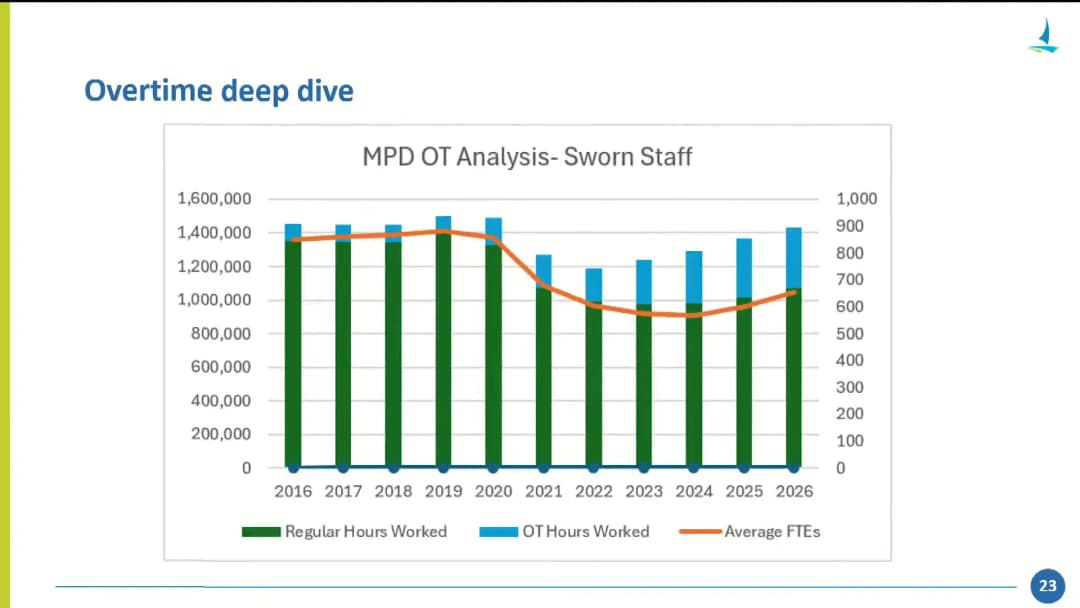
The Budget Committee of the Minneapolis City Council met on September 28, 2026 to review the Mayor's proposed 2027 budget for the Minneapolis Police Department. The meeting featured a presentation from Interim Chief Bill Peterson, financial staff, and deputy chiefs, followed by extensive questioning from council members. No votes were taken; the item was continued to a later date. Key topics included a proposed $250 million budget, a $20.3 million (9%) increase, overtime management, recruitment investments, staffing cuts, and accountability measures. Discussion Items - Presentation of Mayor's Proposed 2027 MPD Budget: Interim Chief Bill Peterson presented the department's mission and budget overview. The total proposed budget is $250 million, with salary and fringe comprising 79% ($198 million), contractual services 17% ($41 million), and operating costs 4% ($9.8 million). The budget includes a net increase of $20.3 million (9%) over 2026, driven largely by overtime, cadet/CSO funding, and contractual services. The department has 991 FTEs (731 sworn, 260 non-sworn), with 82 vacant sworn and 25 vacant non-sworn positions. Proposed investments include $13.1 million in new overtime funding (plus $12 million from vacancy savings, totaling $25.1 million), $6.4 million for cadets and CSOs (up from $2.1 million), and $3.1 million for professional services. The department plans to cut 17 non-sworn FTEs and one FTE via administrative adjustment, targeting vacant positions in constitutional policing, investigations, and professional standards. - Reform and Operations Updates: Deputy chiefs reported on progress under the settlement agreement: 64 policies approved by the independent evaluator, new use-of-force training, and planned stops/searches training in early 2027. The Investigations bureau highlighted the FAST team (non-fatal shooting unit) which initiated 150 cases (64 closed, 41 open), a 27% decrease in homicides year-to-date, and an 83% homicide clearance rate (up from 70% in 2024). Non-fatal shooting clearance rates rose to 41%. Domestic violence reports increased 10%, prompting expanded response protocols. The Professional Standards bureau discussed technology upgrades, wellness initiatives, and recruitment pathways (lateral, recruit, cadet, CSO). - Overtime Deep Dive: Assistant Chief Mark Kluko presented a 10-year overtime trend showing an inverse relationship between sworn staff numbers and overtime hours. Despite staffing recovery in 2025-2026, overtime remains high. A new dashboard provides bi-weekly overtime tracking by category. Management pledged tighter controls: overtime approval limited to the executive team, weekly reviews, and planned reductions in minimum staffing levels in the fourth quarter of 2026. The department acknowledged that $33 million in overtime in 2025 was partially due to mismanagement. - Councilmember Questions and Concerns: - Councilmember Chavez: Pressed for a commitment not to overspend the adopted budget. Interim Chief Peterson stated the department will do "everything possible" but cannot guarantee due to unforeseen events, leading Chavez to note no firm commitment was made. Chavez also requested a detailed breakdown of overtime spending by category, a public-facing overtime dashboard, and an itemized list of contractual services. - Councilmember Wandsley: Questioned the dual funding streams for settlement agreement contracts (Finance Dept. and MPD), and opposed cuts to civilian case investigator positions that were funded in the prior budget. She requested a staffing analysis, geographic data on response times and clearance rates, and rationale for focusing on new recruits versus more cost-effective lateral hires. She also questioned the decision to cut civilian positions from Investigations when the council had allocated ongoing funding for three case investigators. - Councilmember Osman: Criticized the lack of oversight that allowed $33 million in overtime overspend in 2025, calling it a failure of leadership and bookkeeping. He asked about the vehicle fleet and take-home vehicles, and urged the department to budget like every other household. He noted the council is not trying to cut funding but expects fiscal responsibility. - Councilmember Stevenson: Inquired about cost implications of the next police contract, potential salary increases, and the per-CSO cost ($100,000 per year, averaging $250,000-300,000 over 2.5-3 years). He questioned the impact of cutting civilian investigator positions, understanding that while those positions support low-level investigations, their elimination could delay service for crimes like stolen property. He also asked about standby time reimbursement and management controls. - Council President Payne: Sought clarification on academy start times (February, June, October) and requested five-year data on CSO and cadet matriculation. He noted that the average overtime per officer per pay period (83.42 hours) would imply half the force is working beyond policy limits, but was told standby hours skew the average. - Vice Chair Schaefer: Asked about MPD's revenue sources (mostly state aid) and the anticipated trajectory of overtime if the budget is right-sized, hoping for a decline as hiring progresses. - Councilmember Rainville: Praised the budget as the most honest and detailed he has seen in five years, acknowledging reforms and improved clearance rates. - Councilmember Chowdhury: Raised concerns about the mounted patrol unit being closed (no funding in 2027) despite a contract line item, and asked about increased phone service costs due to body cameras and VPN requirements. - Chair Chugtai: Asked about controls for officers using PTO and then picking up overtime; was told the timekeeping system prevents double payment, but parental leave may allow overtime. She requested a global number on unsolved investigations and better tracking of domestic violence. She noted that municipal and state recommendations for treating the MPD budget as a work session due to its complexity and the historic overspend. - Settlement Agreement and Investment Details: The $3.1 million in professional services is for non-MDHR contracts that were underfunded. Councilmember Wandsley noted confusion over $4 million dedicated to settlement agreement contracts managed by Finance and Property Services. MPD representatives explained that some ongoing requirements are not covered by settlement funds. Key Outcomes - No votes taken: The item was continued to a later date (as of meeting close, a follow-up date was not set). - Commitment on budget: Interim Chief Peterson committed to doing everything possible to stay within the adopted 2027 budget, but stopped short of an unconditional pledge, noting that unforeseen events (e.g., mass casualty incidents) could necessitate additional spending. - Administrative follow-ups requested: Council members requested multiple staff memos and special topics presentations on: - Detailed breakout of overtime spending by category (e.g., 911 response, investigations, standby, training, special events). - Public availability of the new overtime dashboard. - Itemized list of all contractual services in 2027. - Breakdown of settlement agreement funding alignment with independent evaluator recommendations. - Geographic breakdown of response times and clearance rates. - Five-year data on CSO and cadet matriculation rates and costs. - Impact of proposed civilian investigator cuts on case processing. - Rationale for not seeking council approval for reallocating case investigator funds. - Status of a comprehensive staffing study (not currently being pursued). - Charges for standby time and vehicle fleet needs. - Management controls: MPD outlined new controls including a dashboard, weekly executive meetings, and planned reduction in minimum staffing levels to curb overtime. - Program changes: The mounted patrol unit is being closed and will not appear in the 2027 budget. The department is evaluating standby time usage more closely. - Next steps: The chair will work with MPD to schedule a continued discussion to address outstanding questions and special topics.
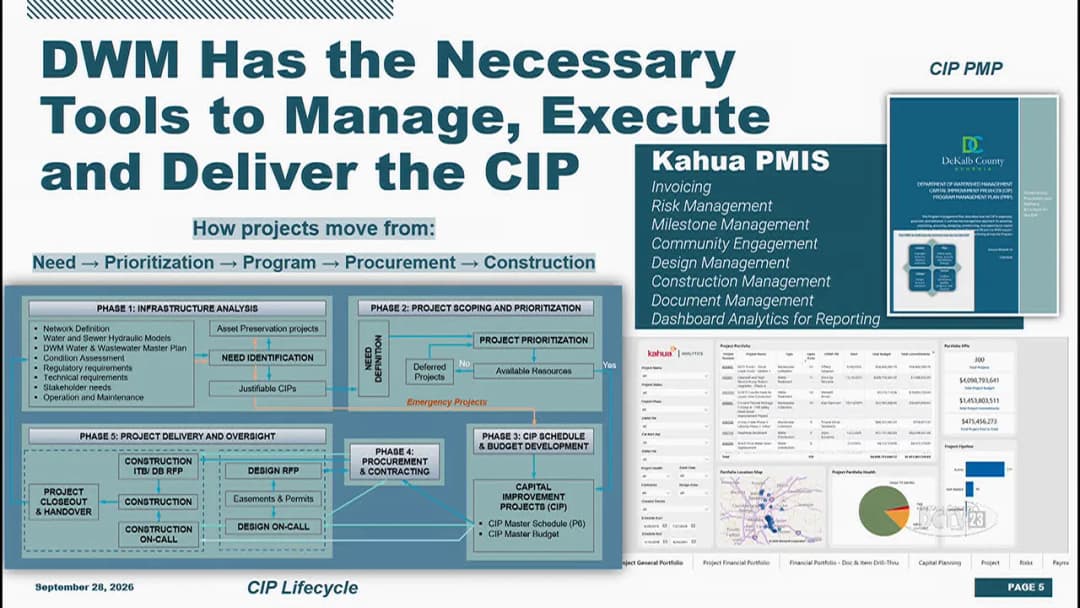
The DeKalb County Public Works and Infrastructure (PWI) Committee convened on Monday, September 28, 2026. Commissioner Shakira Johnson (District 4) served as the presiding officer. Commissioner Terry was absent. The committee reviewed and approved several public works contracts, received an extensive update on the 2026-2035 Watershed Management Capital Improvement Plan (CIP), and advanced a resolution for procuring an independent watershed CIP monitor. Consent Calendar - Meeting Minutes (Item 2026-1356): Approved unanimously. - Floodplain Mapping Services (Item 2026-1171): Approved a contract term extension for Dewberry Engineers Inc. for flood studies and mapping. - Landfill Gas Monitoring (Item 2026-1177): Approved a change order for GeoSyntec Consultants Inc. ($2,868,379) for environmental monitoring and gas collection system operations. - Printing Services (Item 2026-1191): Approved a contract increase for IPCOM ($50,000) for producing educational materials. - Conyers Renewable Power LLC Financing (Item 2026-1381): Approved an agreement allowing a collateral assignment to secure financing for a gas processing plant. Staff noted that the company has made penalty payments for previous missed deadlines. - Sidewalks and Roadways Repairs (Item 2026-1271): Approved a contract increase ($2,014,321) funded by SPLOST for construction services across multiple districts, including projects at Sugar Creek Golf Course, Mystery Valley, Wade Walker Park, DeKalb Memorial Park, Exchange Park, and Redan Park. Discussion Items Items Held for Audit Three items were tabled pending audit completion: - Traffic Pavement Markings contract (Item 2026-1178, up to $3,330,000) - Manhole Rings, Covers, and Valve Boxes contract (Item 2026-1170, up to $7,000,000) - On-Call Concrete and Retaining Walls contract (Item 2026-1205, up to $4,550,000) Flat Shoals Parkway Sidewalk Design (Item 2026-1066) Approved an award to Atkins Realis ($3,210,410) for designing 2.1 miles of continuous sidewalks on Flat Shoals Parkway. Director Allen noted the high design cost is driven by the GDOT Plan Development Process (PDP) required for federal aid. Independent Watershed CIP Monitor (Item 2026-1234) Staff presented an updated resolution for procuring an independent monitor for the capital improvement program. Key changes from the 2025 legislation included using a professional services contract instead of a standard RFP to ensure the selection process remains fully independent of the administration. The selection committee will be led by central staff and the CIP Advisory Group (CPAG), with the Office of Independent Internal Audit (OIIA) serving in an advisory capacity only. The prohibition on the monitor bidding on future watershed CIP work remains unchanged. Commissioner Johnson expressed strong support for the updated approach and requested that the monitor’s scope be designed to allow future expansion to include oversight of potential private data center projects. The committee voted to recommend approval to the full Board of Commissioners, with the condition that it be presented at the Committee of the Whole (COW) on October 6, 2026, prior to a final vote on October 13, 2026. Watershed Management Capital Improvement Plan (CIP) 2026-2035 (Item 2026-1334) Director Wells and AECOM consultant Greg Harrison presented the final 10-year CIP plan. - Program Scope: Total investment of $4.43 billion, averaging $443 million per year. Water distribution is the largest category ($1.2 billion), followed by wastewater collection ($1.1 billion). Key projects include the Scott Candler Clearwells and High Service Pump Station, replacement of 70 of the 400 prioritized small diameter water mains, elimination of all failing pre-stressed concrete cylinder pipes (PCCP), and major trunk sewer upsizing for the consent decree. Director Wells stated that the consent decree drives more than half of the total capital investment. - Project Progress: Since the last plan, the county has replaced over 30 miles of failing water mains, assessed over 16,000 water valves and 8,000 hydrants, and begun construction on major consent decree trunk sewer projects. - Financing Risks: Diane (Finance) outlined a funding mix of 14% WIFIA/GIFA borrowing, 65% bond funding, and 21% cash. She specifically warned that the debt service coverage target has been reduced from 1.75x to 1.3x to accommodate the spending level, placing significant pressure on the water/sewer enterprise fund’s credit rating with a potential for a downgrade. Cash reserves are projected at just 2 months against a target of 4–6 months. Commissioners inquired about mitigating strategies, including refinancing existing debt and the impact of the 10 by 10 rate increase, which staff confirmed covers the increased annual spend. Key Outcomes - Unanimously Approved: Items 2026-1171, 1177, 1191, 1271, 1381, 1066, and 1334 (Watershed CIP 2026-2035). - Forwarded to Full Board of Commissioners: Item 2026-1234 (Independent Watershed CIP Monitor), with a requirement for a presentation at the Committee of the Whole on October 6, 2026, prior to a full board vote on October 13, 2026. - Tabled Pending Audit: Items 2026-1178, 1170, and 1205.
The Boston City Council Ways & Means Committee held a virtual hearing on September 28, 2026, at 10:04 AM to consider four dockets (Nos. 1671–1674) that would transfer a total of $3,318,987 from the FY27 Reserve for Collective Bargaining to the Boston Police Department budget. The funds are needed to cover FY27 cost items—including a 2% base wage increase effective July 2025—under collective bargaining agreements with the Boston Police Detectives Benevolent Society (BPDBS) and its Superior Officers Unit (BPDBS-SO). The contracts expired on June 30, 2026, but their terms continue during negotiations. Budget Director Jim Williamson presented the administration's request. Discussion Items - Budget Director Williamson explained that the four dockets are a budgetary correction: the wage increases were approved by the Council in May 2026 and are already being paid, but the FY27 police department budget must be adjusted to reflect the cost. The contracts cover 278 detectives (BPDBS) and 127 superior detectives (BPDBS-SO). - Councilor Flynn raised concerns about police officer staffing, 16-hour work days, and health and wellness programs. He stated that the city is not supporting officers adequately and that the Council had voted down his $500,000 amendment for police health and wellness during the budget process. He urged that the police unions should have been invited as panelists. - Councilor Murphy noted that the department is budgeted for 283 detectives but has only 238–241, and asked about a delayed class of 25 detectives originally expected in September 2026. She also advocated for respecting union leadership and requested that union President Bob Griffin be allowed to speak. - Councilor Fitzgerald provided staffing numbers from HR: as of August 26, 2026, there are 1,423 patrolmen, 2,050 total sworn officers including command staff, and 241 detectives. He asked about the timeline for contract negotiations and the cost of health screenings. - Chair Weber clarified that the hearing was intended to be a follow-up to the May vote, not a new debate on the contract, but allowed union testimony when Councilors insisted. Public Comments & Testimony - Bob Griffin, President of the Boston Police Detectives Benevolent Society (invited by Councilor Murphy): Griffin stated that there are approximately 238–241 detectives against a budgeted 283, a shortage of nearly 50 compared to five or six years ago. He explained that caseloads are higher due to technological advances (AI, video, cell phone data) and that detectives are often ordered into uniform to supplement patrol, causing them to set aside their investigative work. On health and wellness, Griffin said the union raises about $50,000 through fundraising and spends another $60,000 from its own coffers annually for health screenings—the city contributes nothing. He cited Dr. Hamrock’s statistic that first responders have their first heart attack at age 48 on average versus 68 for the general public, underscoring the life-saving value of these scans. Griffin expressed support for the 2% wage increases and noted that both detective contracts expired July 1, 2026, with negotiations ongoing. - No other public testimony was offered. Key Outcomes - No vote was taken. Chair Weber stated he would seek answers to Councilors’ questions (staffing numbers, class dates, health and wellness funding) and bring the dockets to a vote at the next City Council meeting (potentially Wednesday, September 30, 2026) or hold them for an additional week if more information is needed. - Councilor Flynn placed on the record that the Council had previously voted down his amendment for $500,000 in police health and wellness funding, and he called on colleagues to show courage in supporting officers. - The hearing was adjourned at approximately 11:00 AM.
The Shoreline City Council held its regular meeting on Monday, September 28, 2026, at 7:00 p.m. in the Council Chamber at Shoreline City Hall. Mayor Betsy Robertson presided, with Councilmembers Valerie Snider, Laura Mork, Keith Scully, Annette Ademasu, and Christopher Roberts present. Deputy Mayor Eben Pobee was excused by a 6-0 vote. The Council approved the consent calendar, adopted a sales and use tax ordinance for children and family services, approved a preliminary subdivision, and discussed multifamily composting and a home electrification grant. Council Reports - Mayor Robertson reported on a weeklong Sister Cities visit to Akropong, Ghana, describing it as a remarkable experience where the delegation built bridges, formed new friendships, and met with government leaders and local chiefs. A community presentation by the Shoreline Sister City Association is planned. - Councilmember Snider reported attending the King County Child Sexual Awareness Conference, emphasizing the importance of believing children or victims when they come forward. Consent Calendar The Council approved the consent calendar by a 6-0 vote, including: - Approval of Workshop Dinner Meeting Minutes of September 14, 2026 - Approval of Expenses and Payroll as of September 11, 2026, in the amount of $5,646,612.86 - Adoption of the 2027 Community Development Block Grant Funding and Contingency Plan and the 2027-2028 Human Services Funding Plan - Authorization for the City Manager to enter into an agreement with DKS Associates for professional services in the amount of $416,953.80 for design of the NE 175th Street—5th Avenue NE to 15th Avenue NE Safety Improvement Project - Authorization for the City Manager to execute the annual Microsoft Enterprise Licensing Agreement through third-party reseller CDW Government, LLC, in the amount of $132,208.04 Public Comments & Testimony - Quang Vo, Shoreline property owner and resident, expressed frustration with contractor pricing under the Home Electrification and Appliance Rebate (HEAR) Grant Program. He stated that an approved vendor on the city’s roster quoted over $17,000 for a heat pump installation, while he found an independent Mitsubishi Diamond-certified installer for $13,345. Because the program uses a closed roster of approved vendors, he was ineligible for the $2,500 rebate. He urged the Council to allow open competition and not let the grant money be squandered on a broken model. - Kathleen Russell, representing Save Shoreline Trees, acknowledged the importance of balancing transportation needs with the preservation of mature trees. She noted that the tree community was surprised by the posting of tree removal notices on September 17 for the Sound Transit Stride 3 project on NE 145th Street, but appreciated that mitigation is planned: 21 of the 28 trees to be removed will be replaced and a fee in lieu will be paid into Shoreline’s restricted tree fund. - Chad M., Shoreline resident, requested that the City adopt an algorithmic pricing ban ordinance similar to one recently enacted in Seattle. He expressed concern about grocery stores using AI in coordination with personal data to set dynamic prices, calling it “wrong, immoral, and should be illegal.” - Norbert Steele, Shoreline resident, commented on declining public trust in institutions and expressed frustration that Save Shoreline Trees has been advocating for over a year for a one-to-one tree replacement policy without headway. He stated that planting replacement trees is “obviously the right thing to do” and urged the Council to act. Discussion Items Action on Ordinance No. 1070 – Authorizing a 0.01% Sales and Use Tax to Fund Services for Children and Families Joe Brandstatter, Administrative Services Director, presented the staff report. He explained that the Washington State Legislature authorized cities and counties in 2026 to impose a 0.01% sales and use tax to support eligible services for children, youth, and families. The tax is estimated to generate $130,000–$145,000 annually for Shoreline, increasing the local sales tax rate from 10.50% to 10.51% (approximately one cent on a $100 purchase). Proposed uses include approximately $100,000 annually for youth and teen mental health services and $30,000–$45,000 for rental assistance through HopeLink. If King County also adopts the tax, the county would collect the revenue in Shoreline unless the City adopts its own ordinance to retain the revenue locally. Councilmember Ademasu expressed full support, stating services for children and families are needed in Shoreline. Councilmember Scully stated that while the services are important, he believes the City already funds them and is not comfortable raising taxes simply because there is authority to do so, calling it “a shell game.” Councilmember Roberts also expressed concerns. The motion to adopt Ordinance No. 1070 carried 4-2 (Councilmembers Scully and Roberts opposed). Staff will notify the Department of Revenue by October 16, with collections to begin January 1, 2027. Action on Preliminary Formal Subdivision No. PLN24-0009 – 45 Townhome Lots in North City Elise Keim, Planning Manager, presented the staff report for the proposal to divide eight existing parcels into 45 townhome lots in the North City neighborhood, zoned mixed-use residential 35. The project is vested under the 2024 development code, which required retention of 25% of significant trees after exempt trees were removed from calculation. The hearing examiner and staff recommended approval, subject to conditions detailed in the hearing examiner’s recommendation. Councilmember Snider questioned whether the project complies with the City’s tree code, expressing confusion about how the tree retention calculation works. Keim explained that each of the seven residential parcels allowed exempt removal of three trees (21 total), plus three from a prior exemption, for 24 exempt trees not subject to replacement requirements. Of the remaining 19 significant trees, 25% (rounded to five) were required to be retained; the remainder may be removed subject to replacement. Councilmember Ademasu expressed empathy for neighboring residents whose backyards will have townhomes towering over them and noted that the area needs more businesses and green space to support increasing density. Councilmember Scully welcomed that this is the last such quasi-judicial subdivision review for the Council, as the code has since changed. The motion to approve carried 5-1 (Councilmember Snider dissenting). Discussion of Options to Increase Multifamily Compost Participation Sarah Bruemmer, Environmental Sustainability Coordinator, presented an overview of compost participation in Shoreline. She reported that while compost service is nearly universal among single-family customers (approximately 100% subscription, included with garbage service), multifamily participation has historically lagged but has increased from near zero in 2019 to approximately 20% in 2025. Business subscriptions average about 24%. The increase in multifamily participation is attributed to the City’s voluntary incentive program started in 2021, which used two FTEs for on-site education, provided free compost service for limited periods, supplied kitchen containers, and conducted contamination checks every three months. The State’s Organics Management Law will require compost service for businesses beginning January 1, 2026, and for single-family homes and more businesses by April 1, 2030. King County’s comprehensive solid waste management plan, due by the end of 2030, will include source separation requirements for new and remodeled multifamily properties. Bruemmer reviewed multiple policy approaches: maintaining and expanding voluntary participation, mandatory service requirements, mandatory source separation (prohibiting compostables from garbage), and a phased-in mandate. She noted that all mandatory options require substantial ongoing staffing and funding for education, enforcement, and contamination management, citing challenges in Boulder, Colorado, which experienced contamination rates high enough to divert compost loads to the landfill and had to pause enforcement. Staff recommended continuing the voluntary approach through the 2027–2028 biennium to allow coordination with the upcoming solid waste contract procurement (competitive bidding begins early 2027) and alignment with King County’s planning process. Councilmember Roberts expressed support for voluntary efforts but voiced concern that mandatory requirements could increase contamination rates and costs. Councilmember Ademasu indicated a preference for expanding the voluntary program with $50,000 in incentive funding and requested cost analysis for embedding composting infrastructure in multifamily construction. Councilmember Scully supported waiting for contract negotiations. Councilmember Mork requested tonnage data on actual diversion behavior and encouraged considering requirements for new construction to ensure convenient composting and recycling access, noting that regional landfill capacity is projected to be exhausted by 2040. Mayor Robertson emphasized improving diversion rates and suggested reviewing development codes to ensure adequate space for composting systems in multifamily properties. Discussion of Ordinance No. 1071 – Budget Amendment for Home Electrification and Appliance Rebate Grant Sarah Bruemmer and Bethany Wolbrecht-Dunn presented the proposed amendment to the 2025–2026 Final Biennial Budget to accept a $600,000 grant from the Washington State Department of Commerce for the Home Electrification and Appliance Rebate (HEAR) Grant Program. The program, funded through the state’s Climate Commitment Act, expands the City’s existing Energize Shoreline program. No local match is required, and all funds must be expended by June 30, 2027. The grant will fund rebates for moderate-income households (estimated $6,000 per household), free heat pump installations for low-income households (80% of King County area median income or below), and free installations for approximately seven to ten licensed adult family homes. The existing Energize Shoreline program has supported 74 heat pump installations and 20 free low-income installations since 2022, with educational workshops reaching over 500 people. Councilmembers asked about the process for becoming an approved vendor: contractors must be Mitsubishi Diamond dealers and are scored on business practices, customer service, and industry experience; of 19 applicants for 2026, 15 were accepted. The City recommends but does not require homeowners to obtain three bids. Councilmember Ademasu questioned the $2,500 standard rebate amount versus the $6,000 moderate-income rebate and the vendor cap. Councilmember Snider raised questions about the timing of expenditures across different funding sources. No action was taken; the item is scheduled to return on October 12 for placement on the consent calendar. Key Outcomes - Deputy Mayor excused: Motion carried 6-0. - Agenda approved: By unanimous consent. - Consent Calendar approved: Motion carried 6-0. - Ordinance No. 1070 adopted (0.01% sales and use tax for children and family services): Motion carried 4-2 (Councilmembers Scully and Roberts opposed). Collections to begin January 1, 2027. - Preliminary Formal Subdivision PLN24-0009 approved (45 townhome lots): Motion carried 5-1 (Councilmember Snider dissenting). Approval subject to conditions in the hearing examiner’s recommendation. - Multifamily compost discussion: No formal action taken. Council directed staff to continue the voluntary approach through the 2027–2028 biennium, develop options in conjunction with the solid waste contract procurement, and provide tonnage data. Potential code amendments for new construction will be considered. - Ordinance No. 1071 (HEAR grant budget amendment): No action taken. The item is scheduled to return on October 12, 2026, for consent approval.