Browse by city
Date range
Search help

Search titles, summaries, topics and stored transcripts together. Keywords may match separately; put the whole query in double quotes for a phrase. Matching follows word analysis, so punctuation is not exact. Both dates are included. Documents are not searched.

SHOWING 5121–5130 ENTRIES
5121
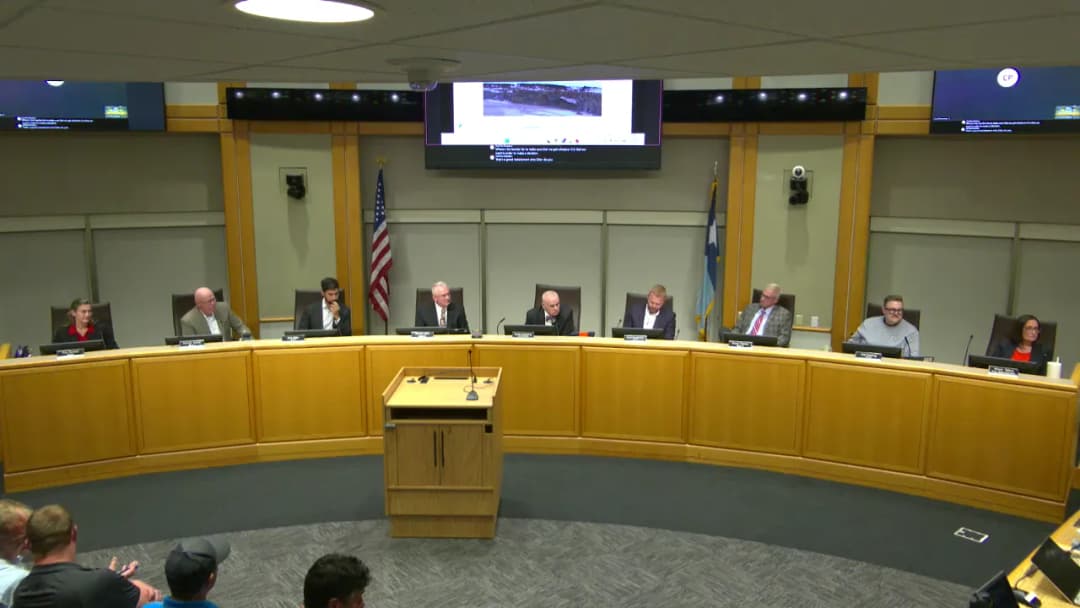
SEP 21, 2026 · ROCHESTER, MINNESOTA · CITY COUNCIL
Rochester City Council Meeting Summary – September 21, 2026

The Rochester City Council held its regular session on September 21, 2026, at 6:00 p.m. The meeting included public comments, approval of a consent agenda, two public hearings, and a report on the preliminary tax levy. Key decisions involved a conditional use permit for a limestone quarry near the airport, opening a public comment period for CDBG allocations, and certifying the 2027 preliminary tax levy. Consent Calendar - Approved minutes from September 9, 2026; adopted the 2027 City Council meeting calendar; accepted a $1,000 donation from the family of Kertis Stensrud; authorized an amendment to the Airport Terminal lease agreement; approved the Meridian Gate Traffic Control System Policy; accepted a Transportation Security Administration reimbursement agreement; authorized a Request for Proposals for a Public Safety Evaluation and Resource Study; awarded contracts for the Public Safety Training Center Remodel totaling $623,280.55; authorized contracts for Pond 40 design ($235,035), Kings Run Drainage District Management Plan ($376,322.50), Zumbro Plaza Trailhead Phase II design amendment ($64,519.20), and an updated City-Owner contract and professional technical services contract for London Brook Ponds (Phase 1); approved naming rights agreements for the Rochester Sportsplex with Altra Credit Union and Knutson Construction; approved a lease expansion and extension with Mill Creek Life Sciences at the BioBusiness Center. Public Comments & Testimony - Molly Dennis, a community advocate, spoke against the tax levy being placed under Reports and Recommendations rather than a public hearing. She highlighted transportation barriers for residents, noting a 40-minute taxi ride due to inadequate bus service, and criticized the elimination of virtual public comment options. She urged council members to ride the bus to understand transit challenges. Public Hearings G.1 – Conditional Use Permit No. CD2026-008CUP by MGK LLC (Limestone Aggregate Quarry) - Staff Presentation: Tieron Edens (Community Development) presented staff’s recommendation to deny the permit. The proposed quarry is located near the Rochester International Airport, partly within Airport Zone A and Zone C. Concerns included blasting impacts on air navigation – fly rock, dust, interference with instrument approaches, and operational burden on air traffic controllers. A third-party airspace assessment by Federal Airways & Airspace concluded the quarry would create a direct aviation hazard. The FAA had issued a “no determination” but only evaluated fixed structures, not blasting. - Applicant Presentation: Mark Welch (GCUBE Engineering) and Travis David Saver (Bar Engineering) argued for approval. Saver, a blasting engineer and private pilot, stated that blasting would occur only 6–10 times per year, under visual flight rules, with coordination with the tower. He cited examples of quarries near other airports (e.g., Madison, Atlanta, Dulles) where blasting occurs safely. The applicant disputed the third-party report as a “kill report” based on a theoretical worst-case scenario of fly rock reaching 1,280 feet, which Saver deemed unrealistic. They offered to accept conditions limiting blasting to Zone C and to fewer than 7 blasts per year. - Public Testimony: Several pilots and airport users spoke against the permit. Justin Hasse (private pilot), Brian Poss (flight instructor), and Scott Kuhn (Great Plains Aviation) described risks to instrument approaches, missed approaches, and engine ingestion from dust. They noted that 50,000 annual operations (140–150 per day) include many unscheduled flights (students, medical, cargo) with little notice. Mitchell DeCook (property owner) supported the quarry, stating similar gravel pits exist near highway 63 without issues. - Council Deliberation: Councilmember Palmer moved to approve with six staff conditions and a seventh limiting blasts to fewer than 7 per year. The motion failed 3–4 (Keene, Miller, Wall, Doring, Schubert opposed; Fredericks and Palmer in favor). Councilmember Fredericks then moved to continue the item to the second meeting in October, seconded by Palmer. Staff noted the need for an operations agreement and further information on coordination with FAA. The continuance motion passed 5–2 (Wall and Doring opposed). The item will return on October 19, 2026. G.2 – 2027 Annual Action Plan – Community Development Block Grant (CDBG) Allocations - Staff Presentation: Brent Smith (Community Development) requested opening a public comment period for the 2027 CDBG Annual Action Plan. The city anticipates $650,000 in CDBG funds plus $75,000 in program income, totaling $725,000. Priority allocations: 13% to public services ($97,500), 66% to housing rehab, 20% to administration. A steering committee recommended funding five of nine applications: Damascus Way, Family Promise of Rochester, Iowa Homes Foundation, Jeremiah Program, and Salvation Army of Rochester. The public comment period will close on November 2, 2026, with final adoption expected that day. - No public testimony. - Council Action: Councilmember Keene moved to open the public comment period; seconded and approved unanimously. Reports and Recommendations H.1 – 2027 Preliminary Tax Levy and Supplemental Recommended Budget - Staff Presentation: City Administrator Elms presented the recommendation to certify a preliminary property tax levy of $124,901,338 (a 5.59% increase over 2026) and an all-funds budget of $799,283,832. The increase is driven by labor costs (3.27 percentage points), equipment replacement, and capital investments. The levy represents the maximum; final adoption will occur on December 7, 2026. The staff also recommended $100,000 from the 2025 Statewide Affordable Housing Aid Fund for Any Path Home, a homeless response program. - Council Discussion: Councilmember Wall noted public concern about property tax burdens. Councilmember Palmer proposed an amendment to reduce the levy by $400,000 (bringing the increase to 5.2%), funded from the contingency reserve. The amendment failed 3–4 (Keene, Miller, Doring, Schuberg opposed; Wall, Fredericks, Palmer in favor). Councilember Keene then moved to approve the original resolution; seconded by Councilmember Miller. The motion passed 6–1 (Palmer opposed). Key Outcomes - Quarry CUP: Motion to approve failed 3–4; motion to continue granted 5–2. Item will return on October 19, 2026, for further discussion on an operations agreement and impact analysis. - CDBG Public Comment Period: Opened unanimously; will close November 2, 2026. - Preliminary Tax Levy: Certified at $124,901,338 (5.59% increase) with a preliminary budget of $799,283,832. $100,000 approved for Any Path Home from state affordable housing aid. Final hearing set for December 7, 2026. Motion passed 6–1.

AIRPORT OPERATIONS 40% · PUBLIC SAFETY 10% · COMMUNITY DEVELOPMENT BLOCK GRANT 9% · TAXATION 8%
5122
SEP 21, 2026 · NAPERVILLE, ILLINOIS · CITY COUNCIL
City Council Budget Workshop #1: 2027-2031 Capital Improvement Program - September 21, 2026

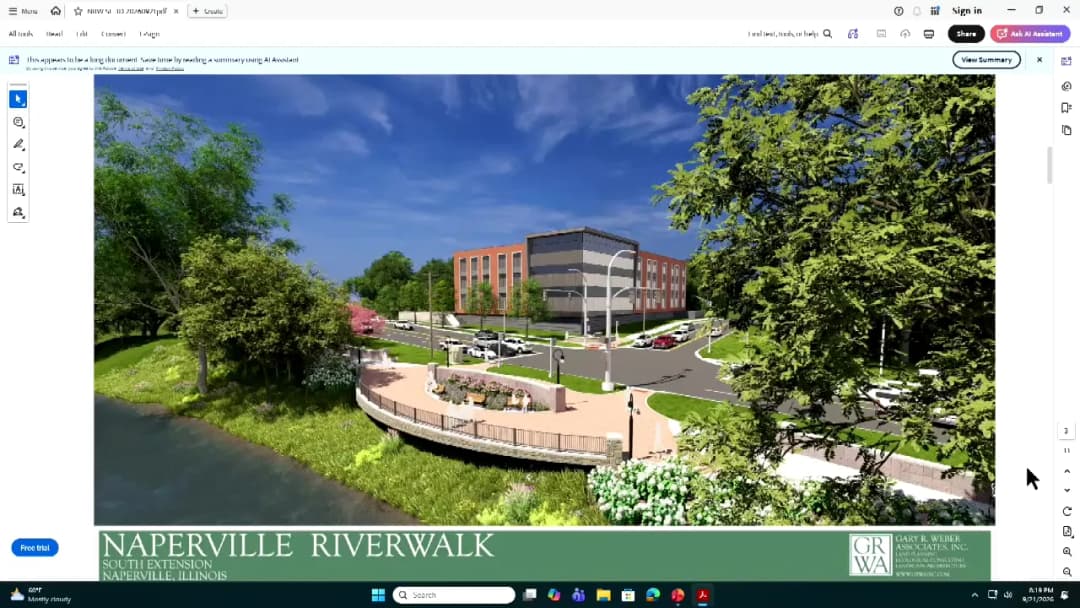
The Naperville City Council held its first budget workshop on September 21, 2026, from 6:00 PM to approximately 8:30 PM, focusing on the proposed 2027-2031 Capital Improvement Program (CIP). The preliminary 2027 CIP totals $211 million, an 11% increase over 2026. No final actions were taken; the workshop was for discussion and direction. Councilman Sayed participated by phone initially, then joined in person. Public comments covered the climate action plan, battery storage, the Riverwalk South Extension, the electric utility debt strategy, and the Nichols Library parking deck. Public Comments & Testimony - Teresa Huss (NEST member, longtime resident) urged funding a climate action plan, calling it a one-time cost of 0.015% of the annual budget. She cited the 2025 greenhouse gas inventory and resident survey showing sustainability as a high priority. - Joe Huss (27-year resident, NEST volunteer) recommended including battery storage in the capital budget and using a competitive process for operator selection. He argued a battery would quickly pay for itself, reduce electricity bills, and address reliability violations, and warned that delay risks losing federal investment tax credits. - Pat Kennedy (former Riverwalk Commission chair) provided context on the Riverwalk South Extension, noting the project was planned since 2015, master plan endorsed in 2021, design/permitting in 2023, and deferred due to the 430 South Washington bridge delay. He stated $1.5 million in private donations (Edward Hospital $800,000, Rep. Yang Rohr $700,000) were secured, originally covering half of a $3 million project. - John Doyle (resident) questioned the electric utility's debt strategy, asking about planned borrowing beyond 2027, how borrowing vs. rates decisions are made, the target debt coverage ratio, and the reason for a sudden change in funding philosophy (first new debt since 2011). He also noted a $10 million gap in the electric project list and requested more detail on the tollway substation project. - Katie Wood (Downtown Naperville Alliance) requested keeping Nichols Library deck design in 2027, moving construction significantly sooner than 2031-32 by readjusting streetscape priorities, and reconsidering use of downtown parking fund dollars for the municipal deck. She stated that 60% of downtown visits come from outside Naperville (per Placer AI) and that 160,000 sq ft of new commercial space is on the horizon. - Chris Hartner (Naperville Running Company owner, downtown property owner) reiterated that the food and beverage 1% tax was never intended for the municipal deck. - Monica Connors (Naperville Development Partnership president) emphasized downtown's economic contribution (property tax, sales tax, jobs). She noted construction costs have increased 68-80% since 2008 and that parking is a top factor for retailers choosing a location. - Neil Malone (Chamber of Commerce) supported accelerating the Nichols deck, citing long-standing need, location importance, support for downtown businesses, and cost escalation (original estimate $18.9M, now $37.7M). Discussion Items - Climate Action Plan: Council discussed but did not act; it will be addressed in the operating budget workshop. - Battery Storage: City Manager Krieger explained that under the full-requirements contract with IMEA (Illinois Municipal Electric Agency), a battery's value is limited because IMEA is 100% hedged; payback is likely north of 10 years. Staff will bring a financial analysis regardless of CIP inclusion. Councilwoman Jane asked about timing given falling battery prices. - Riverwalk South Extension: Councilman Holzar raised process concerns, noting that the project was ready in 2023 and deferred multiple times, and that stakeholders invested years of design. Director Heinz reported the latest cost estimate is $1 million over the $6.8 million budget due to structural elements. Staff indicated the Riverwalk Commission is reviewing options, but the commission had not voted on alternatives. Councilman Kelly asked whether the commission recommended the full project; no formal vote had been taken. - Water Utility: The 2027 water CIP is $98.8 million, driven by Springbrook revitalization (total $198 million, about halfway complete) and water main replacements (goal of 10 miles/year). Councilman Kelly asked about cost inflation; staff confirmed the $198 million is the best current estimate. Councilwoman Gibson inquired about sewer main lifespans. - Electric Utility: 2027 electric CIP is $30 million, including SCADA/Durham's upgrade, substation work, and tier one undergrounding ($1.3 million in 2027, down from original plan due to lost federal grant). Councilman White praised progress (94% underground) but urged continuing toward 100%. Councilman Kelly confirmed tier one scope is unchanged, just delayed. - Transportation: $41 million in 2027 projects including North Aurora Road underpass, 87th Street Bridge ($5.7M total, $3M federal), and White Oak roadway improvements. Councilman Wilson expressed concern about construction impacts south of 75th Street; staff noted coordination efforts. - Downtown Parking: The proposed schedule sequences municipal deck rehab (2027-28) with Jefferson Streetscape, then Nichols deck construction in 2031-32. Staff cited logistics and avoiding overburdening downtown. The Nichols deck concept design ($100K) remains in 2027. Funding split for municipal deck: 50% downtown parking fund, 50% capital projects. For Nichols deck: two-thirds downtown parking fund, one-third capital projects. Councilman Kelly expressed skepticism about need, citing lack of data; he wants a full public meeting before deciding on $40M project. Mayor questioned using downtown parking fund for municipal deck, noting city/settlement/library employees use it heavily. Councilman McRoom supported getting data and a staff recommendation. - Debt and Funding: The 2027 CIP assumes $50M in new utility debt ($10M electric, $40M water), with no new general fund bonds. Home rule sales tax projected at $24.8M (+3%). Motor fuel tax at $7.6M (+4.8%). Downtown food and beverage tax projected at $1M (-2%). Councilman White raised electric vehicle registration fee not being collected locally; staff said they are waiting on state action. Key Outcomes - No votes or formal decisions were taken; this was a workshop. - Council provided direction on several items: support for continuing Nichols deck design but with data-driven decision on construction; interest in receiving the downtown parking study results before finalizing the deck timeline; concerns about the Riverwalk process and cost overrun; and desire for a project-by-project breakdown of the CIP. - The proposed budget will be published on October 9, 2026. The next workshop (operating budget) is scheduled for October 27, 2026, with a potential third workshop on November 10, 2026. Public hearing and adoption are in December. - Staff will return with updated information on battery financial analysis, Riverwalk options, downtown parking study (October/November), and a detailed reconciliation of the electric utility project list.

CAPITAL PROJECTS 26% · ENGINEERING AND INFRASTRUCTURE 12% · PARKING REGULATIONS 10% · BUDGET EQUITY ANALYSIS 10%
5124
SEP 21, 2026 · BOZEMAN, MONTANA · CITY COMMISSION
Community Development Board Meeting – September 21, 2026

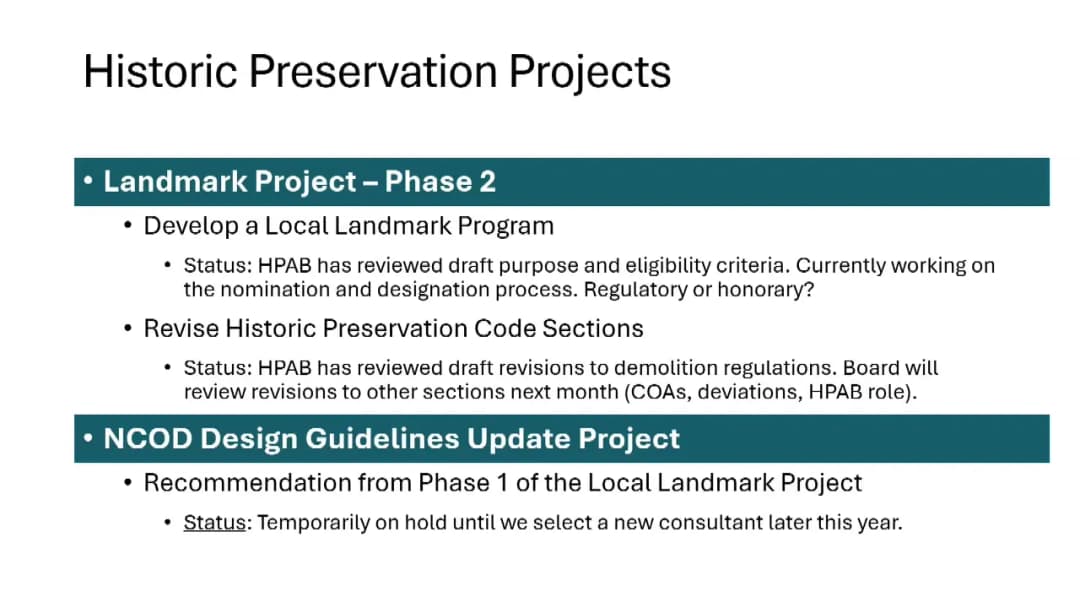
The Community Development Board (CDB) of Bozeman, Montana, met on September 21, 2026, to receive an update on the status of the Landmark Program and related historic preservation code revisions from Deputy Director of Community Development Rebecca Harbage. Board members engaged in extensive discussion on the balance between preserving historic resources, property rights, and economic viability. No votes were taken. Discussion Items - Presentation on the Status of the Landmark Program: Rebecca Harbage provided a comprehensive overview of the city's historic preservation program, including the history of the Neighborhood Conservation Overlay District (NCOD) established in 1991, design guidelines from 2006, and current efforts under the Local Landmark Project (Phase 2). Key projects include: (1) developing a local landmark program to recognize sites of local cultural/historic significance that may not meet National Register criteria; (2) revising historic preservation code sections, starting with demolition regulations; and (3) updating NCOD design guidelines (temporarily on hold due to staffing vacancies). Harbage noted that the city has had 58 total demolitions within the NCOD since 2018, of which 11 were contributing/eligible structures and 47 were non-contributing; 12 of those demolitions were for unsafe structures. She outlined proposed changes to demolition regulations, including: - Requiring an inventory for buildings over 50 years old outside the NCOD before demolition. - Public notice posting for all NCOD demolitions. - Splitting the current two-year stay on demolition into two one-year periods: an initial one-year mandatory stay, followed by a second year only if the applicant fails to demonstrate consideration of alternatives. - Reimagining the "no economic life remaining" test as an economic hardship test. - Considering mandatory pre-application meetings for demolition of historic resources. - Exploring strategies to prevent demolition without a permit or demolition by neglect. - Updating the overall NCOD code structure to align with the new Unified Development Code (UDC) and revising submittal requirements and allowed deviations. - Board Discussion and Questions: Board members raised several concerns and perspectives: - Jason Dilmu questioned the definition of "historic" and the 50-year threshold, emphasizing that not every old structure is significant and that overly broad regulation could unfairly burden property owners. He suggested that truly special resources should have regulatory protection, but the community as a whole should bear the cost when preservation is a community benefit. - Eric Bonnet stressed the need to focus on incentives ("carrots") rather than just regulations ("sticks"), noting that two-year stays may cause economic waste without achieving preservation goals. He encouraged case studies of successful preservation in other cities and highlighted the potential for using tax credits or incentives. He also noted that historic preservation has sometimes been used as a NIMBY tool to block growth and called for recognizing erased histories, such as the minority community at Eho Memorial Park. - Ben Lloyd asked what problem the code revisions are solving, given the relatively low number of demolitions. He suggested shifting focus from preventing demolitions to incentivizing refurbishment and cleaning up derelict structures. - Chris Edmunds (board member) commented on the tension between preserving historic fabric and allowing modern renovations, noting that the UDC already addresses mass and scale issues. He mentioned the concept of "iceberg houses" (subterranean additions) as a creative way to increase density without altering facades. - Mark Haggie proposed a "cash in lieu of waiting" fee for expedited demolition, which could generate revenue for historic preservation maintenance. - Chris Saunders (staff) added context on the federal level's opt-in approach and the importance of defining significance beyond just age. Key Outcomes - No formal decisions or votes were taken. The board's discussion was informational and intended to guide staff and the Historic Preservation Advisory Board (HPAB). - Next steps outlined by Harbage: - HPAB will continue reviewing draft code revisions at its mid-October 2026 meeting. - CDB may receive a further update in December 2026, with a formal public hearing anticipated in early January 2027, followed by City Commission consideration in February 2027. - The city is making progress on hiring a new historic preservation planner to support these projects. - The board also received an FYI on upcoming CDB items: a presentation on the Bozeman Creek Vision Plan and review of a potential downtown urban renewal district expansion at the October 5, 2026 meeting. A placeholder for City Commission discussion on revisions to city boards was noted for October 27, 2026.

HISTORIC PRESERVATION 71% · LAND USE PLANNING 10% · ECONOMIC DEVELOPMENT 5% · PROCEDURAL 4%
5125
SEP 21, 2026 · MIDDLETOWN, CONNECTICUT · COMMON COUNCIL & COMMISSIONS
Middletown LGBTQI Plus Commission Meeting - September 21, 2026

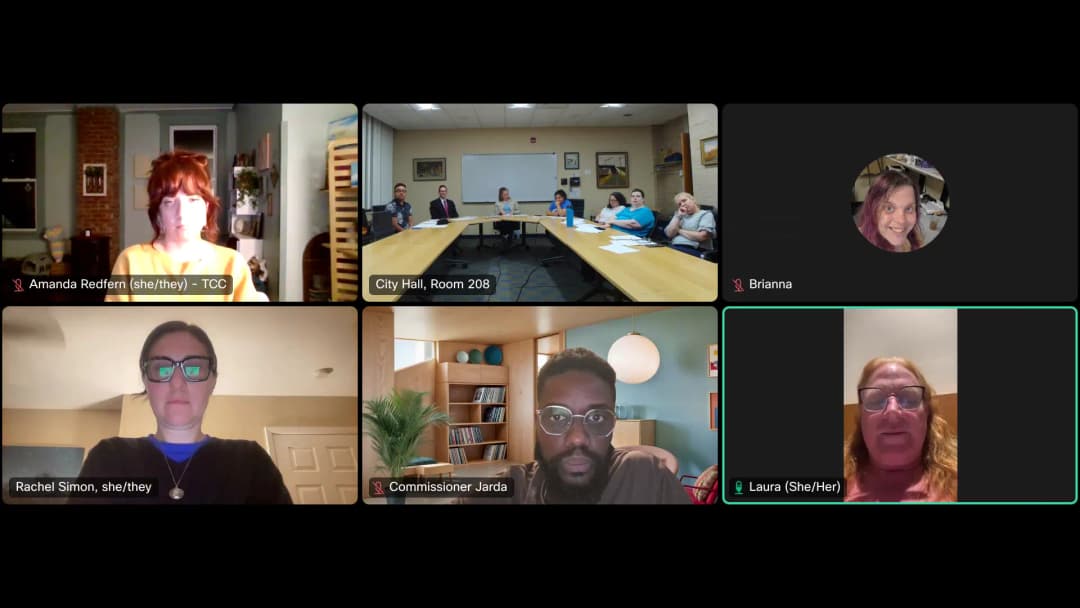
Note: The transcript of this meeting indicates the meeting was held on Wednesday, September 16, 2026 at 7 p.m. However, the instruction provided a date of September 21, 2026. This summary uses the instructed date, with the discrepancy noted. The LGBTQI Plus Commission convened to approve minutes, review finances, approve several community events, and discuss a Request for Proposals (RFP) for a financial agent. The main agenda item was a proposal from Triangle Community Center (TCC) to serve as the commission's fiscal sponsor, replacing the Middlesex Chamber of Commerce. The commission voted unanimously to recommend TCC to the mayor. Consent Calendar - Approval of Minutes: The minutes from the August 19, 2026 regular meeting were approved unanimously without discussion. Public Comments & Testimony - Two members of the public, Rachel Simon Shibe (Executive Director, Triangle Community Center) and Amanda Redfern (Program Director, Triangle Community Center), attended the meeting. They participated in the RFP discussion as the proposers, not as general public commenters. Discussion Items - Financial Overview: Commissioner Christopher Ford provided an updated financial summary, noting that the commission is on target to meet its savings goal of approximately $50,000. To date, $13,000 has been appropriated for community events and $1,000 for grants, leaving substantial room within budget caps. - Event Proposals: - Day of GIFTS (Gathering Info for Transgender Services): Scheduled for November 21, 2026 from 10 a.m. to 2 p.m., hosted by Middlesex Health. The commission will table at the event using existing merchandise inventory. No financial obligation for the commission. Vice Chair Katie Merritt is coordinating. - Middletown Trans Game Night: October 8, 2026, 6:45–9 p.m. at Alberton Hall, cost $165. Approved unanimously. - Feminine Domain Event: October 24, 2026, 2–4 p.m. at PERC on Main Street, cost $75. Approved unanimously. - Q+ Team Group Meeting: October 21, 2026, 6–8 p.m. at Revive Art and Craft Supply, cost not specified. Approved unanimously. - Q+ Guardian Group: October 21, 2026, coinciding with the team group. Approved unanimously. - RFP for Financial Agent – Triangle Community Center: The RFP was distributed and one respondent, Triangle Community Center (TCC), submitted a proposal deemed to meet requirements. TCC has been a partner since the commission's inception, providing training, programming, and support. The proposal includes a year-one management fee of $65,000, with a five-year contract and 3% annual escalation. Key staff committed include Rachel Simon Shibe, Julie (deputy director), and Amanda Redfern. The commission held an informal Q&A session, discussing capacity, fundraising support, volunteer coordination, and transition from the Chamber of Commerce. Concerns about volunteer fatigue from back-to-back prides were raised, but TCC emphasized collaboration and existing infrastructure. The commission expressed strong enthusiasm for the proposal. Key Outcomes - All event proposals were approved unanimously. - RFP Recommendation: The commission voted unanimously (all in favor, none opposed, no abstentions) to recommend to the mayor that Triangle Community Center be selected as the financial agent. Next steps include a vote by the Finance and Government Committee on September 30, 2026, and the Common Council on October 5, 2026. The commission urged community members to attend those meetings to show support. Talking points will be distributed after mayoral approval. - Chair's Early Departure: Chair Brianna Scavera left early due to pain, but the vote and subsequent procedural motions were completed before her departure.

COMMUNITY ENGAGEMENT 79% · PROCEDURAL 14% · BUDGET 5% · ARTS AND CULTURE 2%
5126
SEP 21, 2026 · ALEXANDRIA, VIRGINIA · PUBLIC MEETINGS
Alexandria Transportation Commission Meeting: Go Alex Budget, Paratransit, Parking, and 2027 Priorities – September 21, 2026

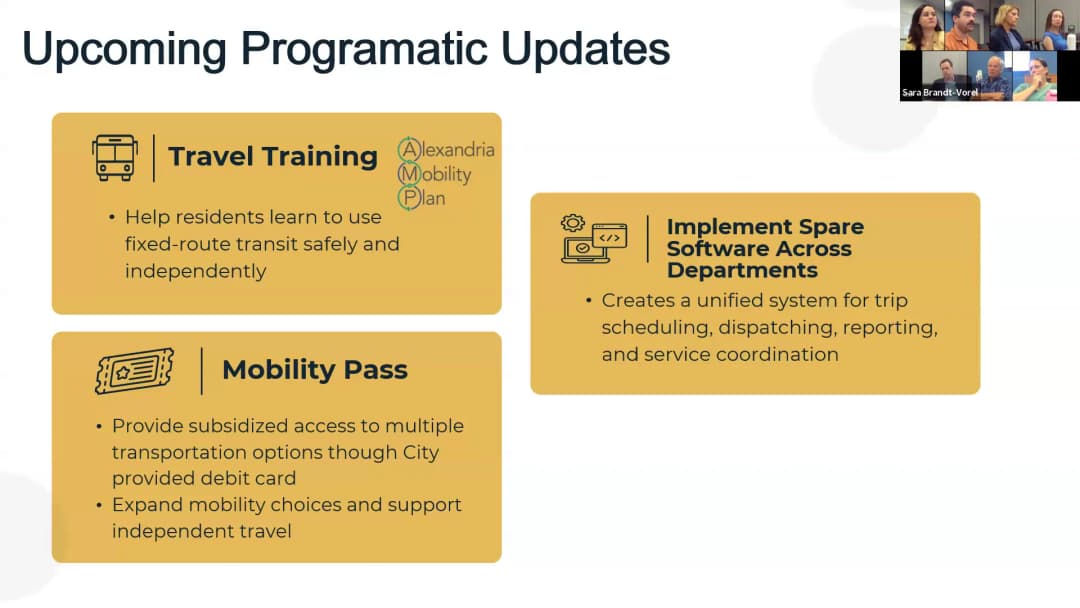
The Alexandria Transportation Commission met in person at 2900 Business Center Drive and remotely via Zoom. The commission approved two months of deferred meeting minutes, adopted the Fiscal 2027 Go Alex Fund budget and work plan, and received updates on the paratransit program, parking and curb-management technology, and 2027 legislative priorities. No members of the public spoke at either public comment period. Note: the officially provided meeting date is September 21, 2026; the transcript opens with a notice referencing a September 16, 2026 date. Public Comments & Testimony - No public speakers signed up for the general public comment period or for the public hearing on the Go Alex Fund. Both comment periods were opened and closed without testimony. Minutes of the May and June Meetings - Minutes for both the May and June meetings had been deferred because prior meetings lacked a quorum. After a question from a member, the commission approved both sets of minutes. Public Hearing: Fiscal 2027 Go Alex Fund Budget and Work Plan - The budget and work plan had been discussed at the prior meeting but could not be acted on without a quorum. The commission adopted the Fiscal 2027 Go Alex Fund budget and work plan after closing the public hearing with no speakers. Discussion: Paratransit Program Update - Staff described the program's operations: a call center, an operations vendor, and a single city-purchased software platform for dispatching. Customers can request a trip by drop-off time or pick-up time window (for example, an 8:30 to 9:00 or 8:15 to 9:00 window for a 9:00 departure). - Roughly 20% of trips are booked through the mobile app, and those riders report high satisfaction with service. - Paratransit operated all normal hours except for about six hours, during which fixed-route service was also closed after an incident. Many trips connect to city programming at the West End Government Center, social services, and medical appointments that were also closed. - The program update was initiated by city council to find cost savings. Fares were 'right-sized' by distance: the highest-cost product is a 12-ride pass to the $10 fare zone during peak times. Metro Access charges the city over $100 per trip for city residents using its service. - Rides are pooled up to three at a time to keep travel times reasonable, and the current vehicle mix serves demand for larger wheelchairs and riders accompanied by two or three guests. - Once approved, a new service model would keep city residents out of the WMATA participant queue and fund an additional full-time staffer to serve residents directly. - A curriculum can certify travel trainers; the independent center currently has staff who speak English, Spanish, and (as transcribed) 'Park.' - The program's biggest equity concern is building a policy that expands accessibility while including guardrails so costs do not become exorbitant at launch. A pilot with a small group of riders will run for a few months before full rollout. - Staff are coordinating with other city departments that provide similar transportation services so that all city vehicles and staff are used as efficiently as possible. Discussion: Parking Website and Curb Management Update - The new curb-management layer gives the city its first centralized view of how every curb is regulated at any time, from two-hour metered parking to 15-minute zones. - Publishing standard curb specifications would allow automakers, Google, and eventually autonomous vehicles to ingest the same data and tell drivers whether they are allowed to park or load. - The Traffic and Parking Board and land-use priorities factor into decisions: in main street or town areas, access for people and goods is prioritized over parking. - Staff are monitoring utilization closely because of conditions at the City Hall garage and in Old Town, and other Old Town areas remain under review. The board asked staff to review additional areas without rehearing the same decision. Discussion: 2027 Legislative Priorities - Recap of the 2026 General Assembly session: the legalization of the safety stop (the 'Idaho stop') was discussed, as was two years of funding to relieve short-term pressure, but no legislation was modified. - For 2027, staff are considering dedicated funding for Northern Virginia. A commissioner called regional (WMATA) funding the most important issue, saying 'that funding throttles everything else we could possibly do,' and asked for guidance so a letter could be drafted for the chair to sign. - A commissioner expressed the position that bicycles should not follow exactly the same rules of the road as cars: safety stops and pedestrian-signal behavior reflect what is naturally safer on the street, get bicycles out of cars' way, and reduce animosity. - A commissioner noted that the 'Flock' camera discussion has undermined debate about similar-but-different technology that could support curb management and street safety, arguing the city cannot hire enough enforcement officers for every corner and needs technology to achieve safety outcomes. - Grant funding was discussed: DASH receives substantial funding, but 'we don't know if we're getting the funding until our budget is already done,' and the relevant staff grant can be applied for every two years. - A member noted a regional partner expected to be over budget next year due to accounting errors, having based this year's budget on last year's numbers, and referenced an appeal related to additional parking. A reference was also made to 'Dylan's rule' (likely Dillon's Rule) as a constraint on local action. Commissioner Updates and Appointments - The city is recruiting a citizen member aged 16 to 25 with an interest in transportation or land use. A separate motion reallocated a second Planning Commission representative seat to a citizen position; the city clerk was expected to take the reallocation to the committee on membership. - A commissioner noted that some applicants do not clearly fit the listed categories, and that some appointments, such as their own reappointment to the Environmental Policy Commission, take about 20 minutes online, with city council acting on appointments at council meetings. - Written items included a quarterly report of meeting metrics and topics, which one member admitted to not having read. Key Outcomes - Approved the May and June 2026 meeting minutes. - Adopted the Fiscal 2027 Go Alex Fund budget and work plan. - Directed the chair to draft a letter on the commission's 2027 legislative priorities, including dedicated regional (WMATA) funding. - Staff will continue paratransit improvements, including a small rider pilot and an additional full-time direct-service staff position. - The city clerk will review reallocating a second Planning Commission seat to a citizen member position.

PUBLIC TRANSPORTATION 34% · PUBLIC SAFETY 12% · TECHNOLOGY AND INNOVATION 9% · PARKING MANAGEMENT 9%
5127
SEP 21, 2026 · VISALIA, CALIFORNIA · CITY COUNCIL
Visalia City Council Meeting - September 21, 2026: School Bond, Transit Overhaul, Shopping Cart Ordinance, and Flock Camera Funding

The Visalia City Council held a work session at 4:00 PM and a regular session at 7:00 PM on Monday, September 21, 2026. The work session featured presentations on the Visalia Unified School District’s Measure Z school bond (November 2026 ballot), a draft Short-Range Transit Plan/Reimagine Study proposing major route changes and a tiered microtransit system, and an update on the Essential Air Service (EAS) program, for which Visalia becomes eligible in May 2027. The regular session included public comments, a consent calendar (with one item pulled and approved), a first reading of an abandoned shopping cart ordinance, a public hearing for a 306-unit affordable housing bond, a second Prohousing Designation hearing, adoption of the Permanent Local Housing Allocation (PLHA) 5-year plan, and approval of a $46,489 Justice Assistance Grant (JAG) for nine Flock automated license plate reader cameras—passed 3-1. Work Session Items - Visalia Unified School District Measure Z Presentation (26-0175): Superintendent Kirk Schirm and Chief Business Officer Nathan Hernandez presented a $158 million general obligation bond (4 cents per $100 assessed value, $120/year for average homeowner) to fund critical infrastructure (roofs, HVAC, bathroom modernization), modernization of up to 12 schools, and career technical education. They explained the shift from a planned fifth high school to focusing on existing facilities due to enrollment changes and cost. Council members expressed support and asked about oversight and bonding rates. No action was taken. - Short-Range Transit Plan/Reimagine Study Presentation (26-0135): Consultant Jarrett Walker (JWA) and team presented a draft network consolidating routes to increase frequency, including two 15-minute corridors (Mooney Boulevard and Tulare Avenue/Cypress), improved connections with Tulare via Mooney, and a tiered Visalia Connect microtransit system (lifeline service for areas 0.5 mile from fixed routes at $1.75 fare, plus a premium on-demand service with higher fare). The plan projects 74% more jobs reachable within 45 minutes on weekdays. Public engagement runs through October 2026, with adoption expected early 2027 and implementation in early 2028. Council provided direction and received the report (4-0). - Essential Air Service Program Overview (26-0148): Airport Manager Jody Miller and City Manager John Greiner presented the EAS program, noting Visalia’s eligibility to return in 2027 after a 10-year opt-out in 2016. Potential carriers include Surf Air, Southern Airways Express, Boutique Air, Contour Airlines, and local Flight Level APA. The program guarantees 12 round trips per week, with fares estimated $100–$250 one-way. The city may need to address firefighting equipment and TSA screening. Council approved creation of an ad hoc committee (two council members and an alternate) to review carrier proposals and conduct community outreach (4-0). Consent Calendar - Items 1–11 were approved in one motion (4-0), including ratification of ordinances by title only, IT services contract, cash and investment report, Measure R funds reallocation, parcel map, ABC-OTS grant, water reclamation facility HVAC design, advisory committee appointment, turbo blower purchase, future parking lot discussion, and landscape maintenance contract. - Item 12 (Water conservation transition to California Water Service) was pulled by the Mayor for a staff correction; Council approved it 4-0 after clarification. Public Comments & Testimony - April Lancaster (Visalia) urged transparency regarding a forensic audit of Downtown Visalians, citing $287,573.62 in employee tax liabilities paid by the organization while employees received full wages. She noted that Council Member Steve Nelsen was executive director during the period. - Bill Yack (Visalia) announced a new volunteer program “RAKE” (Really Actually Keeping Everything Clean) to complement the city’s “SWEEP” program, focusing on trash pickup beyond public rights-of-way. - Maria Guillen (Visalia) reflected on a September 8, 2026 meeting where public comment on a data center item was limited to 15 minutes; she accepted responsibility for a misunderstanding but urged the council to extend grace to public speakers. - Irene Lappin (Visalia) requested technology classes for seniors, especially for using transit apps, and questioned the lack of signage for recently painted street markings. - Alicia Campos (Visalia) expressed urgent concern about child safety and Sheriff Mike Boudreau, alleging a substantiated CPS report of sexual abuse; she opposed Flock cameras, claiming they put data into the hands of predators. - Michelle Kenner (Visalia) asked for fixed-route fare revenue data and raised concerns about the half-mile walk distance for seniors and disabled riders under the proposed transit plan. - Eric Elliott (Visalia) suggested making monthly passes available at more locations (e.g., coffee shops) to increase ridership. - Lisa Alvarado (online) supported fare-free transit for a trial period and urged considering in-house bus drivers. - Jeff Poole (Visalia) called the abandoned shopping cart ordinance a “joke.” - Maria Guillen (Visalia, on PLHA) urged moving beyond funding to restore dignity for unhoused people. - Susie Ward (Visalia, Executive Director of Visalia Homeless Center) thanked staff and expressed concern about extended weather events affecting the warming center budget. - Kathy Connolly (Visalia) opposed Flock cameras, citing nationwide misuse for stalking and privacy invasion; called for outside oversight of audits. - Irene Clark (Visalia) argued Flock cameras violate Fourth Amendment rights, citing the Supreme Court’s Chattery v. United States decision on cell phone location data, and noted that the public CSV audit file no longer shows search reasons. - Brett Rogers (Visalia) raised cybersecurity concerns, stating Flock cameras can track devices via Bluetooth and have insecure hardware. Discussion Items & Public Hearings - Short-Range Transit Plan Public Comments (26-0134): Consultant Alvaro Cavalletis summarized the draft plan and outreach schedule (tabling events at senior center, transit center, Town Meadows, College of the Sequoias). The survey is open through October 2026. Council received the report and public comments (4-0). - Abandoned Shopping Cart Ordinance (26-0105): Code Enforcement Officer Jeff Reedman presented the first reading of Ordinance 2026-11, increasing the retrieval fine from $50 to $100 per cart and requiring physical containment systems for new or significantly remodeled facilities. Public outreach was conducted. Council approved first reading (4-0). - TEFRA Public Hearing – Caldwell Apartments (26-0143): Housing Specialist Margie Perez presented a proposal for the California Municipal Finance Authority to issue up to $75 million in bonds for a 306-unit affordable housing project (Caldwell Apartments) at Caldwell and Lovers Lane. The city will receive $18,000–$25,000 in fees for affordable housing. Resolution 2026-62 was adopted (4-0). - Prohousing 2nd Public Hearing (26-0170): Planner Brandon Smith and Perez reported the city scored 56 out of 30 minimum points for the state Prohousing Designation, which would unlock up to $1.25 million in incentive funds. Outreach included emails, events, and legal ads. Council adopted Resolution 2026-68 to submit the application (4-0). - PLHA 5-Year Plan (26-0109): Perez presented the Permanent Local Housing Allocation 5-year plan (FY 2025–26 to 2029–30) allocating 65% to the Navigation Center, 15% to a warming center, 15% to Eden House bridge housing, and 5% to administration. Estimated total funding $2.7 million. Council adopted Resolution 2026-60 and authorized submission (4-0). - JAG Grant for Flock Cameras (26-0110): Police Chief Jason Salazar and Captain Andy Swarthout presented the request to accept $46,489 from the 2025 Edward Byrne Memorial JAG program to fund nine existing Flock license plate reader cameras (total citywide: 22 planned, 13 operational). Swarthout addressed myths, reported weekly audits, and noted 84 stolen vehicle arrests attributed to Flock in 2025. Public speakers raised privacy and Fourth Amendment concerns. Council Vice Mayor Wynn and Council Member Poochigian supported; Council Member Hernandez Soto opposed, citing potential for profiling and the need for warrants. Motion passed 3-1 (Nelson absent). Key Outcomes - Ad hoc committee formed to review EAS carrier proposals and lead community outreach (members to be selected by Mayor, including an alternate). - Shopping cart ordinance introduced on first reading; final adoption pending second reading. - Caldwell Apartments bond resolution approved, enabling up to $75 million in tax-exempt financing for 306 affordable units. - Prohousing Designation application authorized; submission deadline after responding to public comments. - PLHA 5-year plan adopted; staff authorized to execute contracts and submit to HCD. - Flock camera funding approved, continuing the program for nine cameras through JAG grant (3-1 vote). - Transit plan public comment period opened; council will receive survey results in late 2026 for final plan guidance. - Consent calendar approved 4-0 with item 12 individually approved (water conservation transition). - Next meeting: Monday, October 5, 2026 at 7:00 PM.

PUBLIC TRANSPORTATION 26% · PUBLIC SAFETY 13% · TECHNOLOGY AND INNOVATION 10% · AIRPORT MANAGEMENT 10%
5128
SEP 21, 2026 · ROCKFORD, ILLINOIS · MEETING PORTAL
Rockford City Council Meeting - September 21, 2026

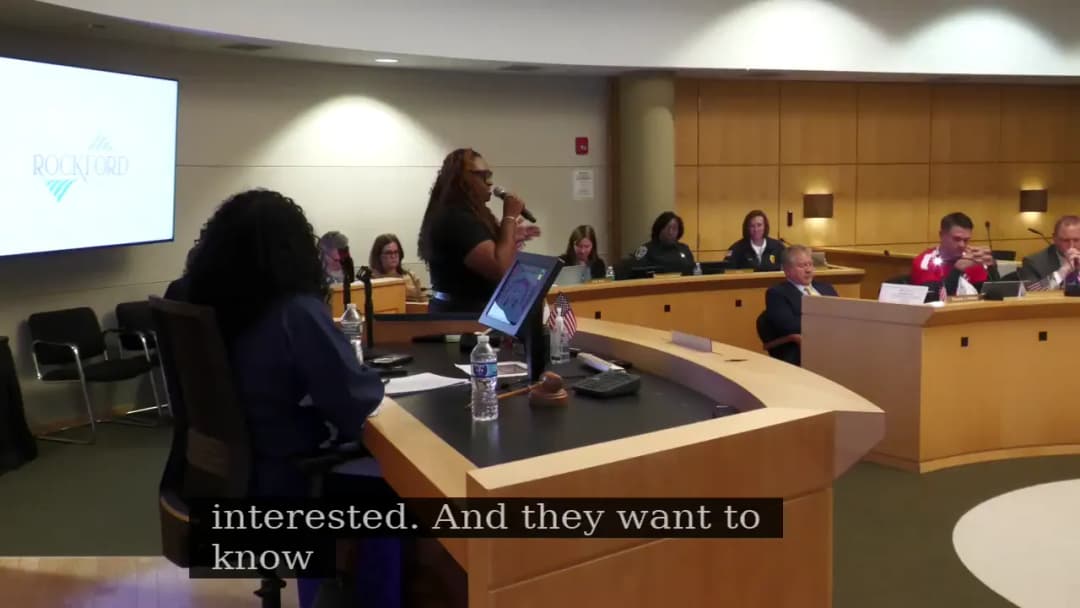
The Rockford City Council convened on Monday, September 21, 2026, at 5:30 PM in Council Chambers. The meeting addressed a public hearing on the proposed Rockford Region Tourism Improvement District (RTID), heard public comments, and considered various committee reports, resolutions, and ordinances. Key actions included approving multiple contracts and grants, terminating a TIF district, and deferring or rejecting certain items. Consent Calendar - Approved the Journal of Proceedings for City Council meetings held on May 4, 2026; June 1, 2026; June 15, 2026; and June 29, 2026 (special meeting). - Approved vouchers in the amount of $13,780,749.44 as recommended by the Finance and Personnel Committee. - Approved an Intergovernmental Agreement (IGA) with Winnebago County for sidewalk replacement along West State Street (estimated City contribution: $127,000). - Approved a Memorandum of Understanding (MOU) with the State of Illinois for the Rockford Complete Streets Revitalization Project (Maintenance). - Approved adding 710 North Church Street to the Mow-to-Own Program and transferring it to KMK Media Group, Inc. - Approved a lease renewal with Comprehensive Community Solutions, Inc. for office space at 917 South Main Street at $900/month for 12 months (not-to-exceed $10,800). - Approved the landmark designation of 2520 North Main Street. - Approved several contracts and grants, including: Residential Snow Removal & Operators (Regional Snow Services, est. $1,500,000/year), Multi-Use Path Maintenance (DPI Construction, $209,888), Weatherization Services (Comfort 1st et al., est. $1,200,000), Elevator Maintenance (Schumacher Elevator, est. $50,000/year), Grant Management Software (Vertosoft, $97,200 implementation plus annual fees), 911 Contract Telecommunicators (Moetivations, Inc., $92,763.82), Edward Byrne Memorial JAG Grant ($284,745 for radios), and IACAA DHS Employment Barrier Reduction Fund ($172,500). Public Hearing - A public hearing was held regarding the formation of the Rockford Region Tourism Improvement District (RTID) and the levy of a transaction charge on hotels. Stephen McMaster, a resident, spoke in favor, noting that 100% of the hotels that would be compelled to participate support the proposal. He urged council to seek further guidance from affected businesses. Public Comments & Testimony - Edwin Zehner (Dr. Edwin Zehner, PhD in anthropology) spoke about homelessness in Rockford, emphasizing the need for compassion and safe places to sleep as winter approaches. He mentioned limited shelter beds (30 for men, 30 for women at the Rockford Rescue Mission) and urged the city to consider solutions. - Prophet Yusef spoke about Hispanic veterans who received the Congressional Medal of Honor, listing names and correcting misinformation. - John Tac Brantley discussed the Camp Grant initiative, mentioning partnerships with the school district, art museum, and other organizations to provide opportunities for youth, including financial support for students and programs for suspended youth. - Stephen McMaster addressed budget concerns, questioning the purchase of $10,000 radios for police, pointing out an occupancy discrepancy in the single-room occupancy proposal (21 people in 20 rooms, with one in storage), and criticizing the late approval of meeting minutes, which he said violates the City Code. - Kenneth Dickens congratulated the Acting Mayor, discussed past protests against police brutality, and criticized former Mayor McNamara for holding a cannabis grant for two years without benefiting the Black and Hispanic communities. He urged the city not to redirect grant funds to cover deficits. Discussion Items - Springfield Corners TIF District Termination: Alderwoman Meeks asked about the TIF's success. Director Lies noted initial investments including Emerson development phases and a dialysis clinic, but the TIF was at one point bailed out by the general fund. The city transferred $1,776,037 to address a negative balance. The council approved the termination after discussion. - Special Use Permit for Single-Room Occupancy (20 rooms): This item was laid over by a motion from Alderman Frost (automatic layover). It will be considered at a future meeting. - Rockford Regional Tourism Improvement District (RTID): The IGA and formation ordinance were laid over by Alderman Bonnie. They will be reconsidered later. - By Any Dreams Necessary Contract (Youth Advocacy Board): This item sparked extensive debate. Alderman Frost expressed concerns about using a third-party vendor and the increased cost from $25,000 to $50,000 to hire a part-time coordinator. Others defended the organization's credibility. A motion to lay over for 90 days failed. The contract was ultimately rejected on a roll-call vote. - Fire Department Staffing: Chief Tayo explained that Engine 5 and Medic 4 were added using surplus personnel but are being unwound due to attrition. Residents east of Alpine would see reduced coverage. Alderman Bonnie asked about the cost to keep Engine 5 (about $400,000) and suggested considering reallocating funds. - Budget Advisory Group: It was announced that the budget advisory group would meet the next day to address the projected 2027 deficit. Key Outcomes - Approved the termination of the Springfield Corners TIF District and dissolution of its Special Tax Allocation Fund. - Approved the landmark designation of 2520 North Main Street. - Approved multiple contracts and grants as listed in the Consent Calendar, with the exception of the By Any Dreams Necessary contract (item 7 under Finance and Personnel), which was rejected on a roll-call vote. - Laid over: the GoRockford agreement amendment, the Special Use Permit for SRO, and the RTID IGA and formation ordinance. - Approved the Rockford Police Department Trunk or Treat event; denied the Earthrise 815 parking fee waiver; approved the Festival of Lights. - Approved all other resolutions and ordinances as presented.

BUDGET EQUITY ANALYSIS 16% · PROCEDURAL 12% · PUBLIC WORKS 12% · YOUTH PROGRAMS 11%
5129
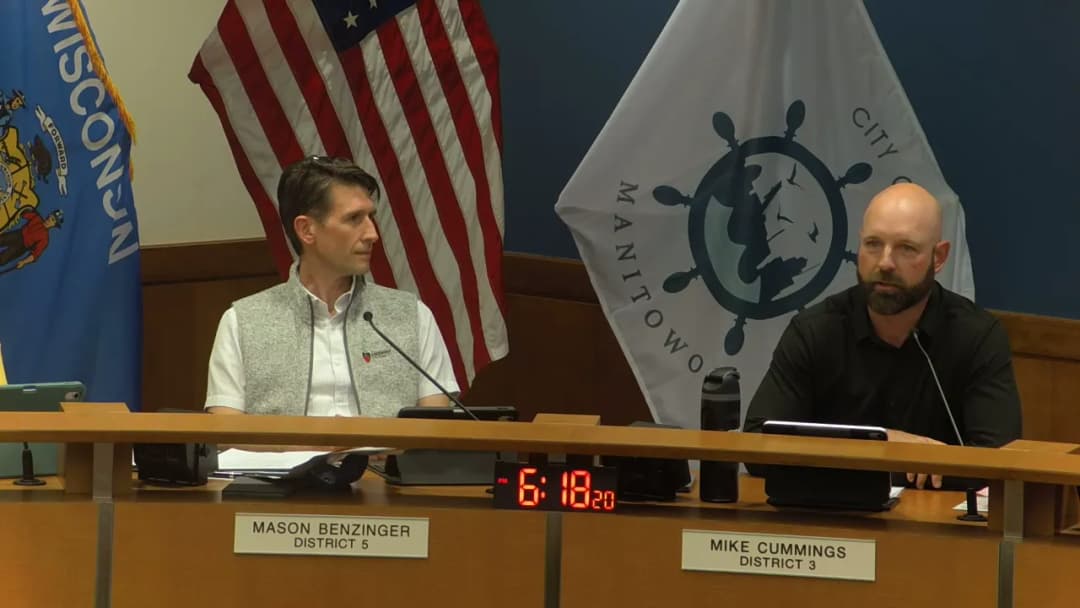
SEP 21, 2026 · MANITOWOC, WISCONSIN · COMMON COUNCIL & COMMITTEES
Committee of the Whole Meeting - September 21, 2026

The Committee of the Whole of the Manitowoc Common Council met on Monday, September 21, 2026, at 5:30 PM in Council Chambers and via Zoom. All 11 council members were present. The meeting included a presentation on the school voucher program, discussion on including voucher information on property tax bills, and approval of two ordinance amendments. The meeting adjourned at 6:32 PM. Presentations - School Voucher Program Discussion (Agenda Item 26-0819): Manitowoc Public School District Superintendent Lee Thennes, Two Rivers School District Superintendent Diane Johnson, and Two Rivers Finance Director Mary Kay Slattery presented an overview of the school voucher program, its history, how it works, and its financial impact on local school districts. They reported that in the 2025-26 school year, the voucher levy for Two Rivers was over $1 million (20% increase from prior year), costing $182.57 on a $200,000 home. For Manitowoc, the voucher levy was approximately $6.0 million, representing over 20% of the district's total levy, costing $266.04 on a $200,000 home. They requested that the city consider adding transparency to property tax bills, either through a line item or an informational insert, to inform taxpayers that a portion of the school levy is for vouchers and not spent by the district. The Two Rivers City Council had already voted 5-4 to include it on their tax bill. The town of Two Rivers declined but agreed to an insert. Public Comments & Testimony - No members of the public spoke during the public comment period. Discussion Items - Including School Voucher Information on City Property Tax Bills (Agenda Item 26-0845): Alder Benzinger moved to direct city staff to design and include a comprehensive informational insert with annual property tax bills, detailing mill rates, tax impact per $100,000 assessed value for each taxing entity, a breakdown of city major tax categories, and data on the financial cost of private school vouchers to the school district. According to the meeting minutes, the motion did not receive a second; however, the transcript suggests a second was made. After debate, Alder Nickels moved to table the request, seconded by Alder Reckelberg. The motion to table carried unanimously (11-0). The item was tabled for further consideration at a future meeting. - Ordinance to Amend Chapter 12 (Public Utilities) (Agenda Item 26-0850): The council considered an ordinance to codify the operational split between the city's wastewater collection system and the treatment facility, which had been managed by Manitowoc Public Utilities (MPU) for about four years. The ordinance clarifies responsibilities, limits, and rates. A motion to approve the ordinance as presented carried unanimously (11-0). - Ordinance to Amend Chapter 25 (Wastewater Facilities) (Agenda Item 26-0851): The council considered a complementary ordinance amending the wastewater facilities code. A motion to approve as presented carried unanimously (11-0). Key Outcomes - Item 26-0845 (Tax Bill Voucher Information): Tabled by unanimous vote. No action taken. - Item 26-0850 (Ordinance re Public Utilities): Approved unanimously. - Item 26-0851 (Ordinance re Wastewater Facilities): Approved unanimously.

PUBLIC ENGAGEMENT 44% · SCHOOL VOUCHER PROGRAM 26% · PROCEDURAL 11% · BUDGET EQUITY ANALYSIS 7%
5130
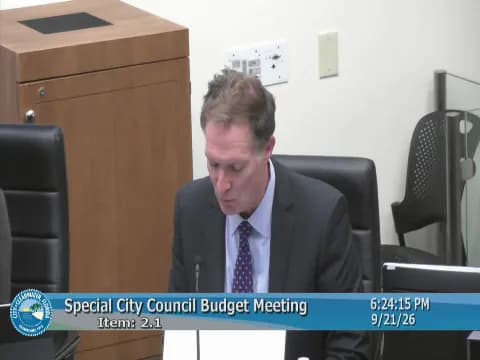
SEP 21, 2026 · CLEARWATER, FLORIDA · CLEARWATER MUNICIPAL MEETINGS
Clearwater City Council Special Budget Hearing — September 21, 2026

The Clearwater City Council held a Special Budget Hearing on September 21, 2026, in Council Chambers at the Clearwater Main Library, to conduct the second and final readings on the fiscal year 2026–27 property tax millage rate, operating budget, and capital improvement program budget. All three ordinances were adopted unanimously. The council also heard public comment, including an appeal to release funds to restore the Clearwater Beach Library, and received City Manager reports recognizing employees who went above and beyond. Public Comments & Testimony - Millage rate (agenda item 2.1): A public speaker thanked the council for agreeing to reduce the millage rate and expressed support for looking toward future millage reductions, saying it is important to the people who pay for city services and suggesting that doing so more often might avoid a future Amendment 3 ballot initiative. The speaker thanked each council member for their hard work and tough decisions. - Citizens to be Heard — Clearwater Beach Library: A resident of Island Estates and a member of the Friends of the Library Committee appealed for the release of previously approved funds — approximately a quarter-million dollars — to restore the full-time Clearwater Beach Library, which has been closed for two years. The speaker noted the beach recreation center's gym is back in service and the one-room library, about one-fourth of the recreation center, is the last piece; the current pop-up library is open only 16 hours per week. The speaker said restoring the full-time library is important for the image of the beach, serves tourists and snowbirds who expect a place to read the paper or look up references, and preserves the tradition of bringing children to the library. Discussion Items - Agenda item 2.1 — Ordinance 9936-26 (millage rate): Budget Director Kayleen Castle recapped the budget process: the proposed budget was posted June 30; a formal presentation was given July 16, when the tentative millage rate was set; a community engagement workshop was held August 1; a special council work session was held August 11; and the first public hearing was held September 15. She stated the rate before the council is 5.873 mills, a decrease of 0.13% from the current year, representing the rollback rate on 2026 taxable property values. The mayor read the ordinance in full, which declares a tax of 5.8773 mills against non-exempt real and personal property within the city, effective October 1, 2026. (Note: the transcript reflects both 5.873 mills as stated by staff and 5.8773 mills as read from the ordinance text.) - Agenda item 2.2 — Ordinance 9937-26 (operating budget): The ordinance adopts the FY 2026–27 operating budget, authorizes the City Manager to issue instructions necessary to accomplish the authorized service programs, and authorizes the City Manager to transfer monies among departments and activities within any fund as provided by Chapter 2 of the Clearwater Code of Ordinances. A council member revisited a budget-priority suggestion from the first reading aligned with the city's “bright and beautiful from bay to beach” logo, pointing out three photos of dead or unreplaced plantings at city entrances and Clearwater Beach, a grassy knoll on Clearwater Beach where the grass had died out, and reduced plant vibrancy attributed to pH change from using shell as mulch, stating “a person has only one chance to make a first impression.” - Agenda item 2.3 — Ordinance 9938-26 (capital improvement program budget): The ordinance adopts the FY 2026–27 capital improvement budget; approves the six-year capital improvement program, which shall be reevaluated at the beginning of each fiscal year; authorizes the City Manager to issue implementing instructions and to transfer money between projects; and appropriates available and anticipated resources. No public comment was offered on this item. City Manager Reports - The City Manager shared two employee recognition stories, noting that staff had said recognition at council meetings is meaningful to them: (1) Code Enforcement Inspector Yosef went above and beyond for a resident with an overgrown alleyway, working collaboratively with multiple departments to resolve the issue while the resident was preparing to go out of town; and (2) water production manager Lawrence worked with city staff and the Florida Department of Environmental Protection (FDEP) to create a site-specific procedure for North Clearwater Beach that FDEP approved in early September, which maintains weekly monitoring, uses corrective flushing when needed, and requires same-day bacterial sampling if the residual cannot be restored. Closing Comments - A council member noted the September 4 passing of Lawrence Demmitt, described as a long-time Clearwater resident, a gifted athlete, and the leader of Demet Chevrolet, which earned the General Motors Dealer of the Year award among other honors. - The Mayor thanked all present and all city departments for a considerable amount of work to help find savings and allow the city to keep the rollback millage rate, observed that the city finally was “at the end of the road for this fiscal year,” and moved to adjourn the special meeting. Key Outcomes - Adopted unanimously Ordinance 9936-26, declaring the millage rate for FY 2026–27 (effective October 1, 2026). - Adopted unanimously Ordinance 9937-26, adopting the FY 2026–27 operating budget and authorizing City Manager fund transfers. - Adopted unanimously Ordinance 9938-26, adopting the FY 2026–27 capital improvement program budget and the six-year capital improvement program. - The special meeting was adjourned.

BUDGET EQUITY ANALYSIS 23% · ENGINEERING AND INFRASTRUCTURE 21% · PARKS AND RECREATION 16% · PUBLIC ENGAGEMENT 12%
OPENPUBLICA · PUBLIC MEETING INDEXUPDATED DAILY · openpublica.com