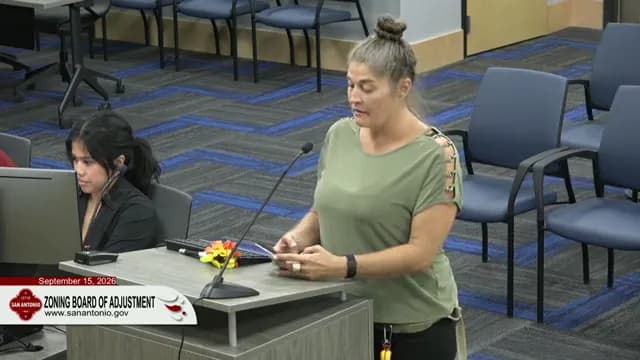
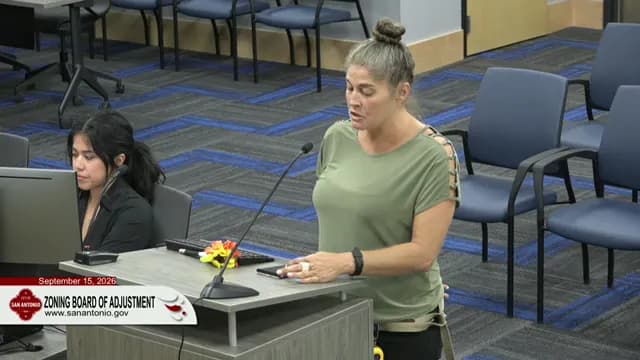
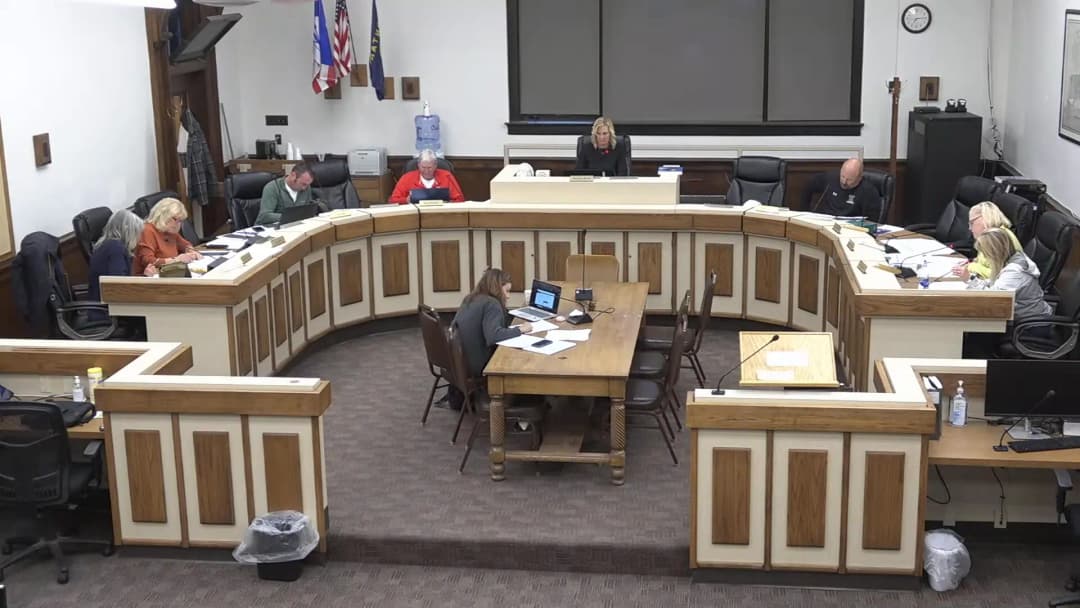
El 15 de septiembre de 2026, la Comisión de Zonificación de San Antonio se reunió a la 1:00 p.m. bajo la presidencia de John Bustamante. Se contó con quórum y se abordaron diversos artículos de zonificación, incluyendo la aprobación de un bloque de consentimiento, aplazamientos de casos y comentarios públicos. La reunión concluyó a la 1:22 p.m. Consent Calendar - Se aprobó por votación unánime (11-0) el bloque de consentimiento que incluía los artículos 5 al 14: cambios de zonificación en las ubicaciones 2903 Commercial (C-3 a C-2), 311 Castillo (R-4 CD a RM-5), 110 Ogden Street (Z-2 a TOD-MK6), 14989 Johnson Road (C-3 y C-3NA-C2NA-CD con uso condicional), 8667 Interestatal 10 (CREA con condición), Blue Bonnet Street (R-3 a R-13 CD), 4222 Blanco Road (C-2 a CD), 600 Richland Hill Drive (MX-C a C-2 con enmienda al plan de sitio), 800 South Alamo Street (C-3 a TOD-MK6), y 11900 Warfield Street (I-1 a LAHOD). No hubo comentarios públicos sobre estos puntos. Public Comments & Testimony - Artículos 2 y 3 (aplazados al 20 de octubre): Se escucharon dos oradores en oposición al artículo 2 (cambio de C-2 a NS en 4400 block Nieto Drive): - John Most (1006 Yokarney Drive) se opuso al cambio, argumentando que la zonificación C-2 permitiría usos comerciales incompatibles junto a viviendas unifamiliares, mencionando riesgos para niños y la proximidad de una escuela charter programada para 2027. - Emilia Peacock (2707 Melcon Drive, veterana y residente de Farm community) se opuso al cambio, señalando que no se alinea con las expectativas de la comunidad, la infraestructura existente (caminos campestres, problemas de drenaje) y el impacto acumulativo de desarrollos incrementales. Pidió que se niegue la solicitud hasta que se evalúe un alcance de zonificación más compatible. Discussion Items - Aplazamiento del Artículo 1 (601 West Street): Al inicio de la reunión, se anunció que el artículo 1 se posponía. Se informó a los asistentes que no necesitaban permanecer y que recibirían notificación pública cuando se reprogramara. - Aplazamiento del Artículo 4 (5612 Monterrey Street): Se presentó una moción para posponer este caso a la audiencia del 6 de octubre de 2026. La moción fue aprobada por unanimidad (11-0). - Aplazamiento de los Artículos 2 y 3 (Nieto Drive y Gamblin Road): El comisionado del Distrito 2 (Losa) solicitó el aplazamiento de ambos artículos a la reunión del 20 de octubre de 2026. Después de los comentarios públicos en contra del artículo 2, se aprobó la moción por unanimidad (11-0). El presidente Bustamante instó a los residentes a comunicarse con el solicitante y con el personal de la ciudad durante el aplazamiento. Key Outcomes - Consent Calendar: Aprobado por unanimidad (11-0). - Artículo 1: Aplazado (sin votación formal registrada, se anunció al inicio). - Artículo 4: Aplazado al 6 de octubre de 2026 (votación unánime). - Artículos 2 y 3: Aplazados al 20 de octubre de 2026 (votación unánime). - Minutas: Se aprobaron las minutas de la reunión del 1 de septiembre de 2026 por aclamación (sin voto nominal). - Informe del director: No hubo. - Cierre: La reunión se levantó a la 1:22 p.m.
The Public Meeting Index
The Public Meeting IndexThe San Antonio Zoning Commission met on September 15, 2026, at 1:00 PM. Chair John Bustamante called the meeting to order, and a quorum of 11 commissioners was present. The meeting covered a consent agenda of ten items (Items 5–14), a consent agenda vote, continuances for three items (Items 1, 4, and a joint continuance for Items 2 and 3), public comments on Item 2, and approval of the September 1, 2026 meeting minutes. Consent Calendar - Items 5–14 were approved unanimously (vote: 11–0). These items included zoning changes at: - 2903 Commercial Avenue (C3NA to C2) - 311 Castillo Avenue (R4CD to RM5) - 11 Ogden Street (O2 to TODMX6) - 14989 Judson Road (C3/C3NA to C2NACD with conditional use for parking/storage) - 8677 IH 10 East (C3R/I1 to C3CD with conditional use for metal products fabrication) - 406 Blue Bonnet Street (R3 to R3CD for two dwelling units) - 4022 Blanco Road (C2 to C2CD with conditional use for motor vehicle sales) - MXD zoning with site plan amendment (location not specified) - 800 South Alamo Street (C3 to TODMX6) - 11902 Warfield Street (I1 to L) - No public comment was offered on the consent agenda. Public Comments & Testimony - Item 2 – 4400 block of Nieto Drive (request for continuance): Two speakers opposed the proposed C2 zoning change. - Joe Most (10762 Giaconi Drive) opposed the C2 designation, citing safety concerns for children playing near a busy commercial property, potential traffic conflicts, and the proximity of a future charter school. He argued that commercial zoning would disrupt residential harmony. - Amelia Peacock (2807 Millican Drive), president of the Paloma community and a veteran, opposed the zoning request. She highlighted cumulative impacts of land-use changes over 17 years, inadequate infrastructure (narrow roads, drainage issues), and the need for more limited, compatible zoning near homes, apartments, pedestrian routes, and a future school. Both speakers indicated they would speak again at the October 20, 2026 meeting. Discussion Items - Item 1 – 601 Delaware Street: Postponed; no discussion. - Item 4 – 5612 Monterey Street: Granted a three‑week continuance to October 6, 2026, without public comment. - Items 2 and 3 – Continuance to October 20, 2026: Commissioner Pana moved, and Commissioner Huey seconded, to continue both items to the October 20 meeting. Commissioner Duval advised the public to contact staff and the applicant to work toward a resolution. The motion passed unanimously (11–0). Key Outcomes - Consent agenda approved (Items 5–14) with a 11–0 vote. - Item 1 postponed (noted, no vote). - Item 4 continued to October 6, 2026 (11–0). - Items 2 and 3 continued to October 20, 2026 (11–0), with public testimony recorded. - Minutes of September 1, 2026 approved by acclamation. - The meeting adjourned at 1:22 PM.
The Housing Affordability Committee of the Houston City Council met at 10:00 a.m. on September 15, 2026, with Vice Chairman Davis presiding in the absence of the chair. Committee members present included Councilmember Ramirez, Mayor Pro Tem Martha Tatum, and Vice Mayor Pro Tem Amy Peck, along with representatives from Councilmembers Carter, Salinas, Alcorn, Pollard, Jackson, Panzarella, and Martinez. HCD staff delivered a full program briefing, and one public speaker, Doug Smith, testified. No agenda or minutes were available; this summary relies solely on the raw transcription, which contains phonetic spellings and some garbled passages. Discussion Items - Compliance, grants, and Houston Housing Finance Corporation (HHFC) — Deputy Director Conisha London. London recommended council approval of (1) the Seventh Amendment to the CDBG-DR Harvey Subrecipient Agreement between the City of Houston and the Texas General Land Office and (2) a resolution amending the HHFC articles of incorporation. The HHFC board would change from 12 members (11 mayoral appointees, including the chair, plus one seat reserved for the HCD director) to 11 members, all appointed by the mayor, including the board president. The HCD director or an HCD employee designee would serve as a non-voting ex officio member and would not be required to reside within Houston city limits, unlike other board members. Staff said the change, made after consultation with the city attorney's and mayor's offices, creates consistency with other local development corporations and avoids potential conflicts of interest. Asked about the working relationship, London said it was strong, calling the current board "superior to past boards." - Planning and grant reporting — Assistant Director Amy Connolly. Since the last meeting, HCD submitted just under $5.9 million in additional draw requests to the General Land Office and received approximately $2.9 million in approvals and dollars returned to the city for the Harvey grant. The Home Buyers 2.0 program has stretched performance benchmarks; as of September 11, the program was just under meeting the December 31 benchmark. Connolly will share outcomes and data with the Quality of Life Committee and Vice Chairman Davis, and will begin DR21 and DR24 updates next month after reviewing the format with Chair Thomas. Two agreements with the Texas Department of Housing and Community Affairs (TDHCA) for Homeless Housing Services Program (HHSP) funds carry performance periods from September 1, 2026 through August 31, 2027. A first amendment with Access Care of Coastal Texas adds $1,276,825 in HOPWA funding for case management, nutritional assistance, medical transportation, and other services across the nine-county region. Staff also discussed "other permanent housing" (OPH) as a newer homelessness approach. - Operations — Division Manager Roxanne Lawson. A councilmember noted directing a new fire department council liaison to spend time with Division Manager Lawson, and described a lot-safety item that will make a lot safer through landlord-paid modifications. - Single-family development (items 5A and 5B) — Assistant Director Cedric Lassain. Councilmembers discussed the in-town, mixed single-family development, which carries a five-year affordability period passed to each successive homeowner at purchase. Staff confirmed the project's infrastructure is separate from the adjacent 169-unit development. Councilmembers called the project a boost to the city. - Multi-family development (items 6A and 6B) — Deputy Assistant Director Ryan Bibbs. Item 6A authorizes $2.4 million in CDBG-DR24 funds for a loan agreement with Britain's Place 2023 for a comprehensive rehabilitation, including generators, correcting defects identified a year ago through major renovation. Item 6B concerns Hayes Street Apartments at 1400–1500 Hayes Street in District H, serving families, developed by Amtex (engineer Amanda Barriere present), with no city funding. The project previously received a resolution of support; because the applicant is amending its ownership structure, TDHCA requests a continuation resolution of support. A council staff member asked whether tenant living situations would be disrupted or whether vacant units would be addressed first; the response is garbled in the transcript. - Director's comments — Director Mike Nichols. Nichols highlighted a recovery event connecting residents with resources "beyond what the city can offer," and described assessments of whether a repair can be completed for under $100,000 or costs more than 50 percent of a home's value, which would require full reconstruction. A participant acknowledged the department is behind and does a lot by hand; improving efficiency would also help get information to the public. Public Comments & Testimony - Doug Smith commended the leveraging of city funds, observing that in the two multi-family projects presented, city funds are only about 10 percent of the entire development. He flagged a $4 million developer fee, which he characterized as 10 percent of the entire project, and asked for clarification. Staff responded that IRS affordable-housing rules permit a developer fee of up to 15 percent of eligible basis (construction costs, construction interest, soft costs), but this project's fee is actually at 10 percent; if the project runs short of funds, roughly $1 million of the fee — about 30 percent — will be deferred. Key Outcomes - No formal votes are recorded in the transcript; the briefing advances the department's recommendations to full council. - Recommended for council approval: the Seventh CDBG-DR Harvey amendment with the General Land Office; the HHFC articles amendment; the $2.4 million loan to Britain's Place 2023; the Hayes Street Apartments resolution of no objection; the two TDHCA HHSP agreements; and the $1,276,825 HOPWA amendment with Access Care of Coastal Texas. - A motion was described to hold a public hearing and resolution of no objection for Hayes Street Apartments. The transcript records the dates as "1014" and "10 21," interpreted here as October 14 and October 21, 2026. - HCD will provide DR21/DR24 updates beginning next month and share outcomes/data with the Quality of Life Committee and Vice Chairman Davis. - The next Housing Affordability Committee meeting is October 26, 2026; the District F office will send additional information, and additional committee participants will be recruited.
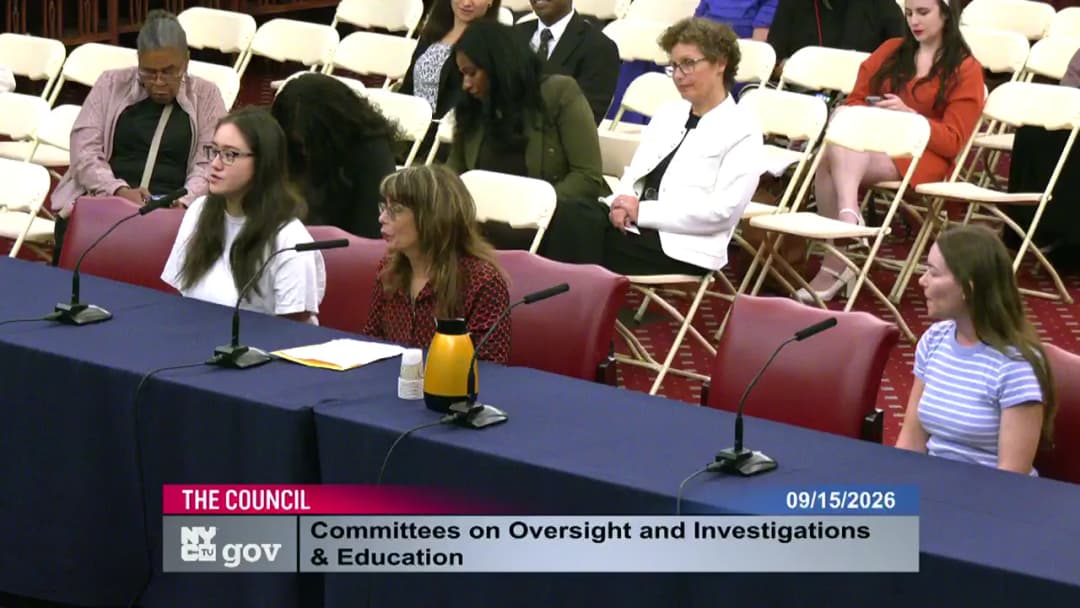
The New York City Council Committees on Oversight and Investigations and Education jointly held a hearing to examine screen time and the use of digital devices in New York City public schools. The hearing featured opening statements from chairs and city officials, testimony from educators, parents, advocates, and students, and a detailed question-and-answer session with the Department of Education (DOE). The DOE presented its updated AI and screen time policy, which includes screen time limits and a moratorium on generative AI for younger students. Public testimony raised concerns about enforcement, data privacy, student consent, and the effectiveness of the recommended limits. Public Comments & Testimony - Educators and advocates: Dr. Khaledi Salas (neuroscientist) called for an audit of all ed tech platforms. Araceli Sucero (MASA) described negative impacts on immigrant families and students. David Monahan (Fair Play) urged stronger mandates and cited the YouTube lawsuit. Nabeat Hassan (Panel for Educational Policy) criticized DOE's lack of foundational work and called for sovereign municipal tech infrastructure. - State legislators: Senator Andrew Gernardis introduced the Fostering Optimal Classroom Use of Screens Act, proposing statutory age limits, a right to analog learning, vendor registration, and stronger privacy protections. Assemblymember Joanne Simon emphasized the need for proper assistive technology evaluation and warned against off-label use of AI tools. - Parents and advocates: Multiple parents testified about children accessing inappropriate content (pornography, bomb-making instructions) on school-issued devices. Celeste Elias reported being unable to opt her child out of iPads and iReady assessments. Alina Lewis criticized the use of AI tutors like Amira and scripted curricula. - Students: Hunter College High School senior Alma Addi and others raised concerns about AI literacy, data tracking, and lack of consent for pilot programs. They called for transparency and parent involvement. - Organizations: Mary Vicaro (UFT) supported the policy but urged clearer vendor accountability. Julie Samuels (Tech:NYC) worried high school limits were too restrictive. The Child Mind Institute and others advocated for evidence-based mental health safeguards. Discussion Items - DOE policy presentation: First Deputy Chancellor Danielle Junta presented the new AI and screen time policy: no individual screen use for grades 2K–2; recommended 30 minutes/day for grades 3–5 and 45 minutes/day for grades 6–8; a full moratorium on student-facing generative AI for grades 2K–8; limited pilot programs and AI literacy courses for high school. Exceptions include assistive technology, assessments, and centrally approved instructional programs. - Chair Krishnan's questions: Raised concerns that limits are recommendations, not mandates. Asked about YouTube access—DOE stated it was filtered out on all student devices as of the week before the hearing. Also questioned data privacy and parental consent; Chief Privacy Officer Dennis Doyle explained that DOE relies on FERPA's school official exception and has data processing agreements with vendors, but acknowledged audits were not immediately available. - Chair Dinowitz's questions: Pressed for research supporting the 30- and 45-minute limits; Laura Lai cited child development research but promised to share a full list of citations. Dinowitz also questioned the vetting of individual vendors and the lack of independent evidence. He asked about the Technology and Schools Coalition, which will meet monthly and produce a report. - Councilmember Schulman: Asked about assessments exempted from screen time limits and whether parents can opt children out of digital tests. DOE said no opt-out currently exists for core assessments. - Councilmember Morano: Highlighted that digital assessments are exempt, thus a child could have an hour of testing plus 30 minutes of instructional screen time. DOE acknowledged the need for balance. - Councilmember Narcisse: Inquired about health input for the time limits (30/45 min). DOE referred to research and stated the limits are non-negotiable despite the word "recommended." - Councilmember Maloney: Asked about homework, the digital divide, and the capacity to evaluate exceptions. DOE noted that screen time limits do not apply to homework and that devices are provided to all students. Key Outcomes - No votes or formal resolutions were taken; the oversight hearing was held and filed. - DOE commitments: - Will provide a list of research citations supporting the screen time limits. - Will release a list of 38 programs whose AI components have been disabled or which are discontinued. - Will share the framework and metrics for the five high school AI pilot programs before launch (targeted for November). - Will follow up on the number of data privacy audits conducted in the 2025–2026 school year. - Will ensure the Technology and Schools Coalition includes parent and teacher representatives. - Screen time policy: Schools are expected to comply with the recommended limits; DOE described them as "non-negotiable" and will use superintendent feedback loops and school visits to monitor implementation. - YouTube filtering: DOE confirmed that YouTube has been blocked on all student-issued devices (Chromebooks and iPads) as of the week of September 9, 2026. - Legislative proposals: Senator Gernardis's Focus Act was highlighted as a potential state-level path forward, and council members expressed interest in codifying local policies, requiring a public inventory of ed tech products, and strengthening parental consent for data sharing.
On September 15, 2026, the Seattle City Council Public Safety Committee held a special meeting to discuss a six-bill legislative package aimed at addressing vehicle residency on city streets. The package, introduced by Councilmember Dan Strauss, includes the Vehicle Resident Assistance Program (VRAP), updated definitions for junk vehicles and outdoor storage, expanded lease authority for transitional encampments, and an appropriations ordinance. The meeting lasted from 9:36 a.m. to 11:40 a.m., with 12 in-person and 8 remote public commenters. Councilmembers present were Chair Robert Kettle, Vice-Chair Rob Saka, and members Eddie Lin, Debora Juarez (arrived late), and Maritza Rivera (arrived late). Public Comments & Testimony - Marta Kidane (Low-Income Housing Institute, Lehigh) expressed support for the legislative package but requested that referrals be for non-congregate shelter or housing and that the permitting process be delayed until an additional RV safe lot is brought online. She noted Glassyard Commons has 72 parking spaces but more capacity is needed. - Sharon Lee (Lehigh Executive Director) thanked Councilmember Strauss and highlighted that RV dwellers have a higher rate of exiting to housing than traditional tiny house villages due to controlling their own space. She urged funding for a second RV lot using the $5 million or the 2027 budget. - Donna Anderson (Lehigh Regional Operations Manager) emphasized a lack of "back-end" services, noting that if half of RV dwellers accepted shelter offers, there would not be enough appropriate shelter. She recommended reallocating outreach funds to existing programs for quality over quantity. - Beatrix Kelly (Lehigh) echoed the request for a second RV lot and a delay in permitting until structural funding is secured. - Craig Thompson (North Beacon Hill resident) reported vans and SUVs being used for prostitution and drug activity, and called for differentiation between RVs lived in by retired or working people versus those associated with crime. - Steve (resident) criticized the lack of police action and said crime stats are suppressed, emphasizing the need for more detectives and enforcement. - Angelique Wilson and Cassandra Corbett (Clean Queen and Skills to Live RV outreach) described their grassroots outreach: within one week in District One, they served approximately 20 people. They pleaded for the city to support a pilot safe space and funding to expand their work. - Hallie Willis expressed strong concerns that the permit program is complex, expensive, and punitive, and urged postponing a vote until shelter and housing are in place. - Mon Hong (Fremont Ridge resident) questioned how the legislation would improve enforcement of existing rules, noting that RVs near the zoo are not addressed despite current laws. - Daisy DePaulis (Fremont Ridge resident) echoed the need for differentiation between abandoned vehicles and lived-in RVs, and called for enforcing existing laws, suggesting citizen mapping to identify problem vehicles. - Sam Wolfe (PDA Local Policy Director) advocated for achieving the program's outreach within existing FTEs rather than creating eight new positions, proposing restructuring based on the Pioneer Square streets-to-housing model. - Howard Gale criticized the committee for failure of oversight on SPD abuses and killing of people in crisis, and cited a study showing evidence-based policing simply moves crime to other neighborhoods. - Remote speaker Cass Seal reported that his brother Herbert was murdered by SPD in 2004 and noted a recent death in SPD custody over the weekend, questioning why SPD handcuffs people who are not fully conscious. - Genevieve Courtney (North Beacon Hill park steward) reported ongoing crisis with fentanyl use, break-ins, school lockdowns, and open prostitution, stating that a 90-day city plan brought no change. - Rose (remote) described failures in emergency response, including a trans woman who nearly died of meningitis after a two-hour ambulance wait, and criticized the committee for not addressing such systemic failures. - Margaret Shield (Lake City Task Force on Homelessness) supported funding for outreach and RV safe lots but opposed the permit system as rigid, costly, and difficult to enforce, and criticized the lack of clear performance metrics. - Dr. Janice Clark (Safe Home) requested that women veterans be included in policy decisions and questioned the fiscal note stating no fiscal impact, given the staff report's identified costs. - LB (District 4) noted four deaths in SPD custody since the consent decree was lifted a year ago and demanded accountability. - Hannah Z. supported the permit program as a proactive measure against an anticipated wave of vehicle residency. - David Ames called for deploying the National Guard to set up encampments and suggested that permits would benefit drug pushers while harming innocent homeless. - Joe Cunzler supported the police and proposed subpoenaing the mayor over text messages, and urged safe lots where fluids can be disposed and drug use prohibited. Discussion Items Councilmember Strauss introduced the package, emphasizing that the city lacks a comprehensive strategy for vehicle residents and that current regulations have loopholes. He stated that the proposal is not about punishing vehicle residents but about regulating motorhomes and travel trailers over 80 inches wide that pose safety and environmental risks due to chemicals and year-round habitation. He highlighted that delay is not an option, referencing a service providers meeting where a check-and-adjust amendment (with Councilmember Lynn) was developed to allow legislative adjustments before the April 30, 2027 effective date. Central staff (Amanda Allen and Jennifer LeBrecque) presented the six pieces: - Resolution 32216: Establishes VRAP goals and removal of eco-blocks at implementation. - CB 121283: Creates a permit program for lived-in vehicles over 80 inches wide. Permits issued after a one-time census; permitted vehicles can park overnight only in industrial zones within assigned geographic areas. Unpermitted vehicles face two-hour parking limit and potential towing after three warnings. Six shelter refusals lead to permit revocation. - CB 121281: Updates land use code definitions for recreational vehicles, outdoor storage, and flexible-use parking to facilitate vehicle storage during shelter transitions. - CB 121279: Expands FAS Director lease authority to 100,000 square feet for sites used for transitional encampments, outdoor storage, or overnight respite. - CB 121280: Revises junk vehicle definition to add criteria: obscured VIN and missing license plate, while excluding permitted vehicles. - CB 121282: Appropriates $5 million ($3.5M ongoing, $1.5M one-time) from the 2026 budget; creates 8 new FTEs (1 permit tech at SDOT, 7 outreach staff at HSD); modifies provisos to allow spending on any vehicle resident, and imposes a $2 million proviso for outreach capacity building. Central staff identified five major issues: enforcement challenges (20% vacancy rate for parking enforcement officers, difficulty towing lived-in vehicles), operational complexity across HSD, SDOT, and SPD, uncertain budget implications (CBO estimated costs not yet fully determined), eligibility criteria (one-time census and registered owner requirement may exclude many), and impact on non-resident RV owners (two-hour parking limit, no notice impound). Councilmember Saka (Vice-Chair) noted that District One has two to three times the concentration of lived-in vehicles compared to other districts, citing 84 square miles of industrial lands. He read a constituent email from Alki reporting that parking enforcement says they can do nothing about campers. He emphasized the need for data reporting, protection of sensitive areas (schools, parks), and preventing an illicit secondary market for vehicles evading regulation. Councilmember Juarez questioned the cost of an ongoing census vs. a one-time count. Central staff indicated the one-time census is estimated at a couple hundred thousand dollars, but ongoing costs unclear. Juarez also raised concerns about adding subjective criteria to the junk vehicle definition (obscured VIN, missing license plate), arguing that criminal laws already cover stolen vehicles. Councilmember Strauss clarified that the junk vehicle definition does not add new criteria but clarifies existing ones, and that missing plates and obscured VINs are necessary to close enforcement loopholes. Key Outcomes - No votes were taken on the six bills. The committee will reconvene on September 22, 2026 for a public hearing on the land use bill (CB 121281) and a possible vote on all six items, including amendments. - Sixteen amendment concepts were presented: five from Councilmember Foster (ongoing eligibility, striking registered-owner requirement, permit for recreational vehicles, three-warning impound requirement, minimum warnings before permit revocation), two from Councilmember Lynn (citywide census with service-need data, report on director’s rule and implementation plan), and the remainder from Councilmember Strauss (work group for check-ins, addition of Seattle Public Utilities, clarification of motor home definition, geographic areas aligned with outreach zones, property return standards in director’s rule, and specific appropriations for outreach startup, program expansion, shelter, storage, and safe lots, plus a vehicle buyback program). - The SEPA appeal period for three bills ends September 29, 2026. If no appeals, the full council could vote as early as October 20, 2026. - Chair Kettle committed to facilitating amendments from non-committee members and emphasized the need for sustained leadership and action, quoting public commenter Steve: "Not so many plans, but action."
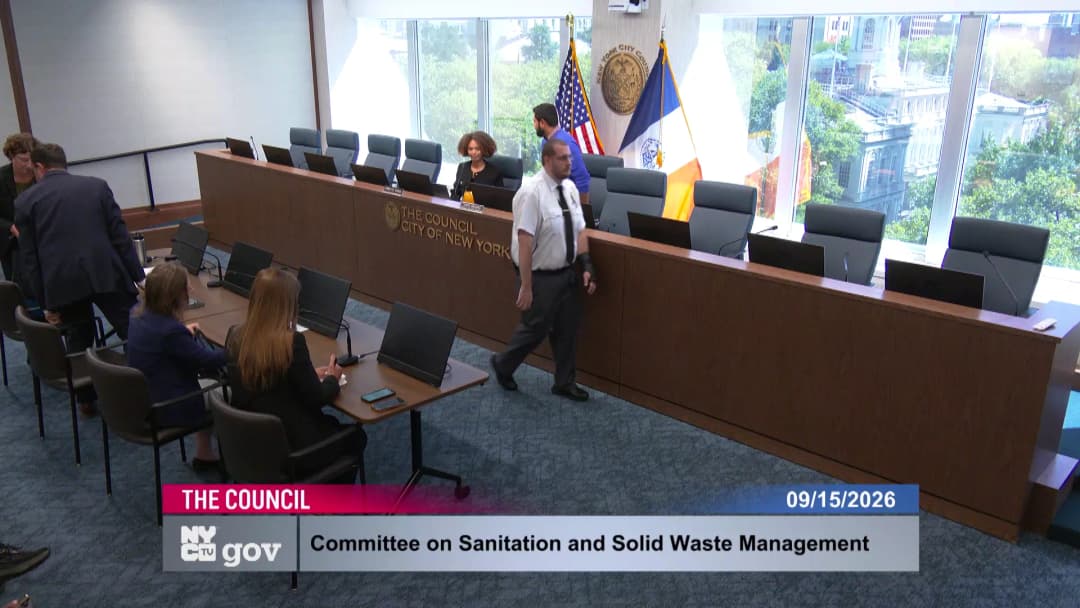
The Committee on Sanitation and Solid Waste Management, chaired by Councilmember Justin E. Sanchez, held an oversight hearing on waste valorization and the circular economy, alongside two bills and two resolutions. The hearing featured testimony from DSNY Commissioner Gregory Anderson and staff, followed by public testimony and questions from council members. All agenda items (T2026-2452, Int 0256-2026, Int 0970-2026, Res 0122-2026, Res 0362-2026) were heard and either filed or laid over by the committee. Public Comments & Testimony - Eric Goldstein (NRDC) strongly supported Int 0256-2026 (textile recycling study), suggesting it also analyze other collection options and track end-use of collected textiles. He also supported the other legislation but urged the council to enhance the upcoming Solid Waste Management Plan. - Hannah LeShaw (Bronx homeowner) raised issues with containerization: theft of bins leading to fines, and the lack of a defense for theft, and the need for a pre-booked bulk pickup option for volume spikes. - Claire Mifflin requested pilots for containerization of trash, recycling, and compost for small buildings and storefront residences, and proposed a single district-wide bulky item set-out day. - Srimantika Nika (NYC Environmental Justice Alliance) urged deprioritizing anaerobic co-digestion at wastewater plants in favor of expanding community composting, citing environmental justice concerns and disproportionate waste burdens. - Petra Shiloh and Josefa Marin (canners) testified in Spanish, describing their work collecting bottles and cans, and called for increasing the bottle deposit to 10 cents and expanding the bottle bill to help them survive economically. Ryan Castalia (Sure We Can) supported Res 0362-2026, highlighting the bottle bill's success and the need to modernize it. - Cecilia Ellis (NYPIRG) supported Res 0362-2026, citing potential savings of $34.9–$80 million for NYC from an expanded bottle bill with a 10-cent deposit. - Caitlin Via Toro (NYLCV) supported zero waste goals, textile recycling study (Int 0256-2026), expanded organic recycling, and EPR for packaging, while noting the need for proper composting infrastructure. - Sharon Silberman (Manhattan Solid Waste Advisory Board) supported Int 0256-2026 but noted an existing no-cost program (Refashion with Helpsy) that could serve as a pilot; she cautioned against flooding markets with textiles. Discussion Items - Commissioner Anderson outlined DSNY’s history, current programs (curbside recycling, organics, textile drop-offs), and challenges: textiles are 5% of waste, lithium batteries cause fires, and EPR for packaging could bring NYC over $100 million annually. He supported the intent of Int 0256-2026 and Int 0970-2026. - Councilmembers questioned DSNY on waste categorization, composting space (Rikers Island), food donation, textile recycling (2,500 buildings enrolled, voluntary, low diversion of 4.3%), illegal dumping, litter enforcement, and nightlife district cleaning. - Deputy Commissioner McDonnell and others detailed the Solid Waste Management Plan, construction/demolition waste reuse, and the need for better data. - DEP’s Jane Gajwani discussed anaerobic digestion at Newtown Creek (250 tons/day, biogas heats 6,500 homes) and Hunts Point (up to 400 tons/day, odor controls planned, truck traffic estimated at 15 trucks/day). Councilmembers raised concerns about truck pollution and neighborhood impacts. - Chair Sanchez asked about road salt alternatives (not viable due to cost/volume) and pyrolysis as emerging technology. Key Outcomes - Oversight T2026-2452: Hearing held; filed by committee. - Int 0256-2026 (textile recycling mandate study): Hearing held; laid over by committee. - Int 0970-2026 (nightlife district cleaning): Hearing held; laid over by committee. - Res 0122-2026 (community composting on parkland): Hearing held; laid over by committee. - Res 0362-2026 (bottle bill expansion): Hearing held; laid over by committee. - No votes were taken; all items await further committee action.
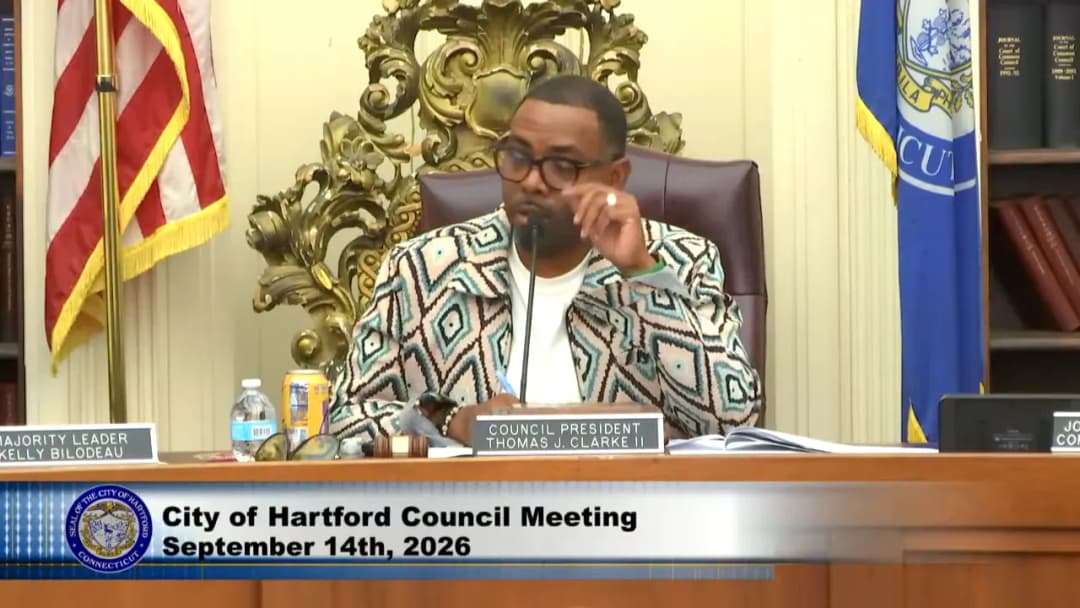
The Hartford Court of Common Council held its regular scheduled meeting on September 14, 2026, at 7:00 PM (broadcast live). The meeting included public comment, unanimous approval of the consent calendar, referral and action on several items, and a moment of silence for an employee. Key actions included amendments to the civilian police review board ordinance (which was then postponed to a public hearing), approval of a $190,636 transfer to the Registrar of Voters, and adoption of multiple resolutions and appointments. Public Comments & Testimony - Carl Gerrier (former employee of Capitol Community College) spoke about a failure of public confidence, weak accountability, and alleged corruption damaging Hartford's reputation. He cited that many young people see no future in the city and urged the council to create a clear community engagement plan, allow meaningful public comment during committee meetings, and follow through on commitments. Consent Calendar The council approved the following items unanimously (9-0): - Appointments and reappointments to the Hartford Advisory Commission on Food Policy (Joanna Ayavino, Mary Cochram, Martha Page). - Authorization for the Department of Health and Human Services to receive funding and execute contracts with the Capitol Region Council of Governments and the State of Connecticut Department of Public Health. - Ordinance amendment to Chapter 14, Section 14-7 of the Municipal Code. - Ordinance amendment to Chapter 2, Article V, Division 10, Section 2-297. - Authorization to enter into a memorandum of agreement with the Connecticut Department of Emergency Services and Public Protection. - Confirmation of Andrea Comer to the Pension Commission. - Authorization to defer the revaluation currently scheduled for October 1, 2026, to October 1, 2027. - Resolution to increase voter awareness (with a friendly amendment to include collaboration with the Registrar of Voters office, which was already in the resolution). Discussion Items - Item 5.13 – Civilian Police Review Board Ordinance: Councilman John Gale introduced two amendments to the ordinance (one clarifying that the chief of police retains discretion on discipline after an arbitrator sustains a complaint; another striking language about the inspector general’s staff). Councilwoman Shirley Surgeon questioned whether the substantial changes required a public hearing. Councilman Gale confirmed it would go back to public hearing on September 21, 2026, at 7:00 PM, and then return to the full council. The amendments were adopted unanimously (9-0), and the item was then postponed. - Item 3.11 – Transfer of Funds to Registrar of Voters: This item was removed from the referral motion and placed on action. It authorized a transfer of $190,636 from Sundry non-operating department expenditures (Fiscal Year 2027) to the Registrar of Voters Office. Approved unanimously. Key Outcomes - Consent Calendar: All 11 items (5.1–5.11) approved unanimously. - Received Items: Committee reports (4.1–4.18) received unanimously. - Referral of Items: Items 3.1–3.10 and 3.12 referred to respective committees (Operations Management, Quality of Life, Planning, Public Works). Item 3.11 was removed and placed on action. - Postponements: Items 5.14 (relocation services ordinance), 5.15 (lease agreement for 175 Mather Street), and 5.16 (limitation on number of dogs ordinance) postponed. - Withdrawal: Item 5.12 (establishing a Technology Innovation and Artificial Intelligence Committee) withdrawn. - Civilian Police Review Board: Item 5.13 amended and postponed to a public hearing on September 21, 2026, at 7:00 PM. - Funds Transfer: Item 3.11 approved unanimously ($190,636 to Registrar of Voters). - Moment of Silence: The council observed a moment of silence for Kathy Brooks, Assistant Registrar of Voters for the Democratic Party, who passed away. - Adjournment: Meeting adjourned after the moment of silence.
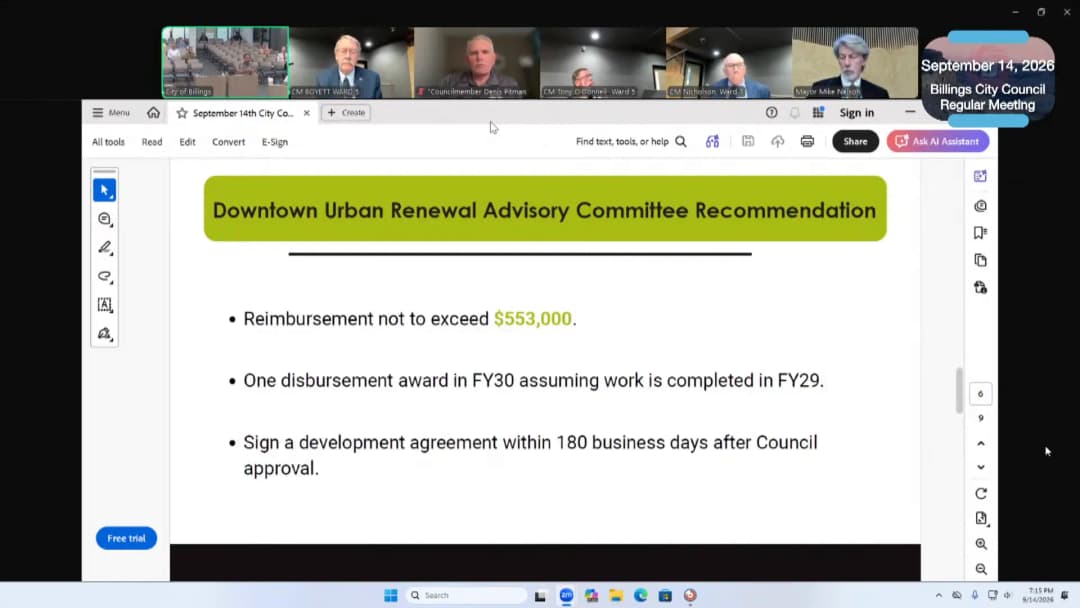
The Billings City Council met on September 14, 2026, for a regular business meeting. The agenda included a mayoral proclamation, consent agenda items (including approvals, removals, and separations), multiple public hearings, and a controversial tax increment financing (TIFF) request for the Babcock Theater. Key decisions included approving a decrease in streetlight district assessments, setting delinquent utility charges, and conditionally approving $553,000 in TIFF assistance for the Babcock Theater after a motion amendment. The meeting lasted from 5:30 p.m. to adjournment. Proclamation & Reports - Mayoral Proclamation: Mayor Mike Nelson proclaimed September 20, 2026, as Suicide Prevention Day in Billings. He cited CDC statistics: 135 suicides per day (43,316 annually) in the U.S., with Montana having the highest suicide rate (over twice the national average) and suicide being the 8th leading cause of death in Montana and the 2nd leading cause among ages 10-44. A representative from the Yellowstone Valley Out of the Darkness walk spoke in support, noting that over 90% of suicide victims have a treatable mental condition. - Council Reports: Councilmember Kennedy announced the South Side Task Force meeting on September 17 (6 p.m.) and requested rescheduling the legislative meeting originally set for September 16. The Budget and Finance Committee meeting was noted for September 16 at 9 a.m. - Administrator Report: Two new city attorneys, Brian Reeve and Gretchen Kirsten, were introduced. The administrator noted ex parte communications regarding TIFF item 6 and requested removal of consent item 1T (pooled sidewalks bond resolution) for rewriting. Consent Calendar - Minutes Approved: Unanimously approved minutes from August 24, 2026. - Removal of Item 1T: Unanimously removed (staff request). - Separations: - Item 1E (sewer contract amendment): Approved after brief discussion (engineering cost 20.6% of construction due to low bids on base contract). - Items 1K and 1L: Approved 10-1 (Councilmember Aspenlighter recused due to conflict of interest). - Item 1F (Complete Streets Economic Analysis Report): After extensive debate, a motion to NOT approve the report for recommendation to the Policy Coordinating Committee passed. Councilmember Nicholson voted against. The report was criticized as flawed; the motion stated the council recommends the PCC not approve the report as an informational document. Public Comments & Testimony - Item 6 (Babcock TIFF): - Jeff Kettleson (Ward 5) opposed, calling the request “grasshopper” behavior that diverts taxpayer money from schools and teachers. - Ryan Kramer (Executive Director of Family Service, Vice President of Art House Babcock Board) spoke in favor, detailing the board’s decision to seek TIFF funding as part of a broader fundraising puzzle. He noted 24 downtown businesses signed a letter of support. - A former Billings Gazette reporter emphasized the theater’s community value. - Paul Clark (Ward 1) commented on various topics including support for Family Service commodity boxes, Sixth Street underpass cleanup, and concerns about the sugar factory limestone field. - Mark Sevier spoke in favor, recalling the theater’s history and its role in downtown revitalization. - Sue Baker (owner of Yarn Bar downtown) supported the TIFF, noting the economic impact of a vibrant Babcock. - A volunteer of six years spoke in favor of the theater’s preservation. - Public Comments on Non-Agenda Items: None. Discussion Items - Item 2: CAPER Public Hearing: Presentation on FY 2025-2026 Community Development accomplishments. No action required. Discussion included 32 rental units completed, 463 households assisted, and 16 first-time homebuyers. Questions about duplication of services and program compliance were raised. - Item 3: Encroachment Rental Fees: Approved unanimously after public hearing. Staff recommended small increases (tier 1: $2.32 to $2.40 per sq ft; tier 2: $7.80 to $8.80 per sq ft; minimum fee $28.95). Estimated annual revenue: $149,000. - Item 4: Special Improvement Lighting Maintenance District Assessments: Approved unanimously. 197 districts; overall decrease of $464,000 in FY27 assessments due to lower electricity costs. 187 districts decreased, 7 unchanged, 3 increased. - Item 5: Delinquent Sewer and Solid Waste Services: Approved with an amendment to include a breakdown of charges. 115 properties assessed; total $144,000 (sewer $90k, storm $15k, solid waste $39k). Discussion included concerns about tenant notification and stormwater credits; a committee on stormwater retention is planned for October. - Item 6: Babcock Theater TIFF Assistance: Staff recommended up to $553,000 from the Downtown Urban Renewal TIFF District for building improvements. The original request was $700,000; staff reduced eligible expenses to $553,000 (16% of total $4.8M project). After debate, Councilmember Aspenlighter moved to amend the motion to condition approval on the applicant first demonstrating full financing for the applicable project phase before any funds are encumbered or reserved. The amendment passed 10-1 (Pittman opposed). The underlying motion then passed with three opposed (O'Donnell, Nees, Pittman). The conditional approval includes a deadline of FY2030 for the development agreement. Key Outcomes - Minutes approved unanimously. - Consent items acted upon as described (removal, separations, approvals). - Motion to not recommend the Complete Streets Economic Analysis Report to the PCC passed (with Nicholson opposed). - CAPER public hearing concluded with no action. - Encroachment fee resolution approved unanimously. - Lighting district assessments approved unanimously. - Delinquent utility charges approved with amendment to include breakdown. - Babcock Theater TIFF conditionally approved (10-1 on amendment, 7-3 on final motion). - No further public comments or council initiatives.
The Butte Silver Bow Study Commission met on September 14, 2026, to finalize voter education materials, discuss public outreach, and address procurement procedures for printing a voter information booklet. Commissioners approved the August 10, 2026 minutes and made significant progress on FAQs and the voter education guide. Consent Calendar - Minutes Approval: The commission unanimously approved the August 10, 2026 study commission meeting minutes (motion by Shaw, second by Dennehy). Discussion Items - Public Outreach Scheduling: Commissioners coordinated multiple speaking engagements: Wednesday at Perkins (noon) – McCormick and Dennehy; Party Line on September 21 (1:00 PM) – Seppen and Silk; Library First Friday on October 2 (noon) – Purdue Dolan; Exchange Club on October 6 – Dennehy and Shaw; Party Line on October 19 (1:00 PM) – Dennehy (tentative). Shaw noted the voter education packet will be mailed before ballots go out on October 9. - Voter Education Guide (Booklet): A 12-page full-color booklet costing $14,857.48 (from Park Street Printers) was reviewed. Commissioners debated procurement rules: the county attorney later clarified that quotes are required for purchases over $5,000. The guide was approved with amendments, including bolded language clarifying that remaining ballot questions take effect only if voters adopt the revised charter in Question 1. - Fire Services FAQ: Extensive revisions were made to align with ballot language: changed "paid" to "career" members; moved the status-quo option (maintain existing charter language) higher; added exceptions for Walkerville and Melrose; replaced "career" with "paid" per one commissioner’s concern about volunteer terminology; clarified that volunteers (not volunteer representatives) would select a liaison. - Neighborhood Councils FAQ: Approved as amended, with consistency changes from "community councils" to "neighborhood councils." - Reclamation and Environmental Services FAQ: Approved with amendments to clarify it is not a new department (answer: "No") and to strike the phrase "superfund." - Public Meeting / Streaming Event: Commissioners ultimately decided not to hold an additional streaming event, concluding that the mailed booklet, PSAs, and social media outreach (including FAQs) are sufficient. A potential full-page newspaper ad was discussed but not approved. Key Outcomes - Voter Education Guide Approved: Motion by Shaw, second by Seppen; voice vote (majority in favor, one nay). - FAQ 4 (Costs) Approved: Option C (text version) adopted as presented; a motion to amend by bolding one paragraph lacked a second. Voice vote (one nay). - FAQ 5 (Neighborhood Councils) Approved: Motion by Shaw, second by Dolan; voice vote (unanimous). - FAQ 6 (Reclamation & Environmental Services) Approved: Motion by Shaw, second by Dennehy, with amendments (first question reworded to "Is this a new department?" with answer "No"). Voice vote (unanimous). - Fire Services FAQ Approved: Motion by Seppen, second by Shaw, with all listed amendments. Voice vote (one nay). - Procurement Direction: Motion by Dennehy, second by Soak, directing Shanna Adams to obtain quotes from Park Street Printers and Pitt Printers, with Park Street given the opportunity to re-quote. Shanna authorized to select the lowest quote meeting parameters (color printing, two-week turnaround, mailing). Voice vote (unanimous). - Future Meetings: Two additional meetings scheduled: October 5, 2026 (before ballots mail) and October 26, 2026 (before the election). The commission recessed until further notice.
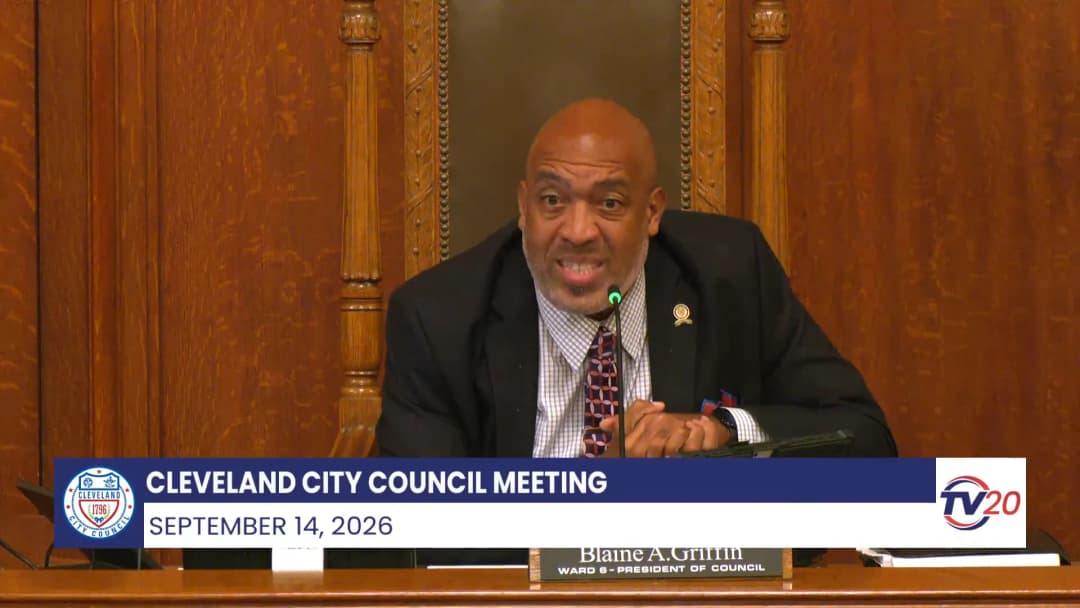
Cleveland City Council met on September 14, 2026, with Council President Blaine Griffin presiding. The source transcript is timestamped 23:03:52 UTC. The meeting included public comment, presentations, ceremonial items, emergency ordinances and resolutions, and announcements. This summary is based solely on the raw transcript; no agenda or minutes were available. Public Comments & Testimony - Public comment included seven speakers, each under a three-minute limit signaled by yellow and red lights. - Saint James Singleton (Ward 9), a pastor, described a dream allegory about intervening in a fight and said he and his team ran a free summer daycare and youth program for approximately 100 children, operating free from morning until about 8 p.m. with no city assistance. He said his car was repossessed because he spent his own money on swimming pools, bounce houses, and food, and he criticized city priorities that fund streets and prisons while grassroots caregivers receive no support. Position: called for the city to support and fund community youth programs. - Tyresha Thompson (Ward 9) supported St. James's Built and Strong Individuals Youth Program, saying it served about 100 children this summer, Monday through Thursday from 9 a.m. to about 8 p.m., with eight unpaid volunteers and no city funding. She said St. James personally called Councilman Conwell on August 11 about book bags and school supplies, was directed to email a formal request, and never received a response or contribution. Position: expressed disappointment that the city did not show up and asked what the city is doing to save youth. - Daryl Houston (Bedford Heights) said a city-planted tree on the mayor's property damaged a sidewalk and sewer lines, costing him $7,000-$10,000 out of pocket, and that emails to Law Director Mark Griffin and Marty Kane went unaddressed. He announced seven Mondays of naming officials and demanding accountability, and criticized 36-month grant reimbursement timelines. Position: demanded accountability from city officials. - James Box (Black Guard and Truth Ministries) alleged that a city community-relations employee, Jockey Simmons, had knowledge of the disappearance and homicide of Keyshawn Williams and withheld information. Box said he directed U.S. Marshals to Simmons, who then lawyered up and later gave a statement. He asked why someone in a position of trust could withhold such information. Position: demanded answers and accountability. - Matthew Strazinski (Slavic Village), a former Cleveland police dispatcher, sheriff's deputy, and code enforcement officer, called for a city population of 1 million and 33 council members. He complained about a city water department work truck smelling of marijuana, a city worker sleeping in a city vehicle, and an 8-hour police response wait. Position: urged Mayor Bibb to take stronger action on police and city employee conduct. - Marshall 'Maestro' Stevens, listed as from Akron but described as a Cleveland-area father and self-represented litigant in Cuyahoga County Juvenile Court case FA 2370 4239, said he won two appeals on September 3 and that the 8th District vacated a custody judgment and reversed a child support calculation. He said his contempt/enforcement motion filed January 6 was 251 days old without an evidentiary hearing, and that hearing notices were repeatedly changed. He cited Ohio statistics of 23.7% average parenting time for fathers (86.5 days) and the 90-day threshold for a 10% child support reduction. Position: asked officials and local media to demand transparent court assignments, accurate notices, dates certain, and public reporting on parenting-time enforcement delays. - Juan Calado Diaz (Ward 12) urged the council to stop using AI and to block data centers in Cleveland and Ohio, citing articles alleging that Elon Musk used AI to put child pornography into a system, AI company executives predicting possible human extinction by 2035, water consumption by data centers, and Flock cameras targeting people of color and immigrants. Council President Griffin responded by recommending three upcoming community meetings on data centers led by Councilman Brian Casey. - After James Box's comment, the Council President asked speakers to avoid profanity because children and families were in the audience. Ceremonial Items, Communications, and Presentations - The clerk read numerous communication files, including a Dell cooperative purchasing notification, appointment of Rachel Nigroscalis as clerk of council pro tem, state grant notifications, and multiple liquor license applications and transfers. Councilmembers offered condolences for many community members, including Rory James Garrett II, and congratulatory or recognition resolutions for many individuals and organizations. A moment of silence was observed. - Councilwoman Stephanie House Jones recognized Kelly and Aria, Big Brothers Big Sisters of Greater Cleveland's 2026 Big and Little of the Year. Jessica Payne, President and CEO, said she was a little matched in 1994, that the program serves about 200 children per year in Cuyahoga County, about half of them Cleveland residents, and that volunteers are needed; a couple of hours per month can make a difference. Legislation & Resolutions - First-reading emergency ordinances referred to committee included legal-aid eviction services, a West Ninth Street encroachment permit, vehicle and equipment purchases, a two-year lease of the Five-Point Building/Collinwood Community Center to Famikos Foundation with a two-year renewal option, medical examiner and fingerprint-system payments, an easement amendment, electrical test equipment for Cleveland Public Power, land-bank parcel transfers, an IX Center lease amendment with a payroll credit, temporary personnel contracts, and a new Fair Employment Wage Board section. - First-reading emergency Ordinance 1036-2026, approving the collective bargaining agreement with the Cleveland Police Patrolman's Association Analysts and Specialist Unit and amending compensation, was placed on final passage. The suspension motion passed 13 yes, and the ordinance passed 13 yes. - First-reading emergency resolutions adopted included liquor permit withdrawals and objections, support for the Cleveland State University UPASS program with the Greater Cleveland Regional Transit Authority, encouragement for Cleveland Public Library musical instrument lending, a call to waive pre-November 2014 red-light and speed camera citations, a resolution recognizing National Diaper Need Awareness Week, and Resolution 1047-2026 renaming a portion of Lake Erie as the Gulf of Cleveland. On 1047-2026, the vote was 13 yes and 1 no; all other resolutions passed 14 yes. - Second-reading emergency ordinances passed 14 yes, including $1,064,980 in additional appropriations to the general fund and $1,064,980 to the Special Revenue Fund, a public auditorium food and beverage concession agreement of up to 3 years, bond authorizations totaling approximately $38.6 million for vehicles, heavy-duty trucks, parks, buildings, and streets, and acceptance of ODOT Pedestrian Safety Improvement Program grants. One $6,730,000 parks bond authorization appeared without a clear ordinance number in the transcript. - Second-reading emergency Resolution 956-2026 passed 14 yes, urging the U.S. Postal Service to create an age-friendly mail access initiative working committee for secure outgoing mail collection in senior buildings. - Ordinance 1274-2024, authorizing the Gunning Park Recreation Center solar photovoltaic and battery energy storage project and a contract with Ameresco, was tabled by a 14 yes vote. Announcements & Miscellaneous - Councilman Casey announced data center community meetings: Thursday, September 24, at Collinwood Rec Center, 6-8 p.m.; Tuesday, September 29, at City Hall Council Chambers; and Wednesday, October 7, at Gunning Rec, 6-8 p.m. - Council President Griffin acknowledged Fred Ward and Building Freedom Ohio Partners, who advocate for restored citizens and against collateral sanctions; Earl Savage, the new Cleveland Teachers Union president; and Ward 6 resident Ebony Bogan. - Councilman Conwell discussed collateral sanctions for restored citizens and said Ted Ginn Sr. needs more help; he urged finding out what happened rather than punishing children. Councilwoman Hudson reported illegal dumping at 3801 Muriel in Ward 11, where her office and CDCs removed 14,000 pounds of debris; Metro West had removed 526,000 pounds so far in 2026 in its service area. Position: demanded more enforcement and stronger illegal dumping laws. - Councilman Harsh thanked colleagues for passing Resolution 1047-2026 and made a satirical speech about renaming Lake Erie as the Gulf of Cleveland. Key Outcomes - The council passed the emergency ordinances and resolutions described above, with final votes of 13 yes or 14 yes; Resolution 1047-2026 received one no vote. - The council tabled the Gunning Park solar project by a 14 yes vote. - Councilman Santana's absence was excused. - The next Cleveland City Council meeting is scheduled for Monday, September 21, 2026, at 7 p.m.