The Rochester Charter Commission met on September 11, 2026, to discuss a citizen request regarding ranked choice voting, continue the review of the Home Rule Charter, and address ward boundary provisions. The meeting included a special recognition, a presentation by the mayor on the role of mayor, and multiple votes on subcommittees and charter amendments. Consent Calendar - Set Order of Agenda: Approved unanimously (11 ayes, 0 nays, 4 absent). - Approve Meeting Minutes of May 12, 2026: Approved unanimously (12 ayes, 0 nays, 3 absent). Public Comments & Testimony - Mayor Norton presented preliminary results from a survey of 119 mayors across the U.S. on the role of mayor. Key findings: 108 can place items on the agenda; 96 chair council meetings; 58 get a vote; 65% have tiebreaker ability; 57 have veto authority; 31 also serve as city manager. Mayor Norton expressed frustration that Rochester’s mayor has limited power compared to other cities and suggested the city consider combining the roles of council president and mayor. She indicated she would return in January 2027 with more detailed findings and recommendations. Discussion Items - Ranked Choice Voting (New Business): The commission discussed a citizen request to review ranked choice voting. Commissioners expressed a range of views. Some noted that 19 states have banned ranked choice voting, others cited concerns about exhausted ballots and partisan funding, while some argued the commission should study the issue thoroughly. After three motions: - Motion to create a subcommittee (up to 5 members) to study and bring back a recommendation: Denied (5 ayes, 8 nays, 2 absent). - Motion to place discussion on the November 2026 agenda: Denied (6 ayes, 7 nays, 2 absent). - Motion to place discussion on the January 2027 agenda: Approved (12 ayes, 1 nay, 2 absent). - Home Rule Charter Review (Unfinished Business): The commission continued reviewing Sections 5–15. - Section 6.02: Motion to change “by the third day after passage” to “by the third business day”: Approved unanimously (13 ayes, 0 nays, 2 absent). - Section 6.03: Motion to change “within five days of receipt” to “within five business days”: Approved unanimously (13 ayes, 0 nays, 2 absent). - Section 6.05: Motion to change “within five business days (Sundays excepted)” to “within five business days”: Approved unanimously (13 ayes, 0 nays, 2 absent). - Severance Motion: Motion to sever Sections 8.05, 9.00, and 15.00 from the current review, sending all settled items to the city council while those three sections are reconsidered by a subcommittee: Approved (8 ayes, 5 nays, 2 absent). - Subcommittee on Mayoral Authority: Motion to establish a subcommittee (up to 4 commissioners plus a city attorney representative) to return with recommendations to address inconsistencies in the authority of the mayor over the city administrator as stated in Sections 8.05, 9.00, and 15.00, by the end of 2027: Approved (10 ayes, 3 nays, 2 absent). - Ward Boundaries (Unfinished Business): Commissioner Rothwell proposed a motion to establish a subcommittee in 2027 to examine the charter provision on ward boundaries (Section 1.02) and bring back recommendations. After debate, the motion passed (7 ayes, 6 nays, 2 absent). Key Outcomes - Approved charter amendments to Sections 6.02, 6.03, and 6.05 changing timeframes to business days. - Severed Sections 8.05, 9.00, and 15.00 from the current review; settled items will be sent to council. - Established a subcommittee to recommend changes to Sections 8.05, 9.00, and 15.00 regarding mayoral authority over the city administrator, with a deadline of end of 2027. - Established a subcommittee to examine ward boundary language in Section 1.02, to report in 2027. - Scheduled discussion on ranked choice voting for the January 2027 meeting. - Directed staff to publish notice for expiring commission terms (6 members) throughout November 2026, with applications due to the chief judge by early December. - Adjourned unanimously.
The Public Meeting Index
The Public Meeting IndexThe Nashua Board of Aldermen met on September 11, 2026 (commenced September 10, 2026 at 7:30 p.m. and adjourned at 10:23 p.m.) to consider multiple contracts, ordinances, and a gap analysis on homelessness. The meeting featured extensive public comment, approval of a police body camera and drone contract, adoption of a video display sign overlay district for downtown, and creation of a homeless services gap analysis committee. Consent Calendar - Communications received from the mayor, planning manager, and aldermen were accepted and placed on file without objection. - Reappointments to the Arts Commission, Business and Industrial Development Authority, and Electric Aggregation Committee were accepted and referred to the Personnel/Administrative Affairs Committee. - A petition for street acceptance (Juliana Avenue) was accepted and referred to the Infrastructure Committee with a public hearing scheduled for October 14, 2026. Public Comments & Testimony - Jane Goodman (Executive Director, Nashua Soup Kitchen & Shelter) expressed conditional support for a homeless services gap analysis, urging it be focused, timely, and lead to action. She cautioned against using the study as an outcome in itself and emphasized leveraging existing nonprofits rather than creating new city programs. - Matt Gayott (Nashua resident) spoke in support of the gap analysis, reporting that unhoused individuals he surveyed feel scared and pushed to the margins due to the camping ban. He suggested a heavily regulated, monitored parking lot alternative and criticized police budget increases and the proposed police drones. - Peter Lawley (President, Spectacle Live, operator of the National Center for the Arts) supported the video display sign overlay district, stating it would enhance publicity for the center and community events, and help compete with other venues. - Rich Flanen (Chair, National Center for the Arts Board of Trustees) provided background on the sign variance denial in 2022 and explained that the overlay district was crafted after a year of work with city staff to benefit downtown broadly. - Bob Keating (Nashua resident) spoke in favor of the homeless services gap analysis committee, praising its scope, process, and 90-day timeline. - Eve Arnold (Ward 4 resident) urged repeal of the camping ban as a “containment action” while other solutions proceed, and called for data-driven decisions on homelessness, noting the resource center proof of concept skipped necessary analysis. - Latonia Mussioli (Executive Director, Failing Promises) supported the gap analysis and resource center, noting discussions about a resource center have been ongoing since 2024. She referenced Manchester's Engagement Center as a model and criticized the camping ban as lacking a promised resource center. - Armelo Ramirez (eight-year-old Nashua resident) spoke in support of a resource center with apartments to keep people safe, emphasizing everyone deserves a home. - Mike Appelberg (Director, United Way of Greater Nashua) voiced strong support for the resource center proof of concept, pledging volunteer mobilization and describing it as a tool for self-sufficiency beyond shelter. - John Blanchette (Ward 4 resident) supported the resource center and expressed concern about the camping ban. He also raised concerns about Citizens Bank financing private prison companies involved in forced labor and urged the city to consider switching banks. Discussion Items - Mayor's Remarks: Mayor Jim Donchis thanked City Clerk Dan Healy for a smooth primary election, noted successful use of poll pads in three wards, and discussed the police body camera contract (Axon system) with new drone technology. He also highlighted a 10% increase in the county tax bill (now $18.264 million) and rising fixed costs in the city budget (healthcare, special education, insurance), stating that tax increases result from the inability to cut services without significant impact. - Police Body Camera & Drone Contract (Axon OSP 10): The mayor and Chief Brian Crap (via representative) detailed the system, including AI-assisted report writing (Draft One) that uses camera audio, not video, and ALPR (automated license plate recognition) with a three-minute data purge. Alderman Tebow argued the technology protects both police and citizens; Alderman Senate clarified that solar-powered pole cameras and ALPR are for investigative alerts, not continuous surveillance. The contract for $1.2 million in year one and $1.2 million in subsequent years was approved 14-0. - Special Event Permitting Software: Alderman Clee praised the software for streamlining approvals for events. Approved 13-1 (Johnson no). - Resource Center Proof of Concept License Agreement with Harbor Care: Multiple aldermen expressed support. Alderman Tebow noted he previously opposed the resource center but now supports this step. Alderman Lopez highlighted Harbor Care's track record. Alderman Kelly abstained due to a work conflict. Approved 13-0-1. - Video Display Sign Overlay District (O-26-022): After debate, aldermen divided over potential “unintended consequences” and slippery slopes. Supporters (e.g., Morgan, Clee, Dowd) argued it allows downtown businesses, including the National Center for the Arts, to advertise effectively and avoids spot zoning. Opponents (e.g., Sullivan, Ravan, Senate) cited concerns about distractions, transient businesses, and the inability to use case-by-case approvals. The ordinance passed 9-5. - Homeless Services Gap Analysis Committee (R-26-049): Extensive debate occurred on whether the study would delay or complement existing resource center efforts. An amendment by Alderwoman Kelly to require a detailed financial scope, timeline, and monitoring plan failed 2-12. An amendment by Alderman Tebow to designate the Human Affairs Committee chair and vice-chair as aldermanic appointees also failed 4-10. Ultimately, the resolution establishing a 90-day committee with representatives from the city, nonprofits, and lived experience passed 12-1 (Tebow no, Kelly absent). Key Outcomes - Approved Police Body Camera & Drone Contract (Axon): 14-0 (motion carried). - Approved Special Event Permitting Software (Event Approvals Inc.): 13-1 (Johnson opposed). - Approved Landfill Gas Telemetry Monitoring Contract: 14-0. - Approved Collection System Flow Monitoring Contract: 14-0. - Approved Resource Center Proof of Concept License Agreement (Harbor Care): 13-0-1 (Kelly abstained). - Adopted Video Display Sign Overlay District (O-26-022): 9-5. - Adopted Homeless Services Gap Analysis Committee (R-26-049): 12-1 (Tebow no; Kelly left before vote). - Second Reading Approvals (R-26-053 through R-26-056): All passed with vote counts of 14-0 or 13-1. - First Reading Referrals: R-26-057 (PFAS pilot borrowing) referred to Budget Review Committee and Board of Public Works with a public hearing on September 28, 2026; O-26-024 (stop signs) referred to Infrastructure Committee and City Engineer.
The City Charter Advisory Committee met on Friday, September 11, 2026 at 2:00 PM in Mesquite, Nevada. The agenda included public comment, consent agenda, and discussion of possible changes to Articles IX and X of the Mesquite City Charter, as well as final approval of proposed changes. No official minutes or transcript of the meeting were provided; therefore, detailed discussion content, public comments, and specific actions are unavailable. The following summary is based solely on the posted agenda. Consent Calendar - Agenda Approval (Item 2.1): Consideration and approval of the September 11, 2026 meeting agenda. No record of action or vote is available. Public Comments & Testimony - Items 1.1 and 4.1: Two public comment periods were scheduled. No comments were recorded or summarized in available documents. Discussion Items - Item 3.1: Consideration and discussion of possible changes to Article IX of the Mesquite City Charter. No details of the discussion are available. - Item 3.2: Consideration and discussion of possible changes to Article X of the Mesquite City Charter. No details of the discussion are available. - Item 3.3: Consideration and discussion of final approval of all proposed changes to the Mesquite City Charter. No details of the discussion or any vote are available. Adjournment - Item 5.1: The meeting was scheduled to adjourn. No time of adjournment is recorded.
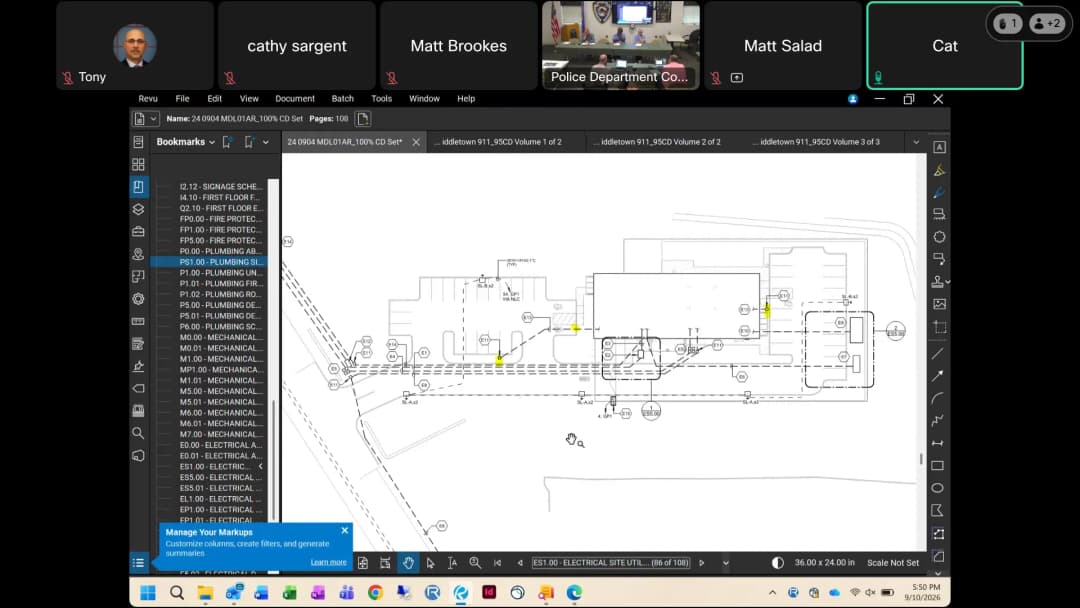
The Building Committee met on September 11, 2026, at 5:05 PM in a hybrid format at the Police Community Center and via WebX. The meeting was chaired by the Chair, who participated remotely from his vehicle and asked committee member Seb to facilitate in person. The committee approved minutes from previous meetings, heard a director's report on project progress, and received a detailed presentation of the 100% construction documents for the new public safety dispatch facility. Two payments to Tekton totaling $178,365 were approved. The meeting adjourned at 6:03 PM. Consent Calendar - Approval of Minutes: The minutes of the June 25, 2026, July 23, 2026 regular meeting, and July 23, 2026 special community meeting were approved unanimously without discussion. Public Comments & Testimony - No members of the public spoke during the public comment period. Discussion Items - Director's Report (Robbie): The project continues through final design, permitting, and bidding stages. Key updates included: - Final technology coordination meeting completed; city technology department will prepare quotes for equipment. - Planning and zoning application approved on August 13; Connecticut DEP permit for soil disturbance submitted. - Eversource work order submitted; electrical hoard requirements approved. - Construction RFP finalized with purchasing; bid posting anticipated for 30 days with 20-day prevailing wage threshold. - Specialized vendor pricing: Zybex (approved in July) saw an $800 increase due to selected finishes; will return in October. Motorola radio system proposal received but will wait for general contractor selection to preserve warranties. Fire alarm monitoring system: radio propagation study determined the original antenna location would not work; a backup solution using antennas on the existing tower at the top of the hill is being developed. Fiber connectivity between the new building and the existing tower and building will be used. - Discussion about a potential fire department burn structure near the site: the director confirmed that after meeting with the fire department and vendor, they were reassured the burn structure would not affect the building's HVAC system. One committee member suggested that if modifications are needed, the fire department should pay. - Presentation of Construction Documents (Matt and team): The architect presented the 100% construction documents, consisting of 108 sheets of drawings and three volumes of specifications. Key points: - The drawings cover site civil, structural, architectural, MEP (mechanical, electrical, plumbing), and technology systems. - The building is designed as a Risk Category IV structure (public safety facility), requiring more robust construction. - The thermal envelope is fully continuous with exterior insulation and a masonry-supported thermal block system. - HVAC: Two rooftop units with heat pumps and gas backup; a dedicated unit for dispatch with supplemental ductless units. A committee member from the Clean Energy Task Force expressed satisfaction with the heat pump and solar-ready design. - Electrical: Site utility coordination with Eversource; future EV charging conduits are roughed in (two-inch conduit to handhole) and solar ready. A committee member raised security concerns about public EV chargers; it was noted chargers could be staff-only with access codes. - Two deduct alternates identified: the roof-mounted mechanical screen and the south-facing trellis. These can be removed if bids come in high. - Paving limits: The committee confirmed the project will only pave the exclusive use area of the driveway, not the shared common driveway. Coordination with emergency management/public works regarding water main replacement is ongoing. - Committee members had questions about burn structure impact, EV charging feasibility, and product specifications. The director explained that most furnishings and equipment will be provided by the city or contractor per a schedule. Key Outcomes - Votes and Approvals: - Minutes of June 25, July 23 regular, and July 23 special meetings approved unanimously. - Payment to Tekton for work through July 31, 2026: $97,325 approved unanimously. - Payment to Tekton for work through August 31, 2026: $81,040 approved unanimously. - Next Steps: A special meeting is scheduled for the following week to review the final construction documents and RFP, and to vote on moving forward with purchasing. Committee members were encouraged to review the documents and submit questions before then. The project team will issue a finalized set of documents by next Friday after incorporating purchasing coordination and QAQC. Note: The transcript indicated the meeting date as September 10, but per the directive, the meeting date is recorded as September 11, 2026.
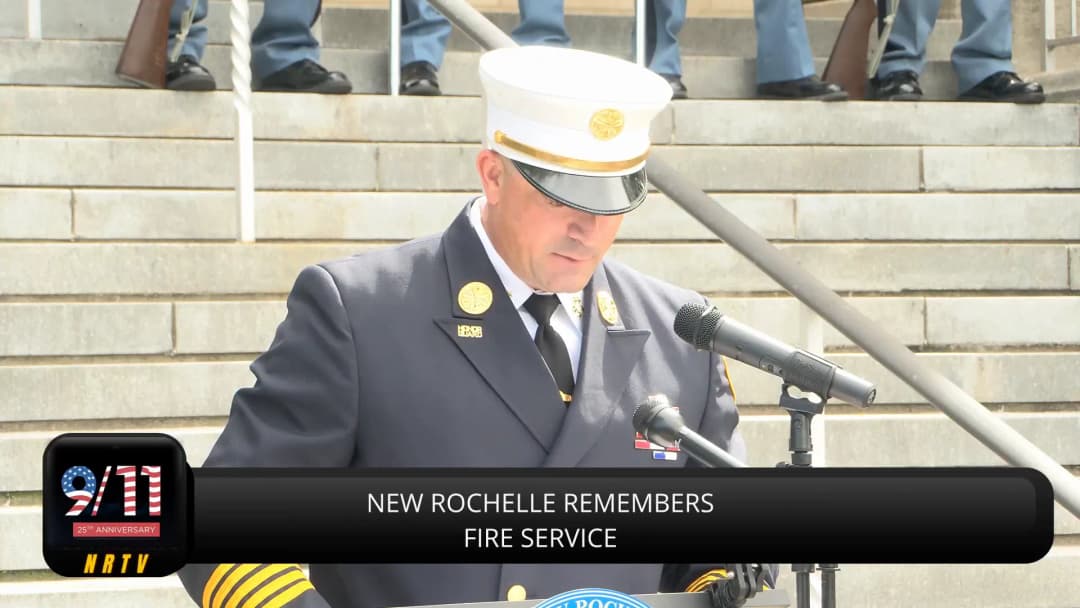
On September 11, 2026, at 9:15 AM, New Rochelle City Hall held a solemn ceremony to mark the 25th anniversary of the September 11, 2001 attacks. The event honored the nearly 3,000 lives lost, including first responders, New Rochelle residents, and alumni from local schools, as well as those who later died from 9/11-related illnesses. The ceremony included the presentation of colors, the national anthem, an invocation, remarks from Mayor Yadir Ramos Herbert, a reading of names by fire and police departments, a moment of silence, and a benediction. Opening Ceremonies - Presentation of colors by the New Rochelle Fire Department and New Rochelle Police Department. - National anthem performed by the PAVE program at New Rochelle High School. Invocation - A clergy member led a prayer, reflecting on the 25th anniversary, honoring the lost, and offering comfort to families. Remarks from Mayor Yadir Ramos Herbert - The Mayor recognized elected officials in attendance, including County Executive Ken Jenkins, State Senators Fernand Natalia Fernandez and Shelley Mayor, Assemblymember Steve Otis, County Legislator Terry Clemens, Board of Education members Makita Lewis and Jessica Klein, Superintendent Corey Reynolds, library board member Fela Cortez, former Mayor Tim Idoni, and City Council members Martha Lopez, David Peters, Shane Oshanloye, and Matthew Stern. - He reflected on the meaning of the anniversary, urging the community to live with empathy, humility, and unity, and to honor the memory of those lost by how they live each day. Reading of the Names - Fire Service: Members of the New Rochelle Fire Department read the names of FDNY fallen, including chief officers, captains, lieutenants, and firefighters who perished on 9/11. Additionally, they read the names of two New Rochelle firefighters—Deputy Chief Frank Strollo and Captain Curtis Taylor—who died later from 9/11-related illnesses. - Law Enforcement: Members of the New Rochelle Police Department read the names of NYPD and Port Authority Police officers who died on 9/11, followed by two New Rochelle police officers—Detective Mark S. Gado and Police Officer Kathleen O'Connor Funigiello—who died from 9/11-related illnesses. - Military: Chairperson Kalanji Samuel of the Veteran Advisory Committee read the names of Corporal Angelo Joseph Ficaro (Army) and Chief Warrant Officer 2 David Ayala (Army). - New Rochelle Residents: Mayor Ramos Herbert and City Manager Will Melendez read the names of Alex F. Chacone (38, assistant vice president) and David Silver (35, vice president of eSpeed). - Iona Prep Alumni: Police Commissioner Neil Reynolds read the names of Iona Prep graduates (Classes of 1953 to 1981) including Richard J. Morgan, Francis N. McGuinn, Edward Ryan, Timothy E. Riley, John D. McElane (McGuirlin), Kevin F. Cleary, and Michael J. Berkeley. - Iona University (then Iona College) Alumni: Names of graduates from Classes 1974 to 1996 were read, including Thomas W. Holwick, Joseph P. Kellett, Michael A. Lepore, Laura Longing, Michael F. Lynch, Francis N. McGuinn, Dennis P. McHugh, Michael E. McHugh Jr., Robert McPatton, Diana J. O'Connor, Joseph R. Reverso, Edward Ryan, Joseph Spore, Sean P. Talon, Joanna Vidal, and those with 9/11-related illnesses: Daniel R. Foley, Lieutenant Richard A. Knappy, Lieutenant Christopher M. Pupo, and James Ryan. - Ursuline School Alumni: Mora McCormick (Class of 2027) read the name of Helen Cross and Kittle (Class of 1985) and her unborn child, a computer specialist at Cantor Fitzgerald. Moment of Silence and Benediction - A moment of silence was observed for all victims. - Bishop Fetzenleak delivered the benediction, offering a closing prayer and blessing. - The ceremony concluded with thanks to attendees.
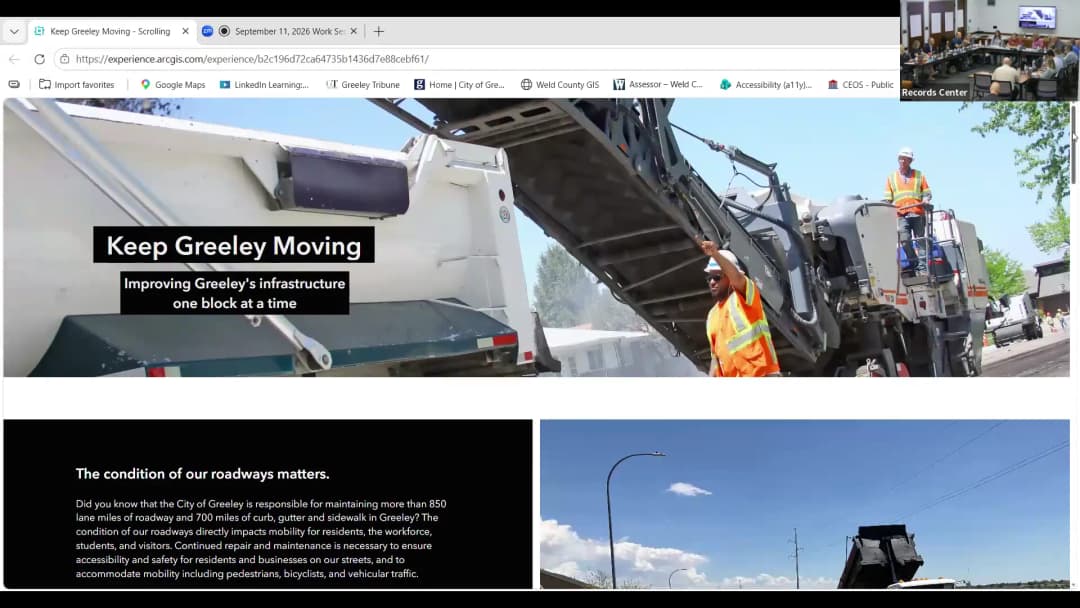
The Greeley City Council held a special work session and budget retreat on September 11, 2026, to conduct an in-depth review of the proposed 2027 budget. The meeting began at 9:00 AM and focused on closing an $18 million structural deficit in the general fund. Council deliberated on department budgets, staffing levels, utility rates, and financial transparency, reaching consensus on several staff action items and future work session commitments. Budget Overview and Financial Framework - City Manager Brian McBroom opened the retreat by highlighting the team's collaborative effort through target-based budgeting, emphasizing the importance of maintaining core services. He noted that the voluntary separation program was instrumental in reducing the size of city government. - Budget Director Nathan presented the financial assumptions. Total all-fund revenues are projected at $481.2 million against expenditures of $503.7 million, a gap explained by capital project carryovers. The general fund is projected at $144.5 million in revenues and $137.7 million in core expenditures. - The proposed budget results in a net reduction of 67.75 full-time equivalent (FTE) positions within the general fund, bringing the total to 1,195.25 FTEs. The five-year plan demonstrates a move from a structural deficit to a sustainable balance. KGM and Pavement Management - Council discussed the Keep Greeley Moving (KGM) fund at length. Public Works Director Seth presented the Pavement Quality Index (PQI) system and noted the current average city PQI of 69.09. The program receives about $12 million annually against a roughly $100 million deferred maintenance need. - Councilman Olson requested the development of defined service level targets to better communicate gaps to the public. Councilwoman DeBoutez advocated for considering neighborhood context in project selection. Staff committed to scheduling a work session on the 2027 pavement plan and long-term asset management. CPRD: Culture, Parks, Recreation and Community Services - Councilman Olson pointed out the budget book showed a 31.20% reduction in funding for museums on page 142 and a 45.53% reduction for natural areas and trails. CPRD Director Diana Frick clarified that a significant portion of the administration budget sits in that line due to internal charges for IT and equipment. - Staff added $150,000 back into the budget for museums and open space. This allows the retention of two part-time interpreter positions to support school district tours and maintain existing levels of service in natural area operations. Homeless Solutions - The proposed budget includes a $1.2 million total contribution to the homeless shelter in 2027 ($200,000 ongoing plus a $1 million one-time contribution). Staff are pursuing an RFP to transition case management to a community partner. - Staff reported a 90% stable housing rate for families in the rapid rehousing program and a 97% stable housing rate for chronically homeless individuals in permanent supportive housing. Employee Compensation - The budget proposes one-time bonuses in lieu of permanent raises. The plan is a 2% bonus for most employees and 1% for department directors and above, totaling roughly $1.3 million. This approach avoids adding permanent costs to the budget while helping employees offset rising insurance premiums. - Councilman Huddleston raised questions about employees receiving promotions alongside the bonus. HR Director Martha explained the pay plan, market adjustment processes, and the position control protocols that prevent unauthorized cost creep. - Councilman Olson expressed concern about the use of the 2.7% temporary public safety tax for ongoing operational expenses, calling it a structural problem that should be addressed in future budgets. Utility Rate Increases - Director Sean Chambers proposed rate increases for enterprise funds: Water at 3%, Sewer at 4.5%, and Stormwater at 6%. The stormwater increase was a deviation from a planned 20% increase; staff recommended leveraging debt to alleviate pressure on ratepayers. - Council requested improved communication to help citizens understand what drives each component of their utility bill and how the city plans for future infrastructure needs. Key Outcomes and Next Steps - Formal Action: No votes were taken during this work session. Staff was directed to use the recommended budget as the foundation for the final document. - Staff Action Items: - Provide detailed breakdowns of 'other purchase services' and 'IT charges' over $3.5 million. - Produce a clear summary of dedicated tax fund revenues and allocations (Food Tax, Quality of Life Tax, KGM). - Prepare a report on the status and allowable uses of all special revenue funds. - Develop enhanced communication materials explaining operating versus capital budgets and utility rate drivers. - Future Work Sessions Scheduled: - City Manager's Proposed Budget Work Session: October 13, 2026. - KGM Pavement Management Program. - Compensation Plan and Pay Plan Authority. - Communication and Engagement Restructuring. - Department Cleanup Ordinance. - Adoption Timeline: First reading and public hearing in October, with final adoption anticipated by November 17, 2026, and a statutory deadline of December 15, 2026.
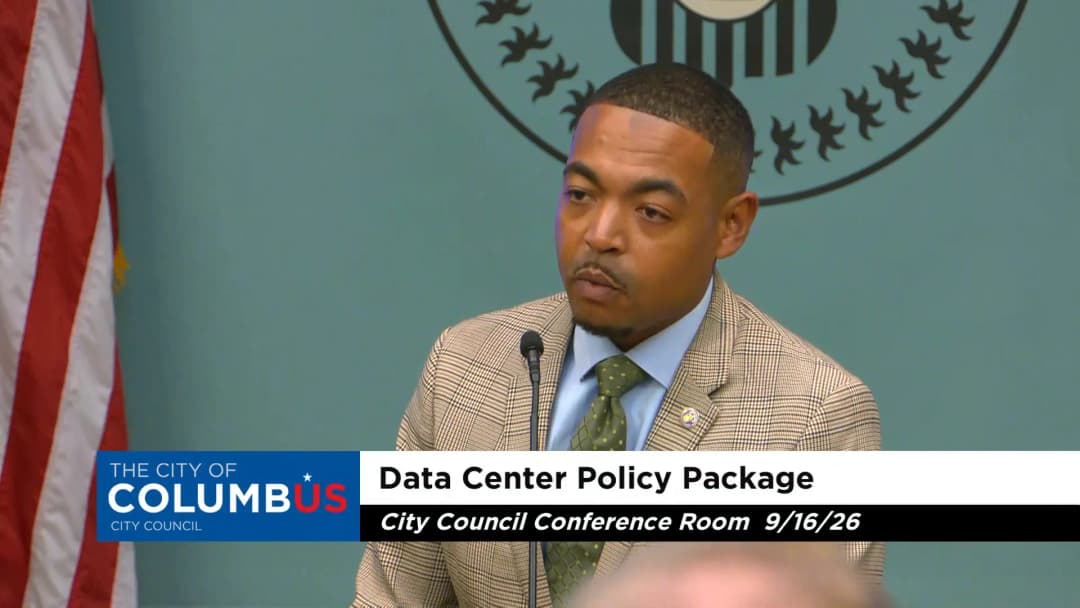
On September 11, 2026, Columbus City Council held its third hearing on high water usage data centers, focusing on financial impacts and rate fairness. Council President Harden and Councilmember Weish introduced Ordinance 2560-2026, directing Columbus Water and Power (CWP) to develop a rate structure ensuring large users (including data centers and heavy industrial facilities) pay their fair share of infrastructure costs, rather than shifting the burden to residents. The hearing also reviewed revisions to water conservation and decommissioning policies and introduced a behind-the-meter generation draft. Public Comments & Testimony - Annalisa Raka, Central Ohio Regional Director for the Ohio Environmental Council Action Fund, expressed strong support for the ordinance, stating that large users should pay for the infrastructure they require. She cited polling showing over two-thirds of Ohioans favor this approach, including over 90% of Democrats and over 80% of independents. - A resident voiced concern that data centers devastate communities, particularly affecting young people. Councilmember Weish responded that no new data centers are being built within Columbus proper, and the council's focus is on ensuring fair water rates for high-volume users. - Several journalists questioned council members: one asked why a moratorium on data centers was not pursued; another inquired about water rate increases and affordability; a third asked about enforcement penalties for non-compliance. Discussion Items - Ordinance 2560-2026: Council President Harden detailed the background: CWP's analysis found that some large users have peak water demand up to 12 times their average, requiring costly infrastructure. The ordinance directs CWP to create a rate structure that accounts for these costs, with the utility advisory board reviewing it and any rate changes requiring council approval. The ordinance had its first reading on September 8 and is scheduled for a vote on September 28, 2026. - Water Conservation & Decommissioning Policy Changes: Councilmember Weish outlined updates introduced in July, designed to strengthen requirements for high-volume users. - Behind-the-Meter Generation Draft: A new draft policy was introduced to address potential pollution from on-site power generation by industrial users. - Jurisdiction Limits: Councilmember Weish acknowledged that Columbus cannot impose a moratorium because data centers are not being built within the city, but the city can create regulatory frameworks for other municipalities to adopt. He also noted that the city lacks authority over clean energy requirements, AI regulation, or a statewide ban. - Capital Budget Dispute: Council President Harden expressed frustration that the mayor announced a capital budget with $21 million for fire apparatus and $3 million for facility upgrades without prior council consultation. She stated council would conduct due diligence with hearings before approving the budget, denying any intention to divert capital funds to the operating budget. Key Outcomes - Council will vote on Ordinance 2560-2026 on September 28, 2026, directing CWP to propose a new rate structure by year-end to ensure large users pay infrastructure costs. - Enforcement penalties for water conservation non-compliance are expected to increase substantially, likely starting at $10,000 per day, compared to current hundreds-of-dollars fines. - Council rejected a moratorium on data centers as counterproductive, emphasizing that regulatory solutions are more effective and Columbus does not host data centers within city limits. - Council committed to reviewing the mayor's capital budget through public hearings, maintaining that they will not rush approval without adequate briefings.
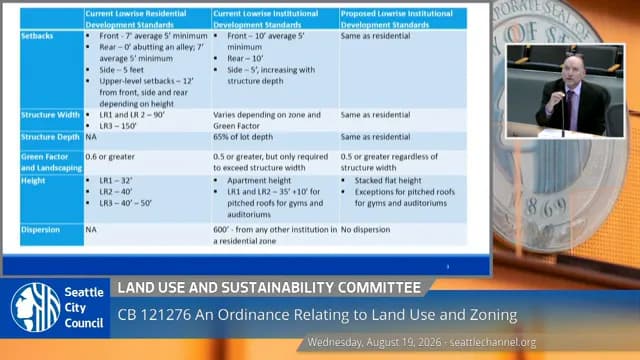
The Land Use and Sustainability Committee of the Seattle City Council met on Friday, September 11, 2026, at 9:30 a.m. in Council Chamber at Seattle City Hall, 600 4th Avenue, Seattle, for a special meeting and public hearing. The meeting also constituted a meeting of the City Council, with action limited to committee business. The committee heard public comment, received a briefing on Council Bill 121276 — an ordinance amending Seattle Municipal Code Sections 23.45.506, 23.45.570, and 23.51.A.004 to modify development standards for institutions in multifamily zones — and discussed the bill. No formal vote was taken. The agenda and minutes also list Council Bill 121268, related to the 2026 Comprehensive Plan annual amendment process, but the transcript does not reflect any discussion of that item. Call to Order and Agenda Approval - The minutes record a 9:33 a.m. call to order; the transcript states 9:34 a.m. Councilmember Eddie Lin presided. - The agenda was adopted without objection. Public Comments & Testimony The public comment period was up to 60 minutes and included one in-person speaker and three remote speakers; each speaker had two minutes. - Steve (in-person): Criticized Seattle land-use outcomes, saying policy has been 'all carrots, no sticks' for developers, that penalties for developers are minimal, that the public has been removed from design review, and that the committee has become 'the province of developers.' He urged the committee to let the public back into the process. - Sandy Settler, Tree Action Seattle: Opposed CB 121276, stating it reduces or eliminates tree requirements in the neighborhoods that need them most and will hit overburdened communities hardest. She said parking lots with 20 or more spaces currently must retain or plant one tree for every five spaces, that the bill eliminates that requirement and leaves the decision to the SDCI director with no clear basis, and that the bill weakens the green factor and adds asphalt, heat, and pollution to frontline communities. - Steve Zemke, Tree Pack and Friends of Seattle's Urban Forest: Urged a councilmember to request a director's report on CB 121276 so the public and Council know SDCI's position. He opposed removing the specific one-tree-per-five-spaces requirement for large parking lots, questioned why the bill sets green factor at 0.5 when neighborhood residential development uses 0.6, and asked that the summary and fiscal note address climate-change resiliency instead of saying not applicable. - Jennifer Godfrey: Expressed concern that removing the stormwater clause for everything under 4,000 square feet could cause significant adverse impacts to aquatic life and that pervious pavement is not a cure-all. She argued that the bill, combined with what she identified as CD121093 and other deregulation, conflicts with endangered species recovery plans, and said converting existing empty buildings in the densest part of Seattle would be more eco-friendly and could provide faster, low-cost housing. She also said Seattle has failed to provide needed and available housing despite having the very best transit. Discussion Items Staff briefing on CB 121276 by Ketil Freeman, Council Central Staff: - An institution is a structure and related grounds used by organizations to provide educational, medical, cultural, social, or recreational services to the community; examples include places of worship, child care centers, and community centers. Major institutions such as colleges and hospitals are regulated separately through the major institution master plan process. - The Council passed Ordinance 127376 last year implementing House Bill 1110, which relaxed development regulations for institutions in neighborhood residential and multifamily zones. - Non-major institutions are administrative conditional uses subject to a Type II master use permit decision by the SDCI director that is appealable to the City Hearing Examiner. Current criteria address impacts such as parking and traffic, operating hours, and dispersion. - Dispersion currently prevents institutions from locating within a certain distance of each other; staff described the distance as 600 feet. Dispersion has already been removed in neighborhood residential zones. CB 121276 would remove it in multifamily zones as well. - The bill would make multifamily-zone institutional regulations nearly identical to those in neighborhood residential zones, allow institutions to meet the development standards that apply to multifamily residential development, apply similar green factor and screening/landscaping requirements, and remove the dispersion requirement. - The changed development standards apply mostly to low-rise residential zones. Green factor is currently 0.6 in low-rise zones for multifamily residential uses and 0.5 in high-rise and midrise zones; the bill reflects a policy choice of 0.5. - Net effects identified by staff: new institutional uses would find it easier to locate in multifamily zones, and existing institutions could more easily redevelop with a mixed-use concept that keeps the institutional use and adds residential development. Committee discussion: - A councilmember asked staff to confirm that dispersion no longer applies in neighborhood residential zones, still applies in multifamily zones, and would be removed by the bill for consistency between the two zone types. Staff confirmed. Discrepancies in the Record - The agenda and minutes list two business items: CB 121268 (2026 Comprehensive Plan annual amendment; public hearing, briefing, and discussion) and CB 121276 (institutional development standards in multifamily zones; briefing and discussion). The transcript addresses only CB 121276; it does not mention CB 121268, although the minutes state that a public hearing on CB 121268 was held and the bill was discussed. - The transcript opening says 'August 19th, 2026' and refers to a Wednesday morning meeting, while the agenda and minutes date the meeting Friday, September 11, 2026. - The minutes record a 9:33 a.m. call to order and 10:03 a.m. adjournment; the transcript states 9:34 a.m. and 9:53 a.m. - The minutes list four members present (Lin, Strauss, Foster, and Rinck) and Joy Hollingsworth excused; the transcript's roll call indicates three members present and states that Vice Chair Strauss and Councilmember Foster were excused. Key Outcomes - The committee took no vote and made no formal decision on CB 121276. - Staff said a public hearing on CB 121276 is scheduled for September 16, 2026, with further committee discussion later in September. - Public comments opposing CB 121276, requesting a director's report, and recommending changes related to tree requirements, green factor, stormwater, and climate resiliency will be part of the committee record.
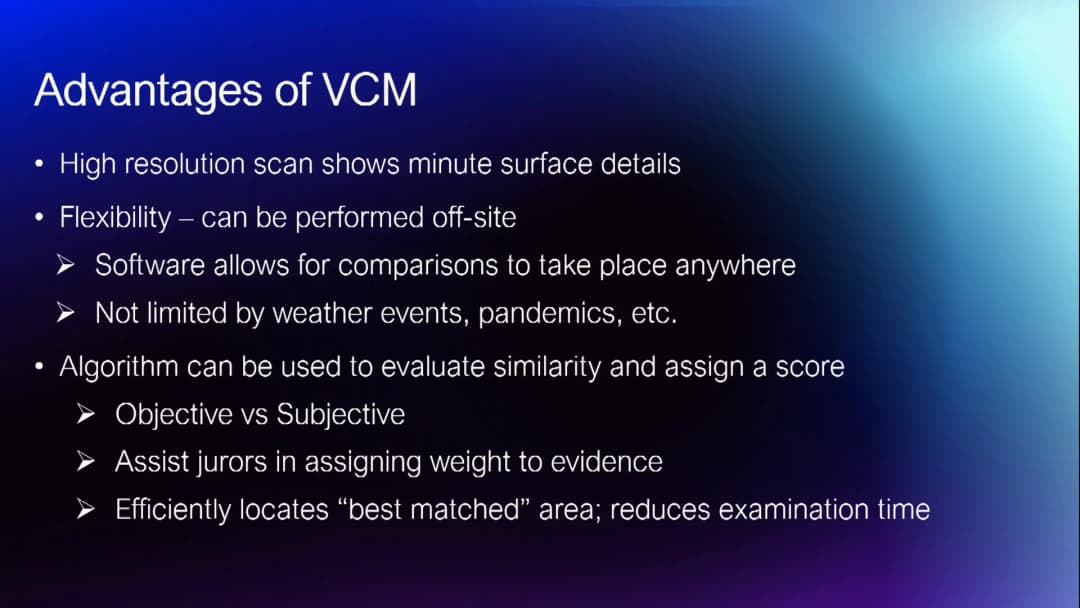
The Houston Forensic Science Center (HFSC) Board of Directors met on September 11, 2026, to observe the 25th anniversary of the 9/11 attacks, welcome newly appointed board member Chris Tritico, and discuss operational updates, contract approvals, and a detailed presentation on firearms section challenges. The board approved contracts for DNA outsourcing and an interlocal agreement with Metro Police, and was briefed on staff turnover, backlog management, and the introduction of 3D virtual comparison microscopy (VCM) technology. Public Comments & Testimony - No members of the public signed up to speak. The public comment period was closed. Discussion Items - Recognition of September 11 and New Board Member: Chairwoman Cohen led a moment of silence in remembrance of the 25th anniversary of the 9/11 attacks and acknowledged former board member Jed Silverman. Newly appointed Director Chris Tritico, a defense attorney with experience in forensic science from the Oklahoma City bombing case, was welcomed and offered brief remarks. - Contract with Signature Science for DNA Outsourcing: Dr. Castillo explained that the same contract is being renewed under a new grant source (FY25 federal grant under the biology capacity enhancement and backlog reduction program). The outsourcing, primarily for sexual assault kits, has helped keep turnaround times under 90 days while building internal capacity. A new RFP will be issued in fall 2026. - Interlocal Agreement with Metro Police Department: The agreement allows HFSC to provide forensic services to Metro for a fee, with the ability to decline work if capacity is insufficient. Dr. Castillo clarified that this work previously came through HPD and that HFSC will implement policies to avoid evidence pickup delays. Metro’s board has already approved the agreement. - Operations and Technical Updates (Dr. Castillo): - Backlogs in forensic biology and seized drugs are declining, but an overtime/incentive program ended in July. Kits remain under 90 days due to outsourcing. Seized drugs expects three new examiners in early 2027. - Firearms staffing remains critical; a presentation followed (see below). - Client services/case management has been restructured: records management now reports to legal, evidence management remains under operations. - HPD’s transition to a new records and evidence management system (live date October 10, 2026) will impact HFSC’s systems, requiring IT updates. Item number formats are changing, and HFSC is about 70% ready. October is expected to be a rough month as examiners adjust. - Firearms Section Presentation by Kimberly Zeller (Supervisor) and Melissa Nally (Operations Coordinator): - Zeller presented the history and current crisis: from 10 examiners in 2010 to backlog elimination in 2015, then turnover and COVID impacts. A 2023 training group saw 80% attrition (4 of 5 left). Current examiner count is critically low, with backlog steady at 450 requests since July 2025. Two examiners retired, one returned part-time as a 3D technician. Five new trainees will start external training in early 2027; one experienced examiner is expected to join in 4-5 months. By mid-2027, full-time examiner count may increase from 2 to 4, with output equal to 6 examiners, still insufficient to meet demand. Priority court requests dominate capacity. Serial number restoration has been eliminated due to low demand and cost. - Discussion included challenges of training the younger generation, budget constraints (CFO noted that underfunding leads to larger costs later), industry-wide shortage of firearms examiners, and the “CSI effect.” Internship program receives 50-100 applicants for 6-12 spots. - Nally presented validation of a new 3D scanning system (Cadre Forensics TopMatch 3D) for virtual comparison microscopy (VCM). Phase 1 (instrument validation) is complete; Phase 2 (examiner competency) is underway. Benefits include remote work, algorithmic match scoring, and reduced time. Challenges include software updates and cleanliness. Board members asked about legal admissibility and comparisons to other digital evidence (e.g., StarMix for DNA). Key Outcomes - Approved minutes from the July 10, 2026 board meeting by voice vote (all in favor). - Approved contract with Signature Science, LLC for forensic outsourcing services in forensic biology, total budget not to exceed $429,520, by voice vote (all in favor). Dr. Stout to execute. - Approved interlocal agreement between HFSC and Metro Police Department to provide forensic services, by voice vote (all in favor). Dr. Stout to execute. - Noted that annual performance evaluation of Dr. Stout will occur at the November 13, 2026 board meeting; members are urged to attend.
The Mesa City Council held a study session on September 10, 2026, primarily focused on the proposed Legacy Park and Gateway Crossing development, a major public-private partnership. The council also reviewed several agenda items for the upcoming Monday council meeting, including temporary staffing contracts and a dark fiber license. No public comments were heard. Consent Calendar - Council unanimously acknowledged receipt of board minutes and approved the consent calendar. Discussion Items Legacy Park & Gateway Crossing Development (Agenda Item 7) - Presentation by City Manager Scott Butler and staff: The project aims to capture sales tax leakage, create a hospitality and retail destination, and generate significant economic impact. Key statistics: - Minimum build-out: $7.4 billion economic impact, $545 million tax revenue, 1,687 permanent jobs over 30 years. - Full build-out: $58.8 billion economic impact, $1.4 billion tax revenue, 13,500 jobs. - Reimbursement for public infrastructure (e.g., park, lake, pedestrian tunnel, road improvements) capped at $76.4 million plus finance costs, funded from 45% of on-site sales tax and a portion of transient lodging tax. City retains 55% during reimbursement period, then 100% after. - Developer required to build minimum: 500-room luxury hotel (STR luxury brand), 225,000 sq ft retail, 120,000 sq ft office, 300 multifamily units, 10-acre community lake, and pedestrian tunnel linking to Arizona Athletic Grounds. - Water for lake and landscaping from privately acquired type2 groundwater rights, not from city supply. Developer responsible for all water costs and well construction. - Maintenance of public improvements (lake, park, landscaping) in perpetuity by developer at no cost to city. - Quality benchmarks: retail and hotel must equal or exceed standards of specified benchmark centers (Keirland Commons, Scottsdale Quarter, etc.) for at least 15 years to qualify for reimbursement. - Developer statements (David Larcher, Ryan Ash, Vestar): Expressed commitment to creating a "generational project" and "crown jewel of the East Valley." Phase 1 groundbreaking targeted January 2028 with grand opening October 2029. They emphasized underpromising and overdelivering, and assured council that their internal standards exceed city minimums on shading, landscaping, and pedestrian experience. - Council member comments: - Councilmember Duff advocated for higher development standards (e.g., 75% minimum shade factor) and submitted written concerns. Developer noted their plans already meet or exceed such standards. - Councilmember Taylor stressed architectural aesthetics, warning against "boxes" and urging quality design. - Councilmember Heredia questioned traffic impacts and coordination with ADOT on SR24 expansion (scheduled for completion 2029) and Crisman Road improvements. - Vice Mayor praised the partnership and staff's work on the agreement. - Councilmember Summers asked about public improvements (Williamsfield Road, access to AAG) and the pedestrian tunnel. Other Agenda Items - Item 3A – Temporary Staffing for IT/Communications: $99,000 increase to $500,000 contract with Insight Global for temporary staffing in emerging technologies department. Justified by need to fill critical gaps during a hiring freeze pending organizational effectiveness review. Councilmember Taylor questioned the need; staff explained it avoids permanent hires during review and supports TRWC (public safety radio system) needs. - Item 3B – Temporary Staffing for Police Video Redaction: Contract transition from Axon to Insight Global using existing lifecycle funds. Assistant Chief Dom Sterling and manager Liz Will Trout explained the need to reduce backlog on body-worn camera video redactions. Current turnaround times: simple reports 6-8 weeks, complex video 7 months (down from 36 months). Temporary staffing contributed to significant improvement. - Item 4A – Dark Fiber License (MMR Fiber): License for a new fiber route in Southeast Mesa terminating at Elliott Tech Corridor. Discussion on "fiber fatigue" from repeated construction. Council expressed frustration with delays and disruption. City Attorney Jim explained legal obligations to provide non-discriminatory licenses. Transportation Director Lance discussed improving permit enforcement and exploring a small business assistance program for impacted businesses. Council suggested early completion incentives and penalties. Key Outcomes - The study session was informational; formal action on Legacy Park (annexation, community plan, development agreement, theme park district) is scheduled for the September 14 council meeting. - Council directed staff to continue improving right-of-way permitting and enforcement, and to develop a small business assistance program for construction impacts. - Temporary staffing contracts (3A, 3B) and the dark fiber license (4A) are on the consent agenda for Monday, with plans to discuss further if needed. - Council members expressed overall support for the Legacy Park project, with some requesting additional time to review documents (noted that materials were uploaded less than 12 hours before the session).