Browse by city
Date range
Search help

Search titles, summaries, topics and stored transcripts together. Keywords may match separately; put the whole query in double quotes for a phrase. Matching follows word analysis, so punctuation is not exact. Both dates are included. Documents are not searched.

SHOWING 891–900 ENTRIES
891
OCT 27, 2026 · COPPELL, TEXAS · CITY COUNCIL & BOARDS
Coppell City Council Regular Meeting Summary – October 27, 2026

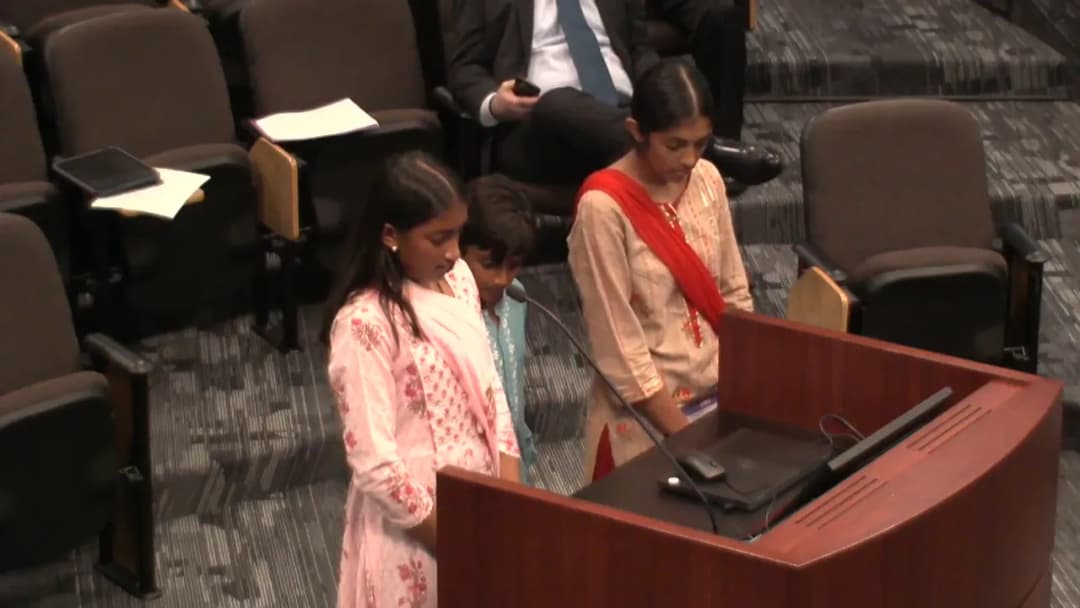
The City Council of Coppell, Texas, met on Tuesday, October 27, 2026, beginning with a closed executive session at 5:30 p.m., followed by a work session and a regular session that opened at 7:30 p.m. in the Council Chambers at Town Center, 255 E. Parkway Boulevard. Mayor Wes Mays presided, and a quorum was present. The council discussed a proposed tollway police-services agreement, drainage design contracts, and board appointments, then unanimously approved the consent agenda, heard public comments, adopted a proclamation, received reports, and adjourned at 8:18 p.m. Consent Calendar - Approved the October 13, 2026 City Council minutes. - Approved a Professional Services Agreement with LJA Engineering, Inc. for design of Winding Hollow Drainage Improvements for $249,800, funded from the Drainage Utility District Fund, and authorized the City Manager to sign. - Approved a Professional Services Agreement with LJA Engineering, Inc. for design of Stream G-2 Channel Stabilization for $757,500, funded from the Drainage Utility District Fund, and authorized the City Manager to sign. - Approved an Interlocal Agreement with the North Texas Toll Authority to provide police services on a specified portion of Sam Rayburn Tollway/Highway 121 and authorized the Mayor to sign. - Adopted an ordinance amending Chapter 12 zoning: adding concrete batching plant (temporary) as a permitted use in the Light Industrial District, removing technology equipment facility, requiring Special Use Permits for cryptocurrency mining facility and data center, and adding related definitions. Authorized the Mayor to sign. Public Comments & Testimony - Eight residents spoke during Citizens' Appearance. No council deliberation occurred during this item. - Senia Schlakva, a physician and parent at 410 Chelsea Bay, presented a petition with nearly 400 signatures collected in three days and expressed support for a feasibility study and partnership for an aquatic center, citing health, safety, water-safety, and local economic benefits. She noted Coppell ISD serves more than 13,000 students and about 13% of Coppell residents are 65 or older. - A parent of a Coppell freshman swimmer expressed support for a shared swim facility, saying athletes spend excessive time traveling and lack a home identity, and requested a joint City/Coppell ISD feasibility study. - Elber Pardo, 420 Dealer Lane, representing current and former Coppell High School swim and dive families and more than 400 petition signers, expressed support for an aquatic center as a community project with shared capital and operating costs among the City, Coppell ISD, and possible partners. - Sheena Sherma expressed support for a natatorium, noting the swim team travels to a Carrollton-Farmers Branch ISD natatorium five days a week, proposed the Pinkerton Elementary area as a possible site, and argued a natatorium could draw visitors to local businesses. - Kimberly Harrell, 104 Heather Glenn Drive, thanked the council for approving drainage design work for Heather Glen Drive improvements on behalf of residents. - Vishali Agnahotri, a Coppell ISD parent and member of the 2023 and 2027 bond steering committees, supported an aquatic center and said preliminary estimates model about $500,000 in revenue against about $484,000 in operating costs, citing lane rentals, meet fees, and sponsorships; she argued the facility could be profitable. - Rasmus Salima expressed support for an aquatic center as a healthier opportunity for younger residents and the broader community. - Isha Patel, 2255 Doghead Drive, invited the Mayor and City Council to the BAPS Diwali celebration on November 10, 2026, from 1 to 8 p.m., noting expected attendance of more than 11,000 visitors. Discussion Items - NTTA interlocal agreement: During the work session, Councilmember Mark Hill asked whether the city would be obligated to monitor the tollway 24/7. City staff explained the agreement contains no staffing or response metrics; the city has the same general obligation to patrol tollways as other streets, and NTTA compensates the city. Staff said DPS has stepped back from tollway enforcement, the agreement is for two years, and fire/EMS and accident recovery are separate. - Drainage design contracts: Councilmembers discussed how the Winding Hollow project arose after a storm event in which about three homes experienced water intrusion; the design will address a surcharging outfall. The Stream G-2 channel stabilization project carries a higher design fee because of hydrology, geomorphology, and environmental permitting. Winding Hollow construction was estimated at about $1 million. Staff noted professional services agreements do not include warranties, but the city requires errors-and-omissions coverage, and design-defect remedies and limitation periods were discussed. - Board and commission appointments: Staff reported about 55 qualified applicants this year, down from about 66 in 2025. Council discussed low participation for some boards, identified Library Board interest as a separate future conversation, and noted that one applicant serving on multiple boards is permitted by the City Charter. Council directed the Mayor and Councilmember Nevels to provide two names from the Smart City applicant pool to the City Secretary, who would contact them in order of preference to serve as alternate on the Ford Board; if both declined, the previously identified alternate would remain. Proclamations - Mayor Mays proclaimed November 2–6, 2026 as Municipal Courts Week in Coppell. A municipal court judge accepted, thanked staff, and invited residents to visit the court. Councilmember Kevin Nevels said a recent tour highlighted the court's professionalism and teen court program. City Manager and Council Reports - City Manager Mike Land reported he completed his year as ICMA president at the ICMA conference in Long Beach, which drew 5,600 attendees. Project updates include Royal Lane Reconstruction pouring two southbound main lanes from Sandy Lake to Technology Drive; Woodridge Channel Bank Stabilization on the punch list; the Justice Center remodel nearing completion; Fire Station 3 structural framing 95% complete; and the Council Chambers renovation beginning, making this the last meeting in the current configuration. - Mayor Mays announced early voting through Friday, October 30 at 7 p.m., Election Day Tuesday, November 3 from 7 a.m. to 7 p.m., with Coppell polling at Cozby Library and Community Commons, and the Together We Dine event on November 5 at the Coppell Arts Center. The November 10 City Council meeting will be at Life Safety Park, 820 S. Coppell Road, while Council Chambers is renovated for ADA compliance and other improvements. - Councilmember Mark Hill reported on Lewisville ISD and Carrollton-Farmers Branch ISD, including LISD's 2026–27 tax rate of 1.0778, the district's lowest since 1999; enrollment above 44,650; regional and state principal and teacher honors; 43 National Merit semifinalists; and Marcus High School band's invitation to the 2027 Macy's Thanksgiving Day Parade. He also reported CFB ISD recognitions, including a $10,000 donation, America's Safe Schools Week, and the Bumblebee Collective. - Councilmember Kevin Nevels reported Coppell ISD was named the No. 1 school district in Dallas County for the second consecutive year by Niche; all CISD elementary schools ranked in the top 20, middle schools in the top four, and high schools in the top 11; four additional campuses earned Heart Safe School distinction, making all 17 campuses recognized; Cross Country won three district team championships; and tennis finished 20–1. He also gave 2023 and 2027 bond updates and Coppell Senior Center announcements, including a craft fair November 14 and a murder mystery night November 19. Key Outcomes - Unanimously approved all five consent agenda items. - Adopted the Municipal Courts Week proclamation. - Directed follow-up on board appointments: two candidates from the Smart City applicant pool will be contacted in preference order for the Ford Board alternate seat, and the Library Board discussion will continue later. - No necessary action was reported from executive session. - Set the next regular City Council meeting for November 10, 2026 at Life Safety Park due to the Council Chambers renovation, with the meeting adjourning at 8:18 p.m.
COMMUNITY ENGAGEMENT 21% · PROCEDURAL 20% · EDUCATION 17% · PARKS AND RECREATION 16%
892
OCT 27, 2026 · JACKSON, MISSISSIPPI · MEETING PORTAL
Jackson Public Works Committee Meeting - October 27, 2026

The Public Works Committee met on October 27, 2026, to review Public Works staffing vacancies, blight cleanup operations and equipment, the Jackson Water authority transition, solid waste finances and staffing, equipment funding, and road repair scheduling. No agenda or minutes were available, so this summary is based entirely on the meeting transcript. Vacancy Report - HR Director Tory Martin reported that Public Works currently has 22 budgeted vacancies, down from 24 at the last report; two positions (a heavy equipment operator and a maintenance worker) have been filled since then. - Public Works Director Lorenzo Anderson said the department is reviewing the budget team's personnel list (loader) against the active roster because some listed vacancies may still carry the names of former employees. Council members agreed that the vacancy list must be reconciled before vacancies are reclassified or filled. - The Public Works personnel list reviewed contains 170 positions. Council members asked for an active roster to be provided so the true number of vacancies can be confirmed. Blight Cleanup and Equipment - Deputy Director James Carwell presented a new per-property tracking invoice that documents work performed, equipment used, fuel, and cost. A Jennings Street example totaled just under $4,000. - The city now has access to the transfer station, allowing crews to return to previously cut properties to collect and haul debris. - Planned equipment purchases include side-mounted swing cutters for existing track machines, priced between $11,000 and $16,000 each, and a Caterpillar 310 demolition machine estimated at $170,000-$200,000, with a breaker attachment around $15,000. Carwell said the equipment is within the existing budget. - The city intends to use the cost data to file liens and pursue foreclosures on abandoned properties to recoup expenses. Councilman Parkinson offered to help develop a dashboard to reduce administrative work. Blight Management and Neighborhood Recovery Plan - Committee leadership presented a draft blight management and neighborhood recovery structure, developed over about 25 months, with a master plan, task force, and a six-person neighborhood recovery team. It is intended to complement, not replace, the mayor's Jackson Rising and blight program. - The plan prioritizes safety, adjudicated properties, 311 complaints, and clustered areas to make efficient use of equipment and crews. A council member said a resolution to adopt the plan will be brought forward, possibly at the November 3 meeting. - JRA representative Alex Austin expressed interest in working with the city on disposition of some properties, potentially for low-income housing and development. Water Authority Transition - The city attorney summarized Jackson Water's transition plan, which would create an independent public water authority, with a court-appointed initial board, account-holder selection of successors, transfer of assets/liabilities/contracts, and a target transition around mid-to-late 2027. - The city attorney expressed disappointment that the plan was submitted without the promised collaboration and said Jackson Water's representative missed recent scheduled meetings. The city will file comments by December 4 and is likely to submit a competing plan. - The city agrees an independent board is appropriate, but disagrees with removing elected officials' input in board selection. Councilman Foote raised concerns about accountability and how long a federal court would oversee the system. Solid Waste Operations - Solid Waste Director Ms. Weathers said solid waste operates as an enterprise fund, not from the general fund. From March through August, sanitation costs averaged about $1.2 million to $1.3 million per month, while the city received about $1.4 million per month from Jackson Water for sanitation bills. She noted the city should eventually decouple sanitation billing from water billing. - A street sweeper exists in infrastructure, but there is no operator. Weathers said restructuring in November and training could put an operator in place around the first of the year. - Current special-event staffing is about five to six people, with three maintenance workers and four operators, two of whom are dedicated to weekend special events. - Council members asked administration to follow up on possibly restoring a paid partnership with Keep Jackson Beautiful. Equipment Funding: Jet Trucks - Public Works requested two jet/vacuum trucks for drainage work. Each truck costs about $650,000, with a lease-purchase option of $154,000 per year ($12,860 per month); two trucks would total $308,000 per year. - The existing two vacuum trucks are more than 10 years old; one is not working and the other operates at about 25% vacuum capacity. No funding source has been identified, and no formal vote was reported. Road Repairs and Traffic Study - Councilman Foote expressed strong frustration with delays in resurfacing work funded by the one-cent sales tax, saying residents have been waiting and contractors and the tax commission are ready to proceed. Director Anderson said engineers are assessing more than 300 streets in mid-November to determine mill-and-overlay versus reconstruction work, but weather limits how much can be done this season; getting 25 streets done would be a positive outcome. The CAO said he would discuss the matter with the director. - A traffic study was requested by Senator Norwood and Representative Summers for specific streets with traffic signals that may need replacement or removal. The city said it would move quickly on that study. Key Outcomes - Public Works and the budget team will reconcile the vacancy list against the active roster before reclassifying or hiring positions. - Blight cleanup will continue using the new property tracker, with planned equipment purchases moving ahead and a blight plan resolution expected at the next meeting. - The city will file water authority transition comments by December 4 and prepare a competing plan. - Solid Waste will work toward hiring/training a street sweeper operator and follow up on Keep Jackson Beautiful. - The jet truck lease request remains pending because no funding source has been identified. - Road repair and traffic study follow-ups were assigned to administration and Public Works.

PUBLIC WORKS 35% · BLIGHT REMEDIATION 24% · WATER AND WASTEWATER MANAGEMENT 14% · BUDGET EQUITY ANALYSIS 8%
893
OCT 27, 2026 · HOUSTON, TEXAS · CITY COUNCIL
Houston City Council Meeting – October 27, 2026

On October 27, 2026, Houston City Council convened for a regular meeting. No agenda or minutes were available in the source material; this summary is based on the raw transcript. The invocation was delivered by Vice Mayor Pro Tem Tim Peck, followed by the pledge and roll call; Councilmembers Thomas and Carter were absent. Council adopted the minutes of October 20 and 21. Procedural Actions - Council adopted the October 20 and 21 minutes, with a second by Councilmember Martinez. - Council suspended rules to move several speakers to the top of the three-minute speaker lists: Jason Evans, Semiha Rizvy, Sherry Butler and Edna Limke, and later Alfreda Franklin. Public Comments & Testimony - Port of Houston / Gaza: Semiha Rizvi, speaking in her personal capacity, asked the council to direct the city’s two Port Commission appointees to place a policy on the commission agenda ending the handling of military cargo bound for Israel at Port Houston terminals and to report back in writing within 60 days; she also asked that future port appointees be asked their position on the policy. She cited an analysis of public shipping records finding 432 shipments of F-35 fighter jet parts through Port Houston between 2020 and 2025, about 85% of all F-35 parts shipped to Israel, and expressed support for congressional efforts to block weapons transfers. - Houston Freedom Act: Bob Cho raised concerns about the Houston Freedom Act ballot measure, saying petition organizers are headquartered about 170 miles from Houston, the ballot summary omitted an 18-word provision requiring officers to knock, announce, and wait at least 15 seconds before executing a warrant, and the agenda attachment lacked detail. He said the omitted language could result in loss of life. - Animal control: Eliana Riddick requested increased animal control patrols in Houston Gardens. She said two dogs intimidated her, a canvasser was bitten, and a survey of 200 Northeast households found 17% listed stray dogs as a top-three issue. Councilmember Alcorn said Houston spends about half the per-capita amount other Texas cities spend on animal welfare; Councilmember Jackson urged 311 reports. - Proctor Plaza basketball and Pickney Trail: Jennifer, a resident, supported restoring basketball hoops at Proctor Plaza Pavilion and urged resumption of construction on the Pickney Trail Connector to White Oak Bayou, saying work had stopped for about 14 months and the trail had become unsafe. Councilmember Castillo announced that the Parks Department had decided to reinstall three basketball goals at Proctor Plaza, with half courts and open space near the playground, and said Harris County Precinct 2 was addressing contractual delays on the trail. Maria Amador and Richard Hopp also spoke in support of the basketball hoops; Amador, with about 90 signatures, urged inclusive community engagement, and Hopp argued for a shared, non-zero-sum use of the pavilion. - Model Cities and surveillance: Kirsten Budwine of the Texas Civil Rights Project said withdrawing the Model Cities application was not enough and proposed five policy recommendations, including full council votes before public-safety or surveillance grant applications, written notice within 14 days, published legal summaries, and a public hearing. Christopher Rivera and Alfredo Dominguez opposed the Model Cities funding and called for accountability and checks on the mayor’s grant authority. Haley Rogers urged ending the $6.3 million Flock contract and HPD-ICE collaboration. Dr. Jay Kushner said HPD had conducted nearly 2 million Flock searches, 1.2 million without stated justification, and 108 immigration-related searches; he urged pausing Flock and starting an independent investigation. Arco Barman quoted HPD General Order 400-29 and demanded contract termination. Councilmembers asked clarifying questions but took no vote. - Infrastructure and streets: Rhonda Glover asked Public Works to explain missed TxDOT funds, citing KHOU 11 reporting that Houston missed $29 million because of incomplete applications; she requested project updates on Engage Houston. Councilmembers Pollard and Alcorn committed to investigate. Amalia Simmons asked for repairs to South Shepherd and transparent street and drainage project tracking, noting more than half of Houston’s arterial roads are rated poor and deteriorated roads cost Texas drivers an average of $923 a year; Councilmember Panzarella asked for the 311 service request number. A resident asked the city to address freight trains blocking East End and Fifth Ward crossings, citing roughly 23,000 complaints since 2021 and city monitoring showing 107 blockages in 26 days; Councilmember Martinez described ongoing grade-separation efforts. Larissa Ulisi asked for a sidewalk audit and fencing near American Legion Park, citing a 125% increase in pedestrian deaths over the previous decade and 116 pedestrian fatalities in 2024. Alfreda Franklin, a motorcycle advocate, asked for better lighting and awareness after a fatal intoxicated-driver crash, saying there are 9,000 motorcyclists in Houston; councilmembers requested her recommendations and data. - Housing and emergency access: Sherry Butler and Edna Limke, residents of the Campanille apartment complex, described unsafe fire and EMS access, missing keys, gates left open, and an alarm sounding since February; Butler said the complex has about 144 residents. Councilmembers Davis and Peck said they were working with HFD and the owner to replace keys and secure access. Kevin Cabrow asked the city to address repeated break-ins and debris-throwing at 803 St. Joseph Parkway; Councilmember Martinez said Public Works had secured the building, HPD had found people inside, and the city was moving toward condemnation. - Labor and workers: Jason Evans of HOPE asked for a fair municipal employee contract and displayed shirts showing police, fire, and HOPE unions in solidarity; council members affirmed a commitment to a fair contract. Elsa Flores, president of SEIU Texas, asked the council to urge airport parking contractor SP Plus/Metropolis and subcontractor IMS to respect workers’ organizing rights, saying Global Parking had agreed to a recognition process but IMS had not responded and workers reported surveillance and harassment. - Predatory towing: Samantha Khalil asked for stronger regulations and clearer signage on towing, citing fees over $300, 350,000 tows in 2025, and a single-night 10-car tow downtown. Councilmember Pollard said he would revisit towing ordinances; Mayor Pro Tem Peck cited tow trucks damaging a decorative curb on South Post Oak. - Human trafficking transportation: Maritza Vasquez proposed a centralized 24-hour referral pathway and a small emergency transportation fund, suggesting roughly $20,000 for a pilot, for survivors of trafficking and domestic violence, saying the city’s Office of Human Trafficking and Domestic Violence lacks a 24-hour program and case manager. Councilmembers expressed interest in exploring the idea. - Other comments: George LeBlanc demanded OIG compliance with transparency rulings; Sariva Page corrected prior testimony and praised the city’s Cashmere Garden re-entry program; Mark Rodriguez described long HPD dispatch wait times and a hostile commander at a PITT meeting; Galileo Uriegos urged the council to stand by previous immigration values; Anna Watkett described harassment and housing safety concerns; and brief speakers urged voting and thanked the council for First Amendment access. Key Outcomes - Council adopted the October 20 and 21 minutes and passed procedural motions to reorder public speakers. - Parks and Recreation announced it will reinstall three basketball goals at Proctor Plaza Pavilion, with configuration and community engagement to follow. - Councilmembers made commitments to follow up on animal control, Campanille fire access, TxDOT grant applications, Pickney Trail, South Shepherd, freight rail crossings, sidewalk safety near American Legion Park, towing regulation, airport union recognition, and Flock surveillance oversight. No formal votes were taken on public requests.

PUBLIC SAFETY 36% · PARKS AND RECREATION 9% · PUBLIC ENGAGEMENT 6% · TRANSPORTATION SAFETY 6%
894
OCT 27, 2026 · SAN ANTONIO, TEXAS · COUNCIL COMMITTEES
Planning Community Development Committee Meeting - October 27, 2026

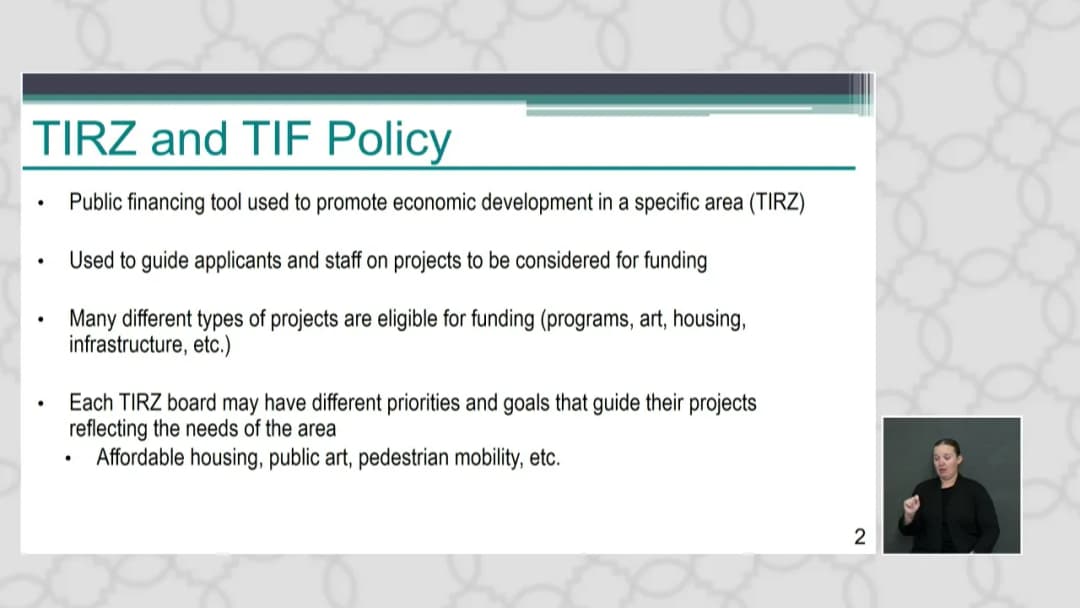
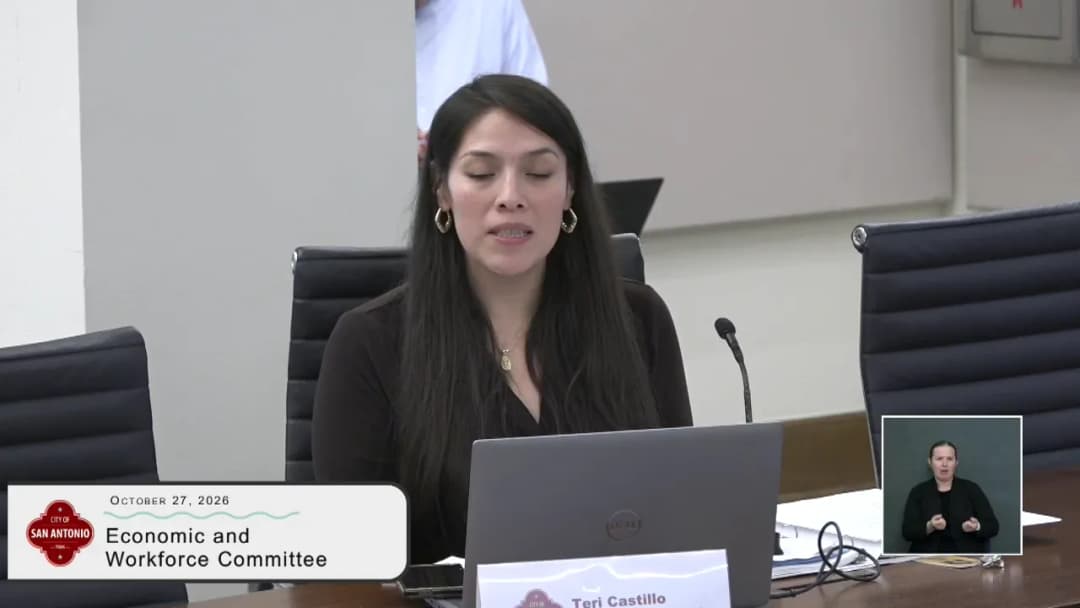
Planning Community Development Committee Meeting – October 27, 2026\n\nThe San Antonio Planning Community Development Committee met on October 27, 2026, at 10:08 AM to discuss three main agenda items: the Northeast Subregion Extraterritorial Jurisdiction (ETJ) Plan, the Lone Star at Presidio affordable housing development, and the Jones Avenue mixed-use project in the Midtown TIRZ. The meeting was called to order by Chair Mungia, with a quorum present. All three items received committee approval to move forward to full City Council.\n\n Consent Calendar\n- Minutes Approval: The committee approved the minutes of the previous meeting by a voice vote with no corrections.\n\n Discussion Items\n Item 2: Northeast Subregion ETJ Plan\n- Staff presented a briefing on the proposed ETJ plan for the northeast subregion, which covers areas north of San Antonio including Camp Bullis, Garden Ridge, Universal City, and Selma. The plan updates the city’s annexation and growth management policies in response to changes in state law (e.g., Senate Bill 6) and community input.\n- Key changes include reducing maximum residential density from 33 units per acre (under existing sector plans) to 6–8 units per acre in most areas, designating more land as agricultural and low-density residential to protect environmentally sensitive areas, the Edwards Aquifer, and military operations at Camp Bullis and Randolph Air Force Base.\n- The plan was developed over 2025–2026 with a technical working group and stakeholder engagement including property owners, utility providers (SAWS, CPS Energy), the Edwards Aquifer Authority, and Joint Base San Antonio (JBSA).\n- Council members discussed the role of the planning department in shaping development versus merely reflecting community desires. Councilman Court questioned whether the plan simply limits development rather than encouraging growth in designated centers. Staff clarified that the ETJ plan applies to county land, while the city’s comprehensive plan focuses growth in regional centers and along transit corridors.\n- The committee voted to approve staff’s recommendation to forward the plan to the Planning Commission and then to City Council for full consideration in December 2026. Motion passed unanimously.\n\n Item 3: Lone Star at Presidio Multifamily Development\n- Ian Ben Avita, Deputy Director of Neighborhood Housing Services, presented a request to approve a 316-unit multifamily rental housing development named Lone Star at Presidio, located at Presidio Parkway and Vance Jackson Road in Council District 8. The project is a partnership between Lone Star Development Partners and the San Antonio Housing Facilities Corporation (SAHFC), a public facility corporation (PFC) of Opportunity Home.\n- The development includes 1-, 2-, and 3-bedroom units (primarily 1 and 2 bedrooms) with affordability set at 50%, 60%, and 80% of Area Median Income (AMI) and market-rate units. The project will accept Section 8 Housing Choice Vouchers. Revenue from the PFC will be used to preserve and improve existing public housing properties operated by Opportunity Home, which currently lose over $1.5 million per month due to operating deficits.\n- Council members discussed the difference between PFC structures (303 vs. 392) and why some projects require city council approval while others do not. Opportunity Home staff explained that 303 PFCs require council approval, while 392 PFCs (exclusive to housing authorities) do not.\n- Councilwoman Castillo expressed opposition, citing the absence of 30% AMI units and only 18 three-bedroom units, which she said does not align with the city’s Strategic Housing Implementation Plan. Councilwoman Mesa Gonzalez supported the project as needed for the I-10 corridor employment area.\n- The committee voted to approve staff’s recommendation to forward the item to full City Council. Motion passed with Councilwoman Castillo opposed.\n\n Item 4: Jones Avenue Development – Midtown TIRZ Agreement\n- Justina (staff) presented a proposed development agreement for the Jones Avenue project, a mixed-use development (office, retail, food and beverage) on a nearly 6-acre site in District 1, adjacent to the San Antonio River Walk and I-35. The developer is Emmy Jones, and the project is located in the Midtown Tax Increment Reinvestment Zone (TIRZ).\n- Total project cost is approximately $277 million. The project will be built in two phases (Phase 1: 2027–2031; Phase 2: 2029–2031). Staff recommended reimbursing up to $7.5 million from TIRZ increment for public infrastructure (roads, river improvements, pedestrian bridge, land improvements), but not for utility costs. Additionally, 25% of the TIRZ increment must be set aside for affordable housing until a plan is approved by City Council.\n- The land currently valued at $30 million is projected to grow to $335 million by 2060, generating approximately $80 million in sales tax revenue for the city’s general fund over the life of the TIRZ.\n- Councilman Court thanked staff, particularly Justina (who is transitioning to another city role), for their work on the project. The committee voted to approve staff’s recommendation to finalize the agreement and present it to the Midtown TIRZ Board and City Council for final approval in November/December 2026. Motion passed unanimously.\n\n Key Outcomes\n- ETJ Plan: Committee approved forwarding the Northeast Subregion ETJ Plan to the Planning Commission and City Council for adoption in December 2026.\n- Lone Star at Presidio: Committee approved the project to move to full City Council; Councilwoman Castillo voted against.\n- Jones Avenue: Committee approved staff to finalize the TIRZ agreement and bring it to the Midtown TIRZ Board and City Council for approval.\n- The meeting adjourned at 10:44 AM.

ZONING AND LAND USE 40% · AFFORDABLE HOUSING 19% · TAX INCREMENT FINANCING 14% · PUBLIC HOUSING 12%
895
OCT 27, 2026 · JACKSON, MISSISSIPPI · MEETING PORTAL
Jackson Planning & Development Committee Meeting - October 27, 2026

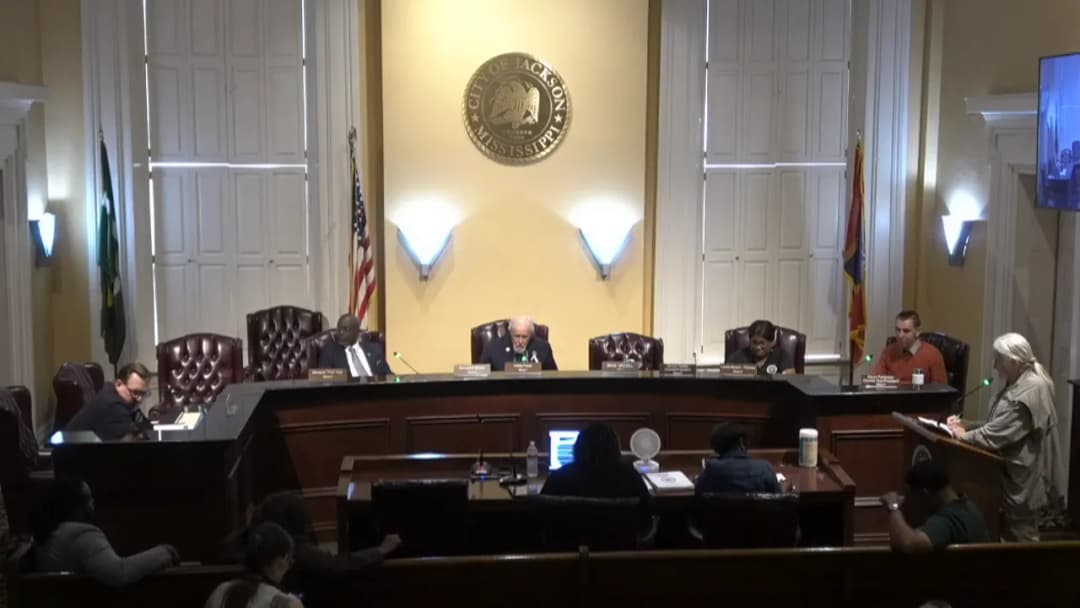
The Planning and Development Committee of the City of Jackson met on October 27, 2026, with a quorum present. The committee discussed the data center ordinance timeline, the Homeward Jackson homeless outreach project, JTRAN transit reliability, and a proposed grocery development. Two emergency discussion items were added by motion. Public Comments & Testimony - Sheila O'Flarity (Ward 5) expressed dissatisfaction with JTRAN service, citing buses not running, tracking failures, and long wait times (e.g., route 3565 runs every two hours). She stated she has to call customer service daily to confirm if buses are operating. She noted that last Saturday a bus did not run and a supervisor was riding the route but left earlier riders waiting. She reported no response from the new operations manager about tracking issues. Discussion Items - Data Center Ordinance Timeline: City Attorney/Interim CAO Drew Martin reported that the six-month moratorium on data centers (set in June 2026) expires later than initially thought due to publication date; it is not in danger of lapsing within 30 days. He had missed an internal deadline to deliver the ordinance but said he needs about one more day to complete it. The ordinance will require data centers to submit water and power usage information for review by utilities and possibly outside engineers. Martin noted that specific requirements (noise, setbacks, appearance) will be handled during site plan review, not the ordinance itself. He also mentioned that community benefits agreements (e.g., contributions to water infrastructure, public safety) would be negotiated once a developer is secured. Council members expressed support for moving forward, with one noting the potential for significant revenue and strengthening city finances. - Homeward Jackson Project: Javonda Stanton, Program Manager/Director from Mississippi Housing Partnership, presented the initiative to house 1,400 people over two years. Strategy includes: (1) 300 target individuals living in encampments via outreach, case management, and wraparound services; (2) 1,100 people at risk of falling into homelessness, addressed through diversion and stability services. Stanton reported that four candidates (two couples) from encampments have already been selected, engaged, and agreed to housing. The goal is to close the first encampment by the first week of November 2026. Two case managers are ready; Hinds Behavioral Services will provide mental health assessments. Landlords have been identified to offer units. Council members praised the plan and emphasized trust-building and the need for sustained funding. - JTRAN Transit Reliability: Christine Welch, Transit Services Director, confirmed driver shortages (need 45 drivers per day, averaging low 40s/high 39s) leading to missed routes and unreliable tracking. She stated the system has not been fully functional since before the strike and that the contractor MV Transportation is responsible for hiring. City Attorney Martin said the city has limited ability to address the shortage directly. The RFP for a new contract will be released in the next 120 days, and alternative models like microtransit are being considered. Council members noted the risk of ridership collapse if reliability does not improve. - Grocery Development (McDowell/Terry Road): Angela (staff) reported that developers Theodore Holloway and Charlotte Reeves have purchased the old Roses store and are trying to purchase the adjacent Food Depot to create a grocery store and wholesale distribution center. They need to go through site plan and zoning approval. Councilwoman Thomas-Brown urged proactive outreach to grocery chains and preparation of shovel-ready sites. Council members expressed support and offered to join meetings with developers. Key Outcomes - Emergency Items Added: Motions to add JTRAN and grocery development as emergency discussion items were made, seconded, and passed by voice vote. - Data Center Ordinance: The ordinance is pending completion; City Attorney Martin expects to deliver it within a few days. The council will schedule public hearings once the draft is available. - Homeward Jackson Pilot: The project is underway with four candidates; first encampment closure targeted for early November 2026. The council committed to supporting the initiative and closing funding gaps. - JTRAN RFP: The city will issue a new RFP within 120 days. No immediate operational fix was identified; the council acknowledged the systemic driver shortage. - Executive Session: The committee voted to enter executive session for litigation and personnel matters. No action was taken, and the meeting adjourned.

HOMELESSNESS 38% · DATA CENTER REGULATION 18% · PUBLIC TRANSIT 17% · ECONOMIC DEVELOPMENT 9%
896
OCT 27, 2026 · SEATTLE, WASHINGTON · CITY COUNCIL
Seattle Select Budget Committee Discusses 2027-2028 Proposals on October 27, 2026

The Seattle City Council Select Budget Committee, chaired by Dan Strauss, met on October 27, 2026, from 9:30 AM to 2:18 PM to discuss council member budget proposals (Council Budget Actions and Statements of Legislative Intent) for the 2027-2028 biennial budget. The meeting featured extensive public comment from over 70 in-person and remote speakers, followed by the review of 10 initial budget proposals across several city departments. Chair Strauss emphasized that the proposals represent community needs and that a chair's balancing package would be released the following week. Public Comments & Testimony - City Attorney Erica Evans expressed strong support for Councilmember Foster's proposal to add $1 million for the city attorney's office to address a backlog of over 5,000 cases, and for Councilmember Kettle's proposals to add four prosecutors and fund DUI testing. She stated that approximately one-third of the backlogged cases are domestic violence related, making timely resolution a survivor safety issue. - Several speakers representing artists and cultural organizations (including Arts Corps, Seattle Composers Alliance, Town Hall, Theater Off Jackson, Taproot Theater, and Scarecrow Video) urged support for Council President Hollingsworth's $3 million proposal and Councilmember Foster's admission tax proposal for the arts and culture sector. They framed the investment as crucial for the city's economy, identity, and public safety. - Marsha Wright-Soyka (Family Works) and Susan Boyd (Bellwether Housing) supported Councilmember Rivera's request for $300,000 in capital funding for the Sunbreak Family Resource Center, citing the proven model of pairing affordable housing with deeply supportive services that generate $4 in public value for every $1 invested. - Representatives from the Seattle Human Services Coalition, PDA, Evergreen Treatment Services, and Plymouth Housing strongly advocated for Councilmember Lynn's proposal for a 3% wage equity increase for human services contractors. They noted a 37% pay gap compared to other sectors, arguing it is essential for retaining skilled staff and ensuring quality of care. - Speakers from the Transit Riders Union, Housing Justice Project, and Seattle Renters Commission supported Council President Hollingsworth's amendment to add $500,000 for tenant services, stressing that eviction prevention is a key strategy to combat homelessness. One speaker noted their organization can only help 10% of those who call for assistance. - Kate Garvey (King County Sexual Assault Resource Center) and Amarintheotoris (Coalition Ending Gender-Based Violence) urged support for Councilmember Rink's $8 million budget amendment for gender-based violence prevention, accountability, and survivor services. - Lars Erickson (Seattle Metro Chamber) supported Councilmember Foster's and Kettle's proposals for the City Attorney's Office backlog, citing a business climate survey where nearly two-thirds of respondents identified public safety as a major challenge and 70% said improved safety would make them more likely to invest in Seattle. - Multiple speakers (Zach McCarty, Jonathan Gonzalez, Gordon Pedelford) opposed a proposed $1.25 million cut to the Safe Routes to School program, arguing that revenue from school speed cameras should be reinvested into pedestrian and bike safety infrastructure rather than backfilling other budget holes. - Eleonora Arakaki (Friends of Little Saigon) requested restoration of the SAIL fund to continue safety and activation investments, noting over 2,500 people attended events in Huamai Park supported by the fund. - Carlos Ortiz and Kelly O'Brien Burford (Nicholsville participants) requested $500,000 for tenant protections and $300,000 for a new Nicholsville Tiny House Village, contrasting the cost of a village with the salary of one police officer. - Hamdi Abdulle (African Community Housing and Development) requested $3 million under OPCD to support the Seattle International Public Market in South Delridge, describing it as an anti-displacement and economic development strategy. - Commenters also raised concerns about police accountability, the need for trans refugee funding, and broader grievances regarding city spending priorities. Discussion Items - Process and Overview: Director Lish Whitson and Calvin Chow from Central Staff outlined the process for reviewing 36 proposals that day across 16 departments. Chair Strauss set firm procedural rules for debate, indicating that over 170 total proposals would be heard over three days. He stated he would look at co-sponsorships to gauge priority and noted the budget has a structural deficit. - Seattle Municipal Court (SMC 1A1): Councilmember Kettle sponsored an amendment restoring $410,000 and 2.0 FTE for an information technology professional and a manager. He argued these positions are necessary to support court functions for programs like the automated traffic camera system, which create unfunded mandates for the court. - City Attorney's Office: - LAW 1A1 (Foster): A $1 million one-time appropriation to address the criminal case backlog. Councilmember Foster stated 33% of the backlog involves domestic violence, elder abuse, assault, or stalking cases, and the funds would help ensure the statute of limitations doesn't expire on valid cases. - LAW 2A1 (Kettle): A $562,000 (2027) and $715,000 (2028) increase for 4.0 new Assistant City Prosecutor FTEs. Councilmember Kettle framed this as complementary to Foster's surge funding to prevent a new backlog. Councilmember Juarez spoke in strong support, detailing persistent gun violence on the Aurora Avenue corridor. - LAW 3A1 (Kettle): A $277,000 annual increase for toxicology testing and witness travel to support prosecutions under the state's new DUI law. - Vice Chair Rivera asked Chair Strauss for clarity on how co-sponsorship would influence the chair's package, given the uncertainty of total funding availability. Chair Strauss responded that no decision had been made, but that consensus and co-sponsorship would be heavily weighted in his balancing calculations. - Office for Civil Rights: - OCR 1A1 (Rink): $50,000 one-time for the Seattle Human Rights Commission to establish an 'affected person's work group.' This group would develop recommendations for supporting individuals and families who have suffered life-altering injuries or lost a family member due to an interaction with the Seattle Police Department. Councilmember Kettle supported the concept but urged working with existing accountability partners. Councilmember Rivera expressed concern about potentially bifurcating the existing accountability system. - OCR 2A1 (Juarez): $30,000 annually for contracted facilitation and interpretation services for the Seattle Disability Commission, whose budget was cut in half in the mayor's proposal. - OCR Temporary (Foster): Legislation to restrict the use of do-not-solicit penalty revenue for specific community benefit uses, directing funds back to communities negatively impacted by the practice. - Office of Labor Standards: - OLS 1A1 (Rink): $192,000 (2027) and $194,000 (2028) to restore a policy analyst FTE proposed for elimination in the mayor's budget. Councilmember Rink stated the OLS has recovered nearly $70 million for over 120,000 workers since its inception. - OLS 2A1 (Rink): $120,000 one-time for outreach and education on the newly updated Domestic Workers Ordinance, ensuring workers and employers are aware of their new rights and responsibilities. - Office of Immigrant and Refugee Affairs (OIRA 1A1): Councilmember Juarez sponsored $300,000 annually for the Refugee Artisans Initiative (RAI). She detailed the organization's growth, noting it has generated $1.7 million in income for refugee women artisans and currently has a waitlist of over 320 women despite having produced over 167,000 upcycled products since 2017. Key Outcomes - The committee formally heard and discussed 10 budget proposals (CBAs and SLIs) during Session I, allowing sponsors to make their case and colleagues to ask questions. - Co-sponsorships were formally recorded for each proposal. Chair Strauss stated he would use co-sponsorship levels as one metric among several in developing the Chair's Balancing Package. - No formal votes were taken on the proposals today; they will be considered for inclusion in the Chair's Balancing Package, which is scheduled to be released the following week and reviewed at a subsequent public hearing. - The committee recessed at 12:07 PM and reconvened at 12:55 PM to begin Session II, which covered remaining departments (Office of Housing, OPCD, Finance General, SDCI, OSE, DEEL, DON, SCL, SPU, ITD, FAS). - Chair Strauss committed to a transparent process, pledging to publish the balancing package with enough time for the public to read it before the public hearing.

897
OCT 27, 2026 · NEW YORK CITY, NEW YORK · CITY COUNCIL
NYC Council Committee on Workforce Development Oversight Hearing on the Office of Community Hiring - October 27, 2026

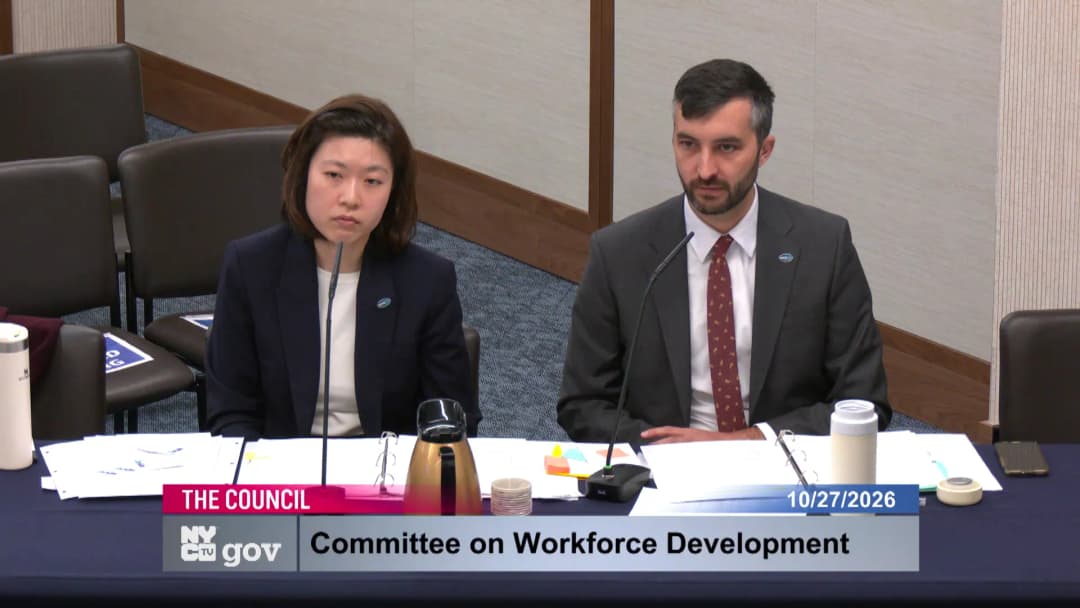
The New York City Council Committee on Workforce Development, chaired by Julie Won, met at 1:00 PM on October 27, 2026, in Hearing Room 2 at 250 Broadway for an oversight hearing on the Office of Community Hiring (OCH). Councilmembers Cabán, Epstein, Hanif, and Wong were present. NYC Talent Executive Director Doug LeHarry and OCH Executive Director G. Lee testified. The committee examined OCH quarterly reports, hiring data, procurement coverage, staffing, outreach, and accountability. The hearing was held and the committee filed the oversight report for T2026-2532. Discussion Items - Program overview and reported progress: NYC Talent reported that community hiring, authorized by state legislation in 2023, embeds workforce goals into city contracts. Rules went into effect January 23, 2025. As of the hearing, 528 registered contracts totaling $13.3 billion carried community hiring goals, and about 1,200 community hires had been employed, with roughly 1,136 income-based and almost 70 residence-based hires. LeHarry also reported 362 procurements released totaling $18.4 billion. He said nearly all mayoral agencies, more than 20, were participating. - Chair Won’s concerns about data and reporting: Chair Won noted OCH’s latest quarterly report showed 179 contracts worth about $3 billion, up from 60 contracts and about $1 billion in March, but only 8 of 83 construction contracts reported progress, and 6 of those 8 were below the 30% community hiring goal. All five apprenticeship-goal contracts reporting progress showed zero community-hire apprentice hours. Of 94 service contracts with combined goals of more than 3,000 hires, more than half reported no progress. Won flagged an apparent anomaly: a DSS PACE workforce program contract in Queens with a goal of 31 hires reported 1,229% progress. She said OCH reports still do not state total hires, pay, or demographics as required by law, and the first announced community hiring procurement, $1.2 billion in security guard and fire safety services from June 2024, still does not appear in OCH reports. - Administration explanation of anomalies: LeHarry said the 1,229% figure was confirmed and reflected a vendor hiring above its formula-based goal. He estimated it could represent a couple hundred hires but did not provide exact figures. He said many contracts are newly registered and hiring needs vary over contract terms, so lack of reported progress does not necessarily mean no hiring. The city was using certified payroll reports for construction and a mix of vendor and referral-source data for non-construction, with a digital tool being implemented. - Outreach and referral network: LeHarry and Lee described a referral network of 81 organizations, including 28 community-based organizations funded through DYCD, plus SBS Workforce1, HRA Business Link, and labor unions. LeHarry read the list of 28 CBOs. Councilmember Epstein asked why council offices were not enlisted as partners and cited settlement houses like Henry Street and Grand Street Settlement. LeHarry welcomed council partnership and agreed to provide the CBO list. Councilmember Wong asked about reaching young people; LeHarry highlighted a September 30 HRA community hiring job fair with 25 employers, 388 job seekers, and 16 conditional job offers. Wong invited the office to hold a job fair in his district. - Jobs NYC center and agency roles: Councilmember Cabán raised complaints about the September 28, 2026 Jobs NYC center opening at 2 Lafayette Street, including reports of more than 50,000 applications with very few hires. LeHarry said the center focuses on city jobs while community hiring covers jobs with city vendors; SBS staff at the center can route job seekers to Workforce1 services. He said his office would supply details on staffing and hours. - Staffing and budget: Chair Won noted the FY2027 adopted budget provides $1.7 million and 16 positions for OCH, including $388,200 for contractual services. G. Lee said the OCH team currently has eight people, six full-time employees, one Civic Corps member, and one intern, plus two headcount at SBS, and three vacancies. Won questioned the discrepancy with 16 authorized positions; Lee said no active postings exist for OCH vacancies. LeHarry said the $388,200 is for technology investment and there is a consultant firm, JK Consultant, supporting technical implementation. - Penalties and accountability: LeHarry said OCH has not issued any notices of non-compliance or assessed penalties. The best-efforts standard, rooted in state law, is applied case by case. Penalties can begin at $2,500 plus $1,000 per week for failing to take corrective action, and can scale over time. Vendors’ community hiring performance can be considered in future contract performance evaluations. Chair Won and public witness Gregory Morris both questioned whether the penalty is a meaningful deterrent. - Income threshold and language access: LeHarry defended the 300% federal poverty guideline threshold, saying it was chosen with agency and CBO input and intentionally expands eligibility; many hires are public-assistance recipients. Language access for OCH outreach is currently English only, with referral partners providing other languages. Chair Won urged expansion to at least five languages. - Other administration commitments: LeHarry agreed to follow up within two weeks with information on potential job opportunities tied to the 528 registered contracts and to provide more data internally, including demographic breakdowns. He also committed to providing details on PLA versus non-PLA construction metrics, pre-apprenticeship data, and the construction hours figure, which he later gave as 23.75% of hours worked by community hires. Public Comments & Testimony - Gregory Morris, CEO, NYC Employment and Training Coalition: Morris expressed strong support for community hiring as the right use of public spending but raised concerns about accountability, noting prior HireNYC failed when entities were not held responsible. He called the $2,500 penalty unlikely to deter, said NYC Talent is under-resourced given its vacancies, and noted agencies not participating miss opportunities. He cited hiring hall data: nearly 20,000 individuals served over the past year and about 2,000 conditional offers, with more than half of attendees holding bachelor’s or master’s degrees. He asked whether the model solves unemployment, underemployment, or wage transition and said the administration has not clarified its workforce development investment. - Anthony DeCarlis, former hospitality worker, Clear the Records: DeCarlis highlighted New York Labor Law Section 210B, effective November 8, giving workers the right to access personnel files, and asked the committee to make this right part of the community hiring pipeline so workers can review and dispute records before being screened out. Key Outcomes - The Committee on Workforce Development held the oversight hearing and filed the oversight report for T2026-2532. - NYC Talent/OCH committed to provide: the list of 28 CBO referral partners; a two-week update on estimated job opportunities from the 528 registered contracts; demographic and placement data shared internally with the Council; and follow-up data on PLA construction metrics, pre-apprenticeship placements, and construction hours. - No legislation was introduced and no council votes were taken. Chair Won indicated the Council may need to advocate for expanding OCH staffing.

WORKFORCE DEVELOPMENT 84% · PUBLIC HOUSING 6% · PUBLIC ENGAGEMENT 4% · PERSONNEL MATTERS 2%
898
OCT 27, 2026 · SAN ANTONIO, TEXAS · COUNCIL COMMITTEES
San Antonio Economic & Labor Development Committee Meeting – October 27, 2026

The Economic Development Labor Committee met at 2:03 p.m. with Chief Villagrán presiding and Councilmembers Castillo, Galván, Mesa González, and Spears present. The committee approved the previous meeting minutes, heard no public comment, considered renewal of the Launch small-business resource center contract, and received an informational return-on-investment study of city incentive programs. Consent Calendar - Minutes from the September 22 meeting were approved by unanimous voice vote. Public Comments & Testimony - No members of the public had signed up or provided comment. Contract Renewal – Launch Small Business Resource Center - Charles Wooden, Ralph Bruce, and program staff presented the renewal of a contract with the City of San Antonio that began in 2023 to operate Launch, a resource center for entrepreneurs and small-business owners. The program's goals were accessibility, usable resources for founders wherever they are, and advisory/mentorship support. - Presenters reported three-year results: one-on-one sessions of 30 minutes to one hour; 574 events; more than 10,000 connections with entrepreneurs; 700 hours of partner collaboration; quarterly partner meetings; 30 business owners providing feedback; 60 business owners reached through community events; and events in each of the city's districts, including library events at the Central Library and branches. - The renewal would extend the contract with a one-year option. Planned work included central library activation, partner collaboration, veteran-focused programs, and technology/education workshops. - Councilwoman Spears asked for specific business-expansion numbers and district-level event breakdowns. Staff committed to sharing detailed three-year data. She called for measurable growth in one-on-one sessions, including 2-3% growth, more partner and mentor hours, and more regional events, such as two additional events in the west and one in the center. - Councilwoman Castillo thanked the team for on-the-ground outreach, requested district 5-specific information, and asked about tracking by age group and industry, quality vs. quantity metrics, and alignment with the city's strategic work. - Councilmembers expressed support for continuation, emphasizing small businesses' loss of funds, inflation, new tariffs, and automation/AI replacing workers as reasons to keep the service active. - A motion to send the Launch contract renewal to the City Council was made, seconded, and passed unanimously. ROI Study – Incentive Program Economic Growth - Dr. Steve Nivens presented the third ROI study of San Antonio's economic development incentive programs, prepared with city staff. - Methodology: the study covered monitored and active projects through December 31, 2025, with no new 2026 incentive agreements; projects from 2010 to 2021; 25 projects in the current study; and a conservative model that excluded pre-2010 projects, finished projects that still generate returns, and gains beyond twice the incentive period. Data came from economic development, finance, CPS Energy, the county appraiser, and impact models. - Results over a 20-year period: $33 million in program staffing costs; almost $11 million in total incentives; $316.4 million in city revenue generated; $172 million in net gains to the City; and $3.7 billion in private-sector investment. The transcript states '$3.7 million,' but the reported $336-per-incentive-dollar ratio implies billions. - ROI metrics: $336 in private-sector investment per $1 of incentives; $9.42 in city gains per $1 spent administering the program; $2.86 in gains per $1 of incentives; and $2.19 per $1 spent on incentive programs. - Compared with the 2022 study, the project count fell from 69 to 25, total incentives fell from $180 million to $11 million, and private-sector investment fell from about $5.6 billion to $3.7 billion. The administrative-cost gain rose slightly from $9.39 to $9.42 per dollar; gains per incentive dollar fell from $3.73 to $2.86; and gains per program dollar fell from $2.67 to $2.19. - During discussion, Councilwoman Mesa González asked how the study could guide future investment and whether industry-level analysis was available. Dr. Nivens said no industry-level analysis had been done; staff noted that a proposed incentive policy seen by the City Council would lower caps from $10 million to $5 million to encourage capital-intensive projects. - Councilwoman Castillo asked whether other city costs, including CPS Energy incentives, infrastructure, public safety, and EDD staff time, were included. Staff responded that broader non-EDD costs were not fully included and that EDD staff time was counted proportionally, about 40% in aggregate. - Councilwoman Spears asked how to identify jobs created, best-performing agreements, comparable data from other cities, and district-level breakdowns. She noted that District 7 appears to return $33 per incentive dollar and urged using district-level data and business-leader meetings to recruit medium-sized businesses. - The item was informational only; the committee took no action on it. Key Outcomes - Approved the September 22 meeting minutes by unanimous voice vote. - Recommended the Launch contract renewal to the City Council by unanimous voice vote. - The next committee meeting was announced for November 23, with a bulletin to be sent to members; the meeting ended around 3:00 p.m.

ECONOMIC DEVELOPMENT 77% · PUBLIC ENGAGEMENT 8% · SMALL BUSINESS SUPPORT 7% · VETERAN AFFAIRS 2%
899
OCT 27, 2026 · GRAND RAPIDS, MICHIGAN · MEETING PORTAL
Grand Rapids Public Safety Committee: CAB Report, Fire Prevention, Crime Stats and Training – October 27, 2026

On 2026-10-27, the Grand Rapids public safety committee received presentations on the Civilian Appeals Board, fire prevention efforts, monthly police crime statistics, and police training. No agenda or minutes were attached to the transcript. No formal votes were taken; the meeting was informational. Civilian Appeals Board (CAB) Report - Mr. Davis, from the Office of Oversight and Public Accountability, presented the CAB's biannual report covering 2024 and 2025. CAB was established in 1996 through City Commission Policy 800-02, and Grand Rapids was described as an early leader in civilian oversight in Michigan. - CAB has a unique authority: it can review closed Internal Affairs cases and overturn the department's findings. Mr. Davis said this authority is unusual compared with other oversight models nationally. - CAB jurisdiction covers complaints involving excessive force, falsification/lying, civil rights violations, and hostility/discourtesy or conduct unbecoming when committed in the context of racial animosity or prejudice. - The appeal process is limited to cases where Internal Affairs concluded the complaint was not sustained, unfounded, or exonerated. CAB reviews the existing record like an appellate court and generally does not take new testimony, though it can request additional evidence such as a missing video. - 2025 saw unprecedented board turnover, with all but two members replaced. Training was provided in partnership with the law department, labor relations, and the police department. - Complaint data: Internal Affairs received 94 complaints in 2024 and 154 in 2025. Administratively closed complaints were reported as increasing by 400%, but Mr. Davis noted the increase was inflated by a change in how complaints were reported. - In 2025, 26 cases were eligible for appeal, 3 appeals were filed, and 0 appeals were heard because of board turnover, loss of quorum, and the need for training. In 2026, one appeal has been heard and CAB affirmed Internal Affairs' decision; another appeal is pending. - The mayor compared CAB to a court of appeals, and Mr. Davis said boards with subpoena/reinvestigation powers often do not have the power to overturn decisions. Both speakers indicated the overturn authority is a valuable strength of Grand Rapids' model. - Mr. Davis said a fuller conversation about reimagining CAB will come in January 2027. Fire Prevention Efforts - Fire Marshal Bill Smith presented the Fire Department's community risk reduction approach, built around education, engineering, economic incentive, and enforcement, with enforcement listed last. The division has 22 personnel. - The department has completed 650 operational permit inspections and expects about 200 more by the end of the year. - With building department partners, the division completed 753 construction plan reviews and 283 rough-in/final building inspections. - Fire prevention education includes visits to about 40 schools and roughly 2,000 second-grade students each year; the department was about two-thirds through those visits and expected to finish by mid-November. - The residential safety program has installed more than 4,200 smoke alarms, 1,500 carbon monoxide detectors, and served over 800 homes since January 1, 2026. Since inception, the program has installed over 84,000 smoke alarms, 17,000 carbon monoxide detectors, and served over 15,000 homes. - The Grand Rapids Fire Prevention Foundation recently provided $75,000 to purchase inventory for the program. - Commissioner Kilgar highlighted that the new Station 10 is the first fire station in Michigan with bilingual signage. The mayor praised the fire department for including community space and a public safety room in the station. - Fire Marshal Smith identified improperly discarded smoking materials, unattended cooking, and electrical issues as top fire causes, and warned about the growing risk of subpar lithium-ion battery chargers. - The mayor asked about drone displays and generator safety. Fire Marshal Smith said drones at venues are overseen by the Office of Special Events and police UAV experts, and the department is preparing a media release warning people not to use generators inside homes. Police Monthly Crime Statistics - Chief Trig reported that auto thefts and robberies are trending down. Overall person-shot incidents are down, but fatal person-shot incidents are up by four when comparing January through September. - There have been 14 homicides year to date; 12 of 14 have been cleared by arrest. The national homicide clearance average is 55%. - Year to date, there were 20 fatal overdoses and 29 illegally possessed guns recovered through September. - The department's community engagement unit received the 2026 Crime Prevention Association of Michigan award. Chief Trig read community messages praising foot patrols and officer conduct at the No Kings rally. - Chief Trig confirmed the department received a draft from the ACLU regarding privacy, safety, and dignity for all. He said there are potential legal concerns and that the department wants to provide a well-thought-out response after review with the city manager and city attorney. - Commissioner Kilgar said constituents strongly oppose Flock cameras and asked about ending the contract before June 2027. Chief Trig cautioned against a knee-jerk emotional decision and noted there are 30 fixed Flock cameras, while in-car ALPRs have existed since 2012. He said data and community feedback should be considered carefully. - The mayor clarified that the ACLU document is a draft and a starting point, not an ordinance; only the City Commission can create ordinances. - Commissioner Nisasi described seeing Chief Trig de-escalate a concerned community member at a neighborhood meeting. She expressed worry about how federal agencies might use data, but said she supports a thoughtful review timeline and trusts Grand Rapids police accountability systems. - A public safety workshop on the implications of ALPR/Flock issues was planned for November 12, 2026. Police Training Overview - Captain Butler presented the training unit's work. The unit includes one captain, one sergeant, and five full-time instructors, plus dozens of part-time instructors. - In 2025, the department logged 35,288 training hours and 9,900 hours for miscellaneous training opportunities. - Recruits receive roughly 800 hours of academy training over 17 weeks, followed by an eight-week in-house orientation and a 16-week field training program with six steps. Captain Butler noted that 30–40% of recruits do not make it to solo patrol, which he framed as a sign that Grand Rapids holds officers to a high standard. - Michigan's continued police education program now provides $1,000 per officer, with 24 hours of electives, to support training. - Every use of force is reviewed daily, with at least five people reviewing it before it is approved as justified and within policy. The training unit also conducts supplemental training and officer-involved shooting debriefs. - Commissioners discussed customer-service and de-escalation skills, community engagement, LGBTQ+ liaison resources, and DALE training. Captain Butler said DALE training applies broadly to intimate partner relationships and there is not currently a separate version for the LGBTQ+ community. - Election preparedness was also discussed: the city is participating in tabletop exercises, operating a virtual emergency operations center, and coordinating with the Department of Justice around the upcoming election. Key Outcomes - No formal motions or votes were taken. - The committee received the Civilian Appeals Board report; a CAB reimagination update is expected in January 2027. - The Fire Department will continue operational inspections and public education, including a planned carbon monoxide/generator safety media release. - The city will hold a workshop on November 12, 2026 to discuss ALPR/Flock implications and possible next steps. - The Police Department will continue reviewing the ACLU draft and prepare a formal response after consulting with the city manager and city attorney.

PUBLIC SAFETY 37% · POLICE ACCOUNTABILITY 32% · FIRE PREVENTION 14% · COMMUNITY ENGAGEMENT 7%
900
OCT 27, 2026 · NEW YORK CITY, NEW YORK · CITY COUNCIL
NYC Council Transportation Committee Hearing on Vision Zero and Street Safety Legislation - October 27, 2026

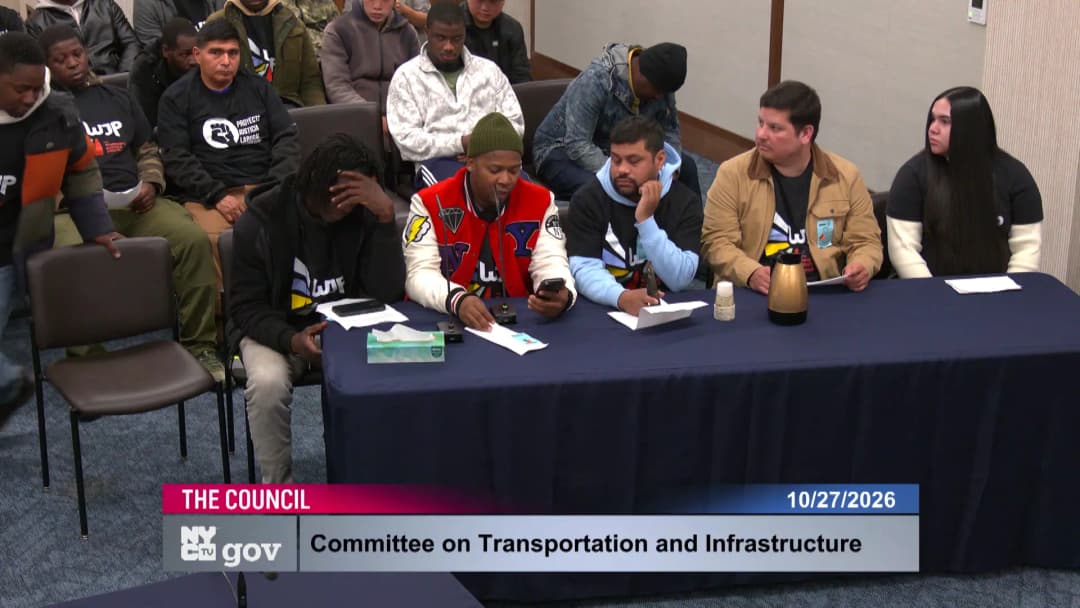
On Tuesday, October 27, 2026, at 9:30 AM in Hearing Room 3 at 250 Broadway, the New York City Council Committee on Transportation and Infrastructure, chaired by Councilmember Shaun Abreu, held an oversight hearing on Vision Zero and six street-safety measures. Members present included Brooks-Powers, Dinowitz, Hanif, Krishnan, Louis, Marte, Justin Sanchez, Pierina Ana Sanchez, Won, and Wong; Councilmembers Restler and Santosuosso and Public Advocate Williams also attended. The committee heard from DOT, NYPD, and the Business Integrity Commission (BIC), followed by public testimony. Under the minutes, the oversight item was filed and all bills were laid over. Oversight: Vision Zero Reimagined and Enforcement - Chair Abreu opened by citing progress: 205 traffic fatalities in 2025, a 31% reduction from 2014. He also noted that Vision Zero-related moving summonses fell from nearly 700,000 annually in FY2018-2019 to about 300,000 in FY2021, and rose to just over 413,000 in FY2026 - still about 40% below pre-pandemic levels. NYPD later cited 210 traffic fatalities for 2025, a discrepancy with the Chair's 205 figure. - DOT Commissioner Mike Flynn said the first three quarters of 2026 were the second-safest on record since 1910, with pedestrian fatalities at an all-time low. He described Vision Zero Reimagined as a 10-year strategy released by the Mamdani administration, and said DOT is hiring roughly 200 new staff, with more than 100 already in the pipeline, and will launch a Vision Zero dashboard and an updated Streets Plan. - NYPD defended lower summons counts as data-driven and said it does not set ticket-number goals. It reported that 81.2% of 2026 year-to-date moving enforcement targeted cars and SUVs; noted large increases in micromobility enforcement, including moped seizures rising from 1,610 in 2019 to 14,421 in 2025; and cited 2,200 speed cameras in 750 school zones and 600 red-light cameras. - On hit-and-runs, NYPD said its Collision Investigation Squad handles fatalities, likely-fatal and critical injuries. Year-to-date through October 18, 2026, CIS had 212 cases, 167 fatal and 45 non-fatal, with 77 deemed criminal and 40 fatal criminal cases closed with arrest. Last year, 75% of hit-and-run vehicles were identified, with about two-thirds of those cases resulting in arrest. - NYPD reported 271 documented car meetups and street takeovers citywide from January 1 to October 18, 2026, up 11%, with 170 arrests, up 161%; 1,572 summonses, up 246%; and 291 vehicle seizures, up 104%. Legislation - Int 0046-2026, sponsored by Councilmember Ariola, would allow parents and guardians of children with autism to request warning plaques. DOT supported the intent but did not endorse the mandate, citing federal MUTCD guidance, visual clutter, research that such signs do not change driver behavior, and staffing costs. Councilmember Ariola criticized DOT for calling the signs clutter. - Int 0113-2026, sponsored by Councilmember Brooks-Powers, would require an annual study of dangerous driving behavior. DOT said it supports the study concept and will work with the council on amendments, noting limited access to insurance and conviction data. - Int 0613-2026, sponsored by Councilmember Joseph, would require 100 miles of protected bike lanes per year for six years. DOT supported the goal but cautioned that rigid mandates can reduce flexibility. Delivery-worker advocates strongly supported the bill. - Int 1070-2026, sponsored by Chair Abreu, would create a two-year low-traffic neighborhood pilot in five neighborhoods across at least three boroughs. DOT supported the goals but said it wants to define and structure LTNs; Chair Abreu stressed this should be the first true neighborhood-scale LTN in the country. - Int 1153-2026, sponsored by Councilmember Santosuosso, known as the Stop Super Speeders Act, would create an intelligent speed assistance demonstration program targeting drivers with 16 school-zone speed-camera violations in 12 months. DOT supports the bill and said it will stand up the program as quickly as possible; Public Advocate Williams and advocates urged implementation by spring 2027. - Res 0687-2026, sponsored by Chair Abreu, calls on the state to pass S.1768/A.2585, the Drag Racing and Speeding Enforcement Act, adding five license points for speed-contest and drag-racing convictions. Other Discussion Items - DOT committed to daylighting or better at 1,000 intersections per year, expects to meet the target this year, and reported over 6,000 leading pedestrian intervals installed. It also discussed protected intersections for bike lanes, SAMI's law slow zones, including over 200 school zones done this year and about 800 expected by year-end, and a Streets Plan due by December 1, 2026. - On SAMI's law neighborhood slow zones, 17 community boards representing nearly 2.5 million New Yorkers and 63 elected officials have requested them. DOT said the details are in development and will be included in the Streets Plan. - Lighting was a recurring concern: the Mayor's Management Report showed street-light repair time increased from 5.3 to 8.5 days; DOT acknowledged contract challenges, including with Highland, and a future council hearing on public realm and street lights was announced. - BIC defended its side-guard waiver for a hydro-excavation truck involved in the fatal September 18, 2026 East Village crash, saying the vehicle's fuel tank and toolbox eliminated the gap side guards address. BIC said about half of its roughly 7,000 regulated trucks have waivers, mostly dump trucks, and there have been fewer than 80 side-guard violations since the rule took effect. Chair Abreu said he was disappointed BIC did not have data on collision involvement by waiver trucks. - Other issues raised included ghost-plate enforcement, with 31 joint operations in 2026 resulting in 440 arrests, 18,008 summonses, and 1,937 vehicle seizures; towing capacity; NYPD parking around precincts; the open-data crash portal not being updated since June 2026; and delivery-truck curb management and microhubs. Public Comments & Testimony - Transportation Alternatives said New Yorkers are killed in traffic at double the rate of peer cities and supported Int 1070, Int 1153, Int 613, and Res 687, along with SAMI's law, daylighting, side guards, and city-fleet safety upgrades. - Streets PAC, represented by Eric McClure, said a New Yorker is killed about every 44 hours and urged a bold streets plan, SAMI's law, hardened daylighting, Stop Super Speeders, side guards, and targeted enforcement. - Open Plans, represented by Sarah Lynn, supported LTNs, citing London evidence that they reduce cut-through traffic without increasing boundary-road traffic or emergency response times and without removing parking. - Families for Safe Streets, represented by Amber Adler and Julianne Williams, shared personal loss and survivor testimony, named victims, and urged SAMI's law and implementation of the Stop Super Speeders program by spring 2027. - Workers Justice Project and Los Deliveristas Unidos, along with many delivery workers, strongly supported Int 613 and called for protected bike lanes, secure bike parking, e-bike charging, rest areas, and an end to policing and ticketing of delivery workers. Ligia Guaipa cited a WJP/CUNY report finding that 53% of delivery workers reported work-related injuries, mostly from car crashes or traffic. Several speakers described unsafe working conditions and account deactivations and invited councilmembers to ride with them. - NYLCV supported Int 1070 and Int 1153 and urged funding for Vision Zero. Former fleet-safety official Eric Richardson said ISA works and should be implemented by May 2027. A wheelchair user testified about unsafe and inaccessible wheelchair-accessible vehicle rides. Several residents described dangerous intersections and the need for accountability, including one crash survivor who urged stronger daylighting. Key Outcomes - No final votes were taken. The oversight item, T2026-2614, was filed by the committee; Int 0046, Int 0113, Int 0613, Int 1070, Int 1153, and Res 0687 were each heard and laid over. - DOT and NYPD committed to follow up on specific data requests, including crash-data portal timing, SAMI's law spending, daylighting decision processes, hit-and-run case information, side-guard waiver collision data, and enforcement and towing data. - The administration said the updated Streets Plan is due by December 1, 2026, and will include more detail on neighborhood slow zones and other Vision Zero Reimagined commitments.

TRANSPORTATION SAFETY 48% · PUBLIC SAFETY 24% · DELIVERY WORKER RIGHTS 12% · PROCEDURAL 5%
OPENPUBLICA · PUBLIC MEETING INDEXUPDATED DAILY · openpublica.com