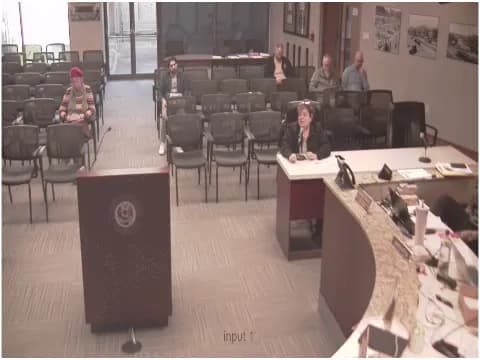
The Parks and Recreation Committee met on April 1, 2026, at 11:30 AM (time inferred from transcript opening). The committee reviewed one legislative item—Bill 23—and received an update from the parks and recreation director on recent events, summer hiring, and upcoming programming. No public comments were offered. Discussion Items - Bill 23 – Trexler Front Fund Springwood Budget Amendment: The committee considered a bill to amend the 2026 Trexler Front Fund Springwood budget, providing a supplemental appropriation of $13,468.81 from the Springwood Trust portion of the Trexler funds’ unappropriated 2026 balance, per General Trexler’s will. Director Tilliana explained that the Springwood Trust is a restricted fund that can only be spent within Trexler Park, whereas the larger Trexler fund is more flexible across the park system. The appropriation simply moves money into the correct account for use. - Parks and Recreation Update: The director reported several activities: - A successful egg hunt at Jordan Park over the weekend, with many families attending. - A well-attended event at Franklin Park the prior weekend, which included collecting feedback for the Franklin Park plan. A final public meeting is scheduled for April 30, 2026, at 6:00 PM at the church in Franklin Park. - Summer hiring is underway: many applicants have been received, and interviews are being scheduled. The city hopes to be fully staffed ahead of schedule, primarily with Allentown students and residents. Gaps remain for summer laborers (parks maintenance) and golf course positions (must be 18+). Lifeguard recruitment is progressing well, with about 70% returning lifeguards. The city partners with Allentown School District, visiting high school cafeterias to recruit. - Summer playground will open soon (free for Allentown residents), with additional field trips, pool trips, and swim lessons added this year. - Maintenance crews are mulching and volunteers are conducting tree plantings (April 11 and other dates) and cleanups for Arbor Day. Key Outcomes - Bill 23: The committee voted unanimously (all ayes) to move the bill favorably to full city council. Motion was made and seconded. - The director’s update was received as information; no further action was taken. - The meeting was adjourned shortly after the update.
Public Meetings - Allentown, Pennsylvania
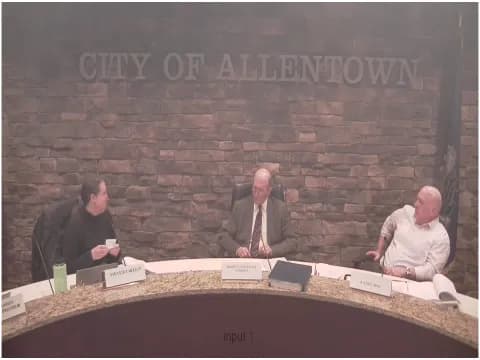
Public Meetings - Allentown, PennsylvaniaThe Public Works Committee met on April 1, 2026, at 11:00 AM UTC to consider Bill 24, an ordinance to amend the 2026 capital fund budget for a traffic signal upgrade project. The meeting was attended by Council members Ms. Mona, Mr. Pongo, and others. The committee unanimously voted to send the bill to full council with a favorable recommendation. Discussion Items - Bill 24 – 19th Street and Roth Avenue Intersection Upgrade: Mr. Shatter, representing the city, presented the ordinance to accept a Green Light Go grant of $1,087,390 from the state for upgrading the intersection at 19th Street and Roth Avenue. The project includes mast arms, poles, new traffic signals with retro-reflective back plates, pedestrian countdown signals, crosswalks, and handicap ramps. The intersection is one of two remaining with overhead wire-suspended traffic signals; the other is at 6th and Green Leaf. The committee asked about the 25% city match ($199,620) and an additional $89,290 from the general fund needed because the grant did not cover the full project cost ($1,087,390 + $199,620 + $89,290 = $1,376,300 total estimated). Mr. Shatter stated the grant agreement is valid until June 2028, allowing two years for design and construction. Mr. Pongo inquired about collaboration with Southway Hall Township (none, as the intersection is within city limits) and asked about the source of the $89,290 general fund contribution, noting he would follow up with the finance director. The committee expressed support for the long-overdue upgrade. - Update on Traffic Lights at Union Boulevard and 6th and Walnut: At a council member’s request, Mr. Shatter reported that the contract for repairing the traffic signals at that intersection has been fully executed and a purchase order issued to the vendor. Parts are expected in 3–4 weeks, after which the signals will be restored. Key Outcomes - Motion to Send Bill 24 to Full Council: A motion was made and seconded; all members present voted in favor (voice vote: ayes). The bill will proceed to the full city council with a positive recommendation. - Next Steps: The city will begin design using grant funds, with construction to follow after bidding. The project must be completed by June 2028. The finance director will be consulted regarding the $89,290 general fund allocation.
The Allentown Zoning Hearing Board convened on March 30, 2026, at 12:00 PM to consider three special exception applications for child care facilities. The board consisted of members Samantha McLean, Scott Unger, and Robert Canauer. All three cases involved requests to convert existing family child care homes to group child care homes or to establish new group child care operations. The board heard testimony from applicants, property owners, and public objectors, and rendered decisions on each case. Case 1: 1705 Highland Street – Vanessa Maricchio Varera (Appeal and Special Use Application) Applicant Testimony: The applicant, Vanessa Maricchio Varera, owns the property and currently operates a family child care at another location. She proposed to operate a group child care home at 1705 Highland Street, 24 hours a day, Monday through Saturday, with 7–12 children and three staff members. She plans to install two additional off-street parking spaces in the side yard (as per a contractor quote from Dromo Paving) and fence the backyard for play space. The applicant stated no exterior changes to the building would be made. Public Comments & Testimony: Six objectors raised their hands; four spoke. Concerns included: - Jodie Somogyi (1722 W Highland): described parking congestion, lack of street lighting, safety issues on Highland Street (described as a "racetrack"), and the loss of backyard play space if parking is installed. - Brent Millet (1715 Highland): added concerns about limited parking, difficulty exiting his alley due to parked cars, and increased traffic volume. - Heather Dad (1709 Highland): expressed anxiety about noise, safety, and strangers in the neighborhood; presented a petition with 33 signatures opposing the use. - Joseph Dad (1709 Highland): raised concerns about property values and mixing business with residential. - Taylor Dad (1709 Highland): echoed discomfort and safety concerns for their family and dog. Discussion: Board member Scott Unger expressed concerns about the intensity of a 24/7 operation, the small rear yard, and the juxtaposition of parking and play space. The zoning supervisor clarified that the city code requires designated off-street pickup/drop-off area and that play space (indoor or outdoor) must be safe and not used for other purposes. The board discussed conditioning approval on the installation of the two off-street parking spaces and compliance with all city and state licensing requirements. Key Outcomes: The board approved the special exception by a 2–1 vote (Samantha McLean and Robert Canauer in favor, Scott Unger opposed). Conditions included: - The use must be operated as testified. - The applicant must install two off-street parking spaces meeting city standards. - The applicant must comply with all city and state requirements for a group child care home, including those for off-street drop-off/pickup and play space (indoor or outdoor, as determined by licensing agencies). Case 2: 410 South West Street – Mercedes (Special Use Application) Applicant Testimony: The applicant, Mercedes, currently operates a family child care at 305 S 18th Street and owns the property at 410 S West Street (purchased in February 2026). She proposed to move her residence and group child care operation to 410, operating 24 hours a day, 7 days a week, with a staff of three. She currently has a license for six children in shifts; the group home would serve up to 12 children. The property is currently a single-family dwelling. Public Comments: No objectors were present. Three email statements were noted but not given weight due to lack of cross-examination. Discussion: The board confirmed the applicant's intent to occupy the residence and operate the group child care. No negative impacts were testified. Key Outcomes: The board unanimously approved the application with the condition that the use be operated as testified and in compliance with all local and state regulations. Case 3: 339 West Lexington Street – Andres Perez Reyes (Special Use Application) Applicant Testimony: The operator, Ms. Sosa (tenant), currently runs a family child care at the property with a lease dated February 1, 2025, and has operated for nine months. She proposed to increase to a group child care home with 7–12 children, operating Monday–Friday, 5:30 AM to 9:30 PM, with two staff members (potentially three if needed). The property owner, Andres Perez Reyes, has owned the property for 1.5 years. The daycare currently serves about 10 children per day, with a maximum of six at any time. No exterior modifications are planned. Public Comments: No objectors were present. One email from an objector was noted but given limited weight. Discussion: The board noted the applicant's testimony that operating hours would not change, and that all required licenses are held. The board found no basis for denial. Key Outcomes: The board unanimously approved the special exception, conditioned on the use being operated as testified and compliance with all applicable city and state regulations. The board also added a condition that the use shall not disrupt vehicular traffic in the neighborhood. Additional Notes - The board noted that all approvals are subject to required permits from the city. - The next hearing was scheduled for a few weeks later.
The Allentown City Council held a special meeting on March 25, 2026, from 6:30 PM to 7:05 PM, to consider and vote on the appointment of Frank Kane as the city's Managing Director. All seven council members (Cynthia Mota, Natalie Santos, Ce-Ce Gerlach, Candida Affa, Santo Napoli, Jeremy Binder, and Cristian Pungo) were present. The sole agenda item was Resolution 31248, approving the appointment. After presentations from Mayor Matt Tuerk and Frank Kane, followed by questions and comments, the council voted unanimously to approve the appointment. Discussion Items - Mayor Matt Tuerk introduced Frank Kane, emphasizing that Kane's experience in local government at Lehigh County and the Commonwealth of Pennsylvania made him the ideal candidate. Tuerk stated that the city's 900 employees and department heads would benefit from Kane's ability to connect and coordinate, and that Kane would strengthen the relationship between the administration and City Council. Tuerk also noted that Kane would be appointed Deputy Mayor upon confirmation. - Frank Kane addressed the council, expressing gratitude for the warm reception from city staff and department heads. He outlined his management philosophy of service, transparency, and accountability, and stated his intention to conduct a process assessment of city operations to identify weak connections and improve processes. He highlighted his experience as Chief of Staff for Lehigh County and as Director of Community and Economic Development, and shared three personal attributes: a service-oriented management style, deep care for people, and a commitment to keeping Allentown in the news for positive reasons. - Councilmember Jeremy Binder asked about Kane's goals for the first year. Kane responded by mentioning improvements to the budget process (starting earlier, involving council) and exploring the city's A2 bond rating, noting that the city exceeds GFOA standards and could potentially secure better rates by proactively communicating with bond raters. - Councilmember Jeremy Binder also raised funding concerns, noting the position was previously funded at $1. He asked about the structural change needed to fund the Managing Director role. Finance Director Bina Patel explained that the 2026 budget would use vacancy savings from various departments, with future reorganizations likely to eliminate some positions to permanently fund the role. Mayor Tuerk added that reorganizations would be held until June to assess the budget picture, and that some existing positions would be eliminated. - Councilmember Ce-Ce Gerlach asked about the organizational chart and the Executive Assistant position (confirmed as Michaela Boyer). She also asked about communication protocols between council and department heads. Mayor Tuerk clarified that council may ask informational questions directly to department heads but should not provide direction; he preferred that council channel questions through the Managing Director to avoid distracting department heads. Kane added that council could contact him anytime, including nights and weekends. - Councilmember Candida Affa asked about constituent service (e.g., garbage issues) and whether to direct inquiries to Kane. Tuerk affirmed that Kane would be the preferred point of contact for triaging such issues. - Councilmember Cristian Pungo asked about Kane's strengths and lessons learned from the county. Kane emphasized learning from accomplished people, providing value to others, and maintaining a calm, level-headed approach. He also noted his respect for front-line staff, such as Odemaris at the front desk. - Councilmember Cynthia Mota offered a statement of support, praising Kane's resume and communication skills, and expressing excitement for the appointment. - Councilmember Jeremy Binder asked about the charter regarding the mayor's absence. Tuerk explained that the city charter uses "absent" rather than "out of town," and that he appoints a Deputy Mayor during absences; currently Chief Roca, but Kane would be appointed upon confirmation. - Councilmember Ce-Ce Gerlach asked about residency requirements. Tuerk noted that the managing director must relocate to Allentown within one year of appointment, but that the administration would ask council to amend that requirement. Kane mentioned he lives 4.2 miles from the Allentown border, meeting the current department head criteria. - Council President Santo Napoli closed discussion by noting that Kane had effectively been "interviewed" over the years through his work at the county, and that the hire was a positive step for city-county collaboration. Key Outcomes - Unanimous vote (7-0) to approve Resolution 31248, appointing Frank Kane as Managing Director of Allentown. Voting yes: Cynthia Mota, Natalie Santos, Ce-Ce Gerlach, Candida Affa, Santo Napoli, Jeremy Binder, and Cristian Pungo. - Funding plan: The position will be funded in 2026 through vacancy savings in the mayor's budget, with future reorganizations expected to eliminate some positions to permanently fund the role. The administration will avoid using cash reserves. - Deputy Mayor appointment: Mayor Tuerk stated that upon confirmation, Frank Kane would be appointed as Deputy Mayor, serving as the designee during the mayor's absence. - Communication protocol: Council members were encouraged to direct questions through the Managing Director to avoid distracting department heads, though they retain the right to ask informational questions directly. - Residency requirement: The administration intends to ask council to amend the residency requirement for the Managing Director, which currently requires relocation to Allentown within one year.
On March 25, 2026, the Allentown Budget and Finance Committee convened to receive financial reports for December 2025 (final) and February 2026, and to review recommendations for improving the city's budget process. The meeting featured presentations from Director Patel and a joint presentation by Councilpersons Pungo and Bender, who summarized findings from a multi-phase budget process review mandated by a January 2026 council resolution. Financial Reports (December 2025 Final & February 2026) - December 2025 Year-End: Director Patel reported that general fund revenues net of NIS (Neighborhood Improvement Zone) payments totaled $152.2 million against a budget of $147.8 million. The 2025 NIS certification amount was $4,355,504.04, comprising earned income tax, local services tax, business privilege tax, business license fee, and realty transfer tax. An escrow of $1,775,480.51 from Barkheimer was sent to the Pennsylvania Department of Revenue, and the city made a supplemental payment of $2,580,023.53 on March 2, 2026. - General fund expenditures reached 93% of the adjusted budget of $154.7 million, reflecting 4% savings compared to the prior year. Personnel costs accounted for 72% of expenditures ($109.7 million). Public safety premium pay closed at just over $3 million for police/fire and just over $1 million for EMS. - Other funds: Risk fund closed in line with expectations; Solid waste fund revenues and expenditures both at $23.9 million; Stormwater fund revenues stronger by 2% at $6.2 million, expenditures $6.1 million; Golf fund revenues $2.7 million, expenditures $2.5 million (19% savings); Rental unit fund revenues stronger by 19% (noting billing occurs in last quarter); Building code fund (new in 2025) revenues $4.2 million, 158% higher than the $2.7 million budget, expenditures $2.5 million. - General fund cash position on December 31, 2025 was $39.8 million, with $35 million in term investments (PLGIT) and $2.1 million in PLGIT Prime, yielding 3.91% APY. Remaining $2.6 million at TD Bank yielding 3%. - February 2026 Report: General fund revenues net of estimated NIS liability were $19.6 million (13% of projected), expenditures $20.1 million (13% of budget). NIS liability is now shown as a negative amount under each tax type. The housing fund recorded $147,000 from realty transfer tax. Police/fire premium pay was $300,000, EMS $105,000. General fund cash position at end of February was $40.1 million, with $30 million in term investments and $9.8 million at TD Bank. - Controller expressed appreciation for the clarity on NIS liability reporting, noting it will improve transparency for the public and future budget calculations. Budget Process Review - Background: Councilpersons Pungo and Bender, with support from staff, presented the final findings of a resolution passed January 21, 2026, which directed a review of the city's budget process. The review comprised three phases: (1) analysis of the current budget development and adoption timeline, (2) comparison to other municipalities, and (3) identification of procedural gaps when a budget is not adopted by December 31. - Key Findings from Surveys and Meetings: - 70% of respondents cited timing as a challenge; 70% desired earlier alignment on budget priorities before budgets are developed. - 60% indicated inefficiencies in real-time questioning and last-minute clarifications; 60% supported a more structured public discussion. - 80% noted frequent last-minute revisions and lack of structure; 65% expressed uncertainty about what happens if no budget is passed. - 70% of administrative respondents said earlier budget guidance from the administration would improve the process; 65% felt the current department budget development approach needs improvement. - Recommendations Presented: 1. Charter Amendment Proposals: - Move the budget adoption date from December 31 to the first Wednesday in December to allow more time for negotiation. - Re-ask voters to reinstate a default budget provision (without allowing a tax increase without council approval), providing a closure mechanism if no budget is passed. 2. Operational and Rule Changes: - Set an amendment deadline: all council amendments must be submitted by the second regular council meeting in November, and amendments must be revenue-neutral or include identified savings. - Standardize the council question process by requiring advance submission of questions. - Explore a shared budget QA tool for collaborative tracking of questions and answers. - Establish a process for council to communicate priorities to the administration early (May/June) so departments can incorporate them into budget development. - Develop a comprehensive budget document outlining the process, legal requirements, and frequently asked questions, to be reviewed annually. - Conduct an annual dedicated review of the city's five-year fiscal plan, preferably in the first or second quarter. - Review and potentially revise the budget book format for clarity and efficiency. - Next Steps: The committee will review these options with full council, conduct legal analysis, and pursue further dialogue with the administration. Depending on the chosen option, implementation may require a charter amendment ordinance (going to voters), a council resolution (changing council rules), or an update to standard operating procedures. Key Outcomes - No binding votes were taken; the committee presented recommendations for council consideration. - Controller acknowledged the thoroughness of the process but raised a concern about the feasibility of a default budget that includes a tax increase, noting that the default provision would need to address how to strike the tax increase while maintaining spending levels. - Council members expressed appreciation for the work done by Councilpersons Pungo and Bender, and Director Patel thanked the committee for listening to administration feedback. - The meeting adjourned with no further business.
The Allentown Public Safety Committee met on March 18, 2026, at 6:25 PM in Council Chambers to discuss Bill 22, a supplemental appropriation of $15,000 from the Pennsylvania Office of the State Fire Commissioner grant for the Fire and EMS Department. The committee voted unanimously to forward the bill favorably to the full council. Discussion Items - Bill 22 – OSFC Grant Allocation: The committee considered a supplemental appropriation of $15,000 to the 2026 General Fund Budget from the Commonwealth of Pennsylvania Office of the State Fire Commissioner (OSFC) grant for the Allentown Fire and EMS Department. A department representative explained that this is a yearly allotment for eligible fire and EMS agencies. Allentown EMS applied and received $15,000 to purchase four EMS bicycles (replacing bikes over 10 years old) and one portable ventilator. The ventilator will allow transport of patients on ventilators from extended care facilities (e.g., nursing homes) who otherwise could not be moved safely. The representative noted the goal is to eventually acquire six ventilators, phasing in one at a time with additional funding. - Committee questions: Committee members asked about the ventilator’s use and confirmed that one unit was sufficient initially. No questions were raised by citizens. Key Outcomes - Motion and vote: Chair Affa called for a motion to move Bill 22 favorably to council. A motion was made, seconded, and passed unanimously by voice vote (all ayes). The bill will be forwarded to the full Allentown City Council for further consideration.
The Allentown City Council met on the evening of March 18, 2026, with all seven members present. The meeting covered contract approvals, ordinances, resolutions, committee reports, and public comments. All votes were unanimous except for one abstention. Consent Calendar - Approved minutes of the March 4, 2026 public hearing (intermunicipal liquor license transfer) and the March 4, 2026 City Council meeting. - Approved consent agenda items R38 through R43: R38 (sewage planning module for 231 N 7th St and 232 N Church St), R39 (appointment of Tom Burke to the Nuisance Abatement Board of Appeals, term ending March 19, 2028), R40 (appointment of Ramon Nunez Jr. to the Board of Parks and Recreation, term ending March 19, 2031), R41 (appointment of Susan Gilbert Zenka to the Environmental Advisory Council, term ending January 1, 2029), R42 (sewage planning module at One Center Square), and R43 (certificate of appropriateness for work at 1515 Linden Street). All passed unanimously. Public Comments & Testimony - Betty Collar (Tillman Street) expressed concerns about the appointment of Mrs. Binder to a housing board, citing an appearance of impropriety due to her husband's position on council and a $1 million CDBG grant awarded to her company, Ripple Community, in November 2023. She referenced the Pennsylvania State Ethics Code, stating that the transaction could be deemed void or illegal if not properly disclosed, and noted that no public disclosure appeared in the March 4th agenda. She also criticized Mayor Turk for alleged retaliation, citing over $550,000 in lawsuit costs, and urged the council to earn public trust. Council President Napoli responded that the relationship was disclosed and that he recused himself from the nomination. - Mary Tomlinson (373 West Liberty Street) announced a park cleanup at Union Terrace Park on Saturday, March 23, from 9 AM to 12 PM, organized by the Little Lehigh Watershed Stewards. - Kyle (528 North Burke Street, member of the Shade Tree Commission) commented on Bill 19, supporting an increase in the cash-in-lieu fee for tree planting. He noted the commission's ongoing research and desire for a more equitable valuation that reflects the true value of trees to the community. Discussion Items - Contract Approvals: R37 authorized a $25,000/year contract with Bell 4 USA for boarding up services (three years with two one-year renewals). R37.5 extended the Granicus LLC contract through June 30, 2026, to align with an upcoming RFP for the council chambers system. Both passed unanimously. - Controller’s Report: Mr. Glazer presented the P Card review for December 2025, covering 484 documents totaling $141,000. Issues included a city vehicle passing a school bus with stop sign out (violation paid by city), lack of vehicle usage logs, one overpayment, an unsupported balance of $58.72, ten incorrect expense accounts, two instances of sales tax paid ($6.84 and $1.74), surcharge fees exceeding the $10 limit ($10.72 and $10.50), six invoices paid beyond 60 days, and seven instances of missing documentation. Departments responded and corrected most issues. - Committee Reports: Council President announced special meetings: March 25 at 6:30 PM for managing director appointment, April 8 at 6 PM for parking authority, and April 22 at 6 PM for a NISTA discussion. Committee chairs reported on their meetings and future schedules. - Ordinances for Final Passage: Bills 10, 13, 14, 15, 16, 17, 18, 19, and 22 were passed unanimously. Key details: Bill 10 increased the capital fund by $346,158 for Lehigh/Union Street reconstruction (reimbursable via LSA grant). Bills 13-17 were pass-through grants: $250,000 for Resurrected CDC, $400,000 for Jewish Community Center of the Lehigh Valley, $296,878 for Museum of Indian Culture, $1 million for Baum School of Art, and $775,000 for Allentown Art Museum. Bill 18 transferred $55,000 for traffic signal redesign at 17th & London, Turner, Chu, and Walnut streets. Bill 19 appropriated $55,295.39 from tree planting fees in lieu for new street trees; discussion noted potential future amendments to increase fees. Bill 22 added $15,000 from a state fire commissioner grant for fire equipment. - Resolutions for Final Passage: R44 appointed Council President Napoli to the AEDC board (he recused; passed 6-0-1). R45 approved a $87,000 grant application for a police command vehicle (replacing a 2005 unit). R46 approved a $295,350 grant for police firearms and ballistic shields. R47 approved transfers of $168,000 for public works traffic bureau and $10,979.50 for parks and recreation. All passed unanimously. - Ordinances for Introduction: Bill 23 (Trexler Fund Springwood, $13,468.81) and Bill 24 (capital fund, $1,087,390 for 19th Street & Roth Avenue intersection upgrade) were introduced and referred to committees. Bill 25 (capital fund, $95,222.50 for emergency traffic signal repairs at 6th & Walnut and Union Boulevard due to windstorm damage) was introduced, and upon motion with a second, the rules were suspended for immediate passage. Director Shada explained the emergency nature and the need to expedite repairs. Bill 25 passed unanimously. Key Outcomes - All contract approvals, minutes, ordinances, and resolutions were approved unanimously, with the exception of R44 (one abstention). - Bill 25 was passed on first reading with suspension of the 14-day waiting period, allowing immediate funding for emergency traffic signal repairs. - The council will hold a special meeting on March 25, 2026, at 6:30 PM to consider the appointment of Frank Kane as managing director. - The controller’s report identified several areas for improvement in P card usage and vehicle operation policies, with departments responding to address findings.
This meeting of the Allentown Parks and Recreation Committee, held on March 18, 2026, featured presentations from the Environmental Advisory Council (EAC) and the city's Sustainability Coordinator. Discussions centered on environmental initiatives, tree planting policies, and citizen concerns about tree maintenance costs. No formal votes were taken, but several follow-up actions were noted. Public Comments & Testimony - Mary Tomlinson (373 West Liberty Street) expressed concerns about residents becoming averse to trees due to high maintenance bills and being forced to bear those costs alone. She reiterated points made earlier by committee members. Discussion Items - Environmental Advisory Council Annual Report (Kyle Ropsky, EAC Chair): Kyle Ropsky presented the 2025 annual report, highlighting accomplishments in five purpose pillars: advising on environmental issues (litter reduction research, invasive species management), encouraging sustainable design (supporting the climate action plan, electric vehicle pilot, urban forestry master plan), protecting natural resources (educational tree brochures), maintaining open land (participation in comprehensive parks master plan and Zone Allentown meetings), and promoting community programs (Youth Climate Action Fund, Lehigh Valley EAC network, Birdtown PA gold status). He noted the EAC now has a website and will focus on supporting the climate action plan, improving community engagement, and policy research on litter reduction and stormwater reduction in 2026. - Sustainability Coordinator Presentation (Veronica): Veronica provided updates on the urban and community forestry program (funded by a $1 million grant, including a complete street tree inventory of 15,000 trees, a species selection plan, and a plan to plant up to 600 street trees in environmental justice areas). She also discussed the electric vehicle fleet pilot (purchased 7 of 8 planned vehicles using $250,000 in grant funds, tax credit recovery efforts), the Youth Climate Action Fund (two rounds funded, applied for additional rounds, decision in April), and the upcoming climate action plan (community outreach starting late spring/early summer, survey open). She announced a new citizen science pilot with Community Bike Works, Penn State, and Easton using air quality sensors funded by the Urban Sustainability Directors Network. - Tree Fee in Lieu of Planting: Council member Cece Garlock raised the issue that the fee developers pay in lieu of planting trees (currently approximately $400–500 per tree) is too low compared to actual costs. Veronica estimated a contractor price of about $750 to plant a tree and potentially $1,000 for stump grinding. Garlock noted that the fee seems cheaper than planting, incentivizing developers to pay the fee. She suggested the fee should be increased, which would require legislative action to amend the ordinance. A vote on related legislation was expected later that evening. - Homeowner Tree Responsibility and Opt-Out: Council member Ms. Apple expressed strong concerns that homeowners are forced to accept trees in front of their properties and bear significant maintenance costs (trimming, root damage, lightning damage). She argued homeowners should have a choice to refuse a tree, or the city should help with maintenance. Veronica explained that the shade tree ordinance requires replanting in the right-of-way, and the city's current program targets areas out of compliance, offering to help replant. She noted the city is trying to find creative ways to support low-income homeowners but acknowledged that even non-low-income residents face high costs. Kyle Ropsky added that the city is working on making the compliance letters more friendly, as suggested by Mr. Binder. - Letter Softening: Mr. Binder requested that the letters sent to residents about tree planting be made softer and more friendly to increase buy-in. Veronica agreed to review the letters for the next round. - Collaboration with Lehigh County: A committee member mentioned a Lehigh County workshop on community gardens and hydroponics, encouraging collaboration with the county to achieve environmental goals. Key Outcomes - No formal votes or decisions were recorded during this committee meeting. - The committee discussed the need to increase the fee in lieu of tree planting, with a legislative action expected later that evening (not part of this transcript). - The Sustainability Coordinator will review and soften the language of tree compliance letters for future mailings. - The EAC and Sustainability Coordinator will continue work on the climate action plan, urban forestry master plan, and other initiatives as outlined.
On 2026-03-18 at 10:45 AM, the City of Allentown's Community and Economic Development (CED) Committee met to vote on five pass-through grants to local organizations, receive updates on city development initiatives, and discuss ongoing housing and workforce challenges. All committee members were present. The meeting was efficient, with each grant moving forward favorably to full council. Consent Calendar - Bill 13: Supplemental appropriation of $250,000 from the PADCED local share account grant to support the resurrected community development corporation (construction project). Approved unanimously. - Bill 14: Supplemental appropriation of $400,000 from the PADCED local share account grant to support the Jewish Community Center of the Lehigh Valley (construction project). Approved unanimously. - Bill 15: Supplemental appropriation of $296,878 from the PADCED local share account grant to support the Museum of Indian Culture (construction project). Approved unanimously. - Bill 16: Supplemental appropriation of $1,000,000 from the state Office of the Budget Redevelopment Assistant Capital Program to support the Baum School of Art (construction project). Approved unanimously. - Bill 17: Supplemental appropriation of $75,000 from the PADCED local share account grant to support the Allentown Art Museum (construction project). Approved unanimously. Public Comments & Testimony - Mary Tomlinson (373 West Liberty Street): A social worker, expressed gratitude for the city's investments and inquired about the contracting partners for the Allentown Works program, specifically how to refer individuals for employment. The administration provided a detailed list of partners and noted that a formal referral process would be announced by the end of the next quarter. Discussion Items - DCED Updates: The administration reported on several ongoing initiatives: - Positions posted within DCED due to retirements; interviews progressing well. - CDBG applications scoring completed; awaiting award letter and allocation. - Allentown Works contracts (except one with a legal typo) to be approved at the AEDC board meeting the next day, allowing partner work to begin. - Planning department compiling data on development opportunities. - A data center ordinance is with the planning commission for comments; a vacant and at-risk property ordinance is undergoing final legal revision before being brought to council. - RFP for Toy Factory and 540 Hamilton: The administration clarified that an article misrepresented the process as bids (which implies cost-only selection) and the relationship with RACA (Redevelopment Authority of the City of Allentown). The city issued a generic request for proposals (RFP) to attract diverse community proposals. Proposals are due early April; walkthroughs were well-attended. A subset of the RACA board will evaluate proposals separately from cost, narrowing to the top three. - Housing Rehabilitation Challenges: The administration outlined several obstacles: - The loss of HADC (when Dave Evans retired) and CALV's limited bandwidth have reduced capacity for rehab work. - A national housing expert is being consulted to provide recommendations with pricing. - A $180,000 cost increase on the funeral home project due to BABA (Build America, Buy America) requirements expanding from 10% steel to 10% of all products used in federal projects, causing supply chain and cost issues. - Developers are increasingly reluctant to work with federal funds due to these costs. - Allentown Works Partners: Partners include L-TriC, the Workforce Board, labor unions, Century Promise, Community Bike Works, VIA, and others—covering daycare support (e.g., Resurrected Life), transportation, and workplace training. The administration committed to circulating enrollment information once the program launches. - Downtown Ambassadors Program (DAA): A committee member requested an update on DAA's performance (e.g., ambassador foot patrols and entrepreneurship). The administration noted a new director, Lisa, and offered to have her present a report. The administration also mentioned that committees are forming under DAA. Key Outcomes - All five grants (Bills 13-17) were voted favorably to full council with unanimous support (voice vote, no count recorded). The meeting adjourned after final call. - The administration will invite the new DAA director to provide a formal update to the committee. - A formal referral process for Allentown Works will be released by mid-to-late next quarter.
A zoning hearing board meeting was held on March 16, 2026, to consider an application for variances to subdivide 928 West Chu Street and construct a second single-family dwelling. The applicant, 928 West Chu Street Associates LLC, represented by attorney Mike Peters, sought relief from lot width, side yard setback, and front yard setback requirements. After deliberation, the board unanimously denied the application. Discussion Items - Applicant’s Presentation: Attorney Mike Peters introduced the proposal to divide a 4,600-square-foot tract into two lots: Lot 1 (2,000 sq ft) with the existing dwelling, and Lot 2 (2,600 sq ft) with an asphalt parking area accessed from Oak Street. The applicant proposed to build a new single-family home on Lot 2 and obtained a waiver from the Allentown City Planning Commission to permit a lot without frontage on a public street (rear access via Oak Street). - Variances Requested: From Zoning Ordinance sections 660-54 and Attachment 9 for: (1) lot width of 20 feet (40 ft required), (2) side yard setback of 0 feet on the western lot line (4 ft required), and (3) front yard setback of 54 feet (TNDO overlay required 0 ft average setback). The applicant agreed with the zoning officer’s denial on the front yard setback and only appealed for the lot width nonconformity argument. - Testimony of Sean Roth (Owner): Roth purchased the property in 2021 and explained the lots surrounding Oak Street: 27 of 32 properties have houses fronting on Oak Street, and five have parking, including his. He stated the parking areas will remain, with a walkway from the front house to the rear parking. He noted receipt of a $X affordable housing trust fund grant from Lehigh County and a letter of support from City Center Corp. He reached out to neighbors: the western neighbor expressed support; the eastern neighbor was unreachable due to an estate. - Testimony of Mina Lamin (Engineer in Training): Lamin, employed by Remington and Vernick Engineers, prepared the subdivision and zoning plans (sealed by licensed PE Christopher J. Fazio). She confirmed compliance with minimum lot area (2,600 sq ft vs 2,000 required), building coverage, and height. She testified that the 20-foot lot width is an existing nonconformity and that the proposed side yard setback matches the existing house on the lot. She stated there is no alternative way to provide parking without the requested variances due to the lack of alley access and the lot’s long, narrow shape. - Board Deliberation: Board members debated the hardship. Scott Unger argued that since there is already a house on the property, there is no legal hardship; the property has been reasonably used for over 100 years. He also expressed concern about the radical setback change and replication of nonconformities. Robert Kenauer noted that subdividing a narrow lot replicates nonconformities and that the property can be developed as is. Another member (Matthew) suggested the design was reasonable given the constraints, but the board majority focused on the lack of hardship. The board also discussed that the new zoning code (Ordinance 16166) prohibits new lane row house lots along Oak Street after January 1, 2026, limiting future replication. Key Outcomes - Motion to Deny: A motion to deny the application was made and seconded. The board voted unanimously in favor (all ayes). - Rationale: The board found that the applicant did not establish an unnecessary hardship because the property already has a reasonable use as a single-family dwelling. The requested variances would increase nonconformities and were not the minimum necessary. - Next Steps: A written decision will be issued within 45 days as per the Pennsylvania Municipalities Planning Code. The next meeting is scheduled for March 30, 2026.