Browse by city
Date range
Search help

Search titles, summaries, topics and stored transcripts together. Keywords may match separately; put the whole query in double quotes for a phrase. Matching follows word analysis, so punctuation is not exact. Both dates are included. Documents are not searched.

SHOWING 171–180 ENTRIES
171
DEC 18, 2025 · ANCHORAGE, ALASKA · ASSEMBLY & COMMITTEE MEETINGS
Assembly Infrastructure Committee Meeting on 2025-12-18

The Assembly Infrastructure Enterprise and Utility Oversight Committee convened on December 18, 2025, to discuss updates on the Port of Alaska Modernization Project, introduce a new Matson executive, and review the status of the proposed Stormwater Utility. Key speakers provided technical updates on construction timelines and financial structures, while council members raised questions regarding regulatory oversight, funding sources, and public communication strategies. Consent Calendar - No routine approvals or unanimous actions were recorded in the transcript. Public Comments & Testimony - No public comments or testimony were presented during the session. Discussion Items - Personnel Introduction: Jennifer Tungle was introduced as the new Senior Vice President of Matson for Alaska. She noted she is from Alaska and previously served as a primary labor negotiator and Camp Chair. - Port of Alaska Modernization Project (PAMP): - Eric Adams, Jacobs program manager, reported that the Finding of No Significant Impact (FONSI) for environmental review is expected by end of month, signaling permit completion for Terminals 1 and 2. - Construction notice to proceed is scheduled for March 15, 2026, with a target completion for crane delivery by August 15, 2028. - Adams confirmed piling fabrication is ongoing, with 18 epoxy-coated pilings loaded in Seattle for transport to Anchorage in April 2026. - A potential recommendation to relocate the electrical substation was flagged for discussion in the following month's meeting. - Chair Baldwin Day requested clarification on whether the Comprehensive Plan of Finance (PAMP) is current with Phase II; Deputy Municipal Manager confirmed the 2019 report is available online but requires review for current relevance. - Stormwater Utility Updates: - Deputy Municipal Manager Mark Spafford outlined Phase Two efforts to re-establish the Stormwater Utility Commission and conduct a rate study and master plan. - Spafford noted the city is already spending approximately $6 to $8 per month indirectly for stormwater via taxes and operations. - Member Brawley questioned if the utility would be regulated by the Resource Conservation Agency (RCA), if Alaska precedents exist (none found), how costs would be allocated between residential and commercial sectors, and if public sector entities would pay. - Chair Baldwin Day emphasized the need for explicit public education regarding the link between stormwater management and roadway infrastructure, specifically potholes. - Member Freena inquired about the timeline for study to implementation, and Member Constant asked if a new service area would be created or if existing structures would be used. - Waste-to-Energy (WTE) Project: - Chair Baldwin Day noted ongoing RFPs for technical studies regarding trash energy content and sludge processing. - Administration confirmed public outreach has been conducted with the Federation of Community Councils and the Chugach Electric board, with the project being integrated into Chugach's resource plan. - Port of Alaska Comprehensive Plan of Finance: - Dean Freena presented the revised plan, noting the framework of surcharge-supported bonds remains unchanged. - Chair Baldwin Day questioned potential state and federal financial support; Freena stated the state is unlikely to provide significant funding without a general obligation bond, and federal grants are expected to be insufficient to move the needle significantly. - Chair Baldwin Day and Member Constant clarified that Port of Alaska tariffs are legally restricted to port funding and cannot be diverted to general government, despite theoretical possibilities under the enterprise utility dividend model which is currently suspended for reinvestment purposes. Key Outcomes - Construction Status: Permitting for Port of Alaska Terminals 1 and 2 is nearing completion with the FONSI expected by month-end; construction is set to begin March 15, 2026. - Regulatory & Financial Inquiries: Several questions remain open regarding the Stormwater Utility's regulatory framework (RCA), cost burden distribution, and timeline, to be addressed in Phase Two analysis. - Communication Strategy: Council members directed the administration to prioritize public education on the necessity of the Stormwater Utility and the hidden costs currently borne by taxpayers. - Funding Clarification: It was formally established that Port of Alaska surcharge revenues must remain within the port enterprise for reinvestment and cannot be transferred to the general fund under current operational constraints. - Substation Review: A decision regarding the relocation of the electrical substation is anticipated in the next meeting.
ENGINEERING AND INFRASTRUCTURE 24% · PUBLIC ENGAGEMENT 21% · WATER AND WASTEWATER MANAGEMENT 18% · PROCEDURAL 11%
172
DEC 18, 2025 · ANCHORAGE, ALASKA · ASSEMBLY & COMMITTEE MEETINGS
Budget and Finance Committee Meeting - December 18, 2025

The Budget and Finance Committee of the Whole convened on December 18, 2025, to review year-end financial reports and address upcoming budgetary items. The meeting covered updates from the Budget Advisory Commission, the Municipal Operating Account (MOA) Trust Fund, revenue performance, and budget-to-actuals analysis. The committee also discussed the finalization of the 2025 budget, rollover procedures for 2026, the approval of the AMEA contract, and closeout reporting on specific funds including MLNP and tax revenues. Committee members expressed interest in future educational topics regarding service areas and municipal assets. Consent Calendar - No formal routine approvals or consent agenda items were listed or voted on during the transcript; all items proceeded to standard reporting or discussion. Public Comments & Testimony - No public comments or testimony were recorded in the transcript; the Chair noted avoiding eye contact with the audience and confirmed no items were brought forward. Discussion Items - Budget Advisory Commission Report: Chair Ian Mills reported a productive last week discussing the mayor's sales tax ordinance. He noted three remaining vacancies (25% of the board) and requested member input on 2026 discussion topics. Members suggested email contact via staff support (Amanda Mosier) for topic proposals. - MOA Trust Fund Report: Chair Slivka reported a trust value of $487 million as of November 30, with year-to-date returns of +12.58% (outperforming the benchmark and 72% of comparable plans). Dividends totaled $16.577 million. Vice Chair Jeff Sins resigned but will serve until a replacement is named. Chair Slivka confirmed no other vacancies exist and clarified the municipal cash pool is separate from the MOA trust. - Revenue Report (Deputy Treasurer Lauren Crawford): Overall revenue is running approximately 1% above estimates. Concerns were noted regarding tobacco tax (under due to amended filings) and alcohol/marijuana taxes (potentially 10% under original budget due to market saturation and price competition). Deputy Treasurer Crawford attributed alcohol downturn to national consumption decreases and marijuana saturation. She stated forecasts for next year will likely not exceed current actuals or previous years' figures. - Budget to Actuals Report (OMB Director): As of November 30, the budget is projected to end 2-3% under budget due to vacancies and unspent non-labor items. Labor spending is at 90% of the budgeted amount, while non-labor is underspent by 10% pending final transfers. The committee reviewed that the Health Department's overtime variance ($80k actual vs. $7k budget) is largely due to grant-funded positions and emergency response, not just vacancies. Overtime analysis will continue into Q1 budget revisions. - Tax Fund Expenditures: Alcohol and marijuana tax funds are underspent with appropriations effectively "out the door." The $9.6 million 2025 budget for the Marijuana fund reflected two years of funding (2024-2025) appropriated in 2025; the annual run rate is approximately $5.5 million. The Committee discussed the Boys & Girls Club Mountain View Club transition, clarifying that $145,000 supports municipal operations of the program, while $400,000 supports central membership fees; the OMB Director will verify reimbursement status given the club's potential closure. - MLNP Closeout: The Alaska Land and Natural Development (MLNP) stipulation regarding the $15 million funding for substance misuse treatment (historically referred to as the "Alaska Center for Treatment") is close to completion. Expenditures include the Golden Lion project and micro-unit recovery. Remaining non-contingency funds of approximately $1.5 million are locked in the account for future capital/maintenance. The AIM report is awaiting Chugach acceptance to formally close the stipulation sale. - FY2025 Closeout and FY2026 Planning: Funds will be rolled over after the fiscal year closes (accounting close, not necessarily Dec 31) based on final spend verification. The 2026 budget is loaded, and departments are being asked to identify internal adjustments for potential labor cost growth. - AMEA Contract and Wage Adjustments: The AMEA contract was approved, featuring a 2.5% wage increase over four years plus step increases, totaling a 5% annual cost impact. This includes a health care transition that avoids a higher premium increase. Non-represented and executive staff adjustments will follow in Q1. The $26.6 million revenue figure discussed includes these step increases and the bulk of the health care transition costs. - Future Agenda Items: Members suggested exploring the history and implications of the Building Safety Service Area, the impact of LERSAS cost controls, and a high-level audit of municipal assets (countering the "one billion dollar permanent fund" assertion). The Chair invited members to submit topics for fiscal education via analyst Matthew Farina. Key Outcomes - Status Reports: Revenue is projected 1% above estimate; Budget is projected 2-3% under estimate. - Vacancies: Budget Advisory Commission has 3 of 12 seats (25%) vacant; MOA Trust has 0 vacancies. - Funds Status: MOA Trust performed well (+12.58% YTD); Alcohol and Marijuana tax funds are underspent with funds remaining in the fund balance. - Contract Approval: AMEA contract finalized with specific wage and health care terms; non-rep/exec adjustments pending Q1 review. - Compliance: MLNP stipulation expenditures verified and awaiting final confirmation to close the sale stipulation. - Next Steps: OMB to provide detailed overtime analysis and Q1 budget revisions; Committee to schedule future educational sessions on Building Safety Service Area and municipal assets; Adjourned for next meeting on the third Thursday in January.

BUDGET EQUITY ANALYSIS 57% · FINANCIAL REPORTING 18% · PUBLIC ENGAGEMENT 12% · PERSONNEL MATTERS 6%
173
DEC 17, 2025 · ANCHORAGE, ALASKA · ASSEMBLY & COMMITTEE MEETINGS
Housing and Homeless Committee Meeting Summary - Dec 17, 2025

The Anchorage Housing and Homeless Committee convened on Wednesday, December 17, 2025, to review the outcomes of the third tranche of Emergency Rental Assistance (ERA), receive an updates on the city's shelter system, and hear reports from the multidisciplinary outreach (Hope) team. While committee members expressed deep disappointment over the return of unused ERA funds to the treasury, they also acknowledged the successful immediate housing of over 700 households. The meeting highlighted a significant shift in service integration since previous years, though concerns were raised regarding the sustainability of long-term housing retention and the visibility of unsheltered individuals who remain outside the current system. Consent Calendar - [None; all items were presented for discussion and report] Public Comments & Testimony - Jamie Lopez (East Anchorage, formerly Coalition, formerly homeless): - Expressed opposition to the current displacement policy and the use of law enforcement in outreach, stating that leading with law enforcement creates a barrier for traumatized individuals to accept services and may lead to frostbite or death. - Critiqued the effectiveness of short-term housing solutions without long-term support, arguing that individuals with significant PTSD cannot become fully functioning members of society immediately upon placement and are likely to return to the streets. - Noted that the anti-camping strategy yielded less than a 10% service acceptance rate (29 out of 300 compliant/arrested individuals), indicating the policy fails to engage the "shadow population" of unsheltered people. - Asserted that the current system works for those already connected but fails to reach the hundreds of people outside who require daily, nightly, and 24/7 proactive engagement rather than reactive enforcement. Discussion Items - ERA Two Tranche Three Outcomes (Presentation by Jed Drolle & Kimberly Rash, Anchorage Health Department): - Status: The program received approximately $4 million, spent $3.2 million, and is returning the remaining funds to the treasury. - Achievement: Served 717 unique households, exceeding the projected goal of 600. - Grantee Performance: Three grantees (Henning, New Life Development, United Way) spent all their funding (with Henning and New Life Development receiving reallocated funds after United Way notified them they could not spend theirs); three grantees (Coalition for Homelessness, Choosing Our Roots, NeighborWorks) underspent. - Barriers to Spending: - Extremely compressed timeline (funds accessed in March with a September 30th hard deadline). - Bottleneck in eligibility checks regarding prior ERA usage through the Alaska Housing Finance Corporation (AHFC). - Difficulty securing landlords willing to accept short-term rental assistance (1-2 months) without long-term guarantees. - Complex, decentralized application intake across multiple grantees. - Future Commitments: Health Department committed to increased on-site oversight, more transparent reporting, and exploring a single central intake point for future programs. - Mayor's Office & Shelter System Update (Presentation by Agnew Benben, Kathleen McLaughlin, and Hope Team): - Shelter Capacity: Municipally contracted 300 year-round beds (East 56, Linda's Place, Alex Hotel); surged to capacity (150 beds at East 56 and 150 at Linda's Place) due to cold weather, with an additional 25 beds added at East 56 via emergency declaration. - System Integration: The Mayor's office and Health Department emphasized a dramatic improvement in real-time coordination compared to previous years. - Good Neighbor Fund: Utilized to purchase short-term hotel rooms as "overflow" beds when shelter capacity is full (e.g., housing an individual on the street for 10 years by buying a hotel room for one night to facilitate entry into a shelter). - Safety Center Operations: Described as a low-barrier entry point. The model involves triaging individuals at night to move them into shelter beds the next morning to decompress the center. - Future Infrastructure: Announced upcoming crisis stabilization centers: South Central Foundation (June 2026) with 16 chairs and 16 beds; Providence (October 2026) with 12 chairs and 12 beds. - Hope Team (MDOT) Operations: Implemented daily morning coordination meetings with all outreach partners to enable real-time problem-solving, resource sharing, and immediate placement of individuals into shelter, detox, or medical care. - Housing Rehab Fund: Planned to be presented to the Assembly via substantial amendment to use CDBG/Home funds. - Microunits: Ribbon cutting held; 24 units constructed on site, with 8 additional units to be built and ADA ramps installed by end of December. - Member Inquiries and Concerns: - Member Rivera: Expressed curiosity regarding the long-term data on housing retention for the ERA cohort and the optimal length of stay at the Safety Center. - Member Baldwin Day: Inquired about the complexity of the application process and the lack of available data on who remained housed post-september; requested clarification on AHFC's involvement in the approval bottlenecks. - Chair (Tara): Expressed concern regarding the number of unsheltered individuals still outside during cold nights, emphasizing the need to know everyone in the community and ensure their safety. - Agreement: All members agreed to provide a follow-up on long-term outcomes and data around January/February 2026. Key Outcomes - Decision: The committee acknowledged the return of unspent ERA funds to the treasury but commended the Health Department and Mayor's office for the rapid deployment of services. - Directive: The Health Department is tasked with providing a detailed snapshot of current housing retention data and a long-term outcomes report by the March or April meeting, with final close-out reporting due January 28, 2026. - Action: The municipality secured an emergency declaration to expand shelter capacity at East 56 by 25 beds. - Future Planning: The committee noted the upcoming opening of crisis stabilization centers in 2026 and the imminent start of the Microunits program in January 2026 as critical components of the long-term strategy. - Administrative: The Housing Rehab Fund will be brought forward for Assembly review via a substantial amendment, followed by a full concept presentation after a 30-day comment period.

AFFORDABLE HOUSING 44% · HOMELESSNESS 36% · PUBLIC ENGAGEMENT 7% · PUBLIC SAFETY 5%
174
DEC 17, 2025 · ANCHORAGE, ALASKA · ASSEMBLY & COMMITTEE MEETINGS
Anchorage Assembly Regular Meeting - December 16, 2025

The Anchorage Assembly convened for its regular meeting on December 16, 2025, at 6:07 PM, to address a mix of routine approvals, significant policy debates regarding housing and taxation, and various administrative appointments. The Mayor acknowledged the holiday season while highlighting community resilience following windstorms and the tragic event in Sydney, Australia. The Assembly Chair noted the extended four-week hiatus until the next meeting and encouraged community participation in local festivities. Consent Calendar - The consent agenda was approved with a vote of 12-0, excluding items pulled for discussion. - 10A1: Passed unanimously to recognize and honor Diane Bickford for over 35 years of dedicated service to the Port of Alaska. - 10A2: Passed unanimously to express appreciation to Michael K. Abbott for his service as interim Port Director. - 10A4: Passed unanimously to recognize the 20th anniversary of the Anchorage Parks Foundation. - 10B1: Passed unanimously (12-0) to set compensation for the Assembly Youth Representative for fiscal year 2026, with the Youth Representative excused from voting on their own compensation. - 10D1: Confirmed Terry Omatum as Port Director (12-0), including the administration of the oath of office. - 10D9: Approved Amendment 1 with MV Transport for an increase in professional transit paratransit trips (12-0). - 10D11: Approved grant agreements for domestic violence and sexual assault prevention services (unanimous).

PROCEDURAL 14% · PUBLIC ENGAGEMENT 13% · SHORT TERM RENTALS 13% · PERSONNEL MATTERS 11%
175
DEC 13, 2025 · ANCHORAGE, ALASKA · ASSEMBLY & COMMITTEE MEETINGS
Emergency Special Meeting: Shelter Capacity Expansion (Dec 12, 2025)

The Anchorage Assembly convened an emergency special meeting on December 12, 2025, at 3:30 PM to address dangerously cold weather conditions and the immediate need to expand emergency shelter capacity. The primary objective was to grant the Health Director temporary authority to increase beds at the East 56th Street shelter. Following a brief public comment period and deliberation regarding procedural concerns and the long-term duration of the resolution, the body adopted an amendment to limit the extension to May 2026 rather than December 2026. The resolution passed unanimously. Consent Calendar - No items listed; the meeting focused solely on the emergency resolution. Public Comments & Testimony - Members of the public: No members of the public spoke during the dedicated public comment period. Three members of the public (Mr. Kirker, Mr. Myers, Ms. Raleigh) indicated they had no comments to add. Discussion Items - Resolution Purpose and Necessity: Administration presented the resolution to expand permissive capacity at the East 56th emergency shelter. The Mayor noted the dangerous cold expected to continue through the month and the role of the Anchorage Safety Center as a first-responder drop-off point. - Administrative Projection: The administration stated they do not anticipate utilizing the full 200-bed capacity for the entire duration of the authorization. The original request was for flexibility to add up to 25 additional beds (bringing total capacity to 200 from a base of 150) as needed. Data provided indicated a current need for approximately 25 additional beds, with outreach teams managing nearly 40 people in safety centers on a single night. - Procedural Concerns (Member Johnson): Member Johnson expressed concern regarding the lack of meaningful public notice and the short timeline for review. He argued that while the emergency rationale is understood, extending the resolution through December 31, 2026, effectively changes policy (increasing shelter size from 150 to 200) without a formal code amendment process, potentially eroding the credibility of future emergency rationales. - Administrative Response (Member Raleigh): Chair Chairman Raleigh (or designated official) responded that the administration agrees with the need for a robust conversation and is preparing to introduce an ordinance to permanently expand capacity to address the 150-bed policy limit. The year-long extension was proposed to avoid returning to the Assembly with similar short-notice requests during future cold snaps. The Chair noted that a civil emergency declaration (under Section 380) was also considered as an alternative to handle immediate safety concerns. - Amendment Proposal: Member Myers proposed an amendment to change the expiration date of the resolution from December 31, 2026, to May 2026 (specifically noted as covering the winter season and allowing for a larger conversation). The administration confirmed this amendment was intended to apply to both page 1 and page 2 of the document. Key Outcomes - Amendment Adopted: The resolution was amended to limit the expanded capacity authority to May 2026, effectively covering the upcoming winter period while avoiding a full-year extension. - Vote Result: AR 2025-398 (as amended) passed with a vote tally of 10 to 0. - Directives: The Health Director is authorized to increase shelter capacity by up to 25 beds at the East 56th location as needed to address extreme temperatures through May 2026. - Next Steps: The administration indicated it will soon introduce an ordinance to formally address the long-term policy change regarding the 150-bed shelter limit.

HOMELESSNESS 60% · PROCEDURAL 40%
176
DEC 12, 2025 · ANCHORAGE, ALASKA · ASSEMBLY & COMMITTEE MEETINGS
Anchorage Assembly Work Session on Klutna Hydro Agreements - 2025-12-12

The Anchorage Assembly convened on December 12, 2025, to review and discuss three proposed agreements (AO2024-123S) with Anchorage Hydropower and the Klutna Power Owners. The session focused on resolving the impending expiration of the 1984 water use permit, implementing the Governor's final Fish and Wildlife Program via the "portal valve option," and securing long-term water rights for the Municipality. Key speakers from the Department of Law, Anchorage Water and Wastewater Utility (AWW), and Anchorage Hydropower Utility presented the terms, while assembly members expressed significant concern regarding the Municipality's loss of voting authority on the hydropower utility and the length of the 35-year timeline for acquiring these rights. Consent Calendar - No consent calendar items were discussed; the meeting was dedicated entirely to deliberation and work session review. Public Comments & Testimony - No public comments or external testimony were recorded during this work session. Discussion Items - Agreement Overview and History: Michael McLaughlin outlined the history dating back to 1984 and 1991, explaining that AWW currently operates under a preferential use permit subject to an annual compensation of approximately $1.2 million, which expires in June 2026. The three new agreements aim to replace the 1984 agreement, facilitate the portal valve construction, and manage water transportation. - Water Facilities Interconnection Agreement: David Persinger and Christopher Constant described this as a construction agreement where power owners design and build the portal valve, while AWW retains the right to override and shut down the flow if safety or water quality risks arise. Persinger stated he was confident in the safety controls, though Assembly Member Constant expressed concern that he had heard otherwise from the AWW engineering team regarding clear identification of risks. - Long-Term Water Transportation Agreement: This agreement allows AWW to transport the power owners' water to the portal valve at no cost in exchange for AWW continuing to use the intake valve and tunnel sections. It includes protocols for maintenance and shutdown coordination. - Water Rights Agreement: This agreement caps AWW's annual compensation for water use at $600,000 (subject to inflation) and provides an option for AWW to acquire actual water rights (up to 41 million gallons per day) free of charge after 35 years (circa 2060). Anna Brawley noted the Municipality had significant leverage in these negotiations and was willing to wait 35 years to secure these rights. - Confidentiality Provisions: Assembly Member Eva Baldwin Day highlighted Article 14.5(b) of the Interconnection Agreement, which restricts AWW's ability to make public statements that might negatively affect the perception of the Fish and Wildlife Program. She expressed strong opposition to this restriction given its implications for government accountability and transparency, recommending the provision be deleted prior to execution. - Municipal Voting Rights: A significant portion of the discussion centered on the Municipality's lack of voting authority on the Klutna Power Owners committee, despite owning 19% of the utility. Councilmembers expressed deep concern that the current arrangement anathema to the city charter and public trust. Anna Brawley and others discussed the potential for the Assembly to make the agreement's approval contingent on the co-owners supporting an application to restore the Municipality's vote to the Regulatory Commission of Alaska (RCA), potentially on a per-capita basis. The Department of Law stated they were willing to draft such conditional language. Key Outcomes - Deliberation Status: The Assembly adjourned the work session without a final vote, directing the Department of Law to draft amendments. These amendments were requested to: 1) Delete Article 14.5(b) regarding public statement restrictions, and 2) Potentially condition the approval of the agreements on the co-owners (Chugach and MEA) supporting the Municipality's application to the RCA to restore voting authority. - Next Steps: The issue is scheduled to be brought before the Assembly for decision on the Tuesday following the meeting (December 16, 2025). - Risk Acknowledgment: Members acknowledged the risk of the 35-year timeline for water rights acquisition, though officials noted the contract terms are binding and include triggers for earlier acquisition if the power owners sell or shut down the project. - Timeline Context: The existing agreements are set to expire on June 1, 2026, providing a window for these renegotiations and conditional amendments.

WATER AND WASTEWATER MANAGEMENT 49% · LEGAL PROCEDURES 21% · ENGINEERING AND INFRASTRUCTURE 18% · PROCEDURAL 8%
177
DEC 12, 2025 · ANCHORAGE, ALASKA · ASSEMBLY & COMMITTEE MEETINGS
Homeless Response Commission Meeting Summary - December 12, 2025

The Homeless Response Commission convened to review agency updates, approve agenda changes, and discuss the coordination of basic needs services. The meeting featured presentations from the Mayor's Office and Housing & Homelessness regarding shelter capacity, the housing rehabilitation fund, and the multi-disciplinary outreach team. A significant portion of the session was dedicated to a public testimony advocating for policy changes regarding law enforcement involvement in outreach and the establishment of sanctioned camps. The commission agreed to defer detailed deliberation on the coordination of faith community resources to a future meeting to allow for constituent consultation. Consent Calendar - The agenda was approved following a motion to postpone Item F2B (Mayor's Office guidance on basic needs services) to the next meeting due to a recusal issue and scheduling constraints. - The monthly minutes were approved with a note that future recordings of public comments will only reference the fact that a comment was made, with the full detail preserved in the audio recording. - A new standing agenda item for "Disclosure of Interest" was added to comply with new Municipal Assembly Ordinance requirements regarding financial or personal gain. Public Comments & Testimony - Speaker advocating for policy shift: A member of the public expressed strong opposition to the current policy of attaching outreach programs to law enforcement. The speaker stated that this approach traumatizes individuals and prevents access to services. They argued that the commission should hire staff who are not perceived as threats (e.g., fire department or non-uniformed personnel) to build trust. The speaker expressed full support for sanctioned camps to provide warming, food, and sanitation, noting that decentralizing people into the city without designated areas has made outreach ineffective. They also raised concerns about the lack of trash collection in specific areas and the application of rigid shelter rules (e.g., curfews) that conflict with the needs of individuals with trauma histories. - Commissioner inquiry on shelter rules: Following the testimony, a commissioner sought clarification on whether rules applied to public encampments differ from those in congregate shelters, highlighting the disparity in consequences for rule violations. Discussion Items - Basic Needs Coordination (Item F2B): The Mayor's office requested guidance on channeling resources from faith communities and individuals seeking to provide food, clothing, and other basic needs. Staff noted that while organizations like the Coalition and Third Avenue Beans are active, there is a disconnect in reaching those who do not frequent those locations. The Mayor's office highlighted the need to connect resources with distributed needs without creating unintended consequences (e.g., gathering spots for drug dealing or violence). The commission deferred the vote to the next month to allow for constituent consultation and further discussion with the mayor's office. - Shelter and Housing Updates: - Bed Capacity: Staff reported that surge beds are active at East 56th, Linda's Place, and Alex (The Anchor), totaling 400 beds. As of the previous night, all beds were full. - Safe Parking: The Safe Parking application is live, with the season opening in April. Commissioners suggested that the 24-hour operation recommendation from a previous resolution be considered in site development. - Emergency Rental Assistance: The program served 786 households, exceeding the target of 600. Grant agreements for 2025 funding with HUD are pending signature due to a nationwide freeze on new grant agreements. - Housing Rehabilitation Fund: A new fund with approximately $500,000 in allocated seed money is planned to support homeowner repairs and small-scale landlord loans. The program is expected to launch in Spring 2026 following a 30-day public comment period and Assembly approval. - CORE Values Suggestion: A staff member suggested the commission develop a set of "core values" or working agreements to guide dialogue, distinct from formal rules and procedures. Commissioners expressed interest in discussing this concept separately in a future session, potentially later in January or February, rather than embedding it in the current rules document. Key Outcomes - Motion to Postpone: The commission voted unanimously to postpone Item F2B regarding basic needs services guidance to the next meeting. - Agenda Approval: The revised agenda was approved after reopening the vote. - Action for Next Month: The Mayor's office is directed to facilitate a discussion on the current barriers to connecting community resources with those in need, specifically for a dedicated work session in the next meeting. - Committee Service: Commissioners were invited to serve on the review committee for the upcoming competitive RFP for supportive services aimed at moving people from homelessness into housing.

HOMELESSNESS 35% · PROCEDURAL 15% · AFFORDABLE HOUSING 14% · PUBLIC SAFETY 10%
178
DEC 12, 2025 · ANCHORAGE, ALASKA · ASSEMBLY & COMMITTEE MEETINGS
Anchorage Assembly Policy Committee Meeting Summary (Dec 12, 2025)

The Anchorage Assembly Policy Committee convened on December 12, 2025, to review the 2027-2030 Transportation Improvement Program (TIP) and receive presentation from Aaron Young, Executive Director of AMATS (Anchorage MPO). The meeting covered funding allocation mechanics, the shift in project nomination processes, and the interplay between federal guidelines and local priorities. Significant deliberation focused on the Ingrid Gamble/Ingram highway project delays and the feasibility of right-of-way inventory surveys. Consent Calendar - Routine administrative approvals and staff-level changes to the funding program were discussed as part of the standard operating procedures, though no specific consent items were formally voted upon in the transcript. Public Comments & Testimony - Ms. Brawley expressed strong concern regarding the lack of a public process for Highway Safety Improvement Program (HSIP) projects, citing the "Cheese Grader" project as an example where there was "little to no public process." She stated her position that the policy committee should have authority over HSIP and National Highway System (NHS) projects, not just DOT's unilateral preferences. - Mr. Volant expressed deep frustration and a sense of failure regarding the 15-year delay on the Ingrid Gamble/Ingram highway project, describing the current state of pedestrians and wheelchairs sharing lanes with heavy trucks as a "shame." He argued that the bureaucratic mechanism appears established to give the state cover to resist change. - Mr. Constant expressed a clear preference for AMATS funding for Eagle River projects, noting his previous incorrect belief that AMATS could not fund projects in that area, and urged Eagle River members to review this possibility. - Mr. Johnson (Chair) expressed support for the Assembly's need to be more assertive regarding community priorities, specifically regarding couplet studies and right-of-way inventory, and suggested that an uncodified ordinance could be a tool if the municipality resists legal obligations. Discussion Items - Funding Structure and Constraints: Mr. Young (AMATS) explained the four funding pots: AMATS direct control ($200M), DOT/PF funding ($573M), Transit funding ($100M), and Other funding (grants/earmarks). He emphasized that all projects must be fiscally constrained and consistent with the 20-year Transportation Plan (MTP). - Nomination Process Shift: Staff clarified a procedural change where separate calls for funding program nominations are eliminated. Future project nominations will only occur for the Transportation Plan (MTP), which is then used to populate the TIP, aiming to reduce the burden on the public. - Ingrid Gamble/Ingram Project Status: Discussion revealed that the Preliminary Engineering Level (PEL) study is ongoing but has removed the causeway option over Chester Creek. Members noted that a 2013 proposal for a lane reduction is now facing new analysis barriers due to a 2023 DOT directive, effectively delaying progress. - Right-of-Way Inventory: A proposal was discussed to create an ArcGIS map of right-of-way and easements to mitigate property conflicts. Staff noted past reluctance from the Planning Department due to property owner concerns. The Assembly discussed whether they could mandate this effort despite municipal resistance. - Assembly Resolutions: It was agreed that the Clerk would coordinate the collection of suggested changes from Assembly members to submit to AMATS as an Amendment Request (ARAM) for the upcoming TIP, ensuring the record reflects the collective body's input. Key Outcomes - Process Change Accepted: The transition to a single nomination cycle for the Transportation Plan (MTP) was accepted and clarified for the future 4-year cycle (potentially extending to an 8-year nomination window for better visibility). - Resolution Strategy: The Assembly agreed to coordinate changes for the TIP Amendment 4 and the 2027-2030 TIP via the Clerk to ensure a unified record of recommendations for the AMATS Policy Committee. - Informational Clarification: It was confirmed that AMATS funding can be applied to any eligible road within the boundary (including Eagle River), provided it does not exceed the program's fiscal constraints. - No Vote on Project Rejection: No decision was made to reject the Ingrid Gamble PEL alternatives; members noted the process is still underway but expressed intent to potentially bring a resolution forward later.

TRANSPORTATION SAFETY 67% · PUBLIC ENGAGEMENT 21% · PUBLIC SAFETY 6% · ENGINEERING AND INFRASTRUCTURE 3%
179
DEC 12, 2025 · ANCHORAGE, ALASKA · ASSEMBLY & COMMITTEE MEETINGS
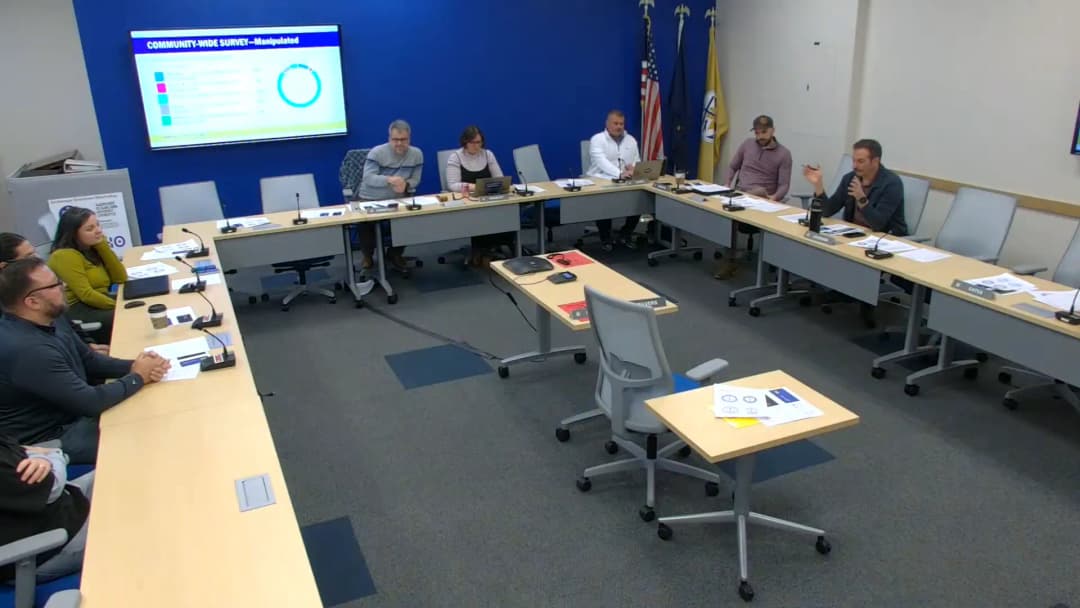
Anchorage Municipal Assembly Meeting - December 12, 2025: Corporate Seal Amendment Work Session

The Anchorage Municipal Assembly convened for a work session to deliberate on Ordinance 5-135.135, which seeks to amend the Anchorage Municipal Code to adopt a new corporate seal or affirm the current one. The meeting reviewed a task force initiated in 2018, analyzed survey data fraught with potential manipulation, heard testimony on design principles from the sponsor and the artist, and examined the fiscal implications of the proposed changes. Consent Calendar - No items were formally presented or processed under the Consent Calendar during this segment of the transcript. Public Comments & Testimony - Survey Manipulation Concerns: The Assembly discussed a survey where 2,100 responses favoring Option C were submitted within 50 minutes. Chief Information Technology Officer Susie Marshall confirmed that while automated manipulation could not be technically proven due to the use of a free, anonymous Microsoft Forms version, the speed and identical nature of the comments made the results highly improbable to be organic. Chief Information Security Officer John Rendulic agreed, stating the data was "absolutely manipulated" due to the lack of rate limiting or auditing tools. - Cost Misinformation: Several members noted that a significant portion of the comments supporting Option C (the current seal) were driven by misinformation regarding the cost of the project. The City Administrator clarified that the ordinance does not authorize extraordinary spending; updates to letterhead, business cards, and signs would occur only upon natural replacement of existing materials, resulting in negligible expense (estimated under $1,000 initially). - Design Feedback: Respondents to the survey expressed distinct positions: Option A proponents favored modernization and simplicity; Option B and D supporters sought a balanced approach retaining historic imagery with cultural additions; Option C supporters cited cost concerns and tradition; and Option E supporters prized minimalism. Discussion Items - Design Analysis and Principles: Sebastian Garber, an Athabaskan artist who led the design work, presented five principles of flag design from the North American Vexological Association, arguing the current seal fails to meet criteria for simplicity, visibility, and distinctiveness. He proposed new designs that simplify the anchor, remove the ship, and incorporate Native Quillwork patterns. - Technical Limitations: Members discussed the inability to definitively trace the source of the manipulated survey responses as the IT department lacked the telemetry to identify IP addresses or verify unique voters. - Organic Survey Data: The Assembly reviewed the remaining organic survey data after removing the 2,100 manipulated responses and the cost-driven comments. The analysis indicates the community is evenly split (approximately 50/50) on whether to change the seal or keep the current one. - Adoption Timeline: The sponsor emphasized the need to conclude the task work initiated in 2018, noting that waiting another five years would delay necessary civic identity work. Key Outcomes - Decision Pending: The Assembly voted to return to this item on Tuesday for a formal decision on which of the five options (or if any new modifications are requested) to adopt. - Fiscal Clarification: The City Administrator officially stated that the Statement of Economic Effects confirms no extraordinary expenditure is required, as the change impacts future procurement rather than requiring immediate fleet or signage overhaul. - Next Steps: The Legislative Services will circulate the revised design options and the detailed survey analysis (excluding manipulated and cost-driven entries) to the clerk's office for review prior to the next meeting.

MUNICIPAL SEAL 68% · PUBLIC ENGAGEMENT 10% · URBAN PLANNING 8% · DATA MANAGEMENT 6%
180
DEC 12, 2025 · ANCHORAGE, ALASKA · ASSEMBLY & COMMITTEE MEETINGS
Public Naming Commission Meeting Summary - December 10, 2025

The December 10, 2025, meeting of the Municipality's Public Naming Commission convened to address administrative procedures and establish working relationships with external partners; however, the absence of Member Heller resulted in a lack of quorum (four of five members present), preventing the formal approval of the agenda, minutes, or any binding motions. The discussion focused primarily on preparations for an upcoming consultation with the Native Village of Ahtna and Anchorage Assembly regarding the Indigenous Naming Pathway Policy, and the introduction of Jennifer Mayer, a new Parks and Recreation staff member, to define her role as a liaison for park naming and renaming processes. Public Comments & Testimony - Commissioner Hess: Expressed the position that the commission should coordinate with Parks and Recreation not only for identifying names but also for the ceremonial installation and celebration of new park names. Commissioner Hess noted that while the commission lacks a specific budget, the Parks Foundation might be able to assist with funding for celebrations. - Commissioner Khan: Stated the position that the commission must ensure a timeline allowing for public participation, emphasizing that nominations received late cannot be decided upon immediately, and a hearing must be scheduled for the following month if a name is being considered. - Jennifer Mayer (Parks and Recreation): Expressed uncertainty regarding her specific technical role but demonstrated support for the commission's criteria by recounting an interaction at a Bay Shore Park community council meeting where community members were dismissive of indigenous naming suggestions (e.g., "Bay Shore Eagle" in Dena'ina). She stated her willingness to act as a liaison, though she noted the community council's belief that they hold more weight than the commission in the approval process. Discussion Items - Indigenous Naming Pathway Policy Consultation: Members discussed preparations for a meeting the following day with the Native Village of Ahtna and the Anchorage Assembly. The group debated the format of their presentation, agreeing on a three-part structure: an introduction, a summary of research on indigenous consultation tactics, and a proposal to invite Ahtna to appoint or nominate a representative to join the commission. Commissioner Gupta raised the position that legally designating a specific seat for an organization may be problematic, suggesting instead that the commission invite Ahtna to nominate someone to apply for an open seat or collaborate on developing a formal consultation process. It was agreed that printed copies of the research document would be handed out in person at the meeting. - Parks and Recreation Liaison Role: The group discussed with Jennifer Mayer how her office would interface with the commission. It was clarified that while community councils can submit name suggestions, the commission can also proactively recommend names or accept public nominations. The workflow was defined as: Commission review of nominations - Parks and Recreation Commission vote/recommendation - City Assembly final decision. Mayer expressed a desire to understand the development stage of the commission protocols to better assist. Key Outcomes - No Formal Action Taken: Due to the lack of a quorum, the commission could not approve the agenda, the minutes from the previous meeting, or adjounce via a formal motion. The meeting was terminated informally. - Next Steps Established: The commission will proceed with the planned consultation meeting the following afternoon with the Native Village of Ahtna and Anchorage Assembly, bringing printed research materials and preparing to discuss both the nomination of a commission representative and the development of a formal consultation process. - Coordination Agreed: Commissioners and Jennifer Mayer agreed to coordinate on the identification of park renaming opportunities (specifically Frontierland and KFQD/Bay Shore) and the potential celebration of new names, utilizing the Parks Foundation for potential financial support.

NATIVE RIGHTS 48% · PARKS AND RECREATION 24% · PUBLIC ENGAGEMENT 21% · PROCEDURAL 7%
OPENPUBLICA · PUBLIC MEETING INDEXUPDATED DAILY · openpublica.com