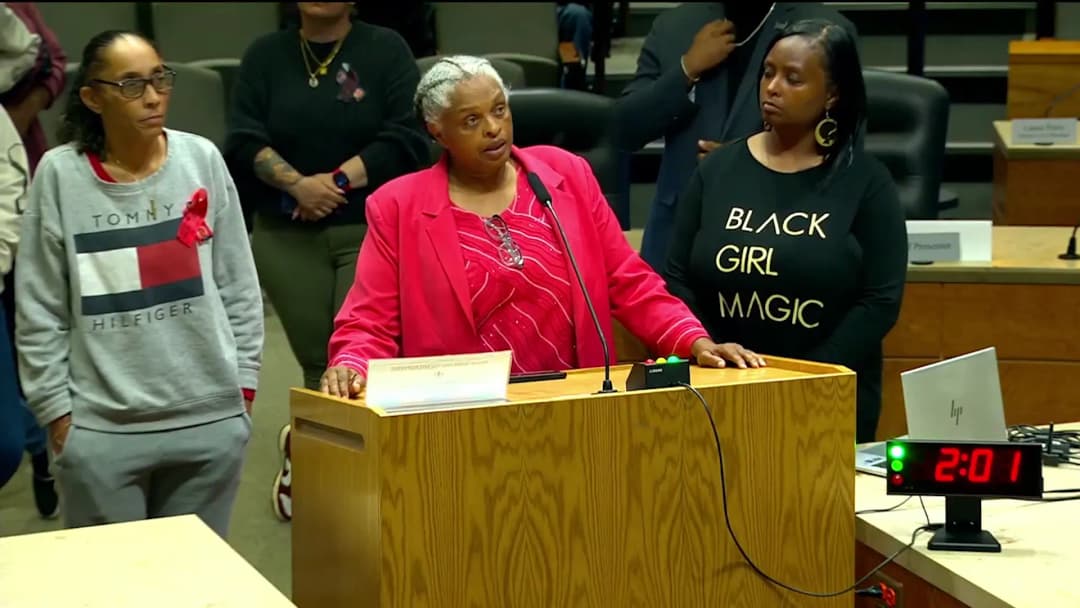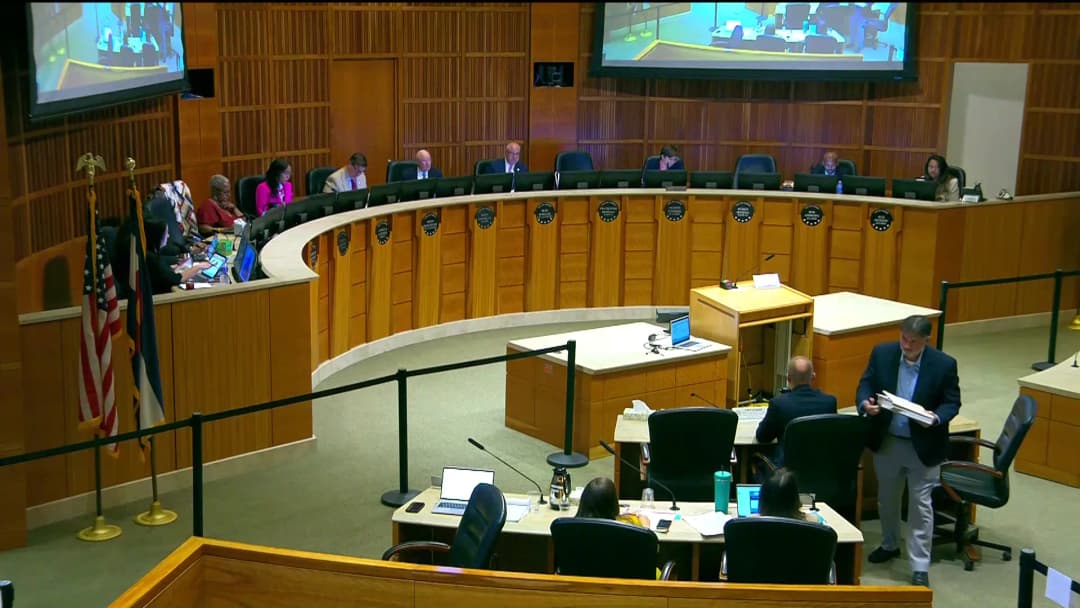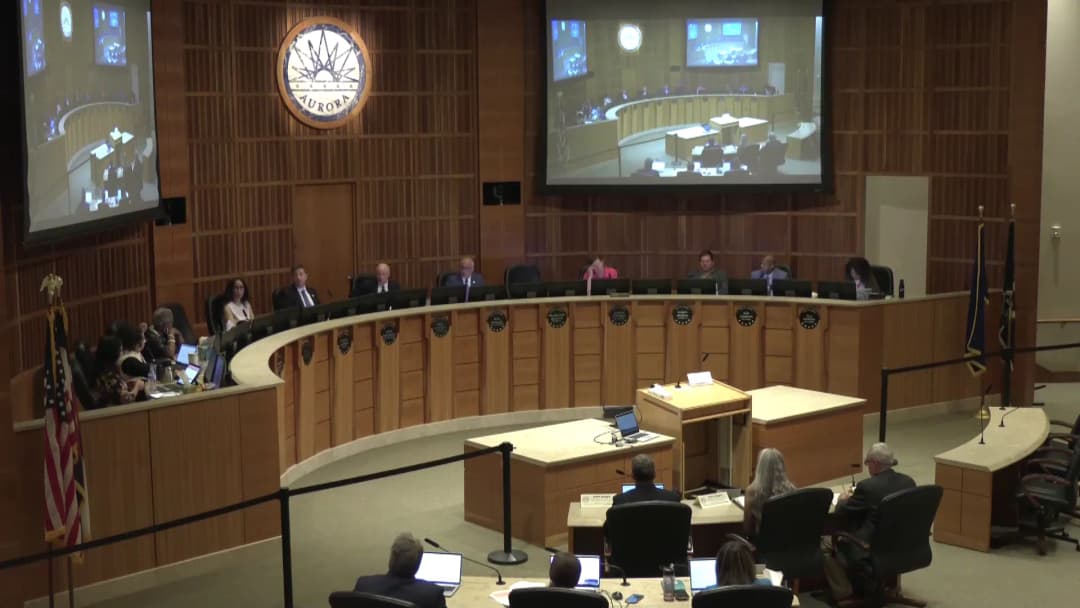
The Aurora City Council held a regularly scheduled meeting on June 9, 2026, that included extensive public testimony on police accountability, immigrant rights, and housing conditions. The council approved several high-profile ordinances, including the creation of an Office of Public Safety Accountability, new detention facility inspection and notification requirements, and referred three infrastructure bond measures totaling $264 million to the November 3, 2026 ballot. Votes on key items were split along partisan lines. Consent Calendar - Unanimously approved minutes from May 18, 2026, land acknowledgement, and adoption of the agenda. - Adopted the consent calendar on motions (items 10C1–10C3) and consent calendar on resolutions and ordinances (items 11A2–11B1) unanimously, with item 11A1 pulled separately. Public Comments & Testimony - Elijah McLean and Police Accountability: Dozens of speakers expressed grief and anger over the Colorado Court of Appeals overturning the homicide convictions of two paramedics who administered ketamine to Elijah McLean. Many called for the firing of Police Chief Todd Chamberlain, community control of the police, and an end to police violence. Speakers like Jeffrey McFarland, Aaron Petrell, Medine Schaffner, Ayante Anderson, and Kiowa Lewis demanded accountability and condemned the city’s history of impunity. Several speakers referenced the families of Kylan Lewis, Rajon Belt Stubblefield, Rashad Johnson, and other victims. - Immigrant Rights and GEO Facility: Multiple speakers, including Alejandra Marin Elarana, Joel Benjamin, and Holly Chang, urged council to pass detention facility oversight ordinances, citing inhumane conditions at the GEO ICE processing center (1500+ detainees, poor medical care, outbreaks). Some called for the facility's closure. - Renter Protections: Nate Casa and a Spanish-speaking tenant from Nome Street supported a rental registry and licensing program, referencing the CBZ slumlord scandal that gained national attention. - Transit and Accessibility: Ali DeWills Marcano spoke in favor of the Colfax BRT project, noting its importance for people with disabilities. - Other: Speakers criticized APD’s CORA request delays, dark money in campaigns, and the city’s development priorities (e.g., AI cameras, golf course, fracking). Discussion Items - Resolution 11A1 – ICE Contract Approval: Passed 7-3 (no votes: Bergen, Hancock, Lawson). Requires city council approval of any contracts with ICE, GEO, or similar entities. Speakers supported it as a transparency measure. - Connecting Aurora Multimodal Transportation Master Plan (12A): Unanimously adopted after a staff presentation highlighting over 1 million community touchpoints and 10 goals for multimodal investments over 25+ years. - Zoning Map Amendments – Tributary Master Plan (12B-12D): Three unanimous votes to rezone approximately 472 acres near E-470 and I-70 to mixed-use and residential to leverage the future Harvest Road interchange. - Detention Facility Ordinances (13A & 13B): Passed 6-4 (yes: Andrews, Coombs, Horton, Jackson, Medina, Wiles). 13A establishes periodic inspections and habitability standards; 13B requires detention facilities to report communicable diseases to Aurora Fire. Several speakers shared firsthand accounts of conditions inside the GEO facility. - Spring Supplemental Budget (13C): Approved as amended 8-0 (with amendment to defer three public defender FTEs to September budget workshop). The amendment passed 8-0 after debate about workload and budget cuts. - Repeal of Housing Authority Ordinance (13D): Unanimously passed to comply with a court order, reverting appointment powers to the mayor. - Office of Public Safety Accountability (13E): Unanimously passed. Establishes an independent oversight office with family liaison, critical incident notification, and unrestricted access to records. Some speakers argued it lacks community power. - Infrastructure Ballot Measures (13F, G, H): All three unanimous referrals to November 2026 ballot: - 13F: $105M for community facilities (libraries, rec centers) with .129% sales tax increase for 30 years. - 13G: $53M for public safety facilities (police/fire stations) with .064% increase for 30 years. - 13H: $108M for transportation improvements (road safety, sidewalks, bridge) with .132% increase for 30 years. The combined package is $264M with a .325% sales tax increase, 30-year sunset, based on 54 community events and 3,100 survey responses. - Eminent Domain for Multimodal Path (13i): Unanimously authorized to acquire remaining property interests for the Havana Street multi-use path. - Annexation Petitions (15A, 15B, 15C): Three unanimous resolutions to set public hearings for annexation of parcels near Gun Club Road and 56th Avenue. - Call-Up of Harmony All-in-One Development: Council voted 9-0 (Wiles abstained) to call up a planning commission decision from May 13, 2026, to allow public hearing. Residents lacked standing to appeal due to non-adjacency. Key Outcomes - Resolution 11A1 passed 7-3, requiring council approval of contracts with ICE/GEO/private prison entities. - Ordinances 13A & 13B passed 6-4, creating inspection and disease reporting requirements for all detention facilities in Aurora. - Office of Public Safety Accountability created unanimously (13E) with independent oversight powers. - Three infrastructure bond measures referred unanimously to November 3, 2026 ballot (totaling $264M in bonds and .325% sales tax increase). - Budget supplemental (13C) amended to defer three public defender FTEs; final vote 8-0. - Eminent domain authority granted unanimously for multimodal path project. - Call-up of Harmony development set for further council hearing (date TBD).
Public Meetings - Aurora, Colorado
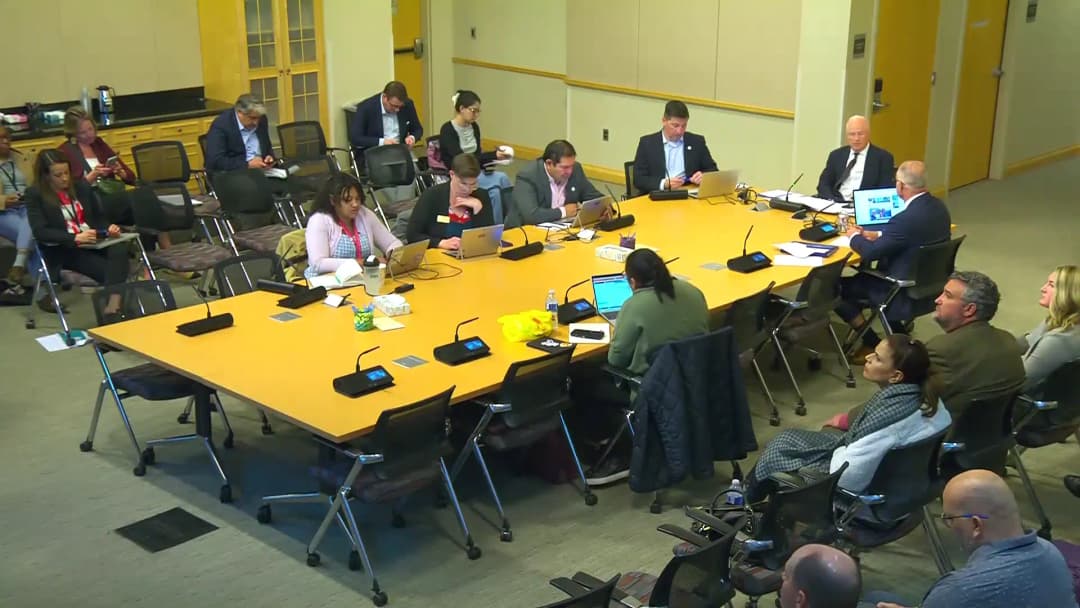
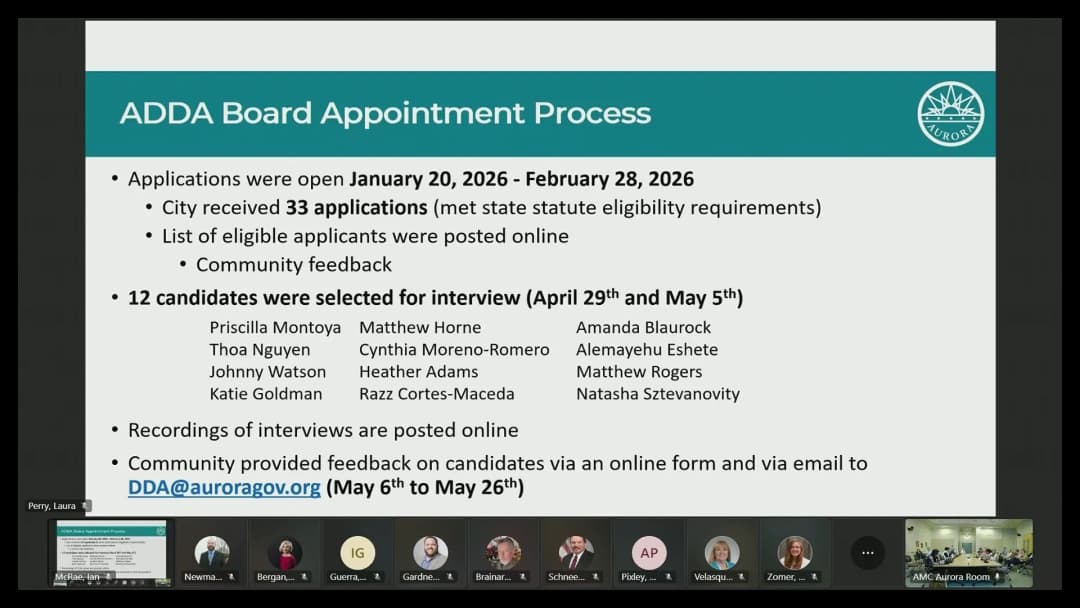
Public Meetings - Aurora, ColoradoThe Aurora City Council held a study session on June 9, 2026, to discuss a resolution to research a rental registry program and to consider appointments to the inaugural Downtown Development Authority (DDA) Board. The meeting featured debate on tenant protections, property rights, and government scope, and concluded with decisions to advance both items. Consent Calendar - The consent calendar was approved with the exception of item 2J (Rental Registration Program), which was pulled for separate discussion. Discussion Items - Rental Registration Program (Item 2J): - Mayor Pro Tem Coombs and Mayor Kaufman expressed support for a resolution directing staff to research and develop a landlord registration/licensing program to address blight and tenant protection issues, particularly in Northwest Aurora. They emphasized the need for accountability when rental properties lack a local contact for code enforcement. - Councilmember Bergen opposed the resolution, citing concerns about property rights, government overreach, costs, and duplication of state resources (DOLA, Colorado Housing Connects). She questioned the need for a new program given the city’s budget deficit and existing code enforcement limitations. - Councilmember Hancock raised concerns about the potential for administrative bloat, the need for a fiscal note, and whether the program would be the best use of resources. She asked whether the research phase would include a "stop" decision if warranted. - Joshua King, Manager of Neighborhood Support, presented the resolution as a first step, noting that it would involve stakeholder outreach, community engagement, and ordinance development with a target launch in January 2027. He clarified that the program would likely be phased and that costs would be offset by licensing fees. - Councilmember Lawson emphasized the importance of a robust fiscal note and the need for enforceability to meet public expectations. - The resolution was moved forward to full council despite objections from Councilmember Hancock. - Downtown Development Authority Board Appointments (Item 7A): - Laura Perry, Deputy City Manager, presented the process for appointing nine members to the inaugural DDA Board, following the November 2025 voter approval. The board will oversee tax increment financing for projects along the Colfax Corridor, as outlined in the Colfax Vision and Action Plan. - The recommendation was based on 33 applications, 12 interviews, and community feedback. The Mayor, Mayor Pro Tem Coombs, and Deputy City Manager Perry conducted the interviews. The proposed slate of nine candidates includes representatives from small business, cultural arts, property owners, and nonprofits. - Council unanimously moved the slate of nine candidates forward for first reading on June 22, 2026. The board is expected to begin work in July–August 2026. Key Outcomes - The resolution to research a rental registry program (Item 2J) was moved forward to full council, with one objection (Councilmember Hancock). A fiscal note and stakeholder engagement will be required before any ordinance. - The proposed slate of nine members for the DDA Board was advanced to first reading on June 22, 2026. No objections were raised. Note: The transcript indicates the meeting occurred on June 8, 2026, but per instruction, the formal meeting date is June 9, 2026.
The Aurora City Council met for a study session on May 19, 2026, to discuss and provide direction on several significant items, including a proposed infrastructure bond program, an update from the Citizens Advisory Committee on the consent decree, an ordinance to establish the Office of Public Safety Accountability, and a detention center disease reporting ordinance. Councilmember Wiles was not yet online, and Councilmember Gardner was absent due to a family emergency. Consent Calendar - Items 2A through 2E were moved forward without objection. Discussion Items Build Up Aurora Infrastructure Bond Program (Items 4A-4D) - Deputy City Manager Laura Perry presented the Build Up Aurora process, which began with an infrastructure task force created by council in July 2024. - Master planning efforts resulted in a $2 billion capital improvement master plan. - Community outreach included over 54 events, 3,700+ interactions, 21,400+ website visits, 22 facilitated discussions, and 5,800+ infrastructure ideas. - The recommended bond program is $264,515,000, funded by a 0.325% sales and use tax increase with a 30-year sunset. - The program would fund 65 projects across transportation infrastructure (47 projects), public safety ($52 million), and community facilities (parks, libraries, recreation). - The recommendation includes three ballot questions for the November 3, 2026 ballot, plus a companion resolution outlining specific projects and requiring annual reporting to council. - Councilmembers were asked for direction on each ballot question; no objections were raised, so the items received direction to move forward. Citizens Advisory Committee Consent Decree Briefing - Jeanette Rodriguez, chair of the Community Advisory Council (CAC), presented an update on the consent decree process, reflecting on four and a half years of work. - She noted substantial progress in policies, training, and transparency, but emphasized that the work is not over and that permanent structures for accountability are needed after the monitoring period. - Another CAC member highlighted the importance of data collection, recruitment and retention, and the establishment of an independent monitor. - Councilmembers thanked the committee and asked questions about community engagement and the impact of community input on the monitor's assessments. Office of Public Safety Accountability (Item 4F) - The City Manager presented a proposed ordinance to create the Office of Public Safety Accountability, modeled after the Office of the Internal Auditor. - The office would have oversight of police, fire, 911, and detention functions, with unfettered access to systems and data, and would provide family liaisons for critical incidents. - Councilmember Horton expressed support, highlighting community engagement and transparency. Councilmember Bergen raised concerns about council's role in hiring and the potential for political influence; the City Manager clarified that council would be consulted, not approve, and that the hiring decision remains with the City Manager. - Councilmember Hancock asked about professional qualifications and ensuring neutrality. No objections were raised to moving the ordinance forward. Detention Center Reportable Disease Notification (Item 5A) - Councilmember Horton presented an ordinance to amend city code requiring detention facilities to report reportable diseases, including a 48-hour notification requirement. - Horton cited reports from community organizations about health issues at the GEO detention center and lack of cooperation with Adams County Public Health. - Councilmember Bergen questioned enforceability and the practicality of requiring GEO to comply. Councilmember Lawson asked about enforcement mechanisms. - Councilmember Hancock objected, calling the ordinance "premature," "clearly political," and a "veiled attempt to attack the ICE facility." Despite the objection, the mayor moved the item forward. Key Outcomes - The council provided direction to refer the three infrastructure ballot questions to the November 3, 2026 ballot. - The Office of Public Safety Accountability ordinance was moved forward. - The detention center disease reporting ordinance was moved forward over Councilmember Hancock's objection.
The Aurora City Council held its regular meeting on Monday, May 18, 2026, starting at approximately 6:05 p.m. After roll call, an invocation, and the Pledge of Allegiance, the council approved the minutes of May 4, 2026 (7 yes, 0 no) and the meeting agenda (unanimous). The meeting was marked by extensive public comment, at times disruptive, and culminated in the adoption of a controversial resolution directing the Aurora Police Department to align its communications with existing city policies, restricting the posting of mugshots and suspect names before adjudication except in public safety emergencies. The council also unanimously advanced two annexation resolutions and an eminent domain ordinance for the Colfax Bus Rapid Transit project. Consent Calendar - Minutes of May 4, 2026: Approved with 7 votes in favor. (Mayor Kaufman, Councilmember Andrews, Mayor Pro Tem Coombs, Councilmember Hancock, Councilmember Jackson, Councilmember Lawson, Councilmember Wiles; Councilmember Bergen and Councilmember Gardner were not audible initially but later confirmed.) - Adoption of Agenda: Approved unanimously. - Consent Calendar – Motions (Item 10 C1): Approved with 9 yes votes. - Consent Calendar – Resolutions (Items 11A1, 11B1, 11B2): Approved with 8 yes votes (after pulling Item 11A2 for separate discussion). Public Comments & Testimony The public comment period included speakers for and against the APD communications resolution, as well as testimony on broader police accountability, community safety, and racial equity. Several speakers expressed full support for the resolution, arguing that APD’s social media posts often contained editorialized language that prejudiced suspects before trial, fueled racist comments, and undermined due process. Others, including residents and business owners, opposed the resolution, stating that withholding mugshots and suspect names until conviction would reduce public safety and transparency. - Katie Edwards (Ward 5 resident) urged the council to support food trucks as economic development, noting a parking lot at Hampton and Chambers that now hosts vendors without city funding. She questioned the proposed rule of one truck per 15,000 sq ft and asked how making it harder for a veteran food truck operator prevents human trafficking. - Jeffrey McFarland (Ward 1 resident) criticized the council’s focus on decorum and argued that protected speech includes profanity. He called for the firing of Police Chief Todd Chamberlain and accused APD of failing to protect Black residents. - Justin Hands described a May 21, 2025 SWAT raid on his home based on a false 911 call. He stated he intends to sue the city. - Kirk Manzanares promoted his “Positive Aurora Community Movement” (PACMO) and urged unity. He called for active listening and love, not judgment, for those with mental health struggles. - K. Dot (speaker) and Coyoa Lewis celebrated the high school graduation of Kylan Lewis Jr., son of Kylan Lewis fatally shot by APD. They expressed gratitude for the passage of SB 26‑190 (police accountability legislation) and warned they will continue to push for further reforms. - Medine Schaffner thanked the council for passing Resolution 11A2 but called it “only a start.” She stated that the community has a long way to go and expects stakeholding on broader accountability measures. - Veronica Sebron and Ellen Wu criticized the council for allowing racist comments and systemic neglect of racial justice. - Several other speakers (Tristan Houst, N West, Alondra, Veronica Jones, Ayante Anderson, Shannon Peterson) spoke in favor of Resolution 11A2, emphasizing the need to ensure APD only posts factual information and to stop the “unchecked power” of the police department. - Councilmember Hancock read an email from a resident who said they no longer feel safe attending meetings due to “profanity, disrespectful comments, bullying, and threats.” Councilmember Hancock also called for a moment of silence for persecuted Christians worldwide. During public comment, one speaker (Justin Hands) was removed by security after disrupting the meeting. The council recessed twice (at 6:05 p.m. and 6:35 p.m.) to restore order. Discussion Items Item 11A2 – Resolution 2026‑55 (APD Communications Policy) The original resolution directed the city manager to implement a policy requiring APD to follow established city communications workflows and to refrain from posting mugshots or suspect names on social media until a guilty plea or conviction, unless a public safety emergency exists. A substitute motion was introduced after staff reported that existing policies already applied to all departments. The substitute replaced the first clause with a directive to follow existing policies and added an exception for emergency public safety concerns (e.g., wanted persons, threats to public safety). Council Debate: - Councilmember Bergen argued the resolution stifles the police chief’s First Amendment rights, bypassed the Public Safety Committee, and that restricting timely public safety information could harm residents. - Councilmember Lawson echoed that transparency and mugshot release help neighbors protect themselves and that the city manager lacks expertise to approve posts. - Councilmember Hancock called the resolution a direct attack on Chief Chamberlain and said it would make Aurora less safe; she cited dozens of constituent emails opposing it. - Councilmember Wiles said she was conflicted but ultimately supported the resolution because APD’s posts have included editorialized language (“terrorized the neighborhood”) that creates liability and division, despite repeated requests to “just state the facts.” - Councilmember Horton argued the resolution is “mundane” – merely aligning APD with city communications policies – and that due process is essential to avoid lawsuits and protect the city’s budget. - Councilmember Medina noted that the District Attorney’s office raised concerns that APD posts (e.g., citing “extensive criminal history”) could taint a jury pool and prejudice prosecution. - Mayor Pro Tem Coombs emphasized that the amendments create specific public safety exceptions (e.g., when a suspect is released pre‑adjudication) and that the policy does not prevent factual information, only personal opinion and political innuendo. The substitute motion passed by a vote of 6 yes to 3 no. Councilmembers Bergen, Gardner, and Lawson voted no. After further public comment, the final resolution (as substituted) was adopted by a vote of 6 yes to 4 no. Councilmembers Bergen, Gardner, Hancock, and Lawson voted no. Item 13A – Eminent Domain for Colfax Bus Rapid Transit Project Staff presented an ordinance authorizing the city to exercise eminent domain to acquire necessary easements for the Colfax BRT project (improvements along Colfax Avenue from I‑70 to I‑225). Staff emphasized that eminent domain is used only as a last resort after good‑faith negotiations. The council voted unanimously to adopt the ordinance. Items 15A and 15B – Annexation Resolutions Two resolutions were presented, finding that petitions for annexation of two sets of parcels (20.491 acres owned by 7 N LLC at South Gun Club Road and East Bayod Avenue, and 46.6 acres owned by PCG Holdings LLC at the southeast corner of Gun Club and Bayod) are in substantial compliance with state law. Each resolution sets a public hearing for June 22, 2026. Both resolutions passed unanimously. Key Outcomes - Minutes of May 4, 2026 approved (7 yes). - Agenda adopted unanimously. - Consent Calendar – Motions (Item 10 C1) approved (9 yes). - Consent Calendar – Resolutions (Items 11A1, 11B1, 11B2) approved (8 yes). - Item 11A2 – APD Communications Policy: Substitute motion passed (6‑3), and final resolution adopted (6‑4). The policy requires APD to follow all city communications policies and, absent a public safety emergency, to withhold mugshots and suspect names from social media until a guilty plea or conviction. The city manager will define emergency exceptions. - Item 13A – Colfax BRT Eminent Domain adopted unanimously. - Item 15A – Annexation Resolution (7 N LLC parcels) adopted unanimously; public hearing set for June 22, 2026. - Item 15B – Annexation Resolution (PCG Holdings parcels) adopted unanimously; public hearing set for June 22, 2026. - Council reports included updates on a decorum rules committee meeting (May 26), moment of silence for the San Diego Islamic Center shooting and for persecuted Christians, and announcements of upcoming town halls and community events. - Additional public comments following council reports reiterated support for police reform and criticism of the council’s handling of racial equity.
The Aurora City Council met on May 5, 2026 for its regular meeting. The meeting included a lengthy public comment period dominated by debates over decorum and police accountability, the adoption of a resolution expressing sorrow for officer-involved shootings, and several routine items. Note: The transcript begins by stating the meeting was held on Monday, May 4, 2026, but the provided metadata indicates the correct date is May 5, 2026. This summary uses the official date. Consent Calendar - The April 20, 2026 meeting minutes were approved unanimously. - The agenda was amended to add Councilmember Ally Jackson as a co-sponsor to item 1186, then approved unanimously. - Consent calendar on motions (items 10A–10C3) and consent calendar on resolutions and ordinances (items 11A1–11A5 and 11B1–11B2) were approved unanimously. Item 11A6 was pulled from consent. Public Comments & Testimony First Public Comment Period - Pastor Ron Frierson urged healing and respectful communication. - Debbie Stafford (Aurora Community of Faith) called for decorum, stating that a small group has “hijacked” meetings with threats and swearing. She cited scripture and asked for civility. - Becky (Mustachio Grief Foundation) provided information about grief resources for families who lost loved ones. - Pastor Al Coombs (45-year Aurora pastor) prayed for peace and unity, emphasizing that peace is a person (Jehovah Shalom). - Jerry Jarenski criticized the council majority (labeling them “socialists”) and specifically attacked Councilmember Wiles (police review board), Horton (comments on police shootings), Andrews (arrest history), Jackson (lack of qualification), and the council’s vote against ICE cooperation. - Andy Starrett (parent of murdered child) recommended grief support groups like Parents of Murdered Children. - Shonda Stuarte (Aurora native) expressed concern over proposed changes to the Aurora Reservoir access road, asking for transparency and meaningful community engagement. Councilmember Bergen offered to follow up. - Jeffrey McFarland (Denver Aurora Community Action Committee) argued that the council should apologize for police violence, called for a civilian police accountability council with subpoena power, and criticized former mayor and council for hiring Chief Todd Chamberlain. - Kristen Mallory defended emotional public comments, stating that anger stems from Aurora’s history of police killings and that “healing starts with listening when it’s uncomfortable.” She challenged faith leaders who prioritize decorum over justice. - Ali DeWills Marcano argued that “decorum is wielded as a cudgel to silence those who challenge power” and that organized groups from the establishment are the real hijackers. She called for ending the one-hour time limit and protecting free speech. - Pastor Topaz McBride acknowledged pain on all sides and called for unity and accountability. - Ayante Anderson criticized faith leaders for not standing with families earlier, questioned “what side would Jesus stand on,” and directly addressed Debbie Stafford, asking “What God are you praying to?” He challenged the Aurora Community of Faith to show up for grieving families. - Medine Schaffner (mother of Kylan Lewis) angrily responded to Debbie Stafford, stating her pain is ongoing, that she will never stop fighting, and that the council should not shut down public comment. - Ray Cole (Tollgate Crossing resident) opposed the reservoir access road plan as it would run behind his home, disrupting the neighborhood. Councilmembers requested his contact info. - Della Ann Jordan criticized the police department’s handling of her assault report, alleging inaccurate reports and lack of empathy. She called for Chief Chamberlain’s resignation. - T Tag argued that council spends time policing feelings instead of addressing police violence, sexual assault allegations against the chief, and a “rogue” police force. She called for community input. - Zachary Cotton accused Chief Chamberlain of lying to families and media, and criticized delays and fees on his CORA request for records related to communications with ICE. - Cassandra Hill (DACAC) said the council ignores the many citizens who speak about police violence and that community control of police is needed. - Samantha Carente defended speakers as “community members using one of few public avenues” and called criticism of them a tactic to silence criticism. She quoted scripture to condemn hypocrisy. - Veronica Siebron (mother of Jalen Seabron) responded to Debbie Stafford, saying families have been ignored for years, and asked how anyone can judge the tone of a grieving mother. - K Dot invoked the First Amendment and directly told Debbie Stafford she is a hypocrite. He said “demons know scriptures as well.” - Laura McLaughlin praised youth who spoke against the SAVE program and criticized the council for not working with community nonprofits. - Aaron Contreras (Colorado Carpenters Local 555) spoke in support of a construction transparency ordinance to require information on apprenticeship participation and local hiring. - Tristan Hoost (DACAC) argued that faith leaders lecturing about decorum ignore police killings. He listed names of people killed by APD and called for firing Chief Chamberlain and community control. Second Public Comment Period (After Resolution Adoption) - Ayante Anderson said the resolution is “not enough” and will be enough only when police killings stop and the council stands up to the police union. He challenged the city to pass an enforcing ordinance. - Medine Schaffner (mother of Kylan Lewis) reported that the city has not responded to permit requests for Kylan’s memorial on May 23. She said the memorial will proceed regardless. - Veronica Siebron (mother of Jalen Seabron) echoed the permit issue, criticized Councilmember Hancock for being disheartened by attacks on a faith leader but not by police killings, and asked Mayor Kaufman to instruct Jason Batchelor to address the family’s request. - Ali DeWills Marcano pointed out that Councilmember Bergen violated the council’s own decorum rule by calling Councilmember Andrews a liar, and urged Councilmember Hancock to hold Bergen accountable. - Juan Marcano argued that decorum is selective and used to silence speech, and that addressing systemic injustices would bring peace to chambers. - Ellen Wu spoke for AANHPI Heritage Month and against bullying and hate, calling for education and organization. Discussion Items Item 11A6 – Resolution on Officer-Involved Shootings Councilmember Andrews introduced a substitute resolution (moved by Councilmember Jackson) after negotiation. The substitute acknowledged loss of life, expressed sorrow, and committed to transparency and accountability. Councilmember Bergen objected, stating that Councilmember Andrews had given his word he would accept her version and then changed it without notice. She said she could no longer trust him. The substitute resolution passed 6-4 (Bergen, Gardner, Hancock, Lawson opposed). The council then debated amendments. Councilmember Horton added “racial and ethnic disparities” to a whereas clause. Councilmember Gardner added “city council” alongside city attorney regarding fiduciary duty. Both were accepted as friendly. In final debate: - Councilmember Gardner said supporting the resolution is not anti-police; it is a humane acknowledgment of hurt. - Councilmember Mayor Pro Tem Coombs thanked both sides for balancing empathy for families and police, and acknowledged institutional power disparities. - Councilmember Hancock argued the resolution goes beyond government’s proper role, will not satisfy critics, and could interfere with pending litigation. She voted no. Final vote: 7-3 (Andrews, Horton, Jackson, Wiles, Coombs, Medina, Gardner? Wait, Gardner said he would support. Let me check transcript: Gardner spoke in favor. So yes, Gardner voted yes. Hancock and Lawson no, Bergen no. So 7 yes, 3 no) – resolution adopted. Item 13A – Commission for Older Adults Term Limits Director of Parks, Recreation & Open Space Brian Green presented a cleanup ordinance to align term limits with other boards. Passed unanimously. Item 13B – Library Board Code Changes Library Director Ginger White Brunetti presented changes to align library board bylaws with 2025 board consolidation, including email voting, secretary selection, membership expansion (up to 15), and allowing non-residents who work in Aurora. Councilmember Bergen asked about the rationale for non-residents; staff noted many workers live outside city limits. Passed unanimously. Key Outcomes - Resolution on Officer-Involved Shootings (11A6) adopted 7-3 after a substitute was offered and amended. The resolution expresses sorrow for loss of life, commits to improving trust and transparency, and acknowledges the trauma of all affected, including officers. - Commission for Older Adults ordinance (13A) approved unanimously. - Library Board ordinance (13B) approved unanimously. - Public comment rules: Several council members acknowledged the need for better decorum and listening, but no formal action was taken. Councilmember Coombs apologized to Hancock for snapping. - Permit for Kylan Lewis memorial: Families reported no response from the city; they stated they will proceed regardless. - Future meetings: Spring workshop on May 9, State of the City on May 12, and various town halls scheduled.
The Aurora City Council met on Monday, April 20, 2026, for a regular meeting that began with an invocation, land acknowledgment, and Pledge of Allegiance. The meeting covered a wide range of topics including a failed vote on a memorandum of understanding (MOU) between the Aurora Police Department and the GEO-operated ICE processing center, extensive public testimony on police accountability and youth surveillance programs, and unanimous approvals of several consent items and an annexation. The meeting also included updates on the executive session regarding labor negotiations, a brief health emergency for Councilmember Bergen (who later left), and council member reports. Consent Calendar - The minutes from April 6, 2026, were approved unanimously. - The agenda was adopted unanimously. - Consent calendar items (resolutions and ordinances) were adopted as amended after pulling items 11A1, 11B3, and 11B4 for separate discussion. Public Comments & Testimony Public comment periods featured over 40 speakers on multiple issues: - Police Accountability and Chief Todd Chamberlain: Many speakers demanded the firing of Chief Todd Chamberlain, citing a pattern of excessive force, cover-ups, and lack of accountability. Speakers referenced several fatal police shootings, including those of Kylin Lewis, Rajan Belt Stubblefield, Amar Garlington, and others. A call for a civilian police accountability council with subpoena power was repeated by multiple speakers, including representatives from the Denver Aurora Community Action Committee (DACAC). - Aurora SAVE Program: A large group of youth and adult advocates spoke against the Aurora SAVE program, a police-led surveillance and risk-scoring initiative targeting youth. They argued it profiles youth of color, relies on social network mapping, and criminalizes young people without due process. Speakers included members of the Wetzel Lean Warriors and Denver Healing Generations. They called for the program to be shut down and for community-led alternatives. - GEO Facility MOU (Item 11A1): Numerous speakers urged the council to vote against the MOU between APD and the GEO ICE Processing Center. They described inhumane conditions inside the facility, including medical neglect, sexual assault, and deaths in custody. Speakers argued the MOU would legitimize a for-profit prison, waste taxpayer money, and further entangle APD with federal immigration enforcement. Some cited a community accountability report documenting 161 medical complaints and a 22% criminal record rate among detainees (contradicting the police chief's claim of 60-70%). - Accessibility and Meeting Procedures: Allie DeWills Marcano and others called for improved accessibility of the council chambers, including reactivation of closed captioning, remote attendance options, and earlier release of agenda packets. - Other: Testimony was also given on the need for wage increases for Allied Universal security staff in the building, concerns over new administrative hires, and recognition of National Asian American Heritage Month. Discussion Items 11A1 – Resolution 202630: MOU between APD and Aurora Processing Center Councilmember Horton presented the MOU, explaining it establishes guidelines for APD response to emergencies and criminal incidents at the GEO facility. He noted it provides guardrails on resource allocation and discretion for the incident commander. Chief Todd Chamberlain joined remotely and stated that the MOU gives APD more authority and an established incident command system. He claimed that approximately 60-70% of the 1,000 detainees have criminal backgrounds, a figure later contested by public speakers who cited ICE data showing only 22% with criminal records. Councilmember Coombs raised concerns about information sharing during protests and First Amendment protections. Councilmember Jackson asked how the MOU aligns with a recent emergency resolution limiting APD cooperation with ICE. The chief responded that the MOU is about community safety, not immigration enforcement. Multiple council members expressed skepticism about the data provided and the lack of transparency. Following extensive public comment, a motion to approve was made by Mayor Pratem (?) and seconded by Hancock. The motion failed with 6 no votes and 4 yes votes. 11B3 and 11B4 – Painted Prairie Metropolitan Districts Service Plan Amendments Councilmember Wiles moved to continue these items to May 4, 2026, citing numerous community concerns and a planned joint virtual meeting with the developer on April 29. She said the community needed more information. Councilmember Bergen questioned the delay given prior approvals and a planned grocery store. The motion passed unanimously. 15A, 15B, 15C – Annexation of Tapias LLC Parcel Staff presented a petition for annexation of a 2.496-acre parcel at 22201 East 26th Avenue, with initial zoning as I-1 Industrial. The Planning and Zoning Commission had recommended approval. All three items (annexation ordinance, zoning ordinance, and annexation agreement) were approved unanimously after brief discussion. Key Outcomes - Minutes of April 6, 2026: Approved unanimously. - Agenda: Adopted unanimously. - Resolution 202630 (MOU between APD and GEO): Failed (6 no, 4 yes). - Ordinance 2026-10 (Service plan for Painted Prairie Metro Districts, 11B3): Continued to May 4, 2026. - Ordinance 2026-10 (Amended service plan, 11B4): Continued to May 4, 2026. - Ordinance 2026-14 (Annexation of Tapias LLC parcel, 15A): Approved unanimously. - Ordinance 2026-15 (Initial zoning for Tapias parcel, 15B): Approved unanimously. - Resolution (Annexation agreement for Tapias LLC, 15C): Approved unanimously. - Consent Calendar: Adopted as amended (items 11A1, 11B3, 11B4 pulled).
Mayor Kaufman presided over the Aurora City Council study session on April 20, 2026. Councilmembers were present for roll call. The council moved the consent calendar forward, heard an update from Aurora Public Schools, discussed a resolution concerning officer-involved shootings, and referred a proposal on municipal court criminal prosecutions to a future workshop. No public comment period was conducted. Consent Calendar - Items 2A through 2L were moved forward without objection. Aurora Public Schools Update - Superintendent Michael Giles and APS Board Member Dr. Ann Kiki presented the annual state of the district. Giles described APS as the state's most diverse district and the fifth largest, with about 38,000 students, more than 130 countries represented, 160 languages spoken, roughly 75% of students qualifying for free or reduced-price lunch, about 4,243 multilingual learners, and more than 5,000 staff. Kiki later said that almost 52% of APS students are English learners; the relationship between this figure and the multilingual-learner count was not reconciled during the presentation. - They outlined the Destination APS strategic plan, with priorities including academic achievement and post-secondary readiness, inclusive community, safety, and quality talent. - Kiki explained the board's student-outcome-focused governance model, including four current goals (early literacy; high school graduation; third-grade equity in math and literacy; ninth-grade equity in math and literacy) and guardrails requiring attention to diversity, equity, and inclusion; the whole child; stakeholder engagement; family and student climate; and staff retention. She said new goals and guardrails have been developed through community engagement and will replace the current set in June. - Giles reported progress: schools on turnaround status fell from three in 2023 to one in 2025 (the remaining school is on turnaround only because of low test participation); performance-rated schools rose from 13 in 2023 to 19 in 2025; and the district moved from priority improvement (42.8% of points) in 2023 to improvement in 2025, nine percentage points below the highest performance rating. - In work-based learning and college readiness, Giles cited growth in concurrent enrollment (from roughly 1,600 students and 4,900 courses in 2019-20 to 2,300 students and 7,600 courses in 2024-25), 107 associate degrees awarded to high school students last year, $24 million in scholarships, 72 military enlistments, 4,414 tier-one work-learning experiences through December 2025, 109 internships, and 16 apprenticeships. - He also announced partnerships with CU Denver (direct admissions for qualifying juniors and seniors) and Colorado Mesa University, the opening of the district's first dual-language school (Escuela Bilingue Betty Benavides) and Cole Creek P-8, and a planned health science high school on the North Middle School campus with five pathways, developed with Community College of Aurora and UC Health. - Giles described a new CTE hub-and-spoke model so each high school has a major hub with multiple pathways. - Both Giles and Kiki urged the council to help resolve a land standstill delaying the planned Aurora Highlands high school. They also invited council members to the district's block party on May 2, which drew roughly 1,000 to 1,500 people when first held. - In Q&A, Mayor Pro Tem Coombs asked how the board would respond if a policy conflicted with a guardrail; Kiki said the current guardrails came from the community and will sunset in June, and the board would go back to the community if needed. Councilmember Bergen asked about emergency authority; Giles distinguished emergencies from major decisions such as calendar or transportation changes. Coombs also asked about arts and humanities students; Giles cited Charles Burrell School of the Arts and a new common bell and transportation system with shuttles to allow students to take pathways at other schools. Officer-Involved Shooting Resolution (Item 3A) - Councilmember Andrews introduced a resolution to codify the city's existing position expressing sympathy to families in officer-involved shootings, saying it is not anti-police. - Councilmember Bergen opposed the draft as one-sided, citing trauma experienced by officers and their families and noting a recent officer who was stabbed in the head. He said he would propose amendments to add balance. - Councilmember Hancock spoke against the resolution, arguing it confuses the city's governing role, treats every shooting as morally equivalent, and would appease the loudest voices rather than address misconduct directly. He acknowledged that his earlier vote to move it out of committee was not a vote of support. - Councilmember Lawson said many emails raised lack of balance and that Ward 5 residents support police, citing an incident in Heather Gardens. - Mayor Pro Tem Coombs recommended pulling the item and returning with a clean version; staff noted a shorter deadline if it went to the first May council meeting. - Councilmember Horton said the discussion must retain historical context, referencing the attorney general's report after Elijah McClain's death documenting disproportionate use of force against Black community members. - Councilmember Medina, citing his own fire and EMS background, said the council should be supportive of both sides and should not be making such decisions; the courts decide. - Mayor Pro Tem Coombs said the resolution as written does not disparage police and that social media campaigns were unfairly calling it anti-police. Councilmember Andrews agreed to work with colleagues on amendments and said a provision on indemnifying officers was unnecessary. - The item moved forward without objection, with amendments to be drafted before it appears on a regular agenda. Municipal Court Criminal Prosecutions (Item 5A) - Councilmember Bergen proposed that, because the Colorado Supreme Court upheld state law preventing municipalities from imposing harsher penalties, the city should stop prosecuting criminal cases in municipal court, keeping only traffic, zoning, and animal cases (the Centennial model). He cited an estimated annual savings of about $7 million, based on a rough figure from City Manager Jason Bachelor, and proposed phasing in the change by May 1, 2027, with reductions through attrition. - Councilmember Horton asked which line items would be cut; Bergen said the public defender's office and probation would be eliminated and prosecution and courtroom staffing would be significantly reduced. Horton confirmed the savings would be annual, not one-time. - Councilmember Wiles raised victim-impact concerns, including longer travel to county courts and transportation barriers, and asked about bus passes or other support. Bergen agreed to move the proposal to a workshop for more discussion. - Mayor Pro Tem Coombs said the workshop should examine municipal-only offenses, whether the city should repeal its criminal code, burden shifting to counties, and broader fiscal impacts. - The council agreed to place Item 5A on the next quarterly workshop. The study session then recessed. Key Outcomes - Consent calendar (Items 2A–2L) moved forward with no objection. - Item 3A moved forward; Councilmember Andrews will incorporate amendments to balance the resolution. - Item 5A was referred to the next quarterly workshop for additional analysis. - The APS request for assistance with Aurora Highlands high school land received no formal action but was presented to the council.
The Aurora City Council held a regular meeting on April 6, 2026, addressing a range of topics including a stage-one water shortage declaration, a memorandum of understanding with the Aurora ICE Processing Center, public hearings on the 2027 budget and several metro district service plan amendments, a child restraint system ordinance update, and an annexation. The meeting included extensive public comment on police accountability and conditions at the GEO detention center, and ended with councilmember reports. Consent Calendar - Approved the minutes of the March 23, 2026, meeting (unanimous). - Adopted the agenda (unanimous). - Approved resolutions and ordinances 11A1, 11A4 through 11A12 as a consent block, after pulling items 11A2 and 11A3 for separate discussion. Public Comments & Testimony Non-Agenda Items (Public Invited to be Heard): - Tanya Tabachek urged the council to research street racing and expressed concern about caregivers losing funding under proposed legislation. - Jeffrey McFarland (Ward 1 resident, Denver Aurora Community Action Committee) demanded the firing of Police Chief Todd Chamberlain and City Manager Jason Bachelor, citing the killing of Kylan Lewis and lack of accountability. - Aonte Anderson used an Easter analogy to argue that the state has taken lives without accountability and called for leadership change. - Medean Schaffner (with DACAC) spoke about an ancestors’ weaving story and announced that an ordinance proposal has been submitted to the council for police accountability. - Joel Benjamin compared conditions at the Aurora ICE Processing Center (GEO facility) to those described by his grandfather in Buchenwald, citing reports on inadequate food and medical care. - Aaron Contreras (Carpenters Union Local 555) highlighted tax fraud in construction, urging stronger enforcement of worker classification and responsible contractor standards on city-funded projects. - Kayoa Lewis delivered a religious warning to Mayor Kaufman and council, stating divine judgment is coming if they do not address police killings. - K. Dot supported Medean Schaffner as a leader and reiterated warnings to the council. - Prophet Shell West called on the council to collaborate on the proposed ordinance and be transparent. - Francisco Soto quoted the biblical story of Belshazzar’s judgment, warning that God holds leaders accountable for inaction. - Janet Martin described a horrific pit bull attack on a 57-year-old woman near Colfax and Kingston, criticizing police response time (20 minutes) and lack of witness documentation. - Tristan Hust (DACAC) demanded the firing of Chief Todd Chamberlain, citing his LAPD record during the Rodney King riots, a discrimination lawsuit, and the continued police killings in Aurora. - Veronica Seabron (mother of Jalen Seabron) called for council to act on an ordinance built from community input, warning that they will be remembered as those who looked away. - T Tag criticized APD’s performance, citing a 37% overall rating and statistics showing Black residents are 4.6 times more likely to be killed by APD, and noted high per-capita police funding. Item 11A2 (Water Shortage Resolution): - Tanya Tabachek questioned enforcement of watering restrictions on golf courses and asked for clear fine schedules. Item 11A3 (MOU with ICE Processing Center): - Jeffrey McFarland opposed the MOU, calling it a betrayal of immigrant communities and a waste of public resources. - Zachary Cotton (DACAC) argued that APD should not work with GEO and that the MOU is a backroom deal. - Joel Benjamin read from reports detailing poor conditions at the GEO facility and criticized the collaboration, urging the council to investigate instead. Item 12A (2027 Budget Hearing): - Tanya Tabachek urged funding for the animal shelter. - Maya Wheeler (Ward 5) asked for budget priorities to include housing, workforce, long-term water resources, and economic opportunity for small businesses. Item 15A (Annexation): - Rob Gonzalez (adjacent landowner) spoke in support of the annexation and rezoning to I-1 business tech district. Final Public Comments: - Tanya Tabachek again advocated for caregivers and for proper treatment of animals. - Medean Schaffner announced that her organization is backing Della Jordan (a constituent) and will ensure she gets resolution from the Navigation Center. - Ayante Anderson criticized the lack of diversity among newly sworn judges and city attorneys (all white-presenting) and alleged that Councilmember Francois (likely a misidentification; no councilmember by that name was present) shouted “blasphemy” under her breath during the meeting. Discussion Items Stage One Water Shortage Declaration (Resolution 2026‑29) - Staff from Aurora Water (Marshall Brown) presented dire drought conditions: the entire state of Colorado is in drought, snowpack at 36% of median, storage at 57% full, and the warmest start to a water year in 131 years. - Stage one restrictions include: single-family residential irrigation limited to two days per week; irrigation-only accounts (golf courses, parks) have a 20% reduction in allocation and face a $2.15 per 1,000‑gallon surcharge from the first gallon; HOAs cannot fine residents for dry landscapes. - Fines: first violation = warning; second violation = $250 for single-family, $500 for commercial; after three violations, water may be shut off. A seven-day cure period applies for residential. - Councilmember Gardner asked about coordination between departments regarding new turf installations. Staff clarified that cool‑season turf installation is prohibited; warm‑season turf or water‑wise landscaping is allowed. HOAs can enforce design standards but cannot ban removal of Kentucky bluegrass. - Councilmember Lawson confirmed that the Great Lawn on city property will also be subject to the same restrictions. - The resolution passed unanimously. Memorandum of Understanding with Aurora ICE Processing Center (Resolution 2026‑30) - Staff presented the MOU (10‑year term) defining APD’s role when called to the GEO facility, including response to escapes, bomb threats, civil disturbances, and investigations under the Prison Rape Elimination Act (PREA). The MOU explicitly states APD does not enforce immigration. - Councilmember Horton raised concerns about a past escape where GEO delayed communication with APD, and about access for investigating sexual assault allegations. City attorney noted that if GEO fails to cooperate, APD can obtain search warrants and coordinate with federal authorities. - After public testimony opposed to the MOU, Councilmember Horton moved to continue the item to the next regular meeting (April 20, 2026) to allow more public engagement. The motion passed 10‑1, with Councilmember Hancock voting no. 2027 Budget Public Hearing - The hearing was opened and closed with no motion; it was the first of two required hearings. Metro District Service Plan Amendments (Items 12B – 12G) - All six items were presented by staff (Michael Kerrigan) and passed unanimously. They allow districts to modify ARI mill levy structures (generally converting tiered levies to a flat 5 mills) and to join the Fletcher Regional Improvement Authority (FRIA) for regional transportation funding. Public objections were received only for Painted Prairie (12D) but no one spoke during the hearing. - 12B: Eagles Nest Metro District – amendment to accelerate ARI mill levy payoff and dissolve sooner. - 12C: Green Valley Ranch East Metro Districts 6‑14 – amendment to allow districts 10‑14 to join FRIA or other authorities rather than remain tied to ARTA. - 12D: Painted Prairie Metro Districts 1‑9 – amendment to adopt flat 5‑mill ARI levy for FRIA membership. - 12E: Painted Prairie Metro Districts 10‑12 – same amendment. - 12F: Sky Dance Metro District No. 1 – same amendment. - 12G: Sky Dance Metro District No. 2 – same amendment. Child Restraint Systems Ordinance (Item 13A) - Ordinance updating city code to align with state law requiring more rigorous child restraint systems. No discussion; passed unanimously. Annexation and Zoning (Items 15A, 15B, 15C) - A 2.496‑acre parcel at 2201 E. 26th Avenue (Tapius LLC) was annexed and initially zoned I‑1 business tech district. The annexation resolution, ordinance, and zoning ordinance all passed unanimously after a public hearing with one supporter. Key Outcomes - Stage One Water Restrictions declared effective immediately (April 6, 2026). Two‑day‑per‑week irrigation, surcharges, and progressive fines approved unanimously. - MOU with ICE Processing Center continued to the April 20, 2026, regular meeting by a 10‑1 vote. - 2027 Budget public hearing was held; no action taken. - Six metro district service plan amendments all adopted unanimously, facilitating ARI mill levy restructuring and FRIA participation. - Child restraint ordinance updated to match state law (unanimous). - Annexation and zoning of 2.496 acres in Adams County approved unanimously. - Council reports included updates on Ward 1 town hall, water restrictions outreach, parks committees, and legislative session notes.
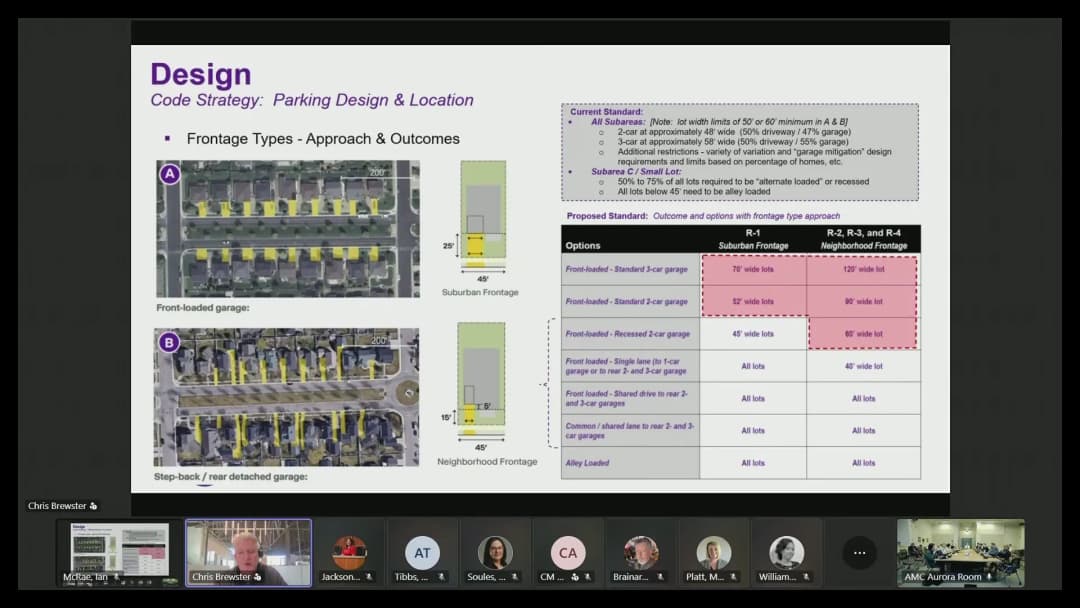
The Aurora City Council met on April 6, 2026, to discuss a proposal to increase council administrative staffing, receive an update on the East Colfax Bus Rapid Transit (BRT) project, and review proposed amendments to the Unified Development Ordinance (UDO) regarding small lot housing and design standards. Council heard from staff and members, debated fiscal priorities and equity, and voted to delay a staffing decision until the May budget workshop. Discussion Items - Council Administrative Staffing: Councilmember Bergen raised concerns about a proposal to add three additional administrative positions (for a total of five) for council offices, citing the city's budget deficit, the need for a workload analysis, and the optics of hiring full-time staff for part-time positions. Councilmembers Lawson and Hancock opposed the expansion, stating they manage without such support and prefer resources go to constituent services like traffic calming. Councilmembers Horton and Jackson supported the expansion, arguing it would allow council members to be more effective and equitable, especially for those with multiple jobs or young families, and noted the funding would come from existing vacancy savings without tapping reserves. After debate, a motion to delay the decision until the May budget workshop was approved 6-1, with Councilmember Jackson opposed. - East Colfax Bus Rapid Transit (BRT) Project Update: Deputy Director Carly Campozzano presented an informational update on the project's construction schedule, scope, and business support plans. The BRT route runs from Union Station in Denver to I-225 in Aurora, with construction in Aurora expected to begin in spring 2026 (likely May) and continue through 2027, with full service estimated in early 2028. The Aurora segment will be side-running mixed flow, causing less disruption than Denver's center-running segment. A small business support program has been developed, including financial assistance, marketing help, and a "We Back the Facts" campaign to promote businesses during construction. Council members asked about security features (e.g., cameras, lighting, audible alerts for visually impaired) and safety coordination with RTD and APD. - Housing Unified Development Ordinance (UDO) Analysis Update: Manager Brendan Camarada and consultant Chris Brewster presented proposed amendments to the UDO to increase opportunities for small lots and housing diversity while reinforcing five core neighborhood design principles. Key changes include eliminating percentage requirements for small lots in favor of zoning district distinctions (R1, R2, R3), expanding location criteria to require proximity to both open space and activity centers, revising the building design point system to relax masonry requirements while maintaining quality, providing more flexible parking solutions (e.g., shared drives, remote parking, and carports), and allowing small lots in older areas (sub-areas A and B) where they are currently prohibited. Council members asked about infrastructure costs of outward growth, parking storage issues, and the impact on land use and housing affordability. No formal action was taken; further discussion will continue, with an initial draft expected soon. Key Outcomes - The council voted 6-1 to delay the decision on hiring three additional council administrative staff until the May budget workshop, pending a workload analysis of council member needs. - The consent calendar (items 2A through 2F) was approved unanimously. - The BRT project update and UDO analysis were informational and for discussion only; no formal votes were taken. - The council recessed into executive session after the presentations.
The Aurora City Council held its regular meeting on March 24, 2026, at 6:00 PM. The meeting included approval of prior meeting minutes, adoption of the agenda, public comment periods, discussion and votes on several resolutions and ordinances, including a controversial resolution to require 72-hour notice before abating unauthorized camps. Councilmembers also gave community reports and heard passionate public testimony on police accountability, homelessness, and other issues. Consent Calendar - Approved minutes from February 23, 2026, and March 9, 2026, unanimously. - Adopted the agenda for the meeting unanimously. - Approved the consent calendar for motions (items 10A2 through 10C3) after pulling item 10A1 for separate consideration. Item 10A1 (Homeless Resolution Program Grant Funding) was approved unanimously following a brief presentation and discussion. - Approved the consent calendar for resolutions and ordinances (items 11A1, 11A2, 11A4 through 11A8, and 11B2) after pulling items 11A1, 11A3, and 11B1 for separate discussion. Public Comments & Testimony Numerous residents spoke during multiple public comment periods. Key themes included: - Police Accountability: Many speakers demanded the firing of Police Chief Todd Chamberlain, citing his alleged history of racially discriminatory behavior in previous police departments (LAPD, Little Rock, Cincinnati) and his conduct in Aurora. Speakers including Jeffrey McFarland, Aaron Futrell, and Veronica Seaborn criticized the council for not taking action after the killing of Kylan Lewis by APD. Family members of Kylan Lewis (Robert Lewis, Shardina Lewis, Kayola Lewis) gave emotional testimony, stating the officer should face trial and calling council actions a failure of leadership. Some speakers referenced a lawsuit by Medea Schoffner that secured public comment rights for three years. - Homelessness and Camping: Tanya Tabachek opposed the 72-hour notice resolution, arguing it would allow camps to move and multiply. Maya Wheeler and others supported the resolution, saying it adds dignity and that the camping ban is inhumane and ineffective. Speakers noted the Navigation Center is not fully functional or safe. - Tobacco and Youth: Haley Foster (Aurora Partners for Thriving Youth) thanked council for passing the tobacco retail license and asked for continued partnership. - Accessibility: Allie DeWell’s Marcano requested updates on making the chamber accessible for people with disabilities. - Other: Lucas James (Community Medical Services) spoke on opioid treatment. Alejandra recounted a traffic incident involving APD and called for community control of the police. Dr. Ann Kiki (Aurora Public Schools board) raised a geological risk issue at the Aurora Highlands shared high school site, asking council to hold the developer accountable. Discussion Items - Item 10A1 – Homeless Resolution Program Grant Funding: A presentation by homelessness manager Stephanie Kuiper explained the $80,000 state grant to fund one full-time outreach worker from April 2026 to March 2027. Funds can also be used for transportation and outreach supplies. Approved unanimously. - Item 11A1 – Tobacco Retail Licensing Annual Reporting (Resolution 2026-20): Councilmember Gardner proposed a substitute resolution with amended whereas clauses and reporting requirements (compliance checks and rates). Mayor Pro Tem Coombs offered a friendly amendment to add language about council using the report to evaluate implementation. The substitute and final resolution passed unanimously. - Item 11A3 – 72-Hour Notice for Camp Abatements (Resolution 2026-22): This resolution required no less than 72 hours’ notice before clearing unauthorized camps, except in public health/safety emergencies, CDOT property, or along I-225 near Parker Road. It also allowed postponement in adverse weather. - Staff (Stephanie Kuiper) stated the resolution formalizes current practices, as coordinating with cleanup contractor Keeson often takes 72 hours anyway. - Supporters (Mayor Pro Tem Coombs, Councilmember Horton, some public speakers) argued it reflects reality, increases dignity, and does not change current operations. - Opponents (Councilmembers Bergen, Gardner, Hancock, Lawson) argued it weakens enforcement, will lead to encampment migration, and contradicts the intent of the camping ban. Councilmember Lawson questioned transparency about resource issues with Keeson. - The resolution passed 6-4 (yes: Kaufman, Coombs, Andrews, Jackson, Horton, Medina? Actually need to check: the vote was yes from Mayor Kaufman, Mayor Pro Tem Coombs, Councilmember Andrews, Councilmember Jackson, Councilmember Horton, and Councilmember Medina? Wait, we need to count from transcript: after discussion, the motion passed with six yes votes and no votes from Bergen, Gardner, Hancock, Lawson. That means the six yes votes are the remaining: Kaufman, Coombs, Andrews, Jackson, Horton, and Medina? But Wiles and Gardner? Gardner voted no. So yes: Kaufman, Coombs, Andrews, Jackson, Horton, Medina. Wiles? Not mentioned. Let's be safe: summary says six yes, four no. We'll state that. - Item 11B1 – 13th Avenue Station Urban Renewal Plan (Ordinance 2026-06): The plan creates two TIF districts and involves a $5 million loan for infrastructure (e.g., a bridge). A public speaker (Juan Marcano) supported TOD but warned against over-parking. Staff noted the loan risk is limited to AURA funds, though if development stalls, the loan may not be fully repaid. Councilmember Bergen questioned risk. The item passed unanimously. Key Outcomes - Votes & Decisions: - Minutes and agenda approved unanimously. - Consent calendar motions approved (with 10A1 pulled and approved separately). - 10A1 (Homeless Resolution Grant) approved unanimously. - 11A1 (Tobacco Reporting) substituted, amended, and approved unanimously. - 11A3 (72-Hour Camping Notice) passed 6-4. Ayes: Mayor Kaufman, Mayor Pro Tem Coombs, Councilmember Andrews, Jackson, Horton, Medina. Noes: Councilmembers Bergen, Gardner, Hancock, Lawson. - 11B1 (13th Avenue Station Urban Renewal) approved unanimously. - Appointments: Mayor Pro Tem Coombs appointed Chance Horiuchi to the Business Advisory Board. - Directives/Next Steps: - The 72-hour notice resolution goes into effect immediately, codifying existing outreach and coordination practices for camp abatements, with emergency exceptions maintained. - The 13th Avenue Station urban renewal plan adoption allows the city and RTD to move forward with soliciting development proposals. - Several councilmembers announced upcoming town halls and community events (e.g., Ward 1 Town Hall on April 4 with animal welfare focus, Ward 5 meeting on April 9, Mayor’s town hall on April 18). - Councilmember Jackson reminded of a Rules Committee meeting on March 25 at 5:30 PM to gather public input on meeting procedures.