On Friday, May 24, 2024, the Berkeley City Council held a special hybrid meeting beginning at 10:45 a.m. to discuss and provide direction on potential ballot measures for the November 2024 election. The meeting focused on a proposed library tax increase, a community survey on other revenue measures (parks tax, Measure P extension/increase, and an arts funding measure), and a proposed reauthorization of the sugar-sweetened beverage tax. The council took no formal votes on the survey but provided clear direction for its content. Public Comments & Testimony - Library Tax (Item 2): Multiple speakers expressed strong support for placing a limited library tax on the ballot. Beverly Green (Board of Library Trustees) and Julie Munro (homeowner and voter) spoke in favor, citing the library's role in education and community. Kathy Brown (Friends of the Library) read a letter of support and noted that the Friends would campaign for the measure. Amy Roth (Library Trustees president) shared her personal story of the library as a safe space and urged inclusion on the ballot. Tanier Ami (newest trustee) endorsed the library leadership and the measure. Kathy Hoff (Library Foundation) described the foundation's contributions and the risk of losing services without new revenue. One speaker, Donna Didamar, expressed concern that the city would use the parcel tax to replace general fund support, as happened 40 years ago. - Community Survey / Ballot Measures (Item 1): Javier Morales and Lolise Ramirez (Sugar-Sweetened Beverage Tax Panel of Experts) presented on the success of the soda tax, citing reduced consumption, increased water consumption, and $11.9 million in community investments. They requested a simple 12-year reauthorization without changes, noting 69% voter support in their own polling. Other speakers included Holly Scheider (former commissioner), Martin Bourke (Ecology Center), and Ayana Davis (Healthy Black Families), all urging continuation. Ari Lipske (Berkeley Rep) spoke briefly about an emergency arts funding measure for performing arts organizations facing structural deficits. Discussion Items Library Tax (Item 2): - Tess Mayer, Director of Library Services, presented a detailed overview of the library's strategic plan, community survey results (87% approval rating, 2,200 responses in 42 languages), and the structural deficit projected to lead to insolvency by 2029-2030 without new revenue. She proposed a new limited tax of $0.06/sq ft on residential and $0.09/sq ft on commercial parcels, raising $5.6 million annually. She explained that 75% of the budget is personnel, and cuts would directly impact staffing and hours. The council discussed the need for the measure, with Mayor Arreguín noting that Proposition 13 constraints force reliance on local taxes. Councilmember Mahan (the council's library board representative) and Councilmember Bartlett voiced strong support. A motion was made to refer the library tax to the city attorney for drafting of legal language; it passed unanimously. Community Survey for Other Ballot Measures (Item 1): - Staff presented options for a community survey to test voter support for a parks tax increase, a Measure P extension/increase, and potentially other measures. Scott Ferris (Parks Director) and Gordon Wozniak (PRW Commissioner) outlined a 20% increase in the parks tax (about $0.0426/sq ft, raising $3.6 million annually) to fund tree planting, waterfront maintenance, and capital projects. Councilmember Hahn suggested polling on a 28% increase ($0.06/sq ft) to align with the library tax, but after discussion, the council agreed to test 20% and 28% options. - Peter Radu (HHCS Deputy Director) presented on Measure P, the real estate transfer tax funding homeless services. He noted that since 2019, $56 million has been committed to 32 programs, leveraging additional state funds and contributing to a 21% reduction in overall homelessness and a 45% reduction in unsheltered homelessness. Options for the survey included a simple 10-year extension, a 0.5% increase (to 3.0%), or a 1% increase (to 3.5%). Councilmembers discussed a tiered approach: keep the current 2.5% rate for sales $1.5M–$3M, 3.0% for $3M–$10M, and 3.5% for over $10M. Some members also suggested possibly lowering the base rate or adjusting thresholds. The council directed staff to include tiered options in the survey. - Javier Morales and Lolise Ramirez presented the sugar-sweetened beverage tax reauthorization, proposing a simple 12-year extension (no changes) starting January 1, 2027. They cited strong community support and polling at 69%. Councilmembers expressed support for moving forward, and the mayor asked the city attorney to draft options for a 12-year extension or a permanent continuation. - Councilmember Hahn introduced a proposed arts funding measure to provide emergency support for performing arts organizations (e.g., Berkeley Rep, Aurora Theatre, Freight & Salvage) that have not recovered from the pandemic. She suggested a general fund tax with a target of directing 80% of funds to arts organizations, with some funds for school arts, grants, and a capital fund. The council agreed to include a question about an arts funding measure in the survey. Key Outcomes - Library Tax: The council voted unanimously to refer the library tax measure to the city attorney for drafting of legal language. The measure will return to council for final approval before the August 9, 2024 deadline for the November ballot. - Community Survey Direction: The council provided the following direction for the survey (to be fielded May 28–June 4, with results presented at a special meeting June 14): - Parks Tax: Test two increase options: 20% (raising $3.6M) and 28% (raising $5.1M, equivalent to $0.06/sq ft). - Measure P: Test three options: (1) extension as is (10 years, no increase), (2) tiered structure: 2.5% on $1.5M–$3M, 3.0% on $3M–$10M, 3.5% on over $10M, and (3) no across-the-board increase. - Arts Funding: Include a question on a potential measure to fund arts organizations (specifics to be developed). - Soda Tax: The city attorney will draft language for a 12-year extension and a permanent continuation; council will decide later which to place on the ballot. - Next Steps: The special meeting on June 14 will present survey results, and council will make final decisions on which measures to place on the November ballot. The final deadline for submitting measures to the county registrar is August 9, 2024.
Public Meetings - Berkeley, California
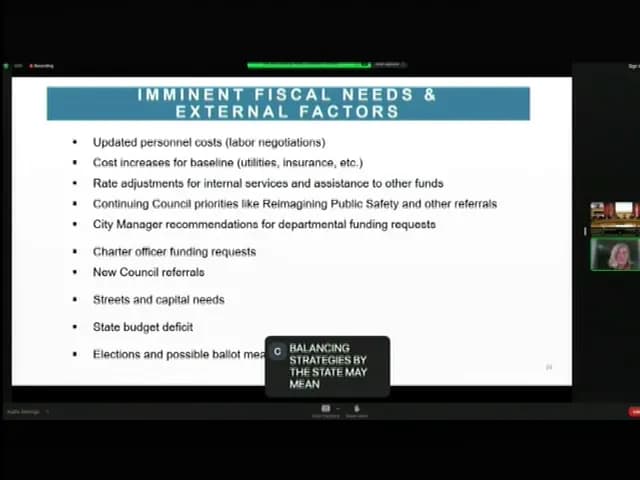
Public Meetings - Berkeley, CaliforniaThe Berkeley City Council held a regular hybrid meeting on Tuesday, May 21, 2024, at 6:00 PM. The agenda included union public comments on bargaining, a lengthy consent calendar with numerous funding relinquishments and policy items, the first public hearing on the FY2025-26 biennial budget, and adoption of several fee schedules. Councilmember Taplin was absent due to illness; the council unanimously excused her absence and added three urgent items. Consent Calendar - Excused Absence: Approved 8-0 to excuse Councilmember Taplin’s absence. - Late Item – BIHS Graduation Sashes: Added as urgent; Councilmember Bartlett’s proposal to fund sashes for Berkeley International High School and African American Studies Department graduation ceremonies on May 31, 2024. Relinquishments: Councilmembers Hahn ($250), Wengraf ($250), Lunaparra ($100). - Late Item – Berkeley Faith and Justice Coalition: Added as urgent; a budget referral to support grassroots leadership capacity building for 10 African American-focused community organizations in South and West Berkeley. Co-sponsored by Bartlett and Humbert. - Item 2 – Family/Relationship Structure Discrimination: Second reading of ordinance prohibiting discrimination based on family or relationship structure. Co-sponsors updated to include Wengraf, Lunaparra, and Hahn. - Item 14 – Pilot Program for Seriously Mentally Ill: Introduced by the Mayor; develops a pilot program for 5–10 individuals needing frequent interventions, implementing a friendship/care team. Co-sponsors: Humbert, Bartlett. - Item 16 – July 4th Celebration: Mayor’s referral to restart a July 4th celebration; Hahn joined as co-sponsor. - Item 17 – Taste of Downtown Berkeley: Relinquishments: Hahn ($200), Wengraf ($250), Hahn ($250 for item? mix-up but noted). Councilmembers contributed: Hahn $250, Wengraf $250, Bartlett $250, Hahn also $250? Actually multiple contributions; ensure accuracy: Hahn contributed $250 to item 17? Per transcript: Hahn said "I would like to contribute 250 to that" after Bartlett's comment on item 17. Then later Hahn also said "I missed item 17… I would like to contribute 250 to that." So two contributions? Possibly double? Summarize as multiple council members contributed. - Item 19 – Juneteenth Festival: Relinquishments: Hahn ($500), Humbert ($200), Lunaparra ($200), Kassarwani ($100), Wengraf ($200), Hahn also $500? Actually Hahn said earlier $500, then later said "I failed to note… $500 for item 19" — likely final amount $500. Also Bartlett contributed $250 to item 17. - Item 20 – Speed Bump on Russell Street at King Street: Approved; funded and co-sponsored by Bartlett, Humbert, Mayor added as co-sponsor. Multiple public speakers supported. - All consent items approved unanimously (8-0). Public Comments & Testimony - Employee Unions: SEIU 1021 and AFSCME Local One members requested open, transparent, hybrid joint bargaining. Speakers (Alison Reimer, Julia Whistle, Katrina Lapira, Ananda Montes, Ruth Reisner, Thomas Gregory, Rebecca Milliken) criticized the city’s directive to deny open bargaining, noting $3.5 million spent on outside attorneys and successful open bargaining in 2021. Berkeley Firefighters Local 1227 President Mori Langmo urged approval of a fire apparatus mechanic pilot program, citing nearly $1 million in repair costs over two years. - Non-Agenda Matters: Speakers addressed: grassroots leadership support, Dwight Triangle park locks, police presence at People’s Park closure, housing for single parents, and the Special Care Unit’s implementation issues. - Consent Calendar Public Comments: Several speakers supported item 14 (mental health pilot), noting the need for community input and urgency. Others supported item 20 (speed bump) and item 2 (polyamory protection). - Budget Public Hearing: Over 30 speakers addressed the FY2025-26 budget. Topics included: funding for Aurora Theatre ($300,000 request), Berkeley Food Network ($150,000 ongoing support), Small Sites Program ($8 million annually), Solano Stroll ($60,000 average cost, need for barriers), community gardening, Berkeley Junior Jackets youth violence prevention, and opposition to Safe City Connect surveillance cameras. Discussion Items - FY2025-26 Budget Presentation: City Manager and Budget Manager Sharon Friedrichson presented the proposed biennial budget. Key points: - General fund revenues growing 3–4% annually; expenditures growing 15% due to personnel costs. - Baseline deficit: $5 million in FY25, $3.9 million in FY26. - Proposed balancing strategies: workers’ compensation holiday, salary savings target increase, possible use of Section 115 pension trust, deferring reserve contributions. - Total council funding requests: $23.6 million over two years; tier-one mandates total $12.9 million. - Councilmembers discussed: concerns about using reserves, need to prioritize mandates, and request for detailed information on salary savings. City Manager suggested a pause on new expenditures until November 2024 for clearer fiscal picture. - Fee Schedules (Items 22–25): The council held public hearings and unanimously adopted resolutions for: - Environmental Health Division fee schedule (Item 22) - Senior Center facility rental security deposit increase (Item 23) - Sports field fee increases at Tom Bates Regional Sports Complex and Harrison Park (Item 24) - Planning Department fee schedule changes (Item 25) Key Outcomes - Consent Calendar approved 8-0 (all items including late additions). - FY2025-26 Budget: No action taken; next hearing June 4, 2024, adoption June 25, 2024. Budget and Finance Policy Committee to meet May 22, 2024, to discuss tier-one mandates and balancing strategies. - Items 22–25: Each approved unanimously (5-0 or 8-0) after public hearings. - Future Meeting: Council will continue budget discussions and consider remaining action items at the June 4, 2024 meeting.
The Berkeley City Council held a special meeting/work session on May 21, 2024, beginning at 4:00 pm (the council had been in meetings since 3:00 pm). The sole agenda item was the presentation of the Rental Housing Feasibility Study, which examined the impact of the city's inclusionary housing in-lieu (INLU) fee and recently adopted labor and building standards on residential development feasibility. Councilmembers and the mayor heard public testimony from developers, labor representatives, and community members, then discussed the study's findings and recommendations. No formal action or votes were taken; the council will revisit the item after additional stakeholder engagement. Presentation and Findings - Consultants Dina and Rick presented the study. The analysis used pro forma methods, with feasibility thresholds of 6% yield on cost for rental projects and 8% return on cost for for-sale projects. - Under the current INLU fee of $56.25 per square foot of residential unit floor area, all tested rental prototypes except group living accommodations were infeasible. For-sale product types like small-lot single family and fourplex townhomes were feasible but not being built due to site and developer constraints. The 10-unit small multifamily had a yield of 2.2%, below the 6% threshold. - The maximum justifiable INLU fee was estimated to range from approximately $58.59 to $118 per square foot, compared with the current fee of $56.25. Raising the fee would not materially change feasibility, as external factors (construction costs, interest rates, rent growth) were the primary drivers of infeasibility. - New policies were assessed: bird-safe glazing increased hard costs by 1–1.5%; the Hard Hats Ordinance (healthcare and apprenticeship requirements) increased hard costs by 18–25% for six- and eight-story mid-rise buildings, but only about 1% for 18-story high-rises (which predominantly use union labor already at prevailing wage). - Recommendations included: keep the fee at $56.25 for now; exempt the first 5,000 square feet for projects paying the full INLU fee (replacing the current tiered exemption up to 12,000 square feet); and continue indexing the fee to the construction cost index, with the next increase scheduled for July 1, 2025. Public Comments & Testimony - An unnamed community member (who noted the study was requested by the Homeless Commission) asked for analysis comparing on-site inclusionary units vs. paying into the affordable housing trust fund, citing high construction costs and state budget deficits. - EJ Syram (Sheet Metal Workers Local 104, representing Contra Costa Building Trades Council) defended the Hard Hats Ordinance, disputing the 18–25% cost increase claim; said non-union contractors already provide healthcare and can access state-approved apprenticeship programs. - John Kane (Downtown Berkeley Association) said the 70+ page report was provided too late for adequate review; urged postponing action; cited the 20% increase in hard hat costs as a significant negative impact on six- and eight-story prototypes. - Patrick Kennedy, a local developer, said the cost impact of hard hats and bird-safe requirements could add $130,000–$150,000 per student housing unit and about $1,000 per month in rent; urged deferral for more testimony. - John Dal Rumpel, representing construction trade workers, argued the report was fundamentally flawed; said non-union workers already receive healthcare, apprentices lower costs, and labor should be consulted in future studies. - Amir Massey, a developer and Berkeley resident, said passing hard hats based on the current data would have a chilling effect on housing production; requested more consultation before implementation. - An unidentified developer, representing about 65% of mid-rise projects built in Berkeley in the last decade, asked whether anyone is pursuing new projects; said costs exceed $1 million per door without land; expressed fear they cannot move forward if the policy stands. - Tim Frank (Construction Trades Workforce Initiative) called for real conversation with labor and criticized the lack of labor consultation; disputed the cost estimates as based on biased developer input. - Kelly Hammergan (via Zoom) thanked the mayor for the Hard Hats Ordinance, urged the council to push the INLU fee to the high end to support inclusionary housing and integrated communities. - Mark Roads (via Zoom) agreed generally with the study's findings but said the city has reached a tipping point on fees and exactions; expressed concern about Housing Element certification and the impact on the housing pipeline. - Locke Lockery (via Zoom), a developer, urged preserving the current pipeline and taking no action for now, warning that a percentage of zero is zero. - David Trachtenberg (via Zoom), an architect, said his firm has zero projects in the pipeline; implementing hard hats at this time would be counterproductive to housing production. Council Discussion - The Mayor said no decisions were ready to be made; hard hats is already adopted and not up for repeal. He wants more information from builders and labor to explore offsetting impacts while maintaining labor standards. He emphasized that workers deserve healthcare and wages, and rejected a zero-sum approach. - Councilmember Merham said the council received the report only on Thursday and needs additional time. She asked about the 5,000 square foot exemption and the 10-unit prototype, and questioned the lack of consultation with labor. She suggested obtaining actual project financial data rather than verbal estimates, and recommended further inquiry into the hard hats impact. - Councilmember Kissawani said all housing is a community benefit; supported exempting the first 5,000 square feet to encourage middle housing; expressed concern about cumulative fees; noted that developers may seek state density bonus concessions to avoid hard hats/prevailing wage requirements. - Councilmember Bartlett asked about shifting to on-site inclusionary units; consultant Rick noted the state density bonus already drives on-site units. He discussed floating fees, saying no successful formula has been adopted. He also asked labor representatives about current field conditions. - Councilmember Humbert said housing is a good in itself and objected to taxing it heavily. He cited Austin, Texas, and noted Berkeley's housing stock grew 6% from 2010 to 2020, while Emeryville grew 11% and Jersey City over 20%. He suggested capping total developer costs at 2021 levels and fully exempting missing middle; noted Berkeley's homeless population decreased by 45–48% over two years. - Councilmember Lunaparo asked about potential shifts to single-family housing if fees on group living accommodations increased; the consultant clarified no separate fee was proposed for GLAs. She also asked why the fee was not set at $58.59 and expressed concern about disincentivizing on-site below-market-rate units. Key Outcomes - No formal action or votes were taken; the 4 p.m. special meeting was adjourned. - Council directed staff to schedule further discussions, ensuring Councilmember Taplin's participation. - Staff will conduct additional outreach with the labor community and developers, potentially gather actual project financial data, and provide further analysis on the Hard Hats Ordinance's impact. - No changes to the INLU fee were adopted; the current fee of $56.25 remains in effect, with the next indexed increase planned for July 1, 2025.
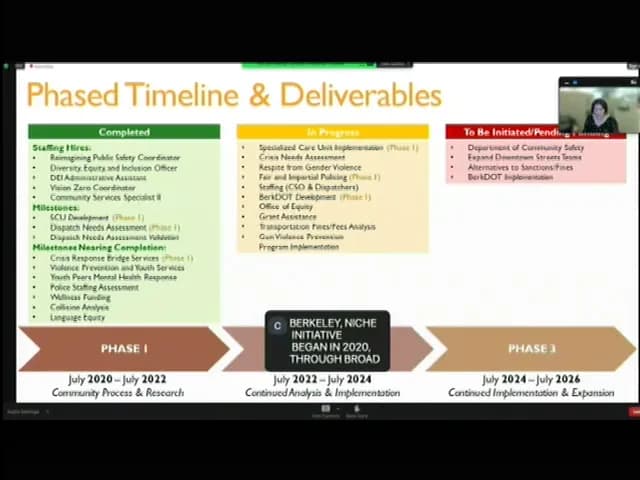
The Berkeley City Council met on Tuesday, May 14, 2024, starting at 6:00 PM in a hybrid format (in-person and via Zoom). The meeting included ceremonial proclamations, consent calendar approvals, a discussion on the Council Referral Prioritization (RRV) process, and an update on the Reimagining Public Safety initiative. Notable actions included adding an urgent item to support the Aurora Theatre Company, adopting the RRV rankings with amendments, and receiving a status report on public safety reforms. Ceremonial Matters - National Public Works Week Proclamation: Mayor pro tem read a proclamation declaring May 19–25, 2024 as National Public Works Week. Public Works Director Terrence Davis and staff members introduced themselves. - Affordable Housing Month Proclamation: Tori Hoff from Eden Housing accepted the proclamation, highlighting the regional housing bond measure (potential $10–20 billion) and EBHO's 40th anniversary. Consent Calendar - Urgent Item Added: Councilmember Hahn introduced an urgent item to provide financial and technical assistance to Aurora Theatre Company, including a budget referral for a one-time emergency grant of up to $150,000. Added by a 7-0 vote. - Supplemental for Item 26: Councilmember Lunapara submitted supplemental rankings for the RRV process, citing the need to represent District 7 after the special election. Accepted by a 7-0 vote. - Items Moved to Consent: Item 28 (implementation of AB 1033 for homeownership opportunities) was moved to consent after clarification that it requires an ordinance and public process. - Other Approvals: Items included approval of settlements from closed session (Derek Brown $50,000, Charles Delphin $27,500, CSA claim $17,843.58), support for SB 1144, ferry project items (7,8), purchase of traffic signal controllers (17), and numerous discretionary fund contributions to Berkeley Symphony and other organizations. - Amendments: Councilmember Humbert amended item 25 to change parking/loading zone time limits from 10/15 minutes to 20 minutes for legal compliance. Items 50 and 57 (plant-based food) removed and combined; items 16 and 17 (artist housing) combined with added language. - Vote: Consent calendar adopted as amended by a 7-0 vote. Public Comments & Testimony - Non-Agenda Comments: - Nathan Meisell criticized the city's failure to retain text messages related to the police bike team scandal, urging transparency. - A resident complained about parking permit limits causing her granddaughter to accumulate 38 violations. - Speakers from Aurora Theatre Company (Robin Dolan, Josh Costello, Jamie Martin) requested financial help due to inflation and pandemic losses. - A speaker discussed historical crimes and business theft issues. - AC Transit representative Ryan Lyle provided an update on the Realign initiative. - Consent Calendar Comments: - A speaker opposed the ferry project (items 7,8), urging focus on marina maintenance. - Support for officer resilience and stolen goods items. - Concerns about the repeal of the natural gas ban (item 2) and the need for police accountability. - Support for the ADU homeownership item (28) but caution about tenant protections. - Discussion Item 26 (RRV) Comments: - Carol (public) asked for public tracking of referrals. - Kelly Hammer criticized low ranking of nature and dark skies items. - Todd Andrew asked how new referrals are handled. - Alana Auerbach questioned the ferry project's alignment with climate goals and working-class needs. - Reimagining Public Safety Comments: - Carol requested a single dispatch line and criticized SCU response times. - Nathan Meisell reminded council of the task force's original goal to cut police budget by 50% and urged broader reforms. - A speaker shared a personal experience to argue against surveillance cameras. - Jesse criticized defunding the police rhetoric and displacement from development. Discussion Items Item 26: Council Referral Prioritization (RRV) Process City Clerk Mark Numainville presented the RRV process: 57 unfunded referrals ranked by council members through a weighted scoring system. Planning department has the most referrals (20). Council debated amendments: - Councilmember Hahn proposed combining items 50 & 57 (plant-based food) and 16 & 17 (artist housing) into single items with broader language. - Councilmember Kesarwani moved to adopt the rankings with those removals/combinations, and to redo the RRV in early 2025 (February-March) for better budget alignment. - Councilmember Bartlett initially offered a substitute motion without the redo, but withdrew after discussion. - Councilmember Lunapara expressed frustration that the 1 priority is surveillance cameras, particularly objecting to a camera at Telegraph and Dwight in District 7. She voted no. - Mayor Arreguín noted the budget constraints and that the Agenda & Rules Committee is working on a new legislative system. - Vote: Motion passed 6-1 (Lunapara opposed). The RRV list was adopted with removal of items 50, 57, and 55 (Kia thefts), and combination of 16 & 17. A redo will occur in early 2025. Reimagining Public Safety Update City Manager and staff (Kariana Adolondo, Rex Brown, police & fire chiefs, Eric Anderson) presented a status update on Phase 2 deliverables: - Specialized Care Unit (SCU): Launched Sept 2023, now operating 6 AM-9 PM seven days, with 650+ calls and 200 clients served. Expanding to 24/7; 6 vacancies remain. - Office of Diversity, Equity, and Inclusion (ODEI): Rex Brown hired as first DEI officer; administrative assistant hired. - Police Dispatch: Needs assessment validation complete; next phase involves RFP for implementation planning. - Police Staffing Study: Citigate Associates study ongoing; expected June 2024. - Vision Zero: New program coordinator hired; safety projects on MLK Jr. Way and Southside underway. - Gun Violence Intervention: RFP released for custom notifications and street outreach; soft launch by fall 2024. - Gender Violence System Analysis: Policy recommendations being finalized with stakeholder feedback. - Challenges: Funding constraints (no more ARPA), delays in assessments, staffing needs, regulatory compliance. Councilmembers praised the work and discussed next steps for funding and integration. No action was taken; the report was for review only. Key Outcomes - Aurora Theatre Urgent Item: Added to consent and approved; city manager directed to explore support. - RRV Rankings Adopted (6-1): List approved with removals of items 50, 57, 55 and combination of 16 & 17. Process to be repeated in early 2025. - Consent Calendar Approved: All items approved as amended, including numerous discretionary fund contributions. - Reimagining Public Safety Update Received: No action required; report accepted for budget consideration. - Closed Session Settlements: Approved $50,000 (Derek Brown), $27,500 (Charles Delphin), and $17,843.58 (CSA claim). - Adjournment: Meeting adjourned without objection.
The Berkeley City Council held a special meeting on May 14, 2024, at 4:30 p.m. (local time) to receive the triennial report from the Police Accountability Board (PAB) and the Office of the Director of Police Accountability (ODPA), covering activities from July 2021 through December 2023. The meeting featured a presentation by Director Aguilar and Policy Analyst Jose Murillo, followed by public comment and councilmember questions. No formal votes were taken; the report was received for informational purposes. Public Comments & Testimony - Nathan Mizell (former Vice Chair of the PAB) expressed concern that the city manager agreed with the police chief 100% of the time in cases where the PAB sustained allegations, undermining public trust. He urged the council to consider this when hiring a new city manager. - Kit Saginore highlighted disparities in policing data and called for the city to develop a comprehensive theory of change linking disparities to socioeconomic inequities, institutional practices, and bias, rather than leaving that work solely to a subcommittee. - Kelly Hamigren criticized the meeting's procedural delays—the meeting started late and the live captioning was not working for most of the presentation—and urged better setup. - Eva emphasized the historical connection between policing abuses against Asian Americans and current disparities, and urged attention to civil rights for all communities. Discussion Items - Presentation of the Triennial Report: Director Aguilar and Mr. Murillo presented an overview of the PAB/ODPA’s structure, activities, and findings. Key points included: - Staffing: The ODPA has 4 of 6 allocated staff positions filled, with two offers extended. - Board Composition: The PAB has 7 of 9 seats filled, chaired by John Chipmore. - Complaints: 52 total personnel complaints received (30 closed by Dec. 31, 2023, with 152 allegations). Policy complaints increased from 1 in 2021 to 9 in 2023. - Stops Data: 12,914 total stops (2021–2023): 34.4% white, 32.45% Black or African American, 15.97% Hispanic/Latino. Downtown area had the highest concentration. - Use of Force: 894 incidents; 47.04% involved Black subjects, 23.46% white, 16.23% Hispanic/Latino. Two officer-involved shootings occurred in 2023, with one under ODPA investigation pending DA completion. - Disposition Discrepancy: The PAB recommended 21 allegations as sustained, but the Berkeley Police Department (BPD) sustained only 4. The city manager agreed with the chief 100% of the time in such cases. - Barriers: Limited access to BPD records (e.g., body-worn camera footage) and a 120-day investigation timeline were cited as obstacles. - Councilmember Questions: - Councilmember Bartlett asked about the racist text-messaging incident; Director Aguilar stated a PAB subcommittee report is forthcoming, delayed by access issues. Bartlett also noted the need for more focus on disagreements between PAB and BPD. - Councilmember Humbert questioned the discrepancy between the report’s figure of 67 complaints and the text’s 52; the director promised to clarify. Humbert also challenged the phrase “rigorous evidentiary standards” for not sustaining allegations, suggesting lack of merit as an alternative. He requested inclusion of BPD’s “veil of darkness” test and discretionary yield rate in future reports. - Councilmember Hahn praised the oversight system and supported adjustments to strengthen the PAB. She suggested more community engagement outside meetings and flagged overburdening of board volunteers. - Councilmember Taplin asked about board member training (none had completed mandatory training); the director described an onboarding curriculum. She also requested definitions of “discourtesy,” “improper procedure,” and “improper investigation.” - Councilmember Lunapara raised concerns about public trust, noting that the city manager’s 100% agreement with the chief may discourage complaints. She also asked about the difficulty accessing records, which the director confirmed. - Mayor Arreguín noted a charter flaw: the PAB only reviews policies 30 days before implementation, not in development. He advocated for a charter amendment to give the board a proactive role. He also emphasized the need for dedicated community engagement staff. Key Outcomes - The council received the triennial report without a vote. No formal action was taken. - The director committed to providing clarifications on the complaint number discrepancy and to incorporating more detailed stop-data analyses (e.g., non-resident stops, veil of darkness) in future reports. - The mayor indicated that a charter amendment may be needed to align the PAB’s policy review role with the original intent of the 2020 voter-approved measure.
The Berkeley City Council met on Tuesday, May 7, 2024, at the School District Board Room. The meeting included the swearing-in of new Councilmember Cecilia Lunaparra (District 7), several ceremonial adjournments, a presentation on equitable contracting (BINDEX), and a lengthy consent calendar covering contracts, budget referrals, and code adoptions. The council also debated and voted on amendments to the Berkeley Building Codes and proposed changes to public comment procedures. Notable public comments included significant discussion on the Gaza conflict, with many speakers urging a ceasefire resolution, while others thanked the council for not adopting one. The meeting experienced multiple disruptions from the audience, leading to temporary recesses. Consent Calendar - Approved a series of contracts and actions, including: Health Officer coverage (up to $30,000), cybersecurity products ($135,189), tree services ($500,000 each for four contractors), summer food program ($95,000), marina docks replacement ($8,593,200), sport court repairs ($198,000), marina dredging ($4,843,566), and ratification of other recess actions. - Approved reforms to the Human Welfare and Community Action Commission (second reading of Ordinance No. 7,902-N.S.). - Approved the calling of a consolidated general municipal election for November 5, 2024, and placed a measure to increase the city's appropriation limit on the ballot. - Authorized a FEMA grant application for up to $7,703,926.83 to hire nine additional firefighters. - Approved multiple budget referrals, including funding for Supply Bank, business damage mitigation, Cesar Chavez Solar Calendar maintenance, SafeCity Connect camera program, Waterside Workshops, Berkeley Junior Jackets, Vision Zero rapid response, small sites program, Market Match program, Solano Avenue Stroll, CARE Program for Berkeley Fire, and others. - Approved a resolution supporting the Campaign for a Safe and Healthy California (upholding SB 1137). - Approved the Relationship Nondiscrimination Ordinance (first reading) with minor amendments. - Abstentions: Councilmember Kesarwani abstained on Item 46 (Small Sites Program). Councilmember Humbert abstained on Items 46 and 48 (Solano Stroll). Councilmember Lunaparra abstained on Item 39 (SafeCity cameras) and Item 9 (minutes). Councilmember Hahn abstained on Item 39. Public Comments & Testimony - Employee Unions: Representatives from Local 1 and SEIU CSU/PTRLA requested coordinated bargaining and open meetings, criticized the city's refusal to negotiate, and raised concerns about hero pay and the city's stance on Gaza. - Non-Agenda Items: Speakers on non-agenda matters included the Gaza conflict (both supporting and opposing a ceasefire resolution), budget concerns, and a request for a bike park at the marina. - Consent Calendar: Public comments supported Market Match, Berkeley Junior Jackets, fire safety items, the Relationship Nondiscrimination Ordinance, and the Age-Friendly Action Plan. Some speakers opposed the SafeCity camera program and the return of unused UC Berkeley funding for the Rodeway Inn shelter. - Item 57 (Building Codes): Speakers including Bryce Nesbitt and Linda Hutchins Knowles raised technical issues with EV charging parking lift requirements. - Item 58 (Public Comment Rules): Kit Sagenor (Open Government Commission chair) and others supported the proposals; some speakers criticized the council's handling of public comment. Discussion Items - BINDEX Presentation: City staff presented an update on the Berkeley Inclusion and Diversity Index (BINDEX) for equitable contracting, highlighting new vendor outreach, data collection, and success stories. - Item 57 – Building Codes: Staff recommended adopting local amendments, including a zero-NOx reach code. Councilmember Hahn moved to adopt the code minus the zero-NOx provisions and refer those to the Health Life Enrichment Committee. Councilmember Humbert suggested an alternative with a restaurant carve-out. After discussion, the council approved Hahn's motion. - Item 58 – Public Comment Changes: The council adopted recommendations from the Open Government Commission to improve meeting procedures, including limiting comments on consent items and providing approximate times for high-interest items. Key Outcomes - Swearing-in: Cecilia Lunaparra was sworn in as Councilmember for District 7. - Consent Calendar: Approved unanimously with noted abstentions. - Item 57: Adopted the building code ordinance (first reading) with amendments, excluding zero-NOx provisions, and referred the zero-NOx standards to the Health Life Enrichment Committee. - Item 58: Adopted the referral to the City Manager to implement changes to public comment procedures. Adjournments - The meeting was adjourned in honor of Delaine Eastin and Will Travis.
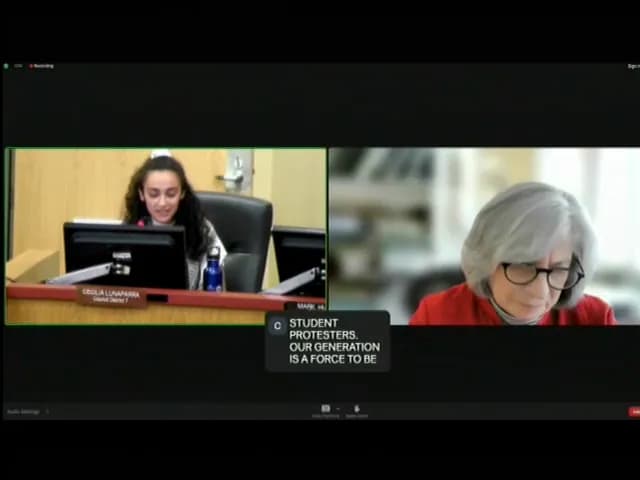
The Berkeley City Council held a special 4:00 p.m. meeting on Tuesday, May 7, 2024, to confirm the results of the April 16, 2024 special municipal election in District 7 and to formally welcome newly elected Councilmember Cecilia Lunapara. The meeting was conducted in a hybrid format with both in-person and virtual participation. A quorum was present, with Councilmember Bartlett absent. Consent Calendar - Item 1: Confirmation of Special Election Results – The council unanimously approved the consent calendar, confirming the results of the April 16, 2024 special municipal election in District 7. The roll call vote was 6-0 (Bartlett absent). Public Comments & Testimony - No members of the public spoke during the public comment period for the consent calendar, either in person or via Zoom. Discussion Items - Welcome and Remarks for Councilmember Cecilia Lunapara – Councilmembers individually welcomed Lunapara, with several highlighting shared priorities such as land use, housing, safe streets, and modal shift. Councilmember Humbert described the council as the "Thunder Dome." Councilmember Lunapara delivered a brief acceptance speech, noting that she is the first undergraduate student, first Latina, and first queer woman of color elected to the council. She expressed full support for the Gaza Solidarity encampment at UC Berkeley’s Sprout Plaza and stated she would do everything in her power to ensure no city, county, or UC resources are used to arrest, suspend, evict, or otherwise punish nonviolent student protesters. She also emphasized the power of students and young people, and her commitment to accountability to her constituents in District 7. Key Outcomes - Consent Calendar Adopted – Motion passed 6-0 (Bartlett absent) to confirm the results of the April 16, 2024 special municipal election in District 7, officially seating Councilmember Cecilia Lunapara. - Meeting Adjourned – The special meeting was adjourned at approximately 4:15 p.m. following the adoption of the consent calendar and welcoming remarks.
This special meeting, convened at 4:15 PM on Tuesday, May 7, 2024, in the School District Board Room, was called to conduct a public hearing on the Program Year (PY) 2024 (City Fiscal Year 2025) Annual Action Plan (AAP) for federal Housing and Urban Development (HUD) funds and to receive recommendations for community agency funding for fiscal years 2025–2028. The meeting featured a staff presentation, testimony from commission and youth panel representatives, and public comment from more than 20 speakers representing community agencies. Council ultimately approved the proposed federal funding allocations and referred the general‑fund recommendations to the June budget process. Public Comments & Testimony - Andrew Crispin (Berkeley Food Network) described the network as the largest direct food assistance organization in northern Alameda County, distributing over 200,000 lbs of food monthly and serving 1,063 households in April 2024 alone. He emphasized that the organization received no funding in the current recommendation cycle and asked for support. - Lisa Corona (Board Chair, The Bread Project) thanked the city for past support and noted that the Bread Project trains 100 people annually in food and baking industry skills, and that it relies on the Berkeley Food Network for food supplies. - Adriana Betty (Executive Director, RISE) described RISE’s 47‑year history of case management for Berkeley youth, the impact of stagnant funding (her staff salaries have not kept pace), and the need for a salary increase to retain professional staff. - Ayana Davis (Deputy Executive Director, Healthy Black Families) advocated for full funding of community‑based organizations, particularly in West and South Berkeley, and highlighted the need to prevent displacement as the city builds thousands of new units. - Julia Hatton (CEO, Rising Sun Center for Opportunity) requested that council preserve the funding recommended by the Housing Advisory Commission (HAC) for Rising Sun’s Opportunity Build program, which provides union‑backed construction training and has helped women and justice‑impacted individuals. - Angela Regalado and Stacey Barmaster (Insight Housing) thanked council for ongoing funding but stressed that stagnant funding undermines capacity to meet rising demand, especially for an aging homeless population with complex needs. - Mirna Cervantes (Executive Director, Multicultural Institute) and others from the Multicultural Institute asked council to approve the HAC and YEP recommendations to continue supporting Latino immigrant and low‑income families. - Emma Martin (Center for Independent Living) requested an increase in CDBG funding for the Residential Access Program, which provides home modifications to keep low‑income disabled and older adults safely housed. - Olivia King (RCD) and Brenda Goldstein (Lifelong Medical Care) urged council to restore $47,000 in funding for ToolWorks services at two permanent supportive housing sites (Erna P. Harris and UA Homes), warning that cuts would destabilize housing for over 100 formerly unhoused residents. - Ryan White (Lifelong Homeless Services Director) asked council to continue funding for Lifelong’s Shelter Plus Care case management contract, noting that defunding would harm 50 vulnerable clients, including one who had regained health and stability after months of intensive support. - Youth Review Panel members (Abby Schwartz, Tamar McKee, Lydia Millikate, Israel Nicodemos, Lucia Segovia Mendoza, Lucas Turney Vostan) presented the YEP funding recommendations, explaining they had reviewed 28 applications, allocated $1.7 million across 20 programs, and prioritized programs with strong measurable outcomes for African‑American/Black and Latinx youth. Discussion Items - Staff Presentation – Health, Housing, and Community Services (HHCS) staff presented the PY 2024 AAP and the community agency RFP process. Key points: - The RFP covered approximately $11 million in combined federal, state, and local funds. - 91 applications were received; 68 programs are recommended for funding. - Recommendations were developed by four review bodies: the Human Welfare and Community Action Commission (HWCAC), the Youth Equity Partnership (YEP) Youth Review Panel, the Homeless Services Panel of Experts, and the Housing Advisory Commission (HAC). - HUD allocations are estimates because the city has not yet received its final allocation. - The resolution before council covers only federal funds (CDBG, ESG, HOME, HOME‑ARP) and authorization to work with Alameda County on HHAP funds. General‑fund and Measure‑E recommendations will be considered during the June budget adoption. - Commission Reports: - Jose Lara Cruz (HWCAC) reported that the commission reviewed 13 proposals and recommended funding 10, but could not fund any new proposals due to limited resources. - Katie Cobian and the Youth Review Panel explained the panel’s process and presented detailed funding allocations for kindergarten readiness, school success, health/resilience, and college/career readiness. - Carol Morosevic (Homeless Services Panel of Experts) noted that the panel aligned with most city manager recommendations but differed on funding for the Pacific Center for Human Growth (LGBTQ housing) and expressed concern that 20% of Measure P funds ($1.3 million) are being used for 5150 transports rather than direct services. - Debbie Potter (Housing Advisory Commission) stated that the HAC recommended a $208,000 annual increase in general‑fund support for housing services and workforce development to prevent erosion of service levels; the city manager’s proposal would eliminate funding for Rising Sun Center for Opportunity and cut other programs. - Council Discussion: - Mayor Arreguin acknowledged the frustration of stagnant funding and committed to finding ways to support the Berkeley Food Network and Rising Sun during the June budget process. He noted that the city faces a projected deficit but emphasized the importance of funding these critical programs. - Councilmember Hahn thanked all agencies for their work and expressed dismay that caring professions are so poorly compensated. - Councilmember Humbert praised the youth panel and called the omission of the Berkeley Food Network “inexplicable,” urging that some funding be allocated to it. - Councilmember Bartlett echoed support for the Berkeley Food Network and suggested reallocating funds from Habitat for Humanity, which he criticized for past cost overruns. Key Outcomes - Motion adopted (unanimous roll‑call vote: Kesarwani yes, Taplin yes, Bartlett yes, Hahn yes, Wengraf yes, Humbert yes, Mayor Arreguin yes) to approve the staff recommendation for Item 1, which: 1. Approves the proposed PY 2024 federal funding allocations for CDBG, ESG, HOME, and HOME‑ARP. 2. Authorizes the City Manager to execute agreements and submit the Annual Action Plan to HUD. 3. Authorizes staff to work with Alameda County on HHAP funds. - All general‑fund and Measure‑E funded agency recommendations are referred to the Fiscal Year 2025‑26 budget adoption process (final vote expected by end of June 2024). The council encouraged agencies and the public to participate in upcoming budget hearings on May 21 and in June.
The Berkeley City Council met on Tuesday, March 26, 2024, at approximately 7:15 PM after a closed session. The meeting was marked by significant public comment on Gaza, a disruption that forced a five-minute break, and a major decision to reform the Human Welfare and Community Action Commission (HWCAC) while rejecting a proposed merger with the Peace and Justice Commission. The council also approved the consent calendar, including urgent items, and postponed a major item on demolition and building removal to a special meeting. Consent Calendar - Urgent items added: Relinquishment of council office budget funds for Berkeley City College’s 50th anniversary gala (May 2, 2024), Kala Art Institute 2024 gala (April 27, 2024), and a letter of support for Assembly Bill 2346 addressing SB 1383 compliance. All added under Brown Act immediate action provisions. - Items approved unanimously (8-0): Included Holocaust Remembrance Day proclamation (May 5, 2024), funding for the annual program, establishment of an ombudsman program for long-term care facilities (item 19), appointment of Terrence Davis as Director of Public Works (salary $260,000), budget referral for pedestrian safety on Upper Marin Avenue, and a wildfire-safe demonstration garden at Firehouse 4. - Councilmember donations recorded: Multiple members contributed from office budgets to the Holocaust Remembrance event (totaling over $1,650), Kala Art Institute, and Berkeley City College gala. Public Comments & Testimony - Non‑agenda public comment (20 speakers, 10 in‑person + 10 Zoom): The majority of speakers called for a ceasefire resolution in Gaza, criticized the council’s refusal to agendize the issue, and accused the city of complicity in genocide. Several Jewish speakers expressed solidarity with Palestinians and called the Holocaust Remembrance proclamation hypocritical without a ceasefire. A few speakers urged the council to focus on local issues and support the Holocaust Remembrance Day proclamation, citing rising anti-Semitism. One 12‑year‑old speaker read a letter from a friend in Gaza. Disruptions occurred when audience members interrupted speakers and placed posters on the dais, leading the Mayor to issue warnings and call a five‑minute break. - Consent calendar public comment (30 minutes, 1‑minute speakers): Speakers addressed Holocaust remembrance (supporting proclamation), the need for the long‑term care ombudsman program, and the appointment of the public works director. Several speakers again linked Holocaust remembrance to Gaza and demanded a ceasefire. Discussion Items - Item 24: Human Welfare & Community Action Commission (HWCAC) reform vs. merger with Peace and Justice Commission (Option A vs. Option B). - Staff (Peter Radu and Margot Ernst) presented two ordinances: Option A would merge the HWCAC and Peace and Justice Commission into a nine‑member body; Option B would reform only the HWCAC (reducing from 15 to 9 members) to comply with Community Services Block Grant (CSBG) requirements (approx. $300,000/year at risk). The city had received a 45‑day high‑risk notice from the state on February 16, 2024, due to long‑standing vacancies on the HWCAC. - Councilmember Humbert moved for Option A, arguing that peace and justice work can be integrated elsewhere and that consolidation eases staff burden. Vice Mayor Wengraff and Mayor Arreguin supported Option B, citing distinct missions—HWCAC handles poverty and CSBG funds, while PJC handles advocacy and global issues. Councilmember Bartlett noted operational vs. activist roles. Councilmember Taplin questioned overlap and school board appointees. - Public comment (7 in‑person, 6 Zoom): Commissioners and community members urged keeping commissions separate, emphasizing that HWCAC’s poverty focus is essential and that low‑income representatives must have a voice. Some proposed reducing meeting frequency rather than membership. - Substitute motion by Mayor Arreguin (seconded by Councilmember Han) to adopt Option B (reform HWCAC, reject merger, and direct staff to cease merger work). The motion passed on a roll‑call vote (6‑1, with Councilmember Kesarwani voting no). Councilmember Humbert initially supported A but voted yes on the substitute. - Item 23 (Deconstruction & Building Removal Ordinance): Postponed due to late hour (10:24 PM). The Mayor cited disruptions from the public comment period. The council voted to refer the item to the Agenda Committee to schedule a special meeting. The next regular meeting is May 7, 2024. Key Outcomes - Consent calendar approved unanimously (8‑0 as amended). - Item 24B adopted (first reading of ordinance to reform HWCAC, reduce membership to 9, and clarify CSBG duties). Staff directed to cease work on merging HWCAC and Peace and Justice Commission. - Item 23 referred to Agenda Committee to schedule a special meeting before May 7, 2024. - Holocaust Remembrance Day Proclamation approved (May 5, 2024), acknowledging 3,291 anti‑Semitic incidents in the U.S. (361% increase year‑over‑year) and honoring six million Jewish victims as well as other targeted groups. - Continued demand for ceasefire resolution: Multiple speakers and audience members pressed the council to pass a ceasefire resolution; no action was taken.
The Berkeley City Council met in a special closed session on Tuesday, March 26, 2024, at 4:00 PM to discuss pending litigation, anticipated litigation, and labor negotiations. The meeting was held at the School District Board Room and via teleconference. The council heard public comments before convening in closed session. Public Comments & Testimony - JP spoke on item two (anticipated litigation) and quoted Justice Kennedy regarding First Amendment protection for controversial speech, urging the council to protect debate at the fringes. - Kelly Hammerkin expressed disappointment that a Berkeley High School student mural painted with water-soluble tempera was nearly washed away, and criticized the conflation of speaking against actions in Gaza and the West Bank with antisemitism. She urged the council to allow a forum on Israel and Palestine and to protect free speech. - MJ Bauman called on the Berkeley City Council to stand up against suppression of student free speech, drawing parallels to support for the Black Lives Matter movement, and asked for the same level of advocacy. Closed Session - The council convened in closed session to discuss: 1. CONFERENCE WITH LEGAL COUNSEL – PENDING LITIGATION (Government Code Sections 54956.9(a) and 54956.9(d)(1)): Fisher et al. v. City of Berkeley, U.S. District Court Case No. 3:23-cv-04280-TSH. 2. CONFERENCE WITH LEGAL COUNSEL – ANTICIPATED LITIGATION (Government Code Section 54956.9(d)(2)): Significant exposure to litigation arising from a paint installation at the intersection of Allston Way and Martin Luther King, Jr. Way (one potential case). 3. CONFERENCE WITH LABOR NEGOTIATORS (Government Code Section 54957.6): Negotiations with multiple employee organizations, including Berkeley Fire Fighters Association Local 1227, Berkeley Police Association, SEIU 1021, and others. Key Outcomes - The council heard three public comments and then moved into closed session. No votes or decisions were taken in open session. Any actions taken in closed session were to be reported at the beginning of the council's regular meeting at 6:00 PM (not detailed in this transcript).