Browse by city
Date range
Search help

Search titles, summaries, topics and stored transcripts together. Keywords may match separately; put the whole query in double quotes for a phrase. Matching follows word analysis, so punctuation is not exact. Both dates are included. Documents are not searched.

SHOWING 1–10 ENTRIES
01
OCT 21, 2026 · BETHLEHEM, PENNSYLVANIA · COUNCIL MEETINGS
Bethlehem City Council Meeting - October 21, 2026

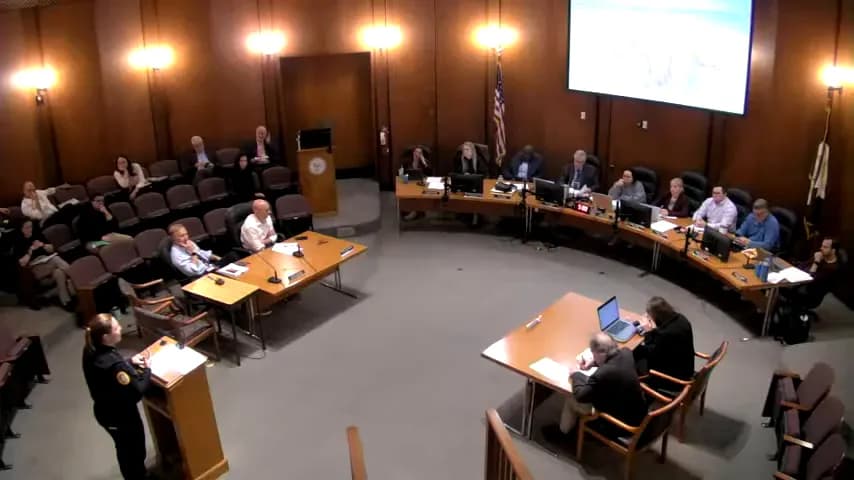
The meeting convened on the evening of October 21, 2026, approximately 1 hour and 45 minutes late, as apologized by the council president. Agenda items included a public hearing on a federal grant, public comments, reports, and votes on several ordinances and resolutions. Key discussions centered on street safety on Stefco Boulevard, police recruitment standards, and upcoming city initiatives. Public Hearing: Edward Byrne Memorial Justice Assistance Grant (JAG) - The city proposes to use a $16,711 JAG grant to fix, replace, or expand the existing city camera network. No public comments were made. A resolution will be placed on the November 4, 2026 council agenda. Approval of Minutes - The minutes from October 6, 2026, were approved without discussion. Public Comments - Frank Corpix (owner of Classic Car Wash, 50-year business on Stefco Boulevard): Expressed concern that the proposed Stefco Boulevard redesign would completely block the sole entrance and exit to his business. He described traffic patterns and accidents in the area and requested the council's help. Councilmembers noted that his concerns were heard at a prior community meeting and that the design is still in early conceptual stages. - Lisa Andersitz: Complained about a neighbor raising chickens, which is not permitted in Bethlehem. She had previously contacted zoning and police without resolution. The police chief agreed to speak with her after the meeting. Discussion Items - Stefco Boulevard and Complete Streets: Councilwoman Quitek attended a community open house and stated that slowing traffic is the goal because Stefco is a “deadly boulevard” with recent fatalities. Mayor's report: The mayor emphasized that the Complete Streets initiative aims to slow cars and improve safety for pedestrians, cyclists, and children. He noted that Stefco Boulevard has had multiple fatalities and is too wide. The designs are only sketches; no engineering or funding is secured yet. He acknowledged the business owner's concerns but stressed the need for trade-offs for public safety. A Complete Streets reveal is scheduled for Thursday, October 22, from 5:30–7:30 p.m. at the CANT building. - Mayor's Additional Remarks: The city received the statewide planning award for the 40/10 plan. He urged council to pay attention to the Bethlehem Area School District's upcoming design process meetings (early November), as elementary schools are community anchors and boundary changes will have long-term impacts on neighborhoods and equity. - Public Safety Committee Report (Councilman Ayman): The committee met on October 20 and reviewed a city-initiated study on fire and EMS operations. Discussions were robust and will continue. Communications - 6A: Proposed agreement with Tri-State Financial Group to collect and enforce certain local taxes (Act 511). - 6B: Proposed amendment to civil service rules to remove the requirement for police applicants to hold an associate's degree or 60 college credits. - 6C: Proposed support for Touchstone Theatre's participation in the Pennsylvania Council on the Arts Creative Communities Initiative, with a city match of $2,500 per year for up to four years. - 6D: Proposed use permit for the 2026 Christmas City Village on Main Street. - 6E: Proposed destruction of certain department records. - 6F: Proposed zoning amendment to regulate accessory dwelling units, update workforce housing incentives, and increase building coverage limits. Ordinances – Final Passage - 8A (Data Centers): Amends zoning code to regulate data center uses. Passed 6–1. - 8B (Budget Amendment): Amends the 2026 general fund budget. Passed 7–0. - 8C (Budget Amendment): Amends the 2026 general fund budget. Passed 7–0. Resolutions - 10A (Tax Collection Agreement with Tri-State Financial Group): Passed 7–0. - 10B (Civil Service Rules Amendment – Police Education Requirement): Removes the requirement for police applicants to have 60 college credits or an associate's degree. Passed 5–2 (Councilmembers Laird and Quitek voted nay). Debate centered on concerns about lowering standards versus the critical need to expand a shrinking applicant pool. The police chief provided data showing only two conditional offers from the last cycle and 11 vacancies. He argued that the existing hiring process (background checks, polygraph, psychological exam, etc.) is robust and can identify quality candidates without the degree requirement. The resolution is a permanent change, but the chief committed to reporting recruitment and hiring statistics to council after the next cycle. The civil service board had previously approved the amendment. - 10C (Touchstone Theatre Support): Passed 7–0. - 10D (2026 Christmas City Village Use Permit): Passed 7–0. Councilwoman Quitek noted accessibility challenges with last year's hut placement and requested the administration work with the chamber to improve access for people with disabilities and strollers. - 10E (Certificate of Appropriateness – 403 Center Street): Passed 7–0. Key Outcomes - The zoning ordinance for data centers (8A) was adopted. - The police education requirement was removed via resolution 10B; the department will track outcomes and report back. - The city will move forward with the Complete Streets plan for Stefco Boulevard, with further community engagement on Thursday, October 22. - Council was urged to participate in school district design meetings due to their profound impact on neighborhoods. - The Christmas City Village permit was approved with a reminder to address accessibility.

PUBLIC SAFETY 24% · PROCEDURAL 17% · WORKFORCE DEVELOPMENT 17% · PUBLIC COMMENT 14%
02
OCT 20, 2026 · BETHLEHEM, PENNSYLVANIA · COUNCIL MEETINGS
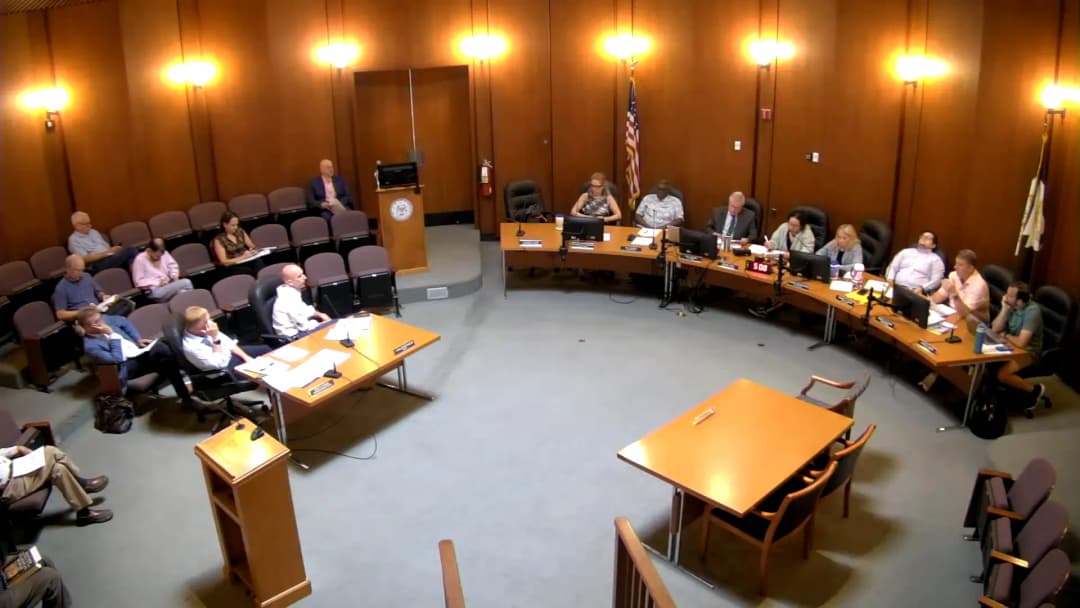
Bethlehem Public Safety Committee Reviews Fire/EMS Study — October 20, 2026

On October 20, 2026, the Bethlehem City Council Public Safety Committee met in an extended evening hearing for the sole agenda item: presentation of the city-initiated study of fire and EMS operations. Chairman Justin Eamon presided; committee members Joe Daniels and Hillary Quietek attended, joined by Council President Rachel Leon and city solicitor Stephanie Stewart. Business Administrator Eric Evans presented on behalf of the administration, with fire and EMS leadership available to answer questions. The session was informational only — no votes were taken — and public comment was reserved until after council questions. The regular council meeting was delayed as a result. Study Background and Timeline - The last prior fire study was completed in 1995 and did not include EMS. The RFP was issued in September 2025, and CPSM, a Washington, D.C. firm, was selected after interviews in December 2025 and January 2026. City Council approved the agreement on February 3, 2026; the notice to proceed was issued February 17; and the kickoff was February 26. - CPSM collected data in March, conducted EMS and fire site visits April 13–16, delivered a first draft June 30, and after requests for missing RFP-required information delivered later drafts. The final report was distributed October 16, 2026. The report is 176 pages plus two data packs of 55 and 46 pages. - The administration said CPSM concluded that Bethlehem has a strong, professionally managed emergency services system and that recommendations were intended to strengthen an already capable organization rather than correct systemic deficiencies. Findings Presented - Apparatus and fleet: Since 2020, the city has appropriated $8.597 million for replacement apparatus, which CPSM called a best practice. The fire frontline fleet and ordered apparatus total almost $10 million, compared with $4 million in 2019; new apparatus orders have 48–53 month lead times. A 2026 command vehicle and fire inspector vehicle were added. EMS fleet management was assessed as appropriate and proactive; CPSM recommended continuing the ambulance replacement schedule and ordering early to account for production delays. - Facilities: All four fire stations are between 42 and 72 years old and need continued capital investment. CPSM recommended considering construction of a new fire station in southeastern Bethlehem to address industrial, warehousing, and commercial growth, potentially moving Engine 3 from Schweder. EMS station locations provide reasonable coverage; no closures or relocations were recommended. Facilities capital includes $1 million in 2026 and another $1.5 million in 2027–28, for a total of $2.5 million including the initial $1 million. The Eastern Avenue station addition placeholder is about $500,000 and is expected to grow. - Response patterns: Fire calls in Bethlehem fell 21% over the 2016–2025 study period, while national fires fell 54% since 1980. Bethlehem had 4,603 fire calls in 2025, about 12.6 per day; total fire calls were down 13% since 2017. Medical assists were 29% of fire calls; false alarms were 1,334 calls, equal to 29% of calls, and rose 54%; structure fires were 2% of calls and down 21%. Fire system resiliency was strong: 75% of fire calls had no overlapping call, 96% had zero or one, and 99% had zero or two; 94% of calls were handled in under an hour. - EMS demand is heavier: 2025 EMS calls reached 12,900, approaching 13,000. Mutual aid responses into the city fell from nearly 1,000 in 2022 to the 600s after four paramedics were added. EMS was assessed as having moderate-to-high resiliency pressure: only 37% of EMS calls had no overlap, and 75% of hours had at least one EMS call. Peak EMS demand is daytime, particularly 10 a.m.–5 p.m. - Response times: Dispatch time increased after dispatch moved to Northampton County in 2019, but improved from about 4.5 minutes to about 3.5 minutes in 2023–2025. Turnout time held at 2.1–2.4 minutes; travel time averaged 5.8–6.2 minutes. CPSM noted these remained above NFPA 1710 benchmarks and recommended locally tailored performance goals. The administration described NFPA standards as voluntary benchmarks, not law, and said response decisions should be based on local risk, resources, and community expectations. - Staffing: Fire suppression is budgeted at 24 per platoon across four platoons, or 96 positions. From July 1 to October 1, average vacancies were 0.57 per platoon and estimated filled positions were 23 per platoon, but average reporting was 17.8 per platoon. The gap was attributed to vacation, sick leave, injuries, training, and academy assignments. Sick leave in 2025 averaged 11.6 days per fire employee versus 8.3 for all city employees, about 40% higher; the administration said matching the city average could recover about 317 shifts per year. - CPSM recommended staffing minimums consistent with NFPA 1710 — about 21–22 per platoon in the near/midterm and 27–28 longer term — rather than a single number of added positions. Options discussed included filling vacancies faster, using summer/winter academies, a three-platoon model, part-time staffing, automatic aid, and additional EMS peak staffing. - EMS staffing recommendations included considering 24-hour staffing for the peak-time medic unit and expanding the three-day-a-week peak unit to seven days with 12-hour shifts during appropriate peak periods. - CPSM’s final three-part strategy was to maintain or modestly strengthen minimum fire staffing, establish formal automatic aid agreements with Allentown and Easton for higher-risk fires, and add staffing resources to EMS during peak demand periods. Process and Governance Discussion - Fire Chief Griffin read a statement saying he would not use the meeting to debate staffing positions. He said recommendations include labor, legislative, and operational matters, and implementation will be phased. He identified priorities as maintaining the highest staffing possible, filling vacant positions as quickly as possible, maximizing personnel reporting each shift, and providing training, equipment, and safety for personnel. - Chairman Eamon reminded attendees that council is not a party to collective bargaining and that the meeting was for listening, fact-finding, and understanding the independent report. - Councilwoman Daniels raised process concerns: she found differences between the CPSM report and the administration’s presentation, said she requested a CPSM presenter and a copy of the presentation, and said a portion of a September 1 council discussion was missing from the public recording and minutes. She said she did not receive responses to her requests. Council President Leon and Mayor Reynolds said a CPSM appearance could be arranged through formal council action; Mayor Reynolds said the administration was open to a Zoom or in-person meeting with CPSM if council requested it. - Councilman Callahan asked the administration to consider adding at least four firefighter positions in the upcoming budget. Mayor Reynolds said adding positions was under consideration but was one of many factors; the budget was expected to be released in about two weeks. - Vice President Laird requested a list of recommendations requiring collective bargaining and asked whether a written performance agreement exists with Northampton County for dispatch services. The administration said it was not aware of one and would research the matter. - A factual discrepancy was noted during the meeting: one public speaker referred to the 510 Flats fire as occurring in 2025; council members clarified it occurred in May 2024. Public Comments & Testimony - Bob, a Bethlehem resident, criticized the administration’s presentation as heavily paraphrased and said it omitted information. He urged council members and residents to read the full study. - A concerned resident detailed risk findings: ISO class 2, fire department capability score 36 out of 50, personnel score 9 out of 15, and training score 4 out of 9. The speaker said the effective response force for a single-family house fire is 8 firefighters versus an NFPA recommendation of 16, 27 for apartments or strip malls, and 42 for high rises. The speaker also said nearly one-quarter of 2025 fire calls overlapped with another call, that EMS had two or more calls during nearly half of every hour, and that automatic aid should not be treated as a substitute for local staffing. The speaker urged a transparent funding plan, measurable staffing goals, and a realistic implementation timeline. - Daryl Higgins, a lieutenant on the first platoon, said daily experience is not fully captured by the numbers. He cited three calls within five minutes, mandatory overtime, officers mandated for 48 hours, and arriving at a house fire with only one engine while other crews were committed. He urged council members to visit firehouses and talk to firefighters. - Dana Grubb, a resident, described a childhood house fire and former work with EMS. He said the 510 Flats fire displaced or evacuated 135 residents and required support from seven outside departments; he also said Bethlehem had more city firefighters in the 1970s even though Bethlehem Steel fire services protected about 20% of the city’s land. He argued that development and population growth require a sufficient emergency response and that the IAFF and CPSM studies show what needs to be done. - A speaker who said she was a city council person last year said she had proposed budget amendments to hire four firefighters based on the IAFF study and the Thanksgiving weekend incident with three simultaneous fires. She said the CPSM study cost approximately $80,000–$90,000, was originally expected in June, and recommends 28 additional firefighters and an additional fire station. She asked why CPSM was not present, raised the Northwest Station officer issue, and said hiring firefighters is ultimately a budget decision for council. - Diana Rodriguez, 315 Roch Street, thanked firefighters for responding to calls at her address, including for an older neighbor who forgot about cooking. She expressed concern that increasing housing density in old, close-built RT districts raises fire risk and said the city should ensure it can protect current residents before approving more density. - Robert A. Bowden, a member of Local 735 and a 16-year firefighter, said the 1995 study, an IAFF study, and the CPSM study all point to manpower and time as central issues. He said the city once had about 20-some firefighters on duty and roughly 2,000 calls per year, while similar staffing levels now face nearly 5,000 calls. He also cited the heightened cancer risk for firefighters and said a larger workforce would reduce individual risk. He asked for a progressive, fiscally responsible plan rather than delay. - Lou Jimenez, president of Local 735, said he was disappointed the presentation covered only six of 48 recommendations and was not made by the study authors. He said budgeted staffing of 24 per platoon has not actually been achieved on shifts for years; sick-leave criticism is repeated; fire staffing cannot be compared directly with police or EMS; since 2009 the city has lost at least nine budgeted positions, one engine company, and one firehouse; and call totals fell partly because firefighters were removed from high-priority medical calls. He argued minimum staffing should be treated as a public safety issue, not only a collective-bargaining issue. - Stephen Antalix said a retired firefighter told him the city had 124 firefighters when it was smaller and now has 92 while growing. He recalled prior testimony that a firefighter could be required to be in two places at once, which could cost a life, and urged council to put pressure on the administration to bring the fire department to an adequate level. Key Outcomes - No formal votes, motions, or budget decisions were made; the meeting was informational only. - Council can make a motion at a regular council meeting to formally request a CPSM presentation or Q&A. The administration said it would be open to arranging a Zoom or in-person appearance. - The administration said adding firefighter positions was under consideration for the upcoming 2027 budget, with the budget expected to be released in about two weeks. - Council will continue its review. Vice President Laird requested a list of recommendations requiring collective bargaining and research into the Northampton County dispatch performance agreement. - Public comment was extended to all who wished to speak, and the regular council meeting started late as a result.

PUBLIC SAFETY 59% · PUBLIC ENGAGEMENT 18% · PERSONNEL MATTERS 7% · PUBLIC WORKS 6%
03
OCT 6, 2026 · BETHLEHEM, PENNSYLVANIA · COUNCIL MEETINGS
Bethlehem City Council Meeting - October 6, 2026: Data Center Zoning Amendment Adopted

On October 6, 2026, the Bethlehem City Council held a public hearing and regular meeting primarily focused on a proposed zoning text amendment to regulate data centers in the city. After extensive public comment and council discussion, the ordinance was passed unanimously (7-0) on first reading. The council also approved several routine items including budget adjustments, grant applications, and a liquor license transfer. Public Hearing: Data Center Zoning Amendment The council conducted a public hearing to accept comments on a proposed ordinance to add definitions, special exception requirements, dimensional standards, and study requirements for data centers in the industrial zoning district. Planning Director Kathy Fletcher presented the amendment, noting it was recommended 4-0 by the Planning Commission on August 25, 2026, and supported by the Lehigh Valley Planning Commission (LVPC) as a thoughtful response to a complex land use. The administration emphasized state law prevents banning data centers outright, and this ordinance represents the farthest legal reach under the Pennsylvania Municipalities Planning Code. Key provisions include: requiring an environmental impact assessment, water/sewer approvals, energy management plan, emergency response plan, thermal impact mitigation, increased setbacks (up to 1,000 feet near residential or sensitive receptors), and reduced building coverage for larger facilities. Data centers would be a special exception, requiring Zoning Hearing Board approval and additional public comment. Council Questions and Discussion Councilmembers asked about enforcement, monitoring, and the limits of zoning authority. Councilman Callahan expressed opposition to data centers but supported the ordinance as the best legal option. Councilwoman Daniels raised concerns about the lack of quantitative standards for water, energy, decommissioning, and environmental impacts, arguing the ordinance gives too much leeway to developers and needs strengthening. Councilwoman Leon and others stressed that voting against the ordinance would leave data centers unregulated, and that passing it now allows for future amendments. Councilman Laird confirmed that a no vote would maintain current unregulated status, while a yes vote imposes restrictions. The city solicitor noted that fines can reach $500/day, and injunctions are possible for violations. Councilwoman Quetek clarified the building coverage calculation ensures larger buildings require proportionally larger lots. Public Comments Approximately 20 members of the public spoke, almost all urging the council to pass the ordinance as a starting point while calling for stronger future regulations. Key suggestions included requiring independent third-party studies, closed-loop water systems, developer-paid grid upgrades, higher fines, escrow accounts for decommissioning, annual public reporting, and aligning with Governor Shapiro's executive order on data centers. Several speakers highlighted noise, vibration, thermal pollution, chemical contamination (PFAS), and impacts on wildlife. One speaker proposed declaring the current zoning invalid (curative amendment) to gain a 180-day moratorium, but another noted that could delay regulations for months. Many thanked the council for their work and urged continued vigilance. Key Outcomes - Ordinance 9A (Data center zoning amendment): Passed 7-0 on first reading. Sponsored by Leon and Raymond. - Other ordinances and resolutions (all passed 7-0): Budget adjustments (9B, 9C) for COVID fund expirations; pension state aid allocation (10A); Harvest Fest use permit (10B); multiple local share account grant applications (10C-10G) for Southside Community Center, Via of the Lehigh Valley, and New Bethany; $180,000 budget transfer for higher electricity/gas costs (10H); Fire Department fee schedule update (10I); and a certificate of appropriateness for a sign at 306 South New Street (10J). - A public hearing was scheduled for October 20, 2026 on the Edward Byrne Memorial Justice Assistance Grant, and for November 4, 2026 on a liquor license transfer for 413 East Third Street. Next Steps The data center ordinance will have a second reading and potential final vote at a future meeting (likely in November 2026). The specific data center proposal at 2184 Industrial Drive will be heard by the Planning Commission on November 12, 2026. Council and the public expressed intent to continue strengthening the ordinance as more information becomes available and state law evolves.

ZONING AND LAND USE 17% · ENVIRONMENTAL PROTECTION 16% · TECHNOLOGY AND INNOVATION 15% · PLANNING AND ZONING 10%
04
OCT 6, 2026 · BETHLEHEM, PENNSYLVANIA · COUNCIL MEETINGS
Committee of the Whole Meeting – October 6, 2026: 2027-2031 Capital Improvement Program Presentation

On October 6, 2026, the Bethlehem City Council Committee of the Whole met to discuss the proposed 2027–2031 Capital Improvement Program (CIP) for non-utility capital projects. The presentation was led by Planning and Zoning Director Kathy Fletcher, Business Administrator Eric Evans, and Deputy Director of Public Works Dylan Schlauzer. The City Planning Commission unanimously recommended approval of the five-year CIP on September 10, 2026. Discussion Items - CIP Overview: The CIP covers 2027–2031; only the first year (2027) is voted on. It includes a detailed spreadsheet and narrative. Funding sources explained include: capital reserves ($21 million set aside for 2026–2029), potential future bonds, federal and state grants, CDBG annual allocation, liquid fuels, stormwater fees, UGI cost-sharing ($2.5 million from degradation fees), recreation fees, general fund appropriations (including $1.95 million for the homeless shelter), and other sources. Existing bonds have been extinguished. - Public Safety: Annual ambulance replacement (one per year, $350-375k each through 2029), fire apparatus (two engines recently purchased, next order in 2032), police vehicles (five per year with 5% escalator), public safety cameras (funded via capital reserves and county NORCO grants), and a police armored vehicle replacement planned for 2029. - Traffic and Streets: Traffic signal upgrades at isolated intersections, Green Light Go grant (80% reimbursement, installation in 2027), Linden Street 2-to-1 lane conversion (construction in 2027), Center Street two-way conversion (updated cost estimate $3 million), street overlay program (2026 paved 4.51 road miles total), heavy-duty dump truck replacements (2028, 2030), milling machine replacement (2027 with trade-in), asphalt paver replacement (2031), East and West Broad Street Corridor Improvements (design complete, phased construction beginning 2027), complete streets plan implementation, and Stefco Boulevard corridor improvements (concept design in 2026, future grant pursuit). - Storm Sewers: Stefco drainage swale (three-phase project, design 2027, construction phase 1 in 2028), East Boulevard Detention Basin (paused due to Bethlehem Township postponement), Easton Ave to Stefco Boulevard storm sewer upgrades (two options under investigation, construction phase 1 in 2028), East Market Street drainage (construction in 2027), Yellowstrack Drainage Project (construction in 2027), corrugated metal pipe study and replacement, Cidersville Road culverts (future), Johnston Drive basin improvements (future), Chenault Drive basin restoration (future), and Grandview Boulevard/Ritter Street stormwater improvements (hydrologic study in 2027). - Facilities: HVAC upgrades at Ice House, health department second floor register replacement, Easton Ave Fire Station evaluation for reserve apparatus space, underground storage tank removal (near Serenity Gardens, one tree may need removal, coordination with city forester), City Hall ceiling and lighting replacement (future), mechanical room water pump replacements (remaining four of six in 2027), dry sprinkler system in parking garage (phased replacement before 2030 bond), and electrical bureau facility upgrades. - Grounds and Recreation: Standard capital improvements for fields, landscaping, tree removal, sidewalk replacements, and a leaf loader replacement (2027). General pool improvements, ice rink improvements, ice rink sanitary sewer installation (future, tie-in to city main), and parks and recreation master plan projects (upgrades to Bernie Fritz, Madison, and Clearview Parks, construction in 2027). Regarding Sand Island clay courts – they are not in the current plan due to an ongoing study. - Bridges and Other Infrastructure: Bridge repairs on 10 city-owned bridges (no priority one items in 2026), Main Street ramp and Spring Street ramp projects (coordinate with Hill-to-Hill Bridge), 378 lighting replacement (awaiting PennDOT design), Minocasse Way Trail (design complete), South Bethlehem Greenway and Saucon Rail Trail connection (90% design complete, construction 2027), South New Street trail (consultant selected, design 2026, construction hoped for 2027), Gap Street and Geiter Street sidewalk improvements (designs complete, construction 2027 if funding secured), and Sun Inn Courtyard renovation (future, seeking funds). - Community and Economic Development: Non-congregate family shelter (all funding secured, construction 2027), congregate emergency shelter (renovation for 60+ individuals per night, $2 million city investment plus $2.2 million secured from federal/state, design/engineering in 2026), and South Bethlehem Community Center (preferred operator chosen, RFP for design/engineering in 2026 or early 2027, capital campaign to follow). - Council Questions: - Council Vice President Laird asked about coordination for tree removal near Serenity Gardens; administration confirmed one tree may need removal and coordination with the forester for replacement. - Laird asked about Sand Island clay courts; administration stated they are not in the plan due to an ongoing study. - Councilman Quitek asked about the Hill-to-Hill Bridge construction timeline; administration responded that PennDOT’s let date is November 2026, so construction likely will not start until 2027 or later. Key Outcomes - No vote was taken; the presentation was informational for council deliberation. - First reading of the proposed 2027 non-utility capital budget will occur at the November 17, 2026 council meeting, with final reading on December 15, 2026. - Per ordinance, the five-year CIP may be modified by an affirmative vote of five council members. - Administration will continue to identify funding sources for outyear projects (2030–2031) and pursue grants for many listed projects.

PUBLIC WORKS 35% · PROCEDURAL 12% · TRANSPORTATION SAFETY 9% · BUDGET EQUITY ANALYSIS 7%
05
SEP 15, 2026 · BETHLEHEM, PENNSYLVANIA · COUNCIL MEETINGS
Bethlehem City Council Meeting - September 15, 2026

The Bethlehem City Council held a regular meeting on September 15, 2026, starting at approximately 7:00 PM. The meeting included public comments, discussion of a controversial police records investigation, a fire department study update, and votes on several resolutions, including a contentious memorandum of understanding with Homeland Security Investigations. All votes were recorded with tallies. Public Comments & Testimony - Mary Joe McCool (449 Grandview Blvd.) expressed concerns about chronic flooding on Grandview Boulevard, noting a 40-year-old stormwater pipe diameter mismatch between Allentown and Bethlehem. She reported that three storm drains that had sunk were recently repaired, but urged the city to prioritize underground pipe upgrades before development on the former Benitoyota lot begins. She also called for resident consultation and logical project sequencing to avoid unnecessary taxpayer expenditures. - Mr. Shire (189 Eaton Avenue) concluded his remarks on housing affordability, attributing the crisis to Wall Street involvement. He urged council to ask federal representatives to lower the 350-unit limit in the recent housing bill, and suggested two local ordinances: (1) limiting property ownership to five per person/institution, and (2) requiring owners to live within 10 miles of their property—noting these would likely be challenged in court but would raise awareness. - Mr. Ant Alex (Miller) (77 Ridge) criticized the Bethlehem Authority structure as a "three-legged stool" (authority, council, administration) leading to inefficiency and lack of communication, citing missed revenue from tree cutting. He advocated for making the authority fully independent, similar to Allentown and Easton, but noted past opposition from the mayor and unions. - Mr. Shire (again) commented on items being voted on, noting he did not receive the usual agenda email and expressed interest in three resolutions: the cost allocation plan (10B), the HSI MOU (10C), and the Linden Street two-way conversion project (10E). He also raised concerns about federal election security and an alleged FBI seizure of ballots in Fulton County, Georgia, as a test case. Discussion Items - Police Records Access Investigation (New Business - Councilman Callahan): Councilman Callahan detailed his nine-month effort to prompt an investigation into former right-to-know officer Zachary Kolborgie, who allegedly accessed confidential police reports. Callahan stated that two police officers reported the issue in September 2025, but the administration did not act until he sent letters to the Lehigh and Northampton County District Attorneys in April 2026. According to a Morning Call article, Kolborgie accessed records in 2022, including reports involving his mother, and was found to have photos of police reports in his iCloud. Chief of Police Michelle Cott responded that the department was cooperating with an open Lehigh County grand jury investigation and was not at liberty to conduct their own investigation until that concluded. City Solicitor John Spurk confirmed he repeatedly told Callahan the city would not interfere with the criminal investigation. Callahan expressed frustration that the administration did not direct an internal check of access logs earlier. The council discussed the distinction between the drug charges (Lehigh County) and the unauthorized access (Northampton County). Chief Cott noted that after Lehigh County declined to pursue the access issue, they referred the matter to Northampton County, which is now investigating. The vote on a motion to table discussion was not taken; the discussion concluded without action. - Fire Department Study (CPSM Contract) (New Business - Councilman Daniels): Councilwoman Daniels questioned Business Administrator Eric Evans about the timeline of the contracted fire department study with CPSM. She noted that the notice to proceed (NTP) was dated February 17, but Evans had previously stated it was issued in April. Evans acknowledged the discrepancy, saying his earlier estimate was a guess. He explained that five items from the original scope (alternative shift schedules, leave utilization, financial impact, nuanced analysis, false alarm trends) were missing from draft reports. The contract was extended to October 31, with a presentation scheduled for October 21. Daniels asked for copies of the drafts, but Evans refused, stating drafts are not made public until final. Chief Cott and Solicitor Spurk noted that draft reports are not typically shared with council. The discussion ended with Evans promising a complete report by the agreed date. - HSI Memorandum of Understanding (Resolution 10C): Chief Cott presented the MOU with Homeland Security Investigations, which she said would allow a Bethlehem police detective to serve as a task force officer for complex investigations such as human trafficking, child exploitation, drug smuggling, and cybercrime. She emphasized that the MOU explicitly excludes immigration enforcement (not a 287(g) agreement). The officer would remain a Bethlehem police employee but would work at least 30 hours per week under HSI supervision. Council members expressed deep divisions: some cited distrust of the Department of Homeland Security under the current federal administration, while others emphasized the need for federal resources to combat serious crime. A motion to table the resolution to allow negotiation of an end date failed 4-3. A subsequent motion to authorize Chief Cott to seek an end date lacked a second and died. The resolution ultimately passed 4-3. - Police Records Fees (Resolution 10A): Chief Cott proposed new fees for police records, including a $125 fee for audio/video recordings to cover the cost of retrieval and redaction. Council members Laird and Ayman expressed concern that the fee might be a barrier for victims or the press, but Chief Cott stated the fee is consistent with other agencies and that victims do not pay when the footage is used as evidence. The resolution passed 6-1, with Councilman Callahan voting no. - Maximus Cost Allocation Plan (Resolution 10B): Evans explained that the three-year, $41,700 contract with Maximus will calculate the true cost of city services for enterprise funds (e.g., water, golf course) to ensure proper internal billing. Passed 7-0. - Linden Street Two-Way Conversion (Resolution 10E): Approved a $197,144.62 contract with Greenman Peterson for engineering and construction inspection. Passed 7-0. - Other Resolutions: 10D (Capacity for Change communications plan - $49,000, grant-funded) passed 7-0; 10F (ArtsQuest October Fest use permit) passed 7-0; 10G (Bethlehem Running Festival) passed 7-0. - Ordinances: Two ordinances were passed on final reading: 8A (street widths) and 9A (adopting 2021 International Property Maintenance Code with city modifications). Both passed 7-0. Key Outcomes - Resolution 10A (Police Records Fees): Passed 6-1 (Callahan no). Effective January 1, 2027. - Resolution 10B (Maximus Cost Allocation): Passed 7-0. - Resolution 10C (HSI MOU): Passed 4-3 after a motion to table failed 4-3. No sunset date was added; the MOU includes a 30-day termination clause. - Resolution 10D (Capacity for Change): Passed 7-0. - Resolution 10E (Linden Street Engineering): Passed 7-0. - Resolution 10F (ArtsQuest October Fest): Passed 7-0. - Resolution 10G (Running Festival): Passed 7-0. - Ordinance 8A (Street Widths): Passed 7-0. - Ordinance 9A (Property Maintenance Code): Passed 7-0. - No action taken on police records access investigation; discussion concluded. - Fire department study presentation scheduled for October 21, 2026, at 5:30 PM. - Committee of the Whole meeting set for October 6, 2026, at 6:00 PM to discuss the five-year capital improvement program.

PUBLIC SAFETY 23% · PENDING LITIGATION 18% · PROCEDURAL 10% · PUBLIC WORKS 9%
06
SEP 15, 2026 · BETHLEHEM, PENNSYLVANIA · COUNCIL MEETINGS
Community Development Committee Meeting - September 15, 2026: Proposed Zoning Amendment on Buffer Yards

The Community Development Committee met to discuss a proposed amendment to Section 1318.23 of the Bethlehem Zoning Ordinance, which would extend mandatory buffer yard protections from single-family detached dwellings to also include single-family semi-detached (twins) and single-family attached (row homes/townhouses). The committee heard from the amendment sponsor, city planning staff, and one member of the public before voting 3-0 to forward the item to full city council. Public Comments & Testimony - Jackie Lovering (616 Prospect Avenue) expressed support for expanding buffer yards, citing concerns about lack of green space, stormwater runoff, and snow storage in dense neighborhoods. She also urged the city to prioritize renovation of existing buildings over new development. Discussion Items - Councilwoman Daniels presented her proposed amendment to extend buffer yard protections (currently 15 feet) to twin and row home residents. She argued it corrects an inequity, citing data: average value of detached homes is $328,000 vs. $220,000 for attached/semi-detached; attached/semi-detached comprise nearly 20% of Bethlehem's housing stock; and lower-income and minority households are disproportionately in such housing. The current ordinance only triggers a mandatory 15-foot buffer yard when six or more apartment units abut a lot with an existing single-family detached dwelling. She stated the amendment does not create a new standard but extends an existing protection. - Administration response (Laura Collins, Director Kathy Fletcher, Assistant Director Craig Piffer): They opposed the amendment as drafted, recommending an alternative of an 8-foot buffer yard instead of 15 feet, and only in zoning districts where the existing setback requirement is at least 15 feet. They argued the 15-foot standard is a suburban approach that could hinder infill development and housing production in dense urban districts (e.g., RT district with 4-foot side setbacks). Mr. Piffer noted that 13 of 26 recent land development submissions would have been impacted by a 15-foot requirement. They emphasized that buffer yards (trees/shrubs) are meant to separate incompatible uses, not to provide environmental protections, and that reducing from 15 to 8 feet still provides meaningful screening. - Councilmember Amon expressed concerns about unintended consequences on housing supply and affordability, noting that applying suburban standards to urban lots could make development infeasible, drive up rent, and worsen gentrification. He questioned whether sameness equals fairness. - Councilwoman Daniels pushed back, arguing that developers often take precedence over residents, and that buffer yards are critical for quality of life, stormwater, noise, and privacy. She challenged the administration's alternative, stating it would create a tiered system where detached homes still get more protection than twins/row homes (e.g., 23 ft total vs. 15 ft total in districts with 15-ft setbacks). The administration clarified that buffer yards are within setbacks, not additive. Key Outcomes - The committee voted 3-0 (Quietek, Amon, Daniels all in favor) to move the proposed amendment (as originally drafted by Councilwoman Daniels) to full city council for further consideration. Councilmember Amon stated he does not support the amendment as written but seconded the motion to respect the legislative process and allow full council debate. No alternative amendment was proposed at the committee level.

PLANNING AND ZONING 57% · HOUSING 15% · PROCEDURAL 12% · PUBLIC ENGAGEMENT 8%
07
SEP 1, 2026 · BETHLEHEM, PENNSYLVANIA · COUNCIL MEETINGS
Bethlehem City Council Meeting Summary - September 1, 2026

Agenda and minutes were not available; this summary is drawn from the transcript. The council approved minutes, heard public testimony, discussed the fire/EMS study, approved several resolutions, and completed all votes unanimously. Meeting Open & Minutes - The meeting was called to order with the Pledge of Allegiance. Roll call showed Councilmembers Raymond, Callahan, Cologne, Daniels, Queetek, and Laird present; Councilmember Leon joined later. - No comments or concerns were raised on the minutes, and the minutes were approved. Public Comments & Testimony - Artie Curatola, 813 Law For Street, said he does not hate Jewish people and rejected accusations of antisemitism. He stated he had been blacklisted from ArtsQuest venues for nearly seven years and criticized Jewish leaders, the Allentown Morning Call, and library administrators; he also said the mayor and council had destroyed his reputation. - Bill Shire, an economist, said Wall Street is the main culprit in affordable housing and criticized a federal housing bill that allows one institution to own up to 350 single-family homes, saying the cap should be closer to 10. He also warned about high federal debt, interest payments exceeding defense spending, and the risk of financial crisis. - Mary Joe McCool, 449 Grandview Boulevard, thanked the city for repaving but complained about hammers installing no-parking signs at 4 a.m. on a Saturday, a flippant response from a Public Works employee, a dip in the street, water flowing into her garage, and concerns about noise and wasted tax dollars. She asked the city to investigate and to cut waste rather than raise taxes, noting Lehigh County residents face a possible 17 percent county tax increase. - Alex Antalix strongly urged council to confirm the reappointment of Dennis Domchek, praising his work and dedication. He also said he no longer feels as welcome at council meetings as he once did and called for self-reflection. Discussion: Fire and EMS Study - Councilman Evans asked why the fire and EMS study was delayed. The administration said the original target was about six months after the contract started, with an initial hoped-for completion around late June or July, but all consulting groups warned six months was difficult for a comprehensive fire/EMS report. - The contract, approved by council on February 3, 2026, allowed 120 calendar days from notice to proceed. Council was told the notice to proceed did not occur until the contract was fully executed, with information gathering beginning around April 2026. - Business Administrator Evans said the contract can be extended at no cost, and the administration is satisfied with progress. Councilman Evans noted the consultant CPSM has completed about 450 studies across 47 states and questioned why the study is two to three months behind. - Mayor Reynolds said the report is still in draft form, with all subject areas at different levels of completion. He agreed to send council a written update on what is outstanding and an estimated completion timeframe. - The administration committed to having the completed report before budget season. Budget hearings were cited as beginning November 10, 2026, and the city budget is released roughly a week before hearings. - Councilman Callahan asked that the consultant be told the report must be done well before November 10. Vice President Laird asked to schedule a public safety committee meeting in October as a practical deadline; council discussed possible dates in the second or third week of October. - Overtime data: after new firefighters hired earlier in the year began working in early July, overtime fell by about 60 to 70 percent in the July pay periods, and the fire department is down to three vacancies. The administration said it would provide updated overtime figures. - No formal vote was taken on the study; it was a discussion item. Other New Business - A council member asked for information on food truck licensing and inspections; the administration agreed to provide it. - Vice President Laird asked for an update on electronic bill pay and consumption monitoring. The administration said the city is under contract with its current vendor until June 2027, must decide on renewal by March, and has selected a new vendor that will need to integrate with the consumption monitoring vendor. The system will cover water and sewer utility billing, not taxes. - A council member raised concerns about trash enforcement, describing repeat problem properties, long wait times for magistrate hearings, and quality-of-life issues. Mayor Reynolds said most complaints are resolved, often after a notification; repeat problem properties can be flagged for closer attention; and the city rarely goes onto private property to clean it up. No legislative change was made. Communications, Reports, and Appointments - Communication 6A: Councilwoman Quietek proposed monthly council reporting on the city's consent order and agreement with the Pennsylvania Department of Environmental Protection for the wastewater treatment plant; this became Resolution 10A. - Communication 6B: Use permit for the 2026 Lehigh Valley Fall Wicked Plant Festival, with Wicked Botanist as permittee and ArtsQuest as subpermittee, on September 20 from 10 a.m. to 3 p.m. along First Street and Founders Way. - Communication 6C: Use permit for the Bethlehem Patias annual celebration, with Humanitarian Social Innovations as permittee and ArtsQuest as subpermittee, on September 26. The parade runs 1:30 to 2 p.m. and events continue 2 to 6 p.m. - Communication 6D: Agreement with Langan for design and engineering of Phase 8 of the South Bethlehem Greenway, an urban trail and recreation space between South New Street and East Third Street. Cost is $98,920, completion date July 15, 2027, with no renewals. - Communication 6E: Informational pension minimum municipal obligation figures for the 2027 budget: police $7,231,227; fire $3,164,187; PMRS $2,285,887. - Mayor Reynolds reported that Big Belly trash cans helped ambassadors collect almost 900 pounds of trash in one weekend on the South Side. - Mayor Reynolds reappointed Dennis Domchek, 269 Langhorn Avenue, to the Bethlehem Authority through January 2031. The reappointment was approved 7-0. - Mayor Reynolds said the city's combined pension funds are funded at roughly the low 90 percent range, which he described as historically strong without selling city assets. He also promoted the upcoming Bike Broad and Roll event, with Broad Street closed from 9 to 10 a.m., starting at the Rose Garden, and the release of the bike master plan. Committee Report - Community Development Committee will meet Tuesday, September 15, 2026, at 6 p.m. in Town Hall, rescheduled from August 11, to discuss proposed zoning ordinance amendments involving yard setbacks. Ordinances and Resolutions - Ordinance 8A, final passage: amended the 2026 Community Development Block Grant budget. Approved 7-0. - Ordinance 9A, final passage: listed courtway and right-of-way widths for certain city streets. Approved 7-0. - Resolution 10A, as amended: requires the director of water and sewer resources to submit a monthly written COA compliance report to council no later than 45 days after the end of the month being reported upon. An additional section requires forwarding, within five business days, any written correspondence received from a government agency concerning the COA. The resolution states it is for oversight only and does not direct plant operations or limit department authority. Both amendments and the final resolution passed 7-0. - Resolution 10B: authorized the mayor and controller to execute the Wicked Botanist/ArtsQuest use permit agreement. Approved 7-0. - Resolution 10C: authorized the mayor and controller to execute the Humanitarian Social Innovations/ArtsQuest use permit agreement. Approved 7-0. - Resolution 10D: authorized the agreement with Langan for South Bethlehem Greenway Phase 8 design and engineering. Approved 7-0. - Resolutions 10E-10H: certificates of appropriateness granted for: two custom freestanding world heritage visitor signs at Main Street and Ohio Road; a period-style entry door with sidelights and transom at 108-110 Wesley Street; a slate roof replacement with GAF slate line asphalt shingles at 427 North New Street; and replacement aluminum-clad double hung windows at 518 Main Street. Approved 7-0. - Resolutions 10I-10K: certificates of appropriateness granted for 10I and 10J, with 10K denied. 10I addressed proposed gooseneck light fixtures and a cabinet sign; 10J addressed work at 312 East 4th Street, including modifying a stone retaining wall and restoring the rectory side entrance. 10K was a request at 308 East Third Street to replace asphalt shingles in Peter color; council upheld the denial. Councilwoman Quietek questioned the denial, and Director Collins noted the property is a multi-unit mixed-use building rather than a single-family home. Approved 7-0. Key Outcomes - Minutes approved; all votes were 7-0. - Administration will provide council with an update on remaining fire/EMS study work and an estimated completion date. - Fire/EMS study is expected to be completed before budget season, with a public safety committee meeting scheduled in October and budget hearings beginning November 10, 2026. - Monthly COA compliance reporting to council was established under Resolution 10A as amended. - Use permits and the Langan design contract were approved; certificates of appropriateness were granted except for 10K, which was denied. - Future items: food truck licensing information, updated fire overtime numbers, and scheduling of the public safety committee meeting.

PUBLIC WORKS 24% · PROCEDURAL 18% · WATER AND WASTEWATER MANAGEMENT 12% · PUBLIC ENGAGEMENT 9%
08
AUG 18, 2026 · BETHLEHEM, PENNSYLVANIA · COUNCIL MEETINGS
Bethlehem City Council Meeting - August 18, 2026

The Bethlehem City Council met on August 18, 2026, for a regular meeting. The meeting included public comments on a range of topics, council discussions on housing, traffic, and infrastructure, and unanimous approval of several ordinances and resolutions. Key actions included approval of a consent order with the Pennsylvania Department of Environmental Protection (DEP) regarding wastewater treatment violations, a use permit for the Dominican Festival, and a professional services agreement for enterprise zone renewal. Consent Calendar - Approval of the minutes from the previous meeting was moved and passed without objection. - A citation for firefighter David Falco was announced (he was not present). Public Comments & Testimony - Harry Faber spoke against the Flock surveillance camera system, citing risks of wrongful detention, misuse by police, and comparisons to mass incarceration. He argued that the infrastructure enables abuse by those in power. - Diana Rodriguez (representing community concerns, specifically from the West side) asked four questions about the Opening Doors initiative: whether zoning changes would apply only to alley houses, whether affordability would be a binding condition, whether fire code exceptions would be limited to alley houses, and requested consideration of cumulative impacts on green spaces and community health. - Mary Joe raised concerns about traffic safety on Grandview Boulevard (ignored stop signs, speeding, need for education and enforcement), flooding on Grandview and Ritter Street, inadequate stormwater pipe size, and questioned the use of stormwater runoff fees. She urged the city to address flooding before paving Grandview Boulevard. - Bill Shire argued that the root cause of the affordable housing crisis is Wall Street buying up single-family homes, citing a federal bill that would limit institutional ownership to 350 houses. He suggested that addressing this cause is more effective than just building more units. - Mr. Schaefer (resident at 1242 North Boulevard) strongly opposed a proposed three-story apartment building near his home, citing danger to school children due to increased traffic and lack of consideration for pedestrian safety. - Mr. Ant Alex criticized the loss of single-family homes in South Bethlehem due to student housing and high-rise development, stating that zoning regulations (Article 1714) are ineffective. - Terry Corber reiterated the need for flashing stop signs on Grandview and Florence/Glendale, noting that a recent near-miss and the upcoming Bennett Slot development would worsen traffic. - Mr. Anthouse (on a voting item) highlighted a pedestrian safety hazard at Hayes and Third Street, where the traffic light and pedestrian walk signal are both green simultaneously, creating a risk of accidents. Discussion Items - Council Member Cowan suggested that Lehigh University could help alleviate the South Side housing shortage by requiring more students to live on campus (currently only freshmen and sophomores). She noted that affordable housing construction is expensive, citing the Gateway project costing $50 million for 120 units. - Council Member Quitek reported on positive progress from the complete streets and Stefco Boulevard steering committees, noting that data confirms dangerous locations and that having a plan is key to securing funding. - Mayor's Report: The Mayor provided an update on the South Side housing market, noting that Amicus Properties owns about 350-375 units, many of which are vacant because they were purchased at high prices expecting to rent to Lehigh students for $3,500-$4,000/month. He expressed hope that market forces would lead to renting or selling to families. He also announced the "Walk Bike Roll Broad" event on September 12, 2026, from 9-10 a.m. (Broad Street closed from 8th Avenue to Main Street) followed by a party at the Rose Garden, and a party at Duffco Park on August 19, 2026, from 4-6 p.m. - Council Member Leaird (Vice President) responded to Mount Airy Neighborhood Association questions about alley houses, stating she would follow up with detailed answers outside the meeting. - Council Member Callahan asked about traffic studies on Grandview Boulevard; the administration indicated that a traffic study could be triggered by accidents or development proposals. - Council Member Quitek asked about the proposed apartment at 1242 North Boulevard; Director Collins confirmed that only a sketch plan review had occurred and there was no active plan, but agreed to notify council if that changes. - Committee Report: The Community Development Committee met on August 11, 2026, and received a presentation on proposed data center zoning amendments. The committee moved the amendments to council for consideration. A public hearing on the data center amendments was scheduled for October 6, 2026 at 7:00 p.m. in Town Hall. (The committee also postponed discussion of yard setback amendments.) - Consent Order with DEP (Resolution 10C): Edward Boscola, Director of Water and Sewer Resources, presented details of the negotiated consent order and agreement (COA) with the DEP. The COA addresses recurring violations of the city's wastewater discharge permit, primarily ammonia (nitrogen) levels and sanitary sewer overflows (SSOs). The COA includes a one-time civil penalty of $26,900, stipulated penalties for future violations ($500 per day for discharge violations, $1,000 per SSO), and a corrective action schedule with four projects: two already completed (chemically enhanced treatment system, Broadway sewer line upgrade), one underway (Eastern Road lift station upgrade, due 2027), and one major upgrade to the aeration tank system (due 2030). The Mayor noted that the violations stem from long-term capital needs and that the city has improved operations, with only one violation since October 2025. Council Member Quitek expressed concern about the lack of prior notice but acknowledged the explanation. She announced she would submit a resolution at the next meeting to require regular reporting to council on COA compliance. The COA was approved unanimously. Key Outcomes - Ordinance 8A (Refunding of general obligation bonds) passed 7-0. - Ordinance 9A (Amend CDBG program income reclassification) passed 7-0. - Resolution 10A (Agreement with Taggart Associates for enterprise zone renewal, $19,950) passed 7-0. - Resolution 10B (Use permit for Dominican Festival 2026 on September 13, 2026, from 1-8 p.m. on First Street and Founders Way) passed 7-0. - Resolution 10C (Consent order and agreement with DEP for wastewater violations) passed 7-0. - Public hearing scheduled for October 6, 2026 at 7:00 p.m. on proposed data center zoning amendments. - Council Member Quitek will introduce a resolution at the next meeting to require regular reporting on the DEP consent order. - The city will host "Walk Bike Roll Broad" on September 12, 2026 from 9 a.m. to 12 p.m., including a street closure from 8th Avenue to Main Street.

WATER AND WASTEWATER MANAGEMENT 23% · AFFORDABLE HOUSING 12% · PROCEDURAL 11% · ZONING AND LAND USE 8%
09
AUG 11, 2026 · BETHLEHEM, PENNSYLVANIA · COUNCIL MEETINGS
Bethlehem Community Development Committee Meeting on Data Center Zoning Amendment - August 11, 2026

The Community Development Committee of the Bethlehem City Council met on August 11, 2026, to consider a proposed zoning text amendment regarding data centers. Chair Hilary Kwiatek and member Justin Amon were present, along with Council President Rachel Leon and City Solicitor Stephanie Stewart. Councilwoman Daniels was unexpectedly absent, so item one (a proposed ordinance on yard setbacks) was postponed. The sole discussion item was the proposed amendment to the city’s zoning ordinance to regulate data centers. Following a presentation by administration staff, council questions, and public comment, the committee voted to refer the amendment to full city council for further review. Discussion Items - Proposed Zoning Text Amendment for Data Centers – Kathy Fletcher, Director of Planning and Zoning, presented the amendment. Key points: - Data centers are an industrial land use that must be allowed under state law. The amendment proposes to allow them only in the Industrial District as a special exception (requiring a zoning hearing board review). - Required submissions include: environmental impact assessment, water utilization report, wastewater disposal documentation, energy management plan, power usage effectiveness analysis, electronic waste and decommissioning plan, emergency response plan, thermal impact mitigation plan, sound study, vibration study, and photometric study. - Setbacks: Minimum yard setbacks of 80 feet (same as other industrial uses). For parcels adjacent to non-industrial districts, a 200-foot setback is required; if adjacent to a residential district or sensitive receptor (dwelling, school, daycare, park, hospital, community recreation center), a 1,000-foot setback from the lot line of those uses is required. - Height limit: 80 feet inclusive of rooftop structures. - Buffer yards: Increased from 15 feet (minimum) to 40 feet. - Building coverage: Graduated scale – 50% for buildings under 50,000 sq ft, decreasing to approximately 33-35% for 50,001–250,000 sq ft, and 20% for additional square footage above 250,000 sq ft. - Noise limits: 60 dBA daytime / 55 dBA nighttime measured from the lot line, consistent with existing residential zone limits. - Water usage context: Bethlehem Steel once used 8 million gallons/day; current average water throughput is 14 million gallons/day. A golf course uses 450,000 gallons/day. Cooling technologies (once-through vs. closed-loop) affect water and sewer demands. - Council Member Questions: - Justin Amon asked about size limitations – the city cannot prohibit large data centers if they meet dimensional requirements. He also questioned how the city can verify a developer’s self-reported power draw and enforce noise compliance. Staff explained that third-party reports are required, but the city must accept utility provider (PPL) confirmation of available power. For noise, the city can issue violation notices and take legal action if needed. - Hilary Kwiatek asked about thermal impact mitigation plans and photometric (light) studies – these require applicants to manage heat and light emissions. She also raised concerns about water cycle impacts, but staff (Ed Bascola, Director of Water and Sewer) noted that the city’s system has capacity and that data centers often evaporate water, putting minimal load on sewers. - Further discussion addressed the practical effect of setbacks: most industrial parcels remain buildable, and because Bethlehem is largely built-out, any future data center would likely involve adaptive reuse of existing buildings rather than new construction on vacant land. Public Comments & Testimony - Mr. Shire – Commented generally that the city should prioritize affordable housing over data centers. He questioned the reliance on the zoning hearing board for special exceptions, suggested increasing minimum parking from 5 to 10 spaces, and noted a potential typo in the ordinance regarding building area thresholds. - Owen LeVan Uhler (Food & Water Watch) – Acknowledged the ordinance as a good start but recommended strengthening it. He urged requiring independent third-party certification of studies rather than just “qualified professionals,” including water used for electricity generation in water reports, requiring closed-loop cooling systems (as Allentown does), enhanced geotechnical studies due to sinkhole risk, a public-facing website from applicants with all documentation, and a decommissioning bond of at least 125% of decommissioning cost with reassessments every five years (citing Bradford County). - Mary Collier (Wilson resident) – Expressed appreciation for the proactive ordinance. She asked whether data centers could be required to use a percentage of renewables, whether the 200-foot setback could be increased, and whether ongoing annual/semi-annual studies (sound, water, energy) could be mandated. She also asked about the legislative process. Chair Kwiatek clarified the amendment is not yet being voted on; it will go to the planning commissions and then a public hearing before full council. Key Outcomes - Motion and Vote: Councilmember Amon moved to refer the data center zoning text amendment to city council for further processing (review by the City Planning Commission, Lehigh Valley Planning Commission, and a public hearing). The motion was seconded by Chair Kwiatek and passed unanimously (2-0). - Next Steps: The ordinance amendment will be forwarded to the full city council, which will schedule a public hearing and ultimately vote. The committee acknowledged that the process is prescribed and that additional public input will be sought. - Item 1 (Yard Setback Ordinance) Postponed: Due to the absence of Councilwoman Daniels, who sponsored the amendment, that agenda item was postponed to a future meeting.

PLANNING AND ZONING 46% · TECHNOLOGY AND INNOVATION 14% · WATER AND WASTEWATER MANAGEMENT 13% · PUBLIC ENGAGEMENT 13%
10
AUG 4, 2026 · BETHLEHEM, PENNSYLVANIA · COUNCIL MEETINGS
Bethlehem City Council Meeting - August 4, 2026

The Bethlehem City Council met on August 4, 2026, to conduct routine business, hear public comments, and approve several resolutions and ordinances. The meeting included public comments on ArtsQuest, Hotel Bethlehem recognition, and water/sewer billing. Council discussed the stormwater fee after a Supreme Court ruling, the status of a fire study, and concerns about food trucks on university campuses. Several contracts and resolutions were approved unanimously. Public Comments & Testimony - Artie Curatola, of 813 Law First Street, spoke about his history with ArtsQuest, claiming he was barred from performing after a dispute. He also warned residents to obey traffic laws during ArtsQuest, citing a recent ticket. He additionally commented on anti-Islamic propaganda. - Stephen Antalix, of 7 Ridge Avenue, urged the city to recognize the person most responsible for the success of Hotel Bethlehem, noting he himself had received a citation for his work with the Slovenian community. He called on the mayor and council to issue a citation to that individual. - Bill Shire, of 1890 Eaton Avenue, delivered the third part of his remarks on the water and sewer bill, arguing that 90% of the bill is fixed and thus a regressive tax. He proposed incorporating the fixed parts into the property tax, noting that the state constitution requires a uniform rate but not a uniform base. Discussion Items - Stormwater Fee and Supreme Court Ruling: Councilman asked about the Supreme Court ruling that the stormwater fee is illegal as a tax. The mayor responded that Lehigh University has voluntarily continued to pay, and no other nonprofits have refused. He explained that the fee is based on impervious coverage and that a legislative fix or running the fee through an authority are possible solutions. The city is continuing to collect the fee. - Fire Study Update: Councilman inquired about the fire study. The mayor reported that the consultant is still receiving data, and he plans to request a timeline update next week. - Food Trucks at Lehigh University: Councilman raised complaints from restaurants about food trucks on campus, questioning whether they meet health inspection requirements (e.g., hand-washing sinks). The mayor stated that all food trucks in the city undergo annual fire and health inspections, and that the university food trucks are part of their contracted food service. He will look into the specific inspections. - Refunding Ordinance (9A): Council discussed an ordinance authorizing up to $25 million in general obligation notes to refund portions of existing bonds, with actual issuance expected around $12 million. The interest rate cap is set at 5.5%. The city's credit rating will be assessed in the coming weeks. The ordinance passed unanimously. - Committee Report: Councilman Queatec announced that the Community Development Committee will meet on August 11, 2026, at 6 p.m. to discuss proposed zoning amendments for yard setbacks and data centers. No action will be taken at that meeting. Key Outcomes - Ordinance 8A (zoning ordinance amendment) – Passed 6-0. - Ordinance 8B (2026 capital budget amendment for non-utilities) – Passed 6-0. - Ordinance 9A (refunding general obligation notes, up to $25 million) – Passed 6-0. - Resolution 10A (agreement with J O and Bradley Construction for emergency water supply connection, $260,440) – Passed 6-0. - Resolution 10B (agreement with LB Industries for general construction on clarifier sludge return piping, $370,145) – Passed 6-0. - Resolution 10C (agreement with BSI Electrical Contractors for electrical work on clarifier piping, $74,063) – Passed 6-0. - Resolution 10D (transfer of $42,381 within non-utility capital fund to purchase a forklift for Traffic Maintenance) – Passed 6-0. - Resolution 10E (intergovernmental cooperation agreement with Hanover Township for police, EMS, and fire services at the Monocacy complex) – Passed 6-0. - Resolution 10F (certificate of appropriateness for 410 Polk Street: roof replacement with asphalt shingles) – Passed 6-0. - Resolution 10G (certificate of appropriateness for 115 West 4th Street: alterations including window replacement, facade changes, and new signage) – Passed 6-0. Note: All votes were unanimous (6-0). Councilman Cologne joined after roll call for minutes.

FISCAL SUSTAINABILITY 20% · HISTORIC PRESERVATION 19% · WATER AND WASTEWATER MANAGEMENT 17% · PUBLIC WORKS 15%
0102
NEXT →
OPENPUBLICA · PUBLIC MEETING INDEXUPDATED DAILY · openpublica.com