Browse by city
Date range
Search help

Search titles, summaries, topics and stored transcripts together. Keywords may match separately; put the whole query in double quotes for a phrase. Matching follows word analysis, so punctuation is not exact. Both dates are included. Documents are not searched.

SHOWING 21–30 ENTRIES
21
OCT 8, 2026 · BOSTON, MASSACHUSETTS · CITY COUNCIL
Ways and Means Committee Hearing on Property Assessment Discrepancies - October 8, 2026

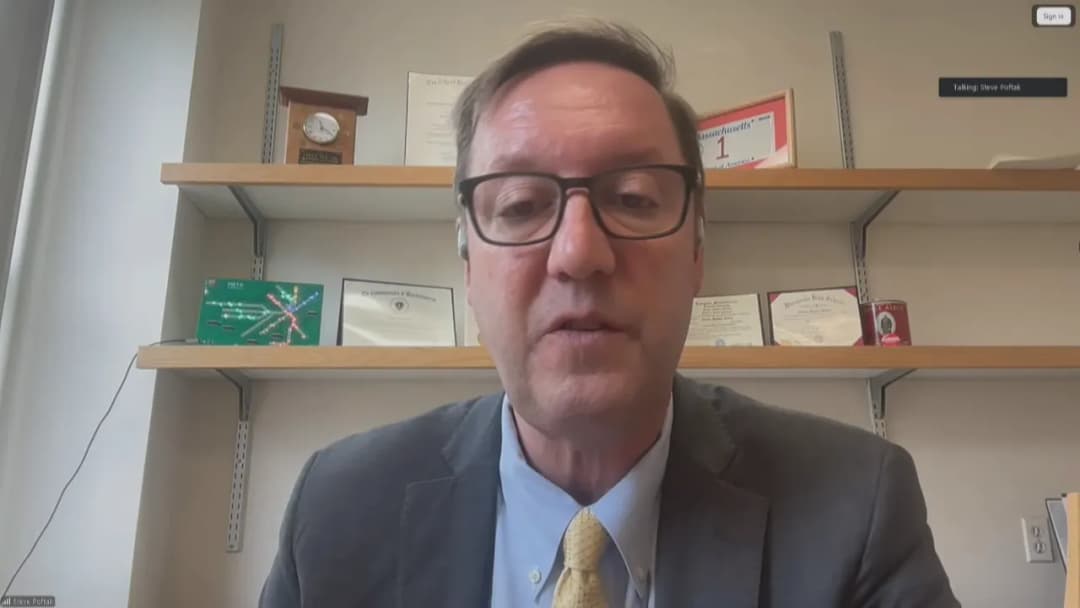
This hearing, chaired by Councilor Ben Weber, was convened to review discrepancies between market value and tax assessed value for residential properties in Boston, and to evaluate the city's tax assessment practices. The committee heard from Interim Commissioner of Assessing Henlin Wong, followed by a second panel including Chris Lehman (Small Property Owners Association) and Professor Ruchi Singh (University of Georgia). Public testimony was also taken. The hearing highlighted significant differences in assessment accuracy between high-value and low-value properties, with councilors expressing concerns about vertical equity and the burden on middle-class and low-income homeowners. Public Comments & Testimony - Marta Carney (Savon Hill resident) proposed a third tax category for triple-deckers and four-to-six-unit buildings, noting that larger apartment buildings are often undervalued. She also suggested a tax deferral until sale, and urged the assessing department to rely more on subjective judgment and less on data alone. - Frank Baker (former District City Councilor, Dorchester resident) argued that rising assessments are pushing up insurance costs and making the city unaffordable. He stated that the city council does not set the tax rate—it is set across the hall—and that the council only votes up or down on it. - Melissa Guzman (lifelong Boston resident, former assessing department employee) testified that during her employment (October 2018–February 2019), she observed situations where employees were discouraged from approving abatements, and that some assessments appeared to rely on broad neighborhood treatment rather than individualized review. She called for independent review of departmental practices. Discussion Items - Opening Statements: Councilor Culpeper (lead sponsor) presented data showing that the 20 lowest-priced single-family homes sold in 2022 were assessed at about 105% of sale price, while the 20 highest-priced were assessed at about 80% in 2023/24 and 68% in 2025. He cited a $21 million sale at 59 Commonwealth Ave assessed at $12.5 million. Councilors Flynn and Fitzgerald echoed concerns about the impact of double-digit tax increases on working families and seniors. - Commissioner Wong's Presentation: Wong described the city's computer-assisted mass appraisal (CAMA) system, using multiple linear regression on arms-length sales from the calendar year prior to the lien date. She reported that the city's assessments consistently pass state Bureau of Local Assessment reviews and Lincoln Institute vertical equity tests. She highlighted the residential exemption ($4,353.74 for FY26) as a progressive tool that reduces tax bills for lower-value homes. - Councilor Culpeper's Q&A: He pressed Wong on specific high-end properties (e.g., 776 Borislow St sold for $17M assessed at $15M; 44 Beacon St sold for $10M assessed at $3M) versus low-end properties assessed nearly at sale price. Wong attributed differences to regression model outliers and the use of calendar 24 sales for FY26 assessments, noting that many high-end sales occurred in calendar 25 and thus were not yet incorporated. - Councilor Flynn's Q&A: He questioned the fairness of taxing long-term homeowners based on recent high sales in their neighborhoods. Wong explained that state law requires fair cash value assessments, but relief programs like the residential exemption and senior exemptions are available. Flynn also asked about penalties for challenging assessments; Wong confirmed no penalty exists. - Councilor Fitzgerald's Q&A: He inquired about the CAMA model's limitations and weighting of components. Wong stated the model is calibrated to market trends and that staff review outliers. Fitzgerald raised concerns about speculative development inflating market values and the risk of shifting tax burden to commercial properties leading to disinvestment. - Councilor Warrell's Q&A: He requested data on assessment-to-sale ratios for properties above $2M, $5M, and $10M, and per-unit assessments for large apartment buildings. Wong agreed to provide the data by assessment district. Warrell also asked about the income approach for larger buildings; Wong noted it relies on confidential rent and expense data from owners. - Second Panel – Chris Lehman (SPOA): Lehman argued that Boston's assessment system is biased: low-end single-family homes are assessed at 99-105% of sale price, while high-end homes average 68-80%—some under 30%. He claimed the underassessment of the top 20 properties alone amounts to $83 million in lost tax base. He also criticized the homestead exemption for shifting tax burden onto renters, who he said bear 50-89% of property tax increases via rent. - Second Panel – Professor Ruchi Singh: Singh presented research (by Ron Rakow) showing that when all valid sales are considered, Boston’s assessments meet professional standards for vertical equity. She explained that the residential exemption makes the overall tax system progressive: a $500,000 owner-occupied home pays about 0.4% of value in tax, while a $5M home pays about 1.2%. She recommended improvements: finer location controls, spatial quantile regression, better interior condition data, and individualized appraisals for the very highest-end homes. Key Outcomes - The hearing was informational; no votes were taken. - Councilors committed to following up on data requests from Commissioner Wong, including assessment-to-sale ratios by price tier and district, and per-unit assessments for apartment buildings. - The committee heard calls for legislative changes to create a third property tax category for smaller multi-unit buildings and for expanding awareness of the residential exemption. - The hearing highlighted a need for further study of outlier properties and potential reforms to assessment models for the top end of the market.
MISCELLANEOUS 39% · FISCAL SUSTAINABILITY 20% · PROCEDURAL 16% · HOUSING 13%
22
OCT 8, 2026 · BOSTON, MASSACHUSETTS · CITY COUNCIL
Government Operations Committee Hearing on Quarterly Revenue Reports Ordinance – October 8, 2026

Boston City Council’s Government Operations Committee convened virtually on October 8, 2026, at 10:01 AM to hear testimony on Docket 1099, an ordinance requiring quarterly revenue reports to be provided to the City Council. The hearing was chaired by the Committee Chair and included remarks from Councillors Warrell, Louis Jeanne, Flynn, and Culpepper. The ordinance was sponsored by Councillors Warrell, Culpepper, and Mejia and referred to the committee on May 29, 2026. The meeting was conducted virtually via Zoom under Chapter 2 of the Acts of 2025, which modifies open meeting law requirements. Consent Calendar - No consent calendar was presented at this hearing. Public Comments & Testimony - No public testimony was given during this hearing. Discussion Items - Ordinance Purpose (Docket 1099): The ordinance would require the administration to provide quarterly revenue reports to the Boston City Council, similar to existing quarterly expenditure reports. It was sponsored by Councilors Warrell, Culpepper, and Mejia and referred to the committee on May 29, 2026. - Councilor Warrell (Sponsor): Argued the ordinance is a basic transparency measure to codify quarterly revenue reporting, which currently exists

FISCAL SUSTAINABILITY 35% · PUBLIC ENGAGEMENT 34% · BUDGET EQUITY ANALYSIS 14% · DATA MANAGEMENT 11%
23
OCT 7, 2026 · BOSTON, MASSACHUSETTS · CITY COUNCIL
Boston City Council Meeting: Grants, BPS Contracts, and Resolutions Adopted - October 7, 2026

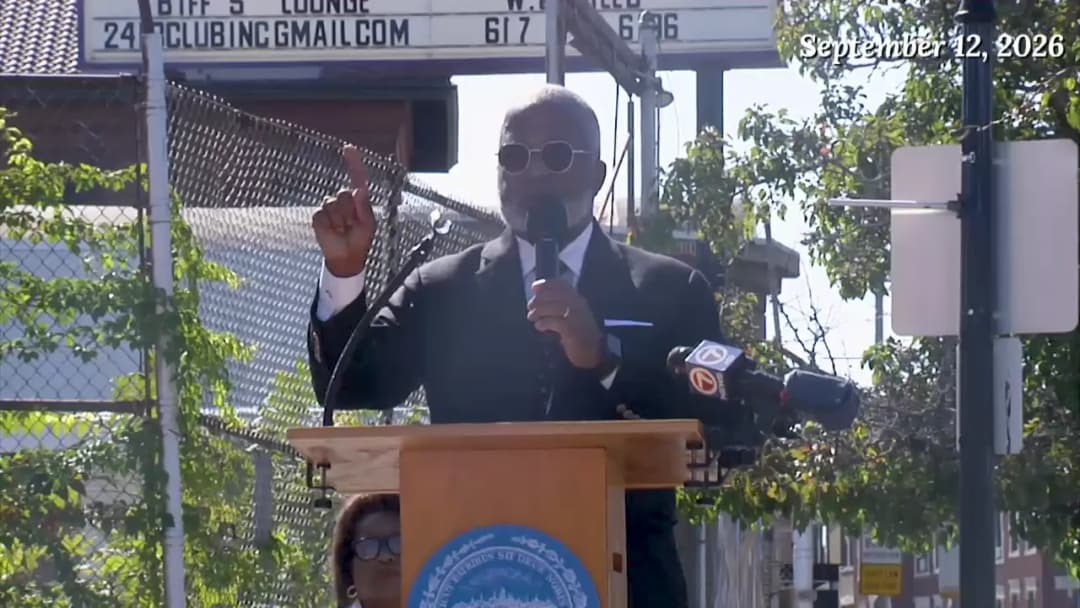
The Boston City Council met on Wednesday, October 7, 2026, beginning at 12:00 PM in the Christopher A. Iannella Chamber. The council approved multiple grants, passed collective bargaining agreements for Boston Public Schools unions, adopted a series of resolutions, and referred several hearing orders to committees. The meeting featured significant testimony from the Massachusetts Nurses Association regarding an ongoing labor dispute at Brigham and Women's Hospital and a presentation from the Fenway Alliance celebrating the 25th anniversary of the Opening Our Doors festival. Consent Calendar - Minutes from the September 30, 2026 meeting were unanimously approved. - Dockets 1889 through 1916, including appointments to the LGBTQIA2S+ Advancement Advisory Council and the Boston School Committee Nominating Panel, were placed on file. Public Comments & Testimony - Opening Our Doors Festival: Kelly Brilliant (Co-Director, Fenway Alliance), Genevieve Day (Co-Executive Director), and Keith Elder (President, Boston Youth Symphony Orchestra) provided testimony celebrating the 25th anniversary of the festival, which attracts over 10,000 attendees annually and provides free access to cultural institutions in the Fenway neighborhood. - Massachusetts Nurses Association: Rich Hunlotterman, a 28-year veteran emergency room nurse at Brigham and Women's Hospital, addressed the council. He expressed deep frustration with Mass General Brigham's refusal to negotiate in good faith, stating that the hospital's responses are "no, no, and no" and that a strike is not what the nurses want but a last resort forced upon them by the lack of meaningful dialogue. - Haitian TPS Humanitarian Context: Councilor Louis Jean described spending the previous night at the airport assisting displaced Haitian TPS holders, emphasizing the urgent humanitarian need behind Resolution Docket 1925 and stating, "people are really suffering." Discussion Items & Hearings - Election Day Voter Registration (Dkt 1805): Councilor Louis Jean presented the committee report supporting Ballot Question 4. The council heard support from community advocates including the ACLU of Massachusetts, Lawyers for Civil Rights, and Mass Vote. Councilor Flynn voiced support but noted the Boston Elections Department remains under state receivership due to failures in the 2024 presidential election. The resolution passed unanimously (12-0). - First Responder Health Screenings (Dkt 1917): Councilors Murphy and Flynn introduced an order for a hearing on sustainable city funding for essential health screenings for police, fire, and EMS personnel, noting they currently rely on union fundraising. - Veterans and Blue Squares Process (Dkt 1918): Councilor Flynn filed a hearing order to place the dedication of Hero Squares and Blue Squares solely under the purview of Boston Veteran Services. He recounted how a military family honoring a Navy Corpsman was required by the Office of Neighborhood Services to collect 200 signatures and hold an abutters meeting, which he called "beyond shameful." - Campus Safety (Dkt 1919): Councilors Flynn, Santana, and Murphy filed a hearing order to address stalking and relationship violence at Boston's colleges and universities, citing that one in five college students experience abuse and one in four LGBTQ+ youth experience dating violence. - BPS Transportation Performance (Dkt 1920): Councilor Murphy filed a hearing order citing an 80% on-time bus rate during the first week of school, leaving 4,000 children late or stranded, with some waiting over two hours after dismissal. - Collective Bargaining Agreements (Dkts 1829-1838): Chair Weber confirmed the Ways and Means Committee report approving approximately $517,000 to fund five BPS union contracts covering roughly 128 employees. Councilor Mejia voted "present" on dockets 1833 through 1838, citing an outstanding Inspector General's report on BPS misconduct and contracting protocols, while clarifying she fully supports the workers. Councilor Flynn supported the contracts but criticized the council for a lack of accountability and called the poor state of public education a "racial justice issue." Resolutions Adopted - Support for Mass General Brigham Nurses (Dkt 1921): The council unanimously adopted a resolution urging the Mass General Brigham Board of Directors to return to the bargaining table and negotiate in good faith with the Massachusetts Nurses Association. - Support for Bizgrow Central (Dkt 1922): The council unanimously adopted a resolution supporting Lawyers for Civil Rights and the opening of Bizgrow Central, a permanent downtown hub providing free legal and technical assistance to small business owners. - Support for the AI Civil Rights Act (Dkt 1923): The council unanimously adopted a resolution in support of the federal Artificial Intelligence Civil Rights Act (S. 3308 / H.R. 6356) to establish protections against algorithmic discrimination. - Congratulating Bishop John M. Borders III (Dkt 1924): The council adopted a resolution congratulating Bishop Borders on his retirement and honoring 45 years of service to Morning Star Baptist Church and the City of Boston. - Emergency Shelter for TPS Holders (Dkt 1925): The council unanimously adopted a resolution urging the city and state to identify vacant or underutilized public facilities to provide emergency shelter for displaced former Haitian TPS holders. - National Disability Employment Awareness Month (Dkt 1926), Breast Cancer Awareness Month (Dkt 1927), Fire Prevention Week (Dkt 1928), Indigenous Peoples' Day (Dkt 1929), Opening Our Doors Day (Dkt 1930): These resolutions were all adopted unanimously. Key Outcomes & Votes - Grants Passed: Docket 1884 ($103,239.10 for Consumer Affairs) passed by voice vote. Docket 1885 ($14,272.98 for Workforce Development) passed 12-0. - BPS Collective Bargaining Passed: The ten dockets (1829-1838) funding collective bargaining increases for BPS unions all passed. Councilor Mejia voted "present" on dockets 1833 through 1838 (covering SEIU Local 888, the Plant Administrators Association, and the Storekeepers Union). All other members voted in favor on each docket. - Resolutions Adopted: Dockets 1921 through 1930 were all adopted, most by unanimous 12-0 votes. - Hearing Orders Referred: - Dkt 1917 (First Responder Health Screenings) - Committee on Ways and Means. - Dkt 1918 (Hero/Blue Square Process) - Committee on Veterans, Military Families, and Military Affairs. - Dkt 1919 (Campus Stalking/Violence) - Committee on Public Safety and Criminal Justice. - Dkt 1920 (BPS Transportation) - Committee on Education. - Next Meeting: The council is scheduled to meet next on Wednesday, October 21, 2026, at 12:00 PM.

PROCEDURAL 12% · PUBLIC SAFETY 12% · PUBLIC HEALTH 7% · LABOR 7%
24
OCT 7, 2026 · BOSTON, MASSACHUSETTS · CITY COUNCIL
Zoning Board of Appeal Hearing - October 7, 2026

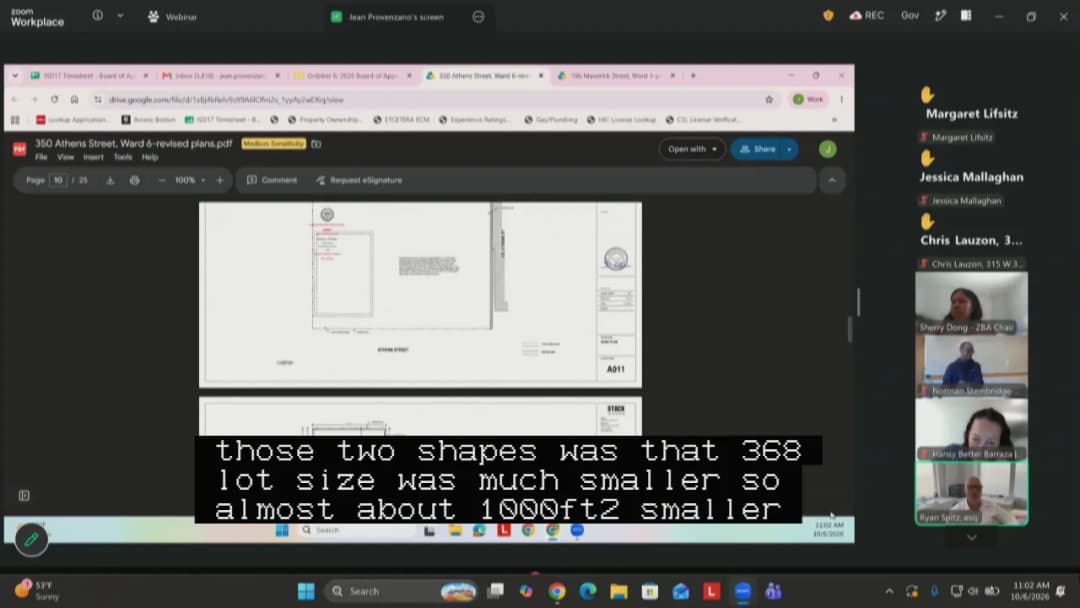
The Zoning Board of Appeal convened on October 7, 2026 at 9:30 AM to consider several appeals for zoning relief, including approvals of minutes, extension requests, and hearings on various development projects across Boston. The board approved multiple items and heard public testimony on several proposals, voting on each case. Consent Calendar - Approval of Minutes: The board unanimously approved hearing minutes from September 17 and September 22, 2026. - Extensions: The board approved five extension requests for cases BOA 773858 (6116 address), BOA 1322135 (25 Henry Street), BOA 1605743 (25 West Hall Street), BOA 1622321 (751–757 W Street), and BOA 1140239 (50 Rogers Street). - Board Final Officer Cases: - 3326–3328 Washington Street (case BOA 104472): Unanimously approved a modification increasing units from 43 to 46 and gross square footage from 40,176 to 43,825 sq ft, with no parking. - 80 & 82 Shawsheen Road, East Boston (cases BOA 1545096 and BOA 15451): Unanimously approved changes converting a homeownership building to all-rental, increasing total affordable units from 57 to 62, with adjusted parking and loading. Public Comments & Testimony - 239–245 Causeway Street: The Mayor’s Office of Neighborhood Services (ONS) deferred to the board; Councilor Sharon Durgan’s office supported the application to remove a special provision for a cafe. - 125 Newbury Street (two companion cases): ONS confirmed community process with non-opposition from Back Bay Neighborhood Association; Councilor Durgan supported removal of provisos for a new restaurant tenant (Joe & the Juice) and takeout restaurant. - 90–94 Revere Street: ONS noted one abutter opposed on grounds conditions were not unique; Beacon Hill Civic Association non-opposed; Councilor Durgan’s office supported the project to reduce units from 8 to 5 and add a roof deck. - 31 Bill Mont Street: ONS deferred after an abutters meeting with no objections; Highland Park Neighborhood Association expressed support. - 5 Long Street: ONS deferred with letter of support from three abutters and Community Alliance of Mission Hill non-opposition. - 269 East Cottage Street (Article 80): ONS reported 63 letters in support, 9 opposed; Columbia Savin Hill Civic Association opposed citing lack of need for hotel, density, and parking concerns. Councilor Santana supported; former councilor Frank Baker supported; several abutters spoke in favor. - 196 Maverick Street: ONS deferred; Boston Groundwater Trust confirmed receipt of G-Card letters; no public opposition voiced. - 350 Athens Street: ONS reported abutters’ significant opposition over scale, shadow, and privacy; six abutters spoke in opposition. Councilor Flynn’s office supported but expressed concerns about parking reduction. Direct abutters opposed. - 44 Granger Street: ONS deferred; Fields Corner Civic Association provided a letter of support; Councilor Flynn’s office supported. - 26 Bird Street: ONS noted abutters had concerns but Ashmont Hill Civic Association voted support; Councilor Flynn’s office supported. Discussion Items - 239–245 Causeway Street: Applicant Jacqueline Dimenez sought removal of a special provision to operate a cafe under a new name without footprint changes. - 125 Newbury Street: Attorney Darryl Quilty presented removal of provisos for a restaurant (36A37) and takeout use to allow replacement tenant Joe & the Juice. - 90–94 Revere Street: Attorney Kevin Butler and architect Guy Grassi presented a proposal to reduce unit density from 8 rental units to 5 condos, adding open space and restoring the historic exterior. Variances sought for FAR (from 4.4 to 4.78) and rear yard setback. - 31 Bill Mont Street: Applicant Andrea Boitz requested a variance for a 7x13 ft wooden pergola within 4 ft of the lot line. - 5 Long Street: Applicant sought variance for excessive FAR (proposed 1.1 vs allowed 1.0) to add living space for an extended family. - 269 East Cottage Street: Attorney Joe Hanley presented a 42-room boutique extended-stay inn with restaurant expansion, 12 bike spaces, and 2 courtesy vehicles. Variances for hotel use, FAR (3.31 vs 1.3 allowed), height (69 ft vs 40 ft), and parking. Project connected to existing mixed-use building at 951–959 Dorchester Avenue. 72 letters received (63 support, 9 opposed). - 196 Maverick Street: Attorney Jeff Drago presented conversion of a 3-unit building to 7 units via full interior renovation, rear addition, and vertical expansion to 4 stories (45 ft height). Variances for groundwater district, roof structure, off-street parking, front/side yards. - 350 Athens Street: Attorney Ryan Spitz presented a 6-unit, 4-story residential building with 6 parking spaces. Revised plans after deferral eliminated FAR and open space violations, reduced side yard violation. Variances for lot area, front yard, side yard, roof structure, and parking. Planning department recommended approval. - 44 Granger Street: Attorney Ethan Ritters presented a 3-family triple-decker on a 2-family zoned lot. Variances for use, lot area, width, frontage, FAR (0.77 vs 0.5), stories (3 vs 2.5), and side yard. - 26 Bird Street: Attorney Ernest Gary and architect Fred Money Guy presented an 8-unit, 2-bedroom building with 8 parking spaces, near Ashmont station. Variances for lot size, side yard, rear yard, FAR, and stories. Key Outcomes - Minutes and Extensions: Approved unanimously (6-0). - Board Final Officer – 3326–3328 Washington St: Approved (6-0). - Board Final Officer – 80 & 82 Shawsheen Road: Approved (6-0). - 239–245 Causeway Street: Approved (6-0). - 125 Newbury Street (both cases): Approved (6-0). - 90–94 Revere Street: Approved (6-0) with proviso that project undergo Beacon Hill Architectural Commission review. - 31 Bill Mont Street: Approved (6-0). - 5 Long Street: Approved (6-0). - 269 East Cottage Street: Approved (6-0). - 196 Maverick Street: Approved (6-0). - 350 Athens Street: Approved (6-0) with proviso that project undergo BPD design review to consider increased setback or windows on blank facade. - 44 Granger Street: Approved (6-0) with provisos: accessible entry and resubmission of revised plot plan showing parking at rear. - 26 Bird Street: Approved (6-0) with proviso that applicant enter into a housing agreement with MOH prior to permit. - Deferrals: Case BOA 1894474 (742 Truman Ave) deferred to November 17, 2026; Case BOA 187 (412 Washington St) deferred to November 10, 2026. - Withdrawal: Case BOA 18579365 (151 Lennon Street) withdrawn.

ZONING BOARD OF APPEALS 49% · PROCEDURAL 13% · PUBLIC ENGAGEMENT 9% · PUBLIC REALM 8%
25
OCT 6, 2026 · BOSTON, MASSACHUSETTS · CITY COUNCIL
Boston Zoning Board of Appeal Hearing – October 6, 2026

The Boston Zoning Board of Appeal convened virtually at 9:30 a.m. on October 6, 2026, to consider a consent calendar, five extension requests, and multiple development projects. After hearing public testimony, the board approved nearly all items, with two cases deferred and one withdrawn. The meeting ran for several hours and included extensive discussion on two larger Article 80 projects. Consent Calendar - Minutes Approval: The board approved the minutes from the September 17 and September 22, 2026 hearings (unanimous). - Extension Requests: The board approved five extension requests for cases at 616, 25 Entry Street, 25 West Hall Street, 751–757 Dudley Street, and 50 Rogers Street (all unanimous). Public Comments & Testimony - For the 269 East Cottage Street (Inn at Little House) project, the Office of Neighborhood Services reported 72 letters and emails, with 63 in support (85% support) and 9 opposed. Several direct abutters and community leaders testified in support, while the Columbia Savon Hill Civic Association and Dorchester North Neighborhood Association opposed. - For the 350 Athens Street project, abutters testified in strong opposition, citing concerns about scale, shadows, parking, and privacy. Six abutters spoke against the project at a June 22 meeting. The applicant submitted 14 letters of support, but direct abutters remained opposed. - For the 90–94 Revere Street project, one abutter expressed opposition, but the Beacon Hill Civic Association offered non-opposition. - On 31 Melmont Street, 5 Long Street, and 44 Granger Street, no public opposition was raised. Discussion Items - 3328 Washington Street (Board Final Operative): Attorney Jeff Drago presented modifications to a previously approved project, increasing units from 43 to 46 and square footage from 40,176 to 43,825 sq. ft. No questions from the board. Approved unanimously. - 80–82 Shawsheen Road, East Boston (Board Final Operative): Attorney Drago presented changes to an all-affordable housing project to convert ownership units to rental to secure state funding. Unit count increased from 57 to 62, with minor changes in FAR and parking. Approved unanimously. - 239–245 Causeway Street: Jacqueline Demenez requested removal of a special provision for the Penalief Cafe to allow a new operator. No community issues. Approved unanimously. - 125 Newbury Street (Joe and the Juice): Attorney Dennis Quilty presented a change of tenant for a restaurant and outdoor cafe. The Back Bay Neighborhood Association did not oppose. Approved unanimously. - 90–94 Revere Street: Attorney Kevin Butler proposed reducing eight rental units to five condominiums, adding a roof deck and elevator, and restoring the historic exterior. One abutter opposed, but the Beacon Hill Civic Association did not oppose. The board approved with a proviso requiring review by the Beacon Hill Architectural Commission. - 31 Melmont Street: Andrea Boitz requested a variance for a 7'×13' wooden pergola within 4 feet of the lot line. Abutters had no concerns; the Highland Park Neighborhood Coalition supported. Approved unanimously. - 5 Long Street: Adam Rosa proposed a rear addition for a single-family home, exceeding the FAR by 0.1 (proposed 1.1, allowed 1.0). The Community Alliance of Mission Hill supported. Approved unanimously. - 269 East Cottage Street (Inn at Little House): Attorney Joe Hanley presented a plan for a 42-room extended‑stay inn with an expanded restaurant, connected to an existing mixed-use building. Required variances for hotel use, height (69 ft vs. allowed 40 ft), FAR, and parking. After extensive Article 80 process, the BPDA board had approved in July 2026. Public testimony was mixed; the board approved unanimously. - 742 Truman Street: Deferred to November 17, 2026, to allow re‑advertisement for a conditional use permit that was not originally included. - 412 Washington Street: Deferred to November 10, 2026, for updated views and re‑advertisement. - 196 Maverick Street (Rediscussion): Attorney Jeff Drago presented a plan to convert a three‑unit building to seven units by adding a fourth story and rear addition. Variances needed for groundwater (GCOD), roof structure, parking, and existing non‑conformities. The East Boston community process included a letter of non‑opposition from Maverick Central and support from GOAT Street Citizens Association. Approved unanimously. - 350 Athens Street: Attorney Ryan Spitz presented a revised proposal for a four‑story, six‑unit building with six parking spaces, reduced from an earlier ten violations. The planning department now recommended approval. Abutters voiced strong opposition regarding scale and shadows. Councilor Flynn’s office recommended support. The board approved with a proviso that the project undergo BPD design review and consider increasing the setback or adding windows to the blank facade. - 44 Granger Street: Attorney Ethan Ritter presented a three‑family house in a two‑family neighborhood, requiring multiple variances (lot area, width, frontage, FAR, stories, side yard). The Fields Corner Civic Association supported. The board approved with provisos for an accessible entry and a revised plot plan showing parking at the rear. - 263 (26–30 Bread Street, Ashmont): Attorney Ernest Guerrier presented an eight‑unit, eight‑parking‑space building near Ashmont station. Variances for lot area, side yard, rear yard, FAR, and stories. After a July continuance, the board found that a lot restriction had been released. The Ashmont Valley Association and Councilor Brian Worrell’s office supported. Approved unanimously. - 151 Lenox Street: The applicant withdrew the case; the board approved the withdrawal. Key Outcomes - All votes were unanimous (7‑0) unless noted. - Deferrals granted for 742 Truman (to Nov 17) and 412 Washington (to Nov 10). - Case 151 Lenox Street withdrawn. - Several approvals included provisos: 90–94 Revere Street (Beacon Hill Architecture review), 350 Athens Street (BPD design review), 44 Granger Street (accessible entry and plot plan revision).

COMMUNITY ENGAGEMENT 15% · ZONING BOARD OF APPEALS 11% · PUBLIC SAFETY 10% · PUBLIC EDUCATION 9%
26
OCT 6, 2026 · BOSTON, MASSACHUSETTS · CITY COUNCIL
Boston City Council Hearing on BPS Collective Bargaining Contracts, October 6, 2026

The Boston City Council's Committee on Ways and Means held a hearing on October 6, 2026, at 10:03 AM to consider ten appropriation orders (dockets 1829–1838) totaling $517,000 to fund fiscal year 2027 salary increases for five Boston Public Schools (BPS) unions. The hearing featured testimony from City Budget Director Jim Williamson, BPS labor relations representative Jeremiah Hassan, Chief Operating Officer Brian Ford, and safety services director Izzy Morrero. Councilors expressed general support for the contracts, while Councilor Flynn raised concerns about an unsigned memorandum of understanding (MOU) between BPS and the Boston Police Department and called for greater transparency. Public testimony from the Boston Policy Institute questioned the city's fiscal outlook and the pace of reforms following a recent Inspector General report on BPS mismanagement. Public Comments & Testimony - Gregory Maynard, Boston Policy Institute: Testified that the contracts are important because they reveal new concerns about the city's fiscal crisis and test City Hall's claims about addressing issues identified by the Office of the Inspector General (OIG) report. He noted that BPS labor counsel Mike Ryan had stated in July that the parties agreed to push substantive changes to next year due to uncertainty about the city's financial outlook, and that officials testifying today could not clearly articulate how OIG reforms informed the contracts. He urged councilors to demand more accountability. Discussion Items - Presentation of the Appropriation Orders: Budget Director Jim Williamson explained that the $517,000 would be transferred from the collective bargaining reserve to BPS to cover raises for five unions: Boston School Police Patrolman's Association (dockets 1829–1830, $268,887), Boston School Police Superior Officers Federation (dockets 1831–1832, $111,802), SEIU Local 888 Professional Employees Chapter – Planning and Engineering (dockets 1833–1834, $85,879), Plant Administrators Association (dockets 1835–1836, $40,365), and AFL-CIO Council 39 Local 2814 – Storekeepers and Stores Deliverymen (dockets 1837–1838, $10,320). Contract terms varied but generally included a 2% base wage increase and flat dollar amounts (e.g., $800 in January 2027). Hassan confirmed the contracts were ratified by unions and the School Committee. - Councilor Flynn’s Questions: He asked why union leadership was not invited to testify, requested a copy of the unsigned MOU between BPS and Boston Police Department before a vote, and raised concerns about the OIG report’s findings on BPS mismanagement. He pressed COO Brian Ford on whether the contracts had any relation to the OIG report; Ford replied that the district is still formulating its official response and that the contracts themselves were unaffected by the report. Flynn also asked about the status of paraprofessionals laid off in recent budget cuts; Hassan said BPS is working through a recall list to rehire affected staff. - Councilor Murphy and others: Expressed support for the contracts, emphasizing the importance of non-teaching BPS employees. Councilor Louijeune asked about the mechanics of the reserve transfers; Williamson clarified that reductions from the reserve and supplemental appropriations to BPS offset each other. Councilor Fitzgerald estimated that the total increase covered about 73 employees; Hassan provided updated counts: 50 patrol officers, 19 superior officers, 37 planning/engineering staff, 16 plant administrators, and 6 storekeepers. Councilor Weber asked about staffing levels for BPS safety officers; Morrero noted that seven vacancies were eliminated in recent budget cuts and there are currently four vacancies (all patrol). - Councilor Culpepper: Voiced strong support and joked about Hassan’s attire, urging approval on Wednesday. - Councilor Orrall: Asked about staffing; Morrero confirmed hiring for four vacancies. Key Outcomes - No vote was taken at the hearing. Chair Weber stated the plan is to bring the dockets (1829–1838) to a vote at the next City Council meeting on Wednesday, October 7, 2026. - Councilor Flynn requested that the unsigned MOU between BPS and Boston Police Department be provided to councilors before Wednesday’s vote; Chair Weber agreed to pursue the request. - The hearing was adjourned after public testimony, with the understanding that any further questions would be addressed via council staff.

PUBLIC EDUCATION 37% · BUDGET EQUITY ANALYSIS 27% · PUBLIC SAFETY 17% · LABOR 12%
27
OCT 2, 2026 · BOSTON, MASSACHUSETTS · CITY COUNCIL
Boston City Council Hearing on Voter Accessibility and Election Day Registration – October 2, 2026

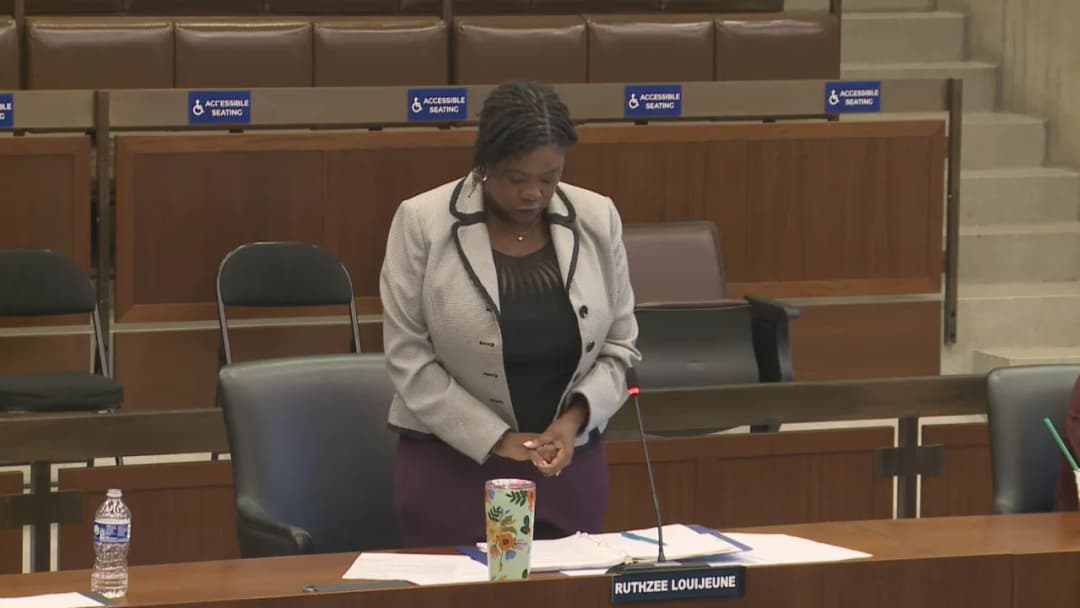
On October 2, 2026, the Boston City Council Committee on Census, Redistricting, and Elections held a hearing on Docket 0183 (order for a hearing regarding voter accessibility and election preparedness) and Docket 1805 (Resolution in support of Question 4 to establish Election Day Voter Registration in Massachusetts). Chair Ruthzee Louis-Jean presided, joined by Councillors Flynn, President Breedon, Weber, and Mejia. The hearing featured testimony from advocacy groups including Lawyers for Civil Rights, League of Women Voters of Massachusetts, MassVote, ACLU of Massachusetts, and Urban League of Eastern Massachusetts, followed by an administration panel from the Boston Elections Department. Public Comments & Testimony - Alan Tanner, a Boston resident, testified in favor of Docket 1805 (same-day voter registration), arguing it would eliminate bureaucratic hurdles and increase voter turnout. He addressed opposition arguments about election security, noting that similar rhetoric has been used to undermine mail-in voting. - Ed Shoemaker, representing Voter Choice Massachusetts and a Dorchester resident, supported Question 4 and urged the council to resurrect the ranked choice voting home rule petition. He highlighted the frustration of voters who miss the registration deadline on moving day (September 1) and are unable to participate. Discussion Items - Voter Accessibility and Election Preparedness: Tracy Griffith (ACLU of Massachusetts) reported issues from the September 2026 primary, including inadequate signage, inaccessible polling places (especially for ADA compliance) in Roxbury, Dorchester, and Mattapan, and confusion about poll observers. She noted that many locations lacked designated ADA parking, had locked accessible entrances, and had signs that were poorly placed or hard to read. Brooke Simone (Lawyers for Civil Rights) urged the city to promote early and mail voting, train poll workers on laws regarding federal agents at polling places, coordinate with advocacy groups, and communicate voters’ rights. She also emphasized the need to address fears of ICE or armed federal agents near polling locations, which she said would be illegal. - Election Day Registration (Question 4): All advocates expressed strong support. They noted that 23 states and the District of Columbia already have same-day registration with no evidence of fraud or increased administrative burden. The proposed Massachusetts version includes a one-year delay (effective 2028) and requires proof of residency and a sworn affidavit under penalty of felony. Celia Canavan (League of Women Voters) shared her personal experience benefitting from same-day registration in Maine. Cheryl Clyburn Crawford (MassVote) described observing smooth implementation in New Hampshire. Advocates argued that the arbitrary 10-day deadline disenfranchises voters who move, face clerical errors, or become engaged late in the campaign. - Federal Threats to Elections: Speakers expressed concern about potential presence of armed federal agents (ICE, DOJ, FBI) at polling places, calling such actions unlawful and intimidating. They noted that the DOJ sent monitors to the primary and may do so again, but no issues arose. - Municipal Census Decoupling: Several advocates noted that the municipal census (street listing) is a major cause of voters being marked inactive. They cited House Bill 799 and Senate Bill 503 (currently sent to study) as efforts to decouple the census from voter rolls. Councillor Louis-Jean raised this as a city-level concern, and advocates reported that in some other municipalities (e.g., Lawrence) 80% of voters at one precinct were inactive. - Voter Education and Engagement: Suggestions included making Election Day a holiday, using more visible signage (e.g., fluorescent colors), starting civics education in schools, partnering with colleges, providing audiovisual aids for low-literacy voters, and making voting a social event. Brooke Simone also noted that voters have the right to receive assistance at the polls. - Administration Panel: Kerry Jordan (new Executive Director, Boston Elections Department), Paul Chong (Commissioner, City Records), and Sabino Pamonte (Head Assistant Registrar) reported that the department successfully administered the September primary with 79,474 voters, answered 800 calls with an average wait time under 16 seconds, staffed 275 precincts with 1,700 poll workers, and used electronic poll books seamlessly. They acknowledged federal monitors were present but reported no issues. They are preparing for the November election with two weeks of early voting starting October 17, improved signage rebranding, and continued use of electronic poll books. They are still seeking additional poll workers (target 2,000) and will train through November. Sabino explained rigorous quality control for ballot counts to avoid shortages like those in 2024, including multiple sign-offs and pack slips. The department complies with state VRIS system and does not use the federal SAVES database. They also have a student poll worker program (75 participants last November) and conduct voter registration drives in high schools. Kerry Jordan noted that the budget for 2028 presidential primaries will require council support. - Poll Worker Recruitment and Training: Councillor Mejia suggested raising the training stipend (currently $20-30 for 2.5-3 hour in-person training) and holding regional trainings with incentives like pizza. The department noted that some trainings are virtual, and returning poll workers may not need in-person sessions. Sabino mentioned that experienced poll workers can take on leadership roles in training. - Language Access: The department provides ballots in Vietnamese and Chinese based on federal requirements, and also has interpreters and auto-mark machines. The department goes above and beyond requirements. - Police Presence at Polling Sites: Sabino noted that the city ordinance requires a Boston police officer at the checkout table. Councillor Mejia suggested exploring civilian flaggers as an alternative. - Central Tabulation: The process is governed by state law and is open to the public. Key Outcomes - The committee will hold a vote on Docket 1805 (Resolution supporting Question 4) at a future meeting, likely the following Wednesday. - Docket 0183 (voter accessibility and election preparedness) will remain in committee for continued oversight and follow-up. - The committee encouraged the Elections Department to improve signage, address accessibility issues (e.g., ADA compliance), and consider raising poll worker training stipends. - The administration panel committed to implementing election day registration if Question 4 passes, with implementation in 2028. - Councillor Mejia indicated she would file an ordinance to allow police-free poll sites and explore other changes to reduce barriers for poll workers.

ELECTION ADMINISTRATION 84% · ACCESSIBILITY 7% · PUBLIC ENGAGEMENT 2% · LANGUAGE ACCESS 2%
28
SEP 30, 2026 · BOSTON, MASSACHUSETTS · CITY COUNCIL
Boston City Council Regular Meeting: September 30, 2026

The Boston City Council held its regular meeting on Wednesday, September 30, 2026, at 12:10 PM in the Christopher A. Iannella Chamber. The meeting was called to order by President Breadon and adjourned at 3:33 PM. All 13 councilors were present. The meeting included the approval of prior minutes, multiple collective bargaining agreements for Boston Public Schools and Boston Police, adoption of resolutions, and handling of late-filed matters, including an emergency resolution for businesses affected by a six-alarm fire at the Edison Building in Nubian Square. Consent Calendar - The minutes from the September 23, 2026 City Council meeting were approved unanimously. - A consent agenda containing 18 congratulatory and recognition resolutions (Dockets 1864–1881) was adopted without objection. Public Comments & Testimony - No public comment period was held during the meeting. However, two presentations were made before the regular agenda: the Boston chapter of the National Forum for Black Public Administrators (NFBPA) and open-water swimmer Maura Toomey were recognized by Councilors Culpepper and Breadon, respectively. Discussion Items - Collective Bargaining Agreements – Boston Public Schools (BPS): The Council referred to the Committee on Ways and Means six messages and orders (Dockets 1829–1838) totaling $517,573 to fund FY27 wage increases for Boston School Police Patrolmen’s Association ($268,887), School Police Superior Officers Federation ($111,802), SEIU Local 888 Professional Employees Chapter ($85,879), Plant Administrators Association ($40,365), and Storekeepers and Stores Deliverymen Union ($10,320). Contracts include 2% base wage increases and flat-dollar increases in various years. - Grant Acceptance: Docket 1839, a $4,350 scholarship grant from the Massachusetts Historical Commission for the National Alliance of Preservation Commissions FORUM conference, was unanimously passed after suspension of the rules. - Police Collective Bargaining Agreements: The Council passed four orders (Dockets 1671–1674) to transfer a total of $3,318,000 from the Reserve for Collective Bargaining to the Boston Police Department to cover FY27 costs of contracts with the Boston Police Detectives Benevolent Society (BPDBS) and its Superior Officers Unit (BPDBS-SO). The contracts include a 2% wage increase, hazardous duty pay updates, sick time buyback, and paid detail adjustments. Discussion highlighted that police officers are funding their own wellness and cancer screenings, with Councilors Murphy and Flynn advocating for future city budget inclusion. - Fair Housing Assessment Hearing: Docket 0695, an order for a hearing on implementation of the City's Assessment of Fair Housing, remained in the Committee on Housing and Community Development after a September 29 hearing attended by multiple councilors and advocates. - Neighborhood Impact Commission Ordinance (Dkt 1843): Councilors Worrell, Mejia, and Culpepper introduced an ordinance to reform and formalize the Neighborhood Impact Commission to promote anti-displacement measures and equitable development. Referred to Government Operations. - Other Hearing Orders: The Council introduced and referred multiple hearing orders, including topics such as: - Boston Water and Sewer Commission lead replacement incentive program (1844) - Busking and support for local performers (1845) - Combined sewer overflow long-term control planning (1846) - Declining MCAS scores (1847) - Resident parking policy in South Boston (1848) - Parking garage at West Broadway municipal lot (1849) - Economic impacts of immigrant fear flight and federal enforcement (1850) - Section 17F Information Requests: Dockets 1852, 1853, and 1855 were passed, requesting information on BPS residency and procurement, and the Reparations Task Force. Docket 1854 (roadway alterations at Tremont and Parker Streets) passed 11–0–2. - Resolutions Adopted: The Council adopted resolutions supporting: - Question 6 (creating a natural resource conservation fund) – unanimous - U.S. Army Corps of Engineers’ Boston Harbor Coastal Storm Risk Management Plan – unanimous - H.1544/S.998, a tenant's first right of refusal – unanimous - Recognizing Tu Hispanidad Flag Day, Turkish Republic anniversary, Nigerian Independence Day, Pedestrian Safety Month, and Domestic Violence Awareness Month – all unanimous - Late-Filed Emergency Resolution: An emergency resolution (Dkt 1882) calling for immediate relief for businesses devastated by a six-alarm fire at the historic Edison Building in Nubian Square was introduced by Councilors Culpepper, Santana, and Louijeune. After brief discussion, it was adopted unanimously. A second late-filed hearing order regarding health screenings for first responders was objected to by Councilor Durkan and thus not added to the agenda, prompting debate on the definition of an emergency under Rule 46. Key Outcomes - Approved collective bargaining transfers: $517,573 for BPS unions and $3,318,000 for BPD unions, all unanimous. - Grant accepted: $4,350 for historic preservation conference attendance, unanimous. - Emergency resolution passed: Unanimous support for Edison Building fire relief. - Information orders passed: Three 17F orders approved; one passed 11-0-2. - All other resolutions adopted unanimously on suspension of the rules. - Next meeting: Scheduled for Wednesday, October 7, 2026, at 12:00 PM.

PROCEDURAL 21% · PUBLIC SAFETY 14% · AFFORDABLE HOUSING 7% · PUBLIC EDUCATION 6%
29
SEP 30, 2026 · BOSTON, MASSACHUSETTS · CITY COUNCIL
Public Facilities Commission Meeting – September 30, 2026

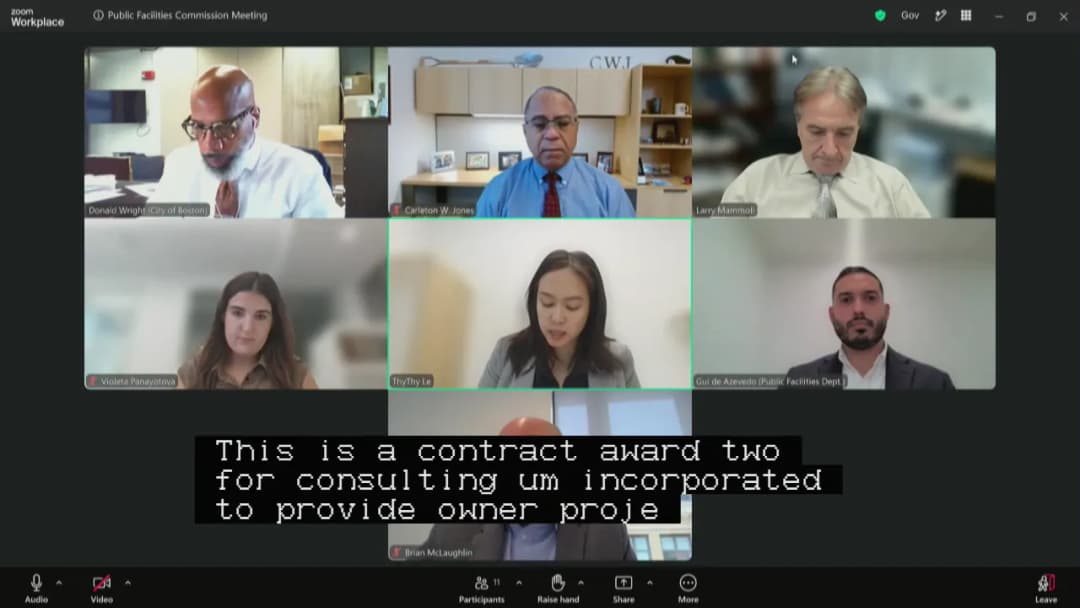
The Public Facilities Commission (PFC) convened on September 30, 2026, with Commissioners Larry Mamoli and Donald Wright present, along with legal advisor TT Lee and staff from the Public Facilities Department (PFD) and the Mayor's Office of Housing (MOH). The meeting approved routine minutes and then considered seven items: one from PFD for a contract award and six from MOH including ground leases, extensions, and conveyances. All votes were approved unanimously. Consent Calendar - Approval of Minutes: The Commission approved the draft meeting minutes from August 26, 2026, for the Mayor's Office of Housing via roll call (2-0). Discussion Items - PFD Vote 1 – Contract Award for Ruth Batson Academy Feasibility Study: Senior Project Manager Guy Diacevedo presented a request to award a contract to CHA Consulting Inc. for Owner's Project Manager (OPM) services for the Ruth Batson Academy project at 315 Mount Fernist Street, Dorchester. The not-to-exceed contract price is $661,176, including $596,276 for base fees and $64,900 for additional services, through October 1, 2028. The project involves a feasibility study and schematic design for the existing school built in 1967, which has 55 classrooms, 50 out of compliance with MSBA standards, and a building condition score of 9 (below district average of 28). The MSBA approved CHA Consulting on September 14, 2026. The Commission approved the award unanimously. - MOH Vote 1 – Ground Lease to United States Postal Service: Jamie Smith presented a request for a five-year ground lease (with two five-year renewal options) to USPS for a 39,645 sq ft parcel at Railroad Street, West Roxbury, at $60,000 annual rent initially (below estimated market value of $181,000). The lease ensures continued postal services and minimizes traffic impacts. Approved unanimously. - MOH Vote 2 – Extension for Easy Street LLC, Hyde Park: Request to extend tentative developer designation by six months (from 18 to 24 months total) for a three-family dwelling on Fort Adams Street. The developer needs to secure final permits from BWSC and ISD. Approved unanimously. - MOH Vote 3 – Extension for Community Land Trust Inc., Hyde Park: Teresa Stratula requested a 12-month extension (total 24 months) for CLT to finalize site designs and Conservation Commission approvals for an open space project adjacent to the Neponset River. Approved unanimously. - MOH Vote 4 – Conveyance to Boston Food Forest Coalition, Dorchester: Request for conveyance of two parcels (total 11,741 sq ft) at Norfolk Street for $400 to BFFC to develop a food forest with performance stage, seating, and edible plantings. The project is complementary to a nearby BPDA parcel. Approved unanimously. - MOH Vote 5 – Extension for New Urban Collaborative and Lower Roxbury Community Corp, Roxbury: Tiara Satchel requested a 12-month extension (from 36 to 48 months total) for a mixed-use, mixed-income development at 40-50 Warren Street, including 35 affordable homeownership units and co-working space. The team awaits the next Commonwealth Builder funding round. Approved unanimously. - MOH Vote 6 – Amendments for Cruise Development Corporation, Roxbury: Joe Backer requested amendments to the ground lease for parcels at 135 Dudley Street and Washington Street. Changes include a single 99-year lease term (replacing 59+40), revised land area to 67,664 sq ft, and an option to purchase the reversionary interest at lease end to protect affordable homeownership units. Commissioner Wright filed a disclosure notice and participated. Approved unanimously. Key Outcomes - All seven votes (one PFD, six MOH) were approved by unanimous roll call (2-0). - The Commission approved a $661,176 OPM contract for the Ruth Batson Academy feasibility study. - The Commission authorized a five-year ground lease to USPS for $60,000/year in West Roxbury. - Four time extensions were granted: Easy Street LLC (6 mo), CLT (12 mo), New Urban Collaborative (12 mo), and Cruise Development Corp (lease amendments). - One conveyance was approved: Boston Food Forest Coalition for $400 to develop open space in Dorchester.

PROCEDURAL 22% · PUBLIC ENGAGEMENT 19% · PUBLIC EDUCATION 17% · PUBLIC SERVICES 14%
30
SEP 29, 2026 · BOSTON, MASSACHUSETTS · CITY COUNCIL
Boston City Council Housing Committee Hearing on Fair Housing Implementation – September 29, 2026

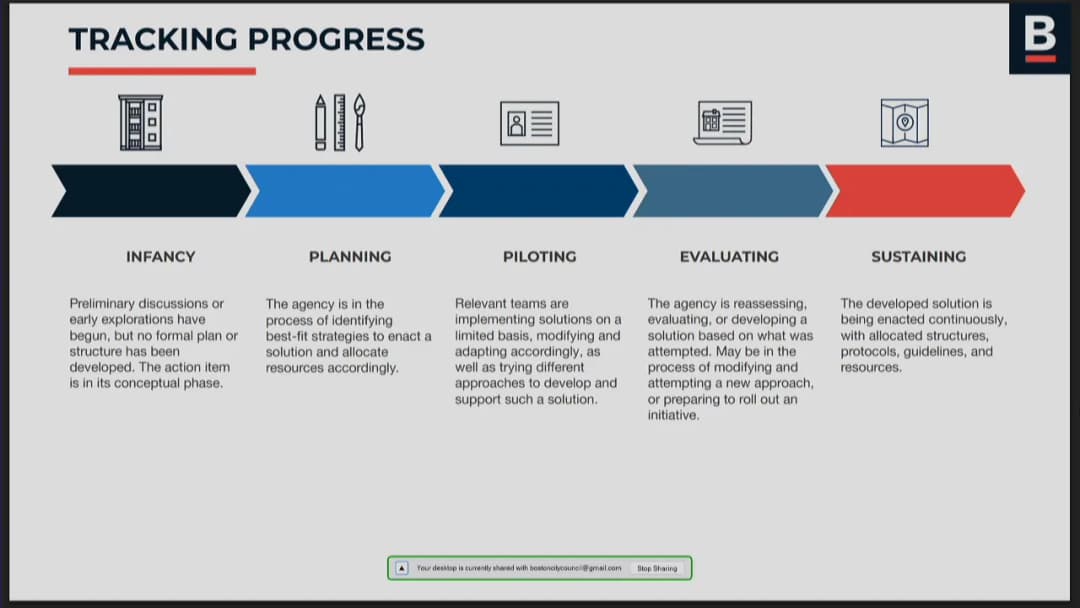
On September 29, 2026, the Boston City Council Committee on Housing and Community Development, chaired by Councilor Enrique Pepin, held a hearing on Docket 0695 regarding the status of implementation of the City of Boston's Assessment of Fair Housing (AFH). The hearing featured two panels: a community advisory panel and city administration officials. Councilors and advocates discussed progress, challenges, and next steps for affirmatively furthering fair housing (AFFH) in Boston. Public Comments & Testimony - Tristan Thomas (ACE): Highlighted stark disparities: only 30% of Black Bostonians own homes vs. 73% of whites; Black households earn a median of $58,600 vs. $128,900 for whites; 52% of greater Boston's homeless population is Black. Called for increased funding for enforcement, measurable goals, and public reporting. - Stephanie Williams (ACE): Urged the city to establish clear connections between community organizations and the city's fair housing infrastructure. Announced ACE's new fair housing program serving Greater Roxbury with a Commonwealth grant. - T. Lawrence Ware: Drew attention to lease practices that disadvantage tenants, such as attorneys' fees provisions and combined utility billing that can lead to confusion and eviction risk. Recommended the city investigate these practices and establish occupancy size standards. - Lori Raglin (Roslindale resident): Criticized the Squares and Streets rezoning in Roslindale for lacking an AFFH audit and meaningful community engagement with protected groups. Called on the council to use Roslindale as a case study for civil rights oversight. Discussion Items - Community Panel (Lincoln Larmond, James Jennings, Nadine Cohen, Armani White): - Lincoln Larmond provided a history of the Community Advisory Committee (CAC), noting 14 community meetings with 500 attendees and 2,500 surveys collected. The AFH was adopted in 2022 under Mayor Wu's executive order. A zoning amendment incorporating fair housing was passed unanimously in 2020. The BPDA hired a consultant for an equity audit. - James Jennings highlighted victories: the AFH adoption, zoning amendment, and a unanimous June 2025 council resolution supporting AFFH. He stressed persistent challenges: 30% of Black renter households spend over 50% of income on housing (vs. 24% Asian, 25% Latino, 19% White). He warned against federal attacks on disparate impact and urged Boston to maintain its leadership. - Nadine Cohen recommended: resume the equity audit (paused due to HUD investigation), fill the executive director vacancy at the Office of Fair Housing and Equity (since Bob Terrell's death), fill other open positions, ensure regular monitoring committee meetings, and create a coordinator for cross-department fair housing work. - Armani White emphasized that fair housing must be visible in development decisions. Called for transparency in the Boston Interagency Fair Housing Development Committee (BIFDIC) process. Stressed that testing is essential to uncover discrimination and that the office needs experienced professionals. - City Administration Panel (Unleigh, Deputy Chief for Equity & Inclusion; Dwayne Watts, Deputy Director of Office of Fair Housing and Equity): - Reported that the AFH has 14 goals and 108 action items, tracked across seven city agencies using categories: Infancy, Planning, Piloting, Evaluating, Sustaining. As of July 2026, 49% of action items are in Sustaining status. - Provided updates on specific goals: Goal 1 (disability/older adults) – universal design incorporated into MOH standards; Goal 2 (homelessness prevention) – Family-Led Stability Initiative served over 1,000 families; Goal 4 (voucher holder choice) – ECOMobility program helped 100 new applicants; Goal 7 (zoning as fair housing tool) – inclusionary zoning now requires 17% affordable units (with 3% for voucher holders), and BIFDIC reviews large projects; Goal 11 (anti-displacement) – year one progress report released, including access to counsel and condominium conversion protections. - Dwayne Watts described outreach efforts: quadrupled the outreach goal to 8,000 constituents in FY26; partnered with Financial Education Associates, held youth homeless symposium, participated in Juneteenth event. Testing program RFP is nearing completion, with additional funding (total $300,000 planned). - Councilor Questions: - Councilor Warrell asked about the monitoring committee and equity audit status. Panelists noted quarterly reports from departments but said some (e.g., ISD) have not started their goals. The audit was paused due to federal investigation but work continues. - Councilor Culpepper pressed for specific metrics on the 14 goals and pressed for hiring timeline for executive director (city confirmed interviews completed, aiming for hire by end of 2026). He also raised Section 8 ghosting discrimination (42% ghosting rate per 2020 Suffolk study) and asked about enforcement. - Councilor Mejia asked about budget alignment, outcomes (not just actions), and anti-displacement impacts of projects like White Stadium. Panelists acknowledged need for outcome data and committed to providing it. - Councilor Flynn highlighted elevator access issues in BHA buildings as a civil rights issue. Dwayne Watts suggested filing a complaint with the Office of Fair Housing. - Councilor Weber questioned the testing program funding and status; city confirmed RFP will be three-year contract. Councilor Luijean asked about fully staffed office – panelists wished for more research staff and legal counsel. Key Outcomes - Directives and Commitments: - The city committed to providing written responses to outstanding questions (e.g., metrics for each goal, budget data, complaint statistics). - The Office of Fair Housing and Equity aims to have a permanent executive director by the end of 2026. - A working session will be scheduled before the end of the year to review progress on hiring, commission appointments, and goal implementation. - The city will resume the equity audit when feasible and ensure quarterly monitoring committee meetings restart. - The testing program RFP will be released soon, with enhanced funding, and the city will explore MOUs with state agencies to streamline complaint referrals. - Councilor Flynn will file a fair housing complaint regarding BHA elevator accessibility. - No formal votes were taken; the hearing was informational. The chair and sponsors committed to continued oversight. Note: The agenda listed only Docket 0695 without further detail; the hearing expanded significantly based on community and administration testimony.

FAIR HOUSING 60% · AFFORDABLE HOUSING 13% · PUBLIC HOUSING 7% · CIVIL RIGHTS 4%
OPENPUBLICA · PUBLIC MEETING INDEXUPDATED DAILY · openpublica.com