Browse by city
Date range
Search help

Search titles, summaries, topics and stored transcripts together. Keywords may match separately; put the whole query in double quotes for a phrase. Matching follows word analysis, so punctuation is not exact. Both dates are included. Documents are not searched.

SHOWING 31–40 ENTRIES
31
SEP 28, 2026 · BOSTON, MASSACHUSETTS · CITY COUNCIL
Ways & Means Committee Hearing on Police Collective Bargaining (Sept 28, 2026)

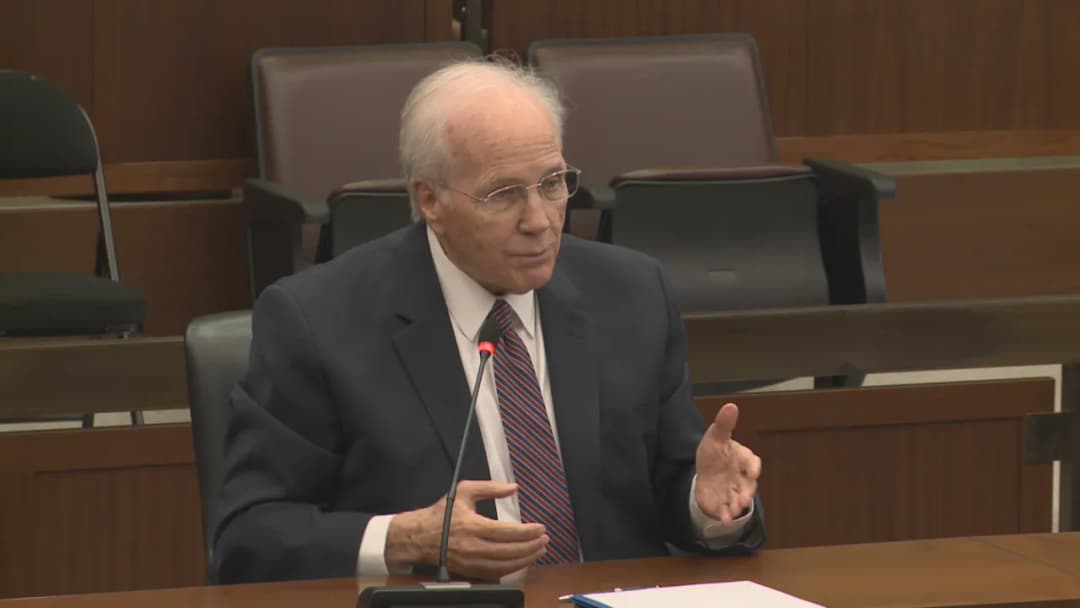
The Boston City Council Ways & Means Committee held a virtual hearing on September 28, 2026, at 10:04 AM to consider four dockets (Nos. 1671–1674) that would transfer a total of $3,318,987 from the FY27 Reserve for Collective Bargaining to the Boston Police Department budget. The funds are needed to cover FY27 cost items—including a 2% base wage increase effective July 2025—under collective bargaining agreements with the Boston Police Detectives Benevolent Society (BPDBS) and its Superior Officers Unit (BPDBS-SO). The contracts expired on June 30, 2026, but their terms continue during negotiations. Budget Director Jim Williamson presented the administration's request. Discussion Items - Budget Director Williamson explained that the four dockets are a budgetary correction: the wage increases were approved by the Council in May 2026 and are already being paid, but the FY27 police department budget must be adjusted to reflect the cost. The contracts cover 278 detectives (BPDBS) and 127 superior detectives (BPDBS-SO). - Councilor Flynn raised concerns about police officer staffing, 16-hour work days, and health and wellness programs. He stated that the city is not supporting officers adequately and that the Council had voted down his $500,000 amendment for police health and wellness during the budget process. He urged that the police unions should have been invited as panelists. - Councilor Murphy noted that the department is budgeted for 283 detectives but has only 238–241, and asked about a delayed class of 25 detectives originally expected in September 2026. She also advocated for respecting union leadership and requested that union President Bob Griffin be allowed to speak. - Councilor Fitzgerald provided staffing numbers from HR: as of August 26, 2026, there are 1,423 patrolmen, 2,050 total sworn officers including command staff, and 241 detectives. He asked about the timeline for contract negotiations and the cost of health screenings. - Chair Weber clarified that the hearing was intended to be a follow-up to the May vote, not a new debate on the contract, but allowed union testimony when Councilors insisted. Public Comments & Testimony - Bob Griffin, President of the Boston Police Detectives Benevolent Society (invited by Councilor Murphy): Griffin stated that there are approximately 238–241 detectives against a budgeted 283, a shortage of nearly 50 compared to five or six years ago. He explained that caseloads are higher due to technological advances (AI, video, cell phone data) and that detectives are often ordered into uniform to supplement patrol, causing them to set aside their investigative work. On health and wellness, Griffin said the union raises about $50,000 through fundraising and spends another $60,000 from its own coffers annually for health screenings—the city contributes nothing. He cited Dr. Hamrock’s statistic that first responders have their first heart attack at age 48 on average versus 68 for the general public, underscoring the life-saving value of these scans. Griffin expressed support for the 2% wage increases and noted that both detective contracts expired July 1, 2026, with negotiations ongoing. - No other public testimony was offered. Key Outcomes - No vote was taken. Chair Weber stated he would seek answers to Councilors’ questions (staffing numbers, class dates, health and wellness funding) and bring the dockets to a vote at the next City Council meeting (potentially Wednesday, September 30, 2026) or hold them for an additional week if more information is needed. - Councilor Flynn placed on the record that the Council had previously voted down his amendment for $500,000 in police health and wellness funding, and he called on colleagues to show courage in supporting officers. - The hearing was adjourned at approximately 11:00 AM.

PUBLIC SAFETY 58% · BUDGET EQUITY ANALYSIS 17% · PROCEDURAL 8% · MENTAL HEALTH AWARENESS 8%
32
SEP 25, 2026 · BOSTON, MASSACHUSETTS · CITY COUNCIL
Boston City Council Hearing on Termination of Haitian TPS and City Response - September 25, 2026

This hearing, convened by the City Council’s Committee on Civil Rights, examined the impact of the Supreme Court’s June 25, 2026 ruling that upheld the termination of Temporary Protected Status (TPS) for Haiti, which took effect on July 27, 2026. The council heard from city officials and community organizations about the resulting crisis in Boston, including housing instability, job loss, legal service gaps, and severe mental health distress. The discussion focused on assessing the city’s response and identifying additional resources needed. Public Comments & Testimony - Gitale Mosadat, a journalist and activist, described the dire situation in Haiti—most areas controlled by gangs, homes destroyed, and a woman deported and killed within two days. She urged the city to slow ICE enforcement and called on elected officials to support the community. - Wilson Lewis, CEO of ITIA Haiti, highlighted that TPS holders who lost jobs are being exploited (e.g., working for $4/hour) and forced into survival sex work. He asked the city to fund training programs and improve outreach to connect immigrants with existing services, and noted the broader impact on sponsoring families like his own. Discussion Items - Councillor Ruthzee Louijeune opened by describing the cascading crises: loss of work authorization, evictions, a six-month backlog at the Macy legal hotline, and declining Haitian student enrollment in Boston Public Schools. She noted that the bipartisan TPS extension bill (S. 4814) passed the House and called for more legal aid and mental health support. - Councillor Julia Mejia emphasized the need for funding, staffing, and interdepartmental coordination. She shared that her office hired a Haitian liaison and called for innovation, such as using public spaces for shelter and engaging landlords with empty units. - Courtney White, Interim Executive Director of the Mayor’s Office of Immigrant Advancement (MOYA), provided updated data: an estimated 5,790 Haitians in Boston were covered by TPS, impacting 1,800 children and over 8,300 other family members. She outlined ongoing city efforts: legal aid grants (5th round, funding expected in November), weaving well-being mental health grants, twice-monthly free immigration consultations, know-your-rights campaigns, and partnerships with the housing and health departments. White acknowledged that the legal system is stretched, with consultations serving 35-40 people per session and demand exceeding capacity. - Maroni Mentor, Political Director of MIRA, reported that MIRA has served 180 Haitian individuals but has 308 cases on a waiting list. He called for increased city investment in legal services, community outreach, worker protection, and preparation for broader economic consequences. - Dr. Gabo, from the Immigrant Family Services Institute (IFSI), shared harrowing stories: a man who said “there is no life inside me,” a pregnant woman who drank bleach, and a family afraid to go to the hospital. She stressed that all TPS holders lost their status, and many now face eviction, hunger, and deepening depression. She urged the city to think outside the box—using BCYF centers, engaging law firms and universities, and funding DOJ accreditation for non-lawyer advocates. - Brian Kankan, Executive Director of the Institute for Justice and Democracy in Haiti, provided context about the national strategy: the House-passed discharge petition (led by Rep. Presley) demonstrated that political will can shift. He identified three Democratic senators who have not co-sponsored S. 4814 (Baldwin, Peters, Kelly) and urged councillors to leverage connections with city councils in states with Republican senators (e.g., Maine, Ohio) to apply pressure. He noted that Haiti remains extremely dangerous—over 10,000 killed by gangs in 2026, 1.5 million displaced—and the U.S. must stop arming gangs and support a legitimate Haitian government. - Councillor Weber asked how private citizens can help. White and Dr. Gabo suggested volunteering with MOYA or IFSI, donating to community organizations, and raising awareness among law firms and universities. Kankan added that businesses dependent on Haitian labor should advocate publicly. - Councillor Flynn, arriving late, expressed support and asked about the economic impact on workers. Dr. Gabo confirmed that many are too afraid to go to work or have already lost their jobs, leading to cascading financial and health crises. Key Outcomes - The hearing concluded with a commitment to continue advocacy for S. 4814 to reinstate TPS for Haiti. Councillors will join a national day of action calling on senators to co-sponsor the bill. - MOYA will work with the Massachusetts Black Lawyers Association and other pro bono legal networks to address the shortage of immigration attorneys and explore DOJ accreditation programs. - The council will follow up with the Office of Housing and the state about additional resources for housing stability, especially for families falling out of the Home Base program. - Councillor Culpepper closed by emphasizing the economic contributions of immigrants and the moral imperative to act, noting that Mattapan now resembles a “sundown town” due to fear. The hearing was adjourned with a call for public engagement and continued pressure on federal policymakers.

IMMIGRATION 66% · PUBLIC HEALTH 9% · MENTAL HEALTH AWARENESS 6% · PUBLIC SAFETY 5%
33
SEP 24, 2026 · BOSTON, MASSACHUSETTS · CITY COUNCIL
Boston City Council Hearing on Blackstone Pool Status and Repairs - September 24, 2026

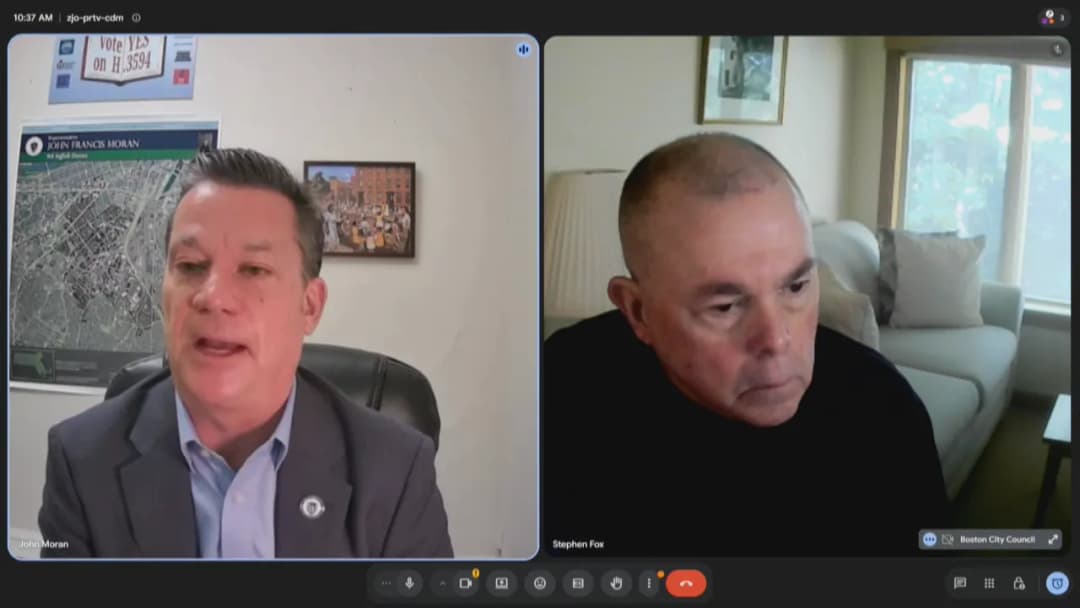
This hearing on Docket 1335, sponsored by Councillors Flynn, Fitzgerald, and Culpepper, addressed the prolonged closure of the Blackstone Community Center pool in the South End. No representatives from the Boston Public Schools (BPS), Boston Centers for Youth & Families (BCYF), or the Mayor's office attended despite invitations. Community leaders and advocates testified about the pool's importance as a racial justice and public safety issue, the lack of public facilities in the South End, and the need for an independent engineering study to determine repairs. The committee committed to rescheduling a community-based hearing and continuing advocacy for funding. Public Comments & Testimony - Jonathan Alves, President of the Washington Harrison Neighborhood Association, expressed disappointment at the empty chamber and the administration's absence. He highlighted that the indoor pool could serve year-round and that its closure disproportionately affects low-income families of color who cannot afford private swim lessons. He called for prioritization of the pool and noted that many kids he spoke with have never been to the beach due to lack of swim skills. - Steve Fox, Chair of the South End Forum, described the South End as a "public facility desert" – the library has been closed for three years, and the Blackstone Community Center itself is in disrepair (e.g., heating issues). He noted that the pool has been closed for nearly three decades and that the community has had to seek alternatives like the YMCA and Sheraton pool. - Representative John Moran (State Rep, 9th Suffolk) emphasized the mental and physical health benefits of the pool, especially for children from low-income households. He supported bolstering the Friends of Blackstone School and suggested leveraging resources from the South End Village Academy. - Several letters were read into the record by Councillor Flynn, including from Vanessa Calderon Rosado (EBA/Villa Victoria), Christina Lopez (South End Village Academy), Friends of Blackstone School, and Carolyn Fascato (Soccer Unity Project). All letters stressed the pool's role in equity, public health, youth development, and water safety, and called for immediate funding and repairs. Discussion Items - Councillor Flynn provided history: the Blackstone School and pool serve a diverse, low-income community including Ruth Barkley Apartments, Villa Victoria, Cathedral Housing, and Castle Square. He framed the closure as a racial justice issue, noting that 16 of 18 BCYF pools reopened in summer 2026 except Blackstone and Mirabella. He stated that a full renovation would take years and that an independent engineering study is needed to assess repair feasibility. - Councillor Murphy (Chair) shared data on capital budget breakdowns: the FY24-28 plan had $2M for Blackstone pool, but the FY26-30 revised table showed zero planned for FY25-26. He questioned why seasonal outdoor pools were prioritized over this year-round indoor facility and noted no public reopening date or itemized repair estimate exists. - Councillor Fitzgerald expressed support and noted similar pool issues at the Murphy School in Dorchester. - Councillor Warrell arrived late and expressed support, reminding that budget season is approaching and that staffing as well as infrastructure must be considered. - The administration's absence was repeatedly criticized. Councillor Flynn noted that a BPS/Red Sox event at the school was scheduled the same day as the hearing, creating a conflict that frustrated residents. Key Outcomes - No votes were taken. The hearing was informational. - Committee will keep docket open and reschedule a community hearing at the Blackstone School in the evening (likely November 2026) to allow broader public participation and compel administration attendance. - Councillor Flynn and the panel committed to continued advocacy, with Flynn stating he will not accept the pool remaining closed and will push for budget funding. - The need for an independent engineering study was reaffirmed; no official study has been publicly released.

PUBLIC EDUCATION 33% · PARKS AND RECREATION 22% · PUBLIC HEALTH 13% · RACIAL EQUITY 10%
34
SEP 24, 2026 · BOSTON, MASSACHUSETTS · CITY COUNCIL
Public Improvement Commission Hearing Summary - September 24, 2026

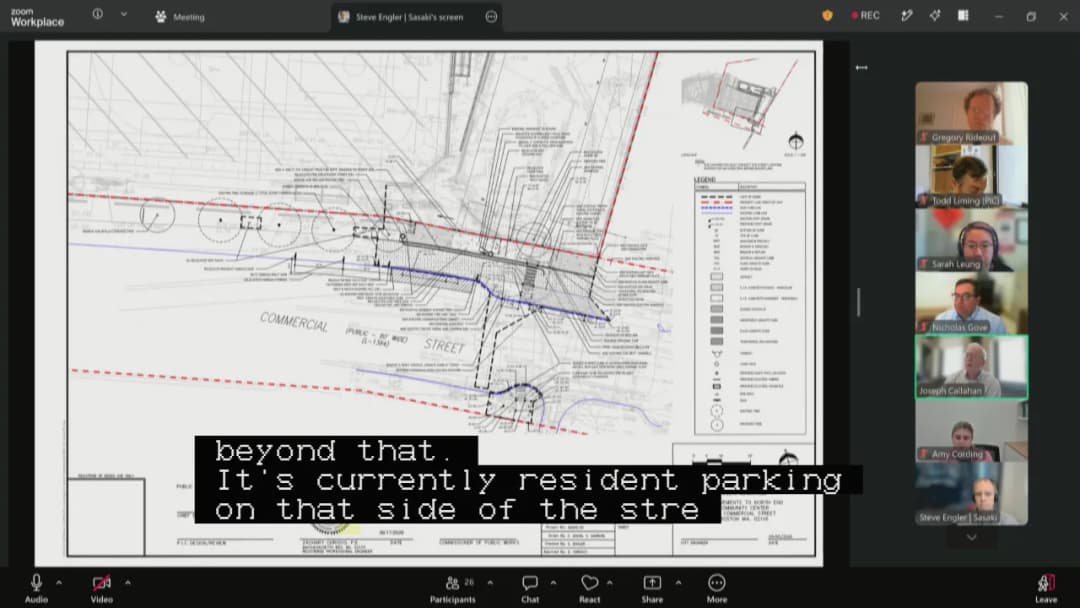
The Public Improvement Commission convened on September 24, 2026, with a full quorum, at the recorded meeting time of 15:00 UTC (the agenda listed 10:00 AM). The Commission approved the previous meeting's minutes, unanimously approved four public hearing petitions related to work on Fullerton Street and 545 Center Street, and discussed two new-business presentations scheduled to return on October 8, 2026. No public testimony was offered during the meeting. Consent Calendar - No formal consent calendar was listed. As a routine action, the Commission unanimously approved the minutes of the September 3, 2026 PIC meeting; no edits or public comments were offered. Public Hearings - Fullerton Street, Boston Proper - widening/relocation and highway easement: The Commission approved a petition by ARE-MA Region Number 87 Tenant LLC for widening and relocation of right-of-way lines on Fullerton Street and acceptance of a highway easement near 201 Brookline Avenue, as shown on a plan dated August 26, 2026. John Moser of VHB, the project civil engineer, said the proposal was a continuation of and modification to approved 2019 plans. Motion passed by unanimous voice vote. - Fullerton Street, Boston Proper - pedestrian easement: The Commission approved a related petition by the same applicant for acceptance of a pedestrian easement adjacent to Fullerton Street, on the southwesterly side of 201 Brookline Avenue, as shown on a plan dated August 26, 2026. Moser described it as an amended and restated easement from the 2019 approved plan, with an additional pedestrian easement on the west side. Motion passed unanimously. - Fullerton Street, Boston Proper - specific repairs: The Commission approved a petition by ARE-MA Region Number 87 Tenant LLC for curb relocation, sidewalk reconstruction, structural soil, new and relocated pedestrian ramps, specialty pavements, street lighting infrastructure, street trees, planters, landscaping, irrigation infrastructure, and driveway curb cuts, shown on two sheets dated September 1, 2026. Moser noted coordination with Boston Street Lighting, the Disabilities Commission, and the Boston Transportation Department, including a new mid-block crossing and short-term parking. Motion passed unanimously. - 545 Center Street (Forbes Building) - specific repairs: The Commission approved a petition by 545 Center Street LLC for curb, sidewalk, and pedestrian ramp construction, new and relocated specialty pavement, street lighting infrastructure, driveway curb cuts, and a bus shelter along Center Street and VFW Parkway; plans were dated August 2026 and comprised five sheets. Carla Chaffee of Nixon Peabody, for the applicant, said the work is part of a substantial rehabilitation of 147 affordable units in Jamaica Plain, with BPDA board approval from September 2023. Chris Odney of NICH Engineering described an approximately eight-foot-wide concrete sidewalk, an MBTA-coordinated bus shelter, a new street light, retention of compliant ramps, and reconstruction of one existing reciprocal ramp at the intersection as a point of transition because the sidewalk runs into the side of the building. PIC staff relayed Planning Department comments received the previous afternoon: a missing section of curb along Beauford Road should be replaced; care should be taken where resin-bound aggregate meets the private grass area so the sidewalk surface does not fail; and a rolled-curb detail at the private trees should be added before final mylars. A commissioner asked the team to coordinate with the Streets Cabinet on accessibility compliance for grades once the survey is available. Motion passed unanimously. New Business - 471 Commercial Street, Boston Proper - North End Community Center specific repairs: Gregory Rideau of the Public Facilities Department introduced a petition by the City of Boston Public Facilities Department, describing it as a high-priority project for the North End Community Center, with property management and Boston Centers for Youth and Families. Steve Engler of Sasaki presented the streetscape scope. The proposal includes reconstruction of a non-compliant curb ramp at the Foster Street/Commercial Street intersection, closure of an existing curb cut to the former Mirabella pool/splash pad parking area with a 20-foot mountable curb while preserving fire access, a reconstructed curb ramp, detectable warning panels, pavement markings for the grade-separated bike path crossing, restoration of signals if affected, a new 20-foot-wide fire lane on the west side formed by mountable curb, and two reserved spaces for drop-off and BCYF staff van/pool maintenance use in a stretch currently resident parking. The plan also includes in-kind reconstruction of the asphalt bike path, standard concrete sidewalk with heavy-duty concrete at fire lanes, trapezoidal delineators between sidewalk and bike path as requested by the Disabilities Commission, relocation of a light pole and a fire department street box/pull station, and replacement of two removed trees (one dead oak and one small Chinese elm relocated by the city) with new trees. No changes to the right-of-way are proposed beyond curb work and closing the driveway curb cut. In response to a commissioner, Engler said the fire lane is needed because the building is long and hemmed in by the Coast Guard and the ball fields, and the configuration allows fire truck access around the building. The chair indicated the project would return on October 8, 2026. - 90 Allendale Street, West Roxbury - specific repairs: Attorney John Pugini presented on behalf of the applicant, with project engineer Jim DeCullo, for work arising from an approved eight-unit residential development. The petition involves reconstruction of about 225 linear feet of sidewalk and reduction of a curb cut. Pugini said the existing stamped concrete sidewalk presents as brick and is proposed to be replaced with regular flat Portland-cement concrete, which would not match the existing condition; he initially described the curb-cut reduction as being from 24 to 22 feet. DeCullo described the site as an existing single-family residence served by a 12.5-foot-wide driveway on a steep grade, to be replaced by eight units served by a 22-foot-wide common driveway. He said the currently 26-foot-wide curb cut would be moved east and reduced to 22 feet, replacing a 35-foot section from the existing curb-cut opening to the proposed new opening with smooth concrete. The transcript therefore contains a conflict between the attorney's 24-to-22-foot and the engineer's 26-to-22-foot description of the curb-cut reduction. A commissioner asked that the plans be updated to reflect the material change; the proponent agreed. PIC staff asked the applicant to coordinate with the Office of Neighborhood Services to notify the neighborhood that the existing imprinted asphalt sidewalk, as characterized by staff, would be replaced with cement concrete. The proponent said October 8, 2026 would provide enough time for revisions. - 8 Burning Street, Roxbury - earth retention license: The Commission took up a petition listed under the name Demark Doyne, but the proponent was not online. The chair said the matter would have to be attempted again in a few weeks. Key Outcomes - The Commission unanimously approved the September 3, 2026 minutes. - The Commission unanimously approved all four public hearing petitions: the Fullerton Street widening/relocation and highway easement, the Fullerton pedestrian easement, the Fullerton specific repairs, and the 545 Center Street specific repairs. - Project teams for 545 Center Street and 90 Allendale Street were directed to incorporate staff comments and update plans before returning; 471 Commercial Street and 90 Allendale Street are expected back on October 8, 2026. - The earth retention license petition for 8 Burning Street was not heard because the proponent was absent; it is expected to be rescheduled in a few weeks. - The Commission adjourned by unanimous voice vote.

ENGINEERING AND INFRASTRUCTURE 79% · PUBLIC WORKS 10% · PROCEDURAL 6% · PUBLIC SAFETY 5%
35
SEP 23, 2026 · BOSTON, MASSACHUSETTS · CITY COUNCIL
Boston City Council Meeting Summary – September 23, 2026

The Boston City Council convened at 12:10 PM on Wednesday, September 23, 2026, in the Christopher A. Iannella Chamber, Council President Breadon presiding. The meeting included approval of the previous minutes, reading of communications from the Mayor, reports of public officers, and numerous motions, orders, and resolutions covering a wide range of city issues. The session adjourned at 4:37 PM. Consent Calendar - The consent agenda, containing 13 ceremonial resolutions (Items 1814–1826) recognizing community members, events, and observances, was adopted without objection. - Also adopted under consent were personnel orders for temporary appointments (Items 1812–1813). Public Comments & Testimony - Ayana Peoples (representing the Bisexual Resource Center) addressed the Council during the recognition of Bisexuality+ Visibility Day. She presented data on the needs of the Bi+ community, including higher rates of suicide attempts, intimate partner violence, and substance use disorders compared to other LGBTQ+ groups, and called for increased investment (at least $15,000 annually), inclusion of Bi+ voices in resource decisions, and action on housing affordability and immigrant safety. She noted that 58.2% of the LGBTQIA+ population identifies as Bi+, yet Bi+ organizations receive only about 1% of dedicated LGBTQ+ funding. Discussion Items - Community Preservation Fund Appropriation (Docket 1771): Councilor Pepén moved to suspend the rules and pass an order appropriating $47,265,655 to the FY27 Community Preservation Fund (including $7.6 million in unused prior‑year revenues). Councilor Flynn expressed a desire for a hearing but voted in favor. The order passed 13‑0. - Grant Orders (Dockets 1772–1790, 1085, 1394–1397, 1678, 1680): Numerous grant acceptances were considered. Most were either suspended and passed (with roll‑call votes, typically 12–0 to 13–0) or referred to the appropriate committees. Key grants included $1.36 million for broadband expansion at BHA campuses; $750,000 for regional intelligence center technology; $500,000 for immigrant advancement programs; workforce development grants; climate resiliency funding; mental health co‑response; and grants for tax preparation, youth employment, and violence data collection. Several grants were passed after committee reports. - Surveillance Oversight Ordinance (Docket 1796): Councilor Weber introduced an ordinance to amend Chapter 16, Section 63, closing loopholes in the 2021 surveillance ordinance regarding vendor changes, exigent circumstances, and reporting requirements. Councilors Coletta Zapata and Santana spoke in support. The matter was referred to the Committee on Government Operations. - Reestablishing Allston Post Office (Docket 1338): Councilor Durkin reported on a September 21 hearing in the PILOT committee. The Allston community has lacked a post office for nearly seven years; USPS withdrew from a lease agreement that had been fully negotiated. The hearing included testimony from residents, a developer, union representatives, and the Allston Civic Association. The docket remains in committee. - Synthetic Kratom Ordinance (Docket 1414): Councilor Coletta Zapata reported on a three‑hour hearing on an ordinance banning synthetic mitragynine (7‑OH). The committee will hold working sessions to refine the language, awaiting federal DEA action and the outcome of a legal challenge to the state’s emergency scheduling. The matter remains in the Committee on Government Operations. - BPS Private Fundraising Transparency (Docket 0406): Councilor Mejia summarized a September 22 hearing where advocates and a former NYC councilmember highlighted disparities in private fundraising among Boston Public Schools. The administration expressed openness to a public dashboard. The matter remains in the Committee on Education. - Hearing Orders: - Roadway Safety (1797): Councilor Murphy introduced a hearing order on unauthorized traffic alterations and safety at Tremont and Parker Streets, following a fatal crash and resident‑installed changes. Co‑sponsors Culpepper and Flynn spoke; the matter was referred to Planning, Development & Transportation. - Package Theft (1798): Councilor Durkin’s hearing order addresses package theft as a quality‑of‑life issue, calling for better data, reporting incentives (e.g., 311 integration), and enforcement. Referred to Public Safety & Criminal Justice. - 21st Century ROAD to Housing Act (1799): Councilor Culpepper’s order explores opportunities under the new federal housing law. Referred to Housing & Community Development. - LGBTQ+ Veterans (1800): Councilor Flynn’s order seeks to support veterans who received Other Than Honorable discharges due to anti‑LGBTQ+ policies. Referred to Veterans & Military Affairs. - Stretch Energy Code Review (1801): Councilor Durkin’s hearing order on the specialized stretch energy code at the three‑year review threshold sparked a procedural debate. After an initial referral to the Environment Committee, an appeal of the chair’s decision failed, but a subsequent motion to reconsider succeeded, and the chair’s decision was overturned (10–3), sending the matter to Planning, Development & Transportation. - Civics Education Requirement (1802): Councilor Flynn proposed a hearing on a full‑year civics course as a BPS graduation requirement, noting that only 50% of 8th graders met expectations on the MCAS civics assessment. Referred to Education. - Health Disparities in Communities of Color (1803): Councilor Flynn’s hearing order examines persistent gaps in life expectancy and health outcomes; the life expectancy gap between Black and other Bostonians widened from 3.3 to 6.6 years between 2013 and 2024. Referred to Public Health. - Rodent Action Plan (1804): Councilor Breadon’s order calls for an update on the 2024 Rodent Action Plan, noting high‑priority neighborhoods (Allston‑Brighton and Ward 3) have not received targeted interventions. Referred to City Services. - Resolutions: - Election Day Voter Registration (1805): Councilor Louijeune introduced a resolution supporting Ballot Question 4. A hearing is scheduled for the following week; no vote was taken. Referred to Elections. - BMC Resident Physicians (1806): The Council voted 13‑0 to adopt a resolution supporting Boston Medical Center resident physicians (Committee of Interns and Residents) in their contract negotiations. - Codman Square Merchants Association (1807): Adopted 13‑0, supporting revival of the merchants association to strengthen the local business district. - Commission to Hire/Retain Police Officers (1808): Councilor Flynn’s resolution prompted questions from Councilors Coletta Zapata and Mejia about scope and process. An objection was raised, so the matter was referred to Public Safety. - Housing Tax Abatements (1809): Councilor Pepén introduced a resolution supporting the mayor’s proposal for temporary tax abatements on four stalled housing projects (1,400 units). The resolution was sent to the Housing Committee for a hearing without a vote. - Dolly Parton Day (1810): Adopted (voice vote), naming September 25 “9 to 5 Day” in honor of Dolly Parton’s legacy. - Italian American Heritage Month (1811): Adopted (voice vote), recognizing October as Italian American Heritage Month. - Late‑Filed Resolution (Gov. Healy’s Gas Tax Suspension): Councilor Culpepper introduced a resolution supporting a two‑month suspension of the state’s 24‑cent/gallon gas tax, with revenue replaced by fair‑share surtax funds. After debate (Councilor Durkan opposed), the resolution passed 9–1–3. Key Outcomes - Community Preservation Fund: Docket 1771 passed 13‑0, transferring $47.3 million (including $7.6 million in unused prior funds) to FY27. - Grant Votes: Most grant orders were passed with 12–0 or 13‑0 votes; a few (e.g., Docket 1784 on Bloomberg Youth Climate Action Fund) were first reconsidered and then passed unanimously. - Surveillance Ordinance: Referred to Government Operations after introduction and co‑sponsor additions. - Synthetic Kratom Ordinance: Remains in committee; further working sessions planned. - Stretch Energy Code Committee Assignment: After two procedural votes, docket 1801 was reassigned from Environmental Justice to Planning, Development & Transportation (final vote 10‑3 to overturn chair’s decision). - Resolutions Adopted: BMC resident physicians (13‑0), Codman Square Merchants (13‑0), Dolly Parton Day (voice vote), Italian American Heritage Month (voice vote), gas tax suspension (9‑1‑3). - Resolutions Referred/No Vote: Election Day voter registration (referred to committee with hearing upcoming), police commission (objection, referred), housing tax abatements (referred to committee for hearing). - Hearing Orders Sent to Committees: Roadway safety (Planning & Transportation), package theft (Public Safety), 21st Century ROAD to Housing Act (Housing), LGBTQ+ veterans (Veterans), civics education (Education), health disparities (Public Health), rodent action plan (City Services). - Motions and Personnel Orders: Approved as read. - Consent Agenda: All 13 ceremonial resolutions adopted. - Adjournment: The meeting adjourned at 4:37 PM in memory of several deceased community members, with the next regular meeting scheduled for September 30, 2026 at 12:00 PM.

PROCEDURAL 23% · PUBLIC SAFETY 12% · PUBLIC HEALTH 7% · HOUSING 6%
36
SEP 23, 2026 · BOSTON, MASSACHUSETTS · CITY COUNCIL
Disability Commission Advisory Board Meeting – September 23, 2026

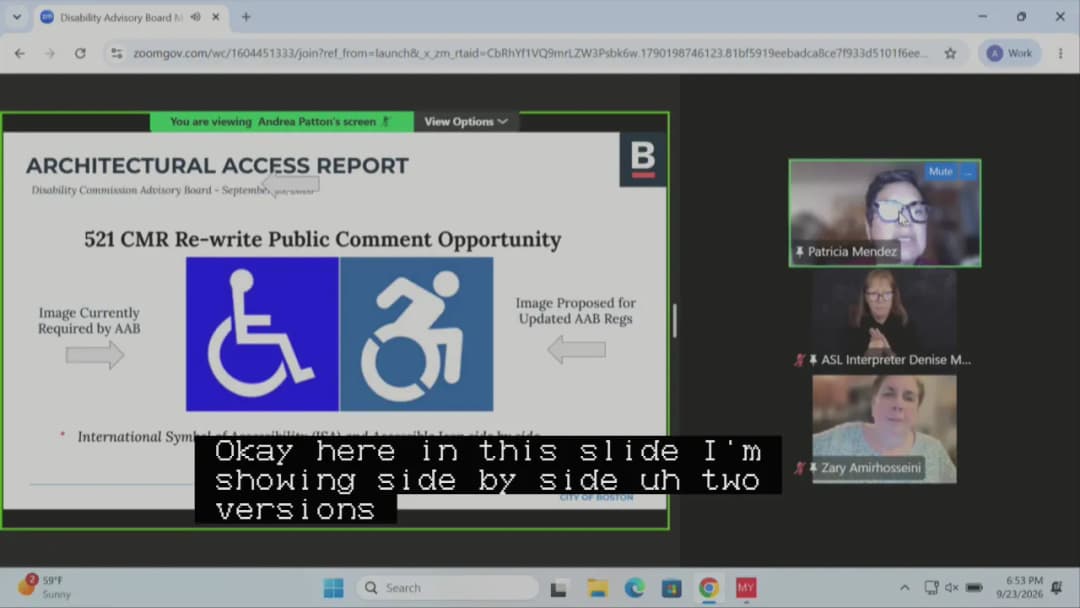
The Disability Commission Advisory Board met on Wednesday, September 23, 2026, at 10:45 AM ET. The meeting included a presentation on the Blue Hill Avenue reconstruction project, updates from the Commissioner on civic engagement and accessible voting, an architectural access report on the international symbol for accessibility, and a new board member spotlight feature. Consent Calendar - Approval of Minutes: The board approved the minutes from the September meeting by voice vote with no opposition or abstentions. Public Comments & Testimony - A public attendee asked whether there has been discussion about replacing the wheelchair symbol with one that represents a broader range of disabilities. The Commissioner responded that the current symbol is widely recognized and that no perfect alternative exists, but acknowledged ongoing community dialogue. Discussion Items - Blue Hill Avenue Project Presentation: Matthew Peterson from the Boston Transportation Department presented an update on the complete reconstruction of Blue Hill Avenue from Warren Street/Grove Hall to River Street/Mattapan. The project has secured over $124 million in funding. Key design elements include new concrete sidewalks, 179 net new street trees, replacement of the entire lighting system (13% of budget), center-median bus platforms with 10–11 foot widths, and a two-way bike path on the west side. Peterson highlighted that the design will replace inaccessible brick sidewalks, add accessible parking spaces, and ensure all bus stop crossings have APS systems with tactile and audible cues. The board raised concerns about bus islands for blind pedestrians, bike path crossings for those with sensory disabilities, and construction accessibility. Peterson invited ongoing feedback via email and promised future engagement. - Commissioner’s Report (Kristen McCosh): Updates included: - Remaining Open Streets events on October 4 (Brighton) and October 18 (Roslindale); Newbury Street open October 11 with a possible December date. - Civic Engagement Day for people with disabilities scheduled for September 30 (6–7:30 PM) on Zoom, with participatory budgeting, planning, and arts/culture departments attending. - National Disability Employment Awareness Month webinars: a live “Pathways to Employment” webinar and pre-recorded sessions on financial empowerment, housing, and workers’ rights. - Accessible voting: General election November 3; early voting, vote-by-mail, and AutoMark options available. A vendor fair on assistive voting equipment is postponed until after the election. - Autonomous vehicles: The city has formed a working group including disability stakeholders; Carl Richardson will represent the board. - Architectural Access Report (Patricia Mendez): The Massachusetts Architectural Access Board is considering updating the International Symbol of Accessibility (ISA) to a dynamic version. The comment period has been extended to October 27/28, 2026. The board discussed uniformity concerns and the need for color contrast. The advisory board may submit a recommendation at its next meeting (October 21). - Board Member Spotlight: Vice Chair Jerry Boyd shared his advocacy background with the Boston Center for Independent Living (BCIL), work on the MBTA’s Riders’ Transportation Access Group (RTAG), and focus on accessible voting and the White Stadium project. - Other Business: - Olivia noted that the Boston Housing Authority’s new ButterflyMX door entry system is inaccessible to blind visitors; the issue has been raised with the administrator. - Wes Ireland raised accessibility gaps between Summer Street and A Street; the Commissioner explained that an elevator was originally planned but delayed due to the pandemic, and a temporary elevator exists in a neighboring building. The office will work on better signage. Key Outcomes - Blue Hill Avenue Project: The board will send written feedback and coordinate with the Transportation Department on design details (bike path crossings, bus platform wayfinding, construction detours). Matthew Peterson committed to returning for future updates. - Architectural Access Symbol: The board will discuss and possibly vote on a recommendation at the October 21 meeting; individual members may also submit comments to AAB. - Construction Accessibility: The city will compile examples of good/bad construction detours to inform contractor requirements. - Next Meeting: Scheduled for October 21, 2026. - Adjournment: The meeting adjourned by motion and second at approximately 8:00 PM.

DISABILITY RIGHTS 24% · PUBLIC ENGAGEMENT 18% · PUBLIC TRANSPORTATION 14% · ACCESSIBILITY 13%
37
SEP 22, 2026 · BOSTON, MASSACHUSETTS · CITY COUNCIL
Boston City Council Education Committee Hearing on Private Fundraising Transparency (September 22, 2026)

This Education Committee hearing, chaired by Councilor Julia Mejia, examined Docket 0406, an order for a hearing on transparency and accountability of private fundraising in Boston Public Schools. The hearing featured three panels: experts, advocates, and administration. Key experts included former New York City Councilor Mark Traeger, who detailed NYC's Local Law 171 requiring annual public disclosure of PTA fundraising, and Travis Marshall, a BPS parent and member of Quality Schools for Every Student (Quest), who presented disparities in private fundraising across BPS. Advocates James Noonan (professor and BPS parent) and Keo McLay (executive director of the Boston Education Justice Alliance) highlighted racial and economic inequities. Administration representatives David Bloom (BPS Chief of Finance), Dr. Ann Clark (development officer), and Pamela Lines (BEDF executive director) discussed current district efforts, including the Opportunity Index, the Partnerships Fund, and fiscal sponsorship. The hearing concluded with public testimony from two parents and a commitment to form a working group to develop transparency measures, modeled on NYC's approach. Public Comments & Testimony - Sarah Delore, a Quest member and parent of two BPS students, described her experience at two elementary schools: at the Mildred Ave K-8 School in Mattapan, the SPC struggled to raise $1,200 at most over three years, while at the Sarah Roberts School in Roslindale, one annual fundraiser netted over $25,000. She called for a public dashboard to track fundraising data. - Mary Battenfield, a parent of three BPS graduates, presented a 2021 Quest analysis showing that for every 1% increase in Black and Hispanic student enrollment, private fundraising decreased by an average of $35 per student. She noted that NYC’s transparency alone did not solve inequity and urged a community conversation about solutions. Discussion Items - Councilor Julia Mejia opened the hearing, stating that BPS budget increases have not ensured equitable resources; some schools receive hundreds of thousands more in private donations than others. She asked how the district considers private dollars in funding. - Expert Mark Traeger (former NYC Council) testified that Local Law 171 (enacted 2020) required the NYC DOE to annually publish school-based PTA fundraising data. He emphasized that the law did not cap or redistribute funds but revealed that over 370 of 1,600 NYC schools reported no PTA activity, while 24 PTAs raised over $1 million each. This data helped shift budget conversations to provide 100% fair student funding and increased support for parent engagement. - Travis Marshall (Quest) noted that a 2018 Ernst & Young audit first showed wide disparities: some elementary schools raised over $500,000 and high schools millions, while others sold candy bars for a few hundred dollars. He recommended a district-wide dashboard updated annually, similar to NYC. - Advocate James Noonan (Salem State) cited ProPublica data showing Boston Latin School Association net assets of $97 million (2025) versus the Friends of Nathan Hale School’s $9,000 (2022). He argued that without transparency, policymakers cannot assess true resource gaps. - Advocate Keo McLay (BEJIA) stated that private fundraising is an equity and opportunity gap issue; BPS already uses an Opportunity Index and equity impact analysis, which should be applied to private fundraising. - Administration: David Bloom noted that 105 schools receive a total of $7 million annually through the Partnerships Fund, allocated using the Opportunity Index to mitigate disparities. He acknowledged that Boston Latin School is the lowest-funded per pupil but offsets with private fundraising. Dr. Clark highlighted the Principal Partners program matching school needs with business partners. Pamela Lines (BEDF) described her organization’s fiscal sponsorship for all 109 BPS schools; in school year 2026, BEDF supported 224 fund managers and processed 5,000 transactions. She also launched Equity Boston to bring resources to under-resourced schools. Key Outcomes - No formal votes were taken; the hearing was informational. - Councilor Mejia committed to forming a working group with Quest, BEDF, and BPS to develop a public dashboard for private fundraising data, modeled on NYC’s Local Law 171. - Councilor Culpepper requested a copy of the NYC legislation for review. - David Bloom expressed openness to making current data public but cited timing and reporting issues from 501c3s. He agreed to explore creating an advisory committee for dashboard design. - The administration noted that currently 42 BPS schools have or had affiliated 501c3 organizations, though several may be defunct; the district does not systematically collect financial data from these entities. - Councilor Mejia invited Quest and other advocates to help shape the transparency tool. - The hearing adjourned at approximately 4:15 PM.

PUBLIC EDUCATION 74% · PUBLIC ENGAGEMENT 10% · PUBLIC HEALTH 4% · RACIAL EQUITY 4%
38
SEP 22, 2026 · BOSTON, MASSACHUSETTS · CITY COUNCIL
Boston City Council Hearing on Reestablishing Allston Post Office, September 22, 2026

The Boston City Council Committee on Pilot Agreements, Institutional and Intergovernmental Relations, chaired by Councilor Sharon Durkin, held a hearing on September 22, 2026, to discuss docket 1338, an order to reestablish a post office location in Allston. The hearing was sponsored by Council President Liz Braden. The Allston neighborhood has been without a post office since December 2019 due to structural issues at the former location. Despite a 2025 commitment from USPS to relocate and reestablish a branch at 47 Harvard Avenue (a site redeveloped by Eden Properties), USPS reversed its decision in April 2026 and is now proposing permanent closure. USPS declined to attend the hearing. Councilors, union representatives, city demographers, property developers, and community members testified in support of restoring postal service. Public Comments & Testimony - Mike Dorgan, a 30-year Allston resident, argued that eliminating the post office is part of a broader effort to erase Allston's identity as a diverse, immigrant-friendly neighborhood, and noted that USPS has not released required impact studies. - Aline McAuley Meen, a 30-plus-year resident and representative of the Allston Brighton Health Collaborative, emphasized the importance of zip code 02134 for community identity and communication, calling the loss a public health issue. - Andrew Fisher, a retired attorney from Brookline, stated that the closure is part of a systematic attempt to privatize the Postal Service, and that it constitutes a breach of contract, federal statute, and the U.S. Constitution. - Wendy Schwartz, a 21-year homeowner in Allston, supported legal action and noted the tangible inconvenience of travel to distant post offices. - Arthur Downey Jr., a 25-year resident, reported over 30 package thefts since the Allston post office closed and described the difficulty of using the Brighton branch. - Written testimony from Joan Pasquale (senior with mobility issues), Miles (resident citing deteriorating social services), Marie (Brighton resident supporting Allston post office), and others was read into the record, highlighting the hardship for elderly, disabled, and non-English speaking residents. Discussion Items - Project Status and USPS Reversal: Noah Maslin of Eden Properties detailed years of collaboration with USPS to design a new post office space at 47 Harvard Ave, including signing a letter of intent in October 2023, negotiating a lease through late 2025, and incorporating USPS-provided specifications into the building's construction. He stated that USPS's claim that "no suitable alternative quarters are available" is false, as the build-out was specifically tailored to USPS requirements. - USPS Process Violations: Justin Delorier (Massachusetts Postal Workers Union) and Scott Hoppen (National Business Agent) argued that USPS has violated federal law (Postal Reorganization Act of 1970 and Postal Accountability and Enhancement Act of 2006) and its own handbooks by failing to conduct proper feasibility studies, ignoring public input requirements, and refusing to provide information to the union. They noted that USPS is weaponizing lease expirations to close post offices, and that the Allston closure is part of a pattern of degradation aimed at privatization. - Population Data: Philip Granberry and Alvaro Lima (Boston Planning Department) presented evidence that Allston's population has grown 7.2% from 2020 to 2025 (vs. citywide 2.4%), and that the 2020 census undercounted Allston by approximately 10,000 residents. They cautioned that USPS may be using outdated figures to justify closure. - Equity Concerns: Tony Isidoro (Allston Civic Association) and several councilors (Flynn, Fitzgerald, Cole-Pepper) highlighted the disproportionate impact on seniors, people with disabilities, immigrants, and small businesses. They noted that Newton, with a similar population, has 10 post offices, while Allston has none. Calls were made to treat Allston fairly and to see through USPS's "political agenda" accusations. - Council Support: Councilors Durkin, Braden, Flynn, Fitzgerald, and Cole-Pepper all expressed strong support for restoring the Allston post office, criticizing USPS for failing to attend and for breaking its promises. Councilor Cole-Pepper emphasized that the fight is not just about Allston but about defending public postal service across Boston. Key Outcomes - The hearing concluded with docket 1338 remaining in committee. No formal vote was taken. - Council President Braden announced a press conference and rally at the former Allston Post Office site (47 Harvard Ave) on October 5, 2026, at 4 p.m. - Union representatives provided a non-exhaustive list of federal laws and provisions that USPS is allegedly violating, which will be entered into the record. - Councilors pledged continued advocacy and urged USPS to reverse its decision, re-enter negotiations with Eden Properties, and honor its 2025 commitment to reestablish the Allston branch.

PUBLIC LIBRARIES 28% · PUBLIC ENGAGEMENT 24% · POSTAL SERVICE 16% · PUBLIC SAFETY 11%
39
SEP 22, 2026 · BOSTON, MASSACHUSETTS · CITY COUNCIL
Boston Zoning Board of Appeal Hearing - September 22, 2026

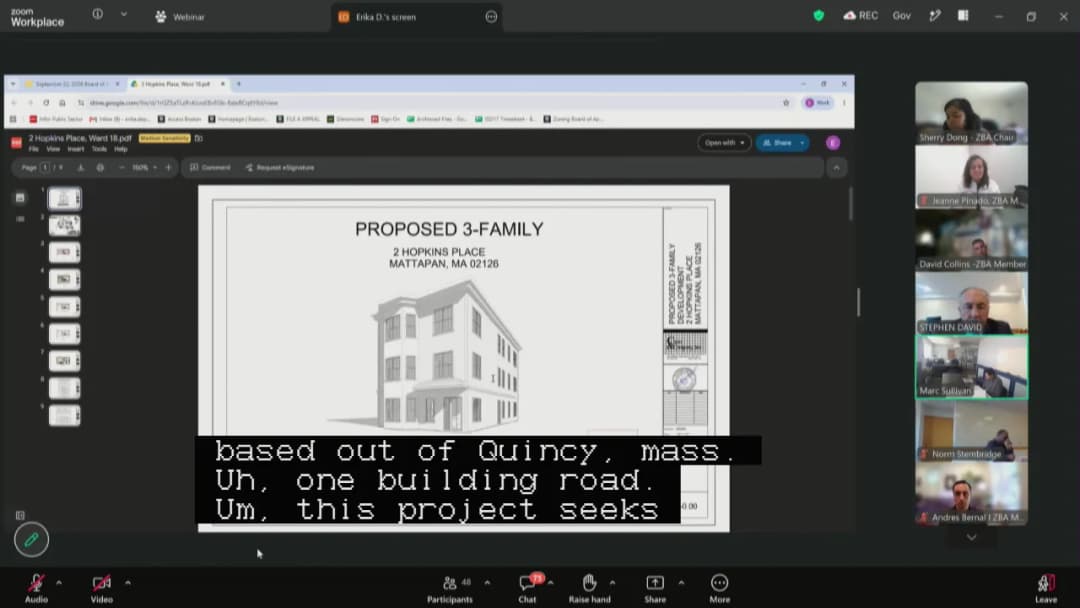
The Boston Zoning Board of Appeal (ZBA) held a virtual hearing on September 22, 2026, beginning at 9:30 AM and continuing after a 15-minute break. The board considered minutes, extensions, recommendations, and 20+ appeals, including several Article 80 large-project cases. Public testimony was heard on each case. Votes were conducted by roll call, with most motions carrying. Consent Calendar - Minutes of September 8, 2026: Approved unanimously. - Extension Requests (7 cases): Granted as a bundle after discussion on the fourth extension for 683 Columbia Road. The applicant explained the delay was due to the property being on the market; the board granted a one-year extension for that case. Motion carried. - Subcommittee Recommendations (6 cases): Five cases approved; one (1117-1125 Blue Hill Avenue) deferred to November 10, 2026. Motion carried. Public Comments & Testimony - 1200 Soldiers Field Road: Support from Councilor Braden’s office, Brighton Allston Improvement Association, and BPDA staff. No opposition noted. - 98 Mount Hope Street: Support from Councilor Wells’ office; four letters of support. No opposition. - 1519-1521 Hyde Park Avenue: Support from Hyde Park Neighborhood Association. No opposition. - 1702 Hyde Park Avenue: Opposition from Readville Watch neighborhood association citing insufficient parking. Support from Carpenters union. Applicant addressed parking ratio (34 spaces for 68 units) as transit-oriented. - 12 Pendil Road: One letter of opposition regarding parking. Applicant noted one space per unit. - 157 Granite Avenue: Opposition from Cedar Grove Neighborhood Association over height, density, parking, and traffic. Support from a former civic association president. - 372 Neponset Ave: Community concerns about scale and loss of restaurant parking. Popes Hill Neighborhood Association supported after changes (reduced units, removed roof deck). Support from Councilor Fitzgerald’s office. - 24 Mount Everett Street: Mixed community feedback; supporters cited proximity to bus lines and IDP units; opponents cited density and parking. Initial community meeting described as “terrible” by applicant. Revised project reduced units to 16 with 1:1 parking. - 85 Parker Hill Ave: Strong opposition from Mission Hill Neighborhood Housing Services and 53-year resident citing insufficient parking, undergraduate student housing concerns, and lack of hardship. Support from Carpenters union and nearby property owner. BPDA approved after changes (8 three-bedroom IDP units). - 1511-1525 Washington Street: Over 140 letters of support from parents, neighbors, and businesses. Three objections from community groups citing loss of commercial space and parking. Washington Harrison Neighborhood Association opposed permanent change of use. South End Business Alliance opposed but school supporters argued for conditional use. - 86 Walworth Street: 68-signature petition and 22 letters of opposition; 7 support letters. Abutters cited size, height, loss of green space, parking, and character. Speaker at hearing noted “erosion of public trust.” - 121 River Street: Five letters of opposition originally; after revisions, River Street Civic Association supported. One abutter (41 Idaho) continued opposition citing safety and code issues. - 425 East 3rd Street: Opposition from Gate of Heaven Neighborhood Association and direct abutters citing safety, easement concerns, and lack of setback. Support from one unit owner with parking easement. - 336 E Street: No opposition; Councilor Flynn supported. Discussion Items - 1200 Soldiers Field Road (Article 80): New 6-story, 58-unit residential building with 10 affordable units, 37 parking spaces. Variances for FAR, height, rear yard, conditional use for ground floor residential. BPDA approved July 16, 2026. Board approved without additional conditions. - 25A Alabama Street: Proposal for two-family house lacking detailed site plan and violation chart. Deferred to November 10, 2026, without prejudice for applicant to submit missing information. - 98 Mount Hope Street: New two-family dwelling with garage on undersized lot (2,297 sq ft). Ten variances including FAR, setbacks, open space. Approved with proviso to submit site plan and tree canopy details to planning department. - 1519-1521 Hyde Park Avenue: Attic renovation and vertical addition. Variances for roof structure and existing footprint. Approved. - 1702 Hyde Park Avenue (Article 80): Revised 7-story mixed-use building with 68 condos (12 affordable), 34 parking spaces, 2,500 sq ft retail. BPDA approved April 16, 2026. Board approved; discussion on tree planting (5 trees) and transit-oriented parking. - 12 Pendil Road: 6 units, 6 parking spaces on vacant lot. Variances for FAR, height, side yard. Approved with proviso for design review of curb cut dimensions. - 157 Granite Avenue (Article 80): 5-story, 24-unit condominium on ledge-ridden lot. Variances for FAR, height, rear yard, side yard, parking (25 spaces vs 34 required). Board approved despite opposition. - 367-371 & 372 Neponset Ave (companion): 372 approval allowed 10 rental units (2 affordable), 13 garage parking. Variance for FAR, height, side yard, parking, and removal of restaurant parking at 367-371. Approved. - 24 Mount Everett Street (Article 80): Renovation and addition of 10 units (total 16) in existing 6-family building. Reduced from 4 stories to 3 after community feedback. 1:1 parking. Approved. - 655 Morton Street: Legalization of fourth unit in three-decker (basement apartment). Four variances for use, parking, non-conforming extension. Approved after applicant addressed maintenance concerns. - 85 Parker Hill Ave (Article 80): Renovation of Landmark on Longwood into 103 units (8 three-bedroom IDP family units), 11 parking spaces. Variances for use and parking. BPDA approved June 16, 2026. Approved despite opposition. - 1511-1525 Washington Street: Conditional use permit for kindergarten/elementary school (South End Village Academy) in former Croft School space. 80 students enrolled. Over 140 letters of support. Concern from some about loss of commercial corridor. Board approved conditional use permit. - 795 Saratoga Street: Addition and roof deck on existing 3-unit building. Variances for roof structure and side yard. Approved with design review focus on shed dormers. - 248-250 Everett Street: Renovation of single-family to 4 units. Minimal variances. Jeffries Point Neighborhood Association voted 7-6 in support. Approved. - 21 Gatua Street: New single-family home on undersized lot. Variances for lot size, FAR, setbacks. West Roxbury Neighborhood Council supported. Approved. - 86 Walworth Street: New 6-unit building (all 3-bedrooms), 8 parking spaces on large lot. Variances for use, FAR, height, open space, parking. Draft rezoning for street supports higher density. Approved with BPDA design review for parking maneuverability. Vote: 5-2 in favor. - 105 Pleasant View Street: Conversion to two-family by adding second story. Additional use variance discovered post-approval. Approved. - 1 Hopkins Place: 6-unit building, 8 parking spaces. Variances for use, front-yard parking. Approved with BPDA design review for open space and parking layout. - 2 Hopkins Place: 3 units, 4 parking spaces. Variances for use, front-yard parking. Approved with proviso to reduce lot coverage and improve parking layout (no front-yard parking). - 121 River Street: ADU (accessory dwelling unit) conversion of barn. Six variances. Community process revised; River Street Civic Association supported. Deferred to November 10, 2026, for further community engagement after request from Councilor Wells’ office citing strong opposition. - 57 Mount Vernon Street: Curb cut approval for existing driveway. Community process conducted; Columbia Seven Hill Civic Association supported (6-2-1). Approved. - 425 East 3rd Street: 4-story, 2-unit building over existing surface parking. Variances for lot area, height, setbacks, open space, parking design. Approved; board accepted planning department’s recommendation to remove one parking space for better maneuverability. - 336 E Street: Legalization of existing second-story rear deck. Two variances (open space, setback) resolved. Approved. Key Outcomes - Deferrals: - 196 Maverick Street deferred to October 6, 2026. - 25A Alabama Street deferred to November 10, 2026. - 121 River Street deferred to November 10, 2026. - Withdrawal: 213-21 Bowden Street withdrawn. - Approvals (20 cases): All motions carried, including several with provisos for design review or further community engagement. - Vote Highlights: - 86 Walworth Street passed 5-2 (two no votes from Turner and Chair Wells). - 425 East 3rd Street approved despite opposition from Gate of Heaven Neighborhood Association and abutters. - Next Meeting: October 6, 2026, at 9:30 AM.

ZONING BOARD OF APPEALS 54% · AFFORDABLE HOUSING 13% · PUBLIC ENGAGEMENT 9% · COMMUNITY ENGAGEMENT 8%
40
SEP 21, 2026 · BOSTON, MASSACHUSETTS · CITY COUNCIL
Boston City Council Committee Hearing on Docket #1414 to Ban Synthetic Kratom Compounds, September 21, 2026

The Boston City Council Committee on Government Operations, chaired by Councillor Gabriela Coletta Zapata, held a hearing on September 21, 2026, to consider Docket 1414, an ordinance amending Chapter 16 of the City of Boston Code to prohibit the sale and use of synthetic mitragynine and 7-hydroxymitragynine (7-OH) and other dangerous chemical compounds. The ordinance, co-sponsored by Councillors John Fitzgerald and Ed Flynn, seeks to ban synthetic and highly concentrated Kratom products while allowing natural, unadulterated Kratom for adults over 21. The hearing included testimony from the Boston Public Health Commission, public witnesses, and an expert panel. Public Comments & Testimony - Many public witnesses spoke in favor of the ordinance, emphasizing the distinction between natural leaf Kratom and synthetic 7-OH products. Consumers shared personal success stories of using natural Kratom to manage chronic pain, anxiety, and opioid addiction, and urged the council to regulate rather than ban natural Kratom. - Witnesses such as Ashley Davidson, Misty Brown, Chad Corral, and Shannon described how natural Kratom improved their quality of life and helped them avoid or recover from addiction. - Some witnesses, including Susan Abbard and Holly Trueville, spoke in favor of a full ban on all Kratom products, citing the deaths of their children from Kratom-related toxicity. They argued that natural Kratom is also dangerous and that the distinction is misleading. - Ryan Whitney, a pro se litigant against the state ban, pleaded with councillors to use their influence to stop the state's temporary ban, which he said has criminalized him and many others. Discussion Items - Councillor Fitzgerald explained that the state's emergency ban on all Kratom products, issued on August 27, 2026, expires in one year. He wants Boston to have its own ordinance ready to take effect immediately when the state ban ends to prevent a loophole. - PJ McCann, Deputy Commissioner for Policy and Planning at the Boston Public Health Commission, testified that the commission supports the state's order and has notified retailers. He noted that data on Kratom-related harms is limited but that synthesized products are particularly dangerous. - Councillors discussed enforcement challenges, including testing for potency, the need for labeling, and the possibility of a trial period. They also considered how the ordinance could be structured to align with federal and state actions. - Expert panel members Sheldon Bradshaw (former FDA chief counsel), Mac Haddow (American Kratom Association), and Matthew Lowe (Global Kratom Coalition) all supported the ordinance, emphasizing that synthetic 7-OH is not natural Kratom and should be banned. They recommended a delayed effective date to align with expected DEA scheduling of 7-OH. - Councillor Culpepper questioned the evidence on both sides and the practicality of enforcing a distinction; Councilor Flynn read a letter he had written to the Boston Public Health Commission requesting a ban on all Kratom in March 2026. Key Outcomes - The committee will hold a working session to refine the ordinance language, likely incorporating a contingent framework that would trigger the ordinance when the state ban expires or is overturned. - Consideration will be given to including provisions for labeling, testing, and age restrictions, and to ensuring enforcement is feasible. - The chair indicated that the committee will work with the lead sponsor to integrate feedback from both proponents of natural Kratom and those advocating for a full ban. The hearing on Docket 1414 was adjourned without a vote; further action is pending.

CANNABIS REGULATION 56% · PUBLIC HEALTH 36% · PUBLIC SAFETY 3% · LEGAL SERVICES 2%
OPENPUBLICA · PUBLIC MEETING INDEXUPDATED DAILY · openpublica.com