Browse by city
Date range
Search help

Search titles, summaries, topics and stored transcripts together. Keywords may match separately; put the whole query in double quotes for a phrase. Matching follows word analysis, so punctuation is not exact. Both dates are included. Documents are not searched.

SHOWING 31–40 ENTRIES
31
MAR 2, 2026 · DAVIS, CALIFORNIA · CITY COUNCIL & PLANNING COMMISSION
City of Davis, UC Davis, and Yolo County Annual Public Meeting – March 2, 2026

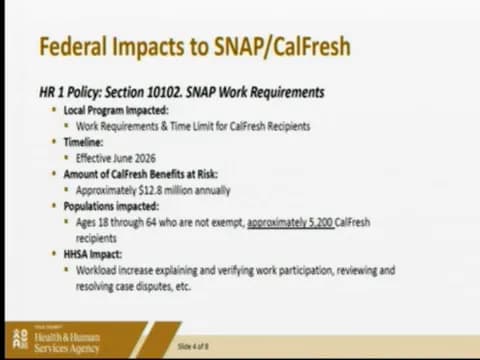
This special meeting brought together the Davis City Council, UC Davis representatives, and Yolo County supervisors for their annual collaborative update. The meeting focused on housing progress, the Hate-Free Together initiative, Picnic Day planning, and the impacts of federal HR1/CalFresh changes. Mayor Donna Neville opened by highlighting strengthened partnerships amid federal funding threats and policy shifts. UC Davis Chancellor Gary May (via recorded remarks) and county supervisors Lucas Frerichs and Sheila Allen emphasized collaboration and shared challenges. Public Comments & Testimony - Dorda Jensen criticized the lack of advance materials for the Hate-Free Together update, noting difficulty commenting without prior information. She expressed disappointment with the initiative's organization and referenced a friend's excluded participation. - Beth Bourne also complained about no advance report for Hate-Free Together. She claimed discrimination against conservative viewpoints, stating that displaying a sign reading “Trump is saving girls’ sports” led to tire slashing and protests at her home. She argued that opposing transgender medical treatments for children is not hate. - Liam (a transgender speaker) apologized to Beth Bourne and the council, stating that transgender individuals are not threats and should not be a divisive issue. - Chad Paglisi (ASUCD Housing and Transportation Advocacy Committee) praised recent housing progress but urged more affordable housing near campus and improved active transportation infrastructure. He noted that many students and staff still struggle with high rents and commute. - Henry Rosenbach (UC Davis student and student advisor to the City of Davis Transportation Commission) thanked the council for student participation opportunities and urged continued partnership. Discussion Items UC Davis and City of Davis Housing Update - UC Davis reported over 6,000 new beds built since 2018, exceeding MOU commitments. Blended vacancy rate rose from 1% to 3.5%; average rent decreased 1.8%. Enrollment remained flat (36,000 LRDP enrollment). On-campus housing occupancy: 92% of first-year freshmen, 47% of first-year transfers, 33% of returning residents. Future projects include the Segundo Infill (500 beds, opening fall 2027) and additional apartments for graduate students and families. Affordability is supported through design, below-market rents, and financial aid subsidies. - City of Davis Community Development Director Sherry Metzger reported 657 multifamily units completed since 2023. Two new projects on Research Park Drive (200 and 160 units) came online in summer 2025. No new multifamily projects started this year due to financing challenges. Two large planned developments are pending voter approval: Village Farms (1,800 units) and Willow Grove (approx. 1,200 units). Supervisor Frerichs requested that the city’s housing dashboard denote that half of the units in process are subject to voter approval. Hate-Free Together Update - Laura Galindo (Yolo County) and Anthony Volkar (Yolo County Office of Education) presented a draft three-year strategic plan based on community focus groups and a summit. Five priority areas: resource mapping, training, community events, regular engagement, and sustainable funding. The initiative aims to expand countywide, including to other cities and school districts. Executive committee is exploring alternative name options. Implementation is contingent on staffing and funding. Supervisor Allen expressed preference for a positive name focusing on inclusion rather than “hate.” Picnic Day Update - Kelly Fong Rivas (UC Davis) and Jenny Tan (City of Davis) outlined preparations for the 112th Picnic Day (April 18, 2026, theme: “The Journey Home, Destination Davis”). UC Davis will increase fire and police staffing, mobilize emergency operations centers (EOC), and share a unified message via lawn signs and a Picnic Day Pledge. City plans include doubling police presence (from 50 to 100 officers via mutual aid), full prohibition on special event permits that day, safety enhancement zones with doubled fines from Friday evening to Sunday morning, and extensive public communications (mailers, social media, lawn signs). The city council will vote on the safety enhancement zones the following day. HR1/CalFresh Update - Monica Morales and Tico Zendejas (Yolo County Health and Human Services) described major impacts of federal HR1 changes. In Yolo County, 28,000 residents (9,000 in Davis) rely on CalFresh; $68 million in benefits entered the county in FY 24-25. Key changes: work requirements (ABAWD) effective June 2026 affecting about 5,200 recipients ($12.8 million benefits at risk). Refugees, asylum seekers, trafficking survivors will lose eligibility starting April 2026 (about 420 individuals). Administrative cost sharing shifts: federal share drops from 50% to 0%, state increases to 52.5%, county share rises from 15% to 22.5%, costing the county an estimated $4 million annually if caseload remains flat. State may partially offset these costs in the May budget revision. Advocacy letters from the city and university were requested. County staff are embedded on campus at the Student Basic Needs Center, aiding student enrollment. Key Outcomes - The agenda was approved unanimously. - Housing: UC Davis and city will continue monitoring enrollment and market conditions to guide future housing. City housing dashboard to note voter-dependent projects per supervisor request. - Hate-Free Together: Strategic plan will undergo further public outreach and finalization. Implementation depends on future funding. - Picnic Day: Davis City Council to vote on safety enhancement zones the next day. Shared EOC coordination between city and campus established. Unified pledge and messaging to be deployed. - CalFresh: County supervisors expressed commitment to maintaining current benefit levels, though county budget discussions are pending. The city and UC Davis were asked to send support letters for state-level advocacy to mitigate administrative burden and process barriers. The city’s role may also include distributing informational materials in public lobbies and facilitating presentations to school district and community organizations. - The meeting adjourned at approximately 7:45 PM.
COMMUNITY ENGAGEMENT 26% · FOOD SECURITY 20% · HOUSING 19% · AFFORDABLE HOUSING 10%
32
FEB 17, 2026 · DAVIS, CALIFORNIA · CITY COUNCIL & PLANNING COMMISSION
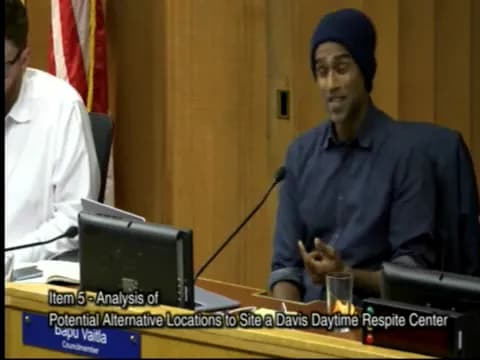
Davis City Council Meeting: Feb 17, 2026 - Respite Center, Noise Ordinance, Musk Divestment

The Davis City Council convened on Tuesday, February 17, 2026, at 2:45 PM for a lengthy meeting addressing several high-profile items. The agenda included a ceremonial recognition of outgoing Fire Chief Joseph Tenney and swearing-in of new Chief Paul Swanson, public comments on multiple topics, and three major discussion items: proposed changes to the noise and skateboarding ordinances, the future of the daytime respite center, and a resolution to divest from Elon Musk-controlled companies. The meeting ran late into the evening. Consent Calendar - The consent calendar was approved unanimously with the exception of Item 4B (municipal code amendments), which was pulled for separate discussion. Ceremonial Presentation - Fire Chief Joseph Tenney was honored for 26 years of service to Davis and 38 total in fire service. Highlights included hiring and mentoring over 45 personnel, leading response to major wildfires, and procuring a new ladder truck. He was presented with a proclamation. - Paul Swanson was sworn in as the new fire chief by his son Evan. Public Comments & Testimony - Numerous residents spoke during general public comment and on specific agenda items. - Noise Ordinance (Item 4B): Several speakers urged the council to retain objective decibel limits, arguing that proposed changes to "ordinary and reasonable" standards would weaken enforcement. Speakers cited past sound studies (e.g., pickleball, skytrack) and expressed concern over lack of public process. - Skateboarding Prohibition: Multiple commenters opposed expanding the skateboarding ban to all city parks, stating it unfairly targets youth, causes minimal damage, and that the existing skate park is inadequate. They requested delaying the change until park improvements are made. - Street Vendor Raid: Several speakers condemned a recent police and health department raid on a street vendor, calling it hypocritical given the city's sanctuary city discussions. They urged amends and a cooperative approach. - Respite Center (Item 5): Many residents from the Davis Manor neighborhood called for relocating the center, citing safety issues, broken promises about temporary status, and impacts on quality of life. Others advocated for keeping services, emphasizing the need for low-barrier access. A neighborhood group presented a criteria framework for decision-making. - Musk Divestment (Item 6): Supporters argued for ethical investment, citing labor violations and democratic accountability. One speaker raised concerns about emergency services reliance on Starlink. Discussion Items - Item 4B – Municipal Code Amendments (Noise & Skateboarding): Staff explained the intent was to clarify existing rules. After extensive public comment, council voted to: - Remove proposed changes to Chapter 24 (noise ordinance) and bring them back as a separate item after further public engagement. - Remove Section 27.02.060A (prohibiting skateboarding in all city parks) and also remove the prohibition on skateboarding on hard surfaces (cement or asphalt) when not in use for their primary purpose. The rest of the package was approved. - Item 5 – Daytime Respite Center Alternatives: Staff presented a SWOT analysis of four potential sites and operational options. The council subcommittee (Mayor Neville and Vice Mayor Partida) recommended continuing current operations at 530 L Street through June 30, 2026, while developing a transition plan that includes transportation to Forth and Hope shelter in Woodland and a concept note for a new location (likely Fifth Street). Council debated services scope and locations. The motion passed, directing staff to also consult with Yolo County on using 600 A Street. - Item 6 – Resolution to End Engagement with Musk-Controlled Companies: The city manager noted Davis has no current holdings in Musk companies but uses Starlink for emergency backup. Council adopted the resolution with an amendment adding an exception for emergency operations. The resolution also encourages CalPERS to divest from Musk stocks. Passed 4-0-1 (Councilmember Dios abstained). Key Outcomes - Consent Calendar: Approved with Item 4B removed. - Noise Ordinance: Changes to Chapter 24 were pulled from the package and will return at a future meeting with public engagement. - Skateboarding: Section 27.02.060A removed; prohibition on skateboarding on hard courts (cement/asphalt) when not in use removed; rest of code amendments approved. - Respite Center: Operations at 530 L Street to continue through June 30, 2026. Staff directed to develop a transition plan with transportation to Forth and Hope and a detailed concept for a Fifth Street location, including neighborhood engagement. County consultation on 600 A Street also requested. - Musk Divestment: Resolution adopted (4-0-1) with emergency operations exception. Note: The street vendor ordinance was removed from the agenda and will be taken up later. The meeting included a brief break and a tense exchange between a council member and a public commenter regarding anti-Semitism.

HOMELESSNESS 34% · PROCEDURAL 13% · PUBLIC SAFETY 10% · PUBLIC ENGAGEMENT 10%
33
FEB 3, 2026 · DAVIS, CALIFORNIA · CITY COUNCIL & PLANNING COMMISSION
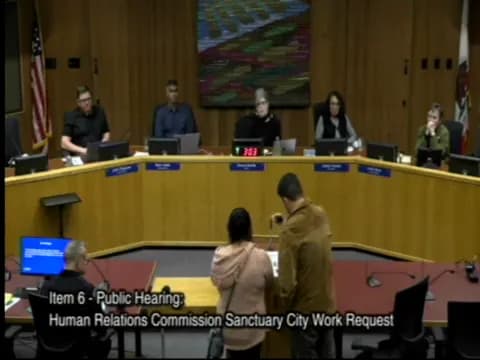
Davis City Council February 3, 2026: Sanctuary City, General Plan, and Consent Calendar Decisions

The Davis City Council held a lengthy meeting on February 3, 2026, addressing a wide range of topics including ceremonial proclamations, consent calendar items with significant public debate, a major presentation on the general plan update's land use and mobility concept, and a pivotal discussion on advancing a sanctuary city ordinance. The meeting also adjusted council liaison assignments and dissolved several subcommittees. Consent Calendar - Approved consent calendar with item 4C pulled for separate discussion. - Item 4C (Safe Parking Program): Council voted unanimously to amend the ordinance to increase the maximum number of parking spaces from five to eight per site, keeping the maximum stay at 12 hours. The motion passed 5-0. - Item 4D (Noise Ordinance Cleanup): City Manager Dunstan clarified that a provision prohibiting skateboarding in parks was intended to allow skateboarding as transportation on shared-use paths. The item remained on consent. - Item 4G (Minnesota v. NOM Amicus Brief): Mayor Neville explained the city missed the initial filing deadline but authorized her to sign on to subsequent appellate briefs in the lawsuit challenging ICE actions. Despite public opposition, the item was approved on consent. - Item 4A (Tree Maintenance Contract): Councilmember Partita asked about inspection logs and cost variance; staff explained the contract is for tree care services only and the cost range was clarified. Public Comments & Testimony - Many speakers addressed the sanctuary city issue, urging a binding ordinance instead of a resolution. Speakers shared personal fears, experiences with ICE, and called for protections including prohibiting ICE staging on city property and mask-wearing by agents. - Several residents spoke against the village farms project and the general plan's northeast development concept, citing floodplain, landfill proximity, agricultural land loss, and infrastructure costs. - Noise ordinance cleanup (4D) was criticized as not routine; speakers asked for it to be pulled for full analysis. - Other comments covered the MAPA recommendations, safe parking expansion, tree program concerns, and support for the Japanese American incarceration commemoration event. Discussion Items - Item 5: General Plan Update - Task 9 Land Use and Mobility Concept Plan: Staff presented a preliminary concept for northeast Davis growth, assuming 9,000 housing units and 7,500 jobs, with a roadway network costing $800 million to $1 billion. Public comment criticized the low density, floodplain issues, landfill exclusion zone, and lack of commission input. Council members expressed preference for higher density, infill-first approach, and asked that the concept be sent to the Transportation Commission and Planning Commission for further study. No formal action taken. - Item 6: Sanctuary City Ordinance Work Request: Assistant City Manager Stakowitz clarified the HRC had requested authority to draft an ordinance. Council discussed the legal limits as a general law city and the existing SB 54 protections. After extensive public comment, Councilmember Vitla moved to direct staff to work with the HRC to draft a sanctuary ordinance, memorializing SB 54 and exploring additional protections, with urgency. The motion passed unanimously. Council also discussed separate planning for emergency response to ICE actions. Key Outcomes - Approved consent calendar as amended (item 4C modified). - Directed staff to prepare a sanctuary city ordinance, using HRC's existing work, to be presented to HRC in February and back to Council in March. - Directed that the general plan land use/mobility concept be sent to Transportation Commission and Planning Commission for feedback. - Adjusted council liaison assignments: Councilmember Partita to Human Relations Commission (regular), Councilmember Dio to Police Accountability Commission (regular), Councilmember Chapman to DJUSD Two-by-Two, and dissolved several subcommittees while creating a new economic development subcommittee focused on the strategic plan. - Adjourned in memory of Bill Wagman, Renee Good, and Alex Pretti.

IMMIGRATION POLICY 23% · PROCEDURAL 14% · GENERAL PLAN UPDATE 9% · PUBLIC ENGAGEMENT 8%
34
JAN 27, 2026 · DAVIS, CALIFORNIA · CITY COUNCIL & PLANNING COMMISSION
Davis City Council Meeting January 27, 2026: Village Farms Public Hearing & Actions

This special meeting of the Davis City Council was convened primarily for a public hearing on the Village Farms Davis project, a proposed 1,800-unit development on approximately 497 acres north of Covell Boulevard. The Council considered certification of the Final Environmental Impact Report (EIR), a General Plan Amendment, prezone, Development Agreement, and ballot measures for a June 2, 2026 special election. The meeting lasted from 6:30 p.m. to approximately 12:30 a.m. and included extensive public comment, staff presentations, and Council deliberation. Consent Calendar - The agenda was approved unanimously. - City Manager brief announcements: annual beautification event on January 24, 2026, and Children's Summer Activity Fair on February 18, 2026. Public Comments & Testimony - Over 50 members of the public spoke or submitted recorded comments. Positions were divided: - Supporters (including Davis Chamber of Commerce, UC Davis students, parents, local business owners) argued the project would provide much-needed housing, increase school enrollment, support local businesses, and create homeownership opportunities. Many urged the Council to certify the EIR and place the project on the June ballot. - Opponents (including hydrologists, planning commissioners, neighborhood association leaders) cited concerns about flood risks, toxic contamination from the adjacent old landfill (PFAS, dioxins), inadequate EIR analysis, traffic congestion, and the project's size. Many asked the Council to reject the EIR or delay the vote for a smaller footprint. - Key themes included the need for a grade-separated crossing over Covell Boulevard, the desire for deed-restricted for-sale affordable housing, and the risk of rushing the project to meet a developer timeline. Discussion Items - Village Farms Davis Project Overview: Staff presented the project details, including 1,800 dwelling units (maximum), 280 low/very-low income units, 80 moderate-income units, $6 million cash contribution, and various sustainability and transportation commitments. - EIR Certification: The Council debated the adequacy of the EIR, particularly regarding the cannery loop roundabout connection and flood/toxics mitigation. The EIR was certified with a finding of overriding considerations. - Development Agreement (DA) Amendments: The Council made several amendments to the DA exhibits: - Exhibit E (Affordable Housing): Added language specifying that the 100 baseline affordable units shall be lower-income, and that the city shall strive for all 80 moderate-income units to be deed-restricted for sale. - Exhibit G (Transportation): Added a provision limiting any cannery loop connection to pedestrians, bicyclists, and emergency vehicles only. - Exhibit F (Sustainability): Broadened the carbon offset purchase preference to include local partner agencies (e.g., Yolo Transportation District). - Edible landscaping encouragement added to community benefits exhibit. - Baseline Project Features: Added a requirement for a feasibility study for a grade-separated crossing over Covell Boulevard connecting to Oak Tree Plaza. - Zoning/Preliminary Planned Development: Prohibited turf in front yards and required a solar capacity study to optimize solar generation. - Cannery Loop: Council voted 3-2 to restrict vehicular access; emergency vehicles, bikes, and pedestrians only. Key Outcomes - EIR Certification: Approved (5-0) – Resolution certifying the Final EIR, adopting CEQA findings, a statement of overriding considerations, and a mitigation monitoring plan. - General Plan Amendment & Baseline Project Features: Approved with amendments (5-0). - Prezone & Preliminary Planned Development: Approved with amendments (5-0). - Development Agreement: Approved with amendments (5-0). - Special Election: Approved (5-0) – Resolution calling a special election on June 2, 2026, for a ballot measure to modify land use designations and establish baseline project features. - Election Consolidation: Approved (5-0) – Resolution requesting Yolo County Board of Supervisors to consolidate the special election with the statewide primary. - Future Items: The MAP (Muslim, Arab, Palestinian) report was removed from the February 3, 2026 agenda; staff directed to develop a process for its presentation within 30 days.

AFFORDABLE HOUSING 18% · HOUSING 15% · PROCEDURAL 11% · ENVIRONMENTAL PROTECTION 11%
35
JAN 20, 2026 · DAVIS, CALIFORNIA · CITY COUNCIL & PLANNING COMMISSION
Davis City Council Special Meeting – January 20, 2026: Proclamation for St. James Catholic Church and Consent Calendar

The Davis City Council held a special meeting on January 20, 2026, at 6:00 p.m. The meeting featured a ceremonial proclamation recognizing St. James Catholic Church on its 150-year anniversary and concluded with the unanimous approval of the consent calendar, which included an emergency contract for water well rehabilitation. Ceremonial Presentation - Proclamation Recognizing St. James Catholic Church on Its 150th Year Anniversary: Mayor Donna Neville read the proclamation, noting that 2025 marks the 150th anniversary of St. James Catholic Church. She highlighted the church's contributions to the history, welfare, education, and inspiration of Davis residents. Deacon Joe O'Donnell accepted the proclamation on behalf of the parish and school, thanking the community for its enduring support and expressing hope for continued partnership. Public Comments & Testimony - No members of the public offered comments on the proclamation or the consent calendar. Consent Calendar - Item 3A: Emergency Cleaning and Rehabilitation of Potable Water Well 33: The Council considered staff's recommendation to reaffirm the emergency nature of the work and continue the construction contract with Eaton Drilling without public bidding. The item was approved as part of the consent calendar. Key Outcomes - Consent Calendar Approval: Vice Mayor Gloria Partida made a motion to approve the consent calendar, seconded by Councilmember Bapu Vaitla. The motion passed unanimously (5-0). - The special meeting was adjourned immediately after the vote.

PROCEDURAL 54% · COMMUNITY ENGAGEMENT 46%
36
JAN 13, 2026 · DAVIS, CALIFORNIA · CITY COUNCIL & PLANNING COMMISSION
Davis City Council Workshop on Village Farms Affordable Housing Plan – January 13, 2026

This special workshop focused exclusively on proposed revisions to the Affordable Housing Project Individualized Plan (Exhibit E) for the Village Farms Davis project, a major infill development. The Council discussed alternative delivery mechanisms, baseline project features, and developer obligations. No final decision was made; direction was provided to staff to incorporate specific changes into the Development Agreement and baseline features for the January 20 final action meeting. Consent Calendar - No items were pulled; the consent calendar was approved unanimously without discussion. Public Comments & Testimony - Teresa (last name unclear): Claimed unlawful eviction from her senior home and alleged misconduct by a commissioner. Urged council to address the issue. - Rachel Swanson (former council member, representing applicant team): Emphasized the project's benefits ($1.24 billion tax base, 1,147 new students, 47-acre habitat protection) and highlighted the improved affordable housing offer: 16 acres (finished lot value $24 million) plus $6 million cash, totaling over $30 million for 360 deed-restricted units (280 low/very low-income, 80 moderate-income). - Georgina Valencia (Planning Commission member, speaking personally): Criticized the lack of deed-restricted for-sale affordable homes in the plan, calling it a "real miss" and urging council to include such units. - Benton Bucher (UC Davis student): Expressed disappointment at only market-rate and rental affordable options; urged for-sale affordable units to help young families. - Ken Wagstaff (former opponent of Covell Village): Supported the affordable housing direction, citing David Thompson's analysis and the Dos Pinos model as keys to success. - Ellen Callark (Interfaith Housing Justice Davis co-chair, speaking personally): Supported rental affordable but urged for-sale affordable deed-restricted units to address historical redlining and generational wealth gaps. - Brooke A. G (public school teacher): Strongly supported Village Farms, citing need for missing-middle housing to keep schools open; urged placing the project on the June 2026 ballot. - Dana Lambang: Expressed shock that no for-sale affordable homes are indicated in Exhibit E; urged correction before moving forward. - Brian Lowe (resident): Said it was fine not to have a for-sale requirement in baseline, allowing the market to decide. - Seha Sky: Supported the project and affordable housing plan; asked to move to ballot. - Forgotten Stewart: Supported revisions but questioned the ratio: suggested more homes affordable to 85% of residents rather than only 20%. - Rachel Falco (Planning Commission member, speaking personally): Supported maximizing affordable delivery but cautioned against placing the 100-unit requirement in baseline features due to financing uncertainties; favored keeping flexibility in the DA. Discussion Items - Staff Report (Sherri Metzker, Community Development Director): Presented the current Exhibit E (16 acres, $6 million, 360 affordable units) and the friend amendment from Dec 16 directing a subcommittee to develop trigger/alternative delivery language. The staff report included proposed trigger options: timing of land dedication, phase three building permits contingent on commencing 100 affordable units, city partnership deadline, meet-and-confer procedures, and fallback rights. Negotiations were ongoing over the sunset clause (developer proposed 10 years, city countered 15). - Council Subcommittee (Mayor Neville & Councilmember Partida): Clarified that the subcommittee did not endorse the staff report recommendations but presented them for discussion. Emphasized the goal was to lessen city burden, not increase it. - Applicant Team Presentation (Rachel Swanson): Presented two options: the December Exhibit E or the same plan plus the trigger language submitted on Jan 5. Stressed that phases 1-2 carry majority project costs and cautioned against untested triggers that could delay build-out. - Council Deliberations: - Councilmember Vaitla: Argued Exhibit E as is was "dead on arrival" because the city cannot realistically fill the $125 million+ financing gap. Supported the alternative unit delivery option with modifications: remove the sunset clause, give the city the option to retain resources (16 acres + $6M) and release permits, rather than devolving them. Insisted that the 100-unit obligation must be in baseline project features (not just DA) so voters know what they are voting on. - Councilmember Partida: Agreed with Vaitla on sunset clause removal. Wanted the 80 moderate-income units clarified as for-sale (deed-restricted) and possibly in baseline. Concerned about developer's ability to walk away from phase three after 150 permits. - Councilmember Chapman: Opposed returning to Exhibit E. Supported alternative unit delivery with modifications: no sunset clause, and suggested that the 100-unit requirement in baseline could include a council option to waive it (similar to DA flexibility). Concerned about risk of developer walking away with only 150 permits built. - Councilmember Deos: Favored flexibility, not strict baseline requirements. Open to alternative unit delivery but not committed to placing 80 for-sale units in baseline. Supported removing the sunset clause. - Mayor Neville (subcommittee member): Summarized negotiated points: developer agreed to remove sunset clause, to include city option to retain resources or shift obligation, and to reference the 100 units in baseline features. The developer requested that the trigger be after the first 150 permits in phase three (instead of before phase three) to protect project financing. Councilmember Vaitla countered that this reduces leverage. Key Outcomes - Motion 1 (regarding Development Agreement): Moved by Councilmember Partida, seconded. Directs staff to: (1) remove the sunset clause entirely; (2) no building permits for phase three until the city receives the final $3 million contribution (total $6 million); (3) no additional building permits after the first 150 permits in phase three until commencement of construction on 100 affordable units, with the city having the option to exercise after 150 permits. Passed 4-1 (Councilmember Vaitla opposed, preferring the option before any phase three permits). - Motion 2 (regarding Baseline Project Features): Moved by Councilmember Vaitla, seconded. Directs staff to include an explicit obligation in baseline features that construction of 100 affordable units must commence prior to issuance of the final 150 low-density residential (LDR) units (phase three). Passed 4-1 (Councilmember Deos opposed, favoring flexibility). - Direction to Staff: Staff will draft revised Exhibit E language incorporating these changes, to be included in the packet for the January 20 meeting. The subcommittee may continue minor negotiations regarding the timing of the city's option. - Next Steps: January 20 regular meeting will include certification of the EIR, final approval of the Development Agreement, and a resolution to place the project on the June 2026 ballot. Council agreed to start a special meeting at 6:00 p.m. on Jan 20 to handle ceremonial and consent items before the public hearing on Village Farms.

AFFORDABLE HOUSING 53% · PROCEDURAL 26% · HOUSING 13% · MISCELLANEOUS 4%
37
JAN 6, 2026 · DAVIS, CALIFORNIA · CITY COUNCIL & PLANNING COMMISSION
Davis City Council Meeting - January 6, 2026: Ceremonial Presentations, LAFCo, and Solid Waste Fee Increase Approved

The Davis City Council met on January 6, 2026, with Mayor Donna Neville presiding. Vice Mayor Gloria Partida was absent due to illness. The meeting included ceremonial swearing-in of the mayor and proclamations, public comments, a consent calendar, an informational presentation from Yolo LAFCo, and a public hearing on solid waste utility rates which resulted in approval of a rate increase. Ceremonial Presentations - Swearing-in of Mayor Donna Neville for 2026 and recognition of Vice Mayor Partida. - Proclamation honoring Bapu Vaitla for his service as Mayor in 2025. - Proclamation honoring Terry Jue for nearly 36 years of dedicated service as a senior civil engineer in Public Works. Public Comments & Testimony - Nyuan: Expressed concerns about being evicted from her mobile home, alleging fraud and asking about city resources for temporary housing. - Spear: Urged the city to resist federal policies targeting marginalized communities, citing violations of domestic and international law. - Beth Bourne: Presented a resolution criticizing outgoing Mayor Bapu Vaitla’s policies on transgender issues, free speech, and child safety; called him a bully. - (During LAFCo) Nyuan: Questioned the LAFCo map and claimed ownership of property. - (During Solid Waste hearing) Elaine Roberts Musser: Supported the rate increase but criticized the council for merging the Utilities Commission into the Fiscal Commission, eroding consumer confidence. - William Schoen: Opposed the rate increase, arguing the city extended Recology’s contract without competitive bidding and urged a competitive procurement process. - Eric Davis: Stated the increase was justified by a rate study showing an 18.8% entitlement; suggested delayed action led to a larger increase. Consent Calendar - Approved unanimously (3-0) the following routine items: - A. Construction contract for Public Works Corporation Yard Building A roof replacement. - B. Construction contract for Fire Station 32 improvements. - C. Task Order 4 for Transportation Development Impact Fee nexus study. - D. Continuing emergency contract with Eaton Drilling for cleaning Well 33. - E. Commission minutes from Human Relations Commission meetings. Discussion Items - Yolo LAFCo Presentation (Item 5): Deputy Executive Officer JD Trebec and Executive Officer Christine Crawford provided an overview of LAFCo’s role in discouraging urban sprawl, preserving open space, and efficiently providing government services. They described municipal service reviews, sphere of influence boundaries, and LAFCo’s work with Davis on annexations. Council members asked about financial ability reviews and the transparency scorecard. No action taken. - Public Hearing: Solid Waste Utility Fee Proposition 218 (Item 6): Deputy Director Adrienne Heinig and Assistant City Manager Stan Gryczko presented the need for a rate adjustment due to rising costs and a depleted reserve. They stated that 68 written protests were received, far below the 7,581 needed for a majority protest. The proposed changes included modified cart sizes and clarified billing. Staff recommended a 15% increase in 2026 and further annual increases over the following three years to maintain fund solvency. Council discussed the impact on vulnerable residents and the possibility of general fund subsidies. After public comments, the council voted to approve the resolution. - AB1234 Reporting and Long Range Calendar (Item 7): No reports of meetings attended at city expense. City Manager announced upcoming council meetings on January 13 and the following week. A public commenter noted ballot clogging issues related to Measure J. Key Outcomes - Solid Waste Fee Increase Approved (3-0): The council approved the resolution enacting modification of solid waste service fees effective February 1, 2026, with Vice Mayor Partida absent. The rate increase was adopted as recommended by staff. - Consent Calendar Approved unanimously. - Next Steps: Council requested information on increasing low-income and senior subsidies for utilities; staff will provide cost estimates. The waste hauling contract procurement process will be discussed starting August 2026. - No other formal votes were taken. Note: The exact percentage breakdown of the rate increase (e.g., 15% in 2026, then 6.5% for three years) was mentioned by a public commenter but not explicitly confirmed by staff in the transcript; staff emphasized the need to cover rising costs.

WASTE MANAGEMENT 27% · PROCEDURAL 25% · PUBLIC ENGAGEMENT 18% · LAND USE 11%
38
DEC 17, 2025 · DAVIS, CALIFORNIA · CITY COUNCIL & PLANNING COMMISSION
Davis Planning Commission Special Meeting on Village Farms – December 17, 2025

The Planning Commission held a special meeting on December 17, 2025, starting at 6:00 PM, to conduct a public hearing on the Village Farms Davis project, a proposed 1,800-unit development on 497.6 acres. After presentations from staff and the applicant, extensive public comment, and deliberation, the Commission voted to recommend that the City Council certify the Final Environmental Impact Report (EIR) and approve the associated entitlements, subject to several additional recommendations. Public Comments & Testimony - Supporters (e.g., Chris Theg, Alan Prior, Leslie Blevins, Cody Westergaard, Aaron Teague, Charlene Agatistri, Daniel Stein, Val Garrett, Luanna Villanueva, Brittany, Deanna Gallagher, Kristen, Julia Mell, Pammy Thomas, Rachel Barge, Frankie, Leslie Bullman, Greg Francis, Nick, Jamie, Michelle) argued that Davis urgently needs housing to prevent school closures, support local businesses, and provide opportunities for young families and teachers. Many emphasized that the project should go to a vote in June 2026. - Opponents (e.g., Margie Longo, Mary Ann Hernandez, Jim Flanagan, Ziv Lang, Jim Watson, John Cooper, David McLaughlin, Glenn Holstein, Lisbith Ray, Richard McCann, Rena Neyer, Trudy Learner, Katherine Keller, Matt Williams, VJ Kumar, Elizabeth Colbreth, Eileen Samets, Judy Ennis, Alan Bonnet, Dan Ray, Gene Jackman, Nadine Cronkite, Carol, Tim Hoben, Eileen) cited an incomplete EIR, flood risk, toxic contamination from the adjacent landfill and burn dump, traffic congestion, unaffordable housing, and a rushed process. Many urged the Commission not to certify the EIR and to consider a smaller footprint below Channel A. Discussion Items - Staff Presentation: Principal Planner Dara Dungworth presented the project, including changes since the October workshop (affordable housing land dedication increased to 16 acres, $6 million contribution, grade-separated crossings). Ryan Chapman addressed bike/pedestrian infrastructure. EIR consultant Nick Papani reviewed the CEQA process, significant unavoidable impacts, and the partially recirculated draft EIR on wastewater capacity. - Applicant Presentation: Rochelle Swanson highlighted community benefits (open space, habitat preservation, transportation improvements), changes in affordable housing, and the project's 10–15 year buildout. She emphasized the team's local roots and lessons learned from previous projects. - Clarifying Questions: Commissioners asked about the Covell grade-separated crossing feasibility study, CEQA certification without a final EIR, the wastewater treatment plant capacity, floodplain mitigation, soil restoration enforcement, the cannery traffic circle connection, affordable housing details, and lot sizes for ADUs. - Deliberation: Commissioners discussed the project's strengths and weaknesses. Greg Rowe expressed strong opposition due to flood risk and project scale. Catherine Brinkley advocated for higher density or a smaller footprint to reduce VMT. Georgina Valencia sought down payment assistance for moderate-income buyers. Vince McLaughlin proposed requiring the Covell crossing feasibility study in baseline features. The Commission adopted several recommendations. Key Outcomes 1. Resolution 1 – Recommend Certification of Final EIR (Motion by Vince McLaughlin, seconded by Greg Rowe): Approved 5–2 (Rowe, Johannes Troost opposed). The Commission recommended that the City Council certify the Final EIR, make CEQA findings, adopt a statement of overriding considerations, and adopt a mitigation monitoring plan, based on the documents available as of December 17, 2025. 2. Resolution 2 – Recommend Entitlements (General Plan Amendment, Pre-Zoning, Development Agreement) (Motion by Vince McLaughlin, seconded by Alan Bennett): Approved 6–1 (Johannes Troost opposed). The resolution included the following six additional recommendations for City Council consideration: - Add a feasibility study for the Covell Boulevard grade-separated crossing to the baseline project features (Item 8). - Change references from "duplex" to "half-plex" (units on separate lots to allow individual ownership). - Require drought-tolerant plantings (no turf) in front yards of single-family homes. - Include a solar capacity study to maximize rooftop solar potential. - Plan lot sizes to accommodate future ADUs. - Consider down payment assistance for 20% of half-plex units in North Village, funded by the applicant. - The Commission did not approve motions to adopt the environmentally superior alternative (higher density, smaller footprint), require edible landscaping, or modify the general plan language on population caps. - The meeting adjourned at approximately 12:45 AM on December 18, 2025.

ENVIRONMENTAL PROTECTION 18% · AFFORDABLE HOUSING 15% · HOUSING 15% · PROCEDURAL 12%
39
DEC 16, 2025 · DAVIS, CALIFORNIA · CITY COUNCIL & PLANNING COMMISSION
Davis City Council Meeting - December 16, 2025: Village Farms, LED Lighting, Mayor Designation

The Davis City Council convened on Tuesday, December 16, 2025, at 6:34 PM (agenda start time 6:30 PM) for a regular meeting that included a ceremonial proclamation, consent calendar approval, a public hearing on LED lighting replacement, a workshop on the Village Farms Davis project, and the designation of the 2026 Mayor and Vice Mayor. The meeting featured extensive public comment and council debate, particularly regarding affordable housing commitments for the Village Farms project. The meeting adjourned after 9:30 PM. Ceremonial Presentation - Proclamation for Robert Schulz: The Council recognized Robert Schulz for over 33 years of service to the City of Davis, including recording more than 12,000 hours of public meetings since 1992. A proclamation was presented honoring his retirement. Consent Calendar - The Council approved the Consent Calendar (Items A through F) with a 5-0 vote, except for Item D (On-Call Transportation Planning Task Order 4 for Village Farms and Willowgrove nexus study), which was pulled and moved to the January 6, 2026 meeting agenda. - Approved items included: - A: Professional Services Agreement with HdL Companies for cannabis business audit and compliance review. - B: Task Order 3 with West Yost Associates for design of Core Area Pond Improvements. - C: Grant of Public Utility Easement for South Davis Library. - E: Continuation of emergency contract with Eaton Drilling for Well 33 rehabilitation. - F: Approval of Planning Commission and Transportation Commission minutes. Public Comments & Testimony - MAPA Report (February 3 consent calendar item): Multiple speakers (Alan Hirsch, Mayan, Alan Miller, Ear Cole, Dan Ovadia, Harriet Gattsman) opposed the HRC MAPA report, citing rising antisemitism, recent hate incidents (swastika graffiti, violent rhetoric), and requests to remove it from the consent calendar or reject it entirely. Several speakers emphasized the need for community dialogue rather than divisive reports. - South Davis Library: One speaker (not named) supported the utility easement, highlighting libraries as vital public resources for democratizing access, warming/cooling centers, and internet access. - Village Farms Project: Several residents commented: - Support: Helen Prior endorsed the project after reviewing the FEIR and enhanced affordable housing; Chris Begg urged council and developer to reach a deal for ballot placement; Rachel Barge supported housing to sustain schools; Telita von der Molin stressed grade-separated bike crossings. - Opposition/Concerns: Alan Hirsch criticized tree requirements as a regression and urged full lifecycle funding; Dan Carson opposed a fourth fire station, calling it fiscally negative; Susan Rainier cited inadequate EIR and floodplain/toxic risks; John Cooper and Nancy Price cited rushed process and holiday timing; Mary Ann Hernandez opposed due to incomplete EIR and fire station costs; Eileen Sammits called baseline features and development agreement inadequate; Barbara Cletter was conflicted but concerned about infrastructure costs; Georgina Valencia (planning commissioner) noted missing middle housing and lack of for-sale affordable units; multiple callers raised concerns about toxics, landfill, floodplain, and lack of firm commitments. Discussion Items Item 5: Public Hearing – On-Bill Financing for LED Lighting Replacement - Staff presented a package for LED lighting at four city sites, projecting $110,000 annual savings and CO2 reductions. A public commenter supported the project but urged fiscal commission review and municipalization of utilities. The Council approved the resolution 5-0. Item 6: Workshop – Village Farms Davis Project (Pre-GP Amendment, Pre-Zoning, Development Agreement) - Staff Presentation: Community Development Director Sherry Metzger outlined the project (approx. 1,800 dwelling units) and two key issues: 1. Affordable Housing Plan: Updated proposal – 16 acres land dedication to city for 280 low/very-low income units (up from 9.3 acres), plus $6 million to housing trust fund (phased), and city endeavor to build 80 moderate-income units. This exceeds the 18.57-acre code requirement. 2. Maintenance Funding: Developer will establish a Community Facilities District (CFD) or similar to fund ongoing maintenance of city facilities (parks, landscaping), not an HOA. - Applicant Presentation: Rochelle Swanson (Village Farms applicant) highlighted updates: increased land dedication and cash contribution, reduced 5,000 sq ft lots, projected 1,150 students (school district demographer), bike/ped infrastructure, permanent habitat conservation, and all-electric/solar commitments. She emphasized the project is “zoned” for 360 deed-restricted affordable units. - Council Discussion: - Mayor Vaitla argued that the $6 million and 16 acres are insufficient to build 280 units, citing conversations with tax-credit developers estimating a $75 million gap. He proposed putting 100 low-income units in the Baseline Project Features (BPF) with a trigger: if the city cannot build them within 10 years or Phase 3, the developer assumes responsibility. He stated, “Unless there’s a legitimate codified promise in the baseline project features… I’m a no.” - Councilmember Chapman noted the direction from the last meeting was to “get units built” and expressed concern the current proposal shifts all risk to the city without guarantee. - Councilmember Partida supported the staff-recommended proposal and emphasized the need for flexibility; she noted that affordable housing does get built and the city’s partnership is critical. - Vice Mayor Neville acknowledged the developer’s generous offer but worried about voter trust if units are not guaranteed. - Councilmember Deos supported sending the issue back to the subcommittee to explore a development agreement trigger rather than baseline features. - Motions and Votes: 1. Motion by Mayor Vaitla (seconded by Councilmember Partida): Direct subcommittee to work with staff and applicant to include some number of low-income units in the Baseline Project Features with a trigger. Failed 1-4 (Vaitla yes; Chapman, Neville, Deos, Partida no). 2. Substitute Motion by Councilmember Deos (seconded by Councilmember Chapman): Approve the proposal as presented in the staff report, with direction to the subcommittee to work with the applicant to include a trigger in the Development Agreement (not baseline) that shifts responsibility for affordable units to the developer if conditions are not met. Passed 4-1 (Vaitla nay; Chapman, Neville, Deos, Partida yes). - Additional Direction: Council asked staff to change references from “fire station” to “public use” in project documents. The subcommittee will continue negotiations on the trigger mechanism and return to council at a future meeting (likely January 13 or 20, 2026). Item 7: Designation of Mayor and Vice Mayor for 2026 - Staff presented options for selection process. After discussion about establishing a rotation system (similar to school board or Woodland), the Council voted on two motions: - Substitute motion (Donna Neville as Mayor, Linda Deos as Vice Mayor) failed 2-3 (Neville and Vaitla yes; Chapman, Partida, Deos no). - Main motion (Donna Neville as Mayor, Gloria Partida as Vice Mayor) passed 5-0. - The Council directed staff to return with a resolution codifying a formal rotation system for future years, including options for phasing in newly elected members. Item 8: AB 1234 Reporting and Long-Range Calendar - Mayor Vaitla reported attending meetings in Germany on his own dime. No other reports. - Staff noted the next public hearing on Village Farms is scheduled for January 20, 2026. To allow subcommittee work, a potential additional meeting on January 13, 2026 was discussed; the January 6 meeting is firm due to a Prop 218 hearing. Council agreed to tentatively hold January 13 and cancel if not needed. - Mayor Vaitla requested an urgent amendment to the inclusionary housing ordinance to clarify that land dedication alone is not sufficient to meet affordable housing requirements. Council agreed to prioritize this on the long-range work plan. Key Outcomes - Consent Calendar: Approved 5-0; Item D moved to January 6, 2026. - LED Lighting Replacement: Resolution approved 5-0. - Village Farms Workshop: Council approved the staff-recommended affordable housing proposal (16 acres + $6 million) and directed the subcommittee to negotiate a trigger in the Development Agreement for affordable unit construction. The project will return for a public hearing on January 20, 2026 (with possible subcommittee update on January 13). - Mayor/Vice Mayor: Donna Neville designated Mayor, Gloria Partida designated Vice Mayor for calendar year 2026. Staff to develop a rotation process for future years. - Inclusionary Housing Ordinance: Council directed staff to prioritize amending the ordinance to prevent land-only dedications from satisfying affordable housing requirements. - Future Meetings: January 6 (Prop 218 hearing, LAFCO, liaison appointments), January 13 (if needed for Village Farms subcommittee), January 20 (Village Farms public hearing).

AFFORDABLE HOUSING 43% · PROCEDURAL 14% · ELECTION PROCESS 8% · DEVELOPMENT AGREEMENT 7%
40
DEC 10, 2025 · DAVIS, CALIFORNIA · CITY COUNCIL & PLANNING COMMISSION
Davis Planning Commission Meeting - December 10, 2025: Willow Grove Draft EIR Review and Updates

The Davis Planning Commission met on Wednesday, December 10, 2025, at 3:00 PM. The meeting included staff announcements, a consent calendar, public comment, and a detailed review of the Willow Grove Draft Environmental Impact Report (EIR). The commission also discussed the long-range calendar for early 2026. Consent Calendar - The commission unanimously approved the minutes from the September 24, 2025 meeting. Public Comments & Testimony - General Public Comment (Non-Agenda): Speaker Nin One made comments regarding sanctuary city policies, communism, and alleged robot infiltration. The comments were not directly related to agenda items. - Public Comment on Willow Grove Draft EIR: - Mark Housing, Vice Chair of Transportation and Patwin Bike Coordinator, expressed support for the project but criticized the EIR's reliance on national averages for VMT mode shift. He urged planning for higher bike/pedestrian use and requested a grade-separated crossing at the southeast corner (Covell Boulevard near Harper Junior High) instead of an at-grade crossing. - Margie Longo (voicemail), Vice Chair of North Central Wild Horse Neighborhood Association, submitted comments on behalf of herself. She raised concerns about future vehicle connections to Wild Horse/Palomillo (requesting recirculation if added), the urban agricultural transition area (UATA) lacking a conservation easement, proximity of lots to the ag buffer, wastewater treatment capacity, and the need for analysis of the drinking water system. Discussion Items - Staff Announcements: Principal Planner Dare Dunworth outlined upcoming work: a housing package ordinance (ADU, SB6, SB9) in spring 2026, an SB6 project on Research Park converting commercial to residential, and the General Plan update. Commissioner Palooza 2 is targeted for April 13, 2026, focusing on land use concepts. Commissioner Roe and McLaughlin reported a productive subcommittee meeting on the general plan. - Willow Grove Draft EIR Presentation: - Eric Lee (Senior Planner) and Nick Papani (Raimi Planning and Management) presented the project: 232 acres, 1,250 residential units (20% affordable), open space, parks, and circulation improvements. The EIR identified significant unavoidable impacts in aesthetics (visual character), agricultural land conversion, air quality (ROG), construction noise, population/housing, VMT, transit, and wastewater capacity. Alternatives were analyzed; Alternative 4 (same units, smallest footprint, all high-density apartments) was deemed environmentally superior due to reduced VMT and farmland conversion. - Applicant Brie (representative) commented that Alternative 4 would not meet project objectives (no housing diversity, reduced affordable units, less community benefit) and may not pass a Measure J/R vote. - Commission Discussion and Clarifying Questions: - Commissioners questioned the environmentally superior alternative, the fire station site (two acres along Covell, not reducing unit count), the rationale for a right-in/right-out east entrance, and the relationship between the Local Transportation Analysis (LOS) and CEQA (VMT). Sherry Metzger clarified that LOS is not a CEQA issue. - Commissioner Rowe asked about floodplain (FEMA zone: 28 acres mapped, but only 7 acres below elevation 31; mitigated by digging a basin north of Channel A, creating 33 acre-feet of storage). - Commissioner McLaughlin raised concerns about wastewater capacity (long-standing issue, contradictory West Yost memos) and high VMT in nearby developments (Wild Horse, Mace Ranch). Staff explained VMT was modeled using SACOG’s travel demand model and is conservative. - Commissioner Bennett praised the EIR’s clarity but noted the need for concrete conservation easement acreage and better pedestrian/bicycle facility mapping. Commissioner Husing commended the affordable housing plan and traffic calming, but noted uncertainty in cumulative impact mitigation. - Commissioner Weiss questioned project objectives (e.g., “encourage people to live in Davis”) and suggested they be more objective. Commissioner Roe asked about learning from past projects and the fire station need given modern building codes. - Commissioner Lee noted the MMRP (Mitigation Monitoring and Reporting Program) will be enforced by staff through conditions of approval and ongoing inspections. - Long Range Calendar: Staff presented tentative 2026 calendar. The Child’s Road Paint Booth may be delayed to February. The housing package (ADU/SB6/SB9) is expected in spring. General Plan community engagement report expected after the holidays. Key Outcomes - No vote was taken on the Willow Grove Draft EIR. The commission will submit written comments before the January 2, 2026 deadline. The EIR comment period remains open. - The consent calendar was approved unanimously. - The next special meeting on December 17, 2025 will address the Village Farms project. Staff expects to publish the staff report (including draft development agreement) by end of day Friday, December 12. - A workshop on the Willow Grove project may be scheduled before the public hearing to address design issues (e.g., connections to Wild Horse).

ENVIRONMENTAL PROTECTION 36% · TRANSPORTATION SAFETY 17% · PUBLIC ENGAGEMENT 14% · HOUSING 6%
OPENPUBLICA · PUBLIC MEETING INDEXUPDATED DAILY · openpublica.com