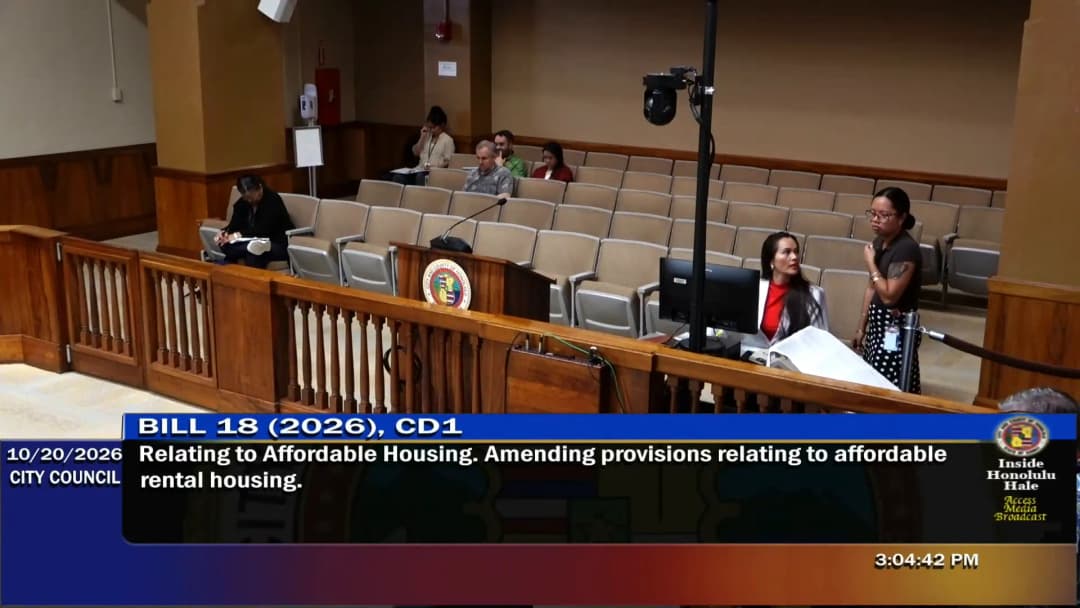
The Honolulu City Council Committee on Housing, Homelessness, and Parks met remotely on October 21, 2026, at 2:32 PM. The meeting began with approval of three donation resolutions for park benches and tennis nets, followed by discussion on Bill 57 (outdoor play court information), Bill 11 (affordable housing incentive reporting), and Bill 18 (amendments to affordable housing provisions). Votes on the first three items passed unanimously. Bill 57 and Bill 11 were amended and advanced, while action on Bill 18 was postponed due to insufficient committee members present for a vote. Consent Calendar - Resolution 26‑219 – Accepted a gift of two high‑back traditional benches, preparations of the grounds, and two bronze plaques valued at $5,607, donated by the Ohana of Lily Kwan and the Ohana of Claraquan. Passed without objection. - Resolution 26‑223 – Accepted a gift of one high‑back traditional bench, preparations of the grounds, and one bronze plaque valued at $2,718.74, donated by the family of Serm Chong Chua for placement at Sandy Beach Park. Passed without objection. - Resolution 26‑224 – Accepted a gift to furnish and install twelve tennis nets valued at $3,769.63, donated by USTA Hawaii Pacific Inc. for Patsy T. Mink Central Oahu Regional Park. Passed without objection. Public Comments & Testimony - Bill 57 (Outdoor Play Courts): Dylan Armstrong, in his individual capacity, urged collaboration with the implementing agency and expressed hope for an amenable final draft. - Bill 11 (Affordable Housing Incentives Reporting): Dylan Armstrong questioned the cost of implementation and asked whether the department had a rough estimate of staff hours or software expenses. He also inquired about using existing datasets such as a free HOLIS GIS layer. Melody Young, speaking neither in support nor opposition, suggested simplifying the process by having developers provide data they already prepare, and that coordination with the Department of Information Technology and other agencies could create an integrated system. - Bill 18 (Amendments to Affordable Housing Provisions): Gina Thielen (individual capacity) voiced unequivocal support, calling the bill a true compromise. Martin Wynn (principal of Center Urban Real Estate) supported the bill but recommended removing any “lesser of” language that would impose additional caps on special district heights. Dylan Armstrong (individual capacity) praised the chair’s efforts, supported increasing the floor‑area ratio from 4 to 5, and opposed off‑street parking requirements for affordable housing. Ave Kwak (Wu Fat and Monica Marketplace Affordable Rental) expressed strong support for CD2, citing the three key provisions of 75‑foot height, FAR 5.0, and increased densities, and noted that more than 50 % of Oahu renters are rent‑burdened per the 2026 Housing Phase Fed Books report. Discussion Items - Bill 57 – Outdoor Play Courts (Agenda Item 6): Director Laura Thielen of the Department of Parks and Recreation (DPR) stated that the department still objected to the bill but acknowledged the amendments in the posted CD1. She explained that a ten‑year outdoor court contract had been misinterpreted, halting reconstruction for three years. DPR has since restructured, creating a Maintenance Support Services division that now handles construction‑type contracts. She offered to work with the committee on a compromise, possibly amending the ordinance to define a cycle of minor capital improvements for all recreational amenities without singling out courts. The chair noted the improvements already seen and agreed to work together before second reading. The bill was amended to CD1 and passed for second reading. - Bill 11 – Affordable Housing Incentives Reporting (Agenda Item 4): Director Kevin Ager of the Department of Housing and Land Management (DHLM) strongly opposed the bill, arguing that its broad definition of “affordable housing” (up to 140 % AMI, covering nearly three‑quarters of Oahu’s population) and “incentive” (including variances for lot shape) would require prohibitively expensive retroactive valuations. He contended that the bill would not answer whether incentives change outcomes, and pointed to an existing prototype financial model developed with YEHERO that tests feasibility with and without incentives. He asked the committee not to advance Bill 11 and instead continue developing those tools. The chair responded that she had sent the bill to the University of Hawaii for input on their interactive map, and noted that the department had not offered amendments in its earlier letters. The chair recommended amending Bill 11 to the posted CD1, which was adopted without objection, and then reporting it out for passage on third reading, also without objection. - Bill 18 – Amendments to Affordable Housing Provisions (Agenda Item 5): Director (Donna Puna) of the Department of Planning and Permitting (DPP) acknowledged the chair’s efforts but raised three concerns: (1) the exception for Punchbowl special district height protections, recommending retention of underlying 60‑foot limits; (2) transitional height setbacks, recommending they begin at 60 feet rather than 75 feet; and (3) building construction and life‑safety standards, recommending retaining a 60‑foot limit for alternative fire‑resistance standards unless a technical analysis supports 75 feet. The chair presented a slide deck outlining the CD2 changes, including increased floor‑area ratio to 5, unit‑count formulas based on proximity to bus stops, and removal of certain fire exemptions. After testimony, the chair attempted to amend Bill 18 to the hand‑carried CD2. Councilmember Nishimoto voted no, and Councilmember Tolba expressed reservations. The chair then noted that the committee did not have enough members present to take a vote and postponed action on the bill. No final decision was reached; action was postponed. Key Outcomes - Resolutions 26‑219, 26‑223, and 26‑224 – All three resolutions were reported out for adoption without objection. (Consent calendar) - Bill 57 (2026) – Outdoor Play Courts – Amended to CD1 and reported out for passage on second reading with a public hearing to be scheduled. The chair committed to working with DPR on further refinements before the next reading. - Bill 11 (2026) – Affordable Housing Incentives Reporting – Amended to CD1 and reported out for passage on third reading without objection, despite the administration’s strong opposition. - Bill 18 (2026) – Amendments to Affordable Housing Provisions – The proposed hand‑carried CD2 was introduced; a motion to amend the bill to CD2 failed to secure enough votes. Due to the absence of sufficient committee members, the committee was unable to take a vote on the motion to report it out. Action on Bill 18 was postponed.
Public Meetings - Honolulu, Hawaii
Public Meetings - Honolulu, HawaiiThe Committee on Energy, Environment and Sustainability met on October 20, 2026, at 1:02 PM for an informational briefing from the Department of Emergency Management (DEM) on flood mitigation services. Director Dr. Randall A. Collins presented an update on the development of an AI-enhanced all-hazards early warning detection system, funded partly by a $300,000 council allocation and a $1 million Urban Area Security Initiative (UASI) grant. The briefing focused on stakeholder coordination, hardware gaps, and a two-year timeline for full operational capability. Public Comments & Testimony - Angela Melody Young (testifying on behalf of CARES) expressed support for the modernization effort and recommended a more collaborative approach across state and city agencies, including Hyema, DLNR, HDOT, and environmental services. She suggested using flood map data to identify vulnerable communities with seniors and students. - Raquel Achu (Wailua Moku) voiced frustration over the lack of tangible progress seven months after the Konolos storms. She emphasized the need to include community stakeholders in decision-making, questioned the current alert trigger process, and called for immediate improvements to the warning system. She also suggested hiring a dedicated meteorologist for DEM. Discussion Items - Presentation Overview: Director Collins outlined the project to create an AI-driven early warning system using existing and new flood monitors, rain gauges, and camera systems. The goal is to improve data analytics, real-time threat identification, and public messaging, with a human-in-the-loop safeguard. - Stakeholder Working Group: The working group includes TRUE (Tech Readiness User Evaluation), National Weather Service, USGS, UH Manoa, EM1, Hohonu, Pacific Disaster Center, HDOT, DIT, and others. A monitoring needs assessment and workshop are in early planning stages. - Hardware and Deployment: Hardware type and locations are not yet finalized; the $300,000 will be used to purchase approximately 30 flood sensors from Hohonu (a local UH-affiliated startup) through a NASPO procurement process. A pilot project focused on flood monitoring is expected to start this fiscal year. - Timeline: The full project spans 24 months, with initial concept and proof-of-concept phases in FY27, aiming for completion by end of 2028. The council allocation was approved for release earlier that day. - Operational Gaps: Director Collins described the current duty officer system as risky and understaffed, relying on unpaid on-call staff with no guaranteed response. A 24/7 watch desk is a long-term need. - Resilience Hubs Discussion: Director Collins noted the lack of a consistent definition for resilience hubs and stressed that DEM can only advise on design, not build or manage them. Councilmember toba emphasized starting with immediate available actions (water, food, communications, shelter) while working toward broader solutions. Key Outcomes - The $300,000 council allocation memo was signed off on October 20, 2026, enabling DEM to proceed with procurement and testing of flood sensors this fiscal year. - No formal votes were taken; the briefing was informational. Director Collins confirmed full support from the mayor and council, and committed to moving forward with stakeholder workshops and pilot testing. - The committee encouraged continued collaboration with federal partners for potential funding of a new emergency operations center.
On 2026-10-20, City Councilmember Augitoba, Chair of the Committee on Public Safety and the Economy, released a Council Conversations video summarizing key outcomes from the committee's November hearing. The committee addressed Bill 46 concerning police dispatch information and made two appointments. All items are scheduled for the full council meeting on December 3rd. Discussion Items - Bill 46: This legislation would restore access for local newsrooms (TV, radio, newspapers) to basic police dispatch information, enabling quicker and more accurate updates during emergencies. The committee worked with the Honolulu Police Department and media to agree on notification timing while protecting citizen privacy and maintaining the integrity of HPD tactical operations. - Resolution 25292: Appointment of Anno New Barr to the Citizens Advisory Commission on Emergency Management. - Resolution 25290: Appointment of Blake Parsons to the police commission. Key Outcomes - The committee advanced Bill 46, along with Resolutions 25292 and 25290, to the full Honolulu City Council for consideration. The next council meeting is scheduled for December 3rd at 10 a.m., with in-person attendance at City Hall or online via HonoluluCityCouncil.org. Note: The transcript references a November hearing, but the provided date for this summary is 2026-10-20 (October 20, 2026). No agenda or minutes were available to verify the exact committee hearing date.
This episode of Council Conversations featured a discussion of Bill 46, introduced by Councilmember Toba and another councilmember, aimed at improving public safety communication between the Honolulu Police Department (HPD) and local news outlets. The bill responds to past incidents where timely emergency information was not widely shared, such as the 2023 New Year's Day police chase and the 2024 spring break shooting in Waikiki. Discussion Items - Bill 46 Overview: The measure requires HPD to reinstate sharing basic dispatch information with local news outlets. This includes providing timely updates about active crimes or public safety threats via alerts or radio scanner communications, while ensuring no private details are disclosed and police operations are not compromised. - Accountability Measures: The Chief of Police must report annually to the council on how information is shared, what privacy safeguards are in place, and which media outlets have access. Any local newsroom that misuses HPD communications could face penalties or lose access. - Context and Purpose: The bill aims to improve transparency and safety by ensuring the public receives timely, accurate emergency information while protecting privacy and law enforcement integrity. Key Outcomes - The council will hold HPD accountable through annual reports and oversight of media access. - No vote or formal action was taken during this discussion; it served as an informational segment.
On October 20, 2026, Council Chair Tommy Waters hosted a "Council Conversations" episode to recap the Honolulu City Council's housing initiatives over the past five years. The session highlighted the council's focus on "Kama Aina" housing (homes for local families) and detailed the approval of 27 housing projects, creating 10,811 homes. Discussion Items - Overall Housing Production: Council Chair Waters reported the approval of 27 new housing projects, resulting in 10,811 homes. He expressed the council's strong commitment to providing a mix of low-income rentals, workforce apartments, and homes for sale. - Parkway Eka Pole: The Chair detailed the council's approval of this development, which delivered 401 rental homes and three preschool classrooms, a first-of-its-kind concept supporting young families. - Wayacoa (Kaka'ako): Chair Waters noted the council's support for this project, which will deliver 1,032 homes, including 620 affordable units. - Kohu Kaina Commons (Kaka'ako): The council supported the creation of 621 affordable housing rentals in this development. - Huile Place (Mo'ili): The Chair stated the council worked to ensure 603 of the 1,005 homes in this development are priced at affordable housing ranges. - Hale Moili and Hale Makana O Moili (Mo'ili): Chair Waters reported the council's approval of 278 affordable rental units at Hale Moili and 104 units at Hale Makana O Moili. - Kiawalau Redevelopment (Waipahu): The Chair affirmed the council's approval of this redevelopment, which will bring 537 new affordable rental units to the community. Key Outcomes - No Formal Actions: This session was an informational update rather than a formal business meeting. No motions were made, votes taken, or decisions formally adopted. - Future Direction: Chair Waters committed the council to continuing its push for home development, noting that many projects are awaiting state financing. He reaffirmed the council's goal of finding equitable solutions and promoting community-centered growth to keep local families in Hawaii.
In this installment of Council Conversations, a public information segment hosted by the Honolulu City Council, Chair Tommy Waters discussed Bill 64 and Bill 65. The episode focused on the issue of unspent city funds and proposed legislative solutions to improve budget accountability. Discussion of Bill 64 and Bill 65 - Council Chair Tommy Waters stated that approximately half a billion dollars annually, already approved by the council for projects like upgrades, roads, and services, goes unspent. He referred to this as a loss for communities. - He explained that Bills 64 and 65 introduce new reporting requirements designed to track departmental spending trends, identify under-spending and program shortfalls. - Waters expressed full support for the measures, stating that they would allow the council to reallocate funds where needed without raising taxes, promoting fiscal responsibility. - He characterized the bills as tools to 'end the shell game' of unspent funds, emphasizing their role in ensuring tax dollars are actively used to benefit the city through greater transparency and accountability. Key Outcomes - No formal votes or decisions took place during the informational segment. - The stated goal of the bills is increased transparency and smarter spending, specifically targeting the roughly $500 million in unspent annual appropriations. - Residents were directed to the Honolulu City Council website to learn more about Bills 64 and 65.
In this episode of Council Conversations, City Council Chair Tommy Waters recaps legislation that passed out of the November full council hearing. The video is dated October 20, 2026; the transcript references bills passing 'yesterday' and a 'November full council hearing,' a timeline discrepancy noted here. Waters described four items: two bills heading to the mayor and two resolutions passed by the council. Legislation Recap - Bill 62 – Short-term rental rules: Updates bed-and-breakfast and vacation rental rules to clarify where these establishments can operate, including Waikiki, Coolina, and Turtle Bay. Waters outlined steps owners must take to register, renew, and comply with safety and neighborhood guidelines, ensuring short-term rentals are safe and adhere to rules. - Bill 59 – Sewer discharge rules: Introduced by Councilmember Okimoto, clarifies what can and cannot go into sewers. It tightens rules to stop harmful contaminants from entering water systems, protecting public health and the environment on Oahu. - Resolution 25-305 – Mount Ka'ala gondola: Urges the Department of Planning and Permitting to reject the planned gondola and restaurant atop Mount Ka'ala. - Resolution 25-284 – Salary increase: Gives the men and women of HBD [as transcribed] a 27% salary increase over the next four years. Key Outcomes - Bill 62 and Bill 59 passed and are on their way to the mayor to sign into law within 10 business days. - Resolution 25-305 passed yesterday. - Resolution 25-284 passed yesterday. - No vote tallies or individual member positions were included in the transcript.
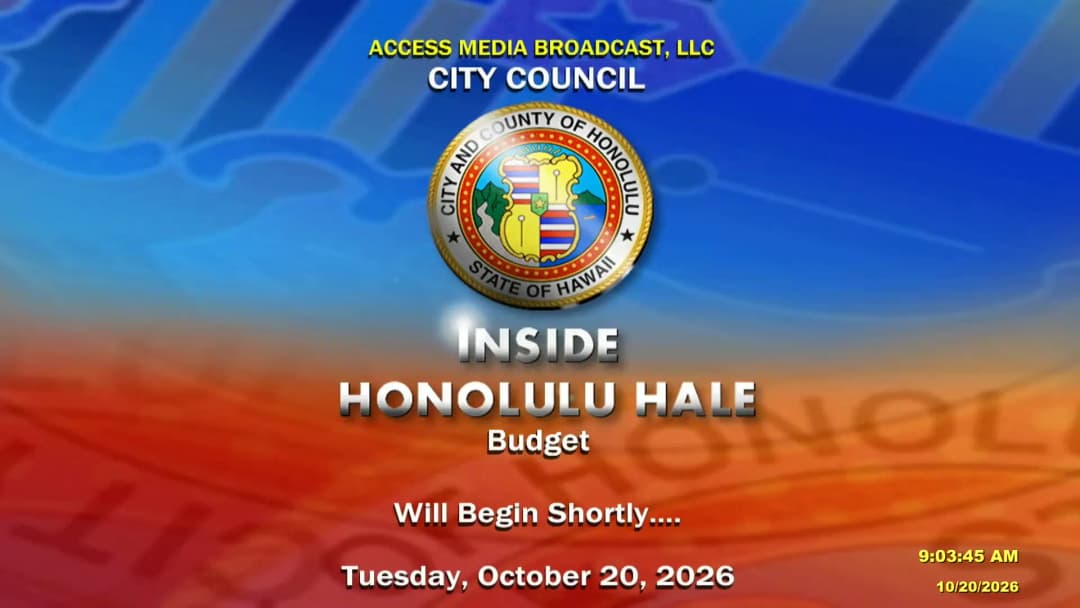
The Committee on Budget met at 9:05 a.m. on Tuesday, October 20, 2026, with Committee Vice Chair Nishimoto and Councilmembers Kia Aina and Talba present. Chair Waters and Councilmember Cordero were excused. The committee advanced two wastewater revenue bond resolutions and one real property tax bill. Agenda item 4, Bill 44 (2026), was canceled and not considered. Public Comments & Testimony - No in-person or remote registered testifiers appeared for any agenda item, and no non-registered remote testimony was offered. Discussion Items - Resolution 26-222 – Wastewater System Revenue Bonds (Junior Series 2026): Deputy Director Dan Brick of the Department of Environmental Services supported the resolution authorizing not to exceed $210 million in junior lien wastewater system revenue bonds. He stated the city plans to sell variable-rate bonds this year because of market conditions, believing better interest rates may produce about $5 million in debt-service savings for this year if conditions hold. Councilmember Kia Aina expressed full support for both the junior and senior series resolutions, noting the Kailua Wastewater Treatment Plant and Heia Wastewater Pump Station Improvements are in her district. - Resolution 26-225 – Wastewater System Revenue Bonds (Senior Series 2026): Deputy Director Brick supported the resolution authorizing not to exceed $205 million in senior lien wastewater system revenue bonds. He said the bonds would refund outstanding series 2016 bonds, are market-dependent, and could provide potential savings and flexibility in debt service, but he did not provide a specific savings estimate. Vice Chair Nishimoto asked whether interest rates are expected to fall; Brick said it is hard to say and the savings depend on market conditions. - Bill 40 (2026), CD1 – Real Property Taxation: Real Property Assistant Assessment Administrator Steve Takara said the Department of Budget and Fiscal Services had no objections and found CD1 acceptable, having worked with Councilmember Desaltos' office. Councilmember Kia Aina asked whether future similar projects would need project-specific fixes; Takara replied that the bill would apply to all projects fitting the stated circumstances. Aina noted it addresses situations such as missing the home exemption deadline. Key Outcomes - Resolution 26-222 was reported out for adoption without objection or reservation. - Resolution 26-225 was reported out for adoption without objection or reservation. - Bill 40 (2026), CD1 was reported out for passage on third reading without objection or reservation.
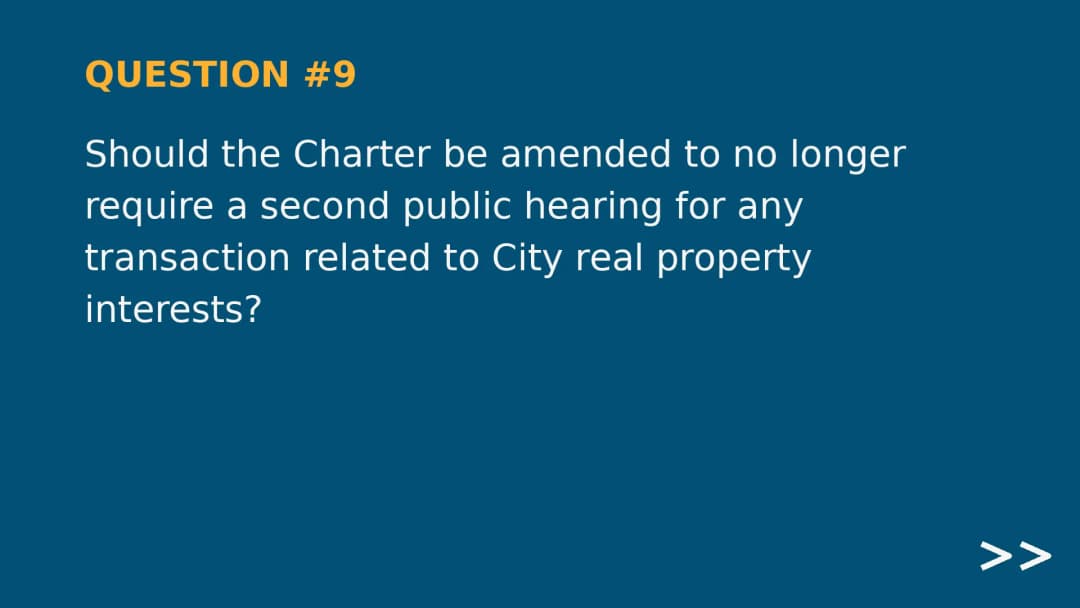
On October 20, 2026, the city held an informational meeting to present 18 proposed charter amendments for the upcoming ballot. The presentation detailed each measure's provisions, arguments from supporters and critics, and the practical implications. No formal votes or decisions were taken. Charter Amendment 1: Food Affordability Fund - The measure would increase the property tax set-aside from 2.5 cents to 3 cents per dollar, dedicating half a cent to a new fund for healthy food, focusing on food grown, raised, or caught in Hawaii. - Supporters value a steady, dependable source for hunger relief and local farming. - Critics worry about locking up more city money, leaving less for other needs, and that restrictions on buying food from outside Hawaii (only during emergencies, 10% of fund) may be too tight. - Bottom line: Should a permanent food commitment be written into the charter or left to annual budget decisions? Charter Amendment 2: Rewriting the Preamble - The measure would rewrite the charter's opening statement to recognize the bond between people and the Aina, honor our Kupuna and Prince Kuhil Colony Anaole, and commit the city to open, honest government that includes the public and cares for natural and cultural resources. - Supporters see meaningful recognition of Native Hawaiian history and a promise of transparency. - This is mostly about symbolism and direction. - Bottom line: Should these values be at the front of the city's charter? Charter Amendment 3: Office of Native Hawaiian Affairs - Creates a new city office focused on Native Hawaiian culture, language, and natural resources, led by a mayoral appointee confirmed by the council. - Supporters say a dedicated office can coordinate cultural knowledge, improve language use, and increase accountability through yearly reports. - Critics cite unspecified cost, staff, budget, and whether other departments must follow its advice. - Bottom line: Could it help with clear roles or become extra red tape? Charter Amendment 4: LGBTQIA+ Commission - Creates a permanent nine-member advisory commission to advise the mayor, council, and departments, acting as a community bridge. - Supporters see a permanent official voice for LGBTQIA+ issues that persists across administrations. - Concerns include advisory-only power, no guaranteed budget or staff, and empty seats hindering action. - Bottom line: Is an advisory commission the right structure? Charter Amendment 5: Ranked-Choice Voting - Allows voters to rank candidates for mayor, city council, and prosecuting attorney. In races with six or more candidates, there would be two rounds to narrow the field to five. - Supporters say it prevents vote-splitting and allows backup choices. - Critics cite complexity and need for voter education; it cannot take effect until state law permits. - Bottom line: Should ranked-choice voting be implemented when possible? Charter Amendment 7: Statement on Housing Shortage - Adds a statement to the charter that there is a serious shortage of long-term housing for residents and that encouraging resident use of existing homes is a city goal. No tax, no spending, no new rules. - Supporters see it as a foundation for future housing policies. - Critics worry it may be mistaken for a solution rather than a statement of purpose. - Bottom line: Does a non-binding statement help set the stage for action? Charter Amendment 8: Affordable Housing Fund Revolving - Makes the affordable housing fund a revolving fund, so repaid money stays in it. Expands permissible uses to building, buying, fixing, preserving rentals for households at 60% or less of area income. Mixed-income and mixed-use projects may qualify. - Supporters say it recycles housing money and saves existing affordable rentals. - Critics note the risk of flexibility allowing city money to go to projects with few affordable units. - Bottom line: Is flexibility worth having fewer guaranteed affordability protections? Charter Amendment (Public Hearings on Land Deals) - Removes public hearing requirements before the city disposes of land or grants easements on more than a quarter-acre. Requires a public report and council approval. - Supporters say hearings slow routine items; oversight remains. - Opponents say it removes an important early public input opportunity. - Bottom line: Is speeding up land deals worth losing guaranteed local public meetings? Charter Amendment 10: 10-Year Housing Plan - Requires the housing department to write a 10-year housing plan, update every 5 years starting 2030, validated by the Planning Commission. Links city construction budget to housing plan. - Supporters say it ties planning, spending, land use together. - No set numbers or legal duty to build. - Bottom line: Will it lead to meaningful action or just a report on a shelf? Charter Amendment 11: Nonprofit Grants from Special Funds - Allows the Clean Water and Natural Lands Fund and Climate Resiliency Fund to make grants to nonprofits matching each fund's purpose. - Supporters see practical flexibility to use nonprofit skills. - Concerns about clarity of wording and need for fair grant rules. - Bottom line: Is the goal achieved effectively? Charter Amendment 12: Accepting Outside Money for Special Funds - Explicitly allows special funds for housing, conservation, climate to accept federal/state grants, donations, and certain fees (if council approves). Outside money cannot replace property tax share. - Supporters say it clears confusion and helps win matching grants. - Concerns include donor influence and long-term upkeep costs. - Bottom line: Is added complexity worth clear permission to accept outside funding? Charter Amendment 13: Expanding Land Fund to Historic Preservation - Renames the Clean Water and Natural Lands Fund to the Land, Natural Resources and Historic Preservation Fund and expands uses to include preserving and restoring historic and cultural properties. - Supporters recognize that protecting heritage goes hand in hand with land protection. - The fund doesn't get bigger; money competes with watershed, farmland, habitat. - Bottom line: Should historic preservation share the same funding as land protection? Charter Amendment 14: Upkeep Limit for Land Fund - Raises the annual spending limit on upkeep of lands bought by the fund from 5% of prior year's deposits to 10%. - Supporters say buying land needs subsequent care. - No new money; more for upkeep means less for acquisition. The 5% limit may not be the real bottleneck. - Bottom line: Is flexibility for care worth less money for new purchases? Charter Amendment 15: Office of Data and Innovation - Creates an office to set citywide rules for data handling, security, interoperability, performance measurement, and responsible AI use. Reviews AI and automated decision tools for fairness. - No specific positions from supporters or critics were provided in the presentation; the description was factual. Charter Amendment 16: Permanent Residents on Boards - Allows lawful permanent residents (green card holders) living in Honolulu to serve on city boards and commissions, dropping a proposed one-year residency requirement. - Supporters say many permanent residents pay taxes and bring expertise. - Others see it as politically divisive, especially for powerful boards. - Measure does not change voting eligibility. - Bottom line: Should living here and experience suffice, or must one be a registered voter? Charter Amendment (Board Seats and Quorum) - Allows boards with empty seats to meet without those seats counting against quorum and voting requirements, enabling public meetings while appointments are pending. - Supporters call it a practical fix for boards delayed by vacancies. - No minimum vote number clarified. - Bottom line: Does this fully address the problem? Charter Amendment 18: Deputy HR Director Appointed - Changes the deputy director of human resources from a civil service position to a mayoral appointment starting in 2027. The current position is eliminated. - Supporters say HR is central to negotiations and should answer to elected leadership. - Critics say civil service preserves experience and shields from political pressure. - Bottom line: Is greater political control worth sacrificing stability? Charter Amendment 19: City Clerk Support for Charter Commission - Makes the city clerk's office responsible for providing support services to the Charter Commission, such as records, meetings, public notices, and document preparation. - Supporters see it as simple housekeeping that improves continuity and openness. - Bottom line: Does this ensure the commission's needs are met?
The Committee on International and Legal Affairs, chaired by Councilmember Nishimoto, convened on September 25, 2026. The agenda included appointments to city boards, a records retention update, a detailed discussion on restructuring the Mayor's Office of Culture and the Arts (MOCA), and legislation to increase penalties for illegal peddling in Waikiki. The committee also entered executive session to discuss a legal matter. Routine Appointments & Approvals - Resolution 26-196 (Carrie Ok Okimoto - Police Commission): The appointee, a retired HPD officer and former acting chief, was warmly welcomed. The resolution passed unamended. - Resolution 26-204 (Dominique Bonifacio - Neighborhood Commission): The appointee, a former vice-chair of the Honolulu Youth Commission and Waipahu Neighborhood Board member, spoke about engaging younger residents. Councilmembers Tulba and Cordero spoke in support. The resolution passed unamended. - Resolution 26-144 (Liquor Commission Records Retention): Presented by Gerald DeGuzman, the resolution established retention periods for UIPA requests and body-worn camera video. The resolution passed unamended. Public Testimony on Bill 52 (Peddling Fines) Two members of the public testified in strong support of raising fines for illegal peddling in Waikiki: - Steve Walther (40-year Waikiki business owner) described illegal vendors operating on public streets and using scooters, undercutting legitimate businesses that pay rent, taxes, and insurance. He stated that a $100 fine was ineffective, as vendors easily absorb the cost against daily profits of $300 to $1,000. - Michael Swam (Business owner, Info Hawaii Marking) corroborated the testimony, noting enforcement comes in waves and vendors pay fines as a cost of doing business. He highlighted risks to tourists from unregulated ticket sales. Discussion Items - Resolution 26-201 (MOCA Reorganization): Executive Director Jennifer Santos presented a proposal to formally establish MOCA as a distinct office in the city charter, elevating it from its current status as a program. She emphasized this would not change its mission or scope, but provide organizational stability. - Discussion: Councilmembers raised significant concerns. Vice Chair Tupola and Councilmember Kia'aina questioned the timing relative to Ballot Question 3 (Office of OEV Resources and Cultural Stewardship). Councilmember Kia'aina also noted the resolution incorrectly referred to an "executive department" and a "department", which Director Santos acknowledged as a typo. Chair Waters questioned why the change was not submitted to the public Charter Commission process and raised concerns about potential redundancy with the proposed OEV office, as well as possible salary increases for the director ($150k to $211k) and the creation of new positions. Councilmember Cordero asked about the timeline, which Director Santos stated had been in development for nearly a year. - Key Outcome: Chair Nishimoto introduced and passed an amendment correcting the language in the resolution to refer to an "office" and clarifying the charter section. The resolution (26-201 CD1) was passed unanimously with reservations (W.R. - Councilmembers Waters, Kia'aina, Tupola, Cordero, Tulba). The committee noted the City Charter requires action within 60 days or the reorganization takes effect automatically. - Bill 52 (Peddling - Waikiki): Major Paula Kamoda (HPD, Waikiki) presented the bill to increase fines for peddling violations. He stated that 46% of citations over the past three years were for repeat offenders, and one company was cited 13 times in 16 months. - Discussion: Councilmember Tupola supported the intent but emphasized the need for consistent prosecution and fee collection to ensure the fines have weight. Major Kamoda committed to tracking case dispositions. - Key Outcome: The bill passed the committee unamended. Executive Session The committee resolved into executive session to consult with attorneys on the matter of "Caliente vs. the City and County of Hawaii" (Agenda Item 6). No public testimony was offered. The committee reconvened without reporting any public action.