Houston, Texas — Public Meeting Index
Search help
Summaries & topics includes titles; words may match separately. Transcripts match a literal word or phrase, with case and whitespace normalized. Punctuation and contractions must match. Documents are not searched. Results have separate pages by source; a meeting may appear in both. Both dates are included.
Summaries & topics
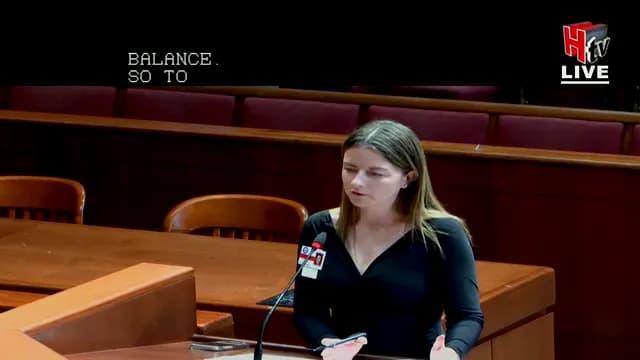
The Budget and Fiscal Affairs Committee, chaired by Sally Alcorn, convened on September 2, 2025, with Vice Chair Mario Castillo and several council members present. The agenda included the monthly financial report, an economic evaluation of disaster preparedness, a review of financial policies and a budget amendment to the budget stabilization fund, and a discussion of the dedicated drainage and street renewal fund balance along with a related CIP amendment. No votes were taken; a follow-up meeting was announced. Monthly Financial Report - Will Jones, Deputy Controller, presented the monthly financial report for the period ending July 31, 2025. The general fund is projected to end with a fund balance of $328.1 million, or 12.9% of expenditures less debt service and pay-as-you-go, which is $17.5 million lower than the Finance Department's projection due to lower revenue. This balance is $137.6 million above the city's target of 7.5%. - Revenue projections were increased by $55 million from the FY2026 trends report, primarily due to a $43.9 million increase in property tax revenue (from updated census population) and a $9.6 million increase in transfers from other funds. Sales tax receipts for June were $7.6 million (9.9%) higher than the same period last year. - Finance Director Melissa Dubowski noted that the city has not yet begun repaying an estimated $25 million state audit finding; repayment is expected to be spread over 43 months at about $600,000 per month. She also discussed potential impacts of state legislation (SB 10) that could lower the voter-approved tax rate cap, but it would not affect the current year's tax rate. Economic Evaluation of Disaster Preparedness - Will Jones presented an analysis of Houston's disaster history and financial vulnerabilities. Nationwide disaster costs have escalated from $220 billion in the 1980s to nearly $1 trillion in the 2010s, with tropical cyclones accounting for over half. Houston is among the hardest-hit cities, with Hurricane Harvey ($160 billion) and Hurricane Ike ($43 billion) among the costliest storms. - Harris County ranks number one nationally in hurricane risk (score 100/100) according to FEMA. The city faces ongoing financial pressures including a structural budget deficit, property tax caps, volatile sales tax, and state legislative restrictions. - Houston's combined reserve levels (8-9% of expenditures) are below the GFOA recommended 16.7% and below peer cities like Dallas (19-20%) and San Antonio (15-16%). The budget stabilization fund has never grown above its minimum. Opportunities include raising the minimum fund balance, increasing the budget stabilization fund, and separating disaster reserves from financial reserves. Financial Policies Update & Budget Amendment 8.01 (Councilmember Kamen) - Finance Director Melissa Dubowski reviewed the city's financial policies and proposed an amendment by Councilmember Kamen to increase the budget stabilization fund minimum from the greater of 1% or $20 million to the greater of 1% or $25 million, and to require replenishment within 365 days instead of the current two fiscal years. - The administration supports the increase to $25 million but opposes the 365-day replenishment because FEMA reimbursements for disasters (e.g., Derecho and Hurricane Beryl) often take longer than a year. The current policy allows replenishment within two fiscal years, which aligns with actual reimbursement timelines. - Councilmember Kamen argued that annual replenishment is critical given the frequency of disasters and the inability to rely solely on FEMA. She noted that a commitment had been made during budget discussions to safeguard $10.8 million to bring the fund to $25 million, but the finance director stated that doing so in FY2026 would require tapping the general fund balance. - Other discussion included the city's insurance coverage: combined flood coverage increased from $100 million (post-Harvey) to $600 million, plus $596 million in business interruption coverage. Insurance premiums cost about $24 million annually. Dedicated Drainage and Street Renewal Fund (DDSRF) & CIP Amendment 6.02 (Vice Mayor Pro Tem Peck) - Samir Solanke and David Wardlow from Public Works explained the mechanics of the DDSRF. The fund has four revenue sources: ad valorem taxes, third-party funds (Metro, TxDOT), drainage utility charges, and developer impact fees. It has paid off about $2 billion of pre-Rebuild Houston debt, with $449 million still owed. - The fund balance reported in MOFAR ($187 million restricted but not committed for FY2026) appears large, but the capital program commitments (including contracts awarded and planned projects) exceed the available cash. There is no uncommitted spare capacity; redirecting funds (e.g., to the Spring Shadows project as proposed by Vice Mayor Pro Tem Peck) would require deprioritizing other planned projects. - Vice Mayor Pro Tem Peck questioned the large balance and sought to redirect unspent funds to a specific drainage project. Public works emphasized that it is a policy prioritization question and that the fund's capital commitments are already oversubscribed. Public Comments & Testimony - Doug Smith commented on Vice Mayor Pro Tem Peck's amendment, arguing that Public Works has identified flood-prone areas (especially in northeast Houston) and that allocating funds evenly across districts would not be fair; data should drive allocations. He also noted a $2.5 million discrepancy in interest income between the Controller and Finance Department in the MOFAR report and a typo ("a thousand billion" instead of a smaller number) in bond authorization notes. Key Outcomes - No votes were taken at this meeting. The committee will hold a follow-up meeting (date to be determined, originally planned for September 15 but later scratched due to scheduling conflicts) to potentially vote on forwarding amendments to full council, including Councilmember Ramirez's amendments and possibly further discussion on the budget stabilization fund. - The committee received extensive information on disaster financial preparedness and will continue reviewing financial policies with the aim of strengthening reserves.
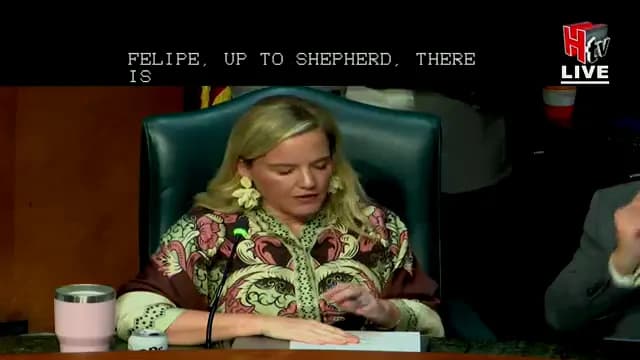
This was the first evening council session, designed to give working families greater access to local government. The meeting featured two proclamations (Labor Day and retirement of Health Department Director Stephen Williams), extensive public testimony on HPD collaboration with ICE, pedestrian safety, and other issues, and passage of an ordinance prohibiting sitting or standing on narrow medians (Item 52) by an 11-2 vote. Consent Calendar - Approved routine purchasing and contract items (Items 2-5, 7-8) and several ordinances (Items 12, 13, 19, 25, 26, 31, 36, 37, 39, 43, 44, 46, 48, 51) without separate discussion. - Approved resolutions and nominations for boards and commissions. Public Comments & Testimony - Numerous speakers opposed HPD collaboration with ICE, citing reports that HPD called ICE three times more often in 2025 than in the previous four years combined. Speakers called for transparency, end to discretionary collaboration, and matching Harris County's $2 million contribution to the Immigrant Legal Services Fund. - Speakers expressed concern about pedestrian and cyclist safety, referencing 345 traffic fatalities in 2024, including 119 pedestrians. Many criticized the mayor's "guiding mobility principles" for removing bike lanes and pedestrian infrastructure. - Several residents from the East End opposed the proposed closure of Polk Street for the GRB convention center expansion, arguing other cities build over roads without closing them. - A parent of HISD students complained about schools without functioning libraries and called for pressure on Superintendent Mike Miles. - Small business owners described non-payment for city contracts, with one (Evita Cabinets) owed over $26,000. - Other speakers addressed homelessness, crime on Washington Avenue, parking reform, and support for the median safety ordinance. Discussion Items - Labor Day Proclamation: Councilmember Keenan presented a proclamation recognizing unions, noting the first evening session was held before Labor Day. Multiple council members praised organized labor, with Mayor Whitmire sharing his personal history as a union member. Hanny Khalil of Gulf Coast AFL-CIO accepted, emphasizing ongoing struggles for workers' rights. - Retirement of Stephen Williams: Councilmember Castillo presented a proclamation honoring Health Department Director Stephen Williams for 45 years of public health service, including leadership through COVID-19 and hurricanes. Council members commended his calm leadership and innovations like wastewater surveillance. - Item 52 – Prohibition on Sitting/Standing on Narrow Medians: Councilmember Huffman introduced the ordinance, which prohibits sitting or standing on medians less than six feet wide, with exceptions for crossing, emergencies, or officer direction. Supporters cited safety for pedestrians and drivers; opponents (Councilmembers Plummer and Thomas) expressed concern about criminalizing poverty and lack of outreach to affected individuals. A roll-call vote passed 11-2. Key Outcomes - Item 52 passed (11-2), establishing a Class C misdemeanor with fines up to $500, with a grace period for education. - Appointments confirmed: Juan Garcia to the Sports Authority, and four members to the Archaeological and Historical Commission. - Approved contracts for lane striping machines, janitorial services, and air quality monitoring equipment (Item 25). - Councilmembers committed to monitoring enforcement of the median ordinance and addressing backlog in trash bin deliveries. - Multiple council members announced upcoming events, including job fairs and public safety committee meetings.
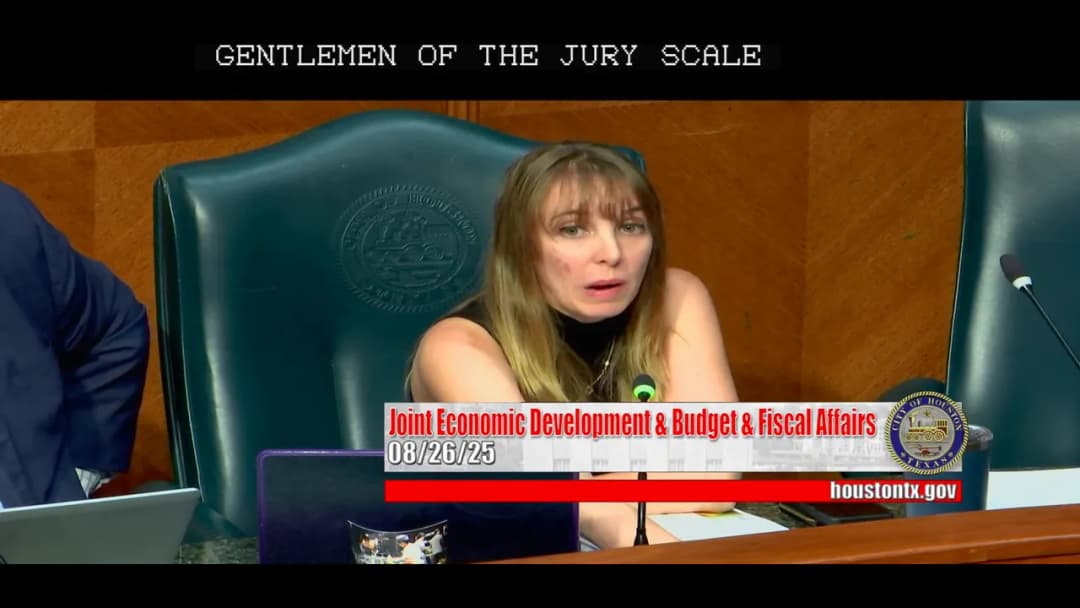
Mayor Pro Tem Martha Castex Tatum, chair of the Economic Development Committee, called the meeting to order. The purpose was to receive an overview of the Capital Improvement Plan (CIP) process from finance, public works, and general services staff, review proposed amendments related to transparency and equitable funding, and gather suggestions from council members for improving the CIP process. Councilmembers in attendance included Mario Castillo, Sally Alcorn, Joaquin Martinez, Amy Peck, Julian Ramirez, Abby Kamen, and staff from several other offices. Public Comments & Testimony - Laura Gallier (community advocate): Expressed full support for the transparency ordinance, arguing that transparency is the floor, not the ceiling, for good governance. She cited examples of wasted funding (e.g., Telephone Road redesign $489,000, Montrose Boulevard redesign $400,000) and criticized Engage Houston as incomplete. She urged council not to treat transparency as optional. - Barbara Carroll (registered professional engineer, volunteer at BARC): Stated that the proposed status reports are basic project management tools (enhanced Excel spreadsheets) and would improve efficiency. She highlighted the lack of progress on the voter-approved $47 million BARC facility bond approved in 2022. - Donald Masock (resident): Supported the amendments and stressed the need for checks and balances on the strong mayor system. He suggested a task force involving city, Metro, and TIRZ representatives and criticized that meeting slides were not available to the public in advance. - Andrew Sneed (data engineer): Supported the infrastructure transparency amendments, arguing that codifying reporting obligations ensures accountability. He stated that providing information before changes occur is reasonable and straightforward. - Ruben Garza (Strong Towns Houston chapter leader): Supported the amendments, emphasizing that government should move beyond relationship-based transparency to institutionalized, testable, and repeatable reporting that includes cost data. He also urged that public input occur before project changes. - Doug Smith (resident): Stressed the importance of involving the public early in the CIP process (suggested September–November district meetings). He expressed frustration that the A Leaf Neighborhood Center generator project, included in the FY24 CIP, was only now in design and would not be completed this fiscal year. Discussion Items - CIP Process Overview (Finance Director Melissa Dobowski): Explained the CIP is a rolling five-year plan updated annually, broken into four components (Public Improvement Program, Build Houston Forward, Enterprise Fund Program, Component Units). Total FY26–30 CIP estimated at $16.7 billion. The process involves departments submitting prioritized requests in December–February, review by the mayor, and council adoption by end of June. She noted that after adoption, individual RCAs appropriate funds for specific projects. - Houston Public Works (David Wardlow): Described public engagement via Engage Houston (which was recently offline for updates), data-driven prioritization using flood risk index, pavement condition, and predictive analytics for water/wastewater. Noted the goal of 1,000 lane miles of street rehabilitation per year. Announced a new partnership where each council district will be able to select five lane miles for local street repairs. - General Services Department (Richard Vela): Presented the Facilities Condition Assessment (FCA): average building age 39 years, replacement value $3.5 billion, current FCI (Facility Condition Index) of 40% (double the industry target of 20%). Five-year deferred capital need is $1.4 billion; current annual funding ($52 million) is insufficient. GSD is undertaking a citywide facilities master plan (phase one Sept 2025–April 2026, phase two to March 2027) to standardize priorities, consolidate, and address ADA compliance. - Councilmember Q&A and Discussion: Councilmembers asked about CIP timeline alignment with fiscal year, public input timing, FCI funding gap, the stormwater master plan’s predictive capabilities, the new five-lane-mile program, and the feasibility of shifting from a five-year to a three-year CIP outlook. Directors responded with commitments to improve communication, including immediate notification of project changes. - Amendments Discussion: Councilmember Julian Ramirez outlined three amendments: 101—monthly reports to each council member on significant infrastructure project changes (delay, cancellation, redesign, scope alteration over 5% or $50,000, whichever greater); 102—allows three or more council members to object and place the matter on a council agenda within 10 days; 103—allows any council member to request a public hearing on a significant change. Councilmember Amy Peck proposed amendment 604 to establish a working group to evaluate a data-driven, equitable allocation of storm drainage and street funding across districts. Debate included concerns about monthly reporting burden, contractor impacts, the role of Engage Houston, and the relationship to Proposition A. The administration committed to immediate notification and improving Engage Houston. Councilmembers suggested refining thresholds, qualifying “city funds,” and ensuring district council member primacy for hearings. No votes were taken. Key Outcomes - Councilmember Peck’s amendment regarding the DDSRF fund balance was formally moved to the September 2nd Budget and Fiscal Affairs Committee meeting. - The Ramsey and Peck amendments were not voted on; a follow-up meeting to continue discussion and potentially act on recommendations will be scheduled (date TBD). - Next BFA meeting: Tuesday, September 2nd, 2025 at 10 a.m. (agenda includes DDSRF fund balance, financial policies, and budget stabilization fund). - Next Economic Development Committee meeting: Wednesday, September 17th, 2025 at 2 p.m. - The administration (Public Works and GSD) committed to improving transparency through immediate notification of project changes and enhancements to Engage Houston.
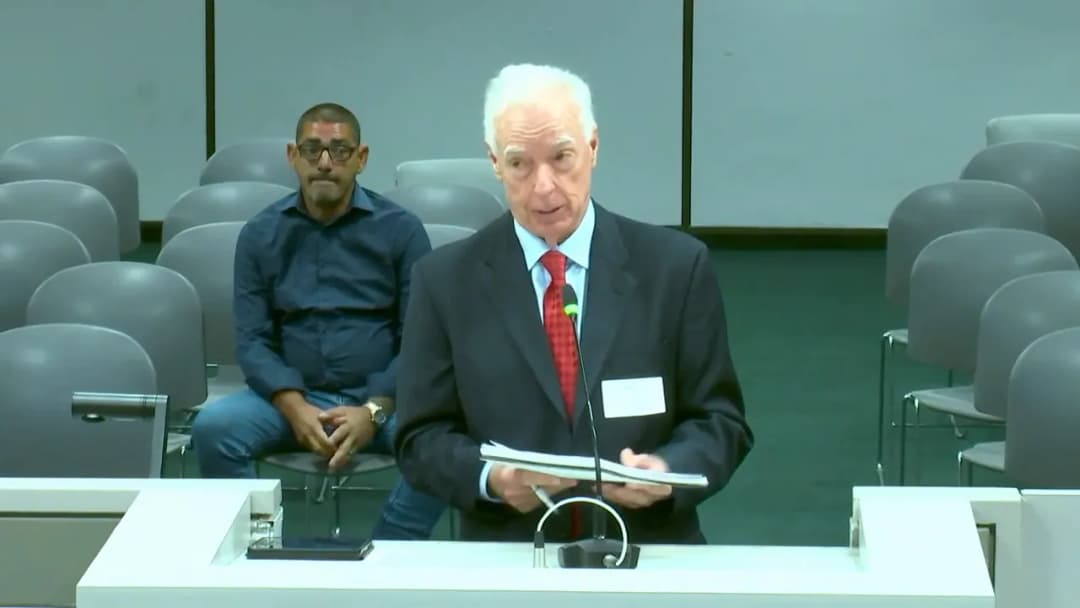
The Historic Preservation Appeals Board (HPAB) of Houston met on Monday, August 25, 2025, at 9:01 AM at the Houston City Hall Annex. The board considered two appeals from decisions of the Houston Archaeological and Historical Commission (HAHC) regarding properties in the Norhill Historic District. The board granted an appeal for window replacement and overturned a certificate of remediation (COR) for a demolition, remanding the case to HAHC. Consent Calendar - Prior meeting minutes were approved unanimously. Public Comments & Testimony - No public comments were made during the designated period. Discussion Items - Item 2: Appeal of HAHC denial of a Certificate of Appropriateness (COA) for window replacement at 1108 East 16th Street - Staff presented the property as a 1,474 sq ft contributing bungalow built circa 1928. The applicant, John May, proposed replacing 12 original windows with double-hung primed pine wood windows by Sierra Pacific. The HAHC denied the application on July 17, 2025. - John May testified that the existing windows are deteriorating and pose safety risks, and that the Norhill Neighborhood Association approved the wood windows. Staff clarified that an automated email from Roman did not constitute approval. Virginia Kelsey, VP of Norhill, stated the association supports wood windows that match the historic character. - Board members voted unanimously (4-0) to grant the appeal and overturn the HAHC decision. - Item 3: Appeal of HAHC denial of COA for demolition and issuance of a COR at 1138 Fugate Street - Staff reported that the property, a once-contributing home built circa 1925, collapsed during renovation. The city ordered demolition for public safety. The HAHC denied the COA, issued a COR, revoked the previous COA, and required compliance with the illegal demolition provision (Section 33-203). - Appellant Keith Rhymes (attorney for VET Renovation) argued that the demolition was not illegal because the city ordered it and issued a permit. He requested a COA without conditions. Contractor Kevin Simmons testified that the collapse was due to excessive roof weight, not negligence, and that they followed city guidance. Norhill's Virginia Kelsey countered that the owner disposed of historic materials and made false statements, and that the new proposed design is out of scale. - Board discussion focused on whether Section 33-203 applied. Chair Edminster proposed overturning the COR and remanding to HAHC for a new COA. The motion passed 3-1 (Edminster, Hellier, Bartell in favor; Viera Bland opposed). Key Outcomes - Item 2: The board voted unanimously to grant the appeal, overturning the HAHC's denial of the COA for window replacement. - Item 3: The board voted 3-1 to overturn the HAHC's issuance of a COR for illegal demolition and remand the project to HAHC for further consideration of a new COA for the property. - Member comments noted concerns about new Norhill design guidelines; staff confirmed they are in development and not yet enforced.
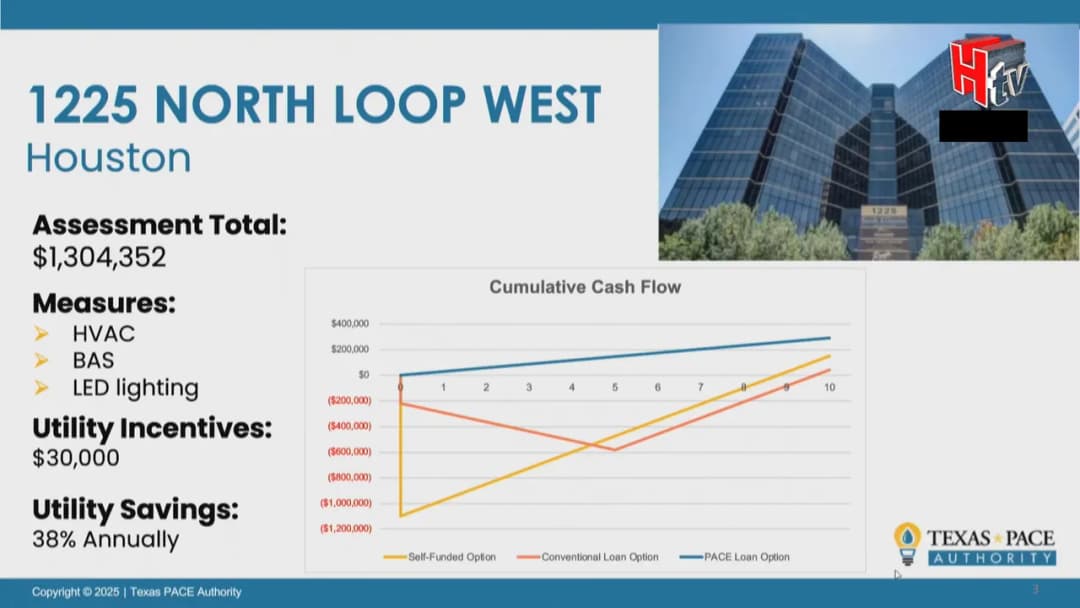
The Resilience Committee of the Houston City Council met on August 25, 2025, to receive a presentation from the Texas PACE Authority on the Property Assessed Clean Energy (PACE) program. The program provides long-term financing for energy and water efficiency improvements on commercial, industrial, and multifamily properties. The presentation highlighted the program's success in other Texas cities, its minimal burden on city resources, and the need for enhanced outreach and education in Houston. Public Comments & Testimony - Monique Mason invited the committee to the Texas Grandparents Raising Grandchildren Day event on September 13, 2025, at Tom Bass Park Pavilion 14, emphasizing the need for resources and support for grandparents raising grandchildren. Discussion Items - PACE Program Presentation: - Charlene Heidinger, President of Texas PACE Authority, and James Cargis, counsel, presented the PACE program. Key points included: - PACE is a voluntary, no-cost-to-taxpayers program that allows property owners to finance energy and water efficiency upgrades through a property assessment lien. - The city's role is limited to placing the lien and enforcing payment if needed; the lender handles collection. - Since 2015, over $500 million in PACE projects have been completed in Texas, but only about $38 million in Houston across 11 projects. - Examples included retrofits, new construction, and repurposing of underutilized buildings. - The program can help with capital stack gaps, especially in conversions of commercial to residential. - Councilmembers expressed strong support and committed to helping with outreach and education to businesses and nonprofits in their districts. - Councilmember Julianie Ramirez asked clarifying questions about the nature of the assessment, triple net leases, and the possibility of loan forgiveness, which were addressed by the presenters. Key Outcomes - The committee chair stated the city would assist in promoting the PACE program through newsletters and social media. - Councilmembers encouraged the Texas PACE Authority to provide digital assets for promotion. - No formal votes were taken; the meeting concluded with a call for further collaboration.
The Government Operations Committee met on August 21, 2025, under Vice Chair Fred Flickinger (the chair arrived later). No quorum was present, and no votes were taken. The meeting featured updates on Houston’s water loss and leak management program, railroad safety initiatives, and public comments. Public Comments & Testimony - Dominic suggested encouraging railroads to build holding yards outside the city or the Texas Triangle to prevent blockages, and urged the city to monitor the proposed Union Pacific–Norfolk Southern merger and its impact on Houston terminals. He also advocated for railroad police enforcement at grade crossings. - Joetta Stevenson (President, Greater Fifth Ward Super Neighborhood) emphasized the daily risks from long-duration train blockages in Fifth Ward, citing a fatal incident in September 2024 where a man on a walker tried to go under a stopped train. She called for pedestrian crossings, better signage/alert systems, and inclusion of residents in planning collaborations. - Travis McGee criticized slow water main repair times, stating crews often fix only one break at a time when multiple breaks exist on the same street. He noted a December 2024 report fixed in April 2025, questioned the use of bamboo instead of rebar, and argued that reactive “three-on-one” repairs waste resources. Discussion Items Water Loss and Leak Management Presentation - Gabriel Mesillo (Houston Public Works) reported that as of August 13, 2025, active water‑leak work orders dropped to 498 from a peak of 1,901 on March 18, 2025. The department is now repairing 40–50 leaks per weekday (up from 25–35) and 10 on weekends. About 40–50 new leaks are confirmed daily, with 150–200 service calls per day. - Mira Victor (Corolla Engineers, program manager) outlined short‑term (12‑month) objectives: optimizing work‑order scheduling, cost analysis, SOP review, leak detection technology assessment, water‑loss accounting review (2023 loss was 32 billion gallons), and valve assessments (25% of valves are inoperable). Long‑term goals include a proactive pipe‑replacement prioritization framework, a repair notification system, smart meter installation, and maintaining a 3% annual pipe replacement rate. - Members discussed: staffing shortages from early retirements, the age of the system (average 35 years), the link between extreme weather and leak increases, repair timelines (goal: 7 days; currently 60% completed within 7 days), and challenges like coordinating with utilities and deep/under‑overpass repairs. - Councilmember Kaman requested district‑level granularity for the public dashboard; Mesillo said he would follow up. Houston Railroad Opportunities Presentation - Colin Leopold (City Traffic Engineer) noted over 700 at‑grade rail crossings in Houston, many with outdated infrastructure and hazardous pedestrian conditions. 40 quiet zones (covering 154 crossings) are pending due to lack of funding; 16 quiet zones are already established. - David Wardlow (Houston Public Works) summarized funding sources: federal discretionary grants (FRA, USDOT), congressional earmarks, state’s SB 1555 program ($250 million for grade separations in the 2024–25 biennium), and MPO‑administered funds (CMAQ, STBG). He highlighted successful funding for the West Belt project ($100 million) and Antoine Drive corridor. - Councilmembers asked about the quiet‑zone request process, cost ranges ($50,000–$150,000 per crossing), corridor‑wide requirements, and prioritization. David noted that without a congressional representative in District 18, the 34th Street quiet zone cannot currently pursue federal earmarks. Union Pacific Track Safe Houston Presentation - Richard Zintec (Union Pacific Senior Director) introduced the Track Safe Houston initiative, a multimodal safety program. Outreach includes billboards (9 installed), bilingual safety materials (over 1,100 books distributed), and school‑based education with HISD. He highlighted partnerships for pedestrian bridge designs near Milby and McReynolds schools and crossing safety evaluations. - Councilmembers asked about accident‑tracking metrics and how to measure program impact; Zintec said data collection is in early stages. Houston Safe Railroad Corridors Presentation - Jack Hanagriff (Mayor’s Office of Innovation and Performance) described a data‑driven approach using 24/7 sensors and cameras at 7 test crossings. The city’s Train Watch map (launched August 15, 2025) now shows 40 active crossings, leveraging existing traffic management data. The city secured a $3.4 million Safe Streets for All grant (agreement phase) to add 32 intersection sensors, 25 crossing sensors, improve traffic signal pre‑emption, and integrate data into TransStar for public consumption via Google Maps/Waze. - Councilmembers discussed the impact on first responders (HFD delayed by trains 100 times/month) and the need for community engagement in prioritizing crossings. Operation Lifesaver Presentation - Jessica Davorski (Texas Operation Lifesaver) outlined free rail‑safety education programs: school presentations, professional‑driver training, law‑enforcement courses (RISK course), and public service announcements. She announced Rail Safety Week (September 15–21, 2025) with daily themes and offered social media assets for council use. Key Outcomes - No formal votes were taken during the meeting. - Committee members requested follow‑up data on: water‑loss costs for 2024–2025, staffing open positions, training requirements for utility/equipment technicians, cost‑benefit analysis of leak repairs vs. water treatment, and greater district‑level access to the water‑leak dashboard. - The committee acknowledged the progress in reducing active water‑leak work orders and the regional collaboration on railroad safety, including the Train Watch map and upcoming grant‑funded sensor expansion. - Public comments will be forwarded to relevant departments for consideration.
The Houston Planning Commission met on Thursday, August 21, 2025, at 2:30 p.m. at City Hall Annex, 900 Bagby. Chair Lisa Clark presided. The Commission considered multiple plat applications, variances, and administrative items. A public hearing on Item 71 (Flight Line North replat) drew significant opposition from Heather Ridge Village residents, who cited traffic, safety, flooding, and property value concerns. Despite the opposition, the Commission approved the plat as a "shall approve" under Chapter 42 requirements, noting it is a nondiscretionary technical review. Consent Calendar - Items 1–37 (consent) and 38–63 (replats not requiring notification) were approved as a group, with recusals from Commissioners Heinz (items 2,3,4,42), Morales (items 2,3,4,8,14,16,20,30), and colleagues for saved items. - Sections G (extensions of approval, items 82–96), H (name change, item 97), I (certification of compliance, items 98–99), and J (administrative, none) were approved as a group. Public Comments & Testimony - Item 71 (Flight Line North): Seven residents of Heather Ridge Village spoke in opposition. Felicia Galloway Kizy, as a designated representative, presented a petition signed by 147 residents. Speakers cited concerns over quality of life, increased traffic from commercial vehicles, safety hazards (one-way in/out, children getting off buses), noise, crime risk, flooding from a proposed retention pond, loss of privacy, property value decline, and environmental harm (removal of trees). Some speakers noted that 76.9 million square feet of industrial/warehouse space was available regionally, suggesting alternatives. One resident, a veteran with PTSD, opposed opening the road. The applicant's representative, David Neely, acknowledged concerns and stated there are no concrete plans yet, emphasizing the plat is an exercise in assembling parcels. Discussion Items - Item 66 (Carr Street Estates): Staff recommended deferral to allow the applicant to provide additional information. Approved. - Item 70 (Enclave at Colquitt): Staff changed recommendation from defer to approve; discussion focused on a traffic comment about difficulty maneuvering for lot 4. Approved. - Item 71 (Flight Line North): Staff recommended approval under Chapter 42. Commissioners expressed sympathy for residents but explained that the plat meets all technical requirements, making it a "shall approve." Director Tran and Ms. Mickelson clarified that subdivision plats are engineering documents and do not consider land use. Public Works representatives were available to discuss next steps with residents. - Item 74 (Villas at Scott): Applicant requested a variance for a reduced building line along a major thoroughfare. Staff supported; approved. - Item 75 (Devante Homes at Hennessy): Staff recommended second deferral to meet Chapter 42 requirements. Approved. - Item 76 (Enclave at Katie Hockley): Variance for reduced intersection spacing and 50-foot street; staff supported. Approved. - Item 77 (New Caney MUD Water Plant No. 4): Staff recommended deferral for additional information. Approved. - Item 78 (Oates Road Tract): Variance for not providing an east-west street; staff supported. Approved. - Item 79 (Park 10 Trails): Variance for 15-foot building line along Park Row; staff supported. Approved. - Item 80 (San Jacinto Memorial Site Expansion): Staff recommended deferral to discuss use and access. Approved. - Item 81 (Wayneback Enterprises): Variance for intersection spacing; staff supported. Approved. - Item 100 (4003 Drummond Street): Two variances: 20-foot building line along Stella Link and use of existing curb cut. Staff supported; approved. Key Outcomes - Consent and replat items (1–63): All staff recommendations approved. - Items 64, 67, 68, 69, 72, 73: Approved per staff recommendation. - Item 71: Approved (motion Garza, second Garcia; all in favor). Despite public opposition, the Commission determined it must approve under Chapter 42. - Items 75, 77, 80: Deferred. - Item 100: Variances granted and plat approved. - Public hearing date set: September 18, 2025, at 1:00 p.m. for several developments (Arbor Development, Comfi Gateway, etc.). - Absence excused: Commissioner Patrick Montepaca was excused. - Meeting adjourned: 3:37 p.m.
The Houston City Council Ethics and Governance Committee, chaired by Councilmember Joaquin Martinez, met on August 21, 2025, at 10:05 AM. The committee received an overview of new changes to the council rules of procedure regarding evening public sessions and a presentation on the city's obligations as a filing authority for campaign finance reports, personal financial statements, and candidate applications. Discussion focused on potential upgrades to the agenda and filing systems, elimination of proclamations at evening meetings, and proposed ordinance amendments to enhance transparency and enforcement in campaign finance and financial disclosures. Discussion Items - Evening Session Changes: Ordinance 2025-604 amended council rules to hold a final Tuesday evening session each month at 5:30 PM, with public comment at 6:00 PM. The ordinance expires December 31, 2025, unless reenacted. Chair Martinez suggested eliminating proclamations at evening meetings to shorten proceedings; several councilmembers (Alcorn, Carter) strongly supported this, while others (Castillo, Ramirez) were open but noted alternatives like limiting to one proclamation. Chair Martinez indicated potential future action. - Agenda System Upgrade: Chair Martinez introduced a new agenda system called "One Meeting" by Granicus, allowing residents to sign up for public comment online. Implementation planned for October 2025 with training. Councilmember Ramirez requested a demonstration; a special meeting may be scheduled. - Campaign Finance Reporting: Councilmember Julian Ramirez proposed two changes: (1) requiring candidates to file supporting documentation (e.g., bank statements, check copies) with campaign finance reports, and (2) requiring the City Secretary to post non-filers/late filers on the website within 24 hours and report them to the Texas Ethics Commission. Legal staff noted privacy, security, and cost concerns for the first proposal, but the second received broad support. Councilmember Alcorn and Carter supported listing non-filers; Carter emphasized enforcing existing rules. The city plans to upgrade the campaign finance filing system by January 2026. - Personal Financial Statements: Ramirez also proposed requiring the City Secretary to alert the City Attorney when a personal financial statement is incomplete or not filed. Legal staff noted that state law already requires this for municipal officers (council, mayor, city attorney) under Chapter 145 of the Local Government Code. However, the proposal could apply to other city officials. Councilmembers expressed support, viewing it as a minor formalization. - Lobbyist List: Councilmember Alcorn raised concerns about the lobbyist list not being regularly updated; legal staff indicated a new filing system may address this. Key Outcomes - Consensus on Non-Filer Transparency: Councilmembers agreed to pursue an amendment requiring the City Secretary to post information about candidates who fail to file or late-file campaign finance reports and to notify the Texas Ethics Commission. Further discussion on supporting documentation (e.g., bank statements) will continue offline, with consideration of costs and privacy. - Support for Personal Financial Statement Notification: The committee expressed support for formalizing the requirement that the City Secretary alert the City Attorney of incomplete or missing personal financial statements, though state law already covers this for elected officials. Legal staff clarified that the existing process includes communication with council offices. - Evening Proclamations: Chair Martinez will explore eliminating proclamations at evening meetings, with strong interest from several members. A formal proposal may be brought forward. - Filing System Upgrades: The city is progressing on two tracks: (1) an agenda system upgrade (Granicus) by October 2025, and (2) a campaign finance/personal financial statement system upgrade targeting January 2026. A demonstration of the agenda system is planned. - Next Steps: The committee will discuss the Office of Inspector General (OIG) process at its next meeting. Public comment was invited via email.
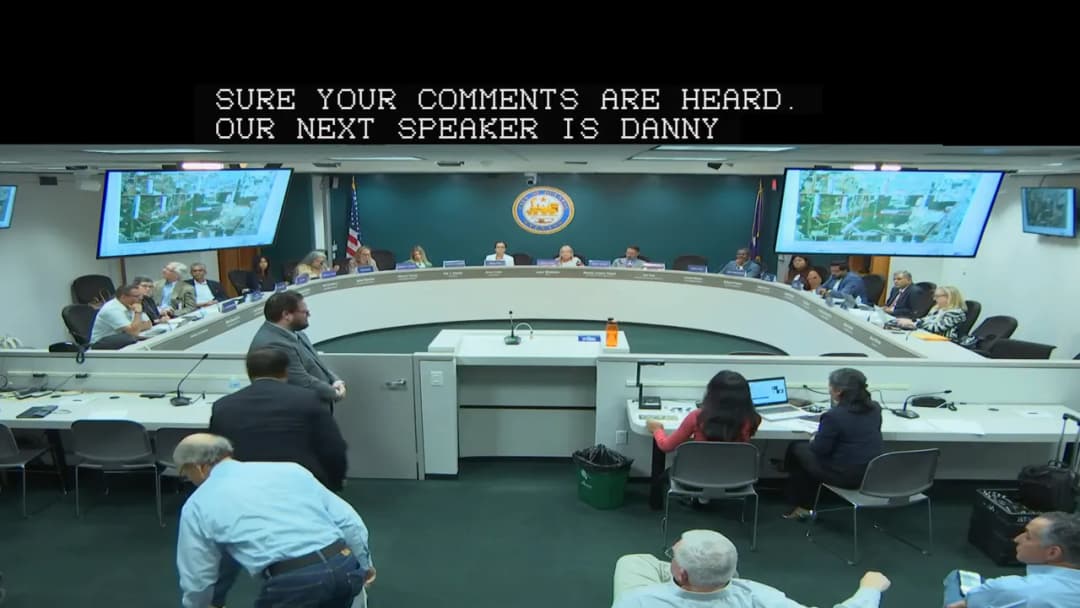
On Thursday, August 21, 2025, the Houston Planning Commission held a workshop meeting at the City Hall Annex to discuss updates to the 2025 Major Thoroughfare and Freeway Plan (MTFP). The meeting was called to order at 1:15 PM by Chair Lisa Clark, with 15 members present. Staff presented three amendment items and received public comments on a separate thoroughfare deletion. No formal votes were taken; the next recommendation meeting is scheduled for September 21, 2025. Public Comments & Testimony - Marlon Musselman – Property owner in Fort Bend County. He addressed the proposed deletion of the East-West unnamed thoroughfare, stating that if fully deleted, his property would lose public access. He requested that a small segment from Rowan Road to Chimney Rock be retained to allow future development. Chair Clark noted that removal of the major thoroughfare designation does not eliminate all roads; local or collector roads may still be built as development occurs. - Danny Wynne – Property owner in the same area and supporter of Mr. Musselman. He urged the Commission to keep the street, arguing that accessibility is essential for property value, development, job creation, and tax revenue. He also noted that the street would help alleviate congestion on Highway 6 and FM 521. Discussion Items - Item C – Cypress North Houston Road (west of FM 1960) – Staff presented three requests: (1) removal of a segment between Perry Road and FM 1960 for a detention project (staff recommends approval as submitted); (2) reclassification of Ceylon Road as a major collector (staff recommends deletion because the corridor should be either local or major thoroughfare); (3) related discussion of Mills Road connectivity, where existing right-of-way is sufficient for future widening. TxDOT supports the request. - Item F – Chimney Rock Road (between San Felipe and Westheimer) – The applicant requested traffic calming measures such as speed cushions. Staff expressed non-support due to high traffic volume (16,000 vehicles per day) and are working with Councilmember Huffman’s office and Houston Public Works on alternative safety improvements (e.g., radar speed signs, painted crosswalks, enforcement). Commissioner Rosenberg questioned the prioritization of vehicles over pedestrians; Chair Clark clarified that speed bumps would be inappropriate for such a heavily traveled road. Staff emphasized that the Commission's role is limited to MTFP classification, not traffic control measures. - Item G – East Tidwell Road (in ETJ east of Beltway 8) – The original application sought a 100-foot major thoroughfare alignment; staff now recommends a 80-foot major collector to better fit the site’s geometry and allow more developable space. The road would terminate at Pinelander Road due to Sheldon Reservoir. Staff is seeking input from Harris County Parks (which leases land from the city). Commissioner asked about involving the county infrastructure department. Key Outcomes - No votes or formal decisions were made; the meeting was a workshop to review and discuss pending MTFP amendments. - The next Planning Commission meeting for MTFP recommendations is scheduled for September 21, 2025. - Public comments on the East-West unnamed thoroughfare deletion (Fort Bend County) were heard; staff will consider them during further review.
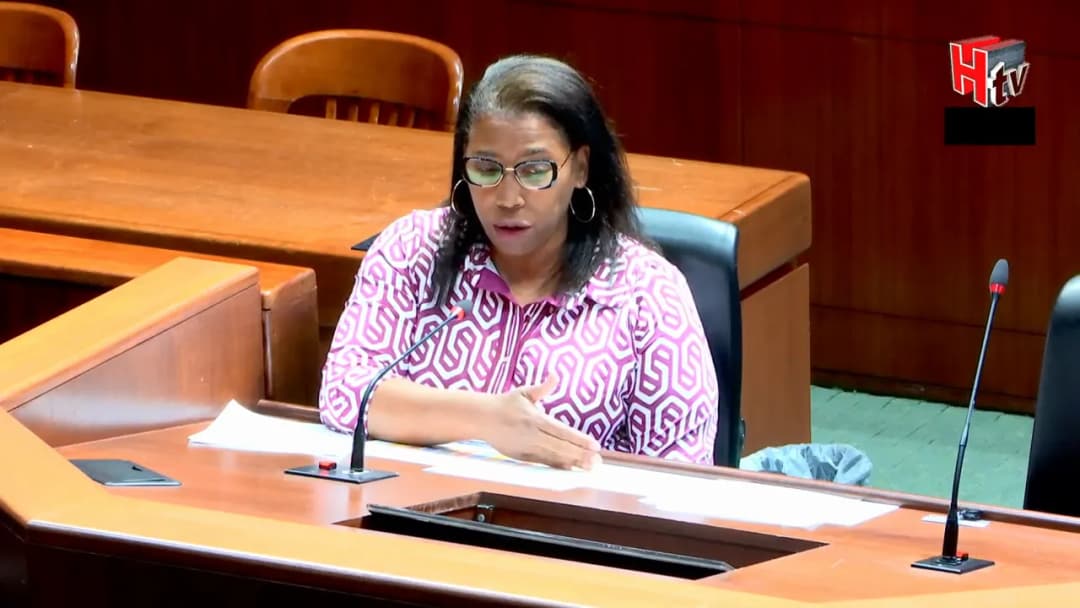
The Joint Budget and Fiscal Affairs and Economic Development Committee met on August 20, 2025, to receive presentations on the Tax Increment Reinvestment Zone (TIRZ) budget overview and schedule, and on the Minority, Women, and Small Business Enterprise (MWSBE) policy update. The meeting was chaired by Councilmember Alcorn (Mayor Pro Tem) and was held in person and virtually, broadcast on HTV. Public Comments & Testimony - Doug (public speaker) expressed concern about potential new fees (trash fee, property tax cap changes) and suggested that the city should first maximize the use of TIRZ funds from prosperous zones (Memorial City, Uptown, Midtown, Upper Kirby, downtown) to spread money citywide before asking citizens to pay more. He also urged drawing more funds from Metro before approaching citizens. He characterized the situation as "the rich get richer and the rest of the city suffers." Discussion Items 1. TIRZ Budget Overview and Schedule (Presented by Assistant Director Jennifer Curley, Mayor's Office of Economic Development) - The presentation covered the authorized use of TIRZs under Chapter 311 of the Texas Tax Code, with 27 active TIRZs in Houston. Financial partnerships exist with Harris County, Houston ISD, Spring ISD, Aldine ISD, Houston Community College, and Lone Star College. Harris County recently began participation in several TIRZs and renewed the downtown interlocal agreement through 2043. - The proposed FY2026 TIRZ budget totals $205 million, with allocations: $96.5 million for street projects, $44.6 million for flood remediation, $22.6 million for pedestrian infrastructure, and $21 million for parks and green space. The five-year total for all projects is $936.3 million. - The project development process includes: City Council approval of the project plan and reinvestment zone financing plan, then coordination with Houston Public Works (HPW) and the Mayor's Assistant Chief Policy Officer, followed by district council member meetings, then City Council budget approval. After approval, the TIRZ team proceeds through design concept report (DCR), 30%/60%/90% design plans, bidding, and construction (typically two years). - Councilmember Alcorn (Chair) expressed concern about project delays and asked about streamlining the process. Curley acknowledged delays, especially with property acquisition, and said the office coaches engineers and assists with HPW to move projects faster. - Councilmember Ramirez asked why TIRZ budgets come months after the fiscal year begins. Curley explained that the schedule follows the city's CIP process and requires coordination with HPW and the Mayor's office, and noted that first-year adjustments for new administration and council members cause delays. She also clarified that the project plan (step one) can come to council at any time and is separate from the annual budget. - Councilmember Martinez emphasized the importance of TIRZs for infrastructure in underserved areas, especially District K. He asked about bond capacity renewals—Curley stated that TIRZs must spend existing capacity before new bonding is approved, typically one or two requests per year. On TIRZ expansions/annexations, the city is near the 25% cap (approximately 23-24% used), but there is room by value. Requests are prioritized based on projects. He also asked about keeping affordable housing dollars within TIRZ zones; Curley noted that only petitioned TIRZs (Hardy and Fifth Ward) are required to set aside one-third for affordable housing, but other TIRZs can enter into agreements with the city or partner with Harris County. - Councilmember Flickinger followed up on annexation and extension, noting the cap and that extensions affect future constraints. Curley explained that extensions require justification for long-term projects. - Councilmember Alcorn asked about the Ernst & Young audit of TIRZ spending, noting the initial five-week phase has taken longer. She requested that findings be shared before approving budgets in September. Curley said she would follow up with the administration. Councilmember Alcorn also noted that TIRZ audits already include detailed spend schedules. - Councilmember Castillo asked about the affordable housing fund (Fund 2409) and whether a similar fund could be established for parks. Curley said it would require an agreement, but TIRZs cannot pay for maintenance—they can build parks, and management districts could handle maintenance. 2. MWSBE Policy Update (Presented by Director Celynthia Hoard, Office of Business Opportunity) - The presentation was based on the disparity study conducted by MGT Consulting using FY18-FY22 data. The study found that 72% of city spend went to non-minority/non-women firms, and 29% to MWSBE firms. Areas of no disparity (where aspirational caps will be used) include: Hispanic Americans in construction and professional services, Asian Americans in professional services, and non-minority women in goods. - New proposed caps based on market availability: Construction: Hispanic American cap at 16%; Professional Services: Asian American cap at 6%, Hispanic American cap at 7%. Other groups with significant disparity retain full participation. The caps are aspirational, not quotas, based on legal precedent (Croson, 1989; Engineering Contractors, 1997). - New programs announced: Veteran and disabled veteran small business certification (based on SBA certification with local presence); certification flexibility for disabled business owners; automatic migration of MBE/WBE firms to SBE status (effective January 1); a mentor-protégé program; rotational contracts (small recurring work orders); and a Small Business Reserve (SBR) program allowing departments to set aside up to 20% of procurement expenditures ($100,000-$500,000 per contract) for certified small businesses to compete only among themselves. - Community feedback received led to planned initiatives: increased outreach with HPW, a financial expo (partnering with Councilmember Davis), enhanced data tracking dashboard, and "Coffee and Contracts" meetups for primes and subs. - The lawsuit challenging the city's MBE program is pending; the disparity study provides current defensible data. - Councilmember Martinez thanked Director Hoard for extensive community engagement and asked when feedback will stop being accepted. Hoard said feedback is never closed, but policies will be set in September for training; adjustments can be made as needed. - Councilmember Davis highlighted the financial symposium planned for October to connect small businesses with banks and bonding companies, noting the Community Reinvestment Act. He emphasized the need for fairness and access to capital beyond city funds. - Councilmember Ramirez requested data on firms that have graduated from NACE codes (which Hoard agreed to share) and asked for access to data confirming the caps (Hoard directed to appendices in the disparity study report). She also asked about minority women not fitting into the non-minority women category. Hoard explained that the WBE category includes all women, but the disparity study separates non-minority women because minority women are counted first as minorities. Data on minority women is available in the awards report. She confirmed no separate category for minority women exists. - Councilmember Carter also requested the number of certified professional service firms by ethnicity, particularly Hispanic and Asian. Hoard agreed to send the data to all council members. Key Outcomes - No formal votes were taken during the committee meeting. - The committee will continue to receive updates on the TIRZ budget schedule and the Ernst & Young audit findings before September approvals. - The MWSBE policy changes are expected to be finalized in September, with departmental training through fall and full rollout targeted for January 2026. - The next scheduled special joint committee meeting will be on Tuesday, August 26, 2025, at 2:00 p.m.
Transcripts
No published pilot transcripts are available for this city. The current pilot covers Sacramento City Council only.
Transcript coverage details
The pilot includes June 9 and two June 23, 2026 sessions. Recording completeness is unknown. Missing, cancelled, incomplete, or changed transcripts can leave gaps. No match does not establish that something was never discussed.