Browse by city
Date range
Search help

Search titles, summaries, topics and stored transcripts together. Keywords may match separately; put the whole query in double quotes for a phrase. Matching follows word analysis, so punctuation is not exact. Both dates are included. Documents are not searched.

SHOWING 71–80 ENTRIES
71
JUN 1, 2026 · HOWARD COUNTY, MARYLAND · COUNTY COUNCIL & BOARDS
Howard County Council Special Meeting – Closed Session Determination – June 1, 2026

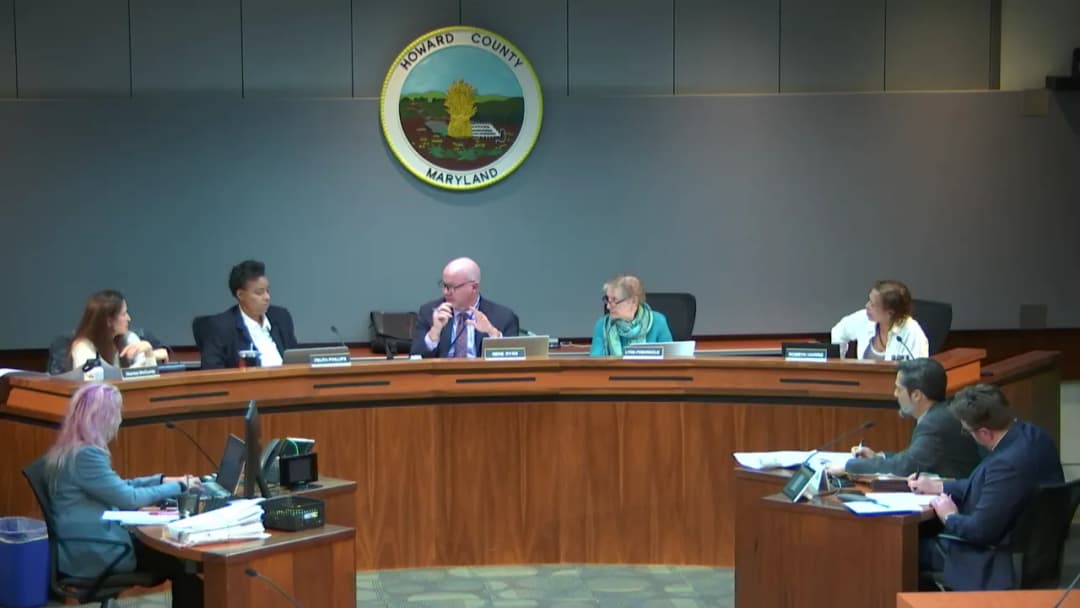
The Howard County Council held a special hybrid meeting on June 1, 2026, at 6:00 p.m. in the George Howard Building, Banneker Room, to determine the need for a closed session under Maryland Code General Provisions Section 3-305(b)(1) and (7). The closed session was proposed to discuss performance, discipline, and removal of one or more board members, and to seek legal advice. The council voted unanimously to close the meeting. Discussion Items - Councilmember Rigby made a motion, seconded by another member, to close the meeting in accordance with Maryland Code General Provisions Section 3-305(b)(1) and (7). The motion cited the need to discuss appointment, employment, assignment, promotion, discipline, demotion, compensation, removal, resignation, or performance evaluation of appointees, employees, or officials under council jurisdiction, as well as to consult with counsel for legal advice. The specific topics were performance, discipline, and removal of one or more board members and legal advice regarding that personnel matter. Key Outcomes - The council voted unanimously (3-0) to close the meeting. Chair Jones, Vice Chair Rigby, and Councilmember Walsh voted in favor. Councilmembers Yungmann and Jung were noted as joining shortly but did not participate in the vote. - The open session was adjourned immediately following the vote, and the council proceeded to closed session. The live stream ended at that point.

PROCEDURAL 100%
72
MAY 28, 2026 · HOWARD COUNTY, MARYLAND · COUNTY COUNCIL & BOARDS
Howard County Board of Appeals Approves Age-Restricted Housing in Ellicott City on May 28, 2026

On May 28, 2026, the Howard County Board of Appeals convened a hybrid meeting to continue deliberations on BA 25-019C, an appeal by Trotter 5857, LLC of a Hearing Examiner's decision regarding a proposed age-restricted adult housing conditional use at 3173 Saint Charles Place, Ellicott City. The board closed the record, deliberated each applicable zoning criterion, and unanimously approved the conditional use with conditions. Consent Calendar - Approved the meeting minutes of May 21, 2026, by unanimous vote. Public Comments & Testimony - No public testimony was taken during this session. The board referenced prior testimony and correspondence; a notice of appearance and a document from the Terra Maria Homeowners Association were deemed inadmissible because they were submitted after both parties rested and outside an open hearing. Discussion Items - Board members systematically reviewed criteria under Section 131.0 of the Howard County Zoning Regulations. - Harmony with General Plan: Chair Ryan and others found the proposal substantially consistent with HoCo by Design, citing policies supporting age-restricted housing, housing diversity, senior downsizing, and environmental protection, while acknowledging tension with the future land use map designation of single-family neighborhood. They concluded compatibility can be achieved through buffering, separation, and design. - Intensity and scale: The proposed 53-unit building on 12.6 net acres (4.2 units per acre) is within the permitted 5 units per acre; 8 acres remain undeveloped; access from Route 40 at a signalized intersection was noted. - Adverse effects: Board members found no greater adverse effects than elsewhere in the zone, noting buffering, downlighting, interior trash rooms, and that similar age-restricted housing already exists adjacent to the site. - Building height/length: The 40-foot height meets the definition for gabled roofs; the building length requires a waiver above 120 feet, and the board accepted the architectural mitigation (varied roof lines, materials, shortened wing near Terra Maria). - Environmental/historic: No greater impact on environmentally sensitive areas; wooded areas and pond preserved; no adverse effect on historic sites. - Density/land use: The proposal replaces a burned-down dwelling unit, bringing the total back to 104 units; no remaining density was otherwise available. - Open space and amenities: 61% open space exceeds the 50% requirement; community space and universal design features comply; 7 moderate income housing units exceed the 10% requirement (5.3 required). - Site design/landscaping: The plan meets Type C buffer requirements and exceeds them; setbacks and screening are adequate. Key Outcomes - The board voted 5-0 to grant the conditional use petition (BA 25-019C) for Trotter 5857, LLC, subject to conditions: 1. Removal of the existing blacktop driveway and installation of plantings to prevent access from Terra Maria. 2. If any exterior trash receptacle is placed on site, it must be screened or buffered. - The board then voted 5-0 to enter closed session under Md. Code § 3-305(b)(7) and (8) for legal consultation regarding a pending subpoena request, refund request, Open Meetings Act complaint, and case statuses.

ZONING AND LAND USE 62% · AFFORDABLE HOUSING 12% · ENGINEERING AND INFRASTRUCTURE 10% · PROCEDURAL 7%
73
MAY 21, 2026 · HOWARD COUNTY, MARYLAND · COUNTY COUNCIL & BOARDS
Howard County Board of Appeals Meeting – May 21, 2026: Trotter 5857 LLC Age-Restricted Housing Appeal

The Howard County Board of Appeals convened on Thursday, May 21, 2026, at 9:00 a.m. in a hybrid format (Banneker Room and WebEx) to consider administrative matters and hear Case BA 25-019C – Trotter 5857, LLC. The case is an appeal of a Hearing Examiner’s denial of a conditional use for a 62-unit age-restricted adult housing apartment building on 13 acres at 3173 St. Charles Place, Ellicott City (RED zoning district). During the hearing, the petitioner amended the proposal to 53 units. The board heard testimony from petitioner’s experts, public witnesses, and a neighboring developer. The board deferred its decision to a future meeting. Consent Calendar - Meeting Minutes Approval (April 23, 2026): The board unanimously approved the minutes for the April 23, 2026 session. Motion by Ms. Fearcob, seconded by Ms. Phillips. Roll call: Chair Ryan – Approved; Ms. Fearcole – Approved; Ms. Harris – Approved; Ms. McCurdy – Approved; Ms. Phillips – Approved. Public Comments & Testimony - Edwin Avant (Terra Maria resident): Opposed the petition, citing traffic safety on St. Charles Place, increased congestion from employees and deliveries, safety concerns from outside workers adjacent to a community playground, noise and disruption from around-the-clock operations, and the change in community character from single-family to a 53-unit commercial facility. He requested the board deny the petition without condition. - Denise Geiger (Terra Maria resident): Stated she is “more than 125% against the process” and opposed the project. She noted the property has been unsuccessfully rezoned for similar uses four times, that the building would be visible and cause noise and light pollution, and that it would lower her property value. She argued that suitable locations exist elsewhere in Howard County (e.g., along Route 1). - Sherry Cummings (Terra Maria resident, adjacent to site): Described her community as a close-knit, traditional neighborhood design. She opposed the development due to light pollution (son’s bedroom west-facing), noise from maintenance vehicles and service trucks, the change from a single-family ruin to a rental apartment building, and potential adverse impacts on her property value. She requested the board deny the petition. - Joel Cummings (Terra Maria HOA representative, adjacent resident): Testified on behalf of the homeowners’ association. He argued that the adverse impacts (noise, light, traffic) are far above what is expected in an RED zone. He noted the building length exceeds 120 feet and that the architectural mitigations presented were insufficient. He also stated that SHA access to Route 40 has not been approved and that the petitioner failed to meet the condition precedent. He asked the board to deny the petition. - Jeffrey Blythe (Terra Maria resident, 25-year resident): Raised acoustics concerns, describing the site as an “amphitheater” where noise would be amplified into the neighborhood (citing an Airbnb event and the mansion fire). He argued that under Section 131.0.b.3.a, the impacts (noise, odors, lighting) would be greater at this site than elsewhere in the same district due to the topography. He also noted the historical grotto and the need to preserve community character. He urged denial. - Jacob Hickmat (owner of adjoining parcel to the west): Testified in opposition, arguing the appeal was untimely (filed 2 days after the 30-day deadline from the December 22, 2025 decision) and that the site lacks frontage and direct access to a collector/arterial road as required by regulations. He claimed the parcel has two density units remaining, not one, and that the intensity (53 units vs. 2 units) is not in harmony with the vicinity. He presented exhibits including the record plat showing access restrictions. Discussion Items - Petitioner’s Opening Statement (Mr. Cole): Argued that the proposal meets all criteria, emphasizing the need for senior apartments in Howard County. He stated that access to Route 40 is not being approved by the board – that will be determined later by the Maryland State Highway Administration (SHA) – and that if SHA denies access, the conditional use would be moot. He noted the building was reduced from 62 to 53 units and the building length corrected to under 200 feet. - Petitioner’s Evidence – Chris Ogle (Engineering Consultant): Testified for over 30 years in Howard County land use. He presented the amended plan (Exhibit 1) showing 53 units, 4.2 units per net acre, 112 parking spaces (exceeding the 1.3/unit requirement), 61% open space (8 acres preserved, exceeding the 50% requirement), and a Type C buffer added to perimeter areas. He stated the proposal is in harmony with the General Plan (HOCO by Design), that the site is ideal for age-restricted housing at a signalized intersection, and that the development right (one dwelling unit) exists per density tabulations. He confirmed that if Route 40 access is not granted, the project cannot proceed. - Petitioner’s Evidence – Matt Herbert (Architect, Design Collective): Presented Exhibit 3 (site sections, elevations, typical floor plan). He explained that the building length (approx. 195–197 feet) exceeds the standard 120 feet but is within the 200-foot maximum allowable with board approval based on architectural design. He described design features (stepped massing, varied materials, roof angles) that mitigate visual impact. He stated the building is placed in the center of the site, below the topographic elevation of the adjoining community, and set back from Route 40. - Board Questions and Discussion: - Board members asked about the Type C buffer, the existing access easement to the stormwater pond, the difference between condo and apartment (apartments with a condominium association), and the density tabulations clarifying parcels A and B. - Chair Ryan raised concerns about potential minor modifications and clarified that only Route 40 access is proposed; no alternative access. - Board members questioned the building length approval criteria (Section 131.0.G) and whether architectural design sufficiently mitigates the increased length. - Ms. Phillips and others asked about acoustics, light pollution, and the “amphitheater” effect raised by opponents. - Rebuttal by Petitioner: Recalled Mr. Herbert to elaborate on architectural mitigations. He explained that the building steps in and out, breaking the 200-foot length into smaller facades (some under 120 feet), using material changes to reduce visual mass. Key Outcomes - No Decision Rendered: The board did not vote on the case. The hearing was adjourned, and deliberation is scheduled for May 28, 2026, at 6:30 p.m. - Objections: The board heard a motion regarding the timeliness of the appeal (raised by Mr. Hickmat). Petitioner’s counsel argued the decision was issued on December 23, 2025 (not December 22), and the appeal filed January 22, 2026 was within 30 days. The board did not rule on the objection, indicating it would be addressed during deliberations. - Burden of Proof: The board reminded that the petitioner must show by a preponderance of the evidence that the conditional use meets all standards; the board must apply the law as written. - Future Meeting: The board will convene on May 28, 2026, to deliberate and issue a decision.

ZONING AND LAND USE 80% · PROCEDURAL 16% · COMMUNITY ENGAGEMENT 2% · PUBLIC SAFETY 1%
74
MAY 21, 2026 · HOWARD COUNTY, MARYLAND · COUNTY COUNCIL & BOARDS
Howard County Planning Board Approves Accessibility Variance and Timber Woods Subdivision – May 21, 2026

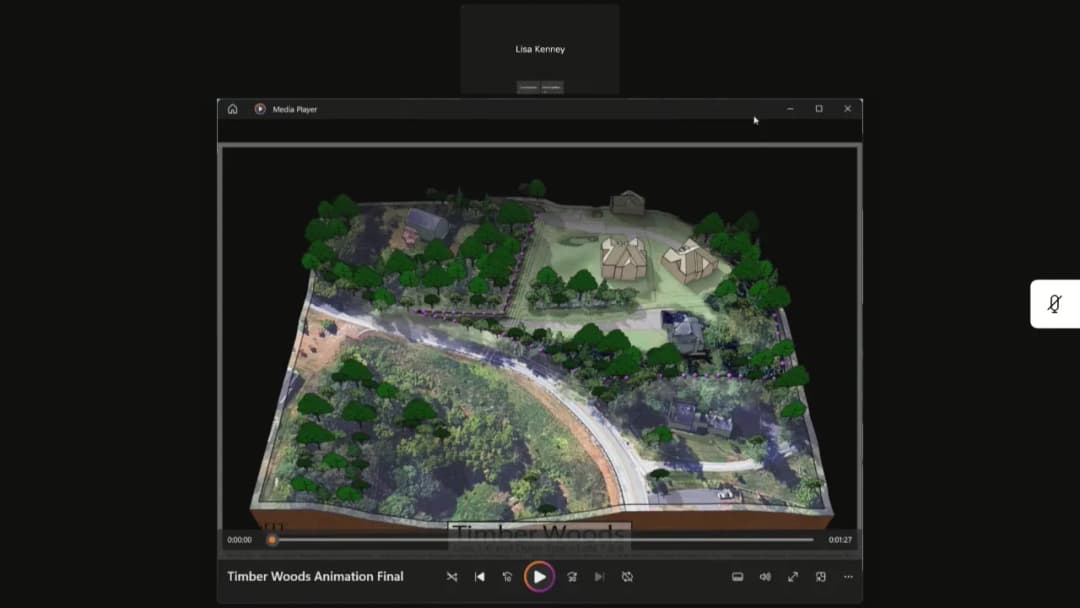
The Howard County Planning Board met on May 21, 2026, in the Banneker Room of the George Howard Building, Ellicott City, Maryland. The board considered two items: a concept site plan for an accessibility elevator addition requiring a setback variance, and a preliminary equivalent sketch plan subject to scenic road review. Both items were approved. Chair Items and Executive Secretary Items - No chair items were reported. - Mary Kendall, Deputy Director, serving as executive secretary in place of Linda Eisenberg, reported no executive secretary items. CSDP-26-001 – Karen Mosel (Village of Oakland Mills) - Staff presented the request for a concept site development plan for the property at 5491 Sleeping Dog Lane. The applicant sought to reduce the required side yard setback from five feet to three feet (a two-foot encroachment) to accommodate a 41-square-foot elevator addition for accessibility improvements. - Planning staff reviewed the criteria under Section 125.0.G.4.d, including whether the adjustment would alter neighborhood character, impair adjacent properties, or be detrimental to public welfare, and whether practical difficulties or better design justified the request. - The petitioner's representative, Sarah Conover, stated the two-foot encroachment is the minimum relief necessary to support aging in place and documented safety concerns. She explained that the left side of the home contains a 20-foot drainage and utility easement and would require removal of bedroom space; the back would require modifications to windows, HVAC equipment, and a deck, and would limit elevator access to the primary suite. The proposed right-side location connects directly to living spaces on both levels with minimal disturbance. - The elevator is sized 36 inches by 54 inches to meet safety requirements. The applicant received written approval from the Oakland Mills Community Association Residential Architectural Committee on March 19, 2026. - The board approved the concept site plan. The motion passed with three votes in favor; one board member experienced audio issues and was not part of the initial vote. SP-24-003 – Timber Woods (Scenic Road Review) - Staff presented the preliminary equivalent sketch plan for Timber Woods, a subdivision creating five new single-family lots, incorporating one existing lot, and creating two open space lots (lots 7 and 8). The property fronts on two scenic roads: College Avenue and Newcut Road. - The review was conducted under Section 16.125(c)(1) of the Subdivision and Land Development Regulations, focusing on access and buffers. No new access points are proposed; the subdivision will use an existing private right-of-way and driveway. The forested buffer along Newcut Road will be preserved through a forest conservation easement dedicated to Howard County. - Applicant's attorney Brian Shepter argued that the proposal preserves the scenic character of both roads by using existing access, making no changes to Newcut Road frontage, and minimizing visual and physical impacts along College Avenue. Engineer Rob Bogle presented a visual assessment, including photos and an animation, showing that the proposed homes would not be visible from College Avenue due to topography and retained vegetation. A stormwater management facility is required under Ellicott City flood-related criteria and would be tucked into the slope. - A board member questioned sight lines and planned improvements to the existing driveway. The applicant noted that the access location was chosen for safety and a flatter grade, and that site distance was evaluated. The applicant also mentioned community outreach, including walking the neighborhood and preserving a neighbor's important tree. - One board member initially raised a potential recusal because of past employment with Timmins Group, the former engineer, but it was confirmed that the project had moved to Xite Engineering more than six months prior, so no conflict existed. - The board approved the scenic road review for SP-24-003 as presented, with a unanimous vote. Key Outcomes - CSDP-26-001 was approved, allowing a 2-foot encroachment into the side yard setback for the elevator addition. - SP-24-003 was approved with respect to scenic road access and buffer criteria. - No public testimony was offered for either item.

ZONING AND LAND USE 66% · PROCEDURAL 21% · ENGINEERING AND INFRASTRUCTURE 6% · COMMUNITY ENGAGEMENT 3%
75
MAY 20, 2026 · HOWARD COUNTY, MARYLAND · COUNTY COUNCIL & BOARDS
Howard County Council Legislative Session – Budget Adoption - May 20, 2026

The Howard County Council convened on May 20, 2026, at 12:00 p.m. in a hybrid legislative session to give final consideration to the Fiscal Year 2027 executive proposed budget and related legislation. The meeting, which lasted approximately four hours, included debate on collective bargaining agreements, the FY27 operating budget, bond authorizations, fee schedules, and tax resolutions. Consent Calendar - SAO1-FY2026: Supplementary Budget for Department of Public Works ($1,000,000 for snow removal) – approved unanimously. - CB29-2026: Emergency appropriation for snow removal, Corrections overtime, and SDAT billing – approved unanimously. - CB30-2026: Emergency appropriation for Employee Benefits Self-Insurance Fund ($5,200,000) – approved unanimously. - CR74-2026: Board of Education FY26 operating budget transfer ($3,635,000) – approved unanimously. - CB32-2026: Pay Plan for FY27 – approved unanimously. - CB34–CB39: Bond authorizations for capital projects (totaling over $364 million) – all approved with minor no votes from Councilman Youngman on CB38. - CR76-2026: Capital Program and Extended Capital Program – approved unanimously. - CR77-2026: Howard Community College FY27 operating budget – approved unanimously. - CR78-2026: Howard County Library System FY27 operating budget – approved unanimously. - CR79-2026: Board of Education FY27 operating budget ($875.7 million) – approved unanimously. - CR80-2026: Health Department FY27 operating budget – approved unanimously. - CR82–CR94, CR96–CR99: Various fee schedules, taxes, and rate resolutions – approved with occasional dissenting votes from Councilmembers Walsh (CR85) and Youngman (CR88). Discussion Items Police Collective Bargaining Agreements (CB26, CB27, CB28) - Council debated three police union contracts. Councilwoman Walsh raised concerns about disparity in cost-of-living adjustments (COLAs) across bargaining units, noting that rank-and-file officers (Lodge 21, 407 members) received 4% COLAs while dispatchers and other county employees received less. Councilman Youngman warned that 7% annual budget growth is unsustainable. CB26 passed 4–1 (Walsh dissenting), CB27 passed 4–1 (Walsh dissenting), CB28 passed 5–0. FY27 Budget and Appropriation Ordinance (CB33) – Major Amendments - Amendment 8: Councilman Youngman proposed cutting $1 million from the county-owned community solar project at Carrs Mill landfill and parking lots, citing disproportionate solar impacts on rural West County and loss of local control. Opposition noted the project would serve 500 low-income households and qualify for $9.6 million in federal/state incentives. Amendment failed 1–4 (Youngman yes). - Amendment 9 (as amended): Councilwoman Walsh sought to condition $1 million in DTCS funding on granting the Office of Inspector General unrestricted access to specified IT systems (Project Docs, Pictometry, Comcate, Power BI, online payment). After debate and a revised data-use agreement signed by the administration granting access to those systems plus others, amendment 9 as amended failed 1–4 (only Walsh supporting). - CB33 as amended passed unanimously. Water and Sewer Rate Increase (CR81) - The council considered two amendments to reduce the proposed 12.3% rate increase. Amendment 1 (10%) passed unanimously. Amendment 2 (Councilwoman Young) further reduced it to 6%. Debate centered on affordability vs. long-term structural deficits: Dr. Sun warned a 6% increase would require 15% increases in FY28. Amendment 2 passed 3–2 (Jones and Rigby dissenting). CR81 as amended passed unanimously. Retirement Incentive Program (CR75) - An amendment shifted the eligibility election date from July to August to allow more processing time. The administration assured negligible fiscal impact. Amendment and main resolution passed unanimously. Key Outcomes - FY27 Budget Adoption: The council adopted the $2.1+ billion FY27 budget, including $875.7 million for the school system, increased water/sewer rates (6% in FY27), and a retirement incentive program. - Police Contracts: All three police union agreements were approved, maintaining 4% COLAs for sworn officers and 3% for dispatchers. - Inspector General Access: Despite failed budget condition, the administration signed a revised data-use agreement providing access to multiple IT systems, including those requested by Councilwoman Walsh. - Bond Authorizations: The council authorized $176.6 million for county capital projects, $15.6 million for road construction, $91.4 million for water/sewer, $67.4 million for water quality, $9.1 million for watershed protection, and $4.7 million for broadband. - Taxes and Fees: Property, fire/rescue, transfer, recordation, and building excise taxes were held flat; moderate income housing fee increased from $3.71 to $3.77 per square foot. The meeting concluded with closing remarks from council members reflecting on their eight years of service and the fiscal challenges ahead.

PROCEDURAL 30% · BUDGET EQUITY ANALYSIS 27% · WATER AND WASTEWATER MANAGEMENT 9% · TECHNOLOGY AND INNOVATION 8%
76
MAY 18, 2026 · HOWARD COUNTY, MARYLAND · COUNTY COUNCIL & BOARDS
Howard County Council Legislative Public Hearing – May 18, 2026

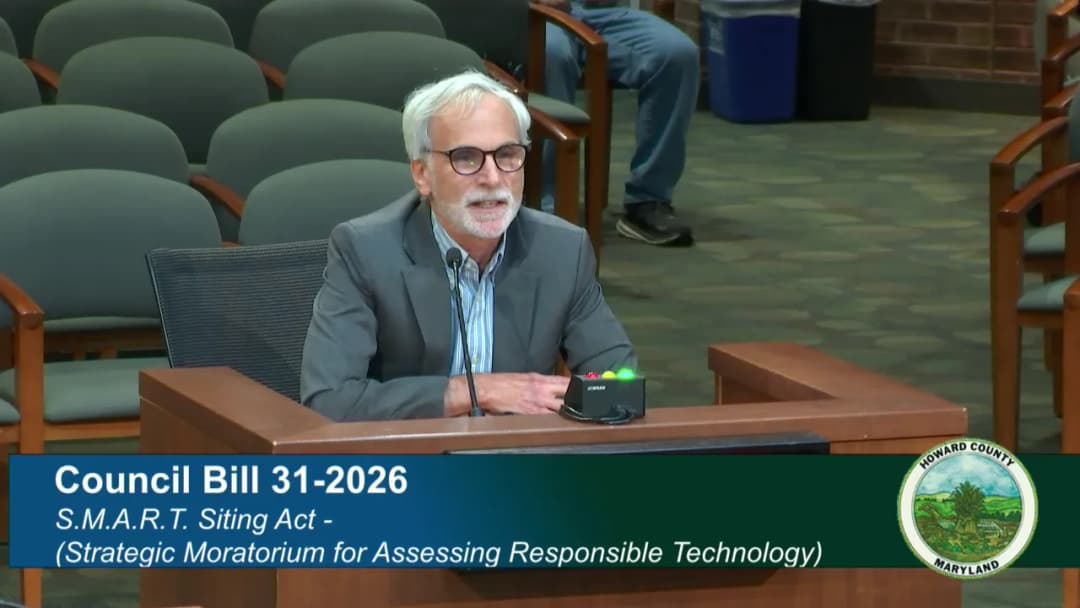
The Howard County Council held a hybrid legislative public hearing on Monday, May 18, 2026, at 7:00 p.m. The meeting was streamed online and broadcast on local channels. The council heard testimony on numerous appointments, financial bills, and two major zoning proposals: CB25 (age-restricted cottage clusters) and CB31 (temporary moratorium on data centers). The hearing included special appearances by students from local high schools who testified on appointments and CB31. No final votes were taken; the council will consider budget legislation on May 20 and non-budget items on June 1, 2026. Appointments and Reappointments - Adult Public Guardianship Review Board: Joseph C. Hudzik (attorney member) testified, highlighting his experience in health care law and federal oversight. - Asian American and Pacific Islander Commission: New appointments: Ning Li, Keith Louie, Seema Agarwal-Harding, Swati Sharma, J. Jason Zhao; reappointments: May-Fong Tsay, Young Ran Smith, Kimberly Eggborn, Sameer C. Ahirrao. Speakers emphasized community engagement and supporting immigrant families. - Commission for Women: Rebecca Paulson Fields, Bronzwyn Palmer, and student Jenna M. Campbell (junior at River Hill High School) testified. Campbell won first place in the commission's Women's History Month poster contest. - Martin Luther King, Jr. Holiday Commission: New appointments: Angel M. Robinson, Khalida S. Burton, Raeleena C. Collington, Allison Corinne Nichols, Anjali Thaker (sophomore at Glenelg High School); student Shemika Preston also testified via WebEx as a candidate for District 4. - La Alianza Latina Commission: Sandy Pagan and Erika Tustin testified, with Pagan emphasizing early childhood education and Tustin describing community programs. - Recreation and Parks Board: Student member Eli Lua Debbie (junior) testified, detailing his research on AI and energy efficiency. - Historic Preservation Commission: James R. Bartlett testified, noting his architecture background and experience repurposing historic industrial buildings. Public Comments & Testimony - Student Testimony (CB31): Multiple students from Illuminate Maryland and other groups strongly urged passage of CB31. Rashid Gutsum (junior, Marriott's Ridge HS) stated that current zoning dates to 1993 and that a temporary moratorium is needed to study energy, water, and noise impacts. Siddharth Kerr Gouger (River Hill HS) noted that data centers can consume energy comparable to small towns and millions of gallons of water annually. Drew Doberia (junior, River Hill HS) cited that an average facility can use up to 500,000 gallons of water per day and a hyperscale center can demand electricity equivalent to 80,000 homes. - CB25 (Cottage Clusters): Francine LePresti (Columbia resident and former data center operator) supported the zoning change but recommended raising unit size limit to 1,200 sq ft and ensuring Columbia inclusion. Housing Affordability Coalition (Jackie Ying Ng) wholeheartedly supported, recommending affordability guardrails such as limiting expensive amenities. Cindy LaFollette (District 1 resident) expressed concerns about density, flooding, and parking, urging minimum lot size of 1 acre and homeownership requirements. Barry Mehta (developer) supported but opposed mandatory DAP (Design Advisory Panel) review, calling it costly and cumbersome; he recommended a 22-foot height limit for two-story cottages. Joel Horowitz (Columbia) raised concerns about ambiguous amenity definitions and a 10-acre minimum parcel size being too large. - CB31 (Data Center Moratorium): The majority of testifiers supported the bill. - Francine LePresti provided technical detail on data center types, recommending a 20-megawatt threshold and an 18-month sunset. - Dave Arnt (Maryland Legislative Coalition) highlighted air pollution from diesel generators and noise vibrations; noted that Montgomery, Baltimore City, and Prince George's counties are also considering moratoriums. - Stu Cohn (Howard County Citizens Association) supported but questioned the bill's definition of "temporary" and exemption for public schools/colleges/libraries; suggested task force membership criteria. - Carl Latkin (Sierra Club) noted that Baltimore City passed a one-year moratorium the prior week and Montgomery County is considering two years; warned that data centers could increase electricity costs and offset climate goals. - Doug Siglin (Chesapeake Climate Action Network) urged the council to direct the task force to specific outcomes, such as 100% carbon-free energy from day one and battery backup preference over diesel. - Monica O'Connor (HOCO Climate Action) cited a Gallup poll showing 70% of Americans oppose local data center construction; warned of water consumption up to 5 million gallons per day per facility and electricity cost increases. - Murdy Chala (30-year resident) described Meta's Hyperion project in Louisiana requiring 5 gigawatts of power (equivalent to 750,000 homes) and Maryland's total generation capacity of 12 gigawatts; called for an environmental impact statement. - Ruth Alice White (45-year resident) noted the state study due later in 2026 and stressed the need for Howard-specific impact analysis. - John Bonstingle (retired teacher) urged consideration of societal harms beyond local impacts. - Kelly Schultz (Maryland Tech Council) respectfully opposed the moratorium as drafted, arguing an 800,000 sq ft data center could generate 5,000 construction jobs, 500 permanent jobs, and $14 million in annual state tax revenue; she requested exemptions for public health and national security facilities. - Shemika Preston (candidate for District 4) supported an 18-month pause, emphasizing need for transparent job creation data, clean energy requirements, and community benefit agreements. - Collective Bargaining (CB26-28): Deputy CAO Jamar Harry testified in support, detailing COLA increases and new steps. For Police Lodge 21: 1% COLA effective July 2027, 3% effective Jan 2028, and a new Step 22 (3.25% above Step 21); fiscal impact $1.2M in FY27, $4.2M in FY28. For Supervisors Lodge 143: 4% COLA effective Jan 2027; FY27 impact $289,000. For Dispatchers: 1.5% COLA July 2026, 1.5% Jan 2027, 3% Jan 2028, plus new Step 20 and Step 21; FY27 impact $158,000, FY28 $325,000. Councilmember Walsh questioned disparity between dispatcher and officer increases. - Emergency Appropriations and Supplemental Budget: Yosef Cabeta (DPW) explained SAO1-FY2026 for $1M to cover snow removal budget overruns due to eight snow events. Holly Sun (budget director) presented CB29 (emergency $1.7M shortfall for snow removal, corrections overtime, and SDAT billing correction) and CB30 (emergency $5.2M for employee health self-insurance fund due to high claims and specialty prescriptions). - School Budget Transfer (CR74): Darren Conforti (HCPSS) requested approval of $3.635 million year-end categorical transfers, budget neutral. - Pay Plan and Retirement (CB32, CR75): Ms. Bennett testified that CB30 (health fund) addressed unexpected cost increases from the Inflation Reduction Act, large claims (16% increase), and specialty drugs; CR75 establishes FY27 retirement incentive; CB32 sets FY27 pay plan with collective bargaining adjustments. Discussion Items - CB25 – Age-Restricted Adult Housing Cottage Clusters: Department of Planning and Zoning (Julia Sauer) supported the ZRA as missing middle housing, noting 200+ attended a public webinar and the Planning Board voted 3-0 to recommend with modifications (reduced perimeter setback from 50 ft to 25 ft, refined landscaping, clarified ODP process). Testimony from public raised concerns about unit size, height (20 ft limit), parking, lot minimums, and affordability. No council deliberation occurred; hearing was for testimony only. - CB31 – S.M.A.R.T. Siting Act (Data Center Moratorium): Introduced by Vice Chair Rigby, who stated it would create a temporary pause (up to 18 months) and a task force to study data center impacts and recommend best practices. She emphasized using the time to prepare for future development. Testimony was sharply divided: environmental and community groups strongly supported, while industry representatives (Maryland Tech Council) opposed a flat moratorium, advocating a faster study without a freeze. No council deliberation during the hearing. Key Outcomes - No votes were taken on any agenda item during the legislative public hearing. - The council will hold a legislative session for final consideration of budget legislation (CB26-30, SAO1, CR74-75, CB32-39, etc.) on Wednesday, May 20, 2026, at 12:00 p.m. in the Banneker Room. - A legislative session for non-budget legislation (appointments, CB25, CB31, and fee resolutions) will be held on Monday, June 1, 2026, at 7:00 p.m. in the Banneker Room. - The council administrator noted that written testimony will be fully considered before actions are taken. A work session for possible additional review is scheduled for Tuesday, May 26, 2026, at 10:00 a.m. in the C. Vernon Gray Room.

ZONING AND LAND USE 14% · ENERGY POLICY 13% · COMMUNITY ENGAGEMENT 12% · ENVIRONMENTAL PROTECTION 8%
77
MAY 15, 2026 · HOWARD COUNTY, MARYLAND · COUNTY COUNCIL & BOARDS
Howard County Council Operating Budget Work Session #4 – May 15, 2026

The Howard County Council held its fourth FY2027 executive proposed budget work session in a hybrid format on May 15, 2026, from 10:00 a.m. to 4:30 p.m. The meeting covered the Sheriff’s Office operating budget, capital projects for Ellicott City Safe and Sound (North Tunnel, Maryland Avenue culverts, T1 tunnel, NC3 pond), Downtown Columbia projects (Performing Arts Center, Transit Center, TIF district), the County Council/Auditor budget, and proposed budget amendments. Key discussions focused on property acquisition costs, project prioritization, funding gaps, and the Office of Inspector General’s access to records. Discussion Items - Sheriff’s Office FY2027 Operating Budget: Sheriff Harris (virtually) highlighted the need for 11 additional deputies and vehicles for courthouse security due to a 30,000 increase in visitors and 633 more transports. The proposed budget shows a 13% increase excluding chargebacks, with total other expenses rising 24.3% ($288,000) largely due to vehicle chargebacks. Councilmember Yungmann questioned the necessity of new positions; Sheriff Harris explained industry standards require two deputies per defendant in criminal cases, and current staffing of 24 deputies falls short of the needed 40. - Ellicott City Improvements and Enhancements: Mark DeLuca (retiring program manager) and Zach presented progress on the North Tunnel (18-ft diameter, mile-long, up to 150 ft deep, TBM “Rocky” near launch), completed ponds, and design status of Maryland Avenue culverts (95% design), T1 tunnel (35% design), and NC3 pond (concept). Total project cost estimated at $425.6 million, down from $430 million, with FY27 funding of $39.2 million (state grants/loans), leaving a $65 million gap. Property acquisitions were contested: Mount Ida purchased for $4 million (appraised at $3M by county, $6M by owner), West End Service Center for $8.5 million, and a Braybrook HOA easement for $18,000 (not $1.86M). Councilmember Walsh questioned the lack of quantification for CSX bridge improvements and the apportionment of costs. Councilmember Youngman and Rigby suggested reassessing T1 and NC3 ponds given high costs versus limited flood depth reduction. The administration indicated Maryland Avenue culverts and the tunnel are the highest priority. - Downtown Columbia Projects: Carl DiLorenzo presented the Performing Arts Center (PAC) budget: $68.7 million total, $49.1 million hard cost construction, $9 million for parking garage, building cost $586/sq ft. Square footage reduced from 125k to 83k (county exclusive 55k, programmable 39k). Councilmember Youngman questioned why costs remained the same despite reduced square footage and the use of a sole-source contract with Whiting Turner, which she argued violated a 2023 law requiring council review of no-bid contracts. The administration defended the CM-at-risk delivery method due to site complexity (blasting near active theater). TIF district fund balance is $13.4 million, but deficits are projected for several years starting FY2028, dropping to $5 million before recovering around 2037. Transit center funding request of $250,000 (on top of $200,000) for study and grant preparation was questioned by Councilmember Walsh and Youngman given no site selected and decade-long timeline. - County Council / Auditor: Michelle Harrod and Jenny McGregor presented a flat budget with an increase in chargebacks and a request for an IT audit manager position. Councilmember Youngman supported the position. - Budget Amendments: Councilmember Walsh proposed an amendment to tie licensure renewals to granting the Office of Inspector General direct access to all electronic systems, citing lack of compliance with the enabling legislation. Councilmember Yungmann proposed cutting the proposed water/sewer fee increase by half to relieve pressure on residents and businesses. The administration noted a data use agreement for SAP and UKG was finalized that morning, providing some access. Council agreed to jointly request an Attorney General opinion on the IG’s access to records under MPIA. No votes were taken on amendments during the work session. Key Outcomes - No formal votes were recorded; the meeting served as a discussion session for the FY2027 budget. - The council expressed intent to request an Attorney General opinion on the scope of the Office of Inspector General’s access to county records. - Councilmember Yungmann’s amendment to reduce the water/sewer fee increase by half will be considered along with the administration’s proposed smaller reduction. - Councilmember Walsh indicated she would withdraw her amendment regarding licensure renewals but continued to urge compliance with the inspector general law. - The meeting adjourned after discussions of amendments, with the council set to deliberate the final budget in subsequent sessions.

FISCAL SUSTAINABILITY 13% · INFRASTRUCTURE DEVELOPMENT 12% · ENGINEERING AND INFRASTRUCTURE 10% · WATER AND WASTEWATER MANAGEMENT 10%
78
MAY 12, 2026 · HOWARD COUNTY, MARYLAND · COUNTY COUNCIL & BOARDS
Howard County Alcoholic Beverage Hearing Board Meeting – May 12, 2026

The Howard County Alcoholic Beverage Hearing Board convened on May 12, 2026, at 6:30 p.m. in the Banneker Room and via WebEx to consider four liquor license applications. All four cases were approved unanimously. The meeting included a change of resident agent, three new license applications, and public testimony in support of two of the new establishments. Approval of Minutes - The board unanimously approved the minutes of the March 24, 2026 meeting. (Chair Chen, Mr. Coleman, Ms. Johnson, Ms. Kim all voted yes.) Case 1: Change of Resident Agent – Nottingham's - Applicant: Robert Jirak, managing partner of Nottingham's, requested approval to replace Brian Kannee as resident agent for the Class D beer, wine & liquor 7-day on-sale license at 8850 Stanford Boulevard, Columbia. - Testimony: Mr. Jirak stated he has been at Nottingham’s for 12+ years, working 60–70 hours weekly. He has no knowledge of any alcohol violations during his tenure. He will keep existing management staff, all alcohol awareness certified. - Board Discussion: Board members noted the straightforward nature, long tenure, and lack of violations. Unanimous approval. Mr. Jirak waived appeal. Case 2: New License – Bandh Darwaza - Applicants: Venkata Krishna Kukatla, Jay Parimal Gandhi, and Mukesh Bhikhubhai Panchal (as required U.S. citizen) for Bandh Darwaza, LLC, a 1,463 sq. ft. Indian speakeasy at 6000 Merriweather Drive, Suite B-135, Columbia. - Testimony: Consultant Martin Johnson presented. Mr. Gandhi described the concept: a cocktail bar using natural Indian ingredients (fennel, cumin, turmeric, curry leaf) and traditional methods (infusion, clarification, fermentation). Only the second Indian speakeasy in the U.S. (first in NYC). 48 indoor seats, 8 bar seats, no outdoor service. Hours: Sun–Thu 4:30 p.m.–11 p.m., Fri–Sat 4:30 p.m.–12 a.m. Opening targeted August 15, 2026. Both Gandhi and Kukatla will be on-site daily (40+ hours/week). All servers will be alcohol awareness certified. No violations. Unanimous approval. - Board Discussion: Board lauded the uniqueness and thorough presentation. Applicants waived appeal. Case 3: New License – Vesper - Applicant: David Upton Carney for Vesperee, LLC t/a Vesper, a 1,895 sq. ft. restaurant with a 624 sq. ft. two-level patio at 8210 Main Street, Ellicott City. Requested Class B on/off sale license. - Testimony: Mr. Carney, owner of The Wine Bin for 18 years, described an upscale restaurant with a Michelin-starred chef (Rachel Bindle). Seating: 50 indoors (bar seats 12), 20 on lower patio. Upper patio used as holding area. Hours: Closed Mon–Tue; Wed–Thu 4–10 p.m.; Fri–Sat 4–11 p.m.; Sun 11 a.m.–7 p.m. Over 55% of income from food. No violations at Wine Bin. Proposed policies include ID checking, refusal of service, and training. Seven cameras for monitoring. No live music. Public supporters spoke. - Public Testimony: - Heather Gatano (Ellicott City resident) spoke in person, emphasizing the need for new restaurants in historic Ellicott City (down six restaurants since pre-flood). She praised Mr. Carney’s community involvement and Chef Rachel’s professionalism. - Matt Fleming (Ellicott City resident) spoke via WebEx, voicing strong support, citing Mr. Carney’s expertise and the restaurant as an economic engine. - Board Discussion: Board noted Carney’s experience, community support, and unique concept. Unanimous approval. Mr. Carney waived appeal. Case 4: New License – Ironwood Kitchen - Applicants: George Louis Strott and Alan Donald Strott for JCS Food Group, LLC t/a Ironwood Kitchen, a 2,240 sq. ft. restaurant with a 760 sq. ft. front and side patio at 13380 Clarksville Pike, Highland. Requested Class B on/off sale license plus wine corkage permit. - Testimony: Consultant Martin Johnson presented. George Strott (50% owner, 18-year GM/executive chef at Michael’s Pub) described American Nouvelle cuisine with French flair. Seating: 55 indoors, 18 bar seats. Bar area includes a divider for mingling. Patios fenced with aluminum fencing; signage will indicate no alcohol beyond. Hours: 11 a.m.–11 p.m. daily. 30–35% of income from alcohol. Training program including hosting alcohol awareness classes for other restaurants. Alan Strott (50% owner) will work 20 hours/week; his other business is a hair salon. No violations. Public supporters in attendance but no formal testimony. - Board Discussion: Board noted the applicants’ extensive experience (George Strott 75–80 hours/week) and strong community support. Unanimous approval. Applicants waived appeal. Key Outcomes - All four applications were approved unanimously by the board (Chair Chen, Mr. Coleman, Ms. Johnson, Ms. Kim). - Each applicant waived the right to appeal. - The board acknowledged strong community support for Vesper and Ironwood Kitchen. - The next steps for each licensee: complete any remaining construction and inspections before opening. Note: The meeting began at 6:30 p.m., though the system timestamp noted 11:30 a.m. UTC. The correct local time per the agenda is used.

CANNABIS REGULATION 53% · PROCEDURAL 17% · ALCOHOL REGULATION 10% · COMMUNITY ENGAGEMENT 8%
79
MAY 11, 2026 · HOWARD COUNTY, MARYLAND · COUNTY COUNCIL & BOARDS
Howard County Council FY2027 Operating Budget Work Session #3 – May 11, 2026

This was the third in a series of work sessions on the FY2027 Executive Proposed Operating Budget. The hybrid meeting, convened at 10:00 a.m. and lasting into the afternoon, reviewed budgets for the University of Maryland Extension, Community Resources & Services (DCRS), Community Service Partnerships (CSP), County Executive, County Administration, Finance, Office of Law, Economic Development Authority (EDA), Technology & Communication (DTCS), Housing & Community Development, and Non-Departmental expenses. Council members and department heads discussed funding levels, operational challenges, and the sustainability of current spending patterns. University of Maryland Extension - Cheryl Bennett (County Extension Director) and Natasha Mile (Master Gardener Coordinator) presented. The Master Gardener Program costs the county $58,000 annually but generated $771,294 in volunteer value in 2025 – a 13:1 return. In 2025, master gardeners donated over 4,000 pounds of produce to the food bank and supported 600+ families. - A clarification emerged: the proposed budget listed 7 extension employees, but the office actually has 2 county employees and 9 University of Maryland employees (11 total). The discrepancy was noted. Community Resources & Services (DCRS) and Community Service Partnerships (CSP) - Director Jackie Scott described a level budget despite rising demand across all populations. Home visiting programs grew from 78 families (FY25) to 90 this year. Office on Aging saw a 35% increase in service demand and senior center attendance. Council members expressed concern that flat funding is unsustainable. - Councilmember Youngman highlighted the need for future investment, noting the shift from school enrollment growth to senior demand. - Councilmember Walsh questioned the lack of clarity around the 988 behavioral crisis response. It was revealed that the mobile crisis team is funded through multiple sources (CSP, health department, state/federal), and no single entity is accountable. The health department manages the grant, but coordination was deemed unclear. - Councilmember Youngman raised concerns about large, multi-year increases for certain CSP grantees (e.g., Community Ecology Institute with a 10% increase plus a $48,000 YEP grant). He questioned whether programs are reaching enough participants and meeting performance standards. - Councilmember Young inquired about the opioid restitution fund and community reinvestment fund. So far, opioid funds have been awarded to grantees for Jan–June 2026; the community reinvestment fund is still being structured with a stakeholder process and has not yet distributed money. About $3.1 million is available for FY2027, but state approval is required. - Councilmember Young noted an audit finding that CSP grantee oversight relied too heavily on undocumented institutional practices. DCRS agreed and is implementing structural changes, including a new senior fiscal position, without adding staff. County Executive - Chief of Staff Felix Pasheen presented. The budget has no new initiatives; the increase is driven by fixed costs. Accomplishments include progress on Ellicott City Safe and Sound, North Laurel Pool, and Capitol Line Center. ARPA funds must be spent by December 2026. - A separation cost of $750,000 is allocated in PAYGO for transitioning employees. Councilmember Young asked about transition planning details. - Councilmember Walsh questioned salary growth in the Executive Office: from $2 million (13 employees in FY20) to $3.4 million (15 employees in FY27). She expressed concern about optics when other departments face cuts. Pasheen attributed increases to turnover, health benefits, and step increases. County Administration (Benefits & Risk) - Chief Administrative Officer Brandy Gans highlighted a voluntary retirement incentive program and ongoing class/compensation study. The Employee Benefits Fund is proposed at $101.1 million, up 19.2%, driven by a 27% increase in prescription costs (30% of that from GLP-1 drugs) and large claims. - Human Resources Director Ms. Bennett detailed cost containment strategies that saved $32 million in negotiated discounts, $2.7 million from specialty drug rebates, and other measures. Despite these efforts, the fund faces a cumulative deficit projected at $11 million by end of FY27. The FY27 budget includes a $5 million PAYGO infusion to reduce that deficit. - Councilmember Youngman noted that chargebacks to external agencies (libraries, HCC) are only increasing 3%, while county government absorbs a 26% increase. This is unsustainable, requiring future councils to address benefit costs. - Councilmember Rigby asked about partnerships with the school system on joint RFPs to reduce administrative costs; preliminary discussions have begun. - Councilmember Walsh raised concerns about delayed access for the Inspector General to digital records. County Solicitor Cook stated a data-use agreement was provided in mid-March and administration returned comments within eight days; remaining issues involve compliance with state/federal privacy laws. Finance - Director Rafi Heeler reported a level budget. Debt service is declining slightly due to refunding that saved over $1 million. The county maintains its AAA bond rating. - Councilmember Young asked about the plastic bag fund compliance rate (34% non-compliance). Heeler explained it stems from new businesses and a training vendor with turnover. Councilmember Young also requested an updated list of ARPA expenditures. Office of Law - County Solicitor Gary Cook presented a maintenance budget with one new partially funded attorney position. The office has 19 attorneys and 7 paralegals handling 69 open lawsuits, 266 DSS cases, 742 red light camera cases, and other matters. Collections for the county total $2.3 million in FY25 and $1.26 million so far in FY26. Opioid settlements have brought in $7.7 million to date; Purdue bankruptcy plan may generate about $2.5 million over 15 years. - Councilmembers praised the office’s work and acknowledged the need for more staff given rising workload. Economic Development Authority (EDA) - Leadership presented on business attraction and retention. Councilmember Youngman inquired about the Blue Stream parcel assemblage fund – a $2 million commitment that appears unpaid. EDA stated they would follow up. Councilmember Rigby highlighted the village center revitalization efforts, including a dedicated staff person and a new PAYGO fund for strip centers. - Councilmember Young asked about out-of-state trade missions; EDA reported nine international companies at the innovation center as a result of missions to Europe, Canada, and Asia. Two MOUs were signed with Canadian incubators. Technology & Communication (DTCS) - Director David Leeds presented. The budget increase is about 8-9% before debt service, driven by hardware/software cost increases and cybersecurity needs. Councilmember Youngman noted that IT costs are growing significantly above inflation, posing a structural challenge. - A request for an AI specialist was discussed; the position would focus on AI adoption, compliance, and policy, not replacing employees. - Councilmember Young questioned cost savings from eliminating duplicate devices ($121,000 saved by removing 59 extra desktops) and cell phone stipends ($400,000 saved). She noted field workers are unhappy about losing stipends. Housing & Community Development - Director Kelly Simeno presented highlights: $30 million spent over eight years on housing projects; the department’s fund balance dropped from $40 million to $16 million. The Housing Opportunities Trust Fund now supports rental subsidies for 48 older adults, foreclosure prevention, down payment assistance, and rehabilitation. The Family Home Start Program has helped 118 families with children in schools. - The plan to end homelessness includes increasing shelter beds, a diversion program, and a non-congregate shelter. - Councilmember Youngman asked about homeownership programs; limited inventory is a barrier. The settlement down payment loan program closed 19 loans this year. MIHU homes are deed-restricted to remain affordable in perpetuity, with limited equity recapture. - Councilmember Young asked about Beech Crest/Randy’s motel parcel. The Housing Commission is negotiating with the owner; the site will be redeveloped with 30% affordable homes. Non-Departmental Expenses (Pay-Go, Debt Service, Contingency) - Budget Administrator Holly presented. Pay-go funding is $106 million, down from $196 million in FY25, due to declining prior-year surpluses. $47 million is allocated to school CIP. Contingency reserves are only $1 million, which is considered inadequate for emergencies (e.g., snow removal often exceeds $2 million). - Councilmember Young questioned the process for awarding pay-go grants to nonprofits. Administration staff explained that there is no open application process; organizations typically testify or reach out, then are asked to submit an application. Criteria include one-time capital needs and alignment with county priorities. Councilmember Young expressed concern about equity and transparency. Key Outcomes - No formal votes were taken; this was a work session to gather information. - Tai Chi and boxing classes for seniors at 50+ centers will be fully restored after initial cuts caused public outcry. DCRS committed to resolving the issue. - YEP grant program will shift from County Administration to the Office of the Local Children’s Board (DCRS) as a recurring program, with increased monitoring and alignment with CSP criteria. - A $5 million PAYGO infusion is proposed for the Employee Benefits Fund to reduce the cumulative deficit, but future councils will need to address structural imbalances. - Office of the Inspector General will receive dedicated office space at 9755 by June 2026, with a copier and other resources. Councilmember Walsh stressed the need for timely digital access. - The Blue Stream parcel assemblage fund ($2 million) remains uncollected; EDA and budget office will follow up. - A list of ARPA expenditures will be provided to the council by the Finance Department. - The next work session is scheduled for May 20, 2026.

BUDGET EQUITY ANALYSIS 26% · PERSONNEL MATTERS 7% · AFFORDABLE HOUSING 7% · FISCAL SUSTAINABILITY 7%
80
MAY 7, 2026 · HOWARD COUNTY, MARYLAND · COUNTY COUNCIL & BOARDS
Howard County Council FY2027 Budget Public Hearing - May 7, 2026

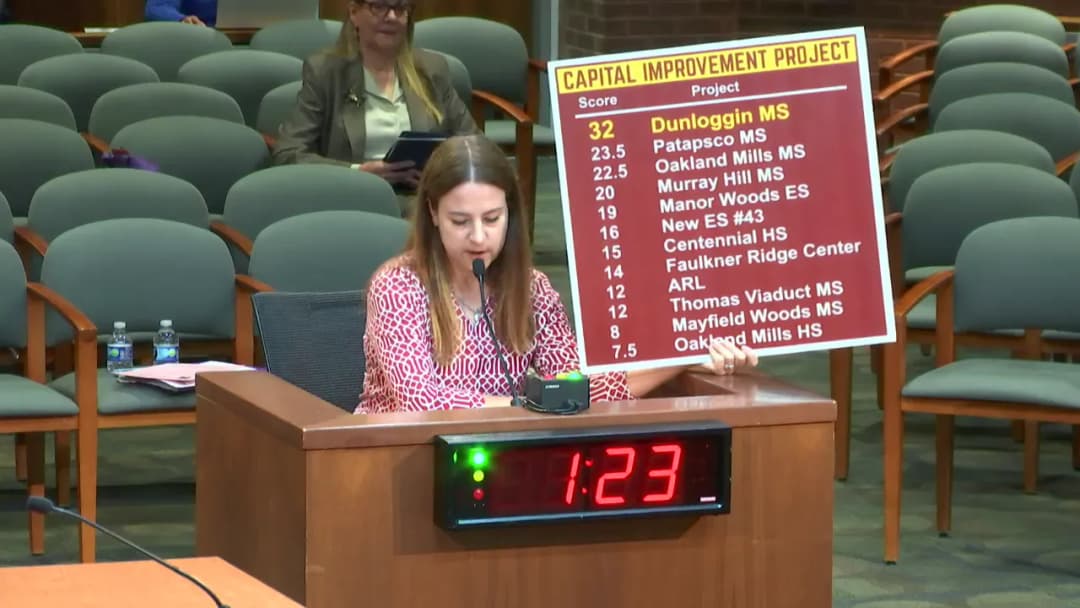
The Howard County Council held its final budget public hearing on Thursday, May 7, 2026, at 9:30 a.m. to receive testimony on the FY2027 executive proposed capital and operating budgets (presented April 20). The hybrid meeting was conducted in person at the George Howard Building and via WebEx, with live stream and broadcast on channels 44 (Verizon) and 1071 (Comcast). Council Members Rigby, Jung, Walsh, Yungmann, and Chair Jones were present. No formal votes were taken; written comments continue to be accepted. The council will hold work sessions throughout May. Public Comments & Testimony - Leo Garcia (fifth-grade student, Jefferson Elementary School) testified about his visual disability and safety concerns on Oakland Mills Road. He requested signs reading "visually impaired child in the area" at every crosswalk and no-turn-on-red signs at two intersections (Kilimanjaro/Oakland Mills and Homespun/Oakland Mills). Council members expressed support and commitment to follow up. - Karen Bieterman (Dunloggin Middle School PTA, Ellicott City) testified in support of fully funding the HCPSS Board of Education operating budget request to restore a $6.2 million shortfall, stating that cuts would risk staff, programs, and technology. She also advocated for Centennial High School over Oakland Mills High School for systemic renovation, citing higher Facility Condition Index (FCI) scores, deferred maintenance, seat need, and inequitable conditions (e.g., port-a-potties at Centennial's stadium for 50 years). She claimed that BOE member Jolene Mosley misled others about the "Built to Learn Act" funds being earmarked for Oakland Mills schools. Council Member Yungmann noted that many portable classrooms are at schools that are not overcrowded and questioned their necessity. - Colleen West (Executive Director, Howard County Arts Council) requested full support for the proposed FY27 Community Service Partnership (CSP) grant of $1,404,000 and the $173,000 Paygo appropriation for relocation to the Capitoline Center. She reported that programs funded through the CSP grant had attendance exceeding 470,000 and volunteer contributions of over 83,000 hours. She emphasized the importance of unrestricted funding for local arts organizations and the new arts center's impact. - Alec Lynde (new Executive Director, Howard EcoWorks) requested full funding of $500,000 in annual READY program funding and $100,000 one-time Paygo for capital improvements at Holly Hills, a new permanent home in Glenwood. He described the organization's work at the intersection of environmental restoration and workforce development, managing stormwater, reducing flood risk, and training residents for green jobs. He noted that the county's investment helps leverage state and federal funding. - David Ryan (District 1, Ellicott City) testified against the Office on Aging and Independence's budget regarding discontinuation of the Rock Steady Boxing program for Parkinson's patients at the Columbia 50+ Center due to a procurement-driven RFP process. He urged the council to delay budget approval until the matter is resolved. Council Members Rigby, Yungmann, and Walsh noted ongoing communications with the administration and acknowledged similar issues with Tai Chi and COMPASS dementia programs. Council Member Yungmann expressed frustration that multiple programs were affected and that the Office on Aging had not yet responded to his staff's inquiry. - Jerry Steinberg (Ellicott City, District 5) also testified on the Rock Steady Boxing program, describing it as a Parkinson-specific exercise program that builds strength, confidence, connection, and dignity. He stated that research shows consistent Parkinson-specific exercise slows progression and improves quality of life, and that even short disruptions can cause measurable decline. He asked the council to help restore the program or provide a no-gap alternative, citing the principle of "do no harm." - Jerry Bookenweiner (Columbia) testified in support of building an indoor track facility, noting the lack of a banked track in the Greater Washington/Baltimore area and the high demand from student and master's athletes. He mentioned that the Prince George's sports complex is beyond capacity and that such a facility could host national indoor championships, attracting over 1,000 participants. Discussion Items - Council members discussed the Rock Steady Boxing and related program cancellations extensively. Multiple members acknowledged the issue is rooted in procurement code changes triggered when instructor payments exceed a $30,000 threshold. Council Member Rigby stated she is working with the administration to find a solution and sees an opportunity to revise the procurement process to honor community relationships. Council Member Yungmann expressed concern that the Office on Aging had missed his staff's deadline for a response and that similar programs (Tai Chi, COMPASS) were also affected without clear resolutions. - Council Member Yungmann questioned the continued use of portable classrooms at Centennial High School, noting the school is not over capacity. Karen Bieterman deferred to school system staff regarding the condition and necessity of the portables. Key Outcomes - No formal decisions or votes were taken at the public hearing. The council will consider written testimony and conduct work sessions before adopting the FY2027 budget. - Council members collectively committed to following up on the Rock Steady Boxing program and related senior center fitness program discontinuations, with Council Member Rigby reporting hopeful progress toward a resolution before budget adoption. - The council expressed support for the student safety requests from Leo Garcia and indicated they would work with relevant departments to address crosswalk improvements on Oakland Mills Road. - Testimony received will be factored into council deliberations during upcoming budget work sessions scheduled in May.

SENIOR SERVICES 22% · BUDGET EQUITY ANALYSIS 16% · EDUCATION POLICY 12% · INFRASTRUCTURE DEVELOPMENT 8%
OPENPUBLICA · PUBLIC MEETING INDEXUPDATED DAILY · openpublica.com