Browse by city
Date range
Search help

Search titles, summaries, topics and stored transcripts together. Keywords may match separately; put the whole query in double quotes for a phrase. Matching follows word analysis, so punctuation is not exact. Both dates are included. Documents are not searched.

SHOWING 201–210 ENTRIES
201
MAY 26, 2022 · KANSAS CITY, MISSOURI · CITY COUNCIL BUSINESS SESSION
Kansas City Council Business Session: Legislative Wrap-Up Update – May 26, 2022

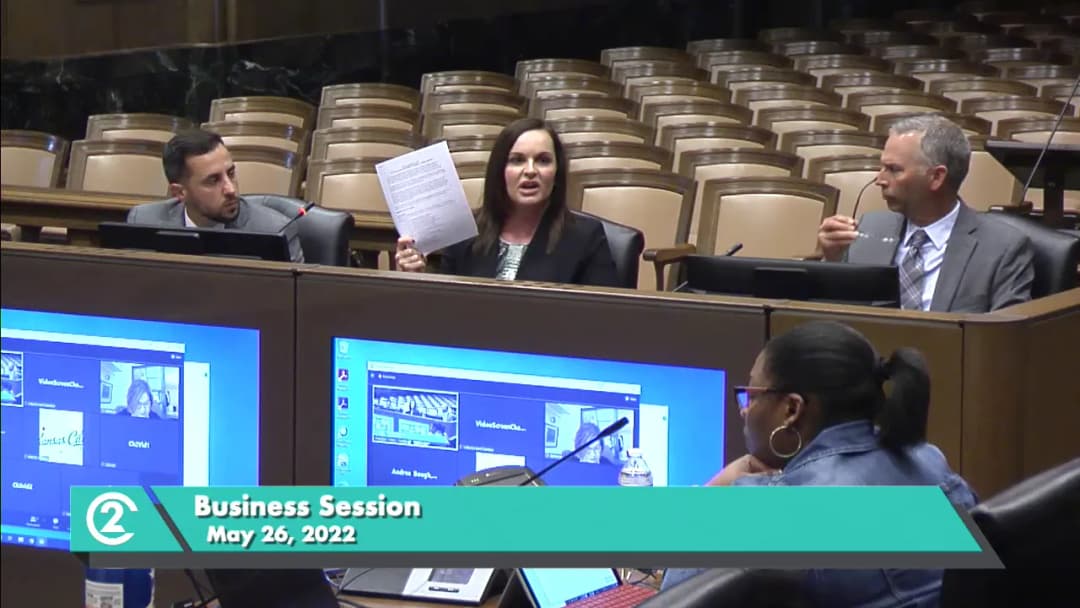
The Kansas City Council held a business session on May 26, 2022, primarily to receive a legislative wrap-up update from the city's lobbying team, covering the 2022 Missouri legislative session. The council also approved the minutes from the May 12 business session. Consent Calendar - The council unanimously approved the business session minutes from May 12, 2022. Discussion Items - Legislative Wrap-Up Update: Lobbyists Nancy Giddens, Sammy Panitari, and Shannon Cooper presented a detailed report on the 2022 Missouri legislative session. They noted that of 2,300 bills filed, only 49 policy bills passed (a near-record low, lower only during the COVID year). The session was dominated by redistricting maps and budgetary allocations. - Successes: The lobbyists highlighted several wins for Kansas City: - Senate Bill 652 (sponsored by Senator Rizzo): a ticket sales tax exemption for events like the FIFA World Cup, a prerequisite for hosting the tournament. Passed in the final two days. - Medicaid expansion funding: $2.5 billion included in the FY23 operating budget, and a supplemental budget earlier in the session. Efforts to re-ballot the expansion were defeated. - Transatlantic flight incentive loan guarantee program: secured funding in the operating budget. - Funding for UMKC ($40 million) and MCC ($10 million) for capital projects. - Continued funding for the Negro Leagues Baseball Museum and Kansas City Urban Youth Academy. - Defeated Bills: The lobbyists reported stopping numerous harmful proposals: - Guns on buses and in churches. - Senate Bill 666 (by Senator Burleson) which would have expanded self-defense claims. - Earnings tax repeal or expanding voting rights to non-residents. - ATA funding mandate that would have cost the city $20 million annually. - Outlawing parking meters (proposed by Representative Holbert). - Financial restrictions on banks that lend to firearms manufacturers. - Removing residency requirements for firefighters and city employees. - Transgender sports ban, CRT restrictions, repeal of fuel tax, elimination of property taxes, and defunding of the public health department. - Police Funding Bill (SB 678): Mandated police funding; the bill was amended to only apply to general revenue (not the entire budget) due to an amendment by Senator Washington. The corresponding SJR 38 would put the question to voters. The emergency clause failed, so the bill takes effect August 28 if passed by voters. - Voter ID and Early Voting: A bill passed that mandates voter ID but also provides two weeks of no-excuse absentee voting (early voting), a compromise. - Sports Wagering: Failed due to a senator tying it to video lottery terminals (VLTs), which lacked support. - Kansas Border War: A Kansas law aimed at poaching the Kansas City Chiefs was discussed. Lobbyists noted the truce may be violated, and past legislation (Kansas Job Recruitment Act) could be revived. - Police Foundation Funding: $3 million allocated to the Kansas City Police Foundation with no clear direction; requires a local match. - Council Q&A: - Councilman Ellington questioned why one senator could block sports wagering but not the police funding bill; lobbyists explained timing and leverage differences. - Councilman O'Neill asked about TDDs; the bill only added reporting requirements, not substantive changes. - Councilman Barnes (Mayor) asked about police radio and hazard pay requests from ARPA funds; lobbyists confirmed those were not funded. He also inquired about gubernatorial appointments and the Kansas border war. Lobbyists offered to assist with appointments and expressed concern about the border war truce. Key Outcomes - The council accepted the legislative wrap-up report with no formal action. - The minutes from May 12 were approved. - The meeting adjourned to the legislative session shortly thereafter.
ECONOMIC DEVELOPMENT 24% · PUBLIC SAFETY 21% · WORLD CUP 2026 PLANNING 15% · PROCEDURAL 13%
202
MAY 12, 2022 · KANSAS CITY, MISSOURI · CITY COUNCIL BUSINESS SESSION
Kansas City Council Meeting: Sidewalk Audit and Boards Ethics Disclosures - May 12, 2022

The Kansas City Council met on May 12, 2022, to receive and discuss two audits: a follow-up audit of the Go KC Sidewalk Program and an audit of financial disclosure filings by boards and commissions. The council also approved minutes from the previous session and addressed other administrative matters. Consent Calendar - Approval of Minutes (April 28, 2022 business session): Motion by Councilman Parkshaw, seconded by Councilwoman Hall. Passed unanimously by voice vote. Discussion Items 1. Follow-Up Audit of the Go KC Sidewalk Program - Presentation: Doug Jones (City Auditor's Office) presented the April 2022 follow-up audit. The audit inspected two projects and found 164 sidewalk panels with defects, 665 missing expansion joints, and contraction joints that did not meet depth requirements (most were 0.75 inches deep instead of 1-2 inches). Public Works was not conducting warranty inspections; three projects' warranties expired without inspection. Auditor also found 85 defects on a project where Public Works identified zero. Public Works lacked a central tracking system for warranty expiration dates. - Public Works Response: Assistant Director of Public Works (Udemanepale) acknowledged the findings and stated the department is implementing a construction checklist, hiring more inspectors in the new fiscal year, and revising specifications (e.g., changing contraction joint formula from T/3 to T/4). They will also add warranty tracking to the e-builder system. - Council Questions and Discussion: - Councilman Bunch asked about tripping hazards at ADA ramps (pie wedges). Public Works stated they will stop using pie wedges moving forward and will use a gentle slope instead. Previous ramps have been painted yellow as a warning. - Councilman Bunch also inquired about pilot programs. Public Works reported that the socket cut method is eight times cheaper than full replacement, and rubberized sidewalks are performing well (results pending from UMKC). The department plans to offer a pilot in each council district. - Councilman Ellington raised concerns about contract oversight, asking how the city ensures value when contracts are not inspected. The Director of Public Works noted that an asset management system being developed will help track and enforce contract requirements. - Councilwoman Hall asked about grinding and mud jacking; grinding was discontinued due to complaints from people with disabilities, and mud jacking is expensive. The socket cut method is the cheapest option. - Standards Adjustment: The Director of Public Works announced that a new standard for sidewalk closures (requiring protected accessible walkways on the same side of the street) will be released for public comment for 60 days before coming to council for approval. 2. Audit of Boards and Commissions Financial Disclosure Filings - Presentation: Doug Jones presented the audit of conflict of interest disclosure forms. In 2021, at least 12 individuals (some serving on multiple boards) did not file required forms. The initial mailing list omitted members from two boards and included about 25% names not required to file. The disclosure form itself is outdated (e.g., lacks a fax number). The audit also found that two new boards were added to city code in August 2021, but dissolved boards remain in code. The city clerk's office had no procedure to collect disclosures before new members take the oath of office. Additionally, city code does not require board members to disclose financial relationships with the board they serve on (e.g., a Visit KC board member whose company contracted with Visit KC). - City Clerk Response: Marilyn Sanders (City Clerk) was present to answer questions. The clerk disagreed with four of the nine recommendations. The clerk's office said it relies on board contacts and the mayor's office to keep information current, but faces frequent changes. - Council Discussion: - Councilman Bunch expressed concern about the disagreements and asked how to ensure compliance. The city clerk noted that obtaining accurate information from departments is a challenge. - Councilwoman Hall suggested using interns to help with the process. She also noted that even elected officials face no penalty for failing to file personal financial disclosures. - Councilman Bunch (again) and Councilwoman Parkshaw called for consolidating boards and commissions. There are approximately 900 seats on over 50 boards, many of which are hard to fill. - Mayor Lucas supported creating stronger penalties for non-compliance, such as automatic removal from boards. He noted that appointees sometimes stop showing up without notice. - The City Attorney stated that the current ordinance provides for automatic resignation after a grace period, but that shifts the burden to the mayor to find replacements. The attorney agreed to research whether state law applies to the conflict-of-interest disclosure requirements and to propose an ordinance amendment requiring board members to disclose relationships with the board. - Auditor's Note: Information related to a potential legal matter was withheld from the published report and would require closed session discussion. Key Outcomes - Sidewalk Audit: Public Works agreed with all recommendations and will implement a construction checklist, hire additional inspectors, revise specifications, phase out pie wedges, and improve warranty tracking. The council will receive updates on pilot programs. - Boards Audit: The city clerk agreed with five of nine recommendations; the city attorney agreed to propose an ordinance amendment for disclosure of board-related financial relationships. The council will consider consolidating or eliminating some boards and commissions to improve efficiency and compliance. - Nursing Mothers Rooms: Councilwoman Parkshaw introduced an ordinance for nursing mothers rooms that was not on the agenda due to a clerical error. She requested it be sent to the appropriate committee; the council acknowledged and the clerk will ensure it is added. - Adjournment: The meeting was adjourned after the above discussions, with no closed session requested.

GOVERNANCE RISK ASSESSMENT 34% · PUBLIC WORKS 29% · PERSONNEL MATTERS 12% · PUBLIC ENGAGEMENT 10%
203
APR 28, 2022 · KANSAS CITY, MISSOURI · CITY COUNCIL BUSINESS SESSION
Kansas City Council Business Session - April 28, 2022: Maternal Health Pilot, Body Camera Audit, Illegal Dumping Audit

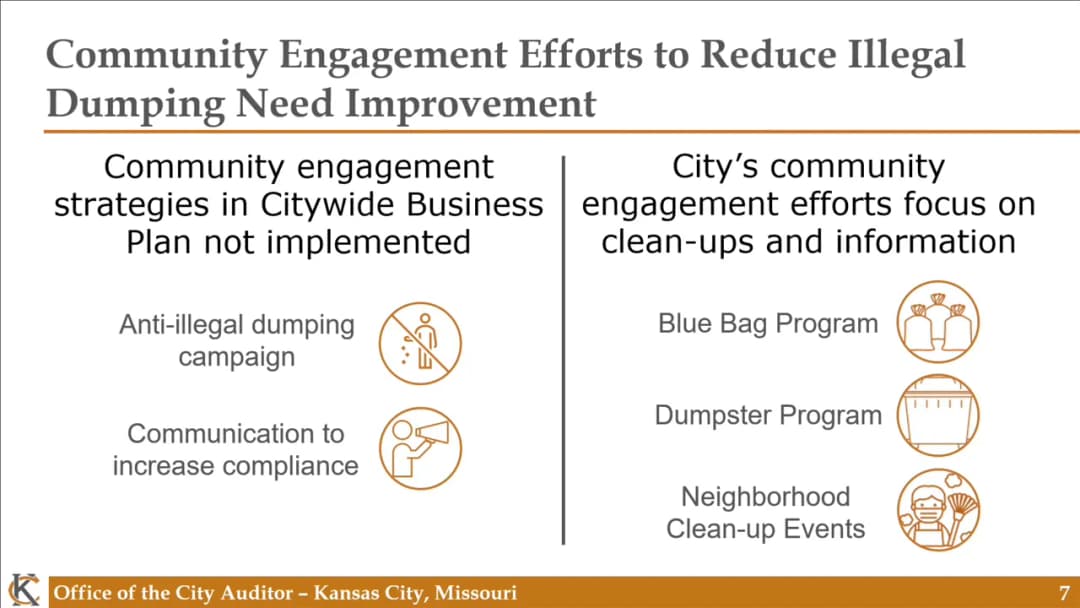
Mayor Pro Tem Kevin McManus presided over the business session on Thursday, April 28, 2022, with seven council members present. The meeting included three major presentations: a proposed maternal health pilot by Blue Cross Blue Shield of Kansas City, an audit of police body-worn cameras, and an audit of the city's illegal dumping program. Council members discussed each item, expressed support, and received departmental responses. Consent Calendar - Approval of Minutes: The minutes of the business session of April 14, 2022, were approved by unanimous voice vote (motion and second, all ayes). Maternal Health Pilot Presentation - Carmen Parker Bradshaw and Terry Riley of Blue Cross Blue Shield of Kansas City presented a proposal to pilot a maternal child health program for city employees. They highlighted data showing significant racial disparities: Black women in the city have higher maternal mortality, preterm birth rates (nearly double white women), and lower rates of timely prenatal and postpartum care. The pilot would place community health workers (CHWs) with lived experience to assist employees, with a projected return on investment of $2.30 for every $1 spent. The program would be at no cost to the city; Blue KC would fund the CHW. The pilot would start in mid-to-late summer 2022 and include implicit bias training for providers (to become mandatory in upcoming contracts). Councilmembers Robinson, Hall, O'Neill, and others expressed strong support, sharing personal stories of premature infants and the importance of equitable care. Councilwoman Robinson co-sponsored a prior resolution on the topic. The presenters requested only that the city designate key decision makers to help design workflows and metrics. No formal vote was taken, but the council indicated clear direction to move forward. Police Body Worn Cameras Audit - City Auditor Doug Jones presented the audit, which reviewed the Kansas City Police Department's body-worn camera program. Key findings from a sample of 98 videos and dispatch comparisons: about 20% of dispatches during July-August 2021 lacked required videos; 17 of 98 videos did not capture the entire incident; some videos were misclassified, leading to improper retention; and about 7% of cameras were not docked timely for upload. The department made 11 recommendations, including specifying camera placement, requiring officers to explain late starts, improving classification defaults, and establishing supervisory review criteria. The police chief agreed with all recommendations. Deputy Chief Hicks stated a policy revision is underway and will be completed within the year. Councilmembers asked about camera placement, classification, and upload timeliness for specialized units. Illegal Dumping Audit - City Auditor Doug Jones presented the audit, which analyzed 2,700 illegal dumping service requests from February to August 2021. The average response time to close a request was 24 days. Only 20% of residents were satisfied with cleanup efforts, the lowest in six years. The report recommended consolidating all requests through the 311 system, setting response-time goals, and developing a community engagement campaign similar to the successful recycling initiative with the Mid-America Regional Council. Public Works Director Michael Shaw agreed with all recommendations, noting that the COVID-19 pandemic slowed previous efforts and that bulky waste collection is being expanded with additional trucks. Councilwoman Robinson emphasized the need for faster response (e.g., 2-3 days) and automated pickups rather than relying solely on resident reports. Key Outcomes - Approval of minutes (unanimous). - Maternal health pilot: Council consensus to proceed; Blue Cross Blue Shield will design the pilot with input from city stakeholders. No formal vote was required. - Police body camera audit: Recommendations accepted; policy revision underway. - Illegal dumping audit: Recommendations accepted; Public Works to consolidate data, set goals, and launch a community engagement campaign. - No other ordinances, resolutions, or communications were introduced from the floor. The meeting recessed at 3:10 PM.

HEALTH 29% · PUBLIC SAFETY 28% · PUBLIC WORKS 16% · WASTE MANAGEMENT 12%
204
APR 14, 2022 · KANSAS CITY, MISSOURI · CITY COUNCIL BUSINESS SESSION
Kansas City Business Session – Health Commission Annual Report and Ordinance Discussions – April 14, 2022

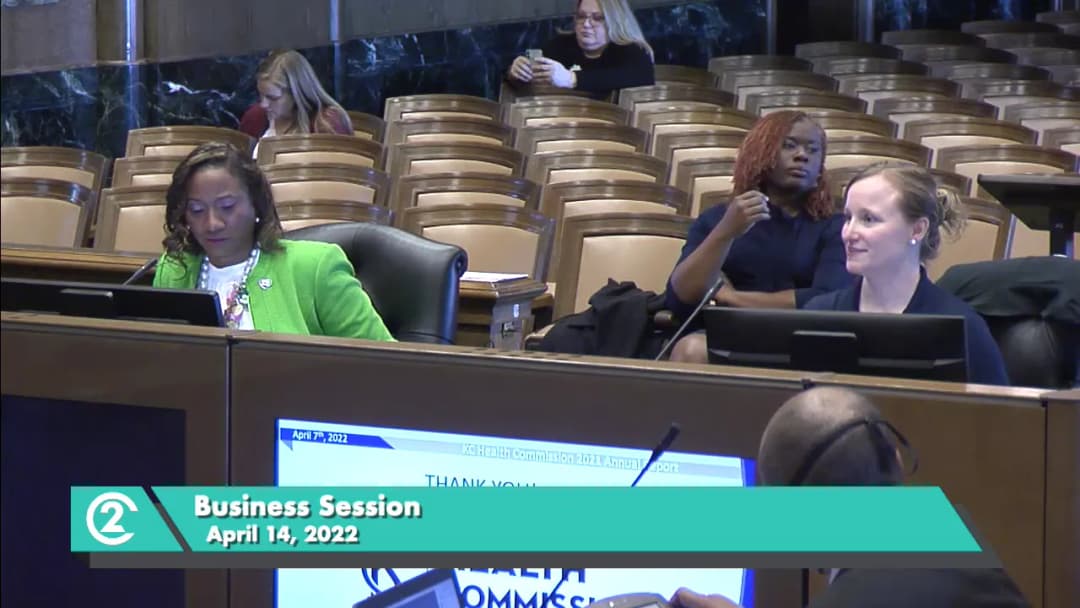
The Kansas City City Council held a business session on April 14, 2022, at 8:15 PM CT. The meeting opened with the approval of minutes from the March 31, 2022 business session and featured a detailed annual report from the Health Commission, co-chaired by Councilwoman Raina Parkshaw and Dr. Carney. The commission presented its 2021-2022 accomplishments, highlighted persistent racial health inequities (including an 18.2-year life expectancy gap between zip codes 64113 and 64128), and outlined priorities for the 2022-2027 Community Health Improvement Plan (KC CHIP). Council members also discussed floor introductions for ordinances, including one on stream setbacks (22032) referred to a joint committee. Consent Calendar - Approval of Minutes (March 31, 2022): Motion made and seconded; passed unanimously by voice vote. Discussion Items - Health Commission Annual Report: Co-chairs Dr. Carney and Councilwoman Parkshaw, supported by Dr. Marvia Jones (Health Director) and staff, presented the commission's annual update. Key points included: - The commission’s purpose per city charter: oversight of the community health plan and advising the mayor and council on public health matters. - A timeline of actions, notably the council’s adoption of the 2022-2027 KC CHIP in March 2022. - A striking statistic: an 18.2-year life expectancy gap between zip codes 64113 (93% white) and 64128 (86% Black). Dr. Carney noted previous efforts to direct resources for bystander CPR and AEDs based on similar data and expressed interest in revisiting those with current city leadership. - The CHIP focuses on root causes of health inequities, including racism, redlining, aging housing, utility costs, and food deserts east of Troost. - The health levy innovation fund ($400,000 total) awarded to Northland Healthcare Access, Samuel Rogers Health Center, and Swop Health Center. - Committee highlights: Birth Equity, Budget & Contract Evaluation, Education, Health Policy & Advocacy, Ad Hoc Housing, KC CHIP Planning, and Violence-Free KC. - Priorities for 2022: hiring a CHIP manager and coordinator, anti-racism health equity strategies, increased advocacy, and anti-racism legislation. - Requests from council: continued support for the CHIP, making health/life expectancy a priority in policy and funding, support for the Casey Blueprint for violence prevention, and sustaining the health levy innovation fund. - Council Comments on Health Report: Councilwoman Hall thanked the commission for its pandemic response and noted connections between health statistics and policies on unhoused, affordable housing, and public safety. Councilman Fowler praised the co-chairs and Dr. Jones. Dr. Carney personally thanked the council for support during the COVID crisis, emphasizing the unprecedented challenges in emergency medicine and crisis standards of care. - Ordinance Discussions: - Councilman Fowler noted a conversation with Councilwoman Boo regarding ordinance 22032 (stream setbacks) and referred it to a joint committee, stating it was better handled by the Neighborhood Planning and Development committee due to limited impact on water systems. - Councilwoman Parkshaw indicated she would introduce an ordinance for the Neighborhood Tourist Development Fund (too late for today’s docket) to appropriate funds. Key Outcomes - Minutes approved (unanimous). - Health Commission annual report received – no formal vote needed; council expressed gratitude and support. - Ordinance 22032 referred to the Neighborhood Planning and Development committee. - Future action: An ordinance for the Neighborhood Tourist Development Fund will be introduced at a later date. - Meeting adjourned after approximately 30 minutes.

PUBLIC HEALTH 53% · PROCEDURAL 20% · PUBLIC SAFETY 12% · RACIAL EQUITY 9%
205
MAR 31, 2022 · KANSAS CITY, MISSOURI · CITY COUNCIL BUSINESS SESSION
Kansas City Business Session - March 31, 2022

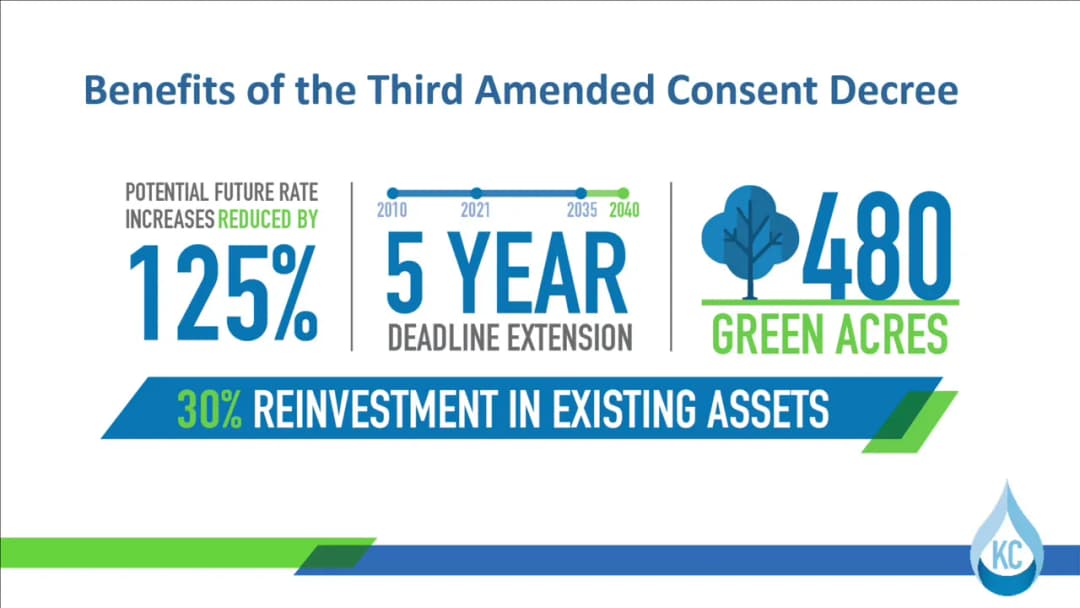
The Kansas City Business Session convened on March 31, 2022 at 2:00 PM, with Mayor Pro Tem Kevin McManus presiding in the absence of Mayor Quinton Lucas. The council heard three major presentations: an update on the permanent Street Cafe, Sidewalk Cafe, and Parklet policy; an overview of the Green Infrastructure Performance Plan under the Smart Sewer Program; and the results of the City Auditor’s 2022 peer review. No public comments were recorded, and no ordinances or resolutions were introduced from the floor. Discussion Items 1. Street Cafe, Sidewalk Cafe, and Parklet Policy Update - Transportation Director Jason Waldron and Media Relations Manager Maggie Green presented a proposal to make temporary outdoor dining features permanent. - The original fee recommendation was $4,000 annual for street cafes, $18 per square foot for sidewalk cafes (matching Parks and Recreation policy), and $250 for parklets, plus a $250 annual application fee for all types. - An alternative flat fee of $850 per year (including the $250 application fee) was proposed to recover inspection and maintenance costs. - Councilmember Eric Bunch suggested a lower base fee with the flexibility to recoup lost parking meter revenue where applicable. - Director of Public Works Shaw noted that codifying fees would limit the ability to adjust for different locations and maintenance needs. - Councilman Shields recommended leaving fee determination to the director, with the understanding that the council prefers fees closer to $850 to encourage participation. - An outreach requirement was introduced: new permit applicants must send a notification letter to adjacent property owners and tenants, with a 30-day feedback period before permit approval. Existing permit holders (81 issued since May 2020, 47 sidewalk cafes and 34 street cafes/parklets) would be grandfathered from this requirement. - The ordinance is expected to be introduced the following week, with an effective date of May 1, 2022. 2. Green Infrastructure Performance Plan (Smart Sewer Program) - Deputy Director Matt Bond and Smart Sewer Division Head Brian Hess presented the updated plan under the Third Amendment Consent Decree (signed March 2021). - Key changes: the program was extended from 25 to 30 years; the required combined sewer overflow capture rate was reduced from 88% to 85% by 2040, with a 77% milestone by 2035; and future spending was reduced from $4.7 billion to $2.3 billion. As of fiscal year 2021–2022, nearly $1 billion had been spent. - The program now includes a target of 480 green acres by 2035. The first Green Infrastructure Project Plan, submitted to the EPA in December 2021, proposes 131 green acres to meet the initial milestone of 80 acres operational by 2026. - Green infrastructure benefits include cost-effective reduction of combined sewer overflows. Examples include the Mill Creek Park project and the Central Industrial District project in the West Bottoms (awarded multiple national recognitions). The Green Steward workforce program received the U.S. Water Prize. - Adaptive management allows the integration of green and gray solutions. The DMB Park project near 63rd Street will use green infrastructure to address an overflow that contributes two-thirds of wet weather overflows in the Town Fork Creek Basin, avoiding a more expensive storage tunnel. - Sewer asset management uses business risk evaluation to prioritize rehabilitation. Among the top 10% highest-risk assets, 82% are located in EPA-designated environmental justice census tracts, compared to 50% of the service area overall. - Councilmember Melissa Robinson questioned the department’s definition of equity and noted historical redlining patterns, pointing out that District 4 received $459 million in investments while District 3 received $161 million. Bond stated they use EPA EJSCAN data but acknowledged the need for clearer equity principles. - Councilmember Bunch reminded members of the upcoming infrastructure bond election on April 5, 2022, emphasizing that the bond does not raise taxes and is essential to fund these projects. 3. 2022 Peer Review Audit Results - City Auditor Doug Jones presented the results of the mandated peer review conducted by the Association of Local Government Auditors (ALGA) at the end of February 2022. - The office received the highest possible rating. The review covered audits issued between September 1, 2018 and August 31, 2021. - A management letter noted that due to staffing reductions, the office did not complete annual quality monitoring reviews for fiscal years 2020 and 2021. The letter suggested filling a vacant audit manager position to address this. - Auditor Jones agreed with the observation and stated the office will redesign its annual monitoring process. The peer review report and management letter are publicly available on the city’s website. The next peer review is scheduled for fall 2024. Key Outcomes - Street Cafe Policy: Council reached consensus not to codify fees in the ordinance, leaving fee determination to the Public Works Director with guidance to favor a lower fee ($850 annually). An outreach requirement for new permits was endorsed. The ordinance will be introduced next week with a May 1 effective date. - Green Infrastructure Plan: No formal vote was taken; the presentation informed council for future contract approvals (e.g., the Smart Sewer program contract with Burns & McDonald coming in a few weeks). The council acknowledged the equity concerns raised and committed to ongoing dialogue. - Peer Review: The office passed with highest rating; the auditor committed to updating the annual monitoring process. No council action required.

WATER AND WASTEWATER MANAGEMENT 32% · PUBLIC WORKS 21% · PUBLIC ENGAGEMENT 20% · PROCUREMENT 11%
206
FEB 24, 2022 · KANSAS CITY, MISSOURI · CITY COUNCIL BUSINESS SESSION
Kansas City Council Business Session: Homeless Services Presentation and Minutes Approval - February 24, 2022

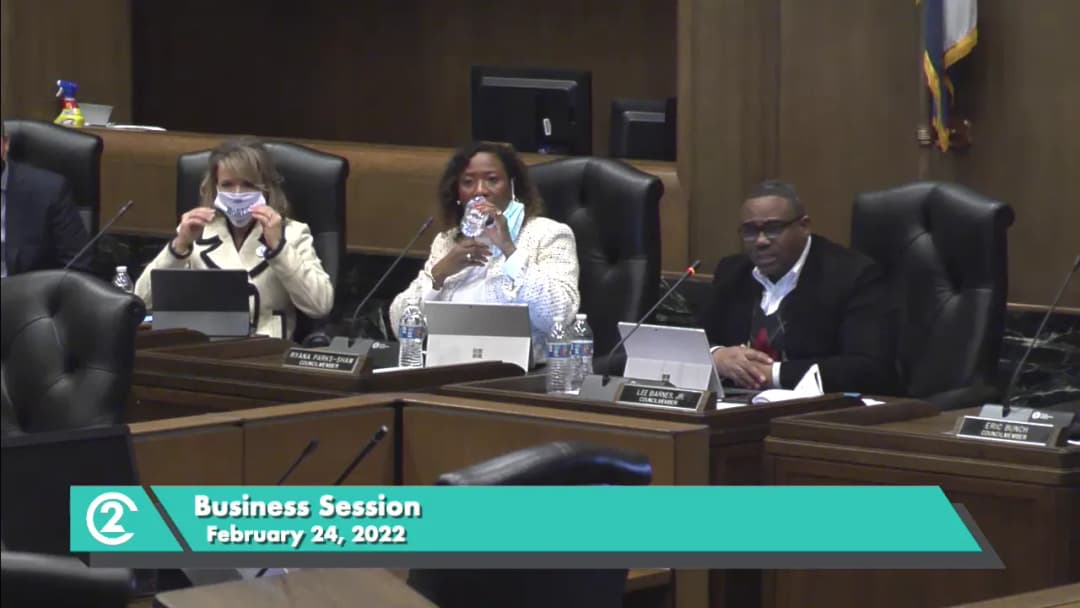
The Kansas City Council held a business session on February 24, 2022, approving the previous meeting's minutes and receiving a presentation from the city's new Homeless Services Director. The director discussed his background, current outreach efforts, the extreme weather plan, and the upcoming point-in-time count. Council members raised questions about encampments, emergency shelter capacity, and coordination with other departments. No ordinances were discussed, and the meeting adjourned. Consent Calendar - Approval of Minutes (February 17, 2022): A motion to approve the minutes was made, seconded, and passed with no opposition. Discussion Items - Presentation by Homeless Services Director: The director (identified as Josh) introduced himself, sharing his background in homeless services, including work at Kids TLC, Reconciliation Services, and the Veterans Community Project. He expressed confidence that Kansas City can solve homelessness and emphasized that housing remains the ultimate goal. He described current efforts to coordinate outreach teams, meet weekly on Tuesdays, and address visible encampments safely and humanely. He also praised the minor home repair program and the partnership with the Parks Department. - Q&A on Immediate Encampment Concerns: Councilwoman Boo asked about immediate action at 103rd Street Indian Creek. The director explained that coordinated outreach teams target specific sites and conduct housing assessments, and he cited approximately 109 encampments in the city. - Extreme Weather Plan and Point-in-Time Count: Councilwoman Parkshaw requested updates. The director said the extreme weather plan has operated smoothly, with Hope Faith providing transportation and a donation center supplying outreach teams. The emergency shelter has roughly 100 beds, though capacity fluctuates and is not strictly gender-designated. The goal during extreme weather is no injury or death. The point-in-time count, required by HUD, is scheduled for the following week after an extension; it typically undercounts by three to four times actual numbers. - Councilman Allen's Concerns: Councilman Allen asked for detailed process procedures, outreach team follow-ups, mental health services, and a breakdown of shelter bed spaces by gender. The director acknowledged ambiguity in the emergency shelter operations and agreed to provide documentation. Another council member interjected to clarify the difference between emergency shelters and the overflow shelter. - Encampment Data and Parks Coordination: Councilman Barnes asked about the fluidity of encampment numbers; the director explained that the count changes weekly. Councilwoman Hall asked whether homelessness services would remain under the Parks Department; the director clarified that collaboration exists only because many large camps are in parks. Key Outcomes - Minutes Approved: The February 17, 2022 minutes were approved unanimously. - Follow-up Information Requested: Councilman Allen requested additional data on encampments, procedures, and shelter capacity; the director committed to providing it. - No Ordinances Considered: The item for ordinances or late matters was called, but none were discussed, and the meeting adjourned. Additional Informal Remarks - After the meeting adjourned, participants discussed the first-ever set of Negro Leagues commemorative coins. Three coins (gold, silver, and clad half-dollar) will be minted, featuring Andrew Rube Foster, founder of the Negro National League. Full coin sales could raise $6 million in surcharges for the Negro Leagues Baseball Museum.

HOMELESSNESS 50% · HISTORIC PRESERVATION 20% · AFFORDABLE HOUSING 8% · MENTAL HEALTH AWARENESS 8%
207
FEB 10, 2022 · KANSAS CITY, MISSOURI · CITY COUNCIL BUSINESS SESSION
Kansas City Council Budget Presentation for FY2022-2023 – February 10, 2022

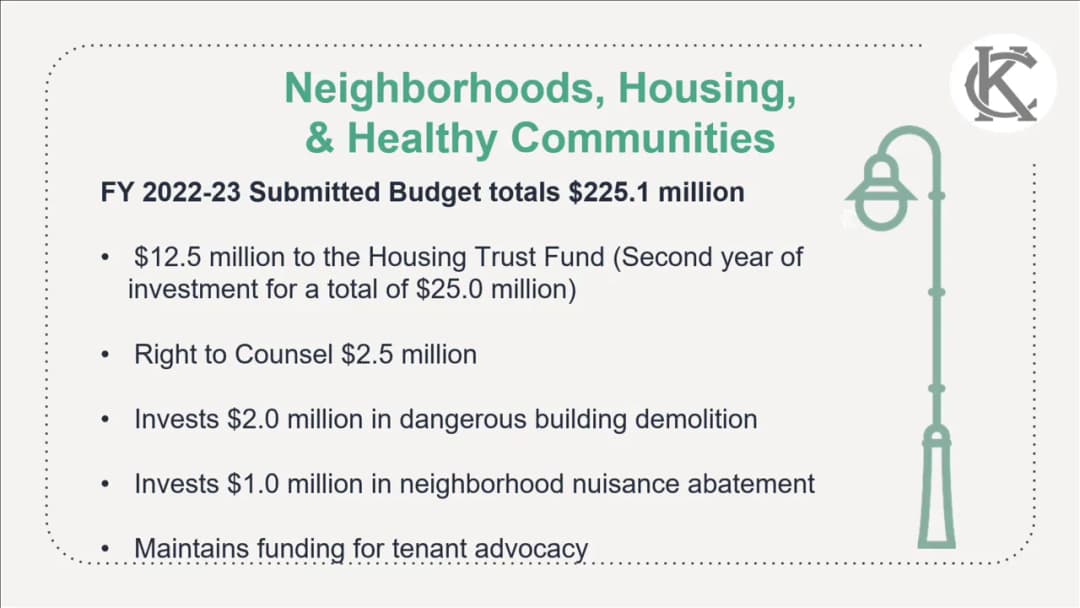
On February 10, 2022, the Kansas City Council held a business session to receive the FY2022-2023 budget presentation from Chief Budget Officer Krista Morrison and to discuss related ordinances. The meeting included approval of prior minutes, a detailed budget overview, council member questions and comments, and introduction of two ordinances tied to budget issues. Consent Calendar - Approval of Minutes: The minutes from the business session of January 27, 2022, were approved by unanimous voice vote (motion, second, all in favor). Discussion Items - FY2022-2023 Budget Presentation: - Chief Budget Officer Krista Morrison, joined by Budget Analyst Tanner Owens, presented a $1.9 billion balanced budget, comprising $1.3 billion in governmental activities (a 10.8% increase over the prior year) and $647 million in business-type activities (water and aviation, an 8.4% increase). - Key assumptions: implementation of a compensation plan from the five-year financial plan to bring salaries to market rates, full funding of actuarial pension payments, and an 8% health care increase. The budget also includes a zero-target for department operating budgets (no citywide reductions) and a six-month hiring freeze (excluding union-represented positions). - Revenue outlook: cautiously optimistic, with sales tax growing 30% year-over-year, hotel/motel and restaurant taxes recovering but still below pre-COVID levels. The budget uses $97.4 million from the second tranche of American Rescue Plan (ARP) funds to close a $70 million budget gap and support priorities such as affordable housing, clean neighborhoods, unhoused initiatives, and public safety. - Fund balance: after drawing down reserves during COVID, the budget restores the general fund balance above the two-month reserve policy, in part due to ARP revenue recovery. - Public safety accounts for 41.2% of governmental activities spending ($522.3 million), with new investments including a community policing and prevention fund, a diversity officer in the fire department, and violence prevention funding. - Capital improvements: includes year two of a $20 million additional street reconstruction investment (part of a five-year, $100 million initiative) and City Hall repairs. - Public input opportunities: three meetings scheduled (Feb 19 virtual, Feb 23 hybrid, March 5 virtual). Budget ordinance introduction on Feb 24, adoption by March 24. - Council Questions and Comments: - Councilman O'Neill praised the compensation plan but expressed concern about the hiring freeze's impact on departments with high vacancy rates, suggesting a minimum staffing threshold. He also noted an ordinance co-sponsored with the mayor to fund salary increases for unrepresented employees. - Councilwoman Hall thanked staff for a pre-meeting briefing. - Councilwoman Lawrence asked about ARP allocation for public safety; Morrison confirmed $3 million for firefighter hazard pay and $4 million set aside for police raises or hazard pay, with potential state assistance. - Councilman Fowler joked about the budget's 0.4% allocation for council employees and asked about a projected decrease in utility tax revenue; Morrison attributed it to declining cable/landline taxes and modest recovery from rate increases. - Councilwoman Parkshaw echoed concerns about the hiring freeze and overtime, and asked about the schedule for individual department meetings (set for Feb 24 and March 3, hybrid). - The mayor noted a structural imbalance that will persist after ARP funds are exhausted, requiring future revenue or spending adjustments. Key Outcomes - Minutes approved unanimously. - Budget presentation received; no vote taken (ordinance to be introduced Feb 24). - Two ordinances introduced for discussion at the Finance Committee: 1. Ordinance co-sponsored by Councilman O'Neill and the mayor to fund salary increases for unrepresented city employees. 2. Ordinance to change earnings tax refund procedures for non-residents (similar to St. Louis model), aiming to reduce refund outflows and retain city revenue. - Next steps: Three public hearings on the budget (Feb 19, Feb 23, March 5); budget ordinance first reading Feb 24; department meetings Feb 24 and March 3; final adoption by March 24.

BUDGET EQUITY ANALYSIS 60% · PUBLIC SAFETY 14% · PUBLIC ENGAGEMENT 14% · PROCEDURAL 4%
208
JAN 27, 2022 · KANSAS CITY, MISSOURI · CITY COUNCIL BUSINESS SESSION
Kansas City Council Business Session - January 27, 2022: KCPD Crime Stoppers QR Code and Hiring Updates

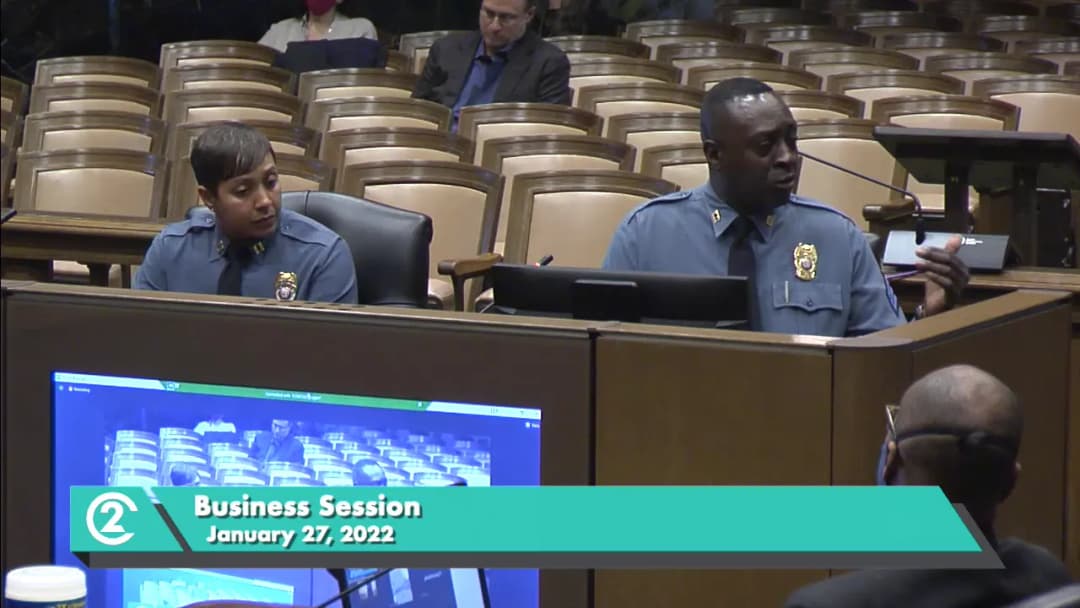
The Kansas City Council met in a business session on January 27, 2022, at 2:00 PM to approve prior minutes, hear updates from the Kansas City Police Department (KCPD) on a new QR code for Crime Stoppers and on hiring efforts, and discuss items on the legislative docket. The meeting adjourned after the presentations, with no formal votes on new ordinances. Consent Calendar - Approval of Minutes for January 20, 2022 Business Session: Approved unanimously by voice vote (motion and second, all saying "Aye"). Discussion Items - KCPD Update: Crime Stoppers QR Code - Detective Kristen Ludwig presented a new QR code initiative to improve anonymous tip submissions via the Crime Stoppers Tips Hotline. The QR code directly links to the secure website (kcrimestoppers.com) and the P3 app, bypassing app download requirements for juveniles. The code has been distributed on stickers to detectives, community partners, and school districts. - Statistics: In 2021, KCPD received 1,490 tips out of a total 3,905 across nine counties. This was a decrease from 2020 (1,721 tips) and 2019 (2,087 tips). Of those tips, 13 led directly to arrests, resulting in $88,350 in rewards paid out. The downward trend was attributed partly to COVID-19 and reduced public exposure. - Councilman Hall expressed strong support, invited the detective to present at First District and Northland Regional Chamber meetings, and offered to help connect with school districts. He requested digital copies of the QR code materials for council email blasts and social media. - KCPD Update: Hiring and Recruitment - Captain Marissa Barnes and Sergeant Joseph Bediaco outlined employment unit efforts. The unit's core mission is to recruit, process, and hire qualified applicants reflecting community diversity. - Applicant Statistics: - Non-sworn applicants: 1,155 in 2020 vs. 1,129 in 2021 (a small drop). - Sworn (police officer) exam takers: 340 in 2020 vs. 198 in 2021 (a significant decrease of over 40%). - On the most recent exam, only 17 people tested. The drop was attributed to COVID, civil unrest, budget uncertainty, and negative perceptions of policing. - Recruitment strategies include nationwide testing (no longer required in Kansas City), community events at centers, school presentations, partnerships with women empowerment networks and the military, and social media. The department hopes a recent salary increase and a goal of hiring 100+ officers in 2022 will boost numbers. - Councilwoman Robinson asked about diversity and inclusion goals. The sergeant noted efforts to build relationships in underserved communities and target recruitment at community centers, but acknowledged challenges in tracking demographic data before hiring. Councilwoman Park Shaw asked about national trends and retirement cycles; the sergeant confirmed other agencies report similar reductions, and that early retirements (5–10 years) are adding to attrition. Key Outcomes - No ordinances or resolutions were introduced or discussed beyond the docket; the meeting stood adjourned until 3:00 PM. - A group photo of the council was taken at Councilwoman Hall's request. - Councilmembers offered to assist KCPD with distributing Crime Stoppers materials and connecting with school districts and community groups.

PUBLIC SAFETY 58% · PERSONNEL MATTERS 36% · RACIAL EQUITY 4% · PROCEDURAL 2%
209
JAN 20, 2022 · KANSAS CITY, MISSOURI · CITY COUNCIL BUSINESS SESSION
Kansas City Business Session - January 20, 2022: Infrastructure and Pet Project Updates

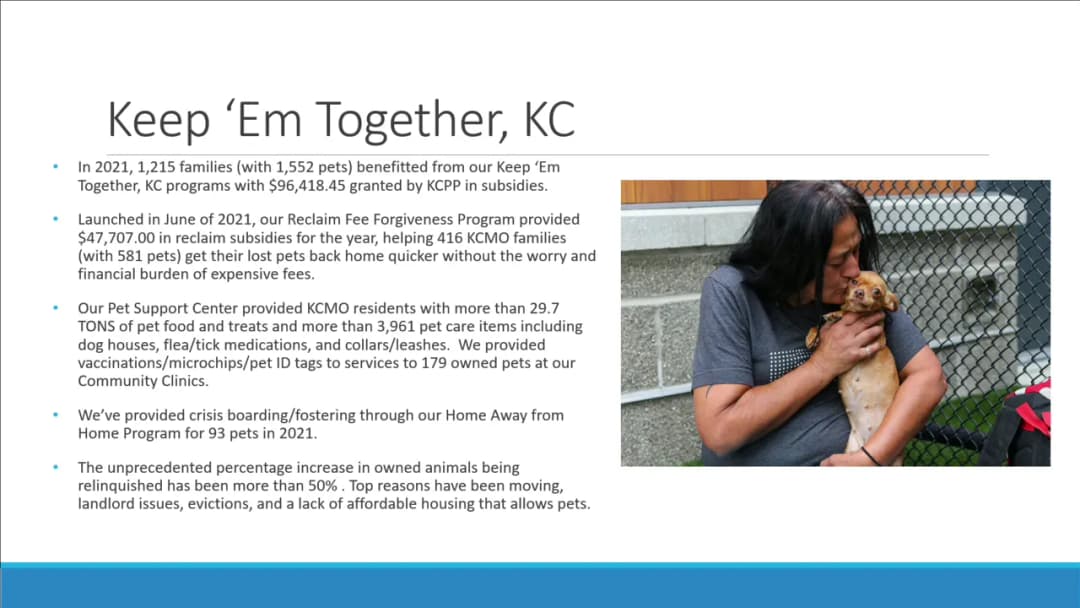
The Kansas City Council met in business session on January 20, 2022, at 2:00 PM, presided by Mayor Pro Tem Kevin McMahon. A quorum was achieved with council members both in person and online. The meeting included approval of the previous week's minutes and two major presentations: an update on city facilities infrastructure needs and a year-end review from the Kansas City Pet Project. Discussion Items City Facilities Infrastructure Needs Yolanda McKenzie, Director of General Services, presented a report on the city's building infrastructure needs. The department maintains approximately 160 buildings, receiving about $5 million annually in capital improvements. Of that, 45% is spent on maintenance, 20% on emergencies, and 35% on projects. Key challenges included water damage incidents, such as a water main break at City Hall in 2020 and another in January 2022 that forced closure of floors 1–6. The City Hall garage is currently closed, and the Bartingallis Plaza garage was noted as needing repairs. From an internal assessment, McKenzie identified priority repairs totaling an estimated $42.2 million for City Hall, including the garage ($22 million, including design), fire suppression systems, HVAC air handlers, core plumbing, and elevator upgrades. She recommended phased financing: design phase, then RFP and construction funding. Finance Director TMI Quinn stated that final costs are pending design documents, and debt financing would likely be issued in FY24, with first debt service payments in FY24. Councilmember Park Shaw asked about acrylic shields removed from the chamber; it was clarified they were part of the now-rescinded COVID safety order. No other questions were raised. Kansas City Pet Project Update Teresa Johnson, President and CEO, and April Moore, Chief of Animal Services, presented a year-end review. In 2021, the shelter served a record 14,581 animals (4,000 more than 2020), achieved 10,042 adoptions, and a 96.4% save rate. Volunteers contributed 42,000+ hours, valued at $1.2 million. The "Keep Them Together KC" program helped 1,215 families with $96,418 in subsidies. The pet support helpline handled 88,760 calls. Animal Services responded to 15,000+ calls with 28 staff members, including a newly formed cruelty investigations team. The division uses data to track trends, including bites and animal abandonment linked to housing instability. Councilmember Park Shaw expressed concerns about dangerous dog cases and public safety, citing personal experience and constituents' complaints. She noted calls not being returned and requested concrete action steps and performance measures for the upcoming contract renewal. The attorney for KCPP explained the investigation process and weekly dangerous dog case reviews. Councilmember Robinson thanked the team for outreach in the 3rd district, and Councilmember Lor praised the organization as a national leader. Mayor Pro Tem acknowledged their work assisting unhoused individuals with pet care. Key Outcomes - The council approved the minutes from the January 13, 2022 business session by voice vote. - No formal votes were taken on the infrastructure or pet project presentations. The discussions were informational. - Future financing for City Hall repairs will be determined after design documents are completed, with potential debt financing in FY24. - Councilmember Park Shaw indicated that performance measures for dangerous dog cases would be important in renewing the Kansas City Pet Project contract. - Both presentations were received; no further action was stated.

ANIMAL WELFARE 46% · ENGINEERING AND INFRASTRUCTURE 33% · PUBLIC SAFETY 14% · PROCEDURAL 5%
210
JAN 13, 2022 · KANSAS CITY, MISSOURI · CITY COUNCIL BUSINESS SESSION
Kansas City Business Session: Employee COVID Testing and Pay Equity - January 13, 2022

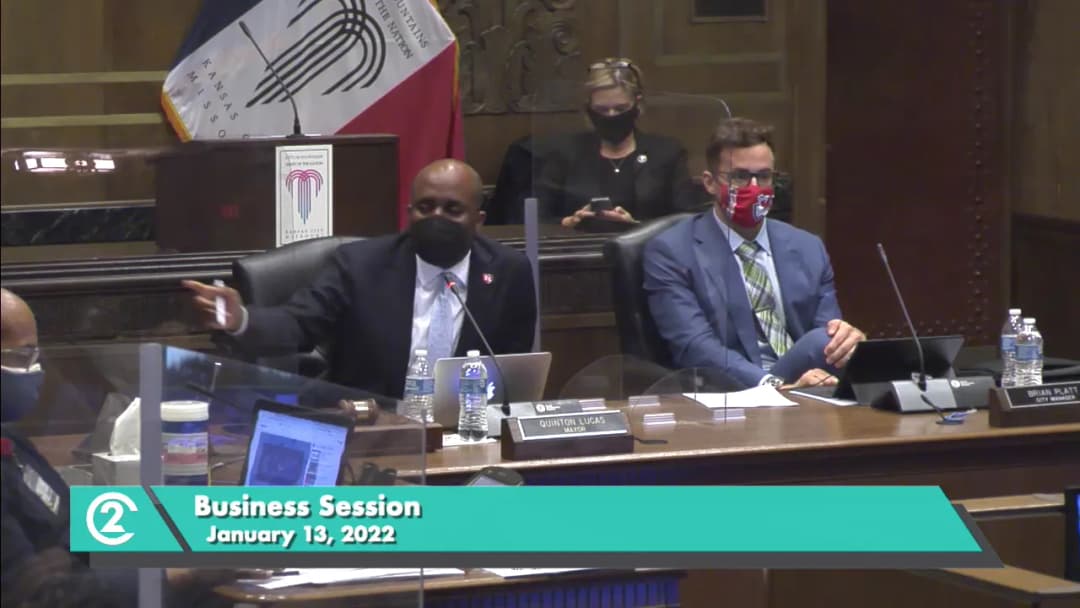
This Business Session of the Kansas City Council, held on January 13, 2022, at approximately 8:15 PM, focused on a presentation by Councilman Ellington concerning city employee COVID-19 testing policies, alleged retaliatory actions, and broader issues of pay equity and discrimination. Numerous city employees from multiple departments testified about the financial burden of weekly testing, denied religious exemptions, and inadequate wages. The council discussed potential resolutions to address payroll deductions, align policies with the fire department, and audit COVID-related spending. Public Comments & Testimony - Mr. Silvers (union representative) criticized the city manager for bargaining in bad faith, noting that fire department vaccination numbers were misrepresented (76% vaccinated but treated differently). He highlighted pay disparities: the city spends $7.9 million per month on management salaries (1,400 management vs. 800 labor employees). - Brian Malcolm (plant operator, Wastewater) stated that critical infrastructure employees were “forgotten” from May 2020 to April 2021, with only one testing opportunity. He argued that since vaccinated employees can also transmit COVID, a universal testing protocol with paid time off is needed. - Eugene Jackson (Science & Marketing) cited stage three kidney failure and said his doctor refused to sign an exemption; he objected to being pushed toward vaccination and noted the penalty of three missed tests leads to termination. - An unnamed employee noted that contractors hired by the city are not required to test or be vaccinated, yet are paid three times more than city employees doing the same work. - Jeremy Ritter (assistant operations manager, downtown airport) compared the city’s policy to the recent Supreme Court decision (SCOTUS) and called it medical discrimination and coercion. He pointed out that fire and police are exempt from the policy. - Tonika Evans (Water Services, vaccinated) spoke against mandates, stating that medical decisions should be between patient and doctor. She noted her own pay is insufficient to qualify for two-times rent, relying on her federal annuity. - David Morgan (fired after 20 years) said he was terminated for refusing a saliva test, not for refusing testing altogether. He emphasized he would have taken an alternative test, and his termination paperwork falsely stated he violated AR-133 by denying a COVID test. - Another attendee (unidentified) raised three conflicts regarding AR-133: employees were fired before being offered alternative tests, testing and vaccination did not prevent transmission, and some terminated employees have fraudulent termination reasons. - Multiple employees from Public Works, Water Services, Parks, and Fleet reported pay issues: inadequate wages for experienced workers, missing overtime/holiday pay for snow plowing, and lack of proper training. - Norris Mann (Public Works) said employees were told they would not be paid the next day after snow plowing overnight and had to use personal time. - Jermaine Humanist (Water, 19 years) stated his religious accommodation was denied, his appeal took months, and he was told accommodations were denied even though termination was not pursued. - Claude Harris (Wastewater) noted that experienced employees are leaving, leaving little institutional knowledge; his starting pay is around $16/hour. - Several other employees echoed frustration over the $97 weekly test cost (estimated $4,800/year), which represents a significant portion of salary (about $20,000 net for a $15/hour worker). Discussion Items - Councilman Ellington presented a detailed timeline of his inquiries starting December 27, 2021, concerning a $97 test fee and denials of religious/health exemptions. He read from a policy (AR-33) requiring employees to sign a payroll deduction for $97. He argued the city changed testing frequency from monthly to weekly after stopping funding, appearing retaliatory. He cited a recent U.S. Supreme Court ruling against a federal vaccine mandate and stated the city’s policy likely violates OSHA. He also noted that some employees were terminated for refusing saliva tests (citing DNA privacy concerns). He called for a forensic audit of COVID spending and policies. - Councilwoman Hall supported employees, stating she is against mandates and wants transparency on exemption requests: total number, approvals, and denials. She noted the financial impact: $97/week amounts to $4,800/year, a large portion of a $15/hour salary. - Councilwoman Robinson asked the city manager to respond to payroll deductions. City Manager Platt stated that as of that morning, HR informed him there were no payroll deductions and that free testing options exist. He offered to verify. Robinson introduced a resolution for same-day adoption to align COVID testing policies with the fire department’s policy (which does not require payroll deductions) and to ensure fairness. Councilman Ellington asked to amend the resolution to include reimbursement for any deducted fees and a forensic audit of policies and spending. - Councilwoman Parks-Shaw inquired about several employees missing double pay or holiday pay for snow plowing; the city manager said he would check. She expressed gratitude to employees. Key Outcomes - Councilwoman Robinson requested that the city attorney prepare a resolution for same-day adoption to align COVID testing policies for Local 500 employees with the fire department’s policy (ensuring no payroll deductions for testing). Councilman Ellington asked to amend to include reimbursement for any payroll deductions already taken and a forensic audit of COVID-related policies and expenditures. - The council did not take a final vote on the resolution during this session; further action was anticipated. - Councilman Ellington noted that a resolution to re-evaluate contracted services and potentially replace contractors with city employees passed out of committee and is on the floor. - The city manager committed to checking on payroll deductions and missing pay for snow plow work. - Councilwoman Hall requested from HR the total number of exemption requests, approvals, and denials (without names).

PUBLIC HEALTH 41% · PERSONNEL MATTERS 36% · PUBLIC SAFETY 8% · PUBLIC ENGAGEMENT 7%
OPENPUBLICA · PUBLIC MEETING INDEXUPDATED DAILY · openpublica.com