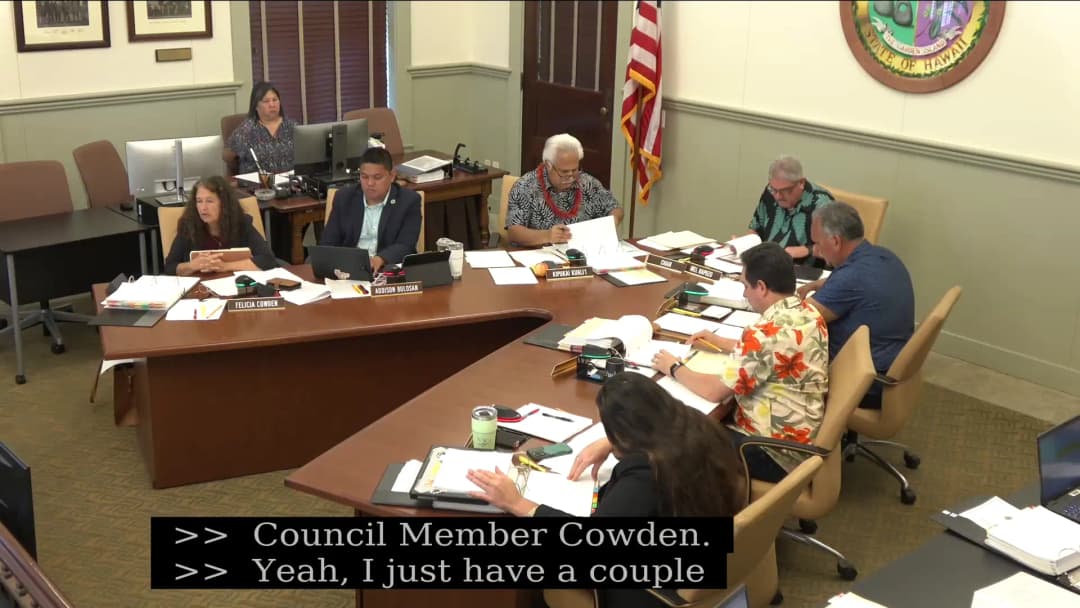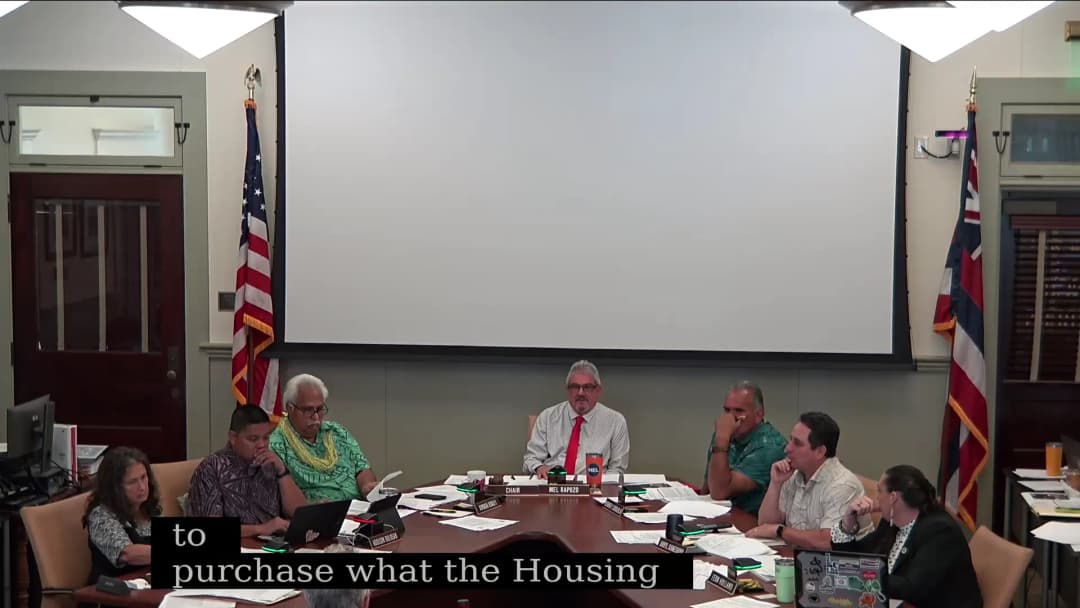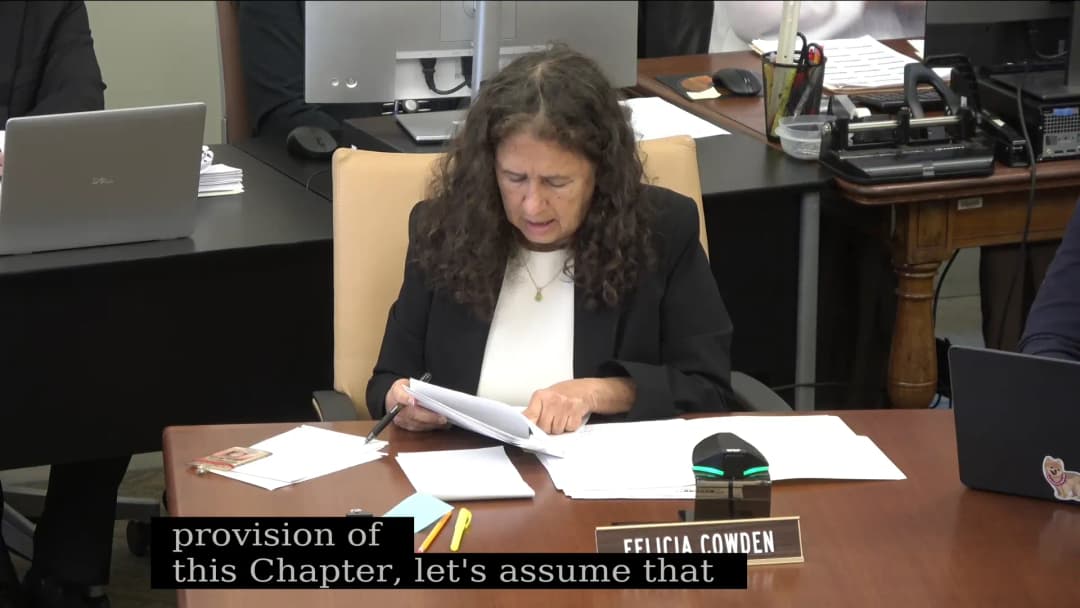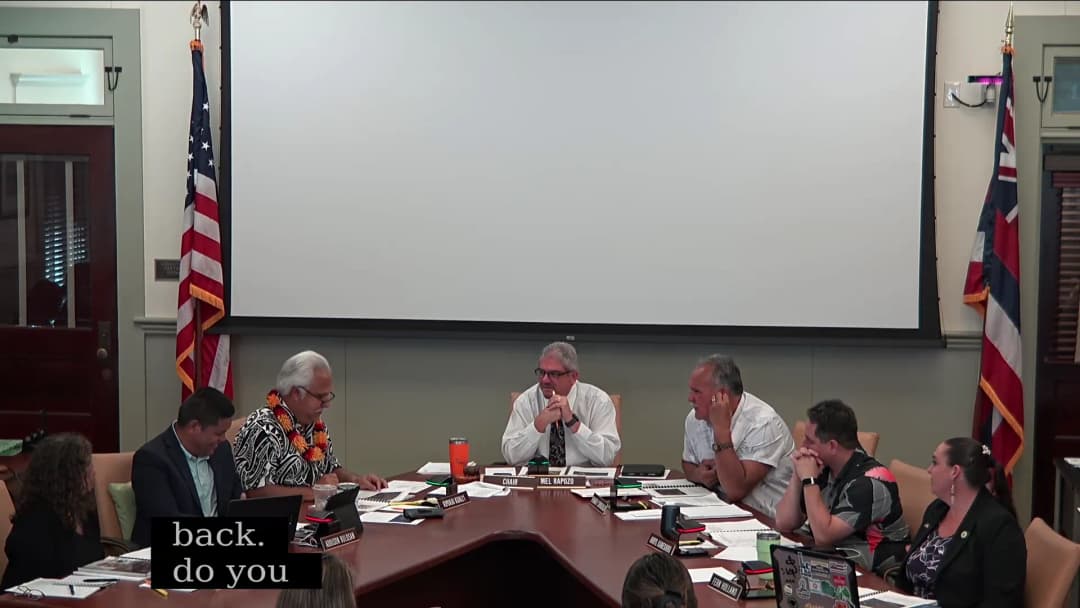
The Kauai County Council convened on Wednesday, April 8, 2026, at 8:30 a.m. (meeting start) in the council chambers. The meeting opened with an invocation by Reverend Sherry Dennis, followed by a public hearing on Bill 2987 (real property tax amendments) which received no testimony and was closed. The council then approved the agenda, minutes, and various consent calendar items. Major agenda items included a detailed presentation on the Open Space Commission's biannual report, a presentation on the Smart 911 system with passionate public testimony, several prosecutor’s office grants, and a first‑reading bill to reduce the homeowner occupancy requirement from 270 to 210 days, which was ultimately received (killed). Consent Calendar - Approved the agenda and minutes of previous meetings (March 11, 2026 council meeting and public hearings on Bills 2981 and 2984). - Received consent calendar item C2026-77. - Received C2026-78 (Open Space Commission 2024‑2025 biannual report) after discussion, and voted to receive it. - Approved claims C2026-84 and C2026-85. - Approved committee reports from Finance and Economic Development (CR‑FED 2026‑05) and Committee of the Whole (CR‑COW 2026‑02). - Confirmed mayoral appointment of Kuule Aloha Santos to the Planning Commission (Resolution 2026-12). Public Comments & Testimony - Smart 911 System: Four community members testified in strong support: - Desiree Takub: Emphasized that the system helps first responders know about her needs and can assist if she wanders from home. - Alita Smith: Stated it would help emergency responders know details about her family. - Nancy Borelis: Shared a personal scenario about a stroke victim and highlighted how the system saves critical time; called it a “no‑brainer.” - Kylie Moonese: Noted it helps first responders understand individuals who cannot speak and use communication devices. - Bill 2992 (home exemption days): A public speaker (Mr. Seykles) provided testimony against the current enforcement system, arguing it is unfairly complaint‑based and violates civil rights. He cited his own 10‑month absence to care for his mother and questioned why the law should dictate occupancy if a home is the sole legal residence. Discussion Items Open Space Commission Biannual Report (C2026-78) - Presentation by Robin Pratt (Chair), Jodi Higuchi Saigusa (Planning Department clerk), and Shiley Akoga (Open Space Planner). - Key accomplishments: finalizing pending proposals, acquiring the Hanapepe Massacre parcels, forming a permitted interaction group (PIG) to prioritize coastal accesses, and revising rules to allow up to 5% of the fund for maintenance. - Key recommendation: Condemnation of a beach access easement at Aliamanu (TMK 4‑9‑001‑013) to secure pedestrian access; the commission proposed a resolution for condemnation. - Council discussion: - Councilmember Oppelt (Chair) suggested restoring the Open Space Fund allocation from 0.5% to 1.5% of real property tax revenue, noting that land values have increased 23% in five years and the fund now has less purchasing power. - Commission Chair Pratt stated that increasing funding would significantly enhance the commission’s ability to acquire more property and act quickly. - Councilmembers inquired about lost easements, cultural sensitivity in access priorities, and the process for community proposals. The commission confirmed that any community member can submit a proposal via an online survey, and that the PIG is reviewing all existing accesses. - Concerns were raised about limited funding: only $3.9 million in the fund, with pending litigation and other proposals. Some members urged spreading acquisitions across all three island districts. - Council members expressed strong support for the commission’s work and the need for additional funding. Smart 911 System (C2026-79) - Presentation by Amelia Kiavich Kenny Holani (Kauai program specialist, Hawaii State Council on Developmental Disabilities) and Leona Saw McDermott (parent and Special Olympics coach). - Smart 911 is a free, voluntary service that allows residents to create a safety profile (medical conditions, medications, communication needs, home layout) linked to their phone number. When 911 is called, dispatchers see the profile instantly. - Currently available on Oahu and Maui; funding already exists through 911 surcharges, so no county cost. - Council discussion: - Councilmembers universally expressed strong support, calling it a “no‑brainer” and “priceless.” - Councilmember Oppelt indicated he would contact the 911 commission to move forward and suggested a council resolution to support the rollout. - Several members noted the benefit for first responders and the need for complementary trauma/de‑escalation training. - A photo was taken on the steps to memorialize the moment. Prosecutor’s Office Grants (C2026-80, 81, 82) - C2026-80: Supplemental federal funds of $50,000 for the Victims of Crime Act (VOCA) expansion project, bringing total to $253,743. Approved unanimously. - C2026-81: Indemnification agreement for the same VOCA grant for the period October 1, 2026 – June 30, 2027. Approved unanimously. - C2026-82: $62,485 from the Edward J. Byrne Memorial Justice Assistance Grant to start a digital evidence transcription initiative for body‑worn camera footage. The prosecutor stated it will reduce review time, lessen vicarious trauma for deputies, and improve case processing. Approved unanimously. - Councilmember Kuali praised the efficiency gain; a public speaker (Mr. Seykles) supported the initiative after understanding it. Bill 2992 – Home Exemption Occupancy Days (First Reading) - Councilmember Cowden introduced a bill to reduce the required occupancy for a homeowner exemption from 270 days to 210 days (seven months). She argued that many long‑term residents must travel for health, work, or family and should not risk losing their tax rate. - Administration response (Scott, Real Property Tax Manager): The administration does not support reducing the requirement, stating that current practice already provides discretion: exemptions are not revoked if the owner does not rent out the home and maintains it as a primary residence. The administration is working on rule amendments to codify exceptions. - Council debate: - Councilmembers Oppelt, Kaneshiro, Holland, and others strongly opposed the change, stating that a 210‑day requirement (57% of the year) would incentivize part‑time residency and undermine the intent of the homeowner exemption, which is to benefit full‑time residents. They noted that the current 270‑day rule already allows for reasonable accommodations and that lowering the number would open the door to abuse. - Councilmember Cowden expressed frustration that she had not received a response from finance despite raising the issue multiple times. She acknowledged the opposition and accepted the motion to receive (kill) the bill, but urged the administration to work on rule clarifications for exceptional circumstances. - Motion to receive (kill) passed 7‑0. Bill 2985 – Housing Development Fund (Second Reading) - The bill amends Chapter 6 of the County Code to allow the housing development fund to be used not only for financing housing projects but also for programs that preserve existing housing for Kauai residents. Councilmember Kuali noted this would support the new deed restriction pilot program. - Approved unanimously on second reading (7‑0). Key Outcomes - Open Space Commission report received; Chair Oppelt committed to introducing legislation to restore the fund to 1.5% of real property tax revenue. - Smart 911 system gained full council support; council will proceed with a resolution and contact the 911 commission to implement the service. - Prosecutor’s grants (three items) approved; the digital evidence transcription initiative will be launched for cases involving violent offenses. - Bill 2992 (home exemption days) killed on first reading; council directed the administration to clarify rules for exceptional cases (e.g., medical, military, family care). - Bill 2985 (housing preservation) passed on second reading.
Public Meetings - Kauai County, Hawaii
Public Meetings - Kauai County, HawaiiThis meeting of the Finance and Economic Development Committee reviewed the proposed budgets for the Department of Finance (including IT, Treasury, Motor Vehicles, Real Property, and Purchasing), the Office of Economic Development, and the Planning Department for fiscal year 2026-2027. Councilmembers asked detailed questions about specific programs, staffing, and operational challenges. No formal votes were taken; the committee will consider recommendations at a later date. Department of Finance - IT Division: Budget increases are driven by the multi-year Enterprise Resource Planning (ERP) project (vendor: Central Square), with phase one targeting cloud migration within the first year. The IT budget would have decreased without this project. A new IT position is requested to backfill a help desk vacancy created by an internal promotion to ERP project manager. The online auction platform for surplus county assets has moved to quarterly auctions at no cost to the county. Cybersecurity remains a priority, with an average of 100 daily phishing attempts reported. The department is transitioning from lease financing to direct purchase for the ERP system. - Motor Vehicle Division: Three vacancies exist, including a driver license examiner position funded by grants. The CDL testing wait time has improved to about one week, and testing is offered three days a week (Lihu‘e only). The Kapa‘a DMV operates by appointment only with no walk-ins; staff stated they attempt to assist visitors when there are gaps, but the lack of a lobby and full appointment capacity leads to some customers being directed to the Lihu‘e office. Councilmembers urged expanding the Kapa‘a facility to add a lobby and allow walk-ins. The kiosk program (fee-based from the vendor) is expanding; a new kiosk is being added at Western Motors in Hanapēpē. The division will provide data on service volumes by channel (in-person, kiosk, online, mail) for recent years. - Real Property Division: The assessments and collections sections have been consolidated, simplifying budget administration. A position from Public Works is being transferred and redescribed as a GIS analyst to support the transition from paper maps to an ArcGIS platform. - Purchasing Division: The chief procurement officer noted that the division remains 100% remote. Longtime employee Ernie (40 years) is retiring at the end of the calendar year; succession planning is underway, including a Section 4 recruitment for overlap. - Treasury: The treasurer is expected to retire in September 2026; a Section 4 recruitment is planned. Office of Economic Development - Budget Overview: Total budget is $4.3 million, with about $2 million from grants. The office emphasizes stabilizing existing programs, completing grant cycles, and transitioning the Coconut Marketplace Mobility Hub to a nonprofit partner (first-year funding of $343,200 for the new nonprofit, Makaiwa Initiative). - Agriculture & Invasive Species: $675,000 in grant funding is allocated for innovation grants ($175,000), agriculture workforce development ($50,000), and farm expansion grants ($450,000). Funding for little fire ant mitigation ($93,000) from the current fiscal year has not yet been disbursed because the Kaua‘i Invasive Species Committee (KISC) has not submitted a formal proposal; councilmembers expressed frustration and suggested reallocating the funds if not used soon. Invasive species mitigation funding ($100,000) is being used for a cooperative purchase of an air curtain incinerator with Parks and Recreation. A new economic development specialist position (vacant) is being restructured to focus on agriculture support. - Waimea Theater: Maintenance funding increased from $35,000 to $86,000 for emergency plumbing repairs. Councilmembers noted that larger renovations will require a CIP project and requested a better cost estimate. - Kaua‘i Made & Sister Cities: The Kaua‘i Made program is shifting toward business services in addition to events. The department completed the sister city relationship with Misaka, Japan, bringing the total to 16 sister cities (5 in Japan). Gifts budget ($15,000) covers culturally appropriate presents for delegations. Councilmembers requested a comprehensive list of all sister city expenditures. - Community Advisory Committees (CAC): Councilmembers raised concerns about the Host Community Benefits CAC, including meetings moving to Zoom (limiting participation) and lack of term limits. A briefing was requested. Planning Department - Staffing & New Positions: A new Planner V position for wildfire mitigation is proposed to lead the county's Wildland-Urban Interface program, focusing on home assessments, development standards, and insurance affordability. The position is intended to be funded for a full year. The department also requests funding for four Coastal Zone Management (CZM) positions that were previously federally funded but are now at risk due to federal funding freeze; these positions are currently filled using vacant position funds. A vacant Planning Program Manager position will be recruited in May if funded. - Enforcement: The enforcement division has six positions focused on zoning and illegal vacation rentals. The number of illegal TVRs has dropped from 1,500 to 800 due to enforcement actions. Fines collected total $82,000, primarily from illegal TVR and CZM violations. A breakdown by case will be provided. - East Kaua‘i Community Plan: The draft plan is nearly complete internally; public review is expected in summer 2026, with council consideration possibly in fall/winter 2026 or early 2027. - Vacancy & Succession: The department has a return rights position (Planner V) that the director intends to fill upon returning to the role after December 5, 2026. The department noted cross-training efforts for subdivision planning and enforcement. Key Outcomes - No formal votes or decisions were taken during the hearing. The committee recessed and will reconvene on Thursday, April 9, 2026, at 9:00 AM for the final day of budget reviews (Transportation Agency, Housing Agency, Office of Elderly Affairs, Office of the County Auditor, and Office of the County Clerk). - Councilmembers requested several follow-up reports and data, including: DMV service volume by channel; breakdown of fine collections; complete listing of all OED grants (including invasive species and agriculture); and a briefing on the Host Community Benefits CAC. - Several councilmembers expressed support for increasing DMV capacity in Kapa‘a and for funding the new wildfire mitigation position.
The Finance and Economic Development Committee held a day-long budget review for fiscal year 2026-2027 for the Fire Department, Kauai Emergency Management Agency (KEMA), Police Department, and Office of the Prosecuting Attorney. The meeting included public testimony, detailed departmental presentations, and extensive discussion on staffing, equipment, operational challenges, and community safety. No formal votes were taken; instead, council members directed several follow-up requests for data and clarification. Public Comments & Testimony - Bruce Hart, a member of the public, spoke about the importance of accountability in government budgeting. He expressed support for the committee's work and emphasized that the greatest duty of elected officials is to protect liberties. He did not specifically address any department's budget. Fire Department Discussion - Chief's Overview: The Fire Department's FY27 budget reflects a 9.7% increase, driven largely by apparatus replacement and equipment. The department outlined three priorities: personnel readiness, modernizing apparatus, and strengthening response to emerging risks (wildfire, climate change). - Helicopter Rescues: Council members requested data on the number of helicopter rescues and the cost of operating the helicopter. They noted that many rescues occur on state land and suggested seeking reimbursement from the state. The chief agreed to provide written data on rescue counts and total helicopter costs. - Water Tankers: The department will have five water tankers island-wide, improving fire flow protection in areas with inadequate hydrants. - Ocean Safety: The Ocean Safety Bureau reported on successful rescues and a new internship program. Council members discussed the low salary of ocean safety officers ($52,000 entry-level) and the fact that they are not classified as first responders. The department noted a state resolution to recognize them as first responders has passed the legislature. - Training: The training bureau outlined specialized training for wildfire, confined space, and helicopter water ditching. The $31,000 annual cost for helicopter underwater egress training was highlighted as critical. - Budget Lines: Council members questioned the high cost of fire apparatus (now $1.6 million per truck) and asked about the electronics control unit failures. The chief explained the replacement schedule and supply chain delays (now 3 years for a fire engine). KEMA Discussion - CERT & Community Resilience: KEMA introduced a $20,000 grant for CERT startup. Council members discussed the need for more active CERT teams and the possibility of partnering with organizations like Vibrant Hawaii. KEMA noted that only one CERT team (Princeville) is currently active. - Cybersecurity: KEMA does not have a dedicated cybersecurity specialist but works with the IT department. A federal cybersecurity grant is pending. Council members asked about collaboration with KIUC on cybersecurity. - Disaster Contingency Fund: The $350,000 contingency fund is used to cover costs between disasters and reimbursement from FEMA. Council members expressed concern about potential federal funding cuts and global economic instability. - Grant & Aid Line Items: Council members strongly advocated for naming specific partners (Civil Air Patrol, Red Cross) in the budget rather than leaving them as open grants, to ensure continuity of funding. KEMA explained that the Red Cross was removed because of past difficulties executing agreements, but council members indicated they would propose amendments to restore the specific names. Police Department Discussion - Staffing & Recruitment: The department has 50 vacancies out of 235 authorized positions. Recruitment efforts have increased applicants by 52% after a new marketing campaign (videos, social media, TV ads). A new cadet program for 18-year-olds will create a pipeline to sworn positions. The 12-hour shift schedule has reduced vacant shifts from over 100 per month to a handful. - Vacancies: Many sworn positions (captain, lieutenant, sergeant, police officer) have been vacant for long periods. Council members noted that fully funding long-vacant positions pads the budget and suggested partial funding if promotions are not imminent. The chief stated that temporary assignment (TA) personnel fill some roles, drawing on those salaries. - Dispatchers: Eight dispatcher positions are vacant; recruitment has been difficult. The department is repricing the entry-level position and has seen a 207% increase in applicants after marketing. Council members asked about federal legislation to reclassify dispatchers as first responders. - Search & Rescue: The department maintains an MOU with KSR, but community hunters and hikers have expressed frustration about not being included. The council clarified that the command post system allows for inclusion of experienced volunteers if they check in. - Data on Arrests & Convictions: Council members requested detailed data on arrests, referrals to the prosecutor, and convictions. They noted a large discrepancy between the number of cases referred (e.g., 400 violent crimes) and convictions (28). The police chief committed to providing updated data. - Abandoned Vehicles: The process has been shortened to about 7 days from tagging to tow. Council members asked about electric vehicle batteries and vehicles on state land. The department clarified that state agencies are responsible for their own jurisdiction. Office of the Prosecuting Attorney Discussion - Budget Overview: The budget is relatively flat, with increases only in salaries and benefits. Two deputy prosecutor and three legal clerk positions are vacant. The office has reclassified legal clerk positions to entry-level to attract applicants. - Grant Funding: The office administers a $1 million community grant for mental health and substance abuse programs. Council members asked about funding for a residential drug treatment center; the prosecutor noted that the organization applied but did not complete required paperwork. Council members suggested a dedicated line item for that purpose. - Data Discrepancies: The prosecutor explained that the numbers of cases referred by police appear higher than those received by her office because of duplicate counting (e.g., bench warrants, multiple charges from one incident). She agreed to provide a written explanation and collaborate on a unified data request. - Case Management Software: The current software is expensive ($118,000/year) and does not easily produce statistics. The office is exploring a new system that would integrate with police data and provide better reporting. Key Outcomes - Fire Department: Council directed the department to provide written data on helicopter rescue counts, total helicopter costs, and a breakdown of rescues on state vs. county land. No budget adjustments were made. - KEMA: Council indicated they will propose amendments to the budget to specifically name the Civil Air Patrol and Red Cross as grant recipients, rather than leaving them as open-ended grants. The CERT startup grant was supported. - Police Department: Council will submit a formal data request for arrest and conviction statistics for fiscal years 2021-2025, broken down by crime category and disposition. The department will also provide information on the subsidized vehicle program and the impact of the 12-hour shift. No budget cuts were made, but some council members suggested partial funding for long-vacant positions. - Prosecuting Attorney: Council will request a detailed breakdown of the “all others” category in case referrals and a reconciliation of the discrepancy between police and prosecutor counts. The prosecutor will provide written responses within the month. - Next Steps: The committee recessed to reconvene on April 7, 2026, to review budgets for the Department of Finance, Office of Economic Development, and Planning Department.
The committee reviewed proposed budgets for the Department of Parks and Recreation, the Office of the County Attorney, and the Department of Liquor Control. No public testimony was offered. The meeting recessed until April 6, 2026, at 9:00 AM. Department of Parks and Recreation Deputy Director Preston Chong presented an overview: 192 employees (including five 89-day hires), 20 vacancies, serving 76 parks, four campgrounds, 14 community centers, three stadiums, a golf course, and 13 cemeteries. The proposed budget is $28.8 million, a 3% increase from the prior year, largely for equipment replacement (e.g., tree trimming equipment). Key discussion points: - Golf Course: Revenue is on track despite challenges (heavy rain, tree removals, CRB infestation). Approximately 50 coconut trees have been removed due to CRB. The course is using drone treatments and steaming to manage the beetle. A new concessionaire is expected to open soon, and a refreshment cart is in operation. - CRB Management: $100,000 allocated for mitigation (drone applications, steaming traps) for parks outside the golf course. Council members asked about effectiveness, costs ($40/tree for drone treatment), and collaboration with the state for adjacent lands. - Park Maintenance: Concerns about portable toilets ($390,000 total), especially at Blackpot Beach. Council requested detail on contracts and locations. Discussion on high cost of permanent bathrooms; some members suggested wooden structures as alternatives. - Adopt-A-Park Program: $10,000 budget for materials. Council asked for a history of expenditures and explored expanding to a broader volunteer program for park improvements. - Convention Hall: Renovations delayed; major closure expected for 3–6 months in 2027. Council asked about contingency plans for events. - Equipment Replacement: Council requested a detailed replacement schedule for major equipment (e.g., chipper, stump grinder, boom truck) showing useful life and age. Office of the County Attorney County Attorney Tyler Sandler reported no budget changes from the prior year. The office has 15 attorneys (5 remote, 10 on-island) and one vacancy. Recruitment for the vacant position is ongoing, with interviews scheduled next week. Council asked about remote work challenges; office is stable. Department of Liquor Control Director (acting) reported that all liquor investigator positions are filled as of yesterday. Premium pay for overtime was implemented for investigators (time-and-a-half for last two hours). A conditional offer has been made for the director position. The budget is fully funded by license fees; any surplus is refunded to licensees. Operations are steady. Key Outcomes - No formal votes were taken. Council directed staff to provide follow-up information on several items: breakdown of community grant awards (last four years), details on security services and portable toilet contracts, replacement schedule for large equipment, adopt-a-park spending history, and CRB mitigation plans for parks outside the golf course. - The committee recessed and will reconvene Monday, April 6, 2026, at 9:00 AM to review budgets for the Fire Department, Emergency Management Agency, Police Department, and Office of the Prosecuting Attorney.
The Kauai County Council convened on April 1, 2026, for a series of committee meetings: the Planning Committee, the Finance and Economic Development Committee, and a Committee of the Whole. The Planning Committee approved minutes from March 18, 2026. The Finance Committee approved minutes and passed Bill 2985, which amends the County Housing Development Fund to allow funds to be used for housing preservation programs. The Committee of the Whole received a briefing from Helen Raine, Hawaii Conservation Coordinator for Pacific Birds Habitat Joint Venture, on the endangered 'Alae 'Ula (Hawaiian gallinule), now numbering only 700 statewide. The council issued a certificate recognizing Pacific Birds and their partners. Consent Calendar - Planning Committee minutes of March 18, 2026, approved unanimously. - Finance and Economic Development Committee minutes of March 18, 2026, approved unanimously. Public Comments & Testimony - Bart Thomas (running for county council, speaking as a resident) testified on Bill 2985, expressing concern that existing housing projects (e.g., a duplex development on Kah Road) are not maintained—with overgrown grass, overflowing trash, abandoned cars, and five empty units. He asked whether the county checks existing properties before building more. He did not take a position for or against the bill but emphasized the need for maintenance and waste management. He also later testified during the 'Alae 'Ula briefing, noting that golf balls frequently hit the birds at the Hokuala golf course (where he estimated 50 birds reside) and urged the council to address the issue. Discussion Items - Bill 2985 – Amendment to Chapter 6, Kauai County Code 1987, relating to the County Housing Development Fund - Director Adam Roversi (Kauai County Housing Agency) explained that the current fund is restricted to construction projects. The proposed amendment would allow a sub-portion of funds to be used for housing preservation programs, such as deed-restricted workforce housing modeled after programs in Colorado and Michigan. The goal is to keep housing affordable for local residents and prevent conversion to second homes or vacation rentals. - Councilmember Kuali'i expressed support, noting it is cheaper to keep people in existing homes than to build new ones. Councilmember Cowden supported the bill, stating the county cannot build its way out of the housing crisis and that preservation helps maintain the rural landscape and way of life. Councilmember Bolison echoed support but emphasized that maintenance of existing projects must accompany new development. - Bart Thomas's testimony prompted Councilmember Carvalho to clarify that the maintenance concerns were not opposition to the bill. - Vote: All seven members present voted aye (Councilmembers Bolison, Carvalho, Cowden, Holland, Kuali'i, Chair Reposo, and Committee Chair Kaneshiro). Motion passed. - Committee of the Whole – Briefing on the 'Alae 'Ula (Hawaiian gallinule) - Helen Raine (Pacific Birds Habitat Joint Venture) presented on the status of the 'Alae 'Ula, an endemic waterbird. Only 700 birds remain statewide, with 500–600 on Kauai. The species has declined over the past decade despite earlier recovery from 50 individuals in the 1950s to 1,000–2,000. The birds require high-quality wetland habitat, loʻi kalo (taro fields), and predator control (especially cats and dogs). Only 15% of coastal wetlands remain statewide. - Raine outlined the partnership efforts, including the newly formed Kauai Wetland Partnership. She highlighted a community event on April 4, 2026, at Kukui Grove from 11 a.m. to 4 p.m., featuring an art competition, blessings, hula, and 14 partner booths. - Councilmembers discussed the birds' role as bioindicators, the need for large-scale wetland restoration (e.g., at Wailua, Mana Plain, and Waimea 400), and the potential for using treated wastewater to create wetland habitat. Councilmember Cowden noted that the Wailua wetland area, including the former Coco Palms Hotel and the jail, has lost breeding pairs of 'Alae 'Ula due to habitat destruction, and she reported that she had documented such destruction to DOFAW. Raine clarified that enforcement falls to DOFAW, while Pacific Birds focuses on voluntary partnerships. - Councilmember Kaneshiro asked about the threat of avian flu and botulism; Raine reported that Kauai has so far avoided avian flu but warned that botulism from stagnant water can cause mass die-offs. - Councilmember Kuali'i suggested that DHHL lands could be used for both homesteading and wetland restoration, noting that homesteaders could be part of the solution. Councilmember Carvalho stressed the cultural significance of the bird, citing David Malo's 19th-century writings. - Councilmember Reposo (Chair) read a certificate recognizing Pacific Birds and their partners, which was presented to Helen Raine. Key Outcomes - Bill 2985 passed unanimously (7-0) and will be forwarded to the full council for final action. - Certificate of recognition was presented to Pacific Birds Habitat Joint Venture for their conservation work on the 'Alae 'Ula. - The council encouraged the public to attend the April 4 event at Kukui Grove and to support wetland restoration and predator control. - No further business; the Committee of the Whole adjourned.
The committee reviewed the Capital Improvement Program (CIP) budget for Fiscal Year 2026-2027, focusing on projects for Fire, Police, Civil Defense, Public Works (including Engineering, Solid Waste, Wastewater), Planning, Finance, IT, HR, Transportation, Housing, Economic Development, and Parks and Recreation. Public testimony was not offered. The meeting ran from morning until afternoon with a one-hour lunch break. Consent Calendar - No separate consent calendar was noted; all items were discussed individually. Public Comments & Testimony - No members of the public testified. Discussion Items - Fire Department CIP: Discussion focused on the helicopter hangar (design complete, construction to be funded via Act 35/FEMA/state money) and the "hanger in a box" (a tent-like structure for mechanic shop behind Koloa Fire Station). The Anini lifeguard tower is received and awaiting installation at Anini Beach Park, expected by summer. - Police Department CIP: Update on Koloa Police Substation remodel (moving into former courthouse, completion expected end of April/beginning of May). Evidence storage warehouse is in phase one (planning/assessment); construction is anticipated for next year's budget due to space constraints at the current facility. - Civil Defense (CHEMO): Updates on the 800 MHz public safety radio system (phase migration to next-generation platform) and ongoing upgrades. - Public Works Engineering: Extensive discussions on bridge repairs (Kapahi, New Moloaa temporary bridge opening April 17), road improvements (Kawaihau, Kilauea/Holo Road right-of-way issues), pedestrian paths (Moo Road sidewalk delayed since 2017, Hoonani Road sidewalk), and drainage projects (Olaco Street drainage). Staffing shortages were cited as a major cause of delays. - Solid Waste: Host community benefit for Kekaha is $339,421 based on tonnage increase (92,922 tons in FY25). Landfill expansion and gas collection system contracts are underway. - Wastewater: Discussion centered on the need for a new Wailua treatment plant (potential partnership with DHL), I&I repairs for Waimea, odor control at Wailua (new pilot treatment starting April 13), and facility plans for Lihue, Wailua, and Waimea. $3 million was requested for UV disinfection at Wailua (not eligible for SRF loan). - Planning: Projects included the Hanapepe monument (artist Holly Young contracted), document scanning (750 boxes to be digitized by April 15), and repairs to the Kalalau Trail. - Parks and Recreation: Major items included the Vidinha Stadium improvements (track, field, scoreboard completed; lighting and bleachers ongoing), skate parks (Hanapepe design complete; Wailua designed but not permitted), and the need for a new elevator at the historic county building. Restroom projects at North Vidinha Soccer Field and other parks were discussed. - Other Departments: IT and Finance projects are winding down. Housing reported the Puhi property purchase escrow opened, and the $36 million housing development fund is available for four major projects (Lima Ola, Waimea 400, Kilauea, Puhi). Key Outcomes - No formal votes were taken during the meeting; the session was a review and discussion. - Staff were directed to: - Consider moving maintenance-type CIP funds (e.g., Kalalau Trail, habitat conservation) to operating budgets. - Return to Council if bids exceed appropriations (e.g., Ima Theater improvements, which came in at $300,000 vs. $125,000 budgeted). - Provide a briefing on Morgan's Pond repairs. - Negotiate with the state on safe parking/safety zone sites for homeless. - The committee will reconvene on April 2, 2026 at 9:00 AM to hear from Parks and Recreation, County Attorney, and Liquor Control.
The committee reviewed the Department of Public Works fiscal year 2026‑27 operating budget, hearing from division chiefs on goals, staffing, equipment, and key projects. Discussion covered the administrative, engineering, building, auto maintenance, roads, wastewater, and solid waste divisions. Consent Calendar - Agenda adopted without objection; all members present. Discussion Items - Department Goals: Director of Public Works presented six goals: modernizing infrastructure (e.g., $86 M spent on 255 lane‑miles of road resurfacing over seven years); protecting public and environmental health; strengthening safety and emergency preparedness; maintaining regulatory compliance; delivering dependable services; and developing a skilled workforce. - Bridge Updates: The New Malu Bridge (former Superferry ramp) is expected to be completed within a month; welding issues (reduced from 400+ to about 200 points) caused delays. The Anahola landing bridge also experienced issues with micropiles; completion is “close to the finish line.” - Recruitment & Retention: Personnel shortages affect nearly every division—engineers, mechanics (especially for refuse trucks), and heavy equipment operators. Salary increases and paid medical benefits have helped, but training programs (e.g., CDL training for mechanics) and a new training class for heavy equipment mechanics are being pursued. - Sick Leave Abuse: Councilmember Quilly pressed for a departmental sick‑leave policy, noting that a buy‑back program has not curbed abuse and the union is willing to cooperate. Director Troy said discussions with HR and the union continue. - Transfer Station Trailers: Eight‑foot maximum trailer length will be enforced at all transfer stations to address spatial and safety concerns. Councilmembers Holland and DeCosta warned that banning 10‑foot trailers may increase illegal dumping, especially in outlying areas. - Landfill Capacity: Kekaha Landfill’s current cell (Phase 2) is projected to reach capacity in November 2030. A vertical expansion to 85 feet above sea level (Cell 3) could add 16 years of life, but requires Department of Health approval and an EIS. A new landfill site (Moloaa) is under study, with an update expected by year‑end. - Waste‑to‑Energy RFP: The two‑step procurement process is nearing completion of Step 2; short‑listed candidates have been contacted. - Compost Kumu: The private composting service is shutting down. Councilmember Evslin suggested county subsidization as low‑hanging fruit for waste diversion; staff noted a statewide waste characterization study is ongoing. - Cameras & Software: $190,000 for live‑view surveillance cameras at transfer stations and the Kaua‘i Resource Center; $100,000 for route‑hardware (photo‑capture system) for refuse trucks to track service issues and customer contact. - Illegal Dumping & Abandoned Vehicles: The abandoned‑vehicle abatement program budget was reduced from $120,000 to $25,000 due to low usage. Councilmembers urged promotion of the program. Key Outcomes - Committee concluded the operating budget review; the CIP review will resume on March 31, 2026, at 9 a.m. - Director Troy committed to follow‑up on several items: providing details on building division positions (826, E24, 1525); submitting a summary report on fire‑mitigation expenditures ($1.5 M in other services); and working with HR and the union on a sick‑leave abuse policy. - Council directed staff to explore a pilot steaming project for roadside vegetation and to examine asphalt‑cost impacts (petroleum‑based) for potential supplemental budget adjustments. - A detailed cost analysis of curbside recycling (including a materials recovery facility) was provided; estimated annual cost is $15.5 M for 2% new diversion.
This meeting on March 27, 2026, featured a detailed presentation of the proposed Fiscal Year 2027 operating and capital improvement budgets (CIP). County finance and administrative staff walked through revenue projections, expenditure drivers, and departmental budgets, followed by councilmember questions and public commentary. Key themes included inflationary pressures, global conflicts' impact on fuel and supply costs, progress on affordable housing contributions, a focus on workforce development, and the looming sunset of the general excise tax (GET) surcharge in 2030. Budget Presentation Overview - Proposed FY27 operating budget totals approximately $346 million – an increase of $17.9 million (5.2%) over FY26. General fund revenues are projected at $307 million, with 85% coming from real property taxes. - Real property tax revenue is estimated at $261.8 million – a $20.8 million (8.6%) increase driven by higher assessed values (7.72% net taxable increase) and new inventory. Non-resident owner-occupied, vacation rental, and hotel/resort classes provide 76% of property tax revenue despite representing only 55% of assessed value. - The county is proposing to contribute $15.75 million (6% of real property taxes) to the Housing Development Fund – well above the 2% minimum – to fund affordable housing initiatives. This contribution will be transferred to the CIP, totaling about $46.7 million. - General fund expenditures increase 0.6% in salaries & benefits, with a decrease in lease/rental costs (-0.9%) and an increase in auto equipment (+1.5%). The largest departments by appropriation are Public Works (32.8%), Police (15.5%), and Fire (15%). - The GET surcharge fund – which funds roughly 75% of public works and 25% of transportation projects – is set to sunset December 31, 2030. County officials noted this is a critical funding source for infrastructure and jobs, and they will request state legislation to extend it. - Park improvements include the upcoming opening of the PE Choi Youth Center (summer 2026), which will focus on infant/toddler care after the state’s free preschool program saturated the market. The center will be self-funded through provider fees, with the county providing the facility and utilities. Public Comments & Testimony - No formal public testimony was recorded during this session. Discussion Items Revenue Forecasting & Real Property Tax Details - The real property tax team (Megan Shimamoto) presented that FY27 net taxable value is $35.5 billion (up 7.72%), with appeals increasing slightly but still well under the 2% threshold. New parcels entering owner-occupied and affordable rental classes – 611 new owner-occupied units and 1,070 parcels moved to the new long-term affordable rental class – drove the 4.59% growth in those capped classes. - Councilmember Cowden expressed concern about the tax burden on market-rate rentals (non-owner-occupied residential) in high-value zones (Zone 2: Koloa/ʻŌmaʻo; Zone 5: North Shore), arguing that the current tiered system effectively taxes out working families and exacerbates the housing shortage. She reiterated a previous proposal for zone-based tax rates to better align with local home values. - Councilmember Kuali’i questioned the increase of 109 vacation rental parcels, asking how the county ensures they are legal (within VDA). Staff clarified that the increase comes from new construction and conversions inside VDA, but compliance checks are done by Planning. Councilmember Kuali’i requested a list of those parcels for verification. - Councilmember Cowden noted that a single ag parcel in Anahola was classified as a TVR despite no vacation rental use, suggesting the classification can be used punitively. Staff promised to follow up on that specific parcel. Operating Budget – Major Trends & Risks - Councilmember Holland raised the impact of the Iran conflict on fuel costs (gas up $1/gallon in one month) and potential cascading effects on inflation, food bank demand, and county operations. Mayor argued the budget is responsibly focused on basics (infrastructure, housing, cost of living) and that the county’s shift of tax burden to non-residents provides some buffer, but uncertainty from higher-level instability remains. - Councilmember Cowden (Chair) acknowledged the GET surcharge sunset as a major risk, noting that transportation funding would be severely impacted. Mayor confirmed that every year the county makes a case to extend it, but state legislature hasn’t prioritized it. - Councilmember Kuali’i noted that the $15.7 million in affordable housing contributions is supported by a 2% minimum ordinance, but the administration is proposing 6%. He applauded the contribution but cautioned that the fund must be carefully managed. Departmental Budgets: Mayor’s Office & Human Resources - Mayor’s Office: Budget is declining 1% to just over $4 million. A new early childhood center at the civic center (PE Choi) will focus on infant/toddler care (space provided free by county, providers collect parent fees). Councilmember Kuali’i asked about the impact on the Filipino Cultural Center lease; staff confirmed the intention to phase out that lease. Councilmember Kuali’i also asked about potential openings to non-county employees; staff indicated it would be open to all if space permits. - Human Resources: Budget includes a $130,000 increase for vacation credit payout (administration change), $50,000 for internship program (minimum wage adjustment and program expansion), $65,000 for Workday success plan (to reduce reliance on Accenture), and a zero-funded payroll specialist (expected to be funded by Department of Water). Councilmember Kuali’i questioned the IT arrangement (SBITA) line item, noting year-to-date spending of $592,000 vs. a FY27 request of $463,000. Staff explained that Workday subscriptions are paid upfront and encumbered, but could not reconcile the difference fully; they agreed to follow up. - HR Director Annette Anderson noted that the pilot sick leave buyback program (running January–March 2026) has seen double the expected participation, with employees reducing sick leave usage. Councilmember Kuali’i also asked about efforts to correct overpayments/underpayments from time entry errors; HR described auditing and training processes to address these. Key Outcomes - No formal votes were taken. The council will continue budget review with remaining departments on later dates. - Requests for data: Councilmembers asked for detailed zone-based tax burden analysis (Cowden), a list of new TVR parcels (Kuali’i), and a report on the internship program (Kuali’i). - The mayor’s office and HR committed to follow up on specific questions (SBITA line item, payroll specialist funding, parcel reclassification). - Next steps: The council will hold additional departmental budget hearings and consider any amendments before voting on the final FY27 budget in May 2026.
The Kauai County Council met on March 25, 2026, beginning at 8:30 AM in the council chambers at 396 Rice Street in Lihue. The meeting included a public hearing on Bill 2985 (Housing Development Fund expansion), an interview with planning commission nominee Kuule Aloha Santos, a briefing on the Wailua wastewater treatment plant relocation, and action on multiple bills and resolutions. Councilmember Holland arrived late due to traffic. Public Hearing - Bill 2985: Ordinance amending Chapter 6 (Housing Development Fund) to expand uses to include preservation of existing housing and remove interim financing language for large-scale subdivisions. No oral testimony was offered; two pieces of written testimony were received. The hearing was closed. Consent Calendar - Minutes of the February 18, 2026 council meeting were approved unanimously. - Communications received included the FY 2026-2027 budget message from the mayor (C2026-66, C2026-67) and authorization to retain special bond counsel for the housing agency (C2026-68), which was approved. - The following items were received: property assessment list (C2026-63), communication from the chair transmitting a rural property tax bill (C2026-71), two claims against the county (C2026-75), and committee reports (CRPL 2026-01, CRFED 2026-04). Planning Commission Nomination Interview - Nominee: Kuule Aloha Santos, nominated for the environmental seat for a term ending December 31, 2028. - Background presented by Boards and Commissions Administrator Ellen Ching: Born and raised in Hanapepe, vice president and owner of Unlimited Construction Services (30 years), LEED-certified professional. Deeply involved in cultural practices including the Hanapepe salt ponds (Pa'akai), where her family has worked for generations, and formed the nonprofit Hui Ulu Ha'aloa dedicated to restoring native Hawaiian plant practices. - Public Testimony: 41 supportive testimonies were received, 4 opposed, and 2 other. Remote testimony from Elizabeth Okinaka raised concerns about the appointment process and conflict of interest, arguing that a vice president of a construction company should not hold the environmental seat. In-person testimony from Brice Pavel and Kumo Hina expressed strong support, citing Santos' cultural commitment and community service. - Councilmember Discussion: Multiple councilmembers expressed strong support, citing Santos' cultural knowledge, community involvement, integrity, and ability to make difficult decisions. Councilmembers noted her unique combination of business experience and cultural grounding. Councilmember Kuali'i read names of supporters including cultural leaders. Concerns about conflict of interest were acknowledged, but councilmembers stated they evaluate her as an environmental nominee, not as a construction executive. - Vote: Deferred to the next council meeting. Wailua Wastewater Treatment Plant Relocation Update - Context: The existing Wailua plant is in a tsunami inundation zone, deteriorated, restricted to 1.0 MGD capacity (permitted for 1.5 MGD), and facing new stricter National Pollutant Discharge Elimination System effluent standards effective May 2026. - DHHL Partnership: Department of Hawaiian Homelands Chairman Kylie Watson and Raymond Connor presented an alternative: a modular "package plant" (membrane bioreactor/MBR technology) on 5 acres of DHHL land, costing $25-30 million per million gallons per day (MGD) of treatment capacity, with an estimated 5-year timeline. DHHL proposes including PFOS removal to allow reuse of treated water on agricultural lands. - County Position: County Engineer Troy Taniguchi confirmed the administration supports relocating the plant and has completed a siting study identifying DHHL property as the recommended site. A draft memorandum of agreement has been exchanged. Public works is pursuing a dual track: improving the existing plant while pursuing relocation. - Timeline and Cost Disparity: DHHL's consultant Kyle Yukumoto estimated 5 years for a package plant; the county's 15-year timeline for a conventional plant includes completed tasks and contingency. Councilmembers expressed frustration that alternative options were known to the administration for years without action. - Public Testimony: Testifiers including Hugh Strong and Lonnie Sykos supported the package plant technology and DHHL partnership, citing successful MBR installations at Schofield Barracks and Waiawa. Charles Wilson cautioned about environmental impact statement requirements and potential cost escalation. Discussion Items - Resolution 2026-10 - Wailua Wastewater Treatment Improvements Phase 2: Increased the loan amount from the State Water Pollution Control Revolving Fund from $14 million to $25.5 million. The construction contract is $17 million; additional funds cover construction management, technical support, and contingency. Bids expire April 3, 2026; the next lowest bidder is $3.9 million higher. - Shoreline Setback Bill (Bill 2984): Amended Chapter 8, Article 27 regarding shoreline setbacks and coastal protection. County Attorney Tyler Seitz confirmed the exemption in Section 827.3 allows the Planning Director to grant exceptions if an applicant demonstrates no impact on beach processes, erosion, or coastal hazards, also exempting properties from the 500-square-foot dwelling size limit. Passed 7-0. - Tax Credit Bill (Bill 2991): Allows owner-occupants who purchase property mid-assessment year to apply for a tax credit for the difference in tax rates. A housekeeping amendment passed unanimously. Passed 6-0 (Councilmember Holland excused). - Real Property Tax Amendments (Bill 2981): Provides the Director of Finance with inspection and examination powers. Councilmember Cowden proposed an amendment requiring 7 calendar days' notice before property inspections and quarterly reporting to council on settlements, compromises, and outstanding penalties and interest. The amendment failed 1-5 (Councilmember Cowden for; Councilmembers Cavallio, Holland, Kanashiro, Kuali'i, and Chair Opposal against). The main bill passed 6-1. - Grove Farm Land Acquisition (C2026-70): Approved indemnification provisions for purchase of approximately 140 acres north of Pulemalu Road, Lihue, for housing development. Housing Director Adam Roversi confirmed the project could serve up to 180% area median income. Estimated purchase price approximately $4.5 million. - Kalola Court Transitional Housing (C2026-73): Approved right of entry for KIUC to install electrical infrastructure for Phase 2, adding 24 units (12 studios, 12 one-bedroom) for unhoused residents. Projected completion: mid-May 2026. - Budget and Tax Rate Bills: Resolution 2026-11 (real property tax rates), Bill 2988 (operating budget), Bill 2989 (capital improvements budget), and Bill 2990 (firefighters hazard pay) all approved on first reading and scheduled for public hearings. Key Outcomes - Bill 2984 (Shoreline Setback): Passed 7-0. - Resolution 2026-10 (Wailua Wastewater Funding): Passed 5-2. Councilmembers Bolo San, Cavallio, Cowden, Holland, and Kanashiro voted aye; Councilmember Kuali'i and Chair Opposal voted no. Chair Opposal requested quarterly relocation progress updates beginning June 10, 2026. - Bill 2991 (Tax Credit): Passed 6-0 with amendment (Councilmember Holland excused). - Bill 2981 (Real Property Tax Amendments): Amendment failed 1-5; main bill passed 6-1. - Planning Commission Nomination: Vote deferred to the next council meeting. - Executive Session (ES-1161): Completed regarding retention of special counsel for potential litigation. No disclosures were made; session approved unanimously.
This meeting encompassed three separate committee sessions: the Parks and Recreation Transportation Committee, the Planning Committee, and the Finance and Economic Development Committee. The primary discussions centered on Bill 2984, which amends shoreline setback and coastal protection regulations, and Bill 2981, which grants the Director of Finance explicit inspection and examination powers over real property for tax purposes. Both bills were advanced to the full council. Consent Calendar - Parks and Recreation Transportation Committee: Approved the minutes of the March 4, 2026 meeting. Motion carried unanimously. - Finance and Economic Development Committee: Approved the minutes of the March 4, 2026 meeting. Motion carried unanimously. Public Comments & Testimony - Bill 2984 (Shoreline Setback): - An unidentified testifier urged the council to pressure state legislators (Senator Kochy, Representative Nadine, Luke) to compel DLNR to conduct a statewide shoreline setback map, criticizing decades of state inaction. The testifier expressed strong support for the bill. - Makaala Kalmawana (Huiho Umaluika) testified in support, emphasizing the cultural importance of protecting public beach access and the need for certified shorelines to address vegetation encroachment. She noted that the bill aligns with traditional Hawaiian practices of not building directly on the shoreline. - Presley Wan (fisherman, former burial council member) testified in full support, stating that 71% of Kauai’s beaches are eroding and that the bill addresses his concerns as a fisherman and advocate for community-based subsistence fishing. - Bill 2981 (Real Property Tax Inspection): - Lani Cycos (resident) testified in opposition, arguing that the bill grants excessive power to an appointed official, lacks clear guardrails on retroactivity, and could lead to legal challenges. He cited the Maui vacation rental controversy as a cautionary example and expressed concern that the retroactivity period is undefined. Discussion Items - Bill 2984 – Shoreline Setback and Coastal Protection Amendment: - Planning Director Kinehall and Planner Alicia Summers presented the bill, which tightens repair definitions, requires certified shoreline surveys for repairs over $125,000, reduces the minimum buildable footprint from 1,000 to 500 square feet for rebuilds in the setback, and introduces retreat agreements for properties threatened by sea level rise. - Councilmember Cowden raised concerns about homeowners on rocky cliffs (e.g., Kalapaki) who might face mortgage calls if their homes cannot be rebuilt after a fire or disaster. The planning director and staff clarified that each property is evaluated individually, and the existing variance process (Section 8-27.3) allows the director to exempt properties that pose no hazard. Councilmember Godin sought and received confirmation that the discretion provision could protect such properties. - Resource person Karen Diamond (longtime advocate) explained that the $125,000 repair threshold triggers a certified shoreline survey, which is essential for demarcating public beach boundaries. She argued that the current practice of using Google Maps and vegetation lines has led to widespread encroachment and public access loss. She also noted that the 50% substantial improvement rule aligns with federal flood laws. - Councilmembers Carvalho and Holland expressed strong support, citing site visits that revealed vegetation overgrowth and public access issues. Councilmember Godin noted that the bill would help curb excessive rebuilds that have priced out longtime residents. - Bill 2981 – Real Property Tax Inspection Powers: - Randon Valenciano (real property assessment) explained the current inspection process: field staff drive by properties, use permit data, and conduct on-site inspections when needed. The bill codifies the director’s authority to inspect, examine, and promulgate rules with retroactive effect (limited to one to two years per case law). - Councilmember Cowden questioned the vagueness of retroactivity language and the potential for unintended consequences, such as homeowners losing their owner-occupant tax cap due to a medical house trade or a mistaken inspection finding. She proposed quarterly reporting on settlements and compromises, but did not offer an amendment to this bill. County Attorney Tyler Seidel clarified that retroactive rules must be reasonable and that any rulemaking would go through public hearings. - Councilmember Carvalho supported the bill, noting that other counties have similar authority and that physical inspections are preferable to drone or AI surveillance. He argued that the bill helps ensure fair taxation and prevents wealthy landowners from evading taxes. - Councilmember Cowden moved to defer the bill to allow time to integrate amendments, but the motion was not seconded. The bill proceeded to a vote. Key Outcomes - Bill 2984 (Shoreline Setback): Passed unanimously out of the Planning Committee (roll call: Carvalho – aye, Cowden – aye, Kulii – aye, Bonusan – aye). No amendments were offered. The bill will proceed to the full council for final reading, with the planning director to be available if amendments arise. - Bill 2981 (Real Property Tax Inspection): Passed out of the Finance and Economic Development Committee with a vote of 5–1 (roll call: Bolasan – aye, Carvalho – aye, Cowden – no, Holland – aye, Raposo – aye, Coole – aye). The bill will move to the full council. Councilmember Cowden indicated she plans to introduce a separate bill to add guardrails on settlements and compromises.