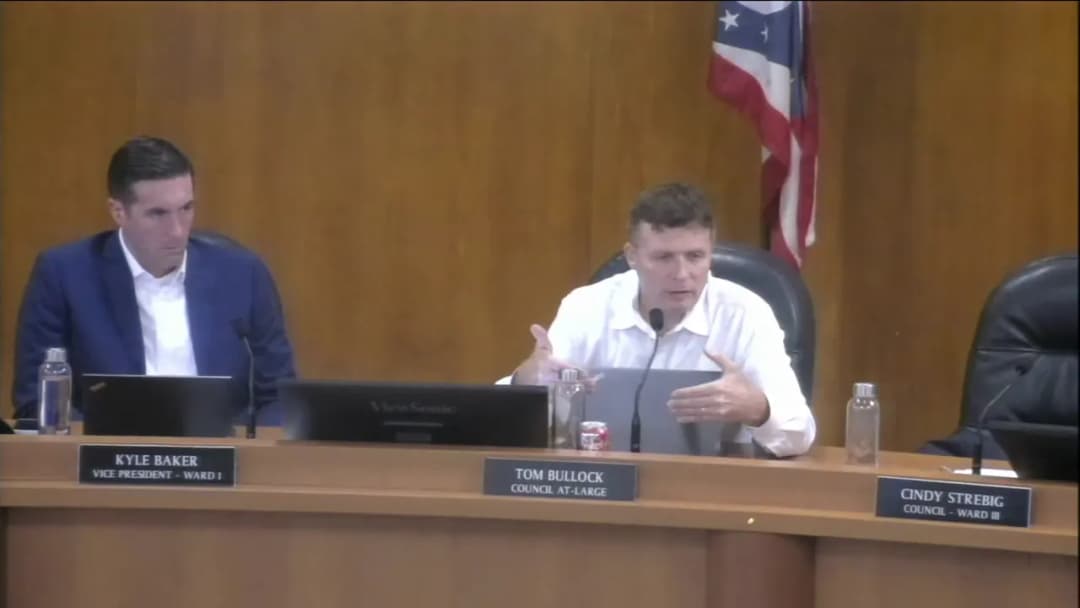
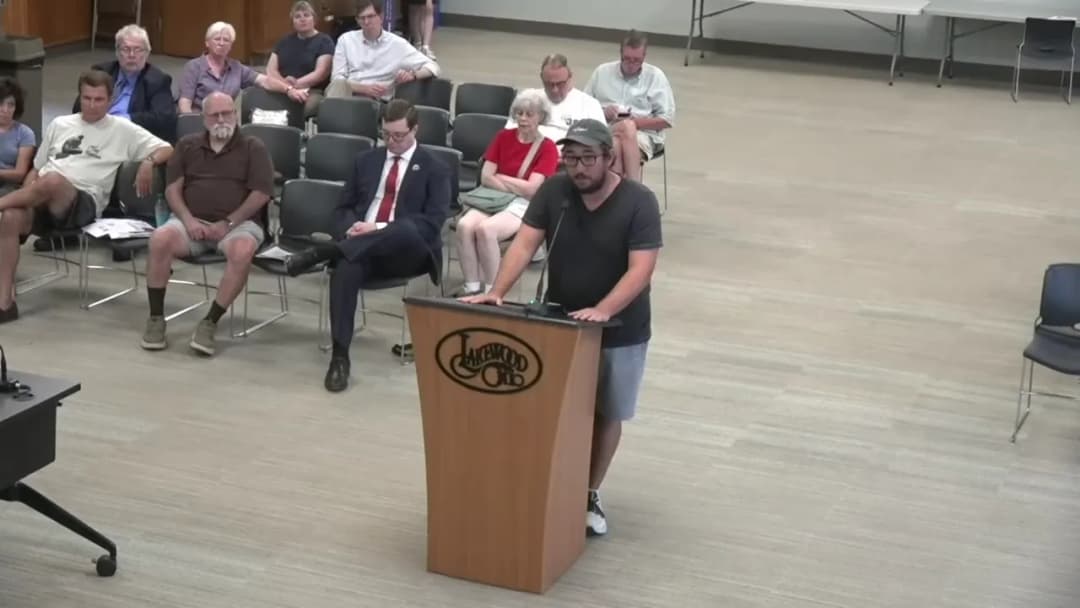
Note: The transcript of this meeting states the date as September 8, 2026, but the instructed date for this summary is August 3, 2026. This discrepancy is noted. The Housing Planning and Development Committee met on August 3, 2026, to receive updates on the city's traffic calming program and to resume deliberations on proposed regulations for short-term rentals. The meeting began with the approval of previous minutes. Consent Calendar - Approval of Minutes: The minutes of the July 13, 2026, Housing Planning and Development Committee meeting were approved by voice vote, with a motion and second. Public Comments & Testimony - Helen Brand (1588 Warren Road): Expressed support for responsible short-term rental (STR) operations. She owns an STR in a building with five units, reporting zero police complaints in the last 1.5 years. She argued that existing noise ordinances are sufficient and suggested that requiring proof of residency (Cuyahoga County or Lakewood) for STR permits would address neighborhood concerns. She also asked about grandfathering for existing responsible operators. - Sierra Kravik and Jordan Kravik (1540 Warren Road): Expressed concern about multiple STRs within a half-mile of their home, citing an irresponsible absentee landlord with long-term rentals. They support proper permitting and host responsibility, including requiring local residency for operators, to ensure timely response to issues like noise complaints. Discussion Items - Traffic Calming Program Update: Assistant Director Boss presented an overview of the neighborhood traffic calming program. Key points: - The program is resident-driven, data-based, and focuses on north-south residential blocks (not major collectors or commercial roads). - Three objective thresholds to qualify a street: (1) average daily traffic 600 vehicles, (2) 85th percentile speed 30 mph, (3) 5% of vehicles exceeding 35 mph. A street must meet at least two of three. - Process: resident nomination → data collection (at least three sets, different seasons) → threshold check → resident survey (50% support needed for intervention) → block meeting → petition (60% approval for installation). - Metrics since 2020: 112 nominations, 68 processed, 22 qualified for intervention, only 9 completed installations (all speed tables). No block that reached the petition stage has failed to achieve 60% approval. - Proposed improvements: double data collection capacity by using all four neighborhood police officers; better public outreach; and a context-driven adjustment to thresholds based on street width, setbacks, and right-of-way (e.g., narrower streets like Hall may need a lower speed threshold). This last recommendation came from the CASE advisory board. Council discussion: Councilpersons Baker, Evans, Bix, and Keppel supported making the program a council-level policy with periodic review, updating standards to reflect changing public sentiment, and increasing efficiency to reduce wait times. Baker and Bullock noted the tension between purely data-driven thresholds and neighborhood perceptions of safety. - Short-Term Rentals Update: Councilman Bullock provided an update on his meetings with city departments (fire, police, building). Key points: - Fire Marshal Berth and Chief Fairbanks described safety concerns for transient guests: ensuring clear exits, proper smoke detectors (combination with 10-year batteries), fire extinguishers, no double deadbolts, and restrictions on open burning or grills on porches. They suggested that these requirements could be checked during the application/licensing process. - Building Commissioner Parmale noted that current housing license regulations already apply to STRs (registration, local agent, inspections) but acknowledged that owner-occupied units renting part of a two-family might be exempt. The main challenges are behavioral/nuisance issues, not structural. - Councilman Baker proposed a heavily regulated approach with fees to cover enforcement, using Cleveland’s model as a starting point (bed tax, saturation limits, ingress-egress maps). He moved to discharge the ordinance from committee to allow him and Bullock to draft new language. - Councilman Bullock emphasized that the core policy question is whether STRs are a new commercial use in residential zones (which the zoning code prohibits) or a subcategory of rental housing. He noted that investors are treating them as businesses, and the city must decide whether to ban, heavily regulate, or permit them under existing bed-and-breakfast rules. Key Outcomes - Traffic Calming: No action taken; further updates are expected from Assistant Director Boss (on the context-driven threshold methodology) and the CASE advisory board. The committee will take up policy considerations after those inputs. - Short-Term Rentals: A motion to discharge the short-term rental ordinance from committee (to allow Councilmen Baker and Bullock to work with the administration on revised legislation) passed unanimously. The ordinance will be re-introduced to the committee at a later date. Note on Discrepancy: The provided meeting date is August 3, 2026, but the transcript begins with "Welcome to the September 8th, 2026 meeting." The summary above uses the specified date; the transcript date is acknowledged as conflicting.
Public Meetings - Lakewood, Ohio
Public Meetings - Lakewood, OhioThe Committee of the Whole met on July 27, 2026, at 6:00 p.m. in City Hall Auditorium to discuss the city's ongoing legal and regulatory efforts to hold First Energy accountable for chronic power outages and communication failures. The meeting featured presentations from the Law Department, Mayor George, and the Ohio Consumers Council, followed by extensive council discussion and public testimony. No executive session was held; a future session was planned to discuss litigation strategy. Consent Calendar - The minutes of the June 15, 2026 Committee of the Whole were approved unanimously. Public Comments & Testimony - Nico Rue (1421 Cordova Ave.) expressed gratitude for the city's efforts and suggested exploring state ballot initiatives to increase pressure on First Energy, noting the asymmetry between the company's resources and municipal tools. - Karen Pesento (Lake Ave.) recounted being stuck in an elevator for 13 hours during an outage and called for mandatory reimbursement (e.g., $100 per incident or $250 per incident as in New York) and backup generators for senior congregate living facilities. - Gary Federley (Leedale) criticized First Energy's credibility, noting they never apologized and provided an absurd five-year transformer lead time; he also reported brownouts damaging appliances. - Don Nottage (2159 Morrison) referenced a survey of 297 residents showing 70% replaced spoiled food, 28% reported adverse health effects, and 56% lost communications; he urged continued public engagement and noted a paid First Energy luncheon as inappropriate. Discussion Items - President Kepple opened with a timeline of litigation, including the June 2025 PUCO investigation, the Probable Non-Compliance (PNC) letter, the city's intervention against First Energy's attempt to lower reliability standards (denied June 24, 2026), and the new complaint for July 2026 outages. - Mayor George emphasized the city's leading role among Ohio municipalities, highlighting PUCO-ordered upgrades: two new transformers at Athens substation (first delivered June 2026, second due September), pole inspections, smart meters, and communication improvements. She also demanded financial penalties and an escrow system in the new complaint. - Law Director Vargo detailed the legal strategy: the PNC found Lakewood's infrastructure was the oldest in First Energy's service area, with some circuits in the worst 8% performing. The city intervened in the reliability standards case, filing evidence of senior elevator rescues and disproving First Energy's claim that tree falls caused most outages (equipment failure and employee error were primary). The PUCO ruling denied First Energy's request. The law department will monitor compliance and consider intervention in the rate case. - Ohio Consumers Counsel (Tom Broadbeck) presented on grid modernization charges: from 2017–2019, First Energy collected $457.7 million under the Distribution Modernization Rider (later halted by Ohio Supreme Court), $369.6 million under Grid Mod Phase 1 (2019–2022), and $421 million under Grid Mod Phase 2 (2024– ). Consumers paid an average of $108.54 (DMR) and $146.32 (Grid Mod 1 & 2). Broadbeck urged using the rate case (PUCO Case No. 26-347-EL-AIR) to demand reliability improvements. - Councilmember Strebig asked about the number of substations and whether additional failures are expected; Mayor George noted two substations (Athens, Lauderdale) were affected. Law Director Vargo clarified that First Energy is statutorily required to service new developments. - Councilmember Bullock echoed the importance of commercial businesses and microgrid solutions; Councilmember Baker raised the option of municipalization under the Ohio Constitution, and Mayor George confirmed initial high-level estimates in the hundreds of millions to $1 billion, but no formal study has been done. Baker expressed willingness to allocate funds for a feasibility study. - Councilmember Bixenstine requested a substation coverage map from First Energy and emphasized the human toll. - Councilmember Hamilton Steiner asked about restitution; Mayor George confirmed financial penalties and refunds were requested in the new PUCO complaint. Key Outcomes - Council will continue to monitor First Energy's compliance with PUCO orders, including infrastructure and communication improvements. - The Law Department will develop a formal intervention strategy in First Energy's pending rate case (Case No. 26-347-EL-AIR) and may pursue additional legal avenues, including exploring municipalization. - Future Committee of the Whole meetings will be scheduled, including an invitation for First Energy to appear and discuss their compliance and plans. - Residents and businesses were encouraged to file public comments with PUCO on the rate case and to submit complaints directly regarding outages. - No executive session was held; council agreed to schedule one after the Law Department has further developed legal strategy and received requested documents from PUCO.
The Lakewood City Council held a regular meeting on July 17, 2026, starting at 5:30 PM. The meeting covered a wide range of business including recognition of the successful high school baseball team, presentation of Fourth of July parade winners, discussion of short-term rental regulations, report on the 2027 budget priorities, approval of five charter amendments to be placed before voters in November, referral of FirstEnergy legal matters to committee, and adoption of shoreline erosion abatement measures. Multiple communications were received and filed, and several votes were taken. Consent Calendar - Minutes: Approved minutes of the July 6, 2026 regular meeting and the July 16, 2026 Community Conversation without reading. - Housing, Planning & Development Committee Report: Received and filed the report from the July 13 meeting regarding short-term rental regulations. - Public Safety Committee Report: Received and filed the report from the July 20 meeting, including an update on the Neighborhood Paramedic Program (300 mental health calls in 2025, growing hoarding issues). - FirstEnergy Legal Matters: Received and filed the communication from President Kepple detailing a litigation timeline against FirstEnergy, including a Probable Non-Compliance letter and PUCO’s denial of FirstEnergy’s request to lower reliability standards. The communication was referred to the Committee of the Whole for further discussion. - Transgender Student Athletes: Received and filed a communication from Councilmember Strebig expressing support for inclusive policies for transgender athletes, referencing prior OHSAA guidelines. - EMS Grant Award: Received and filed notification from Fire Chief Fairbanks of a $2,944.56 Ohio Division of EMS Training & Equipment Grant for 2026-2027. - LakewoodAlive Board Report: Received and filed Vice President Baker’s report on the July 15 meeting, including approval of FY2027 budget, election of new officers and directors, and response to recent power outages. Public Comments & Testimony - No members of the public signed up to speak or offered comments during the public comment period. Discussion Items - Short-Term Rental Regulation (Ordinance 28-2026): Following the committee report, Councilmember Bullock’s proposal to clarify bed-and-breakfast regulations to include short-term rentals was deferred for further study. The committee discussed fees, safety, local management, affordable housing impacts, and enforcement. - 2027 Budget Priorities: Vice President Baker presented the Finance Committee’s report, which organized Council proposals into three categories: 2027 Budget Priorities, Policy Priorities, and Future Budget Priorities. The report emphasized early collaboration and continuing dialogue. Director Mahoney noted that some proposals (e.g., block clubs) need more definition. The report was received and filed, with Council members encouraged to continue working with departments over the summer. - Charter Amendments (Ordinances 16-20): Five charter amendments were introduced and adopted, all to be placed on the November 3, 2026 general election ballot. Councilmember Hamilton Steiner recused herself due to prior service on the Charter Review Commission (abstained). The amendments address: - (16-2026) Civil Service Commission review of elected salaries to occur every presidential general election year (eliminating the 10% cap). - (17-2026) Codifying the open application and public interview process for filling Council vacancies. - (18-2026) Allowing ordinances/resolutions to be amended via striking through deleted language and underlining new text instead of full repeal and reenactment. - (19-2026) Establishing a process for periodic ward redistricting after each decennial census, beginning with the 2030 census. - (20-2026) Clarifying the three paths for charter amendments: Charter Review Commission recommendation, citizen initiative, or Council action by two-thirds vote. Key Outcomes - Resolution 2026-38 (Rangers Baseball Team): Adopted unanimously, recognizing the 2026 Lakewood High School Varsity Baseball Team’s historic 27-1 season, back-to-back district championships, and undefeated conference record. - Fourth of July Parade Winners: Communication from Mayor George received and filed; winners were recognized in categories: Best Color Guard (82nd Airborne Association), Best Float (STEM Handmade Soap), Most Original (Sew 4 Service), Best Bicycle (Trikeable Treats), Most Spirit (Dance Lakewood). - Short-Term Rental Ordinance (28-2026): Deferred (motion passed). - Budget Priorities Report: Received and filed. - Charter Amendments (16-20): All five ordinances adopted with one abstention (Hamilton Steiner). - FirstEnergy Referral: Communication referred to Committee of the Whole, with a briefing from the Law Department to be scheduled the following week. - Shoreline SID: - Resolution 2026-37 adopted: declaring necessity to proceed with erosion abatement improvements for four properties and authorizing special assessments. - Ordinance 29-2026 adopted (suspending rules for first reading and then adopting): levying special assessments totaling $953,975 for the four parcels, payable in 15 annual installments or cash. No city funds are used. - Liquor Permit (Cini Hospitality LLC): Deferred to allow time for investigation. - Adjournment: Meeting adjourned with announcements including upcoming community events.
This Public Safety Committee meeting (noted as July 15, 2026, per the dataset, though the transcript indicates July 20, 2026) focused on the annual update of the Lakewood Fire Department's Neighborhood Paramedic Program. The committee heard from Fire Chief Ryan Fairbanks, Firefighter/Paramedic Oliver Harper, Human Services Social Worker Nicole Zierenberg, Captain Michael Trapoti, and Assistant Chief Sam Bullo. The presentation covered program activities, pain points, mental health crisis response, and future needs. Council members expressed strong support and discussed potential funding sources. Consent Calendar - Approval of Minutes: The minutes of the March 9, 2026 Public Safety Committee meeting were approved by unanimous voice vote. Discussion Items - Neighborhood Paramedic Program Update: Oliver Harper presented data on the program’s progress. Key highlights include: - Partnership with Cleveland Clinic Fairview for post-discharge referrals for chronic conditions (CHF, COPD, diabetes); Harper received EPIC access and contractor status to visit patients in the hospital and home. - Collaboration with The Centers for mental health urgent care to divert low-acuity mental health patients from the ER to a same-day, wraparound facility. - Human Services (Nicole Zierenberg) support for the 18-59 age group and VA patients. - Pain points: limited capacity (Harper alone handles high demand), difficulty engaging other hospital systems, transportation barriers (especially for homebound patients), hoarding as a growing safety hazard, and lack of a standardized mental health follow-up protocol. - Mental Health Crisis Response: Captain Trapoti explained the current emergency system: patients threatening self-harm are placed on a “pink slip” (72-hour hold) and often wait hours to days in the ER without definitive care, only to be transferred to a facility for short stabilization. He noted that research indicates community paramedicine struggles with mental health, but the team is working to find alternatives. - Hoarding: Oliver described hoarding as a multifactorial problem involving fire hazards, pests, and legal citations; he assists by removing one bag at a time but lacks resources for significant impact. Councilman Baker noted issues with theft allegations. - Transportation: Nicole Zierenberg detailed a $100,000 grant from the Healthy Lakewood Foundation to create an Uber Health account for same-day rides to appointments, addressing a major barrier for post-discharge follow-ups. - Funding Needs: Chief Fairbanks stated that Harper is at capacity (working 110%) and cannot be cloned; the department seeks funding for an additional neighborhood paramedic position. He noted that reducing high-utilizer EMS calls (from 50-100 per year down to 10) is a key metric, not overall call volume. - Council Member Q&A: Councilmembers praised the program: - Councilman Evans noted mental health as a council priority and offered support. - Councilman Bixenstine asked about utility outages; Harper discussed preparedness for oxygen-dependent residents. - Councilwoman Strebig asked about the Uber program; Zierenberg explained the grant mechanism. - Vice President Baker emphasized the need for data-driven metrics to secure funding, suggesting cannabis funds, CDBG, and opioid funds as potential sources. - Councilman Bullock echoed support for a city commitment and leveraging outside funds. - President Keppel asked about the program’s history (Assistant Chief Bullo provided background: it began as a fall prevention initiative to gain home access and expanded). She also questioned how Harper triages multiple needs and suggested exploring partial hospitalization programs; Harper and Trapoti noted challenges with liability and pink-slip culture. Key Outcomes - Communication Received and Filed: The committee voted unanimously to receive and file the communication from Fire Chief Fairbanks regarding the Neighborhood Paramedic Program update. - Funding Exploration: Council members indicated interest in using cannabis funds, CDBG, and opioid settlement dollars to support expansion of the program. No formal commitments were made, but a follow-up meeting was suggested to discuss data and metrics to justify additional positions.
The Housing, Planning, & Development Committee met on July 13, 2026, to discuss the regulation of short-term rentals (STRs) in Lakewood. The meeting focused on a communication from Councilmember Bullock and a proposed ordinance (Ordinance 28-2026) that would define STRs as a form of Bed and Breakfast Establishment and establish additional criteria. Committee members expressed broad support for heavy regulation and discussed various approaches, including owner-occupancy requirements, fees, taxation, and enforcement mechanisms. Consent Calendar - Approved the minutes of the July 6, 2026 Housing, Planning, & Development Committee meeting. Discussion Items - Opening Remarks: Committee Chair Bryan Evans introduced the topic, noting the frustration from residents and the need for regulation. - Councilmember Tom Bullock: Presented his proposed ordinance, which amends existing bed and breakfast regulations to explicitly include short-term rentals. He emphasized the need to capture impacts such as parking, neighborhood character, and safety. Bullock highlighted that current STR operations are not in compliance with existing codes and called for a high threshold of accountability. - Councilmember Kyle Baker: Shared insights from Cleveland's recently passed STR legislation, including a 10% cap on STRs per block, a $150 licensure fee, a local agent requirement, a three-strike nuisance rule, and a bed tax. Baker expressed internal struggle between allowing STRs and banning them, but leaned toward heavy regulation. - Councilmember Bryan Evans: Supported an annual operating license, local manager response time, three-strike rule, density limits, and occupancy tax regardless of regulatory outcome. - Councilmember Matthew Bixenstine: Raised the question of whether to restrict corporate investors and emphasized the affordable housing impact. He supported heavy regulation. - Law Director Vargo: Stated the law department would work on any version council agrees on, but policy decisions needed first. - Mr. Andrews (Planning/Building): Encouraged time with Director Parmalee, who has constructive thoughts, and noted the building code is not the primary tool for behavioral penalties. - Councilmember Bullock (closing): Reiterated the importance of owner-occupancy as a way to reduce enforcement burden. He mentioned receiving a letter about safety concerns in multifamily buildings with STRs and noted ongoing conversations with Commissioner Parmalee and the police chief. Key Outcomes - No formal action was taken. The committee agreed to continue discussions with the administration, particularly the building department, police, and tax department. - Councilmembers committed to gathering more data on owner-occupied two-family structures and other inputs before refining the ordinance. - The next steps involve working with Commissioner Parmalee and other departments to craft enforceable legislation.
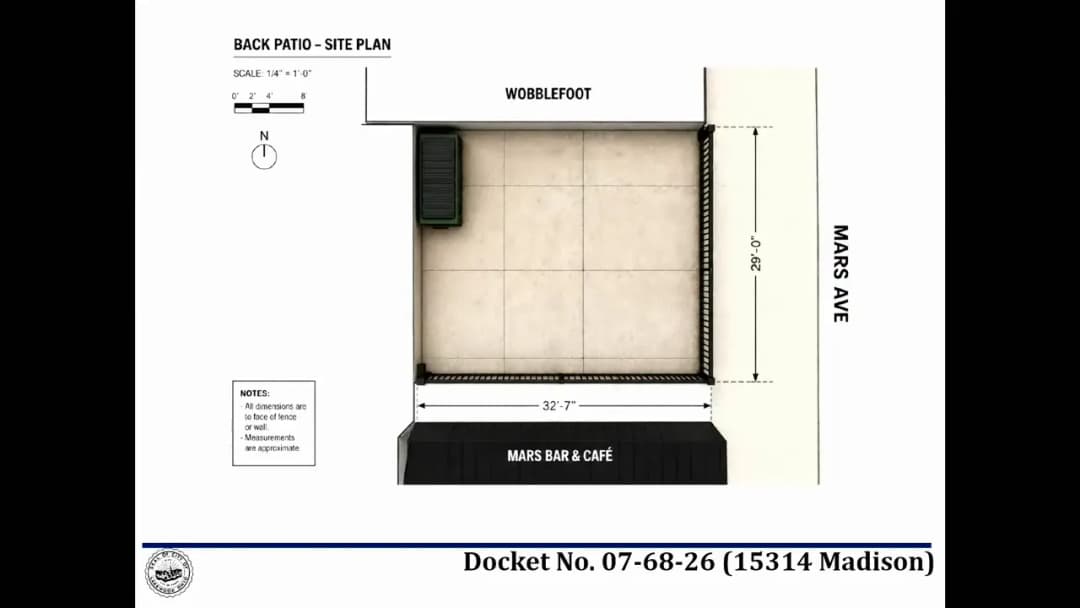
The board met on July 9, 2026, at 10:45 UTC, for a combined sign-review and architectural-review meeting in Lakewood, Ohio. No written minutes for this meeting were available in the record. The board approved the minutes of its June meeting, then heard old and new business covering signage, residential renovations, awnings, a new home build, and site improvements. Many items were approved with conditions, while others were tabled or deferred for additional drawings and details. Consent Calendar - The board unanimously approved the minutes from its June meeting. - Opening remarks described the board’s purpose and set a 5-minute public-comment limit for speakers. Public Comments & Testimony - Public comment was opened and closed on most dockets with no speakers coming forward. - On the new-build application by Greg Allen Builders, a public speaker who said they had worked with the homeowner for about 18 years expressed strong support for the design, called it a major improvement over the original house, and said the client was thrilled. Discussion Items Sign Review – Old Business - 13611 Detroit Avenue (Philly Flavor): The applicant from Neon Signs said window graphics had been removed and the sign reduced to address the previous square-footage concern. The board approved a 17-inch-by-120-inch awning sign only, with no window graphics included in the approval. - Detroit Avenue ground/monument sign follow-up: A sign professional presented a ground sign replacing a previously discussed wall-mounted version. The board approved it with the condition that landscaping at the base of the ground sign be submitted for administrative approval. - 1590 Coutant (Fast Signs): The owner requested window graphics and a side wayfinding sign. The board noted the project exceeded the allowable window-signage square footage and that full storefront coverage is not allowed. It approved the left storefront window and the wayfinding sign as presented, and required the background to be removed from the right-side storefront sign, with the revised sign resubmitted for administrative approval. Architectural Board of Review – Old Business - 1518 Hopkins: The applicant presented revised plans and asked about window options, including possible European-style windows. The board approved the project with the following conditions: the double-hung windows are included in the approval; the horizontal transom windows on the left elevation are included; a standing-seam porch roof with concealed fasteners may be approved administratively after submittal of a cut sheet and color selection; and a revised front elevation with corrected porch column and beam detailing, including base and capital details on the columns, must be submitted for administrative approval. - 15431 Edgewater Drive: This return-for-modifications request was discussed at length. The applicant had built deviations from the approved design and, according to the board, submitted only photographs with no drawings or detailed description of the changes. Some members opposed approving as-built modifications because it could set a bad precedent, while others wanted to give the applicant another opportunity to present revised drawings. City legal counsel advised that a denial could be appealed to the Court of Common Pleas and that enforcement is a separate city matter. The board voted to table the application. Sign Review – New Business - 1550 Detroit Avenue (Taco Bell): The board approved a comprehensive sign plan as presented. The package covered a brand refresh with replacement logo faces, white channel letters, a monument-sign color change, purple cove accent lighting, mobile pickup signs, and canopy refurbishment. - North Coast Apartments / La Brioche: The applicant proposed fabric awnings and two illuminated blade signs, including a La Brioche sign and a coffee-brand sign. Board members liked the concept but could not confirm dimensions, placement, or visibility from the renderings, especially how the awnings and signs would fit together on the actual building. The item was deferred to the next pre-review meeting, with possible administrative or summary approval if revised scaled elevations resolved the concerns. - 15603 Detroit Avenue (Mary Arts): The owner said she is expanding the store and wanted a uniform storefront sign. The board accepted the modest square-footage overage because of the unique context and approved the sign with conditions that the text match the existing adjacent sign and that any window signage be submitted separately. - 15715 Madison Avenue (Lily's Gifts to Go): The board approved the blade-sign package as within square-footage allowances, with the condition that the blade sign be mounted above the brick soldier course. Architectural Board of Review – New Business - 17828 Lake Road: The applicant proposed adding a front-facing attached garage. The board said the proposal conflicts with the city’s residential design guidelines because an existing rear-loading garage provides another viable location. Board members suggested exploring a side-load layout and tabled the case to allow revisions. - Mars Bar rear patio/dumpster enclosure: A representative requested approval for a new fence, automated gate, dumpster enclosure, planters, lighting, and patio furniture. The board found the concept positive but the drawings incomplete. The item was deferred until the applicant submits a scaled site plan, elevations, dimensions, construction details, and product or cut-sheet information. The board noted the dumpster enclosure could also be reviewed through the building-permit process. - 14224 Detroit Avenue (New Life Church): The board approved a proposal to infill the church’s west courtyard, using Hardy panel siding, windows, and a sloping roof, with the condition that the windows be clear anodized rather than dark bronze. - New build by Greg Allen Builders: After a fire damaged the existing house, the applicant proposed demolishing it and rebuilding on the existing foundation. The board treated the application as a new build, stated that painted brick is not permitted, and requested full colored elevations with labeled materials, neighborhood context, exterior lighting cut sheets, a landscape plan, and clarification of arch and soldier-course detailing. A public speaker supported the project. The board voted to defer it and asked the applicant to email revised drawings directly to staff and return after a pre-review meeting. Key Outcomes - Approved the June meeting minutes. - Approved conditional sign and architectural items for Philly Flavor, the Detroit Avenue ground sign, 1518 Hopkins, Fast Signs, Taco Bell, Mary Arts, Lily's Gifts to Go, and New Life Church. - Tabled 15431 Edgewater Drive and 17828 Lake Road. - Deferred North Coast Apartments / La Brioche, Mars Bar, and the Greg Allen Builders new build. - Deferred and tabled items carry next steps to submit revised drawings, scaled elevations, cut sheets, and product information; some may receive administrative approval without another full hearing. - All votes were voice votes, and no opposing votes were recorded in the transcript for the motions that carried.
This meeting of the Lakewood Public Art Advisory Board covered updates on the 2026 Spectacular Vernacular mural and bird sign projects, a proposed mural for the Sinoco wall, and the Public Art Master Plan. A council member provided public comment regarding future public art opportunities at Bernice Pike Park. Consent Calendar - Approval of Minutes: The board unanimously approved the meeting minutes from May 26, 2026. Public Comments & Testimony - Councilwoman Cindy Streebig (Ward 3): Speaking as a resident and council member, she expressed support for incorporating interactive public art that honors women's history at Bernice Pike Park, Lakewood's newest park. She encouraged the board to engage with the League of Women Voters and the Historical Society for identifying notable women. She shared a personal story about the scarcity of statues depicting real women and advocated for installations that inspire young girls, such as footprints with the message "you're next." Discussion Items - 2026 Spectacular Vernacular Update: The project is progressing smoothly. The artist for the Madison Avenue mural (13359 Madison) has received over 600 social media comments after a photo call-out for dogs to serve as muses. Final drawings are expected by the end of the week, with installation required by the end of September. The "Birds on Birds" project will total 16 bird signs to be placed atop street signs in the neighborhood (not on Madison Avenue). The first prototype is being created and is on schedule. Councilman Vixenstein has approved the bird designs. - Sinoco Wall Mural (Hilliard and Madison): Artist Aaron was absent due to a family emergency. He submitted a revised sketch featuring the phrase "It's a good day" alongside artistic elements by collaborator Hallie. Board members expressed concern about the lack of a scale rendering showing placement on the unusually shaped wall. They requested a scaled sketch before approval. A special virtual meeting may be scheduled to expedite the review. - Public Art Master Plan: A finalized draft has been submitted to the mayor and will next be reviewed by city council. The board voted to receive and file the plan (motion carried). The plan will be presented to the Planning Commission in August and to council in September. Board members requested the meeting date to attend. - Other Updates: The utility box art rollout continues; staff is awaiting responses from RTA regarding bus shelter art. The board noted a new street mural downtown by artist Ryan Jenke. The city's planner announced an accepted proposal to present on Lakewood's public art initiatives at the state APA conference in Dayton. Key Outcomes - The board approved the May 26, 2026 meeting minutes. - The board voted to receive and file the Public Art Master Plan (unanimous). - The Sinoco wall mural artist will be asked to provide a scaled sketch; a special meeting may be scheduled for review. - The board acknowledged the public comment regarding Bernice Pike Park and will consider interactive sculpture opportunities as part of future planning. - The meeting was adjourned.
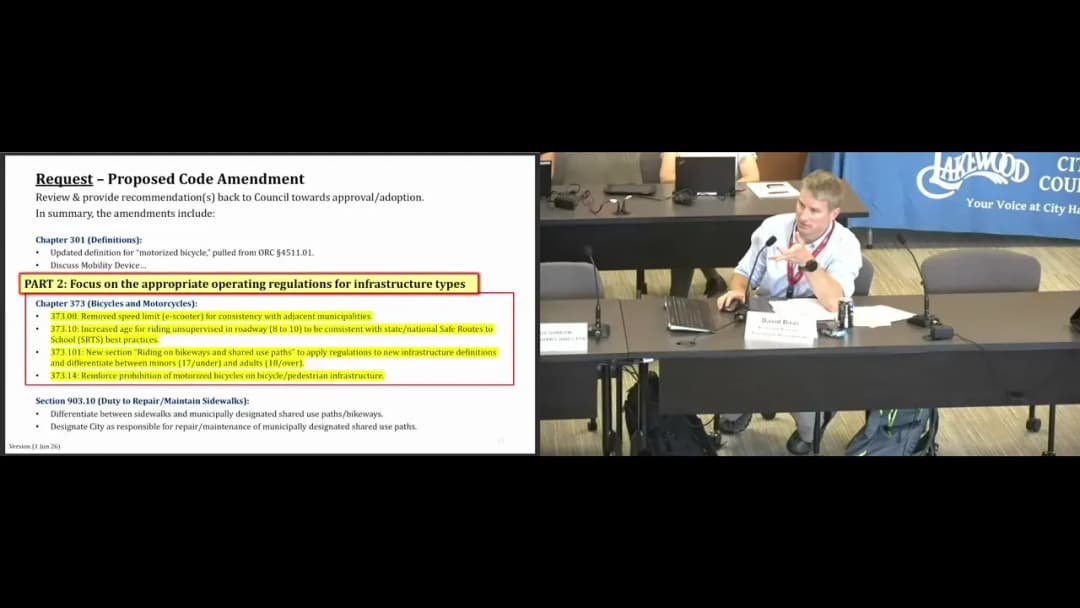
The Housing, Planning, & Development Committee met on July 6, 2026, at 6:30 p.m. in the Lakewood City Hall Auditorium to discuss proposed code amendments related to bicycle infrastructure, e-bikes, e-scooters, and other micromobility devices. The meeting included a presentation by Assistant Planning Director David Baas, public comments, and committee discussion. No formal votes were taken, but the committee expressed support for continued collaboration with the CASE Board and increased enforcement of existing reckless operation rules. Public Comments & Testimony - Emily Lindbergh (speaking on her own behalf, not as a CASE Board member) advocated for regulating actual e-bikes (Class 1, 2, and 3) the same as bicycles, emphasizing that sidewalks and shared use paths are transportation infrastructure used for mobility, not just recreation. She noted that current code can discriminate against lawful e-bikes used by parents with children and older adults with arthritis. She supported a focus on reckless operation rather than device-specific bans. - Rob Molinado suggested that throttles on e-bikes are removable and could be regulated to help manage speed. He noted that throttles are useful for elderly or disabled users who cannot pedal, but many users rely on throttle-only operation. He also expressed support for improved sidewalk plowing regulations. Discussion Items - Presentation by Assistant Planning Director David Baas: Baas reviewed the evolution of proposed code amendments (Ordinance 40-2025, first read November 17, 2025), which aim to align Lakewood’s definitions with Ohio Revised Code and address new devices like e-mopeds and electric motorcycles. Key points: - Definitions for “motorized bicycle” are being updated to exclude e-bikes and low-speed micromobility devices. - The current term “mobility device” may be replaced with ORC’s “low-speed micromobility device” to better differentiate e-scooters, electric skateboards, and similar devices. - The CASE Board recommended adopting ORC’s three-class e-bike definitions and exploring a new category for “electric motorcycles” (devices with 750W motors that assist above 28 mph). - Existing code (e.g., reckless operation, sidewalk riding rules) already provides enforcement tools; the challenge is differentiating device types in the field. - Committee Reactions: - Chair Bryan Evans noted that the issue has grown beyond the Bunts Road shared use path to all city infrastructure. He emphasized that existing reckless operation rules should be enforced now. - Councilman Kyle Baker observed that kids on high-speed electric mopeds in Lakewood Park pose safety risks; he supported potentially banning unregulated electric mopeds altogether. - Council President Sarah Kepple suggested an approach similar to the vape shop moratorium: consider interim action on the most dangerous devices (e.g., high-speed electric mopeds) while the broader code revision proceeds. She also stressed the need for public education. - Councilman Matthew Bixenstine highlighted a specific dangerous behavior: riding electric devices the wrong way in bike lanes on Madison Avenue. - Councilwoman Cindy Strebig praised the Maryland sticker system for identifying e-bike classes and supported requiring local registration or classes for device users. - Enforcement and Police Collaboration: Baas confirmed that the Lakewood Police Department has been involved in drafting the amendments and will continue to be part of CASE Board meetings. Key Outcomes - No votes were taken on Ordinance 40-2025; the discussion was informational. - The committee directed staff to continue working with the CASE Board to finalize definitions and operational regulations, with a focus on: - Creating clear definitions for low-speed micromobility devices, three classes of e-bikes, and electric motorcycles. - Emphasizing reckless operation as a universal enforcement standard rather than device-specific restrictions. - Exploring immediate public education and enforcement of existing rules (e.g., no riding scooters at unsafe speeds on sidewalks). - The next CASE Board meeting will address “Part 2” of the amendments, which regulates where devices can operate (sidewalks, shared use paths, bikeways, and roadways). - The committee encouraged collaboration between Council, CASE, and the Police Department to produce a final ordinance ready for adoption as soon as possible.
This Finance Committee meeting, chaired by Councilman Kyle Baker, focused on the final three items from the list of 25 Council Budget Priority Worksheets submitted after the May 11 council retreat. While the meeting was originally scheduled for July 6, 2026 (as indicated in the agenda), this summary uses the July 2, 2026 date as instructed. The committee discussed the Implementation of the Racial Equity Plan, the Lakewood Community Circulator, and the Expansion of Winter Sidewalk Maintenance, with an emphasis on identifying whether each priority requires budget allocation or policy development for the 2027 city budget. Consent Calendar - The minutes of the June 29, 2026 Finance Committee meeting were approved by voice vote of the two members present (Baker and Strebig). Discussion Items - Implementation of the Racial Equity Plan (Sponsored by Councilperson Angelina Hamilton Steiner): Councilperson Hamilton Steiner reported that the consultant is finalizing the racial equity plan, which will be reviewed by the Anti-Racism Task Force before being referred to Council. She noted the plan extends beyond race to include gender, sexuality, disability, and other marginalized identities. The desired outcome is to implement the plan’s recommendations. Council President Sarah Kepple highlighted the need for dedicated funds, but the exact amount is unknown until the plan is complete. It was agreed that Councilperson Hamilton Steiner would work with Director Barry and others to propose a specific budget figure by the end of the month. - Lakewood Community Circulator (Sponsored by Councilperson Angelina Hamilton Steiner): The proposal aims to revisit the feasibility of a community circulator, building on a 2024 transit feasibility study. Councilperson Hamilton Steiner emphasized that it is a waste of public dollars not to act on the study. Discussion centered on exploring creative solutions beyond a traditional bus route, such as partnerships with Lakewood City Schools for student transportation, free RTA passes for residents, and micro-mobility options. The committee considered this more of a policy initiative for 2027, with a working group to be convened to develop a long-term plan and short-term outcomes. Several members expressed support for exploring the concept, acknowledging the financial challenges but noting high public interest. - Expansion of Winter Sidewalk Maintenance (Sponsored by Councilperson Angelina Hamilton Steiner): Noting the severe winter of 2025-2026, the priority proposes a pilot city-run snow clearing service focused on high-need areas (senior populations, schools, mobility-challenged). Public Works Director Robert Gordon outlined current snow removal practices and the challenges of clearing 180 miles of varied-width sidewalks, including equipment constraints and potential property damage. He confirmed the city is already internally reviewing improvements. The committee agreed that this is primarily a policy development effort for 2027, with Director Gordon willing to meet with council members to further refine the concept before potentially requesting engineering funds or other budget allocations. Key Outcomes - All three items were discussed with no formal votes; the committee focused on clarifying the nature of each priority (policy vs. budget) and establishing next steps. - For the Racial Equity Plan, Councilperson Hamilton Steiner will coordinate with administration to propose a budget estimate for the 2027 budget. - For the Community Circulator, a working group will be formed to study the issue further, with a policy-oriented approach for 2027. - For Winter Sidewalk Maintenance, Director Gordon will meet with interested council members to develop a policy framework, with possible budget implications for 2028. - Councilman Matthew Bixenstine noted that his own priority items (inclusion, block clubs, mental health, safety, recreation) were already covered by others’ proposals, so he did not submit separate priorities. - The meeting adjourned after approximately 32 minutes, with no additional meetings scheduled at this time.
Note: The agenda and transcript indicate the meeting occurred on July 6, 2026, but the provided metadata specifies July 2, 2026. This summary uses the metadata date as instructed. The Lakewood City Council held a regular meeting on July 2, 2026, at 7:30 PM in Council Chambers. The meeting covered committee reports, five proposed charter amendments for the November ballot, a traffic calming program review, a block club initiative, animal shelter concerns, federal grant changes, and short-term rental regulations. Several ordinances were deferred for final action at the July 20 meeting. Public comments focused on power outages, e-bike safety, and property code enforcement. Consent Calendar - Unanimously approved minutes from the June 15, June 24, and July 1, 2026 meetings without reading. Committee Reports - Finance Committee (June 22 & 29): Vice President Baker reported on the review of 24 council budget priorities from the May 11 retreat. The committee clarified which priorities will impact the 2027 budget; those without budget impact will be pursued as policy or long-term projects. At least one more finance meeting before recess. - Housing, Planning & Development (June 22 & 29): Councilmember Evans reported: - On June 22, Assistant Planning Director Baas updated the Zoning Refresh Project. The final cohesive draft is expected for the September docket, with adoption by year-end. - On June 29, a presentation from Cleveland Bridge Builders (with LakewoodAlive) explored strategies to fund garage repairs for fixed-income residents. The committee will continue analysis. - Housing, Planning & Development (July 6): Evans gave an oral report on e-bikes/e-scooters. The committee began discussing code changes, including definitions and regulation. An education blitz on existing reckless operation ordinances was also discussed. Councilmember Bullock urged swift action on both new devices and unsafe behavior, noting that behavior may need separate treatment. Discussion Items - Charter Amendment Ordinances (Items 4-8): Five ordinances proposing amendments to the city charter for the November 3, 2026 ballot were considered. Each had been previously vetted by the Committee of the Whole. President Kepple noted typos in three and substitutes in two. After approving amendments/substitutions, all five were deferred to the July 20 meeting for final adoption, meeting the September 4 Board of Elections deadline. The amendments cover: 1. Ordinance 16-2026: Change frequency of Civil Service Commission salary reviews to odd-numbered years, with a 10% cap unless no increase in 10 years. 2. Ordinance 17-2026: Add requirements for filling council vacancies: open call for applicants, public interviews, and clarify appointee term. 3. Ordinance 18-2026: Allow legislation to be amended by striking through removed language and underlining new language, instead of full repeal/re-enactment. 4. Ordinance 19-2026: Establish a ward redistricting process after each decennial census, effective for the next regular election. 5. Ordinance 20-2026: Clarify charter amendment paths: by Charter Review Commission recommendation with council vote, or by council two-thirds vote directly. - Traffic Calming Program Review: Vice President Baker, Councilmembers Bixenstine, and Evans submitted a communication requesting a comprehensive review of the Traffic Calming Program, which has been in place for over a decade. They noted the program's success but asked whether thresholds, engagement process, prioritization, codification, and new treatments should be updated to align with the city's Active Transportation Plan, Safe Streets for All, Climate Action Plan, and Complete Streets Ordinance. Motion to refer to Housing, Planning & Development Committee, Planning Commission, and Complete Streets Education Advisory Board passed unanimously. - Block-Level Connections: Councilmembers Evans, Strebig, and Bixenstine launched an initiative to strengthen block clubs. Three focus groups for neighborhood leaders are scheduled: July 9 (6:30-8 PM, Main Library), July 11 (9-10:30 AM, Main Library), and July 14 (6:30-8 PM, Madison Library). The goal is to build social capital and improve community communication. Motion to receive and file passed. - Animal Safety & Welfare Advisory Board (LASWAB): Councilmember Hamilton Steiner reported on the June 17 meeting. The shelter’s name and operations were discussed after a resident’s complaint. LASWAB will research best practices for municipal animal shelters. Also, CCLAS will hold a pet treat bake sale at Lakewood Arts Fest. Motion to receive and file passed. - OMB Proposed Changes to Federal Financial Assistance: Hamilton Steiner detailed sweeping proposed changes to 2 CFR 200 (Uniform Guidance) by the Office of Management and Budget, effective October 1, 2026. She highlighted harmful provisions including alignment with administration priorities, pre-issuance review, risk assessments for civil rights/religious liberty compliance, termination for failure to advance national interest, limits on DEI/gender ideology, elimination of disparate impact studies, removal of language access discretion, elimination of merit review, removal of community engagement requirements, and removal of hiring preferences for disadvantaged areas. Comment period closes July 13. Motion to receive and file passed. - Short-Term Rental Regulations: Councilmember Bullock submitted a communication and proposed Ordinance 28-2026 to resume deliberations on regulating short-term rentals (STRs). He noted hundreds of STRs operating without required conditional use permits under existing bed-and-breakfast laws. The ordinance would clarify STRs as a form of bed and breakfast, require owner occupancy, prohibit STRs in condos/multi-family buildings (3+ units), prohibit within 1,500 feet of a school, and set safety and accountability requirements. He also suggested reviewing the chronic nuisance ordinance and tax collection. Both the communication and ordinance were referred to Housing, Planning & Development Committee. - HUD FY26 Action Plan Amendment: Planning Director Byington and Development Officer Wyman presented Resolution 2025-66A, amending the previous resolution to reflect actual FY26 CDBG award ($1,915,618) and ESG award ($166,057), which exceeded estimates ($1.75M and $160,000). Additional funds were distributed according to contingency provisions approved by the CAC: CDBG extra went to public services, administration, and street resurfacing; ESG extra went to homelessness prevention. Motion to adopt passed unanimously. - Finance Vendor Report (June 2026): Received and filed. - Liquor Permits: Items 18 (QAJ Enterprise LLC @ 14000 Detroit Ave.) and 19 (Cini Hospitality LLC @ 16806 Madison Ave.) were deferred due to incomplete paperwork. Public Comments & Testimony - Don Nottage (2159 Morrison Ave.): Described a life-threatening experience during multiple power outages on July 1-3, 2026. He criticized the city’s response and called for creative solutions including lawsuits and exploring alternative utility providers. He also expressed concern that new multi-unit development stresses the grid. Mayor George responded, detailing the city’s efforts: a June 2024 petition to PUCO that led to an investigation, a letter of probable noncompliance against FirstEnergy, orders for infrastructure upgrades, legal intervention against FirstEnergy’s request to lower reliability standards (denied June 24), and a new complaint requesting fines, refunds, and an escrow system. She acknowledged communication could improve and promised a website timeline. - Ben Jackson: Supported the idea of an escrow account to pressure FirstEnergy into meeting reliability standards. - Matt Herberger (1448 Bunts Road): Suggested swapping the tree lawn and multimodel path on his street to create a buffer; urged council to quickly regulate e-bikes, noting safety concerns at Lakewood Park pool. President Kepple noted the Housing Committee discussed e-bike regulations earlier that evening. - Dennis Koweki (2160 Morrison Ave.): Complained about two abandoned/neglected properties on his street—one a hoarder house (vacant 4 years, only painted) and another with chronic nuisances (13 cars, noise, dumpster). He said city calls yielded no action. Administration staff took his contact info for follow-up. Key Outcomes - All five charter amendment ordinances were amended/substituted and deferred to July 20 for final passage. - Traffic calming program review referred to Housing, Planning & Development, Planning Commission, and Complete Streets Education Advisory Board. - Block-level connection initiative was received and filed; focus groups scheduled. - Short-term rental communication and Ordinance 28-2026 referred to Housing, Planning & Development. - Resolution 2025-66A (amended FY26 HUD Action Plan) adopted unanimously. - Two liquor permits deferred. - Public comments addressed; Mayor committed to improving FirstEnergy communication and pursuing further action through PUCO.