The Louisville Metro Planning and Zoning Committee met on November 3, 2026, at 1:00 PM in Council Chambers and virtually, chaired by Andrew Owen. The committee considered a Bolling Avenue rezoning, a neighborhood-housing Land Development Code amendment, and a special data-center discussion. O-251-26, the pending data-center ordinance, was listed on the agenda but no formal vote on it was recorded. No live public testimony appears in the transcript. Pending Legislation - O-311-26 — 1715 Bolling Avenue (Case 26ZONE0079): Julia Williams of the Office of Planning presented a request to rezone approximately 0.07 acres in Council District 6 from R6 to R8A in the traditional neighborhood form district, converting an existing one-story nonresidential structure into a four-unit multiplex: three first-floor units (two one-bedroom and one two-bedroom) and one second-floor four-bedroom unit. Councilwoman Ruhe asked about unit sizes; Councilman Benson raised parking concerns. Staff said parking would mainly be on the street and no rear parking was shown. Staff noted the two no votes were understood to reflect concerns that the site should remain R6/single-family because it is mid-block. Action required by December 30, 2026. - O-301-26 — Neighborhood Housing Amendment (Case 26-LDC-0001): Joel Dock of the Office of Planning presented a text amendment to increase housing choice, prioritize areas with infrastructure and transit, and streamline review. The proposal has three main parts: neighborhood housing building types (duplex through walking court, plus a traditional corner mixed-use type), housing and mixed-use corridor changes, and a new urban center neighborhood form district. Neighborhood housing would be permitted in all traditional form districts, within quarter-mile buffers of certain form districts, and in new major preliminary subdivisions of 3 acres or more, subject to special standards such as compatibility with adjacent single-family homes, limits on clustering, no blank walls, required sidewalks, restrictions on single-family demolition, no short-term rental or group housing use, and no automatic conformance for illegal dwellings. Corridor changes include measuring height in stories rather than feet, eliminating floor area ratio, reducing minimum lot sizes, eliminating infill except in traditional neighborhoods, and allowing administrative approval when a proposal is 100% compliant with no waivers or variances. The urban center neighborhood form district would create a transition between downtown and surrounding neighborhoods, with buildings at the street, 3-8 stories, no minimum lot size, required sidewalks, and no surface parking lots. Planning Commission recommended approval 8-1 after a September 3 public hearing and September 17 deliberation. Chair Owen thanked staff and called it a step in the right direction. Councilman Piagentini said the overall intent was good but raised concerns about new subdivisions outside corridors, compatibility with small existing homes, administrative approval and reduced public process, appeals, and infrastructure capacity; he encouraged tabling the item. Vice Chair Reed also praised the revised proposal but said more time was needed to review details. Action required by April 29, 2027. Special Discussion — Data Centers - Internet Exchange Points: Tom Ferree, chairman and CEO of Connected Nation and co-CEO of IXP.us, presented a narrow request to amend the data-center ordinance’s telecommunications data center category. He said Louisville is the largest city on IXP.us’s list of 135 targeted locations without a dedicated hardened carrier-neutral Internet Exchange Point. He described latency as the next digital divide, saying every 62 miles of fiber adds about a millisecond to a round trip and that “tromboning” traffic through Chicago or Atlanta can add 40 milliseconds or more. He described IXPs as neutral facilities where networks interconnect directly; the Wichita State University facility is about 2,000 square feet on 1.3 acres and is hardened to 175 mph wind ratings, not built for large-scale computing. He said the draft ordinance requires a telecommunications data center to exclusively serve FCC-regulated providers, which disqualifies an IXP because it also serves cloud, content, research, education, and business networks. - Proposed IXP amendments: Ferree proposed three changes: define Internet Exchange Point as a second path into the telecommunications data center category; replace the pre-application LG&E transmission study with a will-serve letter for IXPs capped at 5 MW, with an executed service agreement required before operation; and require disclosure of the facility operator rather than the user. He said safeguards would include a maximum of 25,000 square feet, a maximum of 5 MW, at least three independent networks with their own ASN, and open, non-discriminatory access. All other standards would still apply. Chair Owen said the public process had allowed this issue to surface and supported staff and county attorney review. Councilman Piagentini called the proposal low-risk and high-upside and wanted the county attorney to review it. Councilwoman Parrish-Wright asked about Spectrum and community benefits; Ferree said the facility is carrier-neutral, Spectrum is a tenant in Wichita, and Connected Nation provided 200 laptops and digital literacy sessions in Sedgwick County as part of its nonprofit mission. - Accessory data centers: Brian Davis of the Office of Planning said accessory data centers are internal data facilities used by existing businesses for websites, apps, and data storage. The proposed definition would limit them to the lesser of 25,000 square feet or 49% of the building; exceeding that would trigger regular data center regulations. Because they are within existing buildings, they would not have the same noise, environmental, and study requirements as standalone data centers. Chair Owen asked about expansion at Appliance Park; Davis said a larger white-space area would require a conversation about regular data-center rules. Councilwoman Parrish-Wright said the city should be able to inventory and classify existing accessory and larger data centers; staff said registration or licensing for accessory data centers was not in the Planning Commission recommendation but could be explored. - Telecommunication hotels: Davis said the draft carves out existing telecommunications hotels used by local internet and phone providers so they are not swept into the general data-center definition. They would be allowed in more zoning districts and permitted with special standards rather than requiring a conditional use permit if they comply. The definition relies on FCC-regulated telecommunications providers, and registration would let staff know where they are. Chair Owen cited the ATT building across from WHS-TV as likely the largest telecommunications hotel in Jefferson County and said existing facilities like the one on Bauer Avenue had not created issues and were not the target of the ordinance. - Decommissioning: Davis said decommissioning plans respond to the risk that a data center operator walks away and leaves equipment or hazardous materials for the community to handle. He cited the Kentucky Resources Council model ordinance, Lexington’s adoption, Mason County’s approach, and Bowling Green’s requirement to restore and reclaim the site to a pre-development state ready for farming. Some communities require bonds. Planning staff typically does not require decommissioning plans for other uses, though Chair Owen noted the Topgolf lights and poles are bonded. Chair Owen supported decommissioning plans and bonding, comparing the issue to abandoned mine lands. A county attorney representative said decommissioning requirements are most defensible for data centers, especially if the city creates data-center-specific zoning where reuse is difficult, while noting other industries may already be regulated by EPA or state agencies. Chair Owen said if the policy is good for data centers it may be good across the board. Councilwoman Parrish-Wright supported decommissioning and health impact review, citing environmental justice concerns and the Philip Morris site, and said the city should go the extra mile while it can. Key Outcomes - O-311-26: Properly moved and seconded; roll call reported six yes votes, and the ordinance was announced as unanimously approved and sent to old business on the next council agenda. - O-301-26: Vice Chair Reed moved to table for future discussion; the motion was seconded and passed by voice vote, with the chair stating the ayes had it. The item was tabled to the next committee meeting. - O-251-26: No formal vote or action on the pending data-center ordinance was recorded; the data-center presentation and discussion were informational. - Data-center amendments: Staff and county attorney review of Ferree’s proposed IXP amendments was discussed, but no formal motion, vote, or referral was recorded.

Public Meetings - Louisville, Kentucky
Public Meetings - Louisville, KentuckyNo agenda or minutes were provided. The available transcript does not contain Louisville city meeting proceedings, public testimony, or municipal votes; instead, it appears to be a media transcript with two segments: a "Bourbon and Biscuits" cooking demonstration and a "Louisville Now" sports interview. Transcript Content - In the cooking segment, hosts prepared bourbon bread pudding with Kentucky bourbon sauce and a bourbon riff on an espresso martini. Ingredients mentioned included half a loaf of French bread, 1.5 sticks of butter, 1 cup heavy cream, 3 cups milk, 2.5 cups sugar, 7 eggs, 2 tablespoons bourbon vanilla extract, and 1/3 cup Kentucky bourbon. The bread pudding was to bake at 350 for one hour. - The cocktail segment described a drink with 1.5 ounces of Woodford Reserve, 1 ounce of coffee liqueur, and 1 ounce of sweet vermouth, strained into a martini glass and garnished with a Luxardo cherry; it was identified as a signature drink at Proof on Main in Louisville's 21C Museum Hotel. - In the sports interview, Ronaldo Murphy of 35 KY Sports described the platform as multimedia coverage of Louisville men's and women's basketball, football, recruiting, former Cardinal athletes, volleyball, soccer, swimming, high school sports, and youth athletics. He said it had about 250,000 followers and averaged 6-7 million views per month, and mentioned original programming including "The Players' Perspective Uncensored with Larry O'Bannon" and "Spillin' the Veal." Key Outcomes - No municipal decisions, votes, directives, referrals, or next steps were present in the supplied transcript. No public comments or testimony on city business were included.
The provided raw transcript for the meeting dated 2026-11-02 15:45 UTC does not contain identifiable Louisville-Kentucky city meeting proceedings. No agenda or minutes were available. The transcript is an informal conversation, apparently about cooking: a pot lid that lost its top/holder, vegetables, noodles, and cooking them until the seeds become more visible and the vegetables become translucent. No public officials, agenda items, motions, votes, or municipal decisions are identifiable. Transcript Content - The conversation focuses on practical cooking topics, including improvising with a lid whose handles came off, cutting vegetables evenly, and when to add noodles. - One speaker mentions "chef Nancy Hayter" in a personal/culinary context; no government role or public business is identified. Key Outcomes - No city business, decisions, votes, directives, referrals, or next steps were recorded in the provided transcript. - No consent calendar or public comment/testimony related to city matters could be identified.
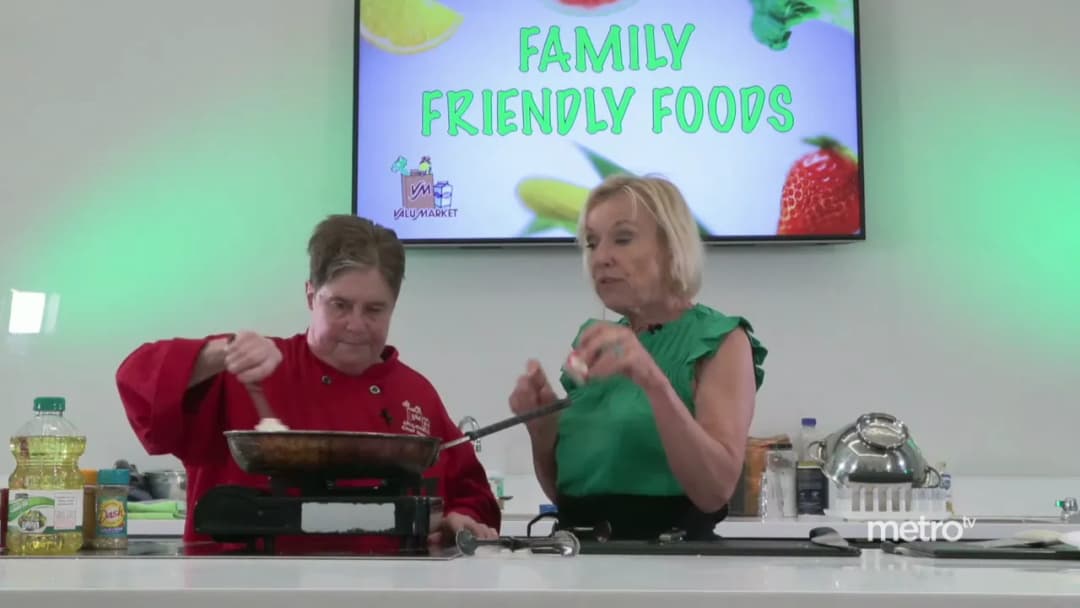
No agenda or minutes were available for the 2026-11-02 meeting. The provided raw transcript does not contain Louisville-Kentucky municipal meeting proceedings; instead, it records a cooking demonstration and related dialogue about preparing spinach, mushrooms, and onions. Transcript Content - A chef-like speaker demonstrated cooking with chopped spinach, halved mushrooms, onions, canola oil, lemon pepper, and garlic powder. The speaker noted that fresh spinach would cook down substantially and that frozen spinach was being used after thawing. - The speaker recommended discarding dried spices that have been open for more than six months because they lose flavor, not because they become unsafe. In response to a question, the speaker said an unopened spice bought three years earlier would not go bad but would have less flavor. - The speaker mentioned using rotini or similar “twists” with a hole in the middle because they catch ingredients, and said slivered almonds could be added. Salt and pepper were also mentioned as basic seasonings. - The dialogue included practical cooking tips about sautéing the vegetables first, using a hot pan, and preparing a quick meal for lunch or dinner. Key Outcomes - No municipal decisions, votes, directives, referrals, or next steps were recorded in the available transcript. - Because the agenda and minutes were unavailable and the transcript is not a city meeting record, no substantive city business can be summarized.
No agenda or minutes were provided for the November 2, 2026 meeting, and the available transcript does not contain municipal business. It records a cooking demonstration and conversation between a chef/instructor and Kirby, focused on stir-fry technique and vegetable preparation. The record is dated 2026-11-02 at 15:30 UTC; no meeting end time was provided. Discussion Items - The demonstration covered heating canola oil (about two tablespoons) before adding vegetables, using the sizzle as a sign the pan is hot enough; the speaker warned that food added to a cold pan can absorb oil and become oily. - The instructor used a garlic-and-herb salt blend and emphasized controlling added salt, noting that salt opens up taste buds and has historical importance in trade. - They discussed adding soy sauce or a product referred to in the transcript as “Kentucky Yucky” after the vegetables were mostly cooked, and serving the stir-fry with noodles, rice, or leftover chicken. - The speaker noted that red bell pepper contains vitamin C. - For a vegetable dish for four people, they used squash, zucchini, red bell pepper, and yellow onion; the onion was halved and cut into half-moons while leaving the core/back intact to hold it together. - Extra virgin olive oil was used to give the dish an Italian flair, and the zucchini and squash were cut into half-moons of similar width so they would cook evenly. - The transcript ends with a question about adding one-fourth cup of water to the oil, and no answer is captured. Key Outcomes - No votes, public comments, or municipal decisions were recorded in the available transcript. - Cooking tips included preheating the pan, cutting vegetables evenly, and seasoning with salt-consciousness.
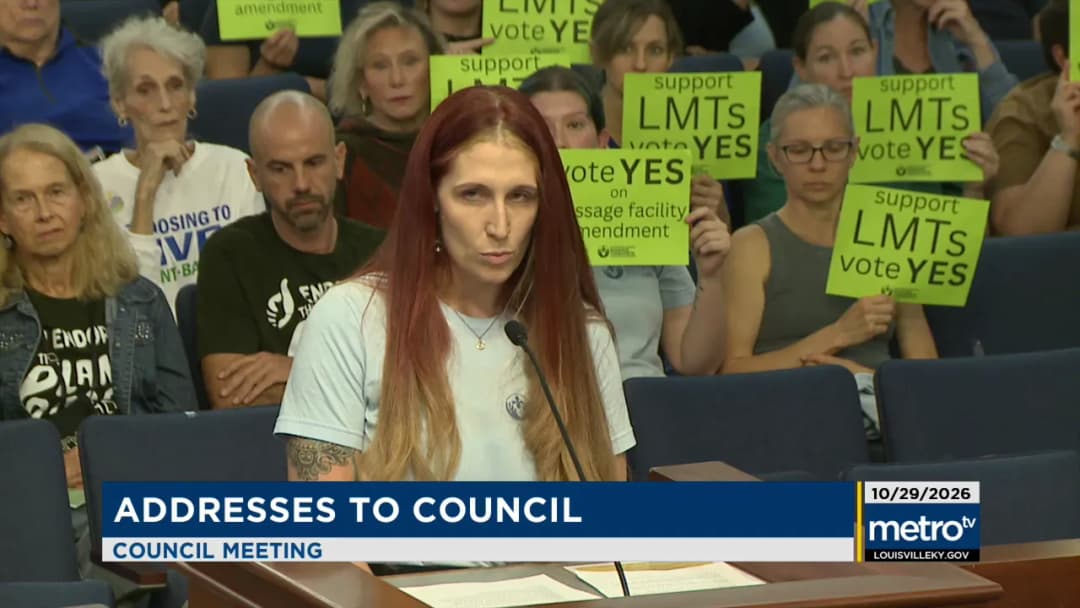
The Louisville Metro Council met on Thursday, October 29, 2026, at 6:00 PM via video teleconference, with President Brent Ackerson presiding. The meeting was called to order at 6:07 PM and adjourned at 7:28 PM. A quorum was established with 25 of 26 members present (Council Member Donna L. Purvis was excused). The council approved a consent calendar, acted on several old business items, heard public testimony, and introduced new legislation. Consent Calendar - Items 18-30 were approved by a 25-0 roll call vote. These included three honorary street sign resolutions (R-146-26 for Harry Johnson Jr., R-147-26 for Kimberly Asa and Lou Fedon, R-150-26 for Rose and Walter Smith); appointments of Cindy Morris (Civilian Review Board) and Scott Davenport (TARC Board); a contract for a laboratory director for Louisville Metro Public Health and Wellness ($102,106.57); authorization of up to $6.2 million in revenue bond anticipation notes for the Wesley Oaks Senior Living Expansion Project; a right-of-way closure near Old Manslick Road; an amendment to Land Development Code Chapter 11 on notice requirements; a resolution requesting review of fencing material regulations; an update to standard design guidelines for landmarks; a FEMA grant acceptance of $74,700 for the fire department; and acceptance of up to $250,000 from the Kentucky Recreational Trails Program. Public Comments & Testimony Seven speakers addressed the council: - Ann Ferree urged council to endorse the Plant-Based Treaty, highlighting health and cost benefits. - Jordan Duvall, a licensed massage therapist (LMT), described how the original massage facility ordinance nearly tripled his break-even revenue and imposed severe financial strain; he asked for support of the amendment. - Samantha Davis, an LMT, thanked council for collaboration and asked for passage of the amendment. - Kim Guenthner, an LMT of 20 years, shared initial feelings of being criminalized and expressed gratitude for the amendment process. - Cathy Hinko criticized Louisville Water Company for high rates and cutoff practices, calling water service disconnection "terrorism." - Dr. Kim Williams, a cardiologist and former president of the American College of Cardiology, advocated for plant-based nutrition to prevent disease and reduce healthcare costs. - Wallace McMullen argued that data center regulations should focus on operational impacts (e.g., electric load, heat, noise) rather than building square footage. Discussion Items Several old business items were debated and voted on: - O-281-26 (Zoning at 211 S. 41st Street): Council Member Owen reported that Council Member Purvis (absent) supported the change to align with existing use. Approved 25-0. (Note: The minutes include a motion to return to table before approval, but the transcript shows a direct vote; outcome unaffected.) - O-293-26 (Zoning at 4107-4111 East Indian Trail): Rezoning from R-4 to C-2, with no anticipated displacement. Approved 25-0. - O-286-26 (Amendments to Massage Facility Ordinance): Council Member Ruhe presented compromise amendments developed over nine months with LMTs, health officials, ABC, and anti-trafficking experts. Changes included ownership transparency, victim-centric trafficking notices, exemptions for solo practitioners, removal of mandatory unlocked doors, and optional cameras. Council Members Piagentini, Owen, and Reno-Weber praised the collaborative process. Approved 25-0. - R-141-26 (Local Incentives for Block by Block): Supported by Council Members Herndon and Piagentini as a local success story. Council Member Lyninger voted no, arguing the work should be done by union employees. Council Member Owen abstained due to his employment with OneLouisville. Passed 23-1-1. - O-290-26 (NDF for Junior Achievement): Amended from $7,250 to $20,000 as 22 council members contributed funds. Approved 25-0. - O-296-26 (NDF for Forest Fest): Amended from $18,250 to $28,750 with contributions from multiple districts. Approved 25-0. - O-299-26 (NDF for Wreaths Across America): Amended from $10,000 to $20,000 to fully fund wreaths at Zachary Taylor National Cemetery. Approved 25-0. Key Outcomes - Consent calendar (Items 18-30) approved 25-0. - Old business items O-281-26, O-293-26, O-286-26 each passed 25-0. - Resolution R-141-26 passed 23-1-1. - Amended NDF appropriations for Junior Achievement ($20,000), Forest Fest ($28,750), and Wreaths Across America ($20,000) each passed 25-0. - New business items (38-51) were read into the record and assigned to committees. - Council Member Parrish-Wright announced a clothing donation drive at City Hall. The next regular meeting is scheduled for Thursday, November 12, 2026 at 6:00 PM.
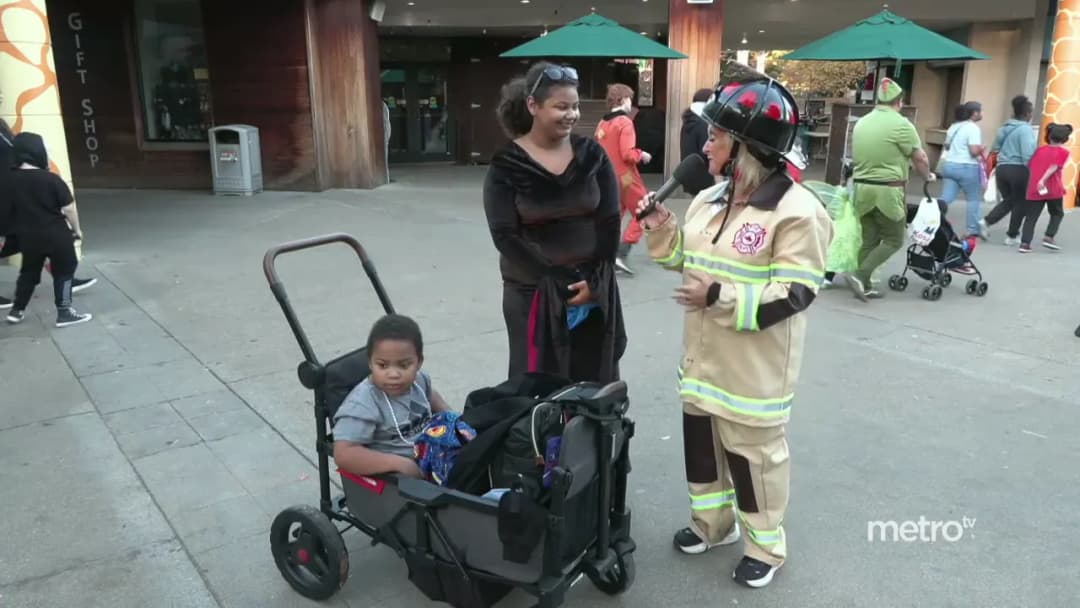
This session, recorded on October 27, 2026, at 7:45 PM, was not a formal city council meeting but a brief, informal interview conducted at the Louisville Zoo's "Boo with the Zoo" Halloween party. No agenda or minutes were available for this event, and the raw transcript captures only a short, casual conversation between an event host and a family in attendance. Event Interaction - The host spoke with a family attending the Boo with the Zoo party, including Sophia (dressed as Morticia Adams), Daniel Catfian, and six-year-old Nathaniel. - Nathaniel said he was looking forward to candy, confirmed he had attended the event before, and stated that his favorite part was "just walking around and seeing cool costumes." - When asked about her favorite character, Sophia said she did not have just one favorite and mentioned that her most liked thing to watch is the movie Scream. - The host described the tone of the party as "merry, not scary." Key Outcomes - No formal business, motions, votes, or decisions were conducted during this interaction.
The meeting included promotional announcements for Louisville Muhammad Ali International Airport's new nonstop flights and an extended interview highlighting the 45th anniversary of the Louisville Zoo's Boo at the Zoo event, particularly its partnership with Kozair for Kids to provide a sensory-friendly experience for children with special needs. Discussion Items - Airport Expansion: A promotional segment announced that starting May 2026, Louisville Muhammad Ali International Airport will offer new nonstop flights to Gulf Shores/Orange Beach, Hartford, and Pittsburgh. Travelers were directed to FlyLouisville.com for details. - Boo at the Zoo 45th Anniversary: Kyle Shepherd from the Louisville Zoo introduced the event, noting it is presented by Meyer and has run for 45 years. Stephanie Smith, Event VP at Kozair for Kids, described the partnership of over 20 years. She stated that the zoo closes on a Wednesday night to allow 2,500 children and families from financial assistance programs and over 100 organizations across Kentucky to attend without sensory overload. Families begin requesting tickets as early as August. Smith expressed full support for the event, calling it a night where kids "just get to be kids." - Volunteer Staffing: Diane Taylor, a zoo staff member with 48 years of experience, explained that volunteer recruitment for Boo at the Zoo begins in January. Approximately 900 volunteers are needed to staff 16–17 nights of the event, each about four hours long. Volunteers come from companies, schools, and National Honor Societies. Key Outcomes - No formal votes, decisions, or public comments were recorded. The interview and announcements were informational in nature. (Note: The provided transcription did not include a full meeting agenda, minutes, or formal city council business. The content consisted of a promotional airport advertisement and a zoo event interview, likely part of a larger meeting or broadcast.)
The Planning and Zoning Committee held a special meeting on October 27, 2026 from 1:04 PM to 2:21 PM to discuss three key aspects of proposed data center regulations: zoning classifications and the conditional use permit (CUP) process, separation from special uses, and size distinctions including maximum square footage and setbacks. The meeting focused on comparing the Planning Commission's recommendation to allow large data centers in M1 industrial districts with a CUP versus the Kentucky Resources Council's (KRC) recommendation to create a new data center-specific zoning district. No public comments were heard, and no votes were taken; the pending legislation (O-251-26) remained held in committee. Discussion Items - Zoning Classifications and Conditional Use Permit Process: Brian Davis of the Office of Planning explained that the Planning Commission recommendation allows large data centers (over 50,000 square feet) in M1 (light industrial) districts with a CUP. This approach effectively forces most large-scale data centers to seek a rezoning because only about 250 acres of M1 exist countywide, dispersed in small parcels. The KRC recommendation would create a new data center zoning district, requiring a rezoning anywhere in Jefferson County. Committee members debated the pros and cons: the M1+CUP approach provides flexibility for alternative uses if a data center ceases operation, while a dedicated zone ensures every proposal goes through a full rezoning process (Laura Ferguson, County Attorney's Office). - Separation from Special Uses: The Planning Commission recommendation includes separation requirements from sensitive uses (homes, hospitals, schools) and between data centers to prevent overconcentration. Joe Haberman clarified that separation from sensitive uses is measured structure-to-structure, while data center-to-data center separation is parcel-to-parcel. Relief from separation standards can be requested during the CUP process. Councilman Piagentini questioned whether separation between expansions of the same owner under 500,000 square feet should be required, arguing it might discourage smaller expansions and incentivize applicants to build the maximum size. - Size Distinctions and Maximum Square Footage: Brian Davis explained the 500,000 square foot cap for the largest category, based on typical data center footprints (200,000–250,000 sq ft per building) and comparisons with existing industrial buildings in Louisville (over 120 buildings exceeding 250,000 sq ft). Square footage was chosen as the metric because power load regulation is likely beyond local authority. Committee members discussed potential loopholes, such as building multiple stories with high ceilings; staff noted that white space (server areas) is defined, and floor area counts, but a ceiling height definition could be added. - Health Impact Statement: Committee Member Parrish-Wright proposed including a health impact statement, citing overburdened communities in industrial areas. Brian Davis noted that a noise and vibration study is required, but not a full health impact statement. Councilman Piagentini argued that no other industrial use requires a health impact statement, and such a requirement should be consistent. Laura Ferguson stated that the council could request example language from other communities via an amendment. - Map Analysis: Joe Haberman presented maps showing M1, M2, and M3 zoning. The M1 map (pink dots) showed limited, dispersed parcels; most are developed or too small to accommodate large data centers, reinforcing that a rezoning would likely be needed for any significant data center. Councilwoman Hawkins noted the Campground Road proposal (150 acres) is on split M1/M3 zoning and is the only large hyperscale proposal; existing data centers are under 100,000 square feet and located in other districts. - Legal Considerations: Laura Ferguson explained that if the council creates a new data center zoning district, existing data centers would have non-conforming rights, but expansions or new uses would require rezoning. A moratorium is in place until January/February 2027; if no new regulations or extensions are passed, the previous code (allowing telecommunications hotels in C3 and industrial districts) would apply. Key Outcomes - No votes were taken. Ordinance O-251-26 remains held in committee for further discussion. - The committee directed staff to provide examples of health impact statements from other communities. - Staff will investigate the historic zoning of the Campground Road property for Councilwoman Hawkins. - The committee acknowledged the need to address potential loopholes in square footage definitions (e.g., high ceiling heights) in future drafts. - The committee plans to continue deliberations, with the option to extend the moratorium if new regulations are not ready by its expiration.
The program, recorded on October 23, 2026, featured interviews with residents of Hillcrest Avenue, the owner of Caulfield's novelty store, and a Louisville Metro Police officer, discussing Halloween decorations, candy distribution, community traditions, and safety tips. Hillcrest Avenue Decorations - Host interviewed Brian Adams, resident of 113 Hillcrest Avenue. Adams described building a giant spider decoration in his garage, adding to it each year, and estimated that on Halloween night they give away about 3,000 pieces of candy to approximately 3,000 children, with total attendance of 4,000–5,000 people. He emphasized the joy of seeing families and noted that they collect non-perishable food for Crescent Hill Ministries and gently used costumes for Hook & Bus. He reported hearing the number 20,000 visitors over an unspecified period. - Host interviewed Aiden Schmidt, resident of 209 Hillcrest Avenue, who built his own decorations (guillotine, PVC figures) using reclaimed materials and received help from a neighbor. Schmidt stated he "100%" recommends families visit Hillcrest Avenue for Halloween and said he sees only happy faces. Caulfield's Novelty Store - Host interviewed Tracy Caulfield Johnson, third-generation owner of Caulfield's. She recounted the store's history: founded in 1915 as a photography studio, transitioned to novelty items in 1920 after insurance money from her father's accident was used to buy tricks and jokes. She displayed popular costumes for 2026, including Descendants, Fortnite, Beetlejuice, Scream, and Terrifier. She noted the store has a makeup artist and longtime staff who help customers create outfits. She expressed that the store is a destination for families and that she loves helping customers. Halloween Safety Tips - Officer John Keeling, resource officer for the 5th Division, provided safety advice: do not send children out alone, have parents stay a half block behind; wear bright costumes that allow peripheral vision; use crosswalks; carry flashlights or glow sticks; avoid unwrapped candy; and do not accept invitations into homes or garages of strangers. Key Outcomes - No formal votes or decisions were made. The program promoted community participation in Halloween activities and encouraged safe practices. The broadcast concluded with a reminder of the hours (5:00 p.m. to 9:00 p.m.) for visiting Hillcrest Avenue and the charitable collections taking place.