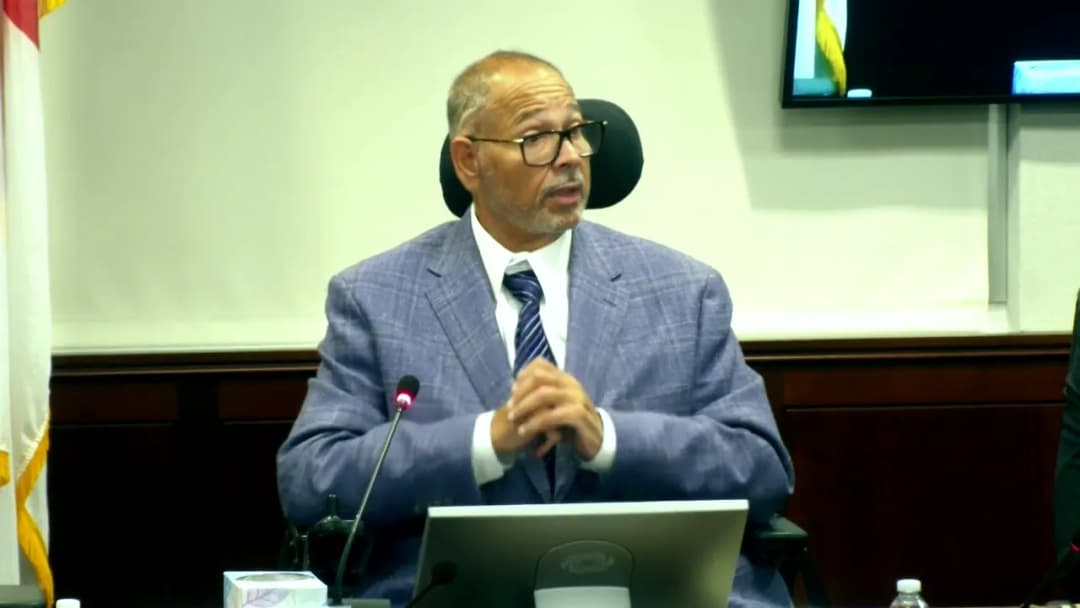
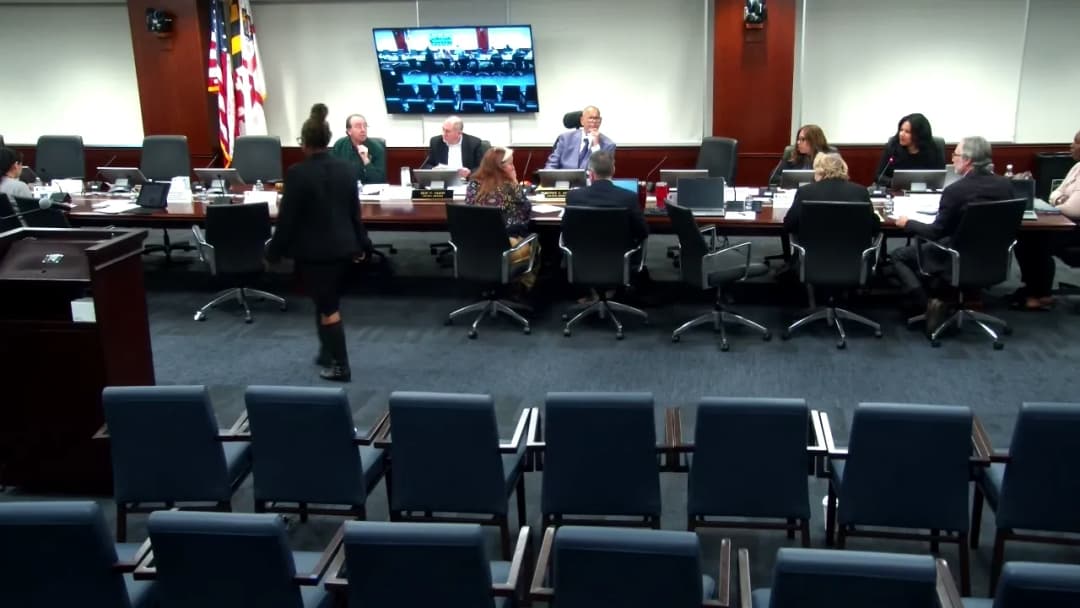
The Government Operations and Fiscal Policy Committee met on Thursday, October 22, 2026, at 1:45 PM in Committee Room 2027 of the Wayne K. Curry Administration Building in Largo, Maryland. Chair Edward Burroughs, Vice Chair Timothy Adams, and Council Member Jolene Ivey were present; Council Members Wala Blegay and Krystal Oriadha were excused. Council Member Olson also attended. The committee considered three resolutions, all of which were recommended favorably to the County Council. Discussion Items CR-100-2026: Assistant State’s Attorneys Exempt Employees Salary Schedule - Overview: This resolution amends the County salary plan to provide modified pay rates and benefits for certain exempt employees of the State’s Attorney’s Office for Fiscal Years 2025, 2026, and 2027. It includes a 2% cost-of-living adjustment (COLA) and merit increases for eligible employees, as determined by the County Executive. - Fiscal Impact: The Office of Management and Budget reported an adverse fiscal impact of approximately $86,551 in additional expenditures for Fiscal Year 2027 due to COLAs and merit payments. - Testimony: The State’s Attorney (not named in the transcript) spoke in support, stating that recruiting and retaining talented prosecutors is essential to protecting county residents. He noted that a new salary structure adopted in November 2024 did not include COLAs for Fiscal Years 2025 and 2026, and requested approval for the COLAs and discretion to provide retention bonuses. He emphasized the difficulty of retaining attorneys due to salary levels. - Legal Review: The Office of Law found the resolution legally sufficient. - Vote: A motion by Council Member Ivey, seconded by Vice Chair Adams, to recommend favorably carried 3-0 (Burroughs, Ivey, Adams in favor; Blegay and Oriadha absent). CR-104-2026: School Facilities Surcharge Partial Waiver for Flats at Glenridge Station - Overview: This resolution approves a partial (50%) waiver of the school facilities surcharge for all 245 residential units in the “Flats at Glenridge Station” project. The project is 100% affordable housing: 219 units for households earning 60% of Area Median Income (AMI) and 26 units for households earning 50% of AMI. - Fiscal Impact: Based on Fiscal Year 2025 rates, the waiver would reduce revenue by $1,463,875 (of a total $2,972,750). Based on Fiscal Year 2027 rates ($12,680 per unit), the waiver would be $1,553,300 (of $3,106,600 total). - Testimony: Committee staff explained the capital stack and extensive underwriting by HRNA, county DHCD, and state partners, confirming these surcharge waivers are needed to make the project financially viable due to interest rate impacts, inflation, and construction costs near the Purple Line. Vice Chair Adams asked how the county could ensure the savings reduce construction costs rather than increase developer profit. Staff responded that the developer’s fee is subordinated, and all loans and equity are paid before the developer receives a fee. Adams also advocated for universal accessibility, noting only 5% of units are designated for mobility impairments, and urged moving toward all units being fully accessible. - Legal Review: The Office of Law found the resolution legally sufficient. - Vote: A motion by Council Member Ivey, seconded by Vice Chair Adams, to recommend favorably carried 3-0 (Burroughs, Ivey, Adams in favor; Blegay and Oriadha absent). CR-105-2026: Public Safety and Behavioral Health Surcharge Full Waiver for Flats at Glenridge Station - Overview: This resolution approves a full waiver of the public safety and behavioral health surcharge for all 245 residential units in the same project. - Fiscal Impact: Based on Fiscal Year 2025 rates, the loss of revenue would be $791,105. Based on Fiscal Year 2027 rates ($3,429 per unit), the full waiver would total $840,105. - Testimony: Chair Burroughs made a motion for favorable recommendation, highlighting that this is the first affordable housing project near the Purple Line and that such waivers help prevent gentrification and displacement, ensuring the Purple Line benefits all residents. - Legal Review: The Office of Law found the resolution legally sufficient. - Vote: A motion by Chair Burroughs, seconded by Council Member Ivey, carried 3-0 (Burroughs, Ivey, Adams in favor; Blegay and Oriadha absent). Key Outcomes - All three resolutions (CR-100-2026, CR-104-2026, and CR-105-2026) were recommended favorably to the full County Council by unanimous 3-0 votes, with two members excused. - The committee heard no public testimony during the meeting. - The meeting was adjourned after the final vote.
Public Meetings - Prince Georges County, Maryland
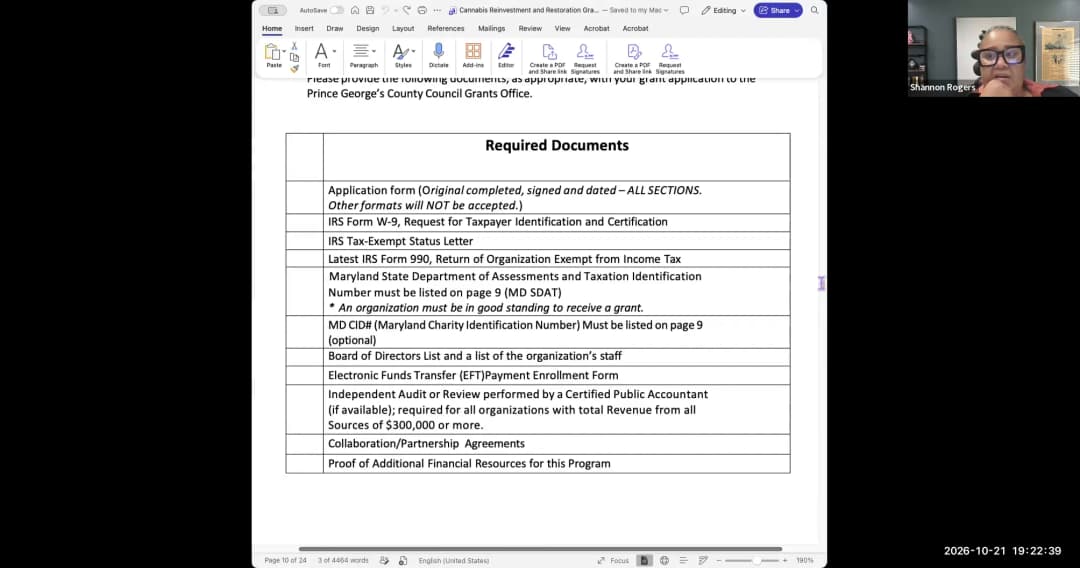
Public Meetings - Prince Georges County, MarylandThe Prince George's County Community Reinvestment and Repair Fund (CRF) Board held an informational meeting on October 22, 2026, starting at 6:12 PM and adjourning at 7:43 PM. The meeting lacked a quorum, so no official votes were taken; all discussions were for informational and planning purposes. The board welcomed guests from the Maryland Office of Social Equity (OSE) and reviewed progress on the grant application process, scoring rubric, and community engagement efforts. Public Comments & Testimony - No members of the public offered comments during the designated public comment period. Discussion Items - Presentation by Maryland Office of Social Equity: Courtney Davis, Executive Director of OSE, accompanied by Artie Kamale (Chief of External Affairs) and Secretary Walter Simmons (Maryland Department of Social and Economic Mobility), provided an overview of the CRF program. Davis explained that the fund was established by the Maryland Cannabis Reform Act of 2023 to reinvest in communities disproportionately impacted by cannabis prohibition. OSE oversees statewide compliance, reviews jurisdictional reports (due October 1), and issued emergency regulations (COMAR 14.17.23) in July 2026. Davis emphasized the importance of meaningful community engagement, transparency, and plans for permanent regulations by January 2027. Secretary Simmons noted the state's budget deficit and cautioned that unspent funds could be reallocated by the legislature, urging counties to develop and communicate plans. - Board Questions and Discussion: Board members raised several topics: - Reporting templates: OSE confirmed no template was provided for the current year, but one will be available next year. - Administrative expenses: The 15% cap on administrative costs was explained as a guardrail to stand up operations. - Comparison to Local Impact Grants (casino): Secretary Simmons and Artie Kamale clarified that while the high-level structure is similar (revenue from regulated industries), the granular details of allowable uses and distribution differ significantly. - Timelines and infrastructure: Board members discussed the typical one-year timeline for counties to build infrastructure and the importance of communication with the state to avoid fund reallocation. - Community engagement update: Chair Eubanks reported that the board has held three town halls (Districts 1, 6, and 4) and is scheduling additional ones on October 28 (Iverson Mall) and November 14 (Oxon Hill) to ensure South County coverage. Board members also tabled at farmers markets and sought meetings with the county executive and council chair, which have not yet occurred. - Grant Application and Scoring Rubric Review: Shannon Rogers from the county's grants division presented the proposed application and scoring rubric. The rubric covers compliance, organizational strength, program design, outcomes, financial management, collaboration, and scoring weights. Board members provided feedback: - Implementation capacity and readiness should be added as a scoring category. - Preferences for Prince George's County-based organizations or those serving specific target populations (e.g., low-income, racial minority, female-led) should be included, potentially as bonus points. - The rubric should be more detailed to reduce subjectivity and align with the approved methodology. - The application should capture previous county funding and allow for detailed budget breakdowns (e.g., housing vs. transportation). - Rogers agreed to revise the rubric and application to incorporate suggestions, with changes highlighted in red, and circulate a new draft before the next meeting. - Future Meeting Dates: The board discussed holding its next regular meeting on Wednesday, November 4, 2026 (subject to quorum) and a virtual town hall on Wednesday, November 18, 2026. Though no formal vote could occur, there was consensus to proceed with the virtual town hall. Key Outcomes - No votes were taken due to lack of quorum; all discussion items are pending formal action at a future meeting. - The board directed Shannon Rogers to revise the grant scoring rubric and application based on feedback, including adding implementation readiness, local preference considerations, and more detailed scoring criteria. The revised documents will be distributed for board review before the next meeting. - The board agreed to hold a virtual town hall on November 18, 2026, to continue community outreach. - The meeting minutes from the previous session were not adopted and will be held for approval at the next meeting with a quorum.
The Transportation, Infrastructure, Energy and Environment (TIEE) Committee of the Prince George's County Council met on October 22, 2026, at 10:00 AM to consider two legislative resolutions and receive a staff briefing on fund deficits. The committee voted favorably to recommend a resolution on Water and Sewer Plan amendments (CR-097-2026) and a resolution on Energy Infrastructure Planning (CR-098-2026). Additionally, the committee received a comprehensive briefing from the Department of Environment (DoE) and the Department of Public Works and Transportation (DPW&T) on structural deficits in the County's Stormwater Management and Solid Waste Management funds. Discussion Items Water and Sewer Plan Amendments (CR-097-2026) The committee reviewed the June 2026 cycle of amendments to the 2018 Water and Sewer Plan. The legislation included two applications for water and sewer category changes and one water withdrawal appropriation. - Application 26W05 (4110 Ryan Road) sought a change from category five to three for a single-family home; the County Executive and Planning Board recommended approval. - Application 26W06 (7809 Kroom Road) sought a change from category five to four for 10 single-family homes. The County Executive recommended retaining category five due to environmental concerns including mapped Marlborough clay and floodplain issues, a stance which the applicant is disputing. - The Lake Presidential Golf Course irrigation well replacement (26WWP01) was discussed. Council Members Olson and Harrison raised concerns about the impact on local aquifers (shifting from the Patuxent to the Tapsico aquifer), the cause of the original well's failure, and the requested withdrawal of up to 95,000 gallons per day. Staff indicated that the Maryland Department of the Environment (MDE) would conduct an extensive study and hold a public hearing, and that the applicant's geologist suggested the final permitted withdrawal would likely be lower. Council Member Hunter requested additional written documentation on these details before the full Council vote. Briefing on Deficits in Stormwater and Solid Waste Management Funds (BR 10222026) Representatives from DoE (Rushane Jones, Jeff DeHan) and DPW&T (Joanna Smith) presented on the structural deficits affecting the county's stormwater and solid waste enterprise funds. - Key findings: The Clean Water Act fee has not been increased since its establishment in 2015. The stormwater management ad valorem property tax has not been increased since the program was taken over from WSSC in 1987, 38 years prior. Fee collections do not grow with property values. The county manages over 800 miles of stormwater pipes, 900 facilities, five aging pump stations, and 21 classified dams. 67% of stormwater infrastructure has exceeded its service life. Current annual spending of roughly $11 million meets less than 3% of infrastructure needs. The county's rates are the lowest among comparable jurisdictions in Maryland. - Council Member Harrison described the presentation as "sobering" and "depressing," questioning how to address a "40-year hole." - Council Member Adams recommended implementing budget reserves to anticipate and save for future infrastructure costs proactively, rather than operating crisis-to-crisis. - Chair Dernoga acknowledged the political difficulty of raising fees and taxes. He proposed exploring a shift in revenue from the Park and Planning tax surplus (the result of a 1 cent increase in 2015 for the SARC center) to address the fund deficits, suggesting this could be done without increasing the overall tax burden on residents. This proposal generated broad discussion among committee members about the need for political will and bold action. Energy Infrastructure Planning Resolution (CR-098-2026) The committee considered a resolution sponsored by Council Member Adams-Stafford directing the Maryland-National Capital Park and Planning Commission (M-NCPPC) to study the benefits and challenges of master planning for utility use. The committee reviewed a second draft containing amendments negotiated since the resolution was held at a previous meeting. - Key amendments included: adding the DoE and the County Energy Manager as joint study participants; shifting the scope from "energy intensive" industries to "new industries"; clarifying electric vehicle infrastructure needs; referencing state battery storage goals (3,000 MW by 2033); setting a report deadline of October 31, 2027 to inform the next General Plan (Plan 2050); and expanding consultation entities to include the MD PSC, Office of People's Council, higher education institutions, and utilities serving the county. Council Member Adams requested the addition of Washington Gas to the consultation list. - Kathina Schoelers, Acting Deputy Director of the M-NCPPC Planning Department, stated the department was not the expert in this area but was committed to the effort. She requested that the study be integrated into the General Plan development process, citing concerns over the feasibility of the October 2027 deadline due to RFP and contracting requirements. The sponsor and committee members agreed to work with the Planning Department on refinements before the full Council vote. Key Outcomes - CR-097-2026 (Water and Sewer Plan): A motion by Council Member Harrison, seconded by Council Member Hunter, to recommend favorable approval carried by a vote of 4-0. (Note: There is a discrepancy between the official minutes, which record Council Member Adams as abstaining, and the raw transcript, which records the Council Member responding "Absolutely" to the roll call vote.) - CR-098-2026 (Energy Infrastructure Planning): A motion by Vice Chair Olson, seconded by Council Member Adams, to recommend favorable approval with amendments carried by a vote of 4-0. Council Member Harrison was absent. - Briefing on Fund Deficits: The briefing was held and discussion encouraged. No formal vote was taken. The committee directed staff to continue working with the administration on solutions for the FY28 budget process. - Adjournment: The meeting was adjourned following a motion by Council Member Adams, seconded by Vice Chair Olson.
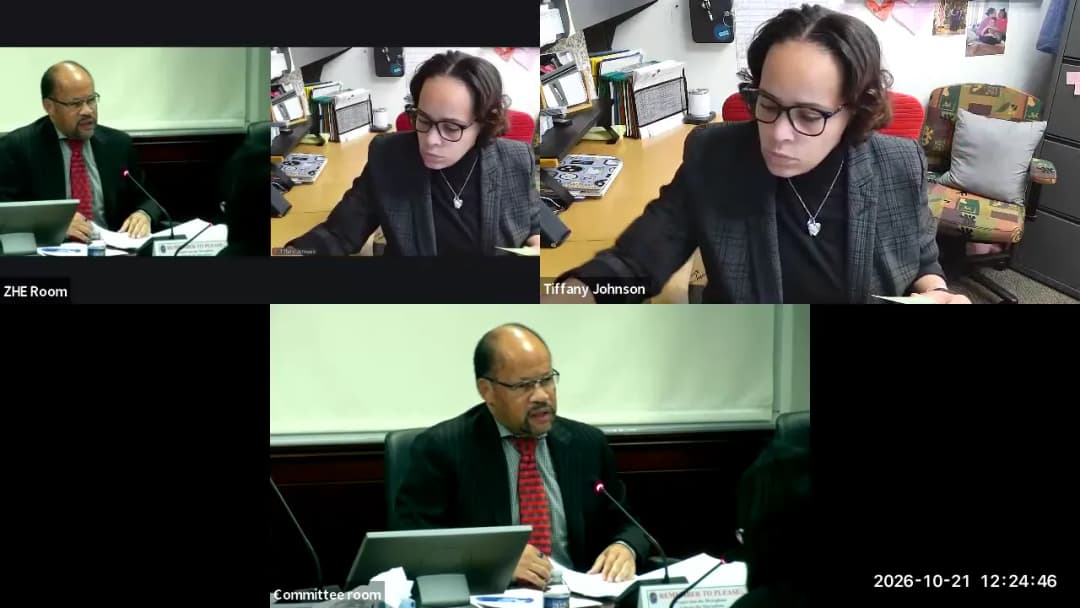
On October 21, 2026, the Prince George's County Zoning Hearing Examiner conducted a hybrid hearing on Special Exception SE-2024-013. The applicant, Cedric Whitaker PA Corp, requested permission to operate a facility providing alkaline hydrolysis (water cremation) services at 8641 Ashwood Drive in Capitol Heights. The central legal issue was whether the proposed use qualifies as an 'all other funeral and mortuary use' (permissible by special exception) or constitutes a 'crematory' (not permitted in the IE Industrial Employment Zone). The hearing featured testimony from a dozen public witnesses, the applicant, and expert land planner Mark Ferguson. Public Comments & Testimony - Supporters: Several family members, industry colleagues, and employees expressed strong support based on Mr. Whitaker's character and professionalism. Pierre Jones, Talisha Jackson, and Nicole Freeman spoke about his integrity and dedication. Courtney Weddington, a nearby resident, stated she had no objections. Nicole Bennett, a resident and volunteer firefighter, strongly recommended the technology. Pastor Robinson gave an impassioned religious endorsement. Tiffany Johnson highlighted the lack of end-of-life choices in the region. - Opponents: Belinda Queen (President, Coalition of Central Prince George's County) formally requested the examiner deny the application, arguing the community had consistently voiced opposition to cremation-related uses. Margaret White (Millwood Waterford Citizens Association) argued the facility was incompatible with the neighborhood. - Applicant & Expert Testimony: Cedric Whitaker testified he pivoted from a flame-crematory plan to address environmental concerns. The operation involves no flame, no emission stacks, three machines, minimal traffic, and seven employees. Land planner Mark Ferguson testified the use fits the IE zone and is compatible with the industrial park. He recommended approval with conditions. Discussion Items - Legal Definition of Crematory: The applicant's attorney, Tracy Scudder, argued the use does not meet the county's definition of a crematory, which requires 'fire'. Stan Brown (People Zoning Council) argued the application's own documents using the term 'water cremation' and state law grouping it with cremation created significant legal confusion. Ferguson conceded the terminology was confusing but adhered to the county zoning definition. - Site Plan & Record Discrepancies: Brown highlighted discrepancies in the record, including building size estimates (7,500 sq ft vs. 8,800 sq ft) and employee counts (7 vs. a 40-person maximum occupancy on the site plan). - Process & Environmental Impact: The process was described as using 200–300 gallons of water per body. The resulting liquid is sterilized, neutralized, and discharged to the sanitary sewer. No smokestacks or odors were anticipated. Cross-examination focused on the need for a WSSC permit and the chemical composition of the effluent. - Community Character: Opposition leaders stated the area has been negatively impacted by the concentration of undesirable industrial uses and resented the proposal being advanced under a different terminology than what they had historically opposed. Key Outcomes - Hearing Adjourned, Record Left Open: The Zoning Hearing Examiner did not issue a decision. The record was left open for two weeks. - Documents Requested: The examiner requested an amended Statement of Justification removing references to 'cremation'; an ethics affidavit for the property-owning LLC; formal opposition letters from community associations detailing their board votes; and manufacturer specifications for the proposed machines. - Next Steps: A written decision will be issued by the Hearing Examiner following the close of the record.
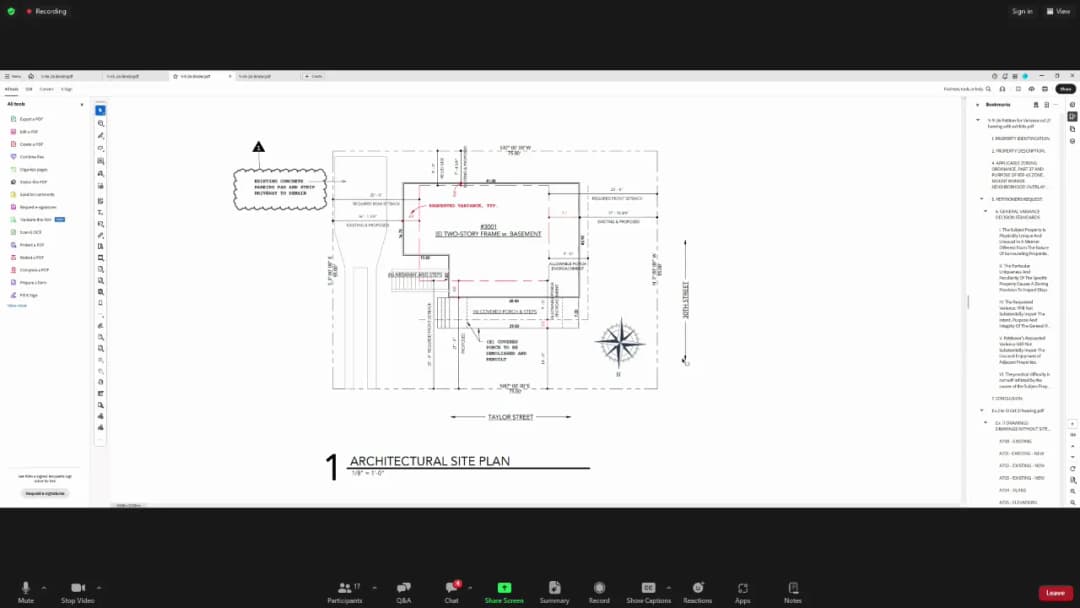
The Board of Appeals held a virtual hearing on October 21, 2026, beginning at 6:01 PM and adjourning at 7:07 PM, to consider four variance applications and approve the minutes from the October 7, 2026 meeting. Three board members (Chair Bulware, Vice Chair Johnston, and Member Stan/Stanton) were present. All variances were approved unanimously 3-0. V-46-26: Effect Inc. (5908 Burgundy Street, Capitol Heights) - Applicant representative: Abdullah Hijazi (counsel), with architect Adam Carbalo and land planner Eddie Diaz Campbell. - Request: Variances of 2,500 sq ft net lot area (from 6,500 to 4,000 sq ft), 25 ft lot width (from 65 to 45 ft), and 5 ft lot frontage at the front street line (from 45 to 40 ft) to construct a single-family dwelling with two-story additions, porch, basement, garage, and second-floor cantilever. - Key points: The lot consists of two original 20 ft x 100 ft parcels from a 1930s subdivision, predating current RSF-65 zoning. A previous home on the lot was demolished around 2015-2016. The property has steep topographical differences from adjacent lots. The proposed home footprint is 1,100 sq ft, compatible with the neighborhood. - Vote: Motion by Vice Chair Johnston, seconded by Member Stan. Approved 3-0. V-45-26: Trung Huynh (9306 Croom Road, Upper Marlboro) - Applicant representative: Abdullah Hijazi; interpreter Thanh Vo provided Vietnamese translation. Applicant Trung Huynh present. - Request: Variances of 1.39 acres net lot area (from 5 acres to 3.61 acres), 15.14 ft lot frontage (from 240 ft to 224.86 ft), and 8.4% lot coverage (from 5% to 13.4%), plus a waiver for front yard parking, to validate existing conditions after unauthorized driveway construction (paving a dirt driveway and adding a circular driveway). - Key points: The property has steep slopes and a stream along the frontage, forcing the home and garage deep into the lot. The lot was subdivided in 1978. The driveway work was done without permits; the applicant applied for corrective permits once flagged. Board focused on criterion six (self-inflicted); it was noted that similar variances would have been required even if permits were sought before construction. - Vote: Motion by Member Stan, seconded by Vice Chair Johnston. Approved 3-0 (including the parking waiver). V-9-26: JAV General Service, LLC (3001 Taylor Street, Mount Rainier) - Applicant representative: Diana Klein; property owner Reina Morales present. - Request: Variances of 2,375 sq ft net lot area (from 6,500 to 4,125 sq ft), 10 ft lot width, 7.1 ft front yard depth, 0.6 ft side yard width, 11 ft side street yard width, 3.9 ft rear yard depth, and 3.6% lot coverage to validate existing conditions and permit unauthorized construction of a two-story addition and a proposed 7 ft x 29.5 ft covered porch. - Key points: The lot was platted in 1904; the dwelling was originally built in 1925. The property is in the RSF-65 zone and Mount Rainier neighborhood conservation overlay. The Mount Rainier Design Review Board and city recommended approval. The proposed second story does not exceed the original footprint. - Vote: Motion by Vice Chair Johnston, seconded by Member Stan. Approved 3-0. V-44-26: Deanna Slaughter (10607 Mullikin Drive, Clinton) - Applicant: Deanna Slaughter present; contractor James Garner (Patio Enclosures) also testified. - Request: Variances of 0.8% lot coverage and 3 ft side yard width to construct a 10 ft x 15 ft sunroom. - Key points: The lot is narrow and has topographical constraints. The sunroom will be at grade and will not hinder adjacent properties. The project cannot be made smaller while remaining functional. - Vote: Motion by Member Stan, seconded by Vice Chair Johnston. Approved 3-0. Key Outcomes - All four variances (V-46-26, V-45-26, V-9-26, V-44-26) were approved by a 3-0 vote. - The minutes from the October 7, 2026 meeting were approved unanimously. - The next meeting is scheduled for November 4, 2026.
The Prince George’s County Council met Tuesday, October 20, 2026, in Committee Room 2027 of the Wayne K. Curry Administration Building in Largo. Chair Krystal Oriadha called the meeting to order at 10:10 a.m.; 10 members were present at roll call, and Council Member Shayla Adams-Stafford arrived at 10:42 a.m. The Council adjourned at 4:09 p.m. and held an executive session from 4:14 to 4:21 p.m. The meeting included extensive public comment and testimony, briefings on Jones House and a county-owned grocery store feasibility study, numerous resolutions, a Port Towns sector plan and sectional map amendment, and an executive-session appointment. Consent Calendar - Approved the County Council minutes dated October 13, 2026. - Introduced CR-110-2026 for the Fort Washington Sustainable Communities Program, CR-111-2026 on Alzheimer’s disease and brain health, and CR-112-2026 on WSSC spending affordability limits; each was referred to the Committee of the Whole. - The consent agenda was adopted 6-0: Aye — Oriadha, Olson, Adams-Stafford, Dernoga, Hunter, and Adams. Absent — Blegay, Burroughs, Fisher, Harrison, and Ivey. Public Comments & Testimony - Twenty-six residents addressed the Council during the initial public-comment period, most from District 8 and many connected to Jones House and District 8 programs. Speakers urged continued funding and described effects: Latricia Jones said her son’s GPA rose from under 2.0 to 4.06 through the Student Leadership Academy; Amari Lewis said hers rose from 3.6 to 4.0; Angel Beckles said hers rose from 2.0 to 3.14; Brianne Swann credited the jobs program with helping her become director of communications at the She Rose Foundation USA; Kimberly Smalls said her 23-year-old son’s apprenticeship was extended to February; and several seniors described camera, lawn-care, snow-removal, and utility assistance. - Multiple speakers criticized what they described as an audit targeting only District 8, including Patricia Monroe, Delonte Harrison, Gail Adams, and Sheila Fagan, and called for equal audits across all districts and grants; they said MGM impact funds were intended to benefit District 8. Katrin Convoy of Insurge’s Pet Unity Project said a District 8 grant helped serve more than 200 families this year. Utility concerns included Ora Wooten’s statement that she received a $1,700 PEPCO bill after being away for a month and Regina Berry’s statement that she received $1,000 in utility assistance through Council Member Burroughs’ office. - On CB-064, Jon Robinson, Janet Gingold, and Greg Smith signed up to speak; the public hearing was held. - On CR-073, Hugo Cantu of AOBA, representing about 80,000 apartment units in the county, opposed the proposed $250-per-unit application fee and $250-per-unit approval fee, asked for lower fees (suggesting $50 on each end), and warned about disinvestment. He compared a roughly $2,400 median mortgage with a roughly $1,700 median apartment rent and said written comments were submitted. - A representative of the State’s Attorney’s Office spoke in support of CR-099’s discovery-management system, saying it would align the county with municipalities and support fair and just outcomes. - On CR-091, Mel Johnson of Storehouse urged adoption, citing 24 distributions and 76,000 pounds of fresh food in the first year plus 168,000 additional pounds since July; Lamont Green, Stephen Askew, Walter of Doors to Destiny, Jarriel Jordan Sr., Beth Jacobson, Nadine Evans, Dr. Philip Cockrell, and others also supported funding. Jordan reported the District 8 Math Camp served about 40 middle school students and 15 high school tutors and raised average Star Math scores by 11.5 points, with seventh graders up 26 percentage points. Jacobson said Strategic Housing Solutions assisted more than 90 residents and obtained dismissal of five foreclosures; Evans said the program helped her keep her home. Cockrell cited a July 2027 fraternity conclave expected to bring 9,000 attendees and $25 million in economic impact. - A Bowie State student, Mercy Ogutu, asked where a proposed $3 million Bowie State allocation appears in the CR-091 spending plan and whether it is a direct allocation; no response was recorded in the public hearing. - On CR-097, Leo Bruso asked the Council to advance a property from water/sewer category 5 to 4 to allow subdivision, saying he would not touch the floodplain and would address Marlborough Clay through subdivision soil borings. Discussion Items - Jones House and Center for Nonprofit Advancement briefing. Interim Executive Director Brianna Boston said an independent CPA audit was not complete and would be shared when finished, and that Jones House had partnered with the Center for Nonprofit Advancement for financial management and compliance. Jones House reported 17 employees and five programs: the Jayz Agnew Home Security Camera Program, Senior Lawn Care and Community Cleanup, District 8 Scholarship Program, Student Leadership Academy, and Youth and Young Adult Jobs Program. Reported figures included 739 camera installations and 13 installation technicians; 447 senior lawn-care participants in year one, growth to 837, and about 900 current participants; scholarships of 57 in 2024, 85 in 2025, and 145 in 2026, though Council Member Burroughs’ closing referred to 54 in 2024, a discrepancy with the minutes; Student Leadership Academy growth from 68 students to 302 and then 529 applications with 453 confirmed for year three, with 100 percent of high school seniors graduating and three valedictorians and two salutatorians; and the jobs program reporting 65 employer partners, 167 youth hired, and $878,000 invested in wages. Center CEO Glen O’Gilvie said his organization has 47 years of experience, 800 participating organizations, and $27 million under management, and that its review had not yet identified anything that gave it pause. Council Member Burroughs submitted program records to the Clerk for Council review and defended the programs while arguing for accountability. Chair Oriadha praised the work and said other districts should learn from and replicate it. - County-owned grocery store feasibility briefing. Arian Albear, Director of Legislative Impact, presented a study finding that the county should explore a targeted pilot rather than necessarily own and operate a grocery store. Recommendations included targeting areas with overlapping food-access need and viable sites, separating startup and operating costs, identifying funding sources such as the general fund, Community Development Block Grant, Economic Development Incentive Fund, and state support, and using New York City’s public-ownership/private-operator model with a defined discounted basket of essential goods, reporting requirements, and performance measures. The presentation recommended an internal task force and decision points before committing public resources. Chair Oriadha said she would introduce the next phase, an internal task force, the following week. - Rent stabilization fee resolution (CR-073). DPI Chief of Staff Lori Parris said the department has two people running the program and that the fees would support administration; the county executive’s liaison urged adoption, saying modifications could prevent passage during this legislative session. Council Member Dernoga noted the committee reported the item with no recommendation. Council Member Fisher proposed reducing the $250-per-unit front-end and back-end fees to $200 per unit; that amendment passed 7-1, with Chair Oriadha opposing. Key Outcomes - Consent agenda adopted 6-0; minutes approved and CR-110, CR-111, and CR-112 introduced and referred to the Committee of the Whole. - CR-081-2026 adopted as Draft 2, 7-0; Council Member Blegay was added as a co-sponsor. - CR-084-2026 adopted 7-0. - CB-064-2026 amended 7-0 and enacted 7-0. - CR-073-2026 amended to reduce fees to $200 per unit (7-1, Oriadha no), then amended technically 8-0 and adopted 8-0. - CR-096-2026 adopted 7-0; the resolution approves $120 million in debt for 911 radio replacement, public-safety vehicles, and future unanticipated expenditures. - CR-099-2026 adopted 7-0; the discovery-management system has an estimated $365,000 FY27 fiscal impact and $2 million estimated five-year total value. - CR-102-2026 adopted 7-0; snow and ice option-year modifications raise the aggregate ceiling above $500,000 and add transportation funding for FY2027. - CR-091-2026: Draft 2 substituted 9-0, amended 9-0, and adopted 9-0; it approves the FY2027-FY2029 Local Impact Grant Funds Multiyear Plan for video lottery terminal funds around MGM, including senior services, employment, PGCC Foundation, Bowie State, public services, and community impact grants. - CR-097-2026 public hearing held; a TIEE Committee work session was set for October 22, 2026. - CR-110-2026 adopted 6-0; CR-111-2026 adopted 6-0; CR-112-2026 adopted 6-0, with 5 percent spending-affordability guidelines and a request for more information on capital pipe-replacement needs. - CR-113-2026 and CR-114-2026: rules suspended 9-0 for each, then each adopted 9-0; the Council approved the Port Towns Sector Plan and Sectional Map Amendment with amendments based on the joint public hearing record. - No action was taken on the grocery-store feasibility study beyond receiving the briefing; Chair Oriadha announced a next-phase task force proposal for the following week. Executive Session - The Council convened in executive session from 4:14 to 4:21 p.m. under Section 3-305(b)(1) of the General Provisions Article to discuss the Office of the County Auditor. - A motion to appoint Marcel Emerson, CPA, as County Auditor carried 9-0-0. - The minutes show the motion to convene carried 6-0 while also listing nine members present, an internal inconsistency in the source minutes.
The Prince George's County Council, sitting as the Committee of the Whole, convened on Tuesday, October 20, 2026, at 3:08 p.m. and adjourned at 3:19 p.m. Seven members were present. The committee considered three resolutions: CR-110-2026 approving Fort Washington as a Sustainable Community, CR-111-2026 encouraging interagency coordination on Alzheimer’s disease and brain health, and CR-112-2026 establishing spending affordability limits for WSSC's FY2028 budget. All three were favorably recommended to the County Council by 7-0 votes. Discussion Items - CR-110-2026: Sustainable Communities Program for Fort Washington – Staff presented that the resolution would enable the county to secure funding from state agencies for community development in Fort Washington. The County Executive supported the bill, and the Office of Law found it legally sufficient. The committee voted 7-0 to recommend favorably. - CR-111-2026: Alzheimer’s Disease and Brain Health – The resolution encourages coordination among county agencies serving residents with Alzheimer’s and related dementias, and requires annual reports on enrollment, capacity, waitlists, and turnaways. Sponsor Chair Oriadha noted that Prince George’s County ranks first or second in the state (compared to Baltimore) in related metrics but lacks proportionate investment. The County Executive supported the bill. The committee voted 7-0 to recommend favorably. - CR-112-2026: Spending Affordability Limits for WSSC – The resolution proposes a 5% spending control limit for WSSC's FY2028 water and sewer budgets, based on scenarios presented (5%, 7%, and 8.2% increases). Montgomery County had recommended 7%. Council Member Fisher expressed concern about high fees and questioned why Montgomery County consistently favors higher increases. She voted yes but requested WSSC provide a graphic explaining deferred pipe maintenance costs and the total cost of fixing pipes in Prince George’s County. Vice Chair Olson supported the 5% level. The committee voted 7-0 to recommend favorably. Key Outcomes - All three resolutions were favorably recommended to the full County Council: - CR-110-2026: Approved 7-0. - CR-111-2026: Approved 7-0. - CR-112-2026: Approved 7-0. - For CR-112-2026, Council Member Fisher requested that WSSC provide a public-facing explanation of pipe maintenance costs and the total cost of needed pipe repairs in Prince George’s County.
The Prince George's County Council, sitting as the District Council, convened at 10:05 a.m. on Tuesday, October 20, 2026, in Committee Room 2027, under the chairmanship of Krystal Oriadha. The meeting, originally scheduled for 9:45 a.m., began with six members present at roll call and later saw up to nine members participating in votes. The agenda included approval of previous minutes, final action on the Saddle Ridge Specific Design Plan, and a decision on the Mellwood Hills Detailed Site Plan. Consent Calendar - Approval of Minutes (October 5, 2026): The minutes were approved by a vote of 6-0 (Oriadha, Olson, Adams, Burroughs, Harrison, Hunter aye; Blegay, Dernoga, Fisher, Ivey absent at roll call). Discussion Items - SDP-2025-0015 Saddle Ridge: The Council adopted a prepared order approving the Specific Design Plan for 450 single-family detached dwellings and 253 single-family attached dwellings (townhouses) on 289.36 acres in Council District 9, with conditions. The motion carried 8-0 (Oriadha, Olson, Burroughs, Fisher, Harrison, Ivey, Hunter, Adams aye; Adams-Stafford, Blegay, Dernoga absent). - DSP-2026-0010 Mellwood Hills: The Council waived its election to review the Detailed Site Plan for 12 single-family detached dwellings on 10.54 acres in Council District 9, thereby allowing the Planning Board's decision to stand. The motion carried 9-0 (all present except Adams-Stafford and Blegay). Key Outcomes - Approved the minutes of October 5, 2026. - Approved the Saddle Ridge Specific Design Plan with conditions (8-0). - Waived council review for the Mellwood Hills Detailed Site Plan (9-0). - Adjourned the District Council session at 10:25 a.m. to transition to the County Council meeting.
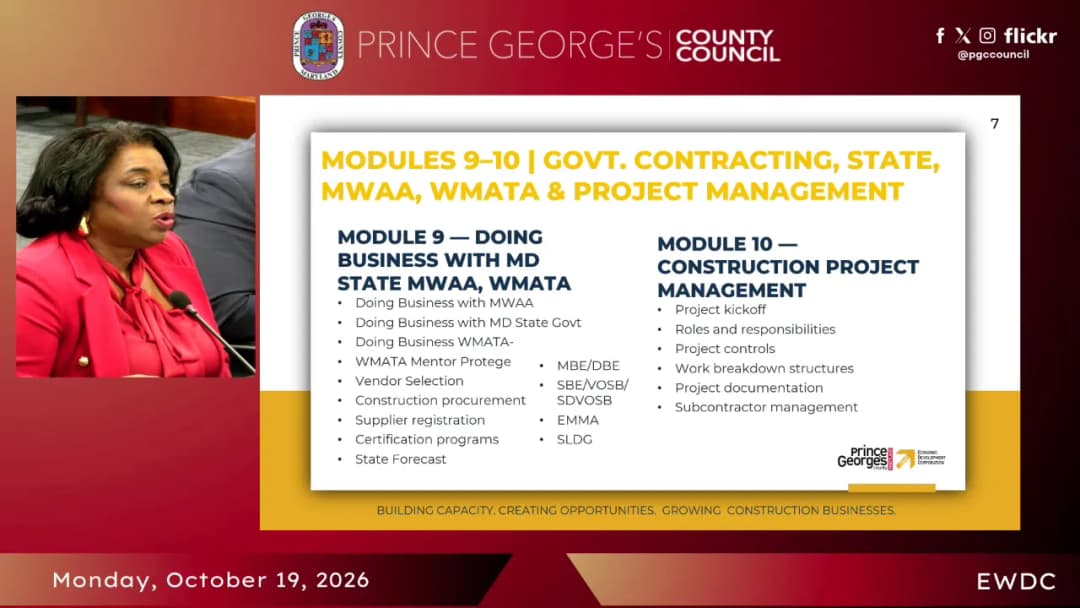
The Prince George's County Education and Workforce Development Committee, chaired by Councilmember Shayla D. Adams-Stafford, convened on Monday, October 19, 2026. The committee conducted a vote on a $32.9 million Board of Education budget transfer and received briefings on child care legislative recommendations, the Summer Youth Enrichment Program (SYEP), and a new Construction Mentor-Protege initiative. Board of Education FY2026 Final Transfer Request - Committee Director Arun Puracken and Analyst Caleb Callender presented the final FY2026 transfer request (TR-6-26) for Prince George's County Public Schools. The request reassigns $32,949,683 from budget categories with unexpended appropriations—including an $8.7 million reduction in student health services (attributed primarily to unfilled nurse positions and unspent grant funds)—to six categories exceeding appropriation levels, most notably student transportation. The transportation deficit is driven by overtime expenses resulting from high bus driver vacancies and absenteeism in prior years, though school system CFO Chivon Smith noted that vacancies are declining and a costly 'plus-in' overtime incentive program has been sunset. - Councilmember Eric Olson questioned the impact of reducing student health services funding, expressing concern that available funds indicated unfilled nursing positions rather than surplus. Staff confirmed that $2.9 million of the $8.7 million reduction was from unspent unrestricted budget for nurse vacancies, while the remainder came from restricted grant funds that cannot be transferred to transportation. - The committee voted 3-0 to move the request favorably out of committee. Child Care Improvement Workgroup State Legislative Recommendations - Dr. Arun Puracken briefed the committee on eight preliminary recommendations from the Child Care Improvement Workgroup, established under CR 15-2026 and chaired by Council Chair Christal Oreata. The recommendations aim to strengthen the Child Care Scholarship program, expand mixed-delivery pre-K while protecting infant and toddler capacity, review state staffing ratios, expand paid workforce pathways, streamline county permitting, and expand the use of public facilities for child care. - Councilmembers asked about documentation from DPI on code enforcement changes needed to implement a coordinated permitting process. Dr. Puracken confirmed DPI will present on October 28, 2026. When asked about legislative priorities, Dr. Puracken identified the child care scholarship, mixed-delivery pre-K, and the state-local navigator relationship as top items. 2026 Summer Youth Enrichment Program (SYEP) Outcomes - David Williams, Youth Employment Manager, reported that 2,226 youth were employed across 80+ worksites in summer 2026. With over 8,000 applications received, less than 27% of applicants were placed. Employer satisfaction was 97%, and 88% of participating youth reported satisfaction with their experience. - A significant 'alignment gap' was identified between youth interests (such as child care, IT, and animal care) and projected labor market demand (including fast food, cashiers, and retail). - Councilmember Harrison proposed an employer 'pledge' program to secure commitments. Chair Adams-Stafford suggested leveraging council grant awardees. The program aims to expand partnerships, explore an earlier program start date, and strengthen transportation access. The 2027 partner survey runs January 4–29, and the application period is March 1–31. Construction Mentor-Protege Training Cohort Program - Kim Andrews (EDC) and Alice Williams (Office of Procurement) presented a new two-phase program. Phase one is a 10-month EDC training covering finance, bonding, and bidding. Phase two is a 2-year Office of Procurement mentor-protege program with mentor incentives and preference points in solicitations. - The program received 70 applications for 20 cohort slots. Outreach materials were produced in English and Spanish, resulting in strong interest from Latino and women-owned businesses. - Vice Chair Olson asked about mentor recruitment; staff confirmed no mentors are formally signed up yet but reported high interest from large firms. Councilmembers praised the interagency collaboration as a model for county economic development.
On October 15, 2026, the Prince George's County Child Care Provider Work Group met virtually to review draft, action-oriented recommendations on child care access, affordability, and quality. Staff presented state legislative updates and eight recommendations, and work group members offered feedback and clarifications. No formal vote was taken; the recommendations remain draft. No written agenda or minutes were available; this summary is based on the transcript. Note: the transcript's adjournment motion says October 14th, 2:46 p.m., which conflicts with the supplied meeting date of October 15, 2026; this summary uses the supplied date. Discussion Items State legislative updates - Caleb, a work group staff member, explained HB 1321's co-payment provisions: households at or below the federal poverty line would not be required to pay co-payments, while higher co-payments from households above the poverty line would help cover more families below that line. MSDE (Maryland State Department of Education) estimated this change would serve an additional 1,000 children per year. - HB 0447, passed in Maryland's 2025 legislative session, requires analysis of Maryland's child care center framework, including staff requirements, facility standards, and operational regulations, compared with other states, to identify common barriers for providers. - HB 1321 also requires MSDE to report on the child care scholarship program's co-payment system. Draft recommendations presented Dr. Parakin presented eight draft recommendations: 1. Strengthen funding adequacy and administration of the Child Care Scholarship Program. The state already produces monthly and quarterly reports, but the work group recommends clearer projections of unmet need, waitlists, and funding shortfalls, plus transparent communication about payment corrections, disputes, and case resolution timelines. 2. Match child care investments to actual family demand by improving coordination and reporting of available spaces by age, geography, provider type, and scholarship participation, rather than relying only on licensed capacity. 3. Expand mixed-delivery pre-K while protecting infant and toddler capacity. This includes hands-on support for private centers and family providers in low-participation jurisdictions; building on the state's pre-K expansion report to track the provider pipeline; and state incentives such as enhanced reimbursement, stabilization funding, or per-slot support to help providers maintain or expand infant/toddler care. 4. Expand before- and aftercare access for pre-K students by reviewing mixed-age staffing and group size requirements that limit how many 3- and 4-year-olds programs can serve, while preserving supervision and health/safety requirements. 5. Strengthen the child care workforce by expanding paid, work-based credential pathways, tuition assistance, and wage support, especially for infant and toddler educators. 6. Strengthen state-local child care navigation and accountability through a clear state-local referral and escalation process and a provider-facing roadmap of required approvals, contacts, and steps. 7. Streamline county zoning, permitting, and facility requirements. The recommendation includes an alternative pathway meeting equivalent fire and safety requirements, particularly for child care homes expanding from 8 to 12 children where sprinkler installation costs are a barrier, plus coordinated permitting through the Department of Permitting, Inspections and Enforcement (DPIE), and monitoring of recent county zoning and parking reforms. 8. Implement and expand use of public facilities for child care by inventorying suitable county-owned properties, making eligibility, leasing, and licensing information transparent, and standardizing agreements for insurance, maintenance, and other responsibilities. Work Group Feedback and Clarifications - Ms. Ladonia Gomez said the recommendations sounded good and suggested using grants or contracts for infant/toddler slots, similar to Head Start, to provide more continuous funding for specific slots or types of children. - Keisha, from the state's Office of Early Childhood, said grant/contract slot funding had been used prior to COVID and that the office is open to suggestions depending on funding. She clarified that a family child care provider with a total maximum capacity of eight may serve three or four infants if an additional adult is present, and large family child care can have a maximum capacity of nine children under age two, though zoning restrictions sometimes limit this. - A member, Dr. Circe, cautioned that mixed-age grouping can reduce maximum group sizes; keeping 3- and 4-year-olds in their same classroom for before- and aftercare may preserve capacity. Safety concerns also arise when before/aftercare uses open gym areas, and parents may be concerned about mixing younger children with older children. - Dr. Circe raised a permitting question about vendor-operated child care in Prince George's County Public Schools buildings, asking whether school system documents could be reused by vendors. Keisha responded that fire officials often take the lead and that licensing serves as a second accountability check because issues such as missing inspections or staff clearances have been found in school settings. Next Steps and Key Outcomes - No formal vote was taken; the recommendations are still draft but are moving toward final form. - Work group members were asked to email additional examples of permitting or review processes that could be simplified and to submit quotes for the final report. - The next work group meeting will be held virtually on Wednesday, October 28, at 2 p.m., focused on defining and improving permitting and county review processes. - The draft recommendations will be presented to the County Council's EWD committee on Monday, October 19, at 1:30 p.m. - A motion to adjourn was made and seconded, and the meeting was adjourned.