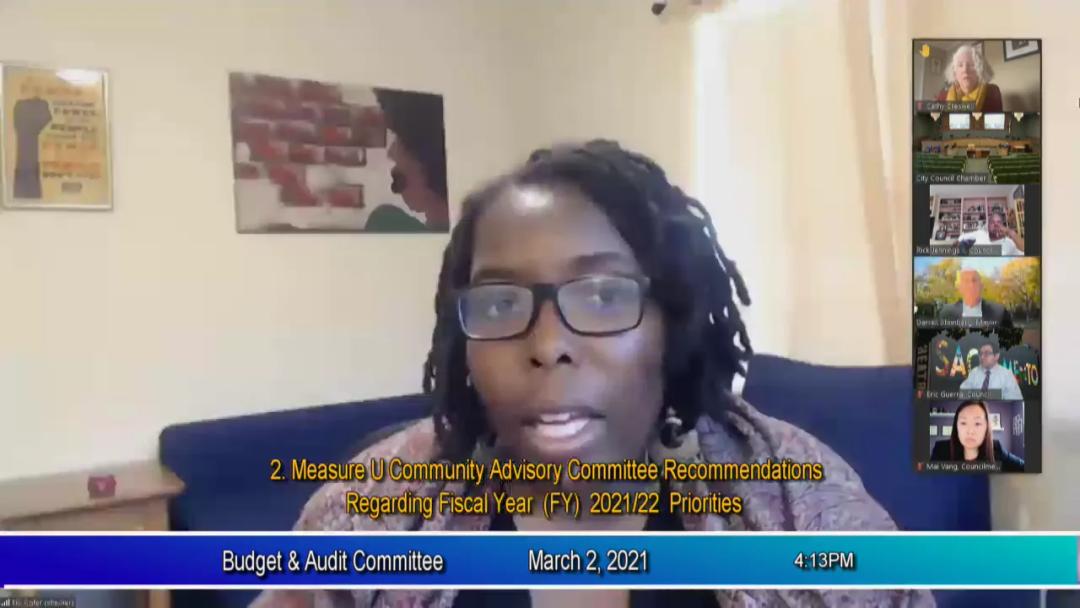
The Budget and Audit Committee of the Sacramento City Council met on March 2, 2021 from 3:05 p.m. to 4:31 p.m. via teleconference. The committee approved the consent calendar (City Auditor’s Recommendation Follow-Up Report) and received and filed the Measure U Community Advisory Committee’s recommendations for Fiscal Year 2021/22 priorities. Discussion focused on transparency, process improvements, and the need to better align Measure U spending with voter expectations. Consent Calendar - City Auditor’s Recommendation Follow-Up Report for the six-month period ending December 31, 2020 – Accepted and forwarded to City Council for final approval. Motion passed unanimously (4-0). Public Comments & Testimony - Dr. Karin McIntosh Sako (District 7 resident) voiced support for participatory budgeting and the People’s Budget of Sacramento, urging the use of community engagement surveys to prioritize 911 alternatives for mental health crises, affordable housing, and homeless outreach services, while decreasing the police budget. - A caller from District 4 thanked the Measure U committee for its presentation and strongly encouraged the committee and City Council to adopt the recommendations without delay, emphasizing the need for transparency, line‑item expenditure lists, and genuine public input. Discussion Items - Measure U Community Advisory Committee Recommendations Regarding FY 2021/22 Priorities – Chair Flo‑Jean Cofer presented the committee’s recommendations, which were organized into three areas: - Priority Setting: Homelessness/affordable housing (including rental/mortgage assistance), participatory budgeting (recommending $15 million), inclusive economic development (focusing on workforce recovery, reducing administrative barriers, broadband access), and preventive investments in public safety (operationalizing sections 2C and 3F of the October 27, 2020 resolution). - Process & Efficiency: Goal setting (departments to submit strategic, measurable goals tied to council priorities), adoption of specific management partners recommendations (Nos. 1, 8, 31, 33, 36), cost‑sharing and savings opportunities, quarterly revenue/expenditure reporting, expanded community polling, and prioritizing investments that achieve multiple goals. - Council Communications: Agenda items involving Measure U funds should include the fund source on cover pages; committee recommendations should be agendized as discussion items with a written response within 60 days. - Committee Member Comments: - Councilmember Vang asked about the process for responding to committee recommendations and suggested creating a formal feedback loop. She emphasized the need for a clear alignment between committee recommendations and existing city efforts. - Councilmember Jennings highlighted the lack of movement on 39 cost‑saving recommendations from the Management Partners report and urged better communication and written status reports for the committee. - Mayor Steinberg proposed reframing the debate by measuring cumulative city investment in inclusive economic development since April 2019 (when the second half‑cent of Measure U took effect) rather than trying to separate Measure U from general fund dollars. He committed to amending the enabling ordinance to clarify the committee’s role and to produce a transparent report of additional investments in these categories. - Chair Cofer noted that current tracking of Measure U is inadequate, saying the police department “couldn’t at a basic level tell me what I’m getting for those dollars.” She supported the mayor’s proposal but stressed the need for goal‑setting and outcome‑based metrics. Key Outcomes - Motion passed to receive and file the Measure U committee recommendations (unanimous). - Mayor Steinberg announced he would work on amending the enabling ordinance to give the Measure U committee a clearer role in evaluating combined Measure U/general fund investments since April 2019. - Staff directed to explore producing a budget addendum detailing additional city investments in inclusive economic development (as defined by the committee) from April 2019 forward. - Follow‑up discussion will be agendized at a future Budget and Audit Committee meeting to track progress on the ordinance change, management partners recommendations, and other process improvements.
Public Meetings - Sacramento, California
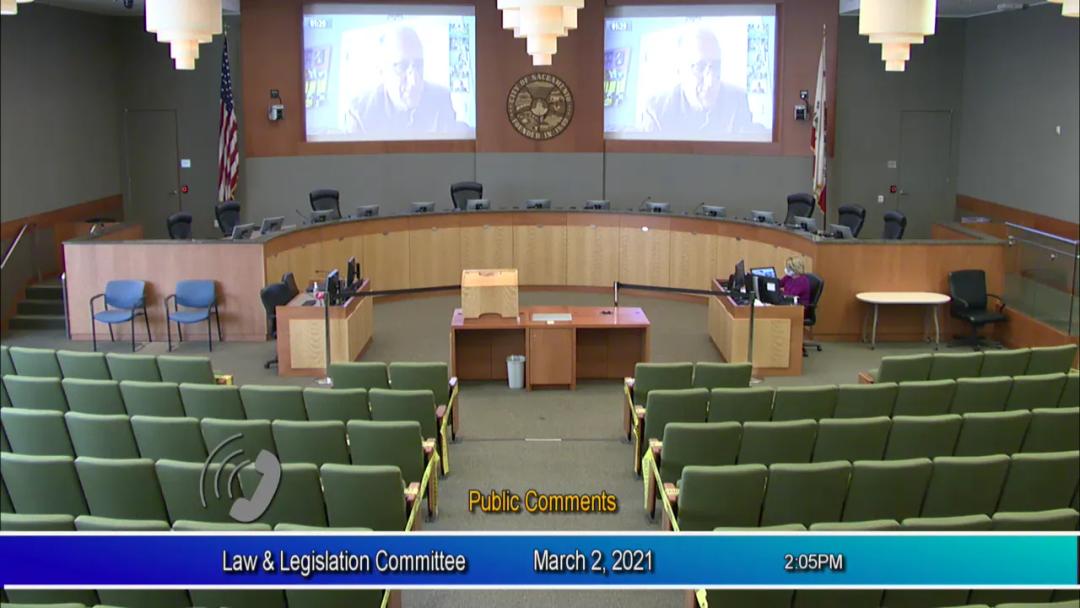
Public Meetings - Sacramento, CaliforniaThe Sacramento City Law and Legislation Committee met on Tuesday, March 2, 2021, at 1:01 p.m. via teleconference. All four members (Chair Schenirer, Vice Chair Harris, and Members Valenzuela and Guerra) were present. The meeting lasted until 2:34 p.m. The committee considered three agenda items, including a consent calendar item, a zoning ordinance for the Sacramento Valley Station Area Plan, and a major building electrification ordinance. Public comments were heard on Item 3, with 17 callers expressing a range of positions. Consent Calendar - Item 1 – Law and Legislation Log: Approved unanimously by a 4‑0 vote. Public Comments & Testimony (Item 3 – Green Building Standards / Electrification) Seventeen members of the public provided testimony. Key positions included: - Emily Bay Michaels (Midtown Association): Urged caution, citing concerns that restaurants cannot feasibly operate on all‑electric equipment and that premature mandates could harm the local food sector, which generates over 60% of Midtown sales tax. - Jamie Jang (architect): Expressed disappointment, stating the ordinance is too weak and that Sacramento should lead with stronger electrification requirements. - Brandon Black (Sacramento Metro Chamber): Supported the committee’s direction to review the infeasibility waiver process before moving forward, and emphasized the need for clear, predictable, and equitable policy. - Matt Sutton (Restaurant Association): Requested exemption for restaurants and noted the lack of waiver language in the draft ordinance. - Alex (Sunrise Sacramento): Urged a more ambitious ordinance with earlier effective dates, citing climate urgency and the health impacts of gas. - Bill Paveo (Sacramento Housing Alliance): Supported the concept but called for three caveats: virtual net energy metering from SMUD, cost mitigation for affordable housing, and increased city loan amounts. - Rick Codena (former SMUD analyst and Mayor’s Climate Commission member): Strongly endorsed the ordinance, stating that electrification is the most compelling action for reducing building emissions and that the city should move quickly. - Rosie Yaknu (resident, District 4): Opposed blanket exceptions, arguing they undermine the ordinance; called for 100% EV‑capable parking requirements. - Alice Vondreck (resident, District 3): Supported the ordinance but urged very narrow exceptions, and stressed the need for a comprehensive retrofit plan for existing buildings, starting with low‑income communities. - Several speakers (including Cornelius Burke, Steve Blanton, Ben Granholm, and a restaurant owner/architect) raised concerns about costs, technical feasibility, workforce transition, and the need for clear infeasibility standards. Discussion Items - Item 2 – Sacramento Valley Station Area Plan (Ordinance Amending Title 17): Staff presented an overview of the plan to create a regional rail hub and update zoning within the Railyards and Central City Special Planning Districts. The committee reviewed the ordinance and unanimously voted (4‑0) to forward it to the City Council for consideration. - Item 3 – Green Building Standards Including Electrification: Staff presented a detailed ordinance that would require all‑electric construction for new buildings (≤3 stories by 2023, ≥4 stories by 2026) and introduce enhanced EV charging requirements. Committee members expressed a range of views: - Chair Schenirer proposed a motion to exempt restaurants and industrial manufacturing, develop an expert‑panel process for infeasibility waivers, conduct annual evaluations, and begin work on retrofits immediately. He later removed the 30‑day deadline, agreeing to work with staff on a reasonable timeline. - Member Valenzuela argued the ordinance is inequitable because it separates new construction from retrofits and fails to engage low‑income residents; she advocated for a slower, more holistic approach. - Member Harris supported moving forward but requested a faster development of the infeasibility waiver, and asked for data on methane leakage from gas lines and grid reliability from SMUD. - Member Guerra stressed the importance of workforce development and economic opportunity, urging that the ordinance be paired with training programs and support for local manufacturing. Key Outcomes - Motion 1 (Schenirer/Harris) – Directing staff to amend the building electrification standards: The committee unanimously approved a motion to direct staff to (a) develop exemptions for restaurants and industrial manufacturing, (b) create an expert‑based infeasibility waiver process, (c) evaluate the ordinance annually, (d) proceed with stakeholder engagement on equity and economic development, and (e) return to the Law and Legislation Committee for review on a timeline to be determined. - Motion 2 (Harris/Valenzuela) – Forwarding EV‑related provisions to City Council: The committee unanimously voted to forward the Title 15 and Title 17 electric vehicle capability standards and incentives directly to the City Council for adoption within 30 days, without waiting for the broader electrification ordinance. - Next Steps: Staff will revise the building electrification ordinance based on committee direction, engage stakeholders (including on the infeasibility waiver and equity), and bring a revised ordinance back to the committee. The EV‑related provisions will go to the City Council on an expedited track.
The scheduled meeting of the Utilities Rate Advisory Commission for February 24, 2021, was cancelled.
The Civil Service Board met via teleconference on February 22, 2021, to consider consent calendar items, receive an update on vacant board positions, and hear an appeal of a disqualification. All actions were unanimous with members Moore, Manford, and Byrd present. Update on Vacant CSB Positions - Staff reported that four applicants for vacant Civil Service Board positions will be interviewed at the March 9, 2021 Personnel & Public Employees Committee meeting. - Board Member Robin Moore requested that a Zoom link be sent to board members so they could observe. - It was noted that former Chair Edwin Perez resigned in November; Vice Chair Gwenet is serving as acting chair. An election for chair is planned for the next meeting when new board members are present. Consent Calendar - All four consent calendar items were approved unanimously (Moore, Manford, Byrd all voting aye): 1. Approval of the November 16, 2020 meeting minutes. (Note: The agenda says "November 16, 2020," while the attachment is labeled "November 16, 2021," a discrepancy.) 2. Revision of the Neighborhood Resources Coordinator I and II Classification Specifications. 3. Revision of the Senior Deputy City Clerk Classification Specification. 4. Revision of classification specifications to include probationary period language. Discussion Items - Waiver of Formal Rules of Procedure: Approved unanimously for all appeals of disqualification heard at this meeting. - Appeal of the Disqualification of Bryant Lawani: - Staff reported that the Personnel Transactions Coordinator recruitment was posted October 16, 2020; Lawani received a disqualification notice November 13, 2020; and he submitted an appeal November 17, 2020. Lawani argued that exam instructions were not clearly stated and that the exam should have included the categories being assessed. The city contended that proper procedures were followed, the exam was job-related, and the same evaluation standards were applied to all applicants. - Staff noted that 113 applicants were invited to test, 71 took the examination, and the pass rate was 75%. No other applicants raised complaints about unclear instructions. - Lawani reiterated that some instructions appeared to be missing, possibly due to a technical glitch. Board members questioned staff about the test format, accommodations, and item analysis. - Board Member Moore stated she would vote to deny the appeal because 71 people took the same exam without similar concerns. A motion to affirm the director's disqualification passed unanimously. Public Comments - No public comments were offered. Key Outcomes - Approved all consent calendar items and the formal rules waiver. - Denied Bryant Lawani's appeal and affirmed the director's disqualification. - Next meeting is scheduled for March 15, 2021.
The Active Transportation Commission meeting scheduled for Thursday, February 18, 2021, at 6:00 p.m. was cancelled. No agenda items were discussed, and no public comments, votes, or decisions were made. The notice of cancellation was posted by the Public Works Department.
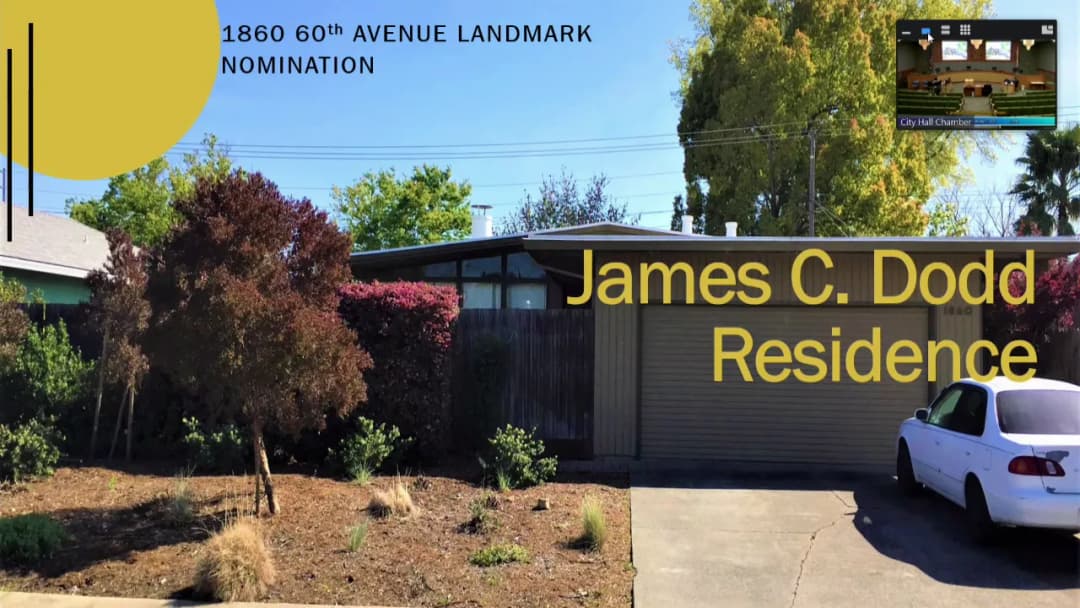
The Preservation Commission held a regular meeting on February 17, 2021, at 5:30 PM (Open Session) to consider consent calendar items, two public hearings for landmark designations, and discussion items on the Housing Element and General Plan land use map. The meeting also included a director's report announcing the retirement of Preservation Director Carson Anderson. Consent Calendar - Approval of December 16, 2020 Minutes: The commission approved the minutes from the previous meeting. (Citywide) - Election of Chair and Vice-chair: Nominations were taken and elections held for the offices of Preservation Commission Chair and Vice-chair. The commission unanimously elected a new chair and vice-chair. (No further details provided.) Public Hearings - Nathaniel Colley Residence Landmark Nomination (Item 3): The commission conducted a public hearing on the proposed landmark designation of 5441 Pleasant Drive. Staff recommended finding the listing exempt from CEQA (15308) and passing an ordinance to list the property on the Sacramento Register. No public comments were received. The commission passed a motion to recommend City Council approval. - James Dodd Residence Landmark Nomination (Item 4): A public hearing was held for the property at 1860 60th Avenue. Staff made the same CEQA finding and ordinance recommendation. No public testimony was offered. The commission voted to recommend City Council approval. Discussion Items - Preservation Director’s SHPO Comment Letters (Item 5): Carson Anderson presented letters of support for the Thomas Jefferson School (1619 N Street) and North Sacramento School (670 Dixieanne Avenue) National Register nominations. Commissioners discussed the nomination process, the exclusion of later additions, and the potential for adaptive reuse and housing on surplus school land. The commission provided no additional comments, and Anderson will forward the transcript to the State Historic Preservation Officer. - Public Draft 2021-2029 Housing Element (Item 6): Greta Soos presented the city’s eight-year housing strategy, which must accommodate a Regional Housing Needs Allocation (RHNA) of 45,580 units—an 89% increase over the prior cycle. The draft includes eight goals, with emphasis on preserving existing housing stock, promoting ADUs, and advancing equity. Commissioners noted the tension between state-mandated land inventory methods and the city’s progressive goals, and they questioned the use of collective ownership models and emergency repair programs. No public comments were heard. The public comment period remains open through February 22, 2021. - Status Update on Draft Land Use Map for 2040 General Plan (Item 7): Remi Mendoza presented the draft land use map, which consolidates 27 designations into 10 and uses Floor Area Ratios (FAR) instead of density. The map allocates 90% of growth to established communities and corridors. Discussion centered on FAR designations in historic districts (proposed FAR 2.0 for many), with concerns that the maximum may encourage unrealistic expectations. Staff explained that historic district plans and site plan review would govern actual development. The draft plan will be released for public review in summer 2021. A comment letter from the Boulevard Park Neighborhood Association was noted. Public Comments—Matters Not on the Agenda - No public comments were received. Commissioner Comments and Director’s Report - Commissioners were reminded that the draft objective design standards for historic districts are available online and will be discussed in March. - Director Carson Anderson announced his resignation effective in early May 2021, with a transition plan involving two new preservation interns. He also noted ongoing projects: the Railyards paint shop adaptive reuse for a Live Nation venue, the Neighborhood Development Action Team’s work on Stockton and Del Paso Boulevards, and an upcoming talk on artist Dunbar Beck. Key Outcomes - Consent Calendar: Approved minutes and elected new chair and vice-chair. (Unanimous) - Item 3 & 4: Motions passed recommending City Council adopt ordinances for both landmark designations. (Unanimous) - Item 5: Commission reviewed the SHPO comment letters and offered no additional comments; the director will submit the transcript. - Item 6 & 7: Commission reviewed and provided feedback; staff will consider comments before finalizing documents. Next steps: Housing Element submission to HCD in April 2021; General Plan draft release in summer 2021. - Director’s Resignation: Carson Anderson will remain through the April 2021 commission meeting; Bruce Monaghan and Sean de Courcy will handle interim leadership.
The Sacramento Preservation Commission held a regular meeting on February 17, 2021, from 5:30 p.m. to 7:57 p.m. via teleconference due to the COVID-19 pandemic. The commission approved consent calendar items, conducted public hearings on two landmark nominations, and reviewed several discussion items. All votes were unanimous with 6 commissioners present (Commissioner Lemon absent). Consent Calendar - Approved the minutes of the December 16, 2020 meeting (6-0-1, Lemon absent). - Elected Alice Valania as Chair and Christine Miller-Cruiess as Vice Chair (both votes 6-0-1). Public Comments & Testimony - Item 3 – Nathaniel Colley Residence: Joe Flores, president of the South Land Park Neighborhood Association, expressed support for the landmark nomination. - Item 4 – James Dodd Residence: No call-in public comments; staff received a joint letter of support from Preservation Sacramento and Sacramento Modern, and the Golf Course Terrace Estates Neighborhood Association expressed support. The property owner did not respond to outreach but did not oppose. Public Hearings - Item 3 – Nathaniel Colley Residence Landmark Nomination: Staff presented the nomination for 5441 Pleasant Drive, the home of Nathaniel Colley, Sacramento's first African American attorney. The property is eligible under City Code Criteria 2 for association with a person significant in the city's past. The commission discussed the implications of landmark status for property modifications and the owner's support. The commission voted unanimously to forward a recommendation of approval to the City Council. - Item 4 – James Dodd Residence Landmark Nomination: Staff presented the nomination for 1860 60th Avenue, the home of James C. Dodd, Sacramento's first licensed African American architect. Eligible under Criteria 2 and 4. The commission discussed the significance of the mid-century modern subdivision and the property's architectural design. The commission voted unanimously to forward a recommendation of approval to the City Council. Discussion Items - Item 5 – SHPO Comment Letters: The commission reviewed and commented on the Preservation Director's letters regarding the National Register nominations for Thomas Jefferson School and North Sacramento School. - Item 6 – Public Draft 2021-2029 Housing Element: The commission reviewed and commented on the eight-year housing strategy. - Item 7 – Draft Land Use Map for 2040 General Plan: The commission reviewed and commented on the status update. Key Outcomes - Unanimous approval of consent calendar items. - Unanimous votes to recommend City Council approval of both landmark nominations (Nathaniel Colley Residence and James Dodd Residence). - The commission reviewed and provided comments on the SHPO comment letters, the Housing Element, and the General Plan Land Use Map. - The meeting adjourned at 7:57 p.m.
The Ann Land and Bertha Henschel Memorial Fund Commission met via teleconference on Wednesday, February 17, 2021, at 4:01 p.m., with all six current commissioners present (Commissioners Leary, Corbs, Macintosh, Smith, Yannis, and Zalmanudin). Commissioners Bonniewell and Cobb had completed their terms and were absent. The meeting adjourned at 4:33 p.m. No public callers spoke on any agenda item or on matters not on the agenda. Consent Calendar - The commission unanimously approved the November 18, 2020 meeting minutes as presented. Public Comments & Testimony - No members of the public called in or submitted comments for any agenda item or for matters not on the agenda during the meeting. Discussion Items - Election of 2021 Officers: The commission unanimously elected Allison as President for 2021, Joseph as Vice President, and Lori as Secretary. Each election passed by roll call vote with all six commissioners voting aye. - Semi-Annual Report (July-December 2020): Staff presented the report for receive and file. Commissioners praised grantees for creatively using grants during the COVID-19 pandemic, including during full shutdown months, while remaining within grant requirements and avoiding fund carryovers. No formal action was required. - Assignment of 2021 Site Visits: The commission assigned commissioners to visit all 21 grant recipient sites, with each commissioner taking approximately 3-4 sites. Site selections included River City Food Bank, Loaves and Fishes, ACC Senior Services, Reimagine Mac Road Foundation, Women's Empowerment, South Sacramento Christian Center, Meals on Wheels, CASH (Communities Against Sexual Harm), WEAVE, LGBT Community Center, First Steps Community, Sacramento Area Emergency Housing Center, Repairing the Breach, NeighborWorks, St. John's Program for Real Change, Salvation Army, Wellspring, and Women's Improvement Club. The commission set a July 16, 2021 deadline for submitting site-visit reports so staff could compile them for the August meeting. Staff confirmed visits could be done in person or virtually and that an online form would be provided. - Commissioner Comments and Future Work: Commissioner Lori requested an update on the previously approved process for setting annual funding priorities. Commission counsel Joe Surber reported the draft regulations were nearing completion after city attorney review and would come back to the commission for approval before moving to the city council. Staff was directed to bring the priority-setting items, including community needs assessments, to the next meeting. Key Outcomes - Approved the November 18, 2020 meeting minutes (unanimous). - Elected Allison as President, Joseph as Vice President, and Lori as Secretary for 2021 (all unanimous roll call votes). - Received and filed the July-December 2020 Semi-Annual Report without action. - Approved the 2021 site-visit assignments and set a July 16, 2021 report deadline (unanimous). - Directed staff to place the funding-priority process items on a future agenda.
The Law and Legislation Committee met on Tuesday, February 16, 2021, at 1:00 p.m. via teleconference to consider routine approvals and a major item regarding cannabis delivery limits in the Southeast Industrial Area. After public testimony and discussion, the committee voted unanimously to extend the existing cap on cannabis delivery businesses for six months and directed staff to conduct comprehensive studies on overconcentration, displacement, and zoning. Consent Calendar - Item 1 – Law and Legislation Log (File ID: 2021-00116): The committee passed a motion approving the log. (Routine approval) - Item 2 – Legislative Advocacy Correspondence (File ID: 2021-00043): The committee received and filed the correspondence. (Routine approval) Public Comments & Testimony - First Caller (name not stated): Expressed strong opposition to limiting cannabis delivery in the Southeast Industrial Area. The speaker argued that the limit would hurt core program participants and those in the BOP phase, jeopardizing their businesses and investments. The caller urged the committee not to impose a limit and emphasized the importance of creating jobs and opportunities. - Steve Blanton, Executive Director of the Power and Alliance: Urged the committee not to lift the cannabis delivery cap in District 6. He argued that the original cap was not solely about traffic and crime but also about overconcentration. He noted that District 6 already has several times more cannabis businesses than other districts, making a lift inconsistent and unfair. He also referenced a written agreement with the city to observe a cap (originally 46, later 50) and stressed equity and opportunity throughout the city. Discussion Items - Item 3 – Limit on Cannabis Businesses Authorized to Deliver in the Southeast Industrial Area and Related Traffic Impact Study (File ID: 2020-01410): The committee reviewed a traffic impact study and debated whether to lift the existing cap on non-storefront delivery permits in the Southeast Industrial Area. Staff had recommended taking no further action to extend the cap, effectively letting it expire. - Councilmember Eric Garrett (District 6) spoke first. He noted that the original cap was based on concerns about crime and traffic, but data now shows those impacts are negligible. However, he expressed concern about displacing existing tenants and workers, similar to what occurred with cultivation caps. He questioned why only 33 of 50 permitted businesses have become operational and directed staff to meet with the Power and Alliance to discuss a rational cap and address displacement. He also raised zoning restrictions as a barrier to equitable distribution. - Councilmember Katie Valenzuela echoed concerns about overconcentration and zoning, noting that only two districts can host these businesses. She highlighted the equity gap between core and non-core participants, saying that removing the cap alone would not ensure new permits go to core applicants. She suggested directing more cannabis tax revenue back to host districts to make the benefit more visible. - Councilmember Jay Harris (District 3) supported extending the cap while a comprehensive citywide review is conducted. He said the traffic and crime data no longer justify the cap, but displacement of other industrial businesses remains a valid concern. He agreed that overconcentration should be examined citywide, not just district by district. - Chair Jeff Shine proposed a two-part approach: (1) meet with District 6 stakeholders to discuss the moratorium, and (2) conduct a holistic, citywide review of cannabis regulations, including overconcentration, displacement, and workforce development. He suggested that cannabis revenues could fund a consultant. He favored retaining the cap while the review occurs, noting that 17 BOPs remain unissued, so demand is not pressing. - Committee Attorney Audrey Anderson (or Mr. Itagaki) clarified the process: extending the cap requires a new ordinance with alternative findings, which would need to go to the full City Council within two weeks given the March 31 expiration. The committee directed legal staff to draft a six-month extension based on findings of overconcentration and potential displacement. Key Outcomes - Unanimous Vote (3-0): The committee voted to waive appearance before the Law and Legislation Committee for a new ordinance and directed staff to bring a six-month extension of the cannabis delivery cap to the City Council. (Councilmember Garrett made the motion; seconded by Councilmember Valenzuela. Roll call: Harris – yes, Valenzuela – yes, Chair Shine – yes.) - Staff was directed to: - Meet with stakeholders (including the Power and Alliance) in District 6 to discuss the cap and displacement concerns. - Commission a comprehensive, citywide study of cannabis overconcentration, economic displacement, workforce pipeline, and zoning. - Work with the City Attorney’s Office to prepare the extension ordinance with alternative findings for the March 2 Council agenda. - The existing cap will remain in effect until the new ordinance is enacted or expires (current expiration March 31, 2021). The committee did not adopt staff’s recommendation to take no further action.
The Sacramento Planning and Design Commission met via teleconference on Thursday, February 11, 2021, beginning at 5:30 p.m. and adjourning at 8:29 p.m. All 11 commissioners were present. The Commission approved consent items, recommended approval of the Sacramento Valley Station Area Plan amendments, and recommended approval of a new building electrification ordinance to the City Council. Consent Calendar - Item 1 – Meeting Minutes (January 28, 2021): Approved 11-0 (motion Pluckebaum/Farrell). - Item 2 – Cannabis Uses in North Sacramento Community Plan Area: Initially approved as part of the consent calendar, but the item was reopened after 13 callers were found in the public comment queue. After hearing testimony, the Commission voted 11-0 (motion Macias Reed/Ogilvie) to initiate a study of cannabis uses and appropriate regulations to prevent overconcentration. The motion included Commissioner Ogilvie's request that the study analyze the total number of cannabis businesses citywide and North Sacramento's share relative to other districts. Commissioners noted that the action does not impose a moratorium; any moratorium would require City Council action. - Director's Report: Received and filed. Public Comments & Testimony - Cannabis study (Item 2): Numerous District 2 residents and community advocates called in support of the study and a moratorium. Speakers described an overconcentration of cannabis businesses, including six businesses within a mile of one home, five cultivation facilities within 1,000 feet of another home, and more than 2,600,000 square feet of cannabis-related business in District 2, which one caller equated to 59 acres or 54 football fields. Daryl Roberts of the Roberts Family Development Center supported the moratorium, saying only two to four of roughly 30 cannabis licenses were owned by Black or Brown businesspeople. Laire Glover Mead, a former neighborhood association president, framed overconcentration as an equity issue, noting District 2 lacks a full-service grocery store. Christine Spencer of Olympus Floyd's Coliseum and a Robla community association representative also supported caps in Robla. No callers opposed the study. - Electrification ordinance (Item 5): Public testimony was divided. Supporters included Rick Codena and Rosie Accum of 350 Sacramento, Judy Robinson of the Sacramento Area Plug In Electric Vehicle Collaborative, Shai Forb, and Bruce Nagel of the Fossil Free Buildings Initiative; they generally supported the ordinance, with some urging earlier effective dates and stronger EV-ready requirements. Opponents and concerned stakeholders included a District 4 restaurant owner/architect, Matt Button of the restaurant association, Steve Blanson of Power and Alliance, Erica Diorc of the Sacramento Metropolitan Chamber of Commerce, and a Woodlake homeowner; they raised concerns about restaurant cooking needs, waiver process specificity, potential marketability and lease impacts, and the need for defined infeasibility criteria. Steve Euler cautioned that SMUD's electricity supply still includes natural gas and urged a slower transition. Cornelius Burke of the North State BIA supported maintaining the 2023-2026 timeline and robust infeasibility provisions. Discussion Items - Sacramento Valley Station Area Plan (Item 4): Staff from Public Works and Community Development presented amendments to five policy documents, including the Railyards Specific Plan, Central City Specific Plan, Railyards and Central City Special Planning Districts, Railyards Design Guidelines, and Bicycle Master Plan. The proposal included an EIR addendum, boundary adjustments, zoning changes, and a new housing policy (HO-3.6) requiring 25% of residential units on city-owned properties to be income-restricted at low- and very-low-income levels. The Commission asked about affordable housing applicability and feasibility. Staff noted one comment from the Lot 40 developer and said clarifying language would be added before City Council. The Commission voted 11-0 (motion Yee/Wang-Connelly) to recommend approval and forward it to City Council. - Green Building Standards and Electrification (Item 5): Staff presented an ordinance requiring all-electric construction for new buildings, with phased effective dates of January 1, 2023 (buildings three stories or less) and January 1, 2026 (buildings four stories or more), plus EV charging requirements and Title 17 parking incentives. The ordinance includes an infeasibility waiver and exemptions for additions, remodels, and tenant improvements. Commissioner questions addressed grid reliability, marketability of all-electric buildings, and SMUD incentives. Commissioner Macias Reed moved to approve staff's recommendation with a direction to include restaurants, business groups, and other stakeholders in developing the infeasibility waiver process. Commissioner Wang-Connelly offered a successful amendment to allow EV car-share spaces to count for up to 20% of parking reduction, rather than the proposed 10% for level 2 chargers. Commissioner Hernandez recused herself due to a potential conflict of interest with her employer. The Commission voted 10-0-1 (motion Macias Reed/Buckley) to recommend approval with amendments and forward to City Council. Key Outcomes - Approved minutes and cannabis study initiation. - Recommended approval of the Sacramento Valley Station Area Plan amendments to City Council (11-0). - Recommended approval of the building electrification ordinance to City Council with amendments (10-0-1; Hernandez recused). - Directed staff to develop the infeasibility waiver process with stakeholders and to include EV car-share parking incentives. - Welcomed new Commissioner Maya Wallace. - No public comments on matters not on the agenda.