Browse by city
Date range
Search help

Search titles, summaries, topics and stored transcripts together. Keywords may match separately; put the whole query in double quotes for a phrase. Matching follows word analysis, so punctuation is not exact. Both dates are included. Documents are not searched.

SHOWING 961–970 ENTRIES
961
AUG 16, 2022 · SACRAMENTO, CALIFORNIA · LAW AND LEGISLATION COMMITTEE
Law and Legislation Committee Meeting - August 16, 2022: Review of New Building Electrification Ordinance Framework

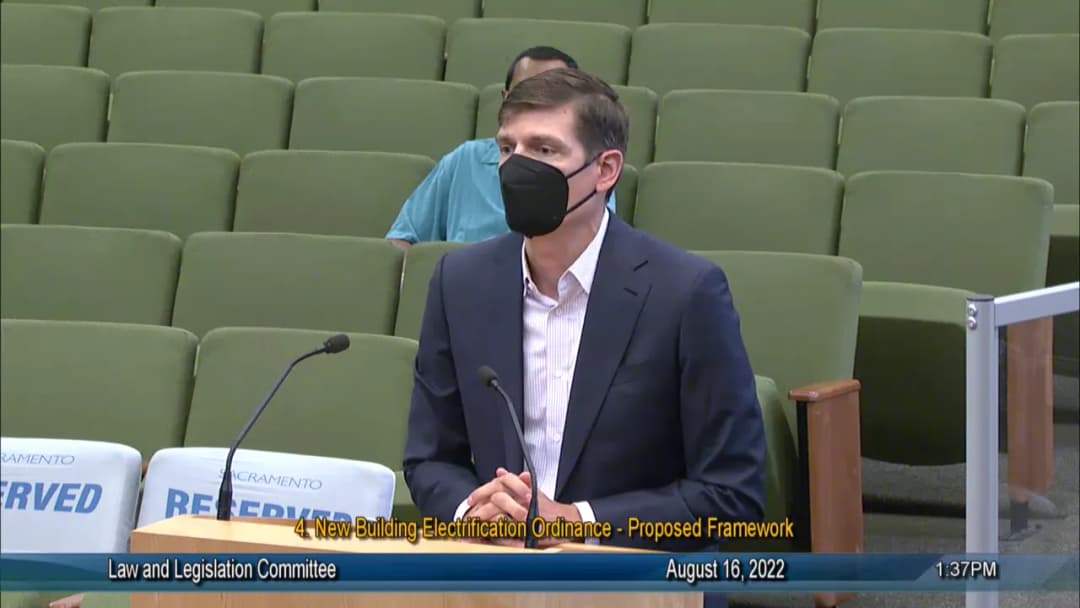
On Tuesday, August 16, 2022, at 1:02 p.m., the Sacramento City Law and Legislation Committee met in a hybrid format to review and comment on the proposed framework for the New Building Electrification Ordinance. The committee unanimously approved the consent calendar, then heard public testimony and deliberated on the ordinance’s alignment with the 2022 California Building Standards Code. Members expressed concerns about worker displacement, outreach to non-English-speaking communities, and the timeline for appeals, but no formal vote was taken to advance the ordinance. Staff will return on September 20, 2022, with updated language, an infeasibility waiver guidance document, and plans for worker transition and stakeholder outreach. Consent Calendar - Item 1 – Law and Legislation Log: Approved (File ID 2022-00195). - Item 2 – Legislative Advocacy Correspondence: Received and filed (File ID 2022-00193). - Item 3 – Law and Legislation Committee Meeting Minutes (July 19, 2022): Approved (File ID 2022-01538). - All items were passed by a single motion with a vote of 3-0 (Councilmember Harris absent). Public Comments & Testimony - Derek Lim (former city staff): Expressed concern that the 10-business-day appeal deadline for infeasibility waivers is too short, especially for resource-constrained businesses and cultural communities reliant on high-heat gas cooking. Recommended a 30-day appeal period. - Rosie Yacov (community member): Voiced strong support for the ordinance, noting that reducing new gas infrastructure helps avoid future cost shifts to remaining gas customers and aligns with state policy to phase out fossil gas. - Jenna Abbott (Sacramento Metropolitan Chamber of Commerce): Stated the Chamber’s support for the ordinance but urged additional in-language outreach to commercial corridors, particularly to restaurants, manufacturers, and coffee roasters who may be unaware of the details. - Kathy Cresswell (affordable housing advocate): Thanked the committee for the limited exemption for affordable housing developments reliant on virtual net metering. Urged that the exemption not be removed until SMUD’s virtual solar program is proven to work for affordable housing projects. - Timothy I (Environmental Democrats of Sacramento, SAC 350, Sacramento Climate Justice Coalition): Urged the committee to move forward without delay, arguing that all-electric construction is simpler, safer, and cheaper, and that continuing to allow gas infrastructure is the costly decision. Opposed extending the waiver indefinitely. - Herman Barahona (Sacramento Environmental Justice Coalition): Supported the ordinance’s environmental goals but cautioned that the city must consider unintended consequences for low-income families, citing a pilot project in Gardenland that revealed glitches in electrification efforts. Suggested the city learn from that pilot before implementing the ordinance. Discussion Items - Item 4 – New Building Electrification Ordinance – Proposed Framework: Staff presented the proposed framework, which requires all-new buildings of three stories or less to be all-electric starting January 1, 2023, and buildings of four stories or more starting January 1, 2026. The ordinance includes an infeasibility waiver process. Staff recommended revisions to align with the 2022 California Building Standards Code, including moving the local amendment to the CalGreen code, adjusting definitions, and rescinding the city’s existing EV charging requirements in favor of stricter state standards. A 14-member technical panel has been meeting to develop the waiver guidance document. Staff also noted that existing buildings and businesses are not affected. - Councilmember Valenzuela: Expressed strong reluctance to move forward without a concrete strategy for displaced workers, particularly plumbers and pipefitters, who may lose an estimated 20% of jobs. She emphasized that a just transition for workers is essential and that the dual plumbing/water reuse study had not yet provided a sufficient job replacement plan. She stated she was not ready to support sending the ordinance to council until a worker transition plan is in place. - Councilmember Guerra: Agreed on the need for a just transition and stressed the importance of additional in-language outreach to Latino and AAPI business communities to reduce confusion. He supported extending the appeal deadline to 30 days. He suggested that components conforming to state law (e.g., EV charging requirements) could be separated and advanced immediately, but overall preferred to wait for the next meeting. - Staff Response (Matt Hertel, Principal Planner): Confirmed that the timeline remains feasible and that staff will return on September 20, 2022, with the full ordinance language, an update on the dual plumbing/water reuse study, and a plan to address worker transition concerns. He noted that many large gas jobs (e.g., state buildings, hospitals) are not affected by the city’s ordinance, so actual job losses may be less than 20%. Staff also committed to multilingual outreach, including facilitated conversations in Spanish and Vietnamese. Key Outcomes - The committee did not vote to forward the ordinance to the City Council. Instead, members made clear that they expect a detailed plan for worker transition and completed outreach before the ordinance advances. - Staff will return to the Law and Legislation Committee on September 20, 2022, with: - The draft ordinance language for review. - A draft infeasibility waiver guidance document. - Follow-up on the dual plumbing and on-site water reuse study, including discussions with the Plumbers and Pipefitters Union (Local 447). - An update on the affordable housing virtual net metering issue and SMUD’s virtual solar program. - The committee also directed staff to consider extending the appeal deadline for infeasibility waivers from 10 to 30 business days. - The meeting was adjourned at 1:40 p.m.
BUILDING ELECTRIFICATION 62% · PUBLIC COMMENTS 16% · CLIMATE ACTION 9% · PROCEDURAL 7%
962
AUG 15, 2022 · SACRAMENTO, CALIFORNIA · MEASURE U COMMUNITY ADVISORY COMMISSION
Measure U Community Advisory Committee Meeting - August 15, 2022

The Measure U Community Advisory Committee met virtually on Monday, August 15, 2022, from 6:00 p.m. to 8:35 p.m. The committee received presentations on the City Auditor's 2022 Community Survey and the Participatory Budgeting Pilot Program, discussed the FY2022/23 Measure U Approved Budget, and received updates from ad hoc committees and staff. Chair Flojaune Cofer announced her upcoming departure and shared her experience with burnout, emphasizing mental health. Consent Calendar - Approval of Minutes (June 20, 2022): Passed by motion. - Ad Hoc Committees Membership Roster: Received and filed. - Measure U Community Advisory Committee Agenda Log: Approved by motion. - Overview of FY2022/23 Measure U Approved Budget: Separated from consent calendar for discussion; received and filed. Public Comments & Testimony - Lambert Davis (owner, To the Bay and Back Cheesecakes): Expressed concerns about survey sample size (7,000 out of city population) and questioned the statistical validity of results below 50% satisfaction. Also criticized the Participatory Budgeting (PB) pilot for lack of transparency, noting that he and several community members from District 2 were not selected as delegates despite attending meetings. He praised the Grant High School drum line and urged support for youth programs in Del Paso Heights. - Barry Boyd (proposal delegate): Questioned the survey sampling methodology and margin of error, calling for larger sample sizes. On PB, he asked about the role of Third Plateau (the evaluator) and expressed frustration with the consultant's facilitation, noting that corrections were needed in the process. He also thanked Chair Cofer for her advocacy and urged the committee to oppose the proposed ban on ad hoc committees. Discussion Items - Item 5: City Auditor’s 2022 Community Survey – Farishta Ahrary (Principal Fiscal Policy Analyst) presented results from a random sample of 7,000 households (700 responses, 95% confidence, ±4% margin of error). Key findings: 59% rated overall quality of life as excellent/good (downward trend since 2018); only 18% anticipated positive economic impact; 11% rated affordable housing as excellent/good; 57% felt safe in downtown commercial areas during the day. Custom Measure U priorities: community-based mental health and wellness ranked highest, followed by community response services, affordable housing, homeless services, public safety, street maintenance, and youth programs. City Auditor Jorge Osaquena addressed public concerns about sampling, noting the survey is statistically sound. Chair Cofer noted that subgroup analyses (e.g., by district) lose statistical power. The item was received and filed. - Item 6: Participatory Budgeting Pilot Program Implementation Update – Christania DeLeon (Participatory Budgeting Project) reported that the pilot is in the proposal development phase, with $500,000 allocated to Northeast and Southeast areas each. Proposal delegates are developing 15 proposals (Northeast) and 15 (Southeast) covering parks, food access, youth services, and more. The vote is planned for fall 2022. Committee members (Noel Mora, Marbella Sala) expressed disappointment with the consultant's performance, citing last-minute materials, lack of expert guidance in breakout sessions, and insufficient support for community delegates. Vice Chair Kimberly Williams noted lessons learned. Ash Roughani clarified that Third Plateau (contract $50,000) is evaluating the process. The item was received and filed. Key Outcomes - Consent Calendar: Approved items 1, 2, and 3; item 4 (budget overview) received and filed after discussion. - Annual Report: The Spending Oversight and Budget Development Ad Hoc Committee will meet prior to September to draft the FY2020/21 annual report, due to City Council by September 19, 2022. - Ad Hoc Committee Updates: Participatory Budgeting Implementation Ad Hoc – ongoing; Marketing and Communications Ad Hoc – revised logo options (based on option 3) to be finalized in September, along with a communications plan. - Chair Succession: Chair Cofer announced she will not seek another term, urging members to consider stepping up for the role. - City Manager’s Office Report: Denise Malvetti noted a $1 million ARPA investment for food security (NOFA open through August 24) and a $1.5 million childcare investment going to City Council on August 16. - Public Comments – Matters Not on the Agenda: Lambert Davis and Barry Boyd both spoke; Chair Cofer alerted the committee to proposed changes to board/commission rules (including a ban on ad hoc committees) to be considered by City Council on August 30, and encouraged members to provide input.

PUBLIC COMMENTS 23% · COMMUNITY ENGAGEMENT 17% · BUDGET AND FINANCE 10% · PARTICIPATORY BUDGETING 9%
963
AUG 15, 2022 · SACRAMENTO, CALIFORNIA · CIVIL SERVICE BOARD
Sacramento Civil Service Board Regular Meeting – August 15, 2022

The Civil Service Board met on Monday, August 15, 2022, at 1:00 p.m. via teleconference. The meeting was called to order by Chair Gwynnae Byrd and adjourned at 1:15 p.m. All five members were present. The board unanimously approved the consent calendar, heard an appeal of a disqualification, and discussed future meeting formats. Consent Calendar - Item 1: Approved the minutes of the June 20, 2022 Civil Service Board meeting. - Item 2: Established the Mail Processor I, Mail Processor I (Legacy), Mail Processor II, and Mail Processor II (Legacy) classification specifications. - Item 3: Archived the Central Services Assistant I, Central Services Assistant II, Central Services Assistant III, and Senior Central Services Assistant classification specifications. - Item 4: Approved revisions to the Utilities Operations and Maintenance Serviceworker Classification Specification, changing the certification requirement from time of appointment to the end of the employee's probation period for assignments in Water Distribution. - All items were approved unanimously (5-0). Discussion Items - Appeal of the Disqualification of John Young from the Plumbing Supervisor Recruitment (Item 5): - Staff (Ben Wilson, Personnel Analyst) presented that John Young’s application for Plumbing Supervisor did not demonstrate one year of supervisory or lead plumbing experience, as required by the minimum qualifications. The city contended that the experience described in the application for “Able Mechanical” was broad and did not specify plumbing-related supervisory duties. Additional details provided in Young’s appeal were not considered because they were submitted after the filing deadline. - No public testimony was offered on this item. - Board members asked clarifying questions. Young did not appear or speak. - A motion to waive formal hearing rules (per Civil Service Board Rule 4(11)(c)(7)) and affirm the director’s disqualification (per Rule 4.10) was made by Member Meola, seconded by Member Hunter, and passed unanimously (5-0). Commissioner Comments - Member Joy Gonzales-Cabatic asked about the possibility of retaining a Zoom option for future meetings when in-person meetings resume. Staff (Cynthia Sprenger) responded that no date has been set for boards and commissions to return to in-person meetings; the city clerk’s office is currently focusing on city council meetings. - Chair Byrd announced she will be absent from the next meeting. Key Outcomes - The consent calendar was approved unanimously (5-0). - The appeal of John Young was denied, and the director’s disqualification was affirmed unanimously (5-0). - No public comments were made on any agenda item or on matters not on the agenda. - The board will continue to meet via teleconference until further notice.

PROCEDURAL 51% · PERSONNEL MATTERS 41% · PUBLIC PARTICIPATION 8%
964
AUG 11, 2022 · SACRAMENTO, CALIFORNIA · PLANNING & DESIGN COMMISSION
Sacramento Planning & Design Commission Meeting on Stockton Boulevard Plan - August 11, 2022

The Sacramento Planning and Design Commission met virtually on Thursday, August 11, 2022, at 5:31 p.m., via Zoom. The meeting was called to order by Chair Nicolina Hernandez and adjourned at 6:44 p.m. The primary agenda item was a detailed update on the Stockton Boulevard Plan, a community-driven revitalization effort focused on anti-displacement, equitable development, and long-term action strategies. Consent Calendar - Approval of Minutes (July 28, 2022): The Commission voted 8‑0 to approve the minutes. Commissioners Tyrone Buckley and Lynn Lenzi abstained, citing that they were absent from the previous meeting. Public Comments & Testimony - Wing Tam (carpenter, 10+ years in Sacramento) spoke during the Stockton Boulevard Plan discussion, requesting local hiring opportunities, livable wages, and health coverage for construction projects to reduce the need for workers to commute to the Bay Area. - Giovanni Adelini (carpenter since 1997) addressed the Commission during “Matters Not on the Agenda,” urging the Commission to require developers to pay area‑standard wages and health benefits, hire local tradespeople and apprentices, and noted that current projects often exploit workers. He expressed frustration that workers building new developments cannot afford to live in them. Discussion Items - Update on the Stockton Boulevard Plan (File ID 2022‑01276) – Elizabeth Boyd, AICP, Senior Planner, presented the Community Working Version of the plan, which covers the corridor from Alhambra Boulevard to 65th Street (Districts 4, 5, and 6). Key points included: - A two‑year planning process launched in 2021, involving a Resident Planning Team (about 15 residents, 11 meetings), five working group meetings, five virtual community conversations, an online survey, and pop‑up events tailored for Hmong, Vietnamese, Spanish, Cantonese, and Mandarin speakers. - Six anti‑displacement values developed with the community, focusing on keeping existing residents and businesses in place while celebrating culture. - Land use strategy: estimated 4,000 dwelling units and over 300,000 square feet of commercial space by 2040, built on the city’s draft 2040 General Plan. - Three‑tier action plan: (1) anti‑displacement programs (already funded, e.g., homelessness prevention, rental assistance, affordable housing), (2) transportation improvements (estimated $80 million, not yet funded), (3) aspirational projects (e.g., a new park, an event venue in Little Saigon). - Public comment period open until October 15, 2022; special meetings planned with CBOs, neighborhood associations, and anti‑displacement stakeholders. - Commissioners discussed: affordable housing targets (Commissioner Yeung noted only 400 affordable units out of 4,000 total, calling for higher goals), coordination with the county (much of the corridor is in unincorporated county), street activation and Little Saigon (Commissioner Yeung and Wong Connelly encouraged helping the community envision future uses), and project prioritization (Commissioner Pluckebaum asked about return‑on‑investment analysis; staff emphasized community input). - Staff clarified that the plan is not waiting for adoption to begin implementation; some anti‑displacement actions are already moving forward using Aggie Square funds ($5 million for residents, $5 million for UC Davis employees). Commissioner Comments – Ideas and Questions - Chair Hernandez noted that commissioners received an email about a proposed code amendment to allow small manufacturing in the M1 zone within a half‑mile of light rail. Greg Sandlund, Planning Director, confirmed the request has been forwarded to staff for consideration in a future bundle amendment. - Commissioner Boyd alerted colleagues that the City Council had tabled an item regarding restrictions on board/commission ad hoc committees, term limits for chairs/vice‑chairs, and requiring code amendments to go through Law and Legislation before a Council vote. - Commissioner Yeung asked that staff follow up with Mr. Tam (the public speaker) and connect him with the community benefits ordinance team. Key Outcomes - The Commission provided comments and feedback on the Stockton Boulevard Plan; no formal vote was required for this discussion item. - The city will continue community engagement through October 15, 2022, and plans to release a public review draft and environmental review document in spring/summer 2023. - Staff committed to considering the proposed code amendment for small manufacturing near light rail and to directing public speakers to the appropriate resources (e.g., community benefits ordinance).

LAND USE PLANNING 30% · COMMUNITY ENGAGEMENT 29% · AFFORDABLE HOUSING 25% · PROCEDURAL 7%
965
AUG 8, 2022 · SACRAMENTO, CALIFORNIA · COMMUNITY POLICE REVIEW COMMISSION
Sacramento Community Police Review Commission Meeting - August 8, 2022

The Sacramento Community Police Review Commission (SCPRC) met on Monday, August 8, 2022, from 6:00 p.m. to 8:21 p.m. via teleconference (Zoom). The meeting included updates from the Chair, OPSA staff, and the Inspector General; a Brown Act training; discussions on ad hoc committees, proposed rules amendments, and commission comments. The consent calendar was continued to a future meeting due to agenda packet accessibility issues. Consent Calendar - Approval of May 9, 2022 Meeting Minutes, Follow-Up Log, and 2022 Quarter 1 Police Complaint Activity Report: Chair Castillo-Krings moved to continue the entire consent calendar to the next meeting after several commissioners reported difficulty accessing the agenda packet (minutes and attachments). The motion passed unanimously (8-0, with Commissioners Marion and Williamson absent). Public Comments & Testimony - Ari Boyd (on Consent Calendar discussion): Stated that agenda accessibility problems began when the City Clerk’s office took over board/commission support in January 2022; noted e-comment links often unavailable. - Speaker (last 4 digits 4366) (on Brown Act training): Requested a copy of the training PowerPoint and raised a concern that agenda items like the “City Manager’s Report” sometimes appear but are not discussed, suggesting a potential Brown Act violation. - Barry Boyd (on Items 6 and 7, and Matters Not on the Agenda): Urged commissioners and the public to attend the August 9, 2022 City Council meeting to oppose proposed ordinance changes limiting standing/ad hoc committees and chair term limits; also highlighted ongoing issues accessing the Granicus agenda page for e-comments. Discussion Items - Inspector General Introduction (Item 4): Inspector General Dwight White presented his role: independent investigations of officer-involved shootings, serious bodily injury complaints, and review of police complaint dispositions. He reported 5 officer-involved shootings and 12 serious bodily injury cases since his start in March 2021, with the September 2021 shooting investigation nearing completion. He answered commissioner questions about UAS (unmanned aerial systems) deployment after a shooting, de-escalation efforts, redactions, and his need for additional staff. - Ad Hoc Committee Updates (Item 5): Vice Chair Bliss reported that the surveillance ad hoc committee is reviewing SPD general orders and noted that two surveillance-related orders (GO 525.05 and 525.08) are missing from the city’s website. No other ad hoc updates were provided. - Brown Act Training (Item 6): Deputy City Attorney Audreyell Anderson-White delivered a training covering meeting definitions, serial meetings (daisy chain and hub-and-spoke), exceptions, notice requirements, and practical tips for commissioners. She answered questions about quorum communications, agenda amendment deadlines, and responding to public comments. - Proposed Amendments to SCPRC Rules and Procedures (Item 7): Vice Chair Bliss reviewed proposed changes (agenda packet distribution, public comment time limits, ad hoc committee creation process). The item was for discussion only; no vote was taken. Commissioners agreed to place an updated version on the next meeting’s agenda for a formal vote. Key Outcomes - Consent Calendar: Continued to the next meeting; City Clerk’s office noted the request to send PDF agenda packets to commissioners. - Inspector General’s Report: White will present his completed September 2021 officer-involved shooting report at the next SCPRC meeting, likely via PowerPoint. - Brown Act Training: Completed; commissioners were encouraged to contact the City Attorney’s office with questions. - Rules and Procedures: Will be placed on the next agenda for a vote; updated to reflect potential city ordinance changes. - Commissioner Comments: Vice Chair Bliss raised a question about SPD arrest policies after reviewing body-worn camera footage from a July 16, 2022 incident. Assistant City Manager Mario Lara noted the question for follow-up. Commissioner Guerrero urged colleagues to meet with their appointing council members regarding the boards/commissions ordinance. Commissioner Williamson shared information about a national police review commission conference in September. - Public Comment Follow-Up: Barry Boyd’s comment about the August 9 City Council agenda was noted; the Chair confirmed that the council would vote on the ordinance (including waiving Rule 7, Section K.1).

LEGISLATIVE PROCESS 20% · PROCEDURAL 15% · PUBLIC COMMENTS 11% · PUBLIC ENGAGEMENT 10%
966
AUG 8, 2022 · SACRAMENTO, CALIFORNIA · ARTS, CULTURE, AND CREATIVE ECONOMY COMMISSION
Sacramento Arts, Culture, and Creative Economy Commission Meeting - August 8, 2022

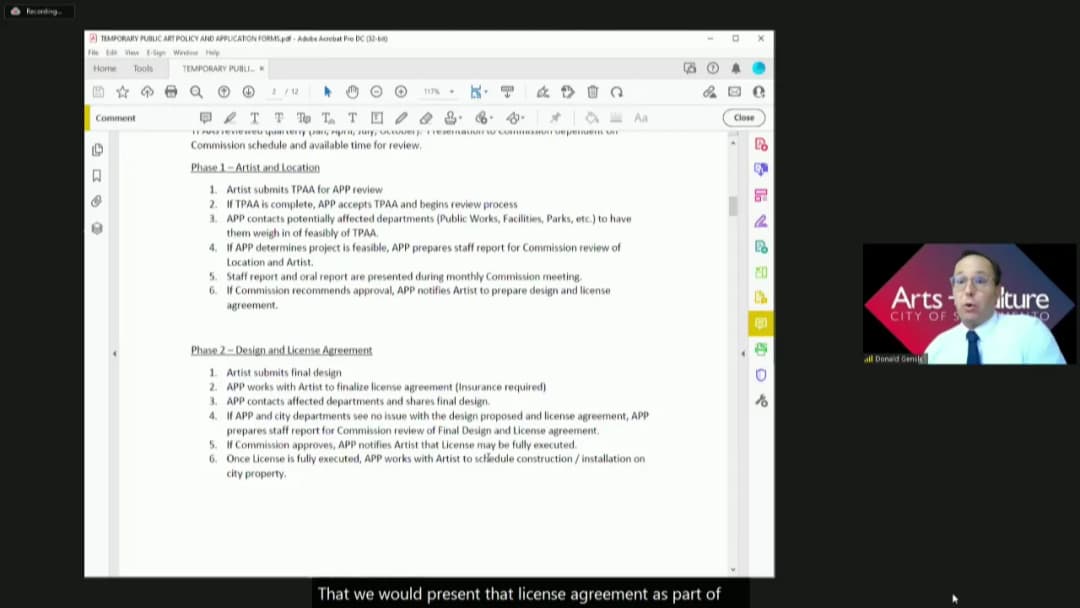
The Sacramento Arts, Culture, and Creative Economy Commission met on Monday, August 8, 2022, at 2:10 p.m. via teleconference. The meeting covered the proposed ARPA funding framework for arts nonprofits, a recommended moratorium on community-initiated temporary public art projects, introduction of a Sacramento music census, and the director's report. The commission adopted the consent calendar, voted to recommend the moratorium, and received updates on several initiatives. Consent Calendar - Item 1 – Approval of Minutes: Passed a motion (Commissioner Lepore/Commissioner Naranjo) approving the May 9, 2022, commission meeting minutes. Vote: 8 yes (Commissioners Gott, Lepore, Mehta, Naranjo, Perez, Wilson Ramey, Vice Chair Enriquez) and 4 absent (Commissioners Blumenstock, Hastings, Lavulo, Winlock). Public Comments & Testimony - Item 4 – Sacramento Music Census: Lambert Davis (speaker by phone) requested contact information for Megan Van Voorhis, which was provided. No other public comments were made on any agenda items or matters not on the agenda. Discussion Items Item 2 – American Rescue Plan Act (ARPA) Funding Priorities: Arts & Cultural Nonprofit Funding Approach - Staff Presentation (Megan Van Voorhis): Presented the proposed ARPA creative economy framework. Key points: - The city allocated $2.25 million for nonprofit support, with $2 million available after reallocating $250,000 to cover a shortfall in the Cultural Arts Awards (CAA) grant program. The county agreed to match with an additional $2 million, totaling $4 million. - CARES Act grant data showed 63% ($3.6 million of $5.6 million) of nonprofit reimbursement funds went to 10 large cultural asset organizations. Those same organizations received 91% of other state/federal pandemic relief dollars, totaling 43% of their 2019 revenues ($22.9 million of $53.3 million). In contrast, a sample of smaller CAA grantees recovered only 21% of 2019 revenues ($3.1 million of $14.9 million). - Proposed approach: Create two pools for CAA grantees – one for organizations with budgets under $1.5 million (prioritizing BIPOC-led groups) and one for larger organizations. Another pool (approx. $1–$1.25 million) would be for non-CAA 501(c)(3) organizations meeting the impacted-class definition. Funding would be formula-driven with an expedited application process. - Commissioner Discussion: Commissioners Naranjo and Gott expressed support and asked clarifying questions. Commissioner Naranjo highlighted a new festival (Golden Harvest Festival) as an example of community engagement and urged visibility of funding opportunities. - Outcome: Reviewed and discussed; no formal vote required. Item 3 – Art in Public Places: Community Initiated Projects on Public Property - Staff Presentation (Megan Van Voorhis and Donald Gensler): Described the current temporary public art application process (two-phase: location review, then design review). Recommended a moratorium on new community-initiated projects on city property without council member support until a formal policy and process are developed. Cited staff capacity constraints (only one public art staff person) and need to address issues like government speech, safety, maintenance, and equity. - Commissioner Discussion: - Commissioner Blumenstock raised concerns about political appropriateness and potential offense, citing past controversy over a fire station mural. She advocated for clear guidelines. - Commissioner Naranjo supported a moratorium and emphasized the need for a diverse, cross-community panel to review projects, referencing historical statue removals (e.g., Earl Warren Theater, John Sutter statue, Junipero Serra). He expressed overall support for public art. - Commissioner Gott cautioned against overly restrictive policies that might stifle artistic expression and provocation. - Commissioner Blumenstock also asked about an unveiling for the recently completed Fire Station 14 sculpture; Donald Gensler noted a ceremony is planned for October 2022 led by Councilmember Harris. - Vote: Motion (Commissioner Blumenstock/second by Commissioner Gott) to recommend a moratorium on new community-initiated art projects on public property without council member support until a new policy is formalized. Passed: 8 yes, 0 no (4 absent). Item 4 – Sacramento Music Census and Arts & Entertainment Regulatory Review: Introduction of Sound Music Cities - Staff Presentation (Megan Van Voorhis and Don Pitts, Sound Music Cities): - Don Pitts, founder of Sound Music Cities, shared his background (former Austin music office director, reduced sound complaints by 73% in Austin). He described the music census as a data-gathering tool for musicians, venues, and promoters to inform policy and support. The census covers lived experience, economic data, regulatory barriers, and equity. - Sacramento’s census will launch after Labor Day 2022 and run concurrently with Austin’s. Community partner outreach is underway (≈50 partners). The survey takes about 13–15 minutes. Results will be shared publicly via infographics and a summary report. - Prior work: In 2020, Don Pitts facilitated community conversations in Sacramento that revealed regulatory inefficiencies and frustration; the pandemic exacerbated pre-existing conditions. - Commissioner Discussion: - Commissioner Lepore welcomed the initiative and noted Sacramento’s need to retain musicians and venues. - Commissioner Gott asked about the census’s intent; staff explained it aims to move from anecdotal evidence to data, understand venue gaps, and identify challenges. - Commission expressed strong support and offered to help identify community partners. - Outcome: Received and filed. No vote required. Item 5 – Director’s Report - Staff Report (Megan Van Voorhis): Highlighted: - Arts education: The consortium hired a communications firm to support Art Look. - Public art: Multiple projects underway, including Caltrans District 3 and Clean California program initiatives. - Film incentive program: Funded projects advancing narrative change; staff expressed pride in the cohort. - Commissioner Comments: - Commissioner Naranjo praised progress, noted the Washington Neighborhood Center landscape project and the Latino Podrosas mural at SMUD, and urged the commission to increase visibility at community festivals (e.g., Golden Harvest Festival). - Commissioner Blumenstock encouraged attendance at Music Circus (production of “The Color Purple”). - Commissioner Gott and Commissioner Mehta also expressed enthusiasm for Music Circus and the commission’s work. - Outcome: Received and filed. Key Outcomes - Approved Consent Calendar (Item 1). - Recommended Moratorium on Temporary Public Art Projects (Item 3) – Motion passed 8-0; policy development to commence. - Received and Filed Items 4 (Music Census) and 5 (Director’s Report). - Next Steps: ARPA funding guidelines to be finalized with county agreement and council approval; music census to launch after Labor Day 2022 with community partner outreach; staff will develop a formal policy for community-initiated temporary public art on city property, with input from the commission and public. - Meeting adjourned at 3:50 p.m.

ARTS AND CULTURE 32% · MUSIC INDUSTRY 20% · AMERICAN RESCUE PLAN ACT 16% · PROCEDURAL 13%
967
JUL 28, 2022 · SACRAMENTO, CALIFORNIA · PLANNING & DESIGN COMMISSION
Sacramento Planning and Design Commission Meeting - July 28, 2022

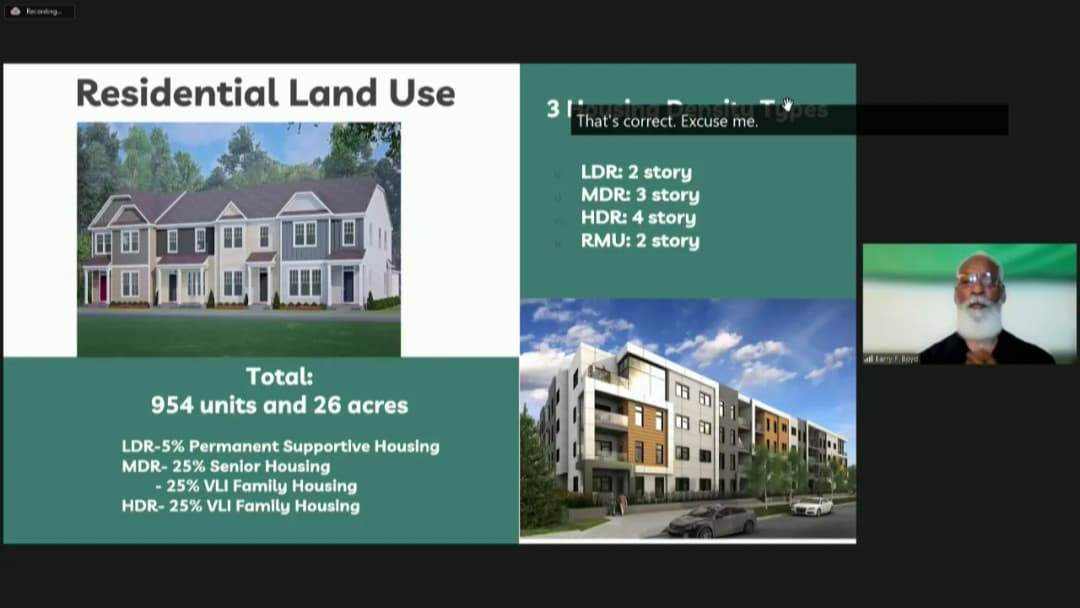
The Sacramento Planning and Design Commission met on Thursday, July 28, 2022, at 5:30 p.m. via teleconference due to the ongoing COVID-19 state of emergency. The meeting took place at City Hall, 915 I Street, Sacramento, CA. The commission considered consent items, discussed a 102-acre intern project presentation, held public hearings on three land use permits, and elected new commission leadership. Consent Calendar - Item 1: Approved the Planning and Design Commission minutes of June 23, 2022 (File ID: 2022-00861). - Item 2: Passed a motion to continue meeting by teleconference for another 30 days pursuant to California Government Code section 54953(e) (File ID: 2022-01372). - The consent calendar was approved unanimously after a brief technical delay in the live stream. Directors’ Report - Item 3: Received and filed the Director’s oral report (File ID: 2022-00551). Public Comments & Testimony - On Item 08 (102-Acre Intern Project): Weng Tim, a local carpenter, spoke in favor of local hiring and health care access, urging the commission to prioritize local workforce to reduce commuting and pollution. - On Item 04 (Luther Drive Dispensary): - Chris Cox, the applicant, clarified his partnership with a social equity participant (Jamisha Johnson) and described the extensive renovations and state licensing progress. - A public commenter using the name "Galaxy A135G" questioned whether the applicant was piggybacking on an expired CUP; staff and the applicant clarified that a new application was filed for the delivery-only use and a time extension was sought for the existing production permit. - On Items 05 and 06: No public speakers. - On Item 07 (Chair/Vice-Chair Election): No public comments. - Matters Not on the Agenda: No public comments. Discussion Items 102-Acre Intern Project Presentation (Item 8) Interns from a summer internship program sponsored by five consulting firms presented a conceptual site plan for a 102-acre project site in District 8 (South Sacramento). The proposal included: - A sports training facility for the Sacramento Republic FC (six fields designated for the team, two exclusively public, with a community pact for shared use). - 954 residential units across 26 acres, with three density types (low, medium, high) and mixed-use, including affordable housing set-asides: 5% permanent supportive housing in low-density, 25% senior housing in medium-density, and 25% very-low-income housing in both medium- and high-density. - A community garden (2.26 acres) to address food desert conditions, with potential for partnerships with a nearby elementary school. - A two-story multi-use indoor facility (1.2 acres) for sports, education, and community programming. - Extensive green space, including a splash park, dog park, picnic areas, and soccer fields. - Environmental constraints analysis (CEQA) showing no extreme limitations, but recommending further studies. Commissioners praised the interns’ work and offered suggestions: improved access (site is landlocked except a southern connection via a future project), more baseball/softball fields, an indoor/outdoor amphitheater, storage/sales areas for the community garden, and consideration of existing nearby community centers. The presentation was for review and comment only; no vote was taken. Nomination and Appointment of Chair and Vice-Chair (Item 7) Commissioner Macias-Reed nominated Vice-Chair Hernandez as Chair and Commissioner Wallace as Vice-Chair. The motion was seconded and carried unanimously. Key Outcomes - Item 4 (Luther Drive Delivery-Only Dispensary CUP – P22-004): Approved unanimously. The permit allows a delivery-only cannabis dispensary in a 9,000-square-foot building on 0.55 acres in the M-1S zone. It also modifies a previously approved cannabis production permit and grants a time extension due to expired building permits. The applicant partnered with a social equity participant. - Item 5 (1436 Auburn Blvd. Delivery & Distribution CUPs – P22-005): Approved unanimously. Permitted a delivery-only dispensary and cannabis distribution in a 9,480-square-foot two-story building on 0.42 acres in the M-1 zone, plus site plan and design review for minor exterior work (roll-up door, fence delivery bays). The building was vacant; the use was found to be compatible with the residential zone across the street. - Item 6 (El Camino Auto Sales – P21-046): Approved unanimously. Granted a conditional use permit for auto sales on an approximately 0.8-acre parcel in the C-2 zone, with site plan and design review including a deviation reducing the required planter width from 6 feet to 5.5 feet to maintain vehicle maneuverability. No public opposition. - Commission Leadership: Commissioner Hernandez was elected Chair and Commissioner Wallace was elected Vice-Chair for the upcoming year. - Parking Ad Hoc Committee: Staff indicated the RFP for a parking consultant would be postponed until after an August 16 climate workshop, with selection expected by October. The new chair will appoint a replacement for Commissioner Ogilvy on the selection committee.

CANNABIS REGULATION 25% · COMMUNITY ENGAGEMENT 18% · PROCEDURAL 16% · LAND USE PLANNING 10%
968
JUL 26, 2022 · SACRAMENTO, CALIFORNIA · RACIAL EQUITY COMMITTEE
Racial Equity Committee Meeting Summary – July 26, 2022

The Sacramento City Council's Racial Equity Committee met on Tuesday, July 26, 2022, from 10:03 a.m. to 11:46 a.m. via teleconference. The meeting included a consent calendar, an oral report on the Sacramento Fire Department's Diversity, Outreach & Recruitment (DOR) efforts, and an update on the Race Forward and Racial Equity Council as part of the SCORE initiative. Committee members present: Mayor Darrell Steinberg (Chair), Councilmember Mai Vang (Co-Chair), Councilmember Jay Schenirer, and Councilmember Rick Jennings II. Consent Calendar - Item 1: Meeting Minutes (April 26, 2022) – Approved unanimously (4-0) on a motion by Councilmember Vang, seconded by Councilmember Jennings. One public comment (Mr. Davis) noted the difficulty of reviewing minutes without visual access, but the motion passed. Public Comments & Testimony - Mr. Davis (on Item 2): Commented on the fire department’s diversity work, urging that participants be “enlightened on what the odds and what they’re up against” and that most racial equity problems have been in the city manager’s office. He acknowledged the mayor and council for their presence and later referenced concerns about funding oversight. - Mr. Davis (on Item 3): Raised concern that only 22 of over 100 applicants for the Racial Equity Council were interviewed, likening the 22% selection rate to a failing grade (“an F”) and suggesting that bias may have affected the process. Discussion Items Item 2: Sacramento Fire Department Diversity, Outreach & Recruitment (DOR) Brief – Prescribed by Aimée Barnes (Diversity & Equity Manager), Assistant Chief Kim Iannucci, and Firefighter/Paramedic Jennifer Needler. They presented the DOR division’s mission, programs, and alignment with the Race and Gender Equity Action Plan. Highlights: - The DOR division was established with Measure U funding; it includes a pipeline program (reserves, youth academy, EMS trainee program), youth outreach, and community partnerships. - Barriers identified: family pressure on participants to seek immediate employment instead of pursuing a longer career path; need for early engagement (middle/high school). - Statistics: 20 active reserves, a new cohort of 25; women reserves increased from 19% to 22% (SFD has 4% women). Youth Academy graduated 25 cadets; new cohort of 32 (15 female, 17 male; 28 identify as persons of color). 47% of current reserves are aged 18–24. - A new “public safety train trailer” (ADA-compliant) will be used for youth fire safety education. - Committee members (Schenirer, Jennings, Vang, Steinberg) discussed partnerships with schools, the youth ballot initiative, and the need for a holistic approach. Councilmember Schenirer asked about barriers and school district cooperation. Mayor Steinberg emphasized early career inspiration (linked learning). Councilmember Jennings requested data on reaching youth. Item 3: Race Forward and Racial Equity Council Update – Presented by Kelly F. Rivas (Chief of Staff), D’Angelo Mack (Public Health Advocates), Lee Lowe (Asian American Liberation Network), and Kelly Coleman (Race Forward consultant). They reported on the application and selection process for the Racial Equity Council: - Over 100 applications received; the Racial Equity Network reviewed all and conducted 25 interviews (June 7–14). Eighteen council members were selected (not yet publicly named due to pending acceptance). Alternates will also be designated. - Selection criteria: lived experience in Sacramento, connections to communities of color, understanding of local government, critical thinking, and commitment to racial equity. The network emphasized a bottom-up process where the council serves the network’s vision. - Next steps: Orientation/retreat in August; first formal meeting expected by October 2022; work with the city to begin in November. - Committee discussion: Councilmember Schenirer asked about diversity of council members (including white allies). Councilmember Vang asked about engaging unsuccessful applicants and timelines. Mayor Steinberg noted the healthy tension between process-focused community leadership and the elected body’s need for tangible outcomes. The presenters confirmed that unsuccessful applicants will be invited into the network. Key Outcomes - Consent Calendar approved unanimously. - Item 2 (Fire Department DOR): Committee reviewed and provided comment. No formal vote taken. The department will continue its programs and report back with a year-end report in early August. - Item 3 (Race Forward/Equity Council): Committee received the update. The Racial Equity Council selection is finalized but names not yet released; orientation planned for August; first projects expected in November 2022. The committee will consider how to interact with the council in future meetings, respecting Brown Act constraints. - No further committee or staff reports were made. Meeting adjourned at 11:46 a.m.

RACIAL EQUITY COMMITTEE 47% · DIVERSITY RECRUITMENT 25% · PROCEDURAL 11% · YOUTH SERVICES 9%
969
JUL 19, 2022 · SACRAMENTO, CALIFORNIA · PERSONNEL AND PUBLIC EMPLOYEES COMMITTEE
Personnel and Public Employees Committee Meeting Summary – July 19, 2022

The Personnel and Public Employees Committee (PMPE) met on Tuesday, July 19, 2022, at 11:15 a.m. (recorded start time; agenda listed 3:00 p.m.) to approve minutes and interview and recommend appointments to the Preservation Commission and the Sacramento Disabilities Advisory Commission (DAC). The committee made appointments for two Preservation Commission seats and three DAC seats, leaving additional vacancies. Consent Calendar - Approved the meeting minutes from May 24, 2022, by a unanimous vote. Discussion Items: Preservation Commission Applicants - Seat B (Architectural Historian): Garrett Root, Northern California Architectural History Team Lead at SWCA, was the only qualified candidate. He highlighted his professional experience and previous service as president of Preservation Sacramento. He was appointed. - Seat D (Licensed Contractor): No qualified candidates were available. The committee noted the need to recruit a licensed contractor with experience in historic property restoration. - Seat F (Public at Large): Three candidates interviewed: Jose Esparza (Sacramento native, master's in history, vice chair of Sacramento Heritage), Bruce (Eric) Fay (neighborhood association board member, historic home owner, involvement in Curtis Park historic district), and Joshua Montemayor (assistant director of community development for Vacaville, strong planning background, North Sacramento resident). The committee expressed interest in geographic diversity, noting Montemayor's residency north of the river. Montemayor was appointed to Seat F. - All candidates were praised for their qualifications; others were encouraged to reapply. Discussion Items: Sacramento Disabilities Advisory Commission (DAC) Applicants - Seats A, C, D, G, I (disability group representatives): The committee had two incumbents (Brandy Tucson Boyd, Mousumi Crowley) and one new applicant (Sophia, who had previously been interviewed). Staff liaison Josh Warner was not present. - Mousumi Crowley spoke in support of the incumbents, emphasizing the need for experienced members to maintain quorum and effective advocacy post-pandemic. - The committee voted to reappoint Brandy Tucson Boyd and Mousumi Crowley to their current seats and to appoint Sophia to the next available seat (C). They noted that two remaining seats still need candidates and asked the commission to recruit through their networks. Key Outcomes - Motion passed unanimously (4-0) to appoint Garrett Root to Preservation Commission Seat B and Joshua Montemayor to Seat F. - Motion passed unanimously to appoint Brandy Tucson Boyd, Mousumi Crowley, and Sophia to DAC seats (assignments as recommended by staff). - The committee will seek additional applicants for Preservation Commission Seat D (licensed contractor) and the two remaining DAC seats. Note: The meeting began at 11:15 a.m. per the provided timestamp, though the agenda listed an open session at 3:00 p.m.

PRESERVATION COMMISSION 54% · DISABILITY ACCESS 27% · PROCEDURAL 19%
970
JUL 19, 2022 · SACRAMENTO, CALIFORNIA · LAW AND LEGISLATION COMMITTEE
Law and Legislation Committee Meeting – July 19, 2022: Onsite Water Reuse and Dual Plumbing Study Discussion

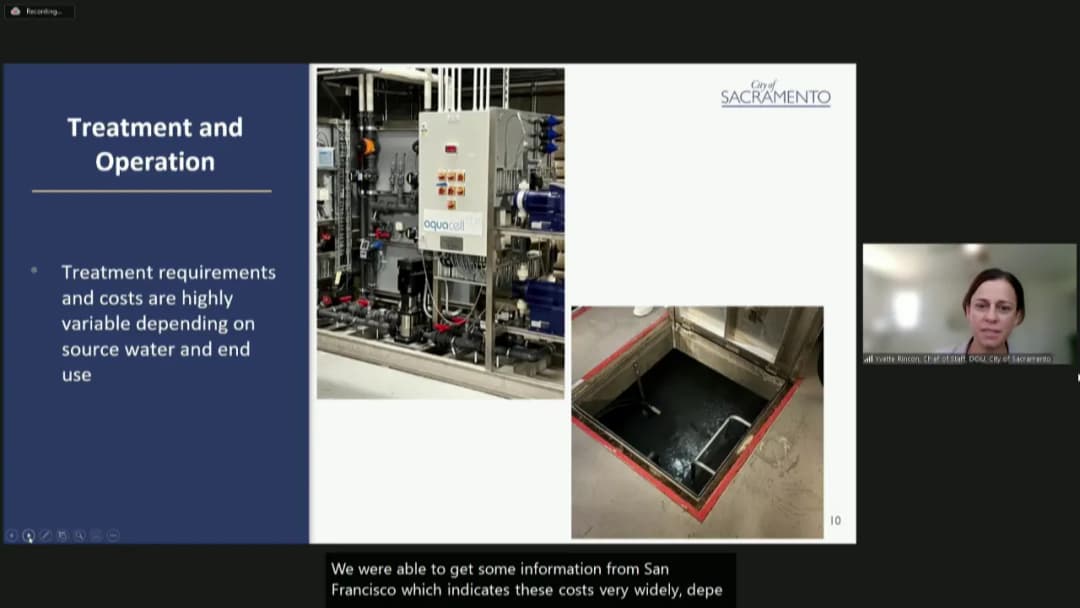
On July 19, 2022, the Sacramento City Council's Law and Legislation Committee met via teleconference to discuss the Onsite Water Reuse and Dual Plumbing Study, including findings and preliminary recommendations. The committee also approved the consent calendar unanimously. After hearing public testimony and committee deliberation, members directed staff to convene stakeholders and return within one month with a work plan addressing near-term job transition strategies for plumbers and pipefitters affected by the building electrification ordinance, as well as longer-term technical and policy questions. Consent Calendar - Law and Legislation Log (File ID 2022-00192): Approved unanimously. - Legislative Advocacy Correspondence (File ID 2022-00194): Received and filed. - Law and Legislation Committee Meeting Minutes (June 21, 2022): Approved unanimously. Public Comments & Testimony - Daphne: Requested additional information on black water reuse, separation of systems in subdivisions, chemicals used in treatment, and public access to the study report. Expressed interest in understanding how systems would reflow into the main process. - Paul Trudeau (District 4 resident, member of 350 Sacramento and chair of Sacramento DSA's labor committee): Expressed support for dual plumbing but argued the timeline should not lag behind the building electrification ordinance. Recommended including residential properties, noting the small cost increase and potential water savings. Reported minimal maintenance experience with gray water systems. - Kate Wilkins (350 Sacramento): Echoed concerns about timing and job transition, noting that the 100,000-square-foot threshold would not generate enough job opportunities. Advocated for expanding the ordinance to lower square footage and including residential buildings. Discussion Items - Onsite Water Reuse and Dual Plumbing Study – Findings and Preliminary Recommendations (File ID 2022-01264): Staff presented a two-phase approach. Phase 1 would require dual plumbing in new commercial buildings ≥100,000 sq ft for gray water reuse (already permitted under California Plumbing Code). Phase 2 would address on-site treatment requirements for gray, black, and rainwater, aligning with state SB 966 regulations expected December 2022. The study found an average cost of $2.88/sq ft to install dual plumbing (0.34% increase in total project costs) and only 13 commercial buildings ≥100,000 sq ft built in the last 12 years. Committee members raised several concerns: - Councilmember Guerra: Questioned whether the 100,000 sq ft threshold was too high; suggested studying lower thresholds (50,000, 75,000 sq ft) and examining other cities' models. Also asked about the city's existing gray water rebate program and fee deferral incentives used in San Francisco. - Councilmember Valenzuela: Emphasized the need for a just transition for workers, noting that the primary goal was job replacement for plumbers/pipefitters (estimated 20% reduction in demand). Wanted a more aggressive approach, including expanded building types, existing building retrofits, and a parallel stakeholder process to address immediate job strategies. Suggested the city take a leadership role in influencing state regulations. - Councilmember Harris: Argued that many unknowns (treatment costs, SB 966 requirements, job loss numbers) make it premature to mandate dual plumbing. Proposed a voluntary pilot program for a multi-unit residential building to gather real-world data. Noted that untreated gray water for drip irrigation would likely clog emitters and that residential irrigation is limited to drip, not spray. - Chair Schenirer: Summarized that the committee largely agreed on direction: staff should meet with stakeholders, especially UA 447, and return with a work plan addressing both near-term job transition strategies and longer-term technical/regulatory questions. Stressed the importance of moving quickly but carefully to avoid costly mistakes. Key Outcomes - Committee direction to staff: Reconvene with stakeholders (including plumbers/pipefitters, developers, and other interested parties) and return to the committee within approximately one month with a work plan. The work plan should: 1. Address immediate job transition strategies for workers affected by the building electrification ordinance. 2. Outline a roadmap for the longer-term dual plumbing and on-site water reuse ordinance, including pilot projects, analysis of lower square footage thresholds, treatment costs, and coordination with SB 966. 3. Consider pilot programs (e.g., voluntary multi-unit residential project) to gather data on construction and operational costs. 4. Explore fee deferral or incentive structures similar to San Francisco's program. 5. Leverage Sacramento's position as state capital to influence upcoming state regulations (SB 966) and building standards. - Staff will keep committee members informed of progress and may request additional resources (staff, consultants) as needed. - No formal vote on the study was taken; the committee's direction was unanimous.

WATER MANAGEMENT 61% · PROCEDURAL 15% · BUILDING ELECTRIFICATION 9% · PUBLIC WORKS 8%
OPENPUBLICA · PUBLIC MEETING INDEXUPDATED DAILY · openpublica.com