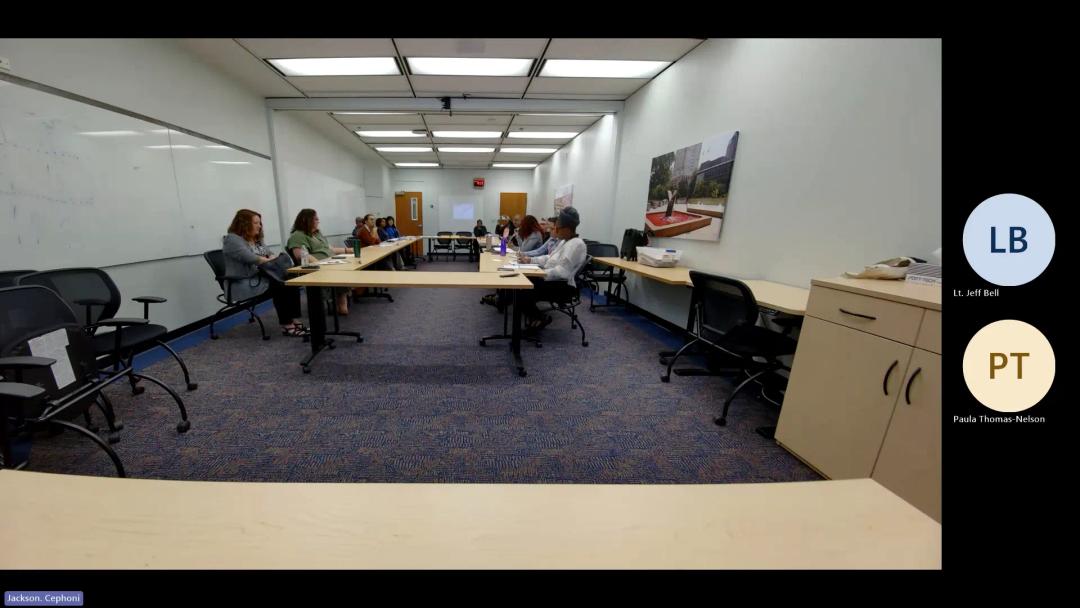
The EOAC meeting was called to order at 3:42 PM with a quorum. Members present included Jennifer Avalo, Patrick Leonard, Pratt, Martin Ross, Paula Thomas Nelson, and Rosa Vega. The committee welcomed new member Monica. The main agenda item was a presentation from the Office of DEI by Chief DEI Officer Stephanie, followed by extensive discussion and committee recommendations. Consent Calendar - The committee approved the agenda and the minutes from the previous meeting. The agenda was approved with one abstention (Patrick). The minutes were approved with one abstention (Patrick). Public Comments & Testimony - No public comments were made. Discussion Items - Presentation by Office of DEI: Stephanie, Chief DEI Officer, presented the history and mission of the DEI office, established after the Board of Supervisors declared racism a health crisis in November 2020. She outlined the DEI Cabinet's three pillars: employees, community, and policy/program/service delivery. The cabinet includes 15 static departments and 8 two-year term positions. Key initiatives include microaggression training, exit interview questions, and a planned Thriving Summit on August 18, 2025. The county also joined the Government Alliance on Race and Equity (GARE). - Committee Concerns and Feedback: Multiple committee members, including Patrick and Martin Ross, expressed frustration with the lack of inclusion of the EOAC in the DEI Cabinet. Patrick noted that the committee had requested a presentation from the CEO back in January 2023 but was ignored. He cited a 15% vacancy rate in the county and argued that the DEI Cabinet lacks representation from union members, citizens, and rank-and-file employees, and that some cabinet members are part of the problem. Martin Ross emphasized that the EOAC studies workforce statistics and could provide valuable input. The committee unanimously requested that a member of the EOAC be appointed to the DEI Cabinet when a term position becomes available. There was also discussion about the need for the DEI Cabinet to include community voices and address systemic barriers. Key Outcomes - The committee decided to draft a formal letter to the DEI Cabinet and the Board of Supervisors recommending that a member of the EOAC be appointed to one of the eight two-year term positions on the DEI Cabinet. - The committee will continue to monitor workforce statistics and provide recommendations to the county. - The chair stated that the committee expects the recommendation to be taken seriously, noting that the committee has been frustrated with the county's lack of responsiveness.
Public Meetings - Sacramento County, California
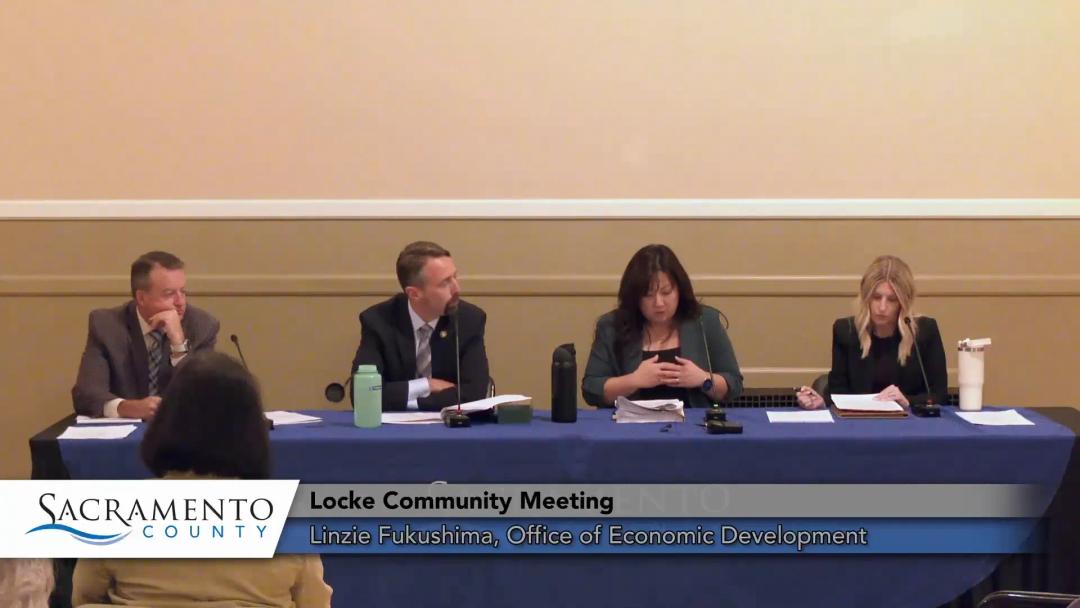
Public Meetings - Sacramento County, CaliforniaSupervisor Pat Hume (Fifth District) convened a publicly noticed community meeting on October 30, 2024, to discuss governance options for the historic town of Locke, Sacramento County. The meeting aimed to address the functioning of the Locke Management Association (LMA) and explore sustainable governance structures. Approximately 70 residents, property owners, business owners, and stakeholders attended. County staff presented two viable options: updating LMA bylaws to remove the county's appointed seat, or dissolving the LMA entirely. Public comment was extensive, with speakers expressing frustration over past county inaction, concerns about the Brown Act, and the need to separate Main Street (commercial/public) from the residential back of Locke. No formal vote was taken; the county will refine options and return in early 2025. Public Comments & Testimony - Russell (property owner/board member) strongly opposed eliminating the Brown Act, arguing it would exclude non-property owners (renters, merchants, Chinese American associations) and could lead to gating the community. He detailed past frustrations with county delays and a lack of support for LMA decisions, citing a parking issue that took six months and a dispute that took two years to get on the agenda. - Lisa (business owner, renter, LMA board member) supported splitting the community: an HOA for the residential back and county management for Main Street. She noted that renters like herself would lose voice under a pure HOA and questioned the ability to get public funding without the Brown Act. She also raised the issue of the LMA paying for lighting on public roads (River Road and Main Street) and asked about removing CC&Rs for Main Street. - Ginny Giles (business owner, renter, LMA board member) agreed that public restrooms, parking, and maintenance should not fall on building owners. She urged the Locke Foundation to expand its mission to seek grants for public amenities, such as a second paved parking lot for visitors. - Douglas Shah (former LMA chairman) highlighted that business owners who do not own property have been overlooked in the discussion and should be included. - Deborah (property owner, secretary for 10 years) advocated for a baby-step approach: first remove the county seat (Option 1) because it has the least unknowns. She expressed concern about losing control over gravel roads and lighting if the county took over, and noted that low assessments ($60/month residential, $120/month commercial) are unsustainable. - Diane Thomas (business owner, renter) felt insulted and called an “invitee” at previous meetings, saying that property owners should not dictate terms to all residents. She appreciated the open forum but remained skeptical. - Honey Lum (vice chair/secretary of LMC, also Locke Foundation board) emphasized the town’s decline: population shift from 600+ to 70 residents, deteriorating historical buildings, and inability to secure grants. She said the LMA operates year-to-year without reserves and cannot generate revenue. She asked the county not to remove her legislative seat until a solution is found. - Maddie Serafin (town manager, hired August 2024) stated she has been met with complaints and yelling. She identified three priorities: community unity, safety, and beautification through revenue. She has reached out to county offices, sheriff, and fire department but received no responses yet. - Several speakers raised traffic safety concerns on River Road and Locke Road, citing high speeds, near-misses, and fatal accidents. Supervisor Hume noted he would follow up with the Department of Transportation. - One speaker asked whether any option would remove the board’s nonjudicial foreclosure rights to seize properties. Staff said they would look into it. Discussion Items - Presentation of Governance Options – Lindsay Fukushima (Economic Development) reviewed four infeasible options: Property Business Improvement District (PBID), Community Services District (CSD), Community Facilities District (CFD), and County Service Area (CSA). All were deemed too costly ($150K–$200K to establish, $50K/year to run), time-consuming (2–3 years), and subject to the Brown Act. Crystal Bethkey (Economic Development) presented two viable options: 1. Update LMA bylaws to remove the county’s appointed seat – No cost, 10–12 month timeline; eliminates Brown Act requirements for LMA, which would then only follow Davis-Stirling Act. The county would help draft amendments and take them to the Board of Supervisors for approval. CC&Rs would remain. 2. Dissolve the LMA entirely – No cost from county, but legal counsel needed; 2–3 year process. All debts must be paid; common area maintenance would revert to the county (roads, lighting, bathrooms). CC&Rs would remain, possibly leading to enforcement issues. - Supervisor Hume’s Observations – He noted that Main Street is a public benefit (county-owned road, bathrooms, parking) currently borne by LMA property owners, which is unfair. He suggested bifurcating the town: the residential back becomes an HOA, while Main Street and its public amenities are managed by the county or a strengthened Locke Foundation. He also mentioned potential state park involvement (since they already own the boarding house) and the possibility of selling the common area parcel for an infusion of cash. - Public Feedback on Options – Many speakers supported the idea of splitting Main Street (public/ commercial) from the residential back. Several property owners preferred Option 1 as a first step, while others favored dissolution if the county took over maintenance. There was broad agreement that the status quo is not working. Key Outcomes - No formal vote or decision was taken. - Supervisor Hume directed staff to further explore the bifurcation concept (residential HOA in back, county management for Main Street) and to clean up the LMA’s bylaws (including inconsistent naming). - The county will send the two option handouts in PDF form to all attendees and collect additional questions over the next two weeks. - A follow-up meeting will be held in early 2025 (after the first of the year) with refined proposals and answers to outstanding questions. - Hume committed to follow up on traffic safety concerns on River Road and Locke Road with the Department of Transportation. - The county’s economic development staff may assist the Locke Foundation in building capacity to pursue grants, separate from the governance discussion.
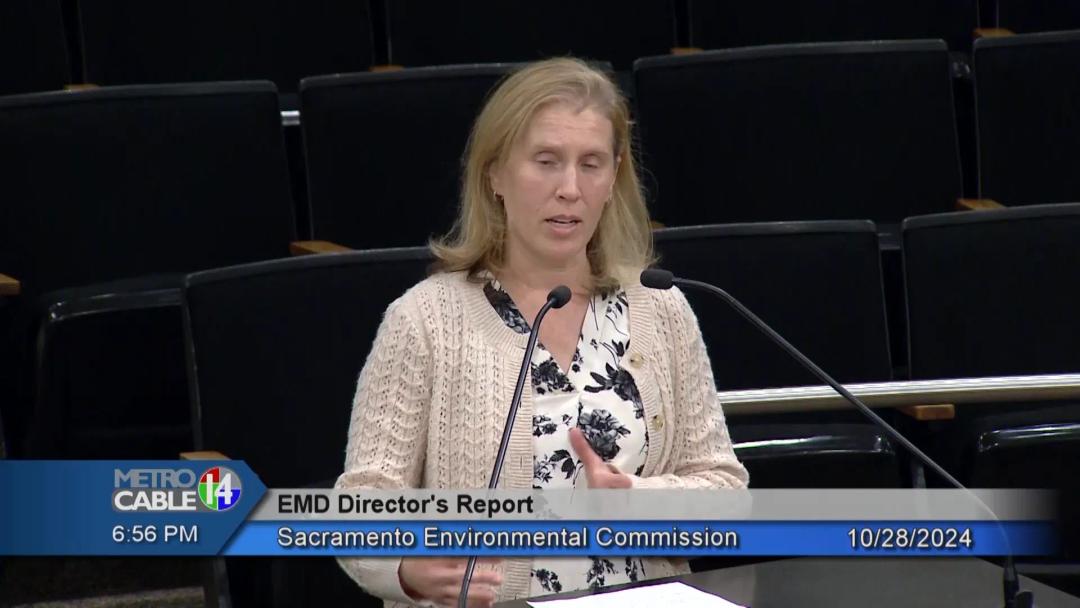
The Sacramento Environmental Commission convened on October 29, 2024, at 10:49 UTC. The meeting featured presentations of the 2024 Environmental Awards, a public health update from the County Health Officer, an update on the County Climate Action Plan, a report from the Environmental Management Department, and approval of prior meeting minutes. Commissioners also shared updates on local environmental initiatives and discussed outreach strategies. Consent Calendar - Approval of Draft Minutes – August 19, 2024 – Approved with 9 in favor (Stephanie Holstege, Christine Casey, Dr. Anthony DeRigi, Eugene Lee, Gage Martini, Jacqueline Todak, Mark White) and 1 abstention (Richard Hunn). - Approval of Draft Minutes – August 26, 2024 – Approved with 7 in favor (Stephanie Holstege, Christine Casey, Richard Hunn, Eugene Lee, Gage Martini, Mark White) and 2 abstentions (Dr. Anthony DeRigi, Jacqueline Todak). Public Comments & Testimony - No public comments were offered during the designated period. Discussion Items 2024 Environmental Awards Three awards were presented to recognize outstanding environmental contributions in Sacramento County: - Wildlife Care Association – Received the Outstanding Environmental Stewardship award. In 2023, the organization cared for nearly 7,000 injured or orphaned animals (approximately 340 species) and released 3,000–4,000 back into the wild. The association operates 365 days a year with 250 volunteers. Teresa Bilaski accepted on behalf of the organization. - Jamie Stevenson – Received the Outstanding Environmental Leadership award for planting 25 trees at age 14 with 50 volunteers in Folsom. The project took two years; she committed to three years of tree care. Jamie thanked her mentors and troop leaders. - Splash – Received the Outstanding Environmental Leadership and Education award for 23 years of stormwater and watershed education. Splash has connected nearly 105,000 students with nature, trained over 450 teachers, and in 2023 reached 18,620 students and 579 teachers. Splash also hosts a youth climate camp and maintains 40 animal ambassadors. McKenzie Weiser accepted the award. Public Health Update (Dr. Olivia Casiria, Sacramento County Public Health Officer) Dr. Casiria provided updates on current infectious disease concerns: - Avian Influenza H5N1 – Detected in raw milk and dairy herds; 11 human cases among California farm workers (all mild, mostly conjunctivitis). 304 herds affected in 14 states. No cases in Sacramento County yet. Risk of mixing with seasonal flu highlighted; farm workers encouraged to get flu vaccine. Pasteurized milk is safe. - Marburg Virus – Outbreak in Rwanda (62 cases, 15 deaths as of October 15). No cases outside Rwanda; CDC monitoring travelers. No vaccine or treatment. - Seasonal Respiratory Viruses – Flu and COVID-19 rates currently low; expected to rise after Thanksgiving. New at-home rapid test for COVID plus flu authorized. New COVID variant XEC, but population immunity high. RSV vaccine available for high-risk groups. - Rabies – Recent positive skunks near Land Park (two of four tested positive). County typically sees 15–20 positive animals per year (skunks, bats). Residents advised to avoid sick wildlife, keep pets vaccinated and leashed. - Other Updates – County public health accreditation expected by end of 2024. National shortage of IV fluids after hurricane impacts; hospitals managing without canceling surgeries. - Wastewater Surveillance – Used for COVID, flu, and potentially Marburg. Currently at the treatment plant level, not neighborhood-specific. State-funded, no county cost. Sustainability Update (John Lundgren, County Sustainability Manager) - Climate Action Plan (CAP) – Scheduled for a special Board of Supervisors hearing on November 6, 2024 (after 2 p.m.). The CAP includes a proposed requirement for carbon neutral new growth (expanding communities outside the urban services boundary, not infill). Staff recommended approval; the commission had submitted three recommendations that were incorporated. Environmental Management Department Director's Report (Janea Monasterio) - AB 1776 – Effective January 1, 2025; allows food sales in cannabis lounges. EMD will permit the food aspect only, not cannabis activities. No additional resources needed currently. - Sidewalk Vending Ordinance – Proposed county ordinance to be presented to the Board in January 2025. Would require sidewalk vendors to obtain a business license in addition to a health permit. Aimed at preventing health and safety issues (e.g., blocking right-of-way). Commissioner Monitoring Updates - Richard Hunn – Proposed forming a subcommittee in 2025 to improve outreach to county agencies. Subcommittee volunteers: Richard Hunn and Mark White. - Christine Casey – Reported that SB 707 (Responsible Textile Recovery Act) passed, establishing extended producer responsibility for textiles. - Eugene Lee – Reported on Elk Grove’s e-bike lending library: 320 requests for 20 bikes; 217 e-bike vouchers distributed (2,000 applications). - Stephanie Holstege – Noted SB 270 (plastic bag ban) passed, effective January 2026, prohibiting plastic grocery bags. - Gage Martini – Mentioned ongoing public meetings on the Urban Forest Plan and a City of Sacramento Urban Agricultural Incentive Program (applications due November 1). - Commissioner discussion about organizing a holiday luncheon in December. Key Outcomes - Approved draft minutes from August 19 and August 26, 2024. - A subcommittee will be formed in 2025 to improve outreach from the commission to county agencies. - The County Climate Action Plan will be presented to the Board of Supervisors on November 6, 2024. - Commissioners will explore scheduling a holiday luncheon in December. - The commission will continue monitoring environmental issues and agencies at future meetings.
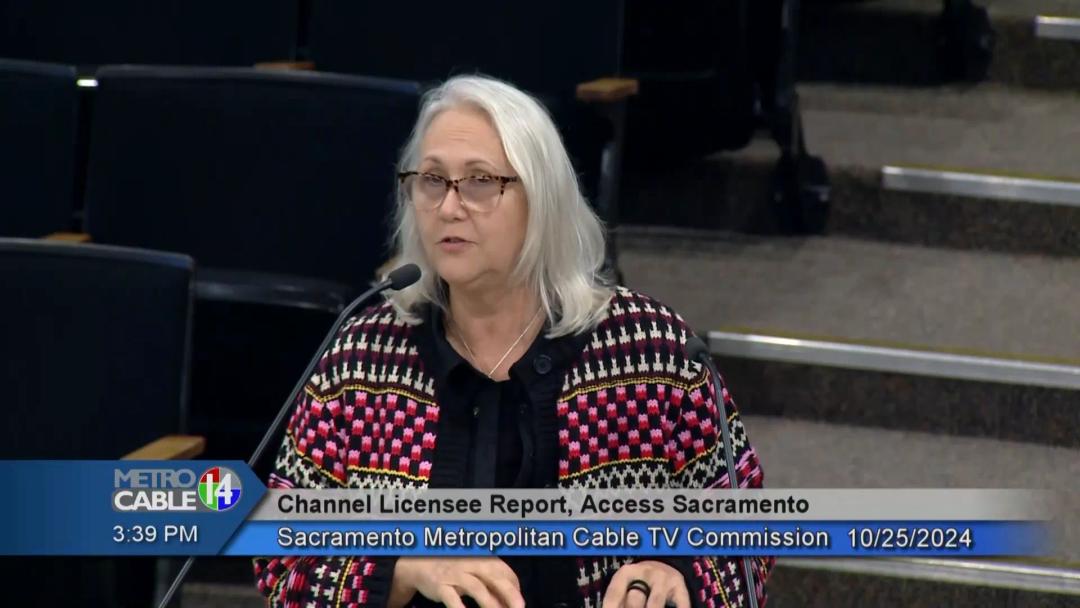
The Sacramento Metropolitan Cable Television Commission met on October 25, 2024, at 2:30 PM. The meeting included a closed session appointment of a new executive director, adoption of a cable casting fee schedule, approval of an employment agreement, and recognition of a long-time volunteer. All actions were taken during a meeting that lasted approximately 90 minutes. Consent Calendar - The consent calendar was approved unanimously with no public comments or discussion. Public Comments & Testimony - No public comments were made during the meeting. Discussion Items - Item 3 – Cable Casting Fee Schedule: Kristen Riggs, Production Director, presented a proposed fee schedule for non-member agencies. Options had been presented in March; after polling agencies, the recommendation was to charge fees based on cost recovery. Proposed fees: $350 for the first hour (control room with live captioning), $250 for AI captioning, $1,425 for flight pack with live captioning, and $80 for file delivery. Annual cost escalation tied to CPI. Estimated additional revenue of $45,000 in FY 2025-26. The fee schedule would take effect July 1, 2025. Commissioner Brown expressed concern about the Capital Corrections (CCP) agency, which indicated it would cease broadcasting if charged. The new executive director and staff would explore further discussions or possible subsidies. Other commissioners asked about pricing competitiveness and AI captioning options. The item was approved unanimously. - Item 4 – Executive Director Employment Agreement and Temporary Executive Assistant: Councilor Nelson presented the item. Following the closed session appointment of Sean Ayala as executive director, the board approved his employment agreement, added a temporary executive assistant position (to be filled by outgoing interim director Bob Davison), and updated the public salary schedule. The board voted unanimously. - Item 5 – Reports of Channel Licensees and Special Items: The board adopted a resolution honoring Ray Tatter for 32 years of volunteer work with Access Sacramento, host of the show LiveWire. A proclamation will be presented at a November 16 event. Commissioners also heard reports from Access Sacramento (Donna Jureau), KVIE (David Lowe), and an update on the SECC SIVA Awards (April 27, 2025). The reports were received and filed. - Executive Director’s Update: Bob Davison reported on operations, franchise/peg fee trends (no new data), surplus property list, community grant program (three applications received, deadline November 1), and the YouTube channel reaching 600 subscribers. He also outlined the 2025 meeting schedule: January 9 (with potential quorum challenges) and March (date TBD). Key Outcomes - Unanimous vote to adopt the FY 2025-26 cable casting fee schedule (Item 3). - Unanimous vote to approve the executive director employment agreement for Sean Ayala and create a temporary executive assistant position (Item 4). - Unanimous vote to adopt a proclamation honoring Ray Tatter (Item 5). - Reports from Access Sacramento, KVIE, and SECC were received and filed. - The appointment of Sean Ayala as executive director was announced out of closed session, pending approval of the employment agreement. - The next meeting is scheduled for January 9, 2025, subject to quorum availability.
The Sacramento County Planning Commission met on October 25, 2024, to consider three agenda items: a zoning code amendment for massage establishments, a conditional use permit for a wireless communication facility, and a public hearing on the draft environmental impact report (DEIR) for the Upper West Side Specific Plan. The commission voted to recommend approval of the massage ordinance amendment with modifications, approved the wireless facility with a reduced height of 65 feet, and directed staff to prepare the final EIR for the specific plan. Public Comments & Testimony - Item 1 – Massage Ordinance Zoning Amendment: Two massage therapists, BJ Pitts and Tony Siakotos, spoke in opposition. Pitts expressed concern that the changes would eliminate sole providers and that the $1,100 fee for a certificate of non-conforming use was punitive. Siakotos clarified that counties have full authority over massage establishment regulation and noted the fee burden on solo practitioners. - Item 3 – Upper West Side Specific Plan DEIR: The public comment period was extended to October 28, 2024. Numerous residents and organization representatives spoke, most in opposition. Key concerns included traffic safety on Garden Highway (with photos of a recent crash presented), flood risk, loss of farmland and wildlife habitat, inconsistency with the Urban Services Boundary, and cumulative impacts from multiple large projects in the Natomas Basin. Supporters, including some property owners and community members, cited the housing crisis, economic benefits, and the project's inclusion of parks, schools, and an agricultural buffer. Discussion Items - Item 1 – Massage Ordinance Zoning Amendment (PLNP 2024-00123): Staff presented a proposal to streamline review of massage establishments by removing use permit requirements and moving regulations to county code. The amendment would restrict massage to incidental uses (less than 25% of floor area) in BP and CO zones, remove industrial zones, and establish discontinuation triggers. Public comments raised concerns about the $1,100 fee for certificates of non-conforming use and the impact on sole providers. Commissioners discussed ownership transfer provisions and the fee. The commission added language allowing ownership transfer if a valid certificate of non-conforming use is on file, and recommended that the Board of Supervisors waive the fee for existing businesses. - Item 2 – Wireless Communication Facility (PLNP 2023-00255): The applicant requested an 85-foot tall monopole (mono eucalyptus stealth design) at 7991 Sunnyside Way in the Vineyard community to fill a coverage gap for AT&T. The proposal required deviations from height (55-foot limit) and setback standards. Staff noted the site had no alternative sites available after 16 candidate locations were rejected. The commission debated the height, with concerns about visual intrusion and compliance with separation standards. The applicant agreed to a reduced height of 65 feet, with corresponding adjustments to deviation findings. The motion passed 5-0. - Item 3 – Upper West Side Specific Plan DEIR (PLNP 2018-00284): Staff presented an overview of the 2,066-acre project proposing 9,356 residential units, 3 million square feet of commercial, schools, and an agricultural buffer. The DEIR identified significant unavoidable impacts in several resource areas. The purpose of the hearing was to receive oral comments on the DEIR; the comment period was extended to October 28. Commissioners noted the need for responses from agencies like the City of Sacramento, Reclamation District 1000, SACOG, and Natomas Unified School District. The commission voted to direct staff to prepare the final EIR. Key Outcomes - Item 1: Motion passed 5-0 to recommend approval of the zoning code amendment to the Board of Supervisors, including: (1) adding language to allow ownership transfer of a certificate of non-conforming use if a valid certificate is on file, and (2) recommending a fee waiver for existing businesses applying for the certificate. - Item 2: Motion passed 5-0 to approve the conditional use permit, special development permit, and design review, subject to findings and conditions, with the tower height reduced from 85 feet to 65 feet (top of steel structure), and corresponding modifications to deviation standards. - Item 3: Motion passed 5-0 to accept staff's recommendation to prepare the final environmental impact report, acknowledging the public comment period closing on October 28, 2024.
The Sacramento County Board of Supervisors met on October 25, 2024, to address a wide-ranging agenda including election integrity, land use, homeless services, and the Black Child Legacy Campaign. The meeting began with a statement from the Chair on election laws and public comments, followed by approval of consent items, a public hearing on a benefit category change, and multiple presentations and votes on housing and homelessness initiatives. The board also recognized October as Breast Cancer Awareness Month and honored community contributions. Consent Calendar - Items 2 through 50 were approved as part of the consent calendar, including an ordinance amending Sacramento County Code 4.54 relating to intoxicating cannabinoids from hemp (item 9) and an ordinance related to management leave (item 11). - Item 24 (American River Parkway Cal Expo Area Maintenance Road and Fire Break Realignment Project) was adopted after discussion. Supervisor Cerna expressed concern over last-minute correspondence from Save the American River Association but determined staff had met legal requirements. The item passed unanimously. - Item 36 (retroactive authority for new open enrollment contract pool for foster youth intensive placement services) was approved. Supervisor Hill noted the county's goal to transition from operating welcome homes to contracting with private providers. The item passed unanimously. Public Comments & Testimony - Early in the meeting, public comments were heard on non-agenda items regarding election integrity. Lily DeVall (League of Women Voters) supported mail-in voting and early voting, citing extremely rare voter fraud. Claudia Bonsignor and Paula Lee expressed confidence in the county's election procedures. Kenneth Calvin Jr. and Lynn Reeves, representing New California State, demanded hand-counted one-day elections with ID requirements, alleging widespread fraud and urging the county to cease compliance with AB 969. - On item 24, Betsy Wyland (Save the American River Association) opposed approval of the parkway plan amendment on consent, citing lack of early notification. Diana Pogetto (American River Parkway Foundation) and Scott Abbott (Sacramento Running Association) supported the project, noting its benefits for fire prevention and youth cross-country. Another speaker, Kathleen Mead, expressed concerns about wildlife impacts and lack of communication. - On item 57, multiple speakers supported the amended unlawful camping ordinance. Liz Williams (Metro Chamber) and Lisa Sanchez (River City Waterway Alliance) voiced support, with Sanchez requesting creeks and waterways be included under the 48-hour notice. District Attorney Thien Ho and Undersheriff Mike Siegler also supported the ordinance, emphasizing it aligns with the Grants Pass decision and provides consistency across jurisdictions. - On item 62, numerous community members and organization representatives spoke in support of the Black Child Legacy Campaign, sharing personal stories of impact and gratitude for the county's investment. Discussion Items - The Chair read a lengthy statement addressing a letter from the New California State group, affirming the county's compliance with state election laws, including AB 969, and rejecting calls for hand-counted elections. The statement emphasized the county's commitment to fair, free, and transparent elections in accordance with the California Constitution and Elections Code. - Item 55: George Hills Company presented the 2023-2024 annual report on liability claims. Discussion included a spike in claims in fiscal year 2022-23 due to weather and childhood sexual abuse lawsuits, and the impact of mining case settlements. Supervisor Cerna requested breakdowns of sheriff department claims by type (e.g., auto, excessive force). The report was received. - Item 56: Mary Liz Paulson (Housing Choice Voucher Program) provided a detailed update on the program, including the transition to a single countywide housing authority, the voucher issuance process, landlord participation, and the shortfall in funding. Supervisors raised concerns about inspection delays, rate reasonableness, and the need for better collaboration between SHRA and county departments. Chairman Kennedy called for a review of the governance structure with SHRA. The item was discussed at length but no formal action was taken beyond receiving the presentation. - Item 57: The board introduced an ordinance amending Chapter 9.120 relating to unlawful camping on public property. Supervisors Hume and Desmond explained the amendment simplifies the existing critical infrastructure ordinance to align with the Grants Pass decision and create consistency with other jurisdictions. The board heard public testimony and then voted unanimously to approve the introduction. - Item 60: Emily Halkin (Department of Homeless Services and Housing) presented a request for funding to complete the Joshua's House Hospice Program, a 15-bed end-of-life care facility for homeless individuals located at 3630 Larchwood Drive. The project faced a capital gap of about $737,000 after Anthem Blue Cross contributed $400,000. The board approved allocating $1.9 million from American River Parkway funds to cover the gap. Speakers included Marlene Fitzpatrick (project founder), Craig Dreissig (YOLO CARES), and multiple supervisors who praised the project as a model for the state. The vote was unanimous. - Item 61: The board approved a $28.9 million construction contract with Thompson Builders Corporation for the Watt Avenue Service Center and Safe Stay project. The project will include 225 safe stay cabins, 50 safe parking spaces, and 75 emergency weather respite beds on a 13-acre site. Funding comes from $32.7 million in ARPA funds and $1.9 million from American River Parkway funds. The board discussed the economic impact and community benefits. The vote was unanimous. - Item 62: The Black Child Legacy Campaign (BCLC) presented its fiscal year 2022-23 annual report. The report highlighted progress in reducing African American child deaths in four key areas: perinatal conditions, infant sleep-related deaths, child abuse and neglect homicides, and third-party homicides. County departments including DCFAS, Probation, and First Five Sacramento shared data. Key statistics: 33% reduction in overall African American child deaths since baseline, 63% reduction in child abuse and neglect homicides, but a 38% increase in third-party homicides. The board received the report and commended the collaborative efforts. Numerous community partners spoke in support. - Item 63: The board discussed the Grow Florin community partnership and a proposed good neighbor policy for homeless solutions. The project, funded by behavioral health bridge housing, will provide 72 transitional housing beds for individuals aged 55 and older at Florin and Power Inn. Supervisor Cerna requested that the good neighbor policy be formally adopted by the board at a future meeting to ensure accountability. The board expressed support for the project and the policy development. Key Outcomes - Consent Calendar: Approved unanimously, including items 24 and 36. - Item 54 (Terracina at Wild Hawk benefit category change): Public hearing held; one protest ballot received but 100% in favor; the board approved the change unanimously. - Item 57 (Unlawful camping ordinance): Introduced and approved unanimously; will be brought back for adoption on November 5. - Item 60 (Joshua's House): Approved $1.9 million allocation from American River Parkway funds unanimously. - Item 61 (Watt Avenue Safe Stay): Approved $28.9 million construction contract and funding allocation unanimously. - Item 62 (Black Child Legacy Campaign): Report received and praised; no formal vote required. - Item 64 (Nominations): Various appointments and continuations approved unanimously; specific nominations for First Five Commission, Behavioral Health Youth Advisory Board, and Commission on the Status of Women and Girls were approved. - Closed Session: The board recessed to closed session at 2:30 PM; no action reported.
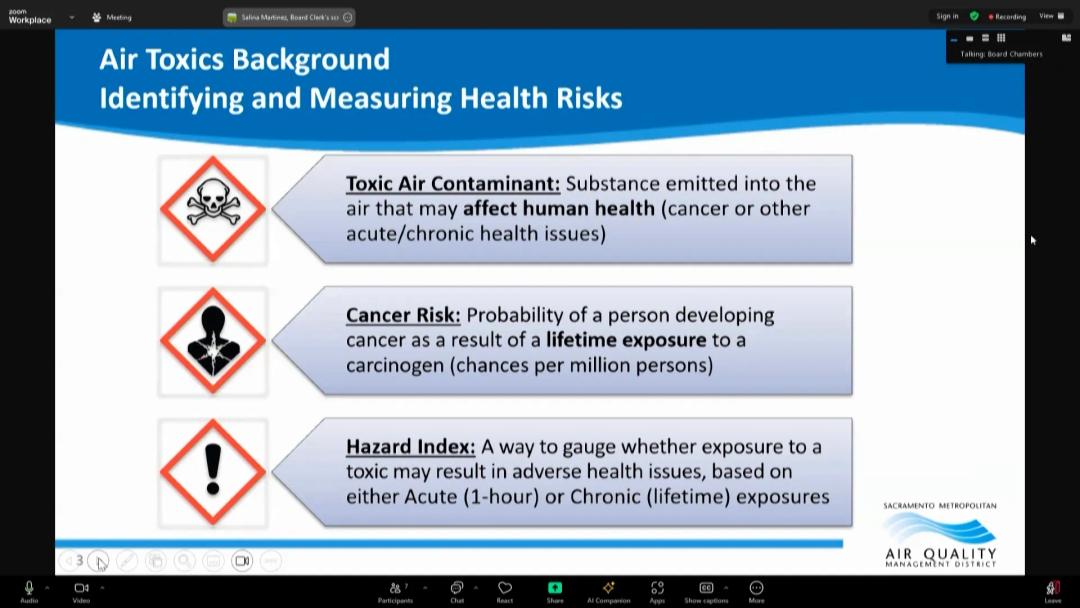
The Sacramento Metropolitan Air Quality Management District Board of Directors met on the date provided as October 25, 2024 (though the opening of the transcript states "October 24th, 2024"). The meeting covered recognition of departing board members, adoption of a consent calendar, a public hearing on contingency measures for ozone standards, a report on the Air Toxics Hotspots Program, and an informational presentation on greenfield development and its relationship to air quality and climate goals. The board recognized four departing members for their service. Consent Calendar - The consent calendar (items 2–7) was adopted by motion and vote. Prior to adoption, a public comment was received from Shiloh Costello, Manager of Sustainable Communities and Diversity, Equity, Inclusion, and Belonging at SMUD. Ms. Costello expressed strong support for the partnership between SMUD and AQMD, highlighting projects like the Del Paso Heights Mobility Hub and future projects in South Sacramento, and emphasized SMUD's commitment to equitable clean energy transitions. Public Comments & Testimony - Shiloh Costello (SMUD) spoke in support of the consent calendar items, praising the partnership and clean mobility investments. (Recorded before consent calendar vote.) - Evan Edgar, engineer for the California Compost Coalition, commented during the public hearing on Rule 489. He argued for an exemption for agricultural composting facilities not holding a solid waste permit, noting that such facilities provide carbon farming co-benefits and are subject to a lesser regulatory tier. He urged the board to expand the exemption. Discussion Items 1. Contingency Measures for Ozone Standards and Rule Adoption (Item 8) - Staff presented proposed Rule 489 (green waste composting operations) and Rule 490 (liquefied petroleum gas transfer and dispensing) as contingency measures for the 2008 and 2015 ozone standards. The rules would only take effect if the region fails to attain the standards. - Director Hume asked detailed questions about the cost-effectiveness calculations and the origin of the rules. Staff clarified the rules are district-generated and required by EPA to avoid sanctions. - For Rule 489, staff noted only one affected facility (Lopez Ag Products), which had no objections and was interested in best practices even before the rule takes effect. Estimated cost: $41,900/year; VOC reduction: 34 tons/year at $0.79/pound. - For Rule 490, estimated VOC reduction of 73 tons/year at $5/pound. The Western Propane Gas Association provided comments, but no changes were made. - Staff responded to public comment from Evan Edgar by confirming that the rule only applies to facilities with a solid waste permit, thus agricultural composting without such permits is already exempt. Staff agreed to follow up with the speaker. - The board adopted both rules (motion and second; voice vote with no opposition noted). 2. Air Toxics Hotspots Program Report (Item 9) - Matt Baldwin presented the 2024 Air Toxics Hotspots Report (AB 2588). Key points: The total cancer risk for Sacramento County is estimated at 395 in a million (down from 706 in 2012), with diesel particulate matter as the primary contributor. Of facilities assessed, five were intermediate risk and five low risk; 360 gas stations analyzed (41% intermediate, 59% low risk). No dry cleaners remain due to phase-out of perchloroethylene. The report was received and filed without board questions. 3. Greenfield Development and Air Quality/Climate Goals (Item 10) - Dov Caden (SACOG) and Paul Philly (AQMD) presented on how greenfield development impacts vehicle miles traveled (VMT) and greenhouse gas emissions. They discussed the tension between SB 375 targets and the transition to zero-emission vehicles, noting that even with full electrification, VMT reductions remain important for air quality and infrastructure costs. - Director Cerna, who requested the item, raised the complexity of using VMT arguments when EV market share grows. James Corless (SACOG ED) noted that SB 375 may need updating and that a statewide working group is forming. - Paul Philly provided case studies from the region showing that VMT per capita is higher during early buildout of greenfield communities and that location, phasing, and blueprint principles are critical. Examples included Laguna West, Folsom Ranch, and a community that shifted from active-mode infrastructure to zero-NOx appliances in its mitigation plan to maintain air quality gains. - Board members discussed the need for triggers in development agreements, the challenge of coordinating schools and transit, and the importance of complete communities. No formal action was taken; the presentation was informational. Key Outcomes - Consent calendar: Adopted unanimously. - Rule 489 (Green Waste Composting Operations): Adopted as a contingency measure, with revisions based on EPA comments (non-substantive). - Rule 490 (Liquefied Petroleum Gas Transfer and Dispensing): Adopted as a contingency measure. - Air Toxics Hotspots Program Report: Received and filed. - Greenfield Development Presentation: Informational; SACOG will bring similar discussion to its board in November. - Staff directed to forward adopted rules to CARB for submittal to US EPA. Note: The meeting date is recorded as October 25, 2024 in the user-provided context, but the transcript begins with "October 24th, 2024." This discrepancy is noted.
The Sacramento Area Flood Control Agency (SAFCA) Board of Directors met on October 25, 2024. The board received a detailed presentation on the history and current state of Sacramento's flood protection, addressed several consent items, and discussed agency updates including project milestones and a proposal to cancel the December board meeting. Consent Calendar - Items 2 through 10 were approved unanimously without discussion or opposition. No public comments were received. Public Comments & Testimony - No members of the public signed up to speak or were present during the meeting. Discussion Items - History of Sacramento's Flood Protection (Information Item): Executive Director Rick Johnson presented an overview of the region's flood protection levels. He explained that the original system built in the 1950s was designed to handle a Standard Project Flood equivalent to roughly a 500-year event, but subsequent studies (post-1986 flood, post-Katrina) revealed that actual protection had dropped to as low as 30–60 years. State law requires 200-year protection by 2025. Johnson outlined a multi-decade plan to restore 500-year protection, including raising Folsom Dam, increasing conveyance capacity, and improving bypass systems. Board members commented and asked questions: - Supervisor Cerna asked about the feasibility of deepening vs. widening bypasses; Johnson noted deepening is more cost-prohibitive. - Director Frost shared personal recollections of the 1986 flood and emphasized the ongoing risk. - Director Abdes thanked staff and noted the importance of the agency's mission, recalling his family's experience with flooding. - Chairman Kennedy clarified that the original "500-year" designation was based on historical standards and not equivalent to today's metrics. - Closed Session: The board recessed into closed session to discuss three items: property negotiations under Government Code §54956.8 for two parcels (Yolo and Sutter County) and a public employee performance evaluation for the executive director. Upon reconvening, the board reported no action taken and no reportable outcomes. - Executive Director's Report: Johnson provided updates on the American River Common Features 2016 Supplemental EIS/EIR, noting the earliest completion is 2026; the federal government's continuing resolution funding through December 20, 2024; and construction progress photos of the Folsom Dam raise and the Sacramento River fish passage project. He also announced that a resolution will be brought in November to recommend canceling the December board meeting due to the holidays. Key Outcomes - Approved consent items 2–10 unanimously. - No reportable action from closed session. - The board will consider a resolution in November to cancel the December meeting. - Next meeting scheduled for November 21, 2024.
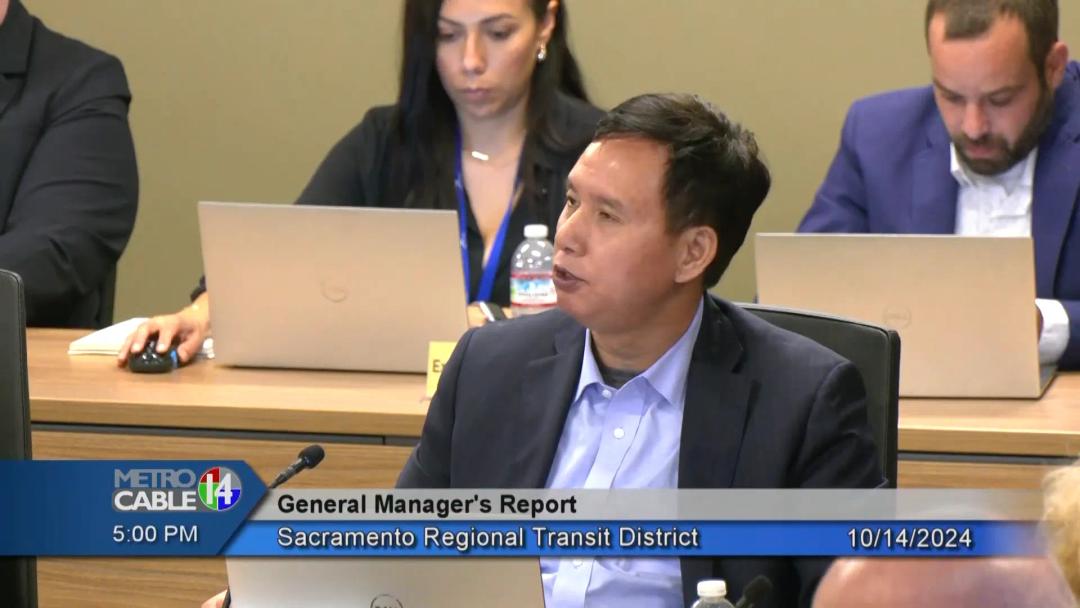
The Sacramento Regional Transit Board of Directors held its meeting on October 16, 2024. Key topics included a major update on transitioning the Smart Ride microtransit service to an eligibility-based pilot serving transportation-disadvantaged populations, the general manager's report on various agency activities, and public comments on multiple issues. Consent Calendar - Items 2.1 through 2.6 were approved unanimously. A correction was made to Item 2.5 regarding the effective date of January 1, 2025. Public Comments & Testimony - Jeffrey Tartaguia expressed support for the new Smart Ride proposal but urged outreach to the blind community and asked about continued service for the Dos Rios area until light rail arrives. He also requested weekend service. - Michelle Baker, a regular Smart Ride user with autism, expressed sadness about the discontinuation of the current service and hoped the new service would be affordable and reliable. She shared her reliance on Smart Ride for errands and connections to light rail. - Barbara Stanton, representing Ridership for the Masses, congratulated staff on revising the plan but sought clarification on the pre-registration requirement. She emphasized the need for extensive outreach about the new eligibility process. - Michael Bevins criticized the poor planning that led to the financial unsustainability of Smart Ride. While he found the new voucher-based idea acceptable for half of current riders, he questioned how SacRT plans to fill the resulting gaps in bus deserts and suggested expanding existing services like SacRT Go and paratransit. - Dan Ellison, speaking for Sacramento Transit Advocates and Riders, appreciated the revised direction and supported the focus on vulnerable riders. He recommended that student eligibility be based on their parent/guardian's low-income status and suggested zones should be revisited later. - Helen O'Connell was happy with the new plan but raised concerns about repurposing current Smart Ride drivers and the need to take care of employees. - Miguel Pina criticized the time spent on the initial Uber proposal and expressed skepticism about VIA, citing long wait times in other cities. He argued SacRT should replace its own fleet rather than contract out. Discussion Items - Smart Ride Transition (Item 4.1): Anthony Adams, Director of Planning, presented the proposal to transition the Smart Ride microtransit service (operated since 2018, provided over 1.5 million trips, cost per rider $47) to a new Transportation Disadvantaged Shared Mobility Pilot. The new service will be operated by VIA (a provider used in West Sacramento for five years with a successful track record), focusing on low-income individuals, persons with disabilities, seniors, and students. It will be eligibility-based (self-verification through existing programs like CalFresh or SSI). All vehicles will be wheelchair accessible and allow service animals. The budget is $1.5 million/year ($800k from STA, $700k from a state grant), serving about 350 rides daily at an average cost of $16/rider and a farebox ratio of 16%. Service hours remain Monday-Friday 7am-7pm. The 18-month pilot will be reviewed every six months. Staff noted that this plan was developed in response to feedback on a previous Uber voucher proposal, which raised equity concerns and issues with service animals. Board members asked about service hour reductions, ridership by zone, outreach plans, and procurement flexibility. Directors expressed strong support for the revised approach, noting it addresses equity and financial sustainability. - General Manager's Report (Item 8.1): General Manager Henry Lee reported on several activities: - All current Smart Ride drivers will be transitioned to drive full-size buses. - SacRT staff attended the APTA annual conference, highlighting best practices in hiring and safety. - A customer safety survey is underway; quarterly safety committee meetings are held. - Over 10,000 riders used SacRT for the Aftershock concert; the Golden Sky Music Festival is expected this week. - The new S700 low-floor trains are operational on Gold and Green Lines; Blue Line station construction is underway. - Director Helm led a delegation to China for a sister cities program. - A new battery factory opened in Sacramento; SacRT is transitioning to a zero-emission fleet. - A celebration for a $77 million federal grant to build a hydrogen maintenance facility at McClellan Park is scheduled for October 30. Key Outcomes - The board unanimously approved the consent calendar. - The board received the information item on the Smart Ride transition as informational; no vote was taken, but board members expressed strong support for the new direction. Staff will proceed with public outreach, contract award, and registration beginning in November, with the pilot launching January 1, 2025. - The board recessed into closed session for labor negotiations (Item 13.1) with the employee organization ATU 256 SacRT Go. Note: Per provided instructions, the meeting date is October 16, 2024; the transcript indicates the meeting originally occurred on October 11, 2024.
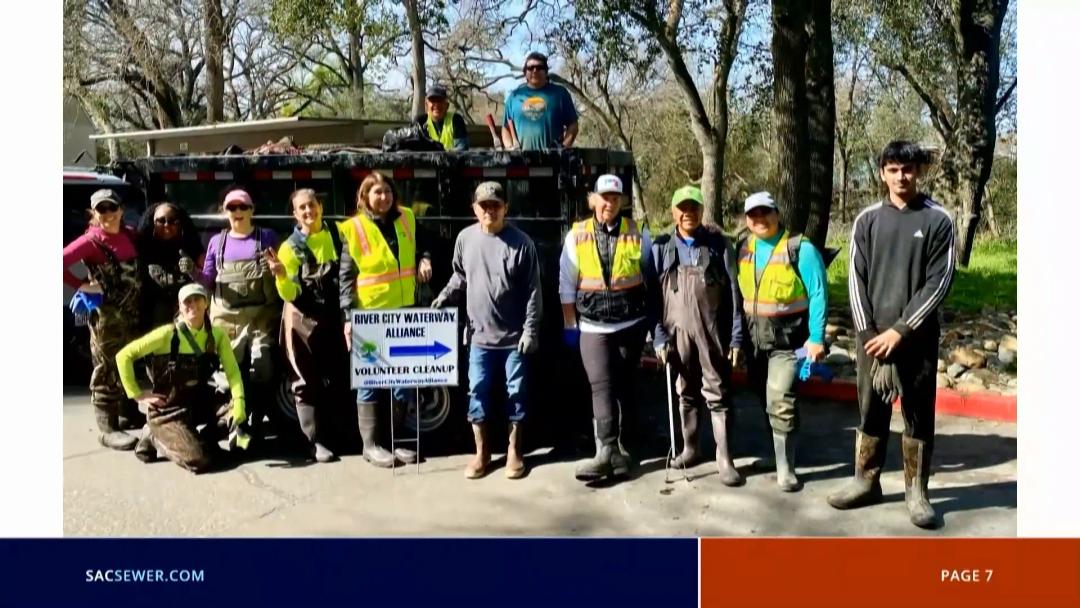
The Sacramento Area Sewer District (SASD) and Northern California Sanitation Agency's financing authority held a regular meeting on October 16, 2024, at 9:35 a.m. The meeting included approval of consent items, reports on the district's separation from the county, updates on community grant programs, and progress on historical properties and educational initiatives. Consent Calendar - Items 1 through 5 (not specified in detail) were approved unanimously via voice vote after a motion by Director Viegas and a second by Director Delamantes. Public Comments & Testimony - No public speakers were present for comments on non-agenda items. Discussion Items - Miscellaneous Director and District Engineer Matters: District Engineer Dobson announced the cancellation of the October 23 board meeting, noted that the next meeting is November 13, and reported on awards and conferences. He introduced new assistant deputy Jack Johnson and recognized staff achievements including a Project Excellence Award from the Water Environment Federation for the Echo Water Project. Two staff members were introduced: Jo Phil Borja (legislative and regulatory affairs manager) and Tim Muson (acting chief scientist), who spoke about the district's scientific research and representation in the Delta. - One District Quarterly Report (October 2024): Matthew Doyle, Director of Internal Services, presented the final quarterly report before the district's separation from Sacramento County, effective December 15, 2024. Key milestones included: completion of employee onboarding for approximately 740 staff (signing offer letters, resignation letters, I-9 documents, and live scans); selection of U.S. Bank for banking services; rollout of the new Tyler ERP system (employee access module); and health fairs held at three locations. The district's pension protection act (AB 2301) was signed by the governor on July 2, 2024. The first payroll under the new system is scheduled for January 3, 2025. Directors commended staff for the smooth transition and innovative employee engagement (e.g., passport-style checklists, photo backdrops). - Confluence Regional Partnership Program Annual Report (FY 2023-24): Environmental Sustainability Coordinator Carolyn Balaz presented the report. The program provides discretionary grants from non-rate funds. In FY 2023-24, over $4 million in grants were awarded across six categories: Sewer Lifeline Rate Assistance ($2 million+), American River Parkway ($540,000+), Watershed Management ($240,000), Septic Conversion ($7,100), Economic Development ($1 million+), and Public Education ($240,000+). Highlights included a $250,000 grant to Sacramento County Regional Parks for a front-end loader to clean up homeless encampments, and funding for the Sacramento Area Creeks Council's dump trailer (used in 60 cleanups, removing 88,000 pounds of trash). Multi-year projects include a 15-year, $1.5 million grant to the Museum of Science and Curiosity (MOSAC) and continued support for the North A Street restroom facility for homeless individuals. Directors noted the program's community impact and thanked staff. - Sims Ranch and Nicholas Dairy Historical Properties and Education Program Updates: Senior Civil Engineer Vimini Badiai and Public Information Manager Paige Bettigrew presented updates. The district has two historical properties at the Echo Water Resource Recovery Facility: Sims Ranch and Nicholas Dairy. Since 2016, a $2.5 million non-rate reserve fund has been used for stabilization and improvements; actual expenditures total $2.28 million, leaving $216,000. Improvements included structural repairs, lead abatement, septic system, fire suppression, and period-appropriate furnishings. The education program, Project AWE (Agriculture, Water, Energy, Environment), launched in fall 2022 in partnership with Sacramento Splash, targets 2nd–5th grade students. In the 2023-24 school year, nearly 7,000 students from 43 schools and five districts visited, with 53% from Title I schools. The program is fully booked for the 2024-25 school year, expecting over 7,300 students. Directors expressed strong support for the program, noting its role in environmental stewardship and community engagement, and requested expanding outreach to underserved areas like West Sacramento. Key Outcomes - Consent calendar items 1-5 approved unanimously. - The quarterly report (item 8), Confluence annual report (item 9), and historical properties/education update (item 10) were received and filed without vote. - No formal votes were taken on discussion items. - The meeting adjourned at 10:48 a.m.