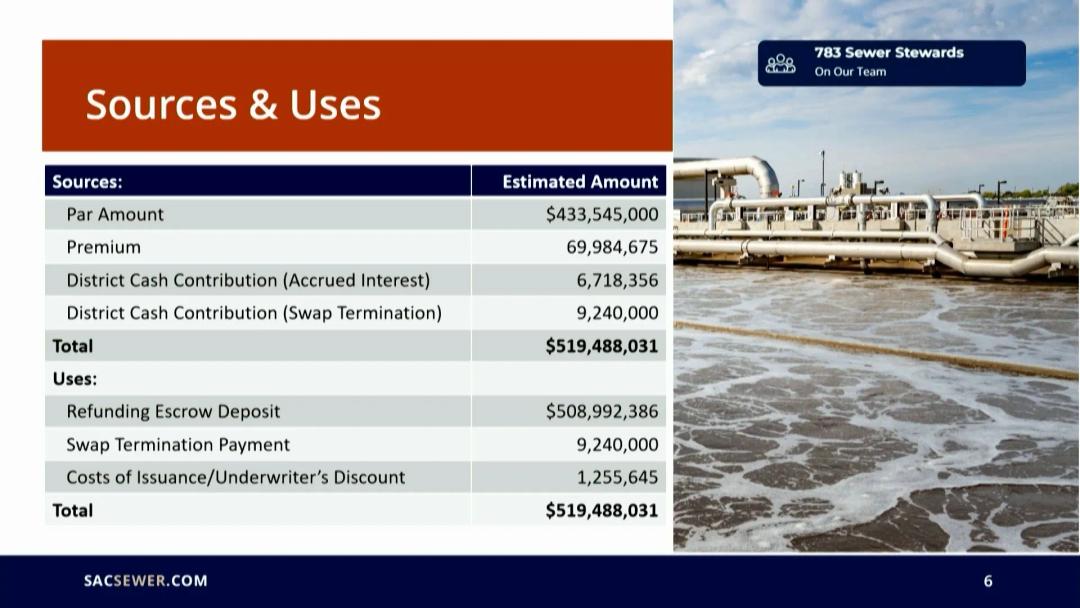
Note: The meeting transcript indicates the actual date was Wednesday, May 22, 2024, but the instruction specifies the meeting date as 2024-05-24 15:08:06+00:00. This summary uses the provided date for consistency, acknowledging a discrepancy. The joint meeting of the Sacramento Area Sewer District (SASD) and the Northern California Sanitation Agencies Finance Authority (NCSAF) was called to order with a quorum present. The board considered three joint agenda items and then proceeded with the SASD regular agenda, including a consent calendar, a strategic planning contract, and an increase to the sewer lifeline rate assistance program discount. Consent Calendar - Items 4 through 8 on the SASD agenda were approved unanimously without discussion or public comment. Specific consent items were not detailed in the transcript. Discussion Items - Item 1: Adoption of Fiscal Year 2024-25 Final Budgets - Christoph Dobson, District Engineer, presented the proposed operating budget of $454.4 million and capital budget of $564.6 million. He addressed prior questions from Director Kaplan on cybersecurity and pension costs, noting cybersecurity costs have increased but remain a small portion of the overall IT budget, and pension costs are tied directly to salary increases with a stable percentage over the last three years. No public comment was received. The budget was approved unanimously by both the SASD board and the Finance Authority. - Item 2: Authorize Issuance of Refunding Bonds and Termination of Swaps - Teppa Banda, Director of Finance, presented a plan to optimize the district's debt portfolio by refunding the 2014A bonds and multiple variable-rate bond series (2012A, 2013B, 2013C, 2013D) and terminating two swap agreements with BNP Paribas. The estimated net present value savings are $68.7 million, with annual debt service savings of approximately $5 million (from $132 million to $127 million). The refunding would eliminate variable-rate interest rate risk and counterparty risk, simplify debt management, and create a levelized debt service structure. Director Sander asked about the maximum interest rate assumptions and how the current rate compares historically; staff explained the rate is favorable in the current environment. The board unanimously approved the issuance of up to $433 million in new tax-exempt bonds (subject to market conditions) and authorized termination payments up to $15 million for the swaps. - Item 11: Contract with Arcadis U.S. Inc. for Strategic Plan Consulting Services - Christoph Dobson presented the need for a unified strategic plan for the merged district (SASD and Regional SAN). The contract with Arcadis would also include organizational design analysis. He requested volunteer board members to participate in interviews with the consultants. Directors Kaplan, Robles, and one other (the chair) volunteered. The contract was approved unanimously. - Item 12: Increase Sewer Lifeline Rate Assistance Program (SILRAP) Discount - Mike Hewitt, Director of Policy and Planning, presented a proposal to increase the annual SILRAP discount from $150 to $165 per ESD for the treatment/resource recovery service area and from $25 to $30 per ESD for the collection system, effective July 1, 2024, in conjunction with upcoming rate increases. The estimated cost increase is from $2.1 million to $2.4 million per year. Outreach efforts, including multilingual materials (English, Spanish, Russian) and a data-sharing agreement with SMUD to identify eligible customers, were highlighted. Directors discussed income verification audits, language accessibility, technological barriers for seniors, and outreach to mobile home parks and senior living facilities. Director Cerna suggested partnering with the Area Agency for Aging; Director Viegas asked about using other utility low-income program data. The board expressed strong support and approved the increase unanimously. Key Outcomes - The Fiscal Year 2024-25 operating and capital budgets were adopted unanimously by both SASD and the Finance Authority. - Authorization was granted to issue refunding bonds and terminate swap agreements, with estimated net savings of $68.7 million in present value and $5 million annually. - A contract with Arcadis U.S. Inc. for strategic planning and organizational design services was approved. - The sewer lifeline rate assistance program discount was increased by approximately $15 per year for treatment and $5 per year for collection system customers, effective July 1, 2024. - All votes were unanimous on the record, with no public comments received on any agenda item. - The meeting adjourned after the regular agenda; no closed session action was reported.
Public Meetings - Sacramento County, California
Public Meetings - Sacramento County, CaliforniaNote: The transcript indicates the meeting was held on May 23, 2024, but the provided metadata specifies the date as May 24, 2024. This summary uses the metadata date. The board convened to approve the fiscal year 2024–2025 budget and fee schedule, celebrate the 25th anniversary of the Carl Moyer Program, hear updates on state and federal grant programs, and honor the late Charlene McGee. All items on the agenda were approved or received without opposition. Consent Calendar - Items 1 through 7 were approved unanimously via roll-call vote (motion by Director Desmond, second by Director Tao). No items were pulled for separate discussion. Public Hearing: Fiscal Year 2024–2025 Proposed Budget and Fee Schedule - Controller Patty Keppner presented a summary of the proposed budget. The general fund projects $26.9 million in revenue and $30.0 million in expenditures, with a $3.1 million use of fund balance largely due to an expanding AB 617 program. The building fund ($5.6 million fund balance) is break-even, and the special revenue fund (incentives) will use $5.5 million of fund balance, leaving $86.1 million. Total fund balance across all funds is projected at $116 million at year-end. - The fee schedule includes a 4.17% CPI adjustment effective July 1, 2024. - Chair Kennedy praised the budget as “amazing” given unfunded mandates. - No public comments were received. The board voted unanimously to adopt the resolution approving the budget and fee schedule (motion by Director Frost, second by Director Desmond). Discussion Item: Carl Moyer Program – 25th Anniversary & Current Solicitation - Mike Neuenberg, program supervisor, provided a historical overview: Dr. Carl Moyer’s pilot program (1996) led to a statewide incentive program starting in 1999 with $25 million. Over 25 years, more than $1 billion has been invested statewide, with $117 million going to the Sacramento region. Over 2,800 pieces of equipment have been replaced, including agricultural, construction, and transportation equipment. - Oliverio Barragán, air quality engineer, outlined the current $10 million solicitation for Sacramento County. Priority is given to disadvantaged communities. Eligible projects include on-road vehicles (40–70% funding), off-road equipment (up to 80% for zero-emission), and infrastructure (up to 60%). Applications are being accepted, with on-road and infrastructure categories opening in the next two to three weeks. - Barragán announced the new Zero Emission Commercial Lawn and Garden Program, launched April 15, 2024. $1.2 million is allocated. Within the first week, $300,000 was allocated; over 80 vouchers have been issued, retiring 80 pieces of polluting equipment. The program is first-come, first-served, with a $50,000 per applicant limit. - Barragán paid tribute to the late Charlene McGee, who served the district for 34 years and led the earlier “Mow Down” program (14,000 electric lawnmowers, 170 tons of emissions reduced). The board voted to rename the Commercial Lawn and Garden Program as the “Charlene McGee Memorial Lawn and Garden Program.” - Board members expressed appreciation for the history and the tribute. Director Frost asked about site capacity evaluations (clarified as utility infrastructure requirements for charging stations). Director Hume asked about coverage of battery and charger costs for the lawn program (covered under voucher). Director Daniels praised the intern-to-engineer success story. Director Aquino asked whether Carl Moyer funds can count toward the Advanced Clean Fleets mandate (clarified: no, because funds are for surplus emissions reductions, not compliance). - Public comment: Richard Falcon (United Latinos) expressed strong support for the district’s partnership and outreach, noting an upcoming information session on May 30, 2024, and highlighting the importance of helping small businesses access incentives. - The item was received and filed. Air Pollution Control Officer (APCO) Report - Albert Ayala reported five items: 1. AB 617: Formal request submitted to transition the South Sacramento Florin community from ambient monitoring to an emission reduction plan (ERP) community. ARB hearing scheduled for July 25, 2024. Board members will be asked to testify. 2. A bus tour of stationary sources in the South Sacramento community is planned for May 24 (the same day) to engage residents and connect them with incentive programs. 3. Climate Pollution Reduction Grant (CPRG): Three projects totaling $93 million have been submitted to EPA. Decision expected in July. Projects include Green Means Go, mobility hubs, and Yolo County carbon farming. 4. Anniversaries: Spare the Air (30 years) and Carl Moyer (25 years) will be celebrated with larger events. 5. Power Hub: A $44 million state grant awarded to a public-private partnership (including Caterpillar, SMUD, and others) for a solar microgrid with battery storage to electrify off-road construction equipment. The project was conceived by the air district and Caterpillar. - Director Daniels asked about energy generation: primarily solar with battery storage, with SMUD providing additional capacity; hydrogen may be considered in future phases. Board Ideas, Comments, and AB 1234 Reports - No board member comments were made. Public Comment (Items Not on the Agenda) - Richard Falcon (Teatro Nahual, executive/artistic director) urged the board to utilize artists and theater for creative messaging in environmental outreach. Key Outcomes - Consent Calendar (Items 1–7): Approved unanimously. - Item 8 (Budget and Fee Schedule): Resolution adopted unanimously. Fiscal year 2024–2025 budget effective July 1, 2024; fee schedule with 4.17% CPI increase also effective July 1, 2024. - Item 9 (Carl Moyer Program Presentation): Received and filed. The Commercial Lawn and Garden Program was renamed the “Charlene McGee Memorial Lawn and Garden Program.” - APCO Report: Received and filed. Board members will be asked to support the AB 617 ERP transition at the July 25 ARB hearing. - Next Meeting: The June board meeting was cancelled; next meeting is scheduled for July.
The Sacramento County Equal Employment Opportunity Advisory Committee (EEOAC) met on May 22, 2024, at 3:30 PM. The primary agenda item was a presentation and extensive dialogue with Chief Deputy District Attorney Phil Wood and Assistant Chief Deputy District Attorney Rochelle Beardsley regarding the office's workforce diversity, community outreach efforts, and recruitment challenges. The committee also handled consent calendar items and a procedural discussion on evaluating departmental statistics. Consent Calendar - Approval of Absences: The committee approved the absences of Jennifer Avallo and Lieutenant Hodgkins. - Approval of Minutes: The minutes from the previous meeting were approved. The roll call vote was: Annette (yes), Patrick (yes), Hang (yes), Patrice (yes), Martin (yes), Paula (yes). Motion carried. Public Comments & Testimony - An individual on the remote conference line attempted to provide public comment but was unable to be heard due to recurring technical issues with their microphone. Chair Martin Ross requested that the attendee try calling back in or type their comments into the meeting chat. Discussion Items Presentation by the District Attorney's Office on Diversity and Recruitment Chief Deputy District Attorney Phil Wood and Assistant Chief Deputy District Attorney Rochelle Beardsley presented on the DA office's workforce composition and outreach initiatives. DA Office Positions: - The presenters highlighted that the office's Black/African American workforce composition (4.2% overall, approximately 6% of attorney ranks) must be considered in the context of an extremely limited eligible candidate pool. - They cited California State Bar data showing that Black/African American students make up only 5% of enrollment at ABA-approved law schools and have a first-time bar passage rate below 50%. - Beardsley detailed extensive community outreach programs, including the Youth Academy, Citizens Academy, iSmart social media awareness presentations, and crime lab shadow days aimed at demystifying the profession. - Wood and Beardsley noted that the office faces significant challenges recruiting minority candidates, citing instances where Black law students reported being "vilified" by peers for interning at the DA's office. Committee Positions and Dialogue: - Patrick: Expressed concern about the lack of parity for African Americans. Questioned the level of follow-up on outreach to high schools and emphasized the need to engage African American communities specifically, including reaching non-attorney candidates. - Martin: Focused on innovative approaches to break historical barriers, specifically suggesting the DA's office consider offering bar exam mentorship/tutoring, outreaching to HBCUs and the new HBCU program at Sacramento State, and partnering with faith-based organizations. - Paul and Patrice: Recommended focusing on community colleges as a pipeline for a broader range of positions. - Hang: Praised the presentation for revealing the "story behind the story," such as the stigmatization of Black law students who pursue prosecution careers, which contextualizes the low applicant numbers. - Annette and Paula: Thanked the presenters for demystifying the DA's role and highlighting the passion and work of the office. - The committee as a whole expressed strong appreciation for the candid and informative presentation. Protocol and Procedure Discussion - A brief procedural discussion occurred regarding meeting decorum, specifically the use of side comments versus raising hands to be acknowledged by the Chair. Use of Workforce Statistics for Department Evaluations - The committee debated how to best use the Workforce Statistics Report (WFSR) data to determine which county departments to invite for presentations. - Hang suggested reviewing the narrative reports provided by departments before inviting them in, to understand their specific context and strategies. - Martin (Chair) expressed the opinion that both positive and negative statistical outliers warrant a deeper investigation by calling departments in, but that the narrative is an essential first step. - The committee signaled it would continue to refine this evaluation process, with potential adjustments to the statistical report format before the November meeting. Key Outcomes - Formal Letter to the DA's Office: The committee members were asked to submit their recommendations and suggestions (e.g., mentorship programs, HBCU outreach, faith-based partnerships) to staff lead Richard for compilation into a formal letter. The draft letter will be circulated to the full committee for review before finalization. - Request for Non-Attorney Data: The committee voted to include a specific request in the letter asking the DA's Office to provide detailed workforce diversity data and recruitment plans for non-attorney positions. - Evaluation Process: The committee agreed to continue incorporating departmental narratives alongside raw workforce statistics when deciding which departments to invite for future presentations, with the aim of revising the process before the next meeting in November.
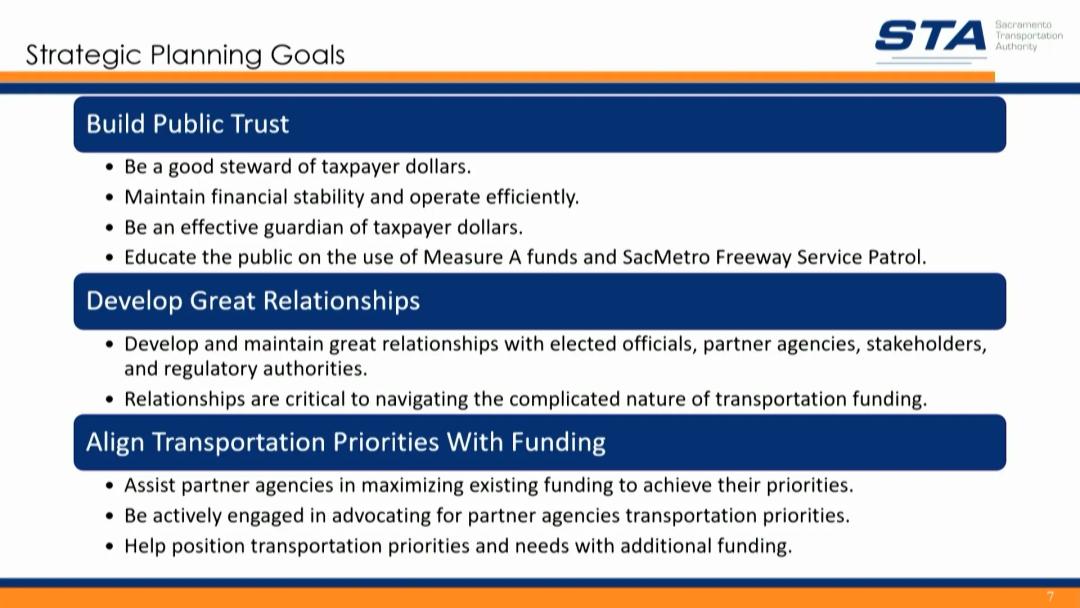
The meeting was called to order at 1:33 p.m. on May 9, 2024. The board considered the executive director's report, a draft budget for FY 2024-25, and two smart growth incentive program items, among other consent items. Public comments focused on support for the Alhambra Triangle Sound Wall and regional cooperation. Consent Calendar - Items 3 through 6 were approved unanimously. No public comments were received on these items. Public Comments & Testimony - Councilmember David Kent (Isleton) spoke in support of a joint representation agreement between Isleton and Galt to represent each other's cities on the STA board, emphasizing regional cooperation and transportation concerns for the county as a whole. - Jeffrey Tartagia expressed curiosity about what the STA has achieved so far in 2024 and questioned the coordination of smart growth efforts between city and county. - Stacey Jarvis, Diana Williams, and Liz Blum (residents of the Newton Booth neighborhood) spoke in support of funding the Alhambra Triangle Sound Wall. They cited noise, air quality, and safety concerns, including witnessing accidents. They thanked the board for listening and acting on their February request. - Nick Shelley (Newton Booth resident) also supported the sound wall, noting the 60-year impact of Highway 50 on his neighborhood and describing it as long overdue. Discussion Items - Executive Director's Report (Item 2): Kevin Busey reported on the appointment of Councilmember Sean Thau to the STA board, coordination with Caltrans on the US 50 HOV lane project and the associated Alhambra Triangle Sound Wall (funding included in the draft budget under item 7), review of the SACOG Metropolitan Transportation Plan/Sustainable Communities Strategy project list, and the Cap to Cap advocacy trip for five priority projects totaling approximately $230 million. He noted that Measure A reached its 15-year halfway point on April 1, 2024. Board member Daniels questioned using transportation funds for a sound wall; staff explained it is eligible as mitigation for the US 50 project. The board also heard a preview of items for the June meeting, including a budget approval, pavement analysis, nexus study update, and a presentation on declining transportation revenues due to fuel tax changes. - Draft STA Budget for FY 2024-25 (Item 7): Presented by Dustin Purinton and Kevin Busey. The budget is balanced, reflecting conservative revenue projections, a focus on paying down CalPERS unfunded liability, and updated strategic planning goals (build public trust, develop great relationships, align transportation priorities with funding). Revenues include sales tax, impact fees, and interest. Expenditures include capital improvement programs, transit, and freeway service patrol. The budget will be presented to the independent taxpayer oversight committee on May 23 and is scheduled for final adoption on June 13. The board voted to continue the item to the June 13, 2024 meeting. - Smart Growth Incentive Program - Allocation Contracts (Item 8): Kevin Busey proposed authorizing the executive director to execute contracts totaling $1.43 million as matching funds for SACOG's Community Design Program grants. The program uses 15% of developer fees from Measure A. The board approved the motion. Board member Hume raised the need to also consider rural roads not eligible for smart growth funds. - Safe Streets and Roads for All (SS4A) Grant Strategy (Item 9): Kevin Busey proposed using $270,000 in remaining Smart Growth funds as a match for a countywide safety action plan under the SS4A program. The plan would complement existing local plans, quantify regional safety needs, and position jurisdictions for future federal and state grants. Applications are due August 29, 2024. Board member Cerna asked if pavement conditions (e.g., potholes) would be considered a safety issue; staff noted that the federal definition may not cover that. The board approved the strategy and authorized the grant submittal. Key Outcomes - Consent calendar items 3-6 approved unanimously. - Continued the draft budget (item 7) to the June 13, 2024 meeting for final adoption. - Approved item 8 authorizing execution of Smart Growth incentive contracts (moved by Desmond, seconded by Cerna, passed unanimously). - Approved item 9, the strategy for the SS4A grant and countywide safety action plan (moved by Hume, seconded by Desmond, passed unanimously). - Meeting adjourned at 2:22 p.m.
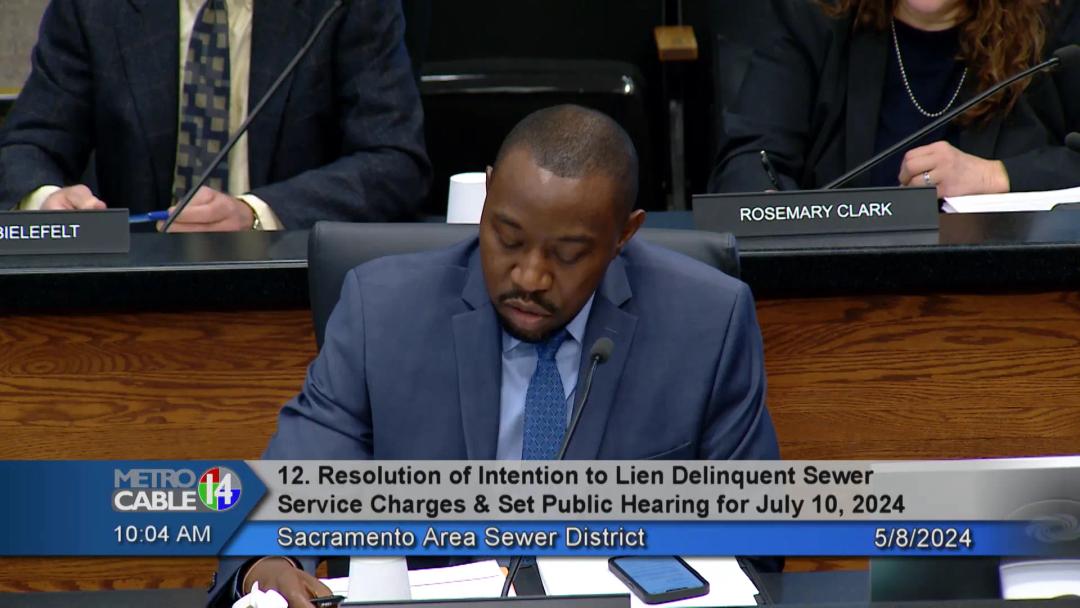
The Sacramento Area Sewer District (SAC Sewer) and its financing authority held a regular meeting on May 16, 2024, at 9:35 a.m., adjourning at 10:19 a.m. The board addressed consent items, conducted a public hearing on sewer rate increases, reviewed the FY 2024‑25 budget, authorized delinquent charge collection, and received a quarterly report on the transition from county to district staffing. Consent Calendar - Items 1–7: Approved unanimously without discussion or public comment. No items were pulled. Public Comments & Testimony - Public Comment on Non‑Agenda Items: No speaker requests were received. - Public Hearing on Rate Increases (Item 10): No members of the public signed up to speak. Staff reported 121 written protests for the collection system area and 159 for the treatment/resource recovery area—well below the 50%+1 threshold required under Prop 218. No protests were received from the industrial customer class. Discussion Items - Director Comments (Item 9): Director Aquino thanked staff for the district’s booth at Folsom’s Earth Day event and praised the plunger‑topped pencils as a giveaway item. Other directors noted the upcoming “Walk on the Wild Side” event at district property on May 18, 2024. - District Engineer Matters: The next board meeting was announced for May 22, 2024, with a focus on human resource items. - Public Hearing and Adoption of Rate Ordinances (Item 10): Staff presented the results of the Prop 218 protest process. The board adopted amendments to the collection system ordinance and the treatment/resource recovery ordinance, including sewer rate increases effective July 1, 2024. A lifeline rate assistance program adjustment will be brought to the board on May 22, 2024. Director Hume opened and closed the hearing, finding that the protest threshold was not met. The board waived full reading and approved the ordinances unanimously. - Budget Workshop for FY 2024‑25 (Item 11): Chair Hume explained the budget drivers: increased costs for labor, construction, and services; a solids handling emergency adding $13–$14 million annually; and one‑time costs from transitioning staff from county to district. Budget Manager Becky Schaefer presented the combined recommended operating budget of $314.4 million (9.6% increase over current year) and capital budget of $562 million ($159.7 million increase). Key operating increases: $14.3 million for supplemental biosolids disposal, $5 million for temporary staffing services, and $1.7 million for insurance. Major capital projects include the Harvest Water Project ($234 million), biogeneration facility ($67.5 million), and septic conversions ($25.5 million). Financing sources total $876.4 million, primarily from monthly service charges ($455.7 million) and bond proceeds ($218 million). Director Viegas inquired about retirement, insurance, and IT cost trends; staff noted that cybersecurity costs are managed through internal teams and county DTEC services with some free critical‑infrastructure resources. The budget was received and filed. - Delinquent Sewer Charges Resolution (Item 12): Finance Director Depa Banda presented the annual resolution to transfer delinquent charges to the county property tax roll. On April 27, 2024, notices were sent to 18,969 customers; typically the number decreases by about $5 million when charges are actually transferred. The board adopted the resolution of intention and set a public hearing for July 10, 2024 at 9:30 a.m. The motion included directing the clerk to advertise on June 7 and July 5, and also approved staff’s full recommendation (motion and second by directors Sewan and Roblace). - One District Quarterly Report (Item 13): Matthew Doyle presented accomplishments since January 2024, including internal communications (GM videos, information sessions, FAQ site) and union negotiations (two side letters on layoff procedures and vacation/sick transfer). Progress on the ERP Tyler Technologies implementation: Human Capital Management module on track for July 2024, employee access in September, benefits enrollment in October, time/payroll by December, and first paycheck January 3, 2025. Finance Management System expected by January 1, 2025. Several service‑level agreements with the county are completed or under review. AB 2301 (SacSewer Pension Protection Act) passed the Assembly floor 75‑0 and moves to the Senate in June. Employee onboarding events (resignation from county and offer from district) were pushed from June to July 2024 to allow AB 2301 progress. Directors Soon and Viegas commended staff for the complex transition effort. Key Outcomes - Rate Increase Ordinance Adopted: Unanimous vote to adopt amended collection system and treatment/resource recovery ordinances with rate increases effective July 1, 2024. Protest threshold not met. - FY 2024‑25 Budget Received and Filed: The $314.4 million operating and $562 million capital budget was accepted as information. - Delinquent Charge Resolution Approved: The board voted to direct transfer of delinquent sewer charges to the property tax roll and set a public hearing for July 10, 2024. - Quarterly Report Received and Filed: The one‑district transition progress report was acknowledged. No further action required.
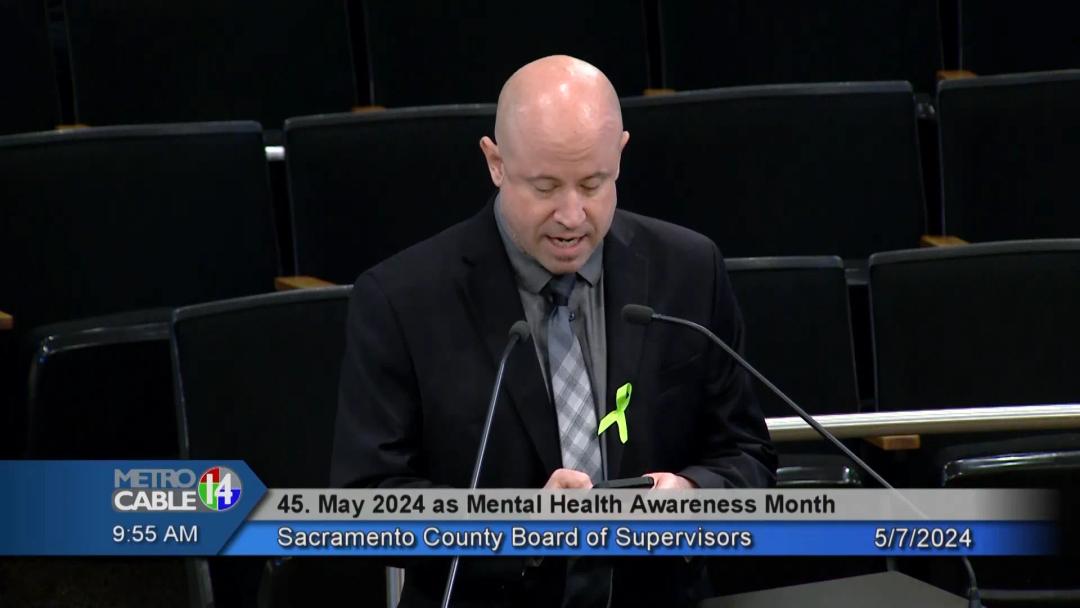
Note: The transcript indicates the meeting was held on Tuesday, May 7, 2024, but the provided timestamp specifies May 16, 2024. This summary adheres to the provided date. The Sacramento County Board of Supervisors met on May 16, 2024, to address a wide range of agenda items including off-agenda public comments, consent calendar approvals, presentations on Lyme Disease and Mental Health Awareness, the 4-H program, public hearings on service charges and a benefit category change, a major housing project, zoning code amendments for supportive housing, and the establishment of an EMS triage to alternate destinations program. The meeting concluded with county executive comments and an adjournment in memory of George Meese. Consent Calendar - Items 2–42 (corrected from 2–41): The board unanimously approved a consent calendar that included routine approvals, such as an ordinance amending speed limit zones on Hazel Avenue, Titan Drive, Waterman Road, and 18th Street (continued to May 21 for adoption). Supervisor Pat Hume acknowledged ARPA funding allocations, including $3 million for a neighborhood improvement initiative targeting blighted communities (Item 19), and praised staff for their work. Public Comments & Testimony - Off-Agenda Public Comments (5 speakers): - Jim Reeves: Cited a U.S. Supreme Court decision (April 12, 2024) ruling that impact fees may constitute an unconstitutional taking. He questioned how the county plans to justify fees as taxes and asked about refunds for past assessments. - Sarah Matson (District 3 resident): Referenced a state spending freeze and AB 106, which she described as a discretionary emergency tax increase. She urged the board to cease using voting machines and adopt in-person paper ballots with voter ID, claiming potential savings of millions. - Lynn Reeves: Invited board members to a screening of the film "Let My People Go" and reiterated calls for election integrity reforms, including one-day voting, paper ballots, and transparent counting. - Alexander Hampton: Expressed concerns about construction workers—31% lack health insurance, nearly three times the overall rate. He urged the board to require prevailing wage, health care, apprenticeship, compliance, and local hire on housing projects. - Dave Calpazano: Quoted the California Constitution to remind the board of the importance of adhering to fundamental principles and thanked Supervisor Sue Frost for her April 23rd vote of conscience. Discussion Items - Item 43 – Lyme Disease Awareness Month: The board recognized May 2024 as Lyme Disease Awareness Month. Melissa Moya of the Lyme Fight Foundation shared her personal experience as a Lyme patient, noting that the average test is 65% accurate and her treatment costs $30,000 per year, with insurance covering only two weeks of antibiotics. - Item 45 – Mental Health Awareness Month: Dr. Ryan Quist, Behavioral Health Director, presented a resolution. Laura Beamis, a member of the Stop Stigma Sacramento Speakers Bureau, shared her story of living with dissociative identity disorder, the loss of her parents and sisters, and her journey to recovery. She now works full-time as a certified Medi-Cal peer support specialist and is a founder of the Journey of Hope art exhibit. All five supervisors commented, praising her courage and impact. - Item 46 – 4-H Program Presentation: Jen Hinkins and Mary Ann Byrd presented the 4-H multi-county partnership. The program serves over 700 youth across 14 clubs, with 200 volunteers. Initiatives include the Youth Experiences in Science Project (since 1998), 4-H Cooking Academy, 4-H Water Wizards, and camps. Supervisors praised the program for building character and life skills. The board unanimously approved the renewal agreement. - Item 47 – Public Hearing on Benefit Category Change (2222 Watt Avenue): Don Pimentel presented a proposal to change the service charge from $2.56 annually to $567.60 for a new Starbucks with drive-thru. The board received no public testimony. The sole property owner voted in favor. The board unanimously adopted the resolution establishing the new service charge. - Item 48 – County Service Area 1 Public Hearing: Kamala Atwell presented the proposed FY 2024-25 service charges for safety and street lights. Due to inflation, enhanced and decorative charges are capped at 5% (2.6% CPI increase plus 5.5% SMUD electrical rate increase). No public testimony was received. The board unanimously approved the engineers report and resolution setting charges. - Item 49 – San Juan Apartments (Mutual Housing): Whitney Hinton from SHRA requested approval of final loan and bond documents, including an additional $2 million in Green Means Go funds. The project is a 113-unit workforce family development at Stockton Boulevard and Young Street, with units ranging from 30% to 60% of area median income. Construction is set to begin next month. The board unanimously approved the item. - Item 50 – Supportive and Group Living Uses Zoning Code Amendment: Principal Planner Wendy Hartman presented a zoning code amendment addressing three groups: state-mandated compliance for supportive/transitional housing, clarifications for group living definitions (boarding houses, residential care homes, detox services), and farm worker housing. Key discussion points: - The amendments are limited to minimum state requirements; no provisions exceed state law. - Scattered site shelters: The board debated parking ratios, spacing requirements, and potential loopholes. Supervisor Desmond raised concerns about private operators and over-concentration. County Counsel advised against spacing limits due to fair housing protections. The program currently has 145 beds in 29 homes (max 6 per home); the amendment allows up to 10 clients per site to accommodate triplexes/fourplexes. - Farm worker housing: Staff proposed deed restrictions and development standards. Supervisor Cerna questioned the adequacy of data on farm worker populations and suggested engaging the United Farm Workers. Supervisor Hume emphasized the need for enforcement mechanisms. - The board unanimously approved the ordinance, with Supervisor Desmond moving approval and noting the need for intentional policies regarding scattered site shelters. - Item 51 – EMS Triage to Alternate Destinations (TAD) Program: Dr. Greg Ken, EMS Medical Director, presented the program to divert stable psychiatric and substance use disorder patients from emergency departments to a mental health treatment center (Stockton Boulevard) and a sobering center (WellSpace at 7th & H). The program is authorized by AB 767 (sunset 2031). Data from Fresno (2,000 behavioral health patients off-ramped in 2022 with zero adverse events) and San Francisco (3,800 patients, <2% required ED transport) were cited. The board discussed integration with SB 43 (expanded conservatorship criteria effective Jan 1, 2025) and the need for training (5-hour paramedic accreditation). Supervisor Hume stressed engaging health plans for funding. The board unanimously approved the program and the establishment of the Emergency Medical Care Committee (EMCC) with six members: Dr. Alex Schmaltz, Jeremy Veldstra, Scott Perryman, Matt Burrell, Karen Scarpa, and Kyle Stefano. - Item 52 – Nominations: The board continued several appointments to future dates and nominated Brooklyn Pruitt to the Youth Commission (District 4). Key Outcomes - Approvals: All items on the consent calendar, Items 43, 45, 46, 47, 48, 49, 50, and 51 were approved unanimously. - Zoning Code Amendment: The supportive and group living uses ordinance was adopted, with staff directed to return with a report on farm worker housing data and to ensure scattered site shelter contracts include good neighbor policies. - EMS Program: The TAD program and EMCC were established. Staff will submit the program to the state EMS Authority for approval (expected 30-day review). The board will receive annual reports on program outcomes. - Adjournment: The meeting adjourned in memory of George Meese, a longtime Folsom resident and former director of the California Department of Motor Vehicles. County Executive Comments - Announced a "Sacramento County by the Numbers" video showcasing 2023 achievements (e.g., 12.9 million airport passengers, 535 entrepreneurs assisted, $9.3 million in veterans benefits). - Reported on Bring Your Child to Work Day (April 21, 2024) with over 350 children attending; thanked Supervisors Cerna and Hume for their participation.
The Sacramento Local Agency Formation Commission (LAFCO) met on May 16, 2024, from 5:32 PM to 7:01 PM. The primary agenda item was a public hearing to consider adopting the addendum to the Municipal Service Review (MSR) for the Del Paso Manor Water District (DPMWD) and a resolution of intent to initiate dissolution of the district due to chronic service deficiencies. The Commission also approved the consent calendar and a letter of support for a CalAFCO omnibus bill. All votes were unanimous. Consent Calendar - Items 2–4 were approved unanimously as part of the consent calendar. No items were pulled for separate discussion. Public Comments & Testimony - Dave Ross (DPMWD ratepayer): Requested a 30-day extension for ratepayers and the board to review the 45-page staff report, citing concerns about the impact of dissolution discussions on district employees and the need for adequate time to review facts. - Trish Harrington (35-year resident and former board member): Expressed strong support for LAFCO’s action, stating the district cannot survive independently due to high costs and that delays have already been extensive. - Gwyn Pratt (DPMWD director and ratepayer): Supported the resolution, noting that any delay would signal cold feet to Sacramento Suburban Water District (SSWD) and jeopardize consolidation opportunities and grant funding. - Carl Doak (Vice President of DPMWD Board): Supported the resolution, detailing that infrastructure costs of $52 million for pipes plus $5 million for meters would result in unsustainable rates for a community with a median household income of $86,262. - Robert Mattioli (DPMWD director): Requested the matter be tabled so the board could formally meet and review the information, alleging incorrect information about revolving funds and metering requirements. - Adam Collyan (General Manager, DPMWD): Reported that Well 4’s motor had been replaced but noted that the casing is 70 years old and could fail. He stated the district cannot meet maximum day demand or residential fire flow without interties with SSWD, and supported the resolution to compel consolidation. Discussion Items - Executive Officer Jose Enrique presented an extensive overview of the DPMWD’s chronic deficiencies, including: - 1,800 residential and 11 commercial connections; estimated 2020 population 4,854; median household income $86,262. - 21 miles of water lines, 20 miles over 60–70 years old requiring replacement within 20 years. - 8 wells, only 3 operational; Well 2 capped, Well 3 contaminated, Well 4 motor failure (repaired), Well 7 at risk from Bridgestone plume, Well 8 contaminated with PCE. - No water storage; system throttled to control leaks. - Prop 218 rate increase approved covering only $9.2 million of needed short-term capital; total infrastructure needs estimated at $52–57 million (plus $5 million for meters by 2032). - Failure to independently meet residential fire flow (relies on interties with SSWD); by 2032 must be independent. - Upcoming PFAS remediation mandates will add further costs. - High staff turnover (5 general managers in 4 years) and board instability (half the board resigned in 2021, president resigned in 2024). - Consolidation with another water district would make DPMWD eligible for up to $100 million in state grants and principal forgiveness funding. - Commissioner Discussion: - Several commissioners noted that the $52 million+ infrastructure cost, if borne by 1,900 ratepayers, would amount to roughly $30,579 per household, an unsustainable burden. - Insurance implications were raised: inability to meet fire flow could lead to cancellation of fire insurance for residents. - Commissioners emphasized LAFCO’s fiduciary duty to ratepayers and that the 12-month remediation period in the resolution provides ample time for the district to pursue consolidation or other remedies. - A motion was made to adopt the staff recommendation, including clerical cleanup of the resolution and an additional finding regarding fire flow deficiencies and risk of fire insurance loss. The motion was seconded and passed unanimously. Key Outcomes - Unanimous approval (voice vote) of: 1. CEQA statutory exemption (15061(b)(3)) for the MSR addendum and resolution. 2. Adoption of the addendum to the Municipal Service Review for DPMWD (LAFCO Project 2022-01). 3. Resolution of intent to initiate dissolution of Del Paso Manor Water District (LAFCO Project 2024-01), establishing a 12-month remediation period through May 2025, with a required status report to LAFCO in November 2024. - The resolution does not dissolve the district immediately; it allows the district to remedy deficiencies or pursue voluntary consolidation with SSWD. If deficiencies are resolved, the Commission may rescind the resolution. - Unanimous approval of a letter of support for CalAFCO’s omnibus bill (AB X?) regarding property tax exchange process streamlining. - The Commission also discussed future work, including ADA compliance for the LAFCO website and a request to examine cemetery district viability.
The Sacramento County Planning Commission convened on May 16, 2024 (note: the meeting transcript identifies the date as May 6, 2024; the provided timestamp is used per instruction). The commission considered two agenda items: a development plan review for a cold storage truck parking expansion and a use permit/special development permit for a public safety wireless communication facility. Both items were approved unanimously with conditions. Item 1: Development Plan Review – U.S. Cold Storage at Southgate Industrial Park (3100 52nd Avenue) - Presentation: Planner David Oriero presented the proposal to add 26 new semi-truck parking stalls (net increase of 18 after removing 8 existing stalls), site landscaping, and a stormwater quality basin accessory to an existing 145,002-square-foot cold storage building. The project is within the 52nd Avenue Neighborhood Preservation Area (NPA) which requires a finding that the development not create adverse noise, visual, air quality, health, or safety impacts on adjoining residential uses. A Mitigated Negative Declaration (MND) was prepared under CEQA, concluding less-than-significant impacts with mitigation. - Discussion: Commissioner Borja expressed concern that the environmental analysis did not adequately address potential increases in vehicle miles traveled (VMT) and local pollution, given the net increase in truck stalls and the site’s location in a disadvantaged community (CalEPA SB 743). Staff and the environmental coordinator explained that the project is in a VMT-efficient area and does not expand building square footage, so no additional VMT analysis was warranted; air quality and greenhouse gas emissions were modeled separately and found below thresholds. Commissioner Conklin asked about light pollution and noise—staff noted no lighting is proposed at this time, and any future lights must comply with zoning code requirements; no loading/unloading is planned in the southern area. - Applicant comments: Forrest Cheney of LBA Realty stated that the additional parking is overflow truck storage for a future tenant and that the project will improve marketability of the vacant cold storage building. He confirmed agreement with all conditions of approval. - Public comment: None. - Outcome: Motion to approve staff recommendation (including adequacy of CEQA analysis, adoption of MMRP, and approval of development plan review) was made by Commissioner Borja and seconded. The motion carried unanimously (Commissioners Borja, Conklin, Corona Salvagnano, and Rathel voting yes). The approval is subject to findings and conditions including a no-idling requirement. Item 2: Use Permit, Special Development Permit, and Design Review – FirstNet/ATT Public Safety Wireless Communication Facility (6901 7th Street, Rio Linda Elverta) - Presentation: Planner Austin Chan presented the proposal for a 75-foot monopole tower (plus 5 feet for lightning rod) with equipment enclosure, seeking a use permit, special development permit (height, setback deviations), and design review. The project is intended to enhance emergency services for first responders via AT&T’s FirstNet dedicated public safety broadband network. A Mitigated Negative Declaration was prepared, with less-than-significant impacts after mitigation. - Discussion: Commissioner Conklin inquired about existing code violations on the property (one open case for electrical work without a permit and a change of use). Staff confirmed the property owner is working to remedy the violations. The applicant, Mike McLaughlin (Western Fire Chiefs), clarified that most historical violations were with previous owners; the current owner is addressing the open case. Commissioner Conklin initially struggled with approving a special permit given the violations but accepted that they are being resolved. Commissioner Conklin also asked about alternative tower locations (e.g., on the defunct grain silos); applicant explained structural and engineering challenges. The tower was moved away from the northern property line per staff guidance. The design review committee found the project in substantial compliance with design guidelines. The monopole design was chosen over a stealth “mono-eucalyptus” tree to better match the industrial context. - Public comment: None. - Outcome: Motion to approve staff recommendation (including adequacy of CEQA, approval of use permit, special development permit, and design review) was made and seconded. The motion carried unanimously (Commissioners Borja, Conklin, Corona Salvagnano, and Rathel voting yes). Approval is subject to findings and conditions including mitigation measures for construction emissions and cultural resources. Key Outcomes - Item 1 (Development Plan Review for U.S. Cold Storage) approved unanimously with conditions. - Item 2 (Use Permit / Special Development Permit / Design Review for FirstNet wireless facility) approved unanimously with conditions. - No consent calendar items, public comments, or additional scheduling items beyond noting future meeting absences. The meeting adjourned at 6:27 p.m.
The Sacramento Regional Transit Board of Directors met on May 13, 2024, to discuss the preliminary Fiscal Year 2025 operating and capital budgets, review employee satisfaction survey results, and receive the General Manager's report. The board approved the consent calendar, opened and continued the public hearing on the budget to June 10, 2024, and adjourned into closed session to evaluate the General Manager's performance. No written public comments were received. Consent Calendar - Items 2.1 to 2.12 were approved unanimously by a motion from Director Brewer, seconded by Director Budge. The consent calendar included routine approvals and unanimous actions. Public Comments & Testimony - Coco Coca-Zola (member of STAR, Sacramento Transit Advocates and Writers) asked questions about the budget details, specifically requesting more granularity on line items and inquiring about capital projects such as the Dos Rios light rail station, ongoing low-floor conversion, bus rapid transit, the Truxel Bridge study, and green line light rail implications. She also questioned the size of a line item for "disruption manager software" ($310,135) already in use. - Jeffrey Tardigula thanked staff for mentioning city budget impacts, asked about demonstrating changes from the previous year's budget, noted that public notices for the hearing were seen on buses but questioned other outreach, and later raised concerns about the I-80 elevator being out of service and requested reporting on shuttle service usage. He also commented on broken fare boxes and Connect Cards. - Helen O'Connell expressed support for the youth pass program and encouraged creative funding (RT, city, school districts) to avoid regress. She requested benches and shelters every two to three blocks for disabled riders and noted that the 13th Street station closure lacked shuttle information. Discussion Items - Preliminary FY2025 Operating and Capital Budgets (Item 5.1): Staff (Shelley Valentin, filling in for CFO) presented the budget, highlighting no fare adjustments, no anticipated staffing reductions, and use of remaining COVID relief and SB 125 funding to close gaps. SB 125 for operations totaled $60.6 million, with an additional $1.6 million received (increased from $59 million), reducing the need for federal 5307 funds. A temporary state freeze on SB 125 was noted, but staff expressed cautious optimism after the governor's May revise. A $1 million comprehensive operational analysis (COA) is planned for 2025. Capital additions totaled $9 million, with total approved capital projects at $1.95 billion. Revenue projections include growth in sales tax and fare revenue (due to state employee return-to-office). The budget assumes full funding for the K-12 youth pass program, though potential city funding reductions were discussed; staff is meeting with the mayor and school districts on May 14. Board members asked about the $219 million state/local funding increase (from $168 million) and the risk of SB 125 allocations not materializing given state deficit. Staff noted a backup plan but did not detail it. The public hearing was opened and closed, with a motion (Vice Chair Jennings, Director Cerna) to continue it to June 10, 2024. - Employee Satisfaction Survey Results (Item 7.1): Consultant Conchita Robinson presented results from the 2024 survey (administered January-February), with 53.4% participation (444 of 832 employees). Top four questions scored 90% or higher. Nine of 12 questions received 80% or higher. Categories: employee satisfaction (82%+), engagement (82%+), strategic awareness (82%+). Compared to 2020 scores, most remained stable or increased; the largest improvement was in "timely feedback on performance from my supervisor" (lowest in 2020). Open-ended comments (758 responses) praised camaraderie, pay/benefits, community impact. Improvement suggestions included updated technology, increased communication, safety. Focus group themes mirrored these. Board members commended high participation and engagement, noting employees feel heard. - General Manager's Report (Item 8.1): GM Henry reported on the successful Hola Mohana festival (RT transported 1,500 passengers), advocacy trip to Washington D.C. (met with FTA, discussed $80 million grant for McClellan bus facility), APTA mobility conference, and the new Dale Rail Bike Trail (4.5 miles on former RT corridor). RT student ridership increased from 1.6 million to 4.2 million (more than doubled). Light rail modernization is on track for summer 2024 launch of low-floor trains on Gold and Green Lines. A meeting with U.S. DOT deputy assistant secretary was scheduled for May 15. Public comment from Jeffrey Tardigula noted recent operator assaults and ongoing elevator issues; GM responded that major incidents are reported to board within an hour. - Capitol Corridor JPA Report (Item 9.1): Director Daniels reported that the CCJPA meeting included public comments regarding hydrogen vs. electric trains, but any decision is at the state level. Key Outcomes - Consent calendar approved unanimously. - Preliminary FY2025 budget public hearing opened and closed; continued to June 10, 2024, for adoption (motion carried with all in favor). - Employee satisfaction survey received as information; no vote required. - General Manager's report accepted as information. - Closed session held for public employee performance evaluation of the General Manager (no report out).
This meeting of the SAFCA Board took place on April 26, 2024 (note: the transcript header indicates April 18, 2024; the instruction specifies using April 26). The board considered consent items, received an executive director's report on recent advocacy efforts, and dropped a continued public hearing item after an agreement with property owners. Consent Calendar - Items 1-4 were approved unanimously without discussion or public comment. Public Comments & Testimony - No members of the public addressed the board during the public comment period. Discussion Items - Executive Director Rick Johnson reported on the "CAP to CAP" trip, where a flood team held 16 meetings with congressional members and agencies. Two issue papers were presented: (1) modernizing FEMA's treatment of agricultural areas, including allowing bundling of separate structure policies and adjusting elevation requirements; (2) supporting funding for four Corps of Engineers projects, including the Notomas (annually funded at $34.4 million in the proposed FY25 budget) and continuation of the YOLO Comp study (proposed $600,000). - A board member (director, unidentified by name) expressed support for the FEMA modernization ask, noting personal experience as a farmer with 22 structures and the high cost ($6,000 just to start policies) making the program undesirable. The member described the current program as onerous and negatively affecting participation. - A Sacramento Basin flood risk management showcase is scheduled for the following Tuesday, featuring speakers from Department of Water Resources, Assistant Secretary of the Army Michael Connor, and Congressmembers Matsui and Bera. Key Outcomes - Consent items 1-4 approved unanimously. - Public hearing item (APN 22600-2003, Resolution No. 2024-036, continued from March 21) was dropped from the agenda after an agreement was reached between the board and property owners Joseph and Jennifer Prior Yellow. Motion passed by voice vote with all in favor and no opposition or abstentions recorded. - Meeting adjourned after receiving and filing remaining items. Note: The transcript date reads April 18, 2024, but the instruction for this summary specifies April 26, 2024. The discrepancy is noted per accuracy rules.