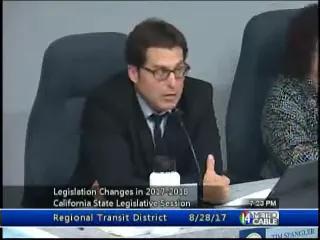
The meeting was called to order with a quorum of 100 votes. The board considered a consent calendar, a consultant contract, automatic passenger counters, a mobile fare app update, a campus master plan, and legislative changes for state authorization. Public speakers addressed fare equity, accessibility, and transparency concerns. Consent Calendar - Items 1–4 and 6: Approved unanimously. Items 5 and 7 were pulled for separate discussion. Public Comments & Testimony - Helen O'Connell: Expressed concern that new technology decisions were made without consulting the Mobility Accessibility Council (MAC). Asked for multi-language support and visually impaired features on the mobile app. - Enzo Arona: Urged better marketing of transit to state workers, improved Orangevale bus service (line 24 loop inefficiency), and criticized fare inequality: cash payers do not receive free transfers within 90 minutes like Connect Card and app users do. He noted 72% of Americans have credit cards, but many lack smartphones. - Russell Rawlings (President of DOGFIGHT, member of SAC True Sacramento Transit Riders Union): Opposed the Fifth Amendment to the Douglas Carter contract, stating RT spent $394,874 on Mr. Carter over two years and the proposed $125,000 increase would bring total compensation to $519,874 with no evidence of performance. Called for a competitive RFP. Also criticized the stacked agenda and lack of public outreach. - Rick Hodgkins: Reported a 29th Street light rail communication failure that blocked traffic for 10–15 minutes. Questioned the performance of the consultant (Mr. Carter) and the attorney contract increases. Expressed concern about RT moving toward privatization. Noted that the lift pass for seniors over 75 was not on the agenda. Also raised elevator accessibility and bus route 21 weekend inconvenience. - Jacob Taylor: Urged postponement of the legislative changes (Item 11), arguing that using a "gut-and-amend" process contradicts the California Legislature Transparency Act passed by voters in 2016. He recommended reintroducing the bill next session after full public debate. - Mike Bombom: Suggested the board work with Sacramento Basketball Holdings (John Reinhart, Darren Gross) on marketing the mobile app for Kings games. For the campus master plan, he recommended a new facility at the Sacramento rail yards and a potential bus maintenance partnership with Elk Grove. Discussion Items - Item 5 – Douglas Carter Contract (Fifth Amendment, $125,000): Director Budge questioned the value of executive coaching and cultural change, given that General Manager Henry Lee had already led those efforts. Director Natoli moved to continue the item to the September 11 meeting to obtain a detailed scope, deliverables, and timeline. The motion carried unanimously (100 votes). - Item 7 – Automatic Passenger Counters (APCs, $2.2 million): Director Budge initially questioned the expense but was assured by staff that APCs are fully retrofittable to new vehicles. Director Hansen noted that APCs help document ridership for federal funding formulas. The item was approved without objection. - General Manager's Report: Henry Lee highlighted a detailed route proposal by community member Mike Bombom for Watt/I-80 bus service, recognized the Connect Card launch team (4,000+ hours worked), and shared anecdotes of fare enforcement. He noted 44 light rail cars will have advertising wraps by September 18, generating nearly $250,000 in gross revenue. CFO Brent Burlinger reported July financials: $470,000 positive variance, fare revenue within 1% of budget, fare box recovery at 19.7% (budgeted 19%), and ridership 2.4% above budget but 3.7% below last July—an improvement over previous months of 11–16% declines. Director Hansen asked about raising the fare box recovery ratio to 23% (the TDA target) to reduce the need for Measure A supplemental funding (currently $3 million annually). - Item 9 – Mobile Fare App and Connect Card Update: Brent Burlinger presented the new Zip Pass mobile app (launching September 1) and the Connect Card system (full launch June 15, 2017). Benefits include free 90-minute transfers, best daily fare (tap until $7 max), and retrofitting fareboxes. Director Budge criticized the name "Zip Pass" as unclear and not regionally identifiable. She recommended surveying users and ensuring the app is not rushed. Director Hanson asked about transitioning corporate accounts (only 10% of 180–200 outlets have switched) and suggested using the same back-end for both Connect Card and app. Public speakers urged accessibility: multi-language support, screen-reader compatibility for the blind, and easier cash loading (currently only at 13th Street customer service and some Rayleigh's stores). - Item 10 – Campus Master Plan Update: Neil Nance presented minimum requirements: a 100,000 sq ft administrative building, 30+ acres for bus maintenance, and a boardroom. Alternatives included staying and renovating, building on an existing RT site, or relocating downtown or outside downtown (e.g., south area). Staff hopes sale of downtown parcels would fund new construction. Director Budge questioned why only two location categories were considered, noting the need for good freeway access, stakeholder and worker engagement, and coordination with the upcoming route optimization study. Director Hume confirmed that new construction would be funded by property sales. Speakers (Russell Rawlings, Helen O'Connell, Mike Bombom) urged worker and rider input and centralized service centers. - Item 11 – Authorization to Pursue Legislative Changes (State Sales Tax Authority and Cleaning Language): Tim Spengler and lobbyist Mark Watts described a proposed bill that would (1) clean up outdated language in RT's enabling statutes, (2) grant RT the ability to place a sales tax measure on the ballot, and (3) allow the board to temporarily switch from weighted voting to one-director-one-vote to qualify for citizen initiatives under Elections Code §9300. A California Supreme Court ruling on August 28, 2017 (same week) held that voter‑initiated specific taxes require only 50%+1 approval, making this authority urgent. Director Hanson moved to approve the package, with a friendly amendment (by Director Budge, seconded) to delete the prevailing wage carve‑out for property sales to avoid delay. Director Natoli raised concerns that weighted voting protections (established 10 years prior) could be abandoned without full member entity discussion. Director Shanier emphasized regional coordination to avoid competing tax measures. The motion passed with 95 of 100 votes; one director abstained, citing insufficient background. - Item 12 – Paratransit Inc. Report: Director Hume stated there was nothing disclosable from the August 10 closed session. Key Outcomes - Continued: Item 5 (Douglas Carter contract) to September 11, 2017, for a detailed scope and deliverables (moved by Director Natoli, seconded by Director Kennedy; unanimous 100 votes). - Approved: Item 7 (Automatic Passenger Counters) — motion carried. - Passed: Item 11 (Legislative changes authorization) — 95 votes in favor, 1 abstention (Director Harris). - No formal action taken on Items 9 and 10 (informational items). - Closed session held for real estate negotiations (Royal Oaks and Evergreen Avenue properties); no reportable actions.
Public Meetings - Sacramento County, California
Public Meetings - Sacramento County, CaliforniaThe Sacramento Regional Transit Board met on August 18, 2017, at 5:30 p.m. The meeting covered a wide range of topics, including public comments, approval of consent items, a general manager's report, a vote on the GM's employment contract amendment, an update on the route optimization study, and reports from joint powers authorities. Key decisions included approving a significant salary increase and bonus for General Manager Henry Lee, and moving forward with the route optimization study. Consent Calendar - Items 1 through 7 were approved unanimously (100 votes). - Item 8, a resolution approving work order number six for streetcar vehicle procurement evaluation and Buy America pre-award audit, was pulled for public comment. After a speaker asked about the SACOG steering committee and engineering details, the item was approved with a motion by Director Harris, seconded by Director Hanson, carrying with 100 votes (no opposition). Public Comments & Testimony - Coco Cocazzella (individual, member of transit advocacy groups) urged the board to focus on citizen transportation needs over developer interests, calling for more bus routes and frequent service. - Jeffrey Tardi Gia expressed disappointment with the board's decisions, stating they would set RT back years, and announced he would stop attending meetings. He also mentioned working with legislators on an appropriations transit bill. - Stephen Barassa advocated for a local sales tax measure for transit, citing polling data showing 81% support for light rail and bus maintenance and security, 80% for operations, and 75% for extending light rail to the airport and Elk Grove. He suggested a transit-only measure. - Mike Barnbaum provided an update on the Sacramento Kings 2017-2018 NBA schedule, noting only five of 43 home games start at 7:30 p.m., and five Sunday games with start times as early as 12:30 p.m., which eases transit service concerns. - Robert Copeland urged RT to seek competitive SB1 grants for road fixes, better bus service, and frequency, and proposed reinstating a lifetime pass for seniors over 75 and a 90-minute transfer. - Alex (hospitality worker) requested later night transit service, noting that buses stop running at 11 p.m., which is unusual for a city. - Arthur asked about funding for new buses and light rail cars, noting the existing fleet dates to 1987, and offered to help advocate for funding. - Russell Rawlings commended staff for an SB1 discussion event and urged consideration of lower fares and increased operational capacity. General Manager's Report (Henry Lee) - Employee recognitions: Maureen Wren (grants manager) and Stephanie Owen (transportation supervisor) received awards for 20+ years of service. - FTA compliance: RT received official notice that its Equal Employment Opportunity program is in full compliance. - Station improvements: At Watt/I-80 station, 14 new cameras and two public announcement systems installed, enabling 24/7 police surveillance. - Customer service: Portable tents installed at the 13th and R Street customer service center for weather protection. - Community outreach: Listening tours continued with groups like the Sierra Club, 350 Sacramento, and Fair Oaks Rotary Club (75 attendees). - Free ride days: Upcoming promotions for back-to-school students and National Senior Citizens Day (August 21). - Operator attendance: Absenteeism (sick hours) decreased 14% from Q1 to Q2 2017, resulting in zero missed bus trips due to operator attendance in recent months. - Security update (Lieutenant Roger): A multi-agency proactive policing operation on August 9 yielded 73 citations, 11 arrests, 18 parole/probation searches, 12 vehicle stops, and 12 suspicious subject stops. The new PA system at 30 stations was used 146 times in 23 days, with high compliance (mostly warnings, few dispatches). Live cameras are now installed on 20 light rail vehicles, with project completion expected in 90–120 days. Preliminary talks with Rancho Cordova for a shared police officer. Discussion: GM Employment Agreement Amendment (Item 10) - Chair Andy Morin presented the amendment: retroactive salary increase from $216,000 to $248,500 effective July 1, 2017, and to $281,000 effective January 1, 2018, plus a 20% performance bonus for FY2016-17 ($43,200). Future raises tied to the MCEG employee group raise. RT will contribute $29,000 annually to a 401(a) defined contribution plan for Henry Lee. - Public comments: Eight speakers supported the package, citing Henry Lee's leadership, improved finances, community engagement, and risk of losing him. One speaker (Jeffrey Tardi Gia) opposed, arguing the raise was excessive compared to riders' incomes and that performance criteria were missing. Several supporters included Mike Barnbaum (Ride Downtown 916), David Modisett (Breathe CA), Russell Rawlings, and David Taylor (representing eight business leaders). - Board discussion: Director Hume supported, noting Henry Lee's performance saved millions, and the raise brings him to peer parity. Director Budge abstained due to one contract aspect she disagreed with. - Vote: Roll call: 9 ayes (Hanson, Harris, Hume, Jennings, Kennedy, Miller, Natoli, Shanier, Chair Moran), 1 abstention (Budge), absent (Serna). Motion passed. Route Optimization Study Update (Item 11) - Laura Hamm and James Boyle presented the study scope: three phases (comprehensive review, route optimization, optional tasks). RFP released July 24, pre-proposal meeting August 8 with five firms interested. Target contract award October 2017, completion September 2018. Budget: $350,000 for consultant; $1–1.2 million capital costs for implementation. - Customer satisfaction survey (May 2017): 1,200 face-to-face interviews at 17 locations. Results: 26% of riders are new within 12 months; 66% ride daily; 78% satisfied with route/schedule info; 70% satisfied with operator helpfulness; 61% with on-time performance; improvements noticed in safety, cleanliness, and fare inspection. Top service priorities: real-time arrival info, more frequent weekend and late-night bus service, improved reliability, expanded coverage. - Public comment: Mike Barnbaum urged stronger engagement with SACOG (regional planning agency) through committees and the unmet transit needs process. - Board comments: Director Hanson emphasized collaboration with cities and using data to align routes with current population and job centers, noting the current routes are largely unchanged for 20 years. She called this the most important initiative in years. San Joaquin Joint Powers Authority (SJJPA) Meeting Summary (Item 12) - Director Hume reported the SJJPA formally approved shifting passenger rail to the Sacramento subdivision, enabling new stations in Elk Grove, City College, Midtown, North Sacramento, and eventually the airport and Marysville. - Public comment: Mike Barnbaum highlighted support for a new 4:25 a.m. express train from Fresno to Sacramento, benefiting Central Valley communities with poor air service. Sacramento Placerville Joint Powers Authority (Item 13) - Written summary provided by Director Budge; no additional oral report. Key Outcomes - Consent items 1-7 approved unanimously. Item 8 approved after public comment. - GM contract amendment approved (9 ayes, 1 abstention). Henry Lee received a retroactive raise, a future raise, a $43,200 bonus, and a defined contribution pension plan. - Route optimization study to proceed with RFP process; board to receive monthly updates. - SJJPA action supports expanded passenger rail service in the region.
Note: The transcript indicates the meeting occurred on Monday, July 24, 2017, although the user-provided metadata states August 1, 2017. This summary follows the transcript date. The board convened with a quorum of 100 votes. The meeting included public comment, consent calendar approval, individual votes on several items, a financial report, and a presentation on the Watt/I-80 station transformation. Consent Calendar - Items 1–5, 8–10, and 12 were approved unanimously by voice vote. Public Comments & Testimony - Arthur Ketterling inquired about a reported $13 million grant, which the General Manager indicated would be covered in his report. - Justin Mendoza (a transit advocate, formerly with San Joaquin RTD) expressed strong support for better public transit and urged the board to accept a $10,000 grant opportunity, stating it would be “financially irresponsible” to let it go. He described himself as independent from the transit union. - Mike Barnbaum previewed upcoming San Joaquin Joint Powers Authority discussions, including potential new bus service from Redding to Sacramento (with stops at the airport and Valley Station) and improved San Joaquin train service to Sacramento, possibly using the Sacramento Subdivision with new stations in West Elk Grove, Sacramento City College, Midtown, North Sacramento, and a Natomas airport station. - Barbara Stanton raised concerns about outdated rider alert brochures on a light rail car (car 201) still requesting Title VI comments from April and February 2017, despite the deadlines having passed. - Robert Coplin (Sacramento Transit Riders Union member) opposed the proposed trolley system, arguing RT should focus on improving existing light rail and bus services instead. - Jeffrey Tardigia criticized the board’s explanation of financial items (items 4 and 5) as “gobbledygook” and urged better communication with the public. He also noted missed revenue opportunities during the State Fair due to limited service hours, reported two failed Connect Card machines, and asked how bus stop removals are communicated (citing the removal of a stop at Broadway and 19th Street). - Brenda Anderson questioned items 6, 7, 11, and 12.1. On item 6 (pipeline easement), she asked about environmental review; staff responded that the Sacramento Regional County Sanitation District handled all environmental aspects. On item 7 (legal contract amendment), she clarified it was for ongoing general advisory and arbitration work. On item 11 (temporary construction easement for Caltrans), she confirmed the temporary nature was only for equipment storage during bridge modifications. On item 12.1 (travel to China), she asked about the purpose and cost; Henry Lee explained the trip was for exploring public-private partnerships for infrastructure funding and noted the $2,100 estimate.<br- Coco Casella opposed the China trip, calling the $2,100 figure “ridiculously lowball” and expressing concern about “selling RT to a foreign entity.” She argued that destination cities are built organically by serving citizens, not by “glitzy” projects. - Helen O’Connell asked about the cost of bus bridge operations due to the elevator outage at Watt/I-80, the total repair costs for the elevator over two years, and the cost of a new elevator. Staff committed to providing those figures later. - Barbara Stanton (Ridership for the Masses) emphasized that the Watt/I-80 elevator outage would severely impact American River College students starting August 25th. She urged RT to post visible schedules for the bus bridge at the station, not rely solely on social media or the internet, and to have bus drivers announce the shuttle. - Mike Barnbaum detailed the bus routes serving Watt/I-80 (seven local, one express, one light rail line, and one Placer County Transit route) and recommended that any future reconfiguration be reviewed by the Mobility Advisory Council and Service Efficiency Review Committee. - Jeffrey Tardigia (continued) criticized RT for being late in posting schedules for the bus bridge before the college semester. He urged coordination with American River College’s public information officer and student government, and noted missed revenue opportunities from the State Fair and Capital Air Show due to limited service. He also called for better use of electronic bulletin boards at stations. Discussion Items - General Manager’s Report (Henry Lee): - Provided state legislative update: AB 398 extending cap‑and‑trade to 2030 was approved, providing market certainty and auction proceeds ($300 million) that RT is applying for. - Announced emergency repairs to UTDC light rail vehicles after a heat wave; repairs restored vehicles for normal operations. Additional improvements included AC modifications, sun screens, extra breaks for operators, and cooling supplies. - Introduced new initiatives: pop‑up tent at customer service center, regular meetings with supervisors’ offices, an “adopter station” program for senior managers, and a route optimization study (RFP released). - Reported a $13 million grant from the California Transportation Commission for fare vending machine replacement and digital information signs (not for vehicle replacement, clarifying social media inquiries). - Welcomed new Chief of Police Services, Lieutenant Nisa Hunt (26‑year SPD veteran), replacing Captain Roman Leon. - Acknowledged Officer Alex Ladwig’s shooting and his recovery; a GoFundMe raised over $70,000. - Financial Report (CFO Brent Bunninger): - Preliminary FY17 results showed a $2.7 million operating surplus (revenues $162.2M, expenses $159.5M), achieved without new revenue sources through budget control and cost control. - The $29 million line of credit was paid down to zero, improving cash flow. - Fare revenue was below budget due to weather disruptions in Q3, a ticket exchange period in June (customers exchanged old tickets instead of buying new ones), and the transition to Connect Card (stored value deferred revenue recognition). Farebox recovery improved from 20% to 21%. - Ridership declined 11.2% year over year, attributed to increased fare inspection and fare increases. However, staff noted a cultural shift toward paying riders. - Concern about rising supply costs for aging light rail vehicles (Siemens and CAF cars) due to parts obsolescence; more mechanics needed, but training is a challenge. - Watt/I-80 Station Transformation Presentation (Neil Nance, Lt. Lisa Hunt, Mark Lonergan): - Reported on security improvements after implementing the transit agent program and police presence. In response to pushback and the shooting of Officer Ladwig, two armed officers are deployed 7am–7pm weekdays, with armed Paladin guards evenings. Sixteen additional cameras and a PA system were installed, monitored by the 24/7 SOC. - Facilities improvements in the first 60 days: portable restroom removed due to misuse, landscaping cleared to improve visibility, straw wattles gates installed, and painting begun. Next 90 days: remove bike lockers, repair the east elevator, repaint shelters and bus loading curb, add ADA non‑slip adhesives to stairwells. - A preliminary concept under study: closing the upper bus level and routing all buses to the lower level to create a single, secure transfer point. This would eliminate the need for the elevator and stairs, improving safety and convenience, but may increase travel time for through riders. Public outreach will precede any decision. Key Outcomes - Consent Calendar: Items 1–5, 8–10, 12 approved unanimously. - Item 6 (Pipeline Easement): Approved unanimously. (Motion by Director Hansen, second Hume.) - Item 7 (Legal Contract Amendment): Approved unanimously. (Motion by Director Jennings, second.) - Item 11 (Caltrans Temporary Easement): Approved unanimously. (Motion by Director Shanier, second Miller.) - Item 12.1 (Travel to China): Approved unanimously. (Motion by Director Hansen, second Kennedy.) Henry Lee will travel from September 2–10 (four business days plus weekends and holiday) as part of the Sacramento‑Shenzhen sister city relationship to develop a comprehensive transportation strategy and explore public‑private partnerships. - General Manager’s Report: Received and filed. - Watt/I-80 Update: Presentation noted; no formal vote taken. Staff committed to providing cost data on elevator repairs and bus bridge operations. - Closed Session: Announced for conference with labor negotiators; no report out.
The Sacramento Regional Transit District (RT) board convened on June 15, 2017, to address a consent calendar, public comments on various issues, and several major discussion items, including the allocation of Proposition 1A funds for the downtown riverfront streetcar project and the adoption of the FY2018 budget. The meeting featured extensive public testimony and board deliberation, with key decisions on streetcar funding, route optimization, and the operating budget. Consent Calendar - Items 1-19 (with exceptions): The consent calendar was approved with a motion by Director Budge, seconded by Director Hanson, carrying at 95 votes. Items 7, 11, and 12 were pulled for separate discussion. - Item 7: Resolution approving interagency and cost reimbursement agreement for the downtown riverfront streetcar project. Approved on consent after a question from Jeffrey Tardigia about contingency; staff confirmed it covers reimbursements for design/construction work. - Item 11: Delegation of authority to general manager to execute work order for engineering support to relocate traction power substations A1 and A055 (estimated $4-5 million). Approved after discussion about SMUD's role and funding sources. - Item 12: Resolution delegating authority to release RFP and award contract for Phase 1 of route optimization study ($200,000 budget). Approved after public comments and staff assurances on outreach. Public Comments & Testimony - Jeffrey Tardigia: Thanked drivers for shuttle service during planned disruptions but criticized RT's communication, accessibility, and planning. Opposed streetcar, urged better paratransit funding, and warned it could harm Measure U and B. - Mike Barnbaum (Ride Downtown 916): Announced Connect Card soft launch (2,056 participants) and upcoming Capitol Corridor meetings. Supported streetcar and improvements to Route 51. - Sarah Kerber (Sacramento Transit Writers Union): Presented photos of a dangerous bus stop at 47th Avenue and 47th Street (stop 2682 on Route 68), requesting an audit of unsafe stops and better accessibility in route optimization. - Daryl Steinberg (Mayor of Sacramento): Urged approval of $25 million in Prop 1A funds for the streetcar project, citing an 8-to-1 federal match and commitment to work with RT on the Sacramento Valley Station loop and storage track. - Dan Allison: Opposed using Prop 1A funds for streetcar, arguing it should go to the Sacramento Valley Station Loop for better connectivity to intercity rail. - Craig Powell (Ion Sacramento): Argued streetcar is not an economic driver, would face operating deficits, and that the Measure S election may be illegal; urged using funds for other RT needs. - Russell Rawlings: Opposed streetcar funding, favoring investment in existing system (aging light rail vehicles, elevators). - Gregory Thompson: Warned streetcar would worsen transit service and that moving the blue line onto H Street would cause traffic conflicts. - Stephen Barassa: Supported core system investment over streetcar, advocated for low-floor rail cars and autonomous shuttles. - Dennis Newfeld: Proposed tabling item 22 until conditions (Measure S outcome, county commitment, federal and state funds) are met. - Glenn DeMarsh (350 Sacramento): Favored option B (using funds for other needs), citing community priorities for bus service and maintenance. - Delphina Cathcart (STAR): Stressed Prop 1A should enhance rail connectivity, not fund a pedestrian accelerator. - Sarah Foster: Criticized high fares and paratransit rate increases; questioned streetcar ridership. - Sam Stefanke (Congresswoman Matsui’s office): Supported streetcar, noting $50 million federal commitment and Congresswoman’s leadership. - Eric Crane (Downtown Sacramento Partnership): Supported streetcar as critical infrastructure for mobility and economic development. - Helen O'Connell and others: Expressed concerns about using outside consultants for route optimization and urged internal staff leadership. Discussion Items - Item 22 – Proposition 1A Funding for Streetcar: A central debate lasting over an hour. Staff (Neil Nance) presented two options: A) approve $25 million for the streetcar with city commitments; B) direct funds to other projects. Director Shneir moved option A; Director Hume offered a substitute motion to condition RT’s commitment on receiving federal small starts grant and state cap-and-trade funds. After legal clarification, the substitute motion was adopted. The board heard from a dozen speakers, largely opposed. Supporters cited economic development and leverage (8-to-1 match). Opponents cited operating cost risks, unmet system needs, and lack of direct connectivity to high-speed rail. - Item 23 – FY2018 Operating and Capital Budgets: David Goldman presented a budget $1 million below prior year, with $295 million capital budget including $900k for Watt/I-80 elevator replacement and $3.8M seed money for light rail vehicle replacement. Public comments appreciated the evening meeting and line-item details. The board approved the budget without opposition. - General Manager’s Report (Item 20): Henry Lee reported on transit means business luncheon, new security enhancements (PA system, paid fare zones, transit agents), and Watt/I-80 station elevator replacement timeline. Director Shneir praised labor relations and the transit agent program. - Item 25 – San Joaquin Joint Powers Authority Report: Director Natoli reported on the May 26 meeting, highlighting a correction on SB 477 (not about voter thresholds) and a morning express service project to get a train to Sacramento before 8 a.m. Key Outcomes - Item 22 (Streetcar Funding): Approved as amended, 95 votes in favor. The $25 million in Prop 1A funds will be allocated to the streetcar project, contingent on execution of the federal Small Starts grant agreement. The city committed to work with RT on the Sacramento Valley Station loop, storage track, and future dedicated transit funding. - Item 23 (FY2018 Budget): Approved, 95 votes. The operating budget is over $1 million below FY2017 with no fare increase. The capital budget includes new projects and carries forward prior commitments. - Consent Calendar and Pulled Items: All approved, with individual votes for items 7, 11, and 12. - Paratransit Report: Board member Natoli requested quarterly updates from Paratransit, Inc. to be placed on regular RT agendas.
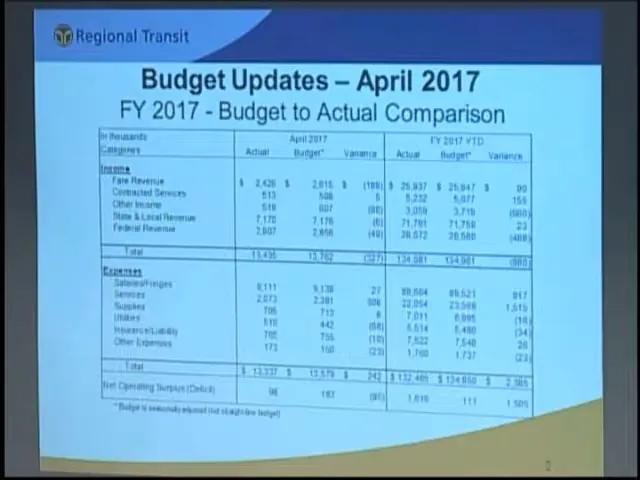
The Sacramento Regional Transit District (RT) Board met on Monday, May 22, 2017, to address routine approvals, public comments, and updates on transit operations and finances. Key decisions included awarding a security contract, amending the administrative code, and continuing a discussion on naming rights. The meeting was streamed live and rebroadcast on Channel 14. Consent Calendar - Items 1, 3, 4, 5, 7, and 8 were approved unanimously by a 90-vote motion, moved by Director Hume and seconded by Director Hanson. - Item 2 (Security Services Contract) and Item 6 (Ordinance 170501) were pulled for public comment and individual votes; both passed unanimously. Public Comments & Testimony - Jeffrey Tardi Gia (public speaker) expressed concerns about RT's use of consulting services and requested that multi-year contracts be explained in budget discussions, referencing a city contract with RT worth $18 million. - Dennis Newfeld (public speaker) questioned the authority for including $25 million in RT Prop 1A funds in the streetcar project's FTA application without board approval, alleging a "two-tier decision-making process" and requesting that four Sacramento city council members recuse themselves from the June 12th Prop 1A vote. - Rick Stevenson (public speaker) criticized RT staff for not returning calls about the FTA application, necessitating a Public Records Act request. - Mike Barnbaum (founder, Ride Downtown 916) informed the board of transit changes in West Sacramento impacting downtown Sacramento, and presented a list of budget improvements for RT service. - Barbara Sand (public speaker) criticized RT's notification of the elevator outage at Watt/I-80 station, calling it a "disservice to riders." - Russell Rawlings (RT rider, Sacramento Transit Riders Union, Organized Sacramento) requested line-item budgets for upcoming workshops and better community outreach. - Arthur Kitterling (resident of Citrus Heights) reported trash and maintenance issues along the light rail right-of-way and at Watt Avenue. - Tammy Dramer (public speaker) raised concerns about the lack of translation services for RT's rider survey, requesting translation into six languages. - Timothy Ortiz (public speaker) thanked the board for improvements in the city. - Steven Barassa (public speaker) cautioned against directing Prop 1A funds to the streetcar, suggesting they be used for other RT priorities like Wi-Fi and real-time arrival info. Discussion Items - Item 2: Security Services Contract - Maggie Coulter (Sack Ride Human and Fran Eldridge), Barbara (public speaker), Harry Wong (President, Sacramento Chapter of Physicians for Social Responsibility), Jeffrey Tardi Gia, and Rick Hodgkins spoke in favor of the contract with Paladin Private Security, emphasizing local hiring and social responsibility. Questions were raised about armed patrols and body cameras; staff clarified Paladin is local. - Item 6: Ordinance 170501 - Public comment focused on potential restrictions on first amendment activities at light rail stations; staff noted a future expressive conduct policy. - General Manager's Report - Mark Ronegan presented announcements: free rides for veterans on Memorial Day, a June 9th press event on transit agent expansion, and a Transit Means Business luncheon on June 7th. A correction was made to list the Sacramento Metropolitan Arts Commission as a partner. - Performance Update - David Goldman presented April 2017 financials: net surplus $100,000, revenues $13.4M (slightly under budget due to lower fare revenue), expenses $13.3M. Ridership declined year-over-year; farebox recovery about 20%. Director Hume questioned budget forecasting; staff explained budget rigidity. - Public Comments on GM Report - Rick Hodgkins shared a bus driver's perspective on service frequency, discussed Measure B failure and Prop 1A fund misuse, and noted elevator restoration. Mike Barnbaum discussed SCA 6 status (re-referred), and Jeffrey Tardi Gia urged better elevator communication. Key Outcomes - Consent Item 2 Approved (90 votes) - Awarded security contract to Paladin Private Security. - Consent Item 6 Approved (90 votes) - Approved Ordinance 170501 amending Title 15. - Item 10 Moved (90 votes) - Continued discussion on property naming and corporate sponsorship criteria to the June 12, 2017 meeting. - Closed Session - Announced public employee performance evaluation (Chief Counsel); no report out. - Elevator Status - Mark Ronegan explained Watt/I-80 elevators are over 30 years old; a funded replacement project is underway, with shuttle service operating during outages.
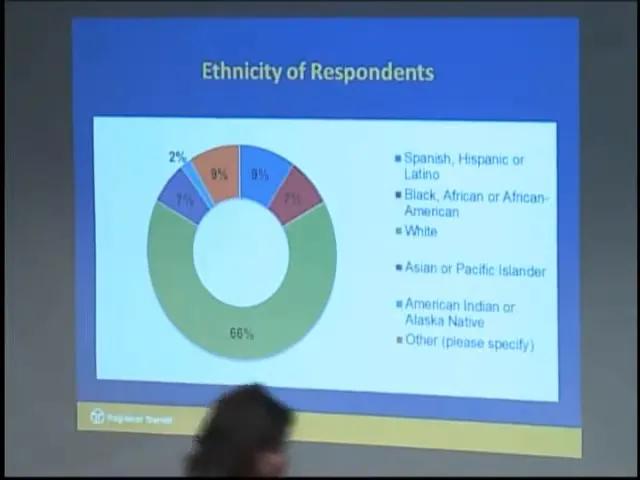
Note: The transcript begins with the meeting being called to order on Monday, May 8, 2017. However, the provided metadata specifies May 10, 2017. This summary uses the given date per instructions. The Sacramento Regional Transit (RT) Board met to discuss consent calendar items, receive public comments, hear the General Manager’s report, review the preliminary FY2018 budget, consider expanded naming rights criteria, approve paid-fare zones and an ordinance amendment, and hold an information discussion on the Downtown Riverfront Streetcar Project. The meeting included several public testimonies and board deliberations, with actions taken on most items. Consent Calendar - Items 1–5 were approved in two blocks. Items 1, 4, and 5 were approved unanimously on a first motion. Items 2 (Title VI program update) and 3 (Sac State student/employee transit pass agreement) were each voted on separately after public comment, also passing unanimously. All votes were voice votes with no stated opposition. Public Comments & Testimony - Russell Rawlings (SAC True member) invited the board to Saturday meetings of the Sacramento Transit Riders Union and encouraged public engagement. He later spoke on Item 2, criticizing the Title VI update for offering free transfers only to Connect Card/app users, calling it inequitable. - Cheryl Busby highlighted an opportunity to partner with Sutter Health Foundation and Sierra Health Foundation on a “high-five” initiative that addresses social determinants of health, including public transportation. - Jeffrey Tartagia raised multiple concerns: repeated elevator outages at the I-80 station, urging a shuttle service costing over $200,000 the prior year; a bus driver incident where a person with a disability was not allowed on a full bus; and communication breakdowns via email. He also commented favorably on new light rail layouts and service alerts (though noted Android users see only top of alerts). - Sarah Kerber (SAC True) spoke on Item 2, supporting the Title VI update but reiterating that 90-minute transfers should be available for cash fares. She also spoke on Item 7, requesting more detailed budget documents and community budget training, comparing RT’s 26-page budget to other agencies’ 60–341-page budgets. - Tammy Dreener (Organized Sacramento) expressed concern that paid-fare zones could restrict free speech and public surveys on RT property; she urged consistent training for transit agents. - Coco Cocazella proposed a pilot enclosed paid-fare zone as a proof-of-concept for a future fare system. - Helen O’Connell (MAC board, SAC True, DOG FIGHT) recommended using Prop 1A funds for bus service restoration or light rail to the airport instead of the streetcar. - Russell Rawlings (also DOG FIGHT president) argued that moving light rail off K Street to H Street would worsen pedestrian access and create congestion; he preferred using Prop 1A funds for light rail to the airport and Thomas area. - Stephen Barassa (Ion Sacramento) detailed concerns about the landowner vote (CFD) for the streetcar, calling it “gerrymandered” with the rail yards providing over half the votes while receiving no direct service. He also noted the federal full-funding grant agreement must be signed by September to capture FY17 money. - Gregory Thompson (Ion Sacramento) warned that relocating the Blue Line to H Street would cause 15-minute delays during Golden 1 Center events due to auto traffic, and the streetcar would face the same blockage. - Jim Cathcart argued that RT should not commit $25 million in Prop 1A funds to the streetcar because RT is cash-strapped, the city of Sacramento has contributed only $7 million while West Sacramento gave $35 million, and the 2015 landowner parcel tax failed. He said RT should prioritize its own capital needs like low-floor light rail vehicles. - Delphine Cathcart echoed those points, citing RT’s high fares and need for state-of-good-repair investments. - Dennis Newfound (Ion Sacramento treasurer) pointed out the funding gap—$200 million needed but only $175 million identified—and urged not committing Prop 1A funds until the federal government provides the remaining $50 million. Discussion Items - General Manager’s Report (Item 6): Henry Li reported that Governor Brown signed SB1 (transportation funding), that the federal FY2017 appropriation includes $50 million for the Downtown Riverfront Streetcar, and that RT’s strategic vision outreach has included 20+ presentations. Laura Hamm and Deborah Salinas presented survey results (over 2,000 responses). Top priorities from respondents: increased frequency/coverage (82% important/very important), free transfers (83%), light rail to airport (80%), and real-time information. Respondents were mostly employed full-time (70%), registered voters, and 73% reported increased congestion. Director Linda Budge asked about survey language accessibility; staff explained a phone translation service and planned Spanish rider survey. - Item 7 – Preliminary FY2018 Budget Public Hearing: David Goldman presented the draft budget. After public comment (see above), the board voted unanimously to continue the public hearing to June 12, 2017. - Item 8 – Naming Rights Criteria: Deborah Salinas proposed expanded criteria to allow naming of light rail lines and stations, with potential revenue estimates of up to $33 million for three lines over 25 years and $25,000–$35,000 per station annually. Board members expressed concerns about board approval authority, confusion if line names change, and the need for clear guidelines. Director Linda Budge moved to continue the item to the May 22, 2017 meeting with staff to refine criteria. Motion carried unanimously. - Item 9 – Paid Fare Zones at All Light Rail Stations: Tim Spengler explained that paid-fare zones (pilot at six stations) help pre-check fares and reduce loitering. Motion to approve carried unanimously. - Item 10 – Ordinance Amendment (Prohibited Acts): Tim Spengler requested waiving first reading of an ordinance that amends definitions, clarifies loitering rules, and strengthens proof-of-fare requirements. Motion carried unanimously. - Item 11 – RT Participation in Streetcar Funding (Informational): Neil Nance and Brent Berniker provided background on the $200 million project (previously $150 million), funding sources, and a $25 million gap that could be filled with Prop 1A funds. Pros and cons were outlined. Several board members requested more detailed analysis of alternative Prop 1A uses, cost escalation, and the status of the joint powers authority. The item is scheduled for action at the June 12, 2017 meeting. Key Outcomes - Consent Calendar items approved (unanimous votes). - FY2018 budget public hearing continued to June 12, 2017 (unanimous). - Naming rights criteria discussion continued to May 22, 2017 (unanimous). - Paid fare zones at all light rail stations approved (unanimous). - First reading of ordinance amending prohibited acts waived; ordinance approved (unanimous). - Streetcar funding information received; further discussion and potential vote deferred to June 12, 2017. - Board also acknowledged written reports from Paratransit Inc. and the Sacramento Placerville Joint Powers Authority meetings.
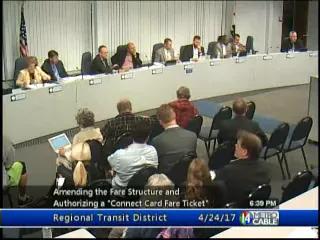
The Sacramento Regional Transit District (RT) Board met on May 4, 2017, at 4:10 PM. Note: The transcript indicates the meeting was called to order on Monday, April 24, 2017, but the user has instructed to use May 4, 2017, as the date. This summary follows that instruction. The board addressed consent items, a recognition, the General Manager's report, financial results, and fare policy changes, with unanimous votes on all actions. Consent Calendar - Item 1: Approved without discussion. - Items 2 & 3 (Streetcar Vehicle Procurement and Maintenance Facility Design): Approved after public comment. Speakers Russell Rowling (cautioned against using SB1 funds on streetcar and urged restoration of 2009 service cuts) and Helen O'Connell (requested 100% low-floor vehicles, asked about facility siting and funding). Director Hansen clarified that streetcar funds are restricted to that project, and the project team aims for 80-100% low floor. Director Natoli inquired about using Prop 1A funds; staff confirmed a request would come to the board on May 22. Public Comments & Testimony - Mike Barnbow (transit advocate): Updated on regional transit changes: Roseville transfer point reconstruction (May-September 2017, temporary relocation), Elk Grove service reduction (7.6% cut, elimination of Sunday/holiday service, reverse commute trips reduced from 22 to 8), and West Sacramento shuttle review. Requested excusal from May 8 meeting to report on May 22. - W. Glover: Asked for a fare-free transit system. - Sarah Kerber (SacTRU): Expressed support for free transfers but urged RT to ensure benefits are available to all riders regardless of smartphone access or language. Highlighted that the proposed 90-minute transfer for mobile app only excludes cash-paying riders. - Jeffrey Tardigia: Noted RT’s increased attendance at UCLA/UCC ridership discussions. Reported a broken Connect Card terminal at Cathedral that rebooted. Raised planning and communication concerns about Connect Card rollout, including staffing and data collection. - Cheryl Busby: Thanked Director Jennings for helping with a bus stop rebuild in Oak Park. Urged RT to use local vendors (e.g., Sunset Linens) instead of out-of-state companies for linen contracts. - Tim Ortiz: Expressed appreciation for system improvements and staff attitudes. - Helen O'Connell (on items 2&3): As above. - Barbara Stanton (Items 6&7): Stated that she and Chris Jensen (Resources for Independent Living) had met with staff expecting the 90-minute transfer to apply to all fare media. Asked that no action be taken on item 7 until stakeholder input, including the Mobility Advisory Council (MAC), could be obtained. - Russell Rawlings (Organized Sacramento, SacTRU): Argued that creating different transfer rules for cash, Connect Card, and mobile app creates inequity and confusion. Challenged the claim that paper transfers cause revenue loss. - Mike Barnbow (on Item 7): Suggested installing Connect Card stations at Sacramento Valley Station and the airport for visitors. Discussion Items - General Manager’s Report (Henry Li): Reviewed ridership decline (from 35 million in 2007 to 25 million in 2016, a 29% drop) due to 25% service cuts during the recession and sustained low gas prices. Announced plans to bring back free transfers within 90 minutes for Connect Card users (starting June 2017) and to seek board approval for up to 10 free ride days for students, seniors, and individuals with disabilities. Emphasized need for additional local funding to restore service frequency and complete route optimization. - Financial Report (Brent Bernicker): March 2017: operating loss of $750,000 (revenues $12.7M, expenses $13.5M). Fare revenues $262K below budget; federal revenues (5307) $439K below budget due to reduced proportional share; salaries/fringe $242K over budget due to extra workdays and sick/vacation sell-backs. Year-to-date surplus of $1.5M. Discussed potential recovery of lost revenue from January station outage (estimated $100-150K/month in lost fares) and staff’s work with SACOG to obtain federal reimbursement for Connect Card costs. - Item 6: Free Ride Days for Seniors, Disabled, Students: Staff proposed delegating authority to the GM to offer up to 10 free ride days over 12 months, at an estimated cost of $100,000. Director Natoli suggested including active duty military and veterans; Director Miller supported adding veterans. Motion amended and passed. - Item 7: Fare Structure Amendments – 90-Minute Transfer for Mobile App (permanent) and Connect Card (temporary): Staff explained operational issues with paper transfers and that the 90-minute transfer would only be available via electronic fare media. Public commenters raised equity concerns for cash users and visitors. The board voted to approve with a direction to explore adding a vendor at Sacramento Valley Station. Key Outcomes - Consent Items 1-3: All approved unanimously. - Recognition (Item 5): Resolution commending retiring mechanic Steven Anderson (41+ years of service) approved. Quarterly recognition of employees with 20+ years announced. - Item 6: Motion passed (100 votes) to allow the GM to authorize up to 10 free ride days for seniors, individuals with disabilities, and K-12 students, amended to also include active duty military and veterans with valid ID. - Item 7: Two resolutions adopted (100 votes): (a) permanently adding a 90-minute unlimited transfer ticket to the mobile fare app; (b) temporarily authorizing the same for Connect Card users effective June 15, 2017, pending Title VI analysis. With added direction to staff to pursue placement of a Connect Card vendor at Sacramento Valley Station. - Adjournment: The board adjourned in memory of Rancho Cordova Councilmember Dan Scoglin and Citrus Heights Councilmember Mel Turner.
The Sacramento Regional Transit (RT) Board met on April 11, 2017 (the transcript notes the meeting was called for April 10, but the official date is per the instruction). The meeting began without a quorum due to spring break absences, but a quorum was later achieved. The board approved the consent calendar, heard public comments, received reports on SB1 passage, bond rating improvement, ridership successes, a transit-friendly drinking map, and the preliminary FY2018 budget. Consent Calendar - Items 1–9 were approved as a block. Board member Natoli requested discussion on Item 5 (1225 R Street Interior Remodel contract). He noted that the single bid from RBH Construction Inc. was approximately 40% over the estimate ($145,000 vs. $82,000), attributing the difference to market conditions. After staff confirmed the market was driving prices up, the board moved and seconded the consent calendar. The motion carried (8 aye, 0 no, with abstentions not recorded). Public Comments & Testimony - Mike Barnbaum provided an update on the Elk Grove Comprehensive Operational Analysis (COA) for e-Tran. The COA will be presented to the Elk Grove City Council on Wednesday, April 12, at 6 p.m. It forecasts fare structure changes in January 2018 and July 2020, and includes a base scenario, a 7.6% service reduction, and a 10% service reduction. He urged board members to attend. - Jeffrey Tardigia raised multiple concerns: inadequate signage for e-Tran reverse direction pickups, insufficient attention to bus ridership during arena events, a coding issue with the Connect Card quad-core processor, lack of disclosure of bus shuttle costs for I-80 and Roseville incidents, and the need for line-item detail in the budget. He also asked about ticket distribution for upcoming events. - Adam Wong, a Sacramento City College student, presented his "Transit-Friendly Drinking Map" showing alcohol-serving locations near light rail stations. The map had surpassed 4,000 views. He expressed support for RT and noted that the map promotes transit use and prevents drunk driving. Board members praised his work. Discussion Items - General Manager's Report (Henry Li): - Announced the passage of SB1, which will provide approximately $5.2 billion statewide for roads and transit (85% roads, 15% transit). RT expects about $10 million annually, to be used for contingency reserves, reducing a $29 million line of credit, replacing lost federal CMAC funding for the Blue Line extension, and offsetting lower cap-and-trade revenues. - Reported an upward change in RT's revenue bond rating from a lactive to a stable outlook by Moody's, achieved after seven months of data preparation. - Noted progress on the strategic vision and route optimization, with community surveys and 20–30 scheduled presentations. Mentioned new labor agreements that reduce pension contributions from 26% to 3% for new employees and a transition from contracted security (G4S) to internal transit agents, saving $200,000. - Announced that the FY2018 proposed operating budget is 1% less than the prior year without changing service or fares, due to efficiencies. A tentative agreement with Paratransit Inc. will save $3.5 million annually while maintaining service. - Financial Report (Brent Burlinger): Provided February 2017 financials: revenues $13.3 million, expenses $13.2 million, surplus of $100,000. Fare revenues exceeded budget by $160,000 due to a one-time SAC State payment. Sales tax growth (4.5%) offset an STA loss of $770,000. Federal revenues are expected to decrease by $500,000 annually. Ridership remains a concern, and Moody's recommended building a 60-day cash reserve (currently 23 days). The board discussed reserve policies. - Media Presentation (Deborah): Played a news clip highlighting RT's free rides during the NCAA tournament and St. Patrick's Day, noting that 20% of arena attendees used light rail and many were new riders. - New Business – Item 11: Preliminary FY2018 Budget Release (David Goldman): Presented the operating budget of $160.9 million (down from $162.5 million) and capital additions of $195 million (mostly for the downtown riverfront streetcar, funded by federal and state grants). The budget maintains service levels and fare structure. A 60-day public review begins, with a public hearing on May 8 and adoption on June 12. Board member Natoli clarified that the streetcar project is not RT money, but may fund RT staff. Public commenter Jeffrey Tardigia requested more line-item detail. The board approved the resolution (motion carried 8-0). - Item 12: San Joaquin Joint Powers Authority Meeting Report (Director Natoli): Summarized the March 24 meeting, which included a lengthy discussion on single-source contracting for advertising. He noted that Director Hume frequently attends. Key Outcomes - Approved the consent calendar (including the 1225 R Street contract) with discussion on item 5. - Approved the release of the preliminary FY2018 operating and capital budgets for public review (Item 11), with a public hearing set for May 8, 2017. - Heard the general manager's report and financial updates; no formal votes were taken on those items. - Received reports from advisory committees and public testimony; no immediate board action required.
This meeting of the Sacramento Regional Transit District took place on March 15, 2017 (the cablecast date). The board addressed routine consent items, public comments, several major contracts, the Connect Card system, and received financial and ridership updates. Consent Calendar - Items 1–18 were approved en bloc, with items 5, 6, 10, and 15 pulled for separate discussion and later approved after public comment and staff responses. Public Comments & Testimony - Mike Barnbum applauded RT for successful service detours during crane removal at the Kimpton Sawyer Hotel, noting the detour route’s proximity to the proposed MLS stadium site. He urged frequent bus service to the area. - Joe Gamble (Amalgamated Transit Union Local 256) expressed labor’s interest in being an active participant in the route optimization initiative. - Jeffrey Tardigia criticized internal communication gaps, mentioned the loss of Route 13, and urged better rider engagement. He also noted issues with bus stop signage during detours. - Maggie Coulter (Sacramento Human) expressed appreciation for Norm’s work on consent items. - Helen (on item 5) urged that anyone hired for cleaning services receive a livable wage, including developmentally disabled workers. - Brenda Anderson (on item 5) questioned the decision to rebid the cleaning contract with InAlliance and alleged financial contributions. Staff explained it was a fixed-term contract requiring periodic bidding. - Brenda Anderson (on item 6) questioned repeated extensions and funding increases for Robin Haswell’s personal services contract. Staff tied it to specific capital projects. - Barbara Stanton (Ridership for the Masses) argued that the mobile app’s 90-minute transfer policy creates a Title VI disparate impact on cash users. She suggested reinstating paper transfers for equal access. - Jeffrey Tardigia (on item 10) raised that discontinuing the bus book may also be a Title VI issue by limiting physical access to schedules. - Barbara Stanton (on item 15) asked whether alcohol advertising would be permitted under the new bus advertising contract. Deborah Salinas confirmed the same policy as light rail. - Mike Barnbum (on San Joaquin JPA report) highlighted the draft business plan and vision for hourly San Joaquin service to Sacramento within 10-15 years. Discussion Items - General Manager’s Report: Mark reported on the annual federal lobbying trip in Washington, noting uncertain federal funding. He announced restoration of Folsom light rail service on March 8 after a three-month outage due to a gate mechanism that damaged signaling and crossing systems – the most disruptive event in 30 years. Brent Rennegar presented January financials: total revenues $13.3M, expenses $13.2M (positive variance). Fare revenue at $2.5M was the lowest since the July fare increase, but year-to-date fare revenue up 14%. Ridership down 11.8% in January due to fare inspection, fare increase, weather, missed trips, and mechanical issues. STA revenues expected to drop $770k, but LTF sales tax revenues may increase 2.5-5%, offsetting the loss. Farebox recovery at 20.5% (budget 20.6%) for the month, but 21.9% year-to-date (budget 21.1%). - Items 20 & 21 – Systemwide Station Improvement Project Phases 2 & 3: Daryl Aben Sado presented two contracts awarded to JPB Designs: painting ($500k) for 19 stations and civil work ($340k) for 31 stations. Overall project budget $6.7M (under budget). Work includes painting columns, railings, shelters, concrete repairs, signage, lighting, and cleaning. Remaining funds may be used for additional lighting and cameras. Brenda Anderson asked about cameras and community outreach; staff said they survey stations. - Item 22 – Regional Connect Card: KC Courtright presented two resolutions: (1) MOU for governance of the Connect Card system, with RT hosting the Regional Service Center (RSC) and paying 79% of first-year costs; (2) temporary daily best fare for Connect Card users – capping fares at $7 per day (equivalent to a day pass). Implementation intended to simplify boarding and reduce overcharges. Speakers: Mike Barnbum asked about corporate accounts; Jeffrey Tardigia reported overcharging issues and syncing problems; Dan Allison supported the daily best fare as a speed improvement. Staff responded that overcharges are refunded and daily best fare will mitigate future issues. Key Outcomes - Consent calendar items 1–18 approved; items 5, 6, 10, and 15 separately moved and passed unanimously (5-0 votes where recorded). - Items 20 and 21 (station improvement contracts) approved unanimously (motion carried 5-0). - Item 22 (Connect Card governance MOU and temporary daily best fare) approved unanimously (motion carried 5-0). - Board received written reports from Paratransit (meetings Jan 17 and 26) and San Joaquin Joint Powers Authority (meeting Jan 27). - Director Hansen asked staff to address cleanliness at the 8th & K Street station. - Board recessed to closed session for real estate negotiations (property at 2220 Simo Circle, Gold River).
Note on date discrepancy: The provided meeting date is March 7, 2017, but the transcript begins with a call to order on Monday, February 27, 2017. This summary uses the date supplied for the title but reflects the content as transcribed from February 27, 2017. The Sacramento Regional Transit District (RT) Board held a workshop to discuss the agency's strategic vision, financial challenges, and a proposed 12-initiative plan to eliminate a $10 million operating deficit and build toward a sustainable future. The meeting included a detailed presentation by General Manager Henry Lee and senior staff, followed by public testimony and board discussion. Public Comments & Testimony - Brenda Anderson (private advocate for disabled/elderly): Praised RT's recent innovations and improvements. - Ellen Johnson (resident): Expressed concern about removal of benches at Broadway and Martin Luther King Jr. Blvd., citing safety and loss of seating for bus riders. RT staff explained benches were temporarily removed due to chronic loitering and sleeping, but they committed to reassessing. - Jeffrey Tardiya: Criticized the Connect Card system, noting drivers were unfamiliar with how to offer a discounted day pass, and requested a refund policy. - Joan Bardin (Oak Park Neighborhood Association): Supported safe, covered benches and suggested cameras to deter negative behavior; urged a broader solution to homelessness. - Brenda Anderson (second appearance): Withdrew earlier compliments, chastising RT for excessive promotion of Golden 1 Center service and lack of community outreach to churches and job programs. She demanded removal of expensive paratransit advertisements and more surveys. - Ray Pingle (Sierra Club California): Urged RT to aggressively transition to electric buses, citing cost declines, range improvements, and examples from other California agencies (Antelope Valley, Foothill Transit). - Barbara Stanton (Ridership for the Masses): Highlighted Paratransit Inc.'s free mobility training to help people use fixed-route transit, suggesting it could reduce paratransit costs. - Rory Barloo (South Natomas resident): Opposed the Green Line expansion to the airport, arguing it is unnecessary and too costly; urged focus on bus service and addressing homeless camps moved into South Natomas. - Bill Smith (statistician/inventor): Predicted rapid technological advances (autonomous vehicles, drones) and suggested RT should prepare for a "fifth industrial revolution." - Jeffrey Tardiya (second appearance): Asked RT to improve customer service hours (24/7) and to develop a transit-only tax measure, noting the need to compete with an affordable housing measure. He also requested better service to the Harris Center for events. - Becky Heike (Executive Director, North Natomas Transportation Management Association): Described growing demand for shuttle services as new housing and Amazon's facility come online; proposed using North Natomas as a pilot for the route optimization study. - Joan Bardin (second appearance): Emphasized the importance of neighborhood association partnerships and noted specific needs in Oak Park and Curtis Park. - Tiffany Fink (CEO, Paratransit Inc.): Reaffirmed commitment to partnership with RT beyond ADA service, including mobility training for students. Discussion Items Strategic Vision Presentation (Henry Lee and Staff) - Achievements last 8 months: Built cash reserve from $0 to $6 million (target $9 million by year-end); reduced fare evasion from 15% to <5%; increased fare revenue 18.5% in first 6 months; earned C COC Salutes award; saved $3 million on Buy America compliance; renegotiated union contract reducing annual pay increase from 4% to 2.5% (saving $1.5 million). - 12 Initiatives: Covered operator attendance (target 10% reduction in unscheduled absences), route optimization (blank slate redesign), ADA paratransit cost review, IT modernization (mobile fare app, real-time train info, PA system), security and safety (expand fare paid zones, 24/7 security operations center, improve CPUC compliance), strategic communications, employee/labor relations, organizational excellence, business process optimization, facilities master plan, transit-oriented development, and fiscal management. - Fiscal Challenges: $29 million operating line of credit, $3.5 million annual bond debt for 23 years, volatile state and federal funding (STA, cap-and-trade, CMAQ). Potential federal cuts could remove $35 million annually (21% of operating budget). Unfunded state-of-good-repair needs total $360 million, including $162 million to replace 30-year-old Siemens light rail vehicles, $50 million for station modifications for low-floor vehicles, and $40 million for CAF midlife overhaul. - Service Gaps: RT receives 1/6 of 1 penny local sales tax; peer agencies in San Diego and Portland receive 3-4 times more. To double bus fleet and increase frequency from 30 to 15 minutes would need at least an additional 1/3 penny sales tax. - Four Major Priorities (if new funding secured): Free student fares (K-12, projected +1 million rides), ADA fare discounts, flat fares for 10 years, free transfers/zonal fares. - Capital Expansion: Green Line to airport ($1 billion), streetcar ($200 million), South Line extension to Elk Grove, and Sacramento Valley Station loop. Board Member Discussion - Director Shanier: Emphasized the turnaround from financial death spiral; Golden 1 Center helped expose choice riders to transit; route optimization will be difficult (winners/losers) and should be paired with budget exercises; praised ATU for cooperation. - Director Cerna: Thanked public; stressed Title VI equity must be floor, not ceiling; asked about RT brand value; supported transit-oriented development working group (to be led by Director Shanier). - Director Hansen: Called for a sustainable system; advocated for a half-cent sales tax (or more) as a fair start; noted need for first/last mile connections (bike share, TNCs); urged careful property disposition; praised Golden 1 Center as model of smart planning. - Director Hume: Supported blank-slate approach but argued that funds should be focused on areas of highest need rather than trying to convince non-riders; suggested rebranding RT (e.g., "trolley" instead of "light rail"). - Director Harris: Said the system has not reached a tipping point; more investment needed; green line to airport essential; electric buses desirable; low-floor vehicles critical for accessibility. - Director Natoli: Recognized the challenge of balancing day-to-day operations with long-term vision; expressed concern that potential federal cuts could derail promises made for a tax measure; stressed need for clear communication about risks. - Director Budge: Route optimization critical for growing areas like Rancho Cordova; opportunities at Mill Station as TOD test case; supported electric buses for lower maintenance. - Chair Moore: Summarized positive momentum; urged community to understand the board's energy and staff's hard work; noted the need to seize the moment despite funding uncertainties. Key Outcomes - The board received the strategic vision presentation and public input, expressing broad support for the direction. - Staff was directed to proceed with the 12 initiatives, particularly the route optimization study, with an emphasis on community engagement and equity (Title VI plus deeper analysis). - No formal vote was taken, but consensus emerged to explore a transit-only sales tax measure (rather than a combined transportation measure) and to consider a funding level of at least a half-cent, potentially aspiring to a full cent. - The board committed to forming a transit-oriented development working group and to continuing the conversation with the public through additional workshops and outreach. - Staff will report back on paratransit contract renegotiation, route optimization progress, and specific cost-saving measures in the coming months.