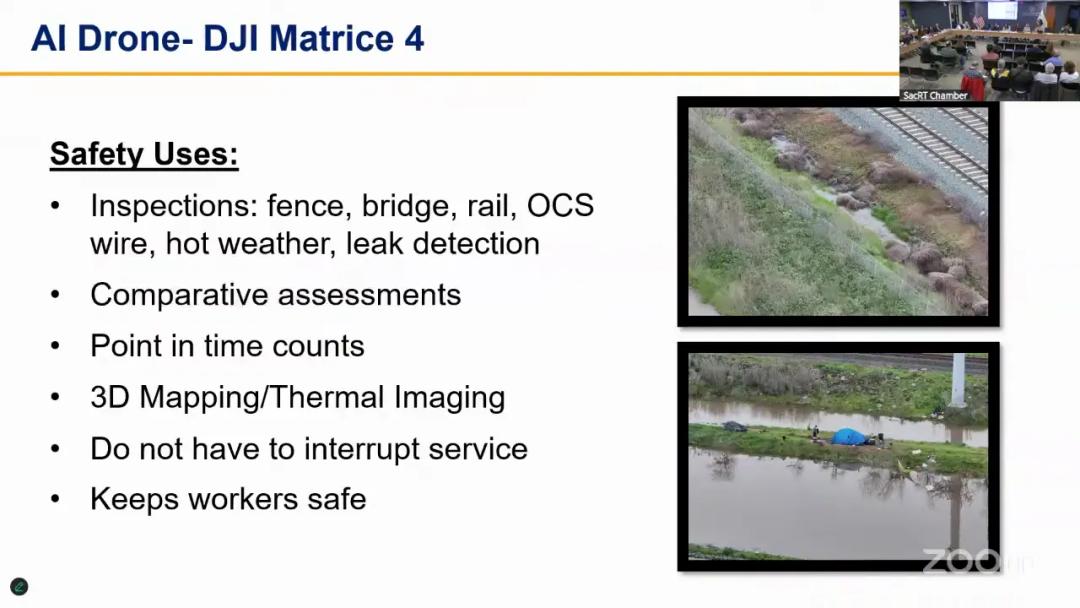
Note: The meeting transcript begins with "Welcome to the February 23rd, 2026 meeting," but the assigned date for this summary is March 2, 2026, per the instructions. This discrepancy is noted but not resolved. The board convened with a quorum of nine votes. The agenda order was adjusted to hear item 3.2 (Ride Free RT update) first, then item 3.1 (recognizing Director Jennings), followed by consent calendar, public comment, and other items. Closed session was moved to the end. Consent Calendar - Item 2.9 – Real-time information for light rail: Director Dickinson expressed support and noted a long wait for the system. Public comment from Glenn Mandelkern praised the effort and urged consistent signage. Staff clarified that real-time apps will be available within 12 months, and station signage upgrades are also targeted for that timeframe. The item was approved. - Other consent items were approved without discussion. Public Comments & Testimony - Ride Free RT (Item 3.2): Sue Simonelli (SAC Act Education Committee) expressed strong support for making the program permanent, citing benefits for students beyond school (jobs, internships, extracurriculars). She urged the board to end yearly budget negotiations. - Item 2.9: Glenn Mandelkern offered supportive comments on real-time information, suggesting consistent signage design and using the system to build goodwill. - Public addresses on matters not on the agenda (N Street streetcar alignment): Several residents of 500 N Street (James Pasarella, Mike Andrews, Pauline Hutton, Robert Copeland, Nigel Hakins) spoke in opposition to the planned removal of all parking and loading zones along the streetcar alignment. They cited concerns for seniors, disabled residents, emergency vehicle access, contractor access, and safety at stations. They requested that the plan be adjusted to preserve loading zones. - Item 4.2 (Travel policy): Written public comment from Rick Hodgkins on items 2.3, 2.7, and 2.9 (underground conduit, fiber, audible announcements) and from Lisa and Don Hayward on item 2.7 (competitive bidding) were noted as provided to the board. Discussion Items - Item 3.2 – Ride Free RT Update: Chris Flores, Jay Shane, Jasmine Advancla, and Alex Tagavian presented. The Nehemiah Emerging Leadership Program (NELP) study recommended strengthening data infrastructure and creating a youth advisory committee. Jay Shane proposed a structure with appointments from RT board, school districts, and public members. Directors discussed the need for granular data, long-term funding, and the role of school districts. Director Dickinson suggested school districts should invest more due to ADA benefits. Director Budge questioned the committee's heavy adult weighting and suggested one-year terms for students. Director Maple supported the program and noted a ballot measure petition filed in Sacramento. Director Serna recommended using existing youth commissions rather than creating a new body. The item was informational only; no vote was taken. - Item 3.1 – Recognition of Director Jennings: A resolution commending Director Rick Jennings for his service as chair was presented and approved unanimously. Directors expressed appreciation. - Item 4.1 – Customer Service Response to Feedback: Lisa Heinz presented responses to public comments, including: health benefits are consistent for full-time employees; bus barriers are being modified to accommodate bariatric wheelchairs; ADA compliance vs. usability is being addressed; used light rail vehicles from Santa Clara VTA were compatible; emergency drills did not include people with disabilities; data errors are being corrected; bus service to Elk Grove is limited by funding; low-floor vehicle ramps were successfully tested; bus bridge performance at 65th Street is being improved; Zip Pass vs. Transit Connect app confusion will be resolved; and a community ballot measure wish list is being developed. She also introduced two drones for thermal imaging and 3D mapping to aid safety and inspections. Director Rodriguez asked about drones replacing human inspectors; Heinz clarified they are additive. Director Dickinson asked about comprehensive operational analysis; Heinz confirmed it includes current route evaluation. - Item 4.2 – Travel Authorization Policy (Resolution 2026-02014): Shelley Valentin presented a revised policy based on board feedback, allowing up to four transit conferences annually (APTA, CTA, etc.), with a $26,000 budget line item (actuals last year $16,000). International travel is allowed for up to three board members per event, with chair and vice chair priority. Director Serna confirmed zero-based budgeting. Director Dickinson questioned the term "advocating" and sought clarification; staff explained it includes representing RT at events like CAP to CAP or sharing best practices. Chair Singh Allen noted the policy is more permissive than peer agencies. The resolution was approved unanimously. - Item 6.2 – Public Transportation Agency Safety Plan (Resolution 2026-02016): Adopted without discussion. - General Manager's Report: Henry Li reported a $1.3 million favorable budget variance for the first six months. Bus ridership is 109% recovered, rail about 70% recovered, weekend bus 130%. Workshops for Safe Routes to Transit and the SACRT 2050 Comprehensive Operational Analysis were announced. Bus station modernization and a bus bridge on the Blue Line (March 16-31) were noted. Transit Employee Appreciation Day on March 18 was promoted. Director Dickinson raised concerns about the Arden Del Paso and Royal Oaks station closures during the bus bridge; staff clarified the bus bridge will run from Globe to Swanston. Director Rodriguez noted the 200th anniversary of the Sacramento Valley Railroad celebration on March 4. - Capitol Corridor JPA Report: Director Dickinson reported that ridership is not yet at pre-pandemic levels, and there is a challenge maintaining enough locomotives. A vision planning process will begin, potentially revisiting commuter rail feasibility. Key Outcomes - Approved: Consent calendar (including item 2.9 real-time information). - Approved: Resolution honoring Director Jennings (item 3.1). - Approved: Revised travel policy (Resolution 2026-02014) – unanimous. - Approved: Public Transportation Agency Safety Plan (Resolution 2026-02016) – unanimous. - Appointed: Director Maple to the Capitol Corridor Joint Powers Authority (voting member), Director Dickinson as alternate. - No action taken: Ride Free RT update (item 3.2) was informational only; board will consider next steps after digesting the report. - Directives: Staff to address public comments on streetcar alignment and parking removal; operational team to improve bus bridge lighting and signage; continued work on data infrastructure for Ride Free RT. - Closed session: The board adjourned to closed session for anticipated litigation (one case).
Public Meetings - Sacramento County, California
Public Meetings - Sacramento County, CaliforniaThe Sacramento Area Flood Control Agency (SAFCA) Board of Directors met on March 2, 2026, with an 11-member quorum present. The meeting included approval of the consent calendar, an executive director's report, and unanimous adoption of resolutions honoring a retiring employee and authorizing his post-retirement reemployment. Consent Calendar - Items 2 through 13 were approved unanimously. Director Avdis pulled item 11 (Resolution regarding the Valley Rail Sacramento Extension Project) to share a personal reflection: the property being sold was once his family's ranch, condemned by SAFCA 30 years ago. He acknowledged the human impact of real property actions and the collective memory of the Wolf Ranch, but moved consent, which was seconded and passed. Discussion Items - Executive Director's Report (Item 14): Jason Campbell reported on federal funding updates, noting that the approved Corps of Engineers budget is proceeding for Folsom Dam and Common Features 2016, but funding for the Natomas project remains uncertain. Bond refunding options (Thomas Basin 2014 and CCAD 2016 bonds) are being evaluated to provide additional project funds. The agency is preparing R27 budget recommendations with strategic reductions. Levee certification efforts continue: four systems are certified, and packages are being prepared for others. Emergency planning coordination with County and City OES, state operations, and the Regional Water Authority has begun, with a focus on evacuation routes and public education. The presentation included a photo of Folsom Dam showing the gap to be closed. - Resolution of Appreciation for John A. Bassett (Item 15): Executive Director Campbell and board members praised John Bassett's 33-year tenure, his institutional knowledge, and his role as the 'backbone' of the agency. The resolution was moved by Vice Chair Holloway, seconded, and adopted unanimously. Bassett made brief remarks thanking the board. - Exception to 180-Day Wait Period (Item 16): Resolution 2026-023 authorizing the exception to Government Code sections 7522.56 and 21224 and approving a retired annuitant employment agreement with John Bassett was moved, seconded, and adopted unanimously. Key Outcomes - Consent calendar approved (items 2-13). - Resolution 2026-022 recognizing John A. Bassett's contributions adopted unanimously. - Resolution 2026-023 authorizing exception to the 180-day wait period and reemployment agreement with John Bassett adopted unanimously. - The next regular meeting is scheduled for March 19, 2026.
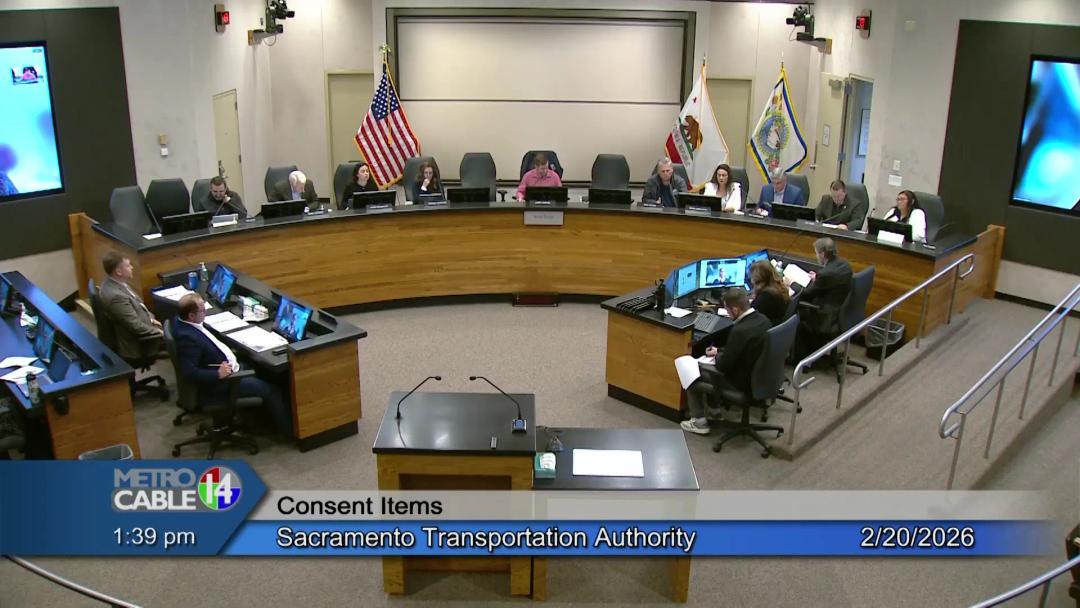
The Sacramento Transportation Authority (STA) met on March 2, 2026, to elect officers, approve consent items, consider interim financing for the I Street Bridge Replacement Project, and provide direction on the future of the Sacramento Abandoned Vehicle Service Authority (SASFA). The meeting was called to order at approximately 12:52 PM and adjourned at 2:27 PM. Consent Calendar - Approved unanimously without discussion or public comment. Election of Chair and Vice Chair for Calendar Year 2026 - Vice Chair Raithel was nominated and elected as Chair. Director Hume was nominated and elected as Vice Chair. Both votes were unanimous (recorded voice votes). Discussion Item: I Street Bridge Replacement Project Interim Financing (Item 13) - Staff (Dustin and Darren Hodge, PFM) presented a revised financing plan. The line of credit need was reduced from $165 million to $95 million due to increased annual reimbursement caps from Caltrans. The master agreement authorizes the Executive Director to execute an interim financing agreement with the City of Sacramento and solicit proposals from commercial banks. Repayment is secured by Measure A sales tax revenues but isolated to the City of Sacramento's share. Interest and fees estimated at $10–11 million, to be borne by the City of Sacramento. - Board members (Directors Talamantes, Hume, Pluckebaum, Dickinson, and Mayor Pro Tem) expressed positions: support with emphasis on risk mitigation, noting that the framework reduces risk to other jurisdictions and that the project unlocks $250 million in state/federal funding. Concerns about the legal term 'should' vs 'shall' were addressed; staff confirmed future implementation agreements would use stronger language. - A motion to approve the staff recommendation was made by Director Talamantes, seconded, and passed unanimously (Roll call: 11 ayes, 0 nays). Discussion Item: Future of SASFA – Potential November 2026 Ballot Measure (Item 14) - Staff (Jennifer Dahl and Kevin Busey) presented three options: (1) end the program, (2) pursue a November 2026 ballot measure after polling, or (3) a hybrid of delaying the ballot but conducting polling now. The program (a $1 annual vehicle registration fee) sunset in 2022 after receiving 57.7% voter approval (needed 2/3 supermajority). Current abandoned vehicle abatement funding is lacking. Polling would cost $35,000–$40,000. - Director Dickinson offered a motion to pursue options 2 and 3 (hybrid), authorizing the Executive Director to seek polling funds from member jurisdictions. Seconded by Director Sing Allen. - Roll call: 9 ayes (Boulihan, Dickinson, Gera, Middleton, Rodriguez, Sing Allen, Spees, Talamantes, Raithel), 2 nays (Pluckebaum, Hume). Motion passed. Executive Director’s Report (Item 15) - Kevin Busey reported on SACOG’s upcoming regional funding round ($84M–$125M), STA’s grant training seminars, and SB 1087 (SCS/APS consistency legislation) being monitored. Also noted a countywide VMT mitigation strategy report expected in April 2026. Key Outcomes - Elected Raithel as Chair and Hume as Vice Chair (unanimous). - Approved I Street Bridge interim financing framework unanimously, authorizing the Executive Director to execute the master agreement and solicit bank proposals. - Approved the SASFA hybrid direction (options 2 and 3) with authorization to seek polling funds from member jurisdictions; passed 9-2. - Consent calendar approved without changes.
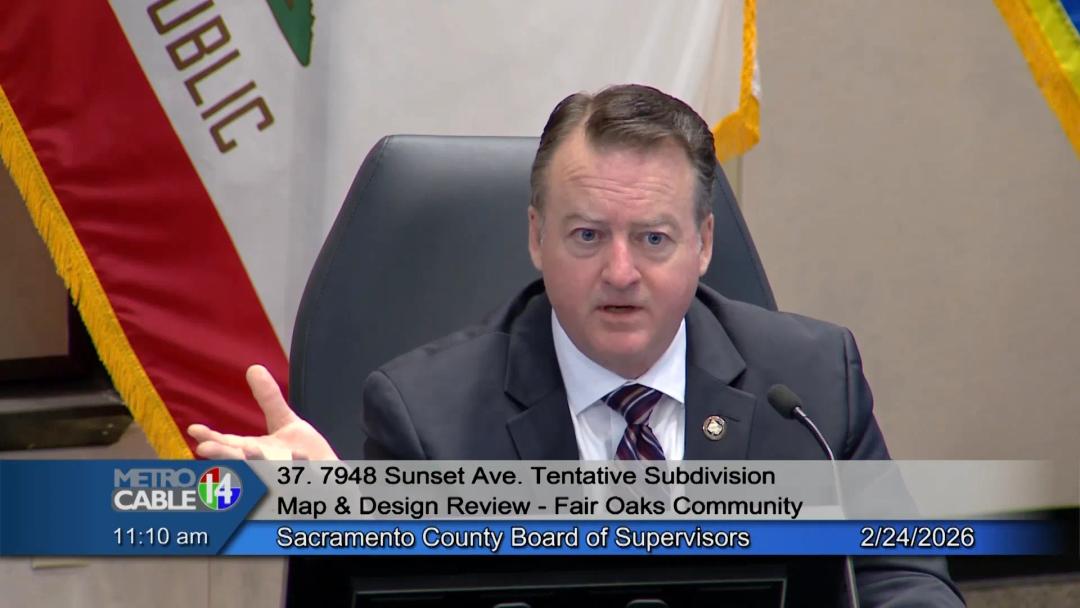
Note: The meeting transcript indicates a date of February 24, 2026, but the official meeting date is March 2, 2026 as provided. This summary uses the official date. The Board of Supervisors convened on March 2, 2026, with all five members present. The meeting included presentations, public comments, consent calendar approvals, and action on appeals, development projects, housing element amendments, and a homeless system partnership update. Consent Calendar - Items 4 through 33 were approved as a block (items 15 and 18 were dropped earlier). Notable among them were acceptance of $350,000 from the estate of Robert W. Steger and $19,000 from the Ilfeld family for animal care services. Public Comments & Testimony - Peter Frederick warned against issuing proclamations to organizations like the Hindu American Foundation, alleging they lobby to block public safety legislation such as SB 509 (vetoed). - Joe Barr (Exec. Dir., Access Sacramento) requested a transparent review before any defunding by the Sacramento Metropolitan Cable Television Commission, warning that a March 5 vote could end nearly 40 years of public access media. - Denise Lipscomb (Elders in the Community) demanded a response within 10 business days to letters of intent for surplus land as black land reparations. - Ted Samara (Labor advocate) urged improved communication between county management and employees, noting that an item had been hidden on the consent calendar. Presentations - Item 1 – Resolution Recognizing SAC DOT Bridge Section: Honored the team for emergency repairs on Clay Station Road Bridge at Browns Creek, completed under significant time constraints. The work included dewatering and stabilizing the structure. - Item 2 – Resolution Recognizing Folsom High Bulldog Football Team: Recognized the team's 2025 CIF Division 1-A State Championship (14–1 season), with junior quarterback Brody Rudinicki throwing 6 touchdowns in the title game. - Introduction of New SHRA Executive Director: Chris Warren was introduced, bringing 25 years of affordable housing and housing authority experience. Discussion Items - Item 34 – Airport Short-Term Financing Facility: Approved a $50 million revolving line of credit with PNC to support capital improvements at Sacramento International Airport. The TEFRA hearing was closed; the vote was 5-0. - Item 35 – SHRA Audited Financial Statements (FY 2024): A clean opinion with two qualified opinions (Public Housing and Housing Voucher programs) due to material weaknesses. Findings included untimely annual certifications and inspections. The board received and filed the report. - Item 36 – Neighborhood Traffic Management Program 2026: Approved traffic plans for California Avenue (71% support) and 20th Street (hearing requested; 83% support). Jacob Lane could not proceed due to lack of consensus on device location. Vote 5-0. - Item 37 – Appeal of Sunset Avenue Subdivision Map (7948 Sunset Ave): The Fair Oaks CPAC appealed the Planning Commission's approval of a 7-lot subdivision on a 1.77-acre RD5-zoned parcel. Neighbors raised concerns about traffic, tree removal, lot size compatibility, and CEQA exemption. The board denied the appeal (5-0), affirming the project’s consistency with zoning and general plan, and noting state housing mandates. The developer had failed to attend earlier community meetings. - Item 38 (first) – Bar Nun Auction Site (6190 Bradshaw Rd): Approved a general plan amendment, rezone, use permit, and design review to allow a heavy equipment auction business on 46.7 acres. The project was determined to have less-than-significant impacts with mitigation. Vote 5-0 (general plan amendment held for later action). - Item 38 (second – actually numbered 38) – Housing Element Amendment 1 & Zoning Code Update: Formalized the countywide rezone program (Program A1) and added the state's use-by-right definition (Program A2). No new rezonings; this ensures continued HCD compliance. The board adopted the amendment and zoning code update (5-0), directing submittal to HCD for final certification. - Item 40 – Homeless & Housing System Partnership Model Update: Staff reported that four of six cities support the county’s preferred model (reconstituted Continuum of Care board with elected officials). The City of Sacramento opted for a Joint Powers Authority. The board voted unanimously (5-0) to send a letter to the COC requesting the model be agendized for a vote in April 2026. Key Outcomes - Consent Calendar and financial items approved 5-0. - Appeal denied (5-0) – Sunset Avenue subdivision map to proceed as conditioned. - Housing Element Amendment and Zoning Code Update adopted (5-0) – ensures state compliance for the 6th cycle. - Letter to Continuum of Care authorized (5-0) – to resolve homeless system governance model. - Nominations – Several appointments continued to later dates; Mike Rokenstein appointed to Planning Commission. - Adjournment – Adjourned in memory of Warren and Janet McWilliams of Fair Oaks.
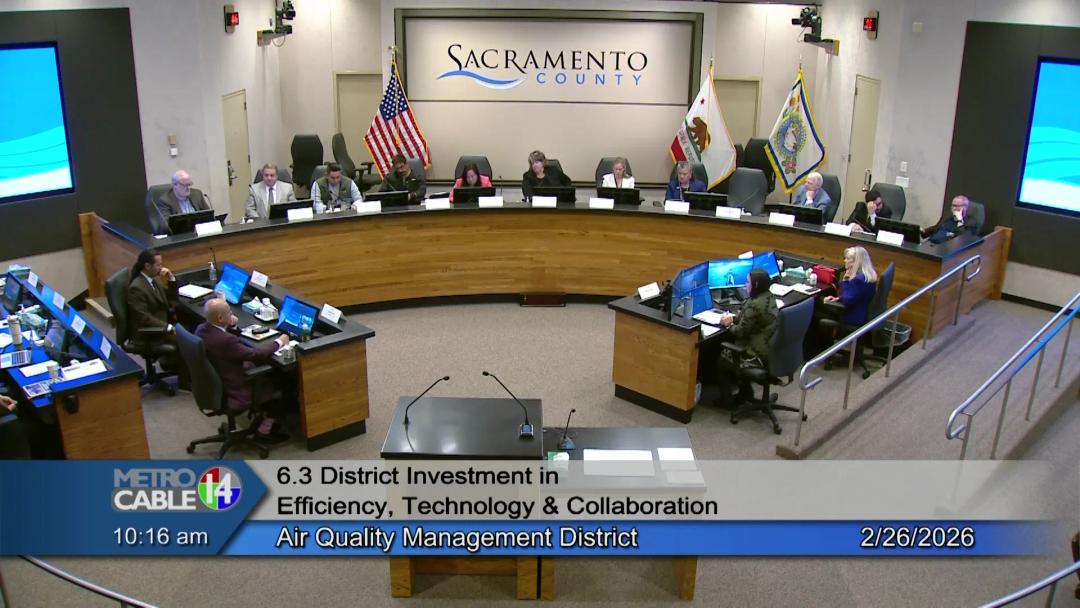
Meeting Overview The Sacramento Metropolitan Air Quality Management District Board of Directors met on March 2, 2026, to receive updates on the South Sacramento Florin Community Emission Reduction Plan (CERP), hear a report on district efficiency and technology investments, and receive the fiscal year 2024-2025 audit results. The meeting included public comments from community members and organizations, along with board discussion on air quality improvements and regulatory collaboration. Consent Calendar - The board unanimously adopted the consent calendar with no questions or items pulled for discussion. Public Comments & Testimony - Jessica Sanders, CEO, Sacramento Tree Foundation: Expressed strong support for the community-driven CERP process, especially the prioritization of tree canopy. Noted that trees in underserved communities cost three to five times more than in well-canopied areas due to historical disinvestment. Emphasized that tree planting must be paired with long-term care and water access. - Ryan Motashemi, SlowDown Sacramento: Spoke in support of the CERP's focus on mobile sources and active transportation improvements as a means to reduce emissions and improve safety. - Garrett Jensen, Vice President, SlowDown Sacramento: Commended the board and staff for elevating quick-build street design and safe streets as air quality strategies. Linked the organization's mission of reducing driver speeds to improved air quality and livability. Community Emission Reduction Plan Update (Item 6.1) - Presentation by Janice Slam Snyder, Director of Community Air Protection: Provided a detailed update on the South Sacramento Florin CERP, an AB 617 program. The plan has been developed over the past year with a steering committee of 14 residents and five community organizations. Over 28 strategies were developed through 18 public meetings and additional office hours. - Community Steering Committee Members: Tito Huang (Vietnamese American Community of Sacramento) and Roberto Rizzo (resident and co-lead) testified about the seven-year journey, emphasizing authentic community engagement and the shift from planning to implementation. Rizzo highlighted that the community voted on funding priorities, with trees being a top focus. - Board Discussion: Board members praised the community-driven process. Director Kennedy called it "one of the model community-driven processes I've ever seen" and stressed the need for implementation funding. Director Vang noted the transition from a Community Air Monitoring Plan to a CERP and the importance of co-governance. Director Guetta highlighted that the district met federal air quality attainment for the first time but noted that heavy-duty diesel vehicles remain the primary pollution source, urging future board consideration of local revenue options. Urban Planning and Mobile Sources Strategies (Item 6.2) - Presentation by Paul Philly, Program Manager: Presented 11 of the 28 CERP strategies categorized as urban planning and mobile sources. Noted that over the past eight years, $47 million has been invested in the community, with about a quarter coming from CERP funding. Key strategies include: increasing tree canopy (number one priority), safe and resilient streets (quick-build projects in partnership with SACRT), and mobile source enforcement via CARB's Peaks program (committed to at least twice-yearly heavy-duty vehicle inspections). - Board Discussion: Director Guetta highlighted the partnership with CHP for mobile screening, noting that many violators come from out of state with multiple violations. Director Maple and staff confirmed coordination with the City of Sacramento to align with existing plans (General Plan, Climate Action Plan). Director Kennedy asked about challenges with absentee landlords and tree planting in multi-family rentals; Jessica Sanders (Sacramento Tree Foundation) responded with strategies including above-ground planter boxes. District Investment in Efficiency, Technology, and Collaboration (Item 6.3) - Presentation by Angela Thompson, Program Manager: Responded to board questions from October 2025 on efficiency, technology, remote inspections, and collaboration. Reported that field inspections remain central due to complexity and the value of face-to-face compliance assistance; remote inspections were found effective only for simple verifications (e.g., breakdowns). New technologies include satellite data (CARB Carbon Mapper) for methane and illegal burning. AI is being explored to assist with permitting, inspection report drafting, and data review. Collaborative inspections with other agencies were reviewed and deemed not beneficial due to differing authorities and increased burden on businesses. However, existing partnerships (e.g., with BERC, Ag Commissioner) are strong. - Board Discussion: Director Dickinson questioned the rejection of remote inspections and coordinated multi-agency inspections. Thompson clarified that remote inspections shift burden to businesses and that coordinated inspections would multiply disruption. Dickinson urged continued exploration of cross-training and efficiency. Thompson confirmed the district is exploring AI for permit and report drafting, working closely with the IT department on security. APCO Report and Audit Results - Megan Shepard, Director of Administrative Services: Announced that the fiscal year 2024-2025 annual comprehensive financial report and single audit were completed with a clean opinion, no findings, and no adjustments. The audit was conducted by new external auditors, Richardson and Company. Shepard credited the finance team led by controller Patty Kepner and supported by Agnes, Veronica, Ahmed, Sandy, May, and Bianca. The district is operating with a lean team and meeting grant and regulatory requirements. Key Outcomes - The board received and discussed the CERP update and urban planning/mobile source strategies, with no formal vote taken. The plan is scheduled for board action in May 2026 before submission to the state in July 2026. - Staff confirmed the CERP has a five-year implementation timeline and will rely primarily on state cap-and-trade funding (continuous appropriation extended to 2045, but annual allocations are uncertain). - The board received the efficiency and technology report; no formal action was taken, but staff will continue exploring AI and drone use. - The board received the clean audit results with thanks to staff. - Dr. Ayala proposed planting 30 trees in South Sacramento to celebrate the district's 30th anniversary, with a celebration planned for September 9, 2026 in partnership with Valley Vision. - The meeting adjourned at 10:27 AM. Note: The meeting date is March 2, 2026, as specified in the instructions, though the opening call to order references "February 26, 2026." The transcript shows the meeting actually occurred on the date provided (March 2, 2026), based on the instruction.
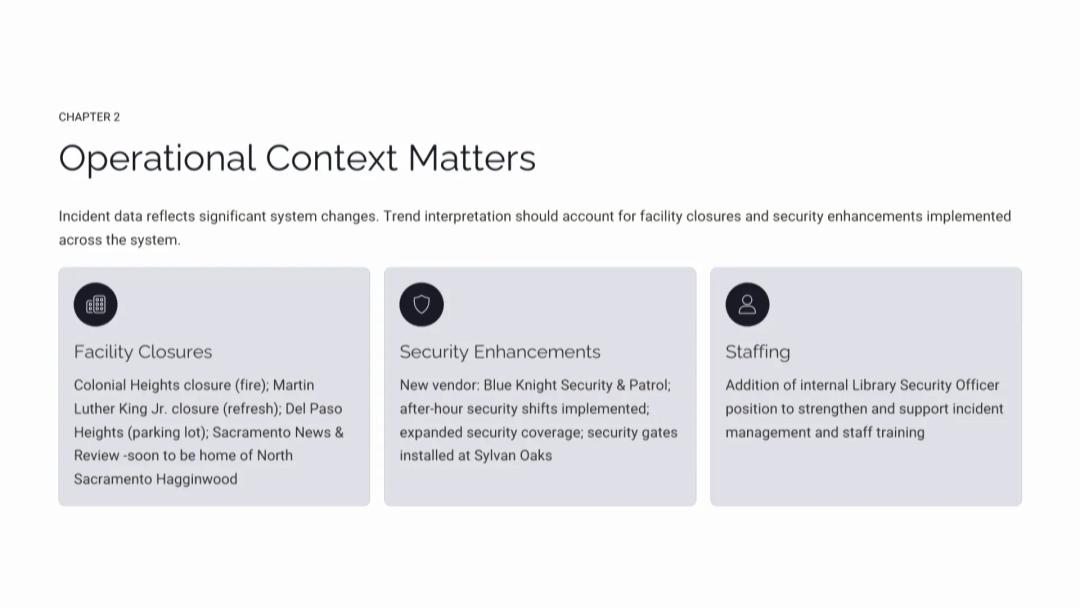
The Sacramento Public Library Authority met on March 2, 2026, at 4:17 p.m. (adjournment time) to discuss public comments, receive presentations on the Friends of the Library and safety and security, and approve action items including a branding MOU and the mid-year budget update. The meeting began with a quorum of eight members, with two members online. Public Comments & Testimony - Charlie Solt expressed concern about a vehicle in the Fair Oaks Library parking lot displaying offensive language (the F-word). He stated that the librarian who owns the vehicle refused to modify the message, and he asked the board to address the issue. Staff indicated they would follow up. - Terrence Gladney, Director of TCG Academy, requested partnership and support for the Scripps National Spelling Bee regional program, noting that the library previously sponsored it. He invited board members to learn more and offered to send information. Presentations - Friends of the Sacramento Public Library: Devon Graves (Vice President) reported on the organization's February 1st meeting, updates to its constitution, and excitement about the new library brand. He urged approval of the MOU to codify the brand and expressed gratitude for the partnership. Chair Maple committed to attending a future Friends meeting. - State of Safety and Security: Karen Leland (Safety and Security Manager) and her team presented data on security incidents from FY2024 to FY2026. Key statistics: total incidents increased from 1,469 (FY2024) to 1,516 (FY2025), with a projected 1,642 for FY2026. Behavioral incidents (verbal aggression, noncompliance, property-related) remain the dominant categories. Central Library and Valley High Library are hot spots. The rapid growth seen in previous years has stabilized, attributed to a new security vendor, after-hour security, and a security-first approach. Directors raised concerns about the upward trend, police call data, strategic planning, and partnerships with law enforcement. Director Lefkowitz suggested using social workers to address underlying issues. Chair Maple recommended using the 311 app for reporting encampments. Consent Calendar - The consent calendar was approved unanimously via roll call with 12 votes. Discussion Items - Executive Director's Report: The executive director (participating remotely from Washington, D.C.) reported on federal advocacy for library funding (LSTA, IMLS, E-rate), a GAO report on library building conditions, and updates on branch construction projects: Colonial Heights meeting room ribbon cutting pending, Martin Luther King Jr. and Elk Grove Libraries on track for summer 2026, and North Sacramento/Hagenwood Library on schedule. He highlighted a harm reduction partnership, a successful volunteer recruitment event (70 attendees, 20 new literacy volunteers), and a teen after-hours takeover with over 100 teens. Key Outcomes - Approval of MOU with Friends of the Library (Item 7.1): The board unanimously approved an agreement regarding the use of intellectual property and a revised fundraising partnership policy. The Friends expressed strong support. - Approval of FY2025-26 Mid-Year Budget Update and Supplemental Funding Allocation (Item 7.2): The board unanimously approved the budget update, which reflects a $430,000 net increase in the use of fund balance (total revenues $63.1 million, expenditures $70.1 million). Key changes include a $2 million diversion to the city for library construction projects, $1.7 million for HVAC projects, $500,000 for increased security costs, and $300,000 for reopening Sparkle collections at the Elk Grove Library. The supplemental funding allocation of $117,000 was approved. The forecast shows a structural deficit of $2.3–$3.9 million per year, with staff recommending continued fiscal prudence. Director Dickinson suggested reviewing long-vacant positions to address the deficit. - Board Reports: No additional reports or questions were raised.
The Sacramento Regional Transit District (SacRT) Board of Directors held a regular meeting on February 23, 2026, at 4:01 PM PT. Chair Sing Allen presided with nine votes constituting a quorum. The meeting was recorded and will be replayed on Metro Cable Channel 14 and streamed online. The board discussed and acted on several items including the Ride Free RT program update, a proposed K-16 educational collaborative, real-time transit information implementation, a revised travel policy, and public concerns regarding the streetcar project. Numerous public comments were received, and the board approved several resolutions and appointments. Consent Calendar - The board approved the consent calendar, which included routine items and a motion to change the agenda order. Notable discussion occurred on item 2.9 regarding real-time information for trains and buses. Director Dickinson expressed support for the long-awaited project and inquired about the deployment timeline. Staff stated that real-time data would be available in third-party apps within 12 months, with station signage also targeted within that period, though full vehicle deployment is expected by March 2028. The item was approved unanimously. Public Comments & Testimony - Glenn Mandelkern (on item 2.9): Expressed excitement about real-time train information, urged consistent signage design, and noted that many riders have long awaited this capability. He suggested viewing this as a goodwill opportunity to build trust. - James Pasarella (resident of 500 N Street): Voiced concerns about the streetcar project removing all parking on N Street, impacting accessibility for seniors and people with disabilities. He also questioned the environmental impact study regarding noise from new low-floor vehicles. - Mike Andrews Pasarella (resident of 500 N Street): Raised safety concerns for senior citizens near proposed streetcar stations, citing existing issues at other stations with homeless populations. - Pauline Hutton (resident of 500 N Street): Opposed the planned removal of parking and loading zones, stating it would cut off a lifeline for residents, especially contractors performing building renovations. She highlighted the difficulty of finding contractors downtown due to parking restrictions. - Robert Copeland: Asked about reducing traffic congestion and surplus land sales. He also noted he would review the ballot measure mentioned by Director Maple. - Nigel Hakins (resident of 500 N Street): Supported public transit but criticized the streetcar plan for eliminating loading zones essential for seniors and paratransit users. He noted that the building has no alley and that emergency vehicle access would be compromised. - Written public comments were received from Rick Hodgkins on items 2.3, 2.7, and 2.9 regarding underground conduit, fiber public outreach, and audible announcements, and from Lisa and Don Hayward on item 2.7 regarding competitive bidding. Discussion Items - Ride Free RT Program Update (Item 3.2): Staff and partners from the Nehemiah Emerging Leadership Program (NELP) presented findings and recommendations. The program has grown from 1 million to 5 million student rides annually. Key recommendations included strengthening data infrastructure and establishing a Youth Advisory Committee. Directors supported the concept but raised concerns about committee size (proposed 20+ members) and suggested leveraging existing youth commissions. Director Dickinson emphasized the need for granular data to demonstrate impact and secure long-term funding, noting school districts benefit financially from increased attendance. The board took no action but received the information. - K-16 Collaborative (Part of Item 3.2): Alex Tagavian from Capital Impact presented the Sacramento K-16 Collaborative, a regional effort to design career pathways using an $18.1 million grant. The collaborative is forming a Joint Powers Authority (JPA) and invited SacRT to join as a non-voting founding member with a financial ask of $200,000 over two years. Directors asked about coordination with existing CTE programs and the role of non-education members. The item was for information only. - Commendation of Director Rick Jennings (Item 3.1): The board approved a resolution honoring Director Jennings for his service as chair over the past year. He was presented with a resolution and thanked his colleagues. - Customer Service Response to Feedback (Item 4.1): Lisa Heinz and Chris Flores presented responses to public comments, including issues with wheelchair accessibility on bus barriers, ADA compliance, low-floor vehicle ramps, and technical data errors. Staff announced the acquisition of two drones for safety inspections (thermal imaging and 3D mapping) and outlined plans for a Comprehensive Operational Analysis (COA). Director Dickinson asked about opportunities for board input on bus route planning. - Travel Authorization Procedures (Item 4.2): Staff presented a revised travel policy based on previous board feedback, allowing up to four transit conferences per year with a $26,000 annual budget (actual prior year spending was $16,000). The policy prioritized the chair and vice chair and allowed alternates. After discussion, the board approved the policy with a motion and second. - Appointment to Capitol Corridor Joint Powers Authority (Item 6.1): The board appointed Director Dickinson to serve on the CCJPA, filling a vacancy, and appointed Director Maple as alternate. Both appointments were approved unanimously. - Public Transportation Agency Safety Plan (Item 6.2): Resolution 2026-02016 adopting the revised safety plan was approved without discussion. - General Manager’s Report: GM Henry Li reported on the first six months’ budget performance ($1.3 million favorable), ridership recovery (bus 109%, rail 70%, weekend bus 130%), upcoming workshops for Safe Routes to Transit and the SACRT 2050 COA, and a bus bridge closure on the Blue Line from March 16-31. He also announced Transit Employee Appreciation Day on March 18. Key Outcomes - Approved consent calendar (including real-time information project). - Approved Resolution 2026-02014 (Travel Authorization Procedures). - Approved Resolution 2026-02016 (Public Transportation Agency Safety Plan). - Appointed Director Dickinson to the Capitol Corridor Joint Powers Authority and Director Maple as alternate. - Approved Resolution commending Director Jennings. - Noted no action on Ride Free RT update or K-16 Collaborative; items were informational. - Staff directed to consider board input on the Youth Advisory Committee size and use of existing youth commissions. - Public concerns about the streetcar project's parking removal were acknowledged and referred for follow-up.
Note on date: The provided transcript references a meeting held on Thursday, January 22nd, but the instruction specifies the meeting date as February 17, 2026. This summary uses the instructed date and notes the discrepancy. The board proceeded with the following items: The meeting was called to order with a quorum of nine members present (later increasing). The clerk read the meeting statement, and the Pledge of Allegiance was recited. Public comment on non-agenda items was none. Presentations Friends of the Sacramento Public Library: Devon Graves (Vice President) reported on the Friends' board meeting (January 13), highlighting a Friends Supporting Friends grant ($50,000 budgeted for affiliate programming), total membership of 4,100 (as of December 2025), and Book Den volunteer hours (over 2,000 logged in December). The all-friends board meeting is scheduled for February 1 at 1 p.m. at Bell Coolidge Library, with food offered. Director Lefkowitz requested extra copies of the annual report for her board. The Friends' Anita Scurry (President of Art and Dinner Library Friends) inquired about the planned closure of that library from February to April 2026, as she had a book sale scheduled for March 12–14; staff agreed to address the communication gap offline. Executive Team Report Director Coyle presented a video highlighting the library's annual achievements. Circulation reached nearly 9 million items, with a 60/40 split favoring digital materials. Challenges from the Baker & Taylor closure are being managed through new vendors, though some delays persist. Facilities updates: Colonial Heights Library reopened (community room awaiting AV equipment), Del Paso Heights Library reopened, and major construction at Elk Grove, Martin Luther King, and North Sacramento Hageman libraries remain on track. In response to Director Lefkowitz's concern about declining youth reading, Coyle noted a UK study on reduced parent-child reading and emphasized shifting toward family-focused programs to attract all ages. Chair Brewer praised the team's leadership and progress. Consent Calendar Nine items were approved unanimously via roll call (10 votes in favor, none opposed). The consent calendar covered routine approvals and actions. Action Items 7.1 Audit Annual Report (FY ending June 30, 2025): CFO Johnny presented the audit. The library had a clean audit with no findings. Financial software upgrades caused delays but internal controls are compliant with GAAP and GASB. Fund balances: General Fund $10.7M, County Sacramento Fund $34.1M, City of Sacramento General Fund/Measure U $14.8M, Parcel Taxes X&B $10.3M, Moore Trust $0.365M; total $70.2M under modified accrual. Under full accrual, net position was $57.1M after accounting for pension liabilities ($25M), OPEB ($6.9M), leases, subscriptions, and compensated absences (GASB 101 adjustment of $364,000). The audit was approved unanimously (10 votes). 7.2 Election of Board Chair and Vice Chair for 2026: Chair Brewer nominated Vice Chair Katie Maple for Chair and Director Mary Jane Lopez Taff for Vice Chair. Both accepted. The motion was seconded and passed unanimously (10 votes). Congratulations were extended. 7.3 Appointment of Budget Audit Committee for 2026: Following discussion on composition (3–5 members plus 2 alternates), Chair Brewer appointed the following: Chair Katie Maple, Vice Chair Mary Jane Lopez Taff, Director Rod Brewer, Director Linda Budge as members, and Director Karina Talamantes as alternate. Additional members may be appointed later. No formal vote was needed. Reports, Ideas, Questions from Board Members Director Budge raised a concern about the rotation schedule nomenclature, which refers to members as “county” or “city” rather than by specific city names. She noted the JPA was designed to give jurisdictions equal standing. Director Coyle acknowledged the point and offered to adjust the document. The board agreed to discuss the matter further in the coming year. Key Outcomes Unanimous approvals: Consent calendar, audit report, and election of new Chair and Vice Chair (each with 10 votes in favor). Budget Audit Committee appointed: Four members and one alternate as listed above. Direction given: Staff will address the Art and Dinner Library closure communication with Friends; Director Coyle will follow up with Director Budge on the rotation nomenclature update. No closed session: The meeting adjourned at 4:01 p.m.
Note on meeting date: The raw transcription indicates the meeting occurred on Monday, February 2, 2026, but the provided timestamp states February 17, 2026. This summary uses the specified date of February 17, 2026 as instructed. The First Five Sacramento Commission convened on February 17, 2026, with Chair Cerna presiding. A quorum was established with 11 of 14 commissioners present. The meeting covered consent items, multiple committee reports, and approvals for grants, contracts, and a data system upgrade. No public comments were made. Consent Calendar - Approval of January 12, 2026 Draft Action Summary: Approved unanimously by roll call vote with Chair Cerna, Commissioners Wesley, Fernandez Garcia, Gordon, Cassirie, Boston, and Moak voting aye. Commissioners Katari, Kennedy, Evans, Guerra, and Hassett were absent or late. Public Comments & Testimony - No members of the public signed up to speak on any agenda item. Discussion Items - Executive Director’s Report (Item 3): Julie gave updates including: Governor’s proposed 2026 budget restores $26 million for home visiting ($750,000 share for First Five Sacramento); a temporary restraining order blocked federal funding freezes on child care and family services; site visits at Birth and Beyond sites are scheduled; two parent leadership graduates completed the Grantland Johnson Leadership Institute; an airport child care center is progressing with two options (interim space or new building); and equity in action grant outreach has increased media coverage, notably in the Sacramento Observer and Carmichael Times. Aaron noted a PR firm (Cobalt) will assist with broader outreach. - Advisory Committee Update (Item 4): Committee did not meet; next meeting February 20, 2026. - Evaluation Committee Update (Item 5): Met January 26, 2026; discussed releasing a letter of intent for a new data system (Item 10) and reviewed the annual report for 2024–25 (to come in April). - Financial Planning Committee Update (Item 6): Reported an 8.3% staff vacancy rate, upcoming website migration to Adobe Experience Manager (March launch, ADA compliance), lower Prop 10 allocation in November corrected by December’s higher allocation, and review of the United Way fiscal agent agreement (Item 8). - Systems Optimization Committee Update (Item 7): Did not meet. - Approval of Expenditure Agreement with United Way California Capital Region (Item 8): Staff recommended using United Way as fiscal agent for 23 Tier 1 equity in action grants (up to $9,999 each) to provide timely payments and oversight. Total agreement up to $272,410 ($197,410 pass-through, up to $75,000 for services). Approved on roll call with all present voting aye. - Approval of Equitable Evaluation Contract with Institute for Social Research (Item 9): Staff proposed $142,000 contract for equitable evaluation of the racial equity priority area (approved April 2023). Institute for Social Research (Sac State) was selected from 22 applicants. They will use “Ripple Maps” for qualitative feedback, interview both funded and unfunded applicants, and analyze process from initial assemblies to outcomes. Commissioner Fernandez y Garcia requested benchmarks for future evaluations. Vice Chair Guerra commended the institute’s past work. Approved unanimously. - Data Management System Exploration (Item 10): Staff requested $100,000 augmentation to the evaluation budget (FY 2026–27) to conduct a competitive bid for a new data management system, replacing current contractor Persimony International Inc. (contracted since 2010). Issues included inability to meet partner requests for cross-program accessibility and reluctance to delete sensitive data. The contract ends June 2027. Commissioner Wesley noted past difficulties with disaggregated data (multiracial, African American). Commissioner Moak questioned market awareness of available funds; staff explained a letter of interest will first gauge pricing. Approved on roll call. - Children’s Dental Health Month Proclamation (Item 11): Chair Cerna delegated presentation to Vice Chair Guerra, who presented the proclamation to Dr. Cassier (County Health Officer). Dr. Cassier highlighted that tooth decay is a common childhood disease and emphasized prevention via water fluoridation, which saves $6.5 billion annually and returns $20 per $1 spent. He also noted oral health’s link to chronic diseases (diabetes, hypertension, heart disease, stroke). - Commission Opportunity to Bring Up Items (Item 12): None raised. Key Outcomes - Votes: - Item 1 (Approval of Jan 12 minutes): Passed unanimously. - Item 8 (United Way fiscal agent): Approved by voice roll call (all present aye). - Item 9 (Institute for Social Research contract): Approved unanimously. - Item 10 (Budget augmentation and data system exploration): Approved unanimously. - Other Decisions: - March 2026 meeting canceled; next regular meeting scheduled for April 2026. - Staff authorized to issue a letter of interest for a new data management system and to increase evaluation budget by $100,000. - Proclamation for Children’s Dental Health Month presented; commission reaffirmed support for oral health initiatives including water fluoridation.
The Sacramento Local Agency Formation Commission (LAFCO) held a regular meeting on February 17, 2026. Key actions included electing new officers for 2026, approving a $1.2 million budget for fiscal year 2026-27, supporting state legislation on underperforming water systems, and appointing voting delegates for a CalAFCO special meeting. Public comment raised concerns about employee treatment, staff training, and transparency. Consent Calendar - The commission unanimously approved items 4 through 11 on the consent calendar (routine approvals and actions). No public comment was offered on these items. Public Comments & Testimony - Desiree Fox (Policy Analyst for Sacramento LAFCO) stated emphatically that LAFCO is not properly serving residents, special districts, and cities. She urged commissioners to scrutinize agenda packets and the Astral Sheet (project tracking). She reported that she has been mistreated as an employee and referenced a January 13th Board of Supervisors hearing. She asked for improved service and better employee treatment. - Kim Stevenson (concerned citizen) expressed disappointment in LAFCO's management of employee issues. She requested a review of employee access and protective rights to ensure a safe workspace, warning that violations cause mental and emotional harm and damage the county's reputation. - During the budget hearing, Desiree Fox questioned why agency contributions are increasing by 7% when some cities have no LAFCO-related projects, asked about career advancement opportunities for staff, and inquired why funds are spent on outside consultants rather than training in-house staff for municipal service reviews (MSRs). - Also on the budget, Kim Stevenson asked whether the budget includes line items for staff and executive training, and how often such training is executed. - On the legislative water systems item, Desiree Fox encouraged the use of visual presentations for complex topics and stressed the need for proper staff training on water districts, noting there are 63 special districts under LAFCO's purview. - On the CalAFCO bylaw changes, Desiree Fox raised concerns about Sacramento LAFCO's participation in CalAFCO affairs, stating that staff did not feel prioritized when the executive officer was serving as interim CalAFCO executive director. She also mentioned being removed from the analyst listserv after asking about other analysts' experiences, without being given a proper corrective process. - On the Astral Sheet and correspondence, Desiree Fox noted that she requested removal from the Airport South Industrial project due to discomfort and potential liability, and questioned policy on staff access to commission counsel (new counsel Josh Nelson stated personnel issues should go to County Personnel Services, not LAFCO counsel). Discussion Items - Election of Officers: By practice, the public member (Commissioner Chris Little) was elected Chair, and a special district representative (Commissioner Jones) was elected Vice Chair for 2026. Chair Little was sworn in by the executive director. - Budget FY 2026-27 (Item 12): Executive Director Jose presented a proposed budget of $1.2 million, a 7% increase driven by staff costs and health insurance. Retirement costs were offset by lower unfunded liability. Non-recurring costs include office relocation and furniture replacement. Seven to eight MSRs are in progress (outsourced: 6-8 months; in-house: about a year). Commissioner Hume suggested moving to a two-year budget format starting next year to better anticipate cost trends like healthcare and IT. Chair Little opened and closed the public hearing; the motion to approve the budget with added language for a two-year budget next year passed unanimously. - Legislative Support for Water Systems (Item 13): Staff recommended supporting legislation (born from a UC Berkeley study) with three components: (1) LAFCO ability to initiate annexations or out-of-agency service agreements for underperforming water systems; (2) requiring agencies to respond to MSRs in public meeting; (3) requiring private water providers (mutual water companies, mobile home parks) to report data to LAFCO. Due to mixed support among CalAFCO members, staff tweaked the recommendation: support the MSR component and support in concept the out-of-agency service extension component, to allow further dialogue. The motion passed unanimously. - CalAFCO 2026 Special Meeting (Item 14): Staff presented three bylaw changes for approval at the February 23, 2026 CalAFCO special membership meeting: (1) eliminate seat categories on CalAFCO board of directors (allow any commissioner or executive officer to serve regardless of category); (2) allow executive officers to be voting board members; (3) cleanup non-substantive inconsistencies. The commission appointed Commissioner Jones as voting delegate (with Executive Director Jose as alternate) and directed them to vote in favor. Motion passed unanimously. - Executive Officer, Commission Counsel, and Astral Sheet (Item 15): New commission counsel Josh Nelson (Best Best & Krieger) was welcomed. Policy Analyst Grabo updated that the Airport South Industrial annexation and Florin County Water MSR are tentatively scheduled for March. A letter was sent to the governor supporting a local government omnibus bill with technical LAFCO changes. - Commissioner Comments: Commissioner Jones requested a moment of silence in memory of former Executive Officer Don Lockhart, which was observed. Key Outcomes - Officers Elected: Chair Chris Little and Vice Chair Commissioner Jones for 2026; Chair Little sworn in. - Budget Approved: The FY 2026-27 proposed budget ($1.2 million, 7% increase) was unanimously approved with a policy direction that starting next year, staff shall present a two-year budget (current year plus one out-year). - Water System Legislation Supported: The commission unanimously supported the MSR component and supported in concept the out-of-agency service component of proposed state legislation. - CalAFCO Voting Delegates Appointed: Commissioner Jones (primary) and Executive Director Jose (alternate) were appointed to vote in favor of the proposed bylaw changes at the February 23 special meeting. - Closed Session: The commission moved to closed session in hearing room one (no actions reported in open session). - Adjournment in Memory: The meeting adjourned with a moment of silence for former Executive Officer Don Lockhart.