The Sacramento County Board of Supervisors met on February 17, 2026, to address a wide range of items including public comments, consent calendar approvals, nominations to various boards and commissions, public hearings on service charges and benefit category changes, affordable housing financing, eminent domain resolutions, a subdivision approval, and executive and supervisor comments. The meeting concluded with a proposal to resume an annual State of the County address. Public Comments & Testimony - Marvel Wilson (Hooked on Fishing Not on Violence) expressed confusion about a TOT grant, questioning why it is called a grant if it requires fundraising and repayment. Supervisor Rodriguez and staff offered to follow up and clarify details. - Joseph Tanner (also with Hooked on Fishing Not on Violence) echoed the need for clarity on the TOT program. - Daniela Barrera Barajas and Isamar (mental health therapists at UC Davis, speaking as private citizens) raised concerns about sudden non-renewal and then one-year extension of the county contract for the UC Davis Child and Adolescent Abuse Resource and Evaluation Center (Care Center). They urged the board to prioritize stable funding for specialty mental health programs serving at-risk youth. - Chris Bennett (congressional candidate for the 3rd district) spoke in support of continued funding for the Care Center, emphasizing the need to address child abuse and human trafficking. Consent Calendar - Items 2 through 15 were approved on consent, including an ordinance on solid waste management (item 8), updates to water agency fee plans (item 9), and a fire department ordinance (addendum). Supervisor Hume registered as a no on the addendum item. Supervisor Cerna abstained on item 6. The consent calendar passed 5–0. Nominations - Several nominations were continued to future dates (February 24, March 10, or March 24, 2026). Appointments made: Rayburn Lano to Carmichael Community Planning Advisory Council; Christopher Orr to the Children’s Coalition; Ziggy Robison and Bryce Alred to Health and Human Services Coordinating Council; June Coleman to the Law Library Board of Trustees; Johnny Vang, Stacey Anderson, Michael Li Chang, and Samantha Rapp to the Public Health Advisory Board; Max Baumgartner, Matthew Chicato, and Austin Ashey to the Veterans Advisory Commission. Discussion Items - Item 16 – Winding Ranch Subdivision Benefit Category Change: Staff presented a proposal to change the benefit category from safety-light only to enhanced street and safety light residential/non-residential, increasing the annual service charge from $2.56 to approximately $5,796 for 79 lots. A Proposition 218 ballot was sent; one protest ballot was received but was 100% in favor. No public speakers. The board approved the change 5–0. - Item 17 – North Vineyard Greens Unit 3, 11, and 11 West Service Charge: A public hearing to establish a service charge of $1,031.54 per single-family lot for 92 units within CSA 10 Zone 3. One protest ballot was received, 100% in favor. Approved 5–0. - Item 18 – Power Family Project Bond Insurance and Loan: Staff requested approval of tax-exempt mortgage revenue bonds and a $2.5 million HOME loan for a 73-unit affordable housing project at Power Inn and Calvine Road. The developer (Power Family) is new to Sacramento. Supervisor Hume questioned entitlements under SB 79. Supervisor Kennedy supported the project as a long-awaited use of the site. Approved 5–0. - Item 19 – Resolutions of Necessity for Eminent Domain (Wideaway Sidewalk Infill Project): Three resolutions were initially proposed; one was dropped after the owner signed acquisition documents. The two remaining properties (owned by Trong Nuyan and Bill Lobner) required easements. Supervisor Cerna raised concerns about the lack of a formal policy for communicating with non-English-speaking property owners, noting that Mrs. Nguyen (wife of Mr. Nuyan) spoke only Spanish. Staff acknowledged ad hoc practices and committed to developing a policy. The board approved both resolutions separately and dropped the third, each 5–0. - Item 20 – St. Thomas Estates Rezone, Tentative Subdivision Map, and Design Review: Project to rezone 2.04 acres from AR5 to RD5 and create 27 single-family lots on 5.5 acres near Gardner Avenue and Florin Road. Staff reported advisory body recommendations in favor. Approved 5–0. Key Outcomes - Consent calendar (items 2–15) adopted 5–0. - Benefit category change for Winding Ranch (item 16) adopted 5–0. - Service charge for North Vineyard Greens (item 17) adopted 5–0. - Bond and loan authorization for Power Family project (item 18) adopted 5–0. - Resolution of necessity for Trong Nuyan property (item 19a) adopted 5–0. - Resolution of necessity for Bill Lobner property (item 19b) adopted 5–0. - Resolution for Paula C. Noonan property (item 19c) dropped by motion 5–0. - St. Thomas Estates entitlements (item 20) adopted 5–0. - Chair Rodriguez proposed a pilot State of the County event on Thursday, April 9, 2026, hosted by a chamber of commerce at no direct cost to the county. Supervisors expressed general support but raised questions about costs, staff time, and logistics. The board agreed to move forward with planning. - County Executive comments highlighted staff awards: Mickey McDaniel (Member of the Year from Women’s Transportation Seminar) and Sacramento International Airport’s 91% customer satisfaction award.
Public Meetings - Sacramento County, California
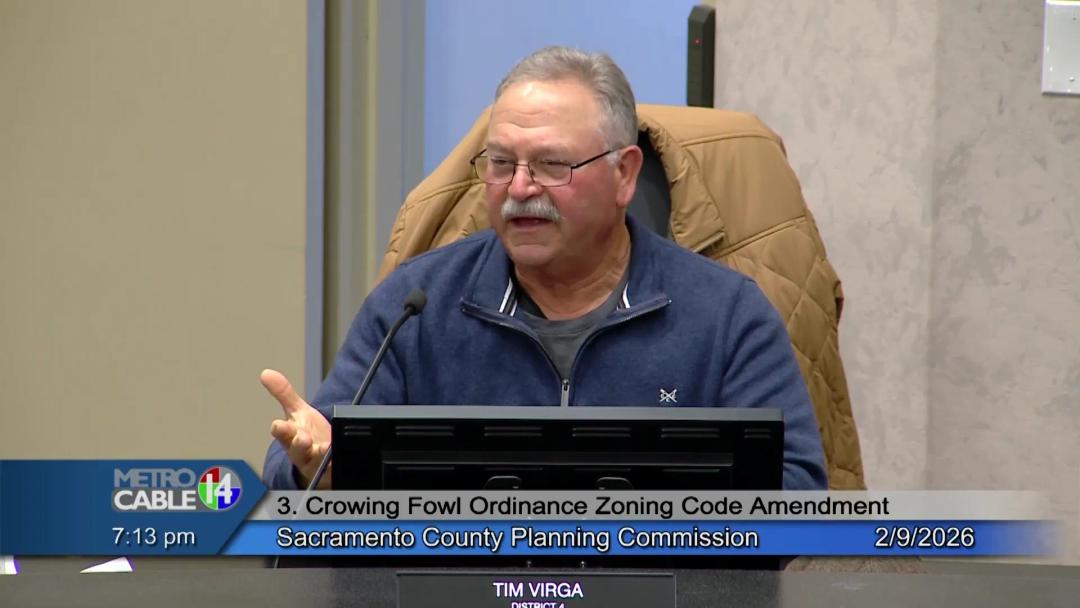
Public Meetings - Sacramento County, CaliforniaThe Sacramento County Planning Commission held a meeting on February 17, 2026, to consider three agenda items: a general plan amendment and related permits for Bar None Auctions, a use permit and design review for a Quick Quack Car Wash, and a zoning code amendment to regulate crowing fowl (roosters). All three items were approved unanimously after presentations, public testimony, and commissioner deliberation. Consent Calendar - Item 1: Bar None Auctions (PLMP 2023-00290) – A proposal for a general plan amendment, county plan amendment, rezone, use permit, special development permit, and design review at 6190 Bradshaw Road in the Vineyard Community. The environmental document was a mitigated negative declaration. The applicant spoke briefly, no public comments were offered, and the commission approved staff’s recommendation without discussion. (Vote: unanimous) Public Comments & Testimony - Quick Quack Car Wash: Anna Gather, a resident of Angelina Avenue, opposed the project citing existing traffic issues on her dead-end street, safety concerns for elderly neighbors, and the presence of another car wash less than a quarter-mile away. - Crowing Fowl Ordinance: Seven individuals provided testimony. - B. Yang (JB Oriental Bantam Game Farm) and Dal Yang (president of the Hmong community) opposed the ordinance, emphasizing the religious and cultural importance of roosters for the Hmong community, and raised First Amendment and constitutional concerns. - Catherine Plummer (exhibition chicken breeder) opposed the ordinance, arguing it does not directly address noise or cockfighting and would unfairly penalize legitimate hobbyists and breeders. - Sue Zong (Hmong Chamber of Commerce) opposed, citing free exercise of religion and equal protection issues. - Vince Banakid (game fowl hobbyist) opposed, stating the ordinance targets all rooster owners rather than cockfighters, and asked for stronger penalties for illegal activities. - Robert Schmidt and Nancy Dewey (neighbors of a property with over 200 roosters) supported the ordinance, describing severe noise nuisance, loss of family gatherings, and health concerns from odors and flies. They urged approval to end their two-year ordeal. Discussion Items - Item 2: Quick Quack Car Wash (PLMP 2025-00010) – Staff presented the project at 6717 Fair Oaks Boulevard in Carmichael, including a use permit, special development permit (to reduce landscape setback from 25 to 13 feet), and design review. The project is exempt from CEQA (Class 3, small structures). Commissioner Borja questioned the exemption because the building exceeds 2,500 square feet and the use changes from a parking lot to a car wash involving chemicals. Environmental coordinator Julie Newton explained that the exemption applies after reviewing unusual circumstances (traffic, noise studies) and that drainage and runoff are addressed through standard requirements. Applicant Don Shively confirmed that water is recycled (95-98% capture) and soaps are biodegradable. Traffic studies showed minimal impact. Hours are 8 a.m. to 8 p.m. The commission approved staff’s recommendation. (Vote: unanimous) - Item 3: Crowing Fowl Ordinance (PLMP 2024-0026) – Staff introduced a zoning code amendment to chapters 3, 5, and 7 of the county code to limit the number of roosters on residential and agricultural parcels. Key provisions include: complaint-driven enforcement with a 30-day compliance period, a no-cost registration process through the Agricultural Commissioner for legitimate purposes (e.g., breeding, exhibition, cultural/religious practices), and tiered rooster limits based on lot size and zoning. For agricultural and large residential zones (AR, RD1-3): 5 roosters (10,000 sq ft–1 acre), up to 50 roosters (40+ acres). For smaller residential zones (RD4, RD5, RD7): staff recommended up to 3 roosters (10,000 sq ft–1 acre) and up to 10 roosters (1+ acre). The Agricultural Advisory Committee (AAC) recommended a further tier: 2 roosters (10,000 sq ft–half acre), 3 roosters (half–1 acre), and 3+ roosters (1+ acre, with 10,000 sq ft per additional rooster). Discussion focused on protecting religious/cultural practices (e.g., Hmong ceremonies) and avoiding unintended impacts on legitimate breeders while addressing noise and cockfighting. Staff clarified that the ordinance is complaint-driven, allows registration for any legitimate purpose (including cultural), and includes educational outreach in multiple languages. Commissioner Borja raised concerns about potential weaponization of enforcement and the need for a feedback loop. Commissioner Corona Savignano moved to approve the amendment as staff presented, incorporate AAC’s recommended limits for RD4-5-7, and add explicit clarification for religious and cultural protections. The motion was seconded and passed unanimously. Key Outcomes - Bar None Auctions: Approved unanimously. - Quick Quack Car Wash: Approved unanimously. - Crowing Fowl Ordinance: Approved unanimously with the following specifics: - Rooster limits for RD4, RD5, RD7 as recommended by AAC (2 roosters for 10,000 sq ft to half acre; 3 for half to 1 acre; up to 10 for 1+ acre with 10,000 sq ft per extra rooster). - Staff recommendations on all other zones (AR, RD1-3) adopted as proposed. - Complaint-driven enforcement and no-cost registration process maintained. - Direction to clarify that legitimate cultural and religious purposes qualify for registration and exemption from standard limits. - Next Steps: The zoning code amendment will proceed to the Board of Supervisors (tentatively March 24, 2026); a companion county code amendment goes directly to the Board.
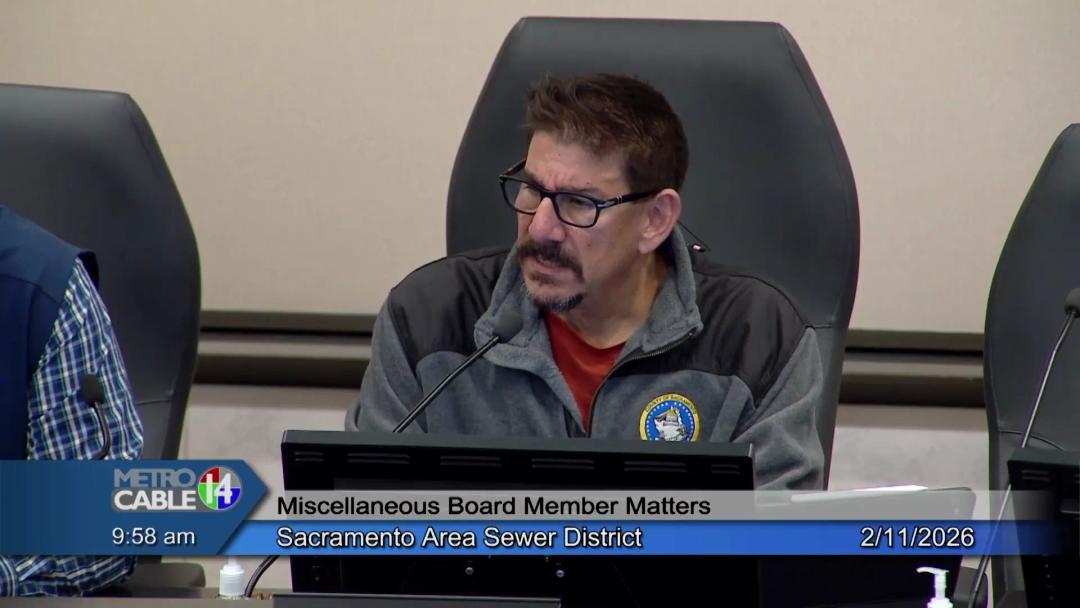
Note on Date Discrepancy: The meeting transcript states the date as Wednesday, February 11, 2026, but the provided metadata indicates February 17, 2026. This summary uses the February 17 date as instructed, but readers should be aware of the conflict. The Sacramento Area Sewer District board convened for a regular meeting on February 17, 2026. The meeting began at approximately 9:57 AM with a roll call establishing quorum, followed by closed session and then open session. Chairperson called the meeting to order and the clerk read the standard disclosure regarding compensation for board members and public comment procedures. Consent Calendar - Items 1 through 4 were approved unanimously without discussion or separate consideration. The motion carried with all directors present. Public Comments & Testimony - No public speakers were present for comments on the consent calendar, for general public comments (Item 5), or for discussion items. Discussion Items - Miscellaneous District Engineer Matters (Item 6): Executive Director Christoph reported that the next board meeting is scheduled for March 11, 2026, as there is no second meeting in February. He announced that the district received a national environmental award from the National Association of Clean Water Agencies for its septic-to-sewer program, covering the Hood, Franklin, Old Florentown, Linda Manor, and Freeport projects. He noted the award recognized the collective efforts of those projects. - Board Member Matters: Director Hume requested that district staff be given the opportunity to tour the treatment plant, noting it would be beneficial for staff to understand the regional infrastructure. Executive Director Christoph agreed and indicated multiple tours could be arranged. Other directors were invited to express interest. Key Outcomes - Consent Calendar Approved: All items passed unanimously. - Award Recognition: The board acknowledged the national award for the septic-to-sewer program. - Tour Planning: Staff will coordinate with board members to schedule plant tours for interested personnel. - Next Meeting: The next regular board meeting is set for March 11, 2026. The meeting adjourned without further business.
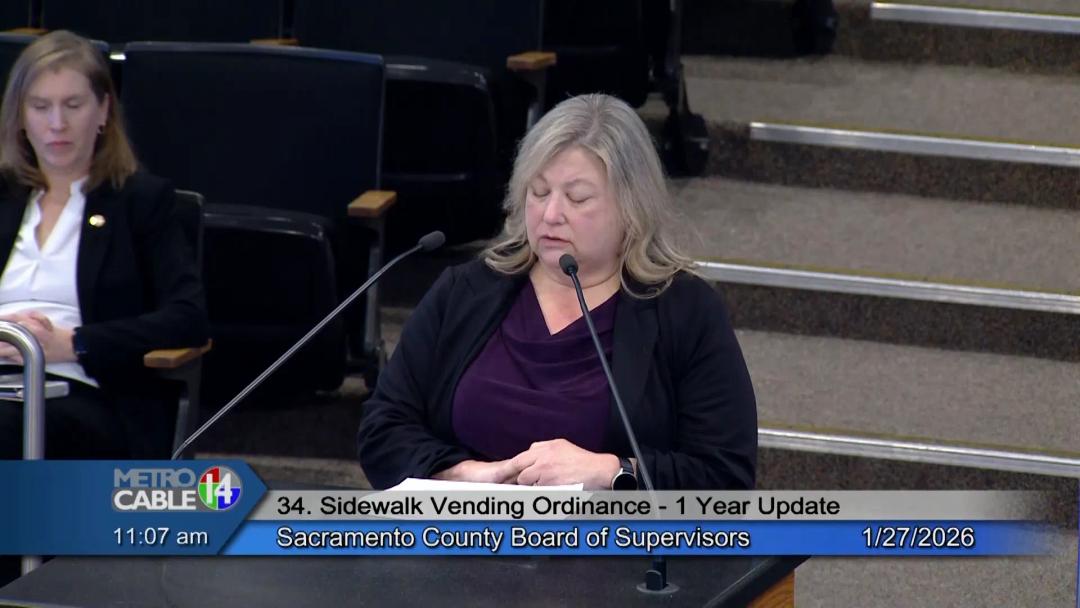
A regular meeting of the Sacramento County Board of Supervisors was held on Tuesday, February 17, 2026, covering a range of items including a resolution for a National Day of Play, public comments, consent calendar matters, presentations on tax revenue enhancement and sidewalk vending, adoption of fire codes, and appointments to regional boards. The meeting began at 10:01 AM and included votes on several items. Consent Calendar - Item 20 (solid waste management ordinance update) was continued to February 10, 2026, with the full reading waived. - Items 5 (resolution for sheriff's office representation at community review commission) and 13 (improvement implementation agreement with Cordova Hills LLC) were pulled for separate discussion. - Item 3 (agreement with CVR Associates for SHRA assessment and interim executive services) was also pulled and discussed later. - The remaining consent items (including item 10 – child care facility grant at Sacramento International Airport) were approved 5-0 after a single vote. Public Comments & Testimony - Belinda Ellis was called but not present. - Lisa Riley and her daughter Shauna Riley testified about alleged harassment and retaliation after reporting a sexual assault in a Special Olympics program. They stated that multiple county agencies (IHSS, APS, and child care licensing) conducted investigations based on what they believed to be false allegations from a person allegedly connected to county staff. Lisa Riley requested identification of the party that initiated the complaints. Staff indicated they would connect them with county follow-up. Discussion Items - National Day of Play Resolution: Presented by Supervisor Desmond and Congressman Amiber. The resolution designates March 21st (the first Saturday after the spring equinox) as the National Day of Play, encouraging people to unplug and engage in outdoor activities. Adopted unanimously. - Item 5 – Sheriff's Community Review Commission: The original resolution requested that the sheriff's office send a representative to commission meetings. Supervisor Cerna moved to amend language from "request" to "expects" a high-ranking representative to attend. Supervisor Hume offered a substitute motion to deny the item, arguing the resolution was unenforceable. The substitute motion passed 3-2 (Supervisors Cerna and Kennedy dissenting). Supervisor Cerna requested a report back in six months on attendance data, which was acknowledged by the CEO. - Item 13 – Cordova Hills Implementation Agreement: Chair Rodriguez expressed concerns about the $1.4 million contribution as insufficient given a $25 million grant shortfall. She moved to continue the item to the next meeting to consult with the Grant Line Road JPA. Motion passed 4-0 (Supervisor Desmond absent). - Item 3 – SHRA Governance and Interim Executive Director: Deputy County Executive Shivon Katari presented a contract with CVR Associates for an organizational assessment and to provide an interim executive director (Chris Warren) for SHRA. The board heard praise for Acting Director Jim Shields. Supervisor Kennedy highlighted the potential for transformative affordable housing policy. Item was approved as part of consent after discussion. - Tax Revenue Enhancement Options: Staff and HDL consultants presented a comprehensive review of possible tax measures: utility users tax (potential additional $4.3M per 0.5% increase), transaction and use tax (up to $60.8M per 0.5% in unincorporated area), transit occupancy tax (half percent could generate $478K), property transfer tax, business license tax ($20–33M), cannabis tax, admissions tax, and others. Board directed staff to conduct further research and polling for a potential ballot measure no earlier than 2028. Motion passed 5-0. - Sidewalk Vending Ordinance One-Year Update: Multiple departments (Finance, Environmental Management, Regional Parks, Planning, Code Enforcement) reported on licensing, outreach, and enforcement. Key statistics: 19 license applications since ordinance adoption (13 in second half of 2025), 29 health permits countywide, 10,577 pounds of food condemned during 36 operations in 2025. Enforcement phase began in 2026 with two operations per month planned. Discussion included language barriers, private property vending, and coordination with cities. No action taken; presentation only. - Fire Code Adoptions: - Metro Fire: Ordinance adopting 2025 California Fire Code with local amendments approved unanimously. Key changes: allowed 13R fire sprinkler systems, greater flexibility for redevelopment, and temporary water supply during construction. - Cosumnes Fire: Permanent water supply requirement (since 1992) was debated. State code allows temporary water. Substitute motion to ratify with modification allowing temporary water passed 4-1 (Supervisor Hume dissenting). Staff to prepare written findings. A future standard will be developed. - Stormwater Utility Fee: Resolution to approve a stormwater utility fee for specific annexed parcels, contingent on ballot tabulation, passed 5-0. Ballot results to be reported February 10, 2026. Key Outcomes - National Day of Play resolution adopted. - Resolution requesting sheriff's representative defeated; report back on attendance ordered. - Cordova Hills agreement continued to next meeting. - SHRA consulting contract approved; interim executive appointed. - Tax revenue research and polling directed. - Sidewalk vending update received; enforcement phase ongoing. - Metro Fire code ratified 5-0. - Cosumnes Fire code ratified with modification (temporary water allowed) 4-1. - Stormwater utility fee resolution adopted 5-0. - Board made appointments and nominations to various commissions, with many positions continued to later dates.
SacRT’s Board met in February 2026 with a quorum announced as “10 votes” available at roll call. The meeting was recorded and broadcast on Metro Cable Channel 14 and streamed via Metro14. Key actions included unanimous approval of the consent calendar; formal election of 2026 Board leadership (Chair and Vice Chair); multiple Chair appointments/reappointments to board-related committees; continuation of a policy update to director travel authorization procedures (Title IX) for further information and discussion; and adoption of an emergency resolution (by roll call) authorizing expedited repairs to damaged backbone fiber optic cable at the American River Bridge. The General Manager also reported on expanded law-enforcement partnership, anti-trafficking awareness efforts, MLK-related transit support, and ridership impacts. Consent Calendar - Items 2.1–2.8 approved unanimously (motion and second; passed without further discussion). - A public speaker raised concerns related to Item 2.7 (streetcar project) prior to the vote (see Public Comments & Testimony). Public Comments & Testimony - Consent Calendar – Item 2.7 (Streetcar project) - James Passarella (resident, 500 N Street) expressed concerns about the streetcar/light-rail-related project’s impacts, including: - Traffic impacts during major events in the area. - Tree removal concerns (referenced a statement that “only cut down six trees,” but feared more trees would be removed). - Concern that the design would reduce curb access/parking/loading and create difficulties for residents with disabilities (blind residents and wheelchair users) and for access in front of the building. - Suggested an alternative concept emphasizing visibility/celebration of transit (e.g., along Capitol) rather than what he viewed as an unattractive alignment. - Non-agenda Public Address (Item 3) - Maddie Parfit (Strong Sac Town transit team; rider for 40 years) expressed concerns about Gold Line bus bridge performance during planned service disruptions, citing: - Lack of ambassadors/signage at 65th Street Station for the bus bridge stop. - Confusing nighttime operations (stations difficult to identify; inadequate announcements), leading to passenger disembarkation errors. - Stated drivers appeared frustrated and passengers confused; urged improved planning and execution. - Barbara Stanton (Ridership for the Masses) criticized the board meeting schedule (one meeting per month; a January meeting cancellation; dates shifting between mid- and late-month), stating it was hard to track and reduced public access. She suggested exploring adding public/community members via boards/commissions if director attendance is challenging. - Troy Wilkinson (Strong Sac Town transit team): - Appreciated staff engagement with the group regarding SacRT issues and the streetcar project. - Echoed concerns about bus bridge confusion. - Noted potentially confusing messaging about ZipPass advertising while SacRT is transitioning to/communicating about the Connect app; requested clearer guidance on when to use which. - Michael Bevins (occasional transit user) referenced rumors of a possible city ballot measure to raise taxes for transportation and urged SacRT to prepare a Sacramento-specific “wish list” (in addition to systemwide needs). He suggested neighborhood-scale circulators/loops and addressing “dead spots” and long walks to bus/light rail. - Melissa Damiano (speaking for residents at 500 N Street) expressed opposition/concerns regarding the streetcar project (described as “light rail” by a SacRT representative in a building visit), stating that dual tracks along N Street would: - Remove the only loading/access zone for residents, including those with disabilities. - Affect access for medical transport, paratransit, emergency services, deliveries, move-ins/outs, and contractor access. - Potentially violate ADA accessibility obligations (referenced ADA standards 209 and 503). - Karen Vaicary (owner/resident, 500 N Street) supported Damiano’s comments; expressed concern that streetcar plus bike lanes would eliminate curb pull-over/parking and prevent emergency/paratransit/moving access. - L.R. Roberts (disability rights group, described as “D-O-G-F-I-T-E”): - Reported another community member (“Jeff”) was hospitalized after being hit by a car and therefore absent. - Indicated the group would discuss/support the idea of a community member serving on the board. Discussion Items 2026 Chair and Vice Chair Election (Item 4.1) - Staff referenced a prior December 8, 2025 “intent motion” to nominate Vice Chair Bobby Singh Allen as Chair and Director Pat Hume as Vice Chair for calendar year 2026. - Action: Board formally elected the 2026 Chair and Vice Chair (voice vote). - Result: Approved without opposition noted. - Outgoing Chair Rick Jennings made brief remarks and passed the gavel; multiple directors commended Jennings’ emphasis on staff recognition and increased transparency/closing the loop on public comment. SacRT Board & Commission Appointments (Item 4.2) - A. Retirement Boards (ATU, IBEW, OE3, MSEG, ASME): Chair reappointed Shelley Valentin to a 4-year term (no objections stated). - B. Ad Hoc Real Estate Committee: Reappointed prior members (Directors Brewer, Budge, Kennedy, Maple, Rorba, Schaefer), with Chair/Vice Chair attending as leadership (no objections). - C. Ad Hoc Committee on New Transportation Funding: Reappointed prior members (Directors Brewer, Budge, Maple, Rorba, Cerna); Director Maple continued as chair (no objections). - D. SacRT Funding Task Force: Reappointed prior members (Directors Brewer, Budge, Rorba) (no objections). - A non-agendized note indicated Director Schaefer wished to step down from the Capital Corridor role; staff indicated it would be brought back as a future item. - For committee duty timeframes, the Chair indicated 12 months. Information Report: Contract Change Order No. 27 — Dos Rios Light Rail Station (Item 4.3) - Staff stated there was no presentation; information was contained in the staff report and Laura Ham was available for questions. - No board questions were raised during the meeting. Travel Authorization Procedures (Title IX) — Policy Update Discussion (Item 4.4) - Staff (Olga Sanchez Zecho) presented proposed amendments to Title IX of the SacRT Administrative Code, stating it had not been amended in more than 25 years and is out of date. - Issue highlighted: existing provisions do not restrict: - The number of directors who can travel at SacRT expense per event/conference. - The number of trips a director may take at SacRT expense annually. - Board discussion focused on establishing “guardrails” given the use of public funds, while maintaining flexibility for advocacy and conference participation. - Director Cerna suggested codifying a practice where Chair and Vice Chair have the initial opportunity to represent SacRT at conferences, with participation opening to others if leadership cannot attend. - Director Dickinson questioned whether a restriction was needed absent evidence of abuse and argued multiple directors attending major conferences (e.g., APTA Rail/Annual) could be beneficial. - Directors discussed scenarios such as Cap-to-Cap advocacy where larger delegations may be valuable. - Chair Singh Allen and others emphasized the need for a clear policy to support approvals and avoid “open-ended” spending. - Action/Outcome: The board continued the item to a future meeting to allow staff to return with additional information and options, including: - The budget line item for board/director travel. - Recent multi-year actual travel spending (requested by the Chair). - Potential frameworks for limits/approvals (e.g., conference caps, annual caps per director, or budget-based approach). Emergency Resolution: Backbone Fiber Optic Cable Damage (American River Bridge) (Item 4.5) - Resolution 2026-02013 declared an emergency due to backbone fiber optic cable damage at the American River Bridge, authorized suspension of competitive bidding, and delegated authority to the General Manager/CEO to execute contract(s) over $150,000 if necessary. - Board members asked about: - Protective measures to prevent future vandalism/theft. - Potential conflict/recusal considerations (Levine Act threshold discussed), with clarification that the board was declaring an emergency and delegating authority rather than selecting a specific vendor at that moment. - Vote: Roll call required (four-fifths vote required). - Result: Passed by roll call with 11 votes in favor (no no/abstentions recorded). General Manager’s Report - The General Manager highlighted public safety and community engagement initiatives, including: - South County policing transition (beginning of January 2026): Expanded partnership with the County Sheriff’s Department, described as smooth/effective. - Reported an enhanced safety team including “over two dozens of police officers” and “a total over 150 personnel” dedicated to system safety/security. - Copper wire theft enforcement: Sheriff deputies arrested one man and two women suspected of stealing significant copper wire; SacRT also supported statewide legislative efforts to require more detailed records from junk dealers/recyclers. - Drone authorization: SacRT received approval to use AI-powered drones for infrastructure monitoring and incident response, described as an industry first for transit. - Human Trafficking Awareness Month campaign (January): Collaboration with the County DA, County Sheriff, WEAVE, and Soroptimist International of Elk Grove; reported marketing impact valued at $58 million in equivalent exposure if purchased. - MLK events: SacRT supported the 44th annual March for the Dream with courtesy buses and shuttle services. - Student ridership surge: Reported well over 1,000 students rode SacRT to the State Capitol during a late-January event, with staff focusing on safety coordination. - Transit Equity Day (February 4): Fixed-route bus service was free; buses displayed a reserved Rosa Parks seat. - In follow-up to director questions about preventing cable/wire theft, staff stated they are replacing targeted components with stainless steel (low resale value) as a deterrent. - Director Maple requested additional detail on the drone program; staff agreed to provide more information. Reports, Ideas, and Questions from Directors (Item 6.1) - San Joaquin Joint Powers Authority (JPA) meeting summary (January 23, 2026): - Director/Vice Chair Hume reported escalating construction costs and negotiations required choosing between prioritizing improvements “north” vs. “south,” with the JPA deciding to prioritize northern stations first (benefiting Sacramento-area riders) while noting the negative implications for southern communities (e.g., Modesto/Turlock). Closed Session - Item 10.1: Conference with legal counsel — anticipated litigation (Gov. Code 54956.9(d)), one case. - Item 10.2: Conference with real estate negotiator (Gov. Code 54956.8) regarding Franklin Light Rail Station and Park & Ride Lot (APNs listed in the meeting), negotiating with the City of Sacramento; topic: lease price and terms. - The Chair announced no report out from closed session. Key Outcomes - Consent Calendar (Items 2.1–2.8): Approved unanimously. - Board Leadership for 2026 (Item 4.1): Elected Chair Bobby Singh Allen and Vice Chair Pat Hume (approved by voice vote; no opposition stated). - Appointments (Item 4.2): - Reappointed Shelley Valentin to retirement boards for a 4-year term. - Reappointed members to the Ad Hoc Real Estate Committee, Ad Hoc Committee on New Transportation Funding, and Funding Task Force, with a 12-month timeframe for duties. - Noted upcoming future item regarding a Capital Corridor appointment change (Director Schaefer stepping down). - Title IX Travel Policy Update (Item 4.4): Continued to a future meeting; staff directed to return with travel budget and historical actuals and policy options. - Emergency Fiber Optic Repair Authorization (Item 4.5): Adopted Resolution 2026-02013 by roll call, 11-0, authorizing emergency contracting (including potential contracts over $150,000) and suspension of competitive bidding. - Next meeting: Announced for February 23, 2026 at 4:00 p.m.
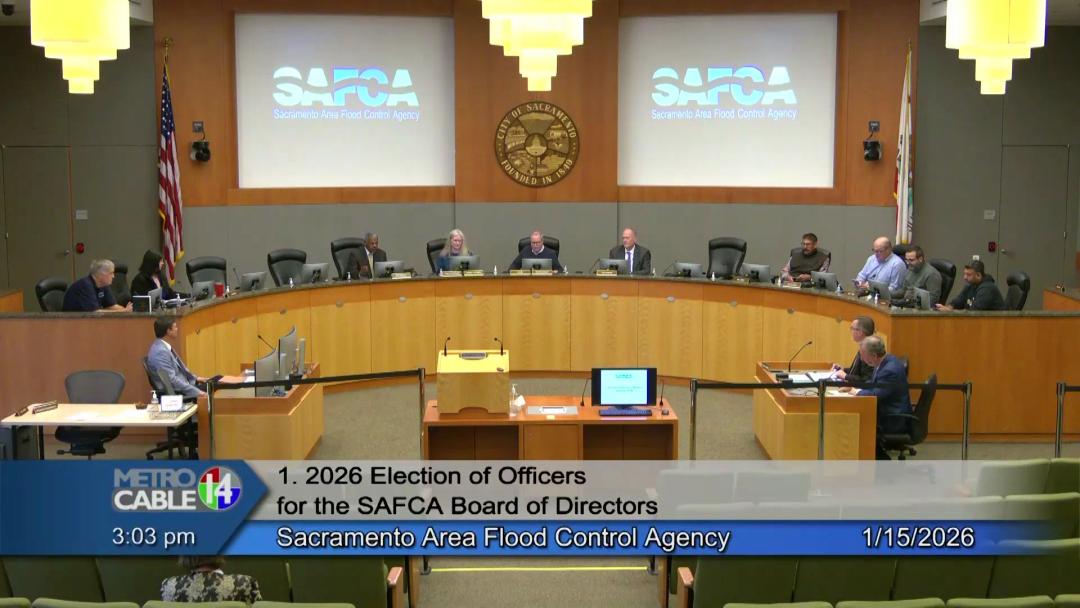
The Sacramento Area Flood Control Agency (SAFCA) Board of Directors convened on January 15, 2026, to conduct their annual organizational meeting, including the election of officers for 2026 and receive updates on critical flood control projects and federal funding initiatives. Opening and Roll Call The meeting commenced in the afternoon with roll call establishing an initial 10-member quorum, later expanded to 11 members. Director Holloway participated remotely via video conference. The meeting was live-streamed at MetroCable14SACCounty.gov and scheduled for re-airing on MetroCable Channel 14 on Sunday, January 18th at 12 p.m., with availability on SAFCA's website within 48 hours. Election of Officers for 2026 - Chair Election: The board unanimously re-elected the current chair (Director Kennedy) to continue serving as Board Chair for 2026. The motion passed with a 10-member approval via roll call vote. - Vice Chair Election: Brian Holloway was nominated and unanimously elected as Vice Chair for 2026, passing with 10-member approval. The chair praised Director Holloway's decades of experience and valuable contributions as a sounding board. Closed Session The board recessed into closed session with Director Abadis recusing himself from participation. Upon reconvening with an 11-member quorum, counsel reported that Director Abadis was not present in closed session and did not receive any associated materials. Consent Calendar - Items 2 through 6 were approved unanimously on consent with an 11-member approval via roll call vote - No public comment was received on consent items Executive Director's Report Executive Director Jason Campbell provided updates on several critical matters: Federal Budget and Funding: - The concerning continuing resolution that expired in January was resolved when HR 6938 passed the Senate on the meeting date - This ensures the federal government will have a budget by the end of January, allowing continued progress on programs with the Corps of Engineers and Bureau of Reclamation Natomas Project Advocacy: - SAFCA continues seeking funding for several reaches of the Natomas project - In December, Campbell traveled to Washington D.C. for extensive advocacy meetings including: - Senator Padilla regarding Natomas funding and programmatic issues - Congressman Matsui and Congressman Barra - Assistant Secretary's Office in the Pentagon for Civil Works - Senate and House Appropriations staff - USACE headquarters - Bureau of Reclamation - Due to the previous government shutdown, discussions were out of normal sequence - Another advocacy trip is being considered for early 2026, possibly in March or during cap-to-cap in April Financial Management: - The FY25 audit has been completed and financial statements were included for receiving and filing - Staff is conducting five-year cash flow analyses to support expeditious project completion if federal funding is secured - The bond market is being evaluated for potential refunding and refinancing opportunities to either save money or create additional cash for project needs - Budget preparation for the upcoming fiscal year has commenced Key Outcomes - Chair Kennedy and Vice Chair Holloway re-elected/elected for 2026 term - Federal budget concerns resolved with passage of HR 6938 - Continued federal advocacy efforts for Natomas project funding - Financial planning underway including potential bond refinancing opportunities - Next meeting scheduled for February 19, 2026
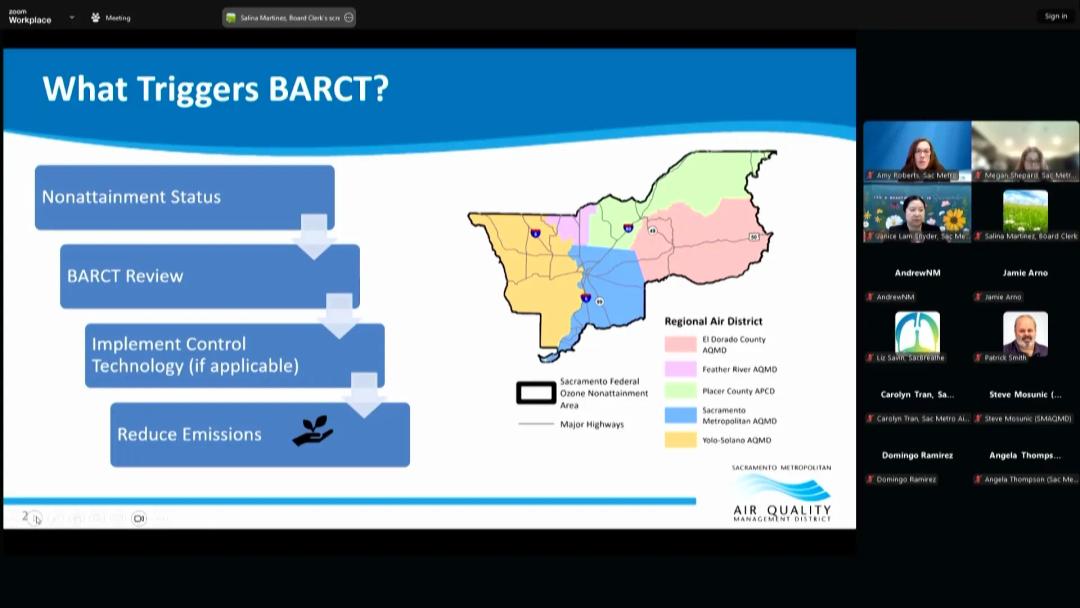
This meeting covered major accomplishments from 2025, highlighted innovative air quality projects, and outlined future initiatives including the AB 617 Community Emission Reduction Plan due in July 2026. Opening and Roll Call The meeting was called to order on January 22, 2026. Initial roll call showed insufficient quorum, with several directors arriving during the proceedings. The meeting formally commenced after the Pledge of Allegiance and reached quorum with the arrival of Directors Jennings, Robles, and Sandra. 2025 Year in Review Community Report Emily Allshaus presented a comprehensive 200+ page community report summarizing the district's 2025 accomplishments: - Major Achievement: Attainment of the 2008 ozone standard, celebrated in August 2025 - Funding Distributed: Nearly $16 million awarded in clean air projects across the region, including: - $1.5 million for Ecomotive Hydrogen Facility near Galt - $1.5 million for CRP's mobility hub - $1.5 million in commercial lawn and garden vouchers for electric equipment - Over $2 million for high-polluting tractor and equipment swaps - More than $5 million for local schools to transition to electric vehicles - New Programs: Launched ultrafine particle monitoring pilot and began major upgrades to Arden-Del Paso monitoring station - The report will be used as a key outreach tool in 2026, paired with a digital campaign rolling out the following week AB 617 BARCT Determination for Internal Combustion Engines Diana Colazzo presented findings on Best Available Retrofit Control Technology (BARCT) review: - Scope: Review focused on California Resources Corporation (CRC), a Fortune 1000 company with $3 billion revenue in 2024 - Standards Established: BARCT limits set at 0.15 grams per brake horsepower hour for both NOx and VOC - Results: Of eight permitted engines at CRC, only one failed to meet NOx limits. CRC voluntarily agreed to replace the three-way catalyst, reducing NOx emissions by over 80% - Outcome: All engines now meet BARCT standards; no additional rulemaking necessary. This concludes the district's BARCT obligation under AB 617 The board unanimously approved the resolution following a public hearing with no public comments. Transportation Incentives, Investments, and Updates Mike Neuenberg provided a comprehensive overview spanning 30 years of the district's transportation incentive programs: Historical Context - Program Origins: Sacramento Air District pioneered incentive programs 30 years ago under Dr. Carl Moyer's leadership - State Adoption: California Air Resources Board adopted the model statewide in 1999, naming it the Carl Moyer Program - Initial Funding: Started with $1.9 million; now exceeds $370 million invested regionally - Equipment Impacted: Over 8,000 pieces of equipment replaced, repowered, or upgraded Emission Reduction Impact - Demonstrated example: 1977 tractor produced 1.32 tons/year NOx and 0.069 tons/year PM10 (138 pounds) - New tractor reduces emissions to 0.03 tons/year ozone and 0.001 tons/year PM10 (2 pounds) - Particulate matter sample displayed to board members to illustrate real-world health impacts Current Zero-Emission Projects Downtown Bridgeway Towers Project - Multi-unit housing, 143 units, built in 1970 - Installed 47 Level 1 (110-volt) chargers - Accommodates residents without home charging options - Supports Clean Cars for All program for apartment dwellers - No major electrical infrastructure upgrades required, expediting installation Folsom Project - 17 Level 2 chargers installed - Provides overnight full-charge capability (200-300 mile range) Elk Grove Unified School District Partnership - Fleet: Currently operates over 100 electric buses region-wide; Elk Grove has 31 electric vehicles - District History: 30-year partnership with air district; participated in EV demonstration project 30 years ago (technology not mature at that time) - Recent Progress: 143 vehicles funded over partnership history; four new buses board-approved months prior - Infrastructure: Upgraded 10 Level 2 chargers to 11 DC fast chargers (completion expected in two months); 16 additional chargers under construction through EPA funding - Community Benefits: Parents report buses are quieter; special needs students less distracted than with loud diesel buses Board-Approved Projects The board unanimously approved two major projects: La Familia Counseling Center - Urban Greening Project - Location: South Sacramento, Franklin Boulevard and 37th Avenue, within AB 617 area - Budget: Up to $1,728,000 - Scope: Community greening project featuring extensive tree and shrub planting, irrigation systems, community garden - Community Impact: Creates safe open space for North Franklin area residents, community meetings, and gatherings - Partners: Sacramento Tree Foundation (tree/shrub selection and irrigation), United Latinos (community outreach), Sacramento City Unified School District - Significance: Board members emphasized this addresses long-ignored need for outdoor community space in South Sacramento HIWATS Hydrogen Charger Project - Location: Near Sacramento State University - Budget: Up to $2,000,000 - Technology: Innovative combination of hydrogen fuel cells, solar arrays, batteries, and grid connection for EV charging - Process: Solar panels generate hydrogen; hydrogen runs through fuel cell technology to power chargers - Resilience: System provides charging capability during power outages through solar-generated hydrogen - Purpose: Demonstration project to test emerging technology and assess future viability AB 1390 Policy Update Christian Damkeer presented updates to the district's AB 1390 policy: - Background: AB 1390 (adopted 2001) requires large air districts to distribute at least 50% of Carl Moyer funds to communities of color and low-income areas - Current Policy: Created in 2003 based on 2000 Census data - Updates: Policy updated to 2020 U.S. Census data to accurately reflect current demographics and census tract boundaries - Geographic Changes: - South Natomas now included - McClellan Park now covered (critical for many programs) - Expanded eligibility in South Sacramento and Elk Grove - Success: Policy described as business-friendly while meeting community needs; district strives to meet and exceed 50% allocation requirement The board unanimously approved the updated policy. APCO Report and Looking Ahead to 2026 Dr. Alberto Ayala provided extensive forward-looking report: Organizational Recognition - Jaime's Honor: Director Jaime recognized by California Energy Commission as Clean Energy Champion—statewide recognition highlighting his community connections and air quality work - 30th Anniversary: District celebrates 30 years as independent special district in 2026 (created 1996); celebration planned for fall 2026 - Historical Context: District's origins trace to 1959 as Sacramento County department; California air districts were first U.S. agencies to fight air pollution (late 1940s-early 1950s) Key Partnerships - California Air Pollution Control Officers Association (CAPCOA): Collection of all 35 California air districts; celebrating 50th anniversary; provides state-level influence and advocacy - National Association of Clean Air Agencies (NACA): 155 air agencies nationwide plus 40 state agencies; Dr. Ayala serves as vice president representing local agencies, positioned to become co-president Outstanding Board Assignments 1. Executive Airport Lead Monitoring: AB 617 community concerns about lead emissions from avgas; analysis ongoing for monitoring recommendation 2. Inspection Efficiency: Exploring partnerships with county/cities for business inspections and evaluating new technology opportunities 3. EV Road Charges: Research on California's exploration of alternative road funding as fuel tax revenues decline with increased EV adoption 2026 Policy Landscape Federal Level - EPA released deregulatory agenda with 31 items (mostly air quality-related) - Priority focus: permitting reform - Extensive congressional activity and legislation expected State Level - Cap and Trade Update: Regulations governing cap-and-invest program; critical funding source for incentive projects - Corporate Climate Disclosure: New ARB regulation requiring businesses of certain size doing business in California to report carbon footprint; starts with large businesses, eventually expanding - Carbon Capture and Storage: State developing accounting protocols; relevant to SMUD's partnership with Calpine at Sutter Energy Center (Yuba City)—first full-scale project capturing CO2 from 200+ megawatt power plant for underground storage - Building/Appliance Emissions: Statewide policies to reduce carbon emissions from buildings and appliances - SB 375/SB 743 Update: VMT (Vehicle Miles Traveled) targets; SACOG and large MPOs requesting program reform to avoid penalizing regions not meeting targets - Air Toxics Roadmap: State revamping air toxics policy framework (longstanding since mid-1980s) - Data Centers: Focus on energy consumption and air pollution from data center development; emphasis on clean power innovation AB 617 Community Emission Reduction Plan - Timeline: Final plan due to Air Resources Board in July 2026 - Status: First draft published Friday, January 16, 2026 (prior to meeting); open for public comment - Size: Over 200 pages - Content: 28 strategies to reduce community emissions, including urban greening - Accessibility: Story map created by communications team for digestible presentation - Board Process: Plan chunks to be presented monthly starting February; final board approval sought in May 2026 - Collaboration: Strong partnership between air district, city, and county staff; many strategies require planning and land use coordination beyond air quality agency scope - Representation: Chair Aquino, Vice Chair Maple, Director Vang, and Director Maple invited to participate (representing South Sacramento area) Public Comments Mike McWhorter (Vice President, 500 N Street Homeowners Association) - 143-unit, 16-story building with two-story parking garage (built 1970) - Davis-Stirling Act required evaluation of EV charging barriers - Physical limitations: One parking space per unit (assigned), no adjacent space, no special-use parking allocation possible - Financial barriers: Capital improvements require 51% ownership vote; assessment seemed impossible - Solution: Combined SMUD and AQMD incentives made project financially feasible without special assessments or ownership vote - Results: 47 EV chargers installed (30% of 143 spaces); opened EV ownership opportunity to residents; improved resident satisfaction and retention Jerry Boulay (Elk Grove Unified School District Fleet Maintenance Supervisor) - Total fleet: 31 electric vehicles (including wheelchair buses, Thomas buses, International school buses) - 16 vehicles funded by air district; four more approved November/December 2025 - Infrastructure: Upgraded 10 Level 2 chargers to 11 DC fast chargers (near completion, awaiting 1,000-amp panel); 16 additional chargers under construction (EPA funding, construction began meeting day) - Performance: Chargers work "fantastic" with minimal downtime; buses occasionally down approximately one month for parts/updates - Fleet diversity: Propane, CNG, diesel, and electric vehicles; scrapping older diesel buses for new EVs - Community feedback: Parents appreciate quiet buses; special needs students less distracted - Partnership: Close collaboration with Model 1 vendor Key Outcomes - Consent calendar approved unanimously - AB 617 BARCT determination for internal combustion engines adopted unanimously - Transportation incentive projects approved unanimously: La Familia Counseling Center ($1,728,000) and HIWATS hydrogen charger project ($2,000,000) - AB 1390 policy update approved unanimously - Meeting adjourned at 10:09 AM Board Attendance and Participation Directors Aquino (Chair), Kennedy, Lopez-Taff, Prattin, Rodriguez, Vang, Jennings (arrived during meeting), Robles (arrived during meeting), and Sandra (arrived during meeting) were present. The meeting demonstrated strong board engagement with questions and comments throughout, particularly regarding community benefits, cancer reduction studies, and expansion of urban greening projects.
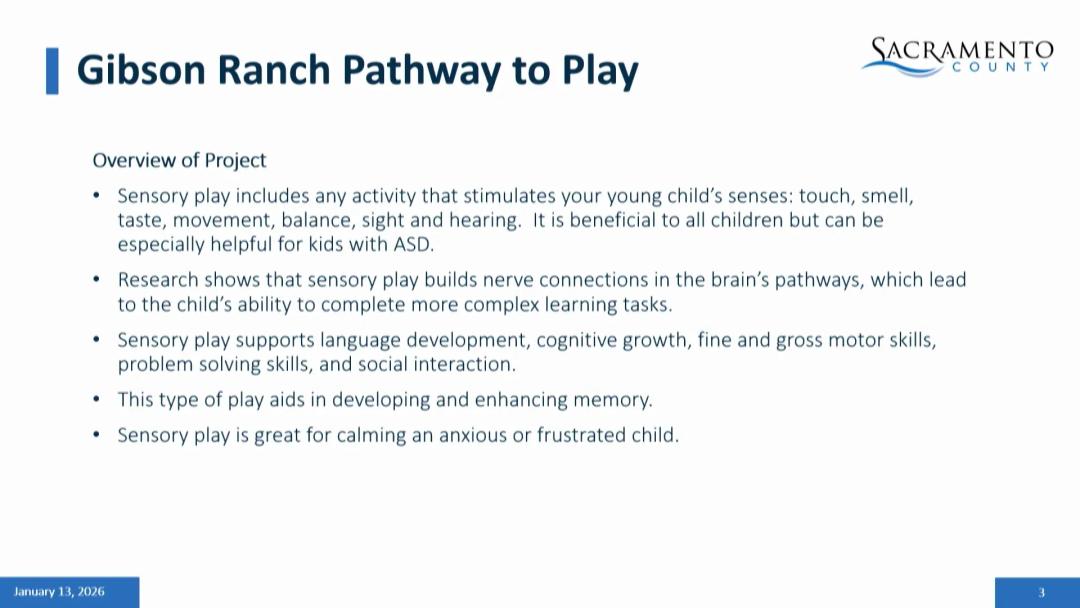
This meeting marked significant transitions and critical fiscal planning for Sacramento County, featuring leadership changes, land use decisions, and comprehensive budget discussions. Opening and Leadership Transition The meeting began with Supervisor Serna chairing his final meeting after serving as chair during 2025. The Board unanimously elected Supervisor Rodriguez as Chair for 2026 and Supervisor Hume as Vice Chair. Chair Rodriguez acknowledged Serna's "leadership with heart" and his focus on underrepresented communities, presenting him with a check to the Viewpoint Photographic Arts Center in his honor. Serna reflected on the Board's accomplishments in 2025 and expressed confidence in Rodriguez's leadership. Public Comments and Employee Concerns Desiree Fox, a 10-year county employee, addressed the Board regarding concerns following her return from protected leave after childbirth. She formally requested a meeting with a member of her commission and supervisor to resolve issues she experienced navigating county HR processes, emphasizing her right to respect and proper treatment as a county employee. Major Land Use and Development Decisions Gibson Ranch Pathway to Play Playground Project The Board accepted a $40,000 donation from Friends of Sailor Bar to support the Gibson Ranch Pathway to Play Playground Project. Director Liz Belles presented plans for an autism-inclusive playground featuring sensory play equipment spread throughout the area to prevent sensory overload. The playground will include sand play, water play, musical instruments, cozy quiet areas, and movement-based equipment, all designed to be accessible for children with autism spectrum disorder while serving all children. Construction is planned for 2026. 6702 Filbert Avenue Subdivision (Orangevale) The Board unanimously approved a controversial project to rezone 10 acres from Agricultural Residential 2 (AR2) to AR1, allowing subdivision into ten one-acre residential lots. Despite opposition from the Orangevale CPAC (which voted to deny) and concerns from neighbors about traffic, drainage, and loss of rural character, both DRAC and Planning Commission recommended approval. Neighbor Carol Schumacher testified about concerns regarding traffic impacts (combined with 32 houses approved nearby), loss of wildlife habitat, and drainage issues. The applicant's representative noted the property was a family-owned orchard for over 100 years but has been vacant since 2017, and presented petitions signed by 27 neighboring residents in support. The project includes infrastructure improvements and enhanced drainage systems. Crafted Canvas Arts Studio (Fair Oaks) The Board unanimously approved a Public Convenience or Necessity letter for a Type 40 ABC license (on-sale beer only) for Crafted Canvas, a new woman-owned art studio and artisan shop at 9906 Fair Oaks Boulevard. Owner Nicole Carson explained the studio opened October 1, 2025, and offers classes, workshops, and after-school enrichment programs. The beer license would support adult-only "paint and sip" events on Friday and Saturday evenings (21+). Carson emphasized responsible service protocols including RBS certification, locked beer storage, visible signage, and separation of adult events from family-friendly programming. The Fair Oaks CPAC recommended approval 6-0, and despite being in a high-crime reporting district, the Sheriff's office had no objection. Aspen 8 and 9 Mine Expansion The Board approved (5-0) a use permit amendment for Teichert Materials to expand surface mining operations by 245.6 acres (63 acres to Aspen 8, 182 acres to Aspen 9) with a 15-year extension through December 31, 2046, and reclamation completion by 2048. The project includes a reclamation plan amendment maintaining grassland as the end use and a development agreement amendment. The supplemental EIR identified significant unavoidable impacts in aesthetics, agriculture, and air quality, though air quality impacts were slightly reduced due to increased conveyor belt usage. The project continues the cents-per-ton donation program to the American River Parkway Foundation. Both Planning Commission and Vineyard CPAC recommended approval. Eminent Domain for Powerline Road Project The Board unanimously approved a resolution of necessity authorizing eminent domain action to acquire real property interests for the Powerline Road Phase 2 improvement project (estimated construction cost: $6.4 million). The resolution applies to one property owned by Nietzsche N.V., a Netherlands Antilles Corporation, which has been cooperatively working with the county but currently has forfeited corporate status with California, preventing voluntary acquisition. The project will widen Powerline Road from Alba Drive to Elverta Road and Elverta Road from Powerline Road to 1,400 feet west of Metro Air Parkway, creating two-lane collectors with center turn lanes. Infill Program Workshop Infill Coordinator Jessie Shen presented an update on the renewed infill program, which was discontinued during the Great Recession (2007-2012) but reestablished in 2025. The program focuses on revitalizing commercial corridors to achieve the General Plan's goal of up to 21,000 additional housing units. Current initiatives include: - Infill Developer Council: Over 20 members from the development industry providing input on barriers and opportunities - Commercial Corridor Opportunities and Constraints Analysis: Preliminary assessments engaging PBIDs, chambers of commerce, and business groups - Housing and Infill Zoning Code Amendments: Streamlining multi-family development, eliminating use permit requirements, exploring neighborhood-scale multi-unit buildings in single-family zones, and prohibiting industrial uses (like mini storage) in priority corridors - North Watt Avenue Specific Plan: Board-initiated process addressing infrastructure constraints Supervisors emphasized the need for infrastructure investment to make projects financially viable, with Deputy County Executive Dave DeFonte noting successful grant applications (e.g., $3 million in Green Means Go funds for Stockton Boulevard infrastructure). Staff requested resources during the upcoming budget cycle, noting the program currently has one allocated staff member. Medical Indigent Services Program Update Health Services Director Tim Lutz provided an informational update on the County Medically Indigent Services Program (CMISP) and Healthy Partners program, clarifying differences between the programs: CMISP (historically focused on medical necessity): - Covers emergency hospital care, medically necessary primary and specialty care, pharmacy, and ancillary services - Serves those not qualifying for Medi-Cal or Emergency Medi-Cal - Currently has zero enrollment but must be rebuilt due to state/federal changes - Income threshold: 400% FPL Healthy Partners (established post-ACA for undocumented individuals): - Richer primary care/prevention services: women's health, lab, radiology, behavioral health, chronic disease management, broader pharmacy, limited dental - Requires Emergency Medi-Cal eligibility - Income threshold: 138% FPL - Operational until two years ago - Covers approximately 36,000 people with expected utilization of 2,500 (cap of 4,000) New Budget Pressures: State budget proposal to move refugees, asylees, and parolees to Emergency Medi-Cal only (rather than state-only Medi-Cal) could add up to $15.5 million in costs, as 24,000 people receiving coverage would fall under county CMISP mandate. Supervisor Serna strongly stated opposition to eliminating Healthy Partners, citing long-term cost implications and impacts on vulnerable populations. Fiscal Year 2026-27 Budget Workshop Budget Overview and Pressures Chief Fiscal Officer Amanda Thomas presented a comprehensive budget workshop, the earliest in the annual process to better align with Board priorities. Key findings: Revenue and Structural Deficit: - Projected discretionary and semi-discretionary revenues: $1.836 billion (3% increase) - Projected ongoing use of resources: $1.937 billion - Structural operating deficit: $101 million - Current general fund reserves: $204 million (5% of revenue vs. 17% policy target) - Without constraints, reserves projected to be depleted in approximately three years Major Budget Pressures: 1. CMISP/Healthy Partners: Year 1 costs estimated $29-63 million (low to high scenarios); Year 3 costs $78-117 million 2. CalFresh Administrative Costs: $6 million increase due to HR1 federal changes 3. Labor Cost Escalation: 3.5% average annual increase, with salaries/benefits representing half of general fund expenditures 4. Mays Consent Decree Compliance: $137 million increase over five years in Sheriff/Correctional Health budgets (9% average annual increase) 5. Pension Obligation Bonds: Debt service drops by $37 million in FY 26-27, but $8 million higher share from local resources due to federal/state claiming limits 6. Revenue Neutrality Payments: Final payments end FY 27-28, resulting in $11 million ongoing loss Unfunded Capital/Maintenance Needs: - Road maintenance backlog: $1.4 billion - County buildings and parks: $1+ billion - Climate Action Plan implementation: $200 million - ERP system upgrade: $20 million - General Plan update: $3-5 million Budget Priorities Discussion The Board discussed budget priorities based on consistent community input from surveys and focus groups conducted 2021-2024 by professional firm FM3: Top Community Concerns (lower satisfaction, higher importance): - Homelessness (highest priority) - Housing - Behavioral health - Road conditions (particularly for unincorporated residents) Board Budget Priorities (in hierarchical order): 1. Comply with county obligations (statutory/legal requirements) 2. Optimize use of resources, including limiting backfill of reductions in dedicated revenue with discretionary resources 3. Fund new/enhanced programs focusing on critical needs: homelessness (including housing, mental health, substance use treatment) and roads Supervisor Hume emphasized the importance of this hierarchy, noting Priority 2's significance regarding programs losing dedicated funding (like Healthy Partners after state changes). Resource Allocation Options and Decision Staff presented five initial resource allocation approaches: 1. Recommended Constrained: -2% discretionary/semi-discretionary allocation, CMISP Option 1A ($29M minimum safety net, no Healthy Partners), $59M use of reserves 2. Less Constrained: 0% allocation, CMISP 1A, $76M reserves 3. Unconstrained: 0% allocation, CMISP 1A, $101M reserves 4. Constrained with Healthy Partners: -3% allocation, CMISP 1B ($41M including Healthy Partners at 138% FPL), $59M reserves 5. Less Constrained with Sheriff/DA/Correctional Health Protected: 0% for those departments, -2% others, CMISP 1A, $59M reserves Board Discussion Highlights: - Supervisor Serna criticized the presentation for singling out Healthy Partners, calling it "disingenuous" given countless county programs - Supervisor Desmond supported preserving Healthy Partners, noting disproportionate general fund reliance by public safety departments - Supervisor Hume advocated for the $59 million ceiling to address structural deficit sooner, noting "tough decisions have to be made now" - Chair Rodriguez sought clarification on impacts (36,000 eligible, 4,000 cap, 2,500 expected utilization = $12M cost) and alternative funding sources Final Motion: Supervisor Serna moved to approve a modified approach with -2.5% across-the-board reduction, CMISP Option 1B (preserving Healthy Partners), and $66 million use of fund balance/reserves. The motion passed 3-2 (Rodriguez and Hume opposed). Supervisor Hume voted no to maintain fiscal conservativeness and the $59M ceiling. Chair Rodriguez voted no preferring the most constrained approach while requesting exploration of alternative funding for Healthy Partners. The Board also approved the budget priorities 4-1 (Hume opposed, noting Priority 3's inclusion of Healthy Partners definition). Key Public Comment Themes Numerous advocates for the American River Parkway and Regional Parks testified during the budget workshop, emphasizing: - Parks' role in public physical and mental health (25% increase in exercise among users per CDC) - Economic benefits ($500+ million annually to community) - Parks as assets subject to deterioration requiring ongoing investment - Recent progress in parkway maintenance and restoration ("never looked better") - Need to protect operations and maintenance funding - Parks' contribution to addressing homelessness, mental health, climate action, and vulnerable children - Request to avoid cuts using "scalpel" approach given parks' importance to community priorities Administrative Actions The Board approved numerous consent calendar items (4-45), dropping item 6 and continuing item 15 to January 27. Supervisor Hume abstained from item 10 (Wilton Rancheria property sale) to avoid appearance of impropriety due to good relationship with the tribe. The Board continued several own-ranks appointments to future meetings, with Chair Rodriguez requesting time to consider appointments to positions previously held by former Chair Serna. Adjournment Supervisor Serna adjourned the meeting in memory of Rob Reiner, producer, actor, director, and activist who championed Proposition 10 (1997), which created First 5 commissions across California through tobacco product taxation for early childhood development, education, and dental health. Reiner passed away recently along with his late wife under unfortunate circumstances.
This meeting marked the annual reorganization of the Sacramento Area Sewer District Board, with leadership transitions and critical updates on the Harvest Water recycled water project. The board addressed significant milestones, grant compliance requirements, and community engagement challenges while establishing an advisory committee to improve farmer relations. Opening and Leadership Transition - The meeting opened with a roll call establishing quorum with all members present - Board members are compensated $100 per meeting, with compensation for County Supervisors and certain council members paid to their respective jurisdictions - Director Soon led the Pledge of Allegiance - Annual Election of Officers: Supervisor Phil Serna was elected as Chair and Council Member Orozco as Vice Chair through a unanimous vote, following the board's established procedure of alternating between city and county members for two-year terms - Outgoing Chair Dana Karpinski-Costa was thanked for her year of service and leadership Administrative Matters - The second January meeting was cancelled as part of Chair Serna's directive to consolidate meetings and respect board members' time and other commitments - Next meeting scheduled for February 11, 2026 Harvest Water Project Update Grant Milestones and Compliance: - 20% recycled water delivery goal: Already met as of January 2025 - 60% recycled water delivery goal: Already met, ahead of the January 2026 deadline - 100% recycled water delivery goal: Currently at 61-82% (approximately 70%), must reach 100% by January 2029 - No construction deadline: There are no penalties for construction delays, but water delivery triggers additional compliance requirements - Post-delivery requirements: Once water delivery begins (expected 2027), the district must achieve 50% of demand by the third full year of operations (2030) and 100% by 2032 Risk Assessment: - Failure to meet milestones does not trigger grant clawbacks but initiates an "adaptive management process" with the state - This could require additional expenditures for activities not originally anticipated, such as extending infrastructure to reach new potential customers - The state is highly supportive of the project as it is the furthest along in construction among similar projects and represents a significant investment Project Status: - Construction expected to be substantially complete by the end of 2026 - 75 on-farm connection assembly agreements already signed, demonstrating farmer interest and need - 13 construction-related claims filed, which county risk management and third-party adjusters consider a low number for a project of this magnitude - The project is a critical component of the regional Groundwater Sustainability Plan (GSP) required under state law for achieving sustainability by 2040 Key Discussion Points Community Relations Concerns: - Director Hume emphasized the importance of "picking the low-hanging fruit" and making a good first impression with the agricultural community - Concerns raised about burning through goodwill and political capital with farmers, which could make future outreach more difficult - Discussion of farmer mistrust, with some fearing that accepting recycled water might hasten state action on their groundwater wells - Recognition that agreements require two willing parties, creating risk factors outside the district's direct control Adaptive Management Reality: - Director Villegas noted this is the first non-drought year for the project, which changes demand dynamics - Agricultural water use fluctuates significantly based on annual allocations (ranging from 10-50% in different years) - Crop conversion and changing agricultural practices mean water demand will remain variable - Adaptive management with the state will likely be an ongoing necessity regardless of agreement success GSP Connection: - Director Dickinson emphasized the critical link between the Harvest Water Project and the Groundwater Sustainability Plan - Without this recycled water source, the region faces greater risk of state intervention on groundwater wells - This connection should be part of outreach, though it may be perceived as threatening by some farmers Harvest Water Advisory Committee Established - Board approved establishment of an ad hoc advisory committee (less than one year duration, not subject to Brown Act) - Committee members: Directors Desmond, Soon, Hume, and Serna - Maximum committee size is eight members (less than the nine-member quorum) - Purpose: Improve relationships with agricultural community and facilitate agreement negotiations Staff Recognition - District Engineer Christophe Dobson noted strong staff support for the project due to both engineering challenges and environmental benefits - Chair Serna praised the marketing and outreach team for effectively communicating the project's benefits to constituents - Staff described it as "one of the most beloved projects" due to its multi-benefit nature Consent Calendar - Items 6 through 14 approved unanimously without discussion or public comment Public Participation - No public comments were received on any agenda items - Ken Onetto of KLM Ranches, recently featured on the cover of Comstocks magazine, was recognized in attendance Key Outcomes - Leadership transition completed with Supervisor Serna as Chair and Council Member Orozco as Vice Chair - Advisory committee established to strengthen farmer engagement and increase agreement sign-ups - Board gained clarity on grant compliance timeline and risks, with key deadline of January 2029 for 100% of recycled water delivery agreements - Recognition that the project is ahead of schedule on initial milestones but faces challenges in reaching full agreement participation - Understanding that the project is essential to regional groundwater sustainability but must balance regulatory requirements with community trust-building Meeting adjourned with next meeting scheduled for February 11, 2026.
On Tuesday, December 16, 2025, the Sacramento County Board of Supervisors convened its final meeting of 2025 (Chair Phil Serna’s last meeting as Chair). The Board heard no off-agenda public comments, unanimously approved a large consent calendar (including funding and election-related items set for later adoption), conducted a public hearing to vacate a portion of a Fair Oaks right-of-way, received an annual liability-claims report (George Hills), and received the Sheriff Community Review Commission’s annual update, including recommendations concerning the Sheriff’s mental-health call response policy. The meeting concluded with County Executive and Supervisor remarks and then moved to closed session. Public Comments & Testimony - Off-agenda public comment: No speaker requests were submitted. Consent Calendar - Addendum travel items (Dec. 1–5, 2025; Santa Clara, CA): - Supervisor Rich Desmond (District 3) travel for the California State Association of Counties annual conference. - Supervisor Rosario Rodriguez (District 4) travel for the CSAC 131st Annual Meeting. - Selected consent items noted by Supervisor Pat Hume (District 5): - Item 27 (Mobile Integrated Health expansion): Approved an expenditure agreement with Sacramento Metropolitan Fire District for $575,000 for Jan. 1, 2026–Nov. 30, 2027 to expand the Mobile Integrated Health (MIH) program. Supervisor Hume expressed support for the MIH model and thanked program partners. - Item 33 (Boating Safety & Enforcement grant): Authorized application/participation for FY 2026–27 funding of $287,451 from CA Dept. of Parks & Recreation, Division of Boating and Waterways. Supervisor Hume expressed support for marine enforcement and thanked Sheriff’s Office Marine Enforcement staff. - Ordinances introduced/adopted/continued (among consent notes): - Sacramento County Employees Campaign code amendments: introduced; continued to Jan. 13, 2026 for adoption. - Campaign contribution limits (biannual adjustment review): ordinance action noted as continued from Dec. 9, 2025. - Voter registration/elections fee schedule for CY 2026–2027: ordinance action noted as continued from Dec. 9, 2025. - Camping ordinance amendment (Chapter 9.120, Title IX) requested by Supervisor Rodriguez: introduced; continued to Jan. 13, 2026 for adoption. - Vote: Consent Calendar approved unanimously, 5–0. Nominations (Boards/Commissions) - Multiple nominations were continued to future dates, including: - Continued to Jan. 13, 2026: Adult Aging Commission; Cemetery Advisory Commission; Cosumnes Area CPAC; Orangevale CPAC; South Sacramento Area CPAC; additional items as listed by the Clerk. - Continued to Jan. 27, 2026: Local Child Care Planning & Development Council; Maternal Child & Adolescent Health Advisory Board; Natomas CPAC; Public Financing Authority / Metro Air Park EIFD; Behavioral Health Youth Advisory. - Items addressed/continued from the dais included: - Carmichael Recreation and Park District: continued to Jan. 13, 2026 (Supervisor Desmond). - Equal Employment Opportunity Advisory Committee: nomination of Maisha Roberts recommended; remaining seats continued to Jan. 27, 2026 (Chair Serna). - Fair Oaks CPAC: continued to Feb. 10, 2026 (Supervisor Desmond). - Health and Human Services Coordinating Council: multiple district seats continued (dates varied by supervisor; most to Jan. 27, 2026; District 4 seats to Jan. 13, 2026). - In-Home Supportive Services Advisory Committee: nomination of Michelle Stewart recommended; remainder continued to Jan. 13, 2026. - Sacramento County Youth Commission: Chair Serna nominated Julianne Hill; another seat continued to Jan. 13, 2026. - Sheriff Community Review Commission: one seat continued to Jan. 27, 2026 (Supervisor Hume). Discussion Items Item 40 — Public Hearing: Vacate/Abandon Portion of Martsmith Way Right-of-Way (Fair Oaks) - Staff presentation: Jody Hashigami-Contreras (Dept. of Community Development, County Engineering) presented a request to vacate the northwesterly portion of the Martsmith Way right-of-way while reserving an underlying public utility easement for continued access. - The 20-foot right-of-way originated as an Irrevocable Offer of Dedication (IOD) recorded July 2, 1992, and later accepted/recorded Oct. 17, 2016. - Staff reported utility purveyors and relevant departments reviewed the request and did not object; staff recommended recognizing the abandonment’s exempt status and adopting the resolution. - Board question: Supervisor Hume confirmed the IOD concept would remain available for future development needs; staff confirmed. - Public testimony: - Steven Anderson (owner, 4838 Mart Smith Way / Parcel 4): Expressed support for vacating the right-of-way, citing safety/ingress-egress concerns, lack of turnaround for emergency vehicles, and alleged burdens/damage related to use and maintenance. - Megan Anderson (co-owner, 4838 Mart Smith Way): Expressed support for the staff-recommended compromise approach (including preserving the IOD concept for potential future development), stating it was supported by the neighborhood with one exception and raising safety concerns about rear access to a nearby ADU. - Mark Lees (attorney for John Chewy, owner of 8787 & 8791 Sunset Ave.): Requested a continuance, stating his client received notice late and intended to use a rear access gate to reach an ADU; he described county requirements for additional dedications/widening for improved access. - Action/Vote: The Board opened and closed the public hearing, then adopted the resolution to vacate/abandon the specified right-of-way portion while reserving the public utility easement. Approved 5–0. Item 41 — George Hills Company, Inc. Annual Report (Fiscal Year Ending June 30, 2025) - Presenter: George Hills representative (annual claims/litigation administration report). - Key reported figures and trends (as stated): - Open claims increased from 745 to 877. - Closed files: 588 (presenter noted this was below the desired 100% closure ratio due to higher incoming claims). - Claim payments: approximately $21 million for the last fiscal year. - Presenter highlighted the continuing impact of AB 218 (alleged child sexual abuse claims) on new assignments and legal workload; noted these cases often involve events 20–40 years old. - Noted a prior spike year included weather-driven claims (wet winter/potholes/trees). - Claim size distribution (10-year view): 88% of claims were between $0 and $7,500; 10 claims exceeded $2 million in 10 years. - Subrogation recoveries: prior “banner year” near $1.1 million; last year $816,000 recovered. - Board discussion: - Vice Chair Rodriguez asked about mapping transportation-related claim locations; presenter said the data fields exist and could be provided. - Supervisor Desmond requested additional reporting comparing claimed “exposure” vs. incurred/paid amounts and tracking AB 218-related liability/exposure, including for use in CSAC/UCC discussions. - Chair Serna emphasized transparency value because the public does not see the detailed litigation discussions handled in closed session. - Action: Receive-and-file style annual report (no vote recorded). Item 42 — Sheriff Community Review Commission Annual Update (FY ending June 30, 2025) - Presenters: Paul Curtis (Commission Chair) and Michael Whiteside (Vice Chair). - Commission background (as presented): - Cited AB 1885 (2020) enabling counties to create sheriff oversight boards with subpoena power. - Sacramento County established the Commission in 2021; presenters noted it was among the first three such commissions statewide at the time. - Membership: two appointees per supervisorial district plus an ex-officio county executive representative. Outreach & Community Engagement Ad Hoc - Presenter stated the Commission approved 15 of 19 recommendations, including: - Encouraging the Sheriff’s Office to send a representative to Commission meetings so the Sheriff’s Office can hear community concerns directly. - Board/County Counsel discussion: - Chair Serna raised concern about inconsistent Sheriff’s Office attendance. - County Counsel stated the Sheriff is an independent elected official and cannot be compelled to attend; the Board could pass a resolution (non-compulsory). - Chair Serna directed staff to return by end of January 2026 with a proposed Board resolution expressing the Board’s interest in consistent Sheriff’s Office participation. - Deputy County Executive Eric Jones stated he had discussed the issue with the Undersheriff; Sheriff’s Office staff indicated they watch meetings and had begun attending again (noted attendance in November). Mental Health Policy Change Ad Hoc (Sheriff non-response to certain behavioral health calls) - Presenters described reviewing the Sheriff policy change to stop responding to certain behavioral health calls where no crime occurred/is expected imminently. - Commission recommendations (7 total; described at a high level): - Improve internal/external engagement and coordination before future policy changes. - Address service gaps related to call transfers between 911 and 988 (presenter stated interoperability was not in place when the policy was implemented but has since been addressed). - Recommendation highlighted by Chair Curtis: revise policy so deputies respond when a person is threatening self-harm and has a weapon, stating the Commission’s position that it is unacceptable for “no one” to respond in such circumstances. - Restore/continue support for co-response crisis intervention models (deputy + clinician) and monitor impacts. - Request ongoing data reporting to the Commission for monitoring and analysis. - Board discussion: - Chair Serna asked whether mutual aid (e.g., CHP or city police) could fill gaps; Deputy County Executive Jones said other agencies were not interested in taking on that role absent a mutual-aid request, citing jurisdictional and liability concerns. - County Counsel noted potential liability exposure could arise from alleged failure-to-respond claims, while also noting claims can arise from responses that end badly. - Supervisors Desmond, Hume, and Rodriguez discussed the need for data, the value of clinician-law enforcement co-response models, and broader concerns about qualified immunity and officer liability. Additional Ad Hoc Updates (Vice Chair Whiteside) - Halal meals in county jails: - Ad hoc (co-chaired by Whiteside and Commissioner Teresa Rivera) reviewed concerns raised by CAIR that Muslim inmates were receiving vegetarian meals instead of halal-compliant meals, and equity concerns because kosher meals including meat are provided. - Whiteside reported the Sheriff’s Department began serving halal-compliant meals with meat once per day, with other meals remaining vegetarian; the ad hoc awaited the written policy before closing its work. - AB 481 military equipment use/compliance: - Ad hoc (chaired by Commissioner Stoller) reviewing Sheriff’s Department military equipment use and whether the Commission should be used as the venue for the Sheriff’s annual AB 481 community meeting/report. - Blue Envelope Program: - Ad hoc (chaired by Whiteside) evaluating whether to recommend the Sheriff adopt a “Blue Envelope” communication/accommodation tool for people with disabilities or conditions (examples cited: autism, dementia, hearing impairment). Program referenced as used in San Diego, Riverside, San Bernardino, and Placer Counties. - Action: Annual update received (no vote recorded). County Executive Comments - County Executive Todd (last name not stated in transcript) thanked the Board and county staff for 2025 accomplishments and wished a happy holiday and new year, noting upcoming pressures in the next year. Supervisor Comments & Announcements - Vice Chair Rodriguez: - Thanked Chair Serna for leadership. - Recognized local sports achievements (Folsom Bulldogs D1AA state championship; Casa Roble quarterback Aiden Lopez named 2025 Golden Empire League MVP). - Thanked Sacramento County Sheriff’s Office for a retail crime task force reported to have arrested about 25 individuals. - Chair Serna: - Reflected on concluding his chairmanship and noted Vice Chair Rodriguez would begin chairing at the first meeting of 2026. Key Outcomes - Consent Calendar approved unanimously (5–0). - Right-of-way vacation (Martsmith Way) resolution adopted after public hearing (5–0). - Direction to staff: Return by end of January 2026 with a Board resolution encouraging consistent Sheriff’s Office participation at Sheriff Community Review Commission meetings (acknowledging it cannot compel attendance). - Meeting adjourned from open session with acknowledgment that the Board would proceed to closed session.