Public Meetings - San Diego, California
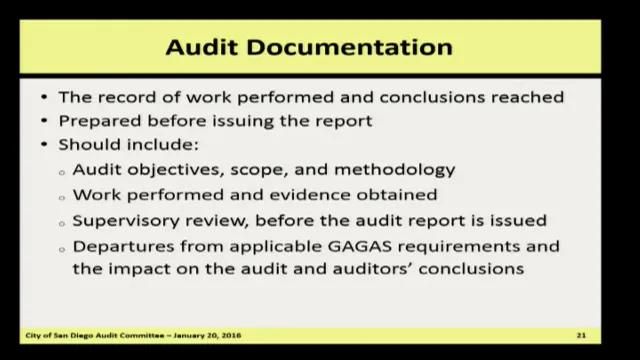
Public Meetings - San Diego, CaliforniaThe San Diego Audit Committee met on January 20, 2016, at 5:00 PM to review the City Auditor's monthly activity report and to receive a comprehensive training presentation on the Government Auditing Standards (the "Yellow Book") from Harriet Richardson, the Palo Alto City Auditor. The meeting included routine approvals, a detailed overview of auditing standards, and discussions on the city auditor's compliance with those standards. The next regular meeting was scheduled for February 10, 2016, at 9:00 AM. Consent Calendar - The committee approved the minutes from the previous meeting on January 11, 2016, by unanimous consent, with no changes or objections. - There were no non-agenda public comments, no committee or Mayor's Office comments, and no continuance requests. Discussion Items Item 1: City Auditor's Monthly Activity Report City Auditor Eduardo Luna presented the monthly activity report. Key updates included: - Issued Products: On December 2, 2015, the office issued a library internal controls issues memorandum and a hotline investigation regarding misuse of scrap metal and contract deficiencies. - In Progress: An exit conference was held with management on the hotline investigation, with the final report expected next month. Two audits are in report writing phase: a contracting follow-up audit requested by this committee, and a street trenching and paving audit. - Fieldwork: Audits in progress include the San Diego Public Library, Housing Commission, IT audit on Excel I implementation, two IT audits on the treasurer's R tax and V tax systems, and a pedestrian safety audit (moving beyond planning). - Not Commenced: Several audits on the approved work plan have not yet started. Item 2: Yellow Book Training (Government Auditing Standards) Harriet Richardson, Palo Alto City Auditor, delivered a 60-minute training. Key points included: - History: The Yellow Book was first published in 1972 (54 pages) and has undergone six major revisions; the 2011 version is 177 pages plus appendices. - Structure: The standards are principles-based, moving from rule-based in 2011. They use "must" (unconditional), "should" (presumptively mandatory), and explanatory language (e.g., "may"). - Ethical Principles: Five principles guide auditors: public interest, integrity, objectivity, proper use of government information, and professional behavior. - Independence: Extensive coverage of threats (self-interest, self-review, bias, familiarity, undue influence, management participation, structural) and the requirement to document independence assessments, especially for non-audit services. - Competence: Staff must collectively possess adequate competence, including 80 hours of CPE every two years (24 hours in government-related topics, 20 per year). - Quality Control: Internal quality systems and external peer reviews every three years, with ratings of pass, pass with deficiencies, or fail. - Performance Audit Standards: Planning (including risk assessment, evidence, and detailed audit plans), supervision, evidence (sufficient and appropriate), and reporting requirements (objectives, findings, conclusions, distribution, and follow-up). Key Outcomes - The committee received the Yellow Book training and discussed its relevance to the City Auditor's work. - Councilmember Zepp commented that the training affirmed the City Auditor's adherence to the Yellow Book, noting that the City Auditor's office had passed two peer reviews. - No formal votes were taken; the meeting was adjourned, with the next regular meeting scheduled for February 10, 2016, at 9:00 AM. Discrepancy Note - No agenda or minutes were available for this meeting. The transcript references a slide titled "audit reports issued," but Councilmember Spencer noted he did not see the list in the handout; the City Auditor clarified that the listed items were those issued during the period.
The San Diego City Council Rules Committee convened on January 13, 2016, at 5:00 PM UTC (9:00 AM local) to consider ballot measure proposals for the June 7, 2016, primary election and to set the stage for November 2016 ballot items. The committee addressed three agenda items: a proposed Citizens Review Board on Police Practices measure, a transient occupancy tax (TOT) increase proposal, and a measure to require disclosure of public business conducted on private devices. Key actions included continuing the police review board item, discussing the TOT proposal without immediate action, and directing staff to prepare legal and operational analysis for the private devices measure. The meeting featured public testimony from community members and a moment of tension between a speaker and committee members. Consent Calendar - No consent calendar was listed on the agenda. Public Comments & Testimony - Non-Agenda Public Comment: - Catherine Rhodes presented a proposal for a contiguous convention center expansion to finance a Chargers stadium without a public vote, using FAA revenues, citing grandfathered airport exceptions for tide lands. - Martha Sullivan (Women Occupy San Diego) requested that the Citizens Review Board measure be placed on the November ballot and quoted a Union-Tribune editorial supporting the proposal. - On the Continuance of the Citizens Review Board Measure (Item 1): - Faith Ada Gia: Expressed support for placing the measure on the ballot, emphasizing the need for transparency and independent powers. - Jude Litzenberger (former CRB member): Encouraged citizen involvement and warned against the process being "run around." - Doug Case (CRB Second Vice Chair, speaking individually): Supported the continuance, stressing the importance of refining the proposal before a vote. - Joy Cash: Praised the council for taking up the issue, citing the need to rebuild trust and protect citizens. - Miriam E. Clark: Recalled past failures of the review board, strongly supporting the continuance and ballot placement. - Martha Sullivan: Grateful for the dual track to the November ballot, viewing the June 15 Rules Committee meeting as a backstop. - Margaret Kushnea: Reported support from police Chief Zimmerman and others, urging voters to decide. - Lucille Pearson (former CRB member): Supported the continuance for community input. - Ray Lutz (Citizens Oversight): Initially criticized the continuance and engaged in an extended exchange with the committee over speaking time; later expressed support for the measure but was ruled out of order. - On the Private Devices Disclosure Measure (Item 3): - Joy Cash: Supported transparency, stating San Diego should lead in integrity efforts. - Catherine Rhodes: Endorsed closing the loophole, noting that all public records should be public, and specifically called for transparency in text messages during council meetings. - Robert McNamara (District 3): Supported the measure, recommending adding "whether publicly or privately owned" and cautioned against the "Hillary Clinton" situation. - Ray Lutz: Supported the measure but criticized side conversations during public testimony. - JW August (Californians Aware, SPJ): Urged the council to adopt the measure, noting the rest of the country would follow San Diego's lead. - Irene McCormick (former Filner communications director): Shared passionate support, citing her experience with open government challenges. Discussion Items - Item 1: Citizens Review Board on Police Practices Ballot Measure - Women Occupy San Diego and coalition partners proposed a charter amendment to create an independent community review board. The council president pro tem moved to continue the item to allow for further review by the Public Safety and Livable Neighborhoods Committee, followed by Charter Review if needed, setting a deadline of June 15, 2016, for the Rules Committee to meet the November ballot deadline. The motion passed unanimously. - Item 2: Transient Occupancy Tax (TOT) Increase Proposal - Catherine Rhodes presented a proposal to increase TOT from 10.5% to 15.5% and redefine operators to include online travel agencies. She claimed the city loses $165 million annually due to the current definition, and cited an $18.57 million value per 1% TOT. - Councilmember Emerald noted a pending lawsuit about online travel agencies and requested staff provide a status update and comparative TOT rates with other cities. The mayor's office and IBA indicated they could provide information. No vote was taken; the discussion was informational. - Item 3: Disclosure of Public Business on Private Devices - Donna Fry (Californians Aware) presented a proposal to amend the city charter and/or municipal code to require that all records of the public's business on private devices be subject to the California Public Records Act. She advocated for the council to adopt this measure or direct the city attorney to draft language. - Committee members debated whether to place the measure on the ballot, with some raising concerns about the pending San Jose Supreme Court case and labor issues. The chair (Council President Pro Tem Emerald) moved to refer the matter to the city attorney for legal and operational analysis, the city clerk for operational review, and the Public Records Act working group for implementation recommendations, with a report back to the Rules Committee before June 15, 2016. The motion passed unanimously. Key Outcomes - Item 1 (CRB Measure): Continued to a future meeting; the motion passed unanimously with directions to route through Public Safety and Livable Neighborhoods and Charter Review, aiming for the June 15, 2016, Rules Committee meeting. - Item 2 (TOT Proposal): No vote taken. Council requested updates on the TOT litigation and comparative rates; no formal action on the proposal for the June 2016 ballot. - Item 3 (Private Devices): Motion passed unanimously to have the city attorney, city clerk, and PR working group prepare an analysis and draft language, returning to the Rules Committee before June 15, 2016. Other Notes - The June 15, 2016, Rules Committee meeting was identified as the deadline for considering proposals for the November 8, 2016, general election ballot. - A speaker (Ray Lutz) was asked to leave the podium after exceeding time limits, causing a brief disruption.
The Audit Committee of the City of San Diego held its first meeting of 2016 on January 11, 2016, at 5:00 PM UTC. The primary agenda item was the review and acceptance of the Fiscal Year 2015 Comprehensive Annual Financial Report (CAFR). The meeting included presentations from the City Comptroller’s Office and the external auditor (MGO), followed by detailed questions from committee members. The committee unanimously approved the report. New Committee Member Introduction - The committee welcomed new member Alan Spencer, who replaces Ms. Schreiner. Mr. Spencer introduced himself, noting his experience with government auditing standards. Discussion Items - Presentation of FY2015 CAFR: - Rolando Charvel (City Comptroller) reported that the city received an unmodified (clean) opinion on the CAFR, prepared in accordance with Generally Accepted Accounting Principles (GAAP). The CAFR includes an introductory section with a letter of transmittal and the FY2014 GFOA Certificate of Excellence in Financial Reporting. - Scott Clark (Deputy Director, Office of the City Comptroller) outlined the three sections of the CAFR (introductory, financial, statistical) and summarized key financial results: total revenues of $3.29 billion, expenditures of $2.44 billion, and an increase in net position of $849 million (net of a $185 million current-year impact from implementing GASB 68). Implementation of GASB 68 required a restatement of beginning net position by approximately $1.7 billion. The general fund’s fund balance increased by $27.7 million to $47.4 million, primarily due to reserves for Danisa obligations. The city met its emergency and stability reserve policy for FY2015. - Kevin Starkey (MGO, external auditor) confirmed the unqualified opinion and highlighted an emphasis-of-matter paragraph for GASB 68 implementation. The audit found no material weaknesses or significant deficiencies in internal control over financial reporting. Auditors proposed adjustments (e.g., a $15 million double-counting of a liability) which were recorded; no uncorrected misstatements remained. - Committee Questions and Discussion: - Committee member Tom Hebrink asked about subsequent events cutoff (December 8, 2015, the opinion date). He inquired about potential material subsequent events related to the Chargers’ departure and the PERB ruling. City CFO Mary Lewis responded that any material updates would be included in bond offering documents. - Hebrink questioned several CAFR details: the increase in the public liability reserve target (from $32.2 million to $47.4 million due to the Danisa settlement); the removal of emphasis-of-matter paragraphs for pensions and OPEB (judgment call by auditor); the dissolution of entities MTDB and SDDPC; the decrease in public safety expenses due to GASB 71 deferrals; the drop in non-major government funds allowance from $171 million to $56 million (write-off of a disallowed redevelopment loan, partially revived by SB 107 later); the change in stormwater contingent liability estimate from $4 billion to $3 billion (due to cost efficiencies and anticipated regulatory changes); and the status of the Point Loma wastewater permit deadline (confirmed met). - Hebrink noted the absence of the SDCERS funded ratio (now replaced by the plan fiduciary net position as a percentage of total pension liability, 80.35% as reported in required supplementary information). - Committee member Spencer raised a concern about the location of the Yellow Book report on internal controls and compliance; Kevin Starkey explained it is typically included in the single audit report, not the CAFR, but agreed to improve accessibility. - Other questions covered the decrease in land assets (reconveyance of Fifth Avenue Landing property related to convention center expansion), potential bond refundings (ballpark, sewer, water bonds in queue), and the treatment of deferred maintenance (disclosed but not recognized as a liability under GAAP). Key Outcomes - The committee unanimously approved the FY2015 CAFR (motion by Ricardo Bellini, seconded by Tom Hebrink). - The next Audit Committee meeting was scheduled for January 20, 2016, at 9:00 AM.
This was the last Economic Development and Intergovernmental Relations (ED&IR) Committee meeting of the 2015 calendar year, chaired by Councilmember Cole, with all members present. Also in attendance were Chief Deputy City Attorney Kevin Reich, Kristen Tilquist from the mayor's office, Jeff Quarr from the Office of the Independent Budget Analyst, and committee consultant Pam Ison. The agenda included a consent calendar item, a discussion to rename Montgomery Field Airport, an informational report on the Airport Division Business Plan, and approval of the 2016 State and Federal Legislative Platform. Consent Calendar - Approved Unanimously: A contract for the San Diego Tourism Authority for Cultural Tourism Promotion Services ($340,000). Council President Leitner noted some extraneous pages (unrelated to the item) and moved approval based on staff recommendation; Councilmember Kate seconded. The motion passed unanimously. Public Comments & Testimony - Kevin Swanson (constituent in Chair Cole's district) spoke during non-agenda public comments, urging the committee to plan for the 250th anniversary of San Diego's founding and the 100th anniversary of the 1915 Exposition to improve economic results. Later, on the consent item, he opposed the contract, noting it was broad and lacked specific deliverables, similar to past contracts criticized by the city auditor. He asked the committee to require defined activities before full council approval. Discussion Items - Airport Name Change (Item 3): The Real Estate Assets Department's Airport Division requested council approval to change the name of Montgomery Field to Montgomery Gibbs Executive Airport. Program Manager Wayne Ryder and Airport Operations Assistant Paul Merlick presented. The proposal originated from a July 2015 UT article about aviation pioneer Bill Gibbs (age 105). After public outreach, stakeholders voted: 116 favored "Montgomery Gibbs Executive Airport," with other options receiving fewer votes. The name retains "Montgomery" for John J. Montgomery (aviation pioneer) and adds "Gibbs" for William Gibbs, who founded the airport in 1937. The term "executive" is a marketing term. Costs include a monument sign ($45,000, already budgeted for FY17) and two metal signs ($200). Caltrans will replace freeway signs at no cost. The motion by Councilmember Kate, seconded by Council President Leitner, passed unanimously. Mr. Gibbs shared personal history about the airport's founding and his experiences. - Airport Division Business Plan (Item 2): Deputy Director Rod Probst presented an informational report on the division's business plan, developed in response to a May 2015 performance audit. Key goals: safely operate both airports (Brown Field and Montgomery Field), achieve financial self-sufficiency (currently no general fund support but could improve), become business-friendly and customer-focused, increase return on investment, and address long-standing issues such as holdover leases (some lasting 28 years). Specific initiatives include hiring additional staff, updating the airport master plan (last approved in 1980), conducting customer surveys, and developing a property management manual. Probst noted the potential to recover $1 million annually by addressing holdover leases. Deputy City Auditor Matt Helm confirmed the plan satisfies audit recommendations and the division will be commended. No action was required; the report was informational only. - 2016 State and Federal Legislative Platform (Item 4): Directors of State and Federal Government Affairs, Kristen Tilquist and Alejandra Gabaldon, presented the proposed 2016 platform, building on the 2015 version. The platform covers seven policy priority areas: jobs/economy, infrastructure/water reliability/environment, homelessness/housing affordability/neighborhood services, open government/city funding, public safety, veterans' affairs, and workforce development/youth opportunity. Key changes included splitting public safety from veterans, adding "software" to innovation clusters, updating redevelopment language (SB 107 success already secured $250M for the city), and adding items on water conservation mandates and drought response. Council members offered several additions and modifications during discussion: - Council President Leitner requested including support for collaboration on an FAA UAV test site, and support for federal legislation to restrict sale of historic post offices and preserve Saturday mail delivery. She also expressed concern about a line supporting policies to improve Bay Delta infrastructure, preferring to "monitor" rather than "support." - Councilmember Kate noted the need for a timeline on state water board drought regulation adjustments (expected vote in February 2016) and reiterated interest in monitoring Bay Delta issues. - Vice Chair Kersey asked for a reference to expanding the State Infrastructure Bank with better terms, similar to the water revolving fund. Staff clarified that existing language under economic development (1.3) may provide sufficient mandate. The motion to approve the platform, including the additions and with direction to staff to consider comments, was made by Council President Leitner and seconded by Chair Cole. It passed unanimously. Key Outcomes - Consent Item Approved: Tourism Authority contract moved forward. - Airport Name Change Approved: Montgomery Field to Montgomery Gibbs Executive Airport; resolution to be submitted to FAA and state for processing. - 2016 Legislative Platform Approved: Includes additions for UAV test site collaboration, post office/Saturday mail preservation, monitoring Bay Delta issues, and expanding State Infrastructure Bank. Staff directed to incorporate committee comments. - Next Meeting: Scheduled for January 21, 2016.
The Audit Committee of the City of San Diego met on November 18, 2015, at 5:00 p.m. The meeting included a tribute to departing committee member Carly Schreiner, a monthly activity report from the City Auditor, a follow-up report on contract oversight from Purchasing and Contracting, a presentation on GASB 68 pension accounting changes from the City Controller, an overview of the city's budget development process from the Independent Budget Analyst (IBA), and a discussion of the City Auditor's FY2017 budget recommendations. All items were approved or received without opposition. Opening Remarks and Tribute - Committee Chair Sherman thanked Councilmember Carly Schreiner for her years of service on the committee, highlighting her preparation and dedication. Other members echoed the appreciation. A small token of appreciation (flowers) was presented. Consent Calendar - Minutes from the previous meeting were approved by unanimous consent. - No non-agenda public comments were submitted, so that item was skipped. Public Comments & Testimony - No public speakers were present. Discussion Items 1. Monthly Activity Report from the City Auditor (Eduardo Luna) - Nine audits are in progress: public utilities overhead rates, contracting follow-up, streets trenching and paving, library department (interim report due early next week), housing commission, two IT audits (Excel implementation, treasurer's R tax and B tax systems), and pedestrian safety. Seven additional audits are approved but not yet commenced. - A budget memorandum for FY2017 was issued on November 12, 2015. - Code enforcement follow-up: Changes included reducing priority one response time from two days to one business day, adding complaint types to PTS, and implementing a manual tracking spreadsheet. Over the past two weeks, 46 cases were tracked (11 priority one, 35 priority two). Voicemail intake was eliminated to improve accuracy; hours were expanded for live phone intake. All complaints are now opened and assigned the same day. - A new auditor, Danielle Novikowski, was introduced (former California Bureau of State Audits, UCLA economics graduate). 2. Purchasing and Contracting Follow-Up Report on Citywide Contract Oversight Audit (Christina Peralta) - Christina Peralta was announced as the permanent Purchasing and Contracting Director. - The report addressed three findings with nine recommendations: five focused on policies/processes, two on technology. - Finding 1 (insufficient controls on contract deliverables): Mandatory vendor performance language added to terms and conditions; a fillable PDF vendor evaluation tool created; process narrative being drafted. - Finding 2 (contract modification and closeout): Working with City Attorney to simplify templates; long-term goal to create a contract compliance unit; updating and memorializing business processes; conceptualizing a digital manual. - Finding 3 (vendor debarment process): Working with City Attorney to draft an administrative regulation to clarify the Muni Code process. - A procurement-to-pay (P2P) overhaul project is underway, divided into three phases over 18 months. First release in December 2015 includes labor relations in requisition approvals; second release in May 2016 improves contract controls; third release in June 2017 includes catalog technology. Over 700 end users will be trained beginning December 2015. 3. City Controller Report on GASB 68 Pension Accounting Changes (Rolando Charvale) - GASB 68 requires reporting the full net pension liability (NPL) on the balance sheet, replacing the previous method of only reporting unpaid ARC amounts. - For FY2015, the NPL is $1.5 billion (using a 2014 measurement date). The difference between the accounting liability and the actuarial liability ($2 billion) is $464 million due to smoothing of asset values. - Pension expense will now be based on changes in NPL rather than contributions. The implementation will restate retained earnings (beginning balance restatement of $1.8 billion). - The change does not affect funding policy, bond ratings, or budget; it is purely a presentation change. The city continues to pay the actuarially determined contribution (ADC), which was $255 million in FY2016, with 13 years remaining on the amortization of the unfunded liability. - Sensitivity to discount rate: A 1% decrease in the assumed rate of return (from 7.25% to 6.25%) would increase NPL to $2.4 billion. SDCERS recently voted to lower the assumed rate from 7.25% to 7.125% (with a target of 7% over two years and a glide path to 6.75% over five years). - The proprietary funds (water, sewer, etc.) and government-wide statements will show the liability; governmental funds will not. 4. Independent Budget Analyst Report on Budget Development Process (Lisa Byrne) - The budget cycle begins in November with the mayor's five-year outlook (released November 13, 2015). The IBA will release its review in early December. - Key milestones: Department submissions (Dec–Jan), council budget priority memos (Jan–Feb), council budget priorities resolution (Feb), mayor's proposed budget by April 15, IBA review (April 15–29), budget review committee hearings in May (including an evening hearing on May 16, 2016), mayor's May revision (third week of May), council adoption in June, appropriations ordinance in July. - The mayor's priorities for FY2017 include infrastructure, public safety, technology, and customer service. - Mid-year budget monitoring and potential surplus allocation were discussed (e.g., excess equity from FY2015 being considered for a pension reserve or general reserves). 5. City Auditor's FY2017 Budget Recommendations (Eduardo Luna) - The Office of the City Auditor requests no additional positions and no significant changes to its current budget of 22 FTEs and $3.7 million. - A surplus in the contracts line item is being tracked due to a reduction in the allocation of the MGO CAFR audit contract from 75% to 40%. The office will submit a decrease in the FY2017 budget for that line. - The proposed budget will be submitted to Financial Management by January 8, 2016, with final amounts pending fringe benefit rates. - Committee members asked for side-by-side comparisons of prior years' budgets and encouraged the office to consider training opportunities for managers. Key Outcomes - The minutes were approved, and the monthly activity report, purchasing and contracting follow-up, controller's report, IBA report, and auditor's budget memo were all received and discussed without dissent. - The committee expressed appreciation for the work of the departments and of outgoing member Carly Schreiner. - The next meeting is scheduled for January 11, 2016, at 2:00 p.m. in the same location.
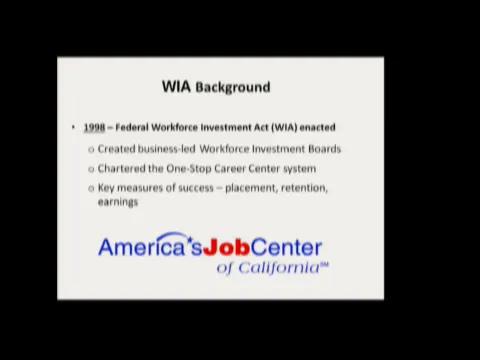
The Economic Development and Intergovernmental Relations Committee of the San Diego City Council met on November 5, 2015, at 2:00 p.m. to consider two agenda items: an action item approving a Joint Powers Authority (JPA) agreement and Memorandum of Understanding (MOU) to comply with the federal Workforce Innovation and Opportunity Act (WIOA), and an informational item presenting updated economic data and progress on the city's 2014-2016 Economic Development Strategy (EDS). The meeting was chaired by Council President Sherry Lightner, with Councilmember Chris Kate and Vice Chair Mark Hershey (arriving later) in attendance. No public comments were made. The committee unanimously approved the JPA and MOU. Discussion Items Item 2: Approval of Joint Powers Authority (JPA) and Memorandum of Understanding (MOU) for Workforce Innovation and Opportunity Act (WIOA) - Lydia Moreno, Deputy Director of the Economic Development Department, and Andy Hall, Vice President and Chief Program Officer of the San Diego Workforce Partnership, presented the item. The JPA between the City of San Diego and the County of San Diego was last updated in 2000; the proposed version makes technical updates to reflect WIOA (which replaced the Workforce Investment Act, WIA, in July 2015) and includes standard city/county boilerplate. The MOU updates a 2000 agreement that was focused on the now-eliminated Enterprise Zone program; the new MOU aligns services to better serve San Diego businesses, including first-source hiring policies, a web-based referral system, joint training workshops, and regular meetings. - Councilmember Chris Kate asked about the planned reduction of the Workforce Development Board from 49 members to 27 (with a minimum of 19 required by federal law), and the development of a CRM system for business referrals. Andy Hall confirmed that a tool already exists for funded partners and would be expanded to connect with city economic development staff. - Council President Sherry Lightner inquired about the transition from transactional programs to strategic talent systems under WIOA. Andy Hall explained that WIOA introduces measures for serving businesses (dual customer system) and a strong focus on out-of-school youth (75% of youth funds must serve disconnected youth). - Lydia Moreno noted that the mayor's workforce development strategy, chaired by Mark Cafferty, is being developed. Council President Lightner requested a redline showing changes from WIA to WIOA and the differences from the old MOU. - The committee voted unanimously to approve the JPA and MOU. The next step is City Council approval in December 2015. Item 3: Informational Update on Economic Development Strategy (EDS) and Economic Performance Indicators - Lydia Moreno presented key data from the Bureau of Labor Statistics. Highlights include: - San Diego's Gross Regional Product (GRP) grew 7% from $193 billion (2012) to $27 billion (2014), second only to San Jose among California metros. - Unemployment rate dropped to 4.6% as of September 2015, the lowest in seven years. - Median household income rose by $6,000 (10%) from 2012 to 2014. - The percentage of persons below the poverty line decreased but remains in double digits (14.7%). - The middle-income population declined from 28% to 18% (a 10% drop), largely due to a shift of 141,000 workers in sales and related occupations into the low-income category (average wages fell by about $400). - Manufacturing employment grew 2.6% in the previous year, triple the U.S. rate (0.7%). - Professional, scientific, and technical services employment grew 7.4%, double the U.S. average. - International exports reached $18.6 billion in 2014, up $700 million from 2013. - Moreno discussed ongoing EDS-related efforts: the 9th coat amendment to the Land Development Code (easing regulations for manufacturers and breweries), the Global Cities Initiative (Go Global, MetroConnect Prize), Promise Zone application, support for aerospace/defense through SoCal Coalition (IMCP), business walks in neighborhoods, and $9.7 million in CDBG investments. - Councilmember Kate inquired about measuring outcomes of individual city actions (e.g., jobs created from incentive agreements). Moreno noted that the department tracks such metrics for business retention/expansion activities and will seek to expand reporting. - Council President Lightner requested a written version of the oral presentation and an annual performance report, noting that the EDS (adopted June 2014) has not yet produced a formal annual report. She stressed the need for performance metrics before updating the EDS. The department plans to restructure and produce an annual report by early FY 2017. - Councilmember Lightner also asked about alignment with state economic development incentives, binational efforts, and resources. Moreno confirmed ongoing collaboration with the county, EDC, and other partners. Key Outcomes - The committee unanimously approved the Joint Powers Authority (JPA) agreement between the City and County of San Diego and the Memorandum of Understanding (MOU) between the City and the San Diego Workforce Partnership to achieve compliance with the Workforce Innovation and Opportunity Act (WIOA). The items will go to the full City Council in December 2015. - The committee received the informational update on economic performance indicators. Council President Lightner directed staff to provide a written report summarizing the oral presentation and to accelerate the production of an annual EDS performance report, ideally before the next EDS update. - The Economic Development Department will return in February/March 2016 with a draft updated EDS, integrating the city's strategic plan, Climate Action Plan, and other adopted documents.
On October 22, 2015, the Economic Development and Intergovernmental Relations Committee of the San Diego City Council met to discuss a state legislative update, the seventh annual military economic impact study, the living wage ordinance annual report with proposed amendments, and revisions to the storefront improvement program. The committee heard public testimony, received presentations, and took action on the living wage ordinance and storefront improvement program. Public Comments & Testimony - Stephanie Binfin Uto (San Diego Regional Chamber of Commerce) expressed support for the military economic impact study, calling it an invaluable tool for advocacy. - Christy Hill (Center on Policy Initiatives) praised the living wage program's recovery of over half a million dollars for workers, but asked the committee to request the City Attorney's Office to explain why workers at two recycling companies (Allen Company and IMS Recycling) are not covered under the living wage ordinance. - Warren Simon declined to speak on the storefront improvement program. - Stephanie Benvenuto (San Diego Regional Chamber of Commerce) thanked the Economic Development Department for proactively seeking solutions to support small businesses. Discussion Items 1. State Legislative Update (Mayor's Office and Platinum Advisors) - Kristen Tilquist (Mayor's Director of State Government Affairs) and lobbyists Moira Topp, Darius Anderson, and Nick Garcia presented an overview of the 2015 legislative year, highlighting successes including SB 107 (redevelopment window bill) which could bring an estimated $235 million to San Diego, and the governor's authorization of AB 900 streamlining for the Chula Vista stadium project. - Key topics included: transportation funding special session, Cap and Trade funding, affordable housing, water sustainability (including the Pure Water project), CEQA reform challenges, and the extension of Prop 30 (expected to be on the ballot). - The update covered positions taken on bills regarding medical marijuana, film tax credits, EMS contracts, and the Governor's Military Council. 2. Military Economic Impact Study (San Diego Military Advisory Council) - Retired U.S. Navy Captains Larry Bloomberg and Randy Bogle presented the seventh annual study, produced by the Fermanian Business and Economic Institute at Point Loma Nazarene University. - Key statistics: $25 billion in direct defense spending in FY 2015, $45 billion total gross regional product, 328,000 jobs (22% of all jobs in the county), and 49 ships homeported in San Diego, with a projected increase to 84 ships by 2023. - The study also addressed military compensation: junior enlisted pay (E3–E6) ranges from $40,000 to $60,000 annually including housing allowance, and many families fall below HUD low-income thresholds, correlating with food bank usage. - Discussion included the need for housing planning to accommodate thousands of additional sailors expected with the Pacific rebalance, and the potential for an Office of Economic Adjustment grant to prepare for BRAC and budget uncertainties. 3. Living Wage Ordinance Annual Report and Proposed Amendments - Christina Peralta and Nora Nugent presented the FY 2015 report. The program covers 396 contracts worth $52 million (up 170% due to lowered threshold). Compliance reviews increased from 15 to 26, with over half finding violations. Over $146,000 was recovered through proactive reviews, and total historical recovery exceeded $572,000. - Proposed amendments clarify definitions for compensated leave, update language for state law consistency, and are cleanup provisions only. - Council President Leitner moved to approve the amendments and also directed the City Attorney to include language to cover emergency medical technicians (EMTs) and paramedics, and to clarify whether recycling workers at Allen Company and IMS are covered. Councilmember Kate and Vice Chair Kercy expressed concern about the legal and policy implications of retroactively applying the EMT provision, and the motion passed despite a split vote. 4. Storefront Improvement Program (Council Policy 900-17) Revisions - Economic Development Director Eric Caldwell and Neighborhood Investment Manager Liz Studebaker proposed revisions to increase participation: raising the employee eligibility threshold from 12 to 25, eliminating the public art incentive (though artwork remains eligible), adding a new permit assistance incentive, and refining the list of ineligible businesses (excluding banks and national chains). - Annual funding is $220,000, but prior years saw underutilization (e.g., $56,000 in FY 2013). The changes are expected to increase demand. - The committee unanimously approved the staff recommendation to send the revised policy to the full council. Key Outcomes - Living Wage Ordinance Amendments: The committee approved the proposed amendments (cleanup and state law alignment) and directed the City Attorney to draft language extending coverage to EMTs/paramedics and to clarify recycling worker coverage. The vote was 2–2, with Chair Cole and Council President Leitner in favor, and Councilmember Kate and Vice Chair Kercy opposed; the chair declared the motion carried. - Storefront Improvement Program: The committee unanimously approved the revised council policy, which will be forwarded to the full City Council for consideration. - Informational Items: The state legislative update and military economic impact study were received without a vote. The committee requested follow-up on the status of the Chollas Creek funding and the Coastal Resilience and Economic Zone (CREA) legislation. - The next Economic Development and Intergovernmental Relations Committee meeting was scheduled for November 5, 2015.
The San Diego Audit Committee met on October 21, 2015 at 5:00 PM to review reports from the City Auditor, discuss audit recommendations and a performance audit of code enforcement, and make appointments. Key actions included accepting the fraud hotline report, approving audit recommendation follow-ups, and forwarding the code enforcement audit to City Council. Consent Calendar - Minutes from the previous meeting were approved by unanimous consent. Public Comments & Testimony - No non-agenda public comment speakers were present. Discussion Items - City Auditor's Monthly Report: Auditor Eduardo Luna presented recent reports including a performance audit of Code Enforcement, a recommendation follow-up report, a fraud hotline quarterly report, and an IT risk assessment. Also noted restructuring in the auditor's office. - Fraud Hotline Quarterly Report: Presented by fraud investigator Andy Horita. For Q1 FY2016: 21 complaints added, 9 assigned to city auditor, 12 to departments, 9 outside purview. 19 complaints closed, leaving 17 open. Seven corrective actions resulted, including vendor insurance compliance, confiscation of a city cell phone, repair of a water leak, and issuance of a business tax violation. - Audit Recommendation Follow-ups: Assistant City Auditor Kyle Elser presented the follow-up report for all audits issued through June 30, 2015. 140 recommendations from 41 reports: 38 implemented (29%), 95 in process, 5 not implemented, 2 not applicable/not planned. Discussion focused on longstanding items like delinquent accounts (10010), take-home vehicle use (11026), DSD project tracking (12015), procurement cards (13003), and real estate assets (13009). Committee requested updates on several items, including a report on golf course financials and prioritizing water valve maintenance. - Performance Audit of Code Enforcement: Presented by Chris Keim, Megan Garth, and Andy Hanau. The audit found poor response times (priority one cases met 29% of time, priority two 59%), inconsistent fine issuance (only 4% of cases fined, despite 32% repeat properties), and flawed performance metrics. Made 12 recommendations, all accepted by management. Management agreed to implement within 5-7 months, but committee emphasized immediate fixes for priority one cases and requested a follow-up report by the next meeting. - IT Risk Assessment and Audit Work Plan: Presented by Eduardo Luna. First annual IT risk assessment identified five high-risk audits: Excel implementation, Treasurer's online payment systems, data center security, and SAP user access. Sensitive findings will be reported confidentially. - Appointment to Disclosure Practices Working Group: Councilmember Zap was thanked for her service. Ricardo Valdivia was nominated and unanimously appointed to the working group. Key Outcomes - Fraud Hotline Report: Accepted unanimously. - Recommendation Follow-up Report: Accepted unanimously; recommendations 10-010-018 and 13-008 were dropped (deemed not applicable/not implemented). - Code Enforcement Audit: Motion passed to accept the report and forward to City Council, with a 90-day follow-up on priority one response times to the committee. - IT Risk Assessment: Accepted unanimously. - Disclosure Practices Working Group: Ricardo Valdivia appointed unanimously. - Next meeting scheduled for November 18, 2015.
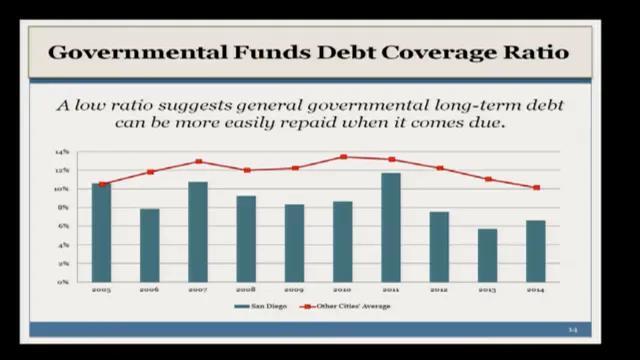
The Audit Committee of the City of San Diego met on September 16, 2015, at 1:15 PM to discuss audit reports, including the monthly activity report, the central stores physical inventory, the Business Improvement District (BID) program audit, and the city's financial condition audit. The committee approved minutes and forwarded all reports to the full City Council. The meeting also included a closed session to evaluate the City Auditor. Consent Calendar - Approval of Minutes: Unanimous consent was granted for the minutes of the previous meeting. Councilmember Ricardo Valdebia was absent at the last meeting and could not vote. Ms. Schreiner and Mr. Valdebia abstained, and the minutes passed with majority approval. Public Comments & Testimony - Sarah Burns, San Diego BID Council: Expressed support for the BID audit findings and agreed with the recommendations. She emphasized the uniqueness of each BID and the need for performance standards that reflect individual community needs. Discussion Items - Monthly Activity Report (Information Item): Eduardo Luna, City Auditor, reported that since the last meeting, the office had issued four audit-related products: the city's financial condition report, the BID audit, the annual central stores inventory audit (FY2015), and the annual closeout audits. Two reports are in the writing phase (code enforcement division and IT risk assessment), and several audits are in progress (public utilities overhead rates, contracting follow-up, streets trenching and paving). A new IT auditor, Vishall Pahel, was introduced. - Central Stores Physical Inventory Report: Kevin Starkey of MGO presented the results of the third annual inventory audit. The audit covered two stores and found an estimated difference of $49 out of a total inventory value of $2.3 million. The number of discrepancies (68 out of 232 stock items) appeared high but was explained by item-level sampling. The committee accepted the report and forwarded it to council. - Business Improvement District (BID) Program Audit: Matthew Helm, Audit Manager, presented findings on the BID program, which oversees 18 BIDs managed by 17 nonprofit associations. Key findings: (1) The Treasurer's Office could enhance compliance by using additional data sources (private sector and county assessor data) to identify businesses not paying assessments. (2) Economic Development could improve performance metrics, shifting from narrative reports to standardized measures. The audit tested approximately 5,000 businesses and found that 26% of a sample were listed in a private database but not on the paid assessment list; county data showed 30-61% non-compliance across 11 BIDs. Management agreed to implement all three recommendations. Public speaker Sarah Burns (BID Council) voiced support. Committee discussions included penalties for non-compliance (three years back plus 10% penalty per year) and the administrative burden of monthly reporting. The report was accepted and forwarded to council. - City's Fiscal Sustainability and Financial Condition Audit: Chris Kime, Audit Manager, presented the 10-point financial test comparing San Diego to six similar-sized cities over 10 years (FY2005-2014). The city scored 17 out of 20 in 2014, the highest among benchmark cities. Key metrics: short-run financial position (reserves of $177 million, 14% of general fund revenues), liquidity ratio of 3.9, revenues exceeded expenses by $162 million in 2014. The report showed significant improvement since 2005, attributed to financial reforms. Committee members praised the positive trend but expressed concern about unrecorded contingent liabilities (e.g., infrastructure, pension, stormwater) totaling $11 billion. The CFO and IBA noted ongoing reforms. The committee accepted the report and requested that future audits include an analysis of contingent liabilities. Key Outcomes - Motion to accept and forward the central stores inventory report to council: Passed unanimously (motion by Mr. Hebrank, second by Ms. Schreiner). - Motion to accept and forward the BID program audit to council: Passed unanimously (motion by Mr. Hebrank, second by Ms. Schreiner). - Motion to accept and forward the financial condition audit to council: Passed unanimously (motion by Mr. Valdebia, second by Ms. Schreiner), with a directive to include contingent liability analysis in future audits. - Closed Session: The committee convened in closed session to evaluate the City Auditor's performance under Government Code Section 54957B. No report on actions taken was provided in the transcript.