Browse by city
Date range
Search help

Search titles, summaries, topics and stored transcripts together. Keywords may match separately; put the whole query in double quotes for a phrase. Matching follows word analysis, so punctuation is not exact. Both dates are included. Documents are not searched.

SHOWING 21–30 ENTRIES
21
SEP 8, 2026 · SPOKANE VALLEY, WASHINGTON · CITY COUNCIL & COMMISSIONS
Spokane Valley City Council Regular Meeting - September 8, 2026

The Spokane Valley City Council met on Tuesday, September 8, 2026, at 6:00 p.m. at City Hall. The meeting began with a report from Police Chief Dave Ellis about a critical school incident earlier that day, followed by the invocation, pledge of allegiance, and roll call. Councilmember Haley was excused. The agenda was approved. Key actions included approving a stormwater grant application, advancing a 30-year easement for Flora Park, and discussing the solid waste management plan update. A citizen raised traffic safety concerns during public comment. School Incident Report - Chief Dave Ellis reported that earlier in the day, a caller reported an armed male at a school. A school resource deputy responded, engaged the suspect, and shot and killed him. The school's lockdown and reunification plan were executed flawlessly, with all 600 students safely reunited with families at Valley Real Life Church. The suspect's backpack was detonated in a controlled explosion. The investigation is led by Spokane Police Department. A police officer will be stationed at the school tomorrow to reassure students. Council expressed gratitude to the chief and officers. Consent Calendar - Approved consent agenda including claim vouchers for $4,927,535.83, payroll for period ending August 31, 2026 ($860,305.76), and meeting minutes from June 16, July 7, July 14 (two sets), July 21, July 28, August 18, and August 25, 2026. Councilmember Merkel noted a citizen submitted minor corrections to minutes; the city clerk will review and implement non-substantive changes. Public Comments & Testimony - No public comments during the first general comment period. - During the second general comment period, Austin Hakala, a resident on Herald Road, expressed concern about speeding traffic on Valley Way. He reported that three cars have ended up in his front yard, and one vehicle was estimated at 55-65 mph, striking a telephone pole and displacing it 10 feet. He requested a four-way stop at the intersection to protect children waiting for school buses. Discussion Items - Stormwater Grant Application (Motion): Kristen Armstrong, stormwater program manager, presented a request to apply for up to $2,125,000 from the Department of Ecology's Combined Water Quality Funding Program for the Montgomery Stormwater Improvements Construction Project (1.7 miles on Montgomery from Argonne to Mansfield). The project would retrofit existing dry wells with treatment best management practices (catch basins, bioretention swales, oil/water separators) to reduce pollutant loading to the aquifer. The project cost is approximately $2.5 million; the grant would cover 85% ($2.125 million), with a 15% local match ($375,000) from the stormwater fund. Council discussed testing and compliance; city manager and staff clarified that the project is required under the underground injection control permit and that the dry wells are currently non-compliant. Councilmember Merkel opposed, citing concerns about lack of specific testing and the use of state funds. Councilmember Yeager and others supported the grant to protect groundwater and leverage state dollars returned to citizens. The motion passed with a vote of 5-2 (Councilmember Merkel and one other opposed, per roll call: Councilmember Haley excused, so likely 5-1? The transcript shows two opposed: "Aye, opposed. Opposed." So 5-2). - State Parks 30-Year Easement (Non-Action): Parks and Recreation Director John Bottelli reported that Washington State Parks Commission unanimously approved a 30-year easement for 16 acres adjoining Flora Park on the Spokane River. The easement allows construction of the Riverview Trail (a compacted gravel accessible trail), fire risk mitigation, and forest habitat work. The one-time payment is $58,194; the property's assessed value is $2.8 million. A state legislative request for $600,000 in 2027 would fund trail construction. Council discussed maintenance costs (estimated $15,000-$20,000 per year), state funding contingencies, and the risk of the state selling the property if the easement is not accepted. Council gave consensus to bring a motion for approval at a future meeting. - Solid Waste Management Plan Update (Non-Action): Deputy City Manager Eric Lamb and Public Works Director Robert Blegen presented the final draft plan, which received minor grammatical comments from Ecology. The plan guides the program through 2030, with goals including affordability, reliability, environmental protection, and education. Councilmember Merkel raised concern about language referencing study of mandatory collection for residents and businesses. City manager explained it is an option for affordability, not a directive. Council reached consensus to remove that language from the plan and to bring the plan forward for adoption at a future meeting. Key Outcomes - Approved the consent agenda unanimously. - Approved the motion to apply for the stormwater grant (5-2). - Gave consensus to proceed with the 30-year easement for Flora Park; motion to be prepared for a future meeting. - Gave consensus to remove the mandatory collection study language from the solid waste management plan and to return the plan for adoption at a future meeting. - Councilmember Merkel attempted to add eight advanced agenda items, but a motion to end the discussion was passed, cutting off the advance agenda. - City Manager John Deemer reported on progress: a letter to the county regarding UGA boundaries (with consensus to add language clarifying the status of the city's request), ongoing budget negotiations with the sheriff's office, repair of the Maraboo Meadows sewer lift station (estimated $24,000), and coordination with STA for bus service to the cross-country course.
WATER AND WASTEWATER MANAGEMENT 26% · LAND USE PLANNING 12% · PROCEDURAL 11% · PUBLIC ENGAGEMENT 8%
22
SEP 1, 2026 · SPOKANE VALLEY, WASHINGTON · CITY COUNCIL & COMMISSIONS
Spokane Valley Planning Commission Meeting - August 27, 2026: State Code Requirements Study Session

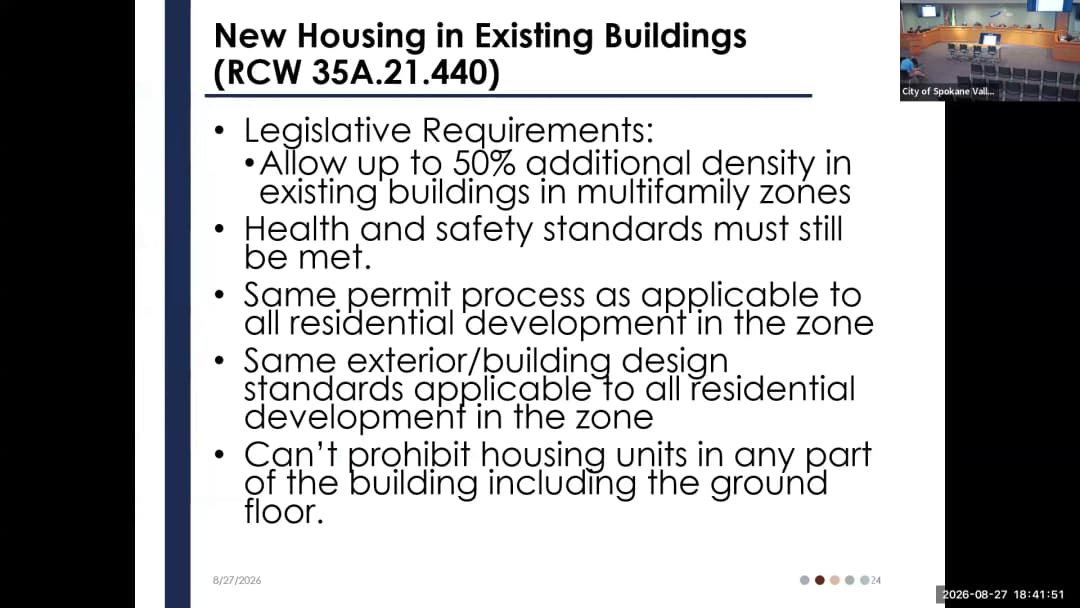
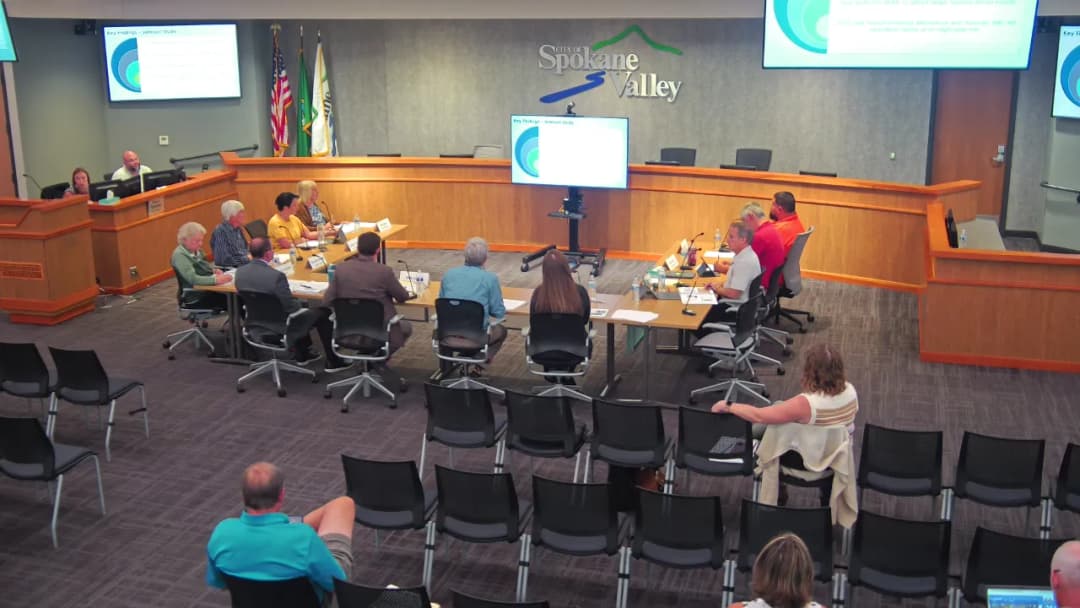
The Spokane Valley Planning Commission held a regular meeting on Thursday, August 27, 2026, at 6:00 p.m. at City Hall. The primary agenda item was a study session on periodic updates to the city's development code to comply with recent state legislation. Ethan Spoo of DOWL presented the legislative changes. Commissioners discussed concerns about parking requirements, lot sizes, and the definition of affordable housing. No votes were taken on code changes. Consent Calendar - Approval of Agenda: Unanimous (7-0). - Approval of Minutes, July 23, 2026: Approved 6-4-1 (one abstention; a commissioner noted they had not yet reviewed the video). - Approval of Minutes, August 13, 2026: Approved 6-4-1 (after correction of the date from August 23 to August 13). Public Comments & Testimony No public comments were offered; no audience members attended in person or online. Discussion Items Administrative Report City staff previewed the upcoming meeting schedule: - September 10, 2026: Discuss the draft comprehensive plan. - September 24, 2026: Review draft development regulations (code changes). - October 8, 2026: Combined discussion of comp plan and code. - October 22, 2026: Public hearing for commission recommendation on code. Study Session: State Code Requirements (Presentation by Ethan Spoo, DOWL) Ethan Spoo presented an overview of legislative updates to the Growth Management Act, citing the national housing crisis. He noted that 33% of Washington households spend more than 30% of income on housing, and locally 50% of renters and 20% of owners in Spokane Valley are cost-burdened. The presentation covered: - Accessory Dwelling Units (ADUs): State requires allowing two ADUs per single-family lot, no less than 1,000 sq. ft., no owner-occupancy requirement, limited impact fees (50%), and same design standards as primary unit. - Middle Housing: State requires allowing at least six of nine specified types (duplex through sixplex, townhouses, stacked flats, courtyard apartments, cottage housing). Base allowance: 4 units per lot; up to 6 if within ½ mile of transit or if 2 affordable units provided (affordability guaranteed for 50 years). ADUs can count as middle housing. - Co-Living Housing: Must be allowed where at least 6 multifamily units are permitted. Sleeping units counted as ¼ dwelling unit for density; ½ unit for sewer fees. - Affordable Housing: Must be treated the same as market-rate housing in the zone; cannot be discriminated against. - STEP Housing (Shelter, Transitional, Emergency, Permanent Supportive): Required to be allowed where residential or hotels are permitted. 2026 legislation mandates same design and permitting standards; city can require 500-ft. notification and operational policies. - New Housing in Existing Buildings: Up to 50% additional density in multifamily zones when converting non-residential buildings; no prohibition on ground-floor housing. - Unit Lot Subdivisions: Allows dividing a lot internally into smaller lots that don't meet minimum lot size, as long as parent lot meets standards. Each unit lot can be separately owned. - Administrative Lot Splits: City must provide an administrative process for splitting a lot in two, with mitigation for displaced occupants. - Parking Restrictions: State sets maximum parking requirements: - Single-family: 1 space per unit. - Multifamily: 0.5 spaces per unit. - Small units (<1,200 sq. ft.), affordable housing, senior housing: 0 spaces. - ADUs: 1 space for lots ≤6,000 sq. ft., 2 spaces for larger. - Zero parking if within ½ mile of transit. - Co-living: 1 space per 4 sleeping rooms. - Commercial spaces 3,000 sq. ft.: 1 per 500 sq. ft.; <3,000 sq. ft.: 0 spaces; child care centers: 0 spaces. - Permit Timelines: Administrative permits (65 days), with public notice (100 days), with public hearing (170 days). Fees refunded partially if deadlines missed. - Child Care: Family daycares (≤12 children) must be allowed in all residential zones; child daycares allowed in all zones except industrial and open space. - Future Schedule: September 24 workshop for draft code; October 22 public hearing. Commissioner Discussion & Positions - Parking (Multiple Commissioners): Several commissioners expressed strong opposition to the reduced parking maximums. Commissioner Winkler noted current regulations at 1.5 spaces per multifamily unit already cause overflow parking, and the new limits (0.5 for multifamily, zero for many) are unrealistic for Spokane Valley, where car dependence is high. She argued this "does not work for Spokane Valley" and raises safety and emergency access issues. Commissioner Dingus echoed concerns, citing real-world examples of parking shortages in unit lot subdivisions. Commissioner Weatherman questioned where visitors and workers would park in senior housing with zero spaces. - Affordable Housing Terminology: Commissioner Dingus criticized the term "affordable housing," stating it stigmatizes low-income housing and should be more descriptive. He suggested "subsidized" or specifying income brackets. Staff noted the state uses area median income definitions. - Lot Sizes and Density: Commissioner Winkler asked about minimum lot sizes for middle housing. Staff clarified they depend on zoning district (R1: 40,000 sq. ft. to R4: 4,500 sq. ft.). The state allows pre-existing smaller lots to be used for middle housing, but future divisions must meet zoning minima. - Unit Lot Subdivisions: Commissioner Winkler inquired about separate ownership and emergency access requirements; staff confirmed separate ownership is allowed and emergency access standards apply. - Co-Living: Commissioner Winkler shared a personal anecdote about her daughter's uncomfortable co-living experience, questioning the model's viability. Commissioner Dingus noted historical co-living existed in the 1980s but was largely eliminated; it was "affordable" but uncomfortable. - Permit Timelines: Commissioner Dingus asked about contractor performance tracking; staff said there is no such system, but the city meets its timelines almost always. - Request for Early Materials: Commissioners McKinley and Winkler requested the draft comp plan chapters be sent by September 4 (before Labor Day) to allow review. Staff agreed to provide a link to existing materials. Key Outcomes - No formal decisions or votes were taken on code changes; the study session was informational. - Next steps were confirmed: September 24 workshop on draft code, October 22 public hearing. - Staff will provide commissioners with links to existing comp plan chapters and will aim to distribute the updated draft comp plan before the September 10 meeting. - The parking study was noted as a potential tool to request state certification for alternative standards, but no jurisdiction has been successful yet. Adjournment The meeting adjourned after a reading by Chairman Robertson of a passage from Carl Sandburg about the republic being a dream.

LAND USE PLANNING 51% · AFFORDABLE HOUSING 32% · PROCEDURAL 6% · PUBLIC TRANSPORTATION 4%
23
SEP 1, 2026 · SPOKANE VALLEY, WASHINGTON · CITY COUNCIL & COMMISSIONS
Spokane Valley City Council Special Meeting Workshop: CenterPlace, ATP, and Comp Plan – September 1, 2026

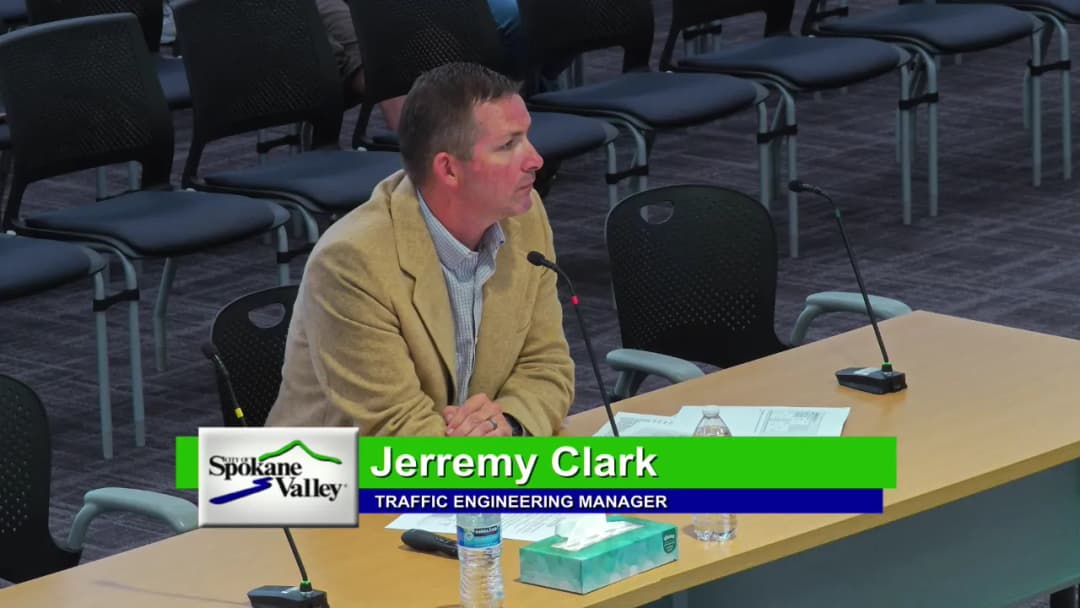
The Spokane Valley City Council met in special session at 5:00 p.m. on Tuesday, September 1, 2026, at City Hall in Spokane Valley, Washington, in a workshop/roundtable format with no formal public comment. Mayor Padden presided; the roll was called, the agenda was approved by voice vote, and Councilmember Merkel noted that residents had asked about the special-meeting time and lack of public comment. Staff explained the format was an established workshop format for round-table discussion. The council discussed three reports: CenterPlace, the Active Transportation Plan, and the Comprehensive Plan, including Spokane County's UGA expansion proposal. After the first two discussions, the council took a short break around 7:25 p.m. before returning for the Comprehensive Plan/UGA item and then adjourning. CenterPlace Discussion - Parks and Recreation Director John Bottelli and CenterPlace Coordinator Nicole Ulmer presented CenterPlace's history, operations, current performance, and future decisions. CenterPlace originated from a 1990s nonprofit effort on donated Mirabeau Point land; a 2002 voter-approved countywide bond included a $7 million allocation for the project, with total estimated construction costs around $10 million funded by bonds, grants, and donations. - The city issued roughly $9.5 million in general obligation bonds, including road improvements; about $2,145,000 remains outstanding, with final payment scheduled for 2033. Finance Director Chelsea said the average interest rate is approximately 3.5%. A public facilities district provides annual bond-payment money through an interlocal agreement. - The senior center is operated by the Spokane Valley Senior Citizen Association under a 2005 MOU updated in 2016; the city receives no revenue from that use. The association has over 600 paying members and offers 39 activities per week; Meals on Wheels operates daily from the Fireside Lounge/Silver Cafe. - Staff reported high utilization: the great room hosted 208 events in 2025, about 61% of available days; 221 reservations are already contracted or completed in 2026, about 65% of available days; and about 120 events are pre-booked for 2027. Weddings rose from 40 in 2025 to 60 in 2026. Estimated out-of-town guests reached about 2,000 by July 2026, after totaling about 2,000 in all of 2025. - The consultant's Johnson study found CenterPlace operates as both a tourism and community asset, identified physical size, back-of-house, parking, and capacity limitations, and did not recommend third-party management for a facility of this size. Rates have not been comprehensively updated since 2008; a rate study is underway, and staffing will be discussed alongside rate options and booking policies. - Councilmembers generally supported a "hybrid" model. Councilmember Kelly said CenterPlace should always first be a community center but should pursue revenue neutrality, suggested exploring tourism marketing and hotel partnerships, and offered illustrative targets such as keeping a portion of events community-oriented and attracting more out-of-town visitors. Councilmember Wick emphasized community value and the city's emergency/backup/government uses, and reframed the net cost as a general fund allocation for those benefits. Councilmember Merkel advocated seeking an outside operator through a fixed-fee solicitation, while Councilmember Haley and Councilmember Wick preferred continuing the current hybrid model. Councilmember Yeager supported dedicated sales/marketing and tourism-driven bookings. Several members raised safety, parking, sound-system, and capital-improvement concerns. Active Transportation Plan Discussion - Adam Jackson, Jeremy Clark, and Kylie Jones of Kinley Horn presented the draft Active Transportation Plan (ATP). It builds on the city's 2010 bike/pedestrian master plan and a 2025 WSDOT-funded planning effort. The draft includes a vision statement, goals, and need-score project lists, including top-20 sidewalk and top-20 bicycle/shared-use path projects. It is intended to improve safety, increase grant competitiveness, and satisfy the comprehensive plan's multimodal level-of-service requirement. - The public hearing on the draft drew zero comments. Written letters were received from Central Valley and West Valley school districts, both of which were represented on the stakeholder working group. - Councilmember Merkel cited plan data showing only about 0.15% of commute trips by bike and 1.39% by walking, and said 96% of residents use personal vehicles daily for work trips. He argued the city should prioritize sidewalk infill and safe routes to school, and seriously deprioritize most other projects. He also expressed concern about the maintenance cost of a proposed $100 million sidewalk network, estimated at 5–10% per year. - Councilmember Kelly said he would view any policy that makes car travel harder with skepticism, and favored sidewalks as the best value. Deputy Mayor Hattenberg prioritized corridors such as Flora Road from Sprague to Mission, citing missing sidewalks, heavy use, and growth. Councilmember Wick highlighted hills and freight corridors such as McDonald Road between Trent and Wellesley, plus shared-use paths for economic development and child safety. - Councilmember Haley disputed the completeness of the data, noting that many families bike recreationally to schools and parks, not just for commuting. Councilmember Yeager said newer high-density neighborhoods will increase the need for walking and biking infrastructure. - Staff acknowledged there is little local bike/pedestrian count data, explained that the plan relies on state/regional data and level-of-traffic-stress metrics, and said local usage data should be improved. No formal action was taken on the ATP; staff will incorporate council comments and return with a prioritization exercise. Comprehensive Plan Discussion - Community and Economic Development Director Mike Basinger and Planning Manager Steve Roberge presented the revised goals and policies for the comprehensive plan periodic update. The draft increases goals from 33 to 42 and policies from 123 to 162, largely due to a new state-required climate and resiliency element, which added 7 goals and 17 policies. - Staff said the revisions were made through a valley-centric lens, removing some consultant-drafted language, reducing redundancy, and preserving themes such as property rights, neighborhood character, and a flexible business climate while remaining state-compliant. - The mayor praised the revised document and language. Councilmember Merkel questioned goals related to reducing per-capita vehicle miles traveled and promoting renewable energy, and requested the state requirements that drove those goals. Councilmember Wick asked whether tourism should be a stand-alone goal and requested stronger language on railroad grade separations and railroad consolidation. - Staff said the goals and policies will continue to be refined and that public outreach will continue before the full draft comprehensive plan is released. Spokane County UGA Expansion Proposal - Staff described Spokane County's proposal to adjust urban growth areas, presented to the Board of County Commissioners by Planning Director Scott Chesney on August 24. The county's alternative focuses on UGA "swaps" and omits a substantial portion of the Centennial Properties/Coles Real Estate area near the river that the city had requested for future commercial and industrial growth, while adding areas on the city's southern and northern borders, including Highland Estates/Monte Del Rey and Del Ray. - Staff explained that the city has built out the Northeast Industrial Area through its planned action ordinance and sees the eastern area as the logical next growth area. Staff noted prior coordination on sewer service, including an ARPA-funded Buckeye Avenue sewer extension, and transportation studies with the City of Liberty Lake and WSDOT. - Councilmember Wick called the county's process flawed because it bypassed the steering committee of elected officials. He also said the county should first focus on designated urban reserve areas, identify future urban reserve areas and joint planning areas, and avoid creating a non-contiguous hole. Deputy Mayor Hattenberg agreed that the process sidestep affects cities countywide. Councilmember Merkel clarified that the request is about preparing land for future growth, not immediate annexation. - Council directed staff to prepare a letter to the county beginning with process objections and also addressing the omitted industrial/commercial area, the undesired additions, and related concerns. Staff said they would have a draft ready for council review at the next Tuesday council meeting. Key Outcomes - The council approved the meeting agenda by voice vote. - No substantive policy votes were taken on CenterPlace, the ATP, or the comprehensive plan goals and policies. - Staff will use council's CenterPlace discussion to inform the forthcoming fee/rate study, booking policies, staffing proposals, and potential capital improvements. - For the ATP, staff will revise the draft, consider ways to improve local usage data, and return with a council prioritization exercise. - For the comprehensive plan, staff will refine goals and policies and continue public outreach. - Council directed staff to draft a letter responding to Spokane County's UGA proposal, with process objections and city priorities, for review at the next council meeting. - The council adjourned by voice vote after completing the agenda.

ACTIVE TRANSPORTATION 26% · PARKS AND RECREATION 23% · LAND USE PLANNING 18% · PUBLIC ENGAGEMENT 9%
24
AUG 25, 2026 · SPOKANE VALLEY, WASHINGTON · CITY COUNCIL & COMMISSIONS
Spokane Valley City Council Meeting: Budget, Homelessness Data, Aug 25, 2026

The Spokane Valley City Council held its regular meeting on Tuesday, August 25, 2026, at 6 p.m. The agenda included appointments to the Homeless and Housing Task Force, a regional Point in Time Count presentation, and the second review of the draft 2027 budget. Council also addressed consent agenda items and received councilmember reports. Consent Calendar - Approved consent agenda unanimously, including routine items. Public Comments & Testimony - One audience member (Debbie) spoke briefly to thank the technicians for recent system improvements. No other public comments were made, either in person or via Zoom. Discussion Items - Homeless and Housing Task Force Appointments: Eric Robison, Housing and Homeless Coordinator, presented two mayoral appointments: Jessica Loffery (Position 3, business sector representative) and Bryn Hexenberger (Position 9, community health care representative). Councilmembers expressed support, citing their experience with vulnerable populations and alignment with the city's philosophies. The appointments were confirmed unanimously. - Point in Time Count Presentation: Amanda Martinez (HMIS lead for City of Spokane) presented the 2026 Point in Time Count (PIT) data, conducted January 27, 2026. Key statistics: - 1,738 individuals countywide (1,500 households). - 643 unsheltered; 1,095 sheltered (emergency shelter or transitional housing). - 590 chronically homeless individuals (sheltered: 295; unsheltered: 295). - 84 veterans (continuing downward trend). - 640 adults with serious mental illness; 404 with substance use disorder; 139 with domestic violence history. - Majority of unsheltered individuals reported being from Spokane County (over 90% consistent since 2019). - Housing inventory count showed 182 scattered-site shelter beds added in 2025, offsetting the closure of the TRAC shelter (approx. 250 beds). - Utilization rates: emergency shelter and transitional housing around 80% (considered healthy); permanent housing programs near 100% (by HUD definition). - Identified challenges: disproportionate representation of BIPOC, document readiness gaps (over 40% lacked photo ID or social security card), and need to increase utilization of available shelter beds. - 2027 Budget Discussion: Finance Director Chelsea Walls presented the second draft of the 2027 budget. Highlights: - Total estimated revenues across all funds: $148 million. - General fund recurring revenues estimated at $71.8 million (up 5.14% from 2026), with property taxes ($14.5M) and sales taxes ($37M) as largest sources. - General fund expenditures uncertain due to unknown law enforcement contract costs. The sheriff's office provided an initial budget estimate of $82 million for the sheriff's office, implying $41 million for Spokane Valley (a 6.6% increase over the city's 2026 budget of $38.5M). Council noted discrepancies: the county's 2026 sheriff budget was $66.3 million, and the 2024 actual cost to the city was $28 million. Staff continue to work with the county to refine estimates. - Other fund challenges: street fund deficit of $1 million (partially offset by REET transfers); structural deficits in several operating funds; rising costs in public safety affecting other departments. - Budget calendar: adoption scheduled for November 17, 2026, with further workshops and public hearings in September. Key Outcomes - Confirmed Jessica Loffery and Bryn Hexenberger to the Homeless and Housing Task Force (positions 3 and 9) unanimously. - Staff directed to work with the county on law enforcement budget estimates and to provide clearer public safety cost projections at a future meeting. - Council gave consensus to have city staff remove Flock cameras from streets (following the end of the agreement with Flock and the county) to avoid public confusion. - Upcoming events noted: sports courts ribbon cutting (Aug 25, 3:30 p.m.), Cops and Kids Car Show (4–7 p.m.), and 'Cars' movie in the park (after sunset).

HOMELESSNESS 30% · PUBLIC SAFETY 26% · BUDGET EQUITY ANALYSIS 17% · PROCEDURAL 7%
25
AUG 25, 2026 · SPOKANE VALLEY, WASHINGTON · CITY COUNCIL & COMMISSIONS
Spokane Valley TPA Commission Meeting - August 25, 2026

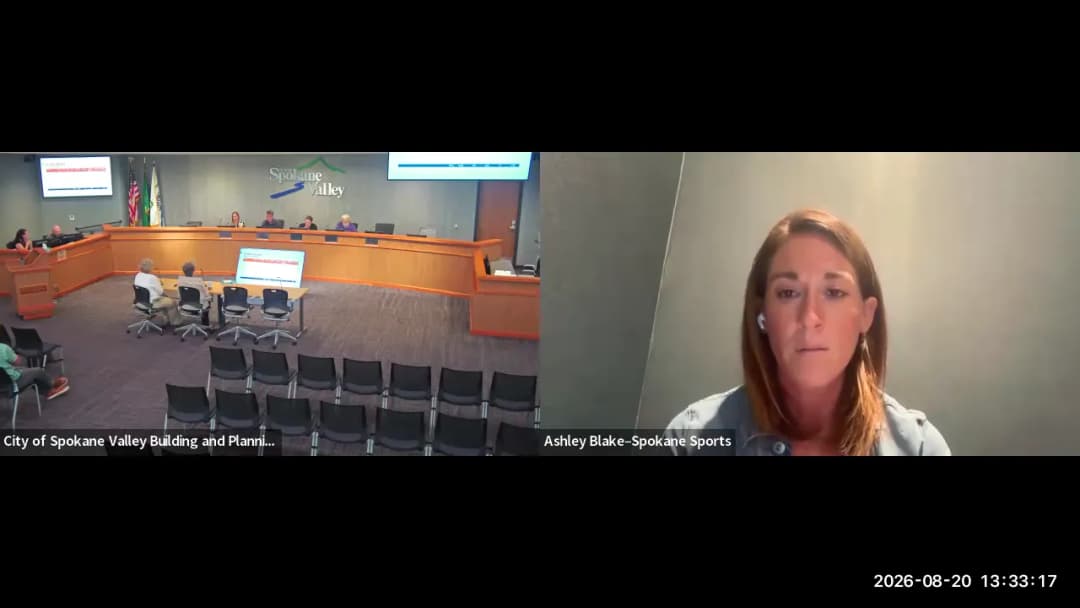
The Spokane Valley Transient Parking Authority (TPA) Commission met on August 25, 2026, to review administrative reports, revenue updates, and a presentation from Spokane Sports on the new Course Spokane Valley venue. Discussions included budget planning for 2027, a potential TPA fee increase, and challenges in attracting and retaining major sports events. Administrative Report - Terry (staff) reported occupancy rates hovering around 64%, down 2% year-over-year, and highlighted the Discover the Valley campaign’s 65% engagement rate with 27,000 active users. Expedia data showed a 75% overnight stay rate in the market, with only 2.8% leaving the area. - No opportunity fund applications have been received, but a Spokane Sports application is expected, prompting a potential special meeting. - Budget discussions are slated for October 2026, with City Council adoption required by November 15. Allocations were $1.27 million in 2024 and 2025, $1.7 million in 2026 (including rollover funds), and a projected $1.3 million in 2027 under a normal revenue year. - The state TPA’s extra $2 per room could sunset by June 2027; the city is working with Visit Spokane to make it permanent. - A two-year, $30,000 annual subscription for Placer AI data is ongoing. Revenue Update - Sarah reported collections running 6.3% above last year, despite occupancy dips, attributing discrepancies to data lags (two-month delay) and unrecorded Canadian visitors (not included in CoStar data). - Commissioners discussed raising the TPA fee from $4 to $5, which could generate approximately $300,000 annually, and noted a sports district study that recommended a similar mechanism including restaurants. - The city maintains a 25% minimum fund balance for cash flow purposes, with conservative budgeting practices. Spokane Sports Presentation - Ashley Blake (virtually) presented on the Course Spokane Valley, a purpose-built cross-country venue that opened August 15, 2026. The venue has far exceeded the Johnson Consulting Report’s first-year benchmark of 900 visitors: 21,000 attendees are expected from eight tourism events, generating 5,720 hotel room nights and $620,000 in new hotel revenue. - Key 2026 events include Nike NXR and Nike Bob Furman, which Blake hopes to make permanent (currently year-to-year contracts). For 2027, the portfolio projects 7,958 room nights (39% growth) with the addition of two high-profile events. - Challenges noted: parking and transportation infrastructure (moving 10,000 people via shuttle), and high operating costs in Washington state (e.g., dumpster costs triple those in Boise, new taxes on AV and security). - Ruth Fitzgerald, Hotel Relations Manager, addressed hotel participation in booking mechanisms: about nine of Aerie Valley’s hotels regularly participate, and she urged commissioners to encourage broader engagement and post-event data sharing. - The venue is a finalist for SportsTravel’s Best New Sports Venue award. Key Outcomes - No formal votes were taken beyond adjournment (passed unanimously). - The commission will meet in October for budget discussions and may schedule a special meeting to review the Spokane Sports opportunity fund application. - Continued dialogue on a TPA fee increase and efforts to secure permanent status for the $2 surcharge to stabilize revenue.

TOURISM DEVELOPMENT 66% · PUBLIC ENGAGEMENT 13% · BUDGET EQUITY ANALYSIS 7% · TRANSPORTATION SAFETY 6%
26
AUG 18, 2026 · SPOKANE VALLEY, WASHINGTON · CITY COUNCIL & COMMISSIONS
Spokane Valley City Council Regular Meeting - August 18, 2026

The Spokane Valley City Council held a regular meeting on Tuesday, August 18, 2026, at 6:00 p.m. at City Hall. The meeting included public hearings, action items, and a non-action report. Key decisions included adoption of a master speed limit schedule update, a second reading of an ordinance for land acquisition on the S. Barker Corridor project, adoption of the 2027 state legislative agenda, and approval of a settlement agreement in pending litigation. The council also heard public comments on recent wildfire evacuation concerns, the new cross-country course, and a personal grievance. Public Comments & Testimony - Susan DeLuckey (in-person) expressed concern about emergency evacuation safety during recent wildfires. She urged the city to partner with Spokane to review the comprehensive plan for high-risk areas, require three exits for developments over 250 dwellings, restrict density in neighborhoods already meeting evacuation standards, and address fire hazards on city-owned land. She also requested recognition of deep clay deposits as critical areas and consideration of AARP findings on density impacts on seniors. - Shade Mahan (in-person) praised the new cross-country course at The Course at Spokane Valley, noting its wide start, bus loading zone, and spectator-friendly design. He said the project was completed under budget and on time. - Michael Drew (in-person) thanked the council for supporting wildfire victims and noted that community members opened their homes to displaced individuals. - Mikhail (in-person) alleged that the city and law enforcement mishandled a case involving stolen cats, claiming systemic negligence and seeking a public trial for $1 billion. No council action was taken. Discussion Items Public Hearing: Active Transportation Plan (ATP) - Adam Jackson and Jerremy Clark (Engineering Managers) presented the ATP, which aims to promote a safe transportation network for all users, maximize grant competitiveness, and comply with the comprehensive plan. The plan was developed with consultant Kimley Horn over 10 months of public input, including community conversations, pop-up events, and an online survey. - Key findings: Safety, safe routes for children, and better walking access were top priorities. The plan identifies project needs along arterial corridors, including sidewalk infill, bike facilities, and corridor studies. It does not specify exact facility types, as that requires detailed evaluation. - The plan references the “five E’s” (engineering, education, encouragement, enforcement, evaluation) and identifies funding programs (e.g., FHWA, TAP). A public hearing was held; no public comments were received. The hearing opened at 6:16 p.m. and closed at 6:26 p.m. Council will hold a future roundtable discussion. Resolution 26-013: Master Speed Limit Schedule Update - Jerremy Clark presented the resolution to reduce speed limits on three road segments: Park Road (Mission to Trent), Park Road (north of Trent), and Pines Road (32nd to 40th). The recommended reduction from 35 mph to 30 mph is based on three methodologies (NACTO, NCHRP, and 85th percentile rule). The 85th percentile speeds on these segments are 33–35 mph, making a 30 mph limit within the five-mph adjustment range. - Councilmember Merkel asked why not 25 mph. Clark explained that 30 mph is defensible without a citywide policy, but a 25 mph limit could be supported if the NACTO methodology is adopted citywide. Clark noted that the study was skewed toward school zones and that future citywide analysis will include non-school segments. - Public comments: Josh Wilcott (Principal, Horizon Middle School) and Kyle Rydell (Superintendent, West Valley School District) spoke in support, noting safety concerns for students and pedestrians outside school hours. Rydell also mentioned a private school on Park Road that should be included in future studies. - Council discussion: Councilmember Merkel initially considered a 25 mph amendment but deferred to Clark’s recommendation for a citywide policy first. Councilmember Yeager noted that speed limits are upper bounds, not required speeds. Councilmember Wick appreciated the phased approach. - Vote: The motion passed unanimously (6-0). Ordinance 26-008: Final Action on S. Barker Corridor Project (Sprague to 28th) - Kelly Konkright (City Attorney) and Rob Lochmiller presented the second reading of the ordinance authorizing acquisition of land and real property interests for the S. Barker Corridor project, including condemnation proceedings if necessary. The project involves widening Barker Road from two to three lanes, adding a center turn lane, bike lanes, sidewalks, and roundabouts at 4th and 8th Avenues. - Of 36 partial parcel acquisitions, 33 have been successfully negotiated since February 2025. The remaining three require condemnation. The city has a 23-year history of never going to court on such cases. - Deputy City Manager explained the legal process: federal and state law require good-faith negotiations, fair market value offers, and reimbursement for property owners’ appraisals (up to $750). The city will continue negotiations even after the ordinance. - Public comments: None. - Council discussion: Councilmember Merkel voted against, citing concerns about eminent domain as a “taking” and opposition to party platform. Councilmember Yeager initially voted no but now supports, noting that the process provides due process and fair compensation. Deputy Mayor Hattenberg defended staff diligence and the constitutional basis for eminent domain. - Vote: Passed 5-1 (Merkel opposed). Motion Consideration: 2027 Legislative Agenda Adoption - Virginia Clough (Legislative Policy Coordinator) and Brianna Murray (Lobbyist, Gordon Thomas Honeywell) presented the adopted agenda. Notable changes from the prior draft: removal of the Riverview Trail at Flora Park capital request (funding released by Spokane Valley Fire Department), reordering to prioritize the Sullivan–Trent Interchange and Spokane Regional Transportation Management Center, and addition of policy items. - Policy additions: - Support statutory changes for stronger community voice when offenders are released (sex offender placement). - Support policies limiting access to Kratom. - Under housing affordability: encourage review of Growth Management Act and building/energy code regulations to reduce costs. - Under fiscal management: refined language on tourism promotion area fee and cannabis/liquor revenue. - Amendments adopted by consensus: - Strengthen wildfire penalty language to “support policies to reduce wildfire risk, improve community resilience, and strengthen penalties for reckless and intentional fire endangerment.” - Under housing affordability, add a separate bullet: “support reducing building and energy code regulations.” - A proposal to revert levy passage requirements to 60% (from 50%) was defeated 5-1 (Merkel in favor, others opposed). - Public comments: None. - Vote: The amended agenda passed unanimously (6-0). Non-Action Item: Grant Opportunity for Montgomery Stormwater Project - Kristen Armstrong (Senior Engineer) presented an administrative report on a Department of Ecology Water Quality Combined Program grant for constructing stormwater treatment improvements on Montgomery Avenue from Argonne to Mansfield. The corridor is a high pollutant loading area. The grant is 85% (up to $2.55 million of the $3 million construction cost), with the city providing 15% match from the Stormwater Fund 402. The application is due September 30, 2026, with construction funds available in 2028. - Councilmember Merkel questioned whether direct testing of pollutant levels had been done. Armstrong clarified that the consultant’s report is under Ecology review, and she could not provide testing details. The Deputy City Manager committed to providing additional information at a future meeting. - Council consensus: 5-1 to proceed with the grant application (Merkel opposed). Key Outcomes - Resolution 26-013 (Master Speed Limit Schedule) adopted unanimously. Speed limits on Park Road (two segments) and Pines Road (one segment) will be reduced from 35 mph to 30 mph. Staff will continue a citywide study for future adjustments. - Ordinance 26-008 (S. Barker Corridor land acquisition) adopted 5-1, authorizing condemnation proceedings for three remaining parcels. Council directed staff to continue negotiations. - 2027 Legislative Agenda adopted unanimously after amendments. The final agenda includes support for stronger penalties for fire endangerment, limiting Kratom access, reducing building/energy regulations, and other priorities. - Executive Session and Settlement: Council convened a 15-minute executive session (6:06–6:21 p.m.) to discuss pending litigation. Upon return, they approved a settlement agreement in the Estate of Bryce Adame v. City of Spokane Valley case. The city’s insurance carrier, Washington Cities Insurance Authority (WCIA), will pay $3 million in exchange for a release of all claims. The city does not admit liability. The motion passed unanimously. - Council also directed staff to bring forward a motion to apply for the Montgomery Stormwater grant, with additional information on pollutant testing to be provided.

TRANSPORTATION SAFETY 17% · PUBLIC SAFETY 14% · LEGISLATIVE AGENDA 14% · LAND USE PLANNING 13%
27
AUG 18, 2026 · SPOKANE VALLEY, WASHINGTON · CITY COUNCIL & COMMISSIONS
Spokane Valley City Council Special Meeting - Executive Session - August 18, 2026

A special meeting of the Spokane Valley City Council was convened on Tuesday, August 18, 2026, at 5:00 p.m. at City Hall. The sole purpose of the open session was to enter an executive session for potential litigation. No public comments were accepted, and no formal action on city business was taken in open session beyond the procedural motions. Key Outcomes - Excusal of Councilmember Kelly: Councilmember Kelly was excused from the meeting by a motion, which passed unanimously (6 ayes, 0 nays, with Councilmember Kelly absent). - Executive Session: The Council voted unanimously to adjourn into executive session for approximately 30 minutes to discuss potential litigation (RCW 42.30.110(1)(i)), with the understanding that no action would be taken upon return to open session. The recording stopped after the motion carried, and no return to open session was documented.

PROCEDURAL 50% · PENDING LITIGATION 50%
28
AUG 13, 2026 · SPOKANE VALLEY, WASHINGTON · CITY COUNCIL & COMMISSIONS
Spokane Valley TPA Commission Regular Meeting - August 13, 2026

The Spokane Valley Tourism Promotion Area (TPA) Commission held its regular meeting on August 13, 2026, at 10:00 a.m. at Spokane Valley City Hall. Commissioners reviewed the financial and administrative reports, discussed the launch of the TPA Opportunity Fund, and considered the frequency of future reports. No public comments were received. Public Comments & Testimony - No members of the public signed up to comment via Zoom or attended in person. Discussion Items - Financial Report (presented by Terry Stripes): May 2026 revenues increased 5.45% over May 2025, and year-to-date revenues are up 5.6% compared to the prior year. Stripes noted the revenue figures primarily reflect visitor activity from March. - Administrative Report (presented by Terry Stripes): - CoStar Data: Hotels experienced a 0.5% increase in occupancy, reaching an average occupancy rate of 64%. The average daily rate (ADR) declined 2.4% year-over-year to $108, but held steady from April to May. - Marketing and Analytics: A one-page update from 116 & West was provided, along with a detailed Discover the Valley analytics report. Stripes asked commissioners whether they prefer all reports monthly or some on a quarterly/annual basis. Commissioners agreed they review all materials and wished to continue receiving the full packet monthly. - Placer AI Travel Report: A bug delayed ingestion of enhanced transaction data, causing inaccurate visitor spend figures. A corrected report will be issued and added to next month’s packet. - TPA Opportunity Fund Update (presented by Terry Stripes): - The city council adopted the ordinance in May 2026. Stripes worked with legal to align municipal code, created an application and guidebook, and built a web page. The fund officially launched on August 12 (soft launch) and became active on August 13. - The application is 18 pages with open-ended questions. Commissioner Grant expressed initial concern about length but noted the space allows applicants to provide narratives. Commissioner Lee confirmed past events (e.g., a Christian group requiring 400 room nights) could have benefited from such a fund, and emphasized that events with longer lead times will likely come through Spokane Sports. - Timeline: Applications complete by 24 hours before a commission meeting can be heard at that meeting. Stripes estimated the entire process (application, commission review, city council approval) could take no more than four weeks. Special meetings may be called if needed. - Commissioner questioned the “event delivery costs” and “infrastructure” language on page 5 of the guidebook, suggesting it may stray from promotion/advertising. Others felt the wording should remain broad to accommodate diverse event needs, and a suggestion was made to add a promotion/advertising bullet point. Stripes agreed to review. - Discussion clarified that the fund is not all-or-nothing; the commission can adjust award amounts. Commissioners stressed the fund should not become a mini-LTAC fund; its purpose is for events that cannot wait for annual cycles and that generate overnight stays. - Next Steps: Stripes will provide a list of all submitted applications (including incomplete ones) to give commissioners a full picture before making funding decisions. Post-event reporting and Placer AI analysis will be conducted for funded events. Key Outcomes - The TPA Opportunity Fund officially opened for applications. Staff will screen submissions and bring qualified applications to the commission for review. - The commission agreed to keep all reports in the monthly packet; Stripes will ask 116 & West if the analytics report is time-consuming to produce. - Upcoming meetings: August – mid-year revenue/expenditure report and application reviews; September – yearly update from 116 & West and discussion of 2027 budgets. - The meeting adjourned with a motion passed unanimously.

ECONOMIC DEVELOPMENT 71% · COMMUNITY ENGAGEMENT 14% · FISCAL SUSTAINABILITY 8% · PROCEDURAL 7%
29
AUG 13, 2026 · SPOKANE VALLEY, WASHINGTON · CITY COUNCIL & COMMISSIONS
Spokane Valley TPA Commission Regular Meeting - August 13, 2026

Note: The agenda and transcript indicate the meeting actually occurred on June 18, 2026, but the user instruction specified using August 13, 2026. This summary reflects that date as instructed. The Spokane Valley Tourism Promotion Area (TPA) Commission met on August 13, 2026, at 10:00 a.m. at City Hall. The meeting covered the financial report, administrative updates, and the status of the Opportunity Fund. No public comments were received. The commission discussed revenue trends, Placer AI analytics, and upcoming application processes. Public Comments & Testimony - No public comments were offered at the meeting. Discussion Items - Financial Report (Chelsie Walls): As of April 2026, year-to-date revenues were up approximately $17,000–$18,000 (about 5%) compared to the same period in 2025. January through March showed declines, but April rebounded with a 41% increase over the prior year. Walls noted a two-month delay in revenue collection due to Department of Revenue processing and mentioned potential anomalies from software changes, which she would investigate. - Administrative Report (Teri Stripes): Stripes, the new Economic Development Specialist, addressed prior commission questions. Key reports included: - Hotel Analytics: Year-to-date daily revenue was up 108% from April's -4.4% year-over-year, but still down 2.9% year-to-date. - 116 & West Website Analytics: The campaign was performing above benchmarks, with a full evaluation expected in August or September. - Placer AI Reports: Stripes presented a domestic travel report showing total trips slightly down, but average monthly visitors and visitor spending up. A CenterPlace report showed 12,500 visits from 9,600 visitors in the last 12 months. A Val 4 Park event report for the 250th Celebration (May 25–31) recorded 926 visits, though actual attendance was estimated at 400; the majority occurred on the event day. Stripes noted that Placer AI cannot filter out stops shorter than 10 minutes, which could skew data (e.g., gas stations). - Spokane Sports Events: March 13–15 girls' basketball event generated 723 room nights across nine properties; March 20–22 boys' event generated 785 room nights. Future reports will include more detail. - Opportunity Fund: Stripes reported that the application and guidance documents are with legal review and will be live before the next meeting. Staff will first review applications for completeness before presenting to the commission. Commissioner Terry noted that $170,000 may not go far, but the commission acknowledged it was a starting amount. - Placer AI Usage: Commissioner Gary asked if other city departments use Placer AI. Stripes confirmed economic development uses it, and transportation may in the future. The subscription was funded by TPA dollars, though some add-on analyses used separate department funds. Key Outcomes - No formal votes were taken. The commission will review completed Opportunity Fund applications at the next meeting (likely August or September, depending on submissions). - Staff will continue to provide monthly Placer AI reports on recent events. - 116 & West and Spokane Sports are scheduled to present at upcoming meetings (August/September). - The meeting adjourned by motion and second.

ECONOMIC DEVELOPMENT 30% · TECHNOLOGY AND INNOVATION 28% · PARKS AND RECREATION 21% · PROCEDURAL 15%
30
AUG 13, 2026 · SPOKANE VALLEY, WASHINGTON · CITY COUNCIL & COMMISSIONS
Spokane Valley Planning Commission Meeting - August 13, 2026: Comprehensive Plan Goals and Policies Study Session

The Spokane Valley Planning Commission held a regular meeting on August 13, 2026, at 6:00 p.m. at City Hall. The primary business was a study session on the goals and policies of the draft Comprehensive Plan, presented by staff. Commissioners also heard public comments, discussed state-imposed housing regulations, and reviewed upcoming meeting schedules. Consent Calendar - The agenda was approved with a change: the approval of minutes from July 23, 2026, was removed from the agenda because the minutes were not included in the meeting packet. The agenda was approved 6-0. - Commissioner Dingus was excused from the meeting (approved 6-0). Public Comments & Testimony - Sue DeLuckey (Spokane Valley resident, former chair of Washington State Boundary Review Board for Spokane County): Shared a story about the Board's past decisions to deny development in North Spokane County due to inadequate water and road infrastructure, which she argued were validated by recent catastrophic evacuations. She urged the Commission to be mindful of long-term consequences and expressed concern that the Planning Commission's authority has been diminished. - Linda Klesh (2215 Conklin Court, Spokane Valley): Criticized the current draft Comprehensive Plan as being an economic plan rather than a true growth management plan. She compared it to other cities' plans (Walla Walla, Millwood, Seattle, Pasco, Richland) and argued that the plan does not adequately address affordability for residents. She also noted opposition to accessory dwelling units (ADUs) in her area due to property title issues and called for better planning and restored power for the Planning Commission. Discussion Items - Administrative Report (Steve Roberge): Outlined upcoming meeting topics: - August 27, 2026: Virtual presentation by consultants on upcoming code updates (review of new state legislation). - September 10, 2026: Review of the updated draft Comprehensive Plan, expected to be released within the next week. - September 24, 2026: Detailed discussion of draft code changes. - A schedule for the remainder of the year will be provided at the August 27 meeting. - Study Session – Comprehensive Plan Goals and Policies (Steve Roberge): - Presented background on the Growth Management Act (GMA) goals (RCW 36.70A.020) and the city's planning process. - Noted that the new draft contains 42 goals and 162 policies, up from 33 goals and 123 policies in the current plan, largely due to the new Climate and Resiliency chapter. - Highlighted select new policies: Economic Development Policy 18 (sports tourism), Policy 19 (industrial land use), Land Use Policy 17 (battery storage and data centers), Transportation Goal 5 (optimizing roadway network), Transportation Policy 22 (pursuing federal/state funding), Housing Goal 1 (removing barriers), and Climate Resiliency Policy 8 (strengthening wildfire resilience). - Commissioner Discussion: - Commissioner asked for clarification on wildfire risk areas; Mr. Roberge replied that the state is working on mapping but it is not yet defined in the comp plan. - Commissioner requested a breakdown of how many goals reflect state mandates versus local priorities; Mr. Roberge noted it would require analysis but that the climate chapter was entirely state-driven. - Commissioner Winkler expressed concerns: - Land Use Goal 3 and Policy 7 focus on commercial/industrial/mixed-use transformation but omit residential innovation, which she felt was better addressed under the housing element. - Transportation goals lacked a clear objective to serve residents and businesses. - Housing Policies 13 and 14 reference a five-year strategic plan to end homelessness; she questioned its effectiveness given a high average homeless duration (over 8 years in Spokane vs. under 6 months in Houston) and suggested adding flexibility to allow updated methods. - Commissioner raised wildfire egress concerns, noting that while there is a regulation for a second access point at 50 houses, there is no standard for a third access point, potentially leading to dangerous congestion. Mr. Roberge acknowledged that street standards might be revisited after the comp plan. - Commissioner questioned the need for proactive city action on wildfire evacuation access. - Commissioner sought clarification on ADU numbers: the new bill requires allowance for up to two ADUs and removes owner-occupancy requirements; the higher number (six) referenced earlier pertains to middle housing affordability bonuses. - Commissioner asked about affordability definitions: Mr. Roberge stated that affordable units must be at 60% or 80% of area median income (AMI), which for a family of four in Spokane Valley is approximately $100,000 (100% AMI). - Commissioner raised concern about rising property taxes for fixed-income homeowners due to increased density and higher property values; Mr. Roberge noted the city’s limited tools but agreed to explore options. Commissioner McKinley noted the existing exemption (around $50,000 assessed value threshold) is an all-or-nothing system that needs indexing. - Commissioner Jorgensen thanked staff for providing printed materials. Key Outcomes - The Commission will receive the updated draft Comprehensive Plan electronically and a paper copy available at City Hall within the next week. It will also be posted on the city’s website. - Staff will bring back the full draft plan and address commissioners' concerns (e.g., flexibility in housing policies, wildfire risk, street standards) in upcoming meetings over September and October. - No formal motions or votes were taken on the Comprehensive Plan goals and policies; the study session was informational. - The meeting adjourned without further business.

ENGINEERING AND INFRASTRUCTURE 33% · AFFORDABLE HOUSING 16% · PUBLIC ENGAGEMENT 11% · COMMUNITY ENGAGEMENT 10%
OPENPUBLICA · PUBLIC MEETING INDEXUPDATED DAILY · openpublica.com