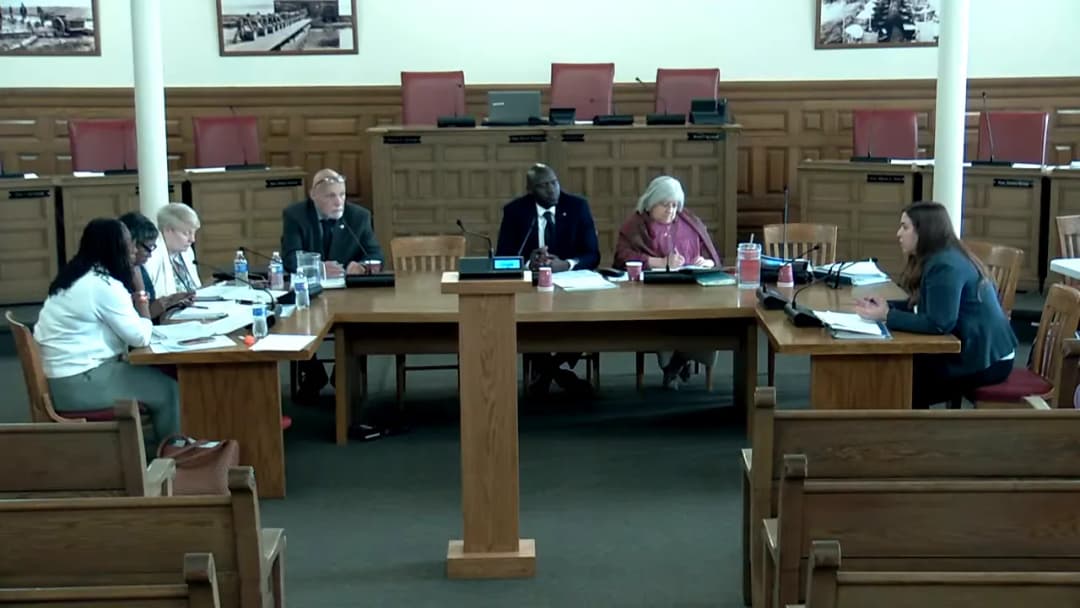
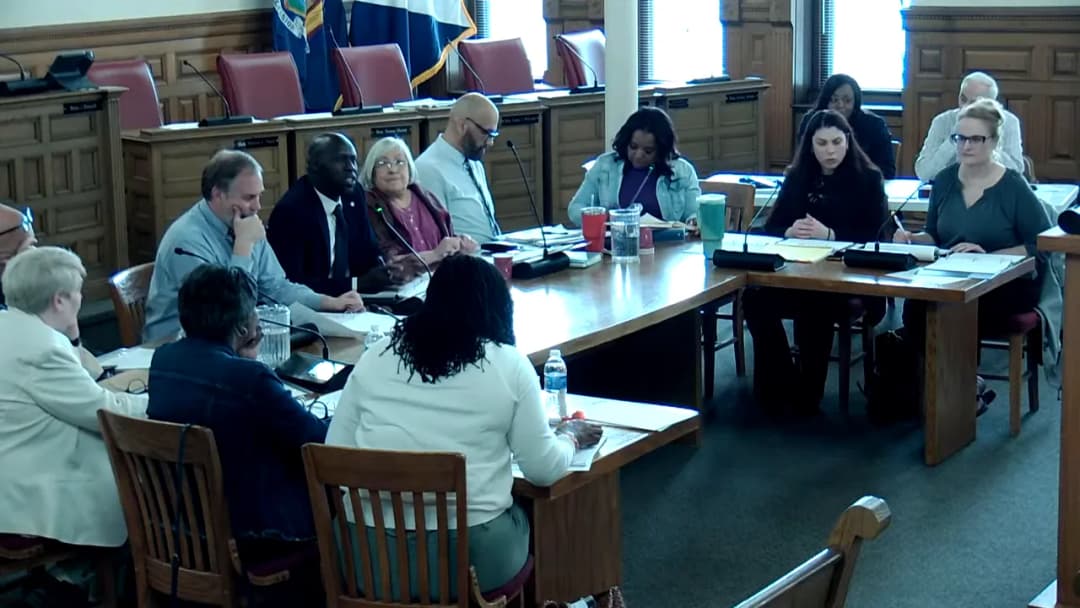
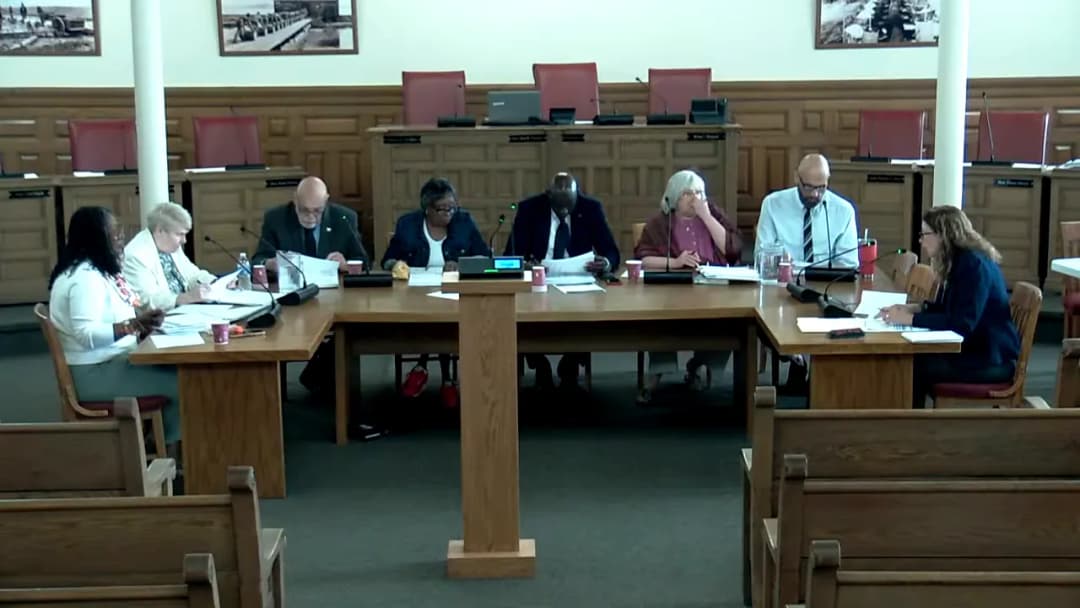
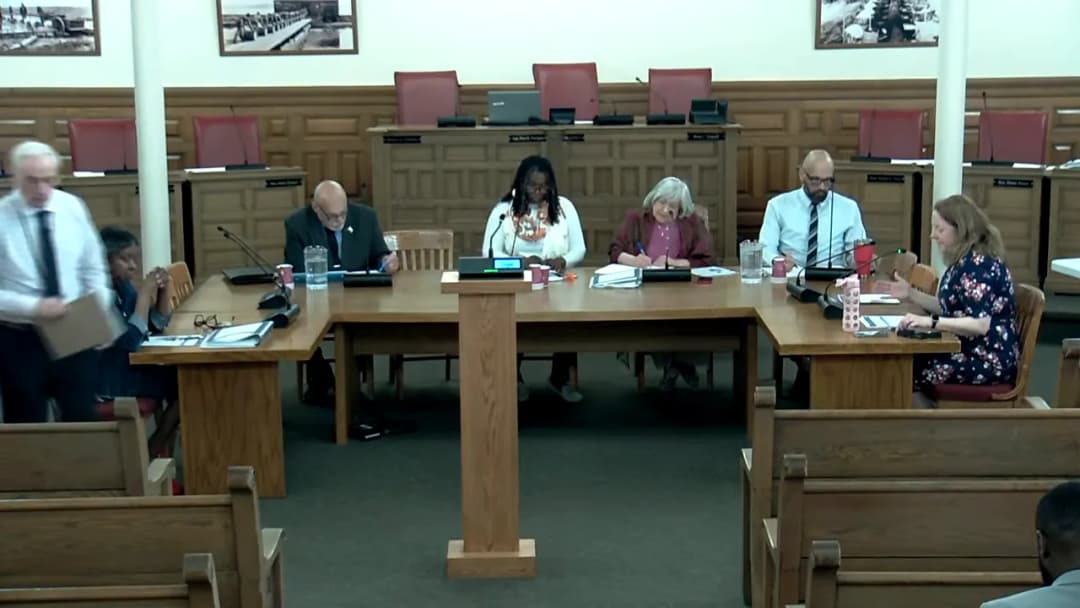
The Syracuse City Council held a public hearing on the annual estimate of the city and the Syracuse City School District for fiscal year 2025-26 (the proposed budget refers to FY2026-27, creating a naming discrepancy). Budget Director Evan Loving presented the $354.5 million general fund budget. Four members of the public testified on various topics. Public Comments & Testimony - Cliff Ryan Jr. and Zain Ghanim presented Cavline, a digital advertising platform aimed at helping local businesses and nonprofits increase visibility and recycle dollars into the local economy. They sought a partnership with the city as a contractor to expand access to digital marketing for underserved and minority-owned businesses. - Kim Cameron, representing the League of Women Voters of Cortland County and New York State, and a volunteer speaker for Beyond Plastics, urged support for the Bigger Better Bottle Bill. She stated the bill could save Syracuse taxpayers $90,000 to $200,000 annually by increasing the bottle deposit to 10 cents and expanding covered bottle types, while reducing waste and environmental toxins. - Andrew Seavers, a recent homeowner, criticized the city for focusing on what he called "legislative band-aids" like good cause eviction and slumlord issues instead of economic problems. He directly criticized Councilor Donna for being "wishy-washy" and "flip-flopping," and stated that good cause is "a matter of when, not a matter of if." - John Barker (introduced as Joan Myers but self-identified as John Barker), a homeowner and member of the Washington Square Neighborhood Task Force, raised concerns about the deficit budget, hidden administrative costs without council votes (e.g., TNT program), increasing employee positions without sunset clauses, and inefficiencies such as multiple trucks sent to the same job site. He called for fleet consolidation and prudent cuts. Discussion Items - Budget Director Evan Loving presented the FY27 proposed budget: a $354.5 million general fund including $10 million in anticipated new state aid, modest increases in sales and property tax with no property tax rate increase, a 4% proposed water rate increase, and a budgeted use of fund balance of $23.9 million. The anticipated fund balance at the end of FY26 is approximately $120 million. Department funding is relatively flat; increased costs are directed to key priorities including housing, plan review, and a proposed re-evaluation. Loving expressed hope for a year-long budget process starting in July to address structural challenges. Key Outcomes - No votes or decisions were taken during the hearing. The meeting was adjourned at 5:50 PM.
Public Meetings - Syracuse, New York
Public Meetings - Syracuse, New YorkThe Syracuse City Council convened on April 29, 2026, at approximately 3:55 PM to discuss a broad agenda including budget amendments, contracts, emergency demolitions, and community partnerships. Two public hearings were announced: the DPW municipal sidewalk program on May 4 at 1 PM and the annual city and school district budget estimate later that evening at 5:30 PM. Scheduling Announcements - Two public hearings were scheduled: May 4 at 1 PM (DPW sidewalk program) and April 29 at 5:30 PM (budget estimate). Public Comments & Testimony - No public comments were made during this session. A separate public hearing for the budget was held later in the evening. Discussion Items - Item 9A: A previously tabled resolution was declared ready for approval. - Item 12: Craig Whitmer of the Office of Analytics, Performance and Innovation presented a 10-week fellowship agreement with Syracuse University's Maxwell School. The city will pay $5,000 from its summer intern budget, and Maxwell will contribute $2,500. The program aims to pair a graduate student with the city for a research project. - Items 13-14: Budget-related resolutions for the Department of Public Works required a correction to $4.5 million (originally listed as $3 million and $4 million). The companion items will be adjusted. - Items 15-17: Three resolutions concerning new sensors for the street lighting platform. Items 15 and 17 authorize bonds not to exceed $3 million for sensor purchases; item 16 is an agreement with Zio (Best in Ubiquia) for sensor supply. The sensors carry a 10-year warranty; the contract is for 5 years with a 5-year extension. No additional maintenance costs are expected. - Items 18-19: City Engineer Mary Robison presented a request for an additional $250,000 in bonding for the new police parking lot at 1153 West Fayette Street (corner of Magnolia and Fayette), bringing the total to $1.65 million. Bids came in over budget. The lot will provide over 100 parking spaces for patrol vehicles. Nearby businesses, including the Gear Factory, expressed concerns about parking displacement. Discussions included permeable pavement feasibility and stormwater management in a separated sewer area. - Item 20: Eric from the Mayor's Office requested a 90-day extension (through June) for a road closure related to the Syracuse University Graduate Hotel project. Non-refundable fees paid through June total $197,198; refundable fees for right-of-way improvements amount to $679,740 (paid by check). Councillors expressed concerns about fee calculations, timeline discrepancies (start date originally cited as late December), and the financial burden on taxpayers given SU's tax-exempt status. Eric confirmed that any extension beyond June would require council approval. - Item 21: Water Commissioner Robert Brandt presented a one-year contract extension with Cornell University (not to exceed $102,494) for the watershed education program, required to maintain the city's filtration waiver. The program educates farmers and homeowners, monitors soil and water, and coordinates with DEC enforcement. A report on program effectiveness was requested. - Item 22: A five-year agreement with the U.S. Geological Survey (USGS) to operate and maintain the Spencer Street gauge station on Onondaga Creek (cost $39,558 over five years). The station provides flood mitigation data; the previous agreement expired. - Item 23: A revocable permission for SU to install underground electrical and communication duct banks crossing Harrison Street in the 900 block. Annual fee is about $65, adjusted by CPI. The city will consider property tax implications. - Item 24: A resolution honoring nurses during National Nurses Week (early to mid-May). All councils signed on. - Items 25-27: Councilor Mick presented: Item 25 required a typographical correction ($400,000); Item 26 authorized a $50,000 donation from the Brianna Stewer Foundation to be funneled through the Syracuse Conservancy; Item 27 authorized payment for a game vehicle for Big Rig Day on May 16 at Burnett Park. - Item 28: Chief Strategy Officer Stephanie Pasqual introduced a partnership with McMahon Ryan to deploy a mobile response unit for gun violence reduction. The unit will provide counseling and support proactively and in response to incidents. No cost to the city; no city staff involved. Councillors suggested coordination with other mobile units. - Item 29: Investigations Bureau Chief Dave Matzis presented an agreement with NYS DCJS for the GIVE 13 initiative, which supports proactive enforcement, youth engagement, and gun violence prevention. The initiative reimburses the city for related positions; no local match required. - Item 30: Approval of an honorary street sign at Austin and Bellevue in memory of Charlotte Burkovicki, a longtime resident. - Item 31: Councilor Williams reminded of the budget public hearing at 5:30 PM and directed the public to the city website for budget documents. - Item 32: Councilor Williams introduced a local law on surveillance, with amendments sent via email. It was tabled for further review and will be included in the next meeting's packet. State-level legislation on similar topics was noted. - Items 33-34: Councilor Jones Roser held item 33; item 34 amended a previous ordinance to reflect demolition of the structure at 145 Forest Avenue (now a vacant lot). The lot's future use will be determined. - Items 35-40: Councilor Monto presented: 35 - License agreement with Huber Brewer for construction staging at the former Syracuse Developmental Center; 18 months, $94,000 fee. 36-37 - Bond increase of $317,000 for emergency backfill of a dangerous hole left by a demolition. 38-39 - Bond authorization of up to $600,000 for emergency demolition of a collapsing wall at 1800 North Salina Street. 40 - Zone change to resolve a split-zone parcel from a city-owned property sale. Key Outcomes - All items except 32 and 33 were moved and approved unanimously (motion to agree, all in favor). Item 32 was tabled; item 33 was held. - The two public hearings (sidewalk program and budget) were scheduled as announced.
The Syracuse City Council convened on April 28, 2026, at 9:20 PM for a meeting that included public hearings, committee reports, and votes on several ordinances. The session addressed land use amendments, a proposed business improvement district, and a new fire apparatus purchase. Public Hearings - A public hearing was held on an ordinance to rezone a parcel at 123 Elm Street from R-2 to R-3 for a planned multi-family development. No public testimony was provided. - A second hearing concerned the establishment of a Downtown Business Improvement District (BID). Two residents spoke in favor, noting potential economic benefits; one small business owner expressed concern over the proposed assessment fee structure. Discussion Items - The council discussed a resolution authorizing the purchase of a new aerial fire truck at a cost not to exceed $950,000. Councilor Moran questioned whether a less expensive model could meet operational needs. Fire Chief Thompson explained the vehicle's specifications and the necessity for compliance with current safety standards. - Councilor Nguyen raised questions about the BID boundaries after receiving input from a constituent on the periphery. Economic Development Director Patel clarified that the district was drawn to include properties that would directly benefit from enhanced services. Consent Calendar - Approval of minutes from the April 14, 2026 regular meeting. - Renewal of the city’s liability insurance policy with Travelers Insurance. - Authorization to accept a $75,000 state grant for the Southside Youth Recreation Program. Key Outcomes - The rezoning ordinance for 123 Elm Street was adopted by a vote of 7–1 (Councilor Gonzalez dissenting). - The resolution to purchase the new fire truck passed 8–0, with an amendment that the purchase be contingent on receiving a matching FEMA grant (currently pending). - The proposed Downtown BID ordinance was tabled by a vote of 5–3 (Councilors Moran, Nguyen, and Simmons voting no) pending a revised assessment map and additional stakeholder outreach. A report is due by May 12, 2026. - All consent calendar items were approved unanimously.
On April 28, 2026, the Syracuse City Council held a Division of Water Budget Hearing from approximately 18:56 UTC. Council members included Petrona Joe Rausa, Helen Hudson, Donna Moore, Martinave, and President Rida Paniawa, along with the Water Commissioner and staff. The hearing focused on the Water Department's recent accomplishments, the proposed 4% water rate increase, staffing challenges, and major infrastructure projects. Public Comments & Testimony - No public comments were recorded. Department Overview & Accomplishments - 415 water main repairs were completed this year, including breaks and leaks (not including fire hydrant replacements). - The Bose Gatehouse Valve, broken closed for 15 years, was repaired in-house at a much lower cost than originally budgeted in the CIP. This repair alone is estimated to bring 1.5 million gallons more water per day into the city. - Morningside tanks were brought back online, restoring 8 million gallons of storage capacity. - The transmission path from Skaneateles Lake to Syracuse was inspected; every valve and blow-off was operated. Two valves remain broken closed on the conduits and are scheduled for replacement this year. - Inflow to the city increased from 39–40 MGD (million gallons per day) to 43–45 MGD, improving reservoir fill rates and water pressure. - 1,200+ lead service lines were replaced in the last year (public side). The department is on target to continue lead replacements for the next 15 years. - Forest Hill Drive (historically 6–7 breaks per winter) and Seely Road (historically 4–5 breaks per year) had zero breaks this winter after main replacements. - Guilford Pump Station is operational, with no shutdowns affecting the daycare on Kimber this year. - The department successfully transitioned to Syracuse Workforce Central for timekeeping and payroll. Water Rate Increase Proposal - A proposed 4% water rate increase was discussed, projected to cost the average minimal-use household about $7 per year. Heavy users would see a larger increase. - Councilor Hudson questioned why the increase was 4% rather than 8%, noting that doubling the increase to $14 per year could fund more infrastructure improvements and help prevent lead contamination. Commissioner responded that affordability for low-income residents was a concern, and that 4% was a starting point—future increases may be considered. - It was noted that Syracuse water rates remain among the lowest in the region and the country. - The revenue from the increase goes directly into the water infrastructure fund to cover rising chemical costs (chlorine, orthophosphate) and the lead service line replacement program. - Past increases: 2% in 2024; no increase in 2025. Budget & Personnel Highlights - Vacancies: The department has 15 vacancies, with about 10 requiring CDL drivers. Commissioner attributed the national CDL driver shortage to federal testing requirements for marijuana, which remains illegal federally, discouraging many young adults from obtaining CDL licenses. - New positions: - Public Information Officer (PIO) – to manage social media, combat misinformation, and publicize water main breaks, lead line replacement areas, and other updates. - Instrumentation Mechanic – required by EPA and NYS Department of Health to manage and calibrate turbidity meters, flow meters, UV plant equipment. Not funded by grants; solely department-funded. - Equipment Maintenance Supervisor – replaces the heavy equipment crew leader to handle ordering, auctions, and vehicle readiness. - Water Maintenance Worker I – four new positions, converting former Laborer II positions, to provide flexible staffing (some with CDLs, some without). - Professional services increases (pages 180, 184) were attributed to state-mandated programs: cross-connection control (a 2008 law the city had not complied with) and lead testing/sampling. - Infrastructure fee (page 13) is separate from the 4% increase; it is charged to new developments requiring sprinkler systems, coordinating with the fire department for backflow prevention. - Insurance recoveries dropped from $75,000 to $10,000; the department is working with legal to improve recovery for damaged hydrants. - Sale of water is projected to increase by 4% (residential and commercial). The aquarium will purchase water at the same rate as other customers. Discussion on Operations & Future Projects - Lead replacement program: Contracts 1–3 already awarded and under construction; contracts 4–7 going out for bid. A website listing contractor areas and schedules is being developed (will be managed by the new PIO). - Chlorine facility design at Skaneateles is underway. - Hiawatha transmission main is planned to be brought back online this year. - Reservoir circulation: To address algae blooms, the department is working with a company to improve water circulation in open reservoirs (e.g., Westcott and Woodland). Changes will aim to keep water moving without reducing pressure on the north side. - Aquarium water connection: The aquarium will be tied to the city's water system and will purchase water at standard rates, per an offline discussion. - Cost of water main breaks: The 415 repairs were all done in-house (no contractual costs); materials are funded partly through the operating budget and partly through CIP. Exact cost was not provided. Key Outcomes - The hearing concluded without a formal vote on the budget or rate increase. Council members expressed interest in further discussion offline, particularly regarding the rate increase percentage. - Commissioner stated the department will continue to work with senior staff to strategize revenue increases. - No motions were made beyond adjournment. Meeting adjourned.
In a meeting focused on the city's parking garage portfolio, council members and administration officials reviewed budget projections, discussed the recent closure and planned demolition of the Fayette Street Garage, and debated the long-term viability of city-owned garages. No public comments were heard, and no formal votes were taken. Discussion Items - Deputy Mayor Corey Driscoll Dunham presented the proposed budget revenues for parking garages on page nine, listing the Madison Irving, Washington Street, Armory Square, Harrison (operated by Marriott), and Fayette garages. The Fayette Garage closed a few months ago, and council previously approved funding for its demolition. - Lazer Parking (Laz) holds a one-year contract with two one-year renewal options after winning a competitive bid as the lowest bidder. - A question about "parking garage registration" (line 42730) was clarified: it refers to fees from privately owned garages, requiring an engineering report and inspections. - Councillors asked about state-owned parking lots operated by the city (e.g., Pearl Street, Butternut). The Deputy Mayor will investigate whether the city is responsible for maintenance and whether revenues cover costs. - For the Madison Irving Garage, the proposed budget is $735,000, an $85,000 increase over the prior year's actual of $650,000. The increase was attributed to a rate increase effective November 2025 and actuals coming in higher than budgeted. - President Paniagua asked whether it makes sense for the city to own garages given high maintenance and capital costs. The Deputy Mayor noted valid arguments on both sides: garages can help set reasonable downtown parking prices and attract tenants, but many garages are reaching the end of their useful life. The administration has strategically conveyed ownership of some garages (e.g., AXA) and is evaluating Madison Irving in light of East Genesee Street development. Washington Street Garage is the newest and receiving ongoing maintenance. - Councillor Manto inquired about the city-owned lot at Washington and Clinton behind One Lincoln Center (owned by SURA, operated by the city with meters). Discussions about selling that lot were mentioned but no update provided. - Councillor Codwell asked if the administration is considering a new garage on the PSB property (the former police station, jointly owned with the county). The Deputy Mayor confirmed conversations with the county about a "convention corridor" on State Street that would include parking. The possibility of using state land under the I-81 viaduct for city employee parking was also raised, though the Deputy Mayor noted that some community members argue parking is not the best use of that land. - Eric Ennis (likely from the administration) reported that the Syracuse Metropolitan Transportation Council (SMTC) is conducting an abbreviated three-to-four-month study of downtown parking impacts from the Fayette Garage closure and the I-81 viaduct removal, followed by a larger study of the urban core. He noted that other upstate cities face similar portfolio challenges. Customer migration from Fayette has been scattered; some users have moved to Washington Street Garage, while others pay a premium for closer lots. Key Outcomes - No resolutions or votes were taken. The council received information and will follow up on maintenance cost breakdowns for each garage and the feasibility of employee parking options. - The administration will continue discussions with the county on convention corridor parking and with SMTC on downtown parking studies. - The Fayette Garage demolition remains underway, with future redevelopment of the parcel to be determined.
The Syracuse Common Council held a work session with the Department of Public Works (DPW) on April 28, 2026, to review the proposed operating budget for Fiscal Year 2026-27. The session, chaired by the Council Chair and attended by Councilors Helen Hudson, Donna Moore, Martinave, Core William, President Pennyower, and others, focused on staffing levels, utility cost increases, and a critical shortage of CDL drivers. Ann Ford, First Deputy Commissioner of DPW, presented the budget with bureau superintendents available for questions. The meeting ran from early afternoon to 2:01 PM. Discussion Items Budget Overview and Staffing Reductions - DPW reduced several positions that were long vacant, including the assistant director of fleet operations (retirement) and three MEO positions in environmental services. - Utility costs (gas and electricity) increased significantly, partly due to DPW taking on costs for the new police and fire building. Councilor Core Williams noted an approximate 80% year-over-year increase; staff clarified it reflected new buildings. - The budget for contracted services (facilities manager) moved from engineering to DPW, accounting for a jump from $0 to $137,000. - Street repair lost an assistant superintendent position (vacant) and the road reconstruction manager became vacant again; Kevin Henry, Chief Operating Officer, stated these positions are urgently needed. CDL Driver Shortage Crisis - DPW is short over 30 CDL drivers citywide, with Street Cleaning alone down 18 out of a typical 45 workers (nearly 50% vacancy). - Starting wage for CDL drivers is $20.38 per hour. Kevin Henry noted that private contractor Barrett pays operators $80 per hour and laborers $45–50 per hour for the same work. - Obstacles to recruitment include low pay, residency requirements (sanitation workers exempted by state law), insurance liability for accidents affecting personal licenses, and a narrow wage gap between laborers and drivers (about $2.24–$2.65 per hour difference even after years of service). - Councilors expressed strong frustration, calling the wages insufficient for a living. Councilor Donna Moore and others urged exploration of sign-on bonuses and creative compensation. Recruitment and Workforce Development - DPW staff reported that job fairs yield few qualified applicants because entry-level CDL positions require a license. They have worked with CNI Works but found candidates unwilling to take a pay cut. - Councilor Moore highlighted that many city residents seeking jobs are unaware of these openings and offered to connect DPW with nonprofit workforce development groups like Jubilee Homes (which offers CDL training). Staff acknowledged the need for better coordination with the Human Resources department. Union Contract Negotiations - Deputy Mayor confirmed that contract negotiations are underway with Local 400 and other unions. The administration has proposed cost-of-living adjustments and measures to widen the incentive gap between laborers and operators. - Council members requested a briefing on the financial impact of various proposals. The Deputy Mayor agreed to share numbers offline and welcomed council input on creative solutions. Traffic and Safety Concerns - Councilor Martinave raised safety issues at Court Street and Grant Boulevard, where two stop signs replaced a former traffic signal. He requested a traffic study under Vision Zero, noting accidents and driver confusion. - Councilor Hudson asked for improved visibility markers at traffic islands, such as at Hiawatha Boulevard and South Salina Street, where low curbs cause vehicles to bump. Salt Supply and Operations - The past winter had no statewide salt shortages, but prices continue to rise. DPW uses treated salt for temperatures below 20°F, though extreme cold still renders it ineffective. - Councilor Cardwell inquired about liability for icy sidewalks near vacant properties; staff suggested enforcement via property taxes. Other Budget Items - Tipping fees increased by $6 per ton for waste disposal. - Fleet fuel reimbursement from other entities (police, fire, housing, school district) is tracked within the Motor Equipment Maintenance budget. - A line item for professional services in sanitation increased nearly fourfold (to $200,000) per direction from the Commissioner. Key Outcomes - No formal votes were taken; the session was informational. - Council will hold a separate meeting with the Deputy Mayor to review union contract proposals and explore wage increases for CDL drivers and laborers. - DPW will follow up on a traffic study for Court Street and Grant Boulevard. - Council encouraged DPW to collaborate with local workforce development organizations to fill CDL vacancies. - The budget review will continue in future sessions.
On April 28, 2026, the Syracuse City Council met to review the Engineering Department's operations, ongoing projects, and proposed budget for the upcoming fiscal year. Mary Roberson, representing the Engineering Department, presented an overview of the department's three divisions, current workloads, and significant budget changes. Discussion Items - Department Overview: Mary Roberson outlined the three divisions: Building (managing capital projects for city-owned facilities), Design & Construction (handling street rights-of-way, sewers, roads, bridges, stormwater, and permit reviews), and Mapping & Surveying (providing survey support and record-keeping). The department is fully staffed at 21 people but has a few vacancies, with a new hire starting mid-May and another being sought. - Project Workload: Each division is managing approximately 35–40 projects in design or construction (totaling 70–80 projects), not including floodplain management, permit reviews, or stormwater tasks. The department is also involved in Phase A of the $400 million, 10-school renovation project (JSCB), currently designing the first three schools at an estimated $100 million. - Budget Discussion – Professional Services (Page 117): Councillors questioned a nearly threefold increase in professional services from the prior year. Mary explained the increase is due to $54,000 for a legal land expert and $135,000 for a zoning consultant, both related to legal support for the I-81 project to secure land control. The department receives no external funding for these costs; they are covered entirely by the Engineering Department budget. - Contract Services Line (Page 117): Councillors noted that contract services dropped from $78,000 to $0. Mary confirmed this is because a CSEA employee previously funded through that line is no longer on the department’s budget. - Position Budgeting: Mary noted that due to required budget cuts, some positions listed on page 116 are not funded for the full year; they are budgeted for shorter periods (mid-year or later start), reducing salary costs. - Uniform Allowance: Councillors asked about the 'uniform' line item. Mary clarified it covers union contract allowances for CSEA and middle managers, separate from the 'boots' line (account 408). Key Outcomes - No formal votes or decisions were taken during this discussion session. The Engineering Department provided clarifications on budget items and project status, and councilors received information to inform future budget decisions. - The meeting adjourned for a break following the Engineering segment.
The Neighborhood Preservation Committee met on April 28, 2026, to receive an update on the city's community broadband program (SurgeLink) ahead of budget decisions. Jen Tift, Director of Strategic Initiatives in the mayor's office, presented the program's history, current status, and future financial outlook. Councilors discussed the subsidy costs, marketing, expansion plans, and potential restructuring of the program to reduce city expenses. Discussion Items - Program Background: Tift outlined that Syracuse was one of the worst digitally connected mid-sized cities, with over 25% of households lacking internet access (nearly 50% in low-income census tracts) and one in three K–12 students without high-speed internet at home. The city launched a broadband program in 2023 using federal funds, later receiving a $10.8 million state grant to expand coverage. - Current Coverage and Subscribers: The program now covers about 40% of the city (approximately 24,000 households). To date, 1,700 residents have been connected, with 98% qualifying for a subsidy. The service is a single tier of 100 Mbps symmetrical for $36.99/month market rate, with a subsidized rate of $14.95/month for low-income households. - Financials and Subsidy: The city's current contract with the service provider expires at the end of 2026. Under the existing structure, the city pays a subsidy for each low-income subscriber. The estimated annual operating cost for the program is approximately $450,000–$500,000, mostly for the subsidy. To break even under the current model, the city would need a 60% market-rate to 40% subsidized subscriber ratio—far from current levels. Councilors noted that the city should expect to cover the subsidy for at least the next few years. - Infrastructure Investment: The city is installing 17 miles of fiber backbone using state grant funds, which will allow the city to own the physical infrastructure. This fiber will connect several city facilities (firehouses, a recreation center, a community center). The city plans to lease the fiber to third-party internet service providers (ISPs) after the contract ends, which could shift from a fee-for-service model to a lease arrangement, potentially generating revenue and reducing city operating costs. - Marketing and Outreach: There is no dedicated marketing budget in the current contract. The provider has conducted some community outreach at events, but awareness remains low—only 6.7% of eligible households in the coverage area are subscribers. Councilors expressed concern about the lack of marketing and suggested partnering with larger companies that have marketing resources, while Tift cautioned about predatory practices by some cell phone providers. - Expansion and Future Plans: The state grant covers only the current expansion area; no additional federal or state grants are on the horizon for urban build-out. Tift noted that covering the remaining 60% of the city could be done with lower-cost wireless equipment. A comprehensive 5–10 year plan is not yet developed, but the city may apply for a state planning grant (up to $250,000) to study the long-term strategy. Councilor Caldwell asked about the plan for technology upgrades given changes in IT, and Tift acknowledged the need for a more formal plan. - School District Engagement: Engagement with the Syracuse City School District has lapsed since the change in superintendents. Tift noted that Cleveland's Digital C program successfully partnered with its school district to fund service for students, which could be a model for Syracuse. - Potential Service Expansion: The existing infrastructure could support higher-speed tiers and small business service, which would generate more revenue. Tift stated that the city could begin offering these services immediately, but under the current contract, the city would see only limited revenue from the 2% of customers paying market rates. - Use of Network for City Operations: The fiber network could be used for police cameras, smart city applications, and other city operations, providing cost savings and improved cybersecurity. Key Outcomes - No formal votes were taken; the meeting was informational. - Councilors gained a clearer understanding that the program will require ongoing city subsidy (around $500,000/year) for at least the next few years unless the contract structure changes. - The administration will explore leasing the fiber infrastructure to ISPs after the current contract ends, which could move the city away from subsidizing service. - The committee expressed interest in better marketing and partnerships to increase subscriber numbers and reduce the subsidy burden. - The city will consider applying for a state planning grant to develop a long-term broadband strategy. - Engagement with the school district will be renewed to explore potential funding for student internet access.
The Syracuse Planning Commission held a regular meeting on April 27, 2026, beginning at approximately 7:55 PM. The meeting included approval of previous minutes, multiple public hearings on land use applications, and significant discussion on a proposed event center. The commission approved several resubdivisions, special use permits, and site plan reviews. All votes were unanimous unless noted. Consent Calendar - The commission approved the minutes from the April 6, 2026 meeting without corrections, via a unanimous voice vote. Public Comments & Testimony - Event Center (4100-06 South Salina St): Numerous speakers expressed support for applicant Shaquila Brown, praising her community involvement and plans to provide youth training and jobs. Speakers in opposition included nearby property owner Derek Dunford, Councilor Patrona Jones-Rouser, and residents Kathy Strible and Rhonda Visi, who cited concerns over insufficient parking (only 8 on-site spaces), potential noise, safety issues, and the location's history of problematic venues. Opponents argued the idea was good but the location was wrong. - Roofing Company Office (5300-02 South Salina St): Neighbors Gail Collie and Khadija Osborne spoke in favor of the reuse but emphasized the need for proper landscaping, sidewalks, and maintaining neighborhood character. Councilor Jones-Rouser also spoke in favor, noting the owner's effort to find a compatible tenant. One resident urged support for developers willing to invest in the city. Discussion Items - Utility Thermal Energy Network (751 Van Rensselaer St): National Grid presented a proposal for a thermal energy hub, capturing waste heat from the county wastewater treatment plant. The project requires a special use permit and major site plan review. Commissioners clarified that the facility is not a battery storage system and involves heat exchange, not power generation. The applicant agreed to add additional screening per county planning comments. The project was awaiting Public Service Commission approval before action could be taken. - Resubdivisions for Syracuse Land Bank: Four resubdivision applications were approved to merge lots for single-family home construction: 201-203 Apple St (Move In New York program, 50-120% AMI), 558 Valley Dr (split lot for two homes, with a 10-ft easement along Hooper Brook), 4896-4902 South Salina St (demolished non-conforming structures, lots marketed for sale), and 535-539 West Calvin St / 119 Hope Ave (zoning map amendment and resubdivision to create buildable parcels). All received negative SEQR declarations. - Major Site Plan Review – 114 Gertrude Street: Correll Realty proposed renovating a former single-family home into a 6-bedroom rental. The commission approved with conditions to remove an illegal gravel parking area and restore it to green space within one year. - Special Use Permit – 901-17 South Geddish St: A neighborhood market/deli (sandwiches, no alcohol or tobacco) was approved with conditions including hours 9 AM–10 PM daily, no neon signage, and a requirement to combine parking lots via resubdivision. - Special Use Permit – 3001-23 James Street: Zimon Coffee House’s off-site training facility and batch preparation center was approved with conditions on snow storage and a required resubdivision of the rear parking lot within one year. - Three-Mile Limit – Town of Onondaga: National Grid’s application for utility infrastructure was approved with city engineer concurrence. - Major Site Plan Review – 4100-06 South Salina St (Event Center): Applicant Shaquila Brown proposed an event center with shuttle parking and community training programs. After extended public comment, the commission approved with 10 conditions including modified hours (Mon-Fri 6:30 PM–12 AM, Sat-Sun 4 PM–12 AM; amended to 6:30-11 PM weekdays per commissioner motion), a parking management plan, and restrictions on alcohol/tobacco (licensed vendors only). A one-year review of the parking plan was also required. The motion carried after a motion to amend hours was accepted. - Major Site Plan Review – 5300-02 South Salina St (Roofing Company Office): Ahmad Hammad’s proposal for a roofing showroom/office was approved after reclassification to office use (permitted by right in MX-1). Conditions included sidewalk restoration, landscaping, parking lot improvements, and a lot alteration to combine adjacent parcels. The approval is tied to the specific office use; any change of tenant requires new site plan review. Key Outcomes - Approved minutes of April 6, 2026. - SP-25-36 & MASPR-25-35: Special use permit and major site plan for thermal energy network approved (negative SEQR, conditions). Referred to Common Council. - R-2026-13: Resubdivision at 201-203 Apple St approved with condition to file map within 62 days. - R-2026-17: Resubdivision at 558 Valley Dr approved with condition for 10-ft easement along Hooper Brook. - R-2026-32: Resubdivision at 4896-4902 South Salina St approved with condition to file map within 62 days. - Z-2920 & R-2026-29: Zoning map amendment and resubdivision for West Calvin/Hope Ave approved; map amendment recommended to Common Council. - MASPR-25-5: Major site plan for 114 Gertrude St approved with three conditions, including removal of illegal parking. - SP-2026-12: Special use permit for market at 901-17 South Geddish St approved with eight conditions; recommendation to Common Council. - SP-2026-16: Special use permit for coffee training facility at 3001-23 James St approved with four conditions; recommendation to Common Council. - 3S-2026-3: Three-mile limit in Onondaga approved. - MASPR-25-36: Major site plan for event center at 4100-06 South Salina St approved with 10 conditions, including modified hours and one-year review. - MASPR-25-11: Major site plan for roofing office at 5300-02 South Salina St approved with 12 conditions, including specific office use limitation. All decisions were unanimous unless otherwise noted.
The meeting provided a comprehensive overview of the city's street light program, covering the current status of LED lighting, plans for a new smart city sensor system, and challenges with National Grid coordination. City staff presented data on existing fixtures, discussed neighborhood lighting equity, and outlined a proposal to replace the aging sensor platform over three years. Discussion Items - Street Light Program Status: Ken Towski reported approximately 18,800 lights citywide, including 880 interstate lights and 500 underpass lights. All lights are LED; new additions will be LED as well. The city owns about 1,500 aluminum poles, 3,000 decorative fixtures, and 500 wood poles; National Grid owns most wood poles. The city pays for power and maintenance on interstate lights. - Lighting Equity and Safety: Councilor Caldwell noted stark differences in brightness between neighborhoods (e.g., her well-lit neighborhood vs. darker areas). Towski explained that wattage varies (35W to 110W) and that brighter white lights are used on Delaware Street and Richmond to improve safety. He acknowledged a desire to expand this but cited cost (estimated $10-15 million for a full citywide replacement) and the recent 2019 LED conversion. - National Grid Coordination: Towski described a 6-month process to add a light to a National Grid pole due to Verizon and Grid assessments. The city can bypass this by installing its own wood poles (done for 17 poles on side streets), which can be connected by Grid in under a week. Councilors expressed frustration with Grid’s bureaucracy; Towski is working with Grid to expedite. - Smart City Sensor Replacement: The city needs to replace the current sensor system (hardware no longer manufactured, software support ending). An RFP yielded 12 responses; after interviews, staff recommend Ubiquitous (cell-based hardware). The new system will allow proactive monitoring. The three-year cost includes hardware, software, and installation. Year one focuses on decorative fixtures ($1.4 million from CIP funds previously approved for I-81 lighting). The remaining years will cover cobra-head fixtures. - I-81 Project and License Plate Readers: The I-81 project includes new decorative poles with sensors; the city must supply sensors to the contractor soon to avoid retrofitting costs. New sensors will integrate with Axon license plate readers. Towski noted that an asset inventory will track all attachments on poles. - ADA Compliance and Pole Location: Councilor raised concerns about aluminum poles obstructing ADA sidewalks. Towski confirmed those are city-owned and will be addressed through engineering in upcoming projects (similar to West Genesee Street relocations). - Comprehensive Lighting Plan: Councilors requested a citywide assessment of lighting needs, especially in underlit, high-poverty neighborhoods. Towski suggested a phased approach: when sensors are replaced, lights can be upgraded to brighter white LEDs. No formal plan exists, but staff are open to developing one. Key Outcomes - No votes were taken, but the council indicated support for the sensor replacement proposal and discussed bringing it to a future agenda, potentially with a waiver for faster consideration. The new system is time-sensitive due to the I-81 project needs. The city will use existing CIP funds ($500,000 for I-81 lighting) and the 2026-27 CIP to cover year-one costs. Towski committed to compiling a list of ADA-interfering poles for review.