The Alameda Planning Board met on April 13, 2026, at 7:00 p.m. to review and recommend updates to the City's Inclusionary Housing Policy. After a presentation, public comment, and deliberation, the board voted to recommend approval of the proposed ordinance with several key modifications and directions for future action. Consent Calendar - The board approved the consent calendar unanimously (with two abstentions) without public comment. The consent calendar included routine approvals and actions not specified in the transcript. Public Comments & Testimony - T. John Amaraz Eradena (member of the public) expressed support for the inclusionary housing policy update, emphasizing the need to enable housing production given that only 65 units were permitted last year. He urged the board to consider fee reductions and back-end fee collection to spur development, citing San Jose as an example. - Sean Murphy (Principal, Pacific Development, representing Alameda Marina) spoke in support of the proposed ordinance. He noted that a previous phase of the Alameda Marina project had difficulty leasing moderate-income (120% AMI) units, which were eventually filled only after significant rent reductions and free rent incentives. He advocated for allowing existing projects with moderate-income units to amend their housing agreements to use the new ordinance's options to avoid future vacancies. - A third speaker (name unclear) gave rambling testimony referencing various legal theories and did not address the inclusionary housing item directly. Discussion Items - Presentation by Steve Buckley (Planning Services Manager) outlined the proposed ordinance, which updates inclusionary housing requirements for rental and ownership projects. He covered state law context (Palmer fix, density bonus, TOC policy), the need for a nexus study for in-lieu fees, and staff's recommended options: - Option 1 (existing approved projects only): 4% very low, 4% low, 7% moderate. - Option 2: 15% at 80% AMI. - Option 3: 10% total split as 5% very low and 5% low. - Option 4: 8% very low. - Board clarifying questions covered: - Compliance with state density bonus law and discrepancies in income definitions (60% vs 80% AMI). - Application of options to existing developments and the problem of vacant moderate-income units. - The need for a nexus study before setting in-lieu fees, which was delayed due to budget constraints and recent case law (Sheetz v. El Dorado County). - Details on cluster development, off-site alternatives, and definitions (e.g., "substantially damaged", rounding fractions). - Consultant recommendations: the board noted that the consultant recommended a 4% very low / 6% low split for the 10% option instead of 5/5, as the latter had a 37% higher compliance cost. - Board deliberation: Members broadly supported the ordinance but advocated for several enhancements to increase housing production and address existing issues. Key points included the need for an in-lieu fee option, flexibility in cluster development findings, and administrative fixes for vacant moderate-income units. Key Outcomes - The board passed a motion (with at least one abstention and possibly one opposed) recommending approval of the inclusionary housing ordinance with the following augmentations to be forwarded to the City Council: 1. Exempt projects of 11 units or fewer from the inclusionary requirements (current threshold is 5 units) to align with TOC policy and encourage small-scale "missing middle" housing. 2. Clarify cluster development findings to require that at least one of the listed criteria be satisfied (rather than a totality test). 3. Administrative fix within 6 months for existing developments with vacant moderate-income (120% AMI) rental units, allowing them to adjust income tiers or opt into the new ordinance to avoid prolonged vacancies. 4. Adopt an in-lieu fee for projects of 12 units or larger within the next 12 months, contingent on completing a nexus study. 5. Enumerate all percentages and figures explicitly in the ordinance text for clarity (e.g., include "1/12 of 30%" numerically). 6. Provide specific guidance on "expedited" processing timelines to avoid ambiguity. - The board also encouraged staff to bring back a more detailed proposal for an in-lieu fee option for all project sizes, noting that such fees can be leveraged for state funding and support lower-income households through dedicated affordable housing development. - The next regular meeting (April 27, 2026) was canceled due to lack of agenda items.
Public Meetings - Alameda, California
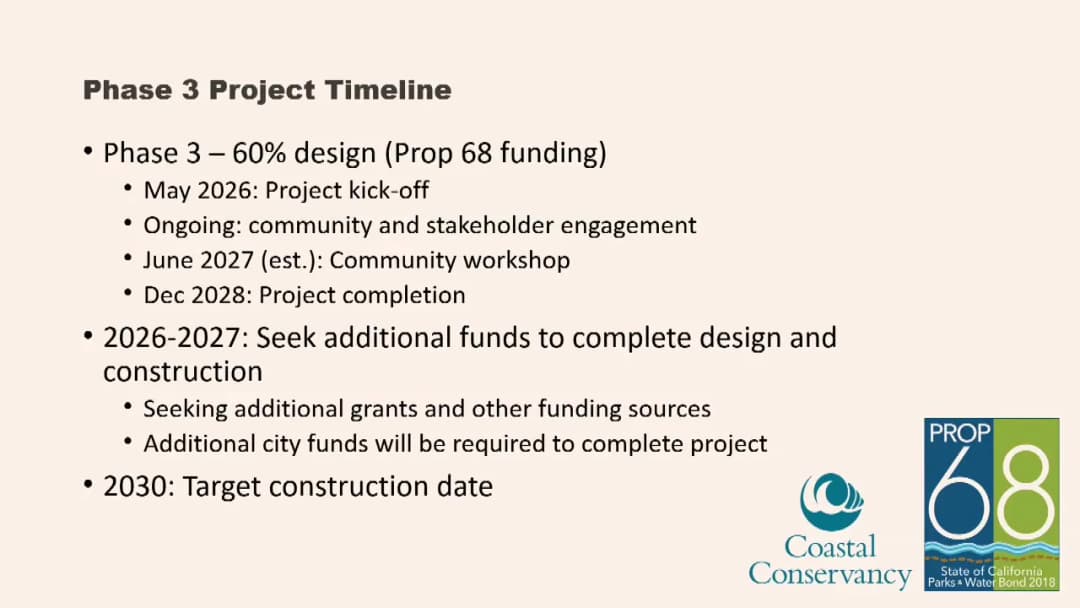
Public Meetings - Alameda, CaliforniaThe Alameda City Council held a special closed session at 12:30 PM, followed by a regular meeting at 7:00 PM on Tuesday, April 7, 2026. The regular session included a proclamation for Arab American Heritage Month, oral communications, approval of the consent calendar, discussion and approval of sea level rise adaptation grants and contracts, introduction of rent ordinance amendments, and a referral to study restrictions on city property use for immigration enforcement. The council also took action on closed session items, including direction on hiring a city manager. Consent Calendar - Items Approved: The council approved the consent calendar (items 5A-5G, with 5D withdrawn) unanimously by a voice vote. Items included routine approvals, a resolution for Day Center relocation project expenditure (with discussion on reopening date and provider), and the strategic plan update (with discussion on Sister Cities and community garden inclusion). - Public Comments on Consent Calendar: Five speakers supported the community garden at Jean Sweeney Park, citing food security, equity, and intergenerational benefits. One speaker objected to the strategic plan, demanding proof of homelessness spending. Public Comments & Testimony - Brian Kennedy spoke about attending a "No Kings" rally, displaying signs critical of sanctuary cities and alleging that an illegal alien killed an 18-year-old in Chicago. He expressed support for President Trump and criticized leftist demonstrations. - Gabrielle Duncan (Founder/Director, Alameda Native History Project) requested the city enter discussions on managing oak trees as a food resource, using prescribed fire, and planning green levees for sea level rise. She noted their acorn harvest trainings are fully booked. - Lauren Isell (Community Action for Sustainable Alameda) supported the Bay Farm Island adaptation project, noting extensive community outreach involving over 5,000 residents in vulnerable areas. - Zoe Siegel (Senior Director, Greenbelt Alliance) supported the sea level rise planning amendment, praising the city's grant efforts and community engagement. - Paul Boosterian (Bay Farm resident) supported the project and highlighted the importance of the Island Drive interim measure. - Megan Amara Siri Wardena (garden educator) voiced full support, urging nature-based solutions that promote play and learning. - Timothy Hilton (renter on Shoreline Drive) supported the rent ordinance updates, sharing experiences with rent registry issues. Discussion Items - Items 7A-7E: Bay Farm Island Adaptation Project and Related Contracts - Staff (Danielle Mueller, Sustainability Manager; Chris Giard, CMG Landscape Architects) presented on the near-term adaptation plan for Bay Farm Island, funded by a $2.64 million Prop 68 grant (State Coastal Conservancy) and a $1.14 million SB1 grant for the shoreline adaptation plan. The project is at 30% design, aiming for 60% with this funding, targeting construction around 2030. Features include nature-based solutions, ADA access, fishing pier, and trail improvements. - The council discussed grant funding, the status of the BRIC grant (canceled but potentially resuming), and coordination with Oakland and other agencies. Staff clarified that contract amendments are due to expanded scope, not cost overruns. - The council voted unanimously (5-0) to accept the grant, allocate $50,000 from the general fund, and approve amendments to four agreements. - Item 7F: Rent Ordinance Amendments - Bill Chapin (Rent Program Director) presented amendments including: allowing city council to seek judicial review of hearing officer decisions, requiring a 7-day displacement before permanent relocation payments, giving tenants right to reoccupy after invalid eviction notices, clarifying full compliance for rent increases, and addressing post-sale liability. - Two resolutions were also presented: one on rent program fees (including a $50,000 general fund subsidy for Section 8 fee waivers) and one rescinding an outdated Ellis Act policy. - Councilmember Bowler recused himself due to a potential conflict of interest. - After public comment, the council voted 4-0 to introduce the ordinance and adopt the resolutions. - Item 10A: Referral on City Property Use for Immigration Enforcement - Councilmember Daysog introduced a referral to direct staff to review precluding city-owned properties from being used as staging grounds for immigration roundups, and to return with analysis and recommendations. He noted similar policies in other East Bay cities. - Council discussion included support from Vice Mayor Pryor, Councilmember Bowler (citing over 60 emails and existing strategic plan work), and Councilmember Jensen. Mayor Ashcraft expressed caution about enforcement feasibility (77 police officers, federal property in Alameda) and suggested focusing on practical measures like bystander training. - The council voted unanimously (5-0) to refer the item to staff with direction to report back as soon as practical, including an examination of enforcement options. Key Outcomes - Closed Session Actions: - Item 4A (City Manager hiring): Council provided direction by a vote of 4-1 (Councilmember Daysog abstaining). This action was announced after reconvening from closed session. - Items 4B (Litigation) and 4C (Real property negotiations): Staff provided information and council provided direction by 5-0 votes. - Consent Calendar: Approved unanimously. - Bay Farm Island Adaptation Project (7A-7E): Approved unanimously. The city will accept $2.64 million in Prop 68 grant funds and $1.14 million in SB1 funds, allocate $50,000 general fund for staff time, and amend agreements with CMG Landscape Architects, Greenbelt Alliance, Community Action for Sustainable Alameda, and San Francisco Estuary Institute. - Rent Ordinance Amendments (7F): Introduced by a 4-0 vote (Bowler recused), with a second reading required. Resolutions on program fees and Ellis Act policy also adopted. - Referral on Immigration Enforcement (10A): Approved unanimously. Staff will review precluding city property use for immigration roundups and report back as soon as practical, including enforcement analysis. - Proclamation: April 2026 recognized as Arab American Heritage Month in Alameda.
The transcript was not provided, so no summary can be generated.
The Social Service Human Relations Board (SSHRB) met on April 1, 2026, at 7:03 p.m. The meeting included public comment, approval of minutes, postponement of two presentations, and discussion of the annual work plan. Board members assigned to committees for work plan development and received staff updates on housing and human services programs. Public Comments & Testimony - One individual spoke during public comment (agenda item 2). The speaker, who was not present in the room, delivered a lengthy statement criticizing a board member for a prior comment about the speaker's mental health. The speaker described the comment as inappropriate, stigmatizing, and a personal attack, and demanded a public retraction and acknowledgment from the board member. The speaker also accused the board of failing to read contracts and engage with the community. The board chair apologized for the disruption and moved on without immediate response. Discussion Items - Approval of Minutes (Item 3): The board reviewed and approved the minutes from the February 26, 2026 meeting. A motion was made and seconded. Vote: 6 yes (Kreitz, Carter, Wolf, Bryan, Green, Means), 1 abstain (Buckholz, who was not present at that meeting). - Postponement of Presentations (Items 4A & 4B): The presentation on school-based centers by Kyle Sinkopf and Catherine Sports Golden Media Family Services (4A) and the UC Berkeley Public Health Project update (4B) were postponed to the next meeting. - Work Plan Discussion (Item 4C): The board discussed the annual work plan that must be submitted to City Council by June. Rather than meeting in full, board members were assigned to committees to work on specific focus areas: The Road Home and Age-Friendly (Green, Buckholz, Means); Alameda United Against Hate (Bryan, Carter, Green); Domestic Violence Committee (Wolf, Price, Carter). These committees will meet separately before the next board meeting. No formal vote was taken. - Work Group Reports (Item 4D): Brief updates were provided: the Open Mic event for the Season of Non-Violence was successful, with young participants performing and artwork displayed; the Age-Friendly Alameda survey launch planned for May; three upcoming Overdose Prevention Trainings scheduled (May 7, June 11, July 29) at the Albert H. DeWitt Officers Club; discussion of a potential community well-being/satisfaction survey for Alameda residents. Staff Communications - Housing and Human Services Division staff reported: CDBG funding recommendations will go to City Council on May 5; the 2026-27 Annual Action Plan is pending approval; a community needs assessment survey is underway with extended time for multiple languages; in March, three people were exited into transitional housing and five into emergency shelter from unsheltered homelessness; inclusionary housing updates for moderate-income waitlist members. Board Communications - Board member noted the League of California Cities has adopted the term "older adults" instead of "seniors". The theme for Older Americans Month in May is "Champion Your Health". A proclamation was submitted to the mayor for consideration. Key Outcomes - Minutes from February 26, 2026 approved (6-0-1). - Annual work plan development delegated to three committees, which will meet before the next board meeting. - Two presentations postponed to the next meeting. - Meeting adjourned at 7:54 p.m.
The Alameda Economic Development Advisory Committee met on March 30, 2026, to discuss strategies for business attraction, including the launch of the "Choose Alameda" website, the rebranding of the Alameda Point website, messaging for target sectors (blue tech, green tech, biotech, and defense), workforce development, and potential industry events. No formal votes were taken; the meeting focused on staff updates and gathering feedback from committee members. Business Attraction Website Updates - Staff presented the evolving "Choose Alameda" website, emphasizing features for businesses: a section on opening a business and cost of operations, frequently asked questions about doing business in Alameda, and highlights of innovation, business clusters, and available buildings. - The timeline for the website is one to two months before launch. The site will be promoted through regional partners, brokers, and site selectors. - For Alameda Point, a new comprehensive website is being developed with input from the new broker GLL (replacing Cushman & Wakefield). The site will combine business and visitor information and will be linked to the Choose Alameda site. - A committee member suggested renaming "Spirits Alley" to a more innovation-focused name like "Runway District at Alameda Point" to better reflect the area's innovation hub status. Business Attraction Strategies and Messages - Staff asked the committee whether a hierarchy should be established among the three attraction activities: downtown attraction, retail attraction, and business sector attraction (targeting larger companies in blue tech, green tech, biotech, and defense). - Committee members expressed that business sector attraction should be the priority because it drives employment and subsequently supports retail and downtown. The consensus was to focus on attracting technical manufacturing and business sectors that generate higher economic benefits. - The common messages for attraction include: quality of life, variety of transportation choices, region's workforce, business clusters, streamlined permitting, safety, and community support for local businesses. - Specific messages for Alameda include: unique industrial spaces (e.g., high-bay environments at Alameda Point), strong power infrastructure (AMP as a selling point), and proximity to universities (Cal, Stanford, College of Alameda). - Staff and committee agreed to leverage existing industry groups (e.g., East Bay EDA, Bio California Life Sciences Association) for events rather than creating new ones. The role of the city should be as a sponsor and supporter, not the primary host. Industry Mixers and Events - Discussion centered on whether to host industry-specific events (e.g., blue tech mixers) as part of attraction efforts. - Committee members cited a successful example of a Zootech and Maritime Happy Hour hosted by another entity and sponsored by the city, noting that industry-led events with city support are more credible and attract better turnout. - It was suggested to start with sectors where existing partners are eager—life sciences and clean tech—and then expand to blue tech and manufacturing. The city can also participate in events organized by groups like East Bay EDA and other regional partners. Workforce and Education - Staff reported that workforce surveys are planned to confirm the need for "middle technician" workers, a gap identified in executive roundtables. The next step is to work with College of Alameda to develop courses. - Committee members highlighted the importance of attracting and retaining a young workforce, noting that College of Alameda students already have local footholds and can be a pipeline for employees. - A member proposed that businesses offer continuing education benefits that employees can use at local colleges, which would be an additional incentive when recruiting. - The connection between Alameda's workforce, the College of Alameda, and the city's innovation story was emphasized as a strong selling point for businesses considering relocation. Staff Communications - Restaurant Week (World Cup theme) starts at the end of next week. - The annual career fair at Encinal High School will take place in April, targeting high schoolers and connecting them to the city's summer internship program. - Staff announced two leadership transitions: Planning Director Alan Ty is leaving for San Pablo (end of March), and Library Director Michael Eiger is departing for Solano County. No immediate replacements were announced. - The city manager search is still underway, with interviews at council meetings and a potential transition in June. Panel Member Updates - A new Mexican restaurant called "Linia" will open at the former Comedy Club location on Central Avenue; a ribbon cutting is scheduled for April 2 at 4:00 PM. - The Innovation Island Business Excellence Awards will be held on May 14 from 5:00–7:00 PM at Alameda Adventure Land. Nominations are being sought. - The next Business After Hours social is on March 19 (Thursday) from 5:00–7:00 PM at Oakland Roots and Souls, themed around the World Cup. - Alameda secured a World Cup team base camp—the Australian national team will use the Oakland Roots and Soul facility. An estimated 100,000 Australians live in the Bay Area, and 250,000 tickets were bid on (possibly a misstatement; the transcript says "hundred thousand Australians in the Bay area" and "a hundred thousand put in for the bids for the tickets"). - The ESPADA innovation awards are on April 26 at the newly remodeled Kaiser Center in Oakland. Alameda companies Rhithmics and Anthro Energy are receiving awards. Key Outcomes - No formal votes were taken. The committee provided guidance to staff on prioritizing business sector attraction, refining common messages (power, innovation, unique spaces), and using industry-led events with city sponsorship. - Staff will incorporate feedback into the Choose Alameda website and Alameda Point website. - Staff will engage with Public Works to address concerns about truck routing and roundabout design that may restrict large truck access to industrial buildings at Alameda Point.
The Alameda City Council held a special meeting on March 25, 2026 (the transcript erroneously cites March 24) to convene in closed session to consider the appointment of a city manager. The meeting opened with roll call, confirming all five council members present. No public comments were offered. After the closed session, the council reported a unanimous 5–0 vote to provide direction on the hiring process. The meeting then adjourned. Public Comments & Testimony - None were received. Discussion Items - The council adjourned to closed session under Government Code Section 54957 to discuss the appointment of a city manager (public employee hiring). No details of the discussion were disclosed. Key Outcomes - On a vote of 5–0, the council gave direction regarding the city manager search. The specific directions were not announced publicly.
The city council convened on March 25, 2026, at 2:30 PM to address a range of agenda items including public comments, routine approvals, and deliberation on proposed zoning amendments and a community park project. Consent Calendar - Approved the minutes from the March 11, 2026 regular meeting. - Authorized a contract for street maintenance services. - Approved a resolution supporting state funding for a local transit project. Public Comments & Testimony - Margaret Chen, representing the Maplewood Neighborhood Association, expressed full support for the proposed zoning amendments to allow more affordable housing options. - David Reyes, a local small business owner, expressed strong opposition to the zoning amendments, arguing they could lead to increased traffic and reduced parking. - Alicia Torres, representing the Green Spaces Coalition, spoke in favor of the community park project, citing a need for more recreational areas in the southwest quadrant. Discussion Items - Zoning Amendments for Affordable Housing: Council reviewed a proposal to modify zoning regulations to permit accessory dwelling units and higher density in select residential zones. Councilmember Johnson raised concerns about infrastructure capacity, while Councilmember Lee emphasized the need for affordable housing solutions. The planning director presented data showing a 20% increase in housing demand over the past two years. - Community Park Project: The council discussed the proposed park development on a vacant city-owned lot near Elm Street. The parks director outlined the design plan, which includes a playground, walking trails, and a community garden. Some councilmembers questioned the $2.5 million budget and potential maintenance costs. Key Outcomes - The council voted 5-2 to move the zoning amendments to a second reading, with a public hearing scheduled for April 15, 2026. Councilmembers Johnson and Smith cast the dissenting votes. - Directed the parks department to present a revised budget and long-term maintenance plan for the community park project at the next meeting. - Unanimously approved the consent calendar items as presented. Next Steps - Second reading and public hearing on zoning amendments on April 15, 2026. - Parks department to return with updated park budget on April 8, 2026.
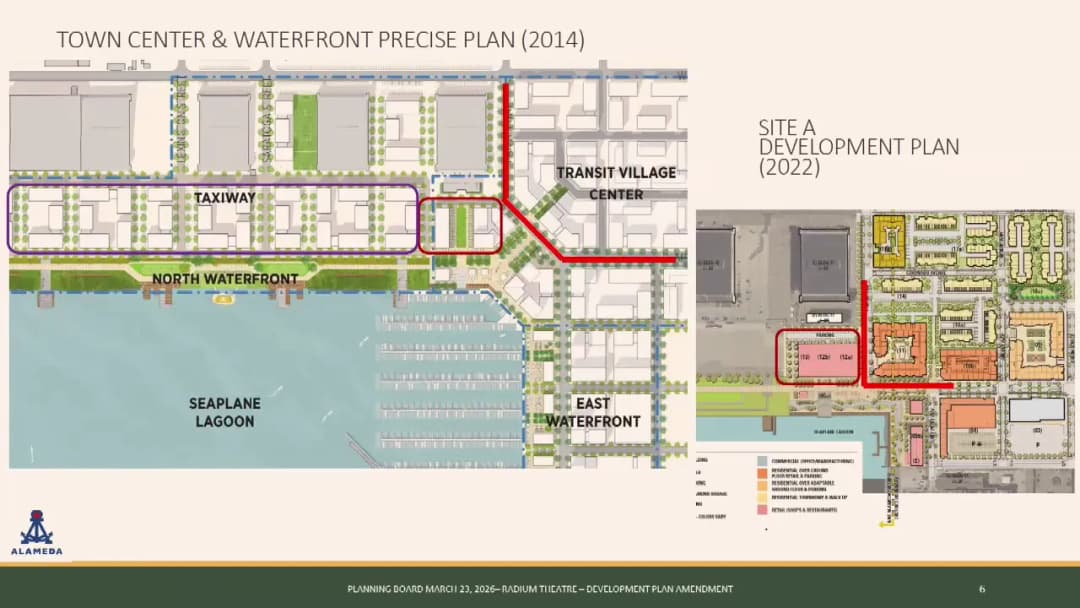
The Alameda Planning Board met on Monday, March 23, 2026, at 7:00 PM (adjourned at 9:32 PM) to consider three major agenda items: a use permit amendment for the USS Hornet Museum, a temporary use permit for electric vehicle storage at 1521 Buena Vista (National Terminals), and a development plan amendment for the Radium Theater. The meeting also included non-agenda public comments and a consent calendar that was carried over due to lack of quorum. All three main items were approved with votes of 3-0 (with two absences) after public hearings and deliberation. Consent Calendar - The consent calendar was carried over to the next meeting because the board lacked a quorum to move the item. Public Comments & Testimony - Non‑Agenda Public Comments: Dr. Ron Suarez, a new Alameda resident, spoke in favor of repurposing abandoned buildings at the former naval air base for decentralized micro data centers powered by solar panels. He emphasized the importance of promoting local businesses and educational opportunities for youth, referencing his own background in programming and AI. - Public Comments on Item 5B (1521 Buena Vista): - Alison Green (in person) opposed the use permit, citing concerns about increased truck traffic, noise, and safety for pedestrians, children, and pets in the residential neighborhood. She argued that the notification period was insufficient and that the plan was not ready for approval. - Cindy Johnson, on behalf of Bike Walk Alameda, requested that the project include dedicated pedestrian and bicycle access improvements to avoid conflicts between pedestrians and trucks after the closure of the existing driveway at Fortman Marina. - Kim Cadle (resident) urged the board to ensure all three blighted buildings (including the main boarded‑up building) are demolished and expressed concerns about fire risk from storing up to 1,000 electric vehicles in a small footprint. - Public Comments on Item 5C (Radium Theater): - Tara Pilbro (Executive Director of West End Arts District, Radium board member, and working artist) spoke in strong support, emphasizing the desperate need for a performing arts venue in Alameda and the project’s symbolic and catalytic value for the arts community and Alameda Point. - Brent Saldana (attorney and Radium board member, Alameda resident) described the project as transformational for the city, providing professional‑quality performance space, attracting audiences, and benefiting youth arts programming. - Nick Winkworth (local resident) expressed excitement about the project’s potential to accelerate revitalization of Alameda Point, bring people and businesses, and generate revenue to maintain historic buildings. Discussion Items - Item 5A: Use Permit Amendment for USS Hornet Museum (707 West Hornet Avenue) - Staff presented a summary of the proposed amendment, which updates the 2021 permanent use permit to address safety concerns raised after special events. Key changes include: deferring maximum occupancy (currently 660) to the building official and fire department, requiring annual inspections, establishing operational requirements for overnight stays (e.g., Boy Scout events), lowering the special event permit threshold, and allowing up to six helicopter landings per year (subject to other agency approvals). The amendment also removes outdated provisions (e.g., fireworks, operating hours). Staff recommended approval. - Board member Sue asked clarifying questions about the removal of hours of operation and fireworks conditions; staff explained that hours were removed because events occur outside traditional hours, and fireworks were eliminated because they were launched beyond city limits. - No public speakers. The board moved to approve the amendment as proposed by staff. Motion carried unanimously (3-0, two absences). - Item 5B: Temporary Use Permit for 1521 Buena Vista (National Terminals) – Electric Vehicle Storage - Staff (Steve Buckley) and applicant (Michael Harup, Tim Lewis Communities) presented the request for a two‑year interim use permit to store up to 700–1,000 electric vehicles on a 23‑acre site awaiting development of a master‑planned housing project (500+ units, including 80 affordable). The site is currently vacant and blighted with trespassing and vandalism. The proposal includes demolition of three buildings, closure of an existing driveway, and creation of a new driveway to improve safety at the Fortman Marina intersection. Staff recommended approval with conditions limiting truck traffic to 8 AM–4 PM, a 200‑foot buffer from Clement Avenue, and other operational constraints. - The applicant requested changes to several conditions: allowing activity on non‑tidelands portions of the site before the tidelands lease amendment is secured; extending operating hours to 8 AM–6 PM (with up to five deliveries outside that window per week); reducing the 200‑foot buffer to 50 feet; and allowing mid‑block access during construction. - Board members discussed concerns about truck traffic, pedestrian/bike safety, hours of operation, the buffer, and fire risk. Board member Sue noted the difficulty of enforcing a daily truck limit. Board members generally favored keeping the 8 AM–4 PM hours and a 50‑foot buffer, and supported adding a condition for public works to address pedestrian and bike access. Staff clarified that fire risk from EV storage is not considered a significant hazard under current codes. - After public comment, the board approved the use permit with modifications: (1) condition 1 and 2 revised to allow phased use on non‑tidelands before lease amendment; (2) condition 7 allows a separate two‑week ramp‑up period for the tidelands parcel; (3) condition 8 keeps hours 8 AM–4 PM, with extenuating circumstances requiring planning director approval; (4) condition 9 reduces the buffer to 50 feet; (5) condition 11 allows mid‑block access until Fortman improvements are completed; (6) added condition for public works permit to include pedestrian and bike access improvements. Motion carried (3-0, two absences). - Item 5C: Development Plan Amendment for Radium Theater (2151 Ferry Point Way) - Staff (Brian McGuire) and applicant (Christopher Sewald, Leslie Cliff, James Lorde) presented the amended development plan for a 35,000‑square‑foot performing arts center (550 seats, two stories with restaurant, rooftop bar, cafe, and public plaza) on the seaplane lagoon taxiway. The project has been refined over two years with input from the Historic Advisory Board and Planning Board, including shifting the building west to preserve a 40‑foot view corridor from the Naval Air Museum, adding a new north‑south street with a chicane for traffic calming, and integrating stormwater management. The plan includes an interim parking lot. Staff recommended approval, finding the project consistent with CEQA and the Secretary of Interior Standards. - Board members praised the careful site planning, view corridor preservation, and the potential to catalyze Alameda Point. No substantive opposition. Board member Sahiba asked about the scope of work east of the Naval Air Museum; staff clarified that the landscape plan is conceptual and will be refined during future design review and parcel map stages. Board member Sue asked about parking; staff noted that the interim lot will serve for an extended period, with city‑owned lots planned per the TDM program. - After public comment, the board unanimously approved the development plan amendment. Motion carried (3-0, two absences). Key Outcomes - Item 5A (USS Hornet Museum): Approved the use permit amendment (PLN2501618) as recommended by staff. The motion carried 3-0 (two absences). - Item 5B (1521 Buena Vista – EV Storage): Approved the temporary use permit (PLN25017) with modifications to hours (8 AM–4 PM), buffer (50 feet), phased use allowances, and a requirement for public works to address pedestrian/bike access. The motion carried 3-0 (two absences). - Item 5C (Radium Theater): Approved the development plan amendment (PLN25019) with findings of CEQA compliance. The motion carried 3-0 (two absences). The project will next go to City Council for ground lease and purchase option approval, then return for design review and tentative parcel map. - Future Meetings: Staff reported that the inclusionary zoning ordinance will return on April 13, 2026, and the Park Station use permit appeal will be heard by City Council on May 5, 2026. The board also discussed the election of a new president, likely in July 2026.
The Alameda City Council held its regular meeting on Tuesday, March 17, 2026 (St. Patrick's Day), convening at approximately 7:00 p.m. after a closed session that began at 2:00 p.m. The meeting featured the Mayor’s State of the City address, presentations on a traffic safety improvement and annual departmental reports, and routine votes. All voting members were present except Vice Mayor Pryor. A council referral was postponed to the April 7 meeting. Consent Calendar - The consent calendar was approved unanimously by a 4-0 vote. No items were pulled for separate discussion. Public Comments & Testimony - Catherine Schwartz (CEO, Alameda Family Services) reported that the Native American Health Center will end physical health services at the Alameda High School Health Center on April 10, 2026, affecting hundreds of students. She stated that AFS is in talks with Roots Community Clinic and La Familia but these partners require first-year bridge funding. She urged the council to help secure funding to prevent the center’s closure. - Kyle Sinkoff (Director of School-Based Services, AFS) provided key statistics: roughly 200 students served last school year, close to 1,000 visits; demographics include 28% Latino, 26% Asian, 18% White, 15% Black/African American; 91% of medical visits were for reproductive/sexual health; 7 student pregnancies reported this school year. He strongly supported preserving the health center. - Jim Strelo (on Item 7B) opposed the proposed diverter island, arguing that crashes should be addressed through enforcement and better signage, not by penalizing law‑abiding drivers. He recommended installing "Cross traffic does not stop" signs and excluding impaired‑driving collisions from stats. - Ruth Abbey (Community Action for Sustainable Alameda, on Item 7C) praised the city’s accomplishments and advocated strongly for increased staff capacity, particularly a transportation/climate project manager, to carry out future projects. - Jim Strelo (on Item 7C) questioned why Vision Zero is a priority given low crime rates; urged year‑round multi‑lingual education; and criticized speed‑hump installation without prior resident notification. - Michael Sullivan (on Item 7C) thanked the building and planning departments for their excellent support during his DIY electrification and seismic retrofit. - Jay Garfinkel (on Items 7D/E) requested more explanatory detail in the agenda materials; he did not oppose the items. Mayor's State of the City Address Mayor Marilyn Ezzy Ashcraft delivered her annual State of the City address, emphasizing public safety, transportation, housing, climate, and community wellbeing. Key points included: - Public Safety: 2025 crime reductions: vehicle theft down 45%, larceny 15%, vandalism 14%, burglary 11%. Traffic enforcement up 91%. CARE team handled over 1,100 calls. Fireboat Neptune launched; a comprehensive strategic fire plan will begin in 2026. - Transportation: Central Avenue improvements (first roundabouts, protected cycle track); Grand Street cycle track; Pacific Avenue neighborhood greenway. Alameda named gold‑level Bicycle‑Friendly Community. Woodstock water shuttle carried over 125,000 riders. - Housing: City received Pro‑Housing Designation and $1M grant. In 2025, permitted 65 units (52 ADUs). Sold 12 below‑market‑rate homes. Rent program recovered over $500,000 in overcharges and secured rent control for 150 units at Admiral’s Cove. - Homelessness: Dignity Village achieved 30 exits to positive housing (Jan 2025 – Mar 2026). Renovated day center and safe parking facility opening fall 2026. Warming shelter provided overnight stays, meals, and case management. - Climate: Emissions down 29% since 2005; CARP on track. AMP maintains low rates, invests in grid reliability. Sea‑level rise planning advancing. - Other: Estuary Park completion late 2026; aquatic center opens 2027; library noted 216,000 visits and a new clinical social worker pilot. City joined amicus briefs supporting local authority. The mayor also acknowledged challenges: uncertainty around the Alameda Point VA clinic, structural budget deficits, and the need for disciplined decision‑making. She concluded by thanking the community for its compassion and resilience. Discussion Items 7B – Lincoln Avenue/Walnut Street Diverter City Engineer Scott Wickstrom presented the proposal to install a concrete diverter island at the intersection, prohibiting through and left turns from Walnut Street to reduce broadside collisions. The intersection was flagged under Vision Zero; 38 collisions (30 broadside) occurred in recent years. Stop signs and traffic signals were deemed unfeasible because they do not meet state warrants and could lead to non‑compliance and rear‑end crashes. The diverter would force turning movements to the right, with pedestrians and cyclists still permitted. The Transportation Commission supported the plan. Council discussed neighbor input (neighbors largely supportive of action), traffic diversion to signalized intersections (Willow and Oak), and fire response (not impacted). After public comment, the council voted unanimously (4‑0) to authorize the Public Works Director to install the improvements. 7C – Acceptance of 2025 Annual Reports Planning, Building & Transportation Director Allen Ty, Planner Tristan Swear, Sustainability Manager Danielle Miller, and Transportation Manager Lisa Foster jointly presented reports on the General Plan Housing Element, Transportation Choices Plan, Vision Zero, Climate Action & Resiliency Plan, and Climate Adaptation/Hazard Mitigation. Highlights: 2025 housing permits for 65 units (12% of RHNA target, but over 2,000 units in pipeline); 1.5 miles of all‑ages bikeways; safety improvements at 79 intersections; 225,000+ free bus rides for seniors/disabled; 29% emission reduction versus 2005. Staff noted processing 4,500 permits and 30,000 inspections in 2025. Upcoming work includes instant permits, inclusionary housing ordinance, short‑term rental rules, and a speed hump policy with 10 installations planned. Council asked about housing ratios (inclusionary ordinance update coming May 2026), speed hump scheduling, and outreach on 2027 gas appliance rules. The reports were accepted unanimously (4‑0). 7D & 7E – Letters of Understanding with Police and Fire Unions HR Director Noelle White presented two resolutions approving clarifications to memorandums of understanding with the Alameda Police Officers Association and IAFF Local 689 to ensure compliance with CalPERS regulations. The revisions address holiday pay, career development incentives, and acting pay language; compensation is unchanged. Both unions agreed. After public comment, the council adopted both resolutions unanimously (4‑0). Council Communications Councilmembers reported attending various community events: new business opening, Rotary fundraiser, Little League opening, school civic projects, library volunteer event, police swearing‑in, care court webinar, and an MTC lobbying trip. A planned council referral was moved to the April 7 agenda. Key Outcomes - Consent Calendar approved 4‑0. - Item 7B (diverter) approved 4‑0. - Item 7C (annual reports) accepted 4‑0. - Items 7D & 7E (Police and Fire LOUs) adopted 4‑0. - Closed session actions: The council gave unanimous direction (4‑0) in the Greenway Golf litigation and provided direction on a second closed‑session matter. - Meeting adjourned at 9:34 p.m.
The Alameda Parks and Recreation Commission met on Monday, March 16, 2026, to discuss park updates, community programs, and policy changes. The meeting featured presentations from staff on park construction, maintenance, and recreational programs, followed by commissioner communications and a key vote on the updated banner policy and new storage unit policy.