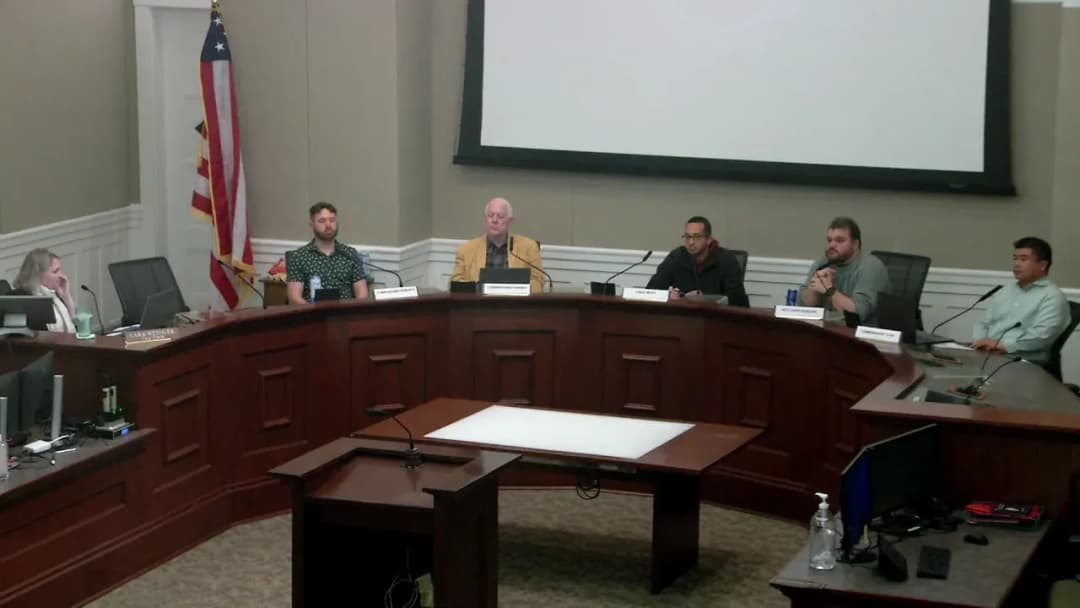
The Alameda City Council met on Tuesday, February 17, 2026, beginning with closed session and then convening for the regular meeting. The council approved consent calendar items, received the annual police auditor data presentation, and authorized three contracts for homeless services. Public comments included concerns about homeless shelter operations, a cybersecurity offer, and several statements from individuals. The meeting also featured announcements of a $5.5 million Measure W grant for permanent supportive housing and the selection of Alameda as the training base for the Australian national soccer team during the 2026 World Cup. Consent Calendar - Item 5E (Firefighters MOU): Approved with one councilmember (Councilmember Jensen) voting no. The resolution approves a 24-month memorandum of understanding with IAFF Local 689. - Item 5G (Recreation and Park/Aquatic Fees): Public hearing held; resolution adopted to amend fees, resulting in an annual revenue reduction of approximately $15,000. - Other consent items approved without discussion. Public Comments & Testimony - Valma Gay (non-agenda): Expressed trauma from her stay at Dignity Village, criticized lack of administrative infrastructure, and asked for a staff contact to address her concerns. - Aronde Gordon (non-agenda): Offered free cybersecurity consultation services and assistance with California cybersecurity grant applications. - Zach Thayer (non-agenda and consent calendar): Made statements concerning various federal and local legal issues, including challenges to city policies and requests for audits. - On Item 7B (Police Data): Zach Thayer and Valma Gay spoke. Valma Gay requested data transparency regarding homeless interactions with police. - On Items 7C/D/E (Homeless Services): - Ian Clark Johnson (Urban Alchemy practitioner): Spoke in support of the Urban Alchemy contract, emphasizing their mission of love and respect, and the need for 24-hour support at the day center and safe parking. - Valma Gay: Criticized the lack of structure and accountability in homeless services, stating she was not helped by staff when she sought assistance earlier. - Zach Thayer: Raised concerns about the vetting process and alleged negligence, requesting audits under the Sunshine Act. - Karen Zeltzer (Alameda Family Services): Supported the continued mental health contract, citing benefits of on-site therapists for crisis intervention and community healing. Discussion Items - Item 7A – CalPERS Pay Schedules: Presented by special counsel Isabel Safe. Council approved revised pay schedules for city manager and city attorney to ensure CalPERS compliance. Unanimously approved. - Item 7B – Police Auditor Annual Data Report: Presented by Police Auditor Lee Grossman. Key findings: 70% increase in internal affairs investigations (but no increase in misconduct), 89% increase in traffic stops, 67% decrease in weapon displays but 54% increase in low-level force incidents, and sworn staffing at 25% below authorized (frozen at 72). Council accepted the informational report unanimously. - Items 7C, 7D, 7E – Homeless Services Contracts: Presented by Housing and Human Services Manager Simone Falls. Three contracts were considered: - 7C: Alameda Family Services ($218,000 for 10 months, with four one-year extensions up to $1.274 million total) to provide mental health services at shelter programs. - 7D: Restorative Pathways (Ruby's Place) ($700,000 for initial term, up to $3.5 million over five years) to operate emergency supportive housing. - 7E: Urban Alchemy ($1.6 million for initial term, up to $8 million over five years) to operate the day center, safe parking, and overnight shelter. Council debated the process for contract extensions. Councilmember Jensen expressed concerns about Urban Alchemy's litigation history (settled PAGA lawsuits, dismissed Sausalito case). The council amended all three contracts to require that any extension be approved by the city council in an open public meeting, rather than solely by the city manager. Key Outcomes - Consent Calendar: Approved, with Councilmember Jensen voting no on Item 5E. - Item 7A: Approved unanimously. - Item 7B: Approved unanimously (accepted informational report). - Item 7C (Alameda Family Services): Approved unanimously, as amended. - Item 7D (Restorative Pathways): Approved unanimously, as amended. - Item 7E (Urban Alchemy): Approved 4-1, with Councilmember Jensen opposed, as amended. - Amendment to Contracts: All three contracts were amended to require city council approval of any extensions in an open public meeting. - City Manager Announcements: - Alameda County awarded $5.5 million in Measure W funds for the Alameda Point Collaborative/Mercy Housing permanent supportive housing project for seniors. - The Australian national soccer team (Socceroos) selected Alameda as its World Cup training base, with training starting in June 2026. - Council Communications: Councilmember Daysog attended Coast Guard Island awards and the AC Transit joint meeting. Mayor and council shared updates on community events, including a visit by Joe Montana to Gold Bar Whiskey and the retirement of Assistant City Clerk Irma Reyes Glidden. - The meeting was adjourned in memory of civil rights leader Reverend Jesse Jackson, who passed away at age 84.

Public Meetings - Alameda, California
Public Meetings - Alameda, CaliforniaThe City of Alameda Zoning Administrator held a hearing on February 17, 2026, at 2:00 PM Pacific via Zoom. The meeting included public comment on non-agenda items and a public hearing on an Administrative Use Permit application. Public Comments & Testimony Members of the public were given the opportunity to speak for up to three minutes on matters not on the agenda. No specific public comments were recorded in the agenda or available minutes. Discussion Items Item 3-A (PLN26-0029) – Administrative Use Permit for 2020 Clement Avenue The applicant, Roberto Saldana Jr., seeks approval to modify an existing dwelling unit, including legalization of a 338-square-foot unpermitted rear addition and expansion of a rear deck. The property is located in the M-1 (Intermediate Industrial) District, which requires a use permit for modifications to existing residential units. The hearing was held to consider the application; no decision was recorded in the available materials. Key Outcomes No decisions or votes were documented in the agenda or minutes provided. The outcome of the public hearing is not available from the records supplied.
The only available record for this meeting is a garbled and unintelligible transcript. No agenda or minutes were provided. Therefore, no substantive discussion, public comments, or decisions can be identified from the source material. Note - The raw transcript consists of a repeated, nonsensical string ("How do we give us a h do we give us a h...") and contains no recognizable speech, agenda items, or speaker positions. Key Outcomes - No actions, votes, or directives can be determined from the available information.
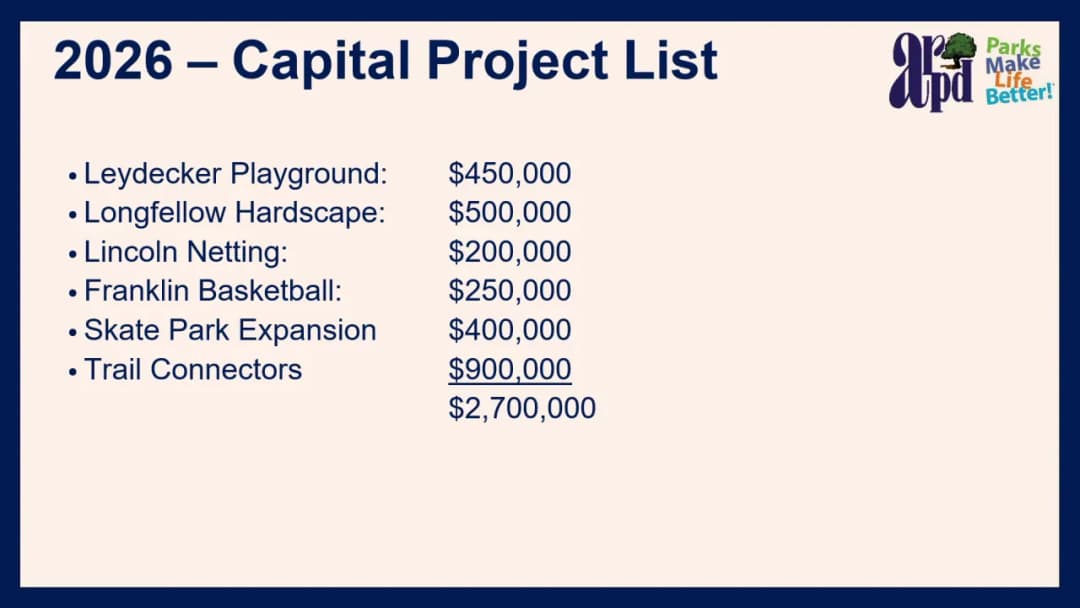
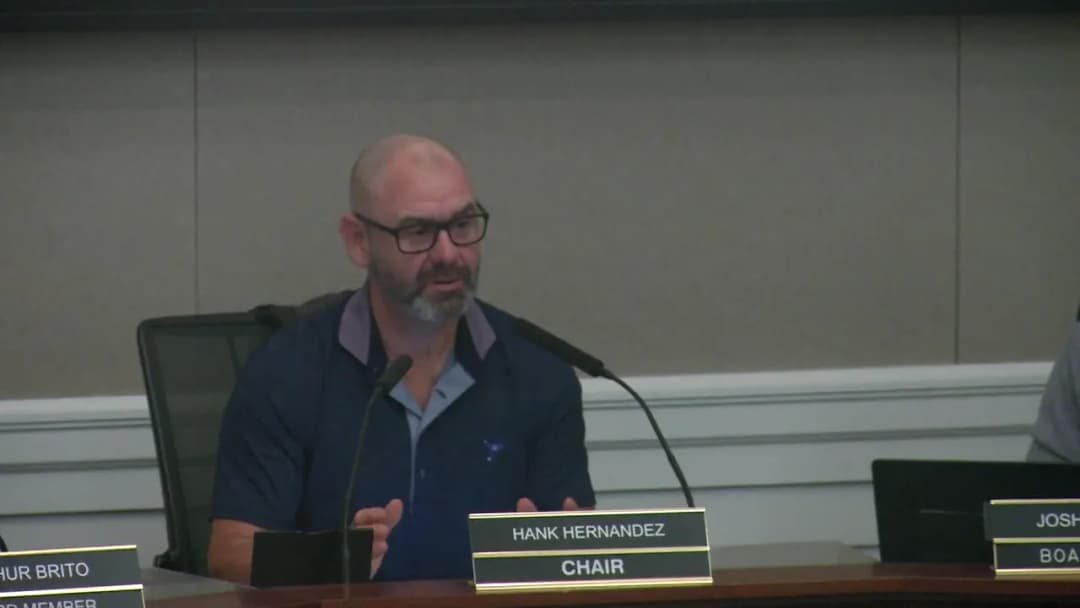
The Alameda Recreation and Park Commission (ARPD) met on February 12, 2026, to receive updates on events and projects, approve minutes, and discuss the FY 2026-27 Park Priority Prioritization Plan. The meeting included public comments on indoor roller skating and the community garden, followed by a vote to approve the prioritization plan. Public Comments & Testimony - Non-Agenda Public Comment: A speaker thanked the commission for offering indoor roller skating at the Alameda Point Gym, noting that every trial session sold out and that it helps combat loneliness among adults. - Item 6A – Park Priority Prioritization Plan: Several residents spoke in favor of making the Jean Sweeney Community Garden a high priority. Alison Taggart Barone, Marla (who served on the original steering committee), Claude Bartholomew, Liz Warmadon (President of Alameda Backyard Growers), Ellen Dyer, and Bridget Evans all requested that the garden be elevated from medium to high priority, citing its long delay and community benefits. Denise from Bike Walk Alameda thanked staff for moving forward with the trail connectors project. Rod Harris from the pickleball users group also thanked staff. Staff Communication - Director Justin Long provided updates on spring events (coastal cleanups, storytelling festival, spring shindig), recreation programs (summer camps, Teen Center events), and project milestones: Jean Sweeney Trail Connectors construction starting February 23, 2026; Alameda Aquatic Center going out to bid at end of month; City View Skate Park design documents 100% complete; rose pruning event with 50 volunteers; snowball dance with over 150 attendees; and staff promotions. Commissioner Communications - Commissioners shared reports on attending community events (breakfast with Santa, Elks Hoop Shoot, North Pole swim, snowball family dance), expressed appreciation for ARPD staff, noted heavy use of fields and pickleball courts, and highlighted the Alameda Solar Walk on Bay Farm Island. Vice Chair Schwartz thanked staff for working with the aquatics community on a fee schedule and noted strong attendance at new Aqua Warrior classes. Chair Radiz noted field recovery and issues with court lighting at Cruzy Park. Discussion Items - FY 2026-27 Park Priority Prioritization Plan: Director Long presented the plan, explaining funding sources (general fund, park improvement fund) and the prioritization criteria (safety, equity, resources, etc.). Key projects include Liedeker Playground replacement (20 years old), Longfellow Hardscape, Franklin Basketball Court, skate park expansion, and trail connectors. The community garden is listed as medium priority with $400,000 allocated, but dependent on completion of trail connectors and soil management plan. Commissioners discussed the distinction between high and medium priority, with Director Long stating that all items on the list will be worked on. Multiple commissioners expressed support for the community garden but noted that shifting priority may not accelerate work. Commissioner Robbins called for increased taxes to fund parks. Key Outcomes - Approval of December 11, 2025 Minutes: Motion approved unanimously by roll call vote. - Approval of FY 2026-27 Park Priority Prioritization Plan: Motion to approve the plan as presented passed unanimously. During discussion, Director Long indicated willingness to consider moving the community garden to high priority, but the motion approved the list as currently constituted. - Next Meeting: Scheduled for March 12, 2026. Director Long will provide an update on the community garden progress.
The provided transcript for this meeting consists of nonsensical repetition and does not contain any identifiable agenda items, public comments, discussions, or decisions. Therefore, no detailed summary can be produced from the available material.
The Historical Advisory Board of Alameda met on February 5, 2026, to consider a certificate of approval for relocating historic street lights as part of a major corridor improvement project, and to continue a separate certificate of approval to the next meeting. The board unanimously approved the continuation and the street light relocation with specific conditions regarding salvage and replacement standards. Consent Calendar - Minutes Approval: The board unanimously approved the draft meeting minutes from December 4, 2025. Public Comments & Testimony - No public comments were offered, either in person or online. Discussion Items - Continuation of Item 4A – Radium Theater Performing Arts Center: The board voted unanimously to continue the certificate of approval for the Radium Theater project to the March 5, 2026 meeting, with no discussion on the merits. - Item 4B – Lincoln Avenue, Marshallway, Pacific Avenue Corridor Improvement Project: Project manager Gail Payne presented a $20 million, three-mile corridor improvement project aimed at improving safety, mobility, and reducing flooding. The project requires relocation of seven historic street lights (designated historic monuments) due to roadway changes, including a new cul-de-sac near Academy School, a roundabout, and ADA improvements. Five lights are near the school, one near the roundabout, and one at Broadway. The board discussed the condition of the poles, the importance of retention and salvage (especially for a rare double-pendant light), proper paint color (moss green), and contractual incentives for contractors. Board members emphasized that relocation should be prioritized, with replacement only as a last resort. They also requested that the city research pole conditions before construction to facilitate salvage. The board also addressed funding uncertainty and agreed that a three-year expiration on the certificate was appropriate, with a possible two-year extension. Key Outcomes - Approved Continuation (Item 4A): Motion to continue the certificate of approval for the Radium Theater project to the March 5, 2026 meeting. Passed unanimously. - Approved Certificate of Approval with Amendments (Item 4B): The board approved the certificate of approval for relocating the seven historic street lights. The motion included amendments: (1) the poles are approved for relocation to the specified locations in the plans; (2) previously approved replacement standards are acceptable for single-pole lights; (3) for the double-arm light, if no pre-approved replacement exists, a best effort shall be made to replicate the design while making it distinguishable. The motion carried unanimously. Other Business - Board Communications: A board member reported on visits to Improv Central, Park Station, and the California Historical Radio Society, highlighting preservation practices and community engagement. The member also noted February is Black History Month and mentioned the underrepresentation of African American and minority histories in national register listings, suggesting thematic studies for Alameda. - Staff Communications: Staff noted they are still seeking applicants for a vacant board position and invited the mayor’s participation in interviews. They also announced upcoming presentations on recent rehabilitation projects.
The Alameda City Council met on Tuesday, February 3, 2026, at 7:27 p.m. after a closed session. The meeting featured a proclamation for Black History Month, unanimous approval of the consent calendar, and updates from city staff and councilmembers on regional transportation, housing, and public safety matters. Black History Month Proclamation - Mayor Marilyn Ezzy Ashcraft read a proclamation declaring February 2026 as Black History Month in Alameda, highlighting national and local Black leaders, scientists (e.g., Katherine Johnson, Dorothy Vaughan), athletes (e.g., Willie Stargell), and educators (e.g., Constance Moore). The library will host events including a children's book discussion on February 12, a Black banjo performance on February 27, and a fabric collage workshop on February 28. Consent Calendar - All routine items were approved by a unanimous voice vote (motion by Councilmember Daysag, seconded by Councilmember Bowler) without discussion or public comment. City Manager Communications - Interim City Manager Adam Pulitzer addressed recent news about Flock cameras, stating that Alameda has deliberately chosen not to share its data with any other agency or entity, and that data sharing can only be authorized at the command staff level (Lieutenant or higher). He affirmed that the police chief has received assurances from Flock that data is never sold, no security breaches have occurred, and Flock restricts federal agency access in California. Council Communications - Councilmember Desag reported attending the January 22nd Lead Base Joint Powers Authority meeting as an alternate, where Oakland Councilmember Noel Gayo was re-elected chair and Berkeley Councilmember Igor Trago was selected vice chair. Staff presented on a housing program. - Councilmember Bowler attended a noise forum for Oakland–San Francisco Bay Airport on January 21st and a community meeting on immigration enforcement concerns in Alameda on January 22nd, assisted by the interim city manager. - Vice Mayor Pryor participated in the Point-in-Time (PiT) count for unhoused residents on an unspecified date, noting it helps track the effectiveness of supports and engages with housed residents. - Councilmember Jensen reported that the Stop Waste Board of Alameda County (which she chairs) enacted a new fee of approximately 30 cents per month for residential properties and varying amounts for commercial waste, effective later in 2026. The fee will appear on waste hauling bills (e.g., from Alameda County Industries). - Mayor Ashcraft attended the League of California Cities policy committee meeting in Sacramento on January 23rd, discussing new legislation regarding preliminary applications (e.g., a withdrawn Harbor Bay Landing development). She then traveled to Washington, D.C., for the U.S. Conference of Mayors winter meeting, where Senator Elizabeth Warren spoke, and Senator Alyssa Slotkin stated that "the existential threat to America is not coming from abroad, it's from the inability to realize the American dream" and that the nation is down four million housing units. Bay Area mayors met with Senators Adam Schiff and Alex Padilla to discuss ICE guardrails. Mayor Ashcraft also attended the Mayors Innovation Project meeting, which supports the Mayor's Institute on pedestrian safety and city design. She announced that Alameda received a League of American Bicyclists gold-level Bicycle Friendly Community Award, a distinction held by only 32 cities nationwide. She expressed hope for a future bicycle-pedestrian bridge from West Alameda to Oakland. Key Outcomes - The City Council voted unanimously to approve the consent calendar. - Mayor Ashcraft announced her nomination of Rochelle Wheeler as a member and Lisa Foster as an alternate to the West Alameda Transportation Demand Management Association Board. The full council will vote on the nominations at the next meeting on February 17, 2026. - The meeting adjourned at 7:27 p.m.
The Alameda Open Government Commission met on February 2, 2026, at 7:00 PM. All five commissioners were present: Chair Miley, Commissioners Bowling, Harris, Schwartz, and Tilos. The meeting included the election of a new chair and vice chair, approval of minutes and the 2025 annual report, and public comments on transparency issues. Public Comments & Testimony - Jay Garfinkel spoke twice during the meeting. He criticized the city for not explaining redactions in public records, called for more transparency in government, and noted that the city does not track staff time for public records requests. He also referenced an incident involving Councilwoman Spencer and urged the commission to recommend a citizens committee to improve openness. He further commented on the limitation of public comment time and the elimination of non-agenda public comment at council meetings. Discussion Items - Selection of Chair and Vice Chair: Commissioner Bowling was nominated for chair by Commissioner Tilos and seconded by Commissioner Schwartz. The motion passed unanimously. Commissioner Harris was nominated for vice chair by Commissioner Bowling and seconded by Commissioner Tilos. The motion also passed unanimously. The current chair continued to run the remainder of the meeting. - Approval of October 6, 2025 Meeting Minutes: The minutes were discussed briefly, moved by an unnamed commissioner, seconded, and approved unanimously. - Approval of the 2025 Annual Report: The City Clerk presented the report. Key statistics included 594 next request cases, 860 department-level responses (due to requests hitting multiple departments), and 4,705 documents produced. Of the 594 requests, 308 identified as an agency, company, or law firm; 467 provided a city address, with 114 from Alameda. Commissioners praised the report and requested future comparisons. The City Clerk noted that no departments track time in hours. Commissioner Tilos suggested adding year-over-year comparisons in future reports. Public comment from Jay Garfinkel reiterated the need for explanation of redactions. The report was approved unanimously. - Staff Communications: The City Clerk announced a sunshine ordinance provision that prohibits accepting complaints against city council members or officially declared candidates within 45 days of a city election (November 3, 2026), meaning complaints will not be accepted from September 19 through the election. Commissioners noted that the 15-day filing deadline still applies. Key Outcomes - Zach Bowling was elected as Chair, and Commissioner Harris as Vice Chair, effective at the next meeting. - Meeting minutes from October 6, 2025 were approved unanimously. - The 2025 Annual Report was approved unanimously. - The commission acknowledged the upcoming restriction on accepting complaints against council members and candidates from September 19 to November 3, 2026.
The Alameda Transportation Commission met on January 28, 2026, to discuss two major agenda items: an AC Transit update on the Park Street Transit Signal Priority project and a proposed quick-build diverter island at the Lincoln and Walnut intersection. The meeting also included staff communications, public comments, and commission communications. Consent Calendar - Approval of Minutes: The commission unanimously approved the draft minutes of the December 17, 2025 special meeting. Motion by Commissioner Nockdagal, seconded by Commissioner Kim. Public Comments & Testimony - Non-Agenda Public Comment: - Jeff Kinoff (resident of Lincoln and Walnut) urged the city to install speed humps on small streets, citing a culture of speeding and noting successful examples in Berkeley and Oakland. - Jim Straylo raised concerns about inadequate lighting at traffic circles on Central Avenue, difficulty reading parking meters at night, and questioned why Clement Avenue is blocked between Grand and Hibbert. - Jay Garfinkel criticized the Transportation Commission for accepting staff proposals without ensuring community engagement, using the McCartney Road project as an example. - Public Comment on Item 6A (Park Street TSP): - Jim Straylo expressed support for the project, noting potential detours from the Oakland Alameda Access Project could increase bus reliance on Park Street. - Christy Cannon (Community Action for a Sustainable Alameda) voiced support but asked about potential negative experiences in other corridors, scheduling concerns, and whether Webster Street could see similar improvements. - Jay Garfinkel opposed the project, arguing it prioritizes buses at the expense of drivers, questioned the lack of community outreach, and asked about impacts on cross traffic and emergency vehicle preemption. - Public Comment on Item 6B (Lincoln Walnut Diverter): - Bill Nyland (resident of Walnut Street for 44 years) strongly supported the diverter, listing seven collisions in 2025 and describing the intersection as dangerous. - Jeff Kinoff (resident at the corner) advocated for the pilot, recounting personal property damage and near-misses. - Jim Straylo opposed, arguing the city is punishing good drivers for bad behavior and that social engineering (e.g., increased fines) would be more effective. - Jay Garfinkel opposed, calling for statistical analysis and better signage, and suggested reflectors on obstacles. - Christian Kazakhov (resident at the corner) supported the experiment, noting an increase in accidents in recent years. - Tyler Yeager (first-time attendee) suggested speed bumps and rumble strips as an alternative, based on a solution in his hometown. Discussion Items - Item 6A: AC Transit Update on Park Street Transit Signal Priority and Signal Optimization Project - Maria Henderson (AC Transit), Will Bueller (traffic engineer), and Ryan Dole (Kimley Horn) presented the project, funded by MTC's Bus Accelerated Infrastructure Delivery program. The project includes transit signal priority (TSP) along the entire Park Street corridor, wireless interconnect upgrades, and improvements at San Jose Avenue and Park Street. Construction is expected in spring-summer 2026, with completion by fall 2026. Benefits include improved transit reliability, reduced congestion, and minimal impacts on other modes. - Commissioners asked clarifying questions about TSP mechanics, expected time savings, coordination with existing equipment, and emergency vehicle preemption. City Engineer Scott Wickstrom noted that existing TSP from 2020 was not fully functional and that the project will also improve signal coordination for all vehicles. - Commission discussion was supportive, with comments on the need for data before/after, coordination with other construction, and pedestrian considerations. No vote was taken as it was a discussion item. - Item 6B: Review and Discuss Proposed Quick Build Improvements to the Lincoln Walnut Intersection - City Engineer Scott Wickstrom presented a proposal for a diverter island at Lincoln and Walnut to prohibit through and left-turn movements from Walnut Street, while allowing right turns and left turns from Lincoln onto Walnut. The intersection has the second-highest collision rate in the city, with 30 of 38 collisions being broadsides. Previous improvements (road diet in 2020, flashing beacons in 2025) did not significantly reduce crashes. The diverter is a quick-build pilot (under $75,000) that will go to City Council for approval. - Commissioners discussed concerns about driver confusion, potential for vehicles to go around the diverter, pedestrian safety, and the need for data. Commissioner Kim recused himself due to proximity to the project. - A motion was made to endorse the proposed improvements with a condition that data on traffic diversion rates and accidents be returned to the commission six months after project completion. The motion passed unanimously. Key Outcomes - Item 6B Motion: The commission voted unanimously to endorse the proposed quick-build diverter island at Lincoln and Walnut, with the condition that staff return with data on traffic diversion rates and accidents within six months of completion. - Commission Communications: Vice Chair Suth Amtiera reported a signal issue at High Street and Fernside (left arrow not activating after 10 p.m.) and was advised to submit via Click Fix. Commissioner Abrams shared visuals about the relocation of Otis Elementary students to the former Lum site, highlighting the need for a resilient transportation network. Commissioner Gloin praised the new meeting format with shorter agendas. Chair Whitesy thanked his wife for support. - Next Steps: The next Transportation Commission meeting is scheduled for February 25, 2026, where the commission will review the 2025 annual report and 2026 work plan.
The Alameda Public Arts Commission met on January 22, 2026, at 6:00 PM. The meeting included approval of prior minutes, adoption of the 2026 meeting calendar, a presentation of the maquette for the "Making Waves" sculpture, staff updates, and introduction of a new commissioner. Commissioners present: Liz Rush, Peter Ploxboomer, James Martin, Adrian Sancho. Absent: Lisa Martin. Staff present: Jackie Kali Ia (Secretary) and Dwayne Dolman. Consent Calendar - Approved the minutes from the October 20, 2025 meeting (motion carried, seconded). Public Comments & Testimony - Katie Connell: An Alameda artist since 2016, she introduced herself and announced she is forming an arts coalition/alliance on the island. She has been in contact with Radium Runway, West End Arts District, Frank Bet Center, Rhythmics, and independent artists. The coalition aims to improve communication, cooperation, resource sharing, and networking among arts organizations to amplify existing efforts. She expressed happiness to observe the commission's work. Discussion Items - Recognition of Outgoing Commissioner (Item 5A, moved to top): Commissioner Robert Ferguson, completing four years of service, was presented with a certificate. He thanked colleagues and encouraged continued work to bring art to Alameda. - Adoption of 2026 Meeting Calendar (Item 4A): The commission adopted a calendar with four regular meetings. Staff clarified that special meetings can be added with 12-day notice to accommodate grant deliberations (grants open Jan 29, close Mar 19, deliberation meeting Apr 27). Motion passed. - Presentation of "Making Waves" Sculpture Maquette (Item 4B): Artists Jonah and Deborah Samia presented a clay maquette and digital images of the proposed sculpture for the Storehouse Lofts Public Art Requirement. Key points: - The sculpture honors the WAVES (Women Accepted for Volunteer Emergency Service) and specifically local figure Maryland York, though the pose is inspired by a historic Navy photograph of Violet Falker. The face will be modeled after Maryland York. - The full-scale bronze piece will be roughly twice the maquette's size (approx. 8 feet tall including a 24-30 inch base). Production involves enlarging a digital file, foam milling, clay work, mold-making, and foundry casting. Timeline: likely late summer/fall 2026, possibly during Fleet Week. - Discussion included: structural support for the propeller (artist confirmed foundry will use internal stainless steel supports and a structural engineer); lighting (no specific lighting planned but noted as desirable); placement of a plaque with a Maryland York quote and city seal; copyright (photo is public domain, Navy from 1940s). Commissioners asked clarifying questions but provided no formal feedback requiring action. - Staff Communications (Item 5): - New Commissioner Adrian Sancho introduced himself: resident of West End, background in theater and music (marching band), works in policy on free speech and tech. - Cultural Arts Grants open Jan 29, deadline Mar 19. A grant-writing webinar is scheduled Feb 4 (5 PM) with Kimberly Asibo Arteche of Bravo Women for the Arts; a program-specific orientation is Feb 11 (5 PM). Both will be recorded. - Special Event Permit Grant Program (administered by colleague Amanda Gurke) offers up to $20,000 for large events requiring street closures; applications due Feb 27. - Commissioner reported that some painted transformer boxes (part of a public art requirement) have been repainted gray. Staff will follow up with the developer, who is responsible for maintenance per the ordinance. - Commissioner Rush shared closing reflections on the commission's achievements since 2018 (creation of Public Arts Master Plan in 2023, improved grant processes) and encouraged focus, preparation, and respect for staff capacity given only four meetings in 2026. Key Outcomes - Approved the 2026 meeting calendar. - Adjourned at 6:44 PM. - Next steps: Artists will proceed with enlargement of the "Making Waves" sculpture; staff to follow up on transformer box restoration; grant programs to launch as scheduled; special meetings may be called as needed.