Browse by city
Date range
Search help

Search titles, summaries, topics and stored transcripts together. Keywords may match separately; put the whole query in double quotes for a phrase. Matching follows word analysis, so punctuation is not exact. Both dates are included. Documents are not searched.

SHOWING 361–370 ENTRIES
361
NEWOCT 30, 2026 · COOK COUNTY, ILLINOIS · BOARD OF COMMISSIONERS
Cook County Board FY2027 Budget Hearings: Treasurer and Public Defender, October 30, 2026

A Cook County Board committee held a FY2027 budget hearing on October 30, 2026, taking presentations from the Treasurer's Office and the Cook County Public Defender. No agenda or minutes were available, and the transcript does not provide a meeting time range; it ends mid-way through the Public Defender's presentation. No votes or final budget actions are recorded. Treasurer's Office FY2027 Budget - Treasurer's Office representative David presented a $20.1 million FY2027 budget, with 97% from commercial fees and about 61 employees at the start of the fiscal year; he said a 250-employee office would cost about $68 million. The office expects to exceed its FY2026 revenue estimate by $14 million. - David described a difficult property-tax year with three installment due dates. He said roughly 285 tax bills from 2024 remain unresolved and another 1,700 from 2025 need Tyler fixes; the office distributed more than $7 billion for the 2025 second installment to taxing districts, including $2.7 billion then hitting bank accounts, and issued more than 110,000 refund checks totaling about $313 million from mid-March to October 1. - He disputed claims that the office was not fully cooperative on the Tyler project and said it would keep pushing implementation until defects are resolved. He cited website use of 13.6 million hits this fiscal year and 130 million since 2004, $105 million in duplicate and overpayment refunds, about $19 million in missing exemptions mainly for seniors, and about 25,000 seniors affected by freeze or exemption changes. - He highlighted Public Act 104-0553, signed July 10 this year, which phases out private tax buying after six more tax sales; the next sale for tax year 2023 delinquencies begins December 15, and the 2024 sale is set for August. The 2025 tax bill analysis showed $19.9 billion billed, an increase of $743.8 million. - Outreach included Black and Latino Houses Matter radio programs; more than $429 million distributed to Black communities since March 2020 and $280 million to Latino communities; a February Telemundo phone bank found over $188,000 in exemptions and refunds. The office is pursuing data science and AI, an AI phone system within three years, and a future two-coupon tax bill. Commissioner Questions on Treasurer's Budget - Commissioner Lowry thanked the office for interdepartmental synergy, self-funding, and Black and Latino outreach. Commissioner Vasquez thanked staff for handling Tyler-related constituent workload and said blame for the technology problems has been disproportionate. - On metrics, Vasquez noted printing, folding, and inserting took 9 days in FY24 and FY25 and a likely lower FY26 figure of about 6 to 7 days, while the FY27 target is 14; David attributed the higher target to Tyler file issues and the outsourced print and mail vendor. Online payments were 1.1 million in FY24, 0.6 million in FY25, and targeted at 0.8 million for FY26 and FY27; David attributed the dip to the late December 2025 due date and said about 25% of on-time payments are online, with just under 1.8 million bills sent and about 780,000 paid by mortgage companies. - FTE shifts from operations to IT and legal were described as both Tyler-related and process-improvement related, including two data analysts starting in November for finance and legal and another later for refunds. CFO Andrew Jadico said a $558,000 capital decrease reflected prior-year replacement pushed forward, reduced 2026 spending, and delayed equipment expected in 2027; he referenced a $500,000 line-item decrease. - On certificate-of-error refunds, David said approved refunds are delayed by multiple Tyler defects and complex scenarios such as late payments, transit TIFs, abatements, and PTAB decisions. The office handles them case by case, waits for assessor certification, and sometimes finds the Tyler-generated refund amount is not what is expected. He said the office does not know the total universe of certificate-of-error refunds; the assessor certifies them and sends correspondence, and the Treasurer runs the TX600 calculation. - David said stale-dated checks can be canceled and reissued and deceased-payee refunds can be reissued through a financial transaction rather than Tyler. On staffing, he said security and community-outreach positions were converted from full-time to part-time and a call-center analyst went from two to one, with cross-training and non-union staff shifted by need. - On the scavenger sale, David said it has been phased out; about 38,000 certificates that would have gone to scavenger sale are held by the county and Bureau of Economic Development, and the Treasurer has no statutory role after the county takes the certificate but can advise. - On timing, David said the next first installment, due the first business day of March, is not expected to be delayed because it is 55% of the prior year's total. He said it is too early to predict the second installment, though the assessor has pledged to finish by the end of December and the office monitors Tyler daily. He said disbursements to taxing districts are going out without delay, though data reporting to about 300 agencies remains incomplete. Public Defender FY2027 Budget - Cook County Public Defender Sharon Mitchell Jr. presented her sixth budget and said the FY2027 budget represents a pause in incremental progress due to the tough fiscal year. She said the office represents the vast majority of people in the criminal legal system and also handles family defense and immigration matters. - Mitchell said the office contracted with the RAN Corporation for an office-wide workload study. Applying national standards to current caseloads produced a preliminary finding of a triple-digit shortage of attorneys on the adult criminal side; the office will conduct time and Delphi studies to build local standards and issue a final report. - She compared public defense with the State's Attorney's Office: the public defender began 2024 with 610 fewer full-time positions, the gap grew by more than 80 positions over three budget cycles, and new county investments in the State's Attorney were more than twice those in public defense. Excluding civil practice, she said the office has about 550 FTEs and about $109 million less in funding for criminal, family defense, and juvenile justice staffing. - Mitchell said pay disparities, collective-bargaining and employment-plan constraints, and limited lateral hiring make recruitment harder, while prosecutors have the investigative support of law enforcement agencies with combined annual spending of about $2 billion. She said dismissals and not-guilty outcomes in felony cases from 2023 through 2026 spared approximately 25,007 years of incarceration. - She cited Cook County's largest funding and staffing gap between defense and prosecution among the seven largest county-run public defender offices and mentioned Maricopa County, Arizona, where the public defender budget is roughly $30 million higher than the prosecutor's in a smaller system. The transcript ends mid-presentation. Key Outcomes - No votes or final budget actions were recorded; the meeting was a presentation and question-and-answer session. - The Treasurer's Office presented a $20.1 million FY2027 budget and reported ongoing Tyler-related refund and data-reporting problems; it expected the next first-installment tax bills to go out on time but could not yet rule out second-installment delays. - The Public Defender presented an FY2027 request centered on a pending workload study whose preliminary results showed a triple-digit attorney shortage; no funding decision was made before the transcript ended.

FISCAL SUSTAINABILITY 23% · PUBLIC ENGAGEMENT 18% · TAX POLICY 12% · TECHNOLOGY AND INNOVATION 10%
362
NEWOCT 30, 2026 · HOWARD COUNTY, MARYLAND · COUNTY COUNCIL & BOARDS
Howard County Council Legislative Session Day #14 – October 30, 2026: Final Legislative Wrap-Up

The Howard County Council held its final legislative wrap-up session on Friday, October 30, 2026, as a hybrid in-person and virtual meeting. The Council gave final consideration to previously introduced appointments and legislation, disposed of tabled bills, and delivered closing remarks. Councilmembers present were Opel Jones, Deb Jung, Christiana Rigby, Liz Walsh, and David Yungmann. The agenda listed a 10:00 AM start. Consent Calendar - Approved, unanimously, the journal of the October 5, 2026 legislative session and the October 19, 2026 emergency legislative session. - Approved, unanimously, the minutes of the October 13 monthly meeting, the October 13 joint meeting with the Board of Education, the October 14 special meeting, and the October 19 legislative public hearing. - Approved, unanimously, a block of 24 appointment and reappointment resolutions: CR163-2026 through CR167-2026, CR169-2026 through CR179-2026, CR181-2026 through CR187-2026, and CR195-2026. These covered appointments to the Multimodal Transportation Board, Interfaith Advisory Commission, Opioid Restitution Fund Commission, Commission on Disabilities, Cemetery Preservation Advisory Board, Commission for Veterans and Military Families, Adult-Use Cannabis Advisory Panel, LGBTQIA+ Commission, Martin Luther King Jr. Holiday Commission, SMART Data Center Task Force, Human Rights Commission, Pension Oversight Commission, and Historic Preservation Commission. - Approved, unanimously, CR168-2026 as amended, appointing Deacon Allen R. Greene to the Cemetery Preservation Advisory Board; Amendment 1 corrected the name used in the appointment. - Voted unanimously to withdraw CR180-2026, appointing Margaret Melikian to the Historic Preservation Commission. - Approved, unanimously, CR188-2026 (Department of Police adoption rates for cats and dogs), CR189-2026 (endorsing State financing for Saval Foods LLC), CR193-2026 (conveying about 0.477 acres along Route 1 to the State Highway Administration for the US 1 Pedestrian Safety Action Plan), and CR194-2026 (Board of Education FY2028 submission to the Interagency Commission on School Construction). - Approved CB60-2026 by 4-0-1, with Councilmember Rigby abstaining, authorizing a multi-year installment purchase agreement to acquire development rights on approximately 62.98 acres at 2698 Jennings Chapel Road, Woodbine, from the Eugene A. Freeze Revocable Trust for a maximum purchase price of $2,363,100, or no more than $37,520 per acre. Discussion Items - CB61-2026 (FEMA/MDE floodplain provisions update): Amendment 1 corrected the agency reference to the Maryland Department of the Environment, required that floodway encroachment not increase flood levels, prohibited using Conditional Letters of Map Revision based on fill to justify otherwise prohibited floodway development, and allowed certain essential Department of Public Works functions such as wastewater treatment plants and pumping stations under conditions. The amendment and bill as amended passed unanimously. - CB62-2026 (FY2027 Pay Plan specialty pay for Police Captains): Approved unanimously. - CB63-2026 (new executive exempt Police Colonel position) and CB64-2026 (Pay Plan and Classification Plan amendment for Police Colonel): Both were tabled unanimously. Councilmember Jones said CB63 would expire on December 14, 2026, if not extended, and could be refiled. - CB66-2026 (Zoning Board procedures): Amendment 1, approved unanimously, made each of the four code changes contingent on the Zoning Board adopting corresponding rule changes at its meeting in two weeks; otherwise the code changes would have no further effect. The bill as amended passed unanimously. - CB67-2026 (senior property tax credit): An amendment added an annual statement of eligibility for automatic renewal of the senior tax credit, to be administered by the Department of Finance. The amendment and the bill as amended passed unanimously. Beginning in Tax Year 2027, the bill increases the maximum senior property tax credit from 25 percent to 50 percent of eligible county property taxes owed after the homestead credit is applied, and it adds the automatic renewal process. Councilmember Jones thanked HCCA and Alan Schneider for testimony and guidance; Councilmember Jung questioned the difference from the aging-in-place senior tax credit and later noted that the aging-in-place credit still requires a three-page application. - CB68-2026 (Public Ethics Law confidentiality and technical corrections): Councilmember Jung described the bill's origin in an Ethics Commission request and quoted Ethics Commission Chair Matthew Gallagher's public hearing testimony that the legislation would discourage weaponization of the complaint process. The agenda listed Councilmember Rigby as co-sponsor, but Jung stated Rigby had removed herself as co-sponsor. Councilmember Jones moved to table the bill for the next Council, citing concerns that the county ethics code is too narrow. The motion to table passed 3-2 (Jones, Rigby, and Walsh in favor; Jung and Yungmann opposed). - CB69-2026 (Inspector General as custodian of Howard County Government public records): Councilmember Jung argued the Inspector General has a right to full access, voters approved the Office of Inspector General charter amendment with 85 percent support in November 2024, and the Inspector General has been denied access to 50 categories of records. She also said no case law prohibits designating the Inspector General as a custodian. County Office of Law counsel said the timing of rulings does not change the controlling effect of the 2011 Shropshire decision, that a circuit court ruling is lower than the Maryland Supreme Court, and that the county is preempted by state law; counsel also stated no case law prohibits making the Inspector General a custodian. Councilmember Jones opposed, saying the issue should be resolved under the Maryland Public Information Act at the state level, that Inspector General Kelly Madigan still has broad record access, and that the bill had not received legal sufficiency. Jung disputed that, saying the bill was not found legally insufficient. Councilmember Rigby opposed, saying county law is preempted by state law, two conflicting court decisions exist, and the bill would put county employees in conflict with state law. Councilmember Yungmann opposed, saying the state should fix the problem and he would testify for legislation by Delegate Chao Wu. Councilmember Walsh supported the bill. The bill failed 2-3 (Jung and Walsh yes; Jones, Rigby, and Yungmann no). Tabled Legislation Reconsidered - CR131-2026 (Mary O. Barton, Interfaith Advisory Commission) and CR149-2026 (Meg Boyd, SMART Data Center Task Force) were removed from the table and approved unanimously. - CB58-2026 (grants for construction and real property): The Council voted 3-2 to remove the bill from the table (Jung, Walsh, and Yungmann in favor; Jones and Rigby opposed). Amendment 1 to Amendment 1, approved 3-2, narrowed the bill to new requirements for grants involving purchase, construction, or redevelopment of real property, including a detailed scope of work, performance outcomes and metrics, long-term public-use requirements, financial performance security, at least a 25 percent private or non-county source match, no lump-sum grant disbursement in one payment, and a minimum two-year operating history for recipient nonprofits. Councilmember Jung cited the $25 million grant to Columbia Community Concepts for the Source Community Center as an example of insufficient oversight. Amendment 1 as amended passed 3-2, and CB58 as amended was approved 3-2, with Councilmember Rigby voting no and saying the matter deserved a more serious process and that nonprofits and the hospital had raised concerns. - CB59-2026 (solar collector facilities temporary hold): The Council unanimously removed the bill from the table. Amendment 1 to Amendment 1, approved unanimously, removed the moratorium language and the requirement to push existing projects back into the conditional use process. The amended bill instead requires an interagency meeting that includes the State Attorney General's office and County Office of Law, shortens the Department of Planning and Zoning report timeframe, requires an Agricultural Board meeting and a public meeting, and includes an uncodified request for an Attorney General opinion on whether the Renewable Energy Certainty Act (HB 1036) preempts County authority over Agricultural Preservation easement properties. The bill as amended passed 3-2 (Jung, Walsh, and Yungmann in favor; Jones and Rigby opposed). Chair Jones said he remained concerned about solar delays despite the removed moratorium; Councilmember Rigby said RECA still left unresolved issues and state advocacy would be needed. Key Outcomes - Senior property tax credit cap increased from 25 percent to 50 percent for Tax Year 2027, with an automatic renewal statement process; approved unanimously. - Police Colonel position and pay bills (CB63-2026 and CB64-2026) were tabled unanimously; CB63 is expected to expire December 14, 2026, unless refiled. - Inspector General records custodian bill (CB69-2026) failed 2-3. - Public Ethics Law confidentiality bill (CB68-2026) was tabled 3-2 for the next Council. - Grants oversight bill (CB58-2026) was approved as amended 3-2. - Solar review process bill (CB59-2026) was approved as amended 3-2 after the moratorium was removed. - CB60-2026 agricultural easement purchase was approved 4-0-1. - All other final-consideration appointments and uncontested resolutions/bills were approved. - This was the final legislative session for the outgoing council body, and members delivered farewell remarks before adjournment. Closing Remarks - Chair Opel Jones thanked residents, staff, and family, and highlighted legislation he sponsored or co-sponsored, including the racial equity task force, the disposable bag fee, minimum wage legislation, cannabis legislation, and days of commemoration. - Councilmember Deb Jung thanked county employees and staff, emphasized accountability and transparency, and said she would remain an advocate. - Councilmember Christiana Rigby reflected on the body's work during the pandemic, school investments, inclusion measures, complete streets, and the HoCo By Design general plan, and said she looked forward to working with new colleagues. - Councilmember Liz Walsh praised her District 1 office and staff, highlighted green space preservation and the creation of the Inspector General's office, and expressed continued belief in good government. - Councilmember David Yungmann thanked staff and colleagues, called the service the privilege of a lifetime, and said for the first bills of January, he and others had already planned to be the first to testify in opposition of something, jokingly.

PROCEDURAL 35% · COMMUNITY ENGAGEMENT 19% · INSPECTOR GENERAL 13% · PUBLIC RECORDS 11%
364
NEWOCT 30, 2026 · BROWARD COUNTY, FLORIDA · UPCOMING AND ARCHIVED MEETINGS
Broward County Planning Council Meeting - October 30, 2026

The Broward County Planning Council convened on October 30, 2026, to consider a proposed land-use amendment in Fort Lauderdale. The main item (PH1) was a change from residential to commerce on a 41.2-acre site adjacent to the former Wingate landfill superfund site. After extensive public testimony and deliberation, the council unanimously approved the amendment, subject to a restrictive covenant limiting industrial uses and requiring environmental mitigation. The council also handled routine consent items and discussed scheduling for the next meeting. Consent Calendar - Approval of the final agenda, including additional agenda materials: a conditional support letter from the city of Lauderhill and an email from a resident supporting residential use on the site. An excused absence request from Commissioner Fisher was removed. Motion by Mayor Levy, second by Mayor Castillo, passed unanimously. Public Comments & Testimony - Linda Patrick: Opposed any development on the contaminated site, citing numerous community illnesses and deaths. - Eddie Pierce: Asked for transparency and honesty, deferring to experts. - April Young (Vice President for Lake Air, educator, clergy): Described personal health impacts, including loss of a son and daughter, and criticized lack of transparency. Requested safeguards and independent testing. - Susie Fletcher: Described long-term health issues and contamination from the landfill, questioning the source of fill material. - Walter Haney: Supported the project, noting community benefits like flood control, a park, and a computer lab; encouraged the community to get involved to secure benefits. - Dr. Nadine Hankerson: Called for transparency and understandable scientific explanations; emphasized shared responsibility. - Farid Khan (school administrator): Described dust, noise, and health concerns; requested meetings at the site. - Ashley Davis: Supported the project as necessary to cap contamination, comparing it to healing a broken bone. - Al Callaway: Suggested reviewing hospital census tracts for disease incidence over 50 years before proceeding. Several speakers expressed concerns or support, highlighting environmental justice and the need for ongoing oversight. Discussion Items - PH1 – Land Use Amendment, Fort Lauderdale: The proposed change from low-5 residential and medium-16 residential to commerce on 41.2 acres, located east of 31st Avenue and south of 19th Street. Staff recommended approval with conditions, including a declaration of restrictive covenants limiting development to 550,000 square feet of industrial warehouse/distribution and up to 10,000 square feet of commercial uses. The applicant (Robert Lockery, representing Pro Logis and Langley Engineering) presented plans to cap contaminated lake sediment with clean fill, create a 26-acre voluntary wetland for water storage, and address flooding. Eighteen monitoring wells report every 90 days to the Florida Department of Environmental Protection and Broward County. The site is adjacent to the former Wingate landfill superfund site (not owned by the applicant). The city of Fort Lauderdale, Lauderhill, and Broward Municipal Services District provided comments noting compatibility would be addressed at site plan stage. - Council members expressed support as a first step toward remediation and economic development (600 permanent jobs), but emphasized the need for transparency, community engagement, and going beyond minimum environmental requirements. Key Outcomes - PH1 Motion: Mayor Levy moved to approve the staff recommendation for conditional recertification of the Fort Lauderdale municipal plan, seconded by Mayor Hardin. The motion passed unanimously. - PH2 Motion (small-scale amendment for Lighthouse Point): Moved forward with unanimous consent. - December 3rd Meeting: Executive director noted it may be canceled; a committee meeting (online) may be held instead for rule of procedure initiation and administrative rule updates. - Planning Council Comments: Celebration of life for Roy Rogers announced for November 22nd at the Emily Wilson Center in Pompano Beach.

ENVIRONMENTAL PROTECTION 28% · PUBLIC ENGAGEMENT 21% · LAND USE PLANNING 17% · PUBLIC HEALTH 17%
365
NEWOCT 30, 2026 · CLEVELAND COUNTY, OKLAHOMA · BOARD OF COUNTY COMMISSIONERS & BOARDS
Cleveland County Wellness Committee Regular Meeting – October 30, 2026

The Cleveland County Wellness Committee convened on October 30, 2026, to approve meeting minutes and the 2027 meeting schedule, correct and act upon a gym equipment transfer, and discuss future wellness initiatives, program communication, and a committee vacancy. Consent Calendar - The committee unanimously approved the minutes from the regular meeting of July 31, 2026. - The committee unanimously approved the Notice of Scheduled Meetings for the 2027 calendar year, maintaining the schedule of the last Friday of each month. Discussion Items - Gym Equipment Transfer (Agenda Item 3): The agenda initially proposed transferring two treadmills to the Health Department and acquiring an elliptical. Members noted the agenda text was mistaken. The gym has four treadmills (two aging) and four ellipticals (two purchased, two donated). Members stated treadmills are used far more than ellipticals. The committee amended the proposal to transfer the two donated ellipticals to the Health Department and acquire a stair stepper instead. A motion to proceed with the amended plan was approved. - Wellness Program Vision: Chair Rod Cleveland discussed the Wellness Committee's history (established by statute 15 years ago, later authorized for funding). He advocated for expanded wellness offerings in the 2027 budget, promoting a holistic (mind, body, soul) approach, including leadership programs, a county bowling team, and using the county's wellness app. - Flu Shots and Communication: A member reported flu shot numbers dropped during COVID but are recovering, with a spike in influenza A post-OU/Texas game. Separately, a member reported employees in their office skipped a recent wellness challenge after being told the reward was a single $250 prize for the winner. The committee clarified the program rewarded all participants and stressed the need for better communication. - Committee Vacancy: The committee identified a vacancy likely from the Sheriff's Department. Chair Cleveland will contact the Sheriff's Office to fill the seat. Key Outcomes - Approved: Meeting minutes from July 31, 2026. - Approved: Notice of Scheduled Meetings for 2027. - Approved (as amended): Transfer of the county's two donated ellipticals to the Health Department and acquisition of a stair stepper. - Directive: Chair Cleveland to contact the Sheriff's Department to fill the vacant seat. - Next Steps: Develop a comprehensive wellness strategy for 2027, improve employee communication on the app and challenge rules, and explore department-level and county-wide initiatives.

MENTAL HEALTH AWARENESS 35% · TECHNOLOGY AND INNOVATION 30% · PROCEDURAL 25% · PERSONNEL MATTERS 10%
366
NEWOCT 30, 2026 · HOWARD COUNTY, MARYLAND · COUNTY COUNCIL & BOARDS
Howard County Council Special Meeting on Zoning Counsel Contract – October 30, 2026

On October 30, 2026, the Howard County Council held a hybrid special meeting to consider whether to exercise the one-year renewal option in the Zoning Counsel contract with Nathaniel Foreman of O'Malley, Miles, Nylon, and Gilmore. The contract was set to expire on December 31, 2026. After discussion, the Council voted 3 to 2 to extend the contract through December 31, 2027. Discussion Items - One councilmember expressed support for continuing the contract but suggested asking the Zoning Counsel attorney to resign as treasurer of the Maryland Building Builders Industry Association, saying it could appear as a potential conflict of interest. - Another councilmember questioned the time sensitivity, noting that the incoming council/zoning board would not be hearing cases, and asked why the decision should not be left to the next council. That councilmember also said that if the contract were extended, it should be for a much shorter period than one year. - A third councilmember argued that it was wisest to move ahead with the one-year extension because it would give the new body time to understand the position, decide how they want it to run, and discuss the matter with Mr. Foreman. That councilmember made the motion to extend the contract for one year through December 31, 2027. Key Outcomes - The motion to extend the Zoning Counsel contract for one year through December 31, 2027, passed by a vote of 3 to 2. - Voting yes: Chair Opel Jones, Vice Chair Christiana Rigby, and Councilmember David Yungmann (listed as Mr. Youngman in the transcript). - Voting no: Councilmember Deb Jung (referred to as Ms. Young in the transcript) and Councilmember Liz Walsh. - Councilmember Jung stated that she voted no without the contingency she had mentioned—asking the attorney to resign from the Maryland Building Builders Industry Association—because that condition did not appear to be of interest to the majority of the council. - The Council then recessed to a legislative wrap-up session using the same WebEx link.

PROCEDURAL 50% · ZONING AND LAND USE 50%
368
NEWOCT 30, 2026 · INDIANAPOLIS, INDIANA · OTHER MEETINGS (A-H)
Indianapolis Marion County Audit Committee Meeting October 30, 2026

The Indianapolis Marion County Audit Committee met on October 30, 2026. Chair David Reynolds presided over the meeting, which included the approval of amended minutes, a comprehensive year-end report from Director Wesley Jones of the Office of Audit and Performance, and discussions on the office's 2027 priorities. Consent Calendar - Approval of Minutes (as Amended): The committee unanimously approved the previous meeting's minutes after adopting amendments proposed by Councillor Dan Boots. Corrections included updating the GFOA Certificate of Achievement award year to 2024, correcting a textual error from 'past' to 'passed' in a finding about internal controls, and adding language stating that the matters resulted in a material weakness in financial reporting for both the City of Indianapolis and Marion County. - 2027 Meeting Schedule: Future meetings were scheduled for March 12, July 30, and October 29, 2027, all at 9:00 AM. Discussion Items Office of Audit and Performance Report Director Wesley Jones reported that the office is fully staffed for the first time since 2023. The central focus was the results of the office's external peer review, required every three years under the Government Accountability Office's Yellow Book standards. The review, conducted by the Association of Local Government Auditors (ALGA) with peers from Oklahoma City and Milwaukee, assigned a rating of 'Pass with Deficiencies', a step below the 'Pass' rating received in 2023. Director Jones emphasized that the five findings were entirely related to insufficient documentation of existing best practices, not a lack of the procedures themselves. The findings addressed insufficient documentation of auditor independence, quality control oversight, inquiries into legal proceedings, cause-and-effect analysis of findings, and staff supervision. In response, the office is implementing corrective actions including revised independence forms, new procedural checklists, standardized work paper templates, and enhanced review sign-offs. Two staff members, Heather Jones and Malik Audoin, have been trained to serve on peer review teams for other ALGA member agencies. Councillor Tanya commented on the value of having diverse perspectives from out-of-state reviewers, which Director Jones confirmed as a significant benefit for networking and cost-effectiveness compared to hiring a local firm. For 2027, the audit team will focus on enhanced risk assessments and a revised risk-based audit approach. The performance and innovation team will continue maturing the Indy Performs program, which served 54 participants from 20 departments in 2026. Committee Questions & Clarifications - Data Center Impact: Councillor Boots asked if any metrics were being developed to measure the impact of data centers on the city's tax base. Director Jones responded that it would require a multi-departmental effort. Chair Reynolds noted that the Department of Metropolitan Development (DMD) is forming a working group on this topic. - Peer Review Deficiencies: Councillor Boots also asked for a status update on the specific internal control deficiencies (requiring communications) mentioned in the previous meeting's minutes. Director Jones stated the report did not explicitly address them. - Independence of Audit and Performance Teams: Councillor Clayton questioned how the office maintains independence between its audit and performance/innovation functions. Director Jones explained that the performance team provides instruction and coaching without performing projects, and that leadership coordinates closely to maintain a clear distinction. - External Audit Coordination: Director Jones confirmed the office will continue participating in the 2026 external audit of the city and county with Forvis Mazars. - Public Library Audit Consideration: Councillor Michael Paul Hart raised concerns regarding the public library's declining general fund budget, projected to fall from $40 million to $23 million over five years. He requested that the office evaluate whether an audit of the library was within its purview. Chair Reynolds directed Director Jones to ensure the library is included in the office's risk assessment pool for 2027, to which Director Jones agreed. Key Outcomes - The committee approved the amended meeting minutes and set the 2027 meeting schedule. - The Office of Audit and Performance received a 'Pass with Deficiencies' rating on its external peer review and initiated corrective actions focused on improving documentation. - The office will review whether the public library should be added to its audit risk assessment for potential engagement in 2027. - The office confirmed it will continue its standard participation in external audits, cash counts, and citywide internal controls training.

AUDIT 56% · PROCEDURAL 17% · RISK MANAGEMENT 9% · PUBLIC LIBRARY SERVICES 6%
369
NEWOCT 30, 2026 · WEATHERFORD, TEXAS · CITY COUNCIL & BOARDS
Weatherford Economic Development Board Regular Session, October 30, 2026

The Weatherford Economic Development Board met in regular session on October 30, 2026, at Weatherford City Hall. Board members confirmed a quorum, approved the prior meeting minutes, recessed into executive session to discuss Project Horseshoe, and unanimously recommended approval of an economic development incentive package for that project. Call to Order & Quorum - The meeting was called to order at 8:00 AM, and a quorum was announced with all members present. - At 8:02 AM, the board recessed into executive session; it reconvened at 9:28 AM. Minutes Approval - The board approved the minutes of the August 7, 2026, Weatherford Economic Development Board meeting. Ken Davis made the motion, Chandler Lacefield seconded, and the motion passed. Executive Session - Under Texas Government Code Section 551.087, the board deliberated economic development negotiations for "Project Horseshoe" outside the council chambers. Action on Executive Session Items - Chandler Lacefield moved to recommend approval of the proposed economic development incentive package for Project Horseshoe, consistent with the terms presented, and to authorize staff to finalize the agreement for consideration by the City Council. Ken Davis seconded the motion, and it passed unanimously. Citizen Comments - No citizen comments were offered on non-agenda items. Adjournment - The board adjourned after completing the agenda. Key Outcomes - Approved the August 7, 2026, meeting minutes. - Unanimously recommended approval of the Project Horseshoe economic development incentive package. - Authorized staff to finalize the Project Horseshoe agreement for City Council consideration.

PROCEDURAL 50% · ECONOMIC DEVELOPMENT 50%
370
NEWOCT 30, 2026 · ALEXANDRIA, VIRGINIA · PUBLIC MEETINGS
ARHA Board and Alexandria City Council One-Year Check-In Work Session — October 30, 2026

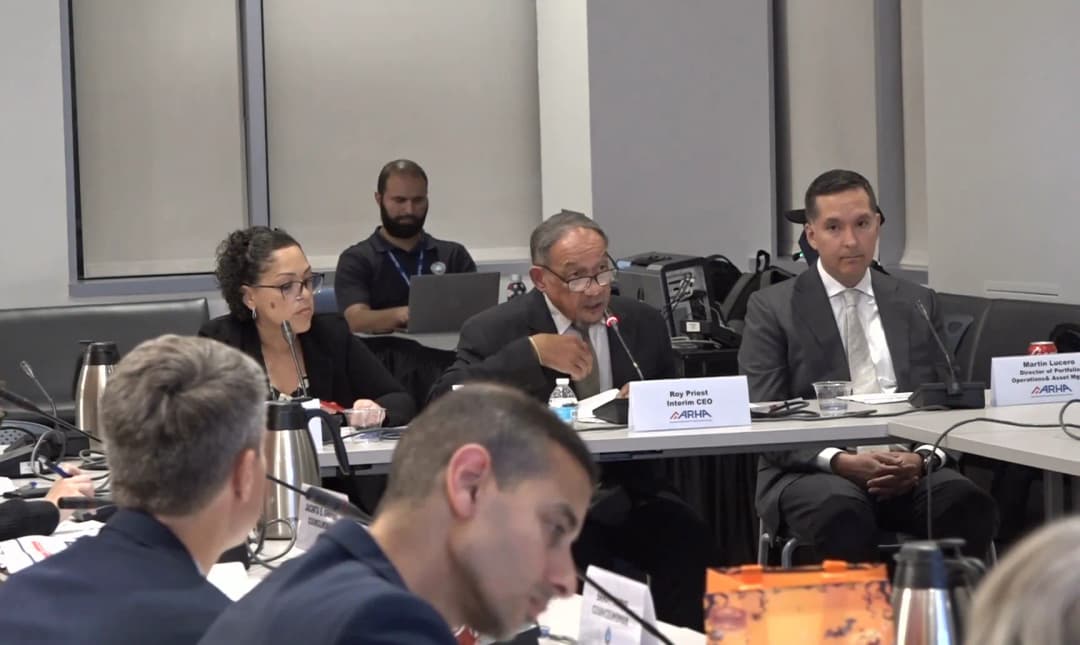
This joint work session between the Alexandria City Council and the Alexandria Redevelopment and Housing Authority (ARHA) Board of Commissioners ran from 7:03 p.m. to 9:00 p.m. on October 30, 2026. It was a one-year check-in on the new ARHA board appointed in October 2025. The agenda and written minutes were not included in the source package, so this summary is based on the transcript. No formal votes were taken; the meeting produced follow-up assignments. Governance and One-Year Board Report - Chair Jinx said the new nine-member ARHA board was appointed by council in October 2025 and has met about 40 times in committees/board sessions over the past year. - ARHA has had five CEOs in five years, four CFOs, and multiple HR directors; interim CEO Priest was hired to diagnose and fix problems, not simply keep the seat warm. - ARHA is working through the city council's ten-item "attestation" list. Highlights include: general counsel Steve McCullough now attends meetings; board completed HUD and FOIA training; HR policies and sexual-harassment training were reinstated; a clean third-party audit opinion was filed with HUD by September 30; and an independent property-maintenance/business-practices assessment is planned as a shared city-ARHA project. - The 2008 MOU between the city and ARHA has not yet been updated. Vice Mayor Bagley noted the city council wants MOUs with all quasi-city agencies completed within the next six months, by about mid-2027. Code Enforcement and Property Inspections - City Code Administration Director Greg Fields reported that routine code inspections of ARHA properties, which had stopped pre-COVID, have resumed. About 40 units, representing 10% of each ARHA property, have been inspected, and reinspections have been successful. - Virginia state code limits the city to 10% of units per property per inspection cycle, with the property owner selecting the units. If violations are found, the city can ask to inspect additional units. Tenants receive at least 14 days' notice. - ARHA also performs annual physical-needs assessments, a recently completed 100% inspection of its units, HUD InSPIRE inspections adopted voluntarily, and inspections required by lenders and Virginia Housing. - Vice Mayor Bagley requested a combined document showing all inspection types, schedules, findings, and overlap so the city and board can identify trends. CEO Search - The permanent CEO search is underway. The position closes November 10, roughly two dozen applicants had applied, and a search firm is conducting background checks. Board screening is scheduled for November, with final interviews in December. Chair Jinx said the board may extend the timeline if needed "to do it right." Resident Engagement and Transparency - ARHA held a resident/stakeholder meeting on September 24, 2026, with departmental staff and resident association representatives present; ARHA said it plans quarterly meetings. - A statement from Resident Association President Annette Rodriguez, read by Commissioner Cassandra Lewis, described efforts to rebuild a stronger, more active resident association and urged the city and ARHA to continue supporting meaningful resident participation, open communication, and transparency. - The board said it wants to remove barriers to public comment: residents can speak even if they did not pre-register, and virtual participation is available. The mayor asked that resident association minutes be posted online, and Councilmember Green asked for a way to capture comments from residents who cannot attend meetings. - Rent Cafe has been enhanced for rent payments, paperwork, and inquiries; resident training is underway. HOTMA changes take effect January 1, 2027, and ARHA says it is ahead of the transition. Property Management, Eviction Prevention, and Maintenance - Under the city-supported "Fresh Start" effort, 318 residents avoided eviction, and outstanding rent balances were reduced from about $1.049 million to $190,000 as of the meeting. Five evictions have occurred this year, and 34 unlawful detainers were issued. - Early-intervention steps include phone calls after tenants are 10 days late, late notice mailings after 30 days, referrals to city rent assistance programs, use of court diversion, and a posted grievance process. - Work orders year-to-date total 3,354; 84% are complete and 201 were pending. The goal is 90% completion within a month. - Vacant units were reduced from 58 at the end of September to 29; ARHA set a 30-day turnaround target for vacant units and a 20-day standard going forward. - The waiting list has more than 10,000 applicants and had not been updated in three years. The first 3,000 notifications produced 350 returned mail closures, but only one staff member is handling the process. - ARHA's Housing Choice Voucher program serves more households than public housing. Staff meet monthly with landlords. New HUD guidance asks authorities to stop issuing most new vouchers and reduce payment standards; Alexandria's payment standard is 110% versus HUD's suggested 99%. ARHA is not currently in shortfall and is working to obligate available funds before year-end. Ladrey Senior Building - The Ladrey building, acquired during the past year, is at 88% physical occupancy and 95.5% forward occupancy. Two-bedroom market-rate units have leased more slowly because they require two occupants; about two or three units remained without applications. - Net operating income is about $2.6 million versus a $3 million budget. The project will not meet its 1.15 debt-service coverage target in 2026 and will need to notify VRA with a recovery plan; a roughly $5,000 penalty is possible. Staff project coverage of 1.18 in 2027 and 1.25 by 2030. - Commercial leasing is beginning: broker JLL has been hired to market a kitchen/restaurant space; a hair salon and some parking are already leased. Capital Needs and Funding Outlook - ARHA's housing stock dates from 1940–1990. The five-year capital plan identifies $11.1 million in needs against $4.9 million in available capital, a $6.2 million gap. The 20-year capital need is estimated at $54.5 million. - Staff cited about $1.9 million in HUD capital funding, with only about half eligible for capital work; a later reference in the transcript cites a $1.3 million public housing capital fund, so the transcript contains both figures. - Other funding pressures include a rental income shortfall ($8.1 million collected to date versus a $10.9 million budget), HCV administrative funding at 88.5% of cost, and maintenance costs rising from $2.5 million to $5.5 million. Mr. Priest said about half of that maintenance increase was contractor-related; a hiring freeze is in effect. - Mr. Priest described ARHA as a $262 million organization with limited liquidity because much of its funding is locked in restricted reserves. - Councilmembers said the capital gap cannot be solved by the city alone and called for federal advocacy, potential state advocacy, and a deeper CIP discussion at the upcoming budget work session on November 7, 2026. They also asked for 10-year CIP projections, a funding-bucket pie chart, and a fuller picture of ARHA's real estate portfolio. Key Outcomes - No formal votes were taken. - Councilmember Chapman requested, and the city manager was asked to add, approximately 30 minutes of deeper CIP review to the November 7, 2026 budget work session. - Staff were asked to provide: (1) a combined inspection schedule and mapping document, (2) the InSPIRE/MOR inspection schedule, (3) an annual work-order report similar to 311 data, (4) a briefing on the Yardi work-order dashboard, (5) a timeline for Rent Cafe email/text functions, (6) the resident customer-service survey design and timing, (7) resident engagement options for residents who cannot attend meetings, (8) 10-year CIP and capital-gap data, (9) a pie chart of ARHA's funding buckets, (10) an ARHA real estate holdings review, and (11) circulation of the HUD voucher guidance. - The updated 2008 city-ARHA MOU is expected to be scheduled and completed within the city's six-month MOU timeline.

AFFORDABLE HOUSING 40% · COMMUNITY ENGAGEMENT 13% · BUDGET EQUITY ANALYSIS 9% · PERSONNEL MATTERS 7%
OPENPUBLICA · PUBLIC MEETING INDEXUPDATED DAILY · openpublica.com