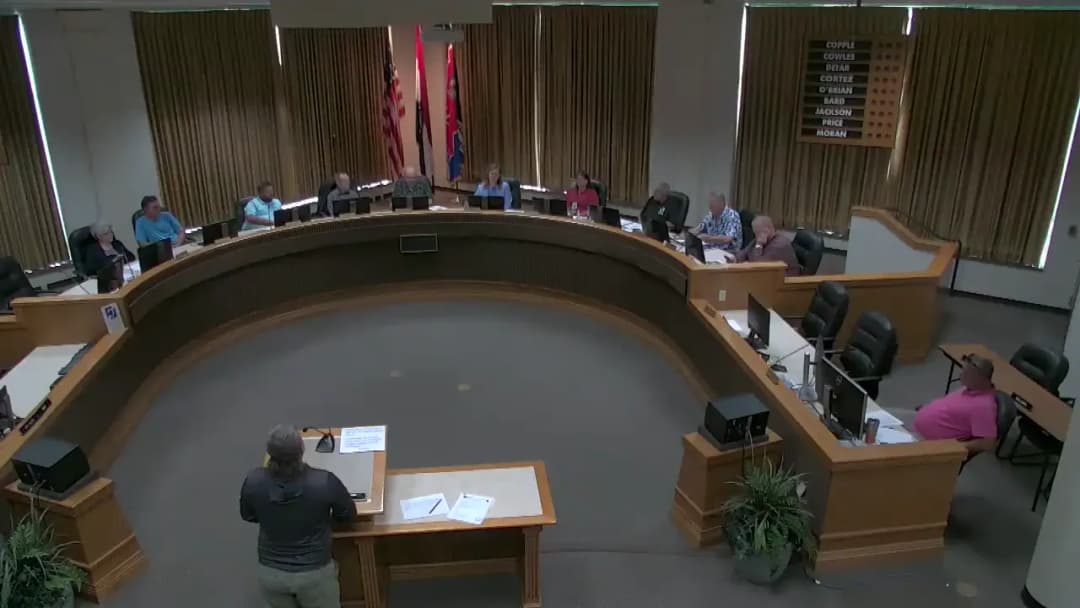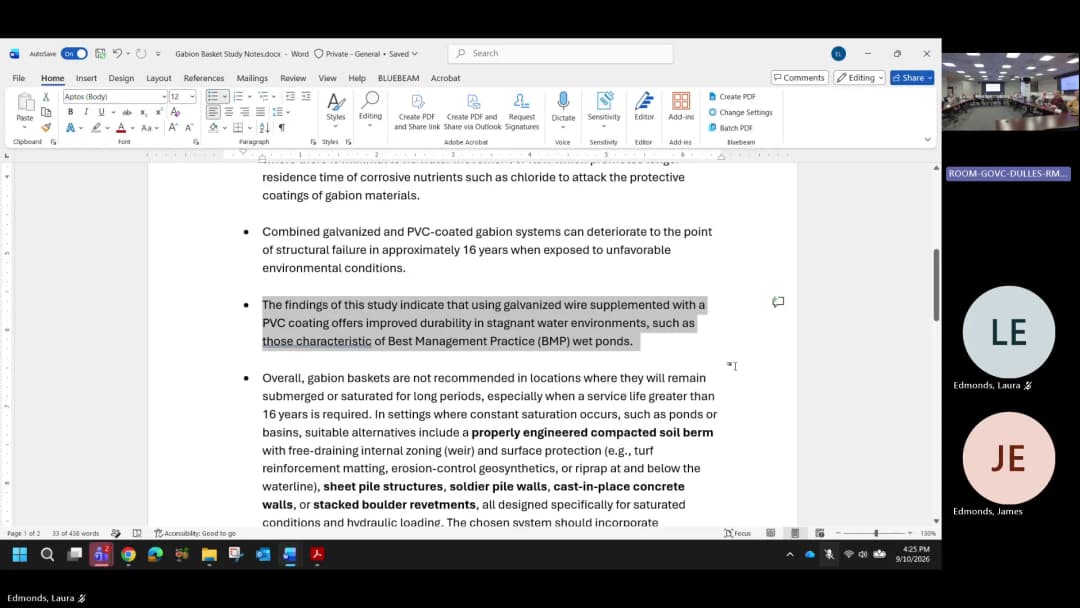
Note: The agenda and raw transcript refer to this meeting as occurring on September 10, 2026. The date provided for this summary is September 25, 2026, per user instruction. The discrepancy is noted for accuracy. The meeting was called to order with a new member, Patrick Valdry (Bowman Consulting), introduced. Administrative items included approval of the July 16, 2026 minutes and a brief update on Plan Clearance Tech Memo (no progress, awaiting County Attorney input). The committee then discussed three major amendment packages (FAAR Shoulders, Gated Communities, and Cultural Resources) and received a presentation on the Gabion Basket Study. Consent Calendar - Approval of July 16, 2026 Minutes: Moved by Elizabeth, seconded, all in favor (ayes). Drew abstained; Patrick Valdry also abstained as he did not attend that meeting. Public Comments & Testimony - None were offered during the meeting. Discussion Items - Plan Clearance Tech Memo Update: Staff reported no new information; the update remains pending additional input from the County Attorney’s Office. One committee member mentioned a plan clearance had been requested for a project. - FAAR Shoulders (Fire Access Road Amendments): Fire Marshal Dan Irley presented cleanup edits to footnotes in roadway tables (Category A and C) regarding shoulder width. The revision clarifies that shoulders may count toward the 20-foot minimum unobstructed width for fire apparatus access only if the surface material (gravel or pavement) is extended into the shoulder, consistent with Section 4810B. Committee expressed concern about potential misinterpretation but accepted the edits. Next step: October Planning Commission public hearing; effective date anticipated January 1, 2027. - Gated Communities: Staff introduced a minor change to allow the director or designee to approve alternate methods for queuing analysis, with the criterion that the method be equivalent to the specified manual. Committee had no objections. Next step: agency referral for comment, then return to committee. - Cultural Resources Amendments (Chapters 7 & 8): Staff walked through numerous cleanup edits (highlighted in yellow, blue, and red). Notable changes included: - Replacing “subsurface disturbance” with “land disturbance” for consistency. - Broadening “building” to “structure” (more inclusive). - Inserting “human” before cemeteries, burial grounds, and graves to align with zoning ordinance. - Clarifying that reconnaissance surveys are always required for areas not subject to a Phase I survey (cannot be waived). - Updating language on previously developed parcels to allow desktop review vs. requiring grading permits. Committee debated specific terms (e.g., “testing area” vs. “shovel test pits”, “residential lots” vs. “lots with residential uses”) and agreed to keep most edits. No formal vote; staff will incorporate feedback and send to agency referral. - Gabion Basket Study: Chris Stone (Journal Services) presented findings from 16 sampled sites. None had PVC-coated wire; galvanized baskets failed due to site-specific conditions (standing water, high chlorides from de-icing salts). Recommendations: avoid gabions in wet environments, consider alternatives (earth and berm, sheet pile, cast-in-place concrete, stacked riprap). Committee discussed feasibility of stacked stone, potential volume credits, and maintenance ease. No decisions made; Chris will return at the October 1 meeting with draft FSM language. Key Outcomes - July 16 minutes approved. - FAAR Shoulders amendments to proceed to October Planning Commission public hearing. - Gated Communities amendments to proceed to agency referral. - Cultural Resources amendments to be revised and sent for agency referral. - Gabion Basket Study: Draft FSM language expected at October 1, 2026 meeting. - Next meetings: October 1 (Dulles Room) and October 15 (Dulles Room), 2026.
The Public Meeting Index
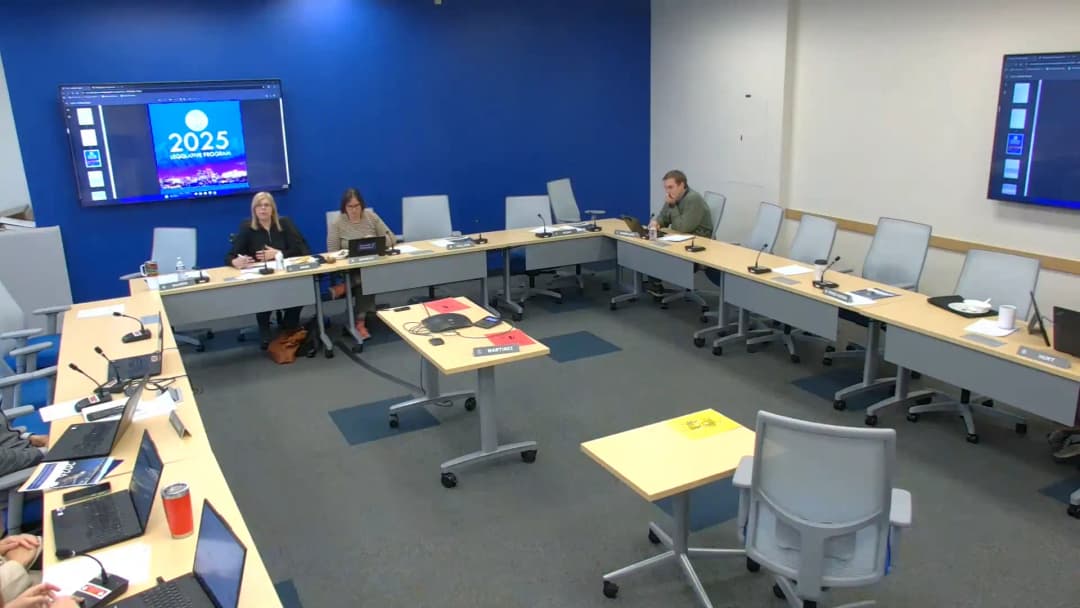
The Public Meeting IndexThe Anchorage Assembly Legislative Committee held a transitional meeting on September 25, 2026, under new Chair Janice Park. The committee reviewed its purpose statement, discussed the timeline and priorities for the upcoming 2027 legislative program, evaluated progress on previous year requests, and heard public testimony. Members present included Donald, Anna Brawley, Janice Park, Silvers, and Martinez (via phone). Nolan Cloud (administration) and Jennifer Venaklausen (legislative services) provided staff support. Committee Purpose and Transition - The committee purpose statement was read, emphasizing its role in guiding federal, state, and local legislative priorities, the six-year capital program, and budget priorities. - Anna Brawley noted this is a transitional meeting with new leadership; the committee is being restarted after turnover. She highlighted that the committee's core function is developing the legislative program, with a timeline requiring introduction before the budget and passage by December 10th. - Nolan Cloud provided a high-level overview of the upcoming legislative program, noting potential interest in a general obligation bond, infrastructure needs (port, roads, drainage, housing), education funding, behavioral health, community assistance, and defined benefit pensions. Discussion Items Legislative Program Timeline and Process - The administration intends to bring a preliminary written draft to the October 6th meeting, with a more fulsome version in November. The final program must be passed before December 10th per municipal code. - Members were urged to engage early and submit district priorities, especially capital projects, to avoid last-minute amendments. Jennifer Venaklausen reminded members that any state capital requests must be in the CIP/CIB and entered into the state CAPS system. - Nolan Cloud noted that the committee should preserve time to adjust after state elections (for legislature and governor) in November. Review of 2025 and 2026 Legislative Programs - Nolan Cloud reviewed the 2026 program, structured around three themes: Safe, Secure, and Affordable. The top ask was port modernization ($15 million received). Small capital asks (e.g., real-time crime center $1.5M, drones, blight reduction) were calibrated for an austere budget but were not funded. - The 2025 program had four top priorities: adequate snow removal on state roads, securing energy future, stabilizing school funding, and restoring defined benefit pensions. No district-level capital projects were funded last year; only the port received state funding (as a statewide asset). - Discussion on which 2026 asks were granted: port funding ($15M with $10M waterfall), general relief assistance increase, community assistance program fully funded (extra vetoed), and pension bill passed but vetoed. No capital asks other than port were funded. - Anna Brawley suggested rewording road rehabilitation requests to be non-district-specific to allow flexible allocation by municipal departments. District Priorities and Federal Policy - Members were asked to work within their districts to identify priorities (typically capital projects). Nolan Cloud noted federal priorities will be a shorter list accompanying state priorities, focusing on port and JBER housing. - Anna Brawley noted that district priorities can also elevate issues without dollar amounts (e.g., bluff erosion at the airport). - Member Silvers questioned whether items already funded (real-time crime center, drones, Chugach State Park access study) should be replaced with continuing needs. Staff indicated the departmental canvas for legislative updates has not yet been completed. Public Comments & Testimony - Jamie Lopez C Sankridge testified in support of HB334 (reducing fees for IDs and birth certificates), stating many people have lacked IDs for 5–10 years. He urged the committee to include support for the poor and capital improvement bonds for shelters, and expressed concern that the 2026 legislative program did not address poverty. He complimented the new chair and urged continued attention to those falling into poverty. Key Outcomes - The committee will continue developing the 2027 legislative program with a draft expected from the administration by October 6. - The next committee meeting is scheduled for October 7, 2026, from 1:00 to 2:00 PM. - Members were directed to submit district priorities and ensure projects are in the CIP/CIB. Staff will reach out for member feedback. - No formal votes were taken; the meeting was primarily informational.
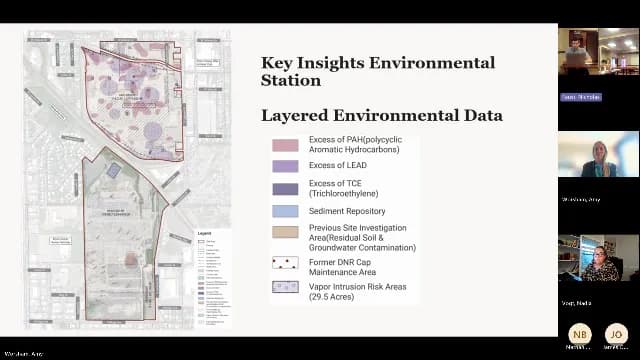
The GM/JATCO Redevelopment Advisory Board met on September 25, 2026, at Fire Station 1, 303 Milton Ave., Janesville, Wisconsin. (Note: The agenda packet lists the meeting date as Wednesday, September 16, 2026, 5:00 PM; the meeting record provided for this summary is dated September 25, 2026.) The board approved the July 22, 2026 minutes and devoted the main discussion to Stantec's preparations for the October 14 design workshop, including station concepts, outreach materials, and next steps. Consent Calendar - A motion to approve the minutes of the July 22, 2026 meeting was made and carried. Discussion Items - Design workshop date and format: Stantec consultants Amy and Nottie confirmed the design workshop will be held Wednesday, October 14, 2026, from 5:00 to 7:00 PM, with a board and staff debrief immediately after (7:00-7:30 PM). - Station plan: Stantec will develop content, boards, and station questions, similar to the prior workshop. Planned stations include a welcome/project background/timeline station, a key-insights station, and three concept boards split between the GM and JATCO portions of the site because of the site's size and the railroad line. Each station will include comment areas so community members can share what they like and dislike. - Key insights station: Amy showed how prior public feedback will be presented, including multifamily housing (identified as a market need and viable), land-use and environmental data maps, and a map of areas where single-family housing will not be considered. - Referendum and site history: James asked that a call-out box be added to station materials addressing the upcoming referendum. The board agreed the message should be clear, concise, memorable, non-political, and recognize the city's position; James recommended the city legal team review the wording. The discussion also raised the need to address why GM did not clean up the site originally. - Public expectations and next steps: The board asked that materials state the next steps and timeframe so the public knows when to expect updates. Amy agreed to work with Stantec to include that information. - Outreach and communications: The city's new communications specialist will handle earned media, physical poster and cork-board distribution, city bus posters, and door hangers/postcards. Approximately 75 additional residential properties were added to the outreach area, and the registered voter list will also be used. - Website consolidation: Mick asked whether project information could be consolidated, noting the existing project webpage is robust but materials are spread across two areas. Amy explained that board materials go through Granicus archiving, which is why links point to that page. - Draft board review: James requested that Stantec share the draft workshop boards by October 8 so the board can review them before the October 14 meeting. Amy agreed to relay that request. - Site naming: The board discussed considering a name for the site other than GM and JATCO, and possibly rebranding the board itself. Key Outcomes - Minutes of the July 22, 2026 meeting were approved. - The design workshop was confirmed for October 14, 2026, 5:00-7:00 PM, with a board debrief from 7:00-7:30 PM. - Stantec will share draft workshop boards with the board by October 8, 2026, for review. - The board will develop a short, non-political referendum statement for legal review before inclusion in workshop materials. - Stantec will include next-steps timelines and key-insights stations in the workshop materials.
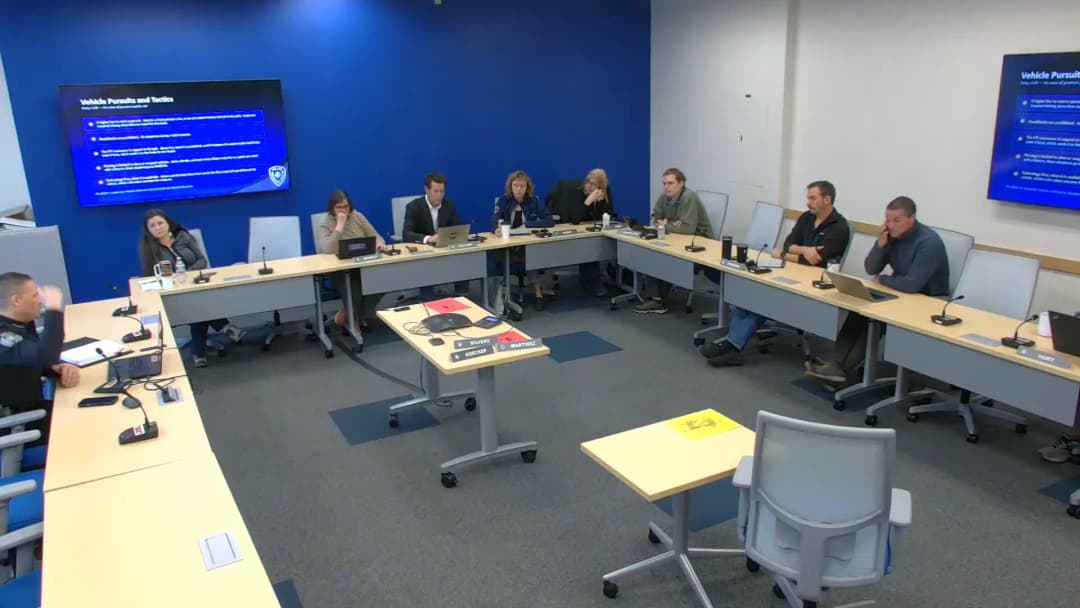
The Anchorage Assembly Public Safety Committee held a work session on September 25, 2026 from 10:30 to 11:35 AM to continue discussion on the independent review by 21CP Solutions of Anchorage Police Department (APD) use of force policies, training, and implementation of recommendations. Chief Michael Case presented an update on policy changes, 21CP recommendations, and answered questions from members. Discussion Items - Policy Implementation Overview: Chief Case reported that APD has addressed approximately 230 recommendations over the past 2.5 years, with 198 already implemented. Of the 52 specific recommendations from 21CP Solutions, 48 have been fully addressed in policy, 3 are underway, and 1 (adding a third internal affairs investigator for use of force) remains a staffing question. - Use of Force Policy Changes: Key changes include: redefining "imminent threat" with three elements (ability, opportunity, jeopardy); clarifying proportional force; expanding de-escalation language; creating a new policy 1.10 on duty to intervene and duty to report; and tightening language on chemical agents and electronic control weapons against restrained persons. - Use of Force Review Board: A new monthly review board was established for serious (Level 3) use of force incidents, including deadly force. The board includes command staff, internal affairs investigators, training cadre, and the involved officer's commander. It reviews completed criminal and administrative investigations to identify training and policy gaps, even when no violations are found. - Officer Care After Critical Incidents: Policy now requires a mandatory seven-day administrative leave and mental health assessment for officers who discharge their weapon (officer-involved shooting). Chief Case noted this is an increase from four days and that actual recovery time often extends to one or two months. The assessment is voluntary under ADA, but the department encourages participation through peer support and an in-house clinician. - Vehicle Tactics and Pursuits: Chief Case explained APD’s restrictive pursuit policy and use of blocking/pinning maneuvers to prevent high-speed chases. APD rejected the 21CP recommendation to limit these tactics to specialized units, continuing to allow patrol use except when a known firearm is in the fleeing vehicle. APD also opted to maintain the PIT maneuver threshold at 45 mph (rather than the recommended 35 mph) due to local icy road conditions and vehicle safety features. - Community Impact and Upstream Factors: Member Scout raised the need for upstream policy changes in housing, childcare, and food access to reduce downstream violent crime. Chief Case acknowledged that police policies alone are insufficient without broader social interventions and noted ongoing data collection efforts. - Alaska Native Use of Force Disparities: Member Bulland referenced the 21CP report finding that approximately 45% of use of force instances involved Alaska Native individuals, who make up about 7% of the population. He suggested funding a collaborative cultural competency training effort, possibly using alcohol tax funds. Chief Case supported community-based training with meaningful interaction rather than lecture-style. - Staffing Impact: Ms. Silvers asked about the effect of the extended leave periods on patrol staffing. Chief Case confirmed that recovering officers are out for months, compounding overtime costs, and that the department uses a $500,000 training budget for backfill. Key Outcomes - APD will continue current vehicle tactics and pursuit policies as described, with specific modifications (e.g., no vehicle tactics when known gun is involved). - The use of force review board will meet monthly to review all qualifying incidents. - No formal votes were taken; the discussion was informational for the upcoming budget cycle. - Chief Case will provide data on the rate of post-pursuit apprehensions to member Gerger. - Continued dialogue on 21CP recommendations and cultural competency training is expected.
The meeting was held on September 25, 2026 (though the transcript states September 21, 2026). The commission addressed one information item, three public hearings, and received updates on recent Title 21 changes and a right-of-way management strategy. All three hearing items were approved with motions recommending assembly action. Discussions also covered future work sessions and potential changes to the CSS process. Consent Calendar - No consent calendar items were listed. Public Comments & Testimony - Case 2026-0102 (Park Use Amendments): One member of the public expressed confusion about a notice but did not testify on the merits. - Case 2026-0112 (Tudor Tract Future Land Use): Jason Norris of South Anchorage spoke in favor, stating that streamlining the eventual placement of housing near a major employment center would be positive. - Case 2026-0113 (Minor Modification/Variance Criteria): Jason Norris (also a Zeba member) testified in support, noting the change in culture around dimensional standards and urging a wholesale review of all dimensional standards. Discussion Items - Information Item 2026-0115 – Rabbit Creek Road Rehabilitation: The state DOT project team presented the concept report for a two-mile corridor improvement focusing on roadway condition, drainage, safety, and multimodal accessibility. Commissioners asked about crash data and design alternatives. Commissioner McKee recommended considering small-diameter roundabouts and median alternatives over two-way left-turn lanes. The chair noted that future CSS steps may be converted to public hearings to allow formal commission recommendations. - Case 2026-0102 – Amendments to Park Uses (Ordinance): Staff proposed adding camper parks as a conditional use in the PR zone, and amending accessory use language to include greenhouses (sales of goods grown on site) and child care programming in parks. Extensive discussion clarified that these uses are illustrative rather than restrictive. Commissioner Ron moved to strike child care and temporary sales; the amendment was withdrawn after staff explained the purpose. The main motion passed unanimously. - Case 2026-0112 – Tudor Tract Future Land Use Map Amendment: Staff requested changing the designation of a single PLI‑zoned parcel to Town Center with transit support. Two community councils were not opposed. The commission heard no opposition and approved a motion recommending assembly approval. - Case 2026-0113 – Title 21 Amendments (Minor Modifications and Variances): Staff proposed raising the minor modification threshold from 5% to 15% encroachment and amending three variance criteria to include surveying/construction errors and practical circumstances. Commissioner Baza moved to delete an obsolete Urban Design Commission reference; the amendment passed. The main motion, as amended, passed. - Title 21 Update and Right‑of‑Way Management Strategy: Staff presented a brief overview of recent Title 21 changes (e.g., ADU permits increased, rezone frequency up). The right-of-way management strategy was described as a tool for future policy decisions, not a formal plan. Commissioners discussed winter parking challenges and relationships between on-street parking and active transportation safety. Key Outcomes - Case 2026-0102: Motion passed to recommend assembly approval of zoning amendments to support existing park uses. - Case 2026-0112: Motion passed to recommend assembly approval of the future land use designation change to Town Center. - Case 2026-0113: Motion passed (as amended) to recommend assembly approval of the Title 21 changes increasing the minor modification threshold and revising variance criteria. - Future Work Session: The commission discussed scheduling a work session on October 5, 2026 (or alternative dates in November) to further examine potential code changes, with interest in an in‑person session at the Permit Center. - Next Steps for Rabbit Creek Project: The project will return at the 35% design stage, and staff may propose making the CSS step a public hearing for formal commission recommendations. - Right‑of‑Way Strategy: No immediate implementation decisions were made; the study serves as a reference for future policy development.
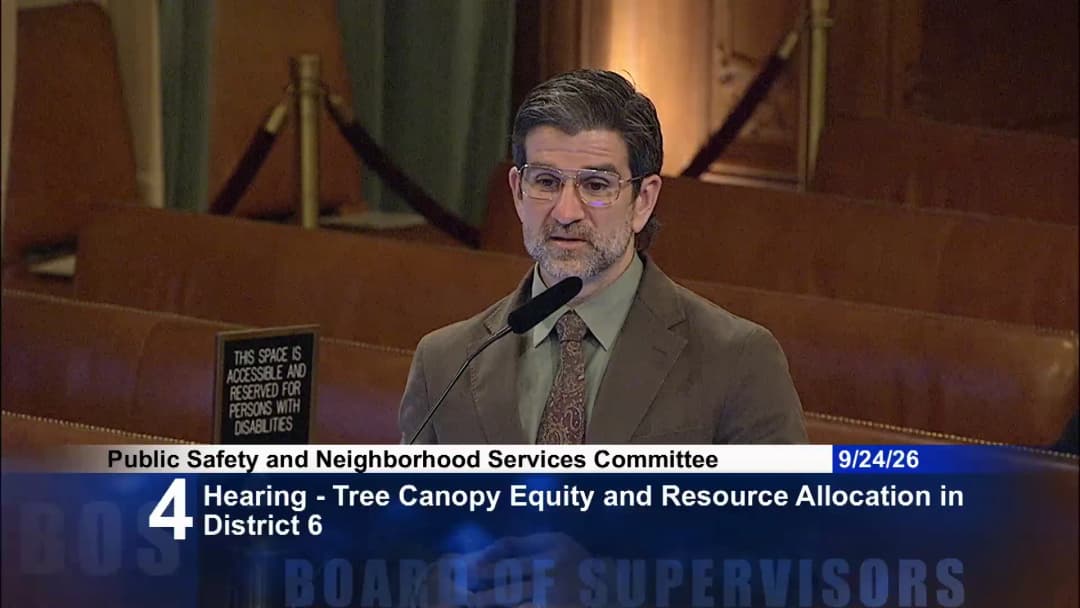
The Public Safety and Neighborhood Services Committee of the San Francisco Board of Supervisors, chaired by Supervisor Danny Sauter and including Vice Chair Bilal Mahmood, Supervisor Alan Wong, and Supervisor Dorsey, convened on September 25, 2026. The meeting addressed three routine liquor license transfers and a major oversight hearing on tree canopy equity in District 6, focusing on the Department of Public Works' Bureau of Urban Forestry. Consent Calendar - Item 1: Coit Liquors (District 3). Unanimously approved forwarding a positive recommendation to the full Board of Supervisors for the transfer of Type 21 and Type 86 licenses. The applicant, a neighborhood merchant since 1961, relocated due to a fire. Zero letters of protest were filed. SFPD recommended approval with conditions for monitoring loitering and maintaining a litter-free area. - Item 2: Mission Bay Community Market (District 6). The committee unanimously approved the transfer of a Type 21 license. Supervisor Dorsey expressed full support, stating the market serves a public convenience and necessity in an underserved neighborhood. - Item 3: Nariana Farmers Market (District 11). The committee unanimously approved the Type 21 license transfer. Representative David Villalbos expressed strong support for the applicants, noting their responsible business history and purchase of an ID scanning system. Public Comments & Testimony On Item 4 (Tree Canopy Equity): - Alex Ludlum (SoMa West CBD) expressed strong support for a pilot partnership watering trees, describing it as a perfect example of city-community cooperation. - Leanne (SoMa West resident) urged the city to prioritize trees in her neighborhood, citing poor air quality, heat, and impacts on her family's health. - Gail Ball (Hayes Valley Neighborhood Association) expressed that greening alleys improves safety and suggested using chicanes to create planting space. - Sean Auckland (SoMa resident) argued that the current approach lacks formal targets and called for the committee to keep the file open for 90 days to establish specific canopy and tree count goals. - Josh Cluver (D10 resident, Urban Forestry Council) argued that tree preservation is not adequately factored into equity plans, citing tree removals for development. - Marie Sorns (Calle 24 / Mission Verde) advocated for stronger protections against tree removal and highlighted the role of community watering groups. - Ellen Sotou (Mid-Market CBD) showed photos of dead trees and argued for protective infrastructure (ledges, fences) to improve tree survival rates. Discussion Items Item 4: Hearing on Tree Canopy Equity and Resource Allocation in District 6. Supervisor Dorsey led the hearing, framing it as a constructive review of the gap between policy and practice regarding tree planting in environmental justice communities like SoMa. Superintendent David Moore (Bureau of Urban Forestry) provided a detailed report: - BUF maintains 125,000 street trees. A record 1,880 were planted last year, with a goal of 2,500 trees this year. - Funding and Staffing: Moore stated the primary barrier is a lack of consistent, dedicated funding (estimated $13 million annually needed for 5,000 trees). Staffing is severely strained (e.g., 5 of 9 inspector positions filled). - Equity vs. Logistics: Moore described the tension between following environmental justice (EJ) maps and the operational realities of where funding grants can be applied and where community partners exist to maintain trees. He noted that 87 of 250 trees planted under a CNRA grant were vandalized or lost, highlighting the need for community stewardship. - Data and Policy: Moore explained the department's challenges with an outdated work order system that cannot produce required reports on tree replacement. He clarified that the narrow sidewalk rule (Director's Order 1872) allows for case-by-case exceptions. - Supervisor Sauter questioned the lack of a reliable funding stream and staffing vacancies. Moore acknowledged the need for a five-year planting strategy and better technology. - Supervisor Mahmood inquired about tracking in-lieu fees and ensuring spending on equity geographies. - Supervisor Wong asked about resident notification, language access, and addressing resident concerns about sidewalk damage from roots. Key Outcomes - Items 1, 2, 3: Approved unanimously and forwarded to the full Board of Supervisors with positive recommendations. - Item 4: The hearing was continued to the call of the chair by a unanimous vote, keeping the file open for further discussion and action. No final action was taken on specific policy changes or targets, but Supervisor Sauter and Dorsey committed to continued collaboration with BUF on funding and data system improvements. A separate hearing on tree maintenance is scheduled for later in the fall.
The Bloomington Board of Zoning Appeals (BZA) met on September 25, 2026 (date provided per instructions; transcript notes the meeting began on Thursday, September 24) to consider one expedited sign variance, one conditional use petition for a duplex with associated parking variances, and one administrative appeal of a notice of violation. The meeting included staff presentations, public testimony, board deliberation, and votes on each item. Consent Calendar - Minutes from previous meeting: The board attempted to approve the minutes but two members abstained (Throckmorton and Fernandez, who had not seen a link to the minutes). The motion passed 3-0-2 (Burrell yes, Smith yes, Throckmorton abstain, Fernandez abstain). However, due to the abstentions, the minutes were continued to the next meeting. Public Comments & Testimony - ZR 2026-05-0022 (412 East Wiley Street duplex): Numerous public speakers opposed the petition. Key points: - Jane St. John: The structure is disproportionately large for the block, lacking curbs/sidewalks, and would exacerbate safety issues at Wiley and Henderson. Urged denial. - Jan Sorby: Displayed a scale graphic showing the proposed duplex is tall and vertical, while existing homes are low and horizontal; argued it does not meet design similarity standards. - Von der Schmidt: Cited Comprehensive Plan policies discouraging high-density student housing in single-family neighborhoods; noted demolition of an affordable home; street width cannot support additional parking; asked for denial. - Julie Von der Schmidt: Distinguished this proposal from other duplexes in different locations; noted street lacks sidewalks and curbs and is designated a bike route; raised concerns about using public rights-of-way to solve private parking problems; cited a city engineer email stating roadway width is insufficient for parking on both sides; requested denial. - John Lawrence: Argued Wiley Street lacks adequate infrastructure capacity; the proposed duplex is not similar in shape, size, and design to the majority of block-face homes; urged two specific findings for denial. - Eric Ost: Stated the proposal runs counter to R3 zoning purpose; demolishes naturally occurring affordable housing; infrastructure inadequate; asked for denial. - Corey Gearhart: Argued the design fails three of four use-specific design elements (porch, setback, vehicle parking access); provided square footage and height comparisons; said the building is 80% taller than block-face median. - Marcus Moyer: Read a statement from Jody Atkins about alley access concerns and adverse impacts on safety and quality of life. - Kim Vint: Emphasized the need to protect neighborhood character; suggested a smaller design would be appropriate; noted the street cannot sustain more density. - Tatiana Moyer: Argued for preserving walkable neighborhoods for permanent residents; cited safety issues with narrow streets and no sidewalks; noted similar problems at a nearby duplex approved earlier. - Pat Medland: Anecdotal evidence from a nearby duplex where rear parking is underused and street parking is common; no longer walks on Wiley due to narrowness. - Isabel Piedmont Smith (City Council, District 1): Stated the proposal does not meet use-specific standard for vehicle parking access (none of the block-face homes use alley access) and there are insufficient public facilities; requested denial. - Dave Rollo (City Council): Cited the intent of the 2021 UDO amendments to ensure duplex scale matches single-family homes; a 2019 consultant memo confirmed the goal of compatibility; urged denial. - Betty Rosenagel: Praised neighbors' detailed presentations; argued the duplex does not belong based on UDO and Comprehensive Plan; questioned why the petition is heard a third time. - ZR 2026-07-0033 (530 South Washington Street appeal): No public comments. Discussion Items - Expedited Agenda – ZR 2026-08-0038 (1327 North Lincoln Street sign variance): Staff presented a request for four wall signs (total 44 sq. ft.) on a large student housing building, whereas the UDO allows only 24 sq. ft. for multifamily. Staff found no adverse impacts and recommended approval with one condition. Petitioner Kevin Miners explained the need for signs at multiple entrances for safety and vehicle guidance. No public comments. The board voted unanimously (5-0) to approve the variance. - ZR 2026-05-0022 – Conditional Use and Variances (412 East Wiley Street): Staff recommended approval of the conditional use for the duplex but denial of the two parking variances (to allow five spaces instead of four, and to enlarge the alley parking pad from 20'x20' to 20'x42.5'). Staff argued no peculiar conditions justified the variances and that a compliant driveway off Wiley Street was possible. Petitioner Kevin Spicer said he changed his site plan to alley access to reduce street parking impacts; he requested the variances to provide five spaces. During board discussion, members noted that height is not a use-specific criterion, the street width and existing parking problems, and the tension between the UDO's ambiguity and the board's role. A motion to approve the conditional use and deny the variances, with an added condition allowing either a code-compliant alley parking pad or a front driveway, passed 3-2 (Burrell yes, Fernandez yes, Smith yes, Kosinko no, Throckmorton no). - ZR 2026-07-0033 – Administrative Appeal of Notice of Violation (530 South Washington Street): Petitioner Joe Davis appealed a warning letter for a sign on a utility cart he parked in the public right-of-way. He argued the cart is a transportation mode, not a permanent sign, and that prohibiting it violates his First Amendment rights. Staff presented UDO language prohibiting signs in the public right-of-way and stated that vehicle signs are a prohibited sign type. The board questioned the location (a legal parking area) and the definition of vehicle signs. No public comments. After deliberation, the board voted unanimously (5-0) to deny the appeal, thereby upholding the notice of violation. Key Outcomes - ZR 2026-08-0038: Approved (5-0) – sign variance for 1327 N Lincoln Street. - ZR 2026-05-0022: Conditional use approved, variances denied (3-2). The approved plan allows a duplex at 412 E Wiley Street with either a code-compliant alley parking pad or a front driveway cut per code. A six-foot privacy fence on the east side is part of the plan. - ZR 2026-07-0033: Appeal denied (5-0) – the sign on the utility cart in the public right-of-way is a violation. - New Business: Staff will investigate potential occupancy at 230 Morton Street (old Ferris Market) after a prior variance denial. - Minutes: Continued to next meeting due to insufficient review.
The Joplin Board of Appeals met on September 25, 2026, to review numerous properties deemed dangerous or in need of rehabilitation. The board heard updates from property owners and city inspectors, extended several cases to the next meeting, and conducted dangerous building hearings for two properties, ordering demolition for both. Consent Calendar - August Meeting Minutes: Approved unanimously by motion of Mr. Windsor, seconded by Mr. Duncan. Discussion Items Continued Properties (all extended to October 23, 2026 for progress report and possible demolition hearing unless noted) - 714 East Hill (Item 3121): Owner Nancy Awedo reported she changed electricians and is waiting on a plumber. The board extended the case to October 23. - 2402 South Alabama (Item 3141): City inspector noted the property is near completion with a final inspection scheduled. The board extended the case. - 723 South Roosevelt (Item 3142): Owner not present; no contact since last meeting; permit expires April 2026. The board extended the case. - 712 East Pool (Item 3144): Initially tabled to the end of the agenda for a demolition hearing. Later, the board held a dangerous building hearing and ordered demolition. - 929 South Roosevelt (Item 3149): Owner plans to demolish; city waiting on gas company sign-off. The board extended the case. - 614 South Moffitt (Item 3152): Owner Osama present; had health issues; working on permits; carport repaired. The board extended the case. - 210 North Oak (Item 3158): Owner David Williams; waiting on permits; work done without permit; confident in renovation. The board extended the case. - 12 South Patterson (Item 3162): Owner Josh Stiffler present for first time; had not yet obtained bids; property in severe disrepair. The board initially set this for a dangerous building hearing. - 906 East Furnace (Item 3163): Owner Michael Wuhan living in house with family; repairs ongoing; inspection scheduled October 5. The board extended the case and requested an update from the inspection. - 915 West 2nd (Item 3164): No contact; owner out of state; publication not complete. The board extended the case. - 3022 East 9th (Item 3165): No response; ownership changed; letters returned. The board extended the case. - 222 South Jackson (Item 3166): Owner present; cleaning up after fire; waiting on bids. The board extended the case and ordered a stop work order. - 805 South Connor (Item 3167): Owner present; property under contract; closing by October 12. The board extended the case. - 2627 South Grand (Item 3168): Owner living in part of property; fire damage; support from churches. The board extended the case. - 320 South Wall (Item 3169): Representative Lee Porter; need to replace fire escape; new contractor coming. The board extended the case with a request for weekly updates. - 1620 South Iowa (Item 3154): Owner's representative; waiting on demolition permit; grass overgrown. The board extended the case; Mrs. Harrington voted nay. Dangerous Building Hearings - 12 South Patterson (Item 3162): After testimony from city inspector Shelley Dolison and owner Josh Stiffler, the board voted to declare the property a dangerous building and order demolition, but with a stay until the October 23 meeting. Owner must present a clear plan for either demolition or rehabilitation. - 712 East Pool (Item 3144): After testimony from inspector Spence Jackson, the board declared the property a dangerous building and ordered demolition, including outbuildings. Public Comments & Testimony - Multiple property owners and representatives gave updates on their properties, including explanations for delays (health issues, contractor problems, waiting on utilities, financial constraints). - A Spanish translator assisted for one owner. Key Outcomes - All continued properties were extended to the October 23, 2026 meeting for progress reports and possible demolition hearings. - 12 South Patterson: Ordered demolished with a 30-day stay; owner to present plan by October 23. - 712 East Pool: Ordered demolished. - 222 South Jackson: Stop work order placed. - Board members Wicklin and Brown left before the dangerous building hearings; noted in minutes. - Informal request made for a Spanish translator and improved sound system for future meetings.
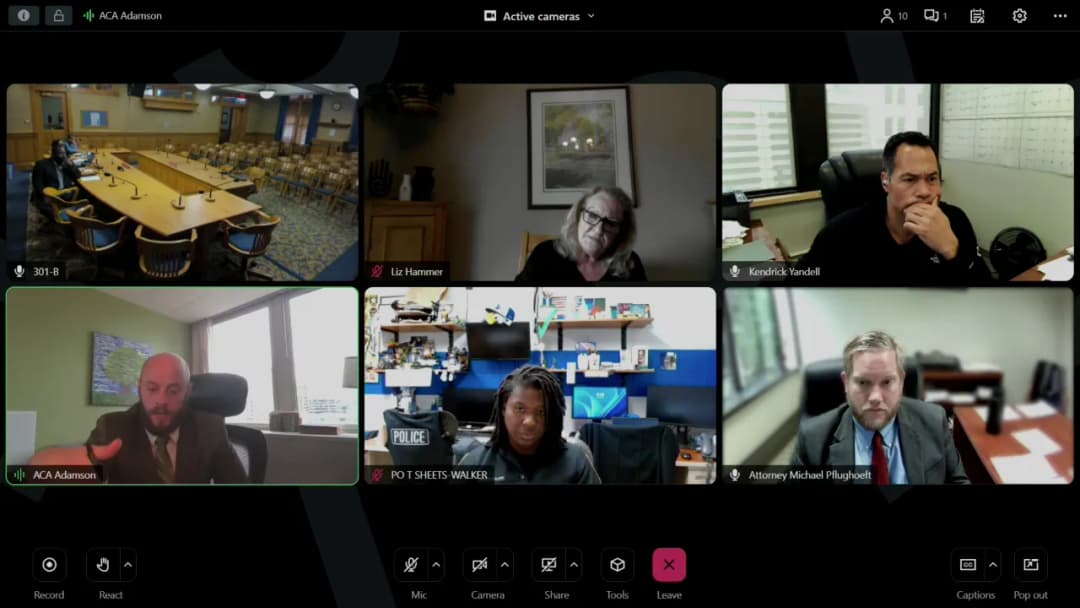
On Friday, September 25, 2026, the Administrative Review Board of Appeals convened at 9:11 AM in City Hall, Room 301‑B, with Vice‑Chair Kendrick Yandell presiding (Chair Vincent Bobot absent). Board members present were Ald. DiAndre Jackson, Alex Bruzan, Elizabeth Hammer, and Kendrick Yandell. The board heard 20 agenda items, including requests for fee waivers, code‑violation appeals, and a nuisance property designation. Actions ranged from denials (for non‑appearance or on the merits) to settlements and fee reductions. Consent Calendar - Item 2 (Daniel Kontowicz, tall grass/weeds) – Settled: city offered to waive $75 posting fee and $100 admin fee; appellant accepted, owing $237.38 (contractor fee + tax). - Items 3–5 (Rick Kouchich, Tammi Kaloti, Robert Wutke – reinspection fees) – All settled. - Item 8 (Michael Chelminsui – vacant building fees) – Settled. - Item 9 (HUAD Real Estate Trust – vacant building fees) – Settled. - Item 13 (Nikka Singh – garbage/litter) – Settled. - Item 14 (Glady Ruiz – solid waste) – Settled. - Item 15 (Kenneth Brown – reinspection fees, 3536 N 93rd) – Settled. - Item 18 (Vera Curry – graffiti nuisance) – Settled. - Item 19 (Atty. Michael Pflughoeft – nuisance property designation) – City withdrew the designation due to a procedural error; appeal became moot. - Item 20 (Atty. Michael Pflughoeft – nuisance call special charges) – Appeal denied on a 2‑1‑1 vote (Bruzan and Hammer aye to deny; Yandell nay; Jackson abstained). Public Comments & Testimony - Daniel Kontowicz (Item 2) – Stated he never received a notice, was battling gout, and his front yard is under 800 sq ft. Accepted the city’s fee reduction offer. - Rick Kouchich (Item 3) – Described financial hardship due to disability and cancer; claimed an inspector was rude and that neighbors with worse conditions were not cited. The city had already waived the $1,624 in fees before the board, so no further action was possible. - Catherine Beck (Item 6) – Appealed denial of a chicken‑keeping permit. Argued that all adjacent neighbors support her chickens; the only opponent is an absentee landlord. She disputed city photos showing rodent activity and said she remedied the coop after the first denial. Board denied the appeal 4‑0. - Shirley Walker (Item 7) – Asserted her building is occupied; her daughter coordinated a reinspection with the city inspector but the city had no record. Board granted the appeal 4‑0 after she testified the inspector had agreed to visit. - Aaron (for Sydney Engstrom, Item 10) – Said a sofa and debris were left at the tenant’s request; owners hired contractors but the city’s reinspection still found junk. Board denied appeal 4‑0. - L’Oreal Allen (for Hannah Basch/Park Hill Assets, Item 11) – Explained confusion over property lines: she thought the overhanging branches belonged to a neighboring church or Park Hill Family, not her own parcel. She cut other vegetation in good faith. Board granted in part (waived $100 admin fee) and denied in part (upheld $390 contractor fee), 4‑0. - Ebony/LaTroy Blumfield (Item 12) – City waived $1,524 in reinspection fees and agreed to work with the owners on repairs; matter settled. - Atty. Michael Pflughoeft (Item 20) – Argued that the city’s notice for the February 13 warrant charge was insufficient (only stated “warrant” without a concise description of nuisance activity) and that the warrant was not a separate, distinct incident from the February 8 robbery. Officer Sheets Walker testified the warrant was a follow‑up investigation of the robbery at the same location. Discussion Items - Catherine Beck chicken permit (Item 6) – Extensive debate. The city (Lori Gallup) stated two prior denials due to enclosure distance and later rodent/uneaten‑food issues. Beck said the problems were fixed. The board noted the city’s process (neighbor approval, hearings) was followed. Motion to deny passed 4‑0, with advice that she reapply. - Shirley Walker vacant building (Item 7) – City’s inspector found property “appears vacant, secured” on Aug 25, 2026. Walker claimed the tenant was home and an inspector visited on Sep 24. The board granted the appeal, ordering the fee waived, contingent on future verification. - Hannah Basch overhanging branches (Item 11) – Debate on whether the property manager made a good‑faith effort. The city forester deemed the violation egregious and was reluctant to reduce fees. Board compromised by waiving the admin fee but upholding the contractor fee. - Atty. Michael Pflughoeft warrant charge (Item 20) – Legal arguments on notice sufficiency and whether a search warrant constitutes a separate “nuisance activity.” Board voted 2‑1 (Jackson abstaining) to deny the appeal, finding the warrant was a follow‑up to the same incident and the notice, while sparse, still provided enough information for the property owner to investigate. Key Outcomes - Denied for non‑appearance: Item 1 (Leon Davis) – 4‑0. - Denied on merits: Items 6 (Catherine Beck – chicken permit), 10 (Sydney Engstrom – garbage/litter), and 20 (Atty. Pflughoeft – warrant charge) – all 4‑0 except Item 20 which was 2‑1‑1. - Granted: Items 7 (Shirley Walker – vacant building fees) – 4‑0. - Granted in part / Denied in part: Item 11 (Hannah Basch – admin fee waived, contractor fee upheld) – 4‑0. - Settled (city waived or reduced fees): Items 2, 3, 4, 5, 8, 9, 12, 13, 14, 15, 18. - Withdrawn by city: Item 19 (nuisance property designation – procedural defect). - Held in committee (postponed): Items 16 and 17 (Kenneth Brown – both for 7809 W Hadley) – 4‑0, to be rescheduled. The meeting adjourned after all agenda items were addressed. The next meeting date was left to be coordinated with the chair.
The Prince George's County Foster Care Task Force met on September 25, 2026, from approximately 3:15 PM to 4:52 PM. Co-Chair Autumn Joy Barrett presided, joined by Co-Chair Sheila Curry representing DCAO Reed. The main agenda item was a presentation from the Department of Social Services (DSS) on child welfare services, data, and capacity challenges. The task force also received updates from Coordinator Anya Makarova, adopted minutes, and discussed next steps including an interim report due November 12, 2026. Consent Calendar - Minutes Approval: The task force voted to approve the minutes from the September 17 meeting. The vote included: Sheila Carey (yes), Autumn Joy Barrett (yes), Yolanda Johnson (yes), Jocelyn Route (yes), Carolyn Floyd (yes), and Jamie Dixon (yes). Angela Smith was unavailable at the time of the vote. The minutes were passed. Discussion Items - Coordinator Updates (Anya Makarova): - The task force successfully submitted its bylaws and scope memo to the council on time. - Outreach for youth alumni with lived experience: The task force has four vacant seats and is prioritizing filling them with individuals who have lived experience in foster care. Members were asked to submit names and contact information by October 2, 2026. - Trauma-informed training: A 90-minute training is being arranged in preparation for new members with lived experience. A meeting with PATHs for Families is scheduled for September 26 to discuss details. - Information requests to DSS: A first set of responses was received in August; a second request regarding placement capacity and utilization was sent in September. - Membership status: Mr. Morocco Battle, a student, requested modified participation status (not required to attend all meetings). Co-Chairs Barrett and Curry approved the request. - Department of Social Services Presentation (Jamie Dixon, Carlisa Peterson, Wanda D. Smith): - DSS overview: The department operates under state (COMAR) and county authority, with strategic pillars of culture, communication, and continuous improvement. - Child welfare process: Interventions include family preservation, kinship placement priority, and evidence-based services. Recent state legislation expedites kinship approval and provides resources. - Data on youth in care: As of the presentation, there were 304 youth in care. Placement types: kinship (priority), resource homes (formerly foster parents), group homes, independent living, residential treatment, and some incarcerated youth awaiting trial (6 youth). Majority of youth remain in Prince George's County. - Demographics: 77% Black, 18% Hispanic, 3.7% White, 1.3% Pacific Islander. Notably, a majority of youth are 14 years and older, which is unique compared to other Maryland jurisdictions. - Challenges: Placement disruptions for older youth, lack of crisis beds and respite care, difficulty recruiting resource parents for adolescents, and limited residential treatment facilities (zero in Prince George's County). DSS also faces staffing capacity issues due to unfilled positions and new paid family medical leave (PFMLA) affecting availability. - Recruitment efforts: Includes social media, bus wrappings, movie theater ads, radio, faith-based institutions, and targeted outreach (e.g., nurses associations). The department is open to suggestions. - Q&A and Member Comments: - Jocelyn Route (foster parent with 20+ years experience) highlighted the need for recreation and leisure opportunities for older youth, noting that such activities can lead to positive outcomes (e.g., a youth on full scholarship through football). - Celia Fly (Progressive Life Center) expressed interest in joining the task force and recommended youth with lived experience. She also promoted a kinship care conference on October 9. - Discussion on older youth: DSS noted that many youth enter care at older ages (often 17), with complex needs including behavioral health, DJS involvement, and medical comorbidities. Families sometimes request removal due to behavioral challenges, and DSS works to divert through family team meetings. - Regarding incarcerated youth: Youth awaiting trial remain in DSS custody and receive monthly visits and support. Cases close upon sentencing. - Incentives for foster parents: DSS shares compensation information during information sessions but does not lead with it to ensure the motivation is genuine care. - Anya Makarova raised capacity questions: DSS confirmed that kinship care has great potential due to new state laws, but resource homes are selective and need more recruitment. Residential treatment facilities are lacking entirely in the county. DSS staffing is strained by vacancies and PFMLA, with no additional positions allocated despite population growth. - Announcements: - The YES Center (Youth Experiencing Success) grand opening is scheduled for September 26 from 1-3 PM. The center provides a one-stop shop for older youth in or exiting care, offering resources like toiletries, computers, counseling, and resume help. It originated from a 2016 court initiative. - Yolanda Johnson (CASA) noted receipt of duffel bags from Alpha Kappa Alpha and offered to share with partners. Key Outcomes - Minutes approved from September 17 meeting. - Modified participation status approved for Morocco Battle. - Action items: Members to submit names of individuals with lived experience by October 2 for task force vacancies. - Next meeting: To be scheduled in October; a trauma-informed training session will be arranged separately. - Interim report due to the county council by November 12, 2026. A draft will be circulated before the next meeting. - Open call for public comment – none were offered. - Meeting adjourned at 4:52 PM.