The board met on September 15, 2026, and acted on three items: an allocation of Harbor Management funds for a boat ramp feasibility study, and one-year time extensions for two development projects — a self-storage building at 35 Commerce Road and a residential redevelopment at Zero Walton Place/80 Prospect Street. All three items were approved by unanimous voice vote. The meeting ran long and adjourned just after 11:00 PM. Discussion Items Harbor Management Boat Ramp Feasibility Study Funding - Board members discussed approving use of previously transmitted funds — originating from 860 Canal as a fee in lieu — that Harbor Management wants to spend on a feasibility study for a boat ramp. The city retains approval rights over the expenditure. - The amount was disputed in discussion: one member said $62,500, while another stated the total was $135,000 and the requested half was $67,500. The motion referenced 'either half of the funding amount' and cited $52,500 or $67,500. This discrepancy was not resolved on the record. - Members noted the study qualifies as a water-dependent use and has been discussed for years. The motion to approve the fund use passed unanimously. Application 22512 — ESS FRISA LLC, 35 Commerce Road - Applicant proposes a new self-storage building with parking, site landscaping, and stormwater systems. The board approved a one-year extension of time from September 23, 2026 to September 23, 2027. - Approved unanimously. Application 222-25 — Walton Place LLC / 80 Prospect Street Partners LLC, Zero Walton Place and 80 Prospect Street - The project redevelops the site by repurposing a 1900s church building, removing a 1960s addition and a former retail building, and constructing a new 224-unit multifamily residential apartment building with green space and uncovered parking. - Staff reported the project is moving slowly: a drainage relocation issue has been resolved, but financing issues remain. This was described as the applicant's final extension. - The requested one-year extension runs to October 21, 2027 (the motion first cited 10/31/27, then 10/21/27 — the record is inconsistent). Approved unanimously. Next Meeting Preview - Upcoming agenda items include text changes: a cleanup amendment, the CN district, ML district, BD district map and text, and the Traffic Bureau's text amendment for mobility and parking changes stemming from the state's regulation changes. - Members noted the state requirements went into effect July 1, 2026, and that roughly 90% of Connecticut municipalities have not yet approved their amendments; the board is still ahead of the curve. The board discussed narrowing the list. Key Outcomes - Approved the Harbor Management boat ramp feasibility study fund allocation (voice vote, unanimous). - Approved the ESS FRISA LLC one-year extension at 35 Commerce Road (voice vote, unanimous). - Approved the Walton Place / 80 Prospect Street final one-year extension to October 2027 (voice vote, unanimous). - Adjourned around 11:00 PM. The next meeting is scheduled for September 28, 2026; one member will be out of the country and plans to attend via Zoom.
The Public Meeting Index
The Public Meeting IndexThis pre-meeting of the Mobile City Council, held on Tuesday, September 15, 2026, addressed routine approvals, public hearings, rezoning proposals, budget considerations, and extensive discussions on trolley buses and public safety. Key decisions included holding several items for further review, supporting a federal trolley grant with caveats, and scheduling follow-up meetings. Consent Calendar - Approved minutes from the September 8, 2026 meeting. - Noise ordinance waiver requests for events on September 19 (Pallister Place West), October 17 (Adam Street), October 10 (Venetia Road), and September 26 (Downtown Boulevard) were moved to 9 p.m. for District 1 and District 5. - Public hearing declared structures at 1550 Stewart Avenue (formerly 1551 Forest Street), 1318 Hercules Street, 913 Texas Street, 858 McQuillen Street, and 1109 Bay Avenue as public nuisances and ordered their demolition. - Public hearing considered the application of Grand Barry Executive Transport for a certificate of public convenience and necessity to operate a shuttle, sedan, and limousine service. - Resolutions introduced included: declaring structures public nuisances (48-982 through 4986), authorizing removal of weed groups, approving bonuses for parks employee, firefighter, and officer of the month; authorizing an agreement with Merth Artist for Mardi Gras float construction ($55,725); approving purchase orders for cybersecurity software ($12,540), storm drainage debris removal ($23,200), a Ford Bronco SUV ($32,189.50), three Ford pickup trucks with utility bodies ($180,171); and authorizing contracts for the Arterial Management Project ($300,000 each). Public Comments & Testimony - Lonny Robinson questioned why the city is not cutting an overgrown ditch; a 311 complaint filed in April received no response. The city clerk noted a work order is in progress. - Estella Trotter alleged the Mobile Housing Board has failed for years to enforce and file finance reports to the federal government, including malpractices related to demolition, relocation, and replacement of residential housing development buildings. Discussion Items - Rezoning at 255 Church Street: Councilwoman Ingram requested a one-week hold to address concerns from a developer and residents about proposed T6 zoning. The worry is that allowing a single T6 building could unravel other areas; she suggested a full amendment might be more appropriate. The item was held over. - Resolution 08958 (Laser Fish Document Management Software): Councilwoman Ingram thanked administration for sharing the agreement, which addresses data privacy and handling of PII and personal information. - Resolution 09978 (Tailor Landing Affordable Housing Funds): Councilman Penn offered an amendment to clarify that the funds are not coming from federal sources; the amendment was to be presented at the council meeting. - Budget (09979): The 2026-2027 general fund and capital improvement fund budgets were held for one week to allow the finance committee to meet that afternoon. The deadline for adoption is September 20. - Trolley Buses (Resolution 31980): Extensive debate occurred on authorizing the mayor to apply for a federal grant for five new trolley-style buses (with a $320,000 city match). Councilman Runnels expressed support for the grant but urged caution about expanding trolleys without first seeing ridership results from system changes. He questioned the required capital contribution to meet federal guidelines and preferred investing in shelters and frequency. Councilman Reynolds countered that trolleys have proven successful in Kansas City, fit Mobile's narrow roads and historic character, and are needed to transport the workforce for economic growth. He argued that six trolleys alone cannot be fairly judged and requested support for further investment. Councilwoman Ingram requested data on ridership impacts from smaller buses and asked about addressing weather-related barriers. Administration (Mr. Woods) explained the federal capital contribution requirement. Ultimately, the council supported the grant, with Councilman Runnels stating he would vote in favor but wanted future budget discussions to be cautious. - Arterial Management Project (Resolutions 2197-98): Jennifer explained the RTAP program using consultants to constantly tweak traffic signals, funded through MPO federal funds. Council members asked about quarterly performance reports and specific corridors (Water Street, Government Street). - Arena Opening Delay: Councilman Runnels thanked the mayor for deciding to delay the arena opening, allowing organizations to adjust budgets. He noted the decision was made soon enough for Mardi Gras organizations to pivot. - Public Safety: Councilwoman Ingram requested a community safety meeting after shootings in the Rickaby area; she said residents want to be heard and feel safe. Commander Graves acknowledged the request, described efforts to engage the community and the difficulty of getting witnesses to talk due to fear. He mentioned a reward system being developed. Vice President raised intersection safety at Tud Hill and Spring Hill, requesting more creative traffic control. Commander Graves said they are working with traffic engineering. Councilman Penn promoted Operation SHIELD, a program allowing homeowners to connect cameras to police. Commander Graves encouraged Safe Passage initiative and community participation. The Public Safety Committee meeting is scheduled for September 22. Key Outcomes - Noise ordinance waivers moved to 9 p.m. for Districts 1 and 5. - Rezoning at 255 Church Street held over for one week. - Resolution 09978 amendment to clarify non-federal funding; final vote pending at council meeting. - Budget held over one week; finance committee meeting scheduled for 1 p.m. on September 15. - Trolley bus grant (Resolution 31980) supported; council members expressed need for data and caution on future expansions. - Public safety committee meeting scheduled for September 22, 2026, with questions to be submitted in advance. - Finance committee meeting at 1 p.m. to discuss budget and related items.
The Benicia City Council convened at 6:00 PM on September 15, 2026, in Council Chambers at City Hall (250 East L Street, Benicia, CA), following a closed session with no reportable actions. Mayor Steve Young participated remotely from Atlanta under the exception for official city business (Bay Area Council delegation on energy equity and economic development); Vice Mayor Trevor Macenski presided, with Council Members Kari Birdseye, Lionel Largaespada, and Terry Scott present. No minutes for this meeting were available in the source materials; the agenda listed a 7:30 PM adjournment target. The council approved the consent calendar with two pulled items, received the Independent Oversight Committee's first formal evaluation of voter-approved tax measures, and introduced an ordinance restricting fishing at the Benicia Marina boat launch float. Proclamation — Hispanic Heritage Month 2026 Vice Mayor Macenski proclaimed September 15 through October 15, 2026, as Hispanic Heritage Month on behalf of Mayor Young and the council. The proclamation noted that Hispanic Heritage Week began in 1968 under President Lyndon B. Johnson and was expanded to a 30-day observance in 1988 under President Ronald Reagan; Costa Rica, El Salvador, Guatemala, Honduras, and Nicaragua celebrate independence on September 15, Mexico on September 16, and Chile on September 18. Martha Ramirez and Francisco Roman of Chico's Taqueria accepted the proclamation and thanked the city for recognizing and supporting Hispanic small businesses. Presentation — Independent Oversight Committee (IOC) Tax Measure Evaluation Bob Sachs presented the IOC's evaluation of Measure C (1% general sales tax, adopted 2014), Measure B (three-quarters of one percent general sales tax, adopted 2024), and Measure F (a specific-use measure). The committee, together for two years (started with 19 members, five of whom are original), individually scored each measure using a 0–3 rubric (0 = poor, 3 = exceeds expectations). Measure F scored highest; Measures B and C, which draw from the general fund, scored "needs improvement." Key findings: the annual tax measure report is retrospective and not timely for oversight; reaching budget documents requires multiple steps and is too hard for the average citizen; Measure B revenue is untraceable; Measure C's capital expenditure tracking and associated oversight ended in 2022 with no communication to taxpayers; and rising CalPERS costs pressure the general fund, with the unfunded actuarial liability growing significantly from 2018 to 2025. While the committee could not prove tax revenues funded the pension liability, the mere question undermined confidence. Recommendations included tax-measure landing pages (budgeted revenues, past uses, staff reports), a CalPERS strategy page, publishing plans for each measure, and using priority-based budgeting scoring data. In discussion, Councilmember Scott questioned comparing a specific-use measure with general fund measures; each measure scored individually. Councilmember Birdseye asked about pension cost pressure; Sachs confirmed the committee discussed—but omitted from the report—a hypothesis that tax measure revenues (including an apparent correspondence with Measure F revenue) were covering pension costs. Councilmember Largaespada asked for rubric details. Mayor Young supported a transparency landing page and suggested tying Measure B revenue directly to pension payments ($8 million this year, rising to about $13 million in 2031). Deputy City Manager Shaki presented slides prepared by City Manager Mario Giuliani (absent) showing how locally approved tax measures—utility user tax (described as Measure A, adopted 1996), business license tax (Measure R, 2004), Measure C (2014), Measure B (2024), and a transient occupancy/hotel tax adopted in 2024 (also described as "Measure A" in the transcript, an apparent naming inconsistency)—support departments; together they fund approximately one-third of city services, based on the revised FY 2024–25 budget. Examples included 21.4% of utility user tax revenue directed to police services, 19.7% of business license tax revenue to fire services, and 12.1% of Measure C revenue to public works. Mayor Young questioned the 16% "general services" allocation, which is not an actual department; staff responded that priority-based budgeting would reallocate such citywide costs to individual programs. Public Comments & Testimony - Nicole Newell, program manager with Sustainable Solano and a Benicia resident, promoted a countywide air quality summit on Saturday, October 17, at the Joseph Nelson Center in Suisun City (9 AM–4 PM), with lunch, Spanish translation, and a $50 stipend for the first 50 non-government-affiliated registered participants who stay the full day. - Chris Shinfeld, who pulled consent item 14I, argued the employee MOU cost increases (health insurance, education reimbursement contributions, comp time) should be made public and should not be on the consent calendar. - Scott Trommer, a 25-year Benicia Marina slip holder, urged approval of the fishing restriction, stating no marina he has seen permits fishing; Harbor Master Ryan supported the restriction as a safety and liability issue, noting better locations exist for fishing. Consent Calendar The council approved by one motion, with no removals beyond 14H and 14I: 14A (minutes of the August 18 and September 1, 2026 regular meetings); 14B (second amendment to the DC Electric Group, Inc. agreement for streetlight and facility light maintenance, increasing the not-to-exceed amount from $400,000 to $410,000); 14C (FY27 police department General Fund and Asset Forfeiture budget amendments); 14D (FY 2025/26 fourth quarter investment report); 14E (first amendment to the Beauchaine Consulting Group, LLC agreement for Tyler Resident Access implementation, $36,090, new total not to exceed $121,090); 14F (professional services agreement with TRB + Associates, Inc. for Rose Estates development review support, not to exceed $345,000); 14G (declaration of Housing Element Site 34, 1471 Park Road, as surplus land); and 14J (waiver of reading of all ordinances). The vote was unanimous. Discussion Items - Item 14H — Southern Pacific Railroad Depot Construction Management Task Order. Staff recommended a task order with Unico Engineering under the City's existing Master On-Call Agreement, not to exceed $90,500, for construction management and inspection for the Depot Preservation and Maintenance Project. Councilmember Largaespada said he was not persuaded the project requires 570 hours and a $90,000 construction management budget and supported the lower-cost competitor, Consor. Mayor Young called spending nearly half of the $195,000 project value on contract management for essentially re-roofing, gutters, and a paint job "crazy." A motion to award the task order to Consor passed 3–2 (Largaespada, Macenski, and Young in favor; Birdseye and Scott opposed). Staff warned that departing from its recommendation means "it's on the shoulders of the members that voted this way" if the work is not done right. - Item 14I — Employee Association MOUs (FY 2026–27). The one-year agreements (June 21, 2026 through June 20, 2027) with the Benicia Public Service Employee Association, Benicia Supervisors and Professionals Association, Benicia Police Officer's Association, Benicia Dispatchers Association, Benicia Firefighter's Association, and unrepresented management groups were pulled for discussion. HR Director Kim Bowden reported an estimated citywide cost of about $955,000 if fully staffed, with most provisions one-time and non-pensionable (no impact on CalPERS rates or the unfunded liability). Employees had requested cost-of-living adjustments, but the city was not in a financial position to grant ongoing increases given uncertainty such as Valero; of 150 job classifications, 59 are market-surveyed, 48 are below market (averaging about 12% below by classification and about 15% on an employee-weighted basis), and vacancies run about 10% in police and 14% in management classifications versus roughly 8% typical government turnover. Mayor Young and Councilmember Birdseye said the item should have been on the business agenda; Mayor Young questioned whether health cost increases are truly one-time since premiums generally rise annually (staff explained health coverage and cost-sharing are renegotiated each year). The resolution passed unanimously (5–0). Business Item — Ordinance Amending Chapter 12.41 (Marina Boat Launch Fishing Restriction) City Attorney Stock introduced an ordinance extending the existing prohibition on fishing from the Ninth Street boat launch float to the Benicia Marina boat launch float, following requests from the marina and residents citing boat damage. Councilmember Birdseye moved to waive the first reading and introduce the ordinance; it passed unanimously (5–0). Key Outcomes - Adopted the agenda and the consent calendar unanimously; pulled and separately considered items 14H and 14I. - Awarded the Depot construction management task order to Consor instead of staff-recommended Unico Engineering (3–2). - Approved the FY 2026–27 employee MOUs unanimously (5–0). - Introduced, on first reading, the ordinance prohibiting fishing from the Benicia Marina boat launch float unanimously (5–0). - Proclaimed Hispanic Heritage Month, September 15 – October 15, 2026. - Mayor Young announced $30 million in Air District catalyst grant funding, with an additional $5 million recommended (total $35 million), plus $10 million for the school district; contracts are being negotiated, and funds are expected to become accessible in the fall. Councilmember Birdseye expressed hope the Air District board approves the additional $5 million for electrifying homes closest to the refinery. - No reportable closed session actions; no ACT task force group updates were presented; the meeting was adjourned.
The Berkeley City Council held its regular meeting on Tuesday, September 15, 2026, at the School District Board Room, 1231 Addison Street, Berkeley, CA, with in-person and remote participation. The agenda included consent calendar approvals, a whistleblower program report on workplace relationship policies, a referral analyzing housing-related fees, and a significant discussion on the potential reinstatement of tear gas use by the Berkeley Police Department. Extensive public comment reflected deep community division, particularly over the tear gas proposal. Consent Calendar - Item 4 (Formal Bid Solicitations and Request for Proposals): A resolution approving expenditures not to exceed $65,000 from the FY 2026-27 office budget of District 1 Councilmember Rashi Kesarwani to provide a one-time capacity building grant. - Item 14 (Whistleblower Program Special Report): The report found that Berkeley's current workplace relationship policies do not address romantic dating or cohabitating relationships when they intersect with hiring, supervision, and other employment decisions. The consent item recommended that the Council ask the City Manager to implement recommendations one and two, consistent with the management response, and refer recommendation three to the Agenda and Rules Committee. - Item 15 (Shelter/Housing Investment): A district investment referenced in public comment as connected to the Shelter Plus Care program; one speaker urged the Council to pass the item, describing the state of unsheltered residents as a humanitarian and environmental crisis. - Item 16 (Referral for Housing Fees Report): A referral directing staff to prepare an information report assessing all housing-related impact, development, and local parcel tax fees, including a summary of categories, amounts, and the bases for calculating fees across all cities in the matrix, to better understand the true and total costs of developing housing of all types in Berkeley. Public Comments & Testimony - Multiple speakers opposed reinstating tear gas, calling it a "chemical weapon" and urging the Council not to "green light chemical weapons, even if they're following their own rules, it's not safe." One speaker described encounters with tear gas deployed in residential neighborhoods during protests and argued the risk is higher than officials acknowledged. Another speaker criticized the Council: "Not a single one reported on all the people who were injured in the streets." - A speaker urged the Council to pull an item off the consent calendar, asking them to read the contract carefully with someone who understands Article 1, Section 1 of the California Constitution, arguing the agreement could allow the government to "stockpile information" about private individuals. - A speaker stated that the Shelter Plus Care program "didn't pay their portion of the rent" and criticized the city for managing an unsheltered crisis "without a sanctioned encampment." - A resident of Evans Manor, owned by the Berkeley Student Cooperative, reported going to the Rent Board without help and requested that the Council establish a commission addressing issues at their building. - A speaker expressed opposition to building large surface parking lots on prime waterfront land. - Several speakers raised police accountability concerns, including that lawsuit payouts come from the general fund rather than the police budget, and one speaker declared that organizers "plan to flip the Berkeley City Council" over the tear gas vote. - One speaker raised a procedural question about when public comment would be taken on the City Manager's report, noting the current comment period was limited to consent calendar and information items. Discussion Items - Tear Gas / Chemical Agent Policy (referenced as item 21A): The Council received a presentation from the Police Department describing three specific situations in which tear gas could be authorized if feasible: issuing verbal warnings, taking steps to secure suspects in a controlled area, and attempting to establish communication with a barricaded individual before deployment. The chief noted that negotiators would evaluate whether efforts were succeeding and assess other risks before deploying. Council members acknowledged the public's deep concern, with one noting, "I think this is the main concern that a lot of us have up here," and another stating that even a clear future argument to lift the ban would be difficult. Councilmembers thanked the Public Safety Policy Committee, the police chief, deputy chief, and captain for their work on the item. - The Council noted a discrepancy in a submitted memorandum from Councilmembers Kesarwani, Ishii, and Humbert: it included "version one" of a bike lane design from the April 15 committee meeting rather than the version currently under discussion. - District 1 Councilmember Rashi Kesarwani expressed pride in hosting two Home Key sites and in co-sponsoring a resolution opposing coal introduced by Councilmember Trago. Key Outcomes - The Council received extensive public testimony on the tear gas item and conducted deliberation; the transcript does not include a recorded vote or final action on this item. - Several public requests were made to pull items from the consent calendar, including the privacy/contract item and items relating to the Shelter Plus Care program; the transcript does not record the Council's final votes on those requests. - The Council heard the whistleblower report recommending implementation of two of the three workplace relationship policy recommendations, with the third referred to the Agenda and Rules Committee. A management response was noted as consistent with recommendations one and two. Note: The transcript is partial and does not contain complete vote tallies or the full record of actions for all agenda items; this summary reflects information available in the agenda, minutes, and transcript provided.
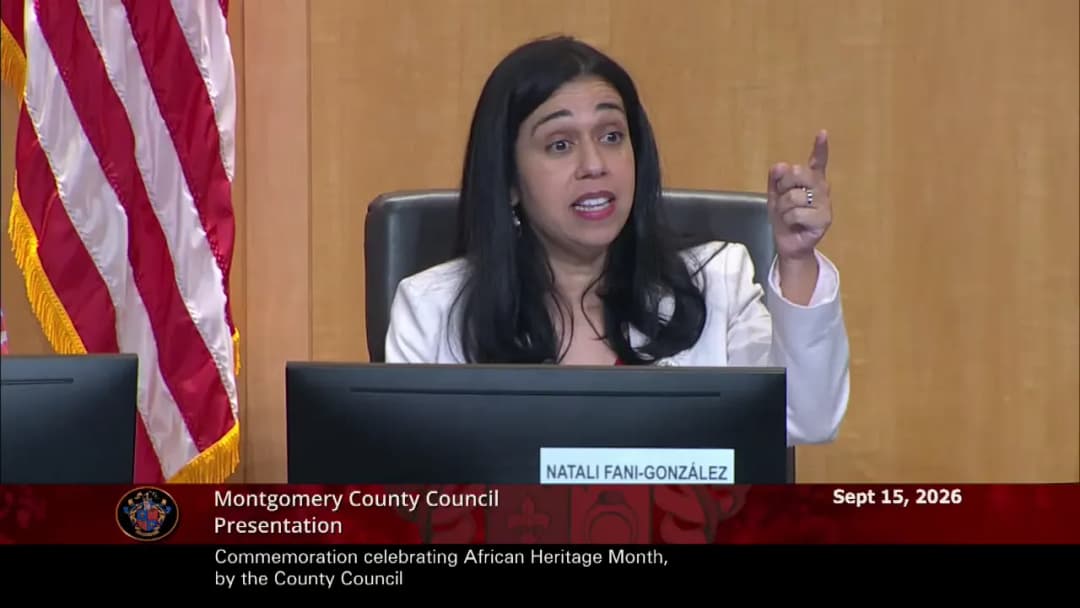
Overview The Montgomery County Council met on September 15, 2026, beginning at 9:00 a.m. The session featured three proclamations (National Preparedness Month, Glenstone Museum’s 20th Anniversary, and Montgomery College’s 80th Anniversary), general business including approval of minutes from July 21 and 28, a closed session for a performance evaluation, reaffirmation of a Planning Board appointment, legislative introductions of 10 bills, final reading of one bill, district council action on zoning text amendments, a consent calendar with 11 items, an African Heritage Month commemoration, multiple public hearings, and a worksession on long-term solid waste disposal alternatives. Proclamations - National Preparedness Month (September 2026) – presented by Councilmember Katz and County Executive Elrich. The Office of Emergency Management and Homeland Security highlighted the “Ready Together” campaign. - Glenstone Museum’s 20th Anniversary – celebrated by Councilmember Sayles; speakers praised environmental stewardship and community partnerships. - Montgomery College’s 80th Anniversary – recognized by Council President Fani-González; the college now serves over 47,000 students and had an estimated $1.4 billion annual economic impact. Consent Calendar - Approved items (10-0; Councilmember Jawando absent): - Acknowledged receipt of Inspector General publications. - Introduced resolution for 2026-2035 Comprehensive Water Supply and Sewerage Systems Plan (public hearing 9/29/26). - Introduced/adopted resolution to appoint Erek L. Barron, Esq. and Mintz Levin for Self-Insurance Fund matters. - Confirmed appointments to: Board of Investment Trustees/Consolidated Retiree Health Benefits Trust (Joshua Burge, Michael Sinoway); East County Citizens Advisory Board (Collins Odongo); Silver Spring Citizens Advisory Board (6 members); Commission on Children and Youth (Marhonda Williams); Pedestrian, Bicycle, and Traffic Safety Advisory Committee (Patrick Kepp); Commission on Child Care (14 members); Animal Matters Hearing Board (4 members); Early Care and Education Coordinating Entity Board (5 members). Legislative Session – Introductions (Day 23) - Bill 39-26 (Wheaton Urban District Boundaries – amendments) – lead sponsor Council President Fani-González; public hearing 10/13/26. - Bill 40-26 (Landlord-Tenant Relations – accepted forms of payment) – lead sponsor Fani-González; public hearing 10/6/26; received co-sponsors from nearly all members. - Bill 41-26 (ADU licensing procedures/fees) – lead sponsors Friedson and Fani-González; public hearing 10/6/26; removes owner-occupancy requirement and waives fees for affordable ADUs. - Bill 42-26 (Short-term rental online platform compliance) – lead sponsor Evans; public hearing 10/6/26; requires platforms to verify licenses. - Bill 43-26 (Smoke escape hoods in multifamily buildings ≥5 stories) – lead sponsor Stewart; public hearing 10/6/26; requires hoods equal to 5% of occupancy. - Bills 44-26 and 45-26 (Data Centers) were deleted from the agenda. - Bill 46-26 (Child Tax Credit – supplemental grant) – lead sponsors Stewart and Evans; public hearing 10/13/26; $500 credit per child for incomes ≤$15,000. - Bill 47-26 (Homeowners Property Tax Credit – expand eligibility) – lead sponsors Stewart, Friedson, Katz, Evans; public hearing 10/13/26; raises income limit from $75,000 to $106,800. - Bill 48-26 (Property Tax Credit – public school employees) – lead sponsor Stewart; public hearing 10/13/26; $2,500 credit for bargaining unit members. Final Reading and Enactments - Bill 28-26 (Intellectual and Developmental Disabilities Commission – membership) – enacted 10-0 (one absent). Renamed the “Jake Dinsky Advocacy Act.” District Council Session - Introduction: Resolution to add fees to OZAH fee schedule (public hearing/action 9/29/26). - Action: ZTA 26-06 (Accessory Dwelling Units – consistency with state law) – enacted 10-0. - Action: ZTA 26-07 (Solar Collection Systems – use standards) – enacted 10-0. Public Hearings (1:30 p.m. portion) - Item 7: CIP amendment for Olney Community Building and Police Satellite Station – public hearing held, record closed; resolution adopted 10-0. Multiple speakers expressed strong support. - Item 8: Expedited Bill 32-26 (Survivor benefits – line-of-duty death) – public hearing held, record open until 10/1/26; no registered speakers. - Item 9: Bill 33-26 (Cable Communications – community media requirements) – record open until 10/1/26. Speakers (CEO of Montgomery Community Media and board VP) urged amendments to preserve editorial independence. - Item 10: Bill 34-26 (Bodywork establishments – licensing) – record open until 10/21/26. Debbie Feinstein (State’s Attorney’s Office) spoke in strong support. - Item 11: Bill 35-26 (Forest Conservation – brush management on agricultural land) – record open until 9/28/26. Multiple farmers and the Planning Board supported with proposed amendment tying to soil conservation plans. - Item 12: Bill 38-26 (Discriminatory housing practices – immigration status) – record open until 10/9/26. Over a dozen speakers testified in strong support; some suggested amendments on notice and reporting. - Items 13–15: ZTA 26-10 (driveway access), ZTA 26-11 (benefit performances), SRA 26-02 (street type design) – records open until 9/28/26. Several speakers supported ZTA 26-11 with amendment; Planning Board offered recommendations. - Item 16: SMA H-163 (University Boulevard Corridor Plan) – record open until 9/18/26. Civic leaders and residents opposed citing equity, infrastructure, and environmental concerns; sought delay or denial. Worksession: Long-Term Solid Waste Disposal (2:30 p.m.) The council reviewed four options: keep/upgrade the Resource Recovery Facility (RRF/incinerator) (Option 1); close RRF and long-haul waste to landfill (Option 2); close RRF, implement Advanced Waste Processing (AWP), then long-haul residual (Option 3 – County Executive’s recommendation); close RRF later after developing AWP (Option 4). Key points: - Long-term costs between Options 1 and 3 are similar (≈$1/year difference for single-family homes by FY32). - Option 3 allows a per-ton cost that decreases with waste diversion; Option 1 has fixed capital costs. - DEP presented environmental justice screening and traffic study showing minimal additional truck impacts (80 additional loads/day). - Food waste composting expansion timelines differ: with Sugar Loaf agreement, 2 years; without, 7 years and $51 million. - Council members requested more side-by-side comparisons, cost data for monofill landfill, details on rail vs. truck, and noise/mitigation plans. - A decision is targeted by Thanksgiving 2026; further worksessions set for Sept 29, Oct 13, and Oct 27. Key Outcomes - Approved minutes from July 21 and 28, 2026 (10-0). - Reaffirmed James Hedrick to Planning Board (10-0), overriding County Executive’s veto. - Enacted Bill 28-26 (IDD Commission), ZTA 26-06 (ADUs), ZTA 26-07 (Solar). - Adopted consent calendar resolutions (appointments and acknowledgments) (10-0). - Adopted CIP amendment for Olney Community Building/Police Station (10-0). - Public hearings held on Bills 32, 33, 34, 35, 38; ZTAs 26-10, 26-11; SRA 26-02; and SMA H-163. Records remain open for written testimony. - Closed session held (9:45 a.m.) for a performance evaluation. - African Heritage Month commemorated with a video highlighting African immigrant entrepreneurs. - Next steps: Solid waste worksessions continue; council aims for a decision by late November 2026.
The Bellevue City Council held a regular meeting on September 15, 2026, featuring three proclamations, a public hearing on the preliminary 2027-2028 biennial budget, and a presentation of the budget by city staff. Over 50 members of the public provided testimony, with strong support for the Grand Connection Crossing and increased climate action funding, alongside concerns about affordability and transportation priorities. Consent Calendar - Approved unanimously, including routine approvals. Proclamations - National Hispanic Heritage Month (Sept 15–Oct 15, 2026): Read by Councilmember Breyer, recognizing contributions of Hispanic and Latino communities. - Teen Mental Health Awareness Day (Sept 19, 2026): Read by Deputy Mayor Hamilton; accepted by Bonnie from Asian Counseling Referral Service, who highlighted mental health needs. - National Diaper Need Awareness Week (Sept 14–20, 2026): Read by Councilmember Bargava; accepted by representatives from Babies of Homelessness and KidVantage, emphasizing diaper need in Bellevue. Public Comments & Testimony - Oral Communication (pre‑budget): - Miss Cobb (resident) expressed concerns about middle housing concentration in her neighborhood and parking violations by construction crews. - Alex Zimmerman (Stand Up America Party) criticized the council and mayor, alleging use of a non‑legal name and accusing the council of corruption. - Joe Kunzler (remote) rebutted Zimmerman’s statements and condemned harassment of the council. - Gary Sampson (Family Law CASA of King County) supported human services funding and praised the Human Services Commission’s work. - Budget Public Hearing (48 speakers, time reduced to 1.5 minutes): - Strong support for the Grand Connection Crossing: Speakers included representatives from Amazon (Pearl Lung), Symetra (Beth Osborne), Eastrail Partners (Steve Kramer), KidsQuest Children’s Museum (Mike Hubbard), Friends of the Grand Connection (Sarah Langton), Old Bellevue Merchants Association and Sophia Way (Anthony McKay), Cascade Bicycle Club (Gina Kavesh), Bellevue Downtown Association (Patrick Bannon), Bellevue School District (John Harrison), Boys & Girls Club of Bellevue (Tim Motz), Friends of Youth (Rihanna Kajani), Lime (Nikki Stuck), and several residents. They cited connectivity, equity, economic benefits, climate goals, and safety. - Support for increased climate funding: Speakers from People for Climate Action and others (Cameron Brajas, Lavanya Singh, Nihao Singh, Alice Meng, Tracy Cookley, Michael Lee, Jennifer Keller, Neil Bhakshi, Court Olson, Mark Norrelias) urged the council to allocate at least $12 million for existing building decarbonization (Energy Smart Eastside), arguing the current $6 million is insufficient to meet 2050 targets. - Concerns about transportation funding and taxes: - Craig Speasel (resident) opposed using TBD funds for the Grand Connection and called for a public vote. - Todd Myers (Washington Policy Center) argued that EV charger and e‑bike subsidies are ineffective, citing low usage and a UW study showing no measurable VMT reductions. - Maria Frost (Kemper Development) supported chamber priorities but insisted any TBD tax increases go to a public vote, citing cumulative tax burden. - Tony Sprague (Bellevue Chamber) asked for transparent performance metrics and prioritization of corridor intersections. - Support for neighborhood transportation projects: Speakers from Vasa neighborhood (Karen Armstead) and West Lake Sammamish (Rosemary Dunkel) urged funding for pedestrian and bike safety improvements. - Opposition to Spring Boulevard project: Ben Mickel (resident) argued the $75 million arterial would cut through Bell‑Red Park and suggested a $20 million bike‑only path instead. - Other topics: Support for Bellevue Promise program (John Harrison), human services funding, and continued investment in fire, police, and parks. - An additional speaker (Julie Cobb) raised safety concerns about patrolling the Grand Connection trail. Discussion Items - City Communications Awards: City Manager announced three 3CMA awards for communications excellence (Savvy Award for utility crisis plan, Silver Circle for Lake to Lake show, Award of Excellence for summer day camp guide). - Preliminary 2027‑2028 Budget Presentation: - City Manager Carlson and CFO John Risha presented the budget overview, emphasizing a conservative approach, diverse revenue base, and $15 million in repurposed departmental savings. - The base budget includes no new taxes beyond the statutory 1% property tax increase. It funds the Grand Connection Crossing without additional tax measures, while two Transportation Benefit District (TBD) scenarios were presented (Scenario 2: sales tax; Scenario 3: sales tax + vehicle fee restricted to neighborhood mobility). - The six‑year Capital Improvement Program totals $1.3 billion. - Council discussion: Members asked about risks, unfunded priorities, the cumulative taxpayer impact, cost escalation in CIP projects, and the need to ensure police and fire staffing levels. Questions were deferred to subsequent study sessions. - Intergovernmental Affairs Monthly Update: Received and filed. Key Outcomes - Agenda approved. - Consent calendar approved. - Rules suspended to limit public hearing comments to 1.5 minutes. - Public hearing opened and closed. - No final budget decisions made; the council will deliberate through November 17, 2026, with additional study sessions and a third public hearing on October 27.
The Redwood City Planning Commission met on September 15, 2026, to consider an exterior improvement project, hold a public hearing on the proposed Objective Design Standards Ordinance, and fill advisory committee vacancies. The consent calendar was empty. The transcript does not include a separate vote on the August 18, 2026 special meeting minutes. Consent Calendar - No consent calendar items were placed on the agenda. Public Comments & Testimony - No general public comment was heard for non-agenda items. - Lexi Mendoza asked the Planning Commission to recommend the current objective design standards to the Redwood City City Council. - One online speaker addressed the commission during the advisory-committee appointment hearing; the speaker’s name and remarks were not included in the raw transcript. Discussion Items - Item 6A – Exterior Improvement Project: Staff presented a proposal recommended for approval by the Historic Resources Advisory Committee at its August 13, 2026 hearing. The applicant said the scope would remove existing first-floor blinds, preserve all existing trees, and refresh and elevate the exterior so it contributes positively to the streetscape. No public comment was heard on this item; the transcript does not record the commission’s final vote. - Item 6B – Objective Design Standards Ordinance: Community Development Director Jeff Schwab presented the revised draft. Staff explained that an earlier rule that could trigger two amenity requirements in the low 20-unit range had been removed; the revised draft required one amenity for every 20 units, with a second amenity beginning at 40 units. Staff noted that projects meeting affordable-housing requirements could use density-bonus waivers to reduce or eliminate standards. Commissioners discussed open-space and amenity requirements, tree-size inconsistencies, and whether some provisions should be guidelines rather than standards. Some commissioners supported keeping amenity and open-space requirements, especially after COVID; others questioned private pool requirements, with one commissioner noting Redwood City has no public pool and that requiring a pool for roughly 100 residents feels like a large ask. They also debated whether to add or amend an ornamentation provision; some wanted to act now, while others preferred leaving that section for City Council to decide. The Brown Act was mentioned when a commissioner asked about giving advance notice of proposed changes to colleagues. - Advisory Committee Appointments: The commission conducted roll-call votes to fill one full-term Architectural Advisory Committee seat expiring May 30, 2030, and two Historic Resources Advisory Committee seats. The selected applicants were not named in the raw transcript. Key Outcomes - Recommended the Objective Design Standards Ordinance to the City Council. The final motion included some of the amendments discussed, though the complete wording of the motion is not fully captured in the transcript. - Filled advisory committee vacancies by roll-call vote. - Announced that the next Planning Commission meeting would be held Tuesday, October 20, 2026, with the previously scheduled intervening meeting canceled.
The Spokane Valley City Council held a regular meeting on September 15, 2026, at City Hall. The meeting included a proclamation for Constitution Week, a public hearing on the 2027 budget, and administrative reports on right-of-way vegetation control, lodging tax advisory committee (LTAC) goals, a Justice Assistance Grant (JAG), and the draft comprehensive plan. Council also received public comments on neighborhood councils, data centers, public records, and state water projects. Public Comments & Testimony - Susan DeLucke and Linda Tesh advocated for the establishment of neighborhood councils to improve citizen participation and communication, citing low voter turnout (less than 25% in the last election) and frustration with the current system. They provided written materials for council review. - Glenn Stockwell (Ritzville) urged the council to write a letter to Senator Patty Murray and President Trump requesting funding to complete the Columbia Basin Project, emphasizing bipartisan collaboration and noting a $1.2 trillion opportunity. - Aubreyana Anderson raised alarm about a proposed large-load data center in Spokane County, citing concerns over water usage (millions of gallons per year on a closed-loop system), lack of transparency from county officials, and potential risks. She noted that Spokane City has a nine-month pause on data centers and that county records requests reveal direct communication between public officials and the data center proponent. - Ben Lund (34-year resident) questioned Councilmember Merkel about public record access under the Washington Public Records Act, specifically regarding records on private devices or social media. He also asked for an update on a motion by Councilmember Yeager to recover costs related to past public records disputes, noting approximately $600,000 in taxpayer costs discussed at the June 30 meeting. Discussion Items - Public Hearing 1 – 2027 Budget Revenues: Finance Director Chelsie Walls presented the draft budget. Total estimated revenues across all 31 funds are $148 million. General fund recurring revenues are estimated at $71.8 million (up 5%), with property taxes at $14.5 million (excluding the 1% increase and $1.4 million in bank capacity) and sales tax at $37 million (up 9.6%). General fund expenditures remain unknown due to pending law enforcement contract costs. The city aims to have recurring revenues exceed recurring expenditures and maintain a fund balance at least 50% of recurring expenditures. No public comments were made on the budget. - Right-of-Way Vegetation Control: Public Works Director Robert Blegen reported on the city’s vegetation management program. The city manages 111 acres of dryland grass mowing (goal of 2-3 times/year), tree removal/trimming, and weed spraying. Costs have increased due to higher labor rates and fewer contractors (only two main contractors currently). The city also maintains 23 acres of WSDOT property (e.g., the Argonne interchange) to a higher standard. Council discussed potential cost savings through converting to lower-growing bunchgrass over a three-year period, and the impact of losing Geiger work crews due to county corrections staffing shortages. - LTAC Goals & Priorities: Chelsie Walls reviewed the lodging tax structure (3.3% total) and the 2027 outlook. Only $250,000 is available from the 2% fund (due to a $600,000 multi-year award to the ICE sports facility), and the capital fund (1.3%) has an expected balance of $530,000 at end of 2027, so staff recommended not opening applications for capital projects. Suggested goals prioritize funding for projects aligned with the tourism strategic plan, especially established facilities like the cross-course and ice arena. Council discussed whether to exclude for-profit entities from LTAC grants and encourage them to use the opportunity fund instead, but no consensus was reached on that change. Council did reach consensus to proceed with the proposed goals and priorities. - Justice Assistance Grant (JAG): Deputy City Manager Eric Lamb and Assistant Police Chief Jared Keene proposed using approximately $31,000 in JAG funds plus $12,500 from DUI restitution to purchase an eighth police motorcycle (estimated total $43,470). The new unit would support the traffic unit and allow a high-mileage motorcycle (38,000 miles) to shift to a training role. Council expressed support and gave consensus to move forward with the application. - Draft Comprehensive Plan: Community Director Mike Basinger and Planning Manager Steve Roberge presented the updated draft plan, noting it maintains the readable format from 2016. Key changes include a new climate/resiliency element and mandated housing provisions for middle housing and all income levels. The plan aims for adoption by mid-December 2026. A future meeting on September 29 will cover development regulation changes from state law. Key Outcomes - The agenda was approved unanimously (Councilmember Yeager excused, Councilmember Kelly present via Zoom). - Council reached consensus to apply for the JAG grant for a new police motorcycle. - Council reached consensus to proceed with the proposed LTAC goals and priorities for 2027. - Councilmember Merkel announced future agenda items: a five-year moratorium on data centers, inviting Life Services to speak about alternatives to termination, and exploring stop-arm cameras for school buses due to increased violations (15-20 per day vs. 2-3 ten years ago). - Mayor Patton commented on Constitution Week, emphasizing the importance of correctly invoking the Constitution and criticizing what she described as false allegations of constitutional violations by a council member regarding freedom of speech and the Sixth Amendment. - City Manager updates: Spokane Regional Stormwater Manual update (due June 2027), Flock camera removal notice issued (30-day notice started September 1), Cops & Kids car show had 5,000 attendees and 300 cars, and a sculpture dedication by Fritz and Jeannie Wolfe. - The meeting adjourned.
The City Council of Alameda met on September 15, 2026, at 7:00 PM in open session. The meeting included proclamations, consent calendar approvals, appointments to boards and commissions, presentations on AC Transit, and policy deliberations on short-term rentals, accessory dwelling units, and tenant relocation payments. Key outcomes included the introduction of ordinances to establish short-term rental regulations and expand housing options, and a referral to staff to evaluate a potential large-format commercial vacancy fee. Consent Calendar - Minutes and routine financial items were approved. - Approval of a three-year agreement with M5 Services LLC for building engineer and maintenance services (up to $2,793,808). - Acceptance of work for the Lincoln Park Pathway Lighting Project. - Approval of a one-year agreement with Action Research for community-based social marketing to increase bulky pickup services by multi-family residences ($186,000). - Adoption of the 2026 City of Alameda Climate Adaptation and Hazard Mitigation Plan. - Approval of grant funds and amendments for the Public EV Charging Program. - Approval of a service provider agreement with Nicholson Strategic Services LLC for executive human resources services ($250,000). - Final passage of two ordinances authorizing lease amendments for Alameda Point properties. Proclamations - Mayor Ashcraft proclaimed September 15 through October 15, 2026, as National Hispanic Heritage Month, highlighting local demographics and library events. Appointments to Boards/Commissions - Council approved appointments: Alec Chavez (Civil Service Board), Katie Freed and Jimmy Ly (Planning Board), and reappointment of Jason Kim, Saravana Suthanthira, and appointment of Maria Piper and Bharat Singh (Transportation Commission). - Each appointee briefly addressed the council, sharing their background and goals for community service. Public Comments & Testimony - Action Research Agreement (5E): Councilmember Jensen raised questions about the necessity of community-based social marketing for bulky pickup services among multi-family residents. Staff explained it is a behavior change tool to reduce illegal dumping and improve participation; no public comment. - AC Transit Presentation (7B): Public speaker Mitch Ball supported the Connect Bay Area Act (SB 63) but recommended eliminating Line 19 to free resources, suggesting an alternative route for Line 30 to improve competitiveness and ridership. He emphasized the need for frequent, direct service. - Short-Term Rental Ordinance (7C): Donna Fisher (in person) urged reconsideration, arguing the restrictions would reduce transient occupancy tax revenue, harm local businesses, and eliminate lodging for medical professionals and others. Karen Miller (in person) questioned grandfathering provisions and said owners would sell rather than become landlords. Sophia DeWitt (Reverend, EBHO) supported the ordinance but called for platform accountability and suggested directing TOT to an affordable housing trust fund. Kevin Jordan (remote) opposed, calling the ordinance an attack on the middle class and favoring regulation of large investors over families. - ADU Conversion Ordinance (7D): Carmen Reed (remote) asked clarifying questions about square footage limits for junior and detached ADUs. Staff clarified the slide was a stock image and no square footage definitions were changed. - Rent Control Ordinance (7E): No public comment. - Council Referrals (10A): No additional public comment. Discussion Items - Short-Term Rental Ordinance (7C): Staff presented a text amendment to establish citywide zoning regulations for short-term rentals (STRs), limiting them to hosts on their primary residence, with exceptions for legacy operators (those operating for at least one year). Planning Board included good neighbor policies (noise, trash, occupancy limits). Council debated whether to adopt the full ordinance or phase it with good-neighbor policies first due to data gaps on the impact on housing supply. Councilmember Jensen expressed concerns about the blanket prohibition on off-site owners. Councilmember Daysog raised questions about multiple properties owned by one individual. The ordinance passed after adding a 90-day amnesty period (from 60) and a reporting requirement by January 2028 to review impacts on property owners with multiple STRs. The final vote was 3-1-1 (Mayor, Vice Mayor, Councilmember Daysog in favor; Councilmember Jensen abstained; Councilmember Bowler recused). - Accessory Dwelling Unit (ADU) Amendments (7D): Staff presented amendments to permit ADU condominium conversions (per State AB 1033), update regulations, and streamline processes. Council supported the measure as a tool to increase homeownership opportunities for first-time buyers. Councilmember Daysog expressed concern about the potential increase in ADU production and proposed a five-year sunset, but after discussion, the council opted for a report back as part of the next Housing Element update cycle rather than a sunset. The measure passed 4-0 (Councilmember Bowler recused). - Rent Control Ordinance Amendment (7E): Staff presented an amendment to clarify that tenants who vacate due to an invalid (unlawful) termination notice must be offered the unit back if they haven't found permanent housing, or receive a permanent relocation payment. This closes a loophole identified after previous updates. The council passed the first reading unanimously (4-0, Councilmember Bowler recused). - AC Transit Presentation (7B): General Manager Salvador Llamas and planner Owen Christopherson presented the financial challenges facing AC Transit, including a projected $200 million deficit over four years. They outlined a contingency service reduction plan (effective June 2027 if no new funding is secured) that would cut Alameda routes: Line 19 eliminated (due to low ridership), reduced frequencies on Lines 30, 31, 96, and O and W, and a proposed new East End line connecting Fruitvale BART to South Shore. Councilmember Jensen questioned impacts on transit-oriented development priorities and the role of the Alameda Transportation Management Association. The mayor and council noted the critical importance of the Connect Bay Area Act (SB 63) to avoid cuts. - Large-Format Commercial Vacancy Fee Referral (10A): Councilmember Daysog proposed directing staff to evaluate a vacancy tax on large anchor stores (grocery stores, pharmacies) that are vacant for extended periods, as a way to incentivize re-leasing and generate revenue. Council discussed legal and practical issues (retroactivity, effectiveness, need for voter approval). Councilmember Bowler supported the referral but stressed the need for near-term negotiations. Councilmember Jensen asked about the strategic plan reference. The council voted unanimously to direct staff to report back in March 2027 with findings and recommendations. Key Outcomes - Action Research Agreement: Approved with questions answered. - Climate Hazard Plan: Adopted. - Code Enforcement for Invalid Eviction Notices: The ordinance was introduced to clarify relocation payment requirements for tenants who vacate due to unlawful notices. (Unanimous first reading, 4-0). - ADU Condominium Conversions: Ordinance introduced to permit separate sale of ADUs, aiming to increase homeownership opportunities. (Passed 4-0). - Short-Term Rental Regulations: Ordinance introduced establishing citywide STR rules, including primary residence requirement, good neighbor policies, a 90-day amnesty period, and a reporting requirement by January 2028 to review impacts. (Passed 3-1-1). - 9090-day Amnesty Period: The amnesty period for existing STRs to register was extended from 60 to 90 days (through early 2027). - Vacancy Fee Referral: Council directed staff to evaluate a potential large-format commercial vacancy fee and report back in March 2027. (Unanimous). - Appointments: All appointments to boards/commissions approved unanimously. - Future Agenda Items: The council will revisit the Short-Term Rental impact report in January 2028, and receive the vacancy fee evaluation in March 2027.
The Clark County Planning Commission held a briefing on Tuesday, September 15, 2026, starting at 6:00 PM. The meeting covered a lengthy agenda of 48 items, including routine approvals and non-routine items such as zone changes, waivers, and public hearings. The briefing included staff presentations on each item, board discussion, and one set of public comments. Consent Calendar - Items 4 through 18 were presented as routine and staff recommended approval for most, with several conditions or modifications noted. Key routine items included: - Item 4: Vehicle repair facility (staff recommendation: approval; no complaints received). - Item 5: Extension of time for use permit/waivers/design review for an office complex (staff: approval; Enterprise Town Board: approval; 3 items in protest). - Item 6: One-lot industrial tentative map for a warehouse (staff: approval; no town board jurisdiction; no mail received). - Item 7: One-lot commercial tentative map for gas station/restaurant (staff: approval; Enterprise Town Board: approval; no mail). - Item 8: Use permit for banquet facility in existing shopping center (staff: approval; Paradise Town Board: approval; 2 in support, 2 in protest). - Item 9: Use permit for temporary special event at Gold Coast (staff: approval; Paradise Town Board: approval; 3 cards in support; applicant provided updated plans regarding vehicular access). - Item 10: Use permit for standalone ER/urgent care in retail complex (staff: approval; Sunrise Manor Town Board: approval; 4 cards in support; no protest mail). - Items 11-16: Vacation and abandonment requests for various right-of-way and easement items. Staff recommended approval for most, with some conditions from town boards. Item 13 had 3 in support and 10 in protest; Item 16 (Richmar Avenue) had Enterprise Town Board recommendation of denial due to access concerns for a BLM parcel, but staff recommendation was approval; received 1 support, 2 protest. - Item 17: Waiver of conditions for recurring events at a recreational facility; Paradise Town Board recommended approval with condition of no more than 3 events per year, 3 days per event, 1 week setup/take-down. Applicant agreed. - Item 18: Waiver and design review for electrical peaking plant at existing industrial development; staff and Whitney Town Board recommended approval; 2 protest items. Public Comments & Testimony - One member of the public, Gus Keller (address provided), spoke during the briefing. He expressed strong opposition to continued building and development in the valley, citing overpopulation, increased heat, loss of wildlife, and strain on infrastructure. He requested a 5-10 year building moratorium or restriction on new construction, particularly multi-unit complexes, and suggested a public vote on the matter. Discussion Items - Staff presented each non-routine item (19-48) with recommendations and noted town board positions, public input (cards and mail), and any modifications from applicants. - Items 19-20: Street name changes at the Speedway (Bush Brothers Drive and Rowdy Road). Staff recommended approval for 19 (Bush Brothers) and denial for 20 (Rowdy Road) due to existing duplicate street name in North Las Vegas. - Item 21: Place of worship request (originally 14,000 sq ft, 112 ft spire). Applicant submitted revised plans reducing retaining walls, building height to 95 ft, building size to 12,000 sq ft, and added parking landscaping. Despite revisions, staff still recommended denial due to height in established RP neighborhood. Spring Valley Town Board recommended approval of use permit and waiver for retaining wall height, but denial of other waivers and design review. No public mail. - Item 22: Legalize existing accessory living quarters built without permits. Staff recommended denial (self-imposed hardship); Sunrise Town Board recommended approval; 1 support, 3 protest. - Item 23: Waiver to legalize existing accessory structure (shop, shed, chicken coop). Staff recommended denial; Moapa Valley Town Board recommended approval; 5 support, 1 protest. - Item 24: Legalize over-height walls and accessory structures in setbacks. Staff recommended denial; Enterprise Town Board recommended approval; 4 support, 2 protest. - Item 25: Allow 206 sq ft addition with 16 ft setback (20 required). Staff recommended denial; Paradise Town Board recommended approval; 8 support, 2 protest. - Item 26: Pool house and storage shed before principal dwelling, plus over-height walls. Staff recommended approval of wall height but denial of accessory structure prior to principal dwelling due to previous similar requests not built and active code enforcement for outside storage. No town board jurisdiction; 1 support, 4 protest. - Items 27-31: Requests for holds to future meetings. Item 27 to October 6 PC meeting. Items 28-31 to January 5 PC and February 3 BCC meetings. Chair noted he wanted to hear justification for holds on items 37-40 in regular course, especially given travel from Moapa Valley. Commissioner Kalarski expressed concern about applicant for items 28-31 not appearing or communicating, and noted the applicant had not shown up for two meetings on hold requests; she stated it was disrespectful and hoped the applicant would be present to explain. - Items 32-36: 41-lot single-family subdivision with plan amendment, zone change, vacation, waivers, and design review. Staff recommended approval of plan amendment, zone change, vacation, and waivers, but denial of design review/tentative map due to hammerhead configuration against other hammerheads. Enterprise Town Board added conditions: second egress onto Haley Avenue, three architectural features on elevations facing public roads, and if both properties are developed, remove hammerheads and use through streets. Public input: 5/4/7/5 support and 6/6/8/7 protest across items. - Items 37-40: Plan amendment and zone change to compact neighborhood and RS2 for single-family subdivision (2,000-4,500 sq ft lots). Staff recommended approval of plan amendment and zone change, but denial of associated waivers, design review, and tentative map due to open space and offsite issues. Moapa Valley Town Board recommended denial. Public input: 3 support for each; 23 protest items including three petitions with 800 signatures. - Items 41-44: Plan amendment, zone change, vacation, waivers for office warehouse complex (50,000 sq ft). Staff recommended approval of plan amendment, zone change, vacation, waiver 1 (screening/buffering), waiver 2 (reduced parking), but denial of waiver 3 (pedestrian walkways to adjacent sidewalk) and design review due to pedestrian safety concerns. Enterprise Town Board recommended approval. Public input: 1 support, none protest. - Items 45-48: Plan amendment, zone change, vacation, use permit for outdoor storage/display (vehicle inventory lot). Staff recommended denial of plan amendment, zone change, use permit, waivers, and design review due to limited buffering/screening in established RMP neighborhood. Spring Valley Town Board recommended denial of the same, but approval of vacation. Public input: 1 support for vacation, 1 support for use permit; 9/8/7/7 protest across items. - Commissioner questions: Commissioner Mohica participated online. Commissioner Stone asked about feasibility of removing hammerheads per Enterprise Town Board condition on items 32-36; staff confirmed that a redesign would require a new application and process. Key Outcomes - The briefing did not include any formal votes; all actions were scheduled for the regular meeting at 7:00 PM following the briefing. - Staff recommendations, town board positions, and public input were presented for each item to inform the commission's decisions at the regular meeting. - The chair indicated that items 37-40 (Moapa Valley subdivision) would be heard in the regular course to allow full explanation from the applicant before any hold. - Commissioner Kalarski placed on record her concerns about the applicant for items 28-31 not communicating or appearing, and that re-notification would be required for a hold.